Article

A Hybrid Radial Basis Function–Finite Difference Matrix Operators (RBF–FDMO) Approach for Numerical Simulation of Grounding Systems on Non-Uniform FD Mesh


by
Xuan-Binh Nguyen
,
Nhat-Nam Nguyen
and
Phan-Tu Vu
*
Faculty of Electrical and Electronics Engineering, Ho Chi Minh City University of Technology (HCMUT), VNU-HCM, 268 Ly Thuong Kiet Street, Dien Hong Ward, Ho Chi Minh City 70000, Vietnam
*
Author to whom correspondence should be addressed.
Energies 2026, 19(10), 2271; https://doi.org/10.3390/en19102271
Submission received: 27 March 2026 / Revised: 20 April 2026 / Accepted: 5 May 2026 / Published: 8 May 2026
(This article belongs to the Section F1: Electrical Power System)

Abstract

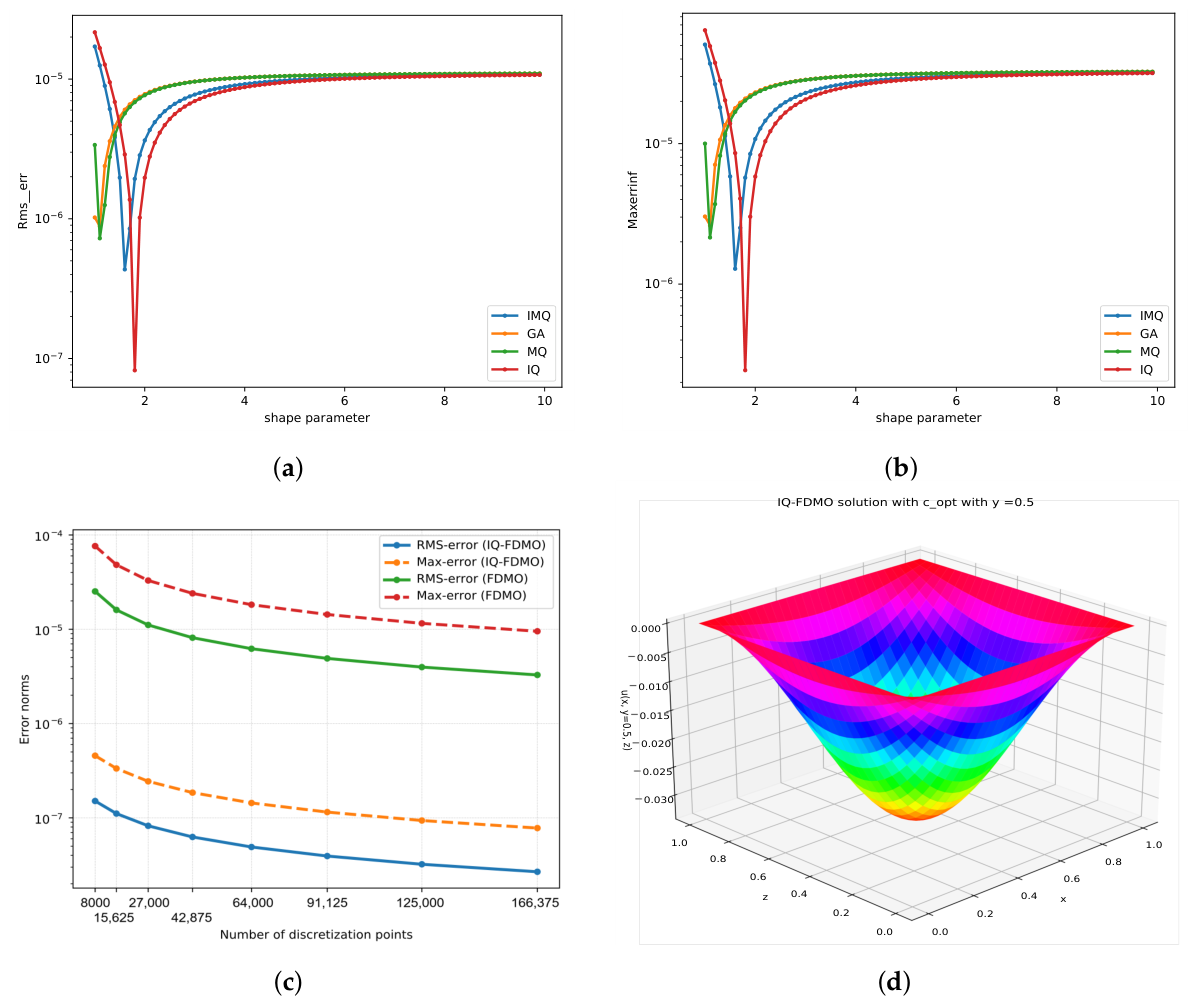
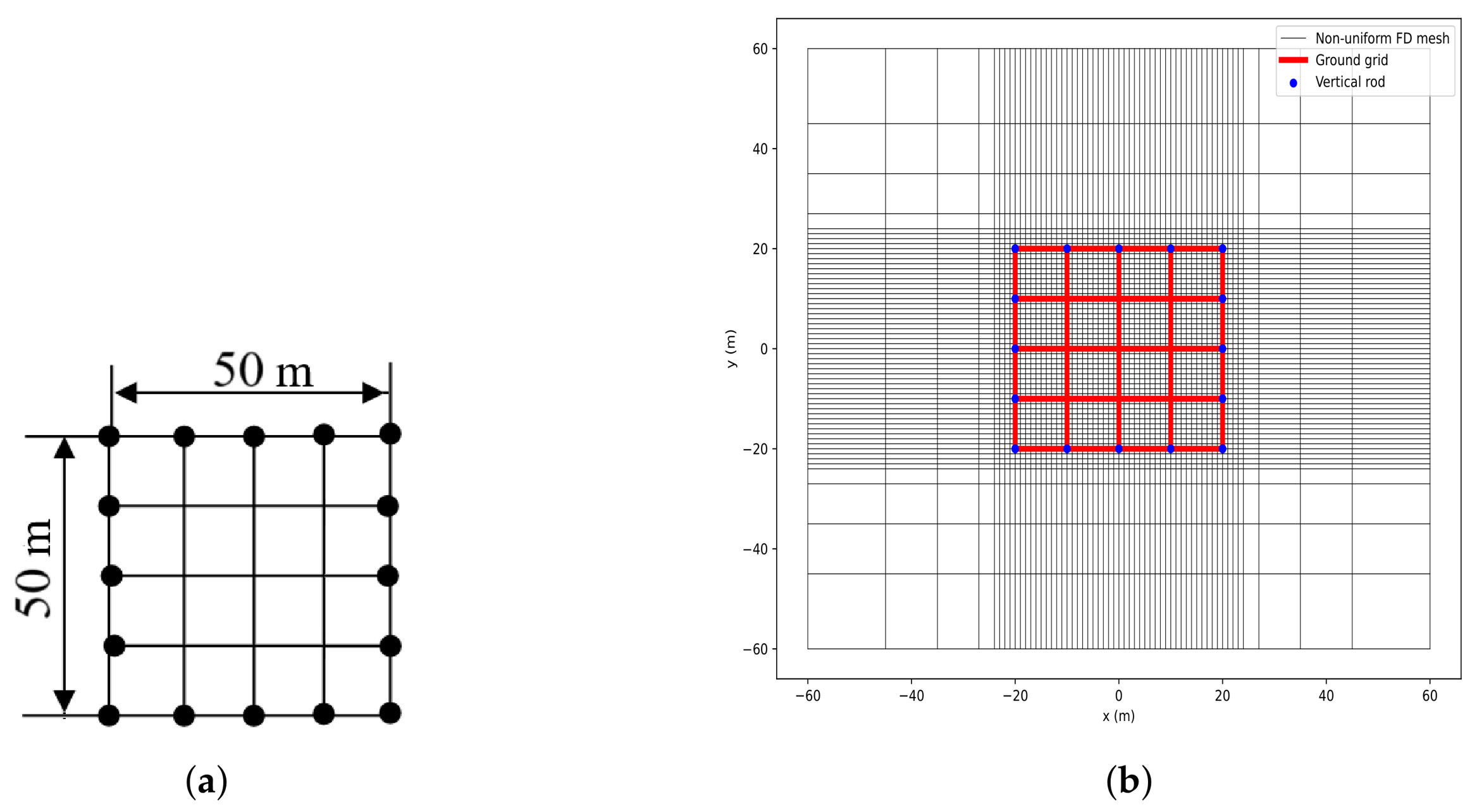
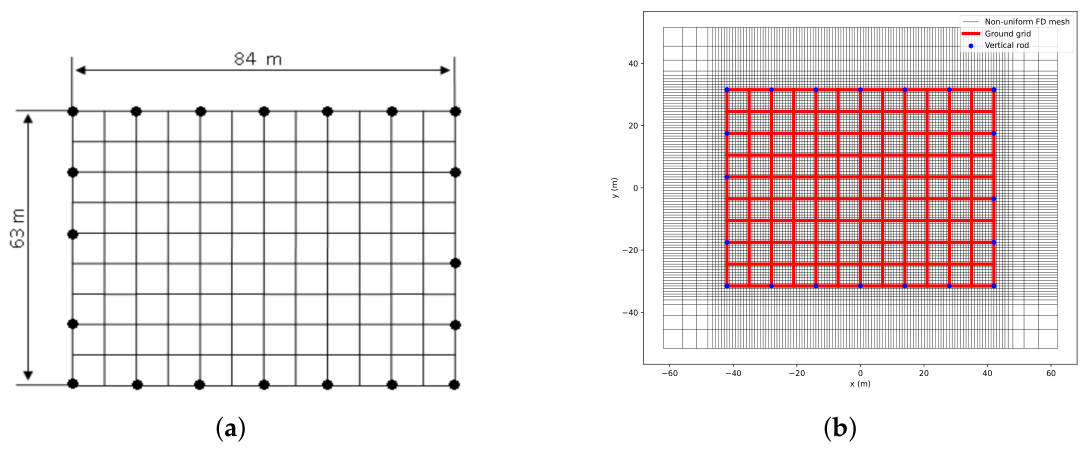
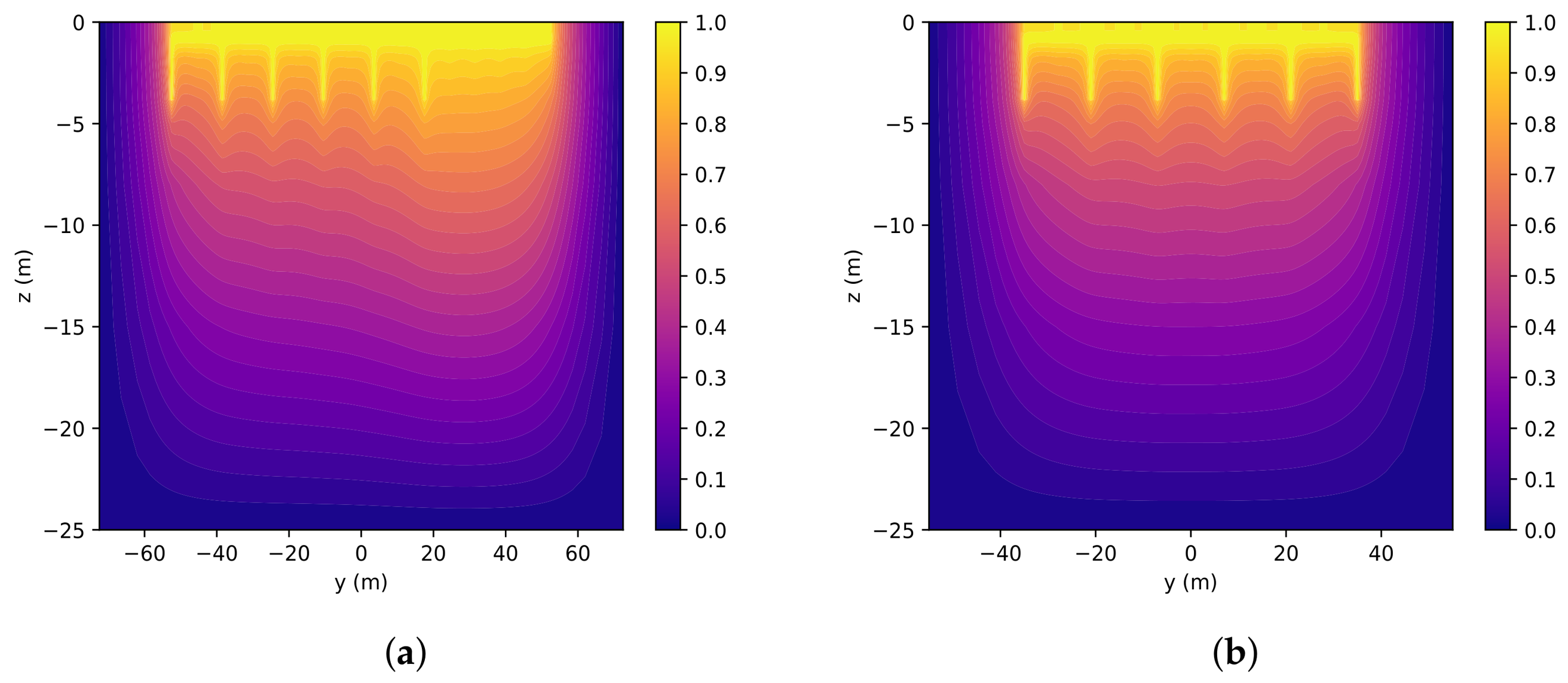
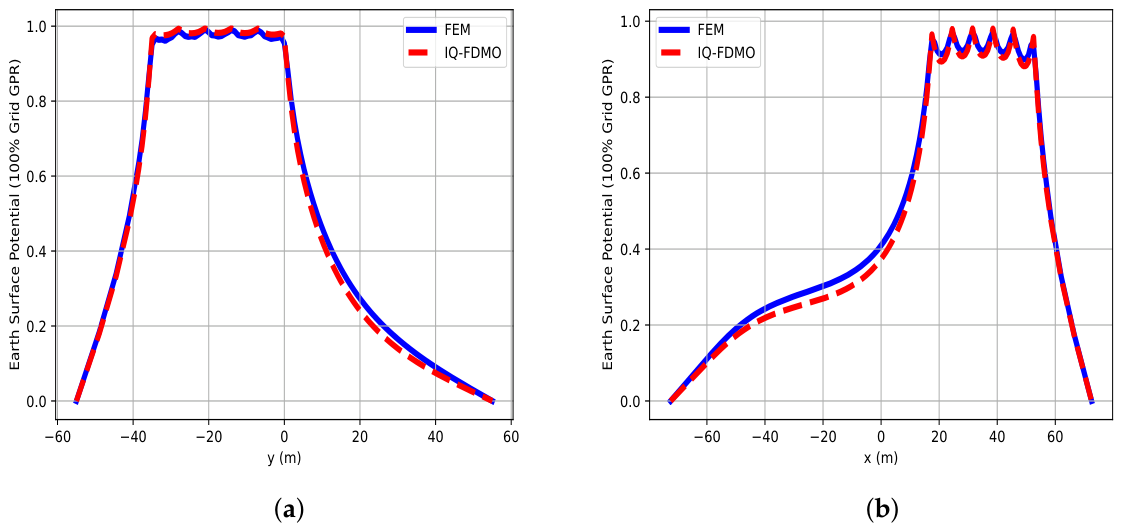
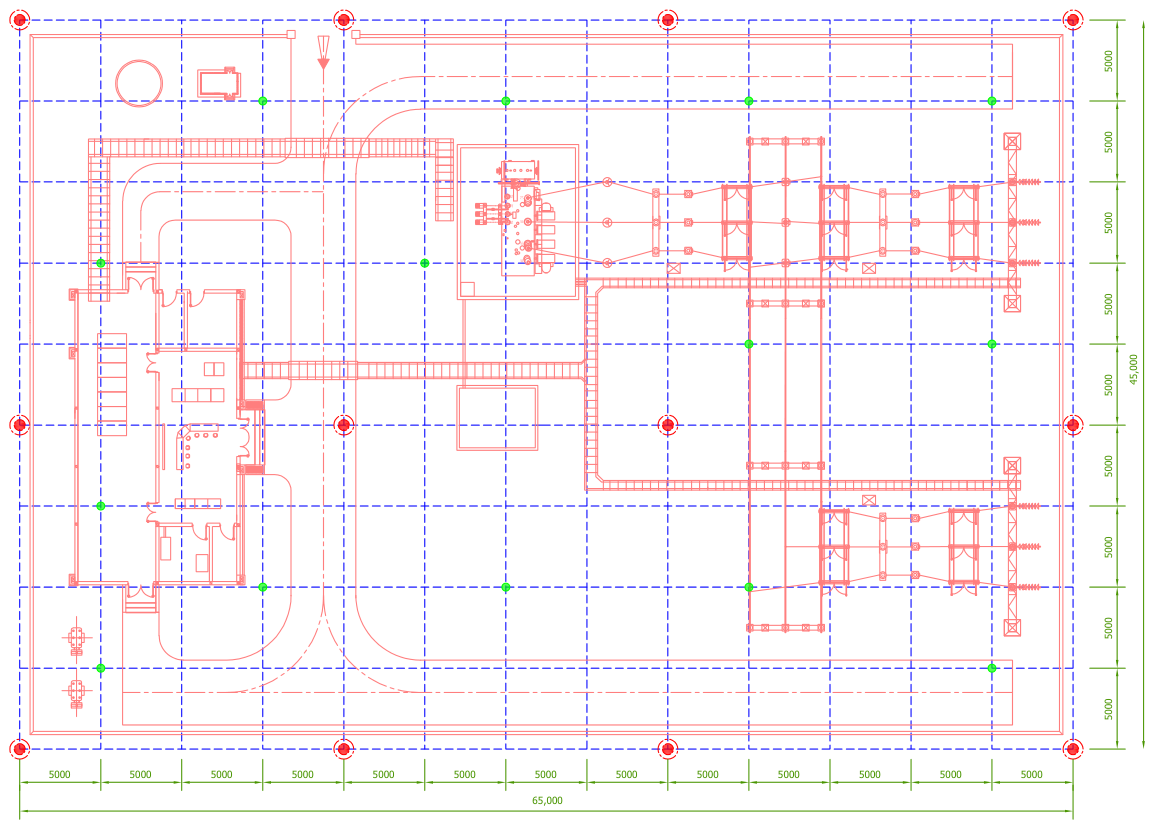
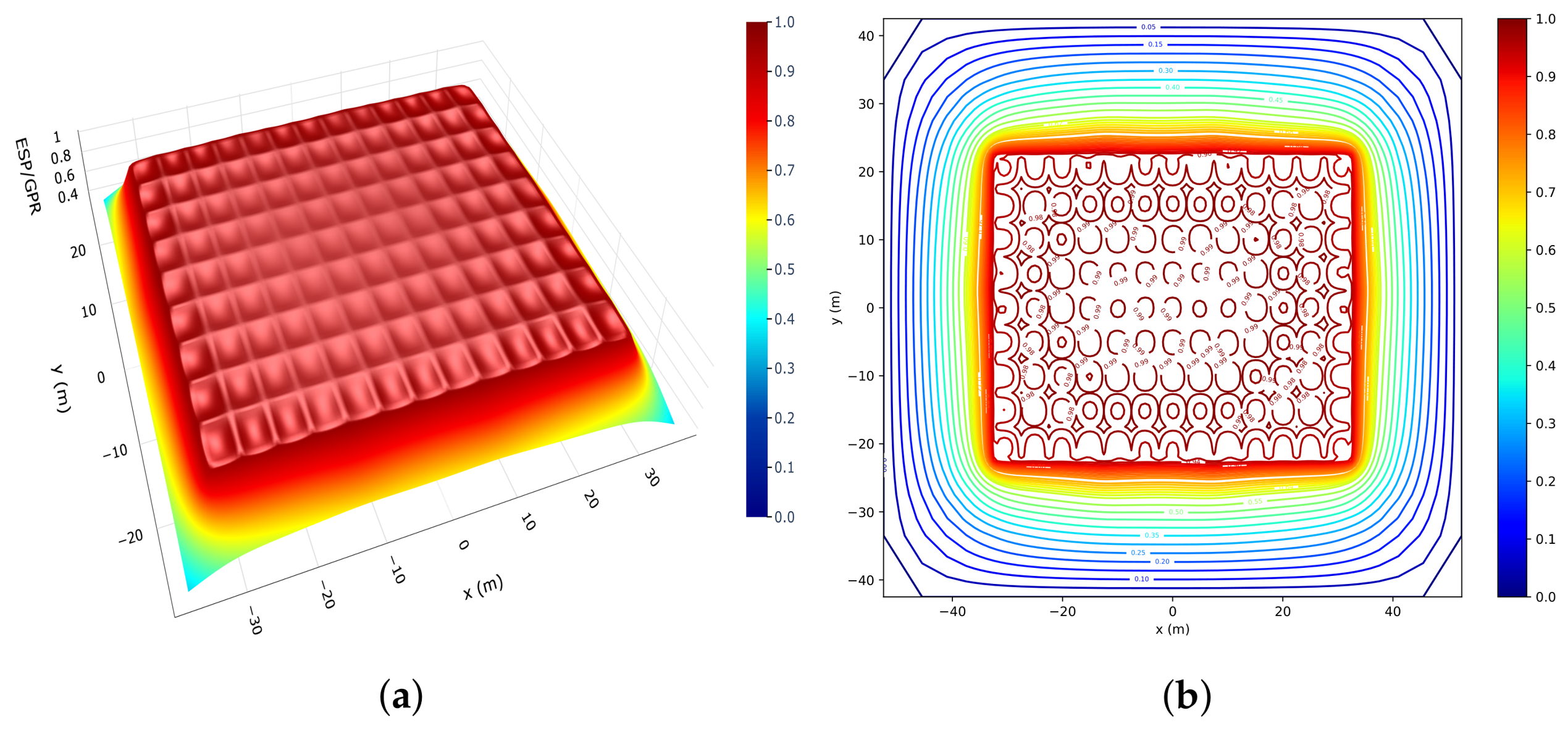
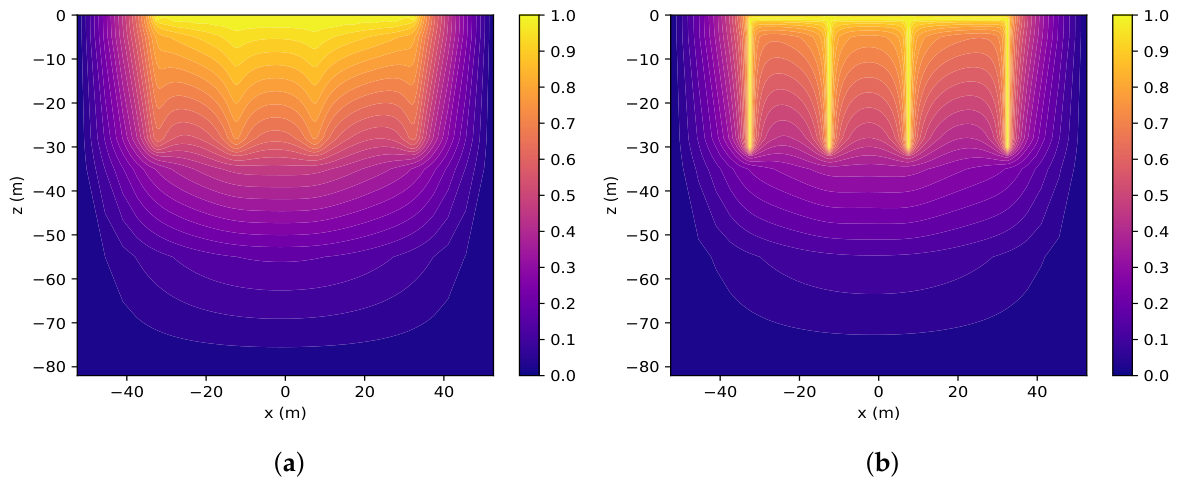
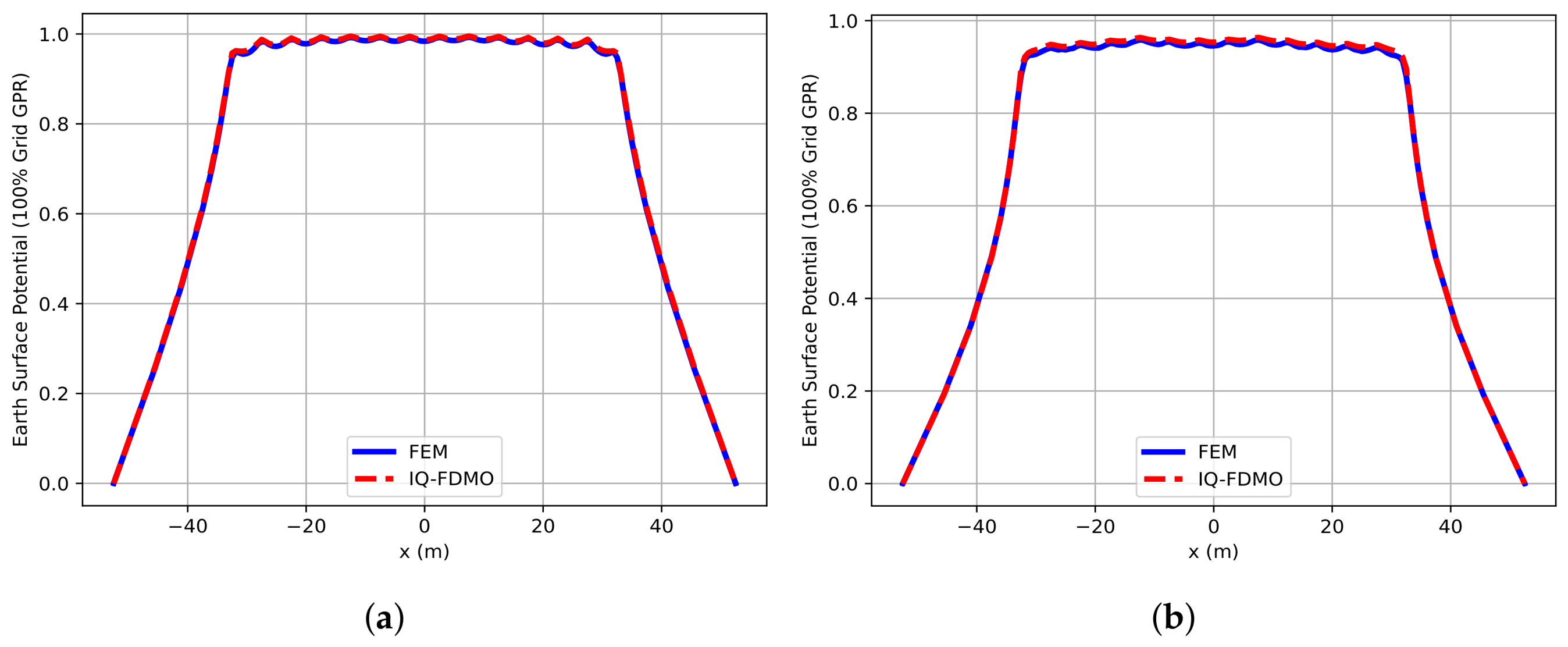
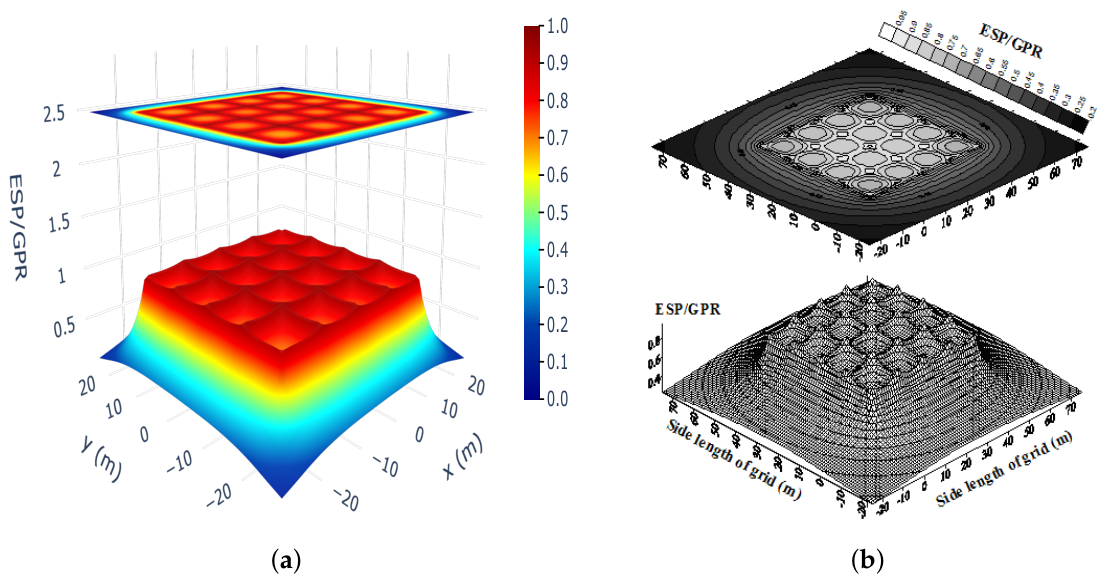
This paper presents a hybrid numerical approach, termed the Radial Basis Function–Finite Difference Matrix Operator (RBF–FDMO) method, to enhance the accuracy and flexibility of the conventional FDMO technique for three-dimensional (3D) electromagnetic field analysis governed by the Laplace–Poisson equation. Conventional numerical methods often face challenges related to computational complexity and limited flexibility when handling non-uniform discretization and complex geometries. In the proposed method, spatial derivatives are approximated using RBF-based interpolation rather than finite difference schemes derived from Taylor series expansion. This formulation enables the construction of high-accuracy derivative operators on both uniform and non-uniform FD grids, thereby improving numerical robustness and adaptability to complex geometries. The performance of the proposed method is first compared with the FDMO in a 3D benchmark problem, with reductions of more than two orders of magnitude in both RMS and maximum errors. Furthermore, the RBF-FDMO approach is developed and, for the first time, applied to the analysis of grounding system (GS) configurations specified in IEEE Std. 80™, as well as a practical 110 kV substation GS in Vietnam. The obtained potential distributions, grounding resistances, and touch and step voltages confirm the effectiveness and reliability of the method. The results indicate that the proposed approach features a simple formulation and competitive computational efficiency, positioning it as a practical alternative to conventional methods like the finite element method (FEM) and the boundary element method (BEM) for GS analysis and design.
Keywords: Laplace–Poisson equation; grounding system; FDMO; radial basis function; RBF-FDMO; BEM; FEM Laplace–Poisson equation; grounding system; FDMO; radial basis function; RBF-FDMO; BEM; FEM