1. Introduction
The GS is one of the key components in the design and operation of power systems. It performs three primary functions, including system operational grounding, equipment protective grounding, and lightning protection grounding. When faults occur in power systems, such as insulation breakdowns, short circuits to ground, or lightning discharges, the GS provides a low-impedance path for fault and surge currents to flow into the earth. As a result, the GS not only ensures the effective operation of protection devices but also upholds personnel safety and contributes to the electromagnetic compatibility and stability of entire power systems [
1,
2,
3].
In the case of protective grounding, this problem is commonly described by the 3D Laplace equation:
where
denotes the electric potential.
Accurate solutions to the Laplace equation allow for the assessment of key safety parameters, such as earth resistance, touch voltage, and step voltage, which are critical for ensuring compliance with national and international standards, including IEEE Std. 80™ [
1,
4].
The analysis of a complex GS, characterized by irregular geometries and non-homogeneous soil conditions, often requires the use of advanced numerical methods to obtain reliable and accurate results. Among the available numerical methods, the FEM stands out as a robust and flexible approach, capable of delivering high accuracy when dealing with complex three-dimensional regions characterized by spatially varying material properties [
5,
6,
7]. By discretizing the entire computational domain into a large number of finite elements, FEM transforms the governing Laplace equation into a system of algebraic equations. However, this volumetric discretization results in a substantial number of unknowns, leading to large sparse matrices that demand significant computational resources and memory [
8,
9]. Furthermore, the mesh generation process is often cumbersome for a GS featuring numerous buried conductors and multilayer soil structures. The necessity of accurately representing the infinite soil domain using artificial boundaries also introduces modeling uncertainty, as the choice of boundary distance and type can notably affect the solution accuracy. Consequently, FEM-based GS analysis becomes time-consuming and computationally expensive, especially when dealing with large substations or parameter sweeps.
Complementing the FEM, the BEM has gained considerable attention owing to its ability to reduce the problem dimensionality and computational cost [
10,
11,
12,
13]. Unlike the FEM, the BEM requires discretization only along the boundaries of the problem domain, which considerably reduces the number of elements and simplifies the representation of open-boundary problems. Despite these advantages, the BEM is less efficient when handling non-homogeneous or multilayer soils, as the derivation of suitable Green’s functions becomes mathematically complex and the resulting system matrices are often ill-conditioned. Additionally, for large or highly interconnected GS configurations, the dense and fully populated matrices inherent to the BEM can lead to increased memory requirements and longer computation times.
To overcome the limitations of each approach, the hybrid FEM–BEM technique has been proposed [
14]. In this formulation, the FEM efficiently captures the volumetric complexity within the soil, while the BEM accurately models the behavior at infinity, thereby improving overall accuracy. However, this hybridization increases the implementation complexity, as it requires coupling of two distinct formulations and exchanging of boundary information at their interface. Such procedures often entail additional pre- and post-processing steps, making the hybrid approach less straightforward for large-scale or iterative GS studies.
Another widely used approach is the method of moment (MoM), which reformulates the potential distribution problem into an integral-equation framework [
15]. The MoM is well suited for thin-wire models of grounding conductors, with emphasis on the evaluation of longitudinal current distribution. Nonetheless, its application to extensive GS models is limited due to the rapid growth of the dense impedance matrix, which scales quadratically with the number of segments. Moreover, MoM assumes simplified soil models and faces challenges when incorporating realistic multilayer or frequency-dependent soil characteristics. These factors collectively increase computational cost and reduce modeling flexibility.
Overall, while the FEM, BEM, and MoM have proven to be robust and accurate in specific applications, their inherent drawbacks—complex meshing, high computational demand, and limited adaptability to non-uniform soils—highlight the need for a more efficient and flexible numerical framework for realistic GS analysis. Despite their effectiveness, conventional numerical methods for grounding system analysis face several mathematical and computational challenges. These include the requirement for fine and structured meshing to maintain numerical stability, the generation of large sparse or dense matrix systems that impose significant memory and processing demands, and limited flexibility in handling irregular geometries or highly heterogeneous soil profiles.
For grounding-system analysis, the comparison among numerical methods in this study is primarily focused on aspects that are most relevant to the present problem, namely formulation simplicity, flexibility for non-uniform discretization, and applicability to practical grounding-grid modeling. From this perspective, although FEM, BEM, and MoM are well-established and effective in many applications, their limitations motivate the development of alternative approaches that can retain numerical accuracy while offering a more straightforward operator-based formulation.
Accordingly, the main novelty of the present work lies in integrating RBF-based derivative approximation into the classical FDMO framework for three-dimensional grounding-system analysis. Unlike the Taylor-series-based derivative construction used in the conventional FDMO formulation, the proposed hybrid RBF-FDMO approach enables more flexible and accurate operator construction on both uniform and non-uniform grids, thereby extending the applicability of the FDMO method to grounding-system modeling.
Motivated by these considerations, the finite difference method (FDM)—with its mathematically simple approach, competitive computational efficiency, and high applicability—has been employed for the simulation of GS [
16,
17]. In this work, we present, for the first time, the RBF-FDMO method, which integrates the 3D FDMO approach proposed in [
17] with the use of RBF approximations to the GS analysis. First, we developed the RBF-FDMO method in 3-D domain and validated it by solving a benchmark 3-D problem. The method is then combined with a non-uniform FD mesh, enabling improved flexibility and accuracy when modeling GS with complex geometries. This combined approach is applied to simulate several GS configurations defined in IEEE Std. 80™ and the GS of the 110 kV high-voltage substation in Vietnam. The obtained results demonstrate that the RBF-FDMO method consistently delivers more accurate solutions compared to conventional methods such as the BEM, FEM, and the procedures outlined in IEEE Std. 80™.
The main contributions of this study can be summarized as follows:
A novel hybrid method integrating RBFs with the FDMO approach has been successfully developed, resulting in the RBF-FDMO method. This combination not only achieves significantly higher solution accuracy than the original FDMO proposed in 3-D domain [
17], but also provides greater flexibility in handling complex geometries and both uniform and non-uniform grids through the use of RBF interpolation.
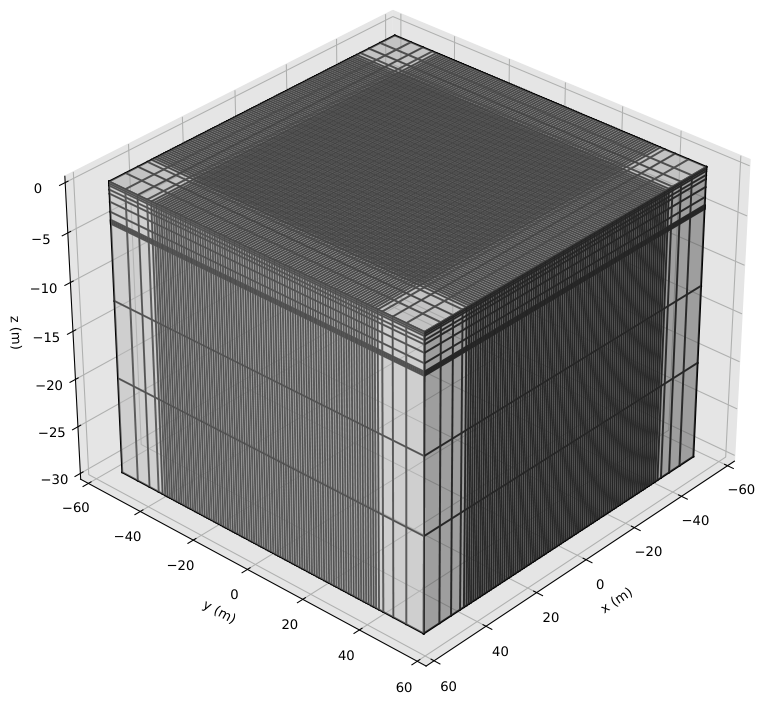
This study marks the initial use of the RBF-FDMO technique in simulating and evaluating both theoretical and practical GSs. In particular, the 3-D finite difference grid employed in this work is non-uniform, and its effectiveness has been validated in [
18,
19]. The approach provides accuracy equivalent to well-known methods such as the FEM and BEM, while benefiting from a more straightforward mathematical framework and simpler implementation.
The structure of this paper is outlined as follows: In
Section 2, we formulate the RBF-FDMO approximations for the 3-D EMF problem.
Section 3 briefly presents the algorithm for determining the optimal shape parameter proposed by Victor Bayona et al. in [
20].
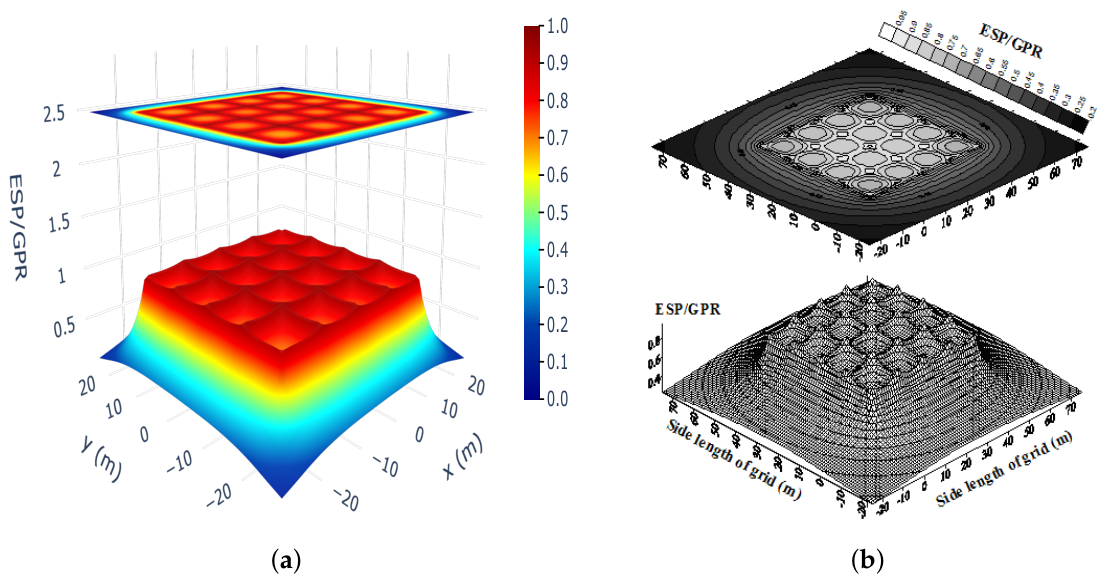
Section 4 presents our study’s findings, where the RBF–FDMO method is applied to analysis potential distribution, earth resistance, touch and step voltages of several benchmark and real-world GSs. Finally,
Section 4 provides remarks and conclusions of the paper.
3. Choosing Optimal Shape Parameters of the RBFs
The optimal shape parameters of RBFs can be determined by various approaches, as discussed in [
24]. In this work, we utilize the algorithm for selecting the optimal shape parameter, as proposed by Victor Bayona et al. [
20], and adapt it to our RBFs. This approach, which aims to enhance the accuracy and efficiency of RBF interpolation, is detailed as follows.
Consider a one-dimensional domain discretized into N scattered points, where represents the total number of interior points within the domain. Consequently, the difference corresponds to the two boundary points.
The RBF-FDMO error is given by
where
…
is the RBF-FDMO approximation and
…
is the exact solution.
In order to find the “optimal” value of the shape parameter
, the approximation error
, as defined in (
28), is minimized. This is achieved through the following expression, which allows for an efficient determination of
that results in the best possible approximation:
5. Remarks and Conclusions
Here, we can remark some main points as follows:
Mathematical Formulation: Compared with numerical techniques such as the FEM, BEM, and MoM, the FDM stands out for its conceptual and computational simplicity. Its mathematical structure is considerably more direct, which simplifies coding, algorithmic management, and overall implementation. When combined with the RBF–FDMO framework, three-dimensional problems can be formulated efficiently by constructing the system through successive Kronecker products of the corresponding one-dimensional operators, as described in
Section 2.2. This strategy is particularly effective for large-scale domains, intricate geometries, and a wide range of boundary condition types, making it a robust choice for practical engineering applications.
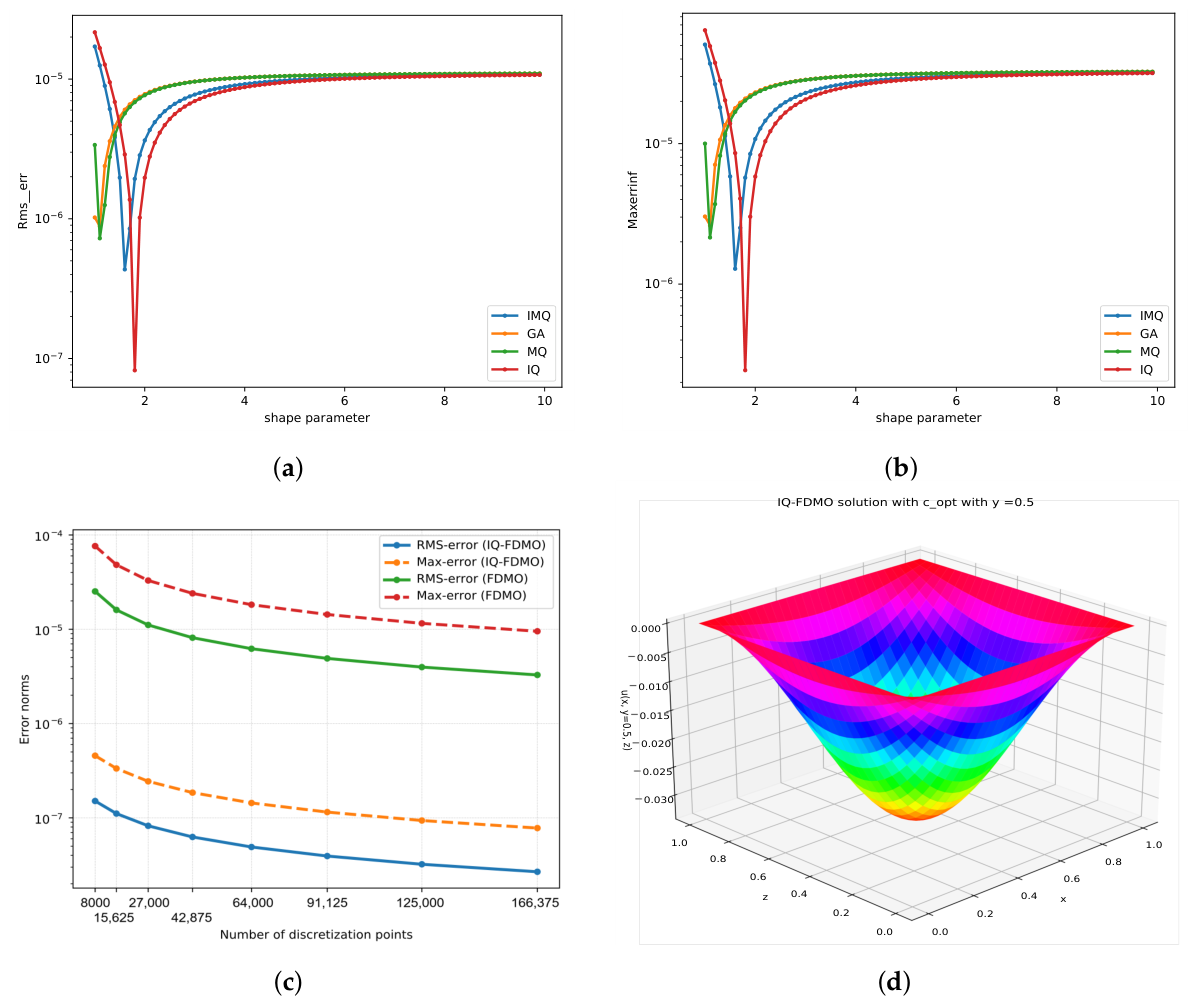
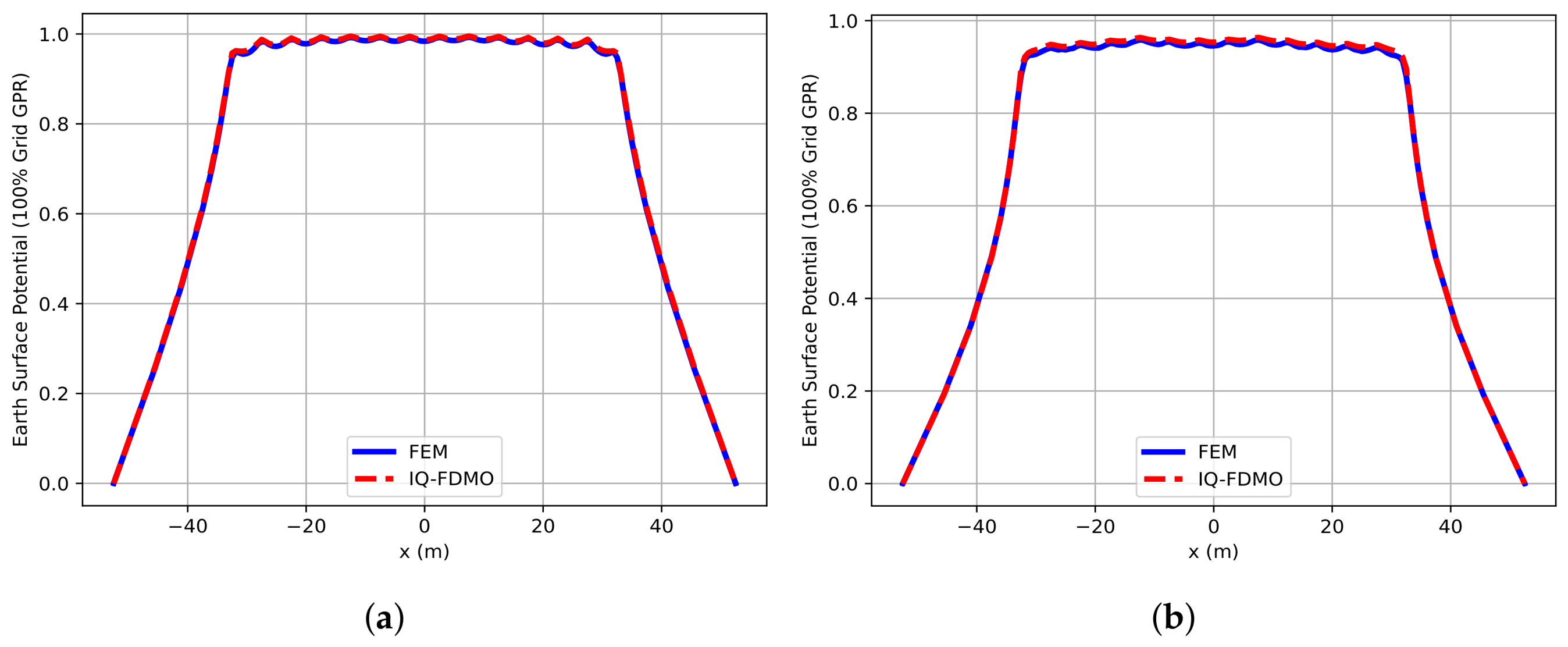
Accuracy: When RBF approximations are employed as substitutes for the classical Taylor-series-based FD approximations, the RBF-FDMO approach demonstrates markedly improved accuracy compared to traditional numerical methods in the small value range of the shape parameter. In particular, when the RBF-FDMO approach is combined with an optimal shape parameter selection algorithm, as presented in [
20], results such as those shown in
Figure 1a,b can be obtained.
Cost-efficient: As illustrated in
Figure 1c, the RBF–FDMO approach attains an accuracy comparable to, or in some cases better than, the FDMO solution while using only a few thousand nodes in the discretized domain. In contrast, the FDMO method requires several hundred thousand points to reach a similar error level. This demonstrates that RBF-FDMO can substantially alleviate computational demands, making it well suited for large-scale or geometrically intricate problems where extremely high precision is not essential.
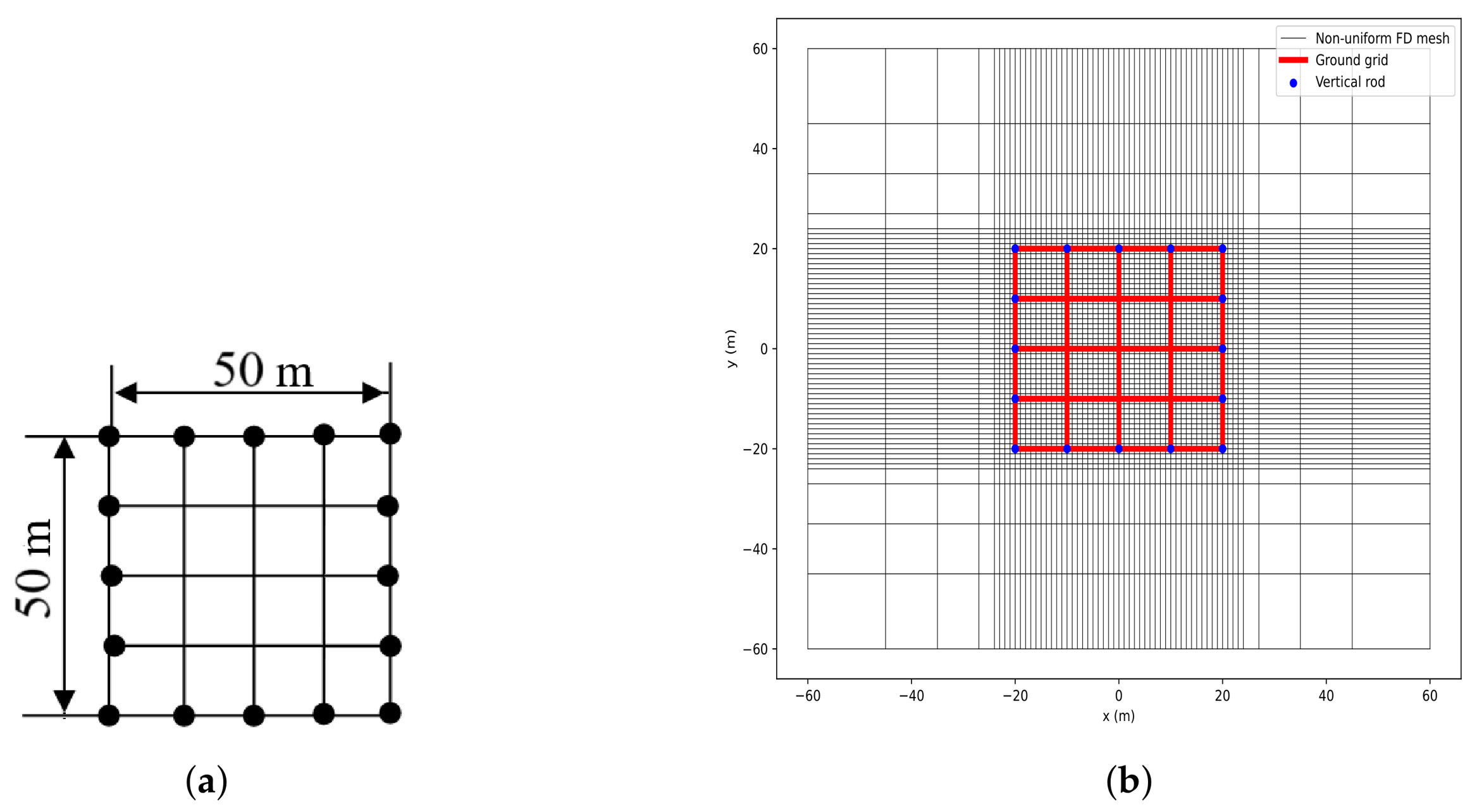
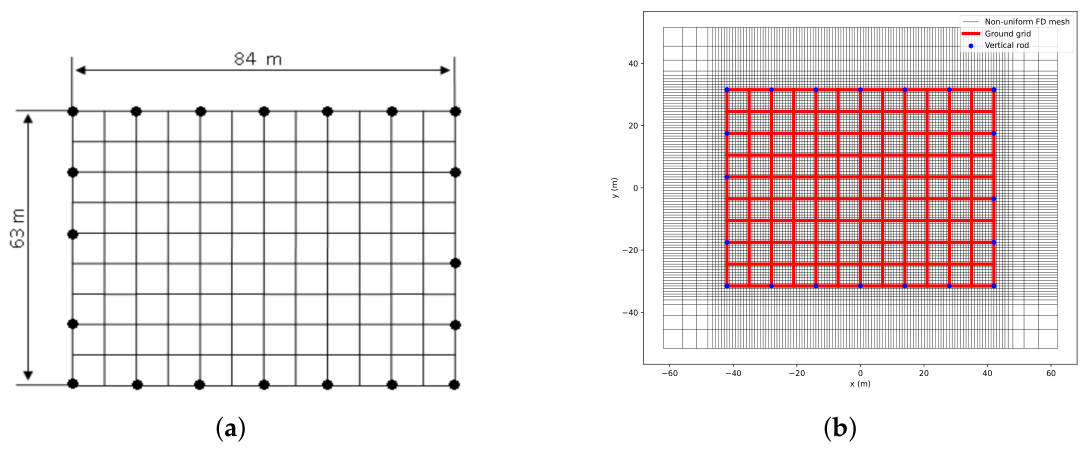
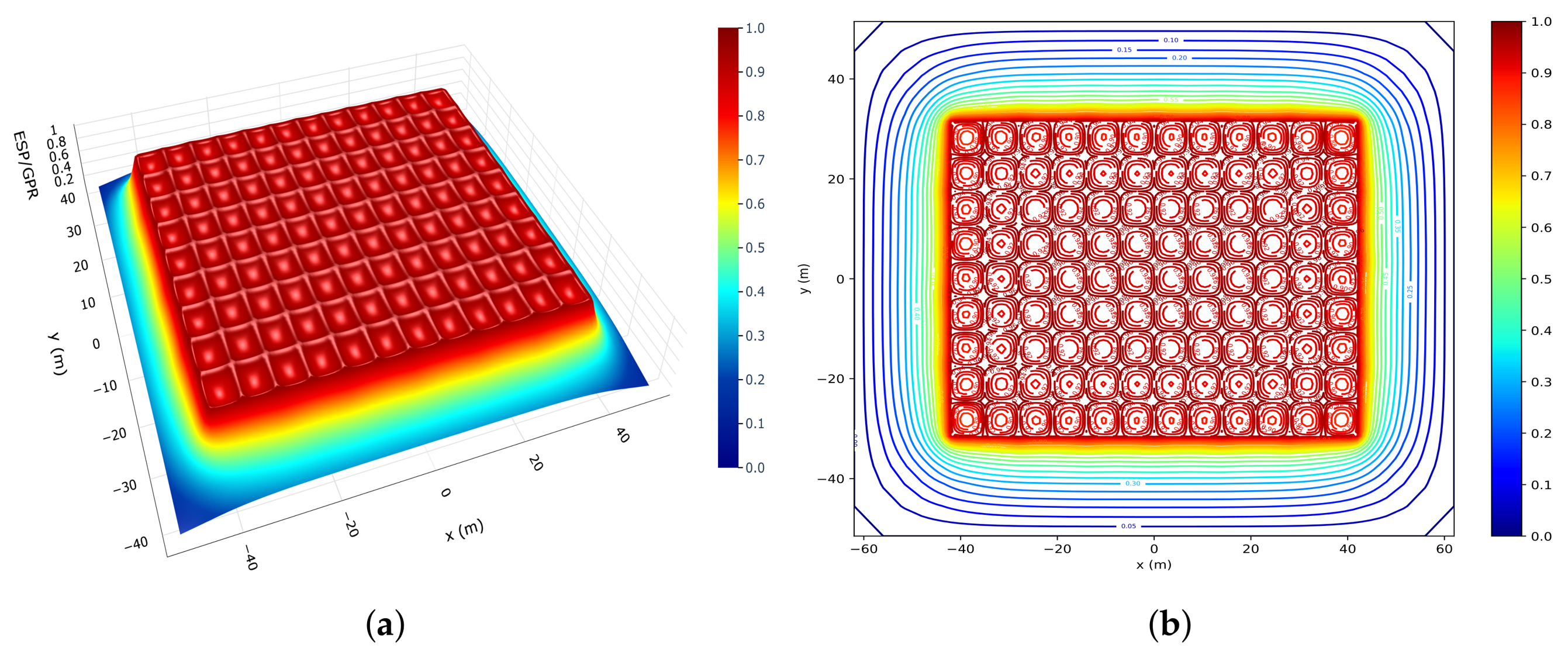
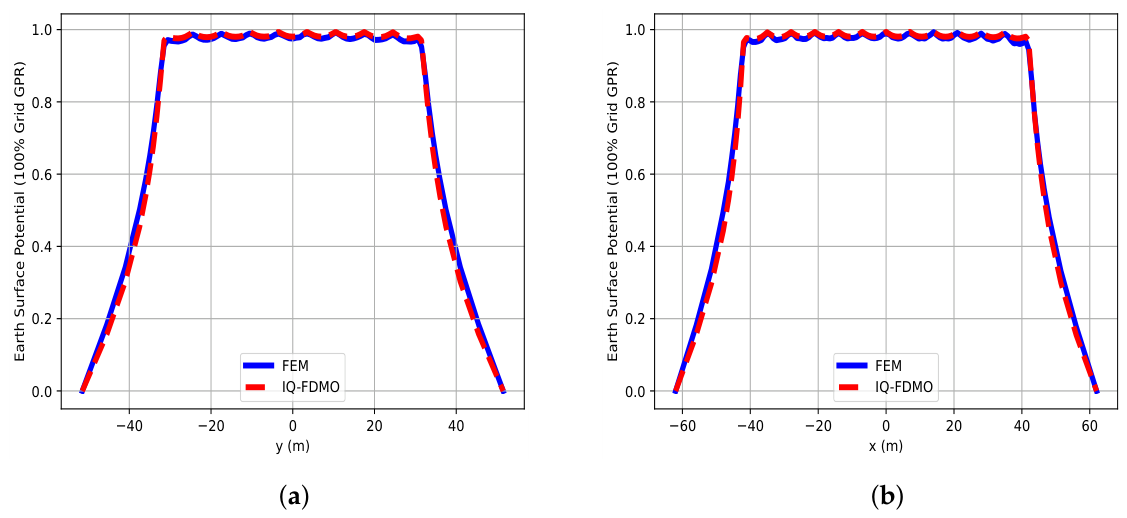
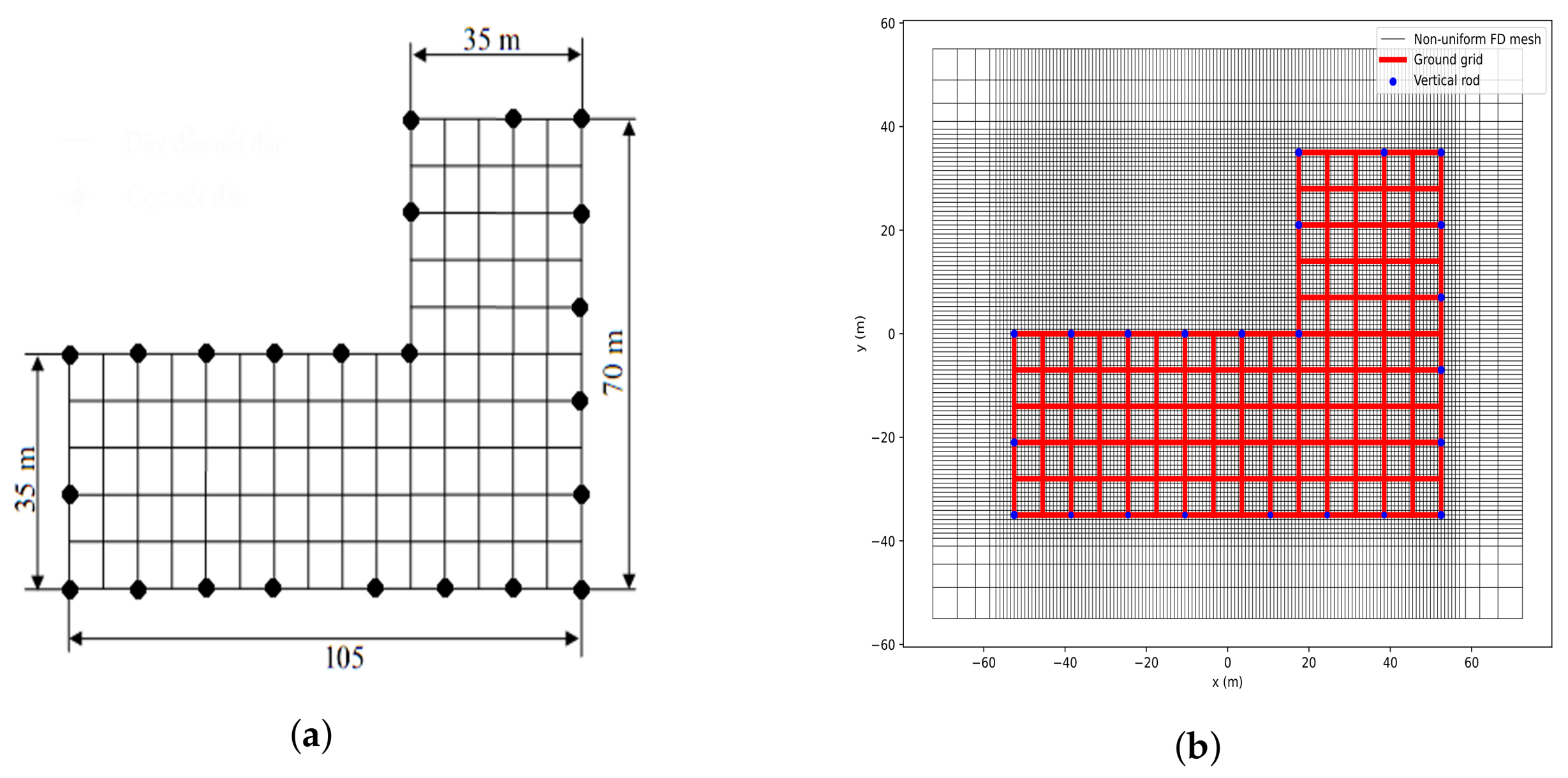
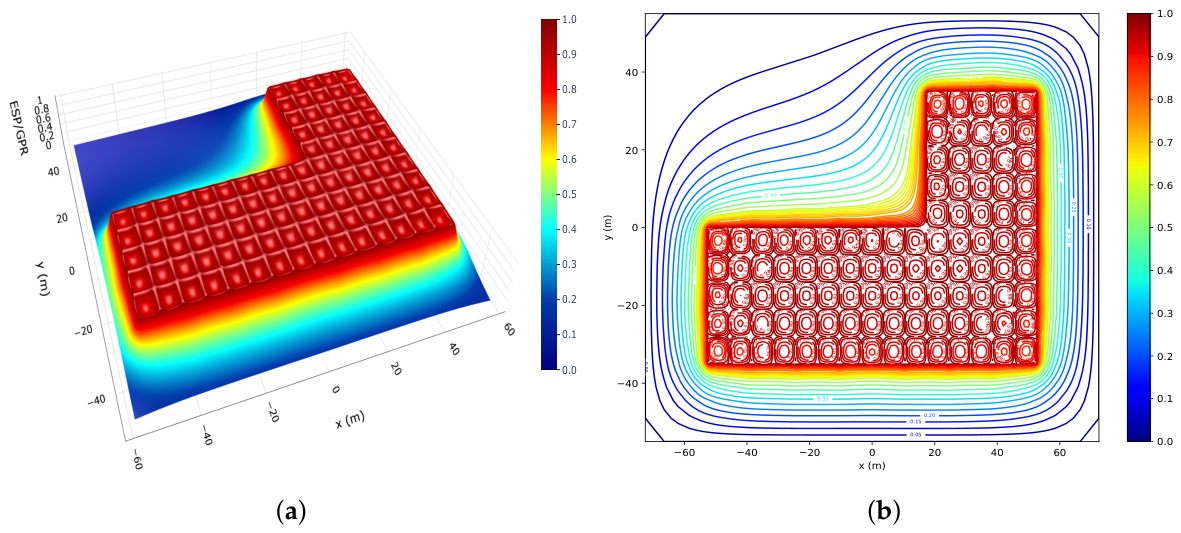
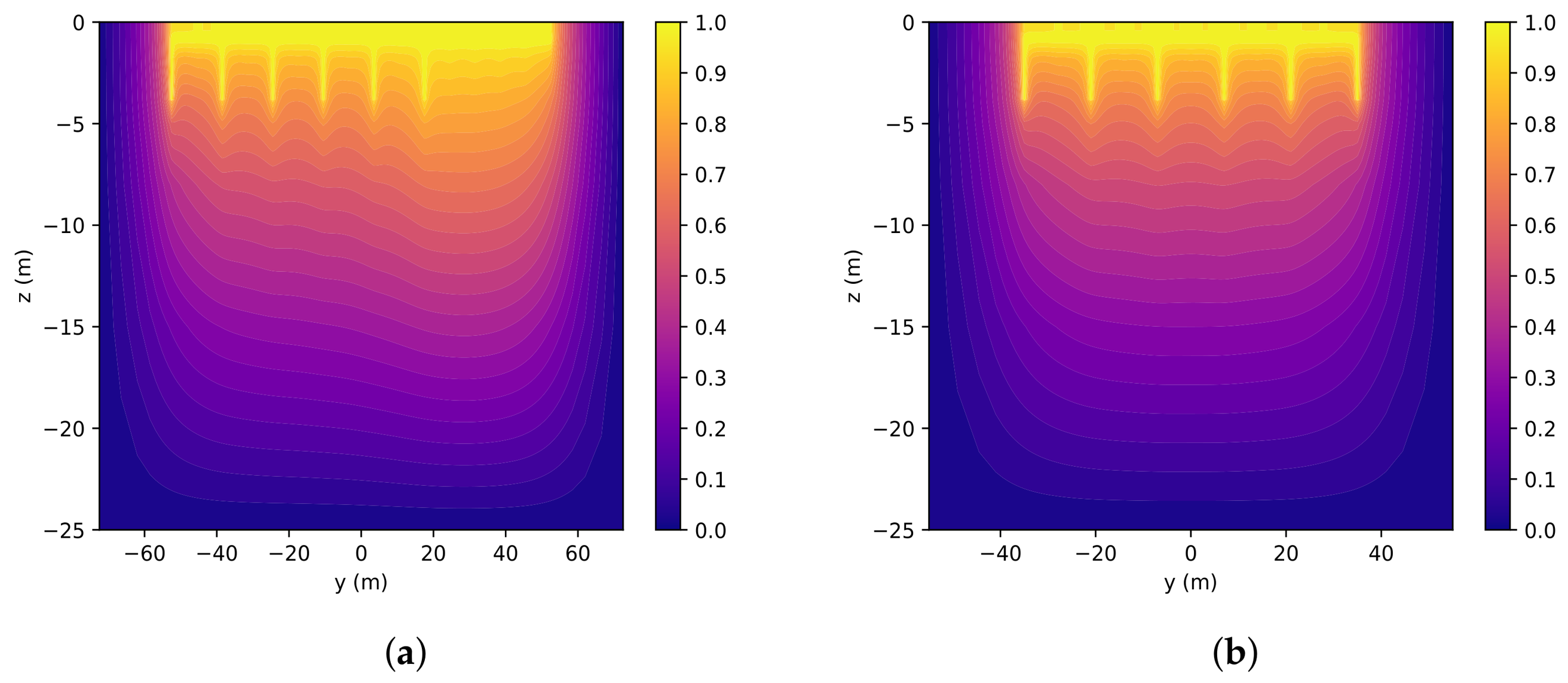
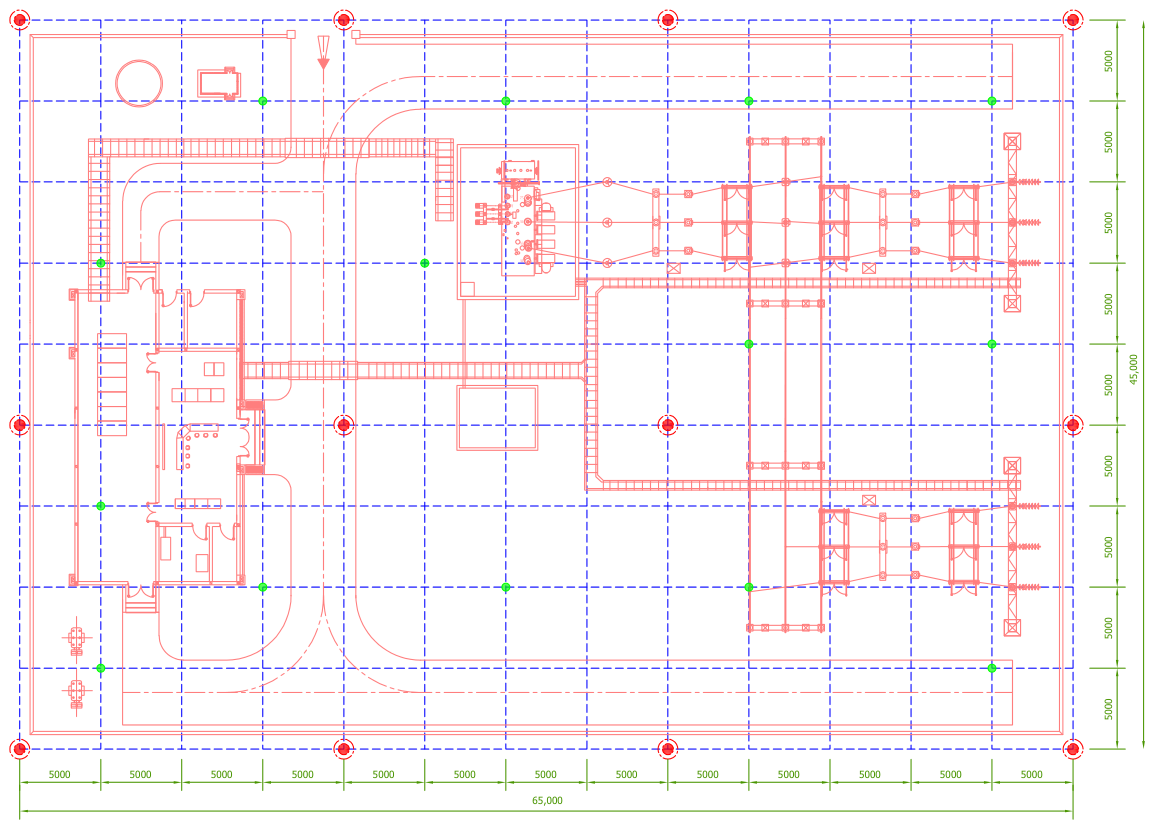
Applicability: The RBF–FDMO framework can accommodate various GS configurations, including square, rectangular, L-shaped, and practical substation layouts. With its low computational complexity and simple implementation, it serves as an efficient tool for GS design and optimization in high-voltage substations. It also enables the evaluation of key safety parameters, such as grounding resistance and step and touch voltage limits, in accordance with IEEE, IEC, and national standards, as described in
Section 4.
This paper presents the development of the RBF–FDMO method, which extends the previously proposed FDMO formulation [
17,
21] to fully three-dimensional problems through the use of Kronecker products of one-dimensional differential operators. This extension represents a significant methodological advancement, as it enables the efficient construction of multi-dimensional finite-difference operators without the need for complex mesh generation or domain discretization typically required in FEM-based solvers. By integrating RBFs into the FDMO framework, the proposed approach significantly enhances the accuracy, smoothness, and numerical stability of derivative approximations, thus achieving a better trade-off between precision and computational cost.
It should be noted that the present work is conducted under idealized conditions, including homogeneous soil assumptions and standardized grounding configurations. In addition, the computational efficiency demonstrated here is reflected mainly in the simplicity of the operator-based formulation and in the ability of the proposed method to achieve high accuracy with relatively fewer discretization points in the benchmark problem, rather than through a full runtime- and memory-based benchmark. A more comprehensive analysis of convergence behavior, computational performance, and extensions to more complex soil models and grounding configurations will be considered in future work.
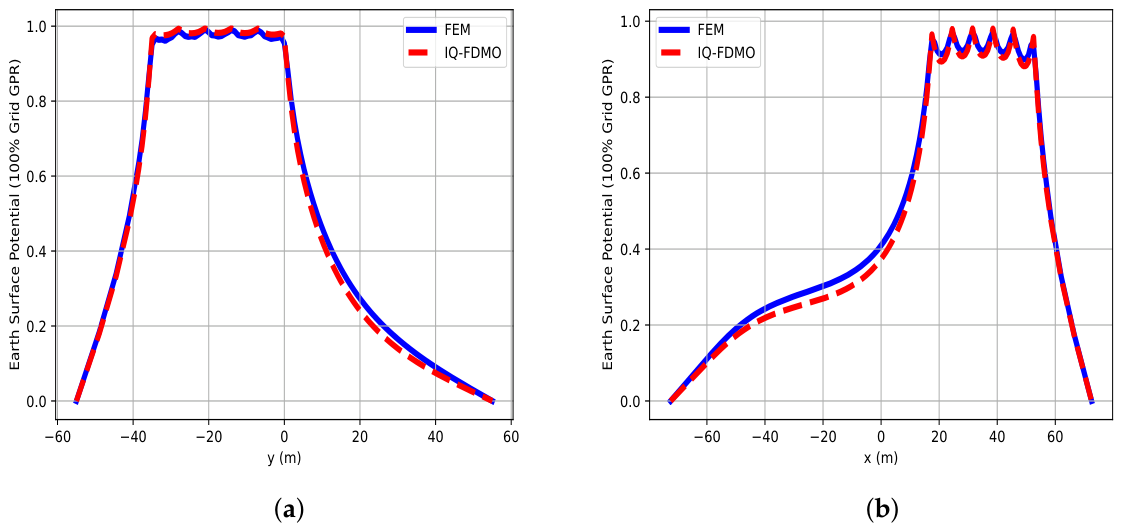
The novelty of this study lies in formulating a 3-D RBF-enhanced finite-difference operator scheme on uniform and non-uniform nodal grids that inherits the simplicity of the conventional FDM while leveraging the flexibility of RBF interpolation to handle irregular node distributions and complex geometries. Unlike traditional numerical methods such as the FEM, BEM, or MoM, which rely heavily on meshing or the evaluation of integral kernels, the RBF–FDMO constructs purely algebraic operators that can be easily implemented and adapted to diverse GS configurations and heterogeneous soil conditions. The proposed method was validated using a well-established 3-D benchmark problem, where the RBF–FDMO solution demonstrated superior accuracy compared with the corresponding FDMO results. Following this validation, the method was successfully applied to simulate the potential distribution of grounding systems with various geometries, including a real-world 110-kV substation in Vietnam. The simulation results exhibited excellent agreement with those obtained from conventional numerical methods such as the FEM and BEM, while having competitive computational efficiency and providing a simpler numerical formulation.
Overall, this work contributes to the field by introducing a novel 3-D RBF–FDMO formulation that unifies the advantages of the FDM, RBF interpolation, and operator-based construction via Kronecker products. The method combines mathematical simplicity, high accuracy, and computational efficiency, offering a new numerical framework that bridges the gap between traditional mesh-based solvers and emerging meshless techniques. With its robustness and flexibility, the RBF–FDMO method shows strong potential for practical grounding system analysis, especially in early-stage design and optimization tasks in high-voltage substation projects, where rapid assessment of multiple GS configurations is essential. Future work will focus on extending this framework to transient and frequency-dependent analyses and on integrating it into commercial grounding design software and power utility workflows.