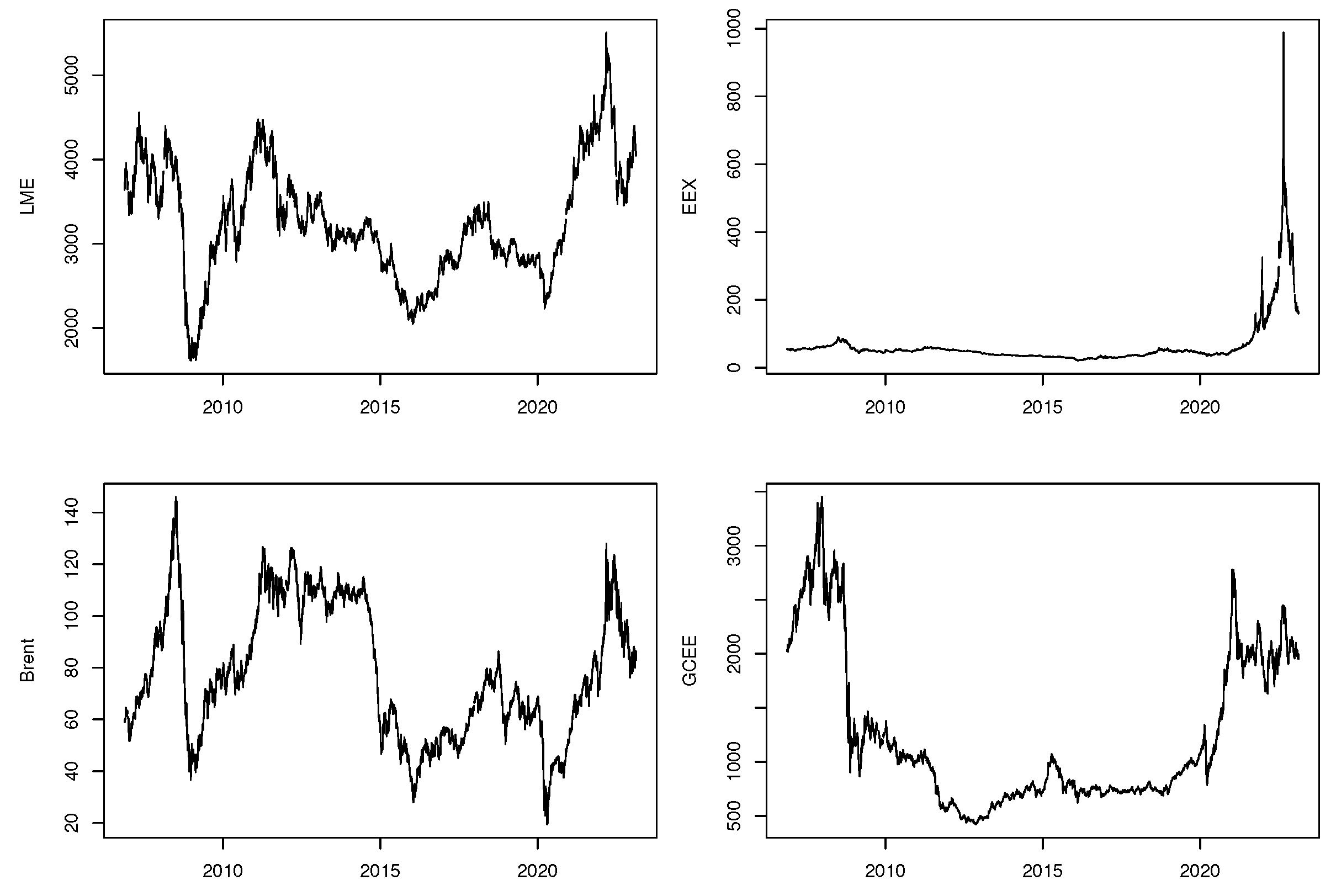
1. Introduction
Electricity, fossil fuels, metals, and clean energy technologies constitute interconnected components of a unified energy commodity system. Fossil fuels remain a key input in electricity generation and continue to play a dominant role in shaping market expectations. At the same time, the rapid expansion of the clean energy industry has significantly increased demand for critical metals that are indispensable for the construction and deployment of renewable energy infrastructure [
1,
2]. As the terminal stage of the energy supply chain, the electricity market is directly influenced by both upstream fuel prices and the material costs associated with renewable energy technologies [
3]. Consequently, fossil fuels, metals, clean energy stocks, and electricity markets are interconnected through multiple channels, including production costs, input substitution, technology deployment, and investment behavior. Price fluctuations or shocks originating in any one of these markets can propagate across the system, affecting the dynamics of other markets and shaping the overall structure and stability of the energy system.
Understanding the interconnections among fossil fuels, clean energy, metals, and electricity markets is essential for three interrelated reasons. First of all, from a financial and risk management perspective, investors require accurate and timely information on how shocks transmit across these interconnected markets [
4]. For example, investors in the clean energy sector must consider the systemic interdependencies between the clean energy markets and the related sectors (e.g., energy metals, fossil fuels, and electricity). They need to employ dynamic portfolio adjustments informed by spillover mechanisms to reduce cross-market risk contagion. Secondly, at the policy level, governments and regulators require robust analytical tools to design policies that ensure market stability and secure financing for sustainable energy projects during the transition to clean energy. Finally, complex dynamics, particularly in the face of exogenous shocks such as the global financial crisis (GFC), the COVID-19 pandemic, and the Russia–Ukraine conflict, underscore the importance of this research. During the GFC, crude oil prices fluctuated dramatically [
5]. The COVID-19 pandemic exposed the vulnerability of global energy–metals networks, with lockdowns disrupting at least one-third of critical mineral supplies [
6]. Similarly, the Russia–Ukraine conflict compelled Russia to reduce fossil fuel supplies to Europe, thereby disrupting electricity markets and delaying renewable energy projects [
7,
8]. These crises alter the relationships among these markets, necessitating a robust and evidence-based policy framework to prevent or mitigate cascading risks [
9].
Despite the growing literature on energy market interdependence, existing studies have largely focused on pairwise relationships (e.g., fossil fuels vs. clean energy) or analyzed markets in isolation, thereby overlooking the systemic nature of cross-market spillovers [
10,
11]. To the best of our knowledge, the scholarly literature remains limited in systematically integrating the three core pillars of the energy system, namely production (fossil fuels and renewables), infrastructure (metals), and distribution (electricity), into a unified analytical framework to empirically examine their interdependencies. In addition, methodologically, traditional methods for examining dependency structures and spillover effects have relied on models such as the vector autoregressive (VAR), cointegration, and generalized autoregressive conditional heteroskedasticity (GARCH) models, among others. Most of these methods assume stationarity or rely on pre-specified window lengths, which oversimplify the complex market dynamics. Daily financial data, especially during periods of turmoil, can exhibit abrupt shifts in relationships that are smoothed or even missed entirely by approaches that do not offer fine-grained temporal resolutions. More importantly, traditional methods only focus on the time domain and cannot distinguish the differences in variable dependency structures in the short, medium, and long term. This limitation may mislead decision makers and investors because they often need to formulate investment and risk management strategies over different time horizons.
To address these limitations, this study employs wavelet analysis methods to analyze joint dynamics across multiple markets [
12,
13]. Specifically, we investigate the time–frequency dynamics and spillover effects among four energy-related markets: the clean energy market, the fossil fuels market, the metals market, and the electricity market by using a Wavelet Local Multiple Correlation analysis (WLMC). The WLMC leverages wavelet decomposition to disaggregate the time series into different frequency components. This allows us to distinguish between the high-frequency and the low-frequency dynamics. While traditional wavelet techniques (such as continuous wavelet transform, discrete wavelet transform, and wavelet packet transform) are very effective for time–frequency analysis, their application is usually limited to bivariate frames. In contrast, the WLMC simultaneously captures the relationships among multiple variables, thereby enhancing our understanding of the complex interactions among the four markets. Furthermore, the WLMC does not rely on the assumption of stationarity, thereby capturing instantaneous fluctuations and anomalous changes more effectively. Complementing the WLMC approach, a time-varying parameter vector autoregressive (TVP-VAR) model to quantify the direction and the intensity of the spillover effects. The TVP-VAR model is robust to outliers and avoids the need to predefine rolling window lengths, thereby preserving information and accurately capturing the evolving nature of market connectedness.
In summary, this study makes three primary contributions. Firstly, it integrates fossil fuel, clean energy, metals, and electricity markets within a unified analytical framework, surpassing traditional bilateral or narrowly focused studies. Secondly, it applies the WLMC and the TVP-VAR models to capture the dynamic time–frequency spillovers across multiple time horizons. This approach enables policymakers and investors to comprehend the evolution of market interconnections and the channels through which shocks are transmitted. It thereby supports more informed decisions regarding diversification, hedging, and strategic asset allocation for the short-, medium-, and long-term horizons. Finally, by focusing on the Global Financial Crisis (GFC), the COVID-19 pandemic, and the Russia–Ukraine conflict, our research offers novel insights into how exogenous shocks propagate through interconnected commodity markets and alter their roles as net transmitters or receivers of the spillovers.
2. Literature Review
The global transition from fossil fuels to cleaner energy sources has sparked a rapidly expanding body of research aimed at understanding the dynamic relationships and spillover effects among clean energy and its related markets. By contrasting various methodological approaches and divergent empirical results, we pinpoint unresolved issues that motivate our integrated analysis, particularly regarding the time–frequency dynamics, structural breaks, and extreme market conditions. Earlier research that sets the stage for this debate includes Henriques and Sadorsky (2008) [
14], who provide seminal evidence that oil price fluctuations have only a minimal effect on clean energy stock prices, while technology stocks appear to have a stronger co-movement with clean energy stocks. Their findings suggest that clean energy firms are perceived similarly to high-tech enterprises rather than traditional energy producers. Sadorsky (2012) [
15] extends this line of research by using multivariate GARCH models and confirms that the linkage between clean energy and technology stocks outweighs that between clean energy and fossil fuels. In contrast, Kumar et al. (2012) [
16] use a VAR model to reveal a significant positive relationship between oil prices and renewable energy stock prices, which they attribute to a substitution effect between fossil fuels and renewable energy sources. These mixed findings highlight the sensitivity of empirical conclusions to modeling strategies and sample characteristics.
To reconcile these discrepancies, subsequent studies have adopted more advanced econometric techniques that explicitly account for nonlinearity and structural breaks. Bondia et al. (2016) [
17] argue that earlier studies may yield misleading results due to their neglect of structural breaks in financial time series. By employing a threshold cointegration model, they expose persistent interconnections among clean energy, oil, and technology stocks, as well as interest rates. Fahmy (2022) [
18] deepens this debate by using a nonlinear smooth transition regression model to demonstrate that the interrelationship between clean energy and oil prices weakens post-Paris Agreement, with technology stocks emerging as the dominant influence. Ferrer et al. (2018) [
19] and Kocaarslan and Soytas (2019) [
20] further suggest that ignoring nonlinearity and the heterogeneity of investment time horizons may be the root of conflicting findings. These studies collectively suggest that when studying the interconnections between markets, their nonlinear and frequency-domain heterogeneous properties should be taken into account. Consistent with this view, Dahir et al. (2018) suggest that neglecting frequency-specific dynamics can lead to contradictory interpretations [
21].
Beyond the relationship between clean energy and fossil fuels, a growing body of literature recognizes that clean energy and fossil fuels are core supply-side components of a broader energy system that is intrinsically linked to upstream metal markets and terminal electricity markets. Umar et al. (2019) [
22] investigate the interconnectivity between the oil prices and five industrial metals: copper, lead, zinc, aluminum, tin, and uranium, in a time–frequency domain. Their findings indicate that the overall correlation is relatively weak and that copper and lead are net transmitters of oil price spillovers, while uranium is a net receiver. Building on this work, Umar et al. (2021) [
23] decompose oil price fluctuations into risk, demand, and supply shocks and analyze the spillover effects of these shocks on the industrial metals. They find that the demand shock and the risk shock of the oil act as the primary receivers. Recent studies further extend the analysis to extreme market conditions and tail risk transmission. Chen et al. (2022a) [
24] argue that investors are concerned not only with average spillovers but also with extreme spillover effects. To investigate this phenomenon, they employ a quantile-based Diebold-Yilmaz spillover index to examine extreme spillover dynamics across the fossil fuel, clean energy, and metals markets. Their analysis reveals a marked increase in market connectivity under extreme conditions. Li et al. (2023) [
25] further incorporate the clean energy sub-markets into the analysis and find heterogeneous spillover effects between the clean energy sub-sectors and the metals and fossil fuel markets. Despite these advances, the role of electricity markets within the energy system remains comparatively underexplored. Naeem et al. (2020) [
26] and Naeem and Arfaoui (2023) [
27] show that electricity futures and clean energy stocks can serve as effective hedges against oil price volatility, particularly during periods of financial crises. However, their findings are less consistent during geopolitical shocks, such as the Russia–Ukraine conflict. Zhang et al. (2023) [
28] examine extreme spillover effects among clean energy, electricity, and energy metals markets using a quantile-based Diebold-Yilmaz spillover index. Nevertheless, the existing literature has yet to comprehensively integrate the asymmetric relationships among energy supply markets (clean energy and fossil fuels), upstream raw material markets (metals), and terminal energy markets (electricity) across short-term, medium-term, and long-term horizons.
The literature increasingly emphasizes the role of exogenous shocks, although their conclusions remain contested. Umar et al. (2022) [
9] examine the volatility transmission between the fossil fuel and the renewable energy sectors during the global financial crisis, the oil price shock, and the COVID-19 pandemic. They find that the volatility spillovers intensify markedly during these episodes, with the pandemic period exhibiting the most pronounced volatility. Bouoiyour et al. (2023) [
29] find minimal co-movement between the solar and wind energy prices and the oil prices during the COVID-19 pandemic. In contrast, Ghosh et al. (2023) [
30] identify a robust connectivity among the clean energy, the fossil fuel, and the metals markets in the upper quantile. The clean energy price is a net transmitter of spillovers before the pandemic, while it is the metals price post-pandemic. Chen et al. (2023) [
31] further determine that the pandemic predominantly disrupts the spillover dynamics between the energy and the metals markets through channels of uncertainty and financial turbulences.
Overall, the existing literature reveals three major gaps. Firstly, isolated analyses of energy submarkets neglect the systemic interdependencies among the related markets (fossil fuels, clean energy, metals, and electricity). Secondly, most studies on electricity market interconnectedness overlook frequency-based correlations with other markets. Finally, existing research fails to adequately investigate how extreme events such as the global financial crisis, the COVID-19 pandemic, and geopolitical shocks reshape the systemic interdependencies and spillover effects across these markets. Prior research on spillovers between the energy markets and the related sectors has primarily focused on bilateral or trilateral relationships. They often neglect the interdependencies among production sectors (i.e., clean energy versus fossil fuels), infrastructures (i.e., metals), and distribution networks (i.e., electricity). To address these gaps, this paper employs the WLMC and TVP-VAR models to investigate the time-frequency dynamics and spillover effects among the clean energy market, the fossil fuels market, the metals market, and the electricity market. The sample period spans from 17 November 2006 to 17 February 2023, covering the global financial crisis, the COVID-19 pandemic, and the Russia–Ukraine conflict. By adopting this integrated framework, the study aims to provide a comprehensive understanding ofthe interconnections among these markets, thereby addressing the aforementioned gaps.
4. Empirical Results
This section presents the empirical findings on the time–frequency dynamics and spillover effects among the clean energy, fossil fuel, metals, and electricity markets. We first examine the time–frequency co-movements using wavelet-based methods, followed by a dynamic analysis of directional spillovers based on the TVP-VAR framework. The analysis highlights the heterogeneity of market interdependence across different investment horizons, and the amplifying effect of this heterogeneity during major crisis events.
4.1. WLMC for the Bivariate Analysis
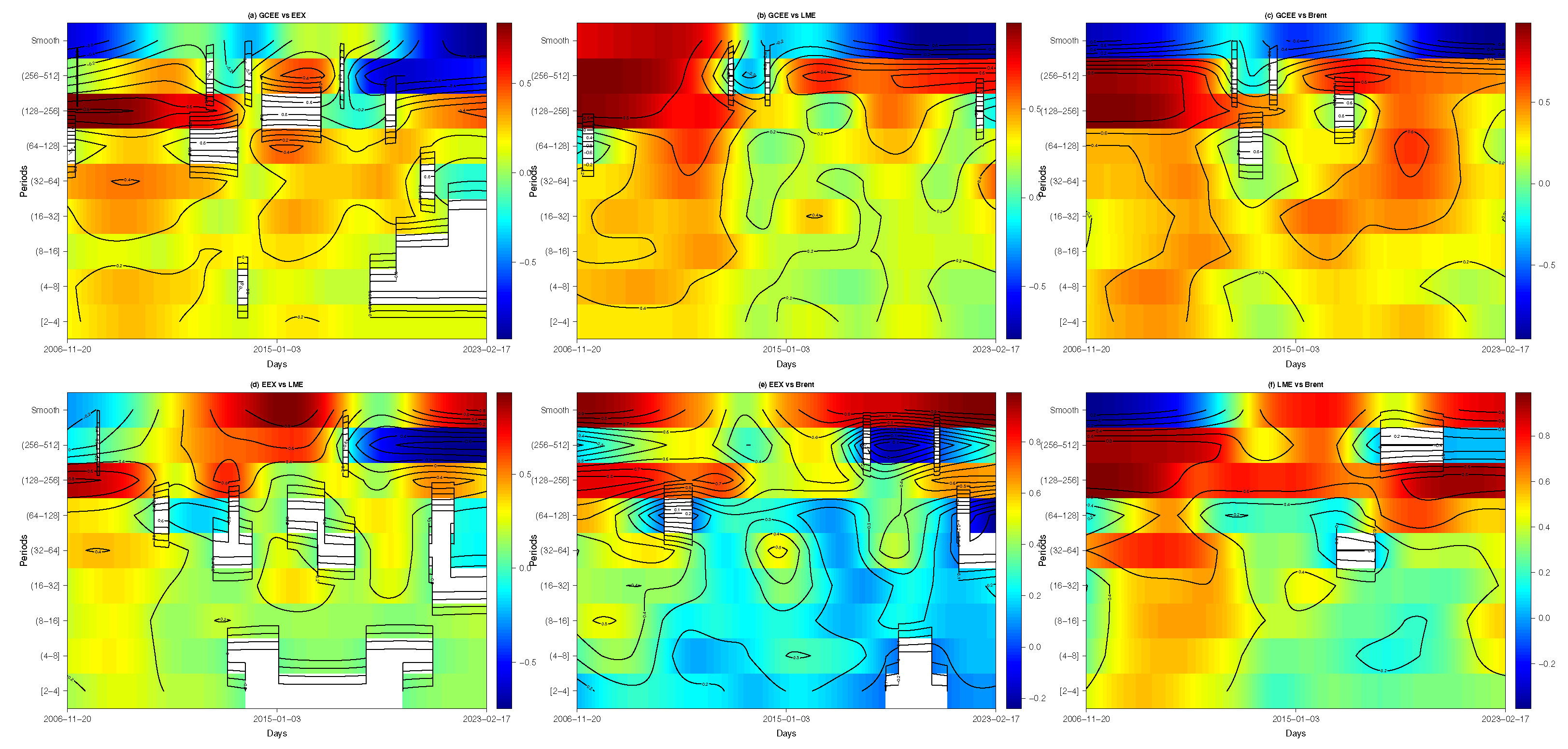
Figure 2 illustrates the bivariate wavelet coherence between clean energy (GCEE) and electricity (EEX), metals (LME), and fossil fuels (Brent), as well as the interrelationships among electricity, metals, and fossil fuels. The horizontal axis spans the time domain from 2006 to 2023, and the vertical axis is the frequency domain ranging from 2 to 512 days. Frequencies at or beyond 512 days are designated as “smooth”, indicating the point at which the correlations align with the unconditional correlations. The heatmap legend next to each figure utilizes cooler and warmer colors to represent weaker and stronger correlations, respectively. The white spaces indicate non-significant correlations at the 95% confidence interval. The black contours mark the specific correlation values. The relationships between these markets can change significantly across different time scales (periods) and time frames (years). At high-frequency bands (2–16 days), the weak correlations across markets indicate that short-term price fluctuations are mainly affected by idiosyncratic shocks, speculative trading, and market-specific news. Medium-frequency bands (32–128 days) reflect investors’ behavior and portfolio reallocation in response to macroeconomic news, policy announcements, and market expectations. There are noticeable “islands” of high coherence in the medium-frequency bands (64–128 days) coinciding with major global events, such as the Global Financial Crisis (around 2008), the 2014 oil crisis, and the post-2020 period (COVID-19 and the Russia–Ukraine conflict). Most notably, a striking feature present in almost all charts is the strong coherence (red area) in the long-term frequency bands (cycle of 256–512 days), indicating that the fundamental links between these markets are driven by long-term structural forces rather than short-term speculative shocks. These include global business cycles, energy transition trends, and sustained changes in production costs and input demand. From a long-horizon perspective, clean energy, fossil fuels, metals, and electricity prices are jointly driven by shared macroeconomic fundamentals, indicating a high degree of long-run integration within the energy commodity system.
Figure 2a reveals a modest positive correlation between the clean energy market and the electricity market over the short to medium term (2–128 days), with correlation coefficients ranging from 0.2 to 0.4. Although the correlation is weak, the direction of their co-movement is noteworthy. The positive correlation implies that higher electricity prices improve the profitability of the clean energy investments, consistent with the findings of [
37]. As the frequency decreases to the 128–256-day horizon, the co-movement between the electricity and the clean energy markets intensifies between 2006–2010 and 2019–2023, whereas the correlation is relatively weak in other periods.
Figure 2b shows a distinct red band in the low-frequency region (the upper part of the chart, corresponding to a period of 256–512 days), indicating a strong long-term coherence between the clean energy market and the metals market. This indicates that, in the long run, the clean energy market is significantly influenced by the metals market, meaning that structural changes in metal prices can have a fundamental impact on the performance of clean energy. Such long-term dependence may be related to the material-intensive nature of renewable energy technologies, which heavily rely on critical metals such as lithium, cobalt, and copper. As shown in
Figure 2c, in the short to medium term horizons (2–128 days), the correlations between the clean market and the crude oil market are generally low or moderate (yellow areas). However, during specific crisis periods, highly correlated “islands” emerge, indicating the presence of a contagion effect. Specifically, we observe strong co-movements in the 2–64-day band during the Global Financial Crisis (2008–2009), and in the 16–32-day band around the 2014–2015 oil price crash. Most notably, the COVID-19 pandemic (2020) triggered a surge in connectedness across a wide frequency range (32–512 days), reflecting a systemic shock that synchronized both markets. Contrary to the expectation of decoupling, the long-term analysis (256–512 days) demonstrates a persistent and robust high correlation throughout the entire sample period (2006–2023). This contradicts the hypothesis that clean energy has decoupled from fossil fuels in the long run; instead, it suggests that fundamental economic cycles drive both markets in the same direction over long horizons. These findings align with Reboredo et al. (2017) [
38] regarding strong long-term integration but challenge the view of a complete post-Paris Agreement decoupling in the long run [
18]. Moreover, in contrast to the empirical evidence presented by Tiwari et al. (2023) [
11], our study consistently reveals positive correlations across all horizons. These insights can serve as valuable guidance for investors seeking to diversify their portfolios. The results are consistent with the hypothesis that extreme events significantly strengthen the interconnections between the clean energy, the electricity, and the metals markets [
28].
Figure 2d shows that the relationship between EEX and LME is highly unstable and time-varying. In the short to medium term frequency bands (periods < 128 days), the correlation is not continuous. In the earlier part of the sample (left side, 2008–2012), there is a significant red area in the medium-term band (128–256 days), which coincides with the Global Financial Crisis and the subsequent recovery. During this period, the market was highly interconnected, likely because the systemic economic collapse simultaneously suppressed demand for industrial metals and electricity. Although they showed strong integration during the 2008 financial crisis, this relationship has weakened significantly in the long term since 2016. At the top part of
Figure 2e (labeled “Smooth” or corresponding to periods longer than 512 days), a persistent dark-red band is observed, indicating strong and stable long-run coherence. This suggests that electricity and oil markets remain integrated over very long horizons, supporting the view that fossil fuel input costs continue to be an important driver of electricity price dynamics at multi-year time scales. In contrast, the relationship within the 256–512 day band (located below the top) is significantly less stable. While the correlation was predominantly positive before 2015, a distinct blue zone emerged between 2016 and 2022, indicating a weakening or decoupling of the correlation. This pattern likely reflects structural changes in the European energy mix. As the power generation structure increasingly shifts toward natural gas and renewable energy, the direct linkage between Brent crude oil prices and EEX electricity prices is expected to weaken in the medium term.
Figure 2f is predominantly colored yellow and red, indicating that the correlation between LME and Brent is consistently positive across most time scales and time ranges throughout the sample. This positive correlation suggests that an increase in oil prices typically coincides with a rise in metal prices. In the 256–512 day frequency band, the high correlation observed before 2015 (dark red) gives way to a patch of blue/light blue correlation post-2017. This suggests a period of long-term divergence between the two markets, where factors specific to the metal market (e.g., changes in Chinese demand, shift to electric vehicle materials) or the oil market (e.g., US shale boom impact) may have temporarily overridden the general energy-input cost linkage. There is a widespread and persistent high correlation (dark red area) across the medium-term frequency bands (128–512 days). This high coherence spans almost the entire sample period (2006–2023). The high correlation coefficients (often exceeding 0.8) indicate a strong and reliable co-movement in the medium run. This finding underscores a robust structural link between the global oil and metal markets. Since energy is the main input cost for metal mining, smelting, and refining, structural changes and long commodity cycles fundamentally drive the synchronous development of these two markets.
4.2. WLMC for the Quadrivariate Analysis
The quadrivariate WLMC measures the localized multiple correlation among four variables in the time–frequency domain. Unlike bivariate coherence, WLMC summarizes the joint dynamics through a scale-specific local regression that is not affected by the ordering of variables. WLMC automatically identifies the dependent variable at each wavelet scale to optimize its correlation with the remaining variables. To capture the joint dynamics of all four markets simultaneously, we employ the WLMC approach.
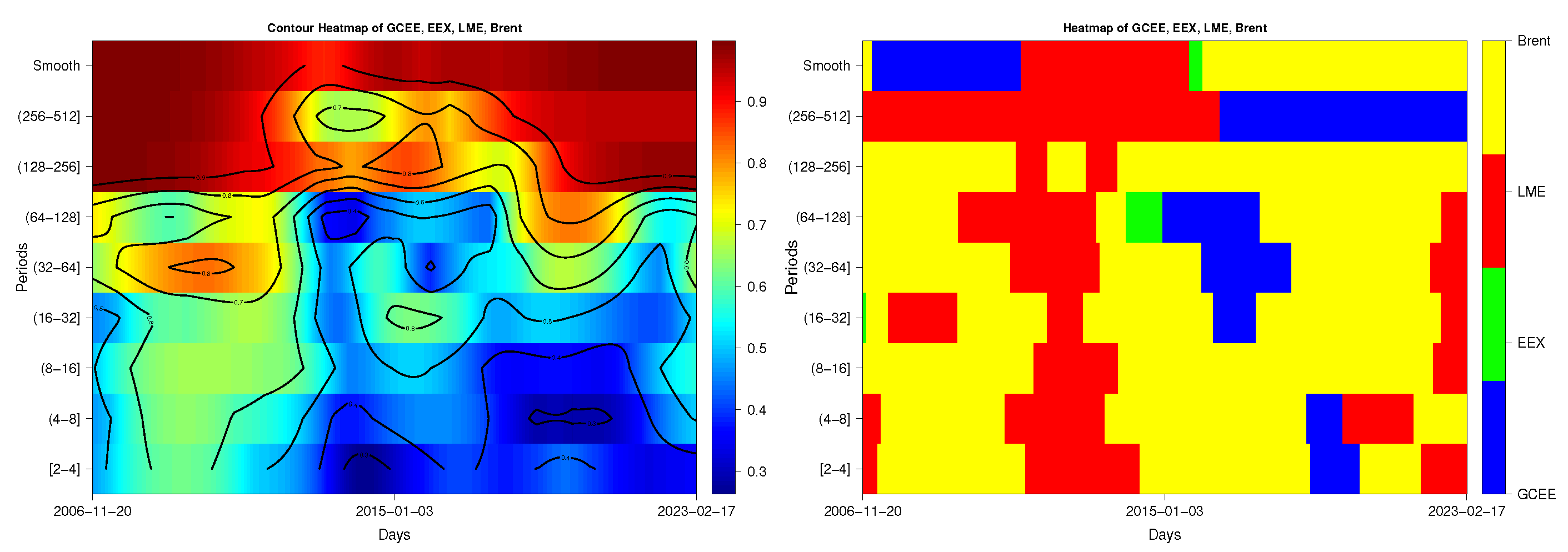
Figure 3 presents the quadrivariate WLMC results, including both the contour heatmap of localized multiple correlations and the identification of dominant markets across time and frequency. The Contour Heatmap (Left Panel) reveals the average localized multiple correlation among the four variables, and the Heatmap of Dominant Driver (Right Panel) is used to identify the variables that exhibit the most significant multivariate correlations at specific time–frequency coordinates. The results of the quadrivariate WLMC analysis show a clearer pattern of co-movement compared to the bivariate WLMC. The short-term scales (2–16 days) are characterized by relatively low coherence, indicating weak short-run synchronization across markets. This implies that high-frequency dynamics are largely driven by specific factors, short-lived news, and market microstructure effects, rather than by common fundamentals. At medium-term horizons (32–128 days), coherence becomes more heterogeneous. Periods of strong correlation and periods of weak correlation alternated, especially around the mid-2010s. This suggests that medium-term linkages are more sensitive to market-specific shocks, such as energy policy adjustments, renewable energy technology innovations, or fluctuations in commodity demand. At long-term scale (128–512 days and above), it exhibits a consistently high coherence value, typically exceeding 0.8. This indicates a strong and sustained correlation between clean energy stocks, electricity prices, industrial metals, and crude oil over a longer investment period. This phenomenon reflects the existence of shared macroeconomic drivers, structural energy transition, and global commodity cycles. The long-term effect is significant, with a correlation coefficient of 0.9 for the period from 2006 to 2011. Subsequently, the markets undergo a phase of moderate co-movements with correlation coefficients ranging from 0.6 to 0.8. It intensifies again around 2019. The apparent long-term synergies observed during the GFC, the COVID-19 pandemic, and the Russian-Ukrainian conflict suggest a high degree of market integration. In addition, the co-movements on all horizons intensify during the global financial crisis. This result suggests a long-term interdependence among the four markets and a sign of market contagion in the short term. In contrast, during the COVID-19 and Russian-Ukrainian conflict periods, strong market linkages are observed primarily in the long term, with no obvious contagion effects in the short term.
The right panel of
Figure 3 further decomposes the results by identifying the markets that dominate the joint dynamics at each time frequency point. The fossil fuel market and the metal market dominate throughout the sample period, with the clean energy market and the electricity market following in succession. Specifically, in the short term (2–8 days), fossil fuels, clean energy, and metals are the dominant variables. The role of clean energy evolves substantially over time. Since 2016, at long-term frequencies (256–512 days), the dominant variable has shifted from LME to GECC, indicating that the influence of the clean energy market is gradually surpassing that of the metals market. This shift marks a structural change in the energy system, with the clean energy market transforming from being primarily influenced by upstream inputs to becoming a key driver of the overall dynamic development of the system. At medium-term horizons (128–256 days), Brent often becomes the dominant market. The continued dominance of fossil fuels underscores their fundamental role in the energy supply chain. Despite the increased share of clean energy, fossil fuels continue to play a dominant role in shaping the energy market landscape.
4.3. Spillover Results
While wavelet analysis highlights the strength of market co-movements, it does not provide information on the direction of shock transmission. To address this limitation, we estimate a TVP-VAR model and compute dynamic spillover indices and compare the spillover effects of returns to clean energy, fossil fuels, metals, and electricity over time.
Table 2 reports the static spillover results for the full sample and selected crisis periods. Over the full sample, the fossil fuel market has the most significant spillover effect, accounting for 23.38% of the total spillovers, followed by the metals market at 20.16%. This aligns with the dominance of fossil fuels and metals in the WLMC analysis. Moreover, these two markets are also the primary recipients of the spillover effects, receiving 21.50% and 19.66%, respectively. In stark contrast, the electricity market demonstrates a minimal spillover effect, contributing only 9.94% to the other markets. It receives the least spillover at 11.22%, underscoring its comparative autonomy from the other three markets. The metal market and the fossil fuel market share the most substantial spillover connections, with 10.59% and 10.74%, respectively, suggesting a strong interrelationship. The “NET” column in
Table 2 shows the net spillover effects among the four markets. The metals and fossil fuel markets are identified as net spillover transmitters, whereas the clean energy and electricity markets are net receivers.
A comparative analysis of spillovers during three different crisis periods reveals that the total connectedness index (TCI) is the highest during the GFC at 30.44%, followed by the COVID-19 pandemic at 17.43%, and is the lowest during the Russia–Ukraine conflict at 12.73%. During the global financial crisis, the fossil fuel market was the most important one among the four, releasing 41.56% of the spillovers and receiving 34.25% of the spillovers. On the other hand, during the COVID-19 pandemic and the Russia–Ukraine conflict, the metals market has become a major spillover character. In all the crisis events, the electricity market has consistently been the market with the smallest spillover effects, especially in the last two crises, where the electricity market contributed less than 4% to other markets. During the three crisis periods, the electricity market has always been a net recipient of spillovers, while the clean energy market has always been a net transmitter of spillovers. Because these markets are relatively stable, they are the preferred choice for hedging strategies, which is an important consideration in times of crisis.
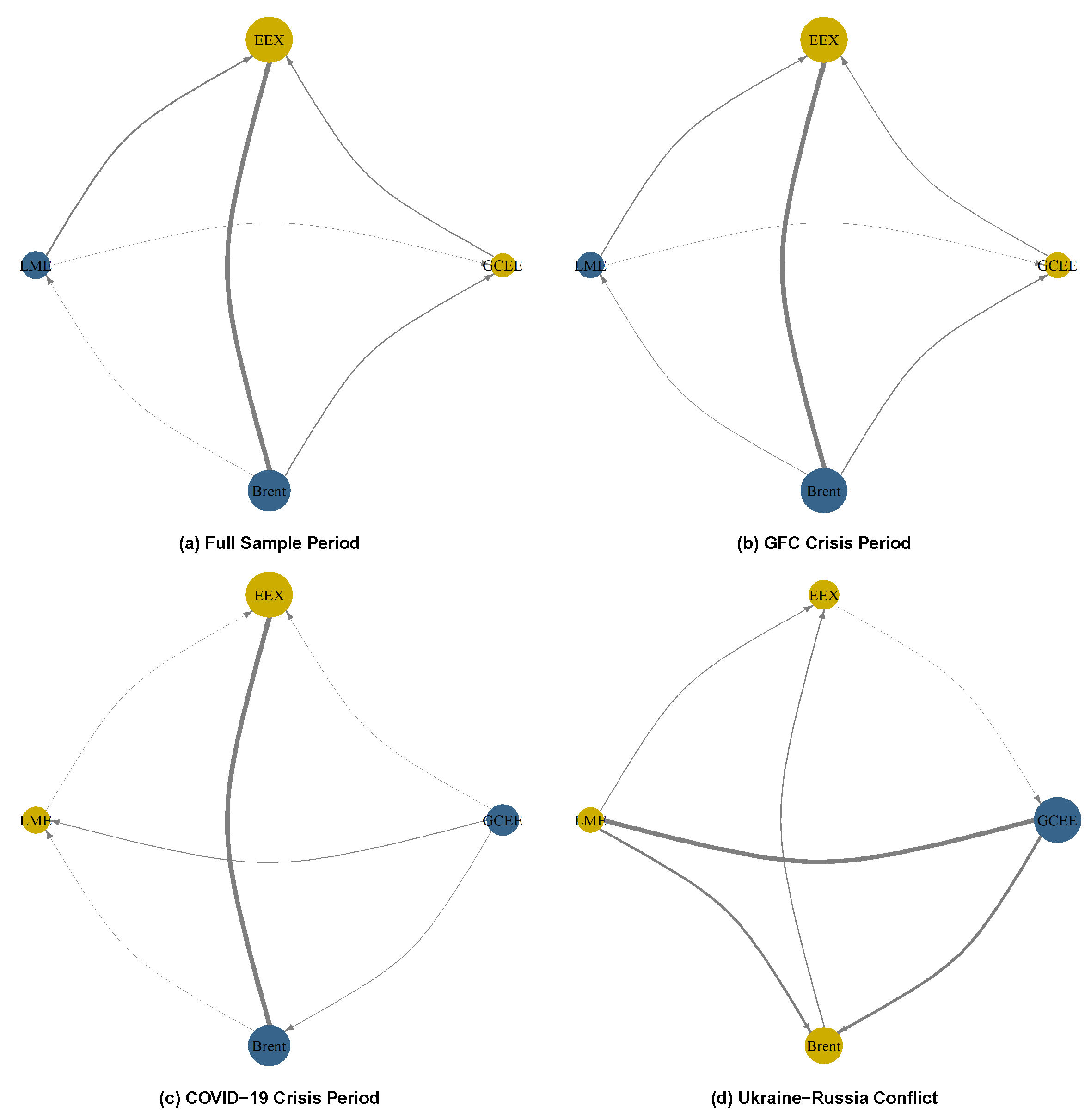
Figure 4 depicts the network connectedness of the four markets during the full period and the crisis periods. It allows for analyzing the intensity and the direction change of the market spillovers. Over the sample period, spillovers mainly flowed from clean energy, metals, and fossil fuels to the electricity market. Fossil fuels consistently act as a dominant net transmitter of shocks, reflecting their foundational role in the global energy system and their influence on production costs across sectors. During the global financial crisis, the overall interconnectedness of the system reached its highest level, indicating extreme market contagion. Fossil fuels remained the primary channel through which systemic shocks were transmitted to all other sectors. The COVID-19 pandemic has triggered a surge in the spillover effects of clean energy to other markets. The Clean Energy market became more influential than traditional energy during the pandemic. During the Russia–Ukraine conflict, the Clean Energy market emerged as the dominant net transmitter of shocks to the system, with its spillover effects to the Metals and Fossil Fuel markets intensifying significantly. At the same time, while the clean energy market has a greater influence on other markets, the metals market also maintains a significant mutual influence on the clean energy market. Shocks in clean energy markets may be transmitted to fossil fuel and metal markets through anticipated channels, investment substitution effects, and adjustments in upstream demand for critical materials. We can conclude that the GCEE has transformed from a market that passively absorbed the shock during the 2008 global financial crisis into a systemic driver that now transmits significant volatility to the fossil fuel and metals markets during the current global crisis.
The TCI exhibits pronounced spikes during major crisis events, as is shown in
Figure 5. The total connectivity spans from 1 January 2006, to 1 January 2023. The TCI begins to rise in 2007, peaks in 2008, and remains consistently high. After 2013, the index gradually declined. This prolonged high level can be attributed to the influence of the global financial crisis and the European debt crisis. Severe disruptions in traditional energy commodities, especially oil, affect the entire supply chain, including the metal and electricity markets. At the same time, the development of clean energy has stagnated due to the global financial crisis and the European debt crisis. The peak in 2016 could be linked to a number of major events: the oil price crash, the collapse of China’s A-share market, and the UK’s decision to leave the European Union. The third peak of TCI occurs in early 2020, coinciding with the COVID-19 outbreak. Interestingly, during the Russian-Ukrainian conflict, the TCI shows a moderate upward trend without any significant peaks as in previous crises. This pattern suggests that the Russia–Ukraine conflict has a relatively limited impact on the overall spillovers affecting those four markets. Although all three crises amplify cross-market spillovers, their underlying mechanisms differ substantially. The GFC primarily affected energy markets through financial contagion and demand contraction, whereas the COVID-19 pandemic generated simultaneous supply and demand shocks across the global economy. The Russia–Ukraine conflict represents a supply-driven geopolitical shock, with its effects partially mitigated by strategic reserves, regulatory interventions, and prior market adjustments.
4.4. Robustness Check
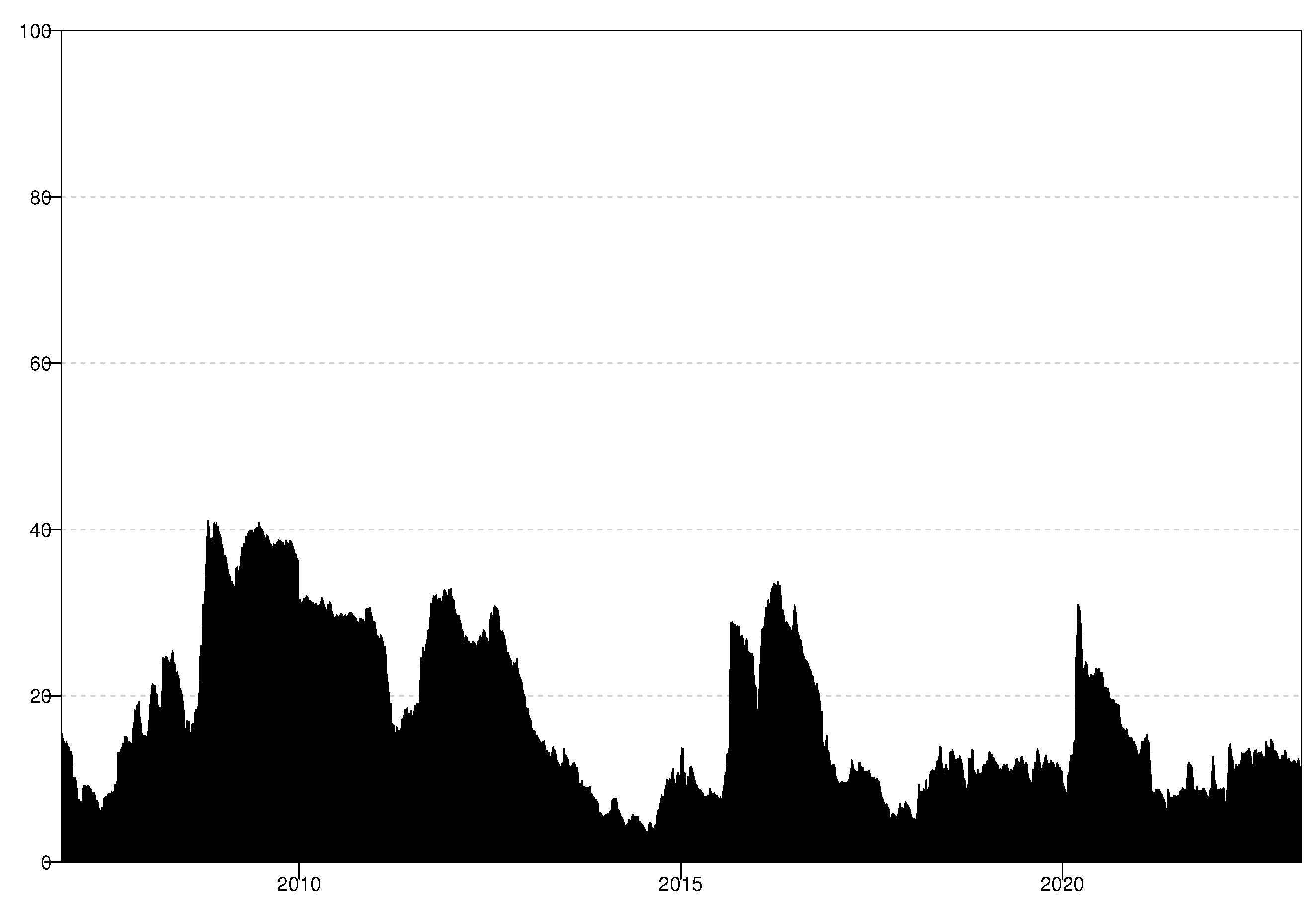
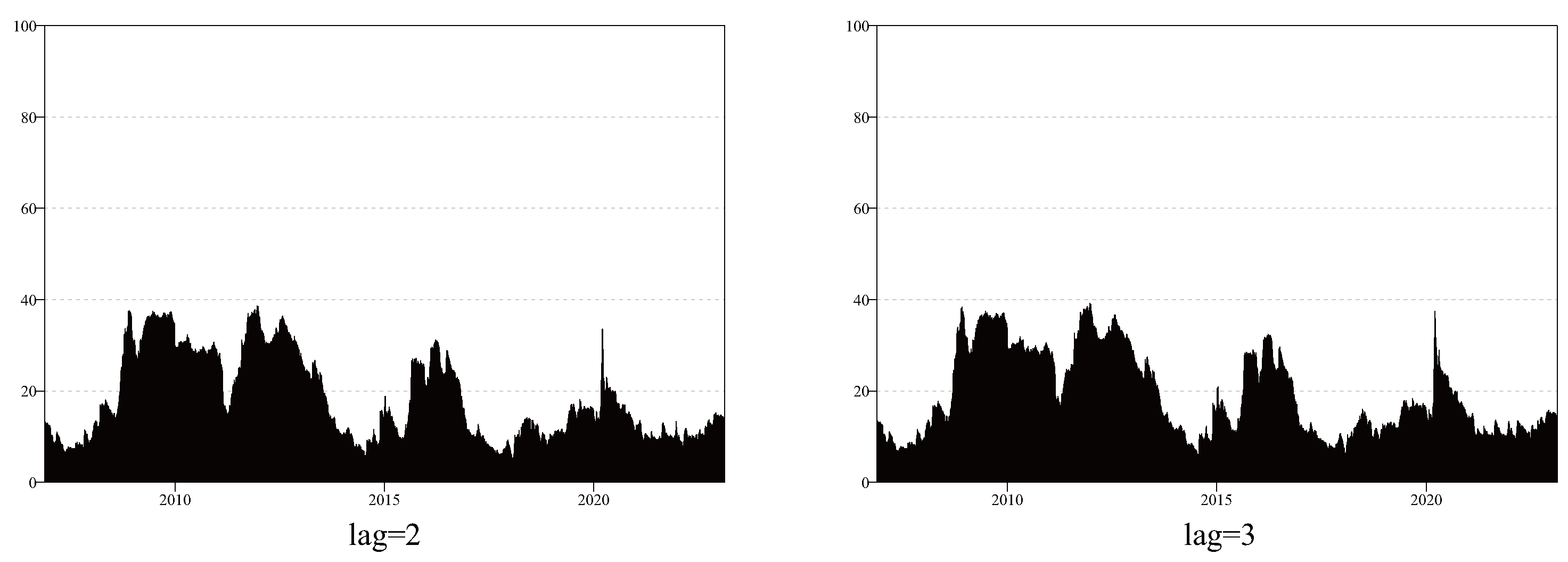
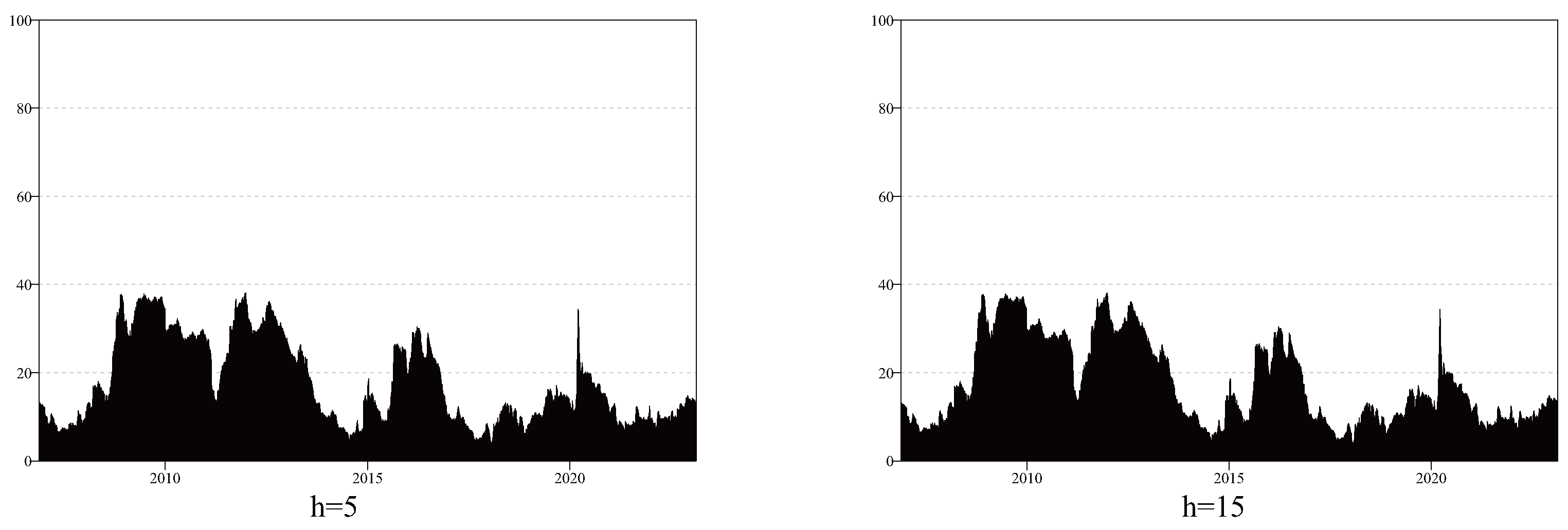
To assess the sensitivity of our empirical results to model parameter choices, we used WTI crude oil as an alternative proxy for the crude oil market and the Nasdaq Clean Edge Green Energy Index as a substitute measure of the new energy market, while also varying the forecast horizon and the lag order of the variables. Specifically, we re-estimate the time-varying aggregate spillovers using the TVP-VAR model with lag orders of 2 and 3, as well as forecast horizons of 5 and 15 steps, and compared these results to those of the benchmark model, which employed a lag order of 1 and a forecast horizon of 10 steps.
Figure 6 and
Figure 7 display the corresponding results. The results indicate that adjusting the forecast horizon or modifying the lag orders does not significantly change the magnitude or the trend of the time-varying total spillover effects, thereby confirming the robustness and reliability of the empirical results.
4.5. Further Discussion
Our results indicate that the electricity market exhibits weak positive correlations with the clean energy market, the fossil fuels market, and the metals markets over short and medium term horizons (2–128 days), while strong positive correlations occur during specific long-term periods (128–256 days). Moreover, in the long run (256–512 days), the electricity market displays significant negative correlations with the clean energy market and the metals markets. The clean energy market exhibits a structural role transformation. In the early sample period, clean energy mainly absorbs shocks from fossil fuels and metals, indicating its dependence on traditional energy inputs and upstream raw materials. However, during recent crisis periods, particularly after 2020, clean energy emerges as a net transmitter of volatility. This shift reflects the increasing financialization of clean energy assets, stronger policy support, and greater investor interest in them during the energy transition. In contrast, the electricity market remains relatively independent in the short and medium term, but its integration is increasing in the long term. As a downstream market, electricity reacts slowly to short-term fluctuations, but ultimately reflects accumulated cost pressures and changes in the energy mix. Clean energy is transforming from a shock absorber to a shock transmitter, which means that clean energy assets should no longer be regarded as purely defensive or decoupling investments, but rather as an integral part of the broader energy finance system.
Our analysis offers potential explanations for the controversies observed in the literature. For instance, Naeem et al. (2020) [
26] find that the correlation between the electricity market and both the clean energy and the fossil fuel markets is weak, suggesting that the electricity market may serve as a hedge against the downside risks of these sectors. In contrast, Qiao et al. (2023) [
39]; Zhang et al. (2023) [
28], and Wang et al. (2024) [
40] report significant interdependencies among the electricity, clean energy, fossil fuel, carbon, and metals markets. Our empirical findings reveal that the electricity market exhibits multifaceted correlations with the energy and metals markets across various frequencies, a pattern that is critical for investors with diverse horizons when developing investment strategies. Furthermore, our study supports the decoupling hypothesis between the fossil fuels and the clean energy sectors, indicating potential portfolio diversification opportunities. Nonetheless, investors should remain mindful of the strong co-movement between these two markets during the 128–256-day period. Finally, the results of the four-market WLMC indicate that inter-market linkages are relatively weak in the short and medium terms but tend to consolidate over the long term, with the fossil fuel market and the metals market playing dominant roles in shaping overall market dynamics.
Our findings further suggest that crisis events such as the global financial crisis, the COVID-19 pandemic, and the Russian-Ukrainian conflict may have significantly increased the interdependencies and spillovers among these four markets. During these crises, the electricity market consistently functions as a net receiver of spillovers, whereas the clean energy market acts as a net transmitter, consistent with previous studies such as Zhang et al. (2023) [
28]; Jing et al. (2025) [
41], and Xia et al. (2020) [
42]. Moreover, our study demonstrates that the global financial crisis exerts the most significant impact, followed by the COVID-19 pandemic and then the Russian-Ukrainian conflict.
5. Conclusions
This paper investigates the time–frequency relationships and spillover effects among the electricity, clean energy, fossil fuel, and metal markets using WLMC and TVP-VAR approaches. The empirical results reveal that these markets are weakly connected in the short run but exhibit strong and persistent integration in the long run, particularly during periods of economic and geopolitical stress. The findings highlight the structural interconnectedness of the energy commodity system, with fossil fuels and metals playing a central role upstream, while clean energy has developed into an increasingly influential market capable of transmitting systemic shocks. In the short to medium term, the electricity market remains largely detached from the other three markets, reflecting its dependence on local grid conditions, weather fluctuations, and regulatory interventions rather than energy commodities and metals. However, the electricity market exhibits a significant negative correlation with the clean energy and metals markets in the long term. This long term trend may reflect deeper structural linkages, including the role of renewable energy in reducing the marginal cost of power generation and the growing demand for metals related to clean energy technologies.
The WLMC results show that the four markets display strong co-movement at the 128–512 day scales, indicating that long-term technological, policy, and macroeconomic factors drive joint dynamics. Bivariate wavelet correlations further reveal asymmetric time–frequency responses, especially during major energy price shocks and geopolitical disruptions. The dynamic spillover indices derived from the TVP-VAR model highlight that total connectedness rises markedly during crisis periods such as the COVID-19 outbreak, the Russia–Ukraine conflict, and major commodity price surges. Fossil fuels and metals consistently act as net transmitters, while electricity remains a persistent net receiver.
These findings provide several important policy implications: (1) Shocks in the crude oil and metals markets can have a strong ripple effect on clean energy and electricity markets, especially during periods of market stress. Policymakers should establish cross-market monitoring frameworks and early warning systems to jointly track upstream Crude oil price fluctuations, metal supply conditions, and downstream electricity market responses. (2) Since the electricity market is a net receiver of volatility spillovers, enhancing grid flexibility will reduce the transmission of upstream shocks and maintain system reliability during periods of energy market instability. Governments should prioritize investments in grid modernization, including smart grids, digital monitoring, energy storage, and distributed generation. (3) The clean energy transition is reshaping the way shocks are transferred between fossil fuels, metals, clean energy, and electricity. Policymakers should develop coherent, systemic policies that combine fuel market reforms, clean energy incentives, metal resource strategies, and electricity market mechanisms to support a stable and orderly low-carbon transition.