Review

Mapping Hydrogen Research Frontiers: A Multi-Query Bibliometric Analysis of Electrochemical and Biotechnological Pathways


Dipartimento di Ingegneria Meccanica, Chimica e dei Materiali, Università degli Studi di Cagliari, Via Marengo 2, 09123 Cagliari, Italy
*
Author to whom correspondence should be addressed.
Energies 2026, 19(1), 166; https://doi.org/10.3390/en19010166
Submission received: 17 November 2025 / Revised: 9 December 2025 / Accepted: 26 December 2025 / Published: 28 December 2025
(This article belongs to the Section B: Energy and Environment)

Abstract

Hydrogen production technologies are undergoing rapid diversification, driven by the dual imperative of decarbonization and resource circularity. While conventional water electrolysis, particularly PEM and alkaline systems, represents a mature and scalable solution for centralized hydrogen generation, biologically mediated pathways such as microbial electrolysis cells (MECs), dark fermentation, and anaerobic digestion are gaining visibility as decentralized, low-energy alternatives. This review presents a bibliometric analysis of hydrogen research from 2021 to 2026, based on three multi-query strategies that retrieved 6017 works in MQ1, 7551 works in MQ2, and 1930 works in MQ3. The year 2026 is included in the dataset because Scopus indexes articles already accepted and released in early access, assigning them their forthcoming official publication year. Keyword co-occurrence mapping using VOSviewer highlights thematic clusters and disciplinary shifts. The results reveal a strong dominance of electrochemical research, with biohydrogen production emerging as a distinct but less mature frontier rooted in biotechnology and environmental science. MECs, in particular, occupy a transitional zone between electrochemical and biological paradigms, offering multifunctional platforms for simultaneous waste valorization and hydrogen generation. However, their low Technology Readiness Levels (TRLs) and unresolved engineering challenges limit their current scalability. The comparative analysis of bibliometric queries underscores the importance of integrating electrochemical and biotechnological approaches to build a resilient and context-adaptive hydrogen economy. This study provides a structured overview of the evolving knowledge landscape and identifies key directions for future interdisciplinary research and innovation.

1. Introduction

Hydrogen is widely recognized as a key enabler of the global transition to a low-carbon energy system. As a clean and versatile energy carrier, hydrogen can be produced from various resources and used in multiple sectors, including transportation, industry, and electricity generation [1,2,3,4,5]. Its main advantage lies in the absence of carbon emissions at the point of use, making it an ideal candidate for decarbonizing hard-to-abate sectors and achieving climate neutrality targets set by the European Union and international frameworks such as the Paris Agreement [2]. Currently, over 95% of the world’s hydrogen is still produced via fossil-based methods, primarily steam methane reforming (SMR), which contributes significantly to greenhouse gas (GHG) emissions [6,7]. Therefore, there is growing scientific and policy interest in shifting towards low-emission production routes, especially those based on renewable resources. Among these, water electrolysis has emerged as one of the most promising technologies for producing high-purity hydrogen with zero direct CO2 emissions, provided that the electricity used is derived from renewable sources such as solar or wind [8,9]. Water electrolysis involves the decomposition of water into hydrogen and oxygen through the application of electrical energy. The efficiency and performance of this process are heavily influenced by the type of electrolyzer (alkaline, PEM, or solid oxide), the electrocatalyst materials used at the electrodes, and the integration with intermittent renewable energy sources [10,11]. In recent years, substantial research efforts have been devoted to improving electrocatalytic activity, developing non-noble metal catalysts, and enhancing membrane durability, aiming to reduce the cost and increase the scalability of electrolyzers [12,13,14,15,16,17]. In parallel, microbial electrolysis cells (MECs) have gained attention as a novel and sustainable method for hydrogen production. MECs are a type of bioelectrochemical system that utilize electroactive microorganisms to oxidize organic matter (such as wastewater, biomass, or food waste) and release electrons, which can then be used to drive the reduction of protons to hydrogen at the cathode under an applied voltage [18,19,20,21]. Unlike conventional electrolysis, MECs can operate at lower external voltages (<1 V), making them energetically more favorable, particularly when coupled with waste valorization processes [22]. The integration of hydrogen production with wastewater treatment processes, such as in microbial electrolysis cells, offers additional environmental benefits, including organic pollutant removal, nutrient recovery, and reduced sludge generation [23]. These bioelectrochemical approaches align with circular economy principles and support decentralized hydrogen generation, which is particularly relevant for remote or off-grid applications [24,25]. However, the commercialization of MECs remains constrained by unresolved engineering challenges, such as slow electron transfer kinetics, biofilm management, scalability issues, and the cost of electrode materials [26,27,28]. In parallel, conventional electrolysis technologies, including alkaline, PEM, and solid oxide systems, continue to advance rapidly, with significant progress in catalyst development, material stability, and integration with renewable energy sources. Given this technological diversification, there is a pressing need to synthesize the evolving body of research and critically assess current trends and future directions across both electrochemical and biotechnological pathways. Such an integrated perspective is essential to guide innovation toward a resilient and sustainable hydrogen economy. To this end, bibliometric analysis provides a quantitative and visual approach to map scientific knowledge, identify key journals, and emerging research fronts, as well as to understand how research themes evolve over time [29,30,31,32,33]. Such analyses can support researchers and policymakers in identifying gaps, forming collaborations, and setting priorities for future funding. In this review, we present a multi-query bibliometric analysis of the scientific literature on hydrogen production technologies published between 2021 and 2026, based on the Scopus database. By systematically comparing electrochemical and biologically mediated pathways, including water electrolysis, microbial electrolysis cells (MECs), and other biohydrogen processes, this study maps the evolving thematic structure of the field and highlights the disciplinary convergence between materials science, environmental biotechnology, and energy systems engineering. Using VOSviewer software for keyword mapping and co-occurrence analysis, the study aims to (i) quantify publication trends and identify leading journals in hydrogen production, (ii) visualize thematic clusters and track the evolution of research topics across electrochemical and biologically mediated pathways, (iii) examine the conceptual and disciplinary boundaries between conventional electrolysis and biohydrogen technologies, and (iv) assess emerging trajectories and interdisciplinary linkages within the field. To this aim, this work systematically compares electrochemical and bioelectrochemical approaches, to contribute to a deeper understanding of the knowledge structure of the field and to provide valuable insights for researchers, engineers, and decision-makers working on hydrogen technologies. Unlike previous bibliometric reviews, which have typically relied on single-query strategies confined to either electrochemical water electrolysis or biohydrogen production, this study adopts a multi-query approach to systematically compare both domains within a unified framework to systematically compare electrochemical and bio hydrogen production. By integrating biotechnological descriptors and mapping thematic clusters through VOSviewer, it reveals underexplored research fronts, disciplinary boundaries, and technology readiness gaps, offering a structured and scalable framework for future interdisciplinary analysis. This multi-query design, structured across three progressively refined search formulations (MQ1–MQ3), enables the identification of both dominant electrochemical clusters and emerging biohydrogen research domains. In doing so, it addresses a clear research gap left by earlier single-domain bibliometric analyses and provides a scalable framework for future interdisciplinary studies in hydrogen production.

2. Methodology

This study adopts a bibliometric approach to systematically analyze the scientific literature related to hydrogen production via water electrolysis and biotechnologies. The methodology is structured into three main phases, as reported in Figure 1: data collection, data processing, and visualization of thematic clusters. This framework enables a quantitative and qualitative assessment of the research landscape, revealing trends, influential topics, and emerging directions.

2.1. Data Collection Strategy

To systematically explore the research landscape of hydrogen production, we adopted a multi-stage bibliometric search strategy using the Scopus database. Rather than relying on a single query, we developed three progressively refined search formulations, each designed to emphasize a different thematic dimension and reveal distinct research fronts. The search was limited to articles and reviews published between 2021 and 2026 to capture the most recent developments and reflect the current state of the field. Only documents written in English were considered, in line with the dominant language of scientific publishing. The final search was updated as of 22 October 2025.
The first query was designed to capture the core scientific literature on hydrogen production through electrochemical and bioelectrochemical systems. It combines general descriptors of hydrogen generation (“hydrogen production” OR “H2 production”) with two distinct technological domains: conventional water electrolysis methods and microbial electrolysis cells. By bridging these two domains, the query supports a comparative bibliometric analysis of hydrogen production pathways, highlighting the coexistence of mature electrochemical approaches and innovative bioelectrochemical alternatives within the broader energy research landscape. Recognizing the limited visibility of biologically mediated approaches in this initial dataset, a second query was formulated by expanding the keyword set to include biotechnology-related descriptors. In addition to the core terms for hydrogen generation and microbial electrolysis cells, this query incorporated the keywords (KWs) “biotechnology” and “biohydrogen”. The rationale behind this refinement was to better reflect the interdisciplinary nature of MECs and other biohydrogen pathways, which often intersect with life science and environmental biotechnology. This adjustment significantly increased the bibliometric visibility of microbial processes and revealed a distinct cluster centered on biologically driven hydrogen production, waste valorization, and circular economy applications. The third query was developed as a targeted refinement of the previous strategy, with the explicit aim of isolating biologically mediated hydrogen production pathways. The third formulation deliberately excludes conventional electrolysis terms and focuses exclusively on bio-oriented keywords. It retains general hydrogen production descriptors (“hydrogen production”, “H2 production”) but restricts the technological scope to microbial electrolysis cells, bioelectrochemical systems, biotechnology, dark fermentation and anaerobic digestion. Rather than comparing electrochemical and bioelectrochemical domains, the third query seeks to map the internal structure and thematic evolution of biohydrogen research as a standalone field.

2.2. Data Processing and Keyword Normalization

The exported bibliographic data were processed using VOSviewer (version 1.6.20, Centre for Science and Technology Studies, Leiden University) [34], a specialized software tool for constructing and visualizing bibliometric networks. Specifically, a co-occurrence analysis was performed using “author keywords” as the unit of analysis and applying the full counting method to capture the frequency and interrelation of terms. To enhance the accuracy and interpretability of the network, a Thesaurus file was created to merge synonyms, acronyms, and closely related keywords. For example, terms such as “PEM electrolysis” and “proton exchange membrane electrolysis” were unified, as were “microbial electrolysis cell” and “MEC.” This normalization step is critical to reduce fragmentation and ensure that conceptually identical terms are treated as a single node in the network. A minimum occurrence threshold of 20 was applied to filter out less frequent terms and focus the analysis on the most prominent and recurrent keywords. This threshold ensures that only the most prominent and recurrent keywords are included in the visualization, allowing for a more robust identification of thematic clusters. To further enhance the robustness of the keyword mapping, we adopted the association strength method in VOSviewer, which calculates the strength of co-occurrence links between keywords based on their relative frequency. This approach has been widely validated in bibliometric studies across disciplines [35,36]. Additionally, layout parameters were optimized by adjusting attraction and repulsion values to improve node distribution and cluster clarity. These settings were selected based on prior benchmarking in similar bibliometric analyses, ensuring that the visual output accurately reflects the thematic structure of the field.

2.3. Justification of Keyword Coupling

To clarify the logic and evolution of the bibliometric search strategy, Table 1 presents an overview of the three queries used to construct the dataset. Each query reflects a distinct conceptual focus, ranging from conventional electrolysis to bioelectrochemical and biotechnological systems, and was designed to expand and modulate the thematic coverage of the analysis. This progressive broadening allows the inclusion of increasingly diverse research perspectives and technological approaches. The table summarizes the keyword structure, intended purpose, and methodological rationale behind each formulation, highlighting how query design influences the visibility of specific research domains within the hydrogen production literature.

3. Results and Discussion

3.1. Keyword Co-Occurrence Analysis

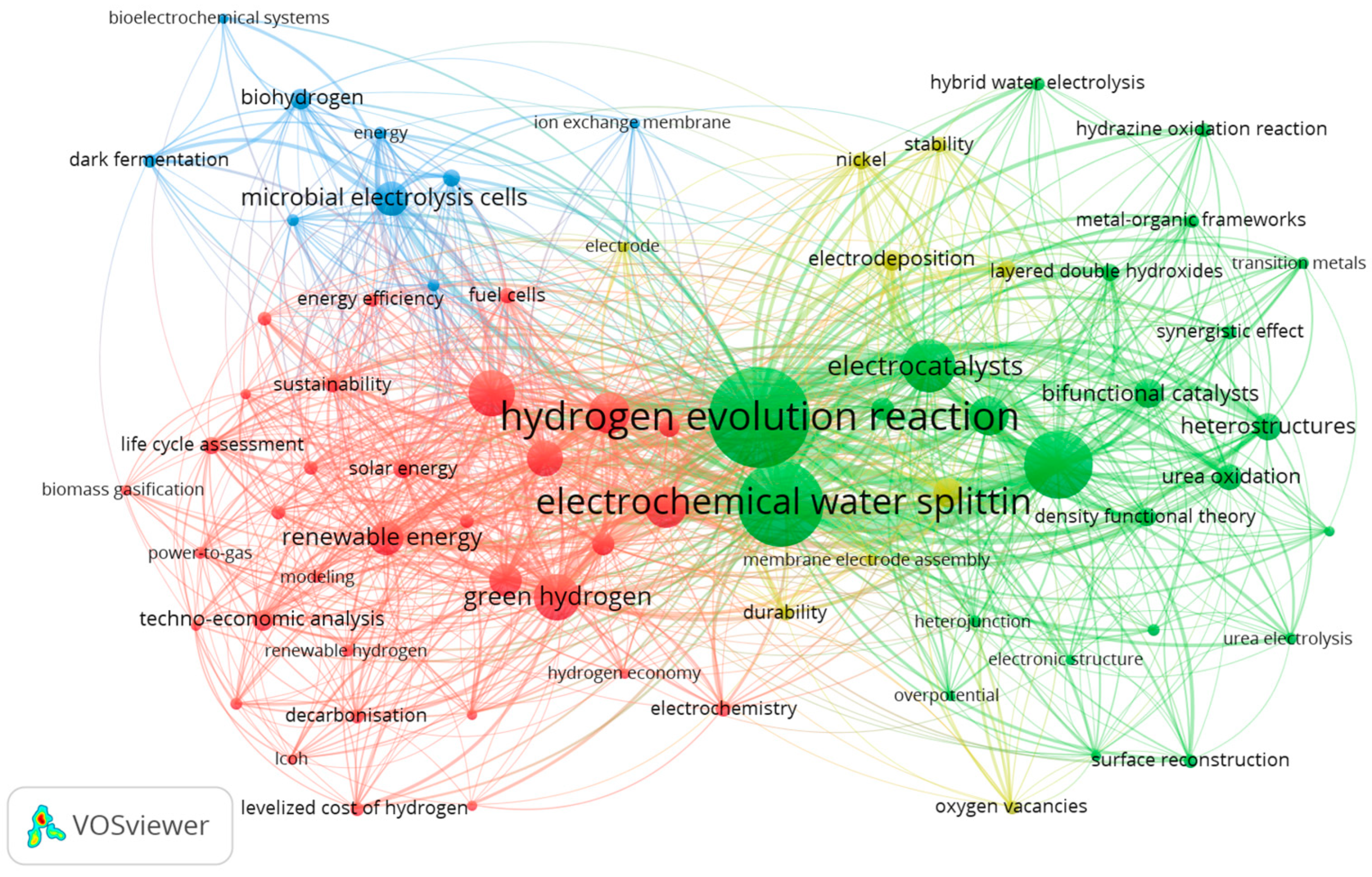
Figure 2 presents an author keyword co-occurrence network generated using VOSviewer, based on bibliographic data related to hydrogen production, water electrolysis, and microbial electrolysis cells (MQ1). The map was constructed using the full counting method, and includes 73 items, 972 links, and a total link strength of 7506, indicating a high degree of interconnectivity among research themes. VOSviewer automatically grouped the keywords into four distinct clusters, each represented by a different colour. The clustering process in VOSviewer is based on a modularity optimization algorithm, which partitions the keyword co-occurrence network into groups of nodes that exhibit a higher density of internal connections than external ones. This approach maximizes the modularity score, a metric that quantifies the strength of division within a network, and is widely used in bibliometric mapping to detect thematic structures [34]. Each cluster is assigned a distinct colour to visually differentiate research domains, with the colour coding emerging from the algorithm rather than being predefined. The association strength normalization method is applied to calculate link weights between keywords, ensuring that spatial proximity in the visualization reflects relative co-occurrence frequency across the dataset. This technique enables the identification of coherent topical communities and facilitates the detection of emerging and dominant research fronts within the hydrogen production literature. The clustering and visualization parameters were selected in accordance with best practices outlined in bibliometric studies using VOSviewer [37], ensuring interpretability and reproducibility of the network structure. These clusters reflect the thematic concentrations within the literature and help identify the dominant and emerging areas of research.
The map shown in Figure 2 reveals a strong dominance of terms associated with conventional electrolysis, such as “hydrogen evolution reaction”, “electrochemical water splitting”, and “electrocatalysts”, which form dense and highly interconnected clusters. In contrast, keywords related to bioelectrochemical hydrogen production, such as “microbial electrolysis cells” appear more peripheral and less integrated, indicating a lower thematic density and maturity in this research area. This distribution reflects the current imbalance in the literature, where conventional electrolysis technologies are more extensively developed and discussed than bioelectrochemical systems. The co-occurrence map generated from MQ1 reveals four algorithmically defined clusters, each representing a distinct thematic concentration within the hydrogen production literature. This structure reflects the conceptual organization of the fields, delineating domains such as system-level electrolysis technologies, fundamental electrochemical reactions, materials engineering, and biologically mediated hydrogen pathways. The spatial distribution and relative density of these clusters offer insights into the maturity, disciplinary anchoring, and cross-domain integration of each research stream. In particular, the emergence of a bioelectrochemical cluster, though less interconnected, signals the growing interdisciplinarity of hydrogen research, where microbiology, environmental biotechnology, and energy systems engineering converge to address sustainability and circularity challenges. The following sections provide a cluster-by-cluster analysis, highlighting the conceptual boundaries and methodological linkages that define the current hydrogen research landscape.

3.1.1. Red Cluster: Hydrogen Technologies and Electrolyzer Typologies

The red cluster is centered around the keyword “hydrogen”, which remains the most dominant and interconnected term in the network. Closely associated are “green hydrogen”, “PEM electrolysis”, “alkaline electrolysis”, and “solid oxide electrolysis”, representing the three major types of electrolyser technologies. This cluster reflects a strong focus on system-level hydrogen production methods, with increasing attention to sustainability and decarbonization. The presence of “green hydrogen” highlights the growing policy and industrial interest in renewable-based hydrogen generation, while the co-occurrence of multiple electrolyzer types suggests comparative and integrative research efforts. Notably, the keywords in this cluster are strongly application-oriented, pointing to real-world implementation scenarios and industrial relevance. Overall, the red cluster encapsulates the applied engineering focus of hydrogen technologies, where system optimization, scalability, and policy integration are central themes.

3.1.2. Green Cluster: Electrochemical Reactions and Catalyst Development

The green cluster is anchored by keywords such as “electrochemical water splitting”, “hydrogen evolution reaction (HER)”, “oxygen evolution reaction (OER)”, and “electrocatalysts”. This grouping reflects the fundamental reaction mechanisms that drive water electrolysis, with a strong emphasis on catalytic performance and electrochemical efficiency. The simultaneous prominence of HER and OER indicates balanced research attention to both cathodic and anodic reactions, while the presence of “electrocatalysts” points to ongoing efforts in material innovation. This cluster is strongly materials-centric, focusing on the design, synthesis, and performance of catalytic surfaces capable of driving efficient water splitting. It represents the fundamental research on electrolysis, where mechanistic understanding and electrocatalytic enhancement converge.

3.1.3. Yellow Cluster: Material Stability and Electrode Engineering

The yellow cluster is defined by keywords such as “electrodeposition”, “nickel”, “stability”, and “durability”, indicating a focus on the structural and operational robustness of electrode material. This thematic group addresses key engineering challenges related to long-term performance, corrosion resistance and cost-effective fabrication of electrolysis components. The prominence of “nickel” suggests a strategic interest in earth-abundant metals in catalyst design, while “electrodeposition” points to scalable and industrially viable synthesis techniques. Nickel is particularly emphasized because it combines abundance, low cost, and high stability in alkaline environments, making it one of the most practical choices for industrial electrolyzers. Its corrosion resistance and favorable catalytic activity for the hydrogen evolution reaction (HER) consolidate its role as a cornerstone material in electrode engineering. Compared to other earth-abundant metals, nickel offers a more balanced profile: iron is inexpensive but less stable under prolonged electrolysis conditions; cobalt provides high catalytic activity but is scarcer and more costly; copper, while conductive, is prone to corrosion in alkaline electrolytes. These comparisons highlight why nickel remains the preferred option for durable and scalable electrode fabrication. Unlike the green cluster, which emphasizes catalytic activity, the yellow cluster is oriented toward material lifecycle and system reliability, parameters that are essential for transitioning from lab-scale prototypes to commercial deployment. The recurring presence of “stability” and “durability” underscores the importance of operational resilience under fluctuating conditions, especially when electrolyzers are coupled with intermittent renewable energy sources. This cluster bridges materials science and process engineering, contributing to the advancement of electrolyzer technologies at high TRLs.

3.1.4. Blue Cluster: Bioelectrochemical Systems and Sustainable Hydrogen Production

The blue cluster includes keywords such as “microbial electrolysis cells”, “bio-hydrogen”, “dark fermentation”, and “bioelectrochemical systems”, reflecting an emerging research domain focused on biologically mediated hydrogen generation. These terms are indicative of interdisciplinary approaches that integrate microbiology, environmental biotechnology, and electrochemical engineering to valorize organic substrates and wastewater streams. The presence of “dark fermentation” and “anaerobic digestion” suggests methodological convergence around microbial metabolism and circular resource utilization. Compared to the red and green clusters, this group is less densely connected, underscoring the relatively lower bibliometric maturity and technological readiness. Nonetheless, its distinct thematic identity of this cluster highlights its potential for decentralized hydrogen production and environmental co-benefits. It defines a biologically anchored research domain characterized by low-energy conversion pathways and sustainability-driven design. These approaches offer complementary alternatives to conventional electrolysis, particularly suited for decentralized systems, off-grid contexts, and applications integrating waste valorization within circular economy frameworks.

3.2. Refining the Bibliometric Strategy: Integrating Biotechnological Descriptors

To better capture the interdisciplinary nature of biohydrogen research, the search strategy was further refined to include biotechnology-related descriptors (MQ2 reported in Table 1), as “biohydrogen”, and “biotechnology”, that marks a pivotal shift in the representation of hydrogen production research.
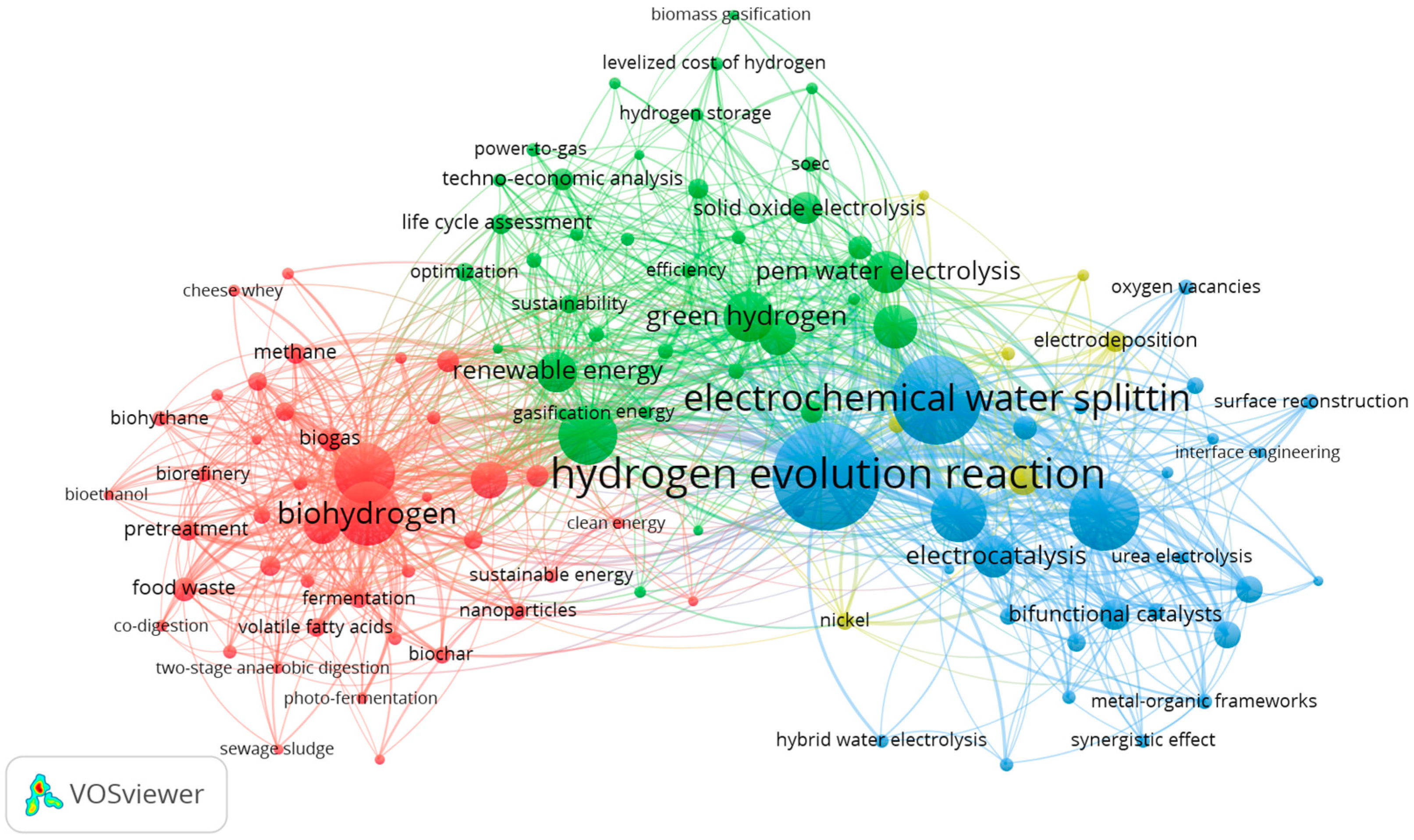
This adjustment reflects the conceptual reality that biologically mediated hydrogen generation operates at the intersection of microbiology, environmental science, and energy conversion, diverging significantly from the materials-centric paradigm of conventional electrolysis. Unlike traditional electrolysis technologies, which are primarily governed by electrochemical engineering and materials science, microbial electrolysis cells rely on electroactive microorganisms to catalyze hydrogen evolution from organic substrates. By broadening the keyword set, the co-occurrence map shown in Figure 3, derived from MQ2, reveals a more inclusive and interdisciplinary landscape, bringing into focus a previously underrepresented domain: biohydrogen production. The map was constructed using the full counting method, and includes 109 items, 1736 links, and a total link strength of 11,117. Compared to MQ1, this represents a substantial increase in both the number of items and the density of connections, reflecting a broader and more complex thematic network. The markedly higher total link strength indicates not only a strong degree of interconnectivity among research themes, but also greater internal cohesion within the map. The emergence of distinct clusters centered on microbial processes, waste valorization, and circular economy principles underscores the growing relevance of this field, particularly within environmental biotechnology and microbial ecology, areas often overlooked in electrochemistry-focused bibliometric strategies. Comparative analysis between the investigated queries highlights a marked shift in thematic visibility. In the previous map (Figure 2), constructed from a conventional electrolysis-oriented query, the term “biohydrogen” appeared peripheral, reflecting its limited bibliometric prominence. However, the map derived from MQ2 (Figure 3), enriched with biotechnological descriptors, exhibits a distinct and conceptually coherent cluster centered on biohydrogen. While this cluster remains less dense than its purely electrochemical counterpart, it demonstrates comparable thematic weight, suggesting that biohydrogen research is consolidating as an emerging and increasingly structured domain. This shift also reveals deeper disciplinary divergence. Electrochemical hydrogen production is closely associated with high Technology Readiness Level topics, such as catalyst synthesis, system optimization, and industrial deployment, anchored in applied chemistry and engineering [38,39,40]. In contrast, biohydrogen research is rooted in fundamental biotechnology, encompassing microbial metabolism, enzymatic pathways, and bioreactor design. These methodological distinctions reflect the different maturity levels of the two approaches: electrolysis represents a well-established, technology-driven field, whereas biohydrogen remains a biologically grounded frontier, characterized by pilot-scale experimentation and lower TRLs (typically between 3 and 5) [41,42,43]. A particularly notable outcome of the refined query is the central positioning of “biohydrogen” in its cluster within the co-occurrence map. This thematic anchor replaces the dominance of “hydrogen evolution reaction”, emblematic of conventional electrolysis, and signals a broader conceptual reorientation. While HER continues to define the electrochemical pathway, biohydrogen encapsulates a multidisciplinary research domain that integrates organic waste valorization, microbial community dynamics, and sustainability principles. The enhanced bibliometric visibility of biohydrogen thus reflects not only an expansion in keyword frequency, but also the emergence of a research frontier that, while promising, requires substantial technological maturation to achieve widespread application.
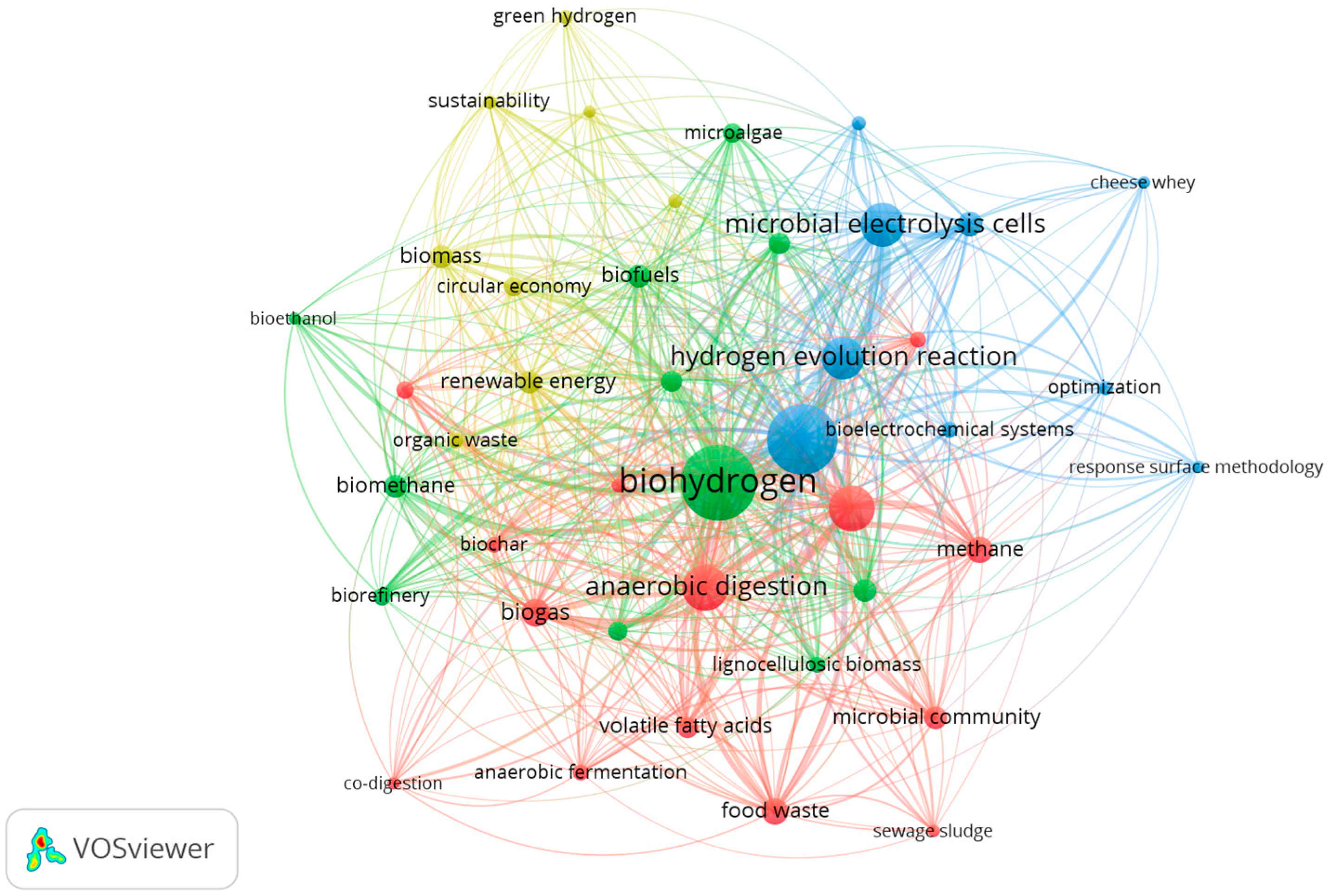
The third bibliometric query (MQ3) was designed to isolate biologically mediated hydrogen production, providing a more focused lens on the internal structure of biohydrogen research. Unlike MQ1 and MQ2, which integrate electrochemical and bioelectrochemical domains, MQ3 deliberately excludes conventional electrolysis descriptors and concentrates exclusively on microbial, fermentative, and biotechnological pathways. The resulting co-occurrence map (Figure 4) includes 42 items connected by 534 links, with a total link strength of 3381. This comparatively lower density, when contrasted with MQ1 and MQ2, underscores the bibliometric fragmentation of biohydrogen research, despite its thematic consistency. The map reveals a conceptually coherent and thematically consolidated cluster centered on “biohydrogen”, which now emerges as the dominant node in the network. This central positioning of “biohydrogen” reflects a significant shift in thematic hierarchy: rather than being peripheral to electrochemical terms such as “hydrogen evolution reaction”, biohydrogen now anchors a distinct research domain. Surrounding nodes, such as “microbial electrolysis cells”, “anaerobic digestion”, “biogas”, and “biomass”, form a compact cluster indicative of methodological alignment in research focused on microbial energy conversion and the valorization of organic waste streams. The presence of “renewable energy” and “sustainability” further reinforces the alignment of this domain with circular economy principles and low-TRL innovation. Critically, the MQ3 map exhibits lower overall density and fewer inter-cluster connections compared to MQ1 and MQ2, suggesting that biohydrogen research, while conceptually unified, remains bibliometrically fragmented and less integrated into mainstream hydrogen discourse. However, the internal coherence of the cluster and the emergence of hybrid descriptors (e.g., “bioelectrochemical systems”) point to a growing interdisciplinary effort to consolidate this field. In summary, MQ3 confirms that biohydrogen is not merely a subtopic within hydrogen production but a structurally distinct and methodologically diverse research frontier. Its bibliometric visibility depends strongly on the inclusion of biotechnological descriptors, and its thematic consolidation suggests increasing maturity, although still constrained by technological readiness and integration challenges. This insight underscores the importance of tailored bibliometric strategies to accurately capture emerging domains and guide future interdisciplinary collaboration.

3.3. The Role of MECs Within the Broader Biohydrogen Landscape

Although microbial electrolysis cells are frequently cited as a promising innovation in hydrogen research, bibliometric analysis reveals that their role remains peripheral when compared to the consolidated domain of conventional electrolysis. Rather than emerging as a distinct technological pillar, MECs appear as one of several bioelectrochemical approaches contributing to a broader and more diverse biohydrogen landscape. This landscape, as revealed through refined queries and co-occurrence mapping, extends well beyond MECs and encompasses a wide array of biotechnological pathways, including dark fermentation, anaerobic digestion, and microbial metabolism, that collectively define the conceptual space of biologically mediated hydrogen production. The enhanced bibliometric visibility of biohydrogen reflects not only an increase in keyword frequency, but also a thematic expansion that transcends the boundaries of electrochemistry. In fact, biohydrogen research is not confined to electrochemical frameworks, but it is deeply rooted in environmental biotechnology, microbial ecology, and circular economy principles. MECs, situated at the interface between electrochemical control and biological functionality, exemplify this hybridization. However, despite their environmental relevance, MECs remain technologically immature compared to conventional electrolysis systems. Recent literature highlights that, although theoretical hydrogen yields are promising, practical deployment is hindered by unresolved engineering challenges such as high internal resistance, membrane biofouling, and limited long-term stability. These limitations contribute to relatively low TRLs, typically ranging between 3 and 5, indicating that MECs are still confined to laboratory-scale research and early pilot demonstrations [25,41]. This technological gap contrasts sharply with conventional electrolysis systems, such as PEM and alkaline electrolyzers, which have reached higher TRLs and are already being deployed at commercial scale. The disparity in technological maturity underscores the need for continued research and development efforts aimed at improving the scalability, efficiency, and economic viability of MEC-based hydrogen production systems.
Recent studies increasingly explore hybrid configurations that combine biological and electrochemical processes, aiming to enhance hydrogen yield and operational stability. For instance, Bhagat et al. (2025) propose an integrated approach by coupling MECs with photobioreactors (PBR) and electrochemical capacitors (ECC) to create zero-discharge, self-sustained platforms; the stacked MFC–ECC–MEC–PBR system powered by 3D-printed bio-anodes, have been proved to producing hydrogen from wastewater while simultaneously enabling CO2 capture for algal cultivation [27]. This integrated approach demonstrates the potential of coupling MECs with photobioreactors and electrochemical capacitors to create zero-discharge, self-sustained platforms. Moreover, Dange et al. (2021) provide a comprehensive review of MEC-based hydrogen production from wastewater, highlighting key technical barriers to scale-up, such as high internal resistance, methanogenesis, and membrane biofouling [25]. Their work underscores the importance of system integration and life-cycle assessment to evaluate the real-world viability of MECs. More recent contributions reinforce and expand this perspective. Alcaraz-Gonzalez et al. (2023) discuss current trends in MECs for biohydrogen generation and wastewater treatment, emphasizing the transition from lab-scale experimentation to pilot-scale validation, and identifying modelling, durability, and cost reduction as critical next steps for industrial deployment [44]. Their review also highlights the potential of MECs to complement conventional wastewater treatment by recovering energy from organic matter, aligning with circular economy principles. Hoang Phan et al. (2025) reviewed recent developments in solar-assisted microbial electrolysis cells, highlighting their potential to enhance hydrogen production efficiency while reducing external energy input [45]. Their work emphasizes the role of integrated renewable systems in advancing MEC scalability and sustainability. Lei et al. (2025) [46] demonstrated that the use of advanced non-noble metal catalysts and optimized reactor configurations significantly improves hydrogen yield in MECs treating complex wastewater streams. This study supports the feasibility of cost-effective, decentralized biohydrogen production for real-world applications [46]. While MECs do not yet rival conventional electrolyzers in terms of scalability or TRL, their progressive maturation, evidenced by the incorporation of non-noble catalysts, renewable energy coupling, and multifunctional reactor architectures, positions them as a bridge between electrochemical and biotechnological paradigms. In this context, biohydrogen should not be viewed as a singular technological outcome, but as a conceptual domain encompassing diverse production routes that span from purely electrochemical systems to hybrid and fully biological platforms. Recognizing this gradient is essential for accurately assessing the role of MECs and for situating biohydrogen research within a broader framework of interdisciplinary innovation, where the convergence of energy conversion, environmental remediation, and microbial engineering defines the next frontier of sustainable hydrogen production.

3.4. Publication Trends and Subject Area Distribution

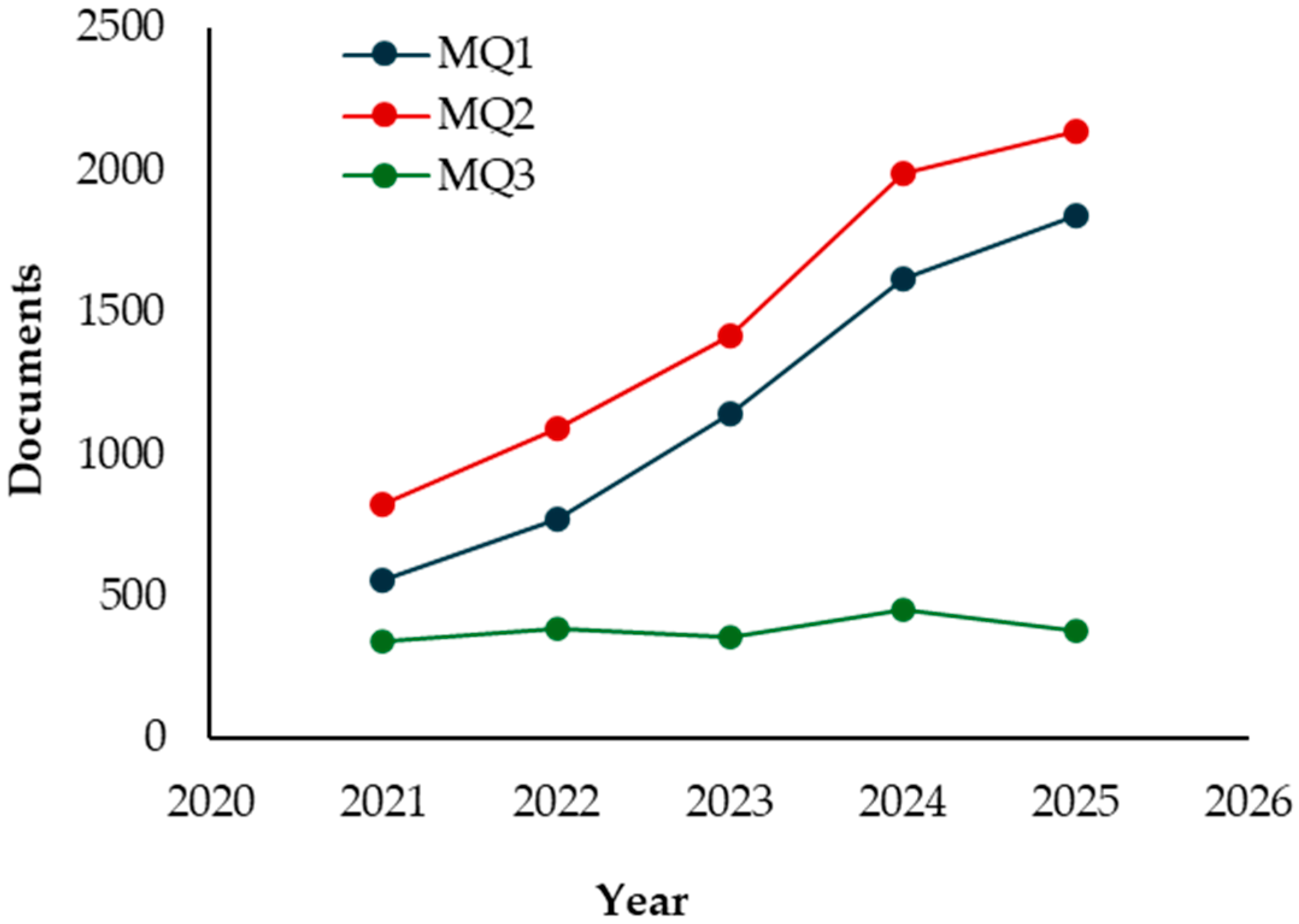
The temporal evolution of document counts from 2021 to 2025, as illustrated in Figure 5, reflects three distinct trajectories corresponding to the bibliometric queries MQ1, MQ2, and MQ3. These curves embody not only quantitative growth but also the conceptual scope and disciplinary reach of each search strategy. MQ1, which integrates conventional water electrolysis and microbial electrolysis cells, shows a steady increase from ~500 to ~1800 documents. This reflects the consolidated core of hydrogen research, dominated by high-TRL electrochemical technologies and supported by robust engineering and materials science contributions. As previously discussed, MECs, despite present, are bibliometrically diluted within this broader technological landscape. MQ2, which expands the scope by incorporating both biohydrogen and biotechnology descriptors, exhibits the sharpest growth, from ~800 to over 2100 documents, indicating enhanced bibliometric sensitivity to interdisciplinary research. This query captures both electrochemical and biotechnological domains, thereby including also hybrid systems beyond strictly bioelectrochemical approaches; the inclusion of biotechnology term significantly amplifies the visibility of emerging biohydrogen pathways. MQ3, focused exclusively on biologically mediated hydrogen production, remains relatively flat, rising modestly from ~400 to ~500 documents. However, the stability and internal coherence of this dataset highlight the emergence of biohydrogen as a distinct and thematically structured research frontier, characterized by low-TRL innovation and strong alignment with circular economy principles.

3.5. Journal Analysis

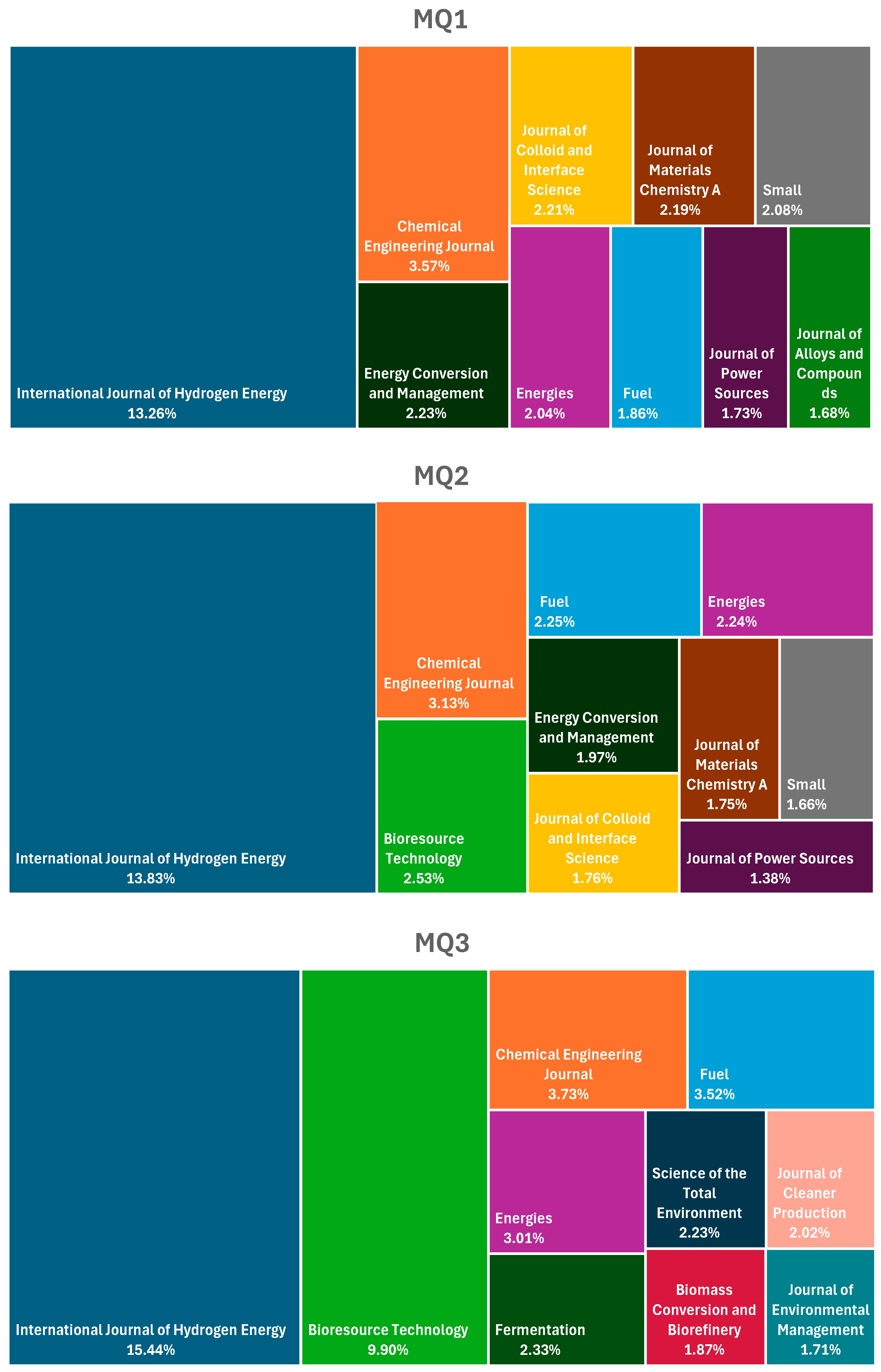
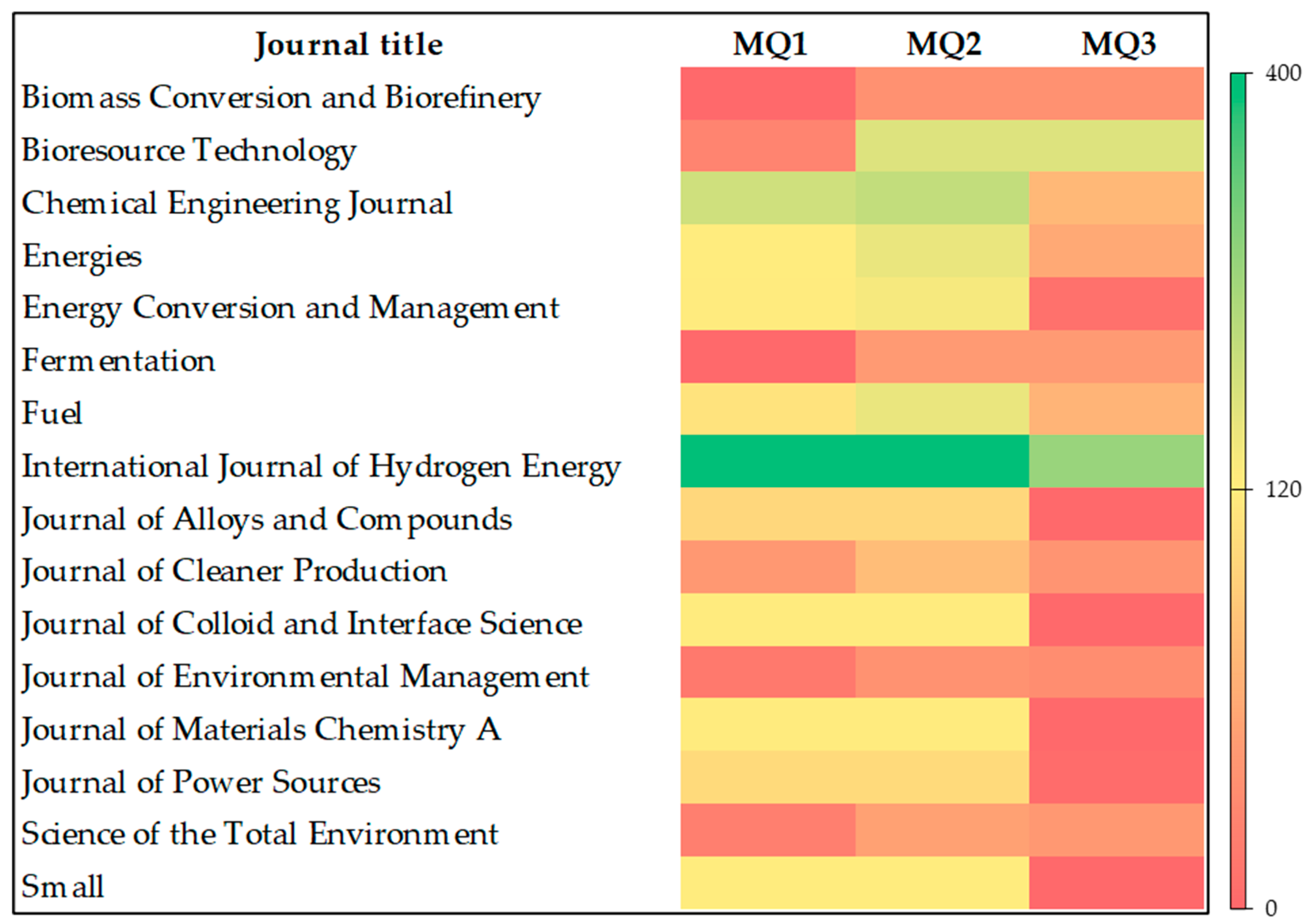
To complement the quantitative ranking of journals by publication volume, Figure 6 and Figure 7 provide a comparative visualization of journal prominence across the three bibliometric queries (MQ1, MQ2, MQ3). These figures provide a dual perspective: a treemap illustrating journal distribution by source title, and a table ranking journals based on metric scores. Figure 6 displays three treemaps corresponding to MQ1, MQ2, and MQ3, illustrating the relative bibliometric weight of each journal within the respective query.
The treemaps illustrate a distinct thematic transition across the queries. In MQ1, the journal landscape is predominantly shaped by titles specializing in electrochemical engineering and materials science, with International Journal of Hydrogen Energy, Chemical Engineering Journal and Energy Conversion and Management emerging as key contributors. MQ2 introduces greater diversity, with increased representation of journals from environmental science and biotechnology, including Bioresource Technology. MQ3 highlights a distinct cluster of journals specializing in microbial processes, waste valorization, and circular economy topics, such as Fermentation, and Science of the Total Environment. This comparative visualization underscores the influence of query design on journal visibility and thematic representation. It also confirms the interdisciplinary nature of hydrogen research, where conventional electrochemical technologies coexist with emerging biohydrogen pathways indexed in environmental and life science journals.
Figure 7 presents a heatmap of journal occurrence across the top-ten results derived from each bibliometric query (MQ1, MQ2, MQ3), each corresponding to a distinct query formulation. The color gradient visually encodes the magnitude of each metric, allowing for immediate comparison of journal prominence across thematic dimensions. Green color indicates higher values, highlighting journals with greater bibliometric relevance. The International Journal of Hydrogen Energy stands out with consistently high scores across all three queries, confirming its central role in both electrochemical and bioelectrochemical hydrogen research. Journals such as Chemical Engineering Journal, and Energy conversion and Management also show strong performance, particularly in MQ1 and MQ2, which emphasize conventional electrolysis and hybrid approaches. In contrast, journals like Bioresource Technology and Fuel exhibit higher relative intensity in MQ3, reflecting their alignment with biologically mediated hydrogen production and environmental biotechnology. Overall, the heatmap provides a nuanced overview of journal relevance, bridging quantitative metrics with thematic interpretation. These patterns underscore the diversity of publication venues and reveal how different journals align with distinct thematic clusters, ranging from materials science and electrochemical engineering to environmental biotechnology and circular economy research. The combined use of heatmaps and treemaps offers a multifaceted view of editorial ecosystems, highlighting both the dominance of established publication venues and the emergence of specialized journals that support the consolidation of biohydrogen research as a distinct and growing field.

4. Conclusions

This review provides a structured bibliometric analysis of hydrogen production research from 2021 to 2026, highlighting the thematic evolution and disciplinary boundaries between electrochemical and biologically mediated pathways. Through a multi-query strategy applied to the Scopus database and visualized using VOSviewer, we identified distinct research clusters that reflect both the maturity of conventional water electrolysis and the emerging visibility of biohydrogen technologies.
Electrochemical approaches, particularly those involving PEM, alkaline, and solid oxide electrolysis, dominate the literature in terms of volume, technological readiness, and integration with renewable energy systems. These technologies are supported by well-established research communities focused on catalyst development, electrode engineering, and system optimization. In contrast, biohydrogen production, encompassing microbial electrolysis cells, dark fermentation, and anaerobic digestion, remains a less mature but increasingly structured domain, rooted in environmental biotechnology and microbial ecology.
The comparative bibliometric mapping reveals that MECs occupy a transitional zone between electrochemical and biological paradigms, offering multifunctional platforms for hydrogen generation and waste valorization. This transitional positioning is further supported by authorship patterns, as MEC-related publications consistently display cross-disciplinary co-authorship involving chemical engineering, electrochemistry, environmental biotechnology, and microbiology. Such an interdisciplinary footprint reinforces the classification of MECs as a hybrid technological domain bridging electrochemical and biologically mediated hydrogen production. However, their limited scalability and unresolved engineering challenges constrain their deployment. The refined queries demonstrate that the visibility and conceptual coherence of biohydrogen research depend strongly on the inclusion of biotechnological descriptors, underscoring the need for tailored bibliometric strategies to capture emerging interdisciplinary fields.
Looking ahead, future research should focus on bridging electrochemical and biohydrogen domains by (i) developing hybrid systems that combine catalytic efficiency with biological versatility; (ii) addressing scalability and robustness in bioelectrochemical platforms; (iii) fostering collaboration across electrochemistry, microbiology, and environmental science; and (iv) embedding hydrogen production within broader sustainability and circular economy frameworks. The innovative contribution of this review lies in its multi-query bibliometric framework, which enables a comparative, query-sensitive mapping of hydrogen production research across disciplinary boundaries. By systematically varying keyword formulations, the approach reveals latent thematic clusters, and technology readiness asymmetries that remain obscured in conventional single-query analyses. Such integrative efforts are essential to support a diversified and context-sensitive hydrogen economy capable of meeting both centralized and distributed energy needs. From a technological and systemic perspective, this review highlights the complementary roles of conventional electrolysis and biologically mediated hydrogen production. Electrochemical methods are characterized by high TRLs, robust integration with renewable energy systems, and well-established research ecosystems focused on catalyst optimization and system scalability. In contrast, biohydrogen pathways, including microbial electrolysis cells, dark fermentation, and anaerobic digestion, offer transformative potential for decentralized applications, waste valorization, and circular economy integration, despite their lower TRLs and engineering constraints. This duality suggests that future hydrogen strategies should not treat these domains as competing alternatives, but rather as synergistic components of a diversified energy portfolio. Integrating electrochemical efficiency with biological versatility could unlock new hybrid platforms capable of addressing both centralized industrial needs and distributed environmental challenges.

Author Contributions

Conceptualization, L.M. and A.V.; methodology, L.M.; software, L.M.; validation, L.M., A.V. and M.M.; formal analysis, N.M.; investigation, L.M.; data curation, V.M.I.P.; writing—original draft preparation, L.M.; writing—review and editing, A.V. and N.M.; visualization, M.G.R.; supervision, L.M.; funding acquisition, M.M. and A.V. All authors have read and agreed to the published version of the manuscript.

Funding

This work has been developed as part of the research project of the Italian Ministry of University and Research EXPRESS (MUR: 20222XR2FR CUP: F53D23001530006) and as a part of the research project RETURN (multi-Risk sciEnce for resilienT commUnities undeR a changiNg climate), funded within the Next generation EU framework (project code MUR: PE0000005 CUP: F53C22000730002) and as a part of the research project e.INS-(Ecosystem of Innovation for Next Generation Sardinia) funded by the Italian Ministry for Research and Education (MUR) within the Next generation EU framework (project code ECS 00000038). V.M.I.P. gratefully acknowledges Fondazione di Sardegna, Project: DOMEC (CUP: F73C23001700007). N.M. gratefully acknowledges the research project NEST (Network 4 Energy Sustainable Transition, project code MUR PE0000021) for funding his fellowship.

Data Availability Statement

The original contributions presented in this study are included in the article. Further inquiries can be directed to the corresponding author.

Conflicts of Interest

The authors declare no conflicts of interest.

Abbreviations

The following abbreviations are used in this manuscript:
PEMProton Exchange Membrane
MECMicrobial Electrolysis Cell
HERHydrogen Evolution Reaction
OEROxygen Evolution Reaction
TRLTechnology Readiness Level
SMRSteam Methane Reforming
ECCElectrochemical Capacitor
PBRPhotobioreactor
MFCMicrobial Fuel Cell
GHGGreenhouse Gas
KWDKeyword

References

  1. Angelico, R.; Giametta, F.; Bianchi, B.; Catalano, P. Green Hydrogen for Energy Transition: A Critical Perspective. Energies 2025, 18, 404. [Google Scholar] [CrossRef]
  2. Hossain Bhuiyan, M.M.; Siddique, Z. Hydrogen as an Alternative Fuel: A Comprehensive Review of Challenges and Opportunities in Production, Storage, and Transportation. Int. J. Hydrogen Energy 2025, 102, 1026–1044. [Google Scholar] [CrossRef]
  3. Reda, B.; Elzamar, A.A.; AlFazzani, S.; Ezzat, S.M. Green Hydrogen as a Source of Renewable Energy: A Step towards Sustainability, an Overview. Environ. Dev. Sustain. 2024, 27, 29213–29233. [Google Scholar] [CrossRef]
  4. Parvinhosseini, P.; Mordue, G. The Viability of Green Hydrogen for Electric Power Generation: Evaluating Current Practicability and Future Demand. Energies 2025, 18, 5100. [Google Scholar] [CrossRef]
  5. Ganji, M.; Gheibi, M.; Aldaghi, A.; Dhoska, K.; Vito, S.; Atari, S.; Moezzi, R. Comprehensive Study on Hydrogen Production for Sustainable Transportation Planning: Strategic, Techno-Economic, and Environmental Impacts. Hydrogen 2025, 6, 24. [Google Scholar] [CrossRef]
  6. Roy, R.; Antonini, G.; Hayibo, K.S.; Rahman, M.M.; Khan, S.; Tian, W.; Boutilier, M.S.H.; Zhang, W.; Zheng, Y.; Bassi, A.; et al. Comparative Techno-Environmental Analysis of Grey, Blue, Green/Yellow and Pale-Blue Hydrogen Production. Int. J. Hydrogen Energy 2025, 116, 200–210. [Google Scholar] [CrossRef]
  7. Abawalo, M.; Pikoń, K.; Landrat, M. Comparative Life Cycle Assessment of Hydrogen Production via Biogas Reforming and Agricultural Residue Gasification. Appl. Sci. 2025, 15, 5029. [Google Scholar] [CrossRef]
  8. Gholami, Z.; Gholami, F.; Šimek, J.; Svobodová, K.; Vakili, M. Hydrogen Production for a Decarbonized Future: A Review of Production Technologies. J. Ind. Eng. Chem. 2025, 153, 240–278. [Google Scholar] [CrossRef]
  9. Segovia-Hernández, J.G.; Hernández, S.; Cossío-Vargas, E.; Juarez-García, M.; Sánchez-Ramírez, E. Green Hydrogen Production for Sustainable Development: A Critical Examination of Barriers and Strategic Opportunities. RSC Sustain. 2024, 3, 134–157. [Google Scholar] [CrossRef]
  10. Tüysüz, H. Alkaline Water Electrolysis for Green Hydrogen Production. Acc. Chem. Res. 2024, 57, 558–567. [Google Scholar] [CrossRef]
  11. Norman, E.A.; Maestre, V.M.; Ortiz, A.; Ortiz, I. Steam Electrolysis for Green Hydrogen Generation. State of the Art and Research Perspective. Renew. Sustain. Energy Rev. 2024, 202, 114725. [Google Scholar] [CrossRef]
  12. Xie, Y.; Luo, F.; Yang, Z. Strategies for the Enhancements in Catalytic Performance and Stability of Anodic Electrocatalyst in PEM Water Splitting. Energy Rev. 2024, 3, 100103. [Google Scholar] [CrossRef]
  13. Fei, L.; Sun, H.; Li, Y.; Gu, Y.; Zhou, W.; Shao, Z. Recent Advances in Innovative Systems for Electrocatalytic Hydrogen Production. Energy Environ. Sci. 2025, 18, 6456–6529. [Google Scholar] [CrossRef]
  14. Xu, Q.; Zhang, L.; Zhang, J.; Wang, J.; Hu, Y.; Jiang, H.; Li, C. Anion Exchange Membrane Water Electrolyzer: Electrode Design, Lab-Scaled Testing System and Performance Evaluation. EnergyChem 2022, 4, 100087. [Google Scholar] [CrossRef]
  15. Sezer, N.; Bayhan, S.; Fesli, U.; Sanfilippo, A. A Comprehensive Review of the State-of-the-Art of Proton Exchange Membrane Water Electrolysis. Mater. Sci. Energy Technol. 2025, 8, 44–65. [Google Scholar] [CrossRef]
  16. Li, X.; Que, L.; Zhang, L.; Li, J.; Huang, J.; Zhu, X.; Liao, Q. Low-Dimensional Metal and Metal Compound Catalysts for Water Electrolysis: A Review. J. Power Sources 2025, 652, 237658. [Google Scholar] [CrossRef]
  17. Kumar, N.; Aepuru, R.; Lee, S.Y.; Park, S.J. Advances in Catalysts for Hydrogen Production: A Comprehensive Review of Materials and Mechanisms. Nanomaterials 2025, 15, 256. [Google Scholar] [CrossRef]
  18. Jalili, P.; Ala, A.; Nazari, P.; Jalili, B.; Ganji, D.D. A Comprehensive Review of Microbial Fuel Cells Considering Materials, Methods, Structures, and Microorganisms. Heliyon 2024, 10, e25439. [Google Scholar] [CrossRef]
  19. Gautam, R.; Nayak, J.K.; Ress, N.V.; Steinberger-Wilckens, R.; Ghosh, U.K. Bio-Hydrogen Production through Microbial Electrolysis Cell: Structural Components and Influencing Factors. Chem. Eng. J. 2023, 455, 140535. [Google Scholar] [CrossRef]
  20. Guerrero-Sodric, O.; Baeza, J.A.; Guisasola, A. Enhancing Bioelectrochemical Hydrogen Production from Industrial Wastewater Using Ni-Foam Cathodes in a Microbial Electrolysis Cell Pilot Plant. Water Res. 2024, 256, 121616. [Google Scholar] [CrossRef]
  21. Sharma, A.; Hussain Mehdi, S.E.; Pandit, S.; Eun-Oh, S.; Natarajan, V. Factors Affecting Hydrogen Production in Microbial Electrolysis Cell (MEC): A Review. Int. J. Hydrogen Energy 2024, 61, 1473–1484. [Google Scholar] [CrossRef]
  22. Deng, S.; Wang, C.; Ngo, H.H.; Guo, W.; You, N.; Tang, H.; Yu, H.; Tang, L.; Han, J. Comparative Review on Microbial Electrochemical Technologies for Resource Recovery from Wastewater towards Circular Economy and Carbon Neutrality. Bioresour. Technol. 2023, 376, 128906. [Google Scholar] [CrossRef]
  23. Arun, J.; SundarRajan, P.S.; Grace Pavithra, K.; Priyadharsini, P.; Shyam, S.; Goutham, R.; Hoang Le, Q.; Pugazhendhi, A. New Insights into Microbial Electrolysis Cells (MEC) and Microbial Fuel Cells (MFC) for Simultaneous Wastewater Treatment and Green Fuel (Hydrogen) Generation. Fuel 2024, 355, 129530. [Google Scholar] [CrossRef]
  24. Swaminathan, P.; Ghosh, A.; Sunantha, G.; Sivagami, K.; Mohanakrishna, G.; Aishwarya, S.; Shah, S.; Sethumadhavan, A.; Ranjan, P.; Prajapat, R. A Comprehensive Review of Microbial Electrolysis Cells: Integrated for Wastewater Treatment and Hydrogen Generation. Process Saf. Environ. Prot. 2024, 190, 458–474. [Google Scholar] [CrossRef]
  25. Dange, P.; Pandit, S.; Jadhav, D.; Shanmugam, P.; Gupta, P.K.; Kumar, S.; Kumar, M.; Yang, Y.H.; Bhatia, S.K. Recent Developments in Microbial Electrolysis Cell-Based Biohydrogen Production Utilizing Wastewater as a Feedstock. Sustainability 2021, 13, 8796. [Google Scholar] [CrossRef]
  26. Kadier, A.; Kalil, M.S.; Chandrasekhar, K.; Mohanakrishna, G.; Saratale, G.D.; Saratale, R.G.; Kumar, G.; Pugazhendhi, A.; Sivagurunathan, P. Surpassing the Current Limitations of High Purity H2 Production in Microbial Electrolysis Cell (MECs): Strategies for Inhibiting Growth of Methanogens. Bioelectrochemistry 2018, 119, 211–219. [Google Scholar] [CrossRef]
  27. Bhagat, M.S.; Mevada, C.; Shah, J.; Rasheed, M.A.; Mäntysalo, M. Zero-Discharge, Self-Sustained 3D-Printed Microbial Electrolysis Cell for Biohydrogen Production: A Review. Chem. Commun. 2025, 61, 5410–5421. [Google Scholar] [CrossRef]
  28. Kim, B.; Yang, E.; Kim, B.; Obaid, M.; Jang, J.K.; Chae, K.J. Recent Application of Nanomaterials to Overcome Technological Challenges of Microbial Electrolysis Cells. Nanomaterials 2022, 12, 1316. [Google Scholar] [CrossRef]
  29. Arsad, S.R.; Arsad, A.Z.; Ker, P.J.; Hannan, M.A.; Tang, S.G.H.; Goh, S.M.; Mahlia, T.M.I. Recent Advancement in Water Electrolysis for Hydrogen Production: A Comprehensive Bibliometric Analysis and Technology Updates. Int. J. Hydrogen Energy 2024, 60, 780–801. [Google Scholar] [CrossRef]
  30. Arsad, A.Z.; Hannan, M.A.; Al-Shetwi, A.Q.; Hossain, M.J.; Begum, R.A.; Ker, P.J.; Salehi, F.; Muttaqi, K.M. Hydrogen Electrolyser for Sustainable Energy Production: A Bibliometric Analysis and Future Directions. Int. J. Hydrogen Energy 2023, 48, 4960–4983. [Google Scholar] [CrossRef]
  31. Rodríguez-Aburto, C.; Poma-García, J.; Montaño-Pisfil, J.; Morcillo-Valdivia, P.; Oyanguren-Ramirez, F.; Santos-Mejia, C.; Rodriguez-Flores, R.; Virú-Vasquez, P.; Pilco-Nuñez, A. Bibliometric Analysis of Global Publications on Management, Trends, Energy, and the Innovation Impact of Green Hydrogen Production. Sustainability 2024, 16, 11048. [Google Scholar] [CrossRef]
  32. Roucham, B.; Lefilef, A.; Zaghdoud, O.; Mohammed, K.S. The Evolution of Green Hydrogen in Renewable Energy Research: Insights from a Bibliometric Perspective. Energy Rep. 2025, 13, 576–593. [Google Scholar] [CrossRef]
  33. Fernández-Arias, P.; Antón-Sancho, Á.; Lampropoulos, G.; Vergara, D. On Green Hydrogen Generation Technologies: A Bibliometric Review. Appl. Sci. 2024, 14, 2524. [Google Scholar] [CrossRef]
  34. van Eck, N.J.; Waltman, L. Software Survey: VOSviewer, a Computer Program for Bibliometric Mapping. Scientometrics 2010, 84, 523–538. [Google Scholar] [CrossRef]
  35. Mais, L.; Rodriguez, J.; Melis, N.; Vacca, A.; Mascia, M. Computational Modelling as a Design Tool for Bioelectrochemical Systems. Curr. Opin. Electrochem. 2024, 44, 101460. [Google Scholar] [CrossRef]
  36. Palmas, S.; Vacca, A.; Mais, L. Bibliometric Analysis on the Papers Dedicated to Microplastics in Wastewater Treatments. Catalysts 2021, 11, 913. [Google Scholar] [CrossRef]
  37. Perianes-Rodriguez, A.; Waltman, L.; van Eck, N.J. Constructing Bibliometric Networks: A Comparison between Full and Fractional Counting. J. Informetr. 2016, 10, 1178–1195. [Google Scholar] [CrossRef]
  38. Khalil, Y.F. A Comparative Science-Based Viability Assessment Among Current and Emerging Hydrogen Production Technologies. Appl. Sci. 2025, 15, 497. [Google Scholar] [CrossRef]
  39. Zheng, C.; Zhang, L.; Li, Q.; Yang, Y.; Zhang, C.; Dou, Z. Review of Electric Hydrogen Production Technology Combined with Technology Maturity Analysis. Int. J. Hydrogen Energy 2025, 98, 429–440. [Google Scholar] [CrossRef]
  40. Rolo, I.; Costa, V.A.F.; Brito, F.P. Hydrogen-Based Energy Systems: Current Technology Development Status, Opportunities and Challenges. Energies 2023, 17, 180. [Google Scholar] [CrossRef]
  41. Albuquerque, M.M.; Martinez-Burgos, W.J.; de Bona Sartor, G.; Medeiros, A.B.P.; de Carvalho, J.C.; Soccol, C.R. Microbial Electrolysis Cells in Biohydrogen Production. In Biohydrogen-Advances and Processes; Springer Nature: Cham, Switzerland, 2024; pp. 429–453. [Google Scholar] [CrossRef]
  42. Pandit, C.; Srivastava, S.; Chang, C.T. Catalytic Innovations for High-Yield Biohydrogen Production in Integrated Dark Fermentation and Microbial Electrolysis Systems. Catalysts 2025, 15, 848. [Google Scholar] [CrossRef]
  43. Ganguly, A.; Sun, P.; Liu, X.; Delgado, H.E.; Sun, L.; Elgowainy, A. Techno-Economic and Life Cycle Analysis of Bio-Hydrogen Production Using Bio-Based Waste Streams through the Integration of Dark Fermentation and Microbial Electrolysis. Green Chem. 2025, 27, 6213–6231. [Google Scholar] [CrossRef]
  44. Alcaraz-Gonzalez, V.; Flores-Estrella, R.A.; Nolasco, M.; Cano, V.; González-Alvarez, V. Microbial Electrolysis Cells for Biohydrogen Generation and Wastewater Treatment—A Short Review and Current Trends. In Wastewater Management and Technologies; Springer: Cham, Switzerland, 2023; pp. 73–85. [Google Scholar] [CrossRef]
  45. Phan, Q.H.H.; Phan, T.P.; Nguyen, P.K.T. Recent Advances in Powering Microbial Electrolysis Cells for Sustainable Hydrogen Production. Int. J. Hydrogen Energy 2025, 147, 150034. [Google Scholar] [CrossRef]
  46. Lei, G.; Wang, Y.; Xiao, G.; Su, H. CoMo/SS Cathode Catalyst for Enhanced Hydrogen Production in Microbial Electrolysis Cells. Catalysts 2025, 15, 439. [Google Scholar] [CrossRef]
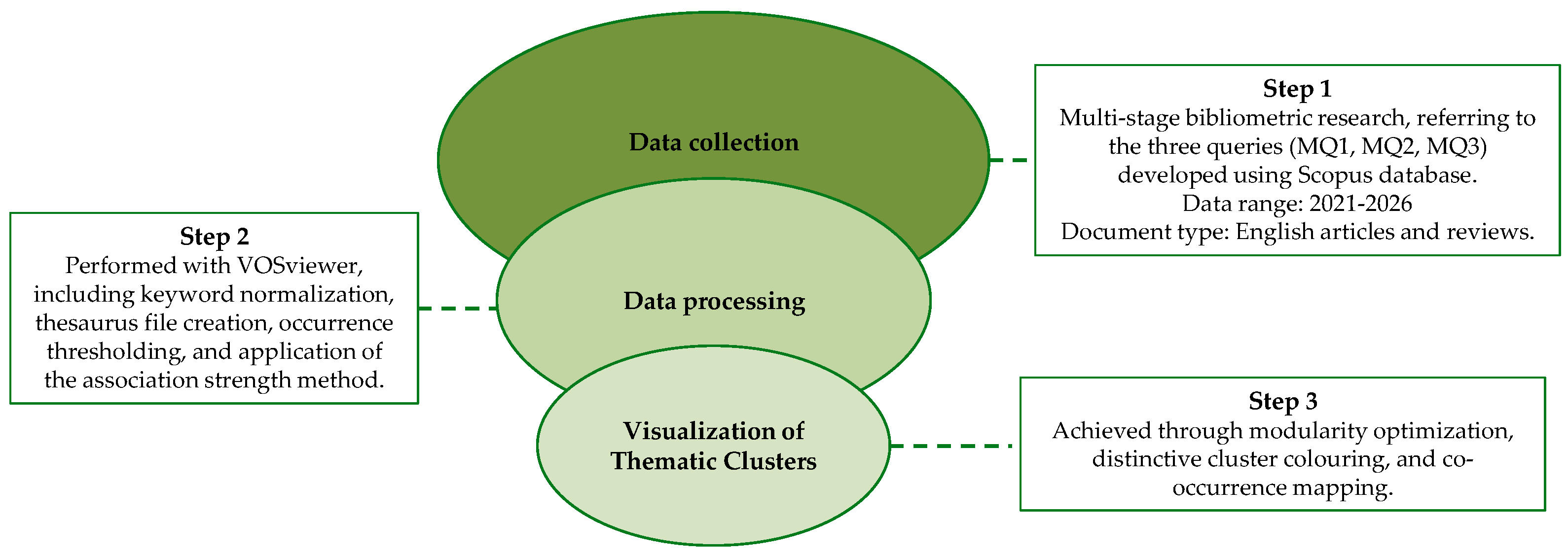
Figure 1. Overview of the bibliometric methodology adopted in this study, to capture electrochemical and biotechnological hydrogen research.
Energies 19 00166 g001
Figure 2. Co-occurrence map of the KWs with minimum occurrence of 20 in the articles derived from the query MQ1. The size of the frames is correlated to the occurrence of the related KWs; colours refer to the different clusters with which each item is associated. Accessed date: 22 October 2025.
Energies 19 00166 g002
Figure 3. Co-occurrence map of the KWs with minimum occurrence of 20 in the articles derived from the query MQ2. The size of the frames is correlated to the occurrence of the related KWs; colours refer to the different clusters with which each item is associated. Accessed date: 22 October 2025.
Energies 19 00166 g003
Figure 4. Co-occurrence map of the KWs with minimum occurrence of 20 in the articles derived from the query MQ3. The size of the frames is correlated to the occurrence of the related KWs; colours refer to the different clusters with which each item is associated. Accessed date: 22 October 2025.
Energies 19 00166 g004
Figure 5. Trend in the number of published documents by year (2021–2025).
Energies 19 00166 g005
Figure 6. Treemap of the top ten journals for each query.
Energies 19 00166 g006
Figure 7. Heatmap showing journal occurrence within the top-ten results of each bibliometric query (MQ1–MQ3). Colour intensity reflects metric magnitude, with green indicating higher bibliometric relevance across thematic axes, referred to the number of published papers.
Energies 19 00166 g007
Table 1. Summary of the three bibliometric search strategies used to construct the dataset.
Search BlockMQ1: Electrochemical &
Bioelectrochemical Focus
MQ2: Expanded Biohydrogen ScopeMQ3: Biohydrogen-Centric
Strategy
Keywords/Query Logic(TITLE-ABS-KEY(“hydrogen production” OR “H2 production”) AND TITLE-ABS-KEY(“water electrolysis” OR “electrolysis of water” OR “PEM electrolysis” OR “alkaline electrolysis” OR “solid oxide electrolysis”)) OR (TITLE-ABS-KEY(“hydrogen production” OR “H2 production”) AND TITLE-ABS-KEY(“microbial electrolysis” OR “microbial electrolysis cell” OR “MEC”))(TITLE-ABS-KEY(“hydrogen production” OR “H2 production”) AND TITLE-ABS-KEY(“water electrolysis” OR “electrolysis of water” OR “PEM electrolysis” OR “alkaline electrolysis” OR “solid oxide electrolysis”)) OR (TITLE-ABS-KEY(“hydrogen production” OR “H2 production” OR “biohydrogen”) AND TITLE-ABS-KEY(“microbial electrolysis” OR “microbial electrolysis cell” OR “MEC” OR “biotechnology”))(TITLE-ABS-KEY(“hydrogen production” OR “H2 production” OR “biohydrogen”) AND TITLE-ABS-KEY(“microbial electrolysis” OR “microbial electrolysis cell” OR “MEC” OR “biotechnology” OR “dark fermentation” OR “anaerobic digestion” OR “bioelectrochemical systems”))
PurposeCaptures literature on hydrogen production via conventional electrolysis and MECsEnhances visibility of biologically mediated hydrogen productionIsolates biohydrogen research as a standalone domain
NotesProvides a dual focus on mature electrochemical systems and emerging bioelectrochemical platformsIncludes biotechnology descriptors to capture interdisciplinary MEC research indexed in life sciencesExcludes conventional electrolysis terms to focus exclusively on microbial, fermentative, and biotechnological pathways
Disclaimer/Publisher’s Note: The statements, opinions and data contained in all publications are solely those of the individual author(s) and contributor(s) and not of MDPI and/or the editor(s). MDPI and/or the editor(s) disclaim responsibility for any injury to people or property resulting from any ideas, methods, instructions or products referred to in the content.