Article

An Improved Short-Term Electricity Load Forecasting Method: The VMD–KPCA–xLSTM–Informer Model

1
Normal School of Vocational Techniques, Hubei University of Technology, Wuhan 430068, China
2
School of Electrical and Electronic Engineering, Hubei University of Technology, Wuhan 430068, China
3
Detroit Green Technology Institute, Hubei University of Technology, Wuhan 430068, China
*
Author to whom correspondence should be addressed.
Energies 2025, 18(9), 2240; https://doi.org/10.3390/en18092240
Submission received: 18 March 2025 / Revised: 11 April 2025 / Accepted: 25 April 2025 / Published: 28 April 2025

Abstract

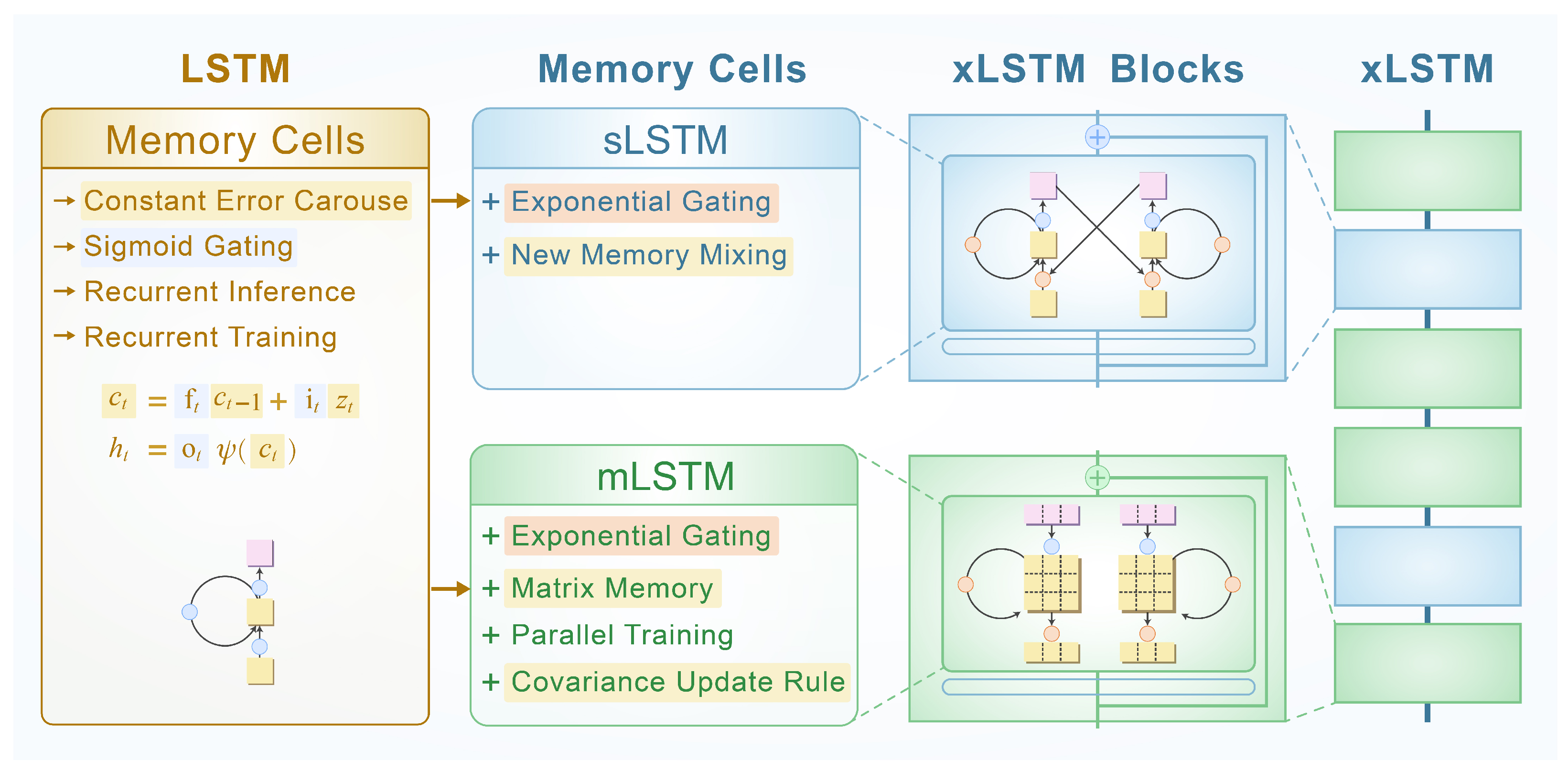
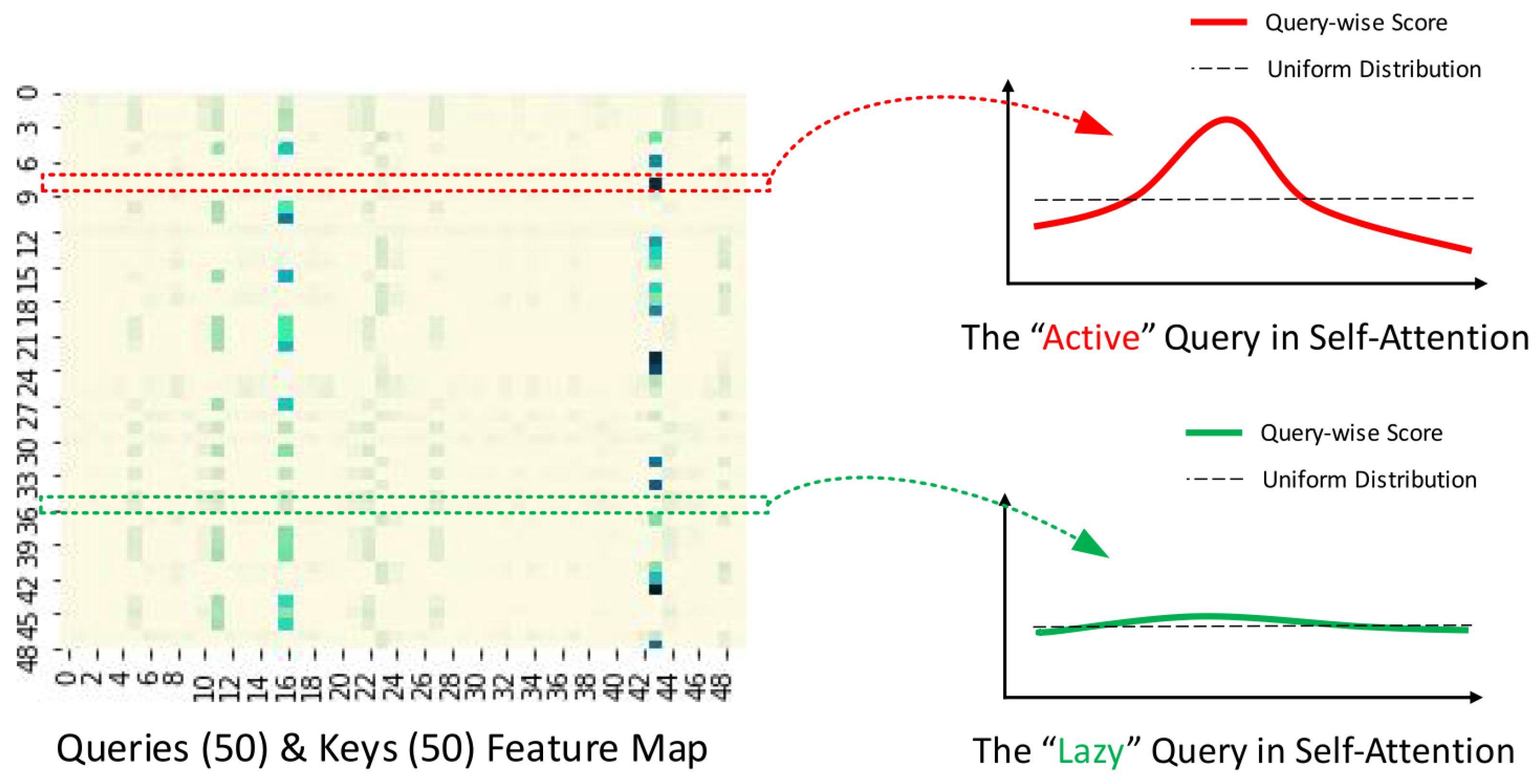
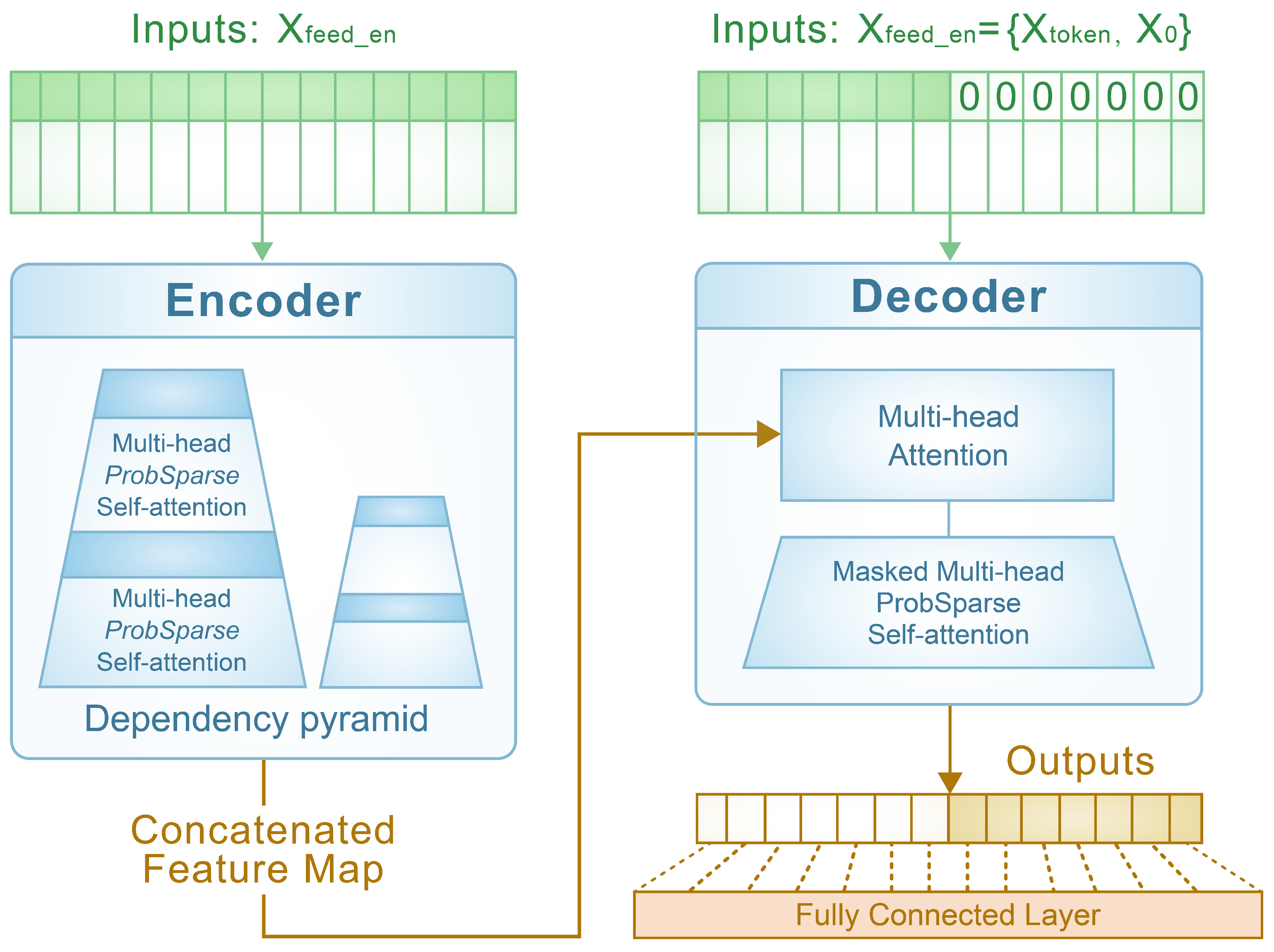
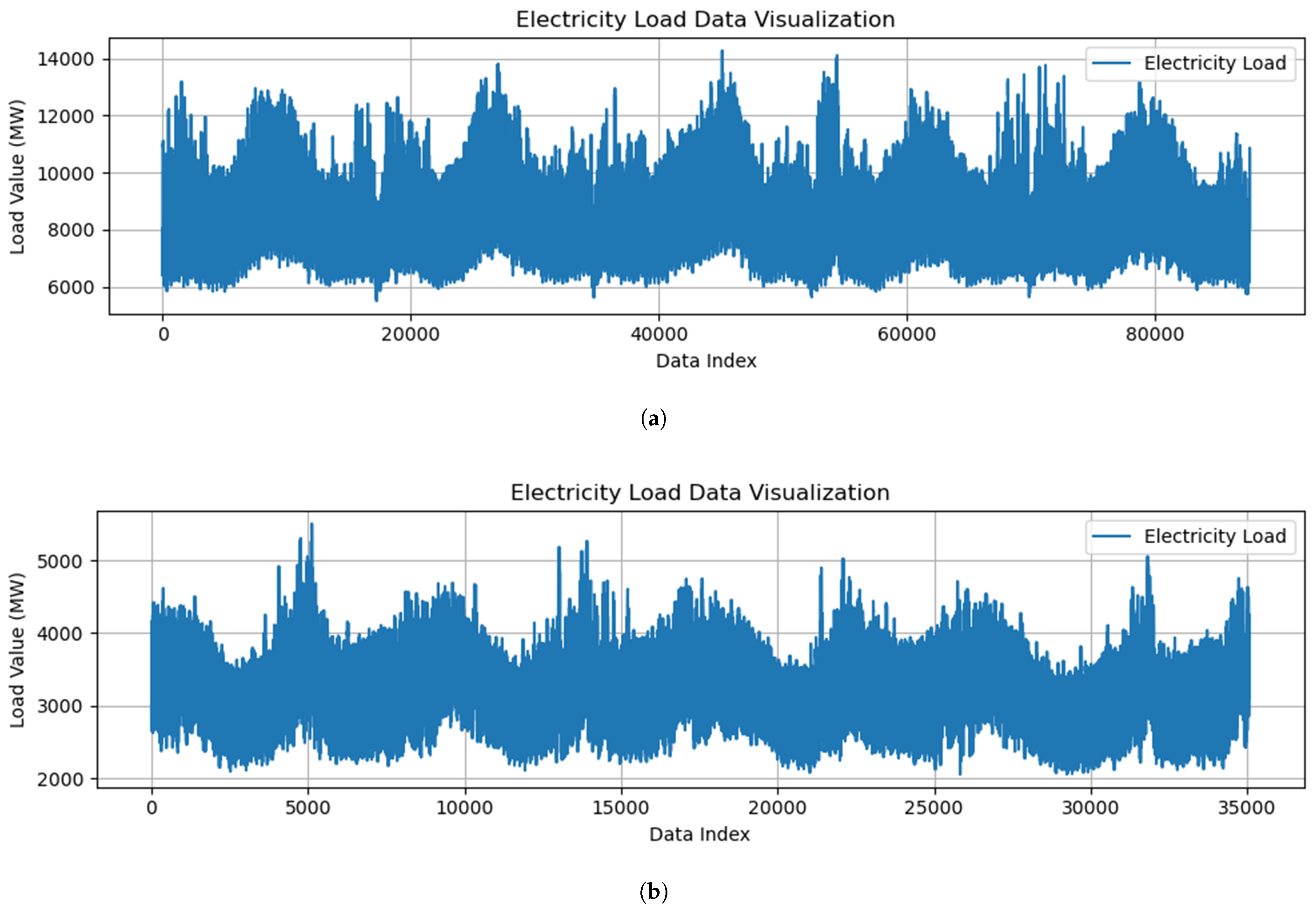
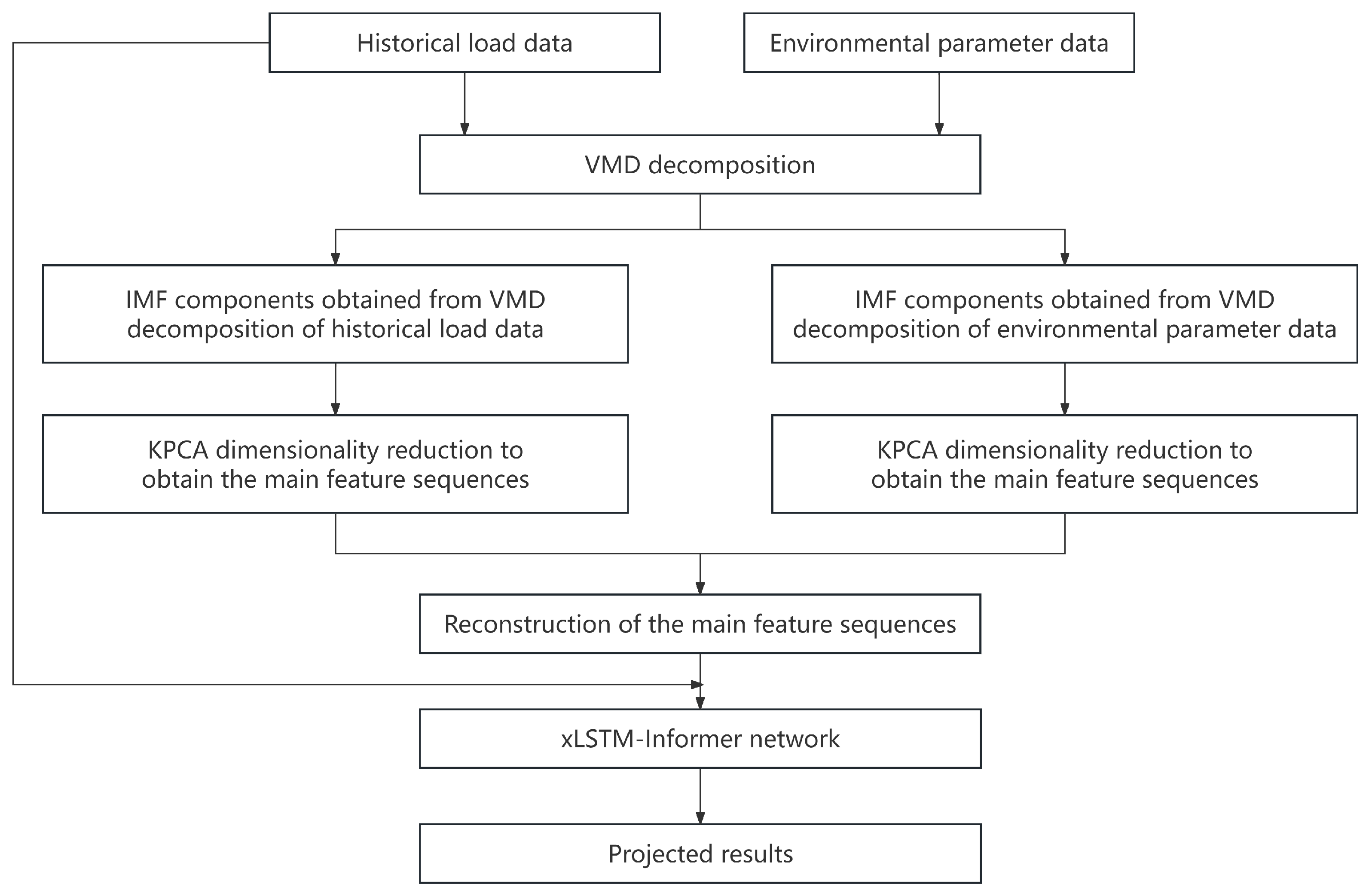
This paper proposes a hybrid forecasting method (VMD–KPCA–xLSTM–Informer) based on variational-mode decomposition (VMD), kernel principal component analysis (KPCA), extended long short-term memory network (xLSTM), and the Informer model. First, the method decomposes the original power load data and environmental parameter data using VMD to capture their multi-scale characteristics. Next, KPCA extracts nonlinear features and reduces the dimensionality of the decomposed modals to eliminate redundant information while retaining key features. The xLSTM network then models temporal dependencies to enhance the model’s memory capability and prediction accuracy. Finally, the Informer model processes long-sequence data to improve prediction efficiency. Experimental results demonstrate that the VMD–KPCA–xLSTM–Informer model achieves an average absolute percentage error (MAPE) as low as 2.432% and a coefficient of determination (R2) of 0.9532 on dataset I, while, on dataset II, it attains a MAPE of 4.940% and an R2 of 0.8897. These results confirm that the method significantly improves the accuracy and stability of short-term power load forecasting, providing robust support for power system optimization.
Keywords: short-term electricity load forecasting; variational-mode decomposition; hybrid neural network short-term electricity load forecasting; variational-mode decomposition; hybrid neural network