Article

Understanding People’s Intentions Towards the Adoption of Biogas Technology: Applying the Diffusion of Innovation Theory and the Theory of Planned Behavior

1
Department of Physics and Biochemical Sciences, Malawi University of Business and Applied Sciences (MUBAS), Private Bag 303, Blantyre 312225, Malawi
2
Department of Electrical Engineering, School of Engineering, Malawi University of Business and Applied Sciences (MUBAS), Private Bag 303, Blantyre 312225, Malawi
3
Department of Physics and Electronics, University of Malawi, P.O. Box 280, Zomba 305205, Malawi
4
Centre for Renewable Energy and Science and Technology (CREST), Loughborough University, Loughborough LE11 3TU, UK
*
Author to whom correspondence should be addressed.
Energies 2025, 18(9), 2169; https://doi.org/10.3390/en18092169
Submission received: 18 February 2025 / Revised: 15 March 2025 / Accepted: 18 March 2025 / Published: 23 April 2025
(This article belongs to the Special Issue Bioenergy Economics: Analysis, Modeling and Application, 2nd Edition)

Abstract

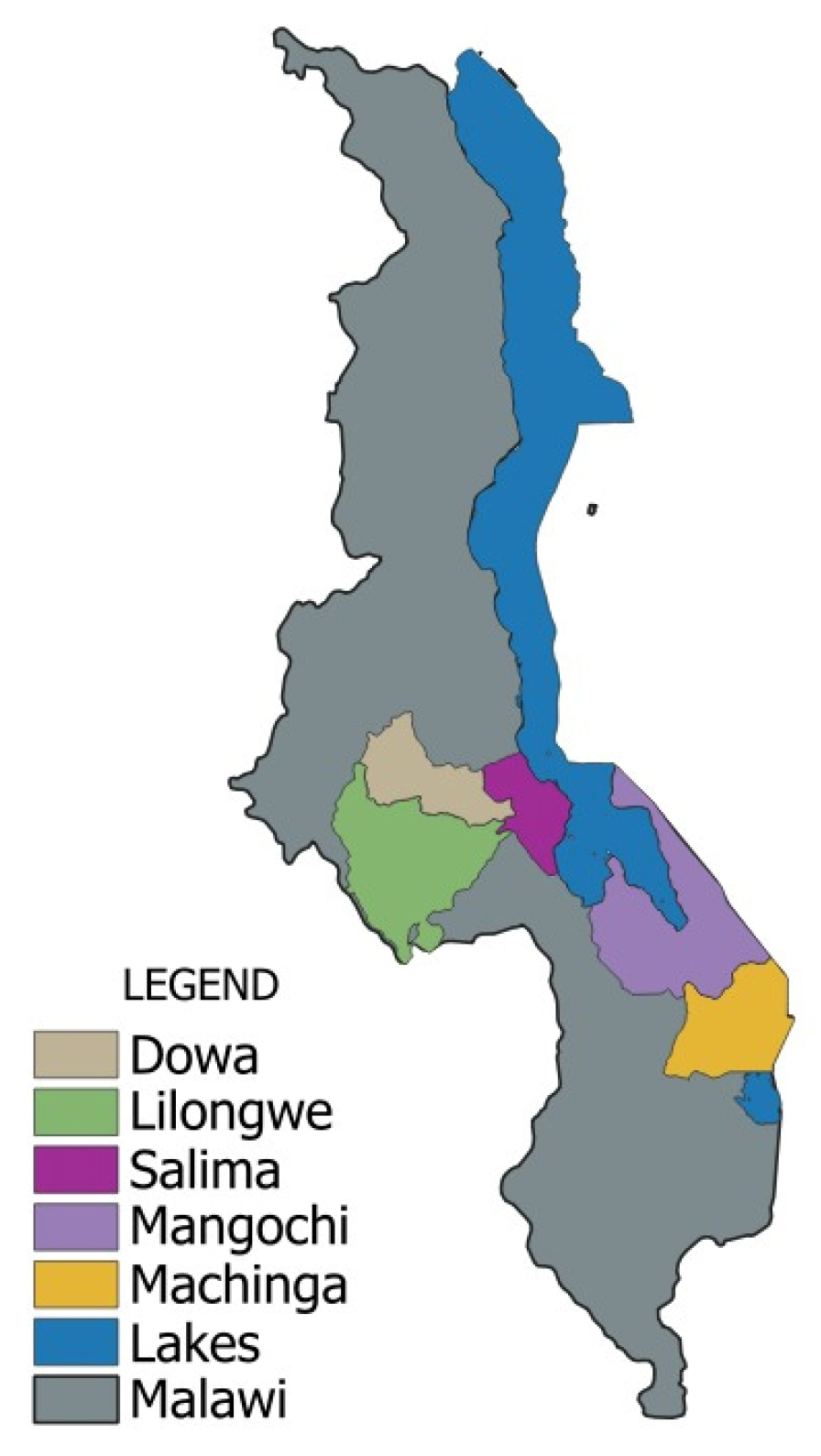
The objective of the study was to investigate factors that influence people’s intentions to adopt biogas technology in Malawi. The study adopted variables of the diffusion of innovation theory (DIT) (relative advantage, compatibility, complexity, and observability) and the theory of planned behavior (TPB) (subjective norms, perceived behavioral control, and attitude) to assess the intention. The study utilized a quantitative methodology, gathering primary data from 98 potential biogas adopters in five districts in Malawi using a questionnaire with a five-point Likert scale. After data collection, a reliability test was conducted to determine the questionnaire’s reliability. A multiple regression analysis was performed to establish the relationship between independent and dependent variables. The subjective norms, perceived behavioral control, and attitude were taken as independent variables while the intention to adopt biogas technology was the dependent variable. The study’s results indicated that only compatibility and subjective norms were significant predictors and independently contributed to predicting the individuals’ intentions to adopt biogas technology. This will assist policy makers to provide technologies that will be compatible to people’s culture and lifestyle, hence preventing the wasting of resources. At the same time, the involvement of important people in society will help to raise awareness of the importance of biogas technology.
Keywords: biogas; adoption; diffusion; innovation; relative advantage; compatibility; complexity; subjective norms; perceived behavioral control; attitude biogas; adoption; diffusion; innovation; relative advantage; compatibility; complexity; subjective norms; perceived behavioral control; attitude