Article

Machine Learning Prediction of Photovoltaic Hydrogen Production Capacity Using Long Short-Term Memory Model


1
College of Engineering, Shandong Xiehe University, Jinan 250109, China
2
State Key Laboratory of Fire Science, University of Science and Technology of China, Hefei 230027, China
3
Center for Hydrogen Energy, Shandong University, Jinan 250061, China
*
Authors to whom correspondence should be addressed.
Energies 2025, 18(3), 543; https://doi.org/10.3390/en18030543
Submission received: 12 November 2024 / Revised: 10 January 2025 / Accepted: 21 January 2025 / Published: 24 January 2025
(This article belongs to the Special Issue Advances in Fuel Cells and Hydrogen Storage Technologies)

Abstract

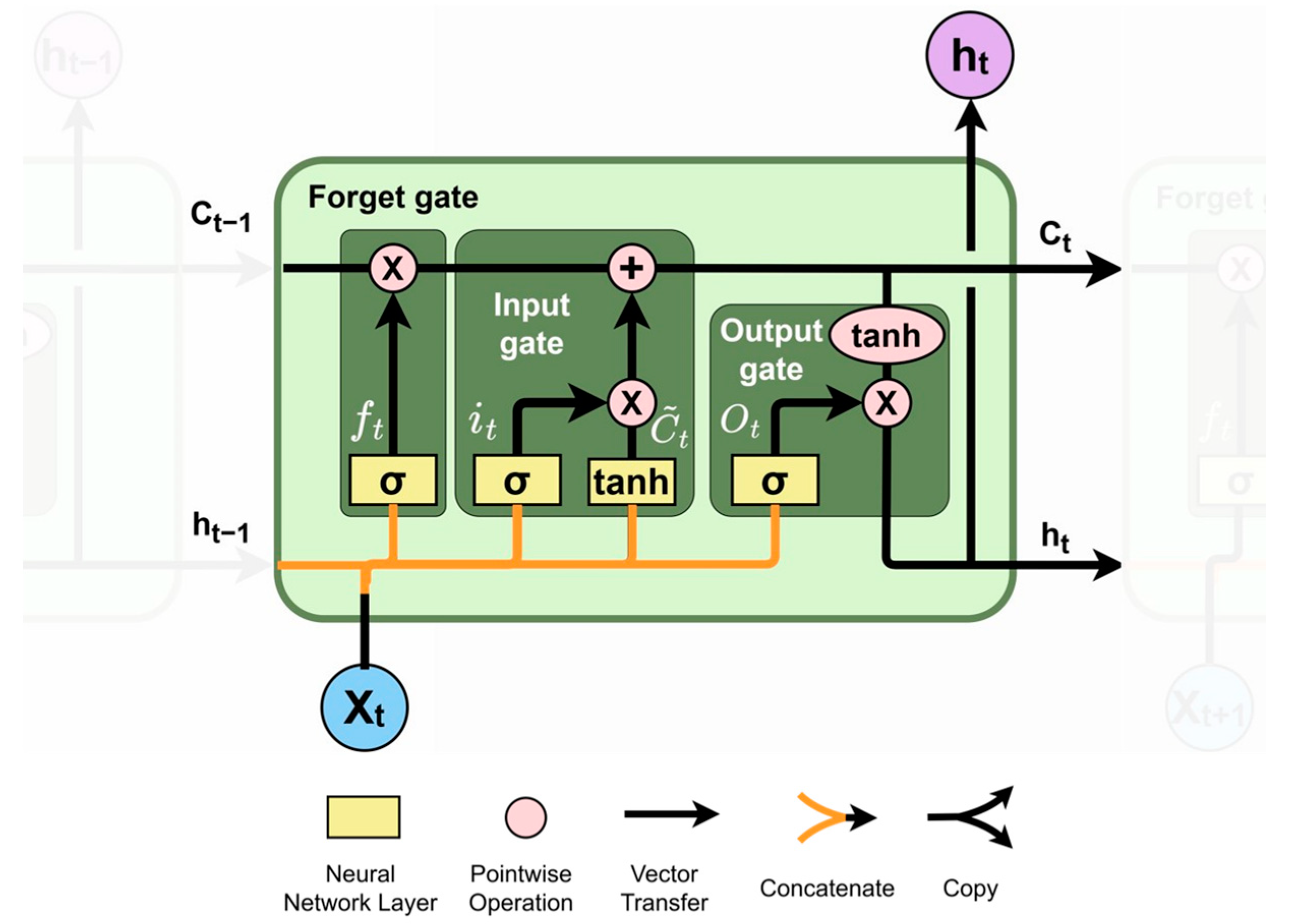
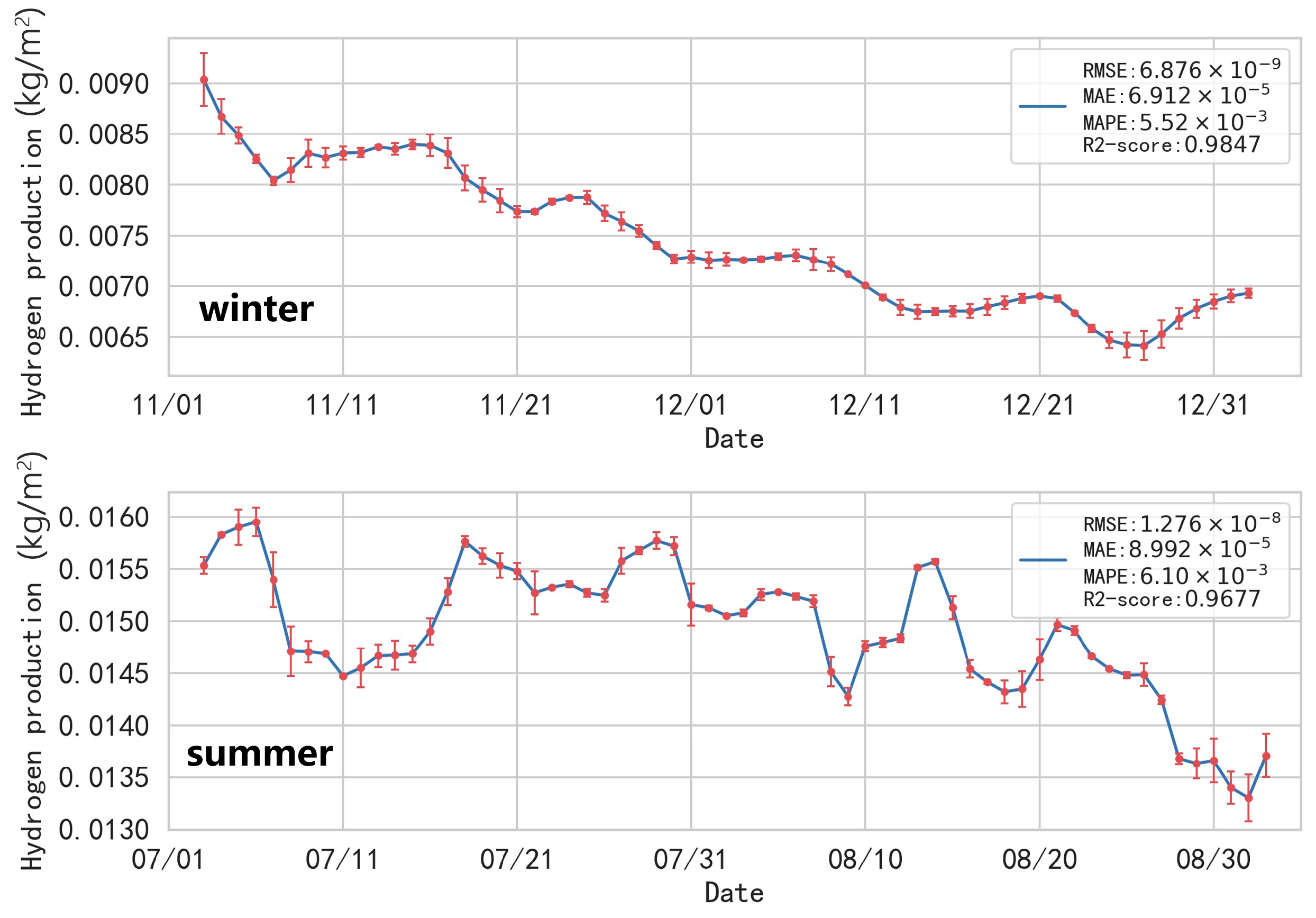
The yield of photovoltaic hydrogen production systems is influenced by a number of factors, including weather conditions, the cleanliness of photovoltaic modules, and operational efficiency. Temporal variations in weather conditions have been shown to significantly impact the output of photovoltaic systems, thereby influencing hydrogen production. To address the inaccuracies in hydrogen production capacity predictions due to weather-related temporal variations in different regions, this study develops a method for predicting photovoltaic hydrogen production capacity using the long short-term memory (LSTM) neural network model. The proposed method integrates meteorological parameters, including temperature, wind speed, precipitation, and humidity into a neural network model to estimate the daily solar radiation intensity. This approach is then integrated with a photovoltaic hydrogen production prediction model to estimate the region’s hydrogen production capacity. To validate the accuracy and feasibility of this method, meteorological data from Lanzhou, China, from 2013 to 2022 were used to train the model and test its performance. The results show that the predicted hydrogen production agrees well with the actual values, with a low mean absolute percentage error (MAPE) and a high coefficient of determination (R2). The predicted hydrogen production in winter has a MAPE of 0.55% and an R2 of 0.985, while the predicted hydrogen production in summer has a slightly higher MAPE of 0.61% and a lower R2 of 0.968, due to higher irradiance levels and weather fluctuations. The present model captures long-term dependencies in the time series data, significantly improving prediction accuracy compared to conventional methods. This approach offers a cost-effective and practical solution for predicting photovoltaic hydrogen production, demonstrating significant potential for the optimization of the operation of photovoltaic hydrogen production systems in diverse environments.
Keywords: photovoltaic hydrogen production; capacity prediction; LSTM network model; neural network photovoltaic hydrogen production; capacity prediction; LSTM network model; neural network