Article

Experimental Studies of the Effect of Operating Time and Temperature on the Dynamic Viscosity of Engine Oils


by
Agnieszka Leśniak
1,*,
Dariusz Kurczyński
2 and
Grzegorz Wcisło
3
1
Department of General Chemistry, Institute of Quality and Product Management Sciences, Krakow University of Economics, 31-510 Krakow, Poland
2
Department of Automotive Vehicles and Transportation, Faculty of Mechatronics and Mechanical Engineering, Kielce University of Technology, 25-314 Kielce, Poland
3
Department of Bioprocess Engineering, Power Engineering and Automation, Faculty of Production and Power Engineering, University of Agriculture in Krakow, 31-120 Krakow, Poland
*
Author to whom correspondence should be addressed.
Energies 2025, 18(24), 6530; https://doi.org/10.3390/en18246530
Submission received: 30 October 2025 / Revised: 1 December 2025 / Accepted: 10 December 2025 / Published: 13 December 2025
(This article belongs to the Section H1: Petroleum Engineering)

Abstract

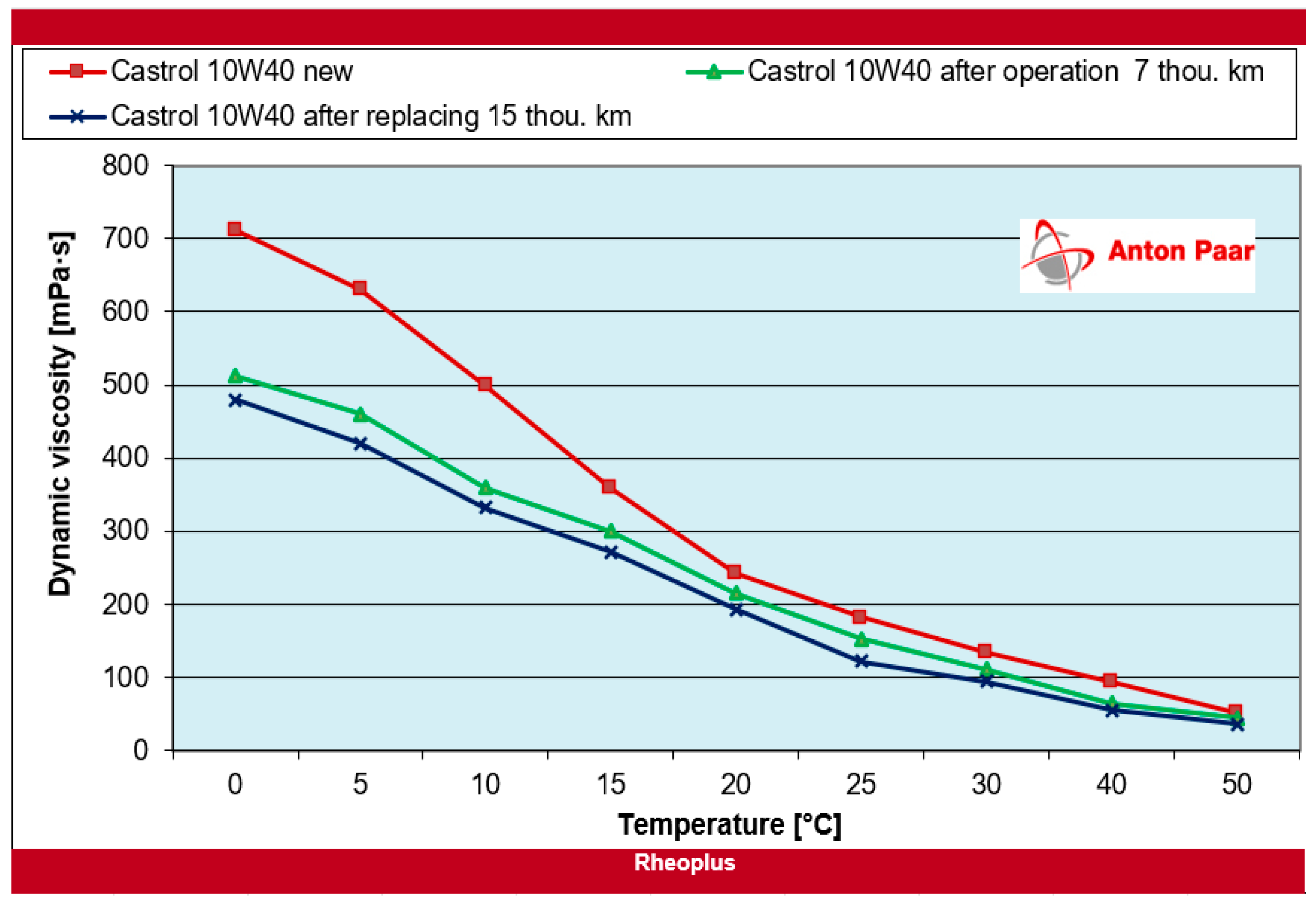
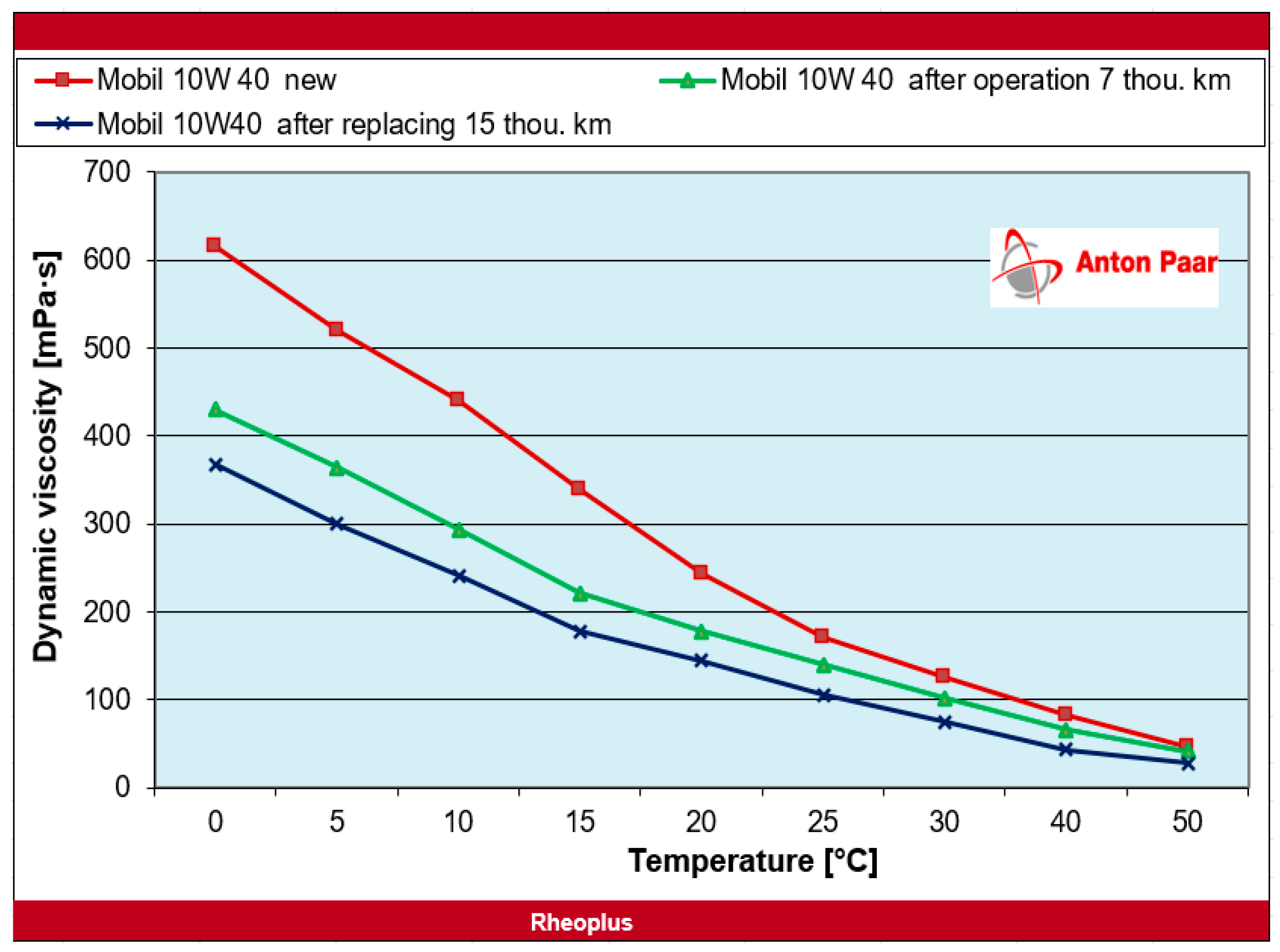
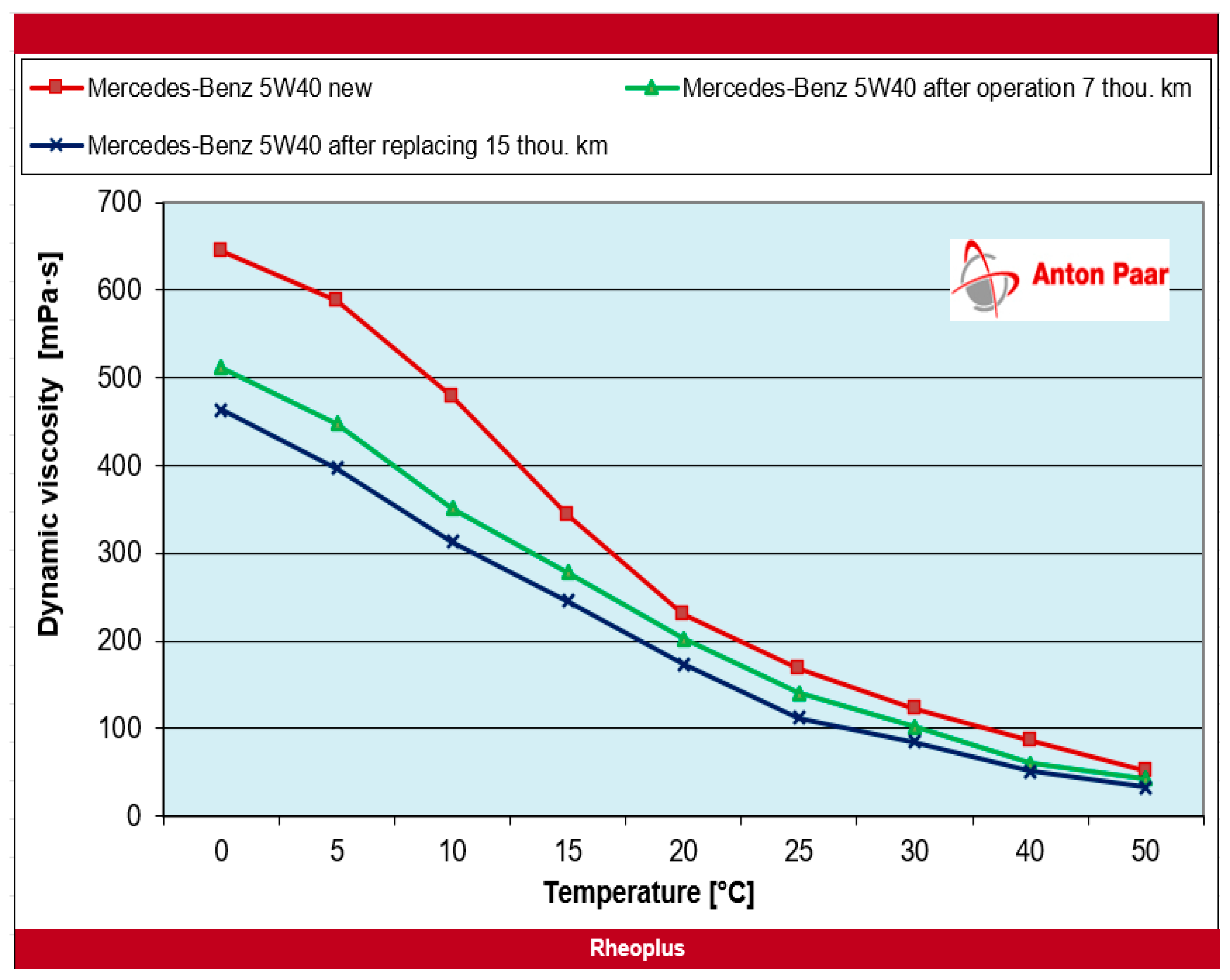
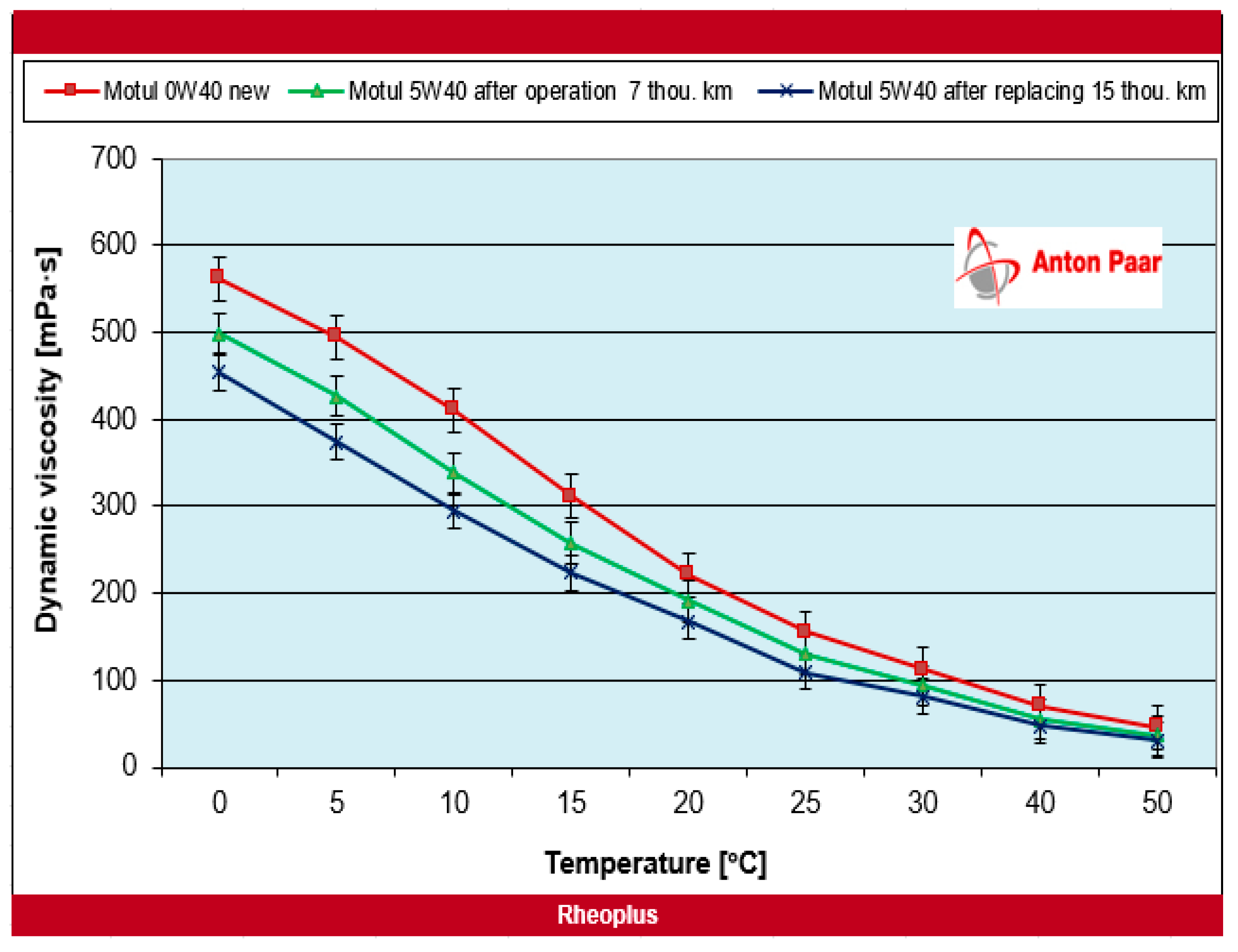
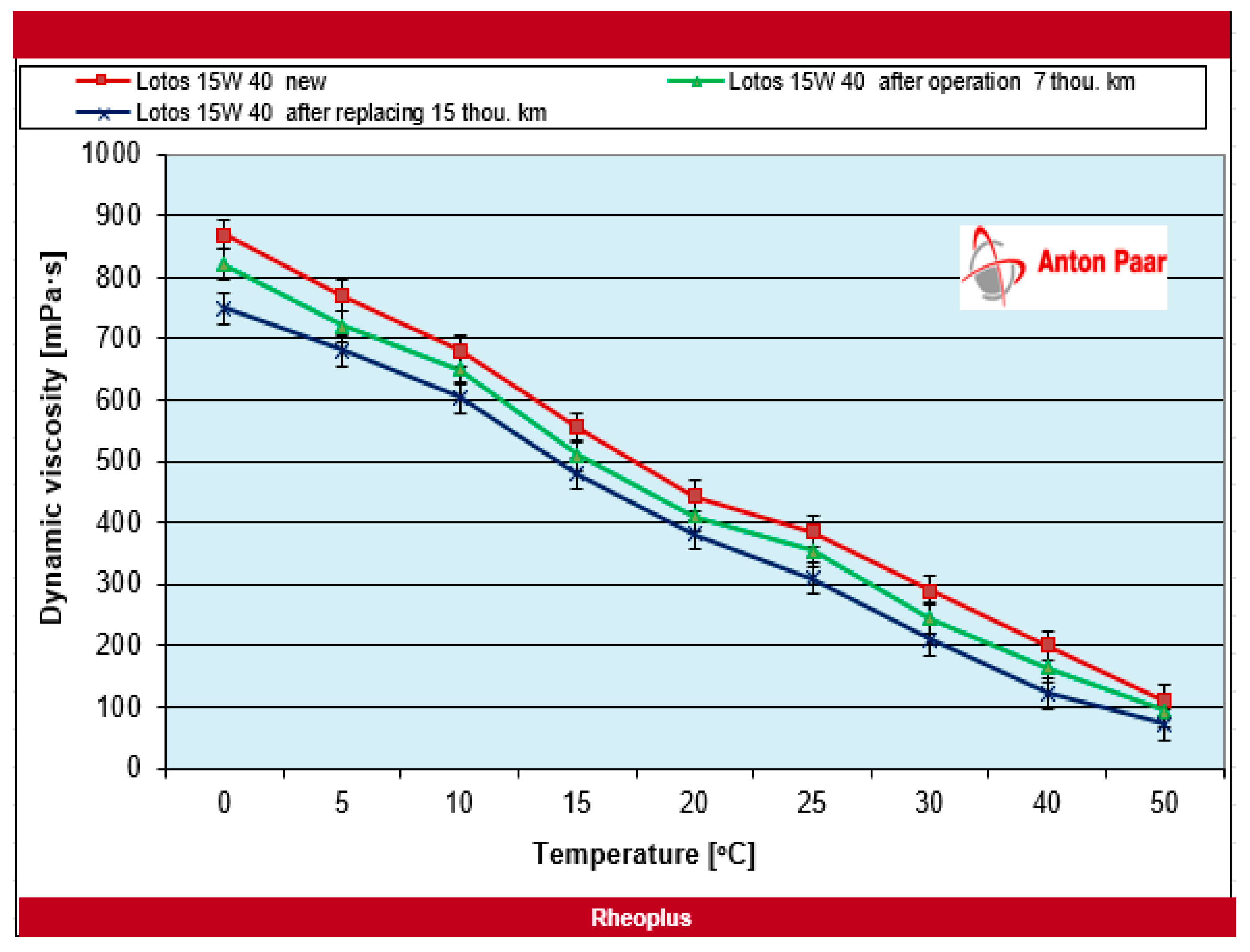
The research problem concerning oils used for lubricating piston combustion engines is still very current and important. The proper selection of oil and its properties have a significant impact on engine reliability and durability, their efficiency, effective operating parameters, fuel consumption, environmental impact, and the proper operation of the turbocharger and exhaust system. The work concerned determining the effect of temperature and operating time on the dynamic viscosity of oils: mineral, semi-synthetic, and synthetic, used in compression-ignition engines (diesel engines). Dynamic viscosity tests were conducted for new oils, after a mileage of seven thousand kilometers, and after a mileage of fifteen thousand kilometers. The range of temperature measurement conditions used was from 0 to 50 °C and the shear transmission rate was 1000 s−1. This range allows the oil to be preserved at low and medium temperatures, which are crucial for engine operation during start-up and short operating cycles. As the conducted studies showed, both temperature and operating time have a very large influence on the dynamic viscosity of oils. It was demonstrated that as the operating time of the oils in the engine increased, their dynamic viscosity decreased, and increasing the viscosity measurement temperature results in smaller absolute changes in it.
Keywords: engine oils; dynamic viscosity; operational tests; influence of temperature on oil viscosity; influence of engine mileage on oil viscosity engine oils; dynamic viscosity; operational tests; influence of temperature on oil viscosity; influence of engine mileage on oil viscosity