

Article

The Integration of Passive and Active Methods in a Hybrid BMS for a Suspended Mining Vehicle
1
KOMAG Institute of Mining Technology, Pszczynska St. 37, 44-101 Gliwice, Poland
2
Faculty of Electrical Engineering, Wroclaw University of Science and Technology, Wybrzeze Wyspianskiego St. 27, 50-370 Wroclaw, Poland
*
Author to whom correspondence should be addressed.
Energies 2025, 18(24), 6465; https://doi.org/10.3390/en18246465
Submission received: 3 September 2025 / Revised: 23 October 2025 / Accepted: 28 October 2025 / Published: 10 December 2025
(This article belongs to the Special Issue Lithium-Ion and Lithium-Sulfur Batteries for Vehicular Applications)

Abstract

Using lithium batteries to supply electric machinery and/or equipment in underground mines requires an adequate level of security. This is particularly important in coal mines, especially under the threat of methane explosions and/or fire hazards. Lithium battery cells with a BMS should be effectively isolated from the impact of the surrounding mine environment. This can be achieved by storing all battery systems in a certified explosion-proof enclosure (Ex) in accordance with the relevant regulations and standards. Preliminary tests conducted by the authors indicated that use of lithium cells without a BMS in mines is risky and, in practice, unacceptable. BMSs with passive cell balancing are most commonly employed. They allow for the equalization of cell voltages primarily during the charging process. However, the lowest-capacity cell still determines the overall lifetime of a battery. Furthermore, the use of active balancing systems (BMSs) is rare in practice due to their greater complexity and price. Nevertheless, they can significantly extend battery life through the much more efficient redistribution of energy among the cells, including during the discharge process. This article presents the operation of a modified (hybrid) BMS architecture, combining both passive and active balancing methods when employed for the selected suspended mine vehicle. It enables more safe and more effective charging process, as well as discharging process, which results in the longer time of operation of lithium battery packs, for one charge. This system is intended for use in mining machinery and equipment, as well as in selected energy storage systems powered by lithium-based battery modules.

1. Introduction

The safe use of lithium batteries requires not only the appropriate selection of battery electrical parameters but also the continuous monitoring of their operation. From the point of view of the need to reduce the operating costs of mines and to minimize downtime, it is important that the battery used operate for the longest possible time during one charging cycle. Technological progress now enables us to use the lightweight lithium batteries available on the market, which have much better electrical parameters, allowing for the gradual replacement of heavy and troublesome lead–acid batteries. It should be noted, however, that state-of-the-art underground mining often takes place at considerable depths, where the ambient temperature exceeds 40 °C. High temperatures negatively affect work safety, increasing the failure rate of devices and the risk of damage to lithium batteries. Increased temperature can lead to electrolyte decomposition, increased pressure inside the cells, and, consequently, their ignition or explosion (thermal runaway) [1,2,3,4]. For this reason, it is necessary to use electronic monitoring systems—namely, the so-called battery management systems (BMSs) [5,6,7,8,9]. Their task is not only to monitor the battery operating status but also—and above all—to equalize the cells to eliminate overcharging, excessive discharge, and/or overheating [4,10].
Lithium batteries have particularly low resistance to depth of discharge (DoD); leaving the cells deeply discharged for a long time can cause damage. The BMS is therefore tasked with continuously monitoring the operating parameters of the cells and, in the event of exceeding the limit values (voltage, current, temperature), triggering an alarm or disconnecting the battery [9,10,11,12]. Energy balancing of the cells is necessary due to differences in their capacity, charge, and internal resistance, which result from different manufacturing tolerances and operating conditions [8]. These differences tend to deepen during use.
However, in the literature, many different BMS solutions have been proposed, but it is difficult to decide which of the proposed solutions is the best due to the lack of appropriate field tests. In ref. [13], for example, an improved single-input, multi-output, bi-switch flyback converter is suggested to achieve effective balancing. The proposed topology simplifies the logic of control by using a single MOSFET switch for energy transfer and two options to control the cell switches. The balancing data of the developed topology were compared using MATLAB ver. R2025a simulation and real-time simulation. According to the authors, it may reduce the time required to assemble and commission the hardware necessary for this topology’s real-time implementation. Refs. [14,15] suggest the application of a proportional-integral (PI) controller to address voltage imbalances among the cells, aiming to improve battery life and longevity without the need for a complex active control circuit. Similarly, refs. [16,17] recommend using only the passive balancing method. They present developed BMS devices which support balance, charge, de-balance, discharge, and permanent storage battery processes. The control unit is run by its own written algorithm (code). The device [17] was tested in five different operating configurations. The research work for converters, designed for voltage equalization in an energy storage system made out of connected in series lithium ion cells is presented in [18]. The concept of charging the battery uses resonant converters operating in zero voltage switching (ZVS) and zero current switching (ZCS) modes. To accurately estimate the state of charge (SOC) and state of health (SOH) of a battery and to improve the long-term estimation of a battery’s SOC, a joint estimation method based on a Kalman filter was proposed in [19]. First, a ternary lithium-ion battery equivalent model (as a second-order RC circuit) was constructed, and its parameters were estimated online. After confirming the model accuracy, real battery operational data were collected. SOC and SOH parameters were determined in the MATLAB environment using the Kalman filter algorithm. The results indicate that the accuracy of the method is very good and can effectively improve long-term battery operation. An interesting solution, although used for electric vehicles (EVs) powered by a photovoltaic (PV) battery and an ultracapacitor (UC) system, was given in [20]. Energy management control algorithms—namely, artificial neural network (ANN) and aquila optimizer algorithm (AOA)—have been suggested. An increase in travel distance, a reduction in battery size, improved reactions, especially under overload, and an extension of battery life are the results of this arrangement.
Test results for lithium–iron–phosphate (LiFePO4) cells, equipped with BMS, are presented below. Due to the intended use of the battery in mine conditions, the tests focused on the efficiency of the cell balancing system in the case of a mismatch of the parameters of one to three cells, which is common in such situations. Based on the results, a modified BMS structure was developed, combining passive and active balancing, which is a novelty. This allows us not only to extend the battery life but also to increase the safety of the charging process. The developed system can be used both in mining machines and devices and in energy storage devices powered by lithium batteries.

2. Cell Balancing Methods

Monitoring and controlling the energy storage process in cells should ensure the cells can be used as reliable and stable sources of electrical energy for as long as possible, while being highly efficient and safe. For the proper and safe operation of lithium cell batteries, a BMS (battery management system) is necessary, which monitors the operating parameters of cells, prevents their damage, and implements the balancing process to increase the efficiency and life of the battery. Balancing methods, in general, can be divided into the following three groups (Figure 1):
  • Passive—consisting of dissipating excess energy into heat using the appropriately selected resistors, impedances, and/or transistors;
  • Active—consisting of an external system balancing the energy stored in cells by transferring energy between the cells (less commonly used);
  • Hybrid—combining the features of active and passive systems, involving the active transfer of energy between cells and passive protection against overcharging during the charging process.
There are several methods for actively balancing the cells. Due to the energy flow, they are grouped into four basic subcategories: cell to cell, cell to battery, battery to cell. and the combined method: cell to battery and from battery to cell [6,7]. In practice, the most common BMS is based on the passive method; therefore, the process of dissipating excess electrical energy into heat is used. Although it is simple and cheap, it has significant limitations, especially in devices intended for use in mining conditions. Therefore, the machine must meet the requirements of the ATEX directive, including temperature limits for all components in physical contact with the mine environment.
The active cell balancing system is an alternative to the passive method. Its basic idea is to use a system that allows for active energy transfer among cells, which reduces energy losses, improves the operating conditions of cells, and extends life of the battery pack.
The authors’ previous research work has shown that in addition to active balancing during the battery operation, the charging process (when the load is disconnected) is also very important. In such cases, the BMS, with additional passive balancing, provides better performance, effectively protecting the cells from overcharging. Considering the advantages of BMS with active and passive balancing and the expectations of hard coal mines in terms of implementing technical solutions that satisfy quality, efficiency, and economic requirements, it seems reasonable to use the integrated BMS. Such a system would functionally combine both types of balancing (i.e., active and passive), ensuring full protection of the battery under all working conditions, i.e., during operation, standstill, and charging.

3. Hybrid BMS

Previous studies of authors, have shown that regardless of the use of an active lithium cell balancing system during operation, the battery charging process is also crucial, especially without the load. In such conditions, the best solution is to use a BMS with additional passive balancing, which prevents the cells from overcharging [21,22,23,24].
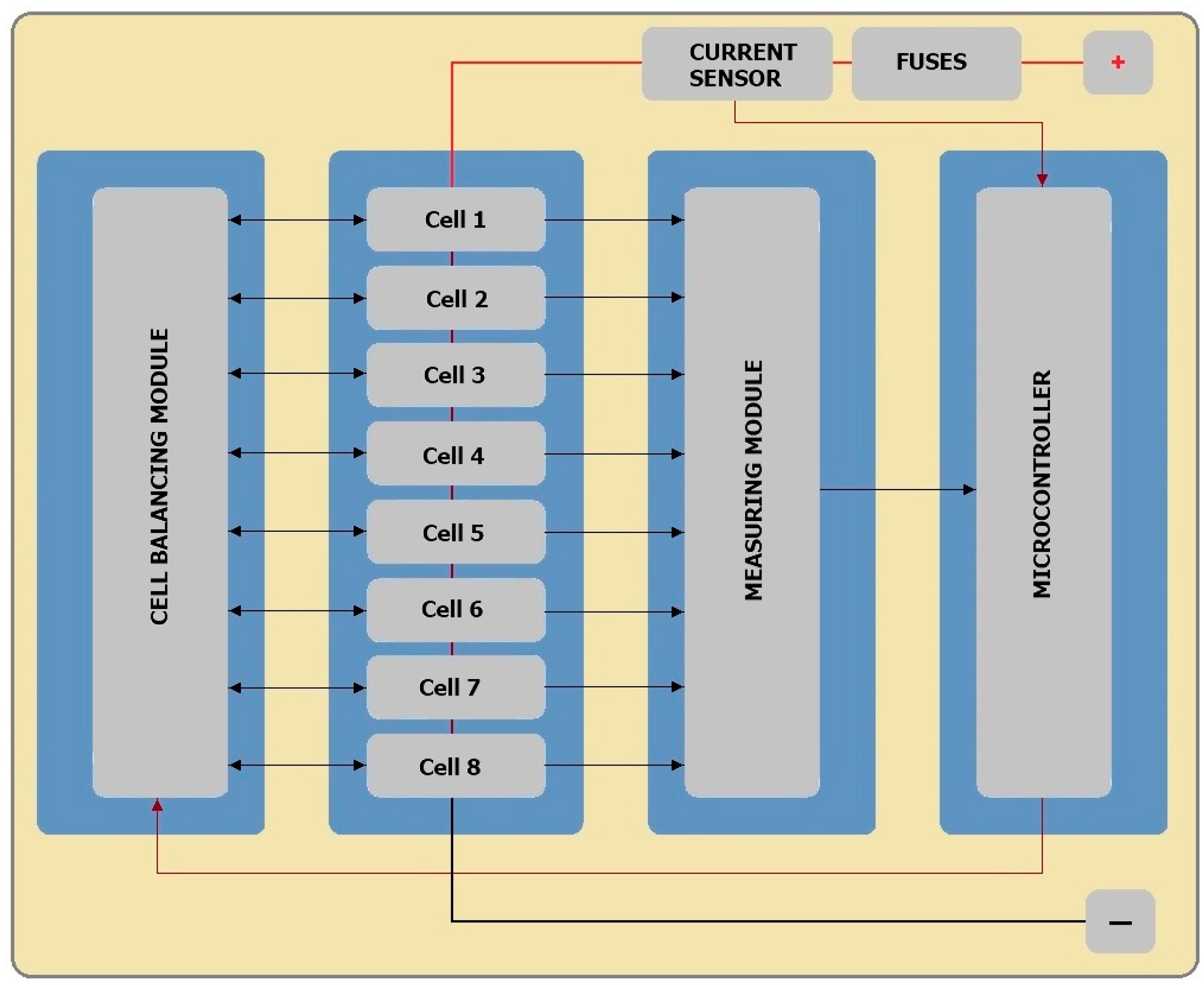
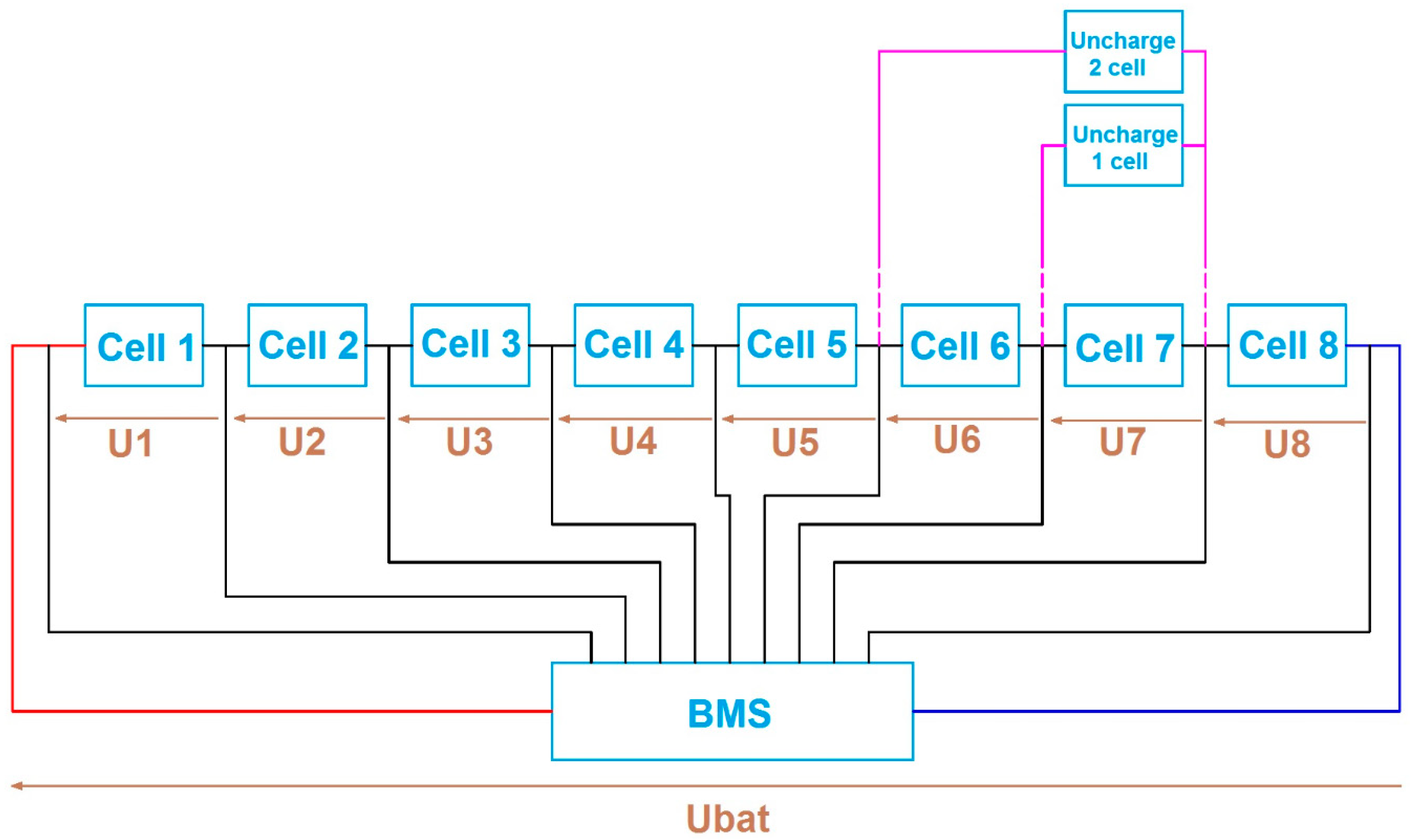
The developed hybrid BMS uses two complementary balancing methods: active and passive. It consists of the following three modules (Figure 2):
  • Measurement and control module—responsible for monitoring the voltage and temperature of the cells and controlling the entire system;
  • Passive balancing system module—based on resistors connected in parallel to each cell, which dissipates the excess energy as heat;
  • Active balancing system module—enables the transfer of the energy to the lowest-capacity cells, increasing the efficiency of the battery pack.

3.1. Measuring Module

The measuring module is responsible for monitoring the voltage of each battery cell via analog-to-digital converters (AC/DC) of the microcontroller. Each cell is therefore connected to a dedicated AC/DC input. Additionally, the same system measures the temperature of the cells. When overload, overvoltage, undervoltage, overheating, or other threats are detected, the battery is immediately disconnected. It is important to remember that any unsafe operating conditions are both undesirable and dangerous; they can lead, at least, to a shortening of the life of the cells and, at worst, pose a threat to the user.
The module also controls the battery charge level. The (SoC) is determined based on the voltage measurements of each cell.

3.2. Active Balancing Module

When using the “battery to cell” mode, the energy from the battery pack is transferred to the most discharged cell. This equalizes the charge level between the cells, which allows for maximum use of the entire battery capacity and extends its life. Although the cells in the pack usually should have similar capacity, after a number of charging and discharging cycles, differences may appear. In extreme cases, the voltage of the most discharged cell can drop below the permissible minimum, which threatens to damage it and significantly limits the availability of energy from the entire pack. It is important to remember that differences in the amount of stored energy of each cell are crucial for battery durability. Therefore, without a BMS, the voltage of each cell can differ significantly, which results in a faster decrease in usable battery capacity and/or deterioration of the system’s operating parameters.

3.3. Passive Balancing Module

The passive balancing module involves dissipating excess energy in the form of heat using the resistors. When the voltage of one of the cells significantly exceeds the voltages of the others, it is connected to the discharge circuit via an actuator, most often a transistor controlling the discharge resistor. The energy from such a cell is dissipated in a resistor connected in parallel. This process continues until the cell voltage equals that of the others, after which it is possible to continue charging the battery.

3.4. Hybrid BMS Operation

The hybrid BMS controls the voltage and temperature of all cells and, based on these data and the live operating mode (charging or discharging), decides to activate one or both of the systems (active and/or passive) simultaneously.
  • In the discharge mode, e.g., during the operation of a machine powered by a lithium battery, when the voltage drops below a specified threshold (e.g., U/Un = 0.94; 3.0 V), the active balancing system is activated. The passive balancing system then remains inactive. The process of equalizing the voltages continues until they are unified or until one of the cells reaches the minimum permissible voltage.
  • In the charging mode, both balancing systems are activated. The active system transfers energy to the lowest-capacity cell, while the passive system dissipates excess energy in the cells of the highest capacity. However, if the voltage of any cell approaches the maximum allowed by the manufacturer and the passive energy dissipation capabilities are exceeded, the system disconnects the charger and switches to voltage monitoring mode. When, in turn, the voltages drop down below the fixed threshold, the charger is switched on again, together with the appropriate balancing modules. If the voltages for all cells are close to the maximum, the system switches off the active balancing system and leaves only passive ones in operation.

4. Hybrid BMS Experimental Results

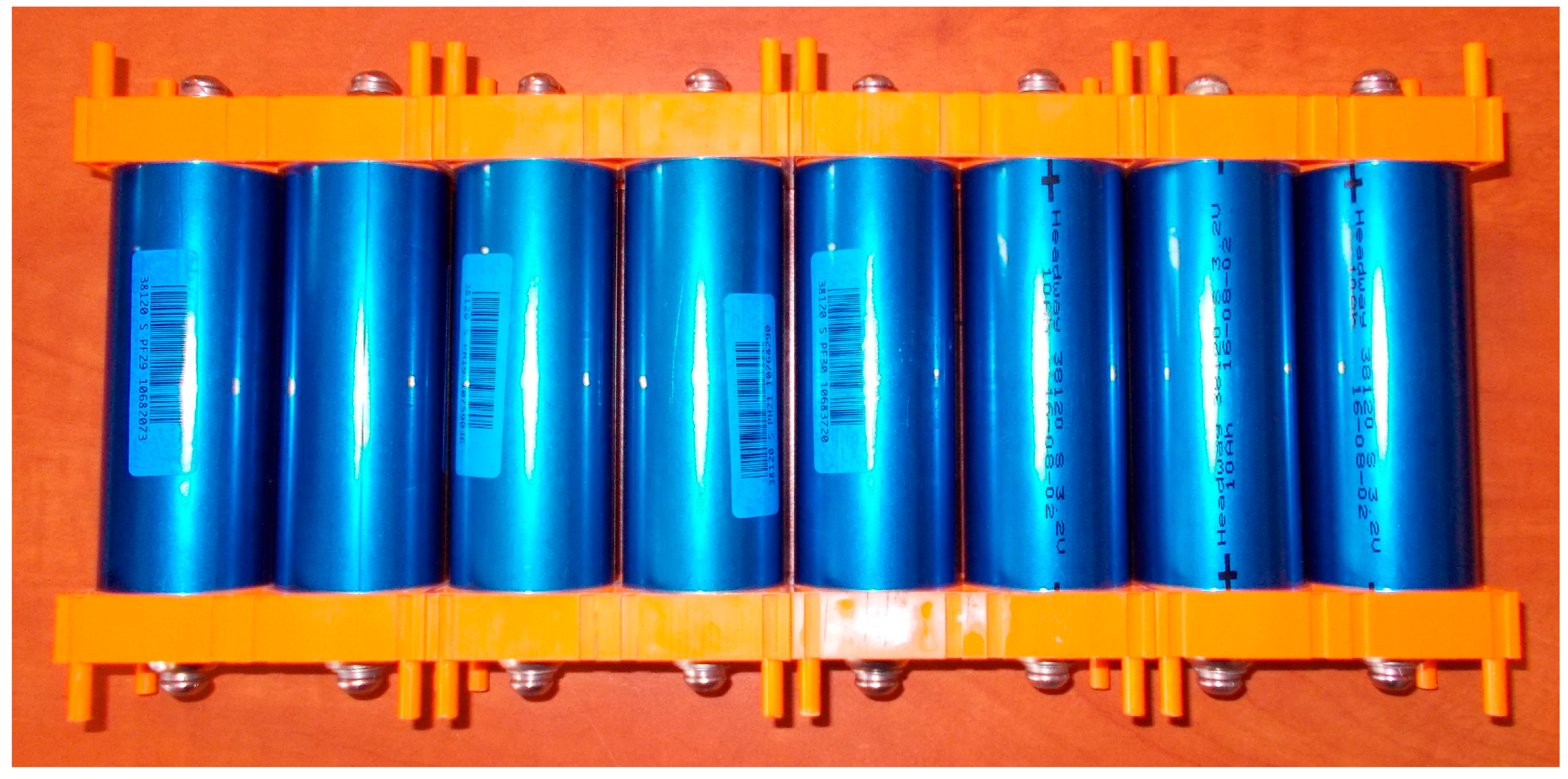
The duration of the lithium battery charging process depends on the charger on/off frequency. This, in turn, is related to the overcharging of the cells that discharge the slowest. Therefore, maintaining a smooth charging process is key to effecting the quick and effective charging of the cells that make up the battery, thus ensuring the continuous readiness for operation of a device or machine equipped with such a battery as a power source. Since no hybrid BMS was found on the market, the authors developed a model with this BMS structure. Due to their complexity and price, which increases with the number of cells, the authors limited their research work to a battery consisting of only eight cells connected in series (Figure 3). However, approach to a much larger number of cells and the conclusions drawn from the research work are not limited to the size of the battery pack and its voltage level.

4.1. Scope of Tests

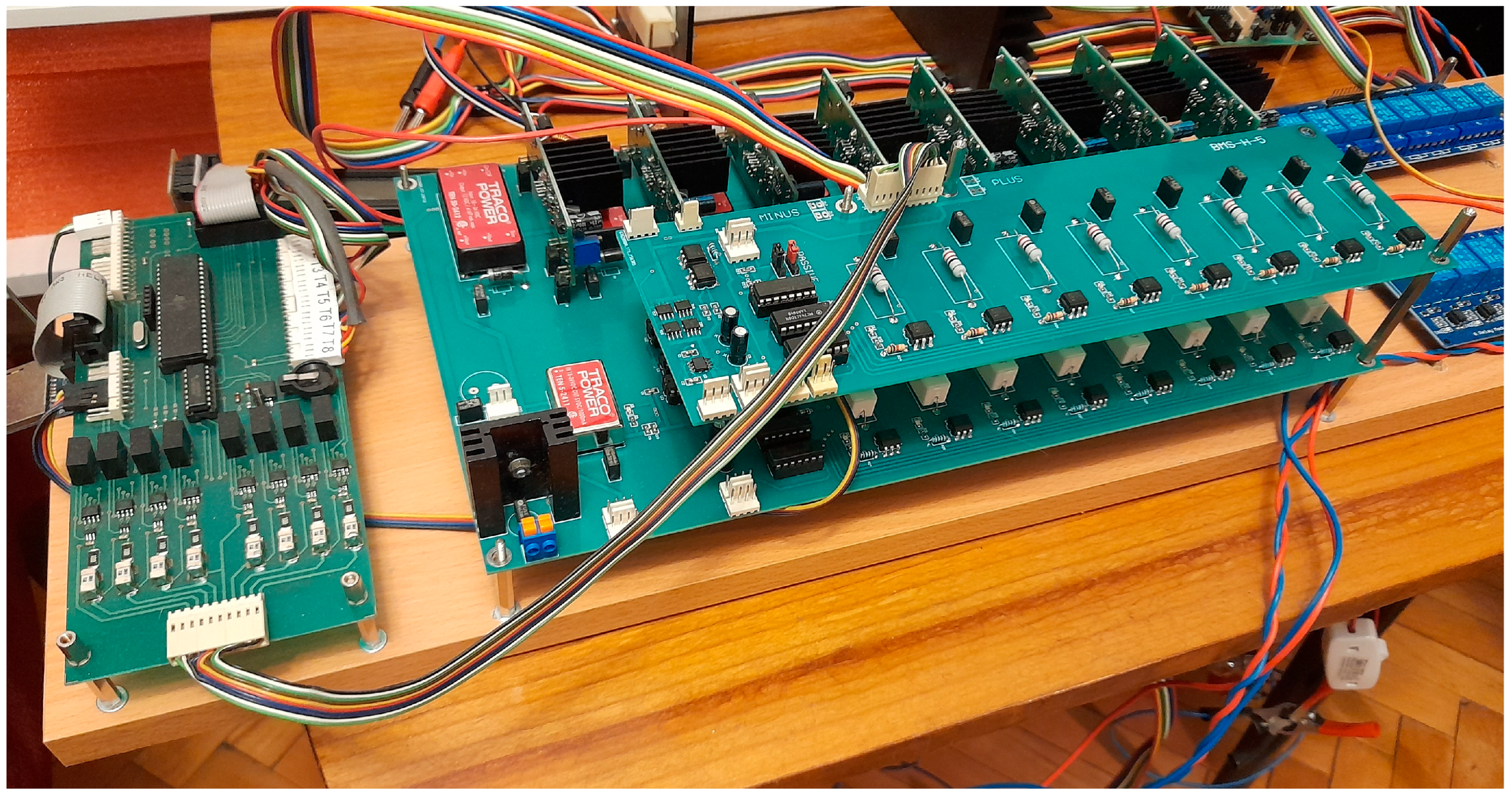
Batteries composed of eight 10 Ah, 3.2 V, (LiFePO4) lithium cells (type: Headway LFP38120 (S)) [25] were tested. The batteries worked at room temperature (approx. +20 °C; relative humidity, approx. 40%) with free heat transfer to environment. The test stand was equipped with a temperature and voltage measurement system, as well as a computer with dedicated software (Figure 4).
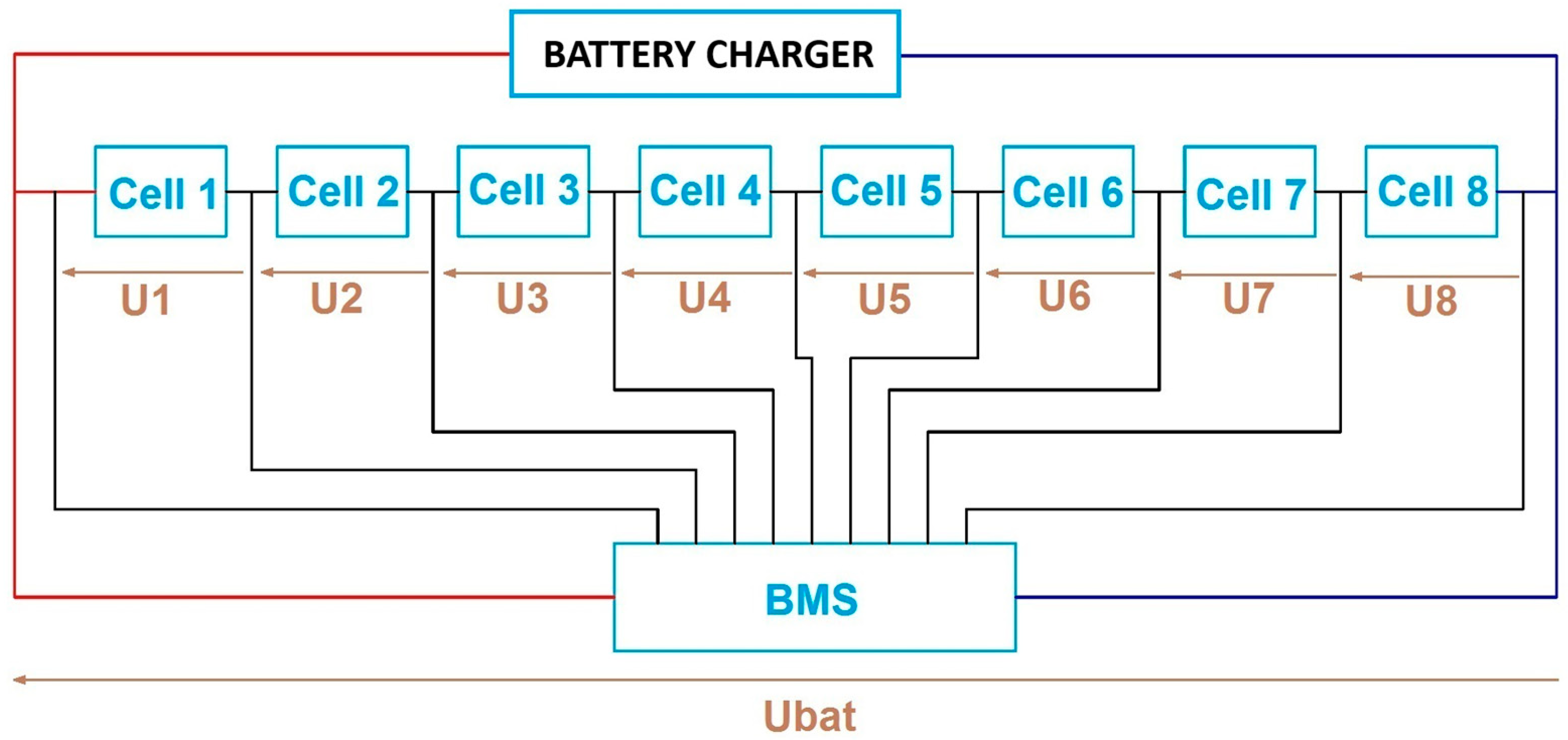
To compare the effectiveness of the newly developed hybrid BMS with the authors’ previous tests (described in detail in the monograph [26]), appropriate technical parameters had to be provided. As in the previous tests, active balancing during discharge was initiated when the voltage of a given cell dropped below U/Un = 0.95 (3.05 V). This process was stopped when the voltage at the terminals of any of the cells dropped below 0.78Un (2.5 V) or rose above 1.14Un (i.e., 3.65 V). The active balancer current was set at 2 A, which is about 40% of the standard charging current. It should be noted, however, that previous studies focused on the effectiveness of active balancing during discharge and equalizing energy between cells after disconnecting the load. In the case of the hybrid BMS, the balancing efficiency during the battery charging process was analyzed and compared with the passive BMS (Figure 5).
It was assumed that the charging will last 4 h, beginning at the moment when any of the cells reaches the minimum permissible voltage specified by the manufacturer 0.78Un (Umin = 2.5 V) (Figure 6). Our reference will be the voltage measured on the cells after charging. In such cases, the passive module balancer current took one of two values: 1.25 A or 155 mA. The balancing process was started—both during recharging and for full battery charging—when the cell voltage was in the range of 1.06Un (3.4 V) to 1.14Un (3.65 V). The process was then interrupted when the voltage of any of the cells dropped below 3.4 V and/or exceeded 3.65 V.
Balancing the current therefore depended on the voltage measured at each cell. For the cells with a voltage exceeding 3.55 V, a current of 1.25 A was used, whereas in the range of 3.4–3.55 V, 155 mA. This method of control was intended to prevent the overcharging of cells, as well as the emergency shutdown of the charger.
The differences in the balancing current allowed it to be adjusted to the charge level (SoC) of each cell. For a high-capacity cell that was slightly discharged, the time required to reach maximum voltage during charging was shorter than that for a low-capacity cell that had discharged earlier. Therefore, when charging the battery pack, passive balancing was not activated for completely discharged cells (i.e., those whose voltage had reached the minimum value allowed by the manufacturer), whereas the cells that were less discharged were balanced with a higher current. After equalizing the voltage levels of all cells, a shorter high-current balancing time was used for the cells that responded quickly to overcharge, and longer times were used for the cells that responded more slowly to the charging current supplied by the charger. This approach prevented situations in which the battery would not be fully charged. Too high a balancing current could effectively drain energy from the cells, preventing them from reaching a full charge level.

4.2. Investigated Results

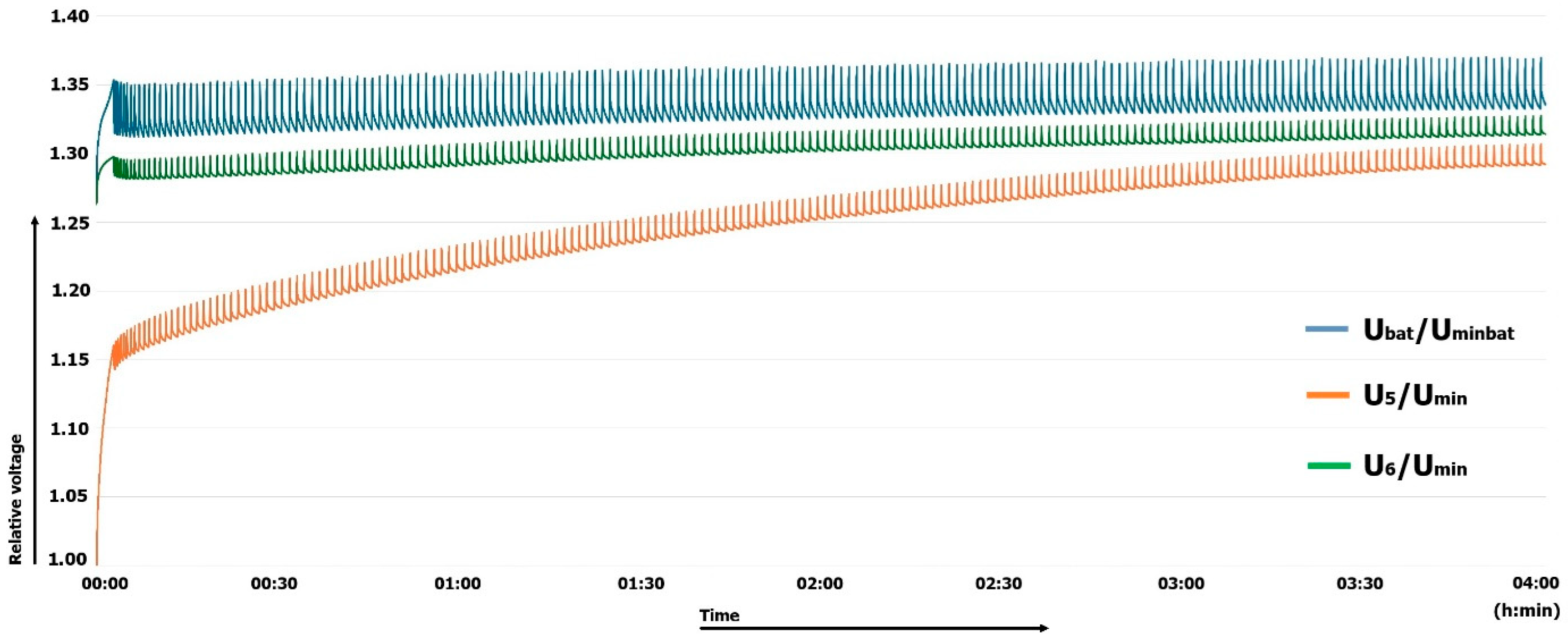
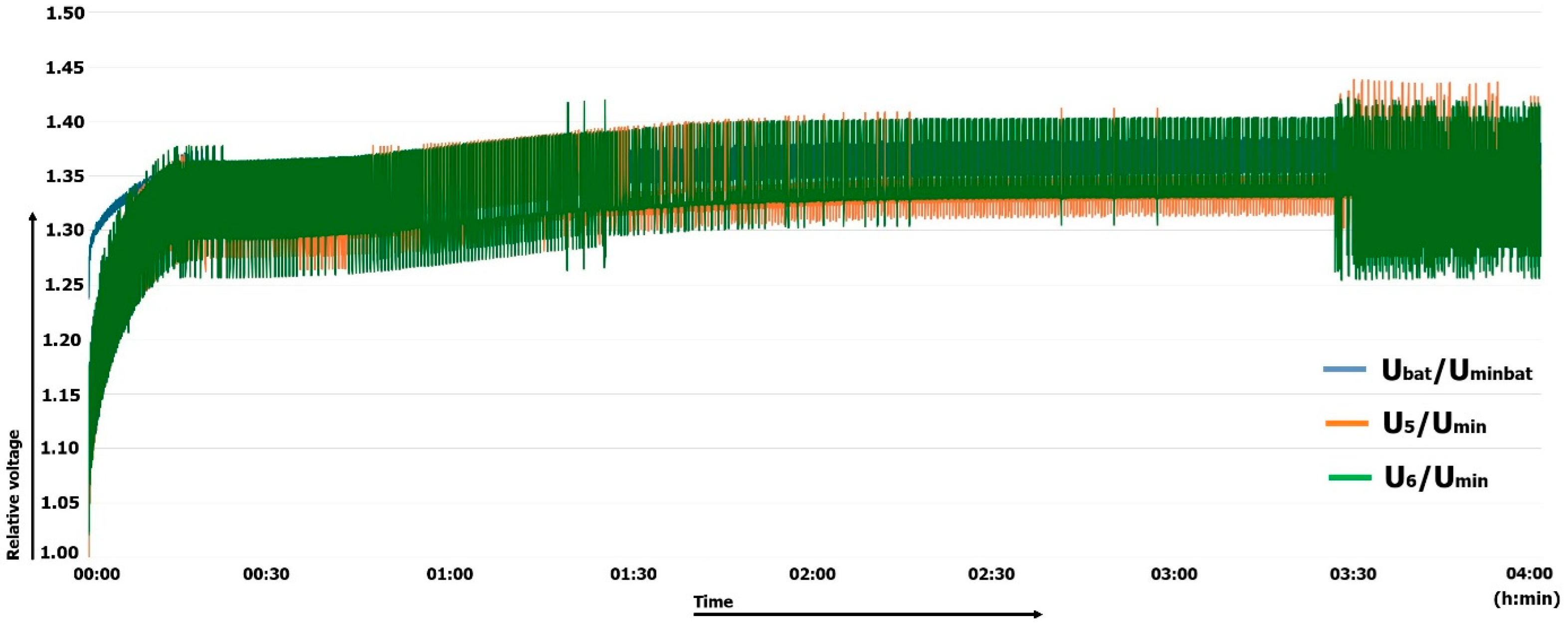
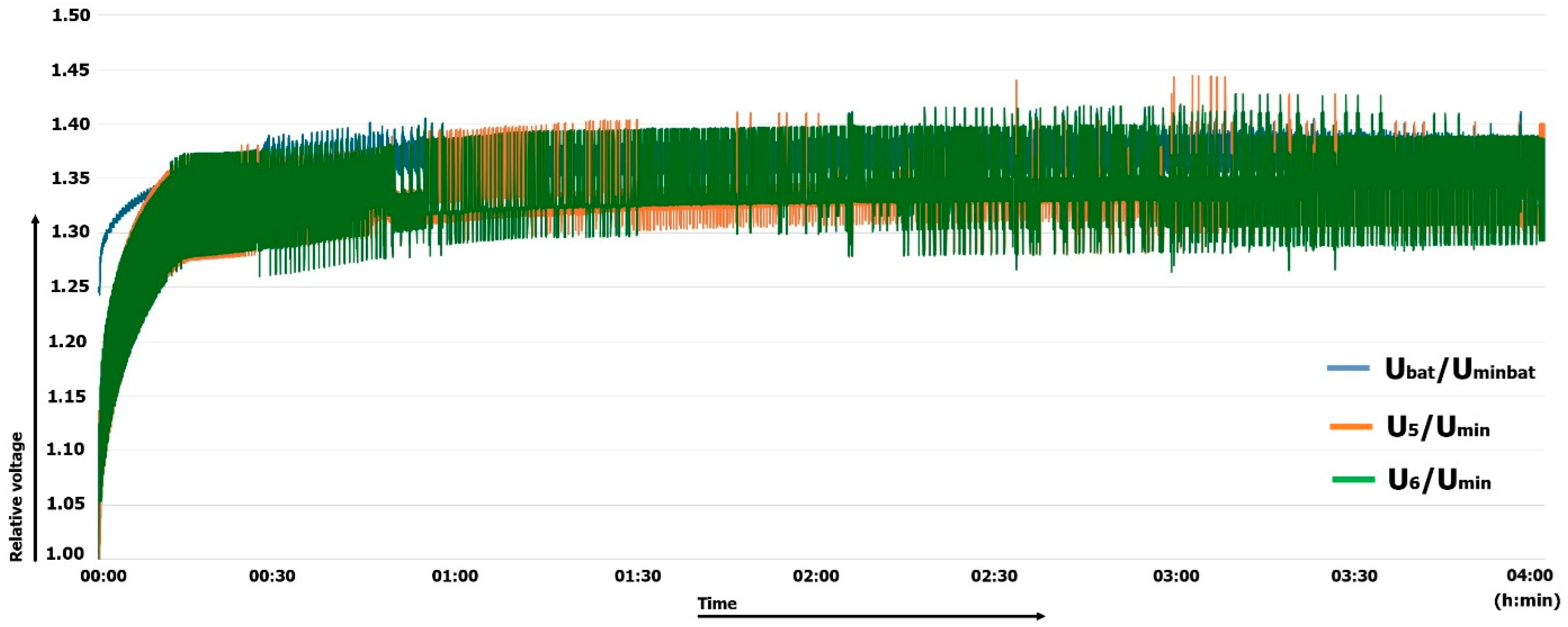
The hybrid BMS activates passive balancing only during battery charging; the cell voltage ranged from 1.06Un to 1.14Un. Above 1.14Un (3.65 V), only the balancer with a high balancing current (1.25 A) remains active. Active balancing is, in turn, activated when the voltage spread between the cell with the highest and lowest voltage exceeds 3% (100 mV) above the average voltage of all cells. Above 1.14Un (3.65 V), only the balancer of a high balancing current (1.25 A) is active. While testing the hybrid balancing system, it was found that the charger accidentally turned off while charging. However, compared to a BMS using only passive balancing, the number of such disconnections was much smaller. The occurrence of such cases is not a malfunction but simply means that the lowest-capacity cell could be continuously charged simultaneously by both the active balancing system and the charger itself. Tests on the performance of a hybrid BMS with a passive system revealed that the use of passive activity in this system—i.e., when employing two current levels (1.25 A and 155 mA)—effectively limits the overcharging of the highest-capacity cells. This results in the shortening of the overall battery charging time. The analysis of the voltage waveforms shown in Figure 7, Figure 8 and Figure 9 shows that the selected threshold voltage (U/Un = 1.3) for the passive BMS (Figure 7) is reached after approximately 4 h of charging. However, the hybrid BMS (Figure 8 and Figure 9 for two randomly selected tests) requires only 1.3–1.45 h, which indicates a charging time reduction by approximately 65%.
During battery charging process, the active balancer, as well as recharging the lowest-capacity cell, acts as a stabilizer under the passive balancing and charging processes as well. This is due to the fact that some portion of the energy supplied to the battery is absorbed by the active balancer, slowing down the overcharging of the highest-capacity cells while simultaneously supporting the charging of lowest-capacity cells.
The positive effect of using a hybrid BMS can also be observed in the selected measured data presented in Table 1, while the advantages of the hybrid BMS compared to the previous BMS are presented in Table 2.

5. Conclusions

The use of a hybrid BMS, combining passive and active balancing features, significantly improves the performance of cells in a battery pack. The system effectively minimizes voltage differences between cells, even in the cases of their impaired energy balance and elevated temperatures. This not only improves operational safety but also extends battery life and the operating time of devices on a one-charge cycle. The test results confirm the higher efficiency of hybrid balancing during charging compared to passive balancing alone. The number of charger shutdowns is reduced, which shortens the time required to fully charge the battery.
The developed hybrid BMS can therefore find practical use not only for powering the mining machines but also in other applications requiring high reliability, such as mobile energy storage or vehicles operating under difficult environmental conditions. The use of a hybrid BMS allows for shorter battery charging time as there are fewer downtime periods resulting from the need to turn the charger off when the cells are saturated with energy.

Author Contributions

Conceptualization, W.K. and B.P.; methodology, W.K. and B.M.; validation, B.M. and M.H.; formal analysis, B.M. and B.P.; investigation, W.K.; data curation, W.K.; writing—original draft preparation, B.M.; writing—review and editing, M.H.; All authors have read and agreed to the published version of the manuscript.

Funding

This research received no external funding.

Data Availability Statement

Data are available from the corresponding author upon reasonable requests.

Conflicts of Interest

The authors declare no conflicts of interest.

References

  1. Yu, X.; Wang, Z.; Yin, B.; Shi, B.; Chen, J. Combustion characteristics of gases released from thermal runaway batteries under methane atmosphere. Energy 2025, 30, 136983. [Google Scholar] [CrossRef]
  2. Dubaniewicz, T.H.; Barone, T.L.; Brown, C.B.; Thomas, R.A. Comparison of thermal runaway pressures within sealed enclosures for nickel manganese cobalt and iron phosphate cathode lithium-ion cells. J. Loss Prev. Process Ind. 2022, 76, 104739. [Google Scholar] [CrossRef] [PubMed]
  3. Meng, L.Y.; Wang, G.F.; See, K.W.; Wang, Y.P.; Zhang, Y.; Zang, C.Y.; Li, S.; Xie, B. Explosion characteristic of CH4–H2-Air mixtures vented by encapsulated large-scale Li-ion battery under thermal runaway. Energy 2023, 278, 127816. [Google Scholar] [CrossRef]
  4. Lisbona, D.; Snee, T. A review of hazards associated with primary lithium and lithium-ion batteries. Process Saf. Environ. Prot. 2011, 89, 434–442. [Google Scholar] [CrossRef]
  5. Carkhuff, B.G.; Demirev, P.A.; Srinivasan, R. Impedance-based battery management system for safety monitoring of lithium-ion batteries. IEEE Trans. Ind. Electron. 2018, 65, 6497–6504. [Google Scholar] [CrossRef]
  6. Cao, J.; Schofield, N.; Emadi, A. Battery Balancing Methods: A Comprehensive Review. In Proceedings of the IEEE Vehicle Power and Propulsion Conference, VPPC, Harbin, China, 3–5 September 2008. [Google Scholar] [CrossRef]
  7. Wen, S. Cell Balancing Buys Extra Run Time and Battery Life. Analog. Appllcation J. 2009, 10, 14–18. [Google Scholar]
  8. Jamasmie, C. Miners Should Adopt Next Generation Values to Battle Reputation Crisis. Mining.com. 2020. Available online: https://www.mining.com/miners-need-to-adopt-next-generation-values-to-battle-reputation-crisis-says-anglo-american-boss/ (accessed on 10 July 2025).
  9. Battery University. Lithium-Ion Safety Concerns. 2016. Available online: https://batteryuniversity.com/article/lithium-ion-safety-concerns (accessed on 10 July 2025).
  10. Ziegler, A.; Oeser, D.; Arndt, B.; Ackva, A. Comparison of Active and Passive Balancing by a Long Term Test Including a Post-Mortem Analysis of all Single Battery Cells. In Proceedings of the 2018 International IEEE Conference and Work Shop in Óbuda on Electrical and Power Engineering (CANDO-EPE), Budapest, Hungary, 20–21 November 2018; pp. 15–20. [Google Scholar]
  11. Vishwakarma, V.K.; Srivastava, S.; Mishra, V. Strategies of battery management systems in electric vehicles: A review. Int. J. Model. Simul. 2025, 1–31. [Google Scholar] [CrossRef]
  12. Wang, J.; Yu, K.; Xiao, P.; Li, L.; Wang, C.; Wang, Z.; Guo, D.; Richard, Y.K.; Lu, Y. Killing two birds with one stone strategy inspired advanced batteries with superior thermal safety: A comprehensive evaluation. Chem. Eng. J. 2025, 515, 163272. [Google Scholar] [CrossRef]
  13. Sugumaran, G.; Amutha, P.N. An improved bi-switch flyback converter with loss analysis for active cell balancing of the lithium-ion battery string. J. Electr. Comput. Eng. 2024, 2024, 5556491. [Google Scholar]
  14. Naik, O.S.; Chinchwade, A.S.; Yetekar, S.N.; Jawale, S. Passive Cell Balancing using PI Controller. In Proceedings of the 2023 4th International Conference on Intelligent Technologies (CONIT), Bangalore, India, 21–23 June 2024; IEEE: Piscataway, NJ, USA, 2024; pp. 1–6. [Google Scholar]
  15. Chavan, S.L.; Kanawade, M.A.; Ankushe, R.S. An effective passive cell balancing technique for lithium-ion battery. Next Energy 2025, 8, 100258. [Google Scholar] [CrossRef]
  16. Fahmi, M.A.M.M.; Yusoff, S.H.; Gunawan, T.S.; Zabidi, S.A.; Hanifah, M.S.A. Battery management system employing passive control method. Int. J. Power Electron. Drive Syst. (IJPEDS) 2025, 16, 35–4415. [Google Scholar] [CrossRef]
  17. Pelin, D.; Brandis, A.; Kovačević, M.; Halak, F. Design and testing of a multimode capable passive battery management system. Energies 2022, 15, 4335. [Google Scholar] [CrossRef]
  18. Amnaudov, D.; Kishkin, K.; Dimitrov, V. Studying Convertors for Voltage Equalization in Energy Storage System with Active BMS. In Proceedings of the PCIM Europe 2024; International Exhibition and Conference for Power Electronics, Intelligent Motion, Renewable Energy and Energy Management, Nürnberg, Germany, 11–13 June 2024; VDE: Madrid, Spain, 2024; pp. 2263–2267. [Google Scholar]
  19. Yang, Q.; Ma, K.; Xu, L.; Song, L.; Li, X.; Li, Y. A Joint Estimation Method Based on Kalman Filter of Battery State of Charge and State of Health. Coatings 2022, 12, 1047. [Google Scholar] [CrossRef]
  20. Narasimhulu, N.; Krishnam Naidu, R.S.R.; Falkowski-Gilski, P.; Divakarachari, P.B.; Roy, U. Energy management for PV powered hybrid storage system in electric vehicles using artificial neural network and aquila optimizer algorithm. Energies 2022, 15, 8540. [Google Scholar] [CrossRef]
  21. Kurpiel, W.; Polnik, B.; Orzech l Lesiak, K.; Miedzinski, B.; Habrych, M.; Debita, G.; Zamłynska, M.; Falkowski-Gilski, P. Influence of operation conditions on temperature hazard of lithium-iron-phosphate (LiFeP04) cells. Energies 2021, 14, 6728. [Google Scholar] [CrossRef]
  22. Kurpiel, W.; Deja, P.; Polnik, B.; Skóra, M.; Miedzinski, B.; Habrych, M.; Debita, G.; Zamłynska, M.; Falkowski-Gilski, P. Performance of passive and active balancing system of lithium batteries in onerous mine environment. Energies 2021, 14, 7624. [Google Scholar] [CrossRef]
  23. Kurpiel, W.; Polnik, B.; Miedzinski, B.; Habrych, M.; Debita, G. Lithium-iron-phosphate battery performance controlled by an active BMS based on the battery-to-cell method. Elektron. Ir Elektrotechnika 2022, 28, 35–41. [Google Scholar] [CrossRef]
  24. Kurpiel, W. Research on balancing BMS systems in a climatic chamber. Min. Mach. 2020, 53–63. Available online: https://www.komag.eu/images/maszynygornicze1/MM2020/MiningMachines3-2020/MM_3_2020_art6.pdf (accessed on 10 July 2025).
  25. Specification of the LiFePO4 Battery of 3.2 V. Headway LFP38120(S) 10,000 mAh LiFePO4—Sklep BTO.pl. Available online: https://bto.pl/akumulatory/przemyslowe/akumulatory-lifepo4/843,headway-lfp38120-s-10000mah-lifepo4?utm_source=ceneo&utm_medium=referral&ceneo_cid=8b15804c-66f5-779a-0cc1-53dc157e5af0 (accessed on 10 July 2025).
  26. Kurpiel, W.; Miedziński, B.; Polnik, B. The Influence of the Balancing System on the Durability and Operational Safety of Lithium Cell Batteries in a Selected Mining Machine Power Supply System; Monograph: San Francisco, CA, USA, 2025; p. 152. Available online: https://www.komag.eu/images/maszynygornicze1/monografie/MonografieNaukowe/Monografia_W_Kurpiel/Monografia_Nr_59_open.pdf (accessed on 12 October 2025). (In Polish)
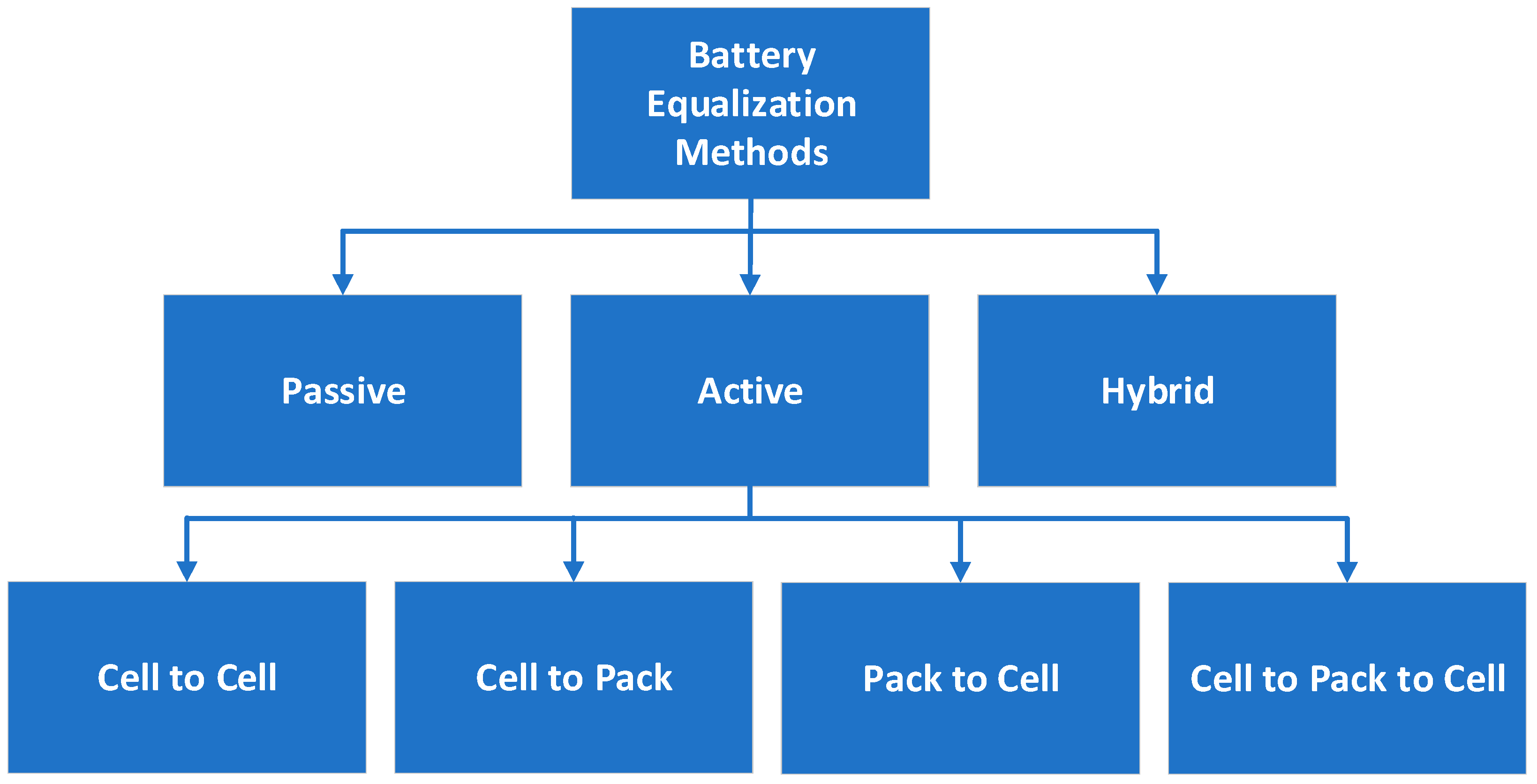
Figure 1. Methods of balancing battery cells.
Energies 18 06465 g001
Figure 2. Example of the implementation of a hybrid BMS.
Energies 18 06465 g002
Figure 3. A battery composed of eight lithium–iron–phosphate (LiFePO4) cells.
Energies 18 06465 g003
Figure 4. View of the test stand.
Energies 18 06465 g004
Figure 5. Block diagram of the BMS testing process during battery charging.
Energies 18 06465 g005
Figure 6. Block diagram of the BMS testing system during the simulation of a battery load.
Energies 18 06465 g006
Figure 7. Voltage change in time for the two lowest-capacity cells U6 and U7 connected in a series of battery during charging process using a passively balanced BMS (room temperature: T0 = 26 °C, free cooling; Umin—minimum cell voltage 2.5 V (0.78Un); Uminbat—minimum battery voltage 20 V; Ubat—battery voltage (maximum 29.2 V); test duration: 4 h).
Energies 18 06465 g007
Figure 8. Voltage–time graph for the two lowest-capacity battery cells (U6/Umin and U7/Umin) during the charging process using the hybrid BMS (room temperature: T0 = 26 °C, free cooling; Umin—minimum cell voltage 2.5 V (0.78Un); Uminbat—minimum battery voltage 20 V; Ubat—battery voltage (maximum 29.2 V); test duration: 4 h).
Energies 18 06465 g008
Figure 9. Voltage–time graph for the two lowest-capacity battery cells (U6/Umin and U7/Umin) during the charging process using the hybrid BMS (room temperature: T0 = 26 °C, free cooling; Umin—minimum cell voltage 2.5 V (0.78Un); Uminbat—minimum battery voltage 20 V; Ubat—battery voltage (maximum 29.2 V); test duration: 4 h), following test as in Figure 8.
Energies 18 06465 g009
Table 1. Selected laboratory test results for 10 Ah cells.
Average Discharge Time
[h:min]
Average Time to Charge Level (1.3Un on the Graph) During Charging and
Balancing After the Load Shutdown
[h:min]
Maximum Cell Temperature During Charging
[°C]
Passive BMS1:304:0027
Hybrid BMS2:251:30–1:4528
Table 2. Comparative table—passive/active/hybrid BMS.
ParameterPassiveActiveHybrid
Operating principleExcess cell energy is dissipated as heat through a resistor.Energy is transferred between cells (via DC–DC converters, capacitive or inductive charge shuttling).Combination: active transfer for larger imbalances, passive balancing for protection.
Response speed (balancing time)Slow—equalization of large differences can take hours (often active only in the final charging phase).Fast—can equalize hundreds of mV within minutes to hours (depending on converter power).Typically faster than passive—the active path quickly eliminates large imbalances; the passive path refines the final charging stage.
Balancing power per channelTypically 0.5–5 W per channel during active balancing.From ~0.5 W up to several tens of watts per channel (high-power topologies).Active path usually limited (e.g., a few watts) + passive balancing (0.5–5 W).
Energy efficiency (energy recovery)0%—energy is lost as heat.High—depending on topology, 70–95% (energy transferred to other cells or back to the system).Intermediate—partial energy recovery (depending on active path share), typically 30–90%.
Thermal impact/heat lossesHigh local heat dissipation—module heating may be problematic in hot environments.Lower cell losses (heat generated mainly in power components); converter cooling required depending on current levels.Lower local losses than passive; total thermal load distributed between active and passive components.
Effect on cell lifetimeMay accelerate cell degradation at elevated temperatures (imbalances persist longer).Generally beneficial—better equalization reduces stress on lower-capacity cells.Beneficial—combines improved equalization (less degradation) with lower local heating.
System complexityLow—simple resistors, MOSFETs, and a basic controller.High—converters, transformers/capacitors, power controllers.Medium to high—requires integration of both paths and switching logic.
Wiring/isolation requirementsSimple voltage sensing—many measurement wires needed for large cell counts.Additional power, converter wiring, galvanic isolation required.Combination of both—modular design can reduce high-voltage wiring needs.
Communication/bus loadLow—simple telemetry gates.High—more data, synchronization and power control required.Medium—additional logic for coordinating active and passive operation.
EMI (Electromagnetic Interference) and EMCLow—little power switching activity.Higher EMI risk due to switching converters.Medium—active elements generate EMI, but lower active power simplifies filtering.
Diagnostics and monitoring (EIS—Electrochemical Impedance Spectroscopy)Limited—basic voltage and temperature measurements.Advanced—enables dynamic measurements and integration with EIS/diagnostic systems.Good diagnostic potential (depending on active circuit implementation).
Algorithm flexibility (aging adaptation)Low—static thresholds, minimal adaptability.High—dynamic strategies and adaptive algorithms to compensate for aging.High—active path enables adaptation; passive path ensures safety.
Service/maintenance costLow—simple components.Higher—specialized power components, module replacement costs.Medium—active path maintenance is costlier, but passive path reduces total service effort.
Disclaimer/Publisher’s Note: The statements, opinions and data contained in all publications are solely those of the individual author(s) and contributor(s) and not of MDPI and/or the editor(s). MDPI and/or the editor(s) disclaim responsibility for any injury to people or property resulting from any ideas, methods, instructions or products referred to in the content.