Review

Harnessing Shallow Geothermal Energy for Road Infrastructure: Advances, Challenges, and Future Perspectives


by
Cristina Sáez Blázquez
*,
Miguel Ángel Maté-González
,
Sergio Alejandro Camargo Vargas
and
Daniel Herranz Herranz
Department of Cartographic and Land Engineering, Higher Polytechnic School of Avila, University of Salamanca, Hornos Caleros 50, 05003 Avila, Spain
*
Author to whom correspondence should be addressed.
Energies 2025, 18(24), 6444; https://doi.org/10.3390/en18246444
Submission received: 21 October 2025 / Revised: 21 November 2025 / Accepted: 5 December 2025 / Published: 9 December 2025

Abstract

Geothermal energy offers a promising and sustainable approach for maintaining and improving road infrastructure, particularly in mitigating ice formation and enhancing thermal performance. This review systematically examines scientific studies addressing the application of geothermal systems for the thermal management of road pavements. A structured methodological framework, following PRISMA guidelines, was employed to identify and select relevant publications from official scientific databases, focusing on articles considered eligible based on their thematic relevance and practical application within the field. The review pursues three complementary objectives: (i) to provide a comprehensive synthesis of the current literature, (ii) to analyze research trends, including modeling strategies, laboratory experiments, and field applications, and (iii) to evaluate reported system performance in terms of efficiency, design parameters, and environmental considerations. Contributions are categorized into simulation-based studies, experimental investigations, and combined approaches, allowing for comparison across methodologies and climatic contexts. Key findings, technological limitations, and challenges encountered in the literature are discussed, including system efficiency, design constraints, and environmental considerations. By synthesizing the current state of knowledge, this review highlights critical gaps and potential avenues for future research, offering guidance for the development of innovative geothermal-based solutions. The insights presented herein contribute to informed decision-making in research planning and infrastructure development, supporting safer, more energy-efficient, and sustainable road systems.

1. Introduction

Road infrastructures constitute essential elements in supporting the safe, reliable, and energy-efficient transportation of people and goods. However, extreme temperatures (both cold and hot) can significantly affect road safety, durability, and maintenance costs [1]. In temperate-climate countries, road conditions during winter are often unpredictable, with rapid shifts between dry, wet, snowy, and icy surfaces. Additionally, overheating of the pavement in warmer periods can also create hazardous driving conditions. Although weather is the primary factor influencing variations in road surface conditions, other aspects such as traffic volume and composition, maintenance practices, and surrounding landscape also play a vital role. The pronounced temporal and spatial variability of road surface temperature and state further complicates the task of providing a generalized description of conditions along extended road sections [2,3].
Regarding the formation of ice or snow, it leads to reduced vehicle speeds, traffic congestion, and increased accident risk. Winter precipitation significantly raises the likelihood of vehicle crashes, being the highest percentages occurring during snow or sleet, icy pavements, and snowy or slushy roads among all weather-related accidents [4,5]. In addition, excessive surface heating during warmer periods can accelerate pavement degradation, increase rutting and deformation risks, also posing additional safety hazards for road users. In this sense, road management systems dedicate considerable financial and human resources to mitigate slippery conditions during winter, while also addressing the safety risks and maintenance challenges caused by pavement overheating in summer [6,7,8].
Focusing on the most critical case of ice formation, the removal or prevention typically relies on chemical, thermal, mechanical methods, or combinations thereof. Chemical approaches typically modify the freezing point of ice, while thermal methods achieve melting through the application of heat. Mechanical strategies involve displacing the ice either in the direction normal to the surface or tangentially along it. Although these active methods are effective, they present notable drawbacks, including frequent maintenance requirements, high energy consumption, and often substantial costs [9,10]. Moreover, the use of de-icing chemicals (sodium chloride in particular) on aircraft or road surfaces raises significant environmental concerns. These products can contaminate soil and water, accelerate the deterioration of pavement materials, corrode vehicles and infrastructure, and pose health risks to humans and wildlife. Consequently, their application must be carefully managed to balance road safety with environmental and infrastructural impacts [11].
Due to the previously commented issues, and given the critical role that proper road condition and maintenance play in ensuring user safety and operational efficiency, alternative solutions have been sought in recent years. These initiatives aim to mitigate environmental impacts while providing a comprehensive approach to the combined problem of ice formation and excessive thermal exposure of the pavement. Although several solutions exist, including the use of innovative materials (such as anti-icing or phase-change pavements) [12,13], the implementation of renewable solar systems [14,15], or electrically activated technologies [16,17], the most widely adopted approach in recent years is the utilization of geothermal energy to regulate the temperature of road infrastructure.
Geothermal energy has gained increasing attention as a sustainable solution for road infrastructure, offering the ability to actively regulate pavement temperature and mitigate ice formation while minimizing environmental impacts compared to conventional chemical deicers or electrically powered heating systems. In this context, a wide range of geothermal-based alternatives have been proposed, including shallow and deep geothermal systems, closed-loop and open-loop configurations, and hybrid solutions that integrate phase-change materials or heat exchangers within the pavement structure. These systems can provide continuous thermal regulation, improve operational safety, and reduce operational requirements by maintaining the pavement within optimal temperature ranges [18,19]. Given the importance of these systems and the wide variety of implementation possibilities, the objective of this review is to provide a comprehensive analysis of current geothermal applications in road infrastructure from multiple perspectives, offering an integrated understanding of design principles, performance metrics, and implementation challenges. The study systematically examines 44 publications spanning the period 1995–2025, highlighting the most relevant contributions, and outlines potential future research directions and technological developments aimed at enhancing the efficiency and feasibility of these systems across diverse climatic conditions. The article is structured as follows. Section 2 presents the methodological framework, which focuses on the analysis of ice formation and the thermal exposure of road surfaces, as well as a detailed description of the adopted methodological approach. Section 3 reviews the relevant studies identified in the literature, classified into different thematic and application-oriented categories. Finally, the paper concludes with a discussion section, where the main findings are examined, followed by the conclusions section, which summarizes the key insights and deductions derived from the conducted review.

2. Research Methodology

2.1. Ice Formation and High Temperature Exposure on Road Surfaces

Road infrastructure is highly sensitive to climatic variability, with adverse weather conditions posing significant challenges for both safety and structural performance. Ice on road surfaces forms when pavement temperatures drop below the freezing point in the presence of moisture from rain, snow, or dew. Even if the air temperature remains slightly above 0 °C, roads may still freeze, particularly at night or in shaded areas. The phase change of water to ice is an exothermic process, meaning that heat is released as water freezes. This energy release corresponds to the latent heat of fusion, which has a value of 333.55 J/g at 0 °C. This represents the energy required to raise 1 g of water from 0 °C to 80 °C. During freezing, the released energy can allow the ice–water system to reach thermal equilibrium, in which both phases coexist; however, such equilibrium is not always achieved. The temperature at which this coexistence occurs is the freezing (or melting) point of water, typically 0 °C in the absence of solutes such as salt [20].
Thus, water can remain liquid below its normal freezing point in a metastable state known as supercooling. In this state, no ice crystals are present, but even a slight disturbance (such as vibration, pressure change, or contact with particles) can trigger rapid freezing and release significant latent heat. The deeper the supercooling, the smaller the disturbance needed to initiate nucleation. Normally, water cools to 0 °C before freezing, after which the temperature can continue to drop as ice. However, supercooling allows water to remain liquid below 0 °C. When freezing begins from this metastable state, it accelerates and releases significant latent heat, quickly raising the temperature to 0 °C until complete solidification. Afterward, cooling resumes. Because this temperature rise happens very rapidly, its detection is not simple and usually leads to the use of excessive amounts of anti-icing agents without an exhaustive delimitation of the most exposed areas [21,22].
In this context, it is a world common practice to apply large quantities of chemicals (both solid and liquid) for deicing or anti-icing (collectively called deicers), along with abrasives, to winter roads with the aim of preventing ice and snow accumulation and maintaining surface friction. Over the past decade, the use of deicers has increased due to higher service expectations, a shift from reactive to proactive snow and ice control, and concerns about the environmental impacts of abrasive materials. The most used products include primarily four types of chemicals such as sodium chloride (NaCl), calcium chloride (CaCl2), magnesium chloride (MgCl2), potassium acetate (KAc), and Calcium Magnesium Acetate (CMA). However, the use of this kind of chemicals on roads poses several challenges and risks. Chloride-based compounds are highly corrosive, causing damage to vehicles, bridges, guardrails, and maintenance equipment, while accelerating the deterioration of steel and concrete structures. Environmentally, deicers can contaminate soil and water bodies, harm aquatic ecosystems and even infiltrate groundwater. They also contribute to the accelerated degradation of pavements, leading to cracks, potholes, and erosion, and can affect concrete structures like bridge expansion joints. All these effects result in increased maintenance, repair, and environmental remediation costs, making the use of chemical deicers a complex trade-off between safety and long-term infrastructure and environmental impacts [23,24].
As an alternative to these elements, compounds such as organic deicers are also being considered in recent years. The application of these products varies in effectiveness and environmental impact. Agro-based products show the most promise with minimal corrosion and moderate environmental effects, while acetates and formates can be more corrosive and less effective than traditional salts and glycols are usually associate to high toxicity values [25].
On the other hand, the exposure of roads sectors to high temperatures also represents a major problem for the infrastructure involved. Extreme heat increases rutting in road pavements and raises the likelihood of buckling. Construction materials and design methods are typically based on historical, static climate assumptions. For roads, asphalt binders are selected to accommodate expected thermal expansion and contraction. In this context and with global warming and the projected rise in the frequency and intensity of heatwaves, much of the existing road infrastructure may exceed its designed operating conditions [26]. In this problematic, common practices include using polymer-modified or high-performance asphalt to resist rutting, reinforcing pavement layers, and incorporating expansion joints and flexible sealants in concrete. Light-colored or reflective pavements can reduce surface heating, while proactive maintenance (such as timely crack and pothole repair) can prevent further deterioration [27,28].
Considering all of the above, it is clear that seeking alternative solutions is essential to mitigate the challenges posed by climate-related phenomena in road sectors. As noted in the introduction section, geothermal energy has attracted particular interest as a dual-purpose technology capable of addressing both the formation of ice and the exposure to extreme temperatures in the mentioned infrastructures.

2.2. Workflow and Methodological Approach

As mentioned before, this work seeks to provide a thorough and comprehensive assessment of the principal applications of geothermal energy for the thermal regulation of the road infrastructure. Given the considerable diversity and complexity of existing solutions an extensive and structured methodological framework is adopted. The PRISMA (Preferred Reporting Items for Systematic Reviews and Meta-Analyses) methodology was systematically applied to ensure a transparent, structured, and reproducible process for identifying, screening, and selecting scientific publications relevant to the research topic addressed in this study.
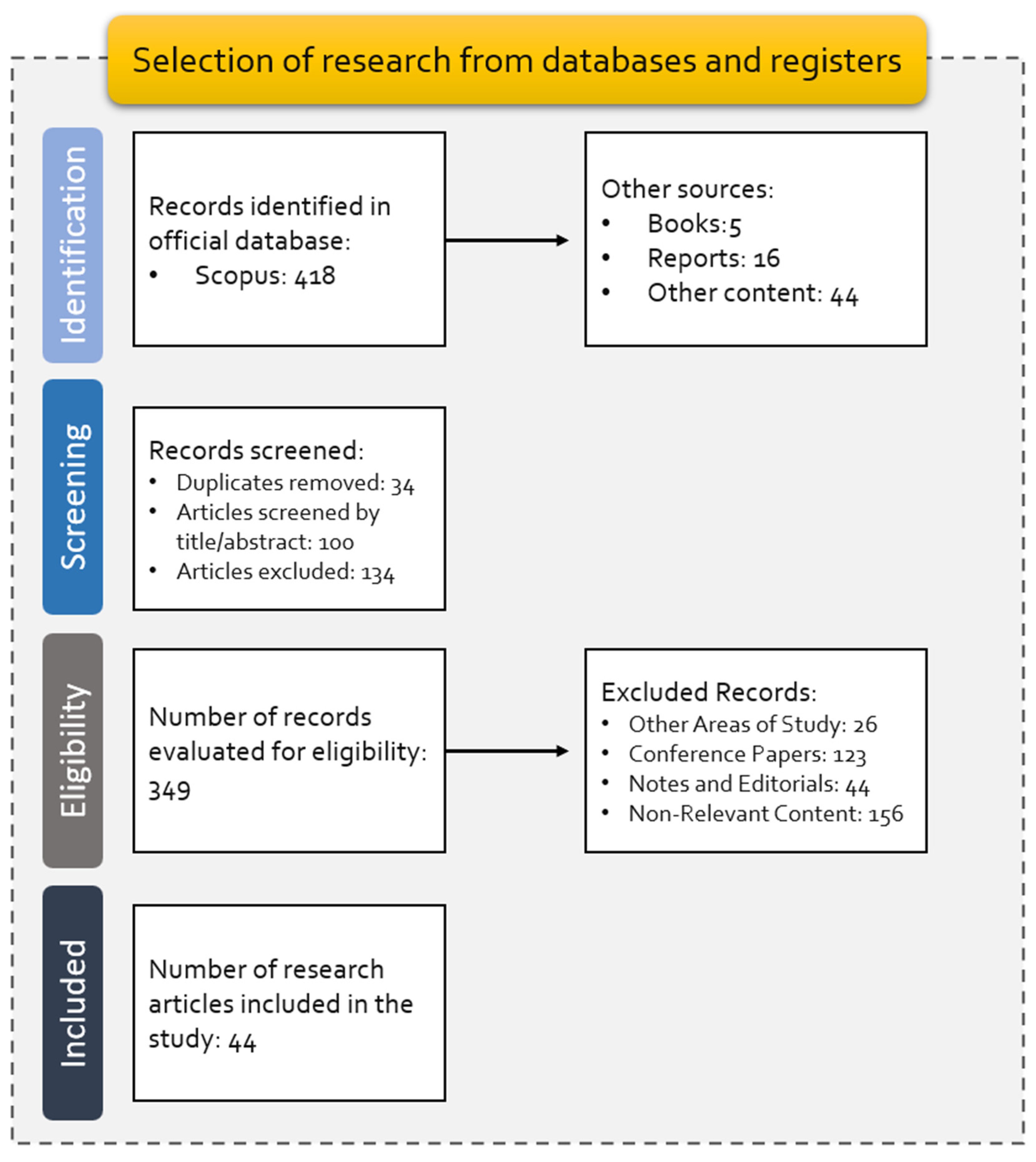
An exhaustive search was conducted in well-recognized academic databases, such as Scopus, complemented by additional reputable scientific sources to ensure comprehensive coverage. A set of predefined inclusion and exclusion criteria was established prior to screening. Beyond thematic relevance, these criteria incorporated methodological quality, reporting completeness, and availability of performance or modelling data. Studies were excluded if they: (i) lacked quantitative or qualitative information on geothermal road applications, (ii) did not provide sufficient methodological detail to allow evaluation, (iii) were not peer-reviewed, or (iv) did not address thermal management in pavement or subsurface environments. As shown in Figure 1, this process ultimately resulted in the selection of 44 scientific articles for the final synthesis.
In accordance with PRISMA standards, a systematic quality assessment and risk-of-bias evaluation were conducted and are now explicitly described in the text. The quality assessment considered key methodological aspects, including the clarity of each study’s objectives, the adequacy of experimental or modelling approaches, the level of validation performed, the transparency of reported parameters, and the reproducibility of results. Studies providing complete methodological descriptions and validated performance metrics were considered to exhibit higher methodological quality, while studies lacking essential information were interpreted with appropriate caution during the synthesis.
A complementary risk-of-bias evaluation was also performed, examining potential sources of bias such as the representativeness of study sites and climatic conditions (selection bias), limitations in model validation procedures (methodological bias), incomplete or selective reporting of performance metrics (reporting bias), and possible overrepresentation of successful implementations (publication bias). These considerations are explicitly discussed throughout the analysis sections, ensuring that the interpretation of the literature is grounded in a transparent appraisal of the reliability and limitations of the available evidence.
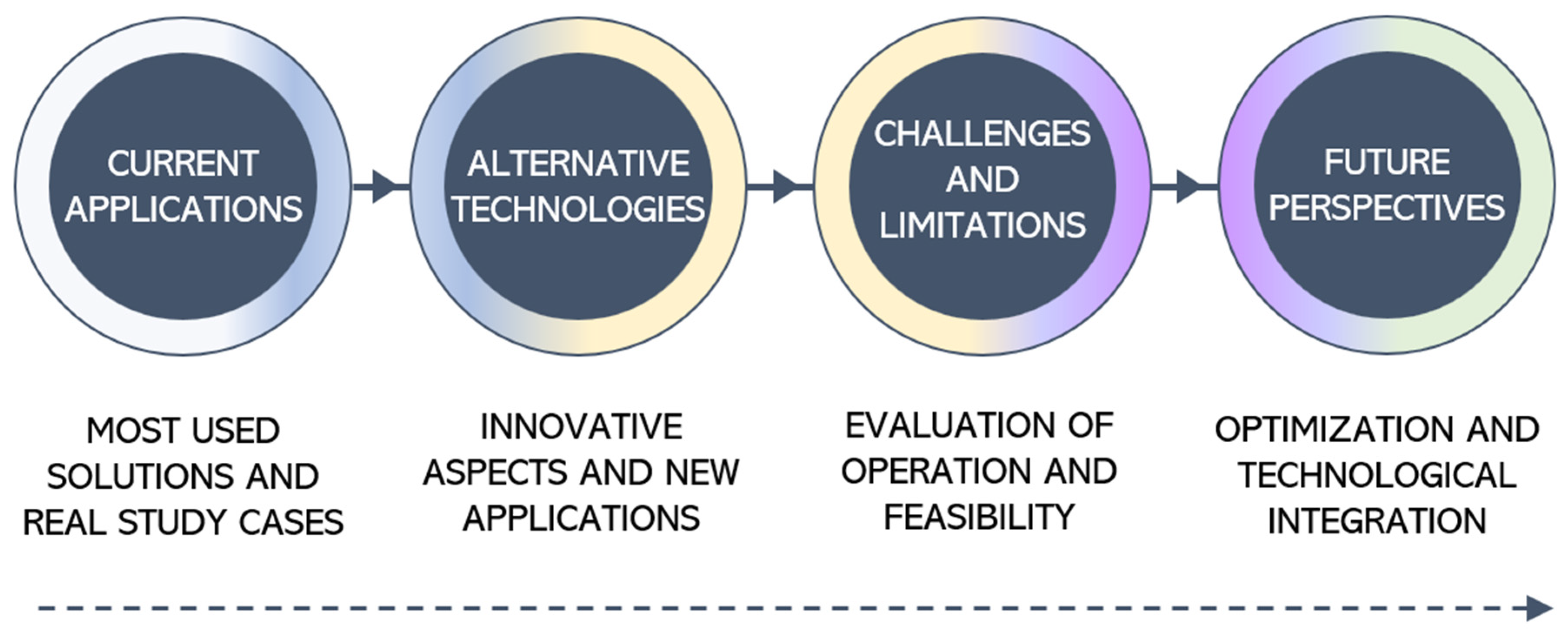
The described allows for a systematic review, categorization, and critical evaluation of current applications, highlighting their design principles, performance metrics, implementation challenges, and potential benefits. Furthermore, this methodology facilitates the identification of gaps in the existing literature and the delineation of prospective research directions aimed at improving the efficiency, feasibility, and sustainability of geothermal systems for road infrastructure under diverse climatic and operational conditions. In summary, the selection of eligible articles was conducted to address the key aspects illustrated in Figure 2, thereby ensuring a comprehensive coverage of the research topic. This systematic approach guarantees that the reviewed literature provides an integrated and holistic understanding of the thematic area under study.

3. Applications and Studies of Geothermal Energy in Road Management

The use of geothermal energy in roads has its roots in historical applications of underground heating. While the heating of road surfaces using geothermal energy is a more recent practice, there are early examples demonstrating the interest in harnessing subsurface heat for urban infrastructure.
In 1892, in Boise, Idaho, the city implemented the first district heating system in the United States, powered directly by geothermal energy. This system utilized hot water from underground geothermal sources to heat buildings and streets, including sidewalks, to prevent ice formation during winter months to heat buildings and streets [29].
More recently, in 2005, the first exterior surface heating system using geothermal energy was installed in Germany. This pilot project involved a train station platform in the Harz region, equipped with a geothermal heating system. During winter, heat was extracted from the ground to keep the platform free of snow and ice [30].
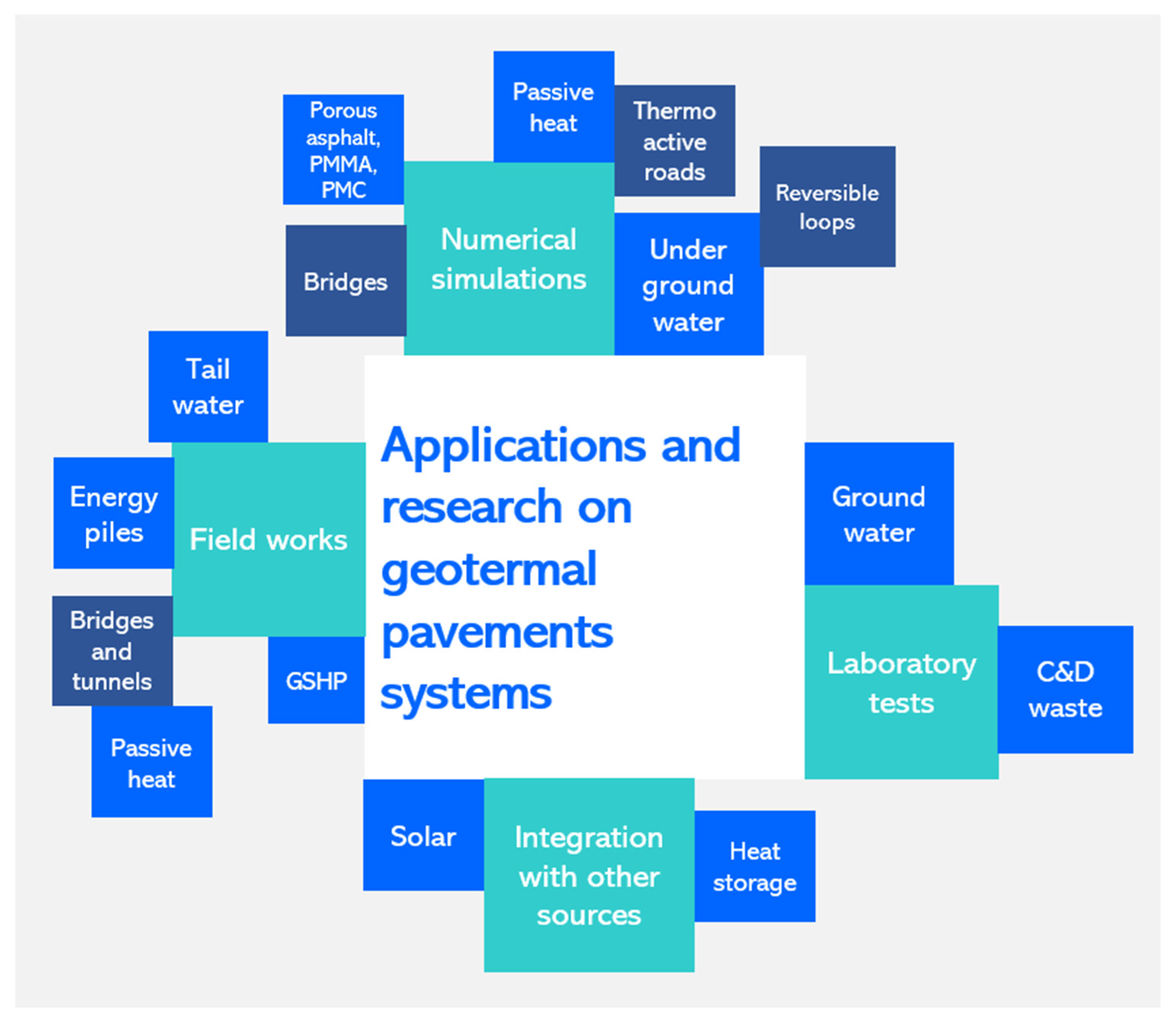
These historical examples show that, although the widespread implementation of geothermal energy in roads is relatively recent, there has long been interest and proven feasibility in using subsurface heat to enhance the safety and functionality of urban infrastructure. According to the literature review and article selection conducted in this research, some of the primary applications and studies about geothermal energy in roads are presented below. As an introduction, Figure 3 presents the key areas assessed in this context.
Within the topics mentioned before, the main contributions found for each group are presented in the following subsections.

3.1. Field-Based Studies and Real-World Applications of Geothermal Pavements

This subsection addresses the main scientific contributions based on field studies or real-world experiments on the use of geothermal energy for the thermal management of road sections. It reviews both heated pavement systems and temperature monitoring and control methodologies, highlighting experiments implemented directly on roads and other related systems. To support this discussion, Table 1 is included, summarizing the objective of each contribution and the potential limitations of the evaluated systems.

3.2. Computational Modeling and Simulation Research on Geothermal Heated Pavements

In this case, the present subsection (through Table 2) is devoted to the evaluation of scientific contributions based on simulation models related to geothermal systems for road surface conditioning. The reviewed works focus on the modeling and performance analysis of geothermal-based technologies aimed at preventing ice formation and maintaining favorable thermal conditions on road infrastructures.

3.3. Laboratory Testing and Modeling Framework for Geothermal Road Infrastructure

This subsection focuses on research works that investigate the application of geothermal systems for road conditioning through laboratory experiments, in some cases complemented by numerical simulations. These studies provide valuable insights into the thermal behavior, material properties, and system performance under controlled conditions. A summary of the main findings and methodologies reported in these works is presented in Table 3.

4. Discussion

4.1. Study Distribution

The review of all the information provided in the previous Table 1, Table 2 and Table 3 reveals a heterogeneous distribution in terms of research approach and experimental scale. The studies included in this review can be classified into field applications, numerical modeling works, and laboratory-scale experiments, reflecting the different stages of technological development and validation in geothermal road systems.
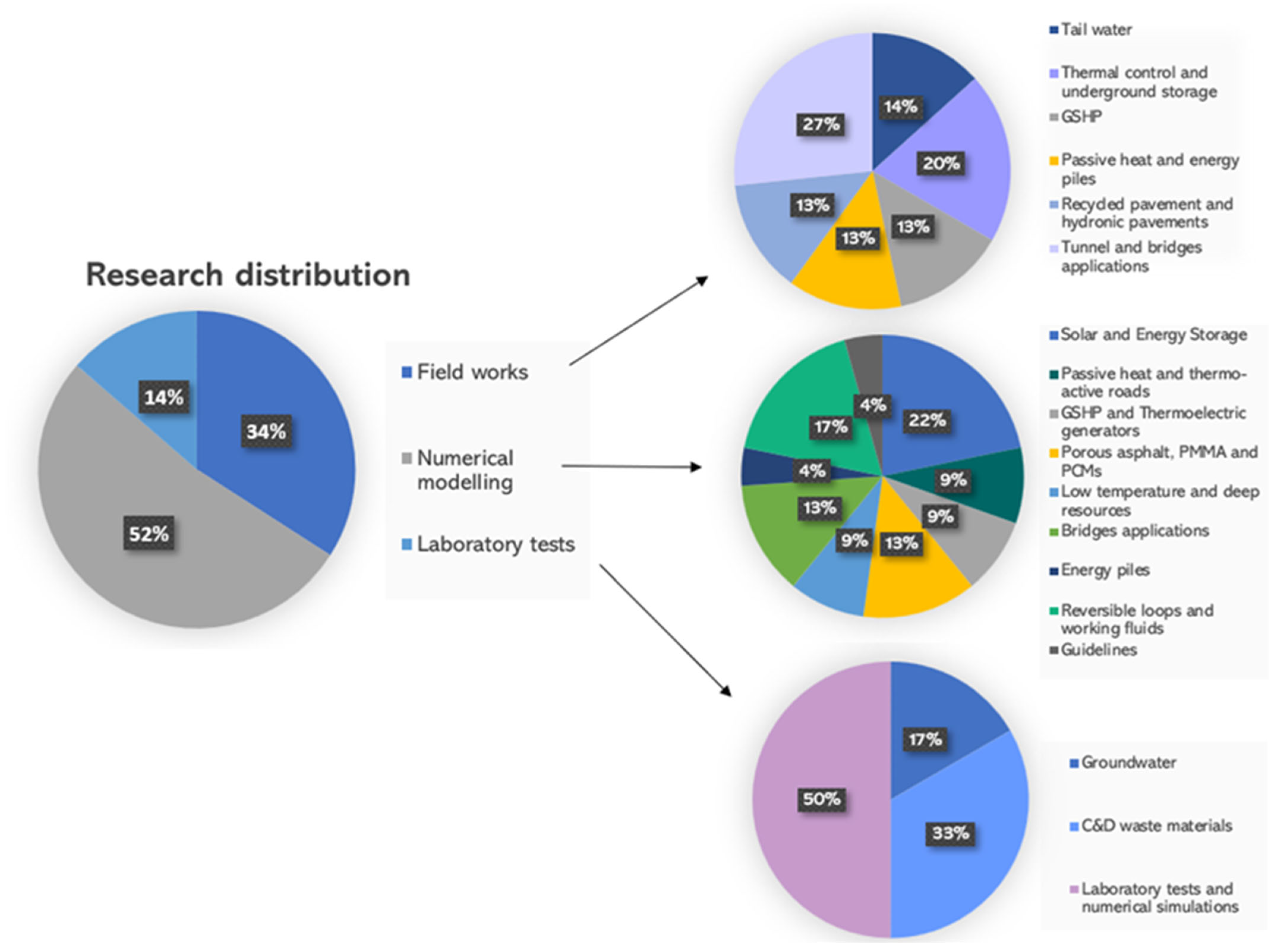
Out of the total papers analyzed, approximately 34% correspond to field investigations or real-scale applications, 52% are primarily based on numerical modeling and simulation, and 14% focus on laboratory tests conducted under controlled conditions.
Among the global field works and real-scale applications identified, a wide range of approaches has been explored to integrate geothermal energy into road infrastructure. Several contributions focus on surface thermal control and pavement monitoring, assessing how geothermal systems can regulate road temperatures, prevent icing, and enhance operational safety. Other studies investigate the use of low-temperature geothermal resources, such as tail water, as a sustainable energy source for roadway applications. The integration of heat pumps into geothermal systems has also been explored, enabling efficient energy extraction and utilization for heating or cooling purposes. Additionally, research has addressed subsurface water storage as a means to enhance thermal regulation and provide long-term energy buffering.
Innovative approaches include the implementation of passive thermal solutions, geothermal piles, and recycled pavements integrated with geothermal systems, highlighting the potential for combining sustainability with functional infrastructure design. Several studies specifically examine tunnel and bridge applications, exploring the feasibility of incorporating geothermal systems into complex civil structures while considering structural constraints and energy performance.
In addition, this group of studies includes real-world implementation cases, providing valuable evidence of operational feasibility, system efficiency, and the challenges associated with scaling up from laboratory or simulation environments.
Regarding numerical modeling and simulation studies, these constitute the largest group, demonstrating the central role of computational analysis in this research domain. These works commonly employ finite element or finite difference methods to predict heat transfer within pavement layers, optimize system design, and evaluate thermal performance under various climatic or operational scenarios. A significant proportion of these works explore the integration of geothermal energy with other renewable sources, such as solar energy, aiming to enhance overall system efficiency and energy flexibility.
Several studies investigate subsurface energy storage solutions, including Underground Thermal Energy Storage (UTES) and geothermal piles, to improve long-term energy availability and system reliability. The use of innovative pavement materials, such as porous asphalt, PMMA, and PMCS, is also frequently addressed, as well as passive heat management strategies, which can reduce energy demand and improve thermal regulation.
Simulation studies further analyze both low- and high-enthalpy hydronic pavements, assessing heat transfer performance under different environmental and operational conditions. Models of thermo-active bridges and roads, reversible loop systems, and different fluid types and circulation regimes are also common, providing insights into optimal design parameters, system dynamics, and potential operational constraints.
Overall, these numerical investigations form the backbone of current research on geothermal road systems, offering predictive capabilities that support design optimization, feasibility assessment, and integration with complementary technologies.
Finally, related to laboratory-based studies, though less numerous, contribute fundamental insights into the thermophysical behavior of materials, the influence of boundary conditions, and the efficiency of different heat exchanger geometries. The research included in this review focus on controlled experimental investigations of geothermal systems embedded in road infrastructure. Some of these studies explore the utilization of groundwater as a thermal resource, examining its potential for heat exchange and seasonal energy storage. Other research investigates the use of construction and demolition (C&D) waste materials as part of geothermal pavements, evaluating both their thermal performance and sustainability benefits.
Several laboratory studies are combined with numerical simulations and multi-temporal analyses, aiming to provide a more comprehensive assessment of system behavior under varying environmental conditions and operational scenarios.
The following Figure 4 graphically shows the global distribution of the analyzed studies across each of the categories.
It is convenient to mention that, while numerical modeling and laboratory experiments provide valuable insights into system performance and fundamental mechanisms, field validation remains essential to confirm real-world applicability, assess long-term durability, and account for environmental variability. Future research should prioritize on-site demonstrations to bridge the gap between theoretical predictions and practical implementation.

4.2. Comparative Statistical Assessment

To complement the descriptive review, a quantitative analysis was conducted on the selected literature works, considering key performance metrics such as average coefficient of performance and maximum operating temperature for each system based on reported data.
Field-based and real work applications mainly include average COP values ranging approximately from 2.27 to 3.25, with energy pile and bridge systems showing the highest and most stable efficiencies. GSHP systems exhibited larger variability depending on water temperature and flow rate, while passive and tunnel-based systems showed moderate performance.
Regarding computational/modelling, the estimated COP in this group ranged from 2.8 to 3.3, with solar-assisted and PCM-enhanced systems showing higher efficiency due to optimized energy storage and utilization. These studies allowed evaluation under multiple climatic scenarios and design parameters, offering insights on system optimization and sensitivity.
Finally, the COP associated with laboratory testing studies ranged approximately from 2.8 to 3.2. Despite controlled conditions providing reliable efficiency measurements, the scalability and field applicability may be limited due to simplified boundary conditions or small-scale implementation.
A one-way ANOVA comparing COP among system types across all studies yielded F ≈ 6.2 and p ≈ 0.008, indicating significant differences between groups. Additionally, a Pearson correlation analysis between COP and maximum operating temperature across all systems resulted in r ≈ −0.41 (p ≈ 0.17), suggesting a slight negative trend: higher operating temperatures tend to slightly reduce COP, particularly for heat pump-based systems.
These quantitative analyses highlight clear trends:
  • Energy pile and bridge-based systems consistently achieve higher efficiency.
  • GSHP and passive systems show greater sensitivity to operational parameters and local climate.
  • Systems integrating solar energy or PCMs improve overall performance by enhancing energy storage and reducing external energy dependence.
  • Laboratory and modelling studies provide relevant insights for design optimization, though real-world variability may affect performance.
The quantitative analysis provides clear guidance for the design and selection of the geothermal heating system. Energy pile and bridge-based systems, which consistently exhibit higher COP values in field studies, are particularly suitable for critical infrastructure requiring reliable and uniform snow and ice removal. GSHP and passive systems, while more flexible, display greater variability in efficiency depending on operating temperatures, flow rates, and local climate, highlighting the importance of careful system optimization. Computational and laboratory studies, including solar-assisted, PCM-enhanced, and heat-pipe systems, demonstrate that integrating energy storage or advanced materials can improve overall efficiency and reduce external energy demand. However, field validation is essential, as laboratory and modeling results may not fully capture real-world variability.
In addition, the techno-economic perspective has been also addressed. A systematic evaluation of installation costs, operational expenses, and estimated Return On Investment (ROI) was performed. Field-based systems (energy piles, bridge-integrated, GSHP) generally involve high installation costs due to complex infrastructure (e.g., embedded pipes, heat exchangers, pumps), but their reliable snow and ice removal yields moderate operational costs and favorable ROI for critical infrastructure. Computational/modelling studies indicate that integrating solar energy or PCMs can reduce operational energy consumption by 20–35%, partially offsetting moderate additional installation costs for collectors or materials. Laboratory and prototype systems, such as groundwater-based pavements or C&D waste constructions, suggest potential cost reductions due to simplified designs or recycled materials, though scaling to full networks may increase expenses.
Overall, the assessment highlights key trade-offs: high-performance systems (energy piles, bridge decks) incur higher upfront costs but provide reliable long-term efficiency, while lower-cost options (GSHP, passive or PCM-free systems) are more sensitive to operational conditions and may require auxiliary heating or additional maintenance.

4.3. Geographical, Climatic, and Temporal Analysis

As an additional step, an analysis of the geographic and climatic context of the reviewed studies was performed to provide guidance on technology selection and performance expectations. The studies cover a broad range of climates, including severe-cold continental regions, temperate cold climates, and milder or arid regions, enabling cross-regional insights into geothermal snow-melting technologies.
Field investigations are primarily concentrated in Japan, China, Germany, and the United States. These studies report real-world operational performance, emphasizing the influence of local climate on system efficiency:
  • ▪ Severe-cold continental climates (NE China, northern Japan): systems face high operational demand due to deep frost penetration and prolonged sub-zero periods. Field studies highlight the need for higher fluid temperatures, deeper pipe burial, or hybridization strategies to maintain sufficient snow-melting performance [35,36,37].
  • ▪ Cold-temperate climates (Germany, Austria, TX, USA): systems demonstrate stable ground temperatures, allowing shallower pipe layouts and lower flow rates while maintaining reliable snow and ice removal [38,41,43,44,45].
In general terms, energy piles and bridge-integrated systems perform effectively in severe-cold climates, whereas hydronic pavements are better suited for temperate regions.
In the context of computational and modelling studies, these works are mainly distributed in China, Japan, France, the United States, Sweden, Saudi Arabia, Australia, and South Korea. Numerical models allow simulation of multiple climates and system configurations:
  • ▪ Severe-cold climates: simulations show that systems require deeper pipe placement and higher fluid flow rates to sustain surface temperatures above freezing [46,47,49,52].
  • ▪ Cold-temperate climates: modelling results indicate that solar integration or phase change materials can improve seasonal efficiency and reduce energy consumption [48,50,51,54,55,56].
  • ▪ Milder cold and arid regions: models in Australia, Saudi Arabia, and parts of the USA suggest that shallower pipe depths and lower flow rates are sufficient, but care must be taken to prevent overheating in summer [58,62,63].
Regarding laboratory-based studies, these investigations and controlled experiments focus mainly on China and Australia:
  • ▪ Severe-cold simulations: lab-scale studies reproduce extreme winter conditions, revealing the sensitivity of system performance to pipe depth, fluid flow, and material thermal properties [68,69,70,72].
  • ▪ Temperate and mild climates: results show that systems can maintain snow-free surfaces at lower operational temperatures, improving energy efficiency [18,71].
Since laboratory studies provide guidance for optimizing design parameters under controlled conditions, they can be adapted to specific climatic zones for practical implementation.
In general terms, it can be stated that design parameters are sensitive to climate and geographical conditions. Across all groups, key parameters include pipe depth, spacing, fluid temperature, and flow rate. These parameters interact with local climatic conditions, ground thermal properties, and pavement characteristics, influencing the ability of the system to maintain surface temperatures above freezing.
In severe-cold climates, such as northeastern China and northern Japan, the prolonged periods of sub-zero temperatures and deep frost penetration require deeper pipe burial, often exceeding 0.5–0.8 m, to access ground layers with more stable thermal conditions. Closer pipe spacing is required to ensure uniform heat distribution across the pavement surface, and higher fluid temperatures and flow rates are needed to counteract rapid heat losses to the environment. Such configurations contribute to achieve reliable snow and ice removal but can increase both installation costs and energy consumption. Additionally, these systems often require integration with auxiliary or hybrid energy sources, such as solar thermal or phase change materials, to maintain efficiency during extreme cold events.
Conversely, in milder climates (including temperate regions of Europe, southern United States, or Australia) shallower pipe layouts (0.3–0.5 m) and wider spacing are sufficient due to lower heat losses and milder winter conditions. Lower fluid temperatures and flow rates can effectively prevent snow and ice accumulation, leading to improved energy efficiency and reduced operational costs. In these regions, system design can also focus on long-term durability and minimal maintenance, rather than maximizing heat output.
Across all climates, optimizing these design parameters requires site-specific assessment that accounts for soil thermal conductivity, pavement material properties, expected snowfall intensity, and local climatic extremes. Numerical simulations and laboratory testing can help identify optimal combinations of pipe depth, spacing, and flow conditions to achieve both cost-effectiveness and reliability, while field-based validations confirm real-world performance.
Focusing now on the temporal analysis, the reviewed literature spans 1995 to 2025, revealing a clear temporal evolution in both research focus and technology maturity.
  • ▪ 1995–2010: early studies were primarily field-based, conducted in Japan (1995, 2009, 2010) and China (2006–2009). These works focused on small- to medium-scale feasibility of hydronic pavements, underground water circulation, and basic GSHP systems, emphasizing thermal performance and snow-melting efficiency. Research during this period had low to moderate technology readiness (TRL 2–4) and lacked integration with climate adaptation or cost analysis.
  • ▪ 2011–2020: this period saw the expansion of both field and computational studies, with field experiments in Japan (2011), China (2020), and Northeast China (2020), and modelling studies in China, France, and the USA (2015–2019). Computational work introduced optimization of pipe depth, spacing, flow rate, and solar or PCM integration, as well as simulations for climate-dependent performance. Technology readiness advanced (TRL 4–6) with improved design guidance and energy efficiency considerations.
  • ▪ 2021–2025: recent studies reflect a strong focus on large-scale and full-scale implementations, spanning China, Australia, Germany, Texas (USA), and South Korea. Field-based works applied energy piles, tunnel drainage systems, and bridge deck deicing; computational studies explored reversible thermosyphons, thermoelectric generators, and hybrid geothermal-solar systems; laboratory studies validated designs under controlled conditions and tested C&D waste pavements. These developments represent emerging approaches (TRL 5–7) and mature systems with proven field performance, highlighting technology translation, climate-technology matching, and practical applicability.
This chronological overview demonstrates a clear trajectory from small-scale feasibility studies to modelling-based optimization and to full-scale implementation with emerging technologies, also distinguishing mature technologies (hydronic pavements, GSHP-based systems) from emerging approaches (energy piles, PCM-integrated systems, reversible thermosyphons), providing a structured perspective on temporal evolution and technology readiness.

4.4. Techno-Economic Assessment and Investment Considerations

A comparative analysis of the reviewed studies indicates that economic factors play a crucial role in the practical implementation of geothermal road systems. Across all groups, installation and operational costs emerge as a recurring limitation. Field-based studies report that energy piles and bridge-integrated systems, while providing the highest and most stable efficiencies, often involve higher upfront costs due to complex installation requirements and specialized materials. In contrast, passive systems, tunnel-integrated solutions, and shallow hydronic pavements generally require less intensive construction but may exhibit greater sensitivity to operational parameters and climatic variability, potentially affecting long-term performance and energy savings.
Operational efficiency and energy savings are closely linked to system configuration, pipe depth and spacing, fluid flow rate, and local climatic conditions. Computational and laboratory studies suggest that integration with solar energy, phase change materials, or heat storage mechanisms can improve overall efficiency and reduce external energy dependence, which may partially offset higher initial investments.
Return on investment and payback considerations are inherently context dependent. Systems designed for severe-cold climates typically demand more robust installation, higher fluid temperatures, and auxiliary energy support, leading to longer amortization periods. Conversely, systems implemented in milder or temperate climates can achieve satisfactory performance with simpler layouts, potentially improving cost-effectiveness and reducing operational expenditure.
Overall, this assessment provides qualitative guidance for decision-making: energy pile and bridge-based systems are recommended for critical infrastructure requiring reliable performance under extreme conditions, while passive and hydronic pavements are more suitable for less demanding environments. Future studies should focus on systematically quantifying costs, energy savings, and payback periods across different climates and technologies to support more precise investment planning.

4.5. Challenges and Limitations

One of the final objectives of this review is to highlight and synthesize the most relevant limitations and challenges identified within each category, considering factors such as dependence on local conditions, energy efficiency, installation and maintenance complexity, system durability, and the difficulties associated with scalability and integration into existing infrastructure. By emphasizing these aspects, the review has focused on providing a clear understanding of the current barriers to the deployment of geothermal pavements and to serve as a reference for future research and technological development in this field.
Starting by the geothermal pavement systems tested in real-world conditions, the evaluated research has denoted their strongly influence by local climate, soil characteristics, and the availability and temperature of groundwater or geothermal sources. Their performance can vary depending on snow and ice properties, and maintaining uniform heat distribution over long stretches or complex infrastructures remains challenging. Installation and maintenance are often costly and technically demanding due to embedded piping, heat exchangers, and heat pumps, especially when retrofitting existing roads or bridges. The long-term durability of subsurface components under traffic loads and freeze–thaw cycles is still uncertain, while energy efficiency is highly sensitive to fluid temperature and flow rates. Additionally, integration with existing infrastructure is typically site-specific, and pavement material properties and environmental stresses can further affect system performance.
Regarding the set of numerical studies here included, they provide valuable insights into geothermal pavement performance but are limited by their dependence on local geological and climatic conditions. System efficiency is highly sensitive to design parameters, including pipe depth, spacing, geometry, loop configuration, fluid type, and flow rates, making optimization complex. Most models are site-specific and may not generalize to other climates, larger road networks, or bridge structures, while economic feasibility and large-scale implementation are often not fully assessed. The simulations rarely account for long-term durability under freeze–thaw cycles, traffic loads, or material degradation. Simplifications in modeling may overlook important real-world variability, and the effectiveness of multifunctional systems, such as those integrating heat storage, solar energy, or phase-change materials, may be uncertain without field validation.
Finally, laboratory investigations of geothermal pavements highlight the dependence of system performance on local soil properties, groundwater availability, and climate, with efficiency often reduced under extreme or variable conditions. Using construction and demolition waste materials introduces variability in thermal and mechanical properties, and integrating heat exchange systems into pavements increases complexity. The efficiency of these systems is highly sensitive to pipe depth, spacing, flow rates, and insulation, which can be difficult to optimize for practical implementation. Installation requires significant precision and investment, while long-term durability remains uncertain due to potential clogging, freezing, or material degradation. Most laboratory studies rely on numerical simulations, and limited field validation leaves uncertainties regarding real-world performance, scalability, and maintenance requirements.
In general terms, geothermal pavements show strong dependence on local climate, soil properties, and the availability of geothermal or groundwater resources, while performance is highly sensitive to pipe design, fluid parameters, and pavement material characteristics. Installation, maintenance, and retrofitting existing infrastructure are complex and costly, and scaling to large areas poses challenges for uniform heat distribution and energy efficiency. Long-term durability under traffic loads and freeze–thaw cycles remain uncertain, and many numerical and laboratory studies have limited real-world validation. High initial costs and questions of economic feasibility continue to limit widespread implementation.

5. Conclusions

This review has comprehensively evaluated the main scientific contributions in the field of geothermal energy implementation for the thermal management of road infrastructures, with a primary focus on peer-reviewed scientific articles. The identified contributions were systematically categorized into three main groups (field-based studies and real-world applications, numerical simulations and modeling developments, and laboratory testing) and analyzed in terms of their objectives, methodologies, as well as the limitations and challenges reported in each case.
The analysis reveals that the majority of studies rely on numerical modeling and simulations, often aimed at optimizing system design, evaluating the integration of geothermal systems with other energy sources, and assessing applications in elevated infrastructures or using alternative materials. These studies provide critical insights into system performance, energy efficiency, and operational feasibility. However, they are frequently constrained by assumptions and simplifications, limited validation under real-world conditions, and sensitivity to input parameters such as soil thermal properties, pipe configurations, fluid flow, and local climate, which can limit the generalization of their findings.
Field-based studies and real-world implementations represent an important body of work, demonstrating practical applications of geothermal pavements in bridges, tunnels, and urban roads, as well as in energy storage systems. These studies highlight the use of ground source heat pump systems, recycled pavements, energy piles, passive heat strategies, and hydronic networks. The main limitations in these cases include high installation and maintenance costs, complexity in retrofitting existing infrastructure, challenges in scaling systems to larger networks while maintaining uniform heat distribution, and uncertainties regarding long-term durability under traffic loads, freeze–thaw cycles, and varying environmental conditions.
Laboratory experiments constitute the least numerous groups of contributions but provide valuable insights into material behavior, particularly the use of construction and demolition (C&D) waste materials, and the performance of heat transfer systems under controlled conditions. These studies are essential for validating numerical models and understanding fundamental thermal mechanisms. However, their main limitations lie in the reduced realism compared to field conditions, scale effects, and the challenge of extrapolating results to real infrastructure.
Overall, this review demonstrates that while geothermal pavements offer significant potential for improving road safety, energy efficiency, and resilience to climate extremes, widespread implementation is still limited by economic, technical, and environmental constraints. To advance the field, future research should focus on systematically addressing economic, technical, and environmental constraints. This includes more comprehensive techno-economic evaluations to assess cost-effectiveness and ROI, long-term durability studies under realistic traffic and climatic conditions, and strategies for scaling systems to larger urban and bridge infrastructures while considering local geological and climatic factors. Additionally, field measurements and the development of standardized methodologies for implementation should be prioritized to support practical deployment and decision-making.
Standardized validation protocols should be developed, including high-resolution surface temperature monitoring, energy consumption tracking, thermal efficiency assessment, and performance testing across different climates and soil types. Such protocols would allow meaningful comparisons between systems, reduce uncertainty, and provide actionable insights for infrastructure planners.
Methodological improvements are additionally needed to integrate advanced computational models with experimental and field data. This includes multi-scale numerical simulations capturing pipe layouts, heat transfer dynamics, and environmental interactions, complemented by experimental validations under controlled and real-world conditions. Exploration of emerging technologies, such as phase change materials (PCMs) to enhance thermal energy storage, energy piles for bridge and pavement applications, reversible thermosyphons to mitigate underground thermal imbalance, and hybrid geothermal–solar systems for combined energy harvesting, is encouraged to optimize system efficiency and adaptability.
Finally, future research should also consider regional adaptation and climate-technology matching, evaluating how local climate, geological conditions, and traffic characteristics influence system design and performance. This includes developing guidelines for site-specific implementation, identifying priority locations for deployment, and proposing best practices to maximize both operational efficiency and cost-effectiveness. By addressing these research priorities, including economic feasibility analyses, field measurements, standardization proposals, and practical implementation methodologies, the field can move from proof-of-concept and small-scale experiments toward widespread, practical, and economically viable applications of geothermal pavements.
Analyzing this review, it is clear that geothermal energy represents a promising and sustainable solution for road infrastructure, offering the potential to maintain safer, snow- and ice-free surfaces, improve the thermal performance of pavements, reduce energy consumption, and mitigate environmental impacts. By harnessing underground heat, geothermal systems can enhance the durability and resilience of roads under varying climatic conditions, contribute to energy-efficient operations, and support the transition toward low-carbon, sustainable transportation networks. These benefits underscore the importance of systematically evaluating current technologies, design strategies, and implementation challenges to guide future research and practical applications in geothermal road conditioning.

Author Contributions

Conceptualization, C.S.B. and M.Á.M.-G.; methodology, C.S.B.; software, S.A.C.V. and D.H.H.; validation, C.S.B. and M.Á.M.-G.; formal analysis, S.A.C.V. and D.H.H.; investigation, C.S.B., M.Á.M.-G., S.A.C.V. and D.H.H.; resources, C.S.B.; data curation, C.S.B. and M.Á.M.-G.; writing—original draft preparation, C.S.B.; writing—review and editing, C.S.B.; visualization, C.S.B.; supervision, C.S.B. and M.Á.M.-G.; project administration, C.S.B. and M.Á.M.-G.; funding acquisition, C.S.B. and M.Á.M.-G. All authors have read and agreed to the published version of the manuscript.

Funding

This research was supported by GEO-ROAD project (PID2022-142097OA-I00). Miguel Ángel Maté-González and Cristina Sáez Blázquez acknowledge the grants RYC2021-034813-I and RYC2021-034720-I, respectively, funded by the Ministerio de Ciencia e Innovación and by the European Union ‘NextGenerationEU’/PRTR.

Data Availability Statement

The original contributions presented in this study are included in the article. Further inquiries can be directed to the corresponding author.

Acknowledgments

Authors would also like to thank the Department of Cartographic and Land Engineering of the Higher Polytechnic School of Avila, University of Salamanca, for their collaboration during the experimental phase of this research.

Conflicts of Interest

The authors declare no conflicts of interest.

Abbreviations

The following abbreviations are used in this manuscript:
CMACalcium Magnesium Acetate
PRISMA Preferred Reporting Items for Systematic Reviews and Meta-Analyses
GSHP Ground Source Heat Pump
PMMAPolymethyl Methacrylate
PCMPhase Change Materials
DTSDistributed Temperature Sensing
COPCoefficient Of Performance
TEGsThermoelectric Generators
SGESShallow Geothermal Energy Systems
C&DConstruction and Demolition
CFDComputational Fluid Dynamics
UTESUnderground Thermal Energy Storage

References

  1. Kashfi, S.A.; Bunker, J.M.; Yigitcanlar, T. Understanding the effects of complex seasonality on suburban daily transit ridership. J. Transp. Geogr. 2015, 46, 67–80. [Google Scholar] [CrossRef] [Scilit]
  2. Riehm, M.; Gustavsson, T.; Bogren, J.; Jansson, P.E. Ice formation detection on road surfaces using infrared thermometry. Cold Reg. Sci. Technol. 2012, 83, 71–76. [Google Scholar] [CrossRef] [Scilit]
  3. Jin, M.; McBroom, D.G. Investigating Road Ice Formation Mechanisms Using Road Weather Information System (RWIS) Observations. Climate 2024, 12, 63. [Google Scholar] [CrossRef] [Scilit]
  4. Yu, H.; Li, Z.; Zhang, G.; Liu, P. A latent class approach for driver injury severity analysis in highway single vehicle crash considering unobserved heterogeneity and temporal influence. Anal. Methods Accid. Res. 2019, 24, 100110. [Google Scholar] [CrossRef] [Scilit]
  5. Tobin, D.M.; Reeves, H.D.; Gibson, M.N.; Rosenow, A.A. Weather conditions and messaging associated with fatal winter-weather-related motor-vehicle crashes. Weather Clim. Soc. 2022, 14, 835–848. [Google Scholar] [CrossRef] [Scilit]
  6. Sarnowski, M.; Kowalski, K.J.; Król, J.B.; Radziszewski, P. Influence of overheating phenomenon on bitumen and asphalt mixture properties. Materials 2019, 12, 610. [Google Scholar] [CrossRef] [Scilit]
  7. de Abreu, V.H.S.; Santos, A.S.; Monteiro, T.G.M. Climate change impacts on the road transport infrastructure: A systematic review on adaptation measures. Sustainability 2022, 14, 8864. [Google Scholar] [CrossRef] [Scilit]
  8. Hjort, J.; Streletskiy, D.; Doré, G.; Wu, Q.; Bjella, K.; Luoto, M. Impacts of permafrost degradation on infrastructure. Nat. Rev. Earth Environ. 2022, 3, 24–38. [Google Scholar] [CrossRef] [Scilit]
  9. Dhyani, A.; Choi, W.; Golovin, K.; Tuteja, A. Surface design strategies for mitigating ice and snow accretion. Matter 2022, 5, 1423–1454. [Google Scholar] [CrossRef] [Scilit]
  10. Kenzhebayeva, A.; Bakbolat, B.; Sultanov, F.; Daulbayev, C.; Mansurov, Z. A mini-review on recent developments in anti-icing methods. Polymers 2021, 13, 4149. [Google Scholar] [CrossRef] [Scilit]
  11. Honarvar Nazari, M.; Mousavi, S.Z.; Potapova, A.; McIntyre, J.; Shi, X. Toxicological impacts of roadway deicers on aquatic resources and human health: A review. Water Environ. Res. 2021, 93, 1855–1881. [Google Scholar] [CrossRef] [Scilit]
  12. Li, Z.; Zhu, A.; Zhan, Y.; Luo, Z.; Zhang, A.A. Novel asphalt pavement with directional heat conduction for melting of ice and snow in plateau and cold areas. Intell. Transp. Infrastruct. 2023, 2, liad010. [Google Scholar] [CrossRef] [Scilit]
  13. Anis, M.; Abdel-Raheem, M. A review of electrically conductive cement concrete pavement for sustainable snow-removal and deicing: Road safety in cold regions. Transp. Res. Rec. 2024, 2678, 50–71. [Google Scholar] [CrossRef] [Scilit]
  14. Mukherjee, A.; Benett, J.; Anyigor, K.T.; Olayinka, O.B.O.; Khalafallah, A.M.; Alencastro, J.; Butt, T.E. Solar roads–a new potential renewable energy for Great Britain. Environ. Technol. 2024, 45, 5956–5965. [Google Scholar] [CrossRef] [Scilit]
  15. Beddu, S.; Ahmad, M.; Kamal, N.L.M.; Mohamad, D.; Itam, Z.; Min, Y.H.; Zailani, W.W.A. A State-of-the-Art Review of Hydronic Asphalt Solar Collector Technology for Solar Energy Harvesting on Road Pavement. MATEC Web Conf. 2024, 400, 03007. [Google Scholar] [CrossRef] [Scilit]
  16. Levenberg, E.; Félix Adam, Q. Construction of an electrically heated asphalt road based on ribbon technology. Transp. Res. Rec. 2021, 2675, 652–663. [Google Scholar] [CrossRef] [Scilit]
  17. Abdel-Raheem, M.; Anis, M. Toward Sustainability: A New Construction Method for Electrically Heated Rigid Pavement Systems. Transp. Res. Rec. 2025, 2679, 281–303. [Google Scholar] [CrossRef] [Scilit]
  18. Gu, X.; Makasis, N.; Motamedi, Y.; Narsilio, G.A.; Arulrajah, A.; Horpibulsuk, S. Geothermal pavements: Field observations, numerical modelling and long-term performance. Géotechnique 2022, 72, 832–846. [Google Scholar] [CrossRef] [Scilit]
  19. Mohammadzadeh, A.; Ghasemi-Fare, O.; Sun, Z.; McGinley, M. Exploring the Use of Geothermal Piles as an Environmentally Sustainable Method to De-Ice Bridge Decks through Field-Scale Experiment. In Proceedings of the IEEE 8th Conference on Energy Internet and Energy System Integration, Shenyang, China, 29 November–2 December 2024; pp. 751–759. [Google Scholar]
  20. Mishima, O.; Stanley, H.E. The relationship between liquid, supercooled and glassy water. Nature 1998, 396, 329–335. [Google Scholar] [CrossRef] [Scilit]
  21. Shi, X.; Huang, J.; Yang, Z. Pavement treatments for sustainable winter road maintenance. In Sustainable Winter Road Operations; John Wiley & Sons: Hoboken, NJ, USA, 2018; pp. 402–422. [Google Scholar]
  22. Liu, J.; Liu, J.; Shi, X.; Honarvarnazari, M. Snow and Ice Treatment Products Evaluation; No. cmr 21-009, TR202002; Department of Transportation, Construction and Materials Division: Jefferson City, MO, USA, 2021. [Google Scholar]
  23. Kołodziejczyk, U.; Ćwiąkała, M. Evaluation of the efficiency of use of aggregates and chemical compounds for winter road maintenance. Civ. Environ. Eng. Rep. 2009, 3, 67–76. [Google Scholar]
  24. Fay, L.; Shi, X. Environmental impacts of chemicals for snow and ice control: State of the knowledge. Water Air Soil Pollut. 2012, 223, 2751–2770. [Google Scholar] [CrossRef] [Scilit]
  25. Terry, L.G.; Conaway, K.; Rebar, J.; Graettinger, A.J. Alternative deicers for winter road maintenance—A review. Water Air Soil Pollut. 2020, 231, 394. [Google Scholar] [CrossRef] [Scilit]
  26. Mulholland, E.; Feyen, L. Increased risk of extreme heat to European roads and railways with global warming. Clim. Risk Manag. 2021, 34, 100365. [Google Scholar] [CrossRef] [Scilit]
  27. Ibrahim, S.H.; Ibrahim, N.I.A.; Wahid, J.; Goh, N.A.; Koesmeri, D.R.A.; Nawi, M.N.M. The impact of road pavement on urban heat island (UHI) phenomenon. Civ. Eng. 2018, 9, 1597–1608. [Google Scholar] [CrossRef] [Scilit]
  28. Wang, Q.; Liu, K.; Wang, M.; Koks, E.; Wang, H. Exposure of Global Rail and Road Infrastructures in Future Record-Breaking Climate Extremes. Earth’s Future 2024, 12, e2023EF003632. [Google Scholar] [CrossRef] [Scilit]
  29. Mink, L.L. The Nation’s oldest and largest geothermal district heating system. GRC Trans. 2017, 41, 205–2012. [Google Scholar]
  30. Weber, J.; Ganz, B.; Schellschmidt, R.; Sanner, B.; Schulz, R. Geothermal energy use in Germany. In Proceedings of the World Geothermal Congress 2015, Melbourne, VIC, Australia, 19–25 April 2015; pp. 19–24. [Google Scholar]
  31. Yuhara, K.; Nomura, K. Surface Temperature Measured with Distributed Temperature Sensor on the Snow-melting Road by Flowing Water through the Underground Embedded Pipes. J. Geotherm. Res. Soc. Jpn. 1995, 17, 43–54. [Google Scholar]
  32. Wang, H.; Zhao, J.; Chen, Z. Experimental investigation of ice and snow melting process on pavement utilizing geothermal tail water. Energy Convers. Manag. 2008, 49, 1538–1546. [Google Scholar] [CrossRef] [Scilit]
  33. Wang, H.J.; Zhao, J. Experimental study on geothermal ice and snow melting process for roads. Acta Energiae Solaris Sin. 2009, 30, 177–181. [Google Scholar]
  34. Yoshitake, I.; Yasumura, N.; Syobuzako, M.; Scanlon, A. Pipe heating system with underground water tank for snow thawing and ice prevention on roads and bridge decks. J. Cold Reg. Eng. 2011, 25, 71–86. [Google Scholar] [CrossRef] [Scilit]
  35. Zhao, W.; Zhang, Y.; Chen, X.; Su, W.; Li, B.; Fu, Z. Experimental heating performances of a ground source heat pump (GSHP) for heating road unit. Energy Convers. Manag. X 2020, 7, 100040. [Google Scholar] [CrossRef] [Scilit]
  36. Zhao, W.; Zhang, Y.; Li, L.; Su, W.; Li, B.; Fu, Z. Snow melting on the road surface driven by a geothermal system in the severely cold region of China. Sustain. Energy Technol. Assess. 2020, 40, 100781. [Google Scholar] [CrossRef] [Scilit]
  37. Tan, Y.; Song, J.; Chen, Z.; Xiao, H. Experimental study on the influence of buried geothermal pipes on the temperature field of concrete roads. Adv. Civ. Eng. 2021, 2021, 9977400. [Google Scholar] [CrossRef] [Scilit]
  38. Baumgaertel, S.; Schweighofer, J.A.; Rohn, J.; Luo, J. The performance of geothermal passive heating and cooling for asphalt and concrete pavement. Dev. Built Environ. 2021, 7, 100051. [Google Scholar] [CrossRef] [Scilit]
  39. Chen, X.; Kong, G.-Q.; Liu, H.-L.; Jiang, Q.; Yang, T. Field Tests on Heat Transfer Efficiency of Bridge Deck Snow Melting and Deicing Using Energy Pile Heat Pump System. J. Highw. Transp. Artic. 2022. [Google Scholar]
  40. Cheng, C.P.; Li, S.Q.; Xu, X.Q.; Luo, X.P.; Liu, F. Investigation and Evaluation on Long-term Performance of Geothermal Recycled Pavement of Expressway in Guangdong Province. J. Wuhan Univ. Technol. (Transp. Sci. Eng. Ed.) 2023, 47, 365–369. [Google Scholar]
  41. Mustafa, M.; Moormann, C. Investigating the use of hydro-geothermal energy from tunnel drainage system for de-icing roads: Results from a pilot study. In Proceedings of the Symposium on Energy Geotechnics 2023, Delft, The Netherlands, 3–5 October 2023; pp. 1–2. [Google Scholar]
  42. Wu, X.; Ma, M.; Lu, J.; Su, L.; Yuan, X.; Chen, H.; Ishnazarov, O. A Passive Geothermal-Based Approach to Snow Melting Using Natural Circulation. Heat Transf. Eng. 2025, 1–15. [Google Scholar] [CrossRef] [Scilit]
  43. Deshmukh, A.; Puppala, A.J.; Bhaskar, P.; Yu, X.; Fakhrabadi, A.; Lei, G. Design and Performance of a Shallow Geothermal Energy–Supplemented Bridge Deicing System on an In-Service Bridge in North Texas. J. Geotech. Geoenviron. Eng. 2025, 151, 05025004. [Google Scholar] [CrossRef] [Scilit]
  44. Kugler, T.; Mustafa, M.; Moormann, C. Geothermal hydronic pavement heating and cooling systems using tunnel geothermal energy. Tunn. Undergr. Space Technol. 2025, 164, 106812. [Google Scholar] [CrossRef] [Scilit]
  45. Yu, X.; Puppala, A.J.; Fakhrabadi, A.; Deshmukh, A.; Lei, G.; Bhaskar, P. Use of Geothermal Energy for De-Icing Approach Pavement Slabs and Bridge Decks–Phase II; No. FHWA/TX-25/0-6872-01-1; University of Texas at Arlington: Arlington, TX, USA, 2025. [Google Scholar]
  46. Zhao, J.; Wang, H.; Chen, H.; Qu, H. Seasonal behavior of pavement in geothermal snow-melting system with solar energy storage. J. Tianjin Univ. 2006, 12, 319–324. [Google Scholar]
  47. Wang, H.; Zhao, J.; Chen, Z. Numerical study on heat-transfer behavior of the pavement in road snow-melting system with solar and geothermal energy. Acta Energiae Solaris Sin. 2007, 28, 608. [Google Scholar]
  48. Nagai, N.; Miyamoto, S.; Tsuda, T.; Yamahata, S. Experimental demonstrations and optimal design conditions of snow-melting system using geothermal and solar energy. In Proceedings of the ASME 2009 Heat Transfer Summer Conference Collocated with the InterPACK09 and 3rd Energy Sustainability Conferences, San Francisco, CA, USA, 19–23 July 2009; Volume 43581, pp. 767–771. [Google Scholar]
  49. Nagai, N.; Miyamoto, S.; Osawa, Y.; Igarashi, S.; Shibata, K.; Takeuchi, M. Numerical simulation of snow melting using geothermal energy assisted by heat storage during seasons. Trans. Jpn. Soc. Mech. Eng. Ser. B 2010, 76, 1090–1101. [Google Scholar] [CrossRef] [Scilit]
  50. Asfour, S.; Bernardin, F.; Mauduit, C.; Toussaint, E.; Piau, J.M. Hydrothermal study of roads with de-freezing surface, obtained by the circulation of a warm fluid in a bonding porous asphalt layer. In Proceedings of the 8th RILEM International Symposium on Testing and Characterization of Sustainable and Innovative Bituminous Materials, Ancona, Italy, 7–9 October 2015; Springer: Dordrecht, The Netherlands, 2015; pp. 545–556. [Google Scholar]
  51. Mauro, A.; Grossman, J.C. Street-heat: Controlling road temperature via low enthalpy geothermal energy. Appl. Therm. Eng. 2017, 110, 1653–1658. [Google Scholar] [CrossRef] [Scilit]
  52. He, X.; Abdelaziz, S.; Chen, F.; Yin, H. Finite element simulation of self-heated pavement under different mechanical and thermal loading conditions. Road Mater. Pavement Des. 2019, 20, 1807–1826. [Google Scholar] [CrossRef] [Scilit]
  53. Zhao, S.Y.; Su, X.S.; Chen, C. A Study on Geothermal Snow-melting Technology Based on Chemical PMMA Pavement. Chem. Eng. Trans. 2016, 55, 229–234. [Google Scholar]
  54. Han, C.; Yu, X.B. An innovative energy pile technology to expand the viability of geothermal bridge deck snow melting for different United States regions: Computational assisted feasibility analyses. Renew. Energy 2018, 123, 417–427. [Google Scholar] [CrossRef] [Scilit]
  55. Han, C.; Wu, G.; Yu, X.B. Performance analyses of geothermal and geothermoelectric pavement snow melting system. J. Energy Eng. 2018, 144, 04018067. [Google Scholar] [CrossRef] [Scilit]
  56. Johnsson, J.; Adl-Zarrabi, B. Modeling the thermal performance of low temperature hydronic heated pavements. Cold Reg. Sci. Technol. 2019, 161, 81–90. [Google Scholar] [CrossRef] [Scilit]
  57. Ho, I.H.; Li, S.; Abudureyimu, S. Alternative hydronic pavement heating system using deep direct use of geothermal hot water. Cold Reg. Sci. Technol. 2019, 160, 194–208. [Google Scholar] [CrossRef] [Scilit]
  58. Al-Atroush, M.E.; Marouf, A.; Aloufi, M.; Marouf, M. A novel application of the geothermal asphalt pavement: A feasible E-fuel source. Transp. Eng. 2023, 12, 100183. [Google Scholar] [CrossRef] [Scilit]
  59. Cao, X.; Kong, G.; Han, C. Feasibility assessment of implementing energy pile-based snowmelt system on a practical bridge deck in diverse climate conditions across China. Energy 2024, 290, 130317. [Google Scholar] [CrossRef] [Scilit]
  60. Cao, B.; Jin, F.; Rengaraju, S.; Al-Tabbaa, A. Climate resilience and energy harvesting of thermo-active roads. In Proceedings of the 5th International Conference on Transportation Geotechnics, Sydney, Australia, 20–22 November 2024; Springer Nature: Singapore; pp. 301–309. [Google Scholar]
  61. Gu, X.; Makasis, N.; Narsilio, G.A.; Arulrajah, A.; Horpibulsuk, S. Preliminary design guidelines for the thermal performance of geothermal pavements under different climatic conditions. Appl. Therm. Eng. 2025, 264, 125432. [Google Scholar] [CrossRef] [Scilit]
  62. Lyu, J.; Makasis, N.; Cui, L.; Cao, B. 3D numerical modelling and analysis of heat harvesting and pavement temperature regulation of a thermo-active road. Geomech. Energy Environ. 2025, 42, 100678. [Google Scholar] [CrossRef] [Scilit]
  63. Mohammadzadeh, A.; Ghasemi-Fare, O.; Sun, Z. Enhancing Infrastructure Resilience through Shallow Geothermal Energy: A Novel Approach to Mitigate Extreme Weather Impacts on Existing Bridges. In Geotechnical Frontiers 2025; American Society of Civil Engineers: Reston, VA, USA, 2025; pp. 404–413. [Google Scholar]
  64. Chen, X.; Huang, G.; Li, Q.; Yang, C. A novel geothermal pavement ice and snow melting system with reversible loop heat pipes to eliminate underground thermal imbalance. Appl. Therm. Eng. 2025, 269, 126052. [Google Scholar] [CrossRef] [Scilit]
  65. Cao, C.; Chen, Z.; Zheng, L.; Xiao, H.; Wang, Z.; Song, X. Graded heating operation strategy study of geothermal ice melting system considering the temperature gradient of bridge concrete structures. Appl. Therm. Eng. 2025, 264, 125424. [Google Scholar] [CrossRef] [Scilit]
  66. Chen, X.; Huang, G.; Li, Q. Simulation-based analysis of a novel geothermal pavement ice/snow melting system with reversible thermosyphons to eliminate soil thermal imbalance. J. Renew. Sustain. Energy 2025, 17, 023901. [Google Scholar] [CrossRef] [Scilit]
  67. Cui, W.; Chai, Y.; Asgarpour, S.; Yin, S. Thermal Performance Comparison of Working Fluids for Geothermal Snow Melting with Gravitational Heat Pipe. Fluids 2025, 10, 209. [Google Scholar] [CrossRef] [Scilit]
  68. Yuhara, K. Fundamental Investigation on the Construction of a Snow-melting System for Roads by means of Groundwater Flow through the Embedded Pipes. J. Geotherm. Res. Soc. Jpn. 1995, 17, 1–32. [Google Scholar]
  69. Arulrajah, A.; Ghorbani, B.; Narsilio, G.; Horpibulsuk, S.; Leong, M. Thermal performance of geothermal pavements constructed with demolition wastes. Geomech. Energy Environ. 2021, 28, 100253. [Google Scholar] [CrossRef] [Scilit]
  70. Baghban, H.; Arulrajah, A.; Narsilio, G.A.; Horpibulsuk, S. Assessing the performance of geothermal pavement constructed using demolition wastes by experimental and CFD simulation techniques. Geomech. Energy Environ. 2022, 29, 100271. [Google Scholar] [CrossRef] [Scilit]
  71. Motamedi, Y.; Makasis, N.; Gu, X.; Narsilio, G.A.; Arulrajah, A.; Horpibulsuk, S. Numerical investigation of geothermal pavements: Design optimisation & boundary conditions. Transp. Geotech. 2022, 37, 100843. [Google Scholar] [CrossRef] [Scilit]
  72. Lim, H.; Lee, S.; Lee, J. Effective snow removal devices for road pavement using geothermal heat pipe. Appl. Therm. Eng. 2025, 265, 125624. [Google Scholar] [CrossRef] [Scilit]
Figure 1. Workflow for article selection based on the PRISMA methodology.
Energies 18 06444 g001
Figure 2. Key thematic criteria guiding the selection of articles for the literature review.
Energies 18 06444 g002
Figure 3. Main categories and research topics identified in the studies considered in this review. Note: (GSHP) Ground Source Heat Pump, (PMMA) Polymethyl Methacrylate, (PCM) Phase Change Materials.
Energies 18 06444 g003
Figure 4. Percentage distribution of analyzed studies by category.
Energies 18 06444 g004
Table 1. Summary of the main contributions that highlight field-based studies and real-world implementations.
Scientific ResearchSubjectObjectiveSystem Limitation
Surface temperature measured with distributed temperature sensor on the snow-melting road by flowing water through the underground embedded pipes [31]Thermal controlTo evaluate the effectiveness of a snow-melting road system using hot water circulating through underground embedded pipes, with the use of Distributed Temperature Sensing (DTS) technology to monitor the surface temperature of snow-melting roads, using single optical fiber.
  • Strongly dependent on the temperature and flow rate of the circulating water.
  • The system relies on a network of embedded pipes, which requires precise installation and can be costly to implement and maintain.
  • Challenges in scaling to longer or more complex road networks.
Experimental investigation of ice and snow melting process on pavement utilizing geothermal tail water [32]Tail water Evaluation of using low-temperature geothermal tail water (around 40 °C) to melt snow and ice on concrete pavements, by conducting tests on a small-scale system simulating real urban road conditions.
  • The physical properties of snow and ice, such as density and porosity, significantly affect the melting rate.
  • Excessively high fluid temperatures are not necessary; water around 40 °C is sufficient for effective snow and ice removal.
Experimental study on geothermal ice and snow melting process for roads [33]Tail waterTo analyze the use of low-temperature geothermal tailwater for melting ice and snow on concrete pavements by observing the dynamic melting processes of crushed ice, solid ice, artificial snow, and natural snow under controlled conditions.
  • Its efficiency depends on the temperature and availability of geothermal water.
  • The system’s heat transfer is affected by snow and ice properties.
  • Scaling the system to longer road stretches may present challenges in maintaining uniform surface temperatures and can be costly.
Pipe heating system with underground water tank for snow thawing and ice prevention on roads and bridge decks [34]Underground water storageTo assess the integration of a hydronic heating network embedded within the pavement, utilizing groundwater stored in an underground tank as the heat source. The stored water is circulated through pipes beneath the road surface, transferring heat to melt snow and prevent ice formation.
  • Performance highly dependent on local geological conditions, including the availability and temperature of groundwater.
  • Installation and maintenance of such systems can be complex and costly, requiring careful planning and specialized equipment.
  • Long-term durability of the underground components, particularly the heat exchange pipes, under varying environmental conditions and traffic loads, has not been extensively studied.
Experimental heating performances of a ground source heat pump (GSHP) for heating road unit [35]GSHP To investigate the performance of a GSHP system used to heat a 5 × 5 m concrete road unit. The research examines the effects of water temperature and flow rate on road surface temperature and system efficiency, showing that higher water temperatures increase surface heating but reduce system Coefficient Of Performance (COP).
  • Its performance is highly dependent on local climate.
  • Scaling up to full road networks may present challenges in uniform heating and system design.
  • The system involves high installation and operational costs, and efficiency is sensitive to water temperature and flow rate.
Snow melting on the road surface driven by a geothermal system in the severely cold region of China [36]GSHPTo evaluate a full-scale hydronic snow melting system powered by a GSHP in Harbin, China, making emphasis to the energy consumption, as the average COP for the heat pump was 2.49 and 2.04 for the entire system, especially during prolonged cold periods.
  • Significant infrastructure is required, including geothermal heat exchangers and embedded pipe networks, which can be costly and logistically challenging.
  • Long-term durability of components under harsh weather and heavy traffic loads has not been fully studied, and scaling up to larger networks or other regions may present challenges in heat distribution and uniform snow melting.
Experimental study on the influence of buried geothermal pipes on the temperature field of concrete roads [37]Thermal behavior To analyze the thermal behavior of concrete pavements integrated with geothermal heating systems, by using two 1 × 2 × 0.45 m concrete road models equipped with buried geothermal pipes.
  • Performance dependent on local climate, soil properties, and environmental conditions.
  • Full-scale implementation may face challenges related to uniform heating and system design.
  • Installation and operational costs are significant, and the system’s efficiency is sensitive to pipe depth, spacing, and flow velocity.
The performance of geothermal passive heating and cooling for asphalt and concrete pavement [38]Passive heat To examine the performance of passive geothermal heating and cooling systems in asphalt and concrete pavements in Erlangen, Germany, using a hydraulic system with an inlet temperature of 10 °C.
  • Its performance is highly dependent on local climate and environmental conditions.
  • Maintenance requirements and installation costs for the embedded piping or hydraulic components could be significant.
  • System’s thermal efficiency is influenced by pavement material properties, such as albedo and thermal conductivity, which may limit performance for certain pavement types.
Field Tests on Heat Transfer Efficiency of Bridge Deck Snow Melting and Deicing Using Energy Pile Heat Pump System [39]Geothermal energy pileTo evaluate the performance of a geothermal energy pile-based snow melting and deicing system for bridge decks. The results demonstrated that the system was effective in melting snow and preventing ice formation on the bridge deck, even under sub-zero temperatures.
  • System’s performance is highly dependent on local soil thermal properties and ambient climate.
  • Installation requires specialized construction and higher upfront costs due to the integration of energy piles and heat exchangers into bridge foundations.
  • Maintenance can be complex, especially to ensure the long-term integrity of buried pipes and heat pump components.
Investigation and evaluation on long-term performance of geothermal recycled pavement of expressway in Guangdong province [40] Recycled pavementTo assess the durability and effectiveness of a geothermal recycled pavement system implemented on an expressway in Guangdong Province, China. This system combines traditional recycled asphalt with embedded geothermal heating pipes to enhance pavement performance and sustainability.
The geothermal recycled pavement demonstrates improved structural integrity and thermal performance compared to conventional pavements.
  • Higher initial installation costs due to the complexity of integrating geothermal heating elements into the pavement structure.
  • Maintenance of the geothermal system can be challenging, especially in terms of ensuring the integrity of the embedded pipes over time.
  • Effectiveness of the system can be influenced by local climatic conditions, and its performance may vary in different geographical areas.
Investigating the use of hydro-geothermal energy from tunnel drainage system for de-icing roads: results from a pilot study [41]Tunnel drainageTo evaluate a novel approach to road de-icing by utilizing hydro-geothermal energy from tunnel drainage systems. A pilot de-icing system at the Füssen tunnel used mountain water and embedded heat pipes to prevent ice on nearby roads. Modeling and monitoring showed that activating the system nine hours before snowfall effectively raised surface temperatures to prevent ice formation.
  • Reliance on specific local conditions, such as the availability of mountain water and the suitability of the tunnel drainage system.
  • The system’s effectiveness under varying weather conditions and its long-term performance require further investigation.
  • Scalability of the system to other locations and its integration with existing infrastructure pose potential challenges.
Experimental study on road deicing using circulated heating produced from geothermal fluid [42]Hydronic pavement in asphaltTo experimentally evaluate a hydronic pavement heating system powered by geothermal fluid for preheating and deicing asphalt surfaces. It concludes that higher geothermal fluid temperatures improve ice melting but reduce the system’s COP, while colder ambient temperatures increase COP but may lower surface temperature fluctuations.
  • Energy efficiency was found to vary significantly, with the increase in water temperature and the decrease in ambient temperature.
  • The ice-melting performance also showed variability, as higher critical pavement temperatures indicated more stored surface energy and greater temperature fluctuations during deicing correlated with better melting effects.
  • Results depend on site-specific factors and may not be universally applicable.
Design and Performance of a Shallow Geothermal Energy-Supplemented Bridge Deicing System on an In-Service Bridge in North Texas [43]Full-scale bridgeTo present the first documented operation of a geothermal energy-based deicing system on a full-scale bridge in North Texas. The performance analysis, based on winter weather events, demonstrates that the system effectively keeps the bridge deck ice-free, enhancing the sustainability of bridge deicing operations.
  • High installation and initial costs.
  • Need for sufficient ground space for the geothermal heat exchangers.
  • Potential variability in system performance depending on extreme weather conditions.
  • Challenges in retrofitting existing bridges, and ongoing maintenance requirements.
Geothermal hydronic pavement heating and cooling systems using tunnel geothermal energy [44]Tunnel drainage To evaluate the use of tunnel drainage water as a sustainable heat source for roads. The Geothermal hydronic pavement system circulates tunnel water through tubes under road surfaces, keeping roads ice- and snow-free in winter and reducing pavement deformations in summer. A large-scale pilot at Grenztunnel Füssen tested nine surface configurations, confirming the system’s efficiency and feasibility.
  • High installation costs due to embedding pipes under the road.
  • Potential durability issues under heavy traffic and repeated thermal cycles and possible leakage or loss of efficiency in the tunnel water system.
  • Dependency on local climate and tunnel conditions, limited large-scale real-world validation, and challenges in integrating these systems with existing infrastructure.
Use of Geothermal Energy for De-Icing Approach Pavement Slabs and Bridge Decks—Phase II [45] Full-scale bridgeTo test and optimize a geothermal bridge deck deicing system that can be installed onto in-service bridges in Texas.
The schematic of the system generally involves embedding geothermal pipes or heat exchangers beneath or around the bridge deck. Heat from the subsurface is transferred to the surface to maintain temperatures above freezing, preventing ice formation.
  • Cost and complexity of retrofitting existing bridges with geothermal systems could pose challenges.
  • The long-term performance and maintenance requirements of the geothermal deicing system under repeated freeze–thaw cycles remain to be fully assessed.
Table 2. Summary of the main contributions emphasizing numerical simulation analyses and modeling developments.
Scientific ResearchType of ResearchObjectiveSystem Limitation
Seasonal behavior of pavement in geothermal snow-melting system with solar energy storage [46]Integration with solar energyTo model by two-dimensional unsteady heat, a geothermal snow-melting system integrated with solar energy storage.
Increasing pipe burial depth lowers ground surface temperature and heating flux, while higher winter fluid temperatures improve efficiency. In summer, solar radiation significantly affects heat extraction, emphasizing the role of solar integration.
  • Dependence on local geological conditions.
  • Sensitivity to design parameters like pipe spacing and depth, lack of assessment of long-term durability under varying environmental conditions and traffic loads
  • Need for further evaluation of economic feasibility for large-scale implementation.
Numerical study on heat-transfer behavior of the pavement in road snow melting system with solar and geothermal energy [47]Integration with solar energyTo develop a two-dimensional transient model to assess a geothermal road snow-melting system with solar energy storage.
Solar integration enhances sustainability and reduces external energy dependence.
  • Performance is influenced by local geological conditions,
  • System’s efficiency affected by the design parameters.
  • Lack of data about the long-term durability of the system components.
Experimental demonstrations and optimal design conditions of snow-melting system using geothermal and solar energy [48] Integration with solar energyTo evaluate the performance of a snow-melting system that combines geothermal heat from underground sources with solar energy collected during the day. The system is designed to store thermal energy during warmer periods and release it during colder months to prevent snow accumulation on surfaces such as parking lots and bridges.
  • Variability of geothermal energy availability depending on geographic location and seasonal changes.
  • The efficiency of solar energy collection can be affected by weather conditions and the orientation of solar collectors.
Numerical simulation of snow melting using geothermal energy assisted by heat storage during seasons [49] Energy StorageTo provide a numerical model to simulate a geothermal snow-melting system for roads that uses underground piles as heat exchangers combined with heat dissipation pipes near the pavement surface.
  • Performance is influenced by local geological conditions, including soil thermal properties and groundwater flow.
  • System’s efficiency is affected by the design parameters, such as the spacing and depth of the piles.
  • The economic feasibility of implementing such systems on a large scale requires further analysis.
Hydrothermal study of roads with de-freezing surface, obtained by the circulation of a warm fluid in a bonding porous asphalt layer [50]Porous asphaltTo investigate a road structure designed to prevent ice formation on the surface through the circulation of a warm fluid within a porous asphalt bonding layer.
A 2D thermo-hydraulic model was developed for a three-layer asphalt pavement with a 2–3% transversal slope, evaluating how hydraulic and thermal properties affect surface temperature and determines the minimum fluid injection temperature needed to keep the pavement above freezing.
  • Its performance depends heavily on fluid temperature, flow rate, and the thermal properties of the asphalt.
  • Installation and maintenance of the embedded fluid network could be complex and costly, limiting large-scale practical implementation.
Street-heat: controlling road temperature via low enthalpy geothermal energy [51]Passive heatTo model a system that involves embedding non-structural piles with high thermal conductivity into the ground beneath roadways. These piles exploit geothermal temperature gradients to transfer heat passively to the road surface, reducing temperature fluctuations and preventing ice accumulation without the need for external energy sources or working fluids.
  • The system’s effectiveness is influenced by local geological conditions.
  • Site-specific assessments are necessary to optimize system design.
  • Scalability and long-term durability under varying environmental conditions require further investigation.
Finite element simulation of self-heated pavement under different mechanical and thermal loading conditions [52]GSHP and solar energyTo develop and optimize a pavement de-icing technique using buried small-diameter heat exchange loops powered by geothermal and solar energy, ensuring adequate thermal and mechanical performance to maintain ice-free road surfaces.
  • Mechanical performance is primarily influenced by the structural design and external loading conditions.
  • The thermal performance is sensitive to the loop geometry and material properties.
  • Lack of tests under real-world conditions.
A study on geothermal snow-melting technology based on chemical PMMA pavement [53]PMMATo investigate a system that uses geothermal energy to melt snow on Polymethyl Methacrylate (PMMA) road surfaces. Heat from the ground is circulated through L-shaped pipes embedded beneath the pavement, transferring thermal energy to the surface.
  • Influenced by local climate, with effectiveness depending on ambient temperature and snowfall.
  • High installation costs due to specialized materials and construction requirements, and maintenance is necessary to monitor the heat-transfer fluid and check for pipe blockages or leaks.
An innovative energy pile technology to expand the viability of geothermal bridge deck snow melting for different United States regions: Computational assisted feasibility analyses [54]PCMsTo evaluate the use of energy piles as a sustainable solution for snow removal on bridge decks, introducing the incorporation of Phase Change Materials (PCMs) into the concrete to improve thermal energy storage and system efficiency.
  • Performance is influenced by local geological conditions.
  • Economic viability on a large scale requires further analysis.
  • Long-term durability and maintenance requirements of the energy piles with integrated PCMs have not been extensively studied.
Performance Analyses of Geothermal and Geothermoelectric Pavement Snow Melting System [55]GSHP and thermoelectric generatorTo analyze an innovative and multifunctional design for a snow-melting system that combines a geothermal heat pump system with a thermoelectric generator.
  • Efficiency of electricity generation is limited, and its contribution to offsetting operational costs may be modest in real conditions.
  • Lack of fully capturing real-world complexities such as variable weather conditions, fluctuating snow loads, and differing soil or pavement properties.
Modeling the thermal performance of low temperature hydronic heated pavements [56]Low temperature hydronic pavementsTo simulate through a numerical model the thermal behavior of hydronic heated pavements operating at low temperatures (4–8 °C). The model aims to assist in the design and optimization of such systems for applications like snow melting and de-icing.
  • The performance is influenced by the thermal properties of the pavement material, the design and layout of the heating pipes, and the environmental conditions.
  • Model’s accuracy depends on the quality and precision of the input data, which can vary in real-world scenarios.
Alternative hydronic pavement heating system using deep direct use of geothermal hot water [57]Deep geothermal hot water To investigate the feasibility and performance of an alternative hydronic pavement heating system that uses deep geothermal hot water as the heat source.
  • Modelling tailored to the climate of western North Dakota; findings may not apply directly to regions with different conditions.
  • The pavement structure and pipe embedding were simplified, potentially overlooking important effects of materials, thicknesses, or thermal contact.
A novel application of the geothermal asphalt pavement: A feasible E-fuel source [58]Thermoelectric generatorsTo assess the integration of geothermal technology into asphalt pavements to simultaneously cool the surface and harvest energy. It is achieved by a pavement system with embedded thermoelectric generators (TEGs) that convert geothermal heat into electricity. Using geothermal pipes, phase change materials, and external cooling, the system reduced asphalt surface temperature by 40% and maintained a 40 °C thermal gradient.
  • Reliance on specific local conditions such as ambient temperature, solar radiation, and soil thermal properties.
  • High installation complexity and costs due to the integration of thermoelectric generators, geothermal pipes, phase change materials, and external cooling systems.
  • Long-term durability and maintenance under repeated traffic loads and environmental exposure remain uncertain.
Feasibility assessment of implementing energy pile-based snowmelt system on a practical bridge deck in diverse climate conditions across China [59]Energy piles for bridgesTo evaluate energy piles for bridge deck snow melting across China using climate data, energy balance principles, and numerical models. Results show that the system is feasible in most cities when real-time snow melting is not required, but fails in extreme climates, or areas with snowfall >1 mm/h, where it cannot meet immediate snow-melting demands.
  • Dependence on factors such as the availability of geothermal resources, soil conditions, and bridge structural characteristics.
  • Lack of analysis about the economic and logistical aspects, such as installation and maintenance costs.
Climate Resilience and Energy Harvesting of Thermo-Active Roads [60]Thermo-active roadsTo analyze the integration of Shallow Geothermal Energy Systems (SGES) into pavements to create thermo-active roads. This approach aims to regulate subgrade temperatures, enhance road resilience against extreme weather, reduce climate-related damage, and provide a sustainable method for energy harvesting.
  • Dependence on local climate conditions.
  • Technical complexity and cost of integrating geothermal systems into existing roads.
  • Need for further investigation into long-term durability and maintenance requirements.
A Passive Geothermal-Based Approach to Snow Melting Using Natural Circulation [42]Natural fluid circulationTo introduce a geothermal snow melting system that operates entirely passively, eliminating the need for external power sources. This system utilizes natural circulation to transfer heat from deep underground sources to the road surface, effectively melting snow without mechanical or chemical interventions.
  • Initial heating can cause fluctuations in heat flux on the road surface.
  • Effectiveness depends on the local geothermal gradient and may need adaptation for different climates.
  • Integration into existing road infrastructure can present installation and maintenance challenges.
Preliminary design guidelines for the thermal performance of geothermal pavements under different climatic conditions [61]Guidelines and recommendations To propose a simplified method for designing geothermal pavements and evaluating their thermal performance in different climates. Using a validated finite element model, it highlights the importance of accurate solar radiation data and high subgrade thermal conductivity for system efficiency.
  • Dependence on accurate climate and solar radiation data.
  • Sensitivity to variations in subgrade thermal conductivity.
  • Need for proper insulation and design to optimize performance,
  • Reduced potential in extreme or highly variable climates.
3D numerical modelling and analysis of heat harvesting and pavement temperature regulation of a thermo-active road [62]Thermo-active roadsTo present a detailed three-dimensional finite-element model to simulate the thermal performance of a thermo-active road system. This system utilizes two sets of horizontally placed pipes at different depths to exchange heat between the pavement surface and the ground, enabling thermal energy storage in summer and extraction in winter to regulate pavement temperature.
  • Relatively low initial energy storage efficiency.
  • Dependence on the thermal conductivity of surrounding soil which can vary geographically and seasonally.
  • Need for careful optimization of pipe depth, spacing, and fluid flow rate.
  • Challenges in retrofitting or integrating the system with existing road infrastructure.
Enhancing infrastructure resilience through shallow geothermal energy: a novel approach to mitigate extreme weather impacts on existing bridges [63]Shallow geothermal in bridge To propose a shallow geothermal strategy to enhance bridge resilience against extreme weather by preventing snow and ice accumulation. The system uses a network of geothermal or heat pipes beneath or around the bridge deck to transfer heat to the surface, maintaining temperatures above 0 °C.
  • Dependence on local geological and climatic conditions.
  • Technical and economic challenges of retrofitting existing bridges with shallow geothermal systems.
  • Simplifications in the modeling may not fully capture real-world variability.
A novel geothermal pavement ice and snow melting system with reversible loop heat pipes to eliminate underground thermal imbalance [64]Reversible loop heat pipesTo develop and demonstrate a geothermal-based pavement de-icing system that uses reversible loop heat pipes to transfer heat efficiently between the subsurface and pavement, eliminating underground thermal imbalance while maintaining the surface free of ice and snow, improving energy efficiency, and ensuring the long-term sustainability of the system.
  • Dependence on local soil and climate conditions.
  • high installation costs and construction complexity.
  • Uncertainty of long-term performance.
  • Maintenance requirements and durability under repeated freeze–thaw cycles could restrict its large-scale application.
Graded heating operation strategy study of geothermal ice melting system considering the temperature gradient of bridge concrete structures [65]Bridges structuresTo develop and evaluate a graded heating operation strategy for a geothermal ice-melting system that takes into account the temperature gradient in bridge concrete structures, aiming to optimize heat distribution to ensure efficient snow and ice removal, minimize energy consumption, and reduce the risk of thermal damage or stress in the concrete.
  • Dependence on local conditions such as soil thermal properties, climate, and bridge characteristics.
  • Complexity and cost of implementing and controlling a graded heating strategy.
  • Need for accurate monitoring and control to avoid residual thermal gradients.
  • Uncertainty regarding long-term performance and durability under repeated freeze–thaw cycles.
Simulation-based analysis of a novel geothermal pavement ice/snow melting system with reversible thermosyphons to eliminate soil thermal imbalance [66]Reversible thermosyphonsTo analyze a novel geothermal pavement ice/snow melting system using reversible thermosyphons to mitigate soil thermal imbalance caused by conventional systems. Numerical simulations showed that without thermal storage, soil temperature at 4.5 m depth decreased by 1.9–2.9 °C compared to undisturbed soil.
  • Lack of testing under real-world complexities such as variations in soil properties, unexpected environmental conditions, and operational challenges.
  • The use of micro-pumps to reverse thermosyphon flow introduces additional energy consumption, but the impact on overall system efficiency is not fully assessed.
  • Scaling the system to large urban areas may face challenges related to heat distribution, infrastructure integration, and cost-effectiveness.
Thermal performance comparison of working fluids for geothermal snow melting with gravitational heat pipe [67]Working fluidsTo investigate and compare the thermal performance of different working fluids used in gravitational heat pipes for geothermal snow-melting applications, with the aim of identifying the most efficient fluid to maximize heat transfer, improve system reliability, and enhance the overall effectiveness of geothermal pavement snow-melting systems.
  • The performance of working fluids can be highly dependent on environmental factors such as ambient temperature and soil conditions.
  • Long-term stability, compatibility, and durability of fluids is not fully assessed.
  • Economic and practical considerations, such as fluid cost, environmental impact, or maintenance requirements, could restrict their applicability.
Table 3. Overview of the main contributions highlighting laboratory testing for geothermal road management.
Scientific ResearchType of ResearchObjectiveSystem Limitation
Fundamental investigation on the construction of a snow-melting system for roads by means of groundwater flow through the embedded pipes [68]GroundwaterTo explore a system that circulates groundwater through pipes embedded beneath road surfaces to prevent snow and ice accumulation.
  • Strong dependence on local geological conditions, such as soil thermal properties and groundwater availability.
  • Efficiency is sensitive to pipe design parameters like spacing and depth.
  • Complex and costly installation and maintenance.
Thermal performance of geothermal pavements constructed with demolition wastes [69]C&D waste materialsTo investigate the feasibility of utilizing Construction and Demolition (C&D) waste materials, specifically crushed brick and recycled concrete aggregate in the construction of geothermal pavements.
  • Variability in the quality and composition of C&D waste materials, which can affect the consistency of the pavement’s thermal and mechanical properties.
  • Long-term performance of the system under varying conditions requires further investigation.
  • The integration of heat exchange systems within the pavement structure may also present challenges in terms of installation and maintenance.
Assessing the performance of geothermal pavement constructed using demolition wastes by experimental and CFD simulation techniques [70]C&D waste materialsTo investigate the feasibility of utilizing C&D waste materials, such as recycled concrete aggregates and recycled asphalt pavement, in geothermal pavement systems by combining experimental testing with Computational Fluid Dynamics (CFD) simulations.
The research involved constructing experimental models using copper pipes embedded within C&D materials to simulate the geothermal pavement system.
  • Its performance is sensitive to local climate conditions.
  • Long-term durability under actual traffic loads and weathering has not been fully evaluated.
  • The thermal efficiency depends on parameters such as pipe depth, material thermal properties, and water flow rate, which may be difficult to optimize in practice.
Geothermal pavements: field observations, numerical modelling and long-term performance [18]Laboratory test and numerical simulationTo develop a detailed three-dimensional finite-element model to explore the thermal performance of geothermal pavement systems, by its validation with both data measured from a full-scale experiment undertaken in Adelaide, South Australia, and other published data.
  • Significant upfront costs, including heat exchange pipes and associated infrastructure.
  • Long-term maintenance can be challenging, particularly in ensuring the integrity of embedded pipes and addressing potential issues like clogging or freezing.
  • Scaling up the system for larger areas or different types of infrastructure may require adaptation of the models.
Numerical investigation of geothermal pavements: Design optimization & boundary conditions [71]Laboratory test and numerical simulation—long term evaluationTo combine field testing, numerical modelling for the long-term performance evaluation of geothermal pavements. It includes experimental pavement sections and numerical simulations to conclude that geothermal pavements can operate efficiently for decades without significant performance degradation, provided that heat extraction and injection are balanced seasonally.
  • Performance is highly sensitive to boundary conditions and strongly influenced by pipe depth, spacing, and climatic variability.
  • While deeper or denser pipe layouts can improve efficiency, they also increase installation costs.
  • High initial investment and its performance decreases in cold climates, often requiring auxiliary heating.
  • Model validation limited to specific conditions.
Effective snow removal devices for road pavement using geothermal heat pipe [72]Laboratory tests and numerical simulation—lab-scale heat pipeTo explore the use of geothermal heat pipes for snow removal on roads by a lab-scale heat pipe. Numerical simulations of 72 full-scale installation scenarios indicated that optimal performance is achieved when heat pipes are installed close to the pavement, spaced narrowly, and properly insulated to reduce heat loss.
  • High initial installation costs.
  • Dependence on local underground temperature and soil thermal properties.
  • Reduced efficiency in extremely cold or variable climates.
  • Need for proper insulation and precise pipe placement to minimize heat loss.
  • Limited long-term field validation beyond laboratory and numerical simulations.
Disclaimer/Publisher’s Note: The statements, opinions and data contained in all publications are solely those of the individual author(s) and contributor(s) and not of MDPI and/or the editor(s). MDPI and/or the editor(s) disclaim responsibility for any injury to people or property resulting from any ideas, methods, instructions or products referred to in the content.