Article

The Evolution and Influence of Pore-Fluid Pressure on Hydrocarbon Generation of Organic Matter in the Lower Cretaceous Shahezi Formation, Xujiaweizi Fault Depression, Songliao Basin, China


1
Sanya Offshore Oil & Gas Research Institute, Northeast Petroleum University, Sanya 572025, China
2
College of Geosciences, Northeast Petroleum University, Daqing 163318, China
3
Research Institute of Exploration and Development, SINOPEC, Beijing 100728, China
4
Exploration and Development Research Institute of Daqing Oilfield, PetroChina, Daqing 163712, China
*
Author to whom correspondence should be addressed.
Energies 2025, 18(24), 6400; https://doi.org/10.3390/en18246400
Submission received: 22 October 2025 / Revised: 24 November 2025 / Accepted: 28 November 2025 / Published: 8 December 2025

Abstract

The Shahezi Formation is the main source rock formation in the deep part of the Xujiaweizi Fault Depression. In this study, firstly, based on measured pressure data and logging data, analyzed with methods such as fluid inclusion testing and basin numerical simulation, the pressure evolution history of the Shahezi Formation was systematically reconstructed. Secondly, hydrocarbon generation simulation experiments were carried out under pressures of 45, 70, and 100 MPa to reveal the influence of pressure on the hydrocarbon generation and expulsion process of organic matter. The results showed that the evolution of the pore pressure could be divided into four stages. Prior to the end of the early Cretaceous (~104 Ma), the Xujiaweizi Fault Depression was in a normal-pressure state. In the early Late Cretaceous (104–78 Ma), overpressure was generated in the source rocks due to undercompaction and hydrocarbon generation, which was a stage of rapid pressure increase. In the Late Cretaceous (78–65 Ma), a large amount of gas was generated in the source rocks, and the pressure reached the highest value. From the early Paleogene to the present (65–0 Ma), it has been a stage of slow pressure decrease. The strata have experienced slow uplift, and the pressure has gradually decreased. The effect of high pressure can promote the conversion of heavy hydrocarbon gases in the C1–C5 components to methane, but the promoting effect is limited. In contrast, high pressure has a certain effect on the preservation of liquid hydrocarbon components, and this preservation effect may be caused by the conversion of unstable saturated hydrocarbons to aromatic hydrocarbons.

1. Introduction

With the continuous advancement of oil and gas exploration work, significant achievements have been made in the exploration of conventional oil and gas reservoirs in the middle and shallow layers of the Songliao Basin. The distribution patterns of oil and gas have been basically clarified [1,2,3,4], and the exploration focus is gradually shifting towards deep natural gas fields [5,6]. Among them, as the deep fault depression that has been explored the most and has the richest natural gas reserves in the Songliao Basin, the Xujiaweizi Fault Depression has proven natural gas reserves of over 100 billion cubic meters, showing great exploration potential [7,8,9,10]. The Shahezi Formation in the Xujiaweizi Fault Depression has a geological background that is old and deeply buried with high temperature and pressure [11,12]. The hydrocarbon generation process of its source rocks is affected by the high-temperature and high-pressure geological background, resulting in the complex hydrocarbon generation and expulsion processes of the source rocks. The specific manifestation is that overpressure can inhibit the generation of hydrocarbon gases [13,14]. Increased pressure can also promote the thermal evolution of organic matter within a certain range [15,16]. Although researchers have carried out many studies on the natural gas accumulation characteristics of and exploration directions for the Xujiaweizi Fault Depression [11,12,17,18,19], there is still a lack of systematic understanding of the overpressure distribution of the Shahezi Formation in this fault depression and its influence on hydrocarbon generation in source rocks.
In this study, the evolution of the pressure field in the Shahezi Formation in the Xujiaweizi Fault Depression was reconstructed through methods such as fluid inclusions, well logging data, and basin simulation. Source rock samples of the Shahezi Formation were selected to carry out hydrocarbon generation simulation experiments. The characteristic changes in the hydrocarbon generation products of organic matter under different pressure conditions were analyzed thoroughly. The response mechanisms of the kinetic parameters of hydrocarbon generation of organic matter to pressure were compared and studied to clarify the how pressure affects the hydrocarbon generation process of organic matter. By studying the hydrocarbon generation process of the source rocks in the Shahezi Formation under high temperature and high pressure in this area, further theoretical support can be provided for determining how the natural gas reservoir formed and optimizing the targets for exploration in this area.

2. Geological Background

The Songliao Basin is a large intracontinental rifting basin that has developed since the Late Mesozoic. It is located in Northeast China, spanning Liaoning, Jilin, Heilongjiang provinces, and the Inner Mongolia Autonomous Region. It is the most typical Cretaceous continental sedimentary basin in the world. In terms of tectonic pattern, the Songliao Basin can be divided into six primary tectonic units: the Central Depression, the Northern Depression, the Western Slope, the Southwest Uplift, the Southeast Uplift, and the Northeast Uplift (Figure 1). The Xujiaweizi Fault Depression is hosts typical Mesozoic continental volcano sediment in the Songliao Basin. Its geographical range starts from the central fault uplift area in the northern part of the Songliao Basin in the west, extends to the Chaoyanggou-Changchunling anticline zone in the east, faces the Wangfu Fault Depression in the south, and reaches the Songhua River in the north, forming a complete geological structural unit [20]. The Xujiaweizi Fault Depression is distributed in a northeast-oriented direction. Its planar shape is narrow and long, approximately 115 km in length and 33 km in width, with a total area of approximately 3700 km2. This fault depression is rich in natural gas resources, with proven geological reserves reaching 3000 × 1012 m3. It is currently the deep fault depression with the richest natural gas resources discovered in the Songliao Basin [7,8,9,10].
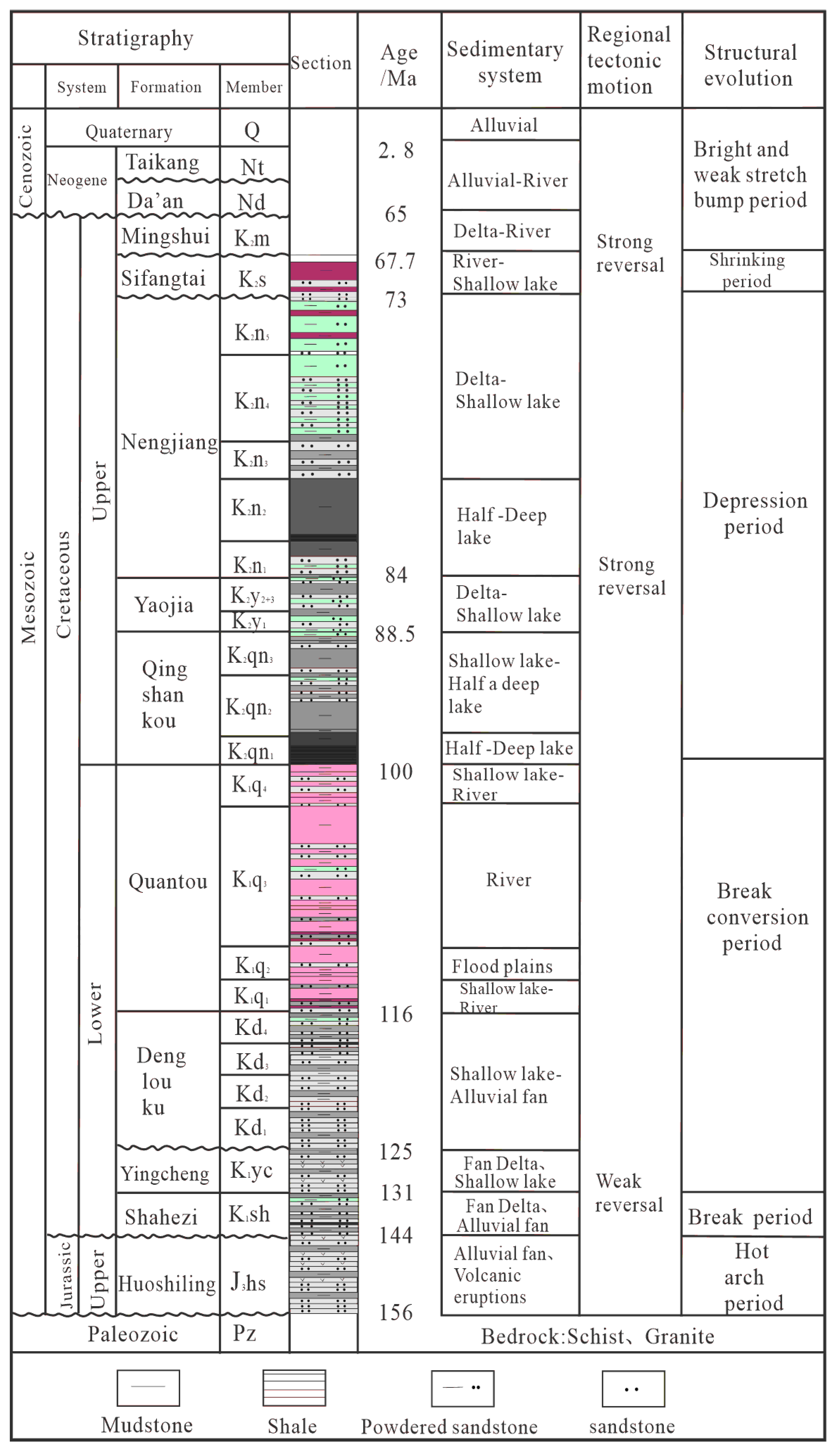
The Xujiaweizi Fault Depression developed on the Carboniferous–Permian metamorphic rock basement and has a “lower fault and an upper depression”. Its deep layer refers to the strata below the second member of the Quantou Formation, mainly composed of the strata of the Lower Cretaceous Fault Depression and the strata of the overlying depression. During the faulting period, the strata developed successively from bottom to top, namely, the Huoshiling Formation (K1hs), the Shahezi Formation (K1sh), and the Yingcheng Formation (K1yc). Among them, the Shahezi Formation is the main source rock layer of the hydrocarbons in the Xujiaweizi Fault Depression. The lithological composition of the Shahezi Formation is complex and diverse, mainly including various rock types such as dark mudstone, coal rock, siltstone, sandstone, conglomerate, and tuff. Among them, the thick-layered dark mudstone, which is distributed over a large area, comprises high-quality source rock layers, while the conglomerate produced in interlayers with the source rocks forms good reservoir layers (Figure 2). This “source–reservoir” interlayer configuration relationship provides favorable conditions for oil and gas accumulation [21].

3. Samples and Methods

3.1. Simulation Experiment of Thermal Hydrocarbon Generation

A thermal simulation experiment was conducted to simulate the generation of hydrogen from kerogen using a closed gold tube as the simulation device (Type ST-120-2, China). The experimental process was as follows: Firstly, kerogen samples were placed in a gold tube. Then, the gold tube was filled with argon gas to expel the air inside the tube, and the gold tube was used under an argon gas environment. Then the gold tube was sealed and placed in an autoclave. The pressure of the golden tube was set, and constant pressure was maintained by using water as the medium through a high-pressure water pump. Afterwards, the reactor was heated to the target temperature at a specific heating rate. Three different heating rates (2 °C/h, 6 °C/h, and 20 °C/h) were used in this experiment. During the temperature rise process, one autoclave was removed every 12 °C or 24 °C, and the autoclave was quickly cooled to room temperature by quenching. Finally, quantitative analyses of the gaseous and liquid products were carried out [22]. For the analysis of the C1–C5 gas components, first, the gold tube was placed in a vacuum glass device (the device was directly connected to a gas chromatograph and a light hydrocarbon collection bottle). After evacuating the device, a movable needle was used to pierce the gold tube to release the gases (such as C1–C5 and CO2). After the gas diffusion reached equilibrium, a portion of the gas directly entered the gas chromatograph for component analysis, while another portion entered the collection bottle and was stored for later use. Subsequently, n-hexane was added to the gold tube, ultrasonic oscillation extraction was conducted, and the extract was placed into a collection bottle to perform gas chromatography analysis of C6–C14. Finally, dichloromethane was used for extraction and filtration. The filtrate was allowed to stand and volatilize to a constant weight, and then the filtrate was weighed to obtain the content of the C14+ components.
In this study, kerogen samples from well MC1 were selected as the research objects. The total organic carbon (TOC) of the mudstone sample was 4.07%, and the microscopic composition was identified as type II2. The vitrinite reflectance (Ro) of the sample was 0.48%, which was in the immature-low maturity stage. The acquisition of kerogen samples was using the kerogen separation method for sedimentary rocks (GB/T 19144-2010) [23]. Then, rock pyrolysis experiments were conducted with the kerogen samples to determine the hydrocarbon generation potential parameters of the samples. The hydrogen index (HI) was 143.69 mg/gTOC (Table 1).
Two series of experiments were conducted to determine the kinetic characteristics of the hydrocarbon generation of the sample and to investigate the influence of pressure on the hydrocarbon generation process. The first series of experiments involved the thermal simulation of hydrocarbon generation of kerogen at different heating rates. The mass of the samples ranged from 10 to 60 mg, and the mass gradually decreased as the target temperature in the experiment increased. Since the main objective of this series of experiments was to determine the kinetic characteristics of primary hydrocarbon generation from kerogen, there were no oil samples available for secondary cracking experiments of crude oil in the study area we considered a natural gas reservoir. The influence of the secondary cracking of crude oil on the products was corrected through approximate calculations. Based on previous research, the production rate of coal-measure source rocks of light oil was 800 mL/g, of marine crude oil was 700 mL/g, and of lacustrine crude oil was 630 mL/g. The samples in this study were characterized as coal-measure source rocks. Therefore, 800 mL/g was selected as the secondary cracking conversion rate of crude oil.
The second series of experiments was carried out under three pressures of 45 MPa, 70 MPa, and 100 MPa at a heating rate of 20 °C/h. Since the purpose of this experiment was to investigate the effect of pressure on hydrocarbon production, the initial reaction masses of the kerogen samples were the same, all being 45 mg, in order to minimize the influence of the initial reaction mass concentration on the degree of primary and secondary cracking reactions.

3.2. Microthermometry of Fluid Inclusions

Seven core samples were collected from seven wells in the Xujiaweizi Fault Depression to analyze the fluid inclusions. Lithographic observations were conducted, and the freezing point and gas–liquid ratio of the inclusions were determined at uniform temperature using an f-functional research-grade microscope (AXIO Imager A1m, ZEISS, Oberkochen, Germany), the polarizing microscope (Axioskopt 40 pol), the heating and cooling stage (THMS600 model) from the UK Linkamd, Tadworth, UK and s laser confocal microscope (TCS SP5) from Leica, Wetzlar, Germany. The capture pressure of the inclusions in the Shahezi Formation of the Xujiaweizi Fault Depression was restored by using the salinity–uniform temperature method and the PVTx simulation method [24,25,26].

3.3. Basin Modeling

The aim of studying the paleo-pressure by applying the basin simulation method was to accurately reconstruct the burial history and thermal evolution history. For the burial history model, we adopted the inversion stripping method [27], and we obtained the data of the corresponding stratum erosion in the geological history period mainly from the results of Li et al. [28] and Zhang et al. [12]. For the thermal evolution history model of source rocks, we adopted the Easy%Ro model [29], and the simulation results were constrained by the measured temperature and Ro values. For the geological model used in the numerical simulation of undercompaction and overpressure, we mainly referred to the hydrodynamic equation considering the compaction effect of vertical load established by Wang et al. [30]. This equation can better reflect the formation and evolution process of undercompaction pressure increases. As the hydrocarbon generation pressurization evaluation model, we adopted the research results of Guo et al. [31]. In addition, for the ancient water depth values, we referred to the research results of Li [32] and Shi et al. [33]; for heat flow, we referred to the research results of Meng [34]; and the current heat flow in the study area was set to 86 mW/m2. In this paper, based on the vitrinite reflectance (Ro), the erosion thickness, and the thermal history, the pressure history of well XS1 was reconstructed by using the basin simulation method (Table 2).

4. Current Pressure System and Causes of Abnormal Pressure

4.1. The Present Pressure System

Regarding the formation pressure classification scheme of the Songliao Basin, Liu et al. [35] believed that due to the characteristics of the Songliao Basin, such as multiple tectonic movement periods, intense tectonic activities, strong diagenesis, wide distribution of volcanic rocks, and complex lithologies, the stratigraphic division schemes summarized by some scholars are not suitable for the division of the deep layers of the Songliao Basin. Therefore, a formation pressure division scheme for the Songliao Basin was developed (Table 3).
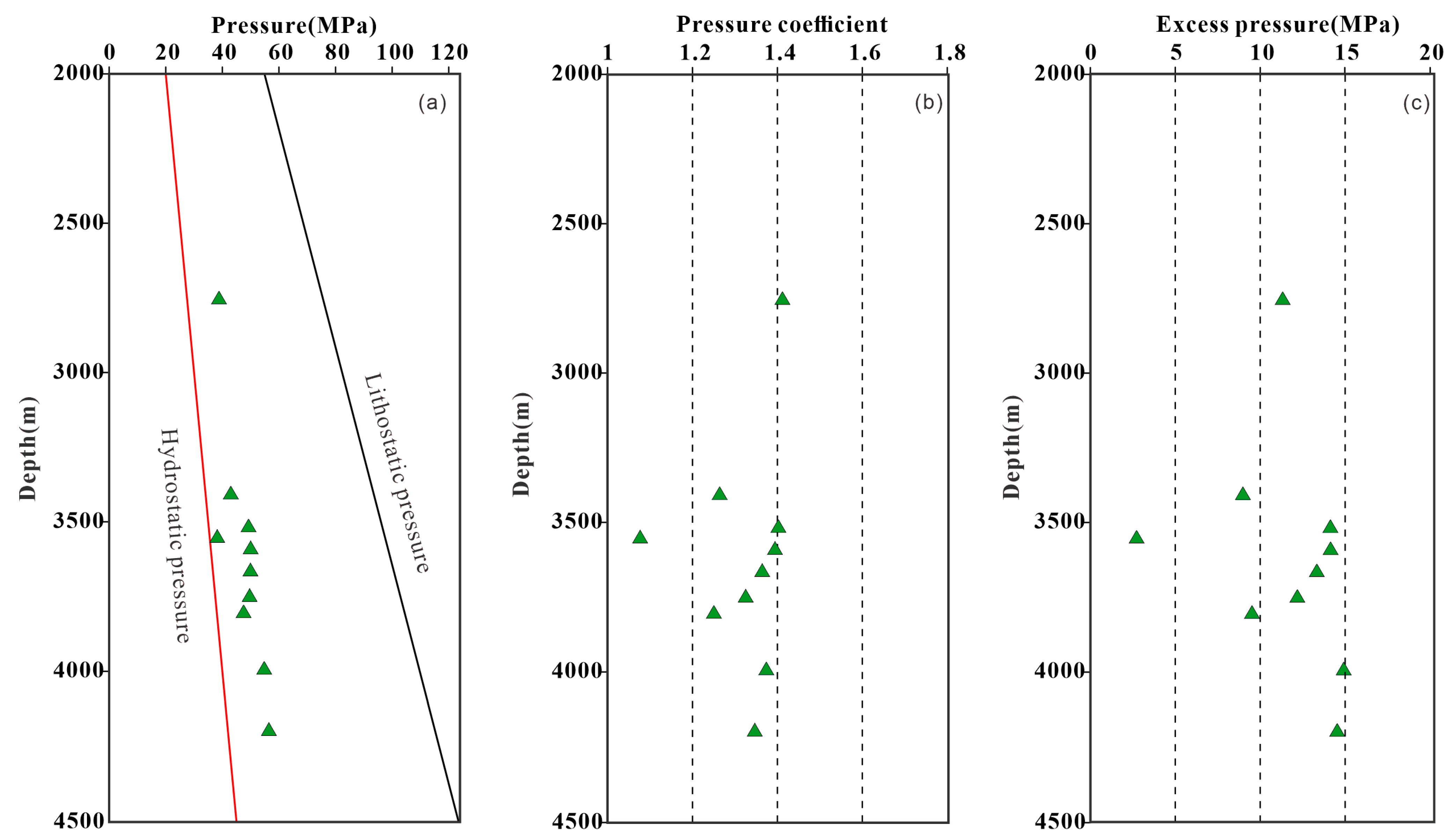
In this study, the measured pressure data from the Shahezi Formation in the Xujiaweizi Fault Depression were statistically analyzed, and the relationship diagrams of the formation pressure and pressure coefficient of the Shahezi Formation with depth were established (Figure 3).The results showed that the strata of the Shahezi Formation in the Xujiaweizi Fault Depression contain two pressure systems, namely, high pressure and ultra-high pressure systems. The overpressure phenomenon begins at the burial depth of 2700 m. The formation pressure coefficient of the Shahezi Formation can reach up to 1.42, indicating that the strata of the Shahezi Formation in the Xujiaweizi Fault subsidence have significant overpressure characteristics.

4.2. Causes of Abnormal Pressure

The causes of overpressure mainly include undercompaction, fluid expansion, diagenesis, tectonic compression, and pressure transmission. Among them, hydrocarbon generation pressurization and undercompaction are the main mechanisms causing overpressure phenomena in deep oil and gas basins [36,37,38,39]. At present, the intuitive methods for identifying the causes of overpressure mainly include the comprehensive analysis of logging curves and the intersection graphing of acoustic velocity and density.

4.2.1. Comprehensive Analysis of Logging Curves

The acoustic curve and the resistivity curve mainly characterize the conduction characteristics of rocks, while the neutron curve and the density curve mainly reflect the volume properties of rocks. Based on these characteristics, in the process of overpressure identification, the combined analysis of the acoustic curve, resistivity curve, and density curve is usually adopted [40].
When using logging curves to determine the formation mechanism of overpressure, the logging curve values corresponding to the depth of the mudstone section should be selected. Under normal compaction, there is the following exponential relationship between the acoustics of mudstone and the burial depth:
A C ( Z ) = A C 0 × e C Z
where AC is the acoustic value of the burial depth Z, μs/m; AC0 is the initial acoustic value of mudstone, μs/m; C is the slope of the normal compaction curve; Z is the burial depth of the stratum, m.
P B = Q B σ B
P C = Q C σ C
where PB and PC are the formation pressures at points B and C, respectively; QB and QC are the overlying rock layer pressures at points B and C, respectively. σB and σc are the skeletal stresses at points B and C, respectively.
Since σB and σc are equal, and point B represents normal compaction (that is, point B is the hydrostatic pressure), Formula (3) can be written as:
P C = ρ w g Z B + ρ s g ( Z C Z B )
where ρw and ρs are the density of the formation water and rock layer, respectively, g/cm3. ZB and Zc are the burial depth at points B and C, respectively, km. g is the acceleration due to gravity, 9.8 m/s2.
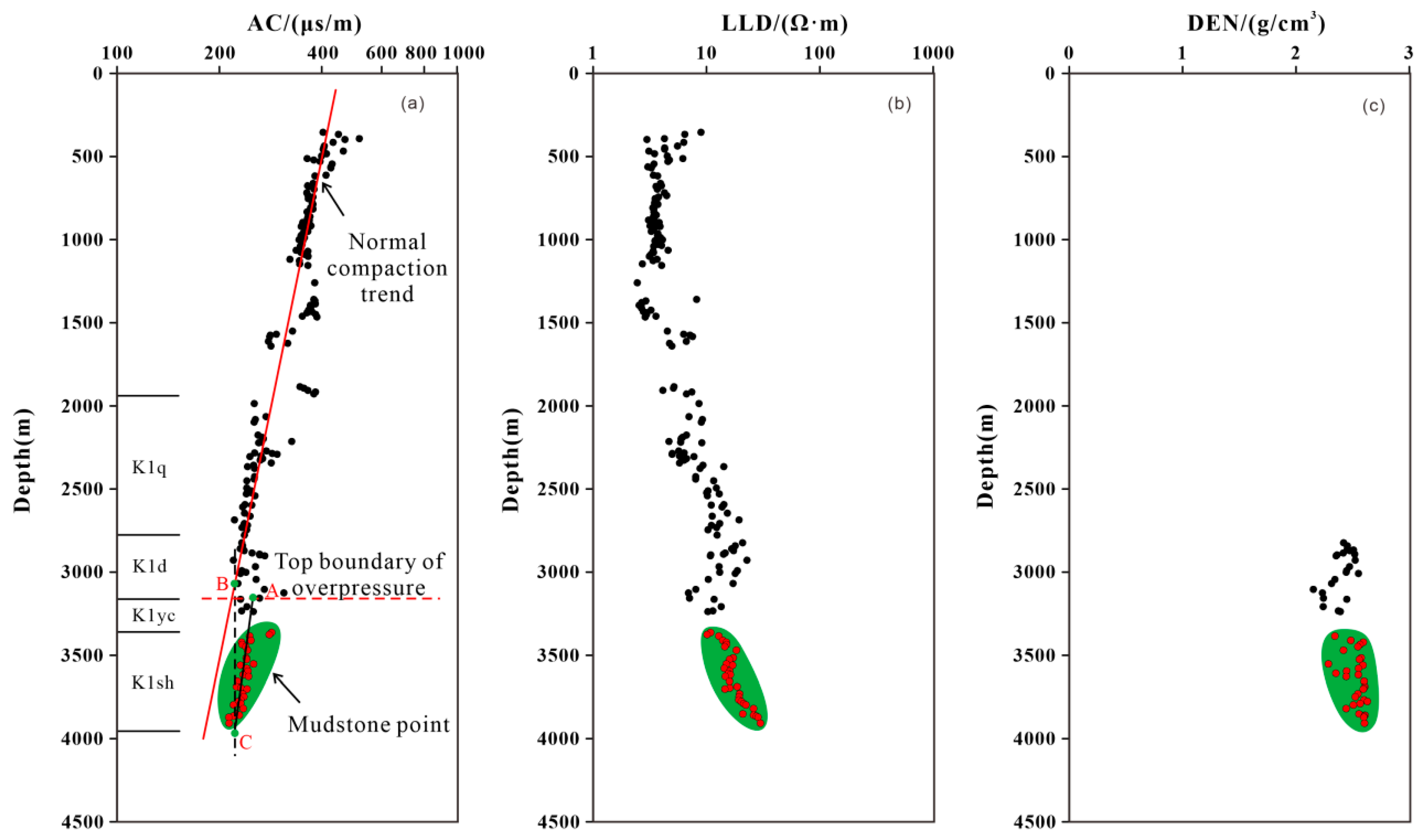
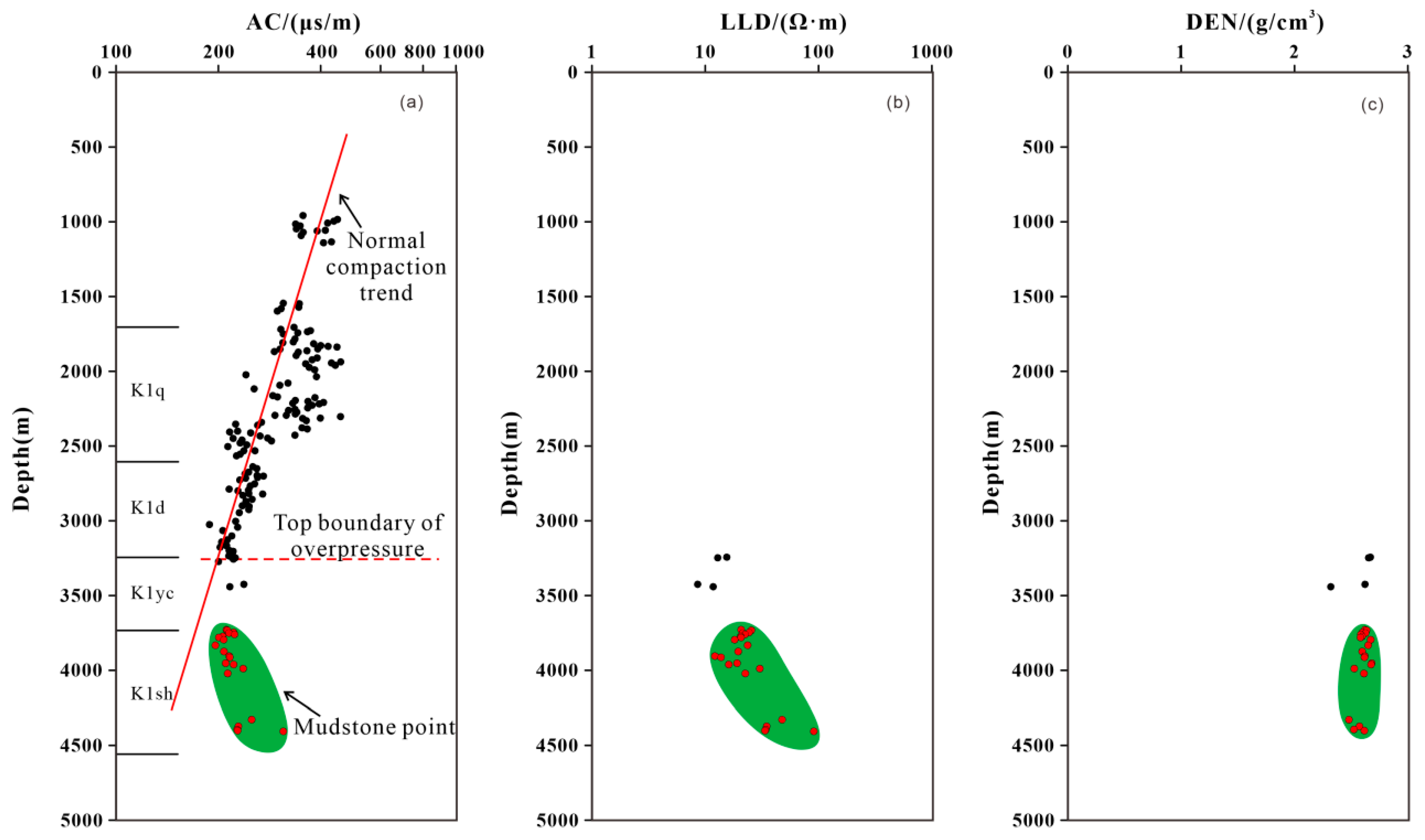
In this study, the DS14 and XS1 wells were selected for overpressure identification (Figure 4 and Figure 5). The acoustic curve of the DS14 well deviates significantly from the normal compaction trend at 3200 m, manifesting as a significant increase in the acoustic value, indicating that 3200 m is the overpressure top of this well. In the layer segments below 3200 m, both the acoustic and the resistivity value show an increasing trend, while the density value remains basically unchanged (Figure 4). This feature indicates that the porosity of the rock in this layer section has not changed significantly. It is speculated that the cause of overpressure may be related to the pressurization effect caused by hydrocarbon generation. Based on the analysis of the characteristics of the comprehensive logging curves, it can be preliminarily concluded that the main cause mechanism of overpressure in the study area is hydrocarbon generation.

4.2.2. Intersection Graph Method of Acoustic Velocity and Density

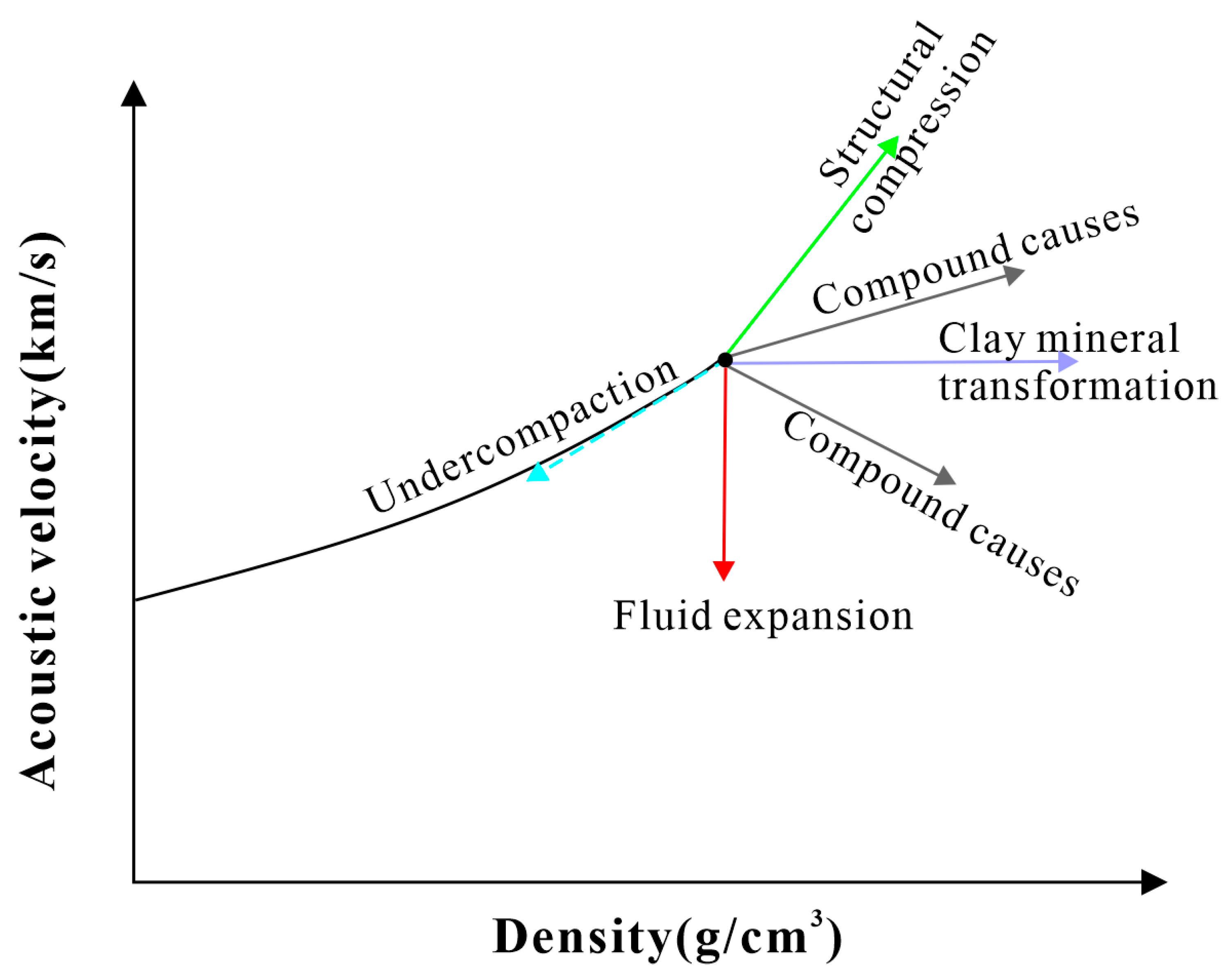
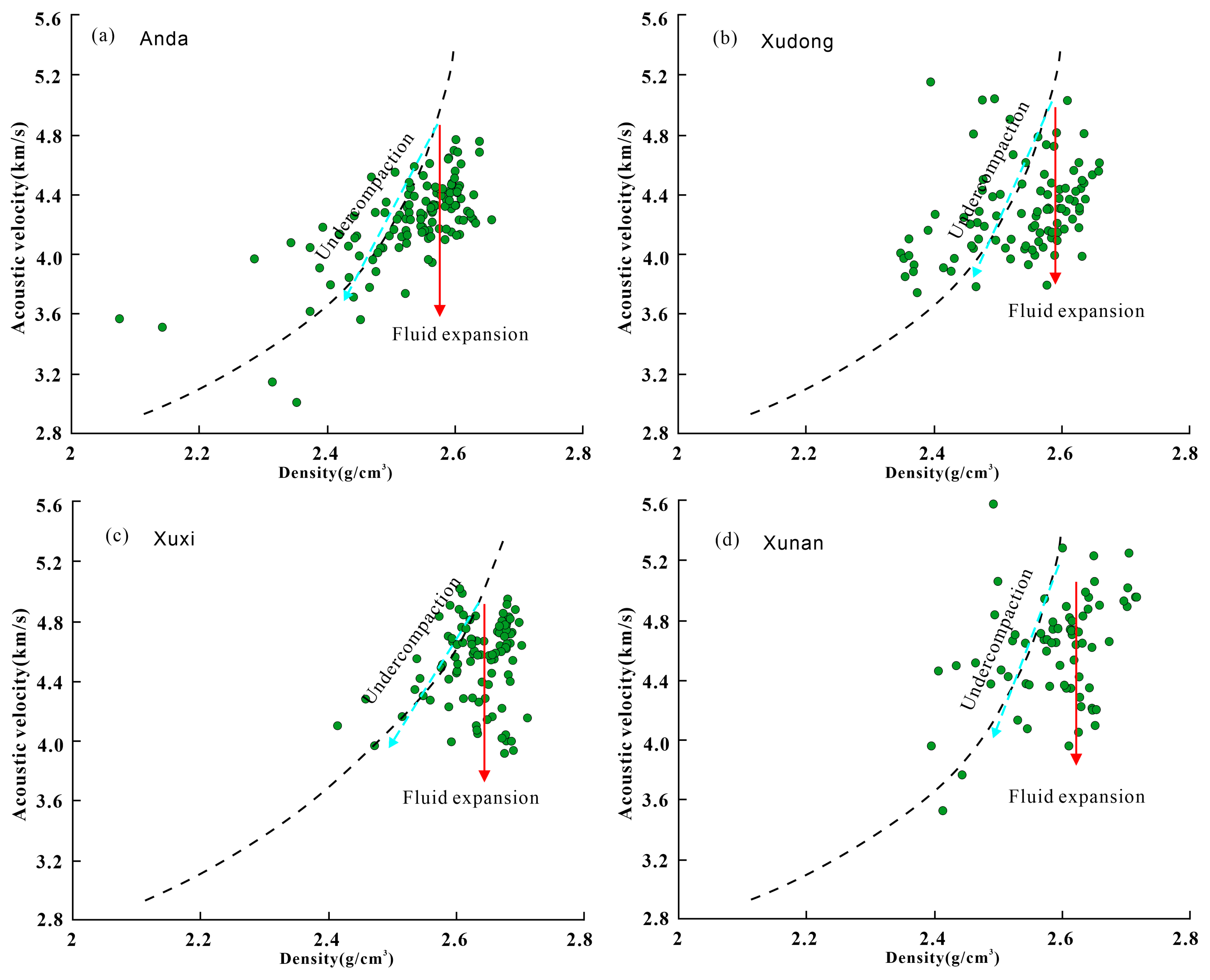
The acoustic-density intersection method is an important approach widely used in the early 21st century for identifying the causes of overpressure. The data points of overpressure caused undercompaction and the normal pressure of mudstone usually fall on the loading curve, while the data points of other causes of overpressure fall outside the curve [41]. If the acoustic velocity significantly decreases and the density remains unchanged in the overpressure section, the cause of the overpressure may be the expansion of the fluid. If the acoustic velocity remains almost unchanged in the overpressure section but the density increases significantly, the overpressure may be caused by the transformation of clay minerals. If the characteristics of both increasing acoustic velocity and density occur simultaneously in the overpressure section, it may be overpressure caused by structural compression [40] (Figure 6).
Based on the logging curve data of the Shahezi formation in the Xujiaweizi Fault Depression, this study completed the identification of the acoustic-density overpressure in the four regions (Anda, Xudong, Xuxi, and Xunan) of the Xujiaweizi Fault Depression(Figure 7). The analysis of the acoustic velocity-density intersection maps of the four regions shows that the main cause of overpressure in the Shahezi Formation of the Xujiaweizi fault depression is fluid expansion, indicating that the overpressure in the Shahezi Formation is mainly due to hydrocarbon generation, followed by undercompaction.

4.3. Current Formation Pressure Prediction of the Shahezi Formation

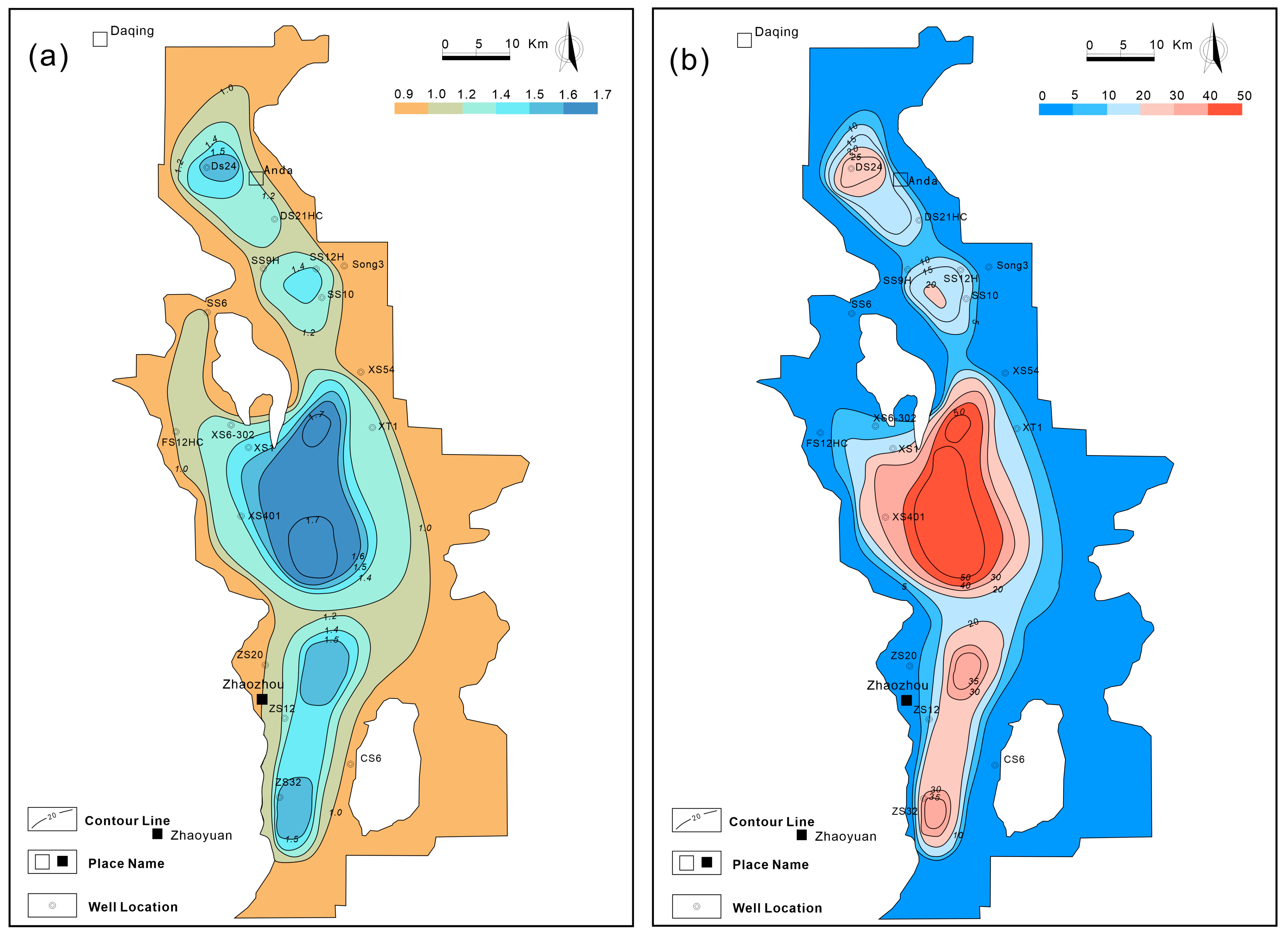
Based on the understanding of the causes of overpressure in the Shahezi Formation, this study comprehensively analyzed the measured pressure data, logging curve data, and the distribution characteristics of source rocks, and drew the pressure coefficient plan and residual pressure plan of the Shahezi Formation (Figure 8). The research results show that the pressure coefficient of the Shahezi Formation at the center of the Xujiaweizi Fault Depression can reach 1.6–1.8, and the excess pressure can reach up to 50 MPa. It can be clearly seen from the figure that the edge slope zone is mainly in the hydrostatic pressure system, and overpressure phenomena rarely occur. However, in the depression zone, there are significant overpressure characteristics, and the maximum pressure area of the overpressure zone basically coincides with the center of the depression. This distribution pattern confirm that there is a close relationship between the overpressure development of the Shahezi Formation and the distribution of source rocks as well as hydrocarbon generation.

5. Paleo-Pressure Evolution of the Shahezi Formation in the Xujiaweizi Fault Depression

5.1. Pore Pressure of Typical Samples

For pore pressure reconstruction by thermodynamic simulation of inclusions, seven core samples were collected from seven wells in Xujiaweizi Fault Depression. Through observations of and tests with the inclusions, the inclusion occurrence in minerals, homogenization temperatures, freezing temperatures, gas–liquid ratios, and components of inclusions were obtained.
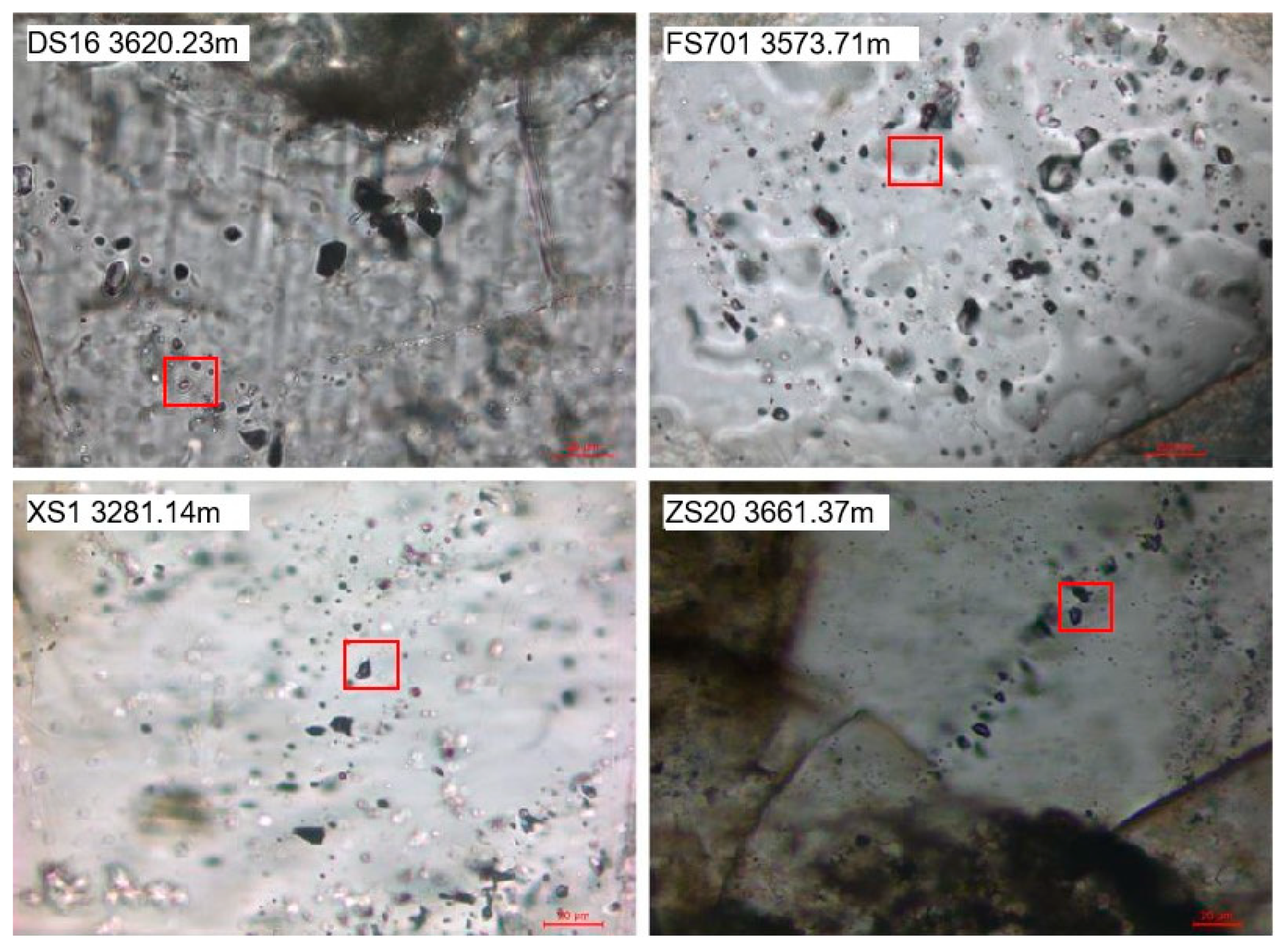
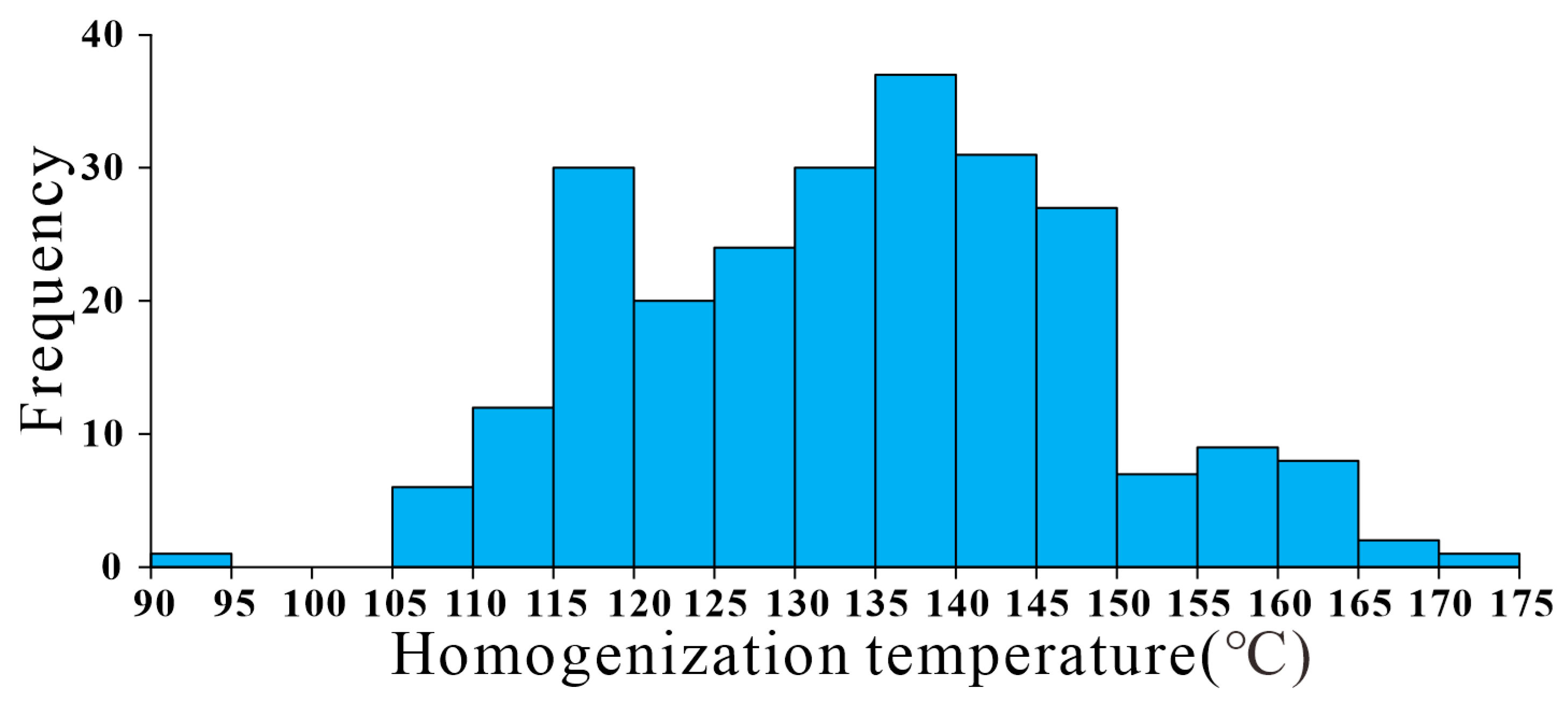
The fluid inclusions of the Lower Cretaceous Shahezi Formation in the study area mainly exhibit clustered and zonal distribution. These inclusions are mainly hosted in the microfractures of quartz grains and between quartz particles, with a small amount distributed in calcite cement. According to the morphological and compositional characteristics, they can be classified into three types: liquid hydrocarbon inclusions, gaseous hydrocarbon inclusions, and gas–liquid hydrocarbon inclusions. Among them, the pure-phase liquid hydrocarbon inclusions and gaseous hydrocarbon inclusions are mostly gray to dark gray in color, with oval and rhombic shapes as the main forms. They are usually distributed in groups or bands in the microfractures of quartz grains, and fluorescence is occasionally observed (Figure 9). The uniform temperature of the fluid inclusions in the Shahezi Formation is distributed in the range of 90–180 °C, concentrated in the range of 110–170 °C. Generally, the temperature shows a bimodal distribution, with the main peaks being 120–130 °C and 140–155 °C, indicating that there were two periods of recharge in the Shahezi Formation in the Xujiaweizi Fault Depression (Figure 10).
Based on the determination of the homogeneous temperature of the inclusions in the Shahezi Formation of the Xujiaweizi fault depression, the basic principle of the homogeneous temperature method for fluid inclusions was applied to calculate the paleo-pressure of the Xujiaweizi Fault Depression. Combined with the thermal history and the burial history, the capture time and capture depth of the fluid inclusions were determined. Calculations show that the capture temperature of the fluid inclusions is concentrated between 150 and 161 °C, and the capture pressure is 34.67–36.61 MPa. Since the salinity of fluid inclusions exerts a certain influence on the calculated trapping pressure, only salinity testing was conducted on a subset of the samples in this study. Based on previous research experience, the homogenization temperature and salinity of fluid inclusions charged during the same period exhibit a correlation. Therefore, for samples with similar temperatures, the same measured salinity was used to approximate the trapping pressure in the calculation. When the capture temperature was plotted on the burial history, the capture time of the inclusions was obtained was 87–95 Ma, which is the early Late Cretaceous, and the pressure coefficient was between 1.16 and 1.22–1.37 (Table 4).

5.2. Pressure Evolution of Typical Wells

Based on available data and laboratory test results, well XS1 was selected for pressure evolution reconstruction. Basin simulation was conducted using BasinMod 2012 software, with the modeling principles and selected parameters described in previous sections. Key input parameters for pressure simulation in the study area, including formation age, lithologic assemblage, erosion value, heat flow history, and thermal conductivity, were derived from field data and published studies [28,29,30,31,32,33,34].
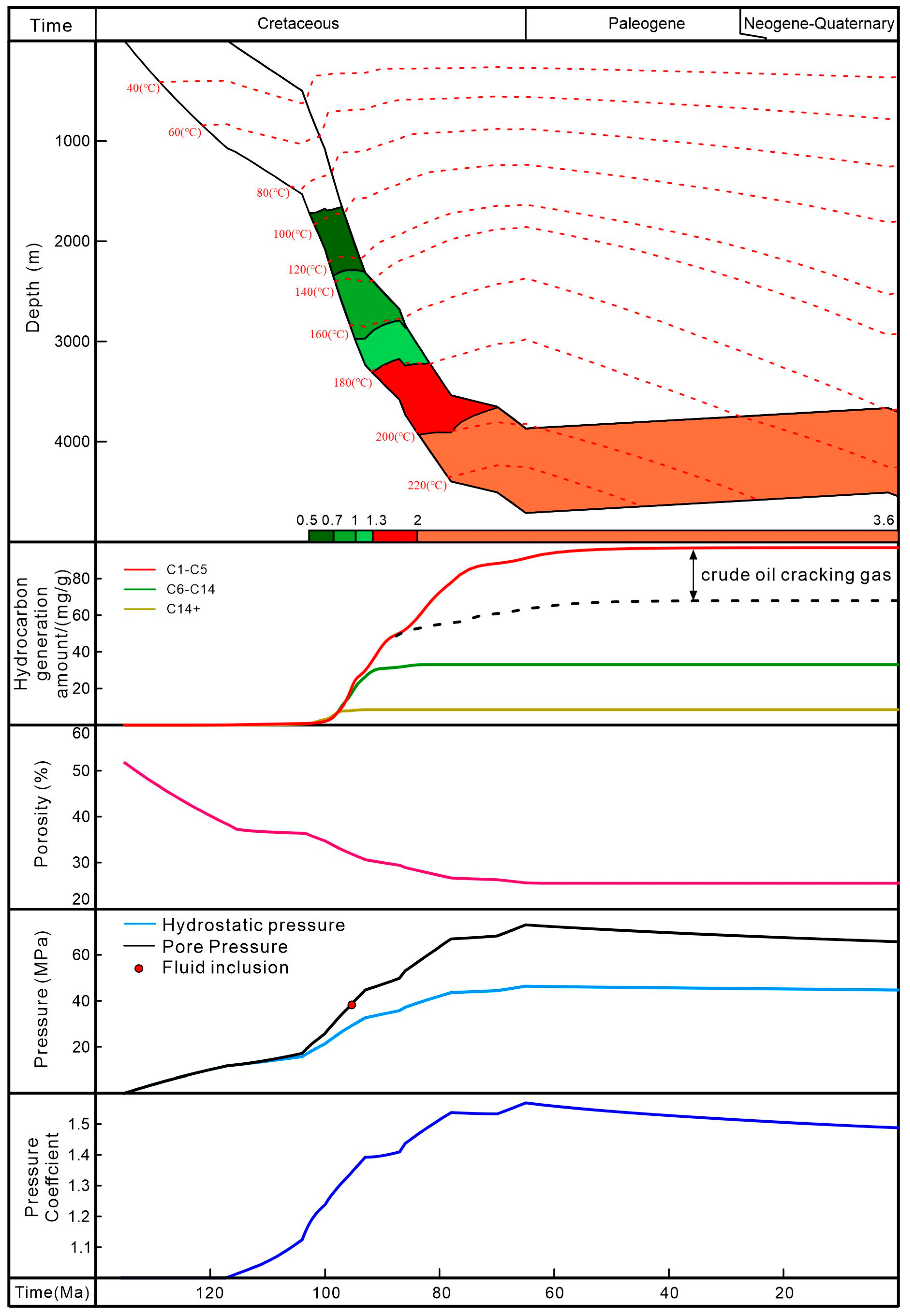
Simulation results indicate that in the Early Cretaceous, the source rocks of the Shahezi Formation in well XS1 remained in the initial hydrocarbon generation stage due to shallow burial and low geothermal gradients. At this stage, formation pressure slightly exceeded hydrostatic pressure, with a pressure coefficient of approximately 1.05. As the rapid deposition of the Shahezi Formation continued, the thermal and pressure regimes evolved significantly during the early Late Cretaceous, driving source rock maturation and continuous hydrocarbon generation. This led to a notable increase in formation pressure, reaching peak overpressure by the end of the Cretaceous. The subsequent minor uplift and erosion caused a modest pressure reduction. At present, the pressure coefficient in well XS1 remains at approximately 1.45 (Figure 11).
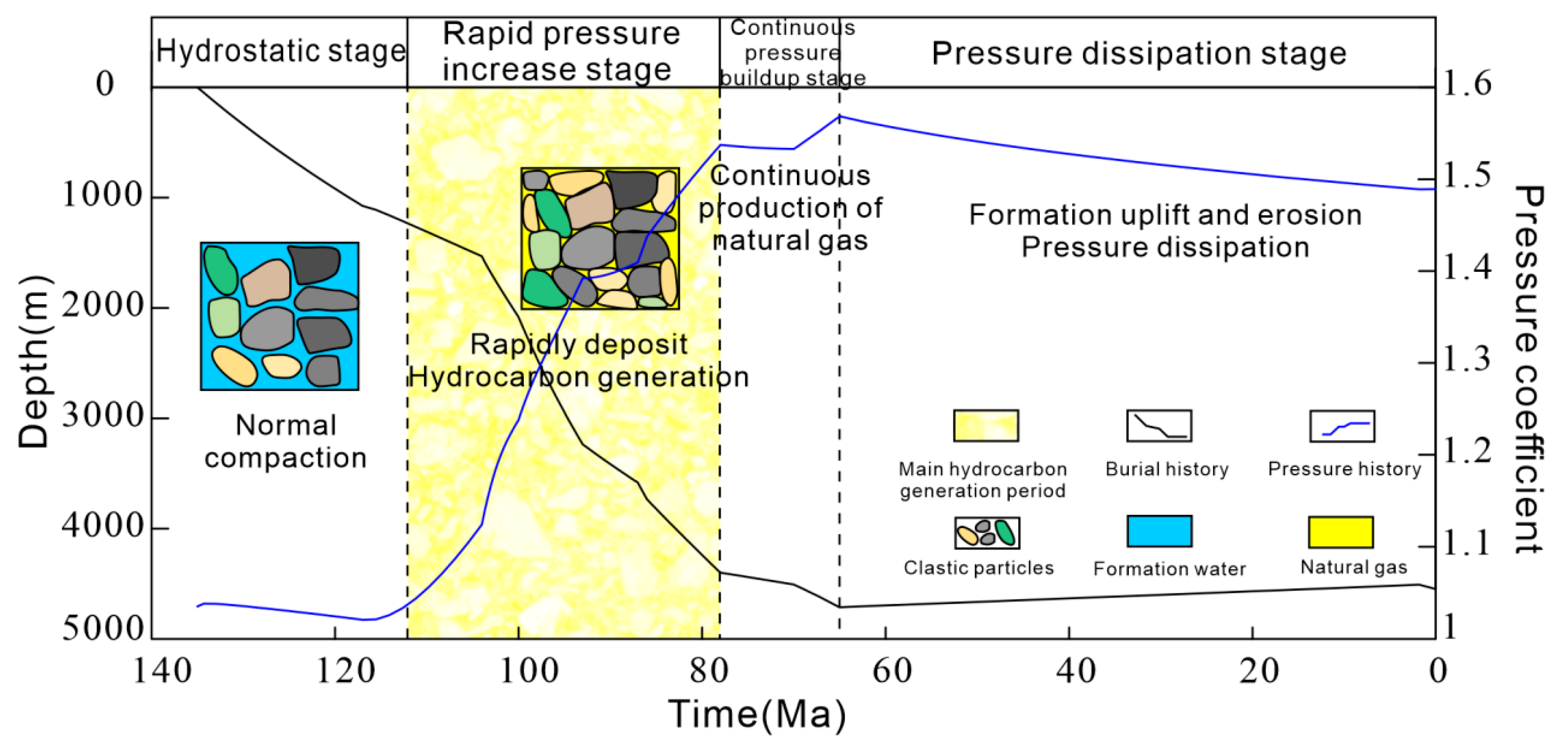
Based on the simulation results, a preliminary pressure evolution model for the Shahezi Formation was established (Figure 12). The pressure evolution of the Shahezi Formation can be divided into four distinct stages: a hydrostatic stage, rapid pressure increase stage, continuous pressure buildup stage, and pressure dissipation stage.
(1)
Hydrostatic stage (135–104 Ma): In this stage, sedimentation rates were relatively low, burial depths remained shallow, and the sediments were loosely compacted with good pore connectivity. No abnormal pressure system was developed.
(2)
Rapid pressure increase stage (104–78 Ma): This stage involves the onset of rapid deposition in the Shahezi Formation. With increasing burial depth, porosity declined sharply, and the formation became progressively compacted, creating the necessary sealing conditions for overpressure development. Concurrently, the rapid maturation of organic matter and intense hydrocarbon generation led to the formation of a pronounced overpressure system.
(3)
Continuous pressure buildup stage (78–65 Ma): By the end of the Cretaceous, the Xujiaweizi Depression underwent tectonic inversion, accompanied by uplift and erosion. Although sedimentation rates decreased and burial depth increase slowed, overpressure continued to accumulate, reaching a peak of around 65 Ma.
(4)
Pressure dissipation stage (65–0 Ma): Entering the Cenozoic, the formation experienced significant uplift and erosion, leading to the adjustment of and a gradual decline in the pressure in the system.

6. The Influence of Pressure on Hydrocarbon Generation of Organic Matter

Previous research has demonstrated that the Shahezi Formation in the Xujiaweizi Fault Depression exhibits significant overpressure, with burial depths generally exceeding 4500 m and formation pressures greater than 45 MPa. To investigate the influence of overpressure on the hydrocarbon generation from organic matter, this study selected MC1 mudstone samples and conducted hydrocarbon generation kinetics experiments using a gold tube pyrolysis apparatus under controlled pressures of 45 MPa, 70 MPa, and 100 MPa.
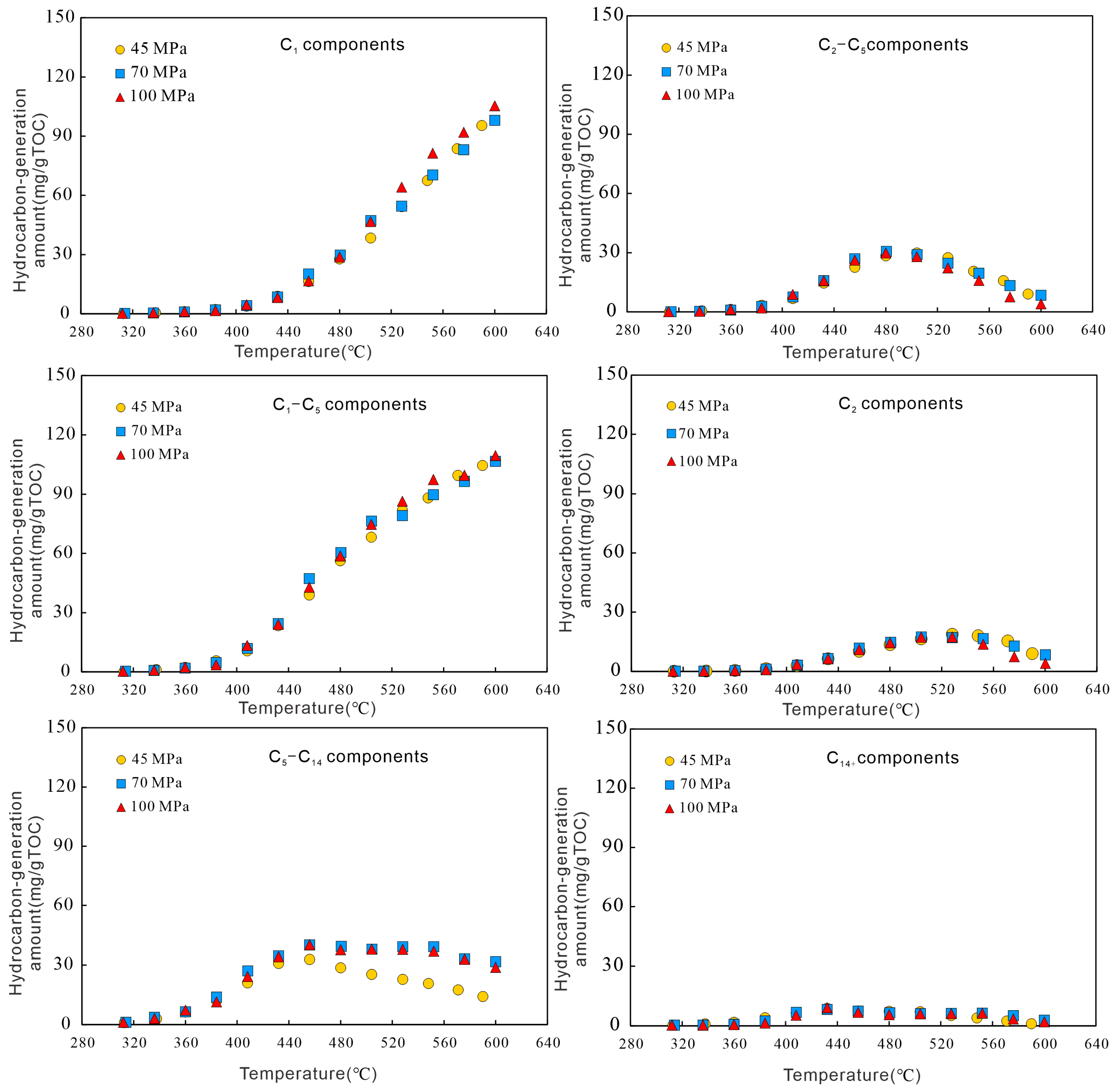
As shown in Figure 13, the yield of C1 components suggests that below 480 °C (EqVRO ≈ 1.81%), increasing pressure inhibits hydrocarbon gas generation, and the inhibitory effect intensifies with increasing pressure. However, above 480 °C, increasing pressure slightly enhances C1 gas yields, while the yields of C2–C5 components show a slight decline. Compared with previous studies, Tao et al. [14] observed that hydrocarbon gas yields increase with pressure, especially in the range of 100–250 MPa. At higher temperatures, the overall impact of pressure on total C1 and C2–C5 yields becomes less pronounced. However, the observed decline in ethane and propane yields with increasing temperature may indicate the pressure-promoted cracking of ethane and propane into methane. This aligns with the findings of Hill et al. [42], who reported enhanced methane yields and declining propylene yields with increasing pressure during oil cracking, suggesting conversion of heavier hydrocarbons into methane. The observed decrease in ethane, ethylene, propane, and propylene yields in this study supports the conclusion that elevated pressure promotes methane generation, partly through secondary cracking of C2–C5 components.
Pressure exerts the most significant influence on C5–C14 components. Below 440 °C, yields of C5–C14 were comparable across all pressure conditions. After 440 °C, yields increased markedly with pressure. Chromatographic comparisons of products generated under different pressures reveal that higher pressures promote the formation of stable aromatic hydrocarbons from C5–C14 components at elevated temperatures. Across all pressure conditions, the maximum yield of C5–C14 components occurred at 440 °C. Beyond this temperature, yields gradually declined, likely due to thermal cracking of generated oil into gaseous hydrocarbons. Notably, under higher pressures (70 and 100 MPa), the decline in C5–C14 yields above 440 °C was significantly less pronounced than under lower pressure (45 MPa), which may result from two factors. One possibility is that high pressure accelerates the cracking of C14+ components into lower-carbon-number hydrocarbons. This is consistent with findings of Hill et al. [42], who demonstrated that increasing pressure (48–100 MPa) leads to a rise in light hydrocarbon fractions (low carbon number) and a reduction in heavy components in liquid hydrocarbons, indicating enhanced cracking of heavier hydrocarbons into lighter ones.
Another possibility is that high pressure suppresses the cracking of C5–C14 components into gaseous hydrocarbons. Experimental results show that the yield of C14+ heavy hydrocarbons remains relatively stable under all three pressure conditions. Meanwhile, the yield trends of C5–C14 components under 70 and 100 MPa closely mirror those of the C14+ fraction, both showing only slight decreases. This suggests that high pressure does not significantly promote the cracking of C14+ into C5–C14 components.
Alternatively, if high pressure inhibits the cracking of C5–C14 into lighter hydrocarbons, the yields of gaseous products (C2–C5) should concurrently decrease. However, no significant reduction in C2–C5 yields was observed across the three pressure conditions. Hao et al. [43] proposed that overpressure generated prior to the gas generation window can suppress hydrocarbon cracking, indirectly supporting the view that increased pressure reduces gaseous hydrocarbon generation. Tao et al. [14] provided a theoretical explanation: the expansion of hydrocarbon gases must overcome pressure to perform work, thereby increasing activation energy; simultaneously, higher pressure reduces molecular disorder and entropy change, resulting in a lower pre-exponential factor in reaction kinetics.
As previously noted, stable aromatic compounds were detected in the C5–C14 fraction under high-pressure conditions. Given that the sample contained Type II2 kerogen, which is relatively rich in oxygen-containing functional groups and aromatic structures, elevated temperatures and pressures may have promoted aromatization reactions within the C5–C14 fraction, facilitating its preservation.
In summary, for the sample analyzed in this study, elevated pressure promotes the conversion of heavier hydrocarbon gases (C2–C5) to methane (C1), although the effect is limited. In contrast, high pressure appears to enhance the preservation of liquid hydrocarbons, possibly due to the transformation of unstable saturated hydrocarbons into more stable aromatic compounds. Finally, due to the sample limitations, this study mainly analyzed the hydrocarbon generation evolution of mudstone samples from the Shahezi Formation and the influence of pressure on the hydrocarbon products. The Shahezi strata in the study area also contain carbonaceous mudstone and coal, and their characteristics need to be studied in subsequent research.

7. Conclusions

By reconstructing the evolution of pore-fluid pressure and analyzing its influence on the hydrocarbon generation of organic matter in the lower Cretaceous Shahezi Formation of the Xujiaweizi Fault Depression, the following conclusions can be drawn:
(1)
The Shahezi Formation in the Xujiaweizi Fault Depression of the Songliao Basin currently belongs to a high-pressure–ultra-high-pressure system. The overpressure of the source rocks is mainly due to hydrocarbon generation and undercompaction.
(2)
The evolution of the pore pressure could be divided into four stages. Prior to the end of the Early Cretaceous (~104 Ma), the Xujiaweizi Fault Depression was in a normal pressure state. In the early Late Cretaceous (104–78 Ma), the source rocks experienced overpressure due to undercompaction and hydrocarbon generation, which was a stage of rapid pressure increase. The Late Cretaceous period (78–65 Ma) was a stage of continuous increase in pressure. During this stage, a large amount of gas was produced from source rocks, and the pressure reached its maximum value. From the Early Paleogene to the present (65–0 Ma), it was a stage of slow pressure decrease. The strata underwent slow uplift, and the pressure gradually decreased.
(3)
High pressure can promote the transformation of heavy hydrocarbon gases in the C1–C5 components to methane, but the promoting effect is limited. In contrast, high pressure has a certain effect on the preservation of liquid hydrocarbon components, and this preservation effect may be caused by the transformation of unstable saturated hydrocarbons to aromatics.

Author Contributions

Conceptualization, J.F. and X.Y.; methodology, L.S.; writing—original draft preparation, H.Y., Y.G. and M.Y.; writing—review and editing, Y.L. and P.Z. All authors have read and agreed to the published version of the manuscript.

Funding

This research was supported by the Key Research and Development Project of Hainan Province (No. ZDYF2023GXJS021), Hainan Provincal Key Research and Development Program (No. SQ2022SHFZ0103), and the Joint Guidance Project of the Natural Science Foundation of Heilongjiang Province (No. LH2022D012).

Data Availability Statement

The original contributions presented in this study are included in the article. Further inquiries can be directed to the corresponding author.

Conflicts of Interest

Xin Yang was employed by the Research Institute of Exploration and Development, SINOPEC, and Lidong Sun was employed by the Exploration and Development Research Institute of Daqing Oilfield, PetroChina. The remaining authors declare that this research was conducted in the absence of any commercial or financial relationships that could be construed as a potential conflict of interest.

References

  1. Zhang, H.; Wang, X.; Jia, C.; Li, J.; Meng, Q.; Jiang, L.; Bai, Y.; Zheng, X. Whole petroleum system and hydrocarbon accumulation model in shallow and medium strata in northern Songliao Basin, NE China. Pet. Explor. Dev. 2023, 50, 784–797. (In Chinese) [Google Scholar] [CrossRef]
  2. Bi, H.; Li, P.; Jiang, Y.; Fan, J.; Chen, X. Effective source rock selection and oil–source correlation in the western slope of the northern songliao basin, China. Pet. Sci. 2021, 18, 398–415. [Google Scholar] [CrossRef]
  3. Meng, Q.; Bai, X.; Zhang, W.; Fu, L.; Xue, T.; Bao, L. Accumulation and exploration of petroleum reservoirs in West slope of northern Songliao Basin, China. Pet. Explor. Dev. 2020, 47, 236–246. (In Chinese) [Google Scholar] [CrossRef]
  4. He, W.; Meng, Q.; Lin, T.; Wang, R.; Liu, X.; Ma, S.; Li, X.; Yang, F.; Sun, G. Evolution features of in-situ permeability of low-maturity shale with the increasing temperature, cretaceous nenjiang formation, Northern Songliao Basin, NE China. Pet. Explor. Dev. 2022, 49, 453–464. (In Chinese) [Google Scholar] [CrossRef]
  5. Wang, S.; Shan, X.; Yang, Q.; Wang, P.; He, W.; Xiao, M.; Liu, C.; Ma, X. Tight gas accumulation in middle to deep successions of fault depression slopes: Northern slope of the Lishu Depression, Songliao Basin. Mar. Pet. Geol. 2025, 174, 107302. [Google Scholar] [CrossRef]
  6. Han, S.; Xiang, C.; Du, X.; Xie, L.; Huang, J.; Wang, C. Geochemistry and origins of hydrogen-containing natural gases in deep Songliao Basin, China: Insights from continental scientific drilling. Pet. Sci. 2024, 21, 741–751. [Google Scholar] [CrossRef]
  7. Zhou, N.; Lu, J.; Lu, S.; Zhang, P.; Wang, M.; Lin, Z.; Jiang, X.; Liu, Y.; Xiao, G. Depositional and diagenetic controls over reservoir quality of tight sandstone and conglomerate in the lower Cretaceous Shahezi formation, Xujiaweizi fault depression, Songliao basin, China. Mar. Pet. Geol. 2023, 155, 106374. [Google Scholar] [CrossRef]
  8. Sun, L.; Yang, L.; Xu, J.; Liu, J.; Li, X.; Li, G. Gas accumulation conditions and exploration orientation of coal measure gas in Shahezi Formation in Xujiaweizi Fault Depression. China Pet. Explor. 2024, 29, 71–81. (In Chinese) [Google Scholar] [CrossRef]
  9. Lu, J.; Liu, C. Accumulation conditions and resource potential of tight glutenite gas in fault depression basins: A case study on Lower Cretaceous Shahezi Formation in Xujiaweizi fault depression, Songliao Basin. China Pet. Explor. 2016, 21, 53–60. (In Chinese) [Google Scholar]
  10. Yin, C.; Yang, L.; Yang, B. Tight gas explo ration and the next research direction for Shahezi Formation in North Songliao Basin. Pet. Geol. Oilfield Dev. Daqing 2019, 38, 135–142. [Google Scholar]
  11. Chen, H.; Zhang, F.; Jiang, Q.; Liu, H.; Sun, L.; Liu, G. Overpressure-generating mechanism and its evolution characteristics of Cretaceous Shahezi Formation in Xujiaweizi Fault Depression, Songliao Basin. Lithol. Reserv. 2025, 37, 102–114. [Google Scholar] [CrossRef]
  12. Zhang, D.; Chu, L.; Li, X.; Wang, X. Comprehensive sweet point evaluation and exploration results of tight glutenite reservoir in fault basin: A case study of the Lower Cretaceous Shahezi Formation in Xujiaweizi fault depression in the north ern Songliao Basin. China Pet. Explor. 2022, 27, 73–82. [Google Scholar]
  13. Hunt, J.M. Generation and migration of petroleum from abnormally pressured fluid compartments. AAPG Bull. 1990, 74, 1–12. [Google Scholar] [CrossRef]
  14. Tao, W.; Zou, Y.; Carr, A. Study of the influence of pressure on enhanced gaseous hydrocarbon yield under high pressure–high temperature coal pyrolysis. Fuel 2010, 89, 3590–3597. [Google Scholar] [CrossRef]
  15. Michels, R.; Landais, P.; Philp, R.; PTorkelson, B.E. Effects of Pressure on Organic Matter Maturation during Confined Pyrolysis of Woodford Kerogen. Energy Fuels 1994, 8, 741–754. [Google Scholar] [CrossRef]
  16. Price, L.; Wenger, L. The influence of pressure on petroleum generation and maturation as suggested by aqueous pyrolysis. Org. Geochem. 1992, 19, 141–159. [Google Scholar] [CrossRef]
  17. Lu, S.; Gu, M.; Zhang, F.; Zhang, L.; Xiao, D. Hydrocar bon accumulation stages and type division of Shahezi Fm tight glutenite gas reservoirs in the Xujiaweizi Fault Depression, Songliao Basin. Nat. Gas Ind. 2017, 37, 12–21. [Google Scholar]
  18. Liu, C. Research on the Source-Reservoir-Cap Conditions and Tight Gas Accumulation Rule in Shahezi Group of Xujiaweizi Fault Depression; Northeast Petroleum University: Daqing, China, 2015. [Google Scholar]
  19. Li, J.; Feng, Z.; Liu, W.; Song, Y.; Shu, P. Research on reservoir forming time of deep natural gas in Xujiaweizi faulted depression in Songliao Basin. Acta Pet. Sin. 2006, 27 (Suppl. 1), 42–46. [Google Scholar] [CrossRef]
  20. Zhao, C.; Xu, S.; Cheng, H.; Dai, C.; Li, D. Sedimentary facies types and evolution models of the Shahezi For mation in the Xujiaweizi Fault Depression, Songliao Basin. Acta Sedimentol. Sin. 2024, 42, 1460–1478. [Google Scholar]
  21. Cai, Q.; Hu, M.; Chen, X.; Hu, Z. Sedimentary characteristics and development model of fan delta in small faulted basin: A case of Shahezi Formation in northern Xujiaweizi Fault Depression, NE China. Lithol. Reserv. 2018, 30, 86–96. [Google Scholar]
  22. He, C.; Zheng, L.; Wang, Q.; Ma, Z.; Ma, J. Experimental development and application of source rock thermal simulation for hydrocarbon generation and expulsion. Pet. Geol. Expe. 2021, 43, 862–870. [Google Scholar] [CrossRef]
  23. GB/T 19144-2010; Isolation Method for Kerogen from Sedimentary Rock. China National Standardization Administration Committee: Beijing, China, 2010.
  24. Aplin, A.C.; Larter, S.R.; Bigge, M.A.; Macleod, G.; Swarbrick, R.E.; Grunberger, D. PVTX history of the North Sea’s Judy oilfield. J. Geochem. Explor. 2000, 69–70, 641–644. [Google Scholar] [CrossRef]
  25. Aplin, A.C.; Macleod, G.; Larter, S.R.; Pedersen, K.S.; Sorensen, H.; Booth, T. Combined use of Confocal Laser Scanning Microscopyand PVT simulation for esti mating the composition and physical properties of petroleum in fluid inclusions. Mar. Pet. Geol. 1999, 16, 97–110. [Google Scholar] [CrossRef]
  26. Mi, J.; Xiao, X.; Liu, D.; Shen, J. Simulation and calculation of paleopressure in natural gas reservoir formation using the PVT characteristics of reservoir fluid inclusions: A Case study of the Upper Paleogenic deep basin gas reservoir in the Ordos Basin. Sci. China 2003, 33, 679–685. [Google Scholar]
  27. Kauerauf, A.I.; Hantschel, T. Fundamentals of Basin and Petroleum Systemsmodeling; Springer: Dordrecht, The Netherlands, 2009; pp. 1–136. [Google Scholar]
  28. Li, R.; Yang, Y.; Zhang, G.; Ruan, X. Systematic Restoration of Eroded Thickness by Unconformity in Cretaceous of Xujiaweizi in the North of Songliao Basin. Earth Sci.-J. China Univ. Geosci. 2012, 37 (Suppl. 2), 47–54. [Google Scholar]
  29. Sweeney, J.J.; Burnham, A.K. Evaluation of a simple model of vitrinite reflectance based on chemical kinetics. AAPG Bull. 1990, 74, 1559–1570. [Google Scholar] [CrossRef]
  30. Wang, Z.; Luo, X.; Chen, H. Rebuilding of Palaeohydrodynamic Field in Sedimentary Basin: Principle and Means. J. Northwest Univ. (Nat. Sci. Ed.) 1997, 27, 67–71. [Google Scholar]
  31. Guo, X.; He, S.; Liu, K.; Dong, T. A quantitative esti mation model for the overpressure caused by natural gas gen eration and its influential factors. Earth Sci.-J. China Univ. Geosci. 2013, 38, 1263–1270. [Google Scholar]
  32. Li, X. Numerical simulations of the burial & thermal his tories for Daqing placanticline in north Songliao Basin. Pet. Geol. Oilfield Dev. 2015, 34, 46–50. [Google Scholar]
  33. Shi, L.; Qi, Y.; Zhang, Y.; Wang, Z.; Wang, B. Numerical simu lation of geohistory of the Qijia area in the Songliao Basin and geological significance. Geol. Explor. 2019, 55, 661–672. [Google Scholar]
  34. Meng, Z. Characteristics of tectono-thermal evolution of Carboniferous-Permian in Songliao Basin. Master’s Thesis, Northwestern University, Xi’an, China, 2022. [Google Scholar]
  35. Liu, W.; Li, S.; Sun, D.; Chai, W.; Zheng, J. Prediction of pore-fluid pressure in deep strata of the Songliao Basin. Earth Sci.-J. China Univ. Geosci. 2000, 25, 137–142. [Google Scholar]
  36. Tingay Mark, R.P.; Hillis Richard, R.; Swarbrick Richard, E.; Morley Chris, K.; Damit Abdul, R. Origin of overpressure and pore-pressure prediction in the Baram province, Brunei. AAPG Bull. 2009, 93, 51–74. [Google Scholar] [CrossRef]
  37. Tingay Mark, R.P.; Morley Chris, K.; Laird Andrew Limpornpipat, O.; Krisadasima, K.; Pabchanda, S.; Macintyre Hamish, R. Evidence for overpressure generation by kerogen-to-gas maturation in the northern Malay Basin. AAPG Bull. 2013, 97, 639–672. [Google Scholar] [CrossRef]
  38. Osborne, M.; Swarbrick, R. Mechanisms for generating overpressure in sedimentary basins: A reevaluation. AAPG Bull. 1997, 81, 1023–1041. [Google Scholar] [CrossRef]
  39. Zhang, F.; Wang, Z.; Zhong, H.; Yang, C.; Wang, J. Recognition Model and Contribution Evaluation of Main Over pressure Formation Mechanisms in Sedimentary Basins. Nat. Gas Geosci. 2013, 24, 1151–1158. [Google Scholar] [CrossRef]
  40. Zhao, J.; Li, J.; Xu, Z. Advances in the origin of overpressure in Sedimentary Basins. ACTA Pet. Sin. 2017, 38, 973–998. [Google Scholar] [CrossRef]
  41. Li, L.; Deng, K.; Zhang, J. Overpressure characteristics and classification of tight gas reservoirs in Upper Triassic Xujiahe Formation in the middle section of the West Sichuan Depression, China. Spec. Oil Gas Reserv. 2010, 17, 19–30. [Google Scholar]
  42. Hill, R.J.; Tang, Y.; Kaplan, I. The Influence of Pressure on the Thermal Cracking of Oil. Energy Fuels 1996, 10, 873–882. [Google Scholar] [CrossRef]
  43. Hao, F.; Sun, Y.; Li, S.; Zhang, Q. Overpressure retardation of organic-matter maturation and petroleum generation; a case study from the Yinggehai and Qiongdongnan basins, South China Sea. AAPG Bull. 1995, 79, 551–562. [Google Scholar] [CrossRef]
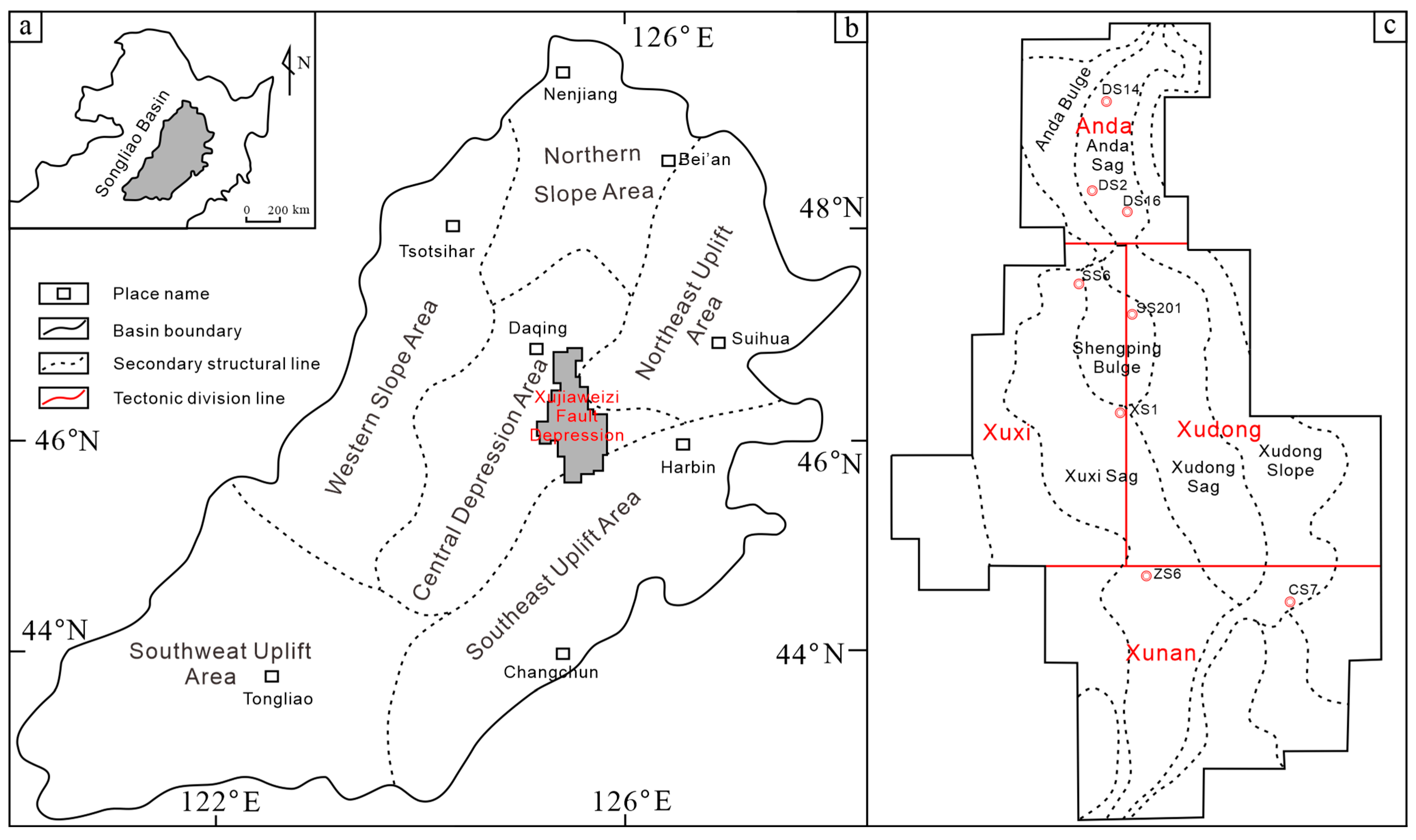
Figure 1. (a) Geographical location of Songliao Basin. (b) Structural unit division of Songliao Basin. (c) Structural unit division of Xujiaweizi Fault Depression.
Energies 18 06400 g001
Figure 2. The stratigraphic column of the Xujiaweizi Fault Depression in Songliao Basin.
Energies 18 06400 g002
Figure 3. Relationship between measured pressure and burial depth of K1sh Formation in Xujiaweizi Fault. (a) Burial depth and the measured pressure. (b) Burial depth and the pressure coefficient. (c) Burial depth and the excess pressure.
Energies 18 06400 g003
Figure 4. Mudstone acoustic (a), resistivity (b), and density (c) curves of Well DS 14. Note: The red dots in the green area represent the samples from the Shahezi Formation; The line CA represents the over-saturated mudstone section, and point B represents the equivalent depth at point C under the normal compaction trend.
Energies 18 06400 g004
Figure 5. Mudstone acoustic (a), resistivity (b), and density (c) curves of XS1 well. Note: The red dots in the green area represent the samples from the Shahezi Formation.
Energies 18 06400 g005
Figure 6. Overpressure cause identification board of acoustic velocity-density (Modified after [40]).
Energies 18 06400 g006
Figure 7. Intersection plot of acoustic velocity-density of K1sh Formation in Xujiaweizi Fault Depression.
Energies 18 06400 g007
Figure 8. Pressure coefficient (a) and residual pressure (b) contour map of K1sh Formation.
Energies 18 06400 g008
Figure 9. Fluid inclusion diagram of K1sh Formation in Xujiaweizi Fault Depression.
Energies 18 06400 g009
Figure 10. The distribution of fluid inclusion homogenization temperature of K1sh Formation in Xujiaweizi Fault Depression.
Energies 18 06400 g010
Figure 11. Burial history, hydrocarbon generation history, evolution of formation porosity, and pressure evolution of K1sh Formation in XS1 well.
Energies 18 06400 g011
Figure 12. Evolutionary model of K1sh Formation in Xujiaweizi Fault Depression.
Energies 18 06400 g012
Figure 13. Hydrocarbon generation products of mudstone from the Shahezi Group of MC1 samples at a heating rate of 20 °C/h under different pressure conditions.
Energies 18 06400 g013
Table 1. Fundamental geologic and geochemical information of rock sample from MC1 well.
SampleDepth
(m)
StrataLithologyRoTOCKerogen TypeTmax
(°C)
S1
(mg/g)
S2
(mg/g)
HI
MC11122.58 K1shMudstone0.484.07II2444.000.365.85143.69
Kerogen0.4868.82II24192.77105.57153.4
Table 2. Stratigraphy parameters of well XS1 for burial history modeling.
Formation or Event NameTypeStart Age
(Ma)
Top Depth
(m)
Present Thickness
(m)
Eroded Thickness
(m)
Heat Flow
(mW/m2)
Exponential Compaction Factor
(1/km)
QFormation1.8040-820.51
K2m-ErosionErosion65--−150104-
K2mFormation68.540240.93-1020.46
K2SFormation78280.93193.07-990.48
K2n-ErosionErosion80--−40--
K2nFormation86474953.02-980.49
K2yFormation871427.02176.98-960.49
K2qnFormation931604351.04-950.51
K1qFormation1001955.04936.42-940.48
K1dFormation1042891.46360.38-930.42
K1ycFormation1173251.84453.66-870.15
K1shFormation1353705.5842.5-820.40
Table 3. Classification of deep pressure in Songliao Basin.
Pressure Coefficient<0.900.90~0.980.98~1.021.02~1.12>1.12
Pressure classificationUltra-low pressureLow pressureNormal pressureHigh PressureUltra-high Pressure
Table 4. The calculation results of fluid inclusions for paleo-pressure of K1sh Formation in Xujiaweizi Fault Depression.
WellDepth
(m)
Homogenization Temperature
(°C)
Salinity
(%)
Capture Temperature
(°C)
Capture Pressure
(MPa)
Capture Time
(Ma)
Paleo-Depth
(km)
Excess Pressure
(MPa)
Pressure Coefficient
DS23862.34146.509.865161.535.63872900.126.631.22
DS163620.23135.27/150.2736.61872781.818.791.31
XS13924.43141.77/156.7735.78932643.309.3471.35
SS63580.02143.67/158.6734.67902650.218.161.31
SS2013426.80136.89/151.8936.46852650.339.951.37
ZS63965.00146.18/161.1835.66872855.237.101.25
CZ73822.91150.88/165.8835.25952870.566.551.23
Disclaimer/Publisher’s Note: The statements, opinions and data contained in all publications are solely those of the individual author(s) and contributor(s) and not of MDPI and/or the editor(s). MDPI and/or the editor(s) disclaim responsibility for any injury to people or property resulting from any ideas, methods, instructions or products referred to in the content.