Simulation and Sensitivity Analysis of Energy Consumption in Floating Structures Under Typical and Typhoon Meteorological Conditions



Abstract
1. Introduction
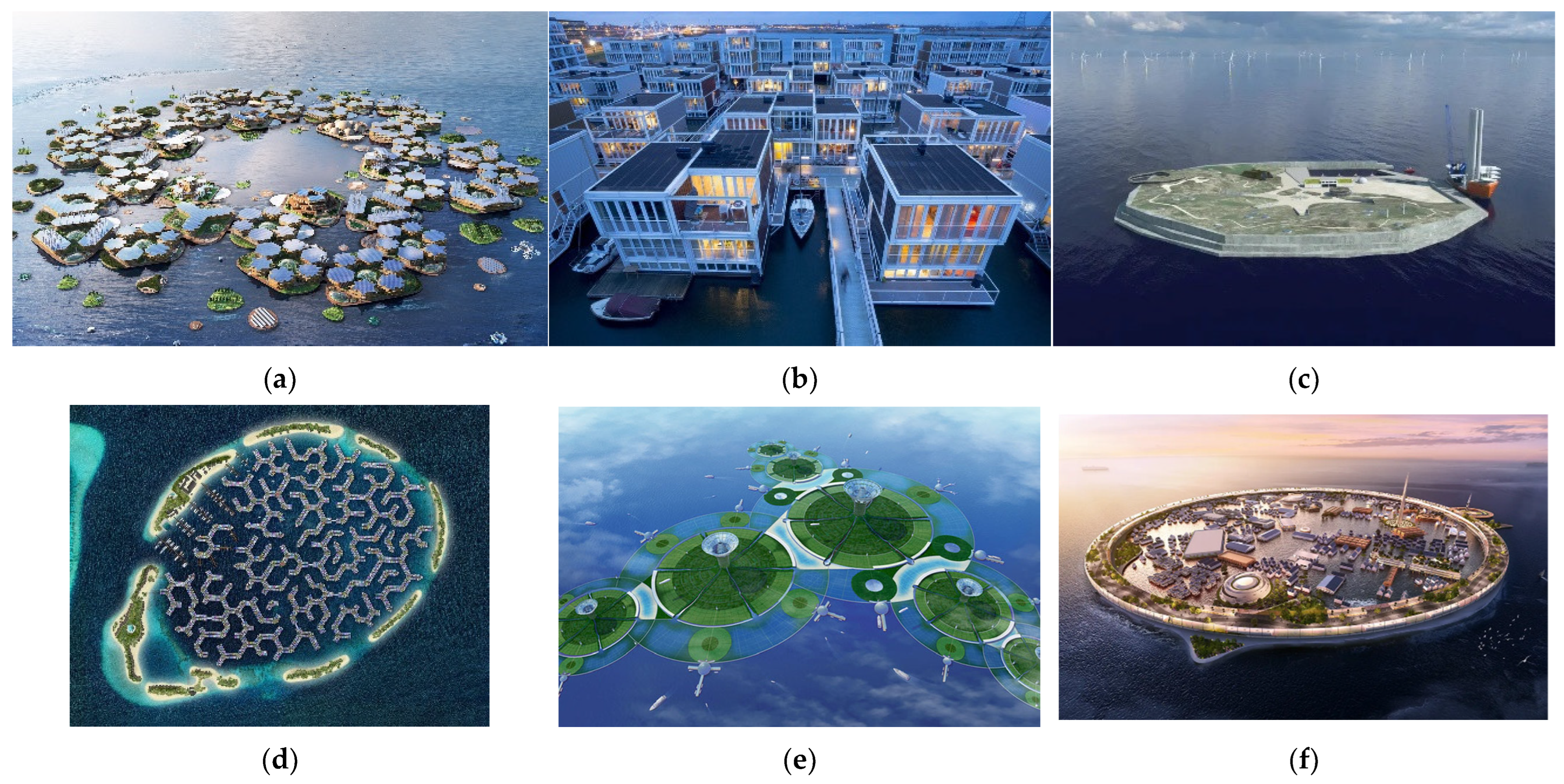
2. Floating Structure Scenarios and Energy Parameter Settings
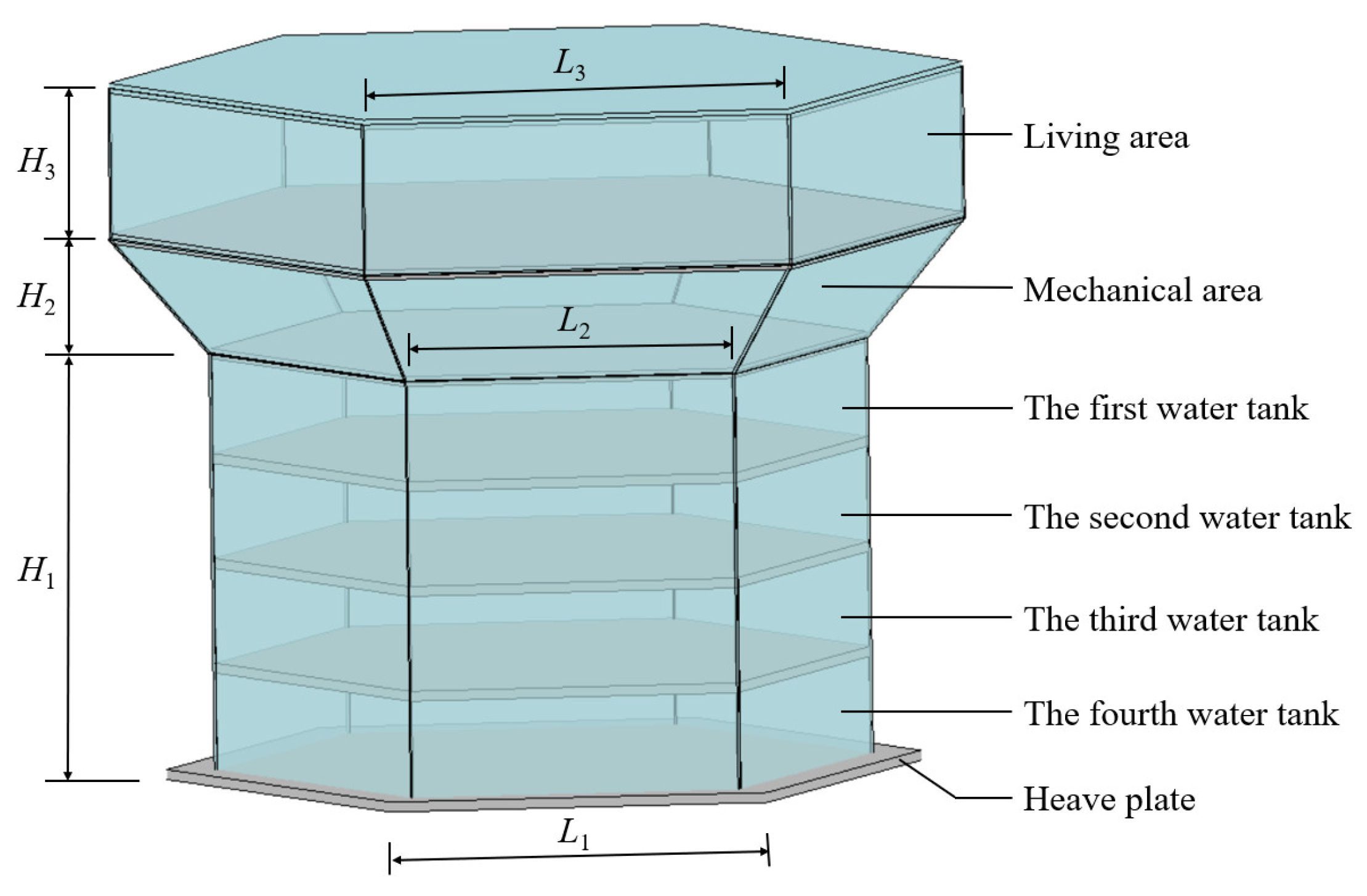
2.1. Introduction of Bionic Hexagon-Shaped Floating Unit (HS-FU)
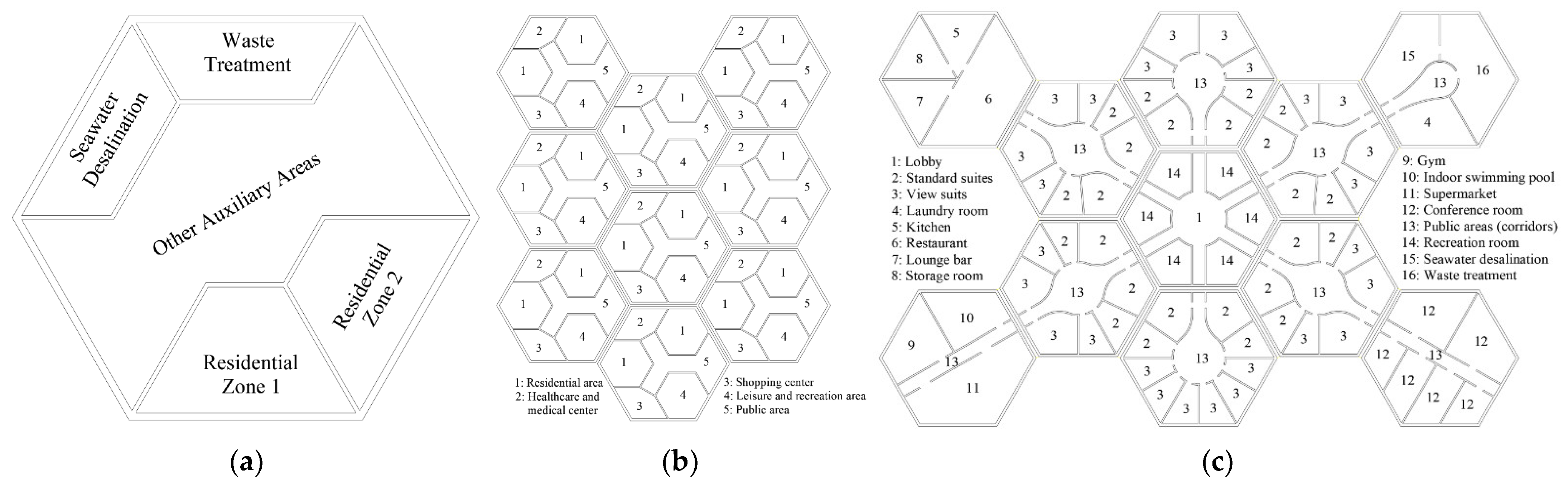
2.2. Configuration of Application Scenarios
- (1)
- Scenario 1: Functional Floating Platform
- (2)
- Scenario 2: Floating Community
- (3)
- Scenario 3: Floating Hotel
2.3. Energy Equipment Distribution and Control Strategy
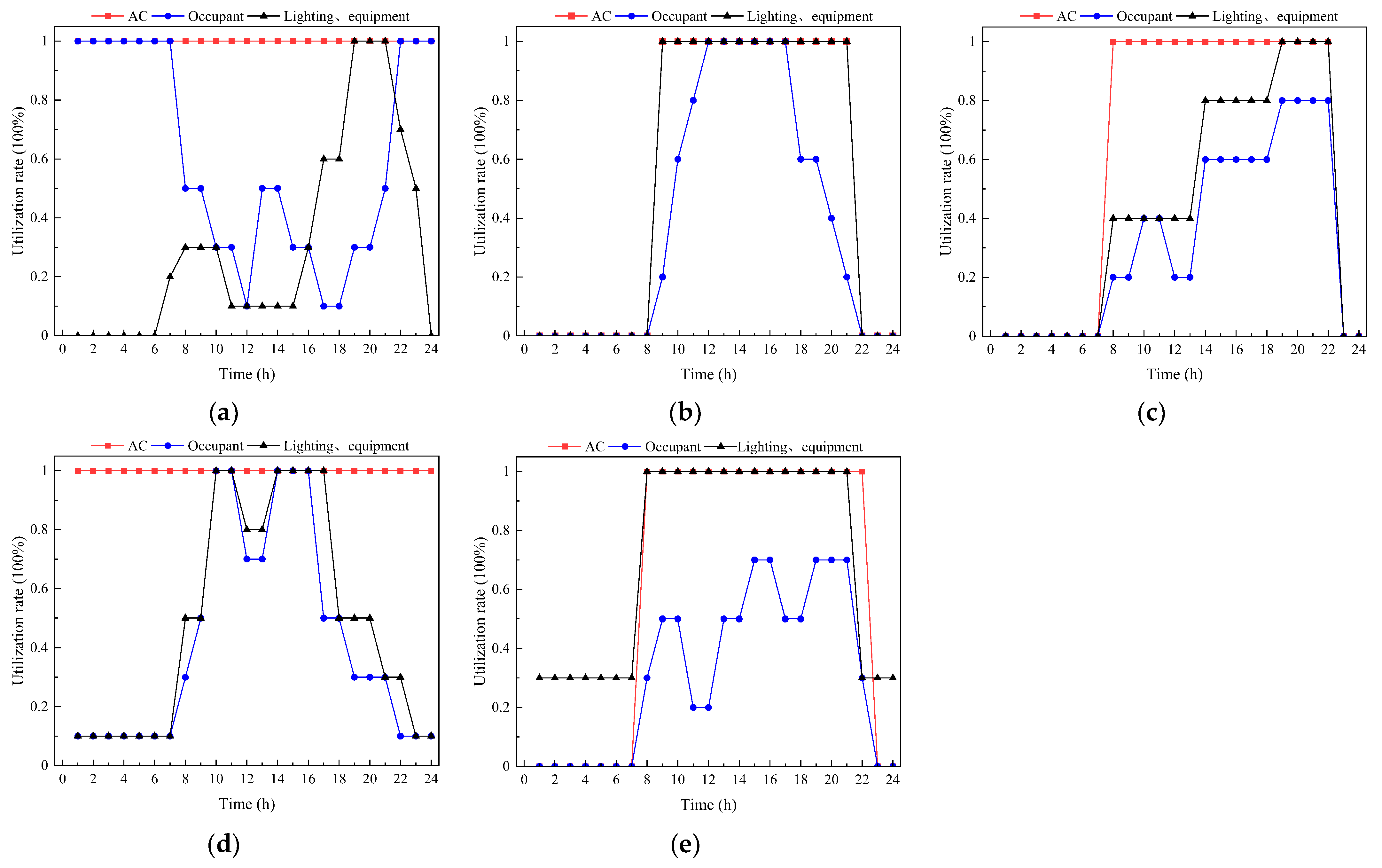
2.3.1. Occupants, Lighting, and Equipment Control Strategy
2.3.2. Air Conditioning Control Strategy
2.3.3. Auxiliary Equipment Control Strategy
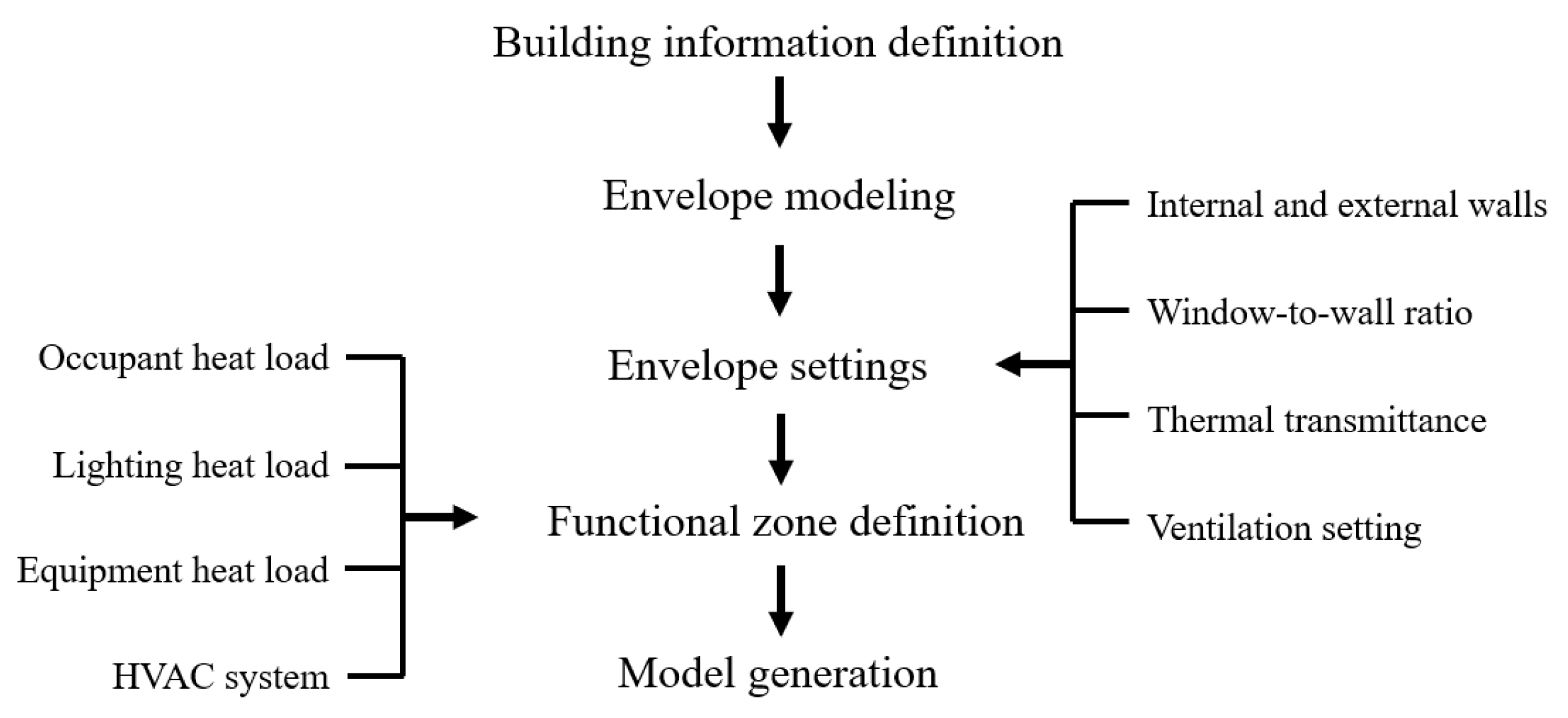
3. Construction of Energy Consumption Simulation Models Under Different Scenarios
4. Correlation and Sensitivity Analysis of Meteorological Parameters on Energy Consumption
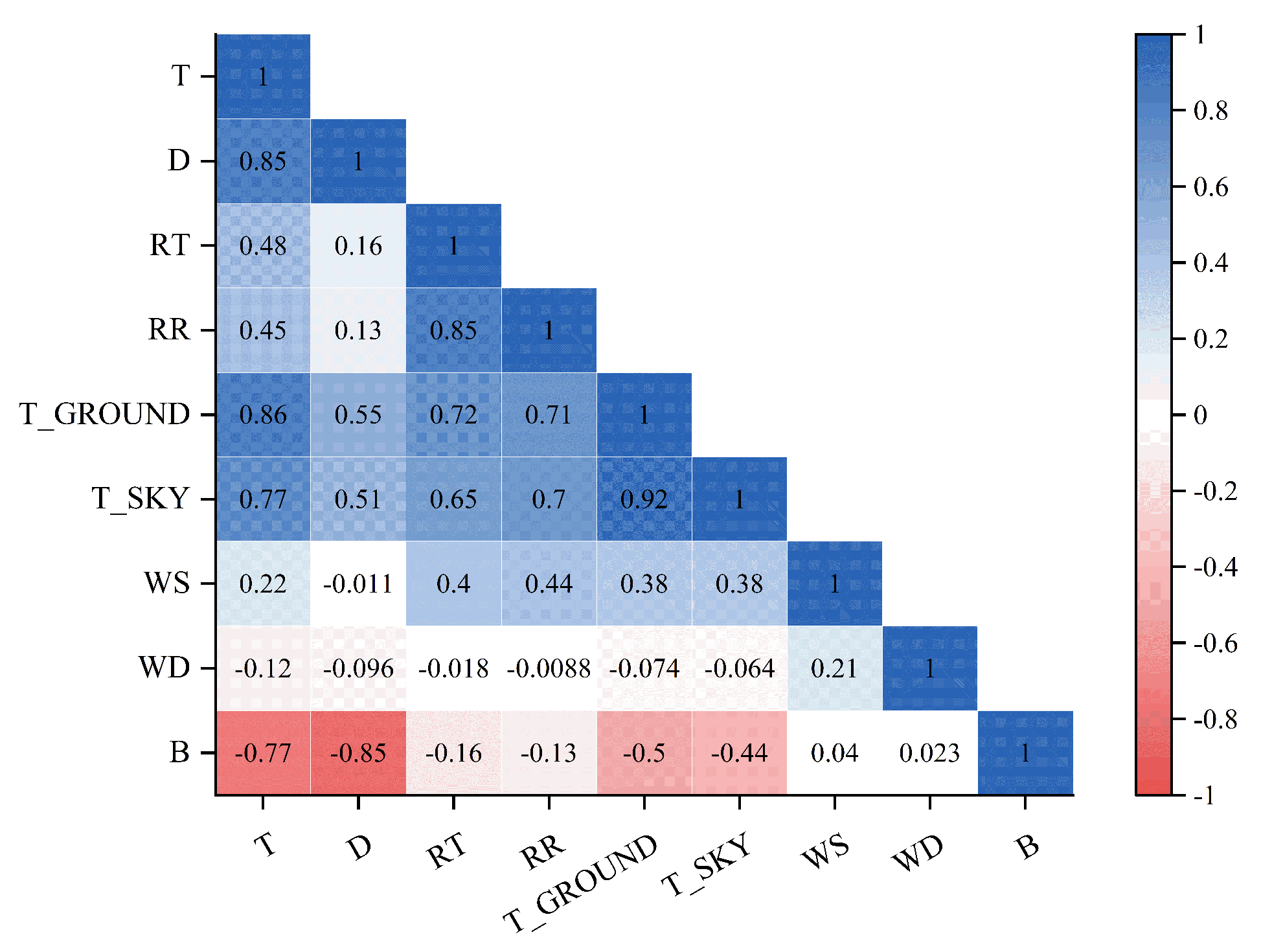
4.1. Correlation Analysis Among Meteorological Parameters
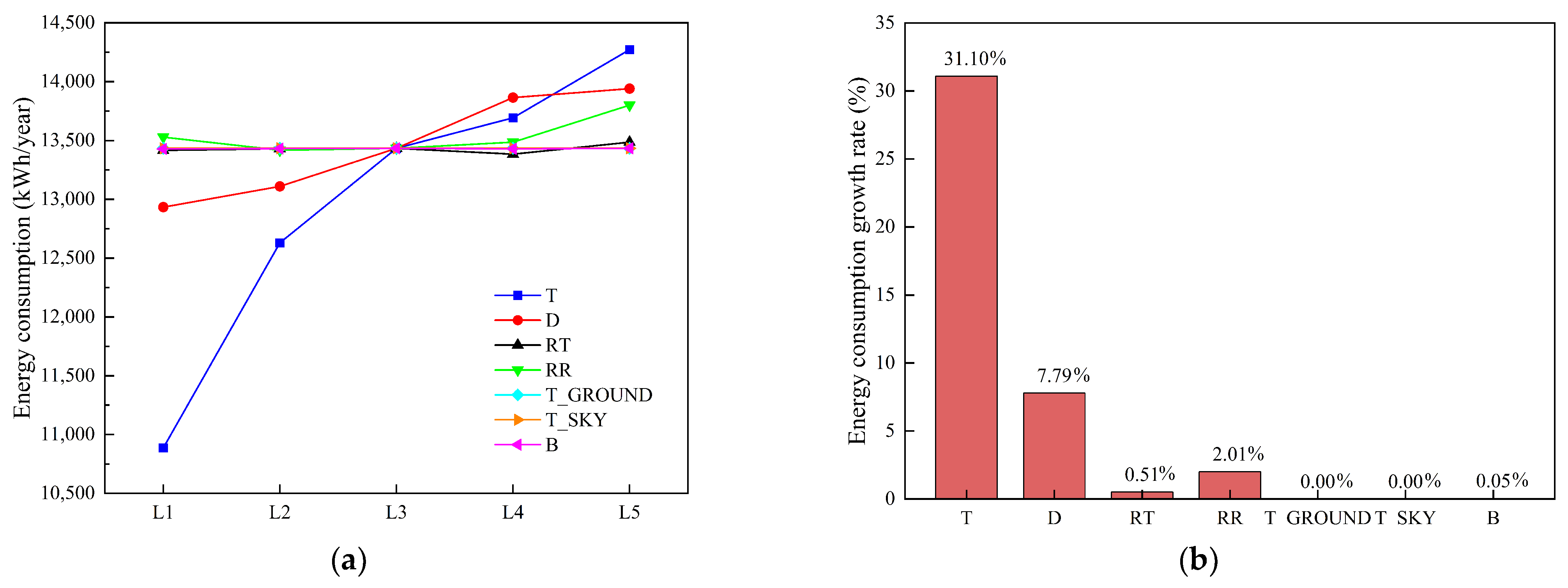
4.2. Sensitivity Analysis of Meteorological Variables Affecting Energy Consumption
5. Energy Consumption Simulation Under TMY and Typhoon Conditions
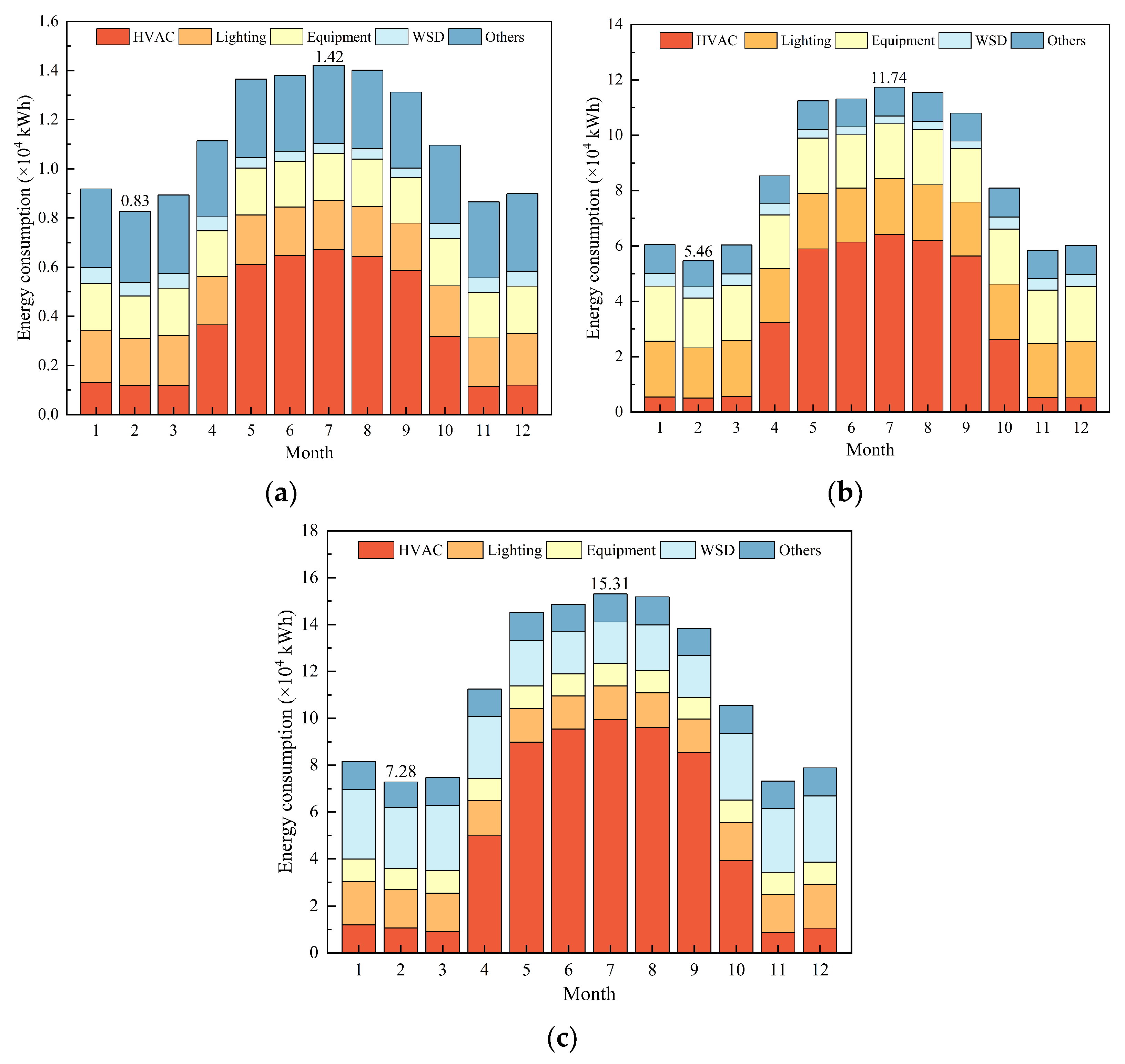
5.1. Energy Consumption Simulation of Different Scenarios Under TMY Data
5.2. Energy Consumption Simulation Under Extreme Typhoon Conditions
6. Comparison of Daily Average Energy Consumption During Typhoon Landfall
6.1. Comparison of Meteorological Parameters During Typhoon Landfall
6.2. Comparative Analysis of Energy Consumption Simulation Results
7. Conclusions
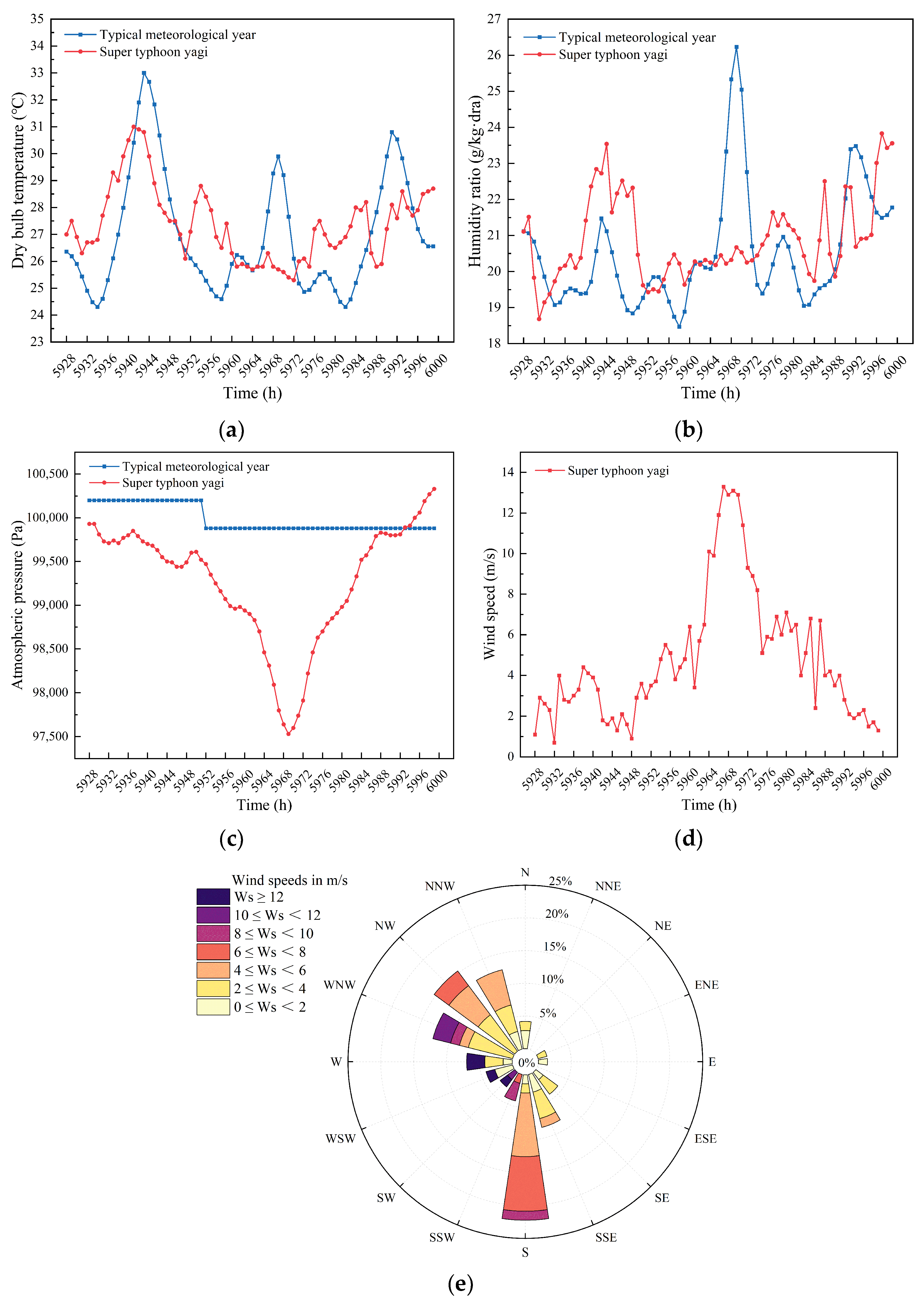
- The sensitivity analysis based on the “intraday fluctuation value + daily mean percentile value” dynamic threshold method, identified dry-bulb temperature and humidity ratio as the dominant meteorological factors influencing the energy consumption in floating structures. The energy consumption variation rates for these parameters were 31.1% for dry-bulb temperature and 7.8% for humidity ratio, both significantly higher than the variation rates for other meteorological parameters.
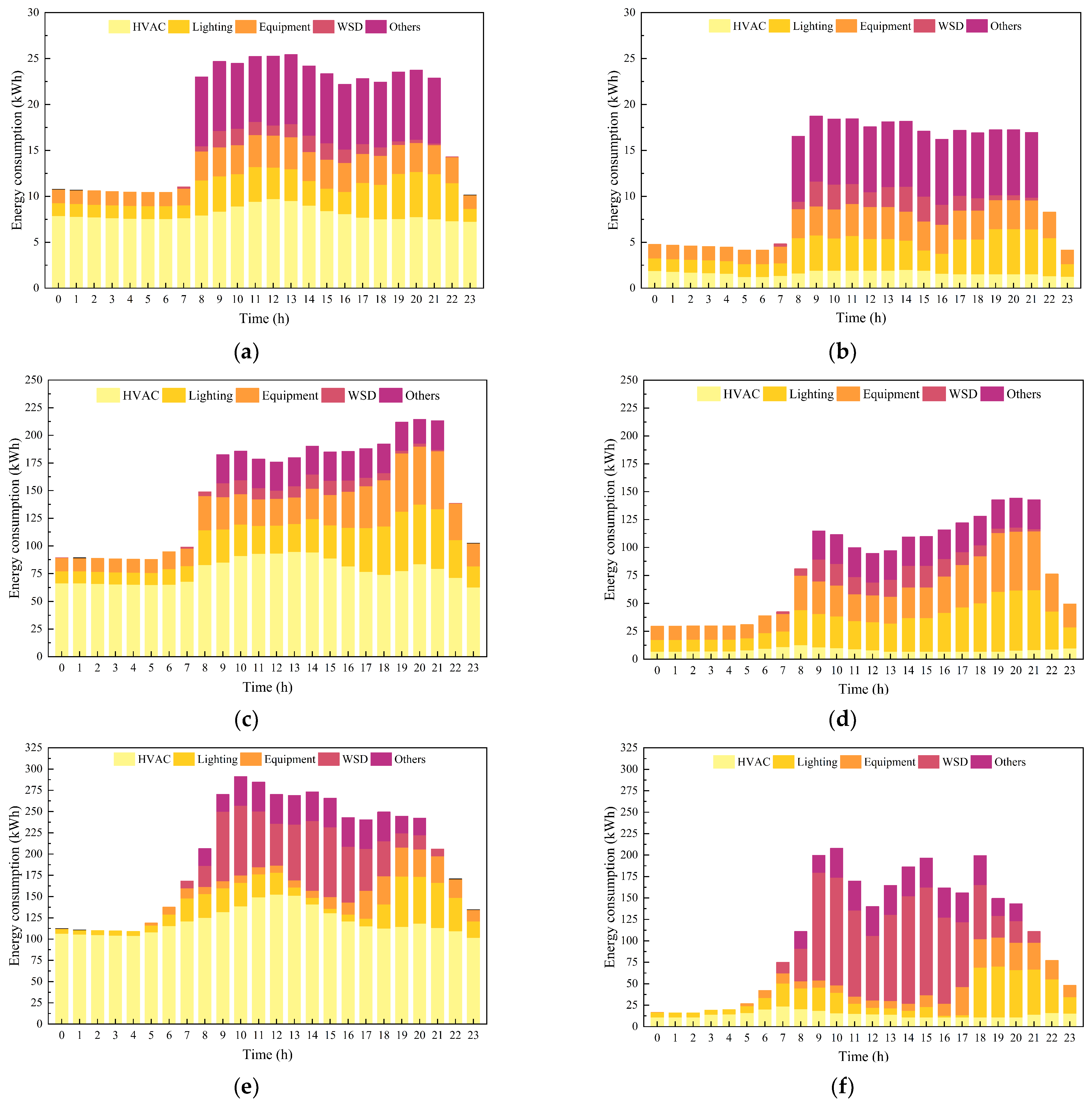
- The energy consumption of all three floating structure scenarios exhibited clear seasonal variations. Air-conditioning loads dominated the energy consumption fluctuations during the summer and winter months, followed by water supply and drainage loads. In contrast, the electricity consumption for lighting, equipment, and other systems remained relatively stable, primarily influenced by usage patterns and control strategies. As the scale and functional integration of the floating structures increased, energy consumption per unit area and per capita decreased, highlighting improvements in energy efficiency. This trend was attributed not only to the scale effect but also to functional positioning, occupancy utilization, and the sharing of equipment and resources among different spaces.
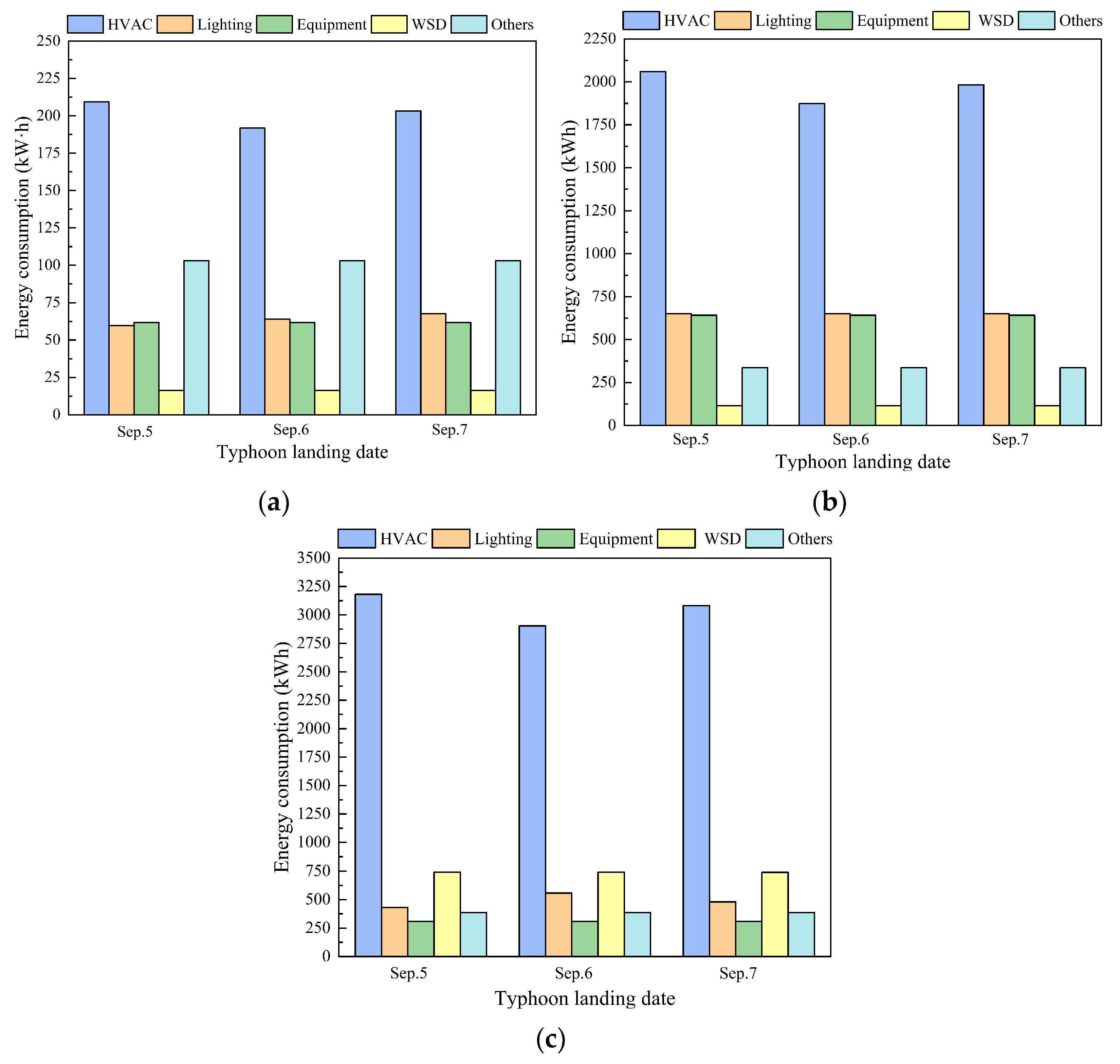
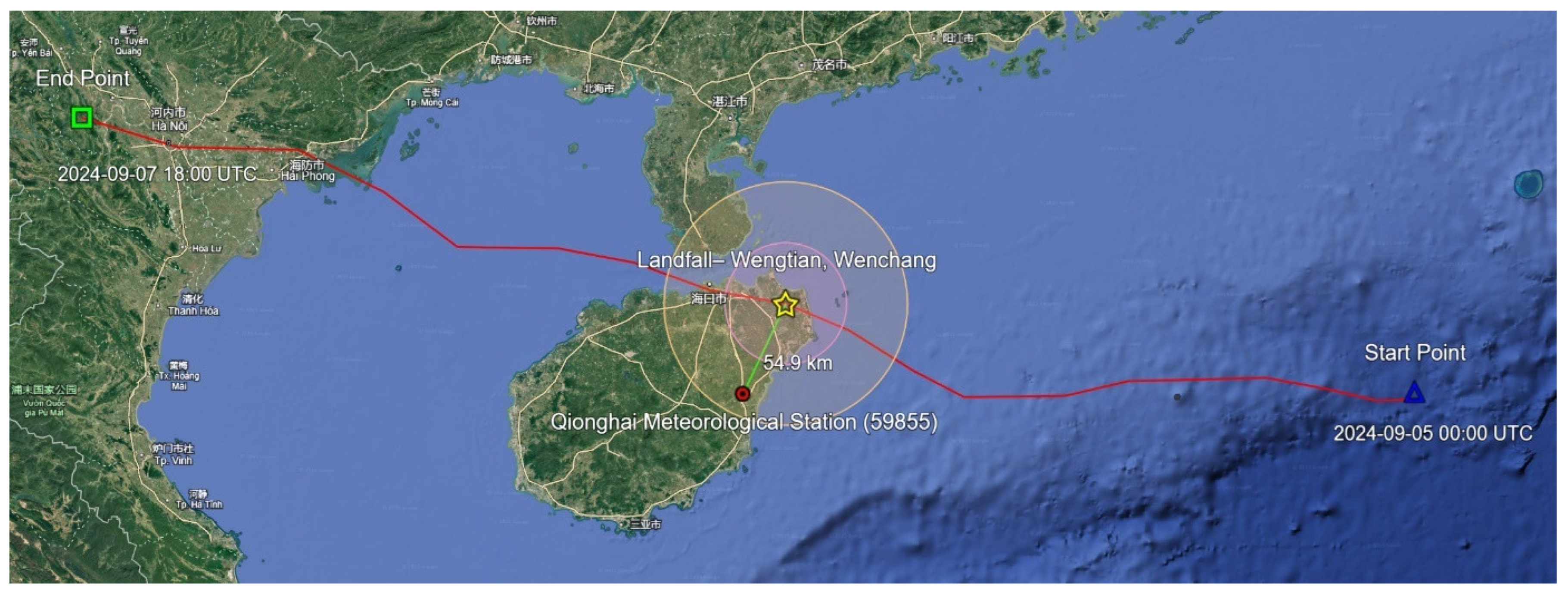
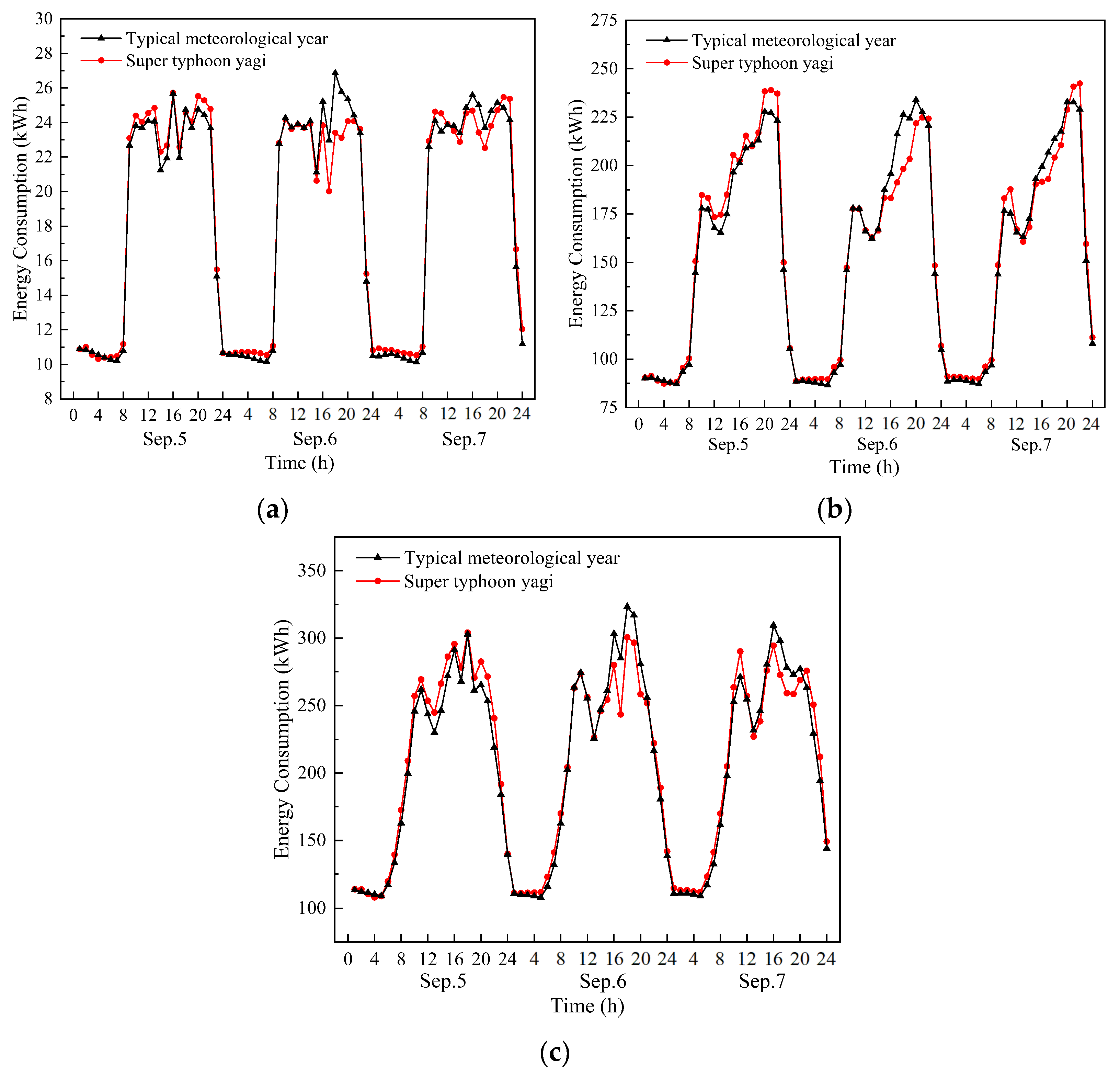
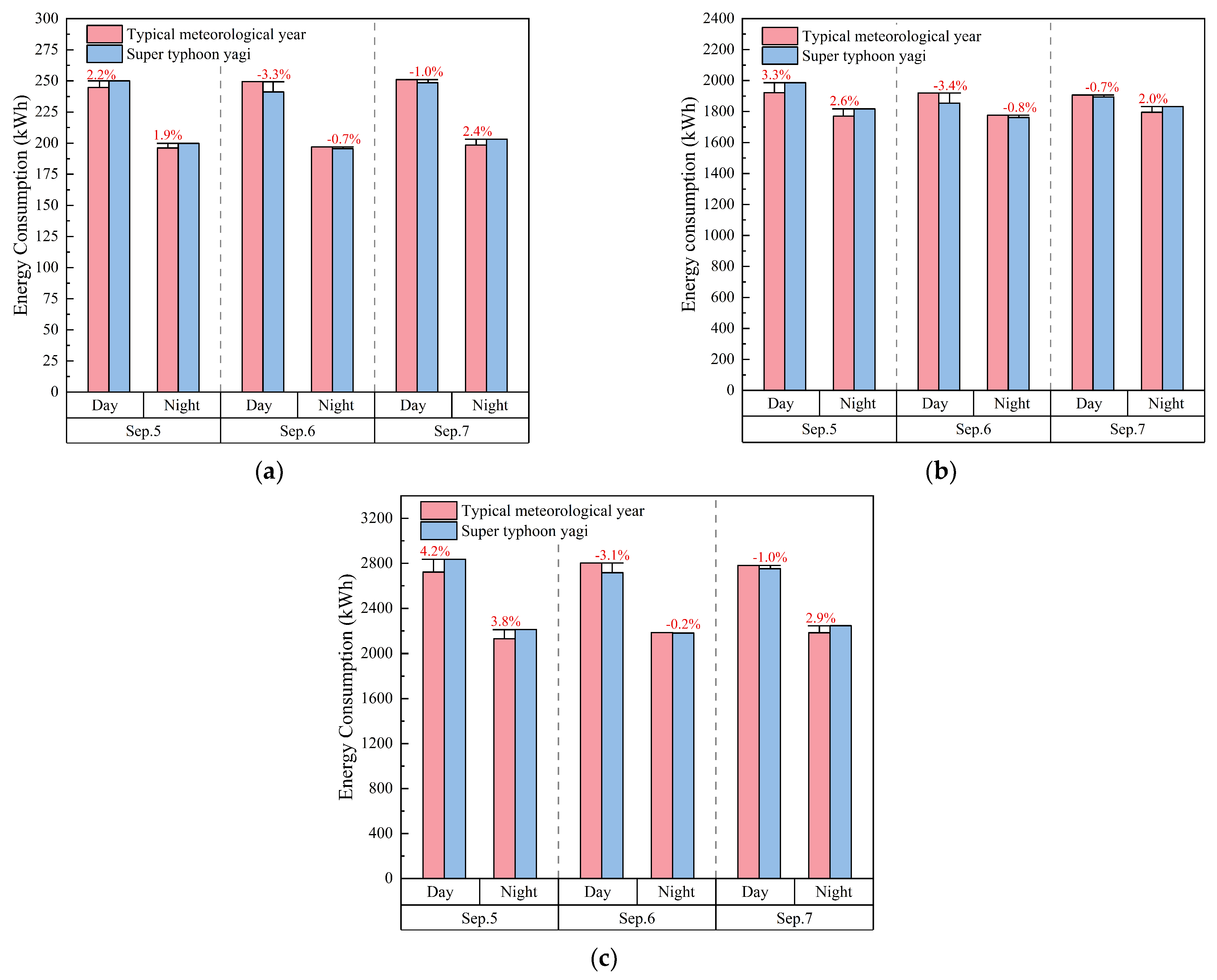
- Under the conditions of Super Typhoon Yagi (2411), the energy consumption of the three floating structure scenarios increased slightly compared to the same period under TMY conditions. The total energy consumption for the three scenarios increased by 0.12%, 0.49%, and 0.95%, respectively. Day-to-night energy consumption differences remained within ±5%, with the most noticeable variations occurring in the air-conditioning loads. These results demonstrate that the proposed floating structure design exhibits good climatic adaptability and energy stability. The air-conditioning system serves as the key component in floating structures’ response to extreme weather conditions, highlighting the importance of optimizing its performance in future design.
Author Contributions
Funding
Data Availability Statement
Conflicts of Interest
Abbreviations
| TMY | Typical Meteorological Year |
| HU-FS | Hexagon-Shaped Floating Unit |
References
- Cai, R.S.; Tan, H.J. Impacts and Risks of Accelerating Sea Level Rise on Low Lying Islands, Coasts and Communities. Clim. Change Res. 2020, 16, 163–171. [Google Scholar]
- Khurshid, H.; Mohammed, B.S.; Al-Yacouby, A.M.; Liew, M.S.; Zawawi, N.A.W.A. Analysis of Hybrid Offshore Renewable Energy Sources for Power Generation: A Literature Review of Hybrid Solar, Wind, and Waves Energy Systems. Dev. Built Environ. 2024, 19, 100497. [Google Scholar] [CrossRef]
- Yang, H.; Zhao, S.; Kim, C. Analysis of Floating City Design Solutions in the Context of Carbon Neutrality-Focus on Busan Oceanix City. Energy Rep. 2022, 8, 153–162. [Google Scholar] [CrossRef]
- Zandgheshlaghi, Z. Life on Water. Metabolist Floating Developments as a Response to Contemporary Housing Issues in Highly Dense Populated Cities. Master’s Thesis, Politecnico di Milano, Milan, Italy, 2020. [Google Scholar]
- Avinç, G.M.; Selçuk, S.A. Floating Cities: A Solution for Climate Refugees? PLANARCH-Des. Plan. Res. 2023, 7, 1–17. [Google Scholar] [CrossRef]
- Takeuchi, M.; Yoshida, I. Mega Floating City “Green Float”: Concept and Technology Innovations. In Proceedings of the WCFS2020: Proceedings of the Second World Conference on Floating Solutions, Rotterdam, The Netherlands, 6–8 October 2020; Springer: Berlin/Heidelberg, Germany, 2021; pp. 3–21. [Google Scholar]
- Dogen City|N-ARK. Available online: https://www.n-ark.jp/en/dogen-city (accessed on 28 October 2025).
- Li, J.; Yang, L.; Long, H. Climatic Impacts on Energy Consumption: Intensive and Extensive Margins. Energy Econ. 2018, 71, 332–343. [Google Scholar] [CrossRef]
- Li, M.; Shi, J.; Guo, J.; Cao, J.; Niu, J.; Xiong, M. Climate Impacts on Extreme Energy Consumption of Different Types of Buildings. PLoS ONE 2015, 10, e0124413. [Google Scholar] [CrossRef]
- Roka, R.; Figueiredo, A.; Vieira, A.; Cardoso, C. A Systematic Review of Sensitivity Analysis in Building Energy Modeling: Key Factors Influencing Building Thermal Energy Performance. Energies 2025, 18, 2375. [Google Scholar] [CrossRef]
- Tian, W.; De Wilde, P. Uncertainty and Sensitivity Analysis of Building Performance Using Probabilistic Climate Projections: A UK Case Study. Autom. Constr. 2011, 20, 1096–1109. [Google Scholar] [CrossRef]
- Herrera, M.; Natarajan, S.; Coley, D.A.; Kershaw, T.; Ramallo-González, A.P.; Eames, M.; Fosas, D.; Wood, M. A Review of Current and Future Weather Data for Building Simulation. Build. Serv. Eng. Res. Technol. 2017, 38, 602–627. [Google Scholar] [CrossRef]
- Li, H.; Yang, L.; Hou, L.; Zhang, L.; Xu, X. Selection Method of Meteorological Parameters of TMY for Building Energy Consumption Simulation. Acta Energiae Solaris Sin. 2016, 37, 2408–2414. [Google Scholar]
- Kilanko, O.; Oyedepo, S.O.; Dirisu, J.O.; Leramo, R.O.; Babalola, P.; Aworinde, A.K.; Udo, M.; Okonkwo, A.M.; Akomolafe, M.I. Typical Meteorological Year Data Analysis for Optimal Usage of Energy Systems at Six Selected Locations in Nigeria. Int. J. Low-Carbon Technol. 2023, 18, 637–658. [Google Scholar] [CrossRef]
- Hong, T.; Xu, Y.; Sun, K.; Zhang, W.; Luo, X.; Hooper, B. Urban Microclimate and Its Impact on Building Performance: A Case Study of San Francisco. Urban Clim. 2021, 38, 100871. [Google Scholar] [CrossRef]
- Elnabawi, M.H.; Hamza, N. A Methodology of Creating a Synthetic, Urban-Specific Weather Dataset Using a Microclimate Model for Building Energy Modelling. Buildings 2022, 12, 1407. [Google Scholar] [CrossRef]
- Bhandari, M.; Shrestha, S.; New, J. Evaluation of Weather Datasets for Building Energy Simulation. Energy Build. 2012, 49, 109–118. [Google Scholar] [CrossRef]
- Kočí, J.; Kočí, V.; Maděra, J.; Černý, R. Effect of Applied Weather Data Sets in Simulation of Building Energy Demands: Comparison of Design Years with Recent Weather Data. Renew. Sustain. Energy Rev. 2019, 100, 22–32. [Google Scholar] [CrossRef]
- Jiang, D.; Xiao, W.; Wang, J.; Wang, H.; Zhao, Y.; Li, B.; Zhou, P. Evaluation of the Effects of One Cold Wave on Heating Energy Consumption in Different Regions of Northern China. Energy 2018, 142, 331–338. [Google Scholar] [CrossRef]
- Villa, D.L. Institutional Heat Wave Analysis by Building Energy Modeling Fleet and Meter Data. Energy Build. 2021, 237, 110774. [Google Scholar] [CrossRef]
- Zou, Y.; Wu, Z.; Li, B.; Jia, Y. Cooling Energy Challenges in Residential Buildings During Heat Waves: Urban Heat Island Impacts in a Hot-Humid City. Buildings 2024, 14, 4030. [Google Scholar] [CrossRef]
- Jin, R.; He, W.; Yang, L. Energy Consumption Modes and Energy Intensity of Vernacular Buildings in Dry-Hot Climate. Build. Energy Effic. 2023, 51, 24–30+54. [Google Scholar]
- Tan, J.; Zhang, X.; He, Z.; Xie, J.; Liu, J. Sensitivity Parameter Analysis and Thermal Optimization Strategies for Performance-Based Design of Island Buildings in Extreme Hot-Humid Zone. Build. Sci. 2025, 41, 68–74. [Google Scholar]
- Pantua, C.A.J.; Calautit, J.K.; Wu, Y. Sustainability and Structural Resilience of Building Integrated Photovoltaics Subjected to Typhoon Strength Winds. Appl. Energy 2021, 301, 117437. [Google Scholar] [CrossRef]
- Li, Y.; Xiao, F.; Zhang, X.; Gao, W.; Ruan, Y.; Zhou, N.; Kammen, D.M. Extreme Typhoon Events Trigger Long-Lasting Power Outages and Require Demand-Side Solutions to Enhance Energy Resiliency. Commun. Earth Environ. 2025, 6, 136. [Google Scholar] [CrossRef]
- Li, Z.; Yin, Y.; Wang, F.; Ma, S. Evaluation of Air Impact on Urban Radiative Transfer and Building Loads Using Discrete Ordinate Method. In Proceedings of the Building Simulation; Springer: Berlin/Heidelberg, Germany, 2025; pp. 1–16. [Google Scholar]
- Zhang, Z.; Song, J.; Chen, H.; Huang, X.; Xie, S.; Wu, Y. Optimisation of Hexagon-Shaped Floating Units Using the Response Surface Method. Ships Offshore Struct. 2024, 1–14. [Google Scholar] [CrossRef]
- Wu, Y.; Chen, H.; Qiu, L.; Huang, X. Optimization of a New Pulley–Weight Mooring System Based on Neural Network and Particle Swarm Optimization. Ocean Eng. 2025, 334, 121589. [Google Scholar] [CrossRef]
- Wang, X.; Wang, J.; Kazmi, S.M.S.; Wu, Y.-F. Development of New Layered Compression Casting Approach for Concrete. Cem. Concr. Compos. 2022, 134, 104738. [Google Scholar] [CrossRef]
- Yamashita, M.; Gotoh, M. Impact Behavior of Honeycomb Structures with Various Cell Specifications—Numerical Simulation and Experiment. Int. J. Impact Eng. 2005, 32, 618–630. [Google Scholar] [CrossRef]
- GB/T 14308-2023; Classification and Accreditation for Star-Rated Tourist Hotels. State Administration for Market Regulation & Standardization Administration of China: Beijing, China, 2023.
- Yan, D.; Xia, J.; Tang, W.; Song, F.; Zhang, X.; Jiang, Y. DeST—An Integrated Building Simulation Toolkit Part I: Fundamentals. In Proceedings of the Building Simulation; Springer: Berlin/Heidelberg, Germany, 2008; Volume 1, pp. 95–110. [Google Scholar]
- Yan, D.; Zhou, X.; An, J.; Kang, X.; Bu, F.; Chen, Y.; Pan, Y.; Gao, Y.; Zhang, Q.; Zhou, H. DeST 3.0: A New-Generation Building Performance Simulation Platform. In Proceedings of the Building Simulation; Springer: Berlin/Heidelberg, Germany, 2022; Volume 15, pp. 1849–1868. [Google Scholar]
- Li, M.; Cao, J.; Guo, J.; Niu, J.; Xiong, M. Response of Energy Consumption for Building Heating to Climatic Change and Variability in Tianjin City, China. Meteorol. Appl. 2016, 23, 123–131. [Google Scholar] [CrossRef]



| Partition Design | Dimension | Value (m) |
|---|---|---|
| Living area | H3 | 4.553 |
| L3 | 12.85 | |
| Mechanical area | H2 | 3.554 |
| L2 | 8.744 | |
| Water tank | H1 | 12.682 |
| Heave plate | L1 | 10.744 |
| Sites | Public Area | Seawater Desalination System Zone | Waste Treatment Zone | |||
|---|---|---|---|---|---|---|
| Occupant thermal disturbance | 8:00 22:00 | 9:00–10:00 13:00–14:00 17:00–18:00 | 8:00–20:00 | 21:00–7:00 | 8:00–20:00 | 21:00–7:00 |
| 0.3 | 0.5 | |||||
| 11:00–12:00 | 15:00–16:00 19:00–21:00 | 1 | 0.2 | 1 | 0.2 | |
| 0.2 | 0.7 | |||||
| Lighting thermal disturbance | 1:00–7:00 22:00–24:00 | 8:00–21:00 | 8:00–20:00 | 8:00–20:00 | ||
| 0.3 | 1 | 1 | 1 | |||
| Appliances thermal disturbance | 1:00–7:00 22:00–24:00 | 8:00–21:00 | 8:00–20:00 | 8:00–20:00 | ||
| 0.3 | 1 | 1 | 1 | |||
| Scenario | Population | Equipment Type | Rated Power (kW) | Quantity | Operating Time (h) |
|---|---|---|---|---|---|
| Scenario 1 | 10 | WCBx-10B Shipborne Wastewater Treatment Unit, Wuhan Zhongzhou Env. Protection Equipment Co., Ltd., Wuhan, China | 5.6 | 1 | 12 |
| E200 Shipborne Garbage Processor, Shanghai DanFengMarine Equipment Co., Ltd., Shanghai, China | 0.45 | 1 | 8 | ||
| RDA-FSHB3 Compact Seawater Desalination Unit, Dongguan RDA Environment Protection Technology Co., Ltd., Dongguan, China | 1.5 | 1 | 12 | ||
| Scenario 2 | 90 | WCBx-15B Shipborne Wastewater Treatment Unit, Wuhan Zhongzhou Env. Protection Equipment Co., Ltd., Wuhan, China | 5.6 | 1 | 12 |
| E200 Shipborne Garbage Processor, Shanghai DanFengMarine Equipment Co., Ltd., Shanghai, China | 0.45 | 1 | 8 | ||
| RDA-FSHB20 Compact Seawater Desalination Unit, Dongguan RDA Environment Protection Technology Co., Ltd., Dongguan, China | 10 | 2 | 12 | ||
| Scenario 3 | 120 | WCBx-50B Shipborne Wastewater Treatment Unit, Wuhan Zhongzhou Env. Protection Equipment Co., Ltd., Wuhan, China | 6.3 | 2 | 12 |
| JZXFJ-15 Shipborne Garbage Processor, Shanghai DanFengMarine Equipment Co., Ltd., Shanghai, China | 1.5 | 1 | 8 | ||
| RDA-FSHB20 Compact Seawater Desalination Unit, Dongguan RDA Environment Protection Technology Co., Ltd., Dongguan, China | 10 | 2 | 12 |
| Category | Parameter |
|---|---|
| Location | Qionghai, Hainan, China |
| Orientation | South |
| Height (m) | 4 |
| Number of floors | 1 |
| Window-to-wall ratio | 0.3 |
| U-value of external windows (W/(m2·K)) | 3.0 |
| U-value of external walls and roof (W/(m2·K)) | 2.5 |
| U-value of internal walls (W/(m2·K)) | 3.85 |
| Abbreviation | Definition | Unit |
|---|---|---|
| T | Dry-bulb temperature | °C |
| D | Humidity ratio | g/kg.dra |
| RT | Total horizontal radiation | W/m2 |
| RR | Diffuse horizontal radiation | W/m2 |
| T_GROUND | Ground temperature | °C |
| T_SKY | Effective sky temperature | K |
| WS | Wind speed | m/s |
| WD | Wind direction | - |
| B | Atmospheric pressure | hPa |
| Scenario | Floor Area (m2) | Occupancy | Annual Energy Consumption (×104 kWh) | Energy Use Intensity (kWh/m2·Year) | Per Capita Electricity Use (kWh/Person·Year) |
|---|---|---|---|---|---|
| Scenario 1 | 439 | 10 | 13.5 | 307.52 | 13,500.00 |
| Scenario 2 | 3951 | 90 | 102.66 | 259.84 | 11,406.67 |
| Scenario 3 | 4829 | 120 | 133.65 | 276.76 | 11,137.50 |
| Scenario | Energy Consumption During Typhoon Period (kWh) | Difference (kWh) | Growth Rate (%) | |
|---|---|---|---|---|
| Typical Meteorological Year | Super Typhoon Yagi | |||
| Scenario 1 | 1336.80 | 1338.36 | 1.56 | 0.12 |
| Scenario 2 | 11,091.35 | 11,145.79 | 54.44 | 0.49 |
| Scenario 3 | 14,804.65 | 14,945.86 | 141.21 | 0.95 |
Disclaimer/Publisher’s Note: The statements, opinions and data contained in all publications are solely those of the individual author(s) and contributor(s) and not of MDPI and/or the editor(s). MDPI and/or the editor(s) disclaim responsibility for any injury to people or property resulting from any ideas, methods, instructions or products referred to in the content. |
© 2025 by the authors. Licensee MDPI, Basel, Switzerland. This article is an open access article distributed under the terms and conditions of the Creative Commons Attribution (CC BY) license (https://creativecommons.org/licenses/by/4.0/).
Share and Cite
Zheng, W.; Wu, Y.; Chen, W.; Chen, M.; Li, L. Simulation and Sensitivity Analysis of Energy Consumption in Floating Structures Under Typical and Typhoon Meteorological Conditions. Energies 2025, 18, 6388. https://doi.org/10.3390/en18246388
Zheng W, Wu Y, Chen W, Chen M, Li L. Simulation and Sensitivity Analysis of Energy Consumption in Floating Structures Under Typical and Typhoon Meteorological Conditions. Energies. 2025; 18(24):6388. https://doi.org/10.3390/en18246388
Chicago/Turabian StyleZheng, Wei, Yufei Wu, Wenchao Chen, Maolin Chen, and Lixiao Li. 2025. "Simulation and Sensitivity Analysis of Energy Consumption in Floating Structures Under Typical and Typhoon Meteorological Conditions" Energies 18, no. 24: 6388. https://doi.org/10.3390/en18246388
APA StyleZheng, W., Wu, Y., Chen, W., Chen, M., & Li, L. (2025). Simulation and Sensitivity Analysis of Energy Consumption in Floating Structures Under Typical and Typhoon Meteorological Conditions. Energies, 18(24), 6388. https://doi.org/10.3390/en18246388