


An Indicator for Assessing the Hosting Capacity of Low-Voltage Power Networks for Distributed Energy Resources


Abstract
1. Introduction
2. Materials and Methods
- (1)
- checking the voltage changes:where ΔU%—percentage voltage change relative to the rated voltage, SE—apparent power of the analysed source, cosφE—power factor of the source, Rk, Xk—resistance and reactance of the power grid at the connection point, Un—rated voltage of the grid.
- (2)
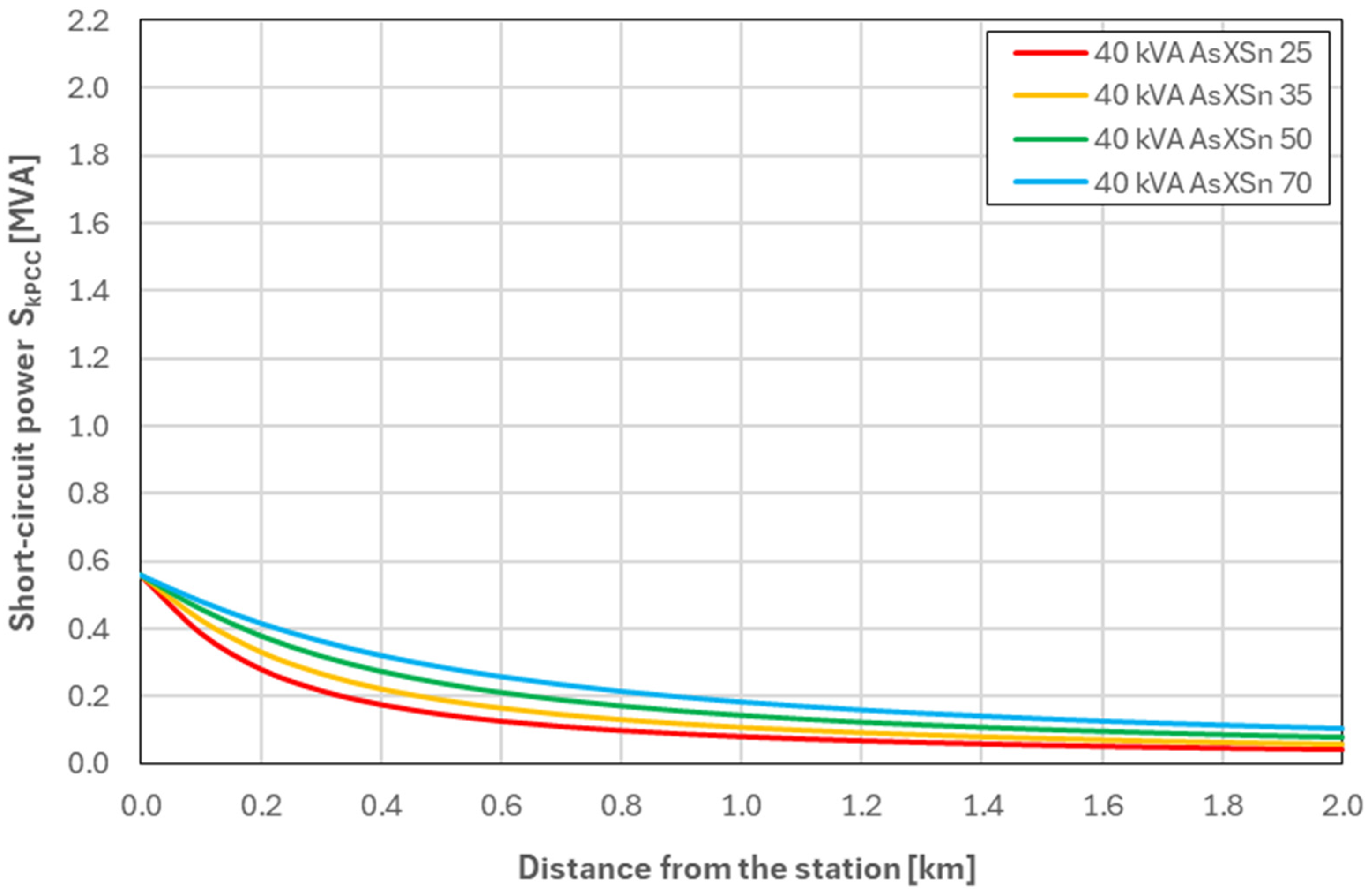
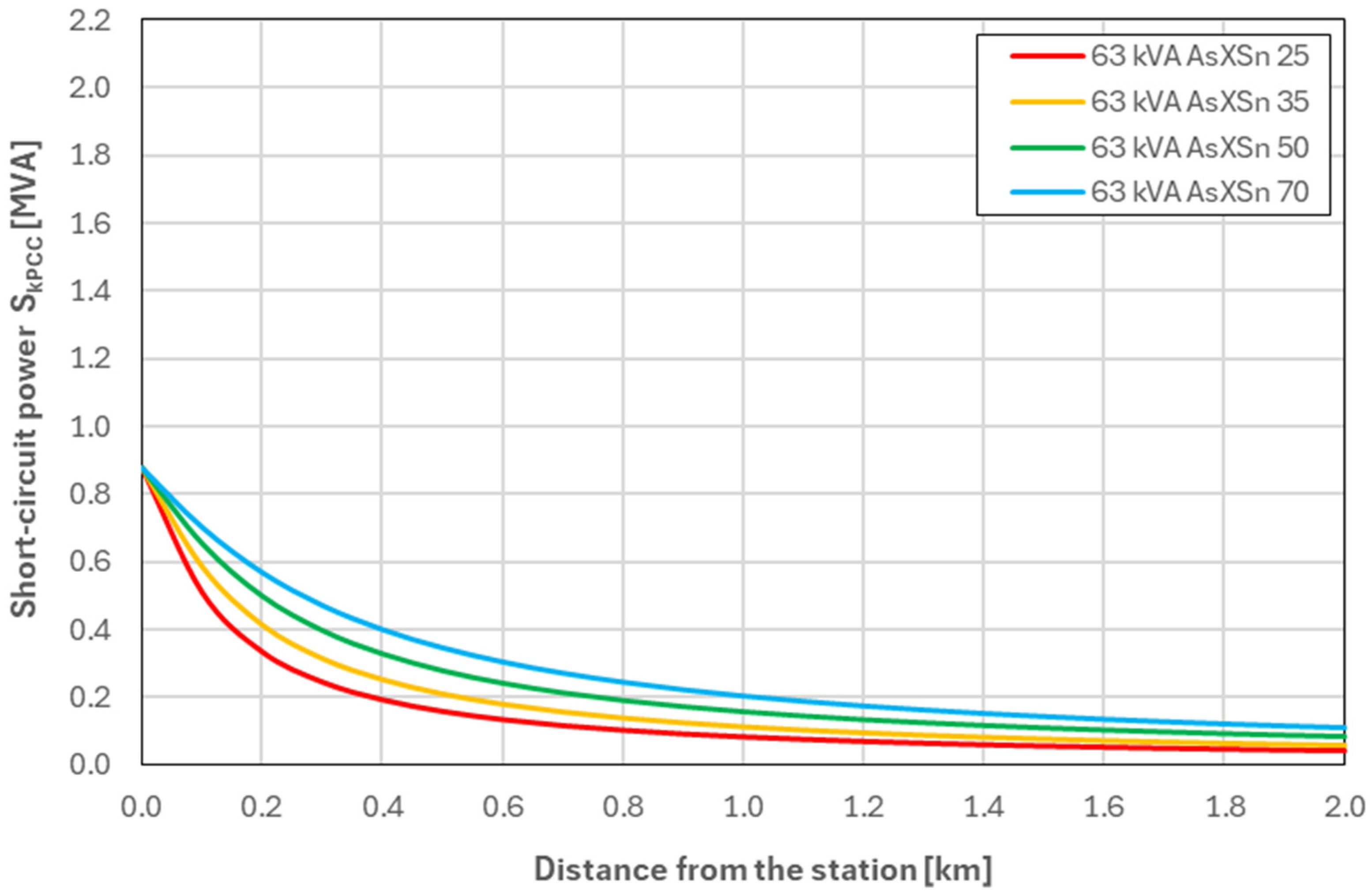
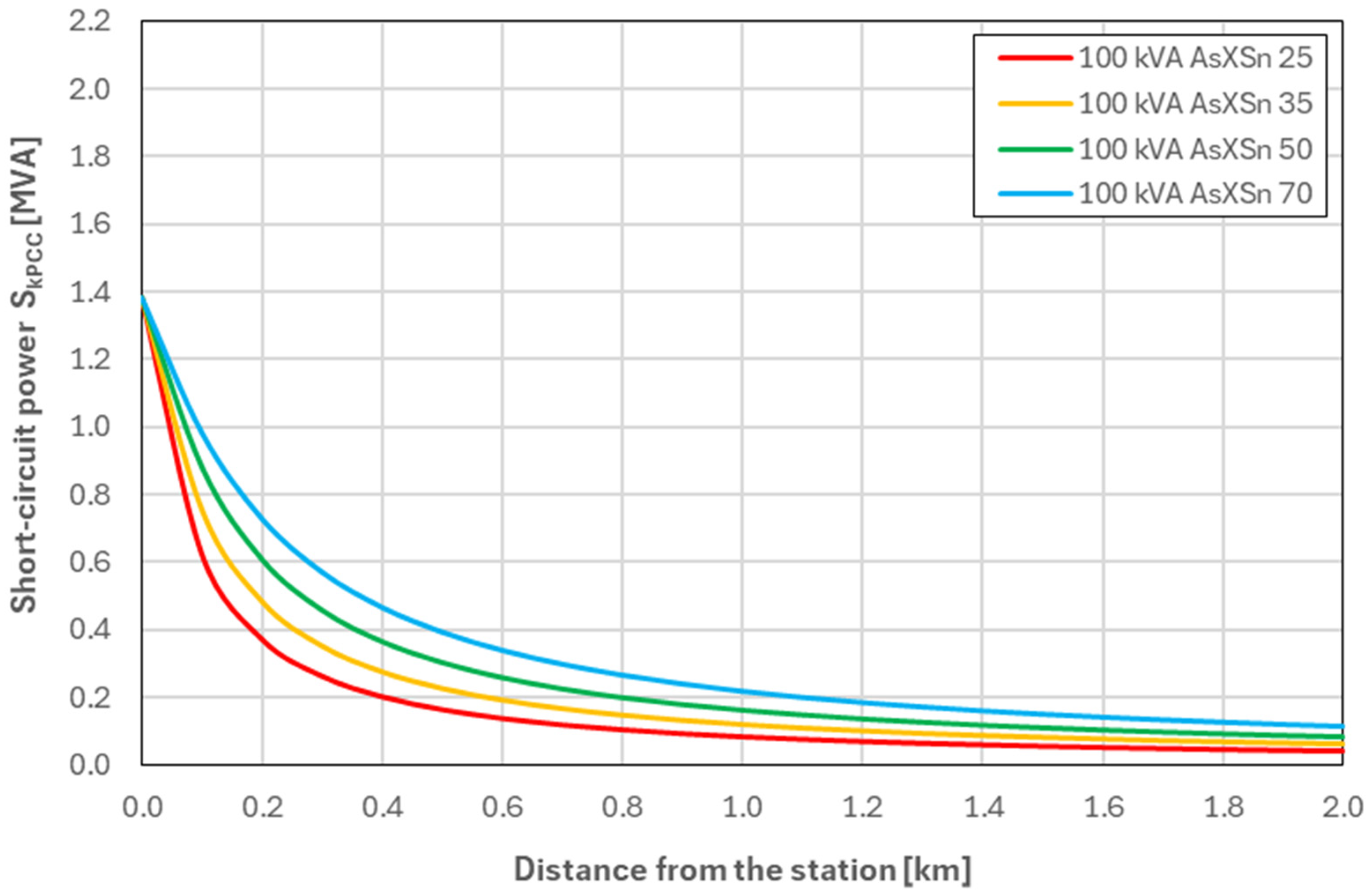
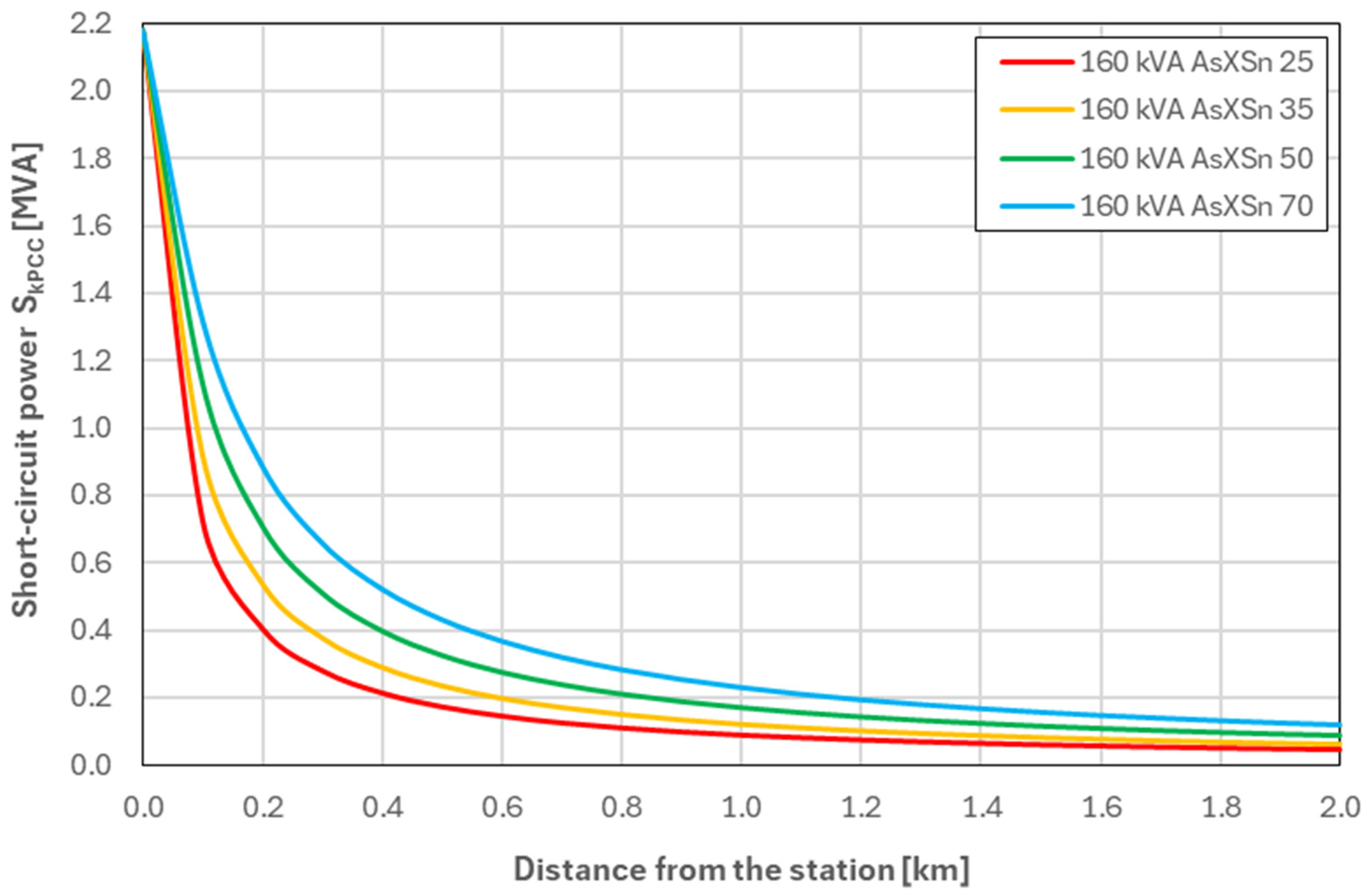
- checking the rapid voltage changes caused by the activation of a single source (voltage fluctuations):where SkPCC—short-circuit power at the connection point, SE—apparent power of the analysed source, k—starting factor (ratio of the starting current of the source to its rated current). If accurate data for k are unavailable, a value of k = 1.2 can be assumed for photovoltaic systems.
- (3)
- checking the long-term current-carrying capacity of a power line:where IrAPCC—maximum current fed into the grid by existing and new sources, Iz—long-term current-carrying capacity of low-voltage lines.
- (4)
- checking the short-circuit strength of electrical power equipment,
- (5)
- verifying that the aggregate connection power of all existing and planned sources on the power line does not exceed the rated capacity of the transformer installed at the medium/low-voltage (MV/LV) substation.
- connection point to the 15 kV grid with a short-circuit capacity of 100 MVA,
- low-voltage grid rated voltage: 0.4 kV,
- four transformer power variants:
- ○
- 40 kVA,
- ○
- 63 kVA,
- ○
- 100 kVA,
- ○
- 160 kVA,
- Four variants of cross-sections of overhead XLPE-insulated aerial cable lines leaving the power station:
- ○
- AsXSn 4 × 25 mm2,
- ○
- AsXSn 4 × 35 mm2,
- ○
- AsXSn 4 × 50 mm2,
- ○
- AsXSn 4 × 70 mm2,
- each line departing from the transformer station is 2 km in length,
- each line includes 20 customers spaced at equal intervals of 0.1 km,
- each low-voltage line node (80 nodes in total) connected to a load with adjustable active and reactive power,
- each low-voltage line node connected to a power source with adjustable active and reactive power (a total of 80 power sources).
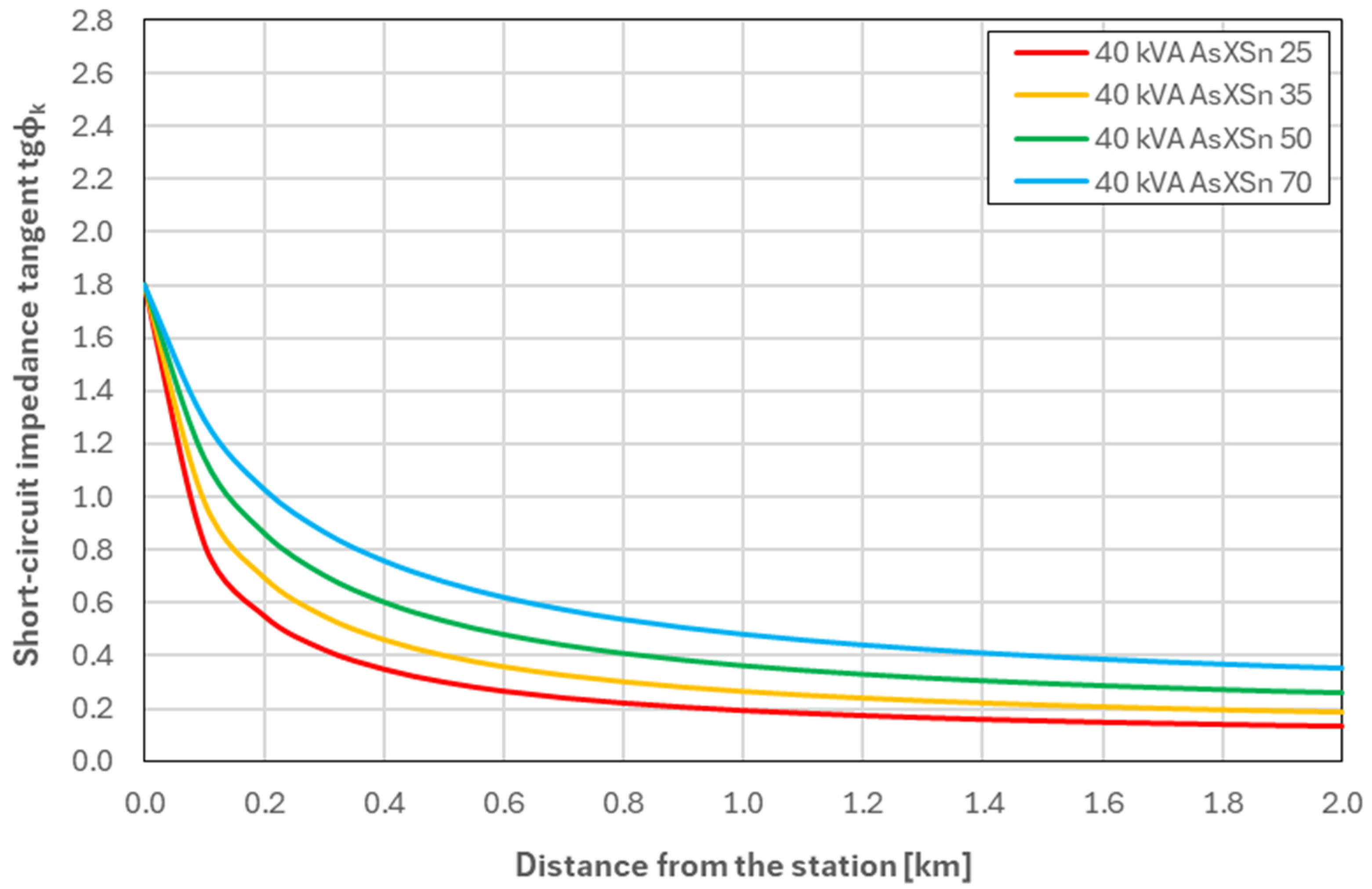
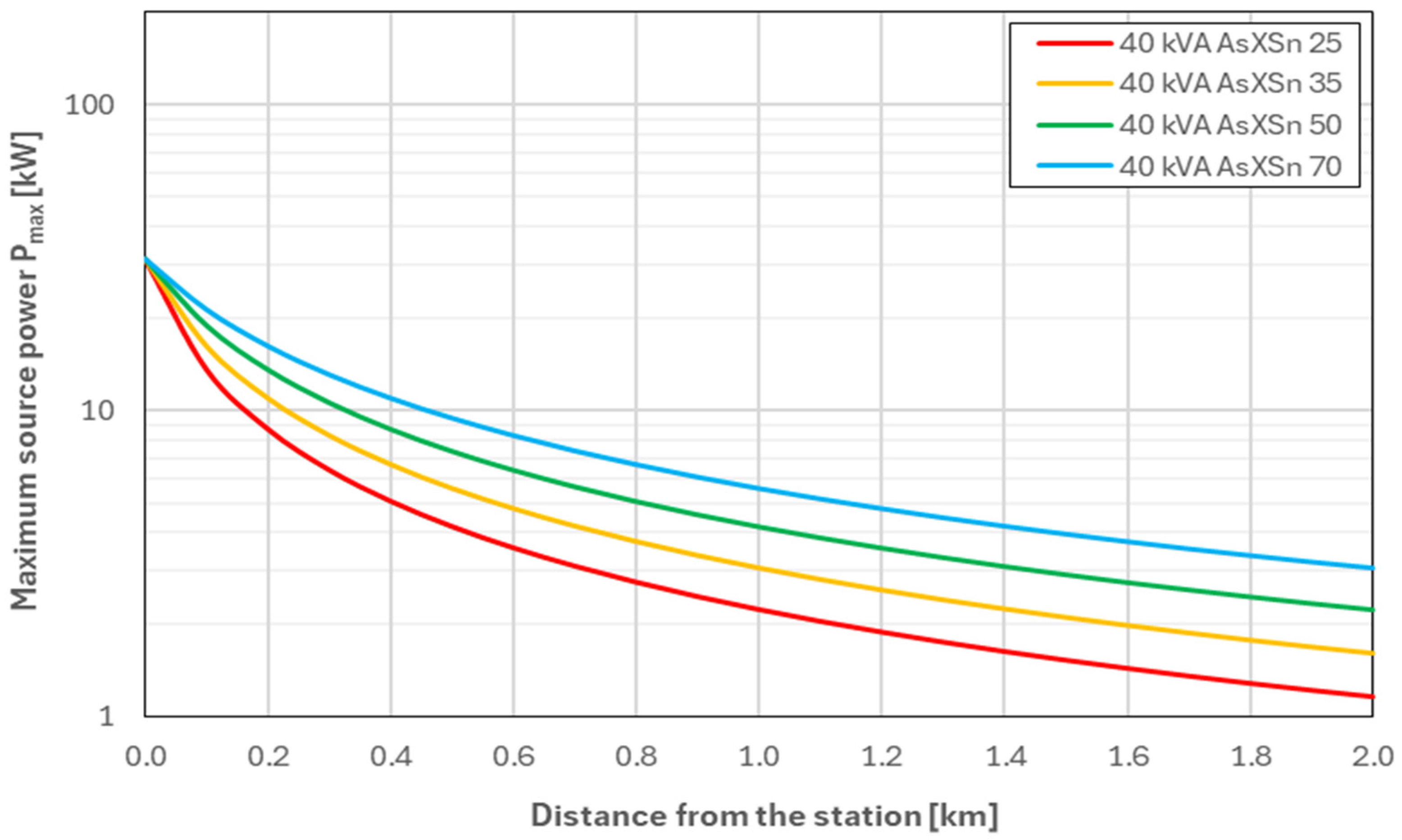
- option W01—network powered by a 40 kVA MV/LV transformer, with AsXSn cables with cross-sections of 25 mm2, 35 mm2, 50 mm2 and 70 mm2 used in the lines,
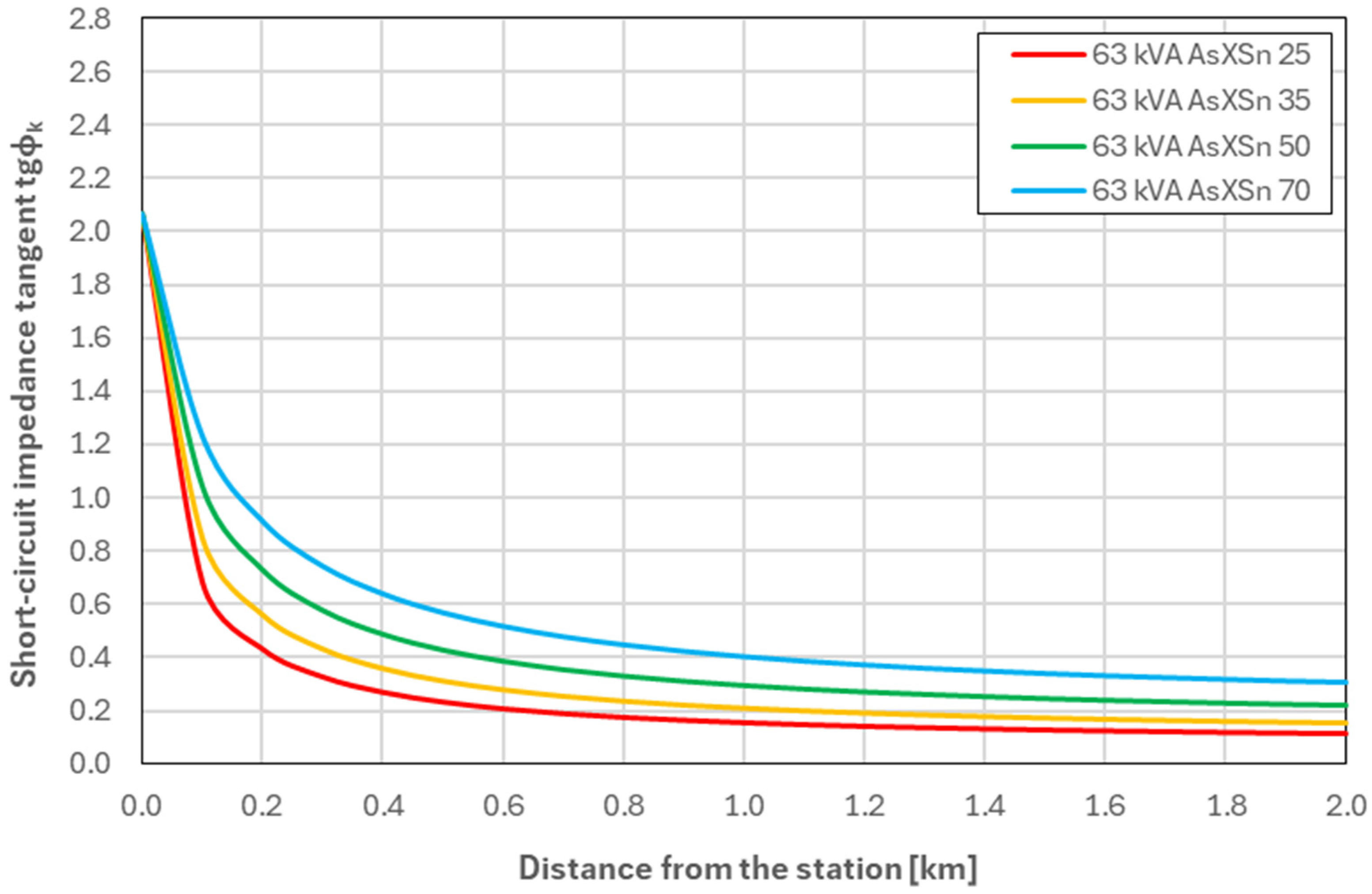
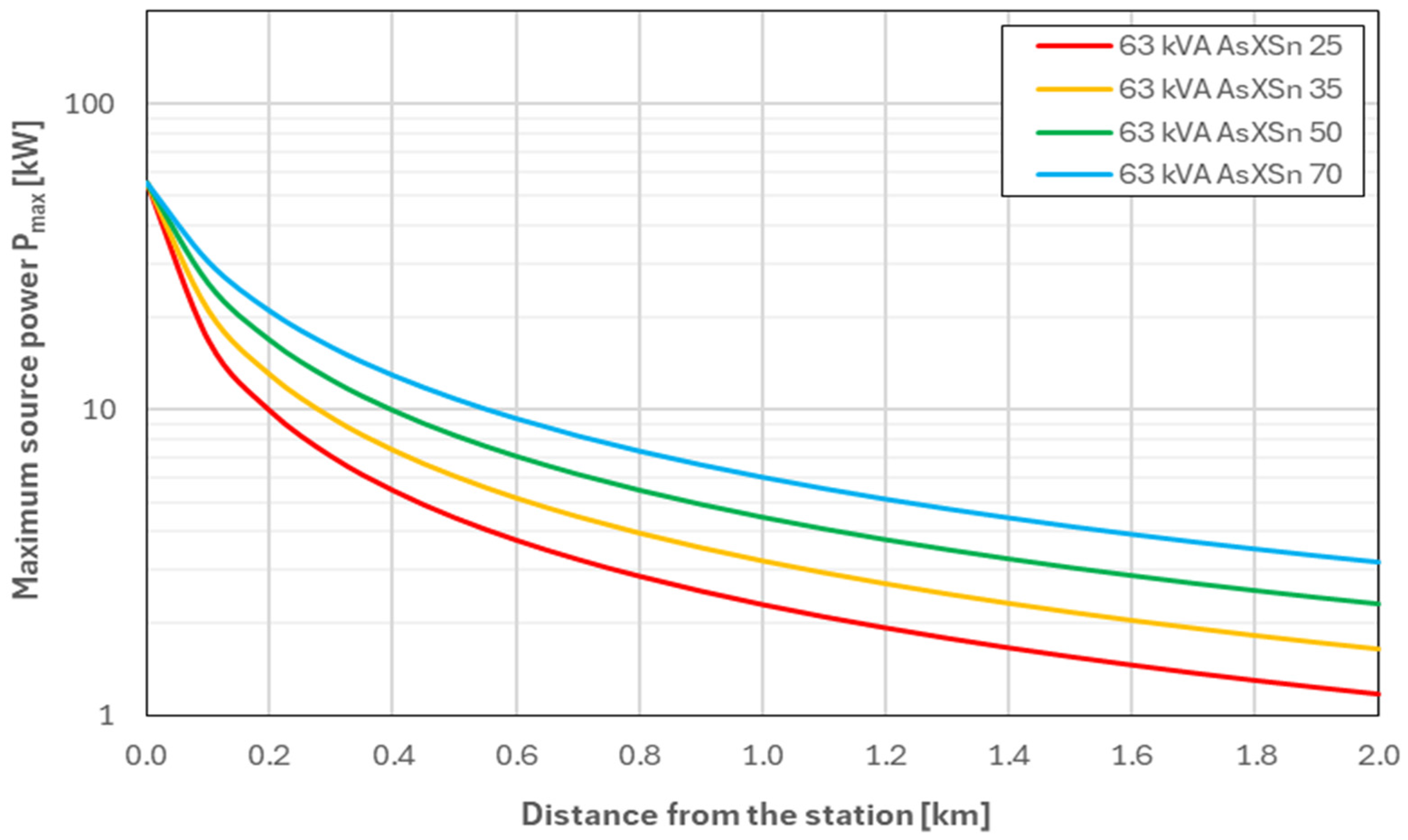
- option W02—network powered by a 63 kVA MV/LV transformer, with AsXSn cables with cross-sections of 25 mm2, 35 mm2, 50 mm2 and 70 mm2 used in the lines,
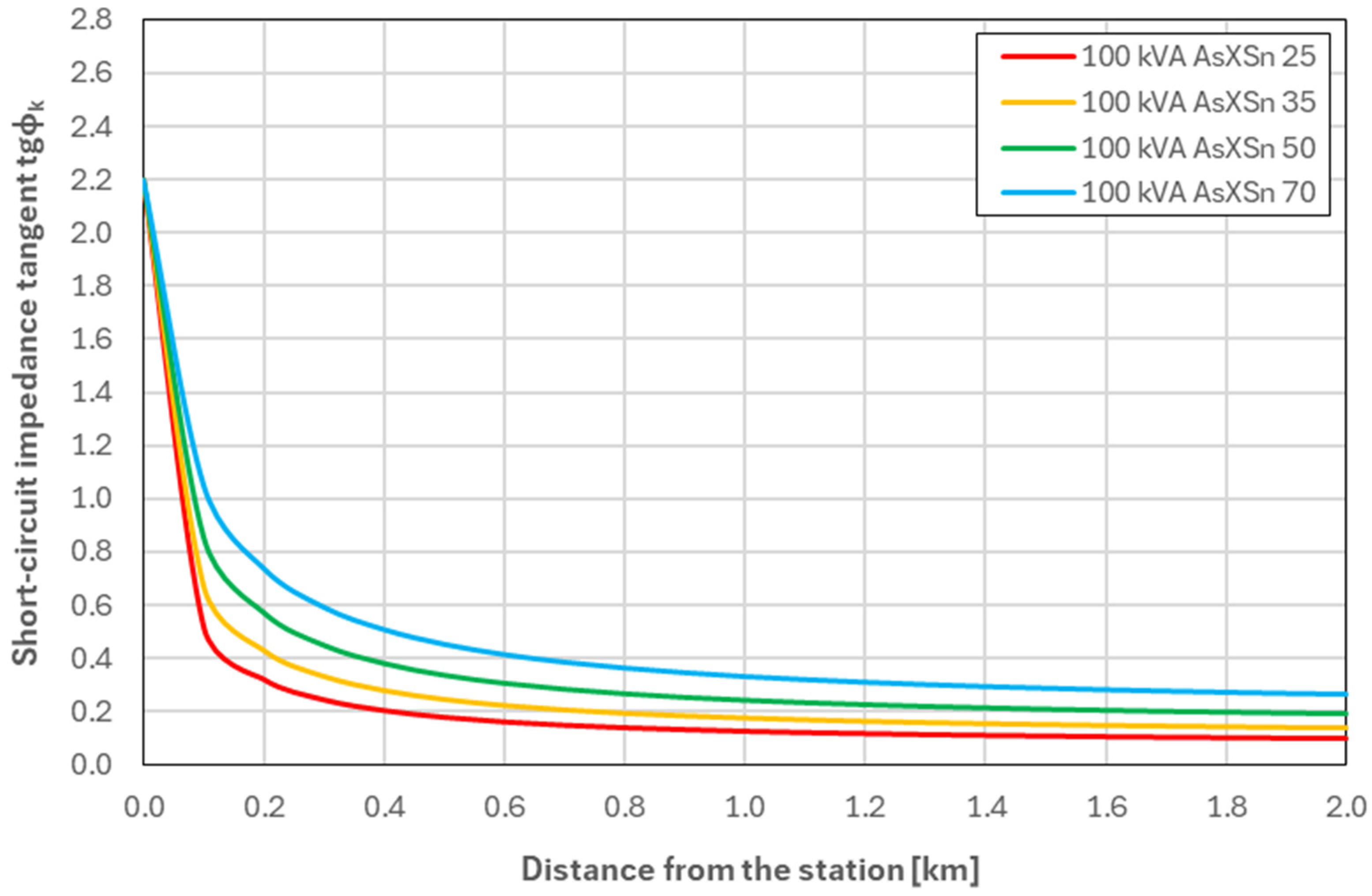
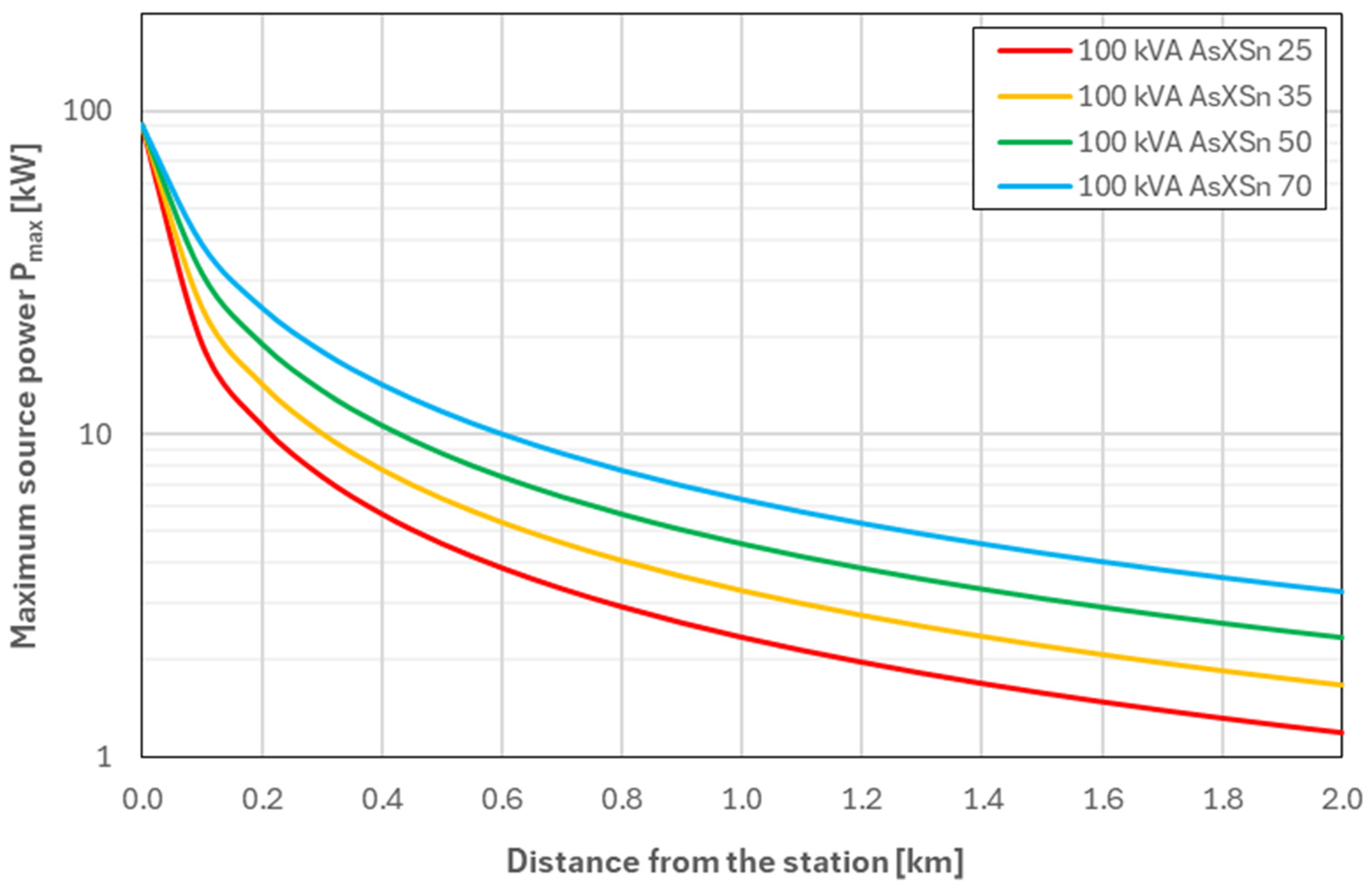
- option W03—network powered by a 100 kVA MV/LV transformer, with AsXSn cables with cross-sections of 25 mm2, 35 mm2, 50 mm2 and 70 mm2 used in the lines,
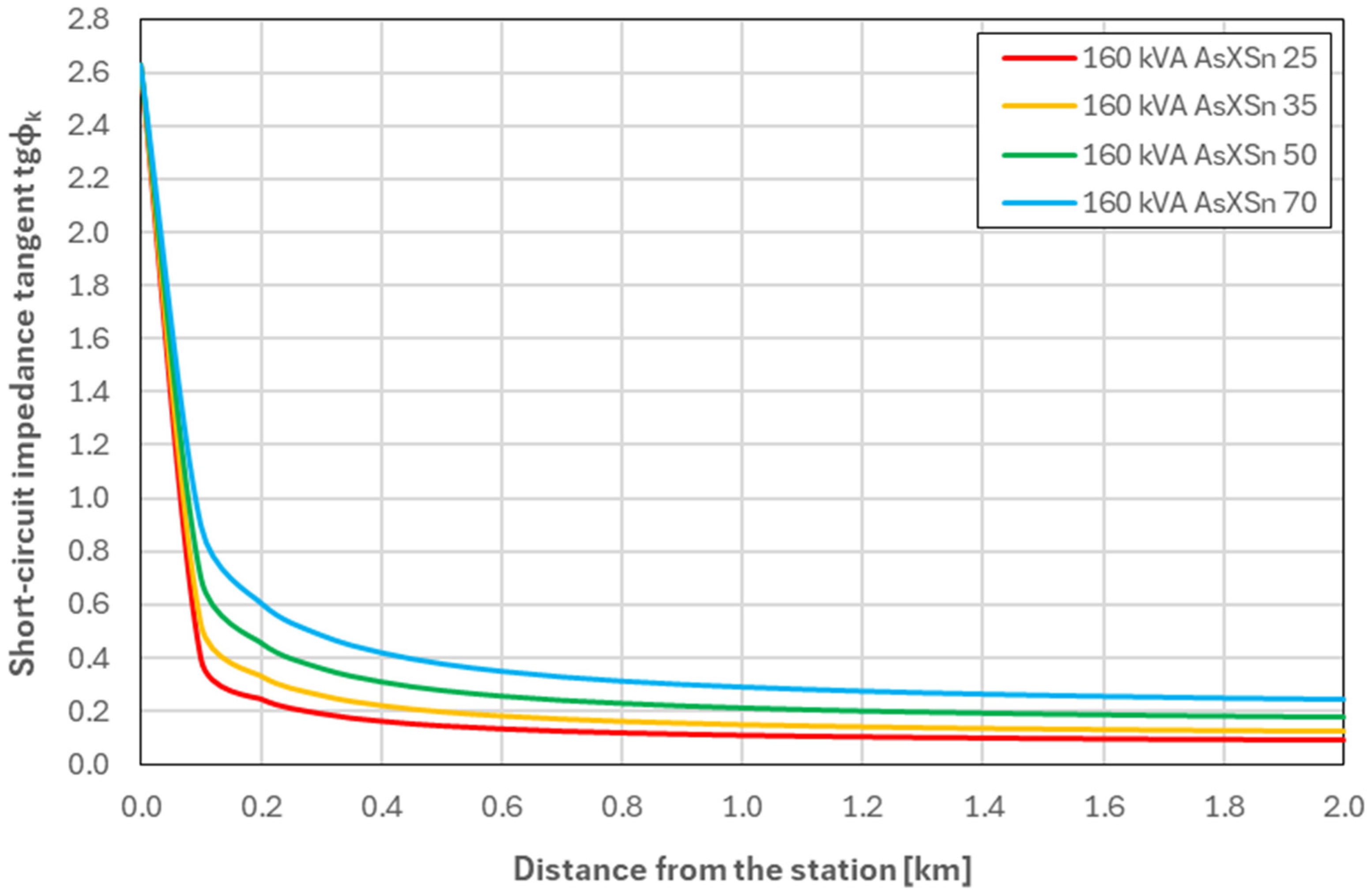
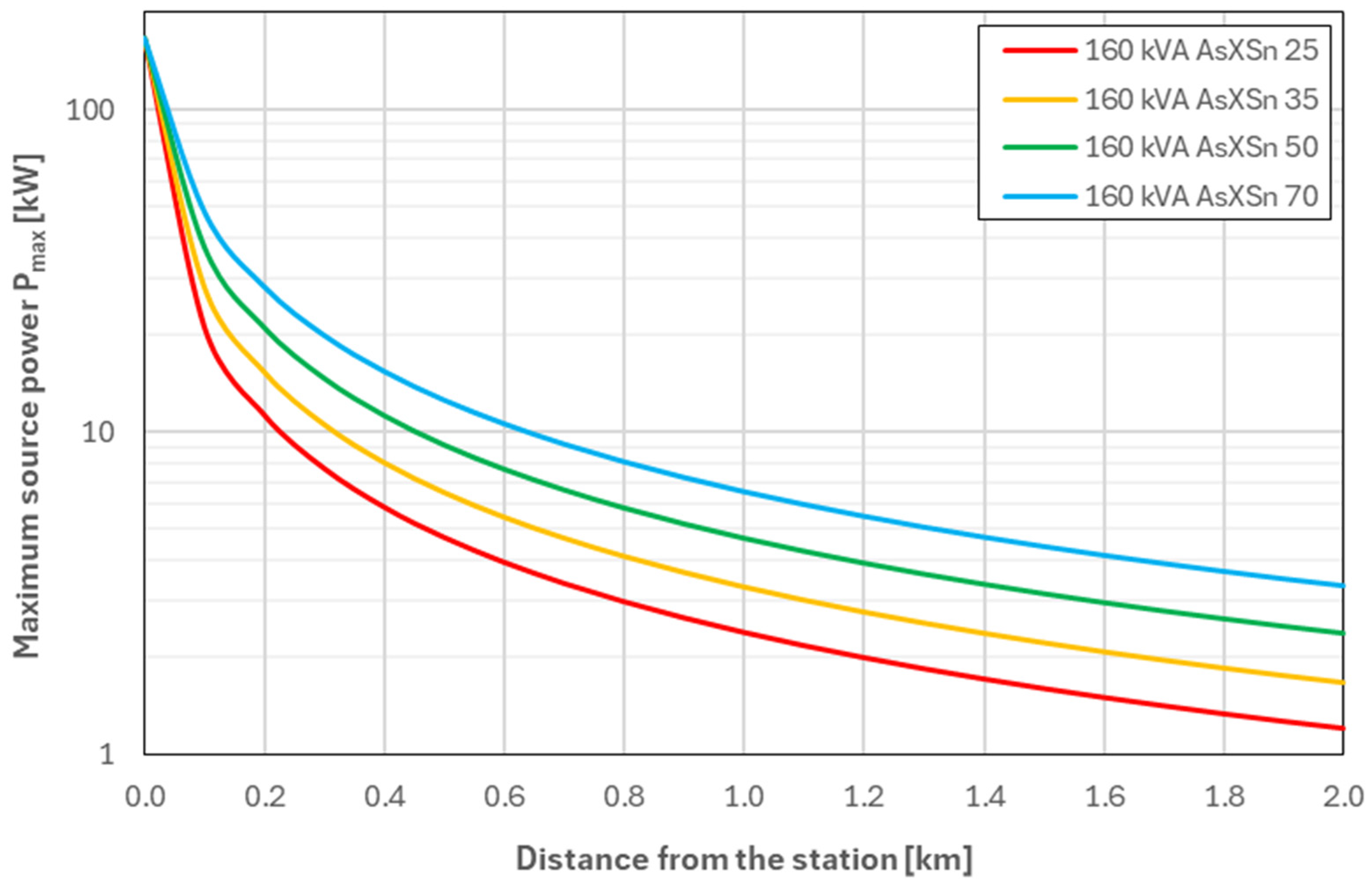
- option W04—network powered by a 160 kVA MV/LV transformer, with AsXSn cables with cross-sections of 25 mm2, 35 mm2, 50 mm2 and 70 mm2 used in the lines.
3. Results and Discussion
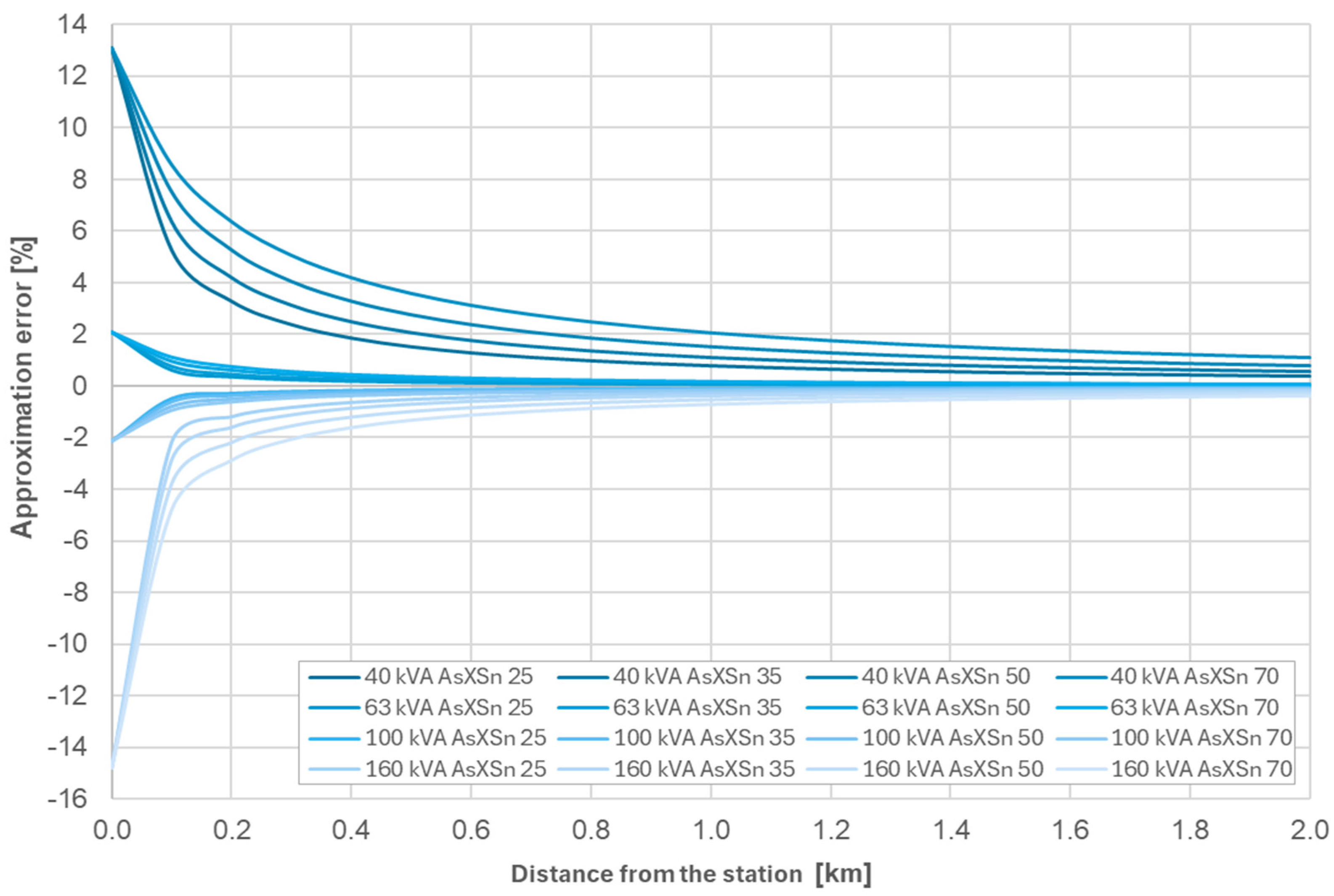
- increasing the transformer power significantly improves the hosting capacity only at a short distance from the substation (up to approximately 0.5 km),
- the impact of increasing the conductor cross-section on the hosting capacity of sources is much greater at the end of the line than at the beginning of the line.
- rated voltage of low-voltage network: Un = 400 V,
- conductivity for aluminium wires: γ = 35 m/(Ωmm2),
- rated load losses of the MV/LV transformer: ΔPCu ≈ 20·ST.
4. Conclusions
Author Contributions
Funding
Data Availability Statement
Conflicts of Interest
References
- Zeraati, M.; Golshan, M.E.H.; Guerrero, J.M. Voltage Quality Improvement in Low Voltage Distribution Networks Using Reactive Power Capability of Single-Phase PV Inverters. IEEE Trans. Smart Grid 2019, 10, 5057–5065. [Google Scholar] [CrossRef]
- Chai, Y.Y.; Guo, L. Distributed Voltage Control of Distribution Network with High Penetration Photovoltaics. Power Syst. Technol. 2018, 42, 738–746. [Google Scholar] [CrossRef]
- Cader, J.; Olczak, P.; Koneczna, R. Regional dependencies of interest in the “My Electricity” photovoltaic subsidy program in Poland. Polityka Energetyczna—Energy Policy J. 2021, 24, 97–116. [Google Scholar] [CrossRef]
- Juarez-Perez, E.J.; Momblona, C.; Casas, R.; Haro, M. Enhanced power-point tracking for high hysteresis perovskite solar cells with a galvanostatic approach. Cell Rep. Phys. Sci. 2024, 5, 101885. [Google Scholar] [CrossRef]
- Al-Saffar, M.; Musilek, P. Reinforcement learning-based distributed BESS management for mitigating overvoltage issues in systems with high PV penetration. IEEE Trans. Smart Grid 2020, 11, 2980–2994. [Google Scholar] [CrossRef]
- Hołdyński, G.; Skibko, Z.; Walendziuk, W. Power and Energy Losses in Medium-Voltage Power Grids as a Function of Current Asymmetry—An Example from Poland. Energies 2024, 17, 3706. [Google Scholar] [CrossRef]
- Liu, B.; Braslavsky, J.H. Robust Dynamic Operating Envelopes for DER Integration in Unbalanced Distribution Networks. IEEE Trans. Power Syst. 2024, 39, 3921–3936. [Google Scholar] [CrossRef]
- Gandhi, O.; Kumar, D.S.; Rodriguez-Gallegos, C.; Srinivasan, D. Review of power system impacts at high PV penetration Part I: Factors limiting PV penetration. Sol. Energy 2020, 210, 181–201. [Google Scholar] [CrossRef]
- Koirala, A.; Van Acker, T.; D’hulst, R.; Van Hertem, D. Hosting capacity of photovoltaic systems in low voltage distribution systems: A benchmark of deterministic and stochastic approaches. Renew. Sustain. Energy Rev. 2022, 15, 111899. [Google Scholar] [CrossRef]
- Hołdyński, G.; Skibko, Z.; Borusiewicz, A.; Marczuk, A.; Koniuszy, A. Effect of Reactive Power Generation in Photovoltaic Installations on the Voltage Value at the Inverter Connection Point. Energies 2024, 17, 4863. [Google Scholar] [CrossRef]
- Zhang, Z.; Zhang, Y.; Yue, D.; Dou, C.; Ding, L.; Tan, D. Voltage Regulation with High Penetration of Low-Carbon Energy in Distribution Networks: A Source–Grid–Load-Collaboration-Based Perspective. IEEE Trans. Ind. Inform. 2022, 18, 3987–3999. [Google Scholar] [CrossRef]
- Gao, Y.; Ai, Q.; Yousif, M.; Wang, X. Source-load-storage consistency collaborative optimization control of flexible DC distribution network considering multi-energy complementarity. Int. J. Electr. Power Energy Syst. 2018, 107, 273–281. [Google Scholar] [CrossRef]
- Mishra, S.; Mallick, R.K.; Nayak, P.; Ramasamy, T.N.; Panda, G. Dynamic power quality disturbance classification in grid-integrated PV systems: Leveraging clark transformed modal voltage and subspace weighted KNN. IEEE Access 2024, 12, 116572–116586. [Google Scholar] [CrossRef]
- Saxena, V.; Kumar, N.; Singh, B.; Panigrahi, B.K. A voltage support control strategy for grid integrated solar PV system during abnormal grid conditions utilizing interweaved GI. IEEE Trans. Ind. Electron. 2020, 68, 8149–8157. [Google Scholar] [CrossRef]
- Murray, W.; Adonis, M.; Raji, A. Voltage control in future electrical distribution networks. Renew. Sustain. Energy Rev. 2021, 146, 111100. [Google Scholar] [CrossRef]
- Azizivahed, A.; Arefi, A.; Ghavidel, S.; Shafie-Khah, M.; Li, L.; Zhang, J.; Catalao, J.P.S. Energy management strategy in dynamic distribution network reconfiguration considering renewable energy resources and storage. IEEE Trans. Sustain. Energy 2019, 11, 662–673. [Google Scholar] [CrossRef]
- Suproniuk, M.; Skibko, Z.; Stachno, A. Diagnostics of some parameters of electricity generated in wind farms. Przegląd Elektrotechniczny 2019, 95, 107–110. [Google Scholar] [CrossRef]
- Zhang, Y.; Zhang, L.; Liu, B.; Chen, J.; Yao, W. Voltage Sag Sensitive Load Type Identification Based on Power Quality Monitoring Data. Int. J. Electr. Power Energy Syst. 2024, 158, 109936. [Google Scholar] [CrossRef]
- Liubčuk, V.; Radziukynas, V.; Kairaitis, G.; Naujokaitis, D. Power Quality Impact and Its Assessment: A Review and a Survey of Lithuanian Industrial Companies. Inventions 2025, 10, 30. [Google Scholar] [CrossRef]
- Lennerhag, O.; Bollen, M.; Ackeby, S.; Rönnnberg, S. Voltage Variations and Intermittent Production; report 14:42; Elforsk: Stockholm, Sweden, July 2014. (In Swedish) [Google Scholar]
- Ahmad, T.; Zhang, H.; Yan, B. A Review on Renewable Energy and Electricity Requirement Forecasting Models for Smart Grid and Buildings. Sustain. Cities Soc. 2020, 55, 102052. [Google Scholar] [CrossRef]
- Seyedzadeh, S.; Rahimian, F.P.; Glesk, I.; Roper, M. Machine Learning for Estimation of Building Energy Consumption and Performance: A Review. Vis. Eng. 2018, 6, 5. [Google Scholar] [CrossRef]
- Sharma, V.; Cortes, A.; Cali, U. Use of Forecasting in Energy Storage Applications: A Review. IEEE Access 2021, 9, 114690–114704. [Google Scholar] [CrossRef]
- Sun, S.; Yang, S.; Yu, P.; Cheng, Y.; Xing, J.; Wang, Y.; Yi, Y.; Hu, Z.; Yao, L.; Pang, X. A Reinforcement Learning-Based Approach for Distributed Photovoltaic Carrying Capacity Analysis in Distribution Grids. Energies 2025, 18, 5029. [Google Scholar] [CrossRef]
- Tang, Y.; Han, Y.; Zhang, W.; Jin, D.; Gao, S.; Zhang, J. Research on Distributed Generation Access to Distribution Network for Siting and Capacity Determination and Reactive Power Optimization. In Proceedings of the 2025 2nd International Symposium on New Energy Technologies and Power Systems (NETPS), Hangzhou, China, 23–25 May 2025; pp. 62–69. [Google Scholar] [CrossRef]
- Lu, J.; Du, H.; Zhao, R.; Li, H.; Tan, Y.; Guo, W. Optimal Scheduling of the Active Distribution Network with Microgrids Considering Multi-Timescale Source-Load Forecasting. Electronics 2024, 13, 3455. [Google Scholar] [CrossRef]
- Cerna, F.V.; Coêlho, J.K.; Fantesia, M.P.; Naderi, E.; Marzband, M.; Contreras, J. Load factor improvement of the electricity grid considering distributed energy resources operation and regulation of peak load. Sustain. Cities Soc. 2023, 98, 104802. [Google Scholar] [CrossRef]
- Wang, X.; Li, F.; Dong, J.; Olama, M.M.; Zhang, Q.; Shi, Q.; Park, B.; Kuruganti, T. Tri-level scheduling model considering residential demand flexibility of aggregated HVACs and EVs under distribution LMP. IEEE Trans. Smart Grid 2021, 12, 3990–4002. [Google Scholar] [CrossRef]
- Antic, T.; Keane, A.; Capuder, T. Solving scalability issues in calculating PV hosting capacity in low voltage distribution networks. arXiv 2023, arXiv:2301.12345. [Google Scholar] [CrossRef]
- Umoh, V.; Davidson, I.; Adebiyi, A.; Ekpe, U. Methods and Tools for PV and EV Hosting Capacity Determination in Low Voltage Distribution Networks—A Review. Energies 2023, 16, 3609. [Google Scholar] [CrossRef]
- Connection Criteria and Technical Requirements for Micro and Small Installations Connected to the Low-Voltage Distribution Network of the Distribution System Operator. Polish Society for Transmission and Distribution of El-Electric Energy. Poznań. 11 August 2014. Available online: https://www.google.com/url?sa=t&source=web&rct=j&opi=89978449&url=https://pgedystrybucja.pl/content/download/acd5ed458bf33f88db89590a78d73af4/file/Kryt_oc_przyl_wytw_nN.pdf%3FinLanguage%3Dpol-PL%26version%3D2%26contentId%3D1041&ved=2ahUKEwjsgtid4peRAxWeAtsEHcKZG20QFnoECBoQAQ&usg=AOvVaw0bdIg8KkYECuH-_Y0XIrOZ (accessed on 20 October 2025). (In Polish).
- Lubośny, Z. Wind Power Plants in the Electric Power System; Scientific and Technical Publishers: Warsaw, Poland, 2007. (In Polish) [Google Scholar]
- Qi, X.G.; Xi, P.; Liu, H.; Xu, Z. Analysis of Distribution Network’s Acceptance Capacity for Distributed Photovoltaics. Adv. Electr. Power Energy 2017, 5, 143–152. [Google Scholar] [CrossRef]
- Yuan, J.; Weng, Y.; Tan, C.-W. Determining Maximum Hosting Capacity for PV Systems in Distribution Grids. Int. J. Electr. Power Energy Syst. 2022, 135, 107342. [Google Scholar] [CrossRef]
- Muñoz-Delgado, G.; Contreras, J.; Arroyo, J.M. Multistage generation and network expansion planning in distribution systems considering uncertainty and reliability. IEEE Trans. Power Syst. 2016, 5, 3715–3728. [Google Scholar] [CrossRef]
- Zakariazadeh, A.; Jadid, S.; Siano, P. Stochastic multi-objective operational planning of smart distribution systems considering demand response programs. Electr. Power Syst. Res. 2014, 111, 156–168. [Google Scholar] [CrossRef]
- Modi, G.; Singh, B. Power quality improvement in solar energy conversion system integrated to weak ac grid. J. Inst. Eng. Ser. B 2024, 105, 1511–1526. [Google Scholar] [CrossRef]
Disclaimer/Publisher’s Note: The statements, opinions and data contained in all publications are solely those of the individual author(s) and contributor(s) and not of MDPI and/or the editor(s). MDPI and/or the editor(s) disclaim responsibility for any injury to people or property resulting from any ideas, methods, instructions or products referred to in the content. |
© 2025 by the authors. Licensee MDPI, Basel, Switzerland. This article is an open access article distributed under the terms and conditions of the Creative Commons Attribution (CC BY) license (https://creativecommons.org/licenses/by/4.0/).
Share and Cite
Hołdyński, G.; Skibko, Z.; Firlit, A. An Indicator for Assessing the Hosting Capacity of Low-Voltage Power Networks for Distributed Energy Resources. Energies 2025, 18, 6315. https://doi.org/10.3390/en18236315
Hołdyński G, Skibko Z, Firlit A. An Indicator for Assessing the Hosting Capacity of Low-Voltage Power Networks for Distributed Energy Resources. Energies. 2025; 18(23):6315. https://doi.org/10.3390/en18236315
Chicago/Turabian StyleHołdyński, Grzegorz, Zbigniew Skibko, and Andrzej Firlit. 2025. "An Indicator for Assessing the Hosting Capacity of Low-Voltage Power Networks for Distributed Energy Resources" Energies 18, no. 23: 6315. https://doi.org/10.3390/en18236315
APA StyleHołdyński, G., Skibko, Z., & Firlit, A. (2025). An Indicator for Assessing the Hosting Capacity of Low-Voltage Power Networks for Distributed Energy Resources. Energies, 18(23), 6315. https://doi.org/10.3390/en18236315

