1. Introduction
The transportation sector is a major contributor to global greenhouse gas (GHG) emissions and fossil fuel consumption, driving an urgent quest for sustainable urban mobility solutions [
1,
2,
3]. In this landscape, electric micromobility has emerged as a disruptive force, with free-floating shared e-scooters (FFSE) proliferating across global cities at an unprecedented pace since their debut in 2017 [
4]. Touted as a convenient, flexible, and eco-friendly solution for short-distance travel and first- and last-mile connections, FFSE systems have been aggressively marketed as a catalyst for reducing urban congestion and transitioning away from car-dependent travel [
5,
6].
Initial enthusiasm, however, has been tempered by growing concerns over safety, public space usage, equity, and perhaps most critically, their purported environmental benefits [
7,
8,
9]. A nascent but rapidly expanding body of scientific literature has begun to challenge the simplistic “green” narrative, revealing that the environmental footprint of FFSE extends far beyond their zero-tailpipe operation [
10,
11]. Life Cycle Assessment (LCA) studies have highlighted that the significant embedded emissions from manufacturing, coupled with the carbon-intensive logistics of daily collection for charging and rebalancing, can drastically undermine their sustainability credentials [
12,
13].
Central to this debate is the concept of modal substitution. The net environmental impact of FFSE is not intrinsic but is contingent upon the transportation modes they displace [
14,
15]. Emerging evidence presents a complex and often contradictory picture: while some studies report significant substitution of car trips, particularly in North American contexts [
5,
16], others, especially in European cities with robust public transit systems, find that FFSE primarily replace walking, cycling, and public transport trips—modes with minimal or zero emissions—potentially leading to a net increase in emissions [
12,
15,
17]. This disparity underscores the profound influence of local urban form, travel culture, and existing mobility infrastructure on the environmental outcomes of FFSE deployment [
18,
19].
Furthermore, operational characteristics, such as vehicle service life and daily utilization rate, have been identified as critical determinants of life cycle impacts [
20,
21]. Short vehicle lifespans, often driven by vandalism, rapid technological obsolescence, or harsh operating conditions, prevent amortizing the high manufacturing costs, particularly those associated with lithium-ion batteries and aluminum frames [
22,
23]. Low daily turnover rates (DTR) further exacerbate this issue, leading to poor energy efficiency and significant “wasted” electricity during idle times [
18,
24,
25]. Despite a surge in single-city case studies and theoretical models, a considerable research gap persists. There is a lack of comparative, multi-city analyses that systematically quantify the life cycle energy and environmental impacts of FFSE across diverse operational, geographic, and modal-substitution contexts. Previous reviews have synthesized findings but call for more empirical, data-driven assessments that can isolate key performance drivers [
26,
27]. Understanding the interplay between vehicle durability, operational efficiency, local electricity grids, and user behavior is essential for crafting effective, evidence-based policies and business strategies that can steer FFSE toward fulfilling their promised role in sustainable urban transport. There is a pressing need for a comprehensive, comparative LCA that systematically analyses a large sample of cities under a standardized framework. Such a study must account for the vast heterogeneity in operational practices (e.g., daily turnover rate, average trip distance), local conditions (e.g., electricity grid mix), and crucially, modal substitution patterns. Furthermore, while previous research has identified key factors influencing environmental performance, their relative importance and interactions across different urban contexts remain poorly understood.
To address this gap, this study employs an attributional life cycle assessment (aLCA) framework integrated with modal substitution analysis to evaluate the direct and net impacts of FFSE systems on GHG emissions and fossil energy consumption across 32 cities in Europe and North America. By integrating actual operational data on vehicle lifespan, daily utilization, and city-specific modal substitution patterns, this research aims:
- (1)
To evaluate the energy and environmental impact intensities of FFSE systems and analyze the distribution of these impacts across the vehicle’s life cycle stages.
- (2)
To identify the critical breakeven points—in terms of vehicle service life and total travel distance—required for FFSE systems to achieve net fossil energy savings and net greenhouse gas emission reduction benefits.
- (3)
To analyze the variability in energy and environmental performance and breakeven thresholds across different cities, examining the influence of local factors such as operational efficiency, modal substitution patterns, and electricity grid carbon intensity.
By providing a granular, evidence-based, and comparative analysis, this study moves beyond simplistic dichotomies. It offers a nuanced and contingent understanding of the conditions under which FFSE can genuinely contribute to urban sustainability. The findings aim to equip policymakers, urban planners, and mobility operators with the empirical evidence needed to design targeted regulatory frameworks, business models, and urban integration strategies. The ultimate goal is to maximize the environmental benefits of shared e-scooter systems while mitigating their drawbacks, thereby guiding their transition from a novel convenience to a legitimate, optimized pillar of sustainable urban transportation.
2. Materials and Methods
This study employs a multi-city life cycle assessment to evaluate the energy and environmental impacts of FFSE systems. First, using the “passenger-kilometer” (i.e., pkm) as the functional unit and LCA modeling to calculate the direct GHG emission intensity (GI, in g CO2-eq/pkm) and fossil energy consumption intensity (FI, in g oil-eq/pkm) of shared e-scooters. Subsequently, by incorporating city-specific operational data such as daily turnover rate, trip distance, and grid carbon intensity, and modelling three rebalancing intensity scenarios, the study quantifies the critical thresholds—service days and total life cycle mileage—required for each city’s system to achieve net GHG reduction benefits and fossil energy savings. Finally, using a modal substitution model, the system’s direct environmental impact is compared with the environmental benefits of the displaced transportation modes. This allows for the comprehensive calculation of net environmental benefits across different life cycle mileages and for an analysis of the contribution distribution across life cycle stages, thereby providing a multidimensional assessment of the overall environmental sustainability of shared e-scooter systems.
The analysis covers 32 cities across Europe and North America, allowing for a comparative assessment of system performance under diverse urban conditions. The profiles of these sample cities are presented in
Table 1. The selection of the 32 cities was guided by three primary criteria: (1) geographical diversity, encompassing a range of urban contexts across Europe and North America; (2) variability in key urban transport characteristics, including population density, car ownership, and public transit share; and (3) availability of reliable operational and modal substitution data from municipal reports, operator disclosures, and peer-reviewed studies. This approach ensures a representative sample that captures the heterogeneity of FFSE deployment environments, enabling robust cross-city comparisons.
2.1. Life Cycle Assessment Framework
Life cycle assessment is a standardized methodology for evaluating the environmental and energy impacts of a product or service and has been widely applied to assess the sustainability of transportation systems. In this study, the LCA was conducted using SimaPro 9.0 (Amersfoort, The Netherlands), a leading LCA software, in conjunction with the Ecoinvent life cycle inventory database (Zürich, Switzerland). The analysis follows the standardized LCA procedures outlined by the International Organization for Standardization [
28,
29].
2.1.1. Goal and Scope Definition
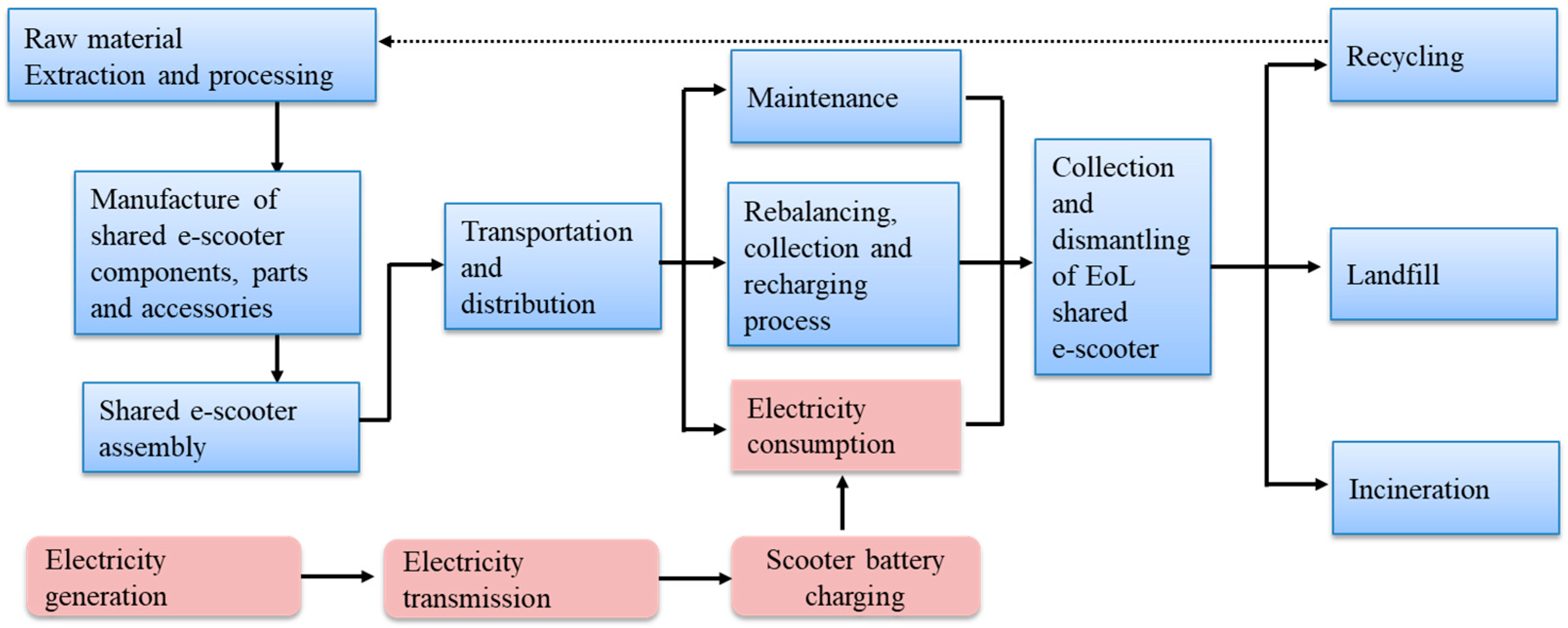
In the life cycle assessment of transportation systems, the vehicle’s life cycle is typically divided into three main stages: manufacturing, use, and end-of-life. Accordingly, the system boundary for the shared e-scooter in this study is delineated in
Figure 1. The manufacturing phase includes raw material extraction, component production, and vehicle assembly. The use phase encompasses direct energy consumption during operation, routine maintenance, and logistical activities required to sustain service. The end-of-life phase involves disassembly, material recovery, and waste treatment.
It is imperative to note that, to enhance the operational efficiency of shared e-scooter systems, operators must frequently rebalance vehicles—relocating them from high-density areas to zones with higher demand but insufficient supply. These rebalancing activities, which often involve fossil-fuel-powered vehicles for collection, transport, and redistribution, contribute significantly to the system’s overall energy consumption and emissions. Therefore, they are explicitly included within the use phase of the LCA.
Furthermore, the use phase also accounts for the electricity consumed during e-scooter operation, as well as the energy used for battery collection and charging management—namely, periodic charging. These elements collectively determine the resource and environmental impacts of shared e-scooters during the use stage and are therefore integral to a comprehensive life cycle assessment.
The functional unit is defined as one passenger-kilometer traveled (pkm), enabling consistent comparisons across transportation modes and systems. This unit reflects the service provided by the FFSE system and facilitates the assessment of the efficiency of mobility service delivery. The greenhouse gas emission intensity (
GI) is expressed in grams of CO
2-equivalent per passenger-kilometer (g CO
2-eq/pkm), while fossil energy consumption intensity (
FI) is expressed in grams of oil-equivalent per passenger-kilometer (g oil-eq/pkm). These intensity metrics are calculated using Equations (1) and (2):
where
represents the total life cycle GHG emissions (sum of emissions from manufacturing, use, and end-of-life stages),
denotes the total life cycle fossil energy consumption, and
is the cumulative passenger-kilometers traveled during the vehicle’s service life (in days). The
is calculated as shown in Equation (3):
The daily turnover rate (DTR), defined as the average number of trips per e-scooter per day, serves as a key operational efficiency indicator that significantly influences the amortization of manufacturing impacts over the functional output.
2.1.2. Life Cycle Inventory Analysis
The life cycle inventory compilation involved extensive data collection from multiple sources to ensure representativeness and accuracy. Primary data on e-scooter characteristics and operational parameters were obtained from industry reports, municipal transportation agencies, and shared mobility operators. Secondary data for background processes were sourced from the Ecoinvent database and peer-reviewed literature.
A representative shared that the e-scooter weighed 15 kg (10–19 kg depending on model), with the material composition primarily comprising aluminum alloys (for the frame and components), lithium-ion batteries, steel, plastics, rubber, and electronic components [
10,
20,
24,
30]. The manufacturing inventory includes all material inputs, energy consumption during production, and transportation of components to assembly facilities.
Operational energy consumption ranges from 1.09 to 2.15 kWh per 100 km, based on manufacturer specifications and empirical studies [
4,
6,
10,
11,
13,
23,
27,
30,
31,
32,
33,
34]. The carbon intensity of electricity generation varies significantly across regions, with values ranging from 33.58 g CO
2-eq/kWh (Norway, hydro-dominated) to 986.13 g CO
2-eq/kWh (Alberta, Canada, coal-dominated), as detailed in
Table 2 [
35].
The rebalancing and charging process (R&C) for the FFSE operation is a key determinant of operational efficiency. It adds approximately 0.05–0.15 km of support vehicle travel per kilometer of e-scooter service, with an average value of 0.1 km based on operator data [
6,
10,
20,
26,
30,
36,
37]. These logistics activities were modeled using average emission factors of 237 g CO
2-eq/km and energy consumption of 76 g oil-eq/km for vans [
6,
10,
20,
26,
30,
35,
36,
37]. The parameter a represents the distance traveled by support vehicles per km of e-scooter service. Given the considerable uncertainty associated with its close relationship with the operational status of the FFSE system and urban form, this study establishes three distinct rebalancing intensity scenarios to systematically evaluate its influence on system-wide environmental and energy performance: Low-intensity scenario (a = 0.05), Baseline scenario (a = 0.10), and High-intensity scenario (a = 0.15).
End-of-life processing assumes a 90% recycling rate for metallic components, with the remaining materials directed to appropriate waste management pathways, including recycling of electronic components, energy recovery through incineration, and landfilling of non-recoverable materials [
12,
13,
20,
22,
30,
34,
38]. The inventory accounts for transportation to recycling facilities and the environmental credits associated with material recovery.
Table 3 provides a comprehensive overview of the inventory data for each life cycle stage, including quantities of materials, energy inputs, and emissions.
Table 4 presents city-specific operational data, including daily turnover rates and average trip distances, which show considerable variation across cities, reflecting differences in usage patterns and operational efficiency.
2.1.3. Impact Assessment
The life cycle impact assessment was conducted using the ReCiPe 2016 (Hierarchist) method, which provides a harmonized framework for converting inventory data into environmental impact scores. The evaluation focuses on two critically relevant impact categories: “Global warming” (measured in kg CO2-equivalent) and “Fossil resource scarcity” (measured in kg oil-equivalent). These categories were selected for their direct relevance to energy and climate policy objectives.
The ReCiPe method was applied using characterization factors that convert emissions of various greenhouse gases (CO2, CH4, N2O, etc.) into CO2 equivalents based on their 100-year global warming potentials. Similarly, fossil resource extraction was converted to oil-equivalents based on the inherent energy content of different fossil fuels.
To address uncertainties in input parameters and model assumptions, a comprehensive uncertainty analysis was performed using Monte Carlo simulation with 10,000 iterations. This probabilistic approach quantifies the variability and uncertainty in the results, providing confidence intervals (95%) for all impact estimates. Key sources of uncertainty include vehicle lifespan estimates, daily utilization rates, electricity grid composition, and rebalancing efficiency.
2.2. Calculation of Net Environmental and Energy Benefits
The net benefits of FFSE systems in terms of GHG emissions (
GB) and fossil energy consumption (
FB) were calculated using Equations (4) and (5).
Here,
and
represent the emission and energy intensity of shared e-scooters.
denotes the share of e-scooter trips displacing mode
i (automobile, public transit, privately-owned bike, or walking), and
and
are the corresponding GHG emissions and fossil energy consumption intensity for each mode (
Table 5).
is the share of newly generated trips that would not have occurred without e-scooter availability. Modal substitution rates for each city, derived from transportation surveys and departmental reports, are provided in
Table 6.
A negative value for GB or FB net GHG emissions reduction and fossil energy savings. In contrast, a positive value indicates that the FFSE system results in an overall increase in GHG emissions or energy use.
3. Results
This study presents a comprehensive life cycle assessment of the energy and environmental impacts of FFSE systems across 32 cities in Europe and North America. The results are structured as follows: first, we identify the critical operational thresholds required for these systems to achieve net environmental benefits; second, we quantify the benefits across different vehicle lifespans; and finally, we analyze the composition of environmental impacts throughout the vehicle’s life cycle.
3.1. Breakeven Points for Net Energy Savings and Net GHG Emission Reduction Benefits
3.1.1. Breakeven Point for Net Fossil Energy Savings
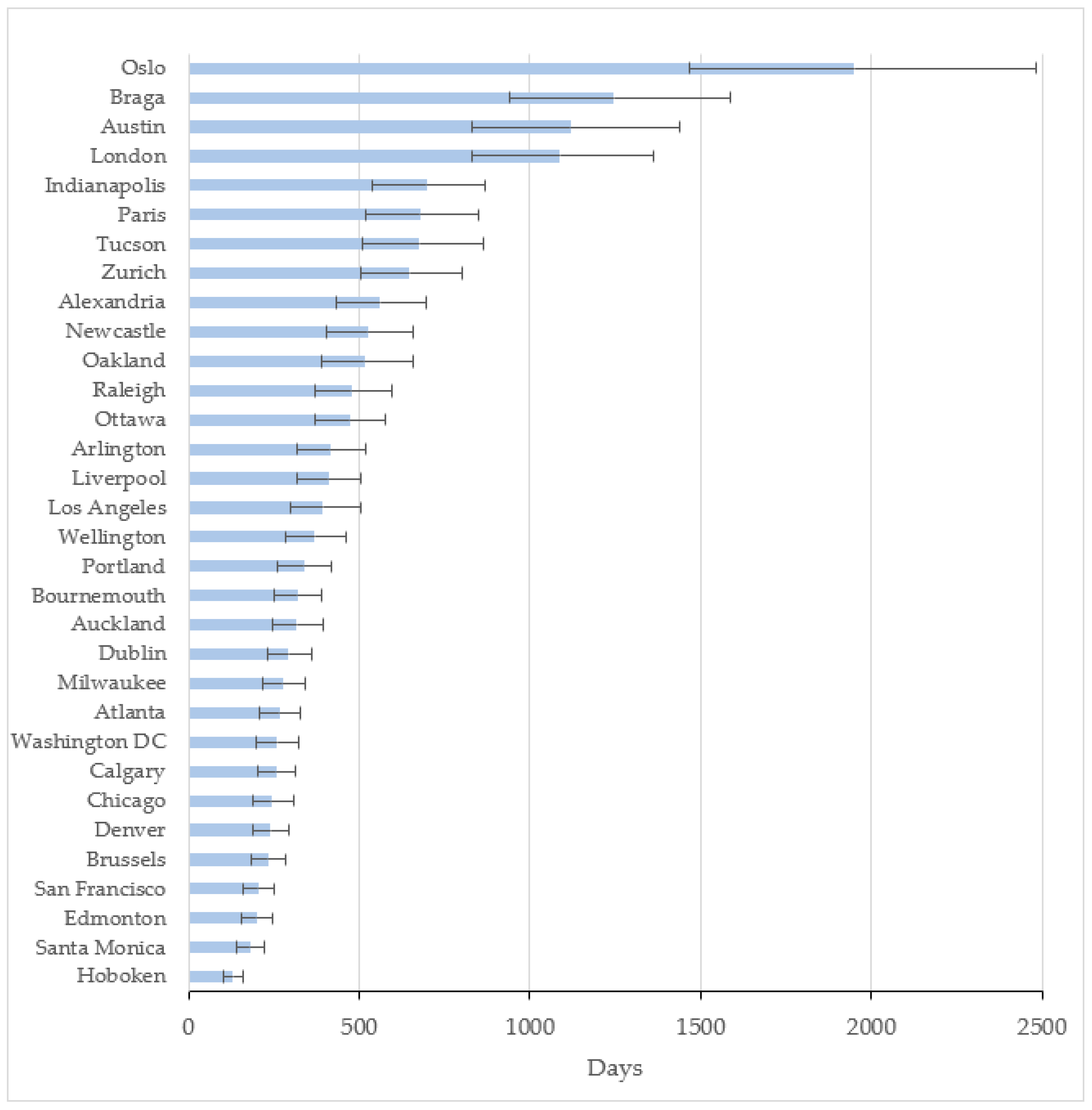
Under the baseline rebalancing intensity scenario (a = 0.1), the required service life for an FFSE system to achieve net fossil energy savings varies dramatically across cities, reflecting differences in local operational efficiency and modal substitution patterns (see
Figure 2). Cities with high daily turnover rates (DTR) and favorable modal substitution (i.e., high car displacement) exhibited the lowest thresholds. For instance, Hoboken required only 129.5 days on average, while Santa Monica, Edmonton, and San Francisco required 181.2, 198.5, and 205.0 days, respectively. In contrast, cities with lower DTRs or a higher share of displaced walking and public transit demonstrated significantly higher thresholds. Oslo required an average of 1951.4 days, with Braga, Austin, and London also requiring extensive service periods of 1245.7, 1118.1, and 1087.0 days, respectively.
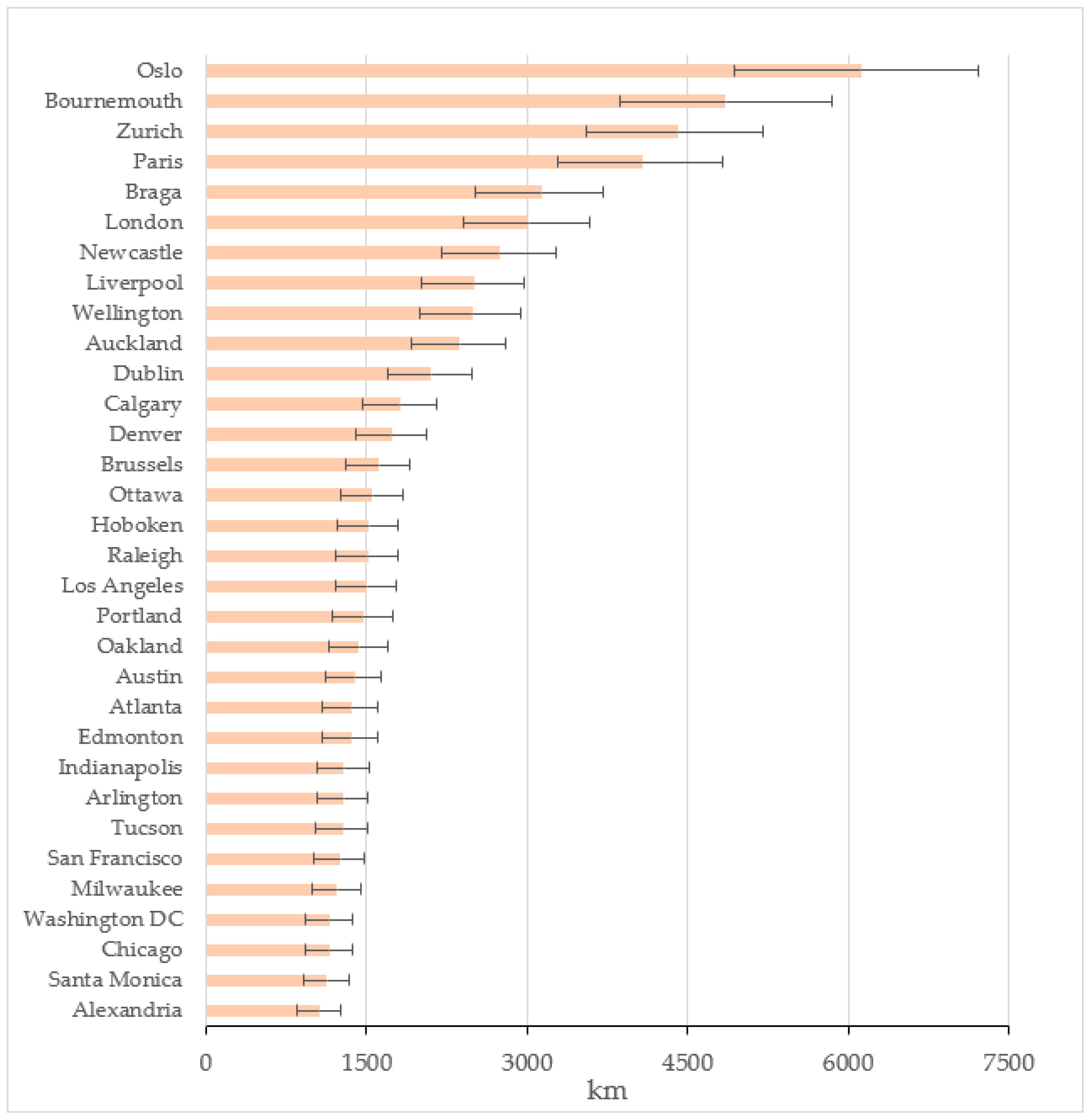
A parallel analysis was conducted for the Vehicle Kilometers Traveled (VKT) threshold, representing the total life cycle mileage an e-scooter must accumulate to achieve net fossil energy savings (
Figure 3). The results followed a similar city-ranking pattern. Alexandria had the lowest VKT threshold at 1058.1 km, followed by Santa Monica (1129.1 km) and Chicago (1152.3 km). Conversely, cities like Oslo, Bournemouth, and Zürich required exceptionally high VKT thresholds of 6118.0 km, 4857.5 km, and 4408.2 km, respectively, to offset their initial manufacturing and operational energy burdens.
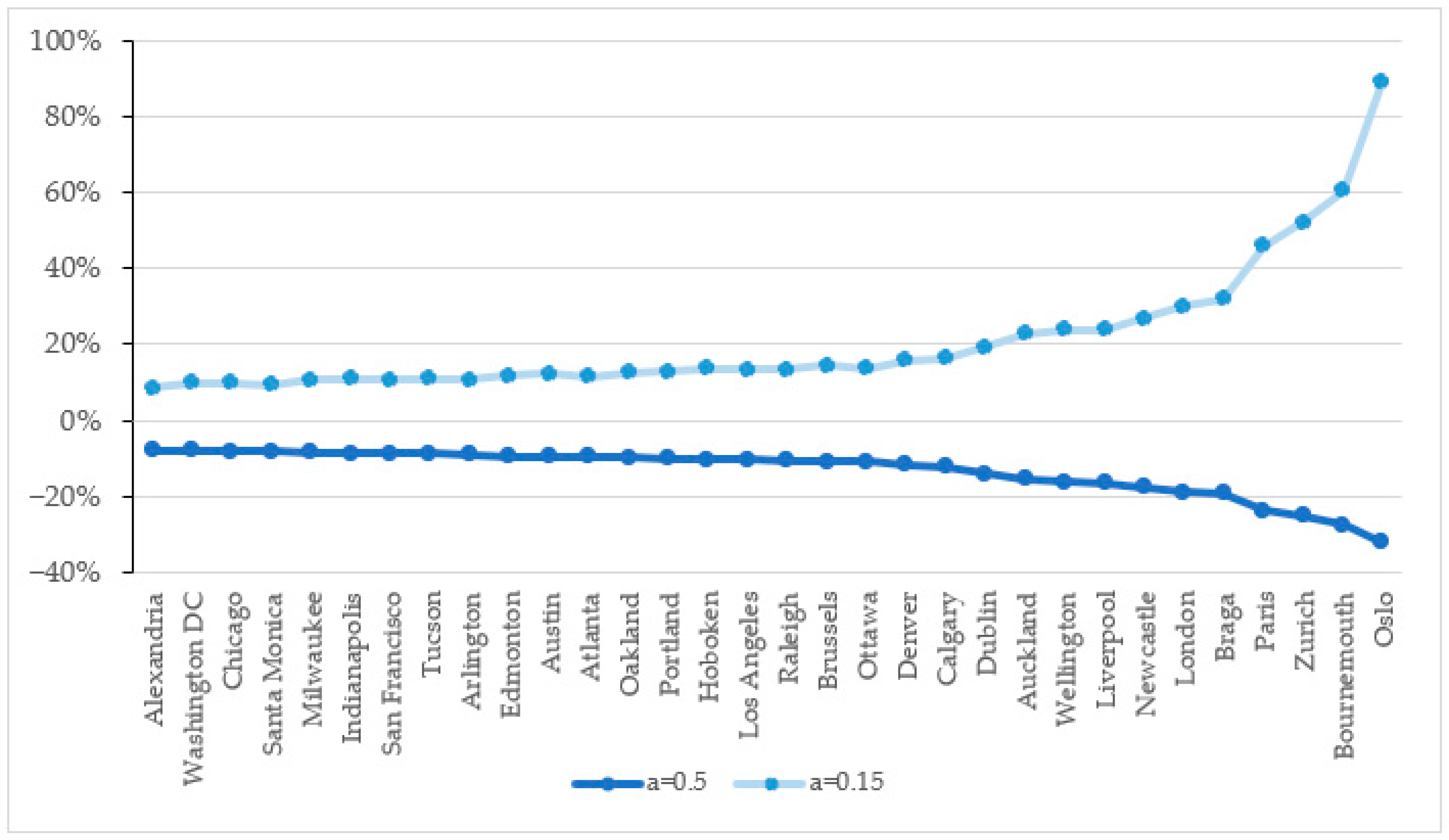
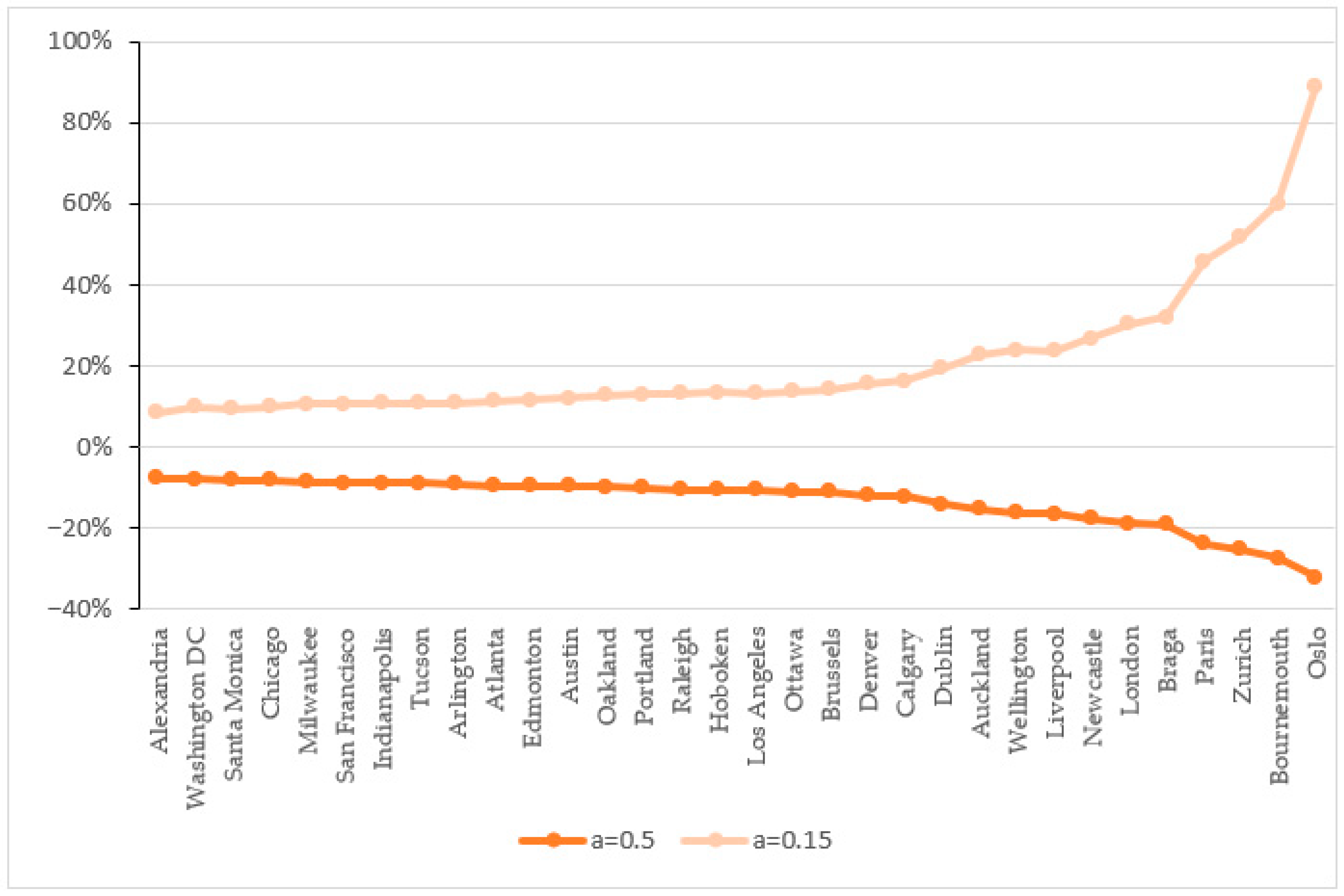
The sensitivity of these thresholds to rebalancing intensity was profound (see
Figure 4 and
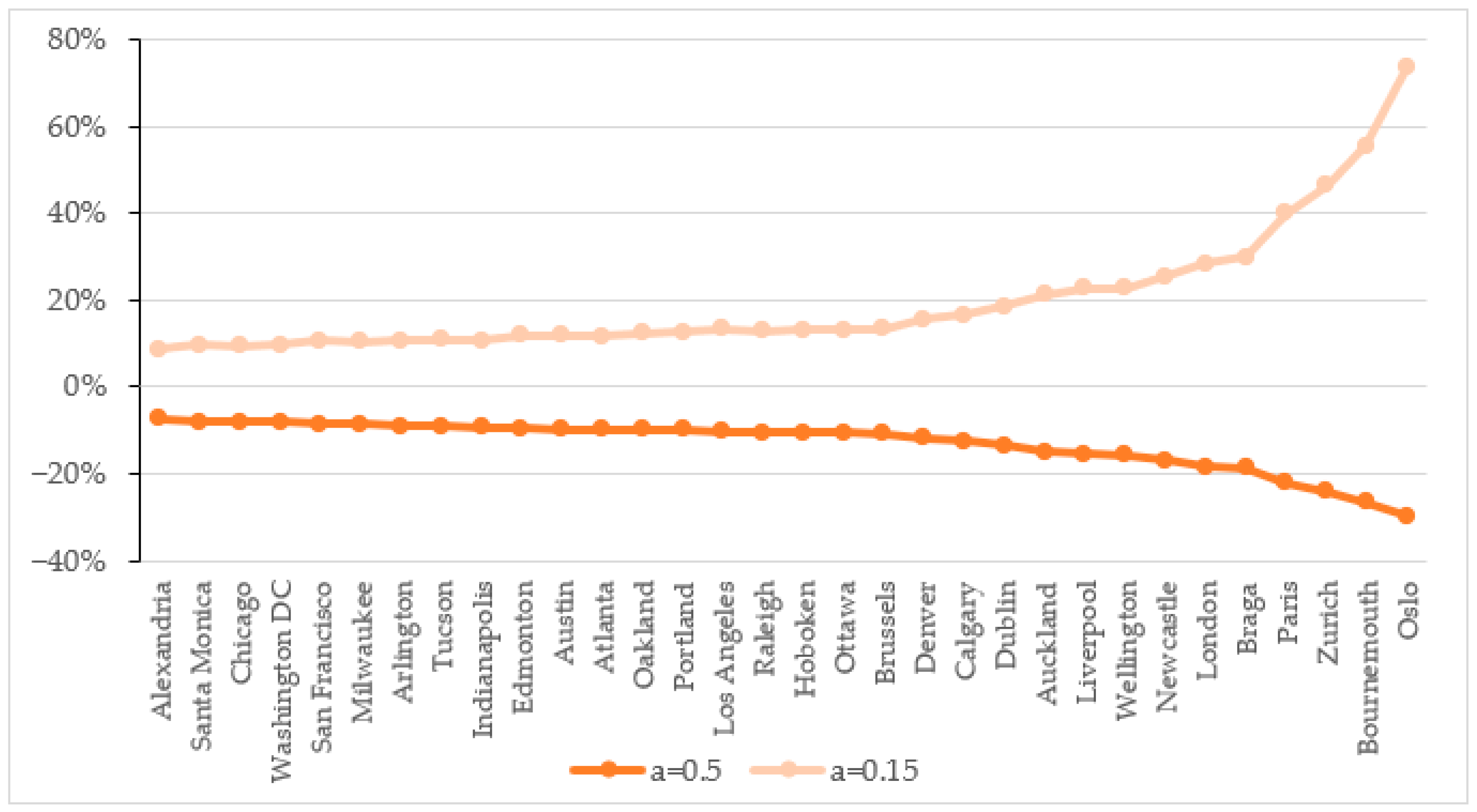
Figure 5). When rebalancing, intensity decreased to the low scenario (a = 0.05), and the required service days and VKT thresholds decreased substantially across all cities. The reduction was most pronounced in cities with already high thresholds; for example, Oslo’s service day threshold decreased by 32.3%, and Bournemouth’s declined by 27.5%. Conversely, under the high-intensity rebalancing scenario (a = 0.15), all thresholds increased. Oslo’s service day threshold increased by a striking 89.2%, and Zürich’s by 52.1%. This demonstrates that operational logistics, particularly the efficiency of vehicle collection and redistribution, are a critical determinant of an FFSE system’s environmental viability.
3.1.2. Breakeven Point for Net GHG Emission Reduction Benefits
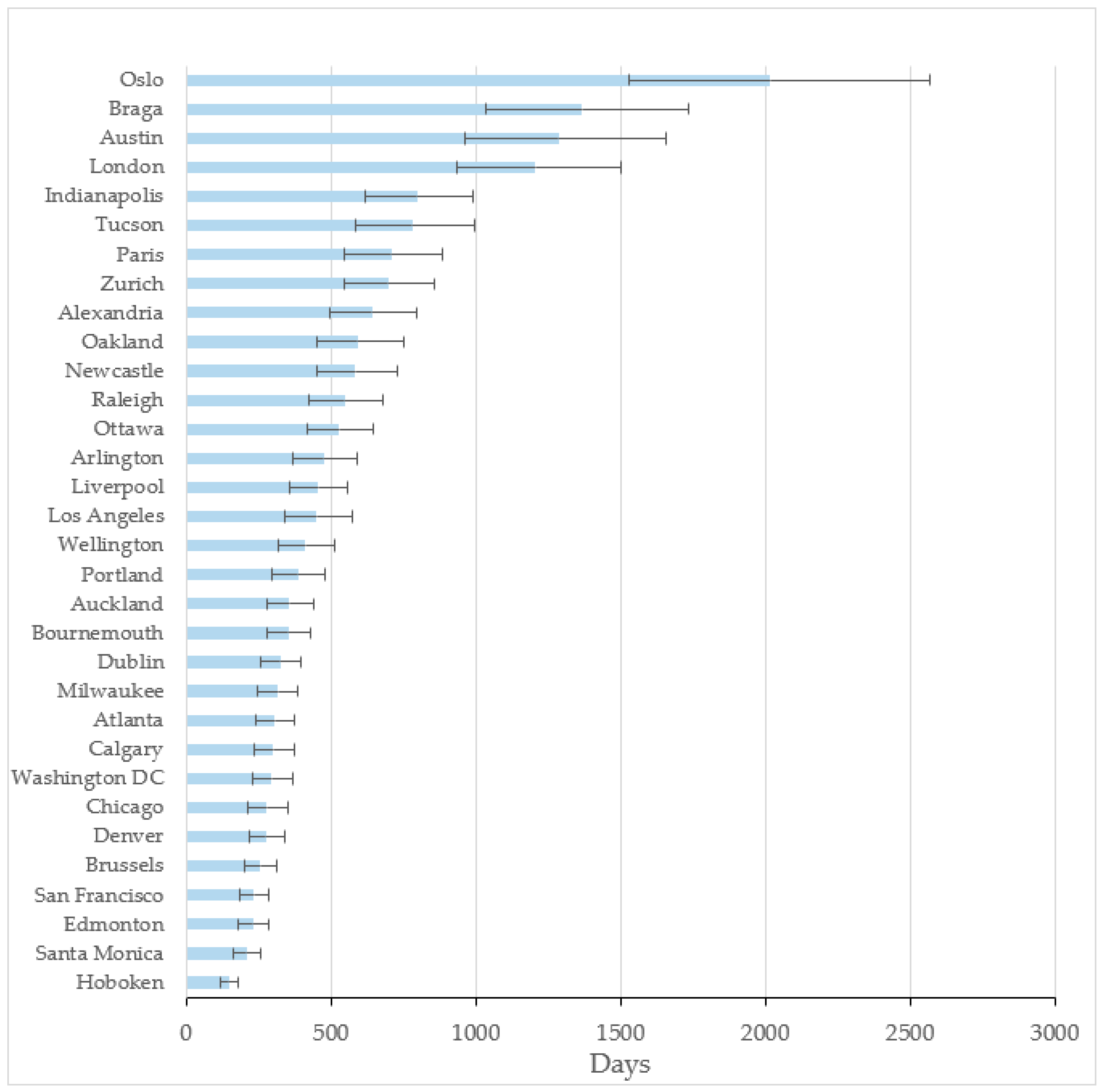
The thresholds for achieving net GHG emission reduction benefits followed a similar trend but were generally higher than those for fossil energy savings, indicating a greater challenge in achieving climate benefits (
Figure 6). Under the baseline scenario (a = 0.1), Hoboken required 148.9 days, while Santa Monica, Edmonton, and San Francisco required 208.2, 230.5, and 234.4 days, respectively. The cities with the most demanding thresholds were again Oslo (2018.2 days), Braga (1368.3 days), and Austin (1286.9 days).
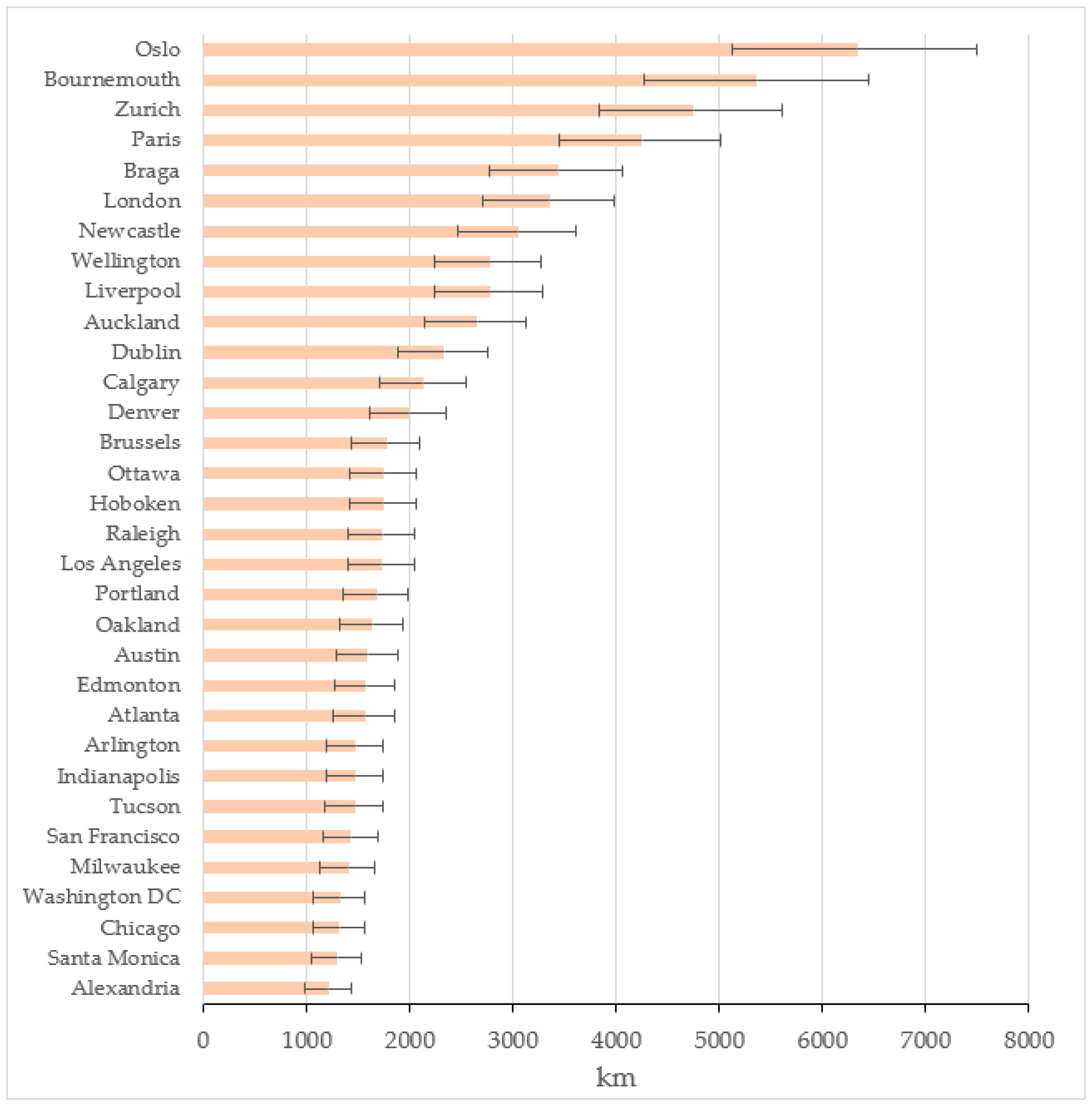
The VKT thresholds for GHG benefits (
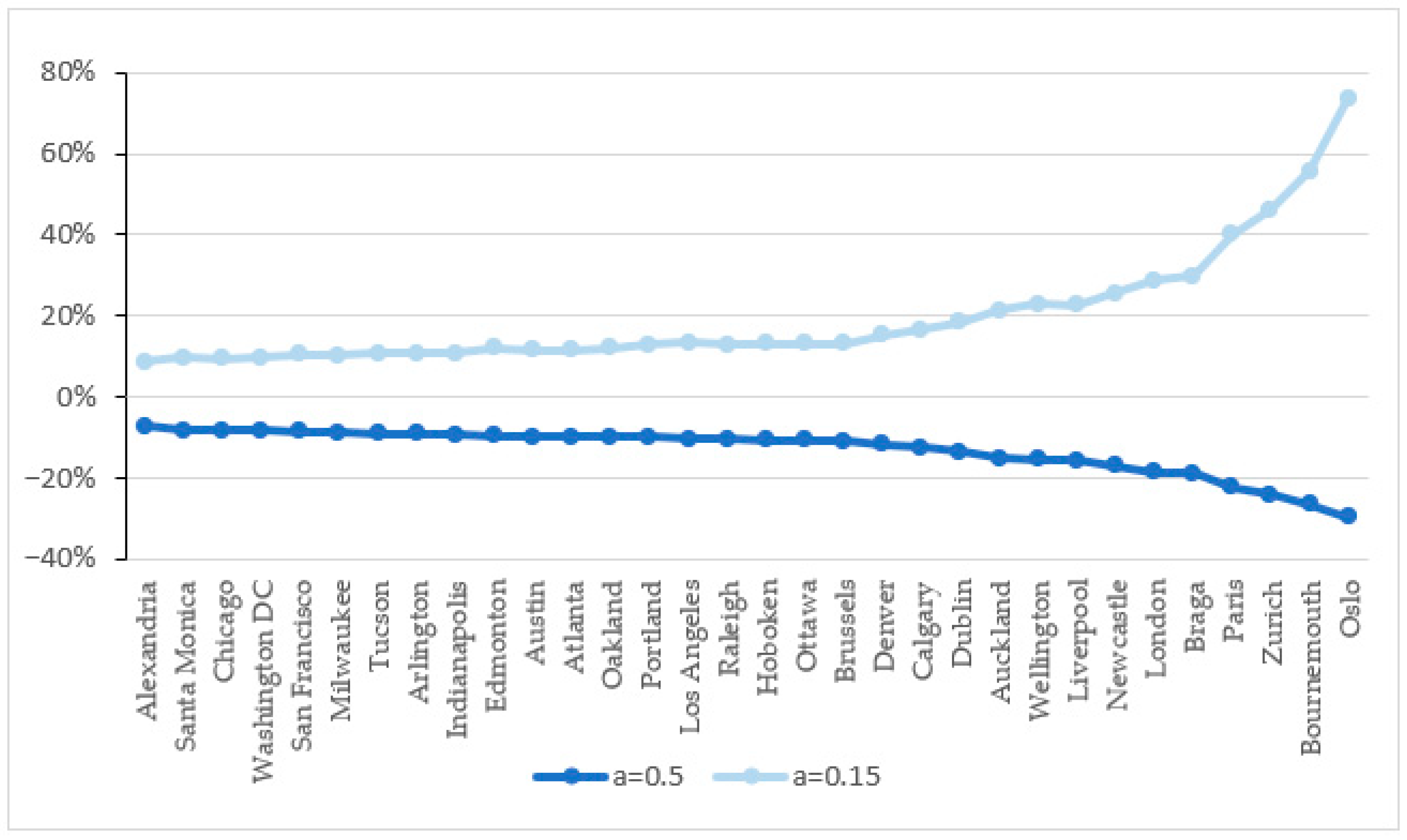
Figure 7) reinforced this pattern. Alexandria needed to accumulate 1208.8 km, whereas Oslo needed 6339.9 km. The sensitivity to rebalancing intensity was equally significant for GHG thresholds (
Figure 8 and
Figure 9). A shift to the low-intensity scenario (a = 0.05) reduced the VKT threshold for Paris by 23.8% and for Zürich by 25.0%. A change to the high-intensity scenario (a = 0.15) increased the VKT threshold for Oslo by 73.4% and for Bournemouth by 55.5%. This confirms that inefficient operations can severely undermine the potential climate benefits of FFSE systems.
3.2. The Energy and Environmental Impact Intensity of FFSE Systems
The direct GHG emission intensity (
GI) and fossil energy intensity (
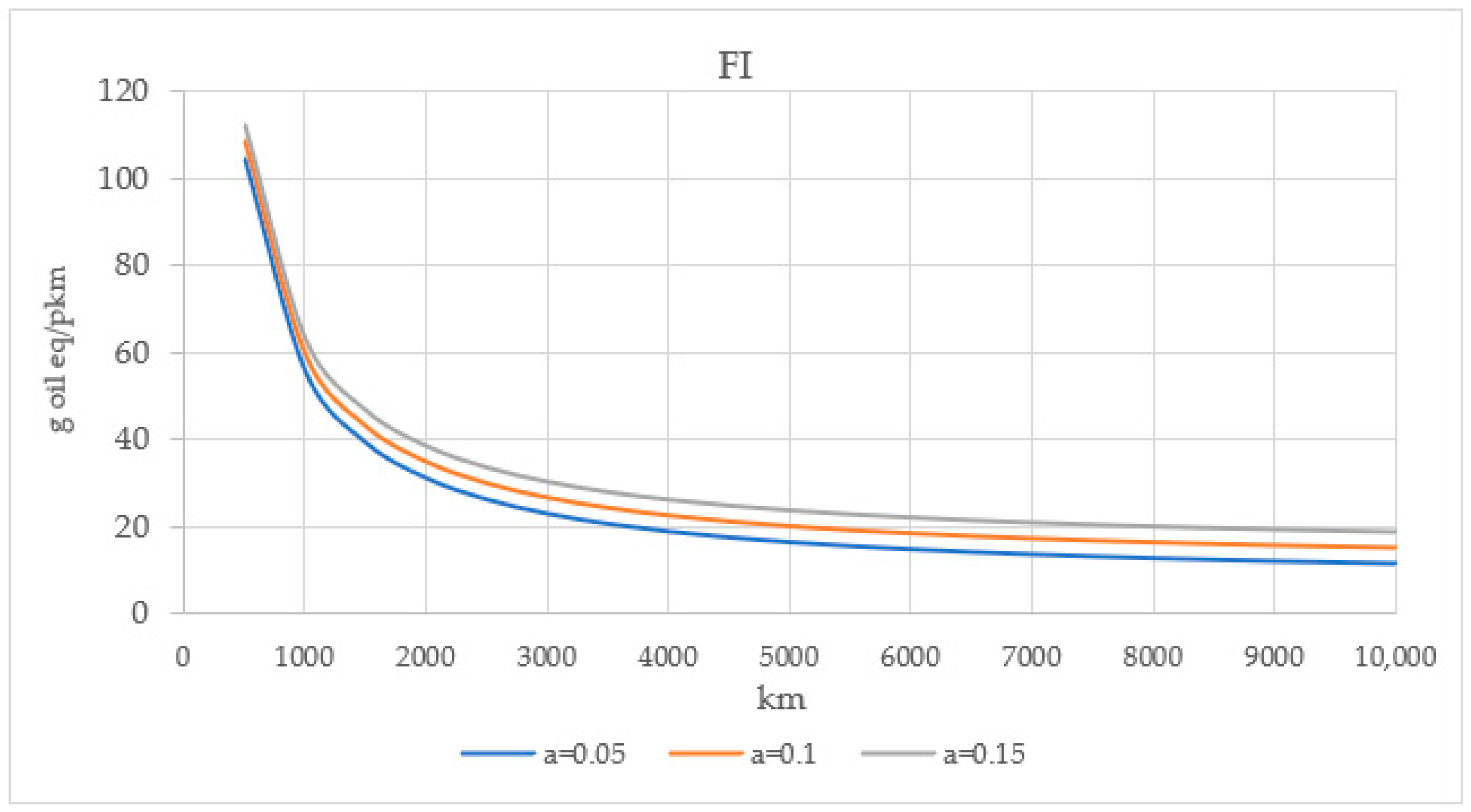
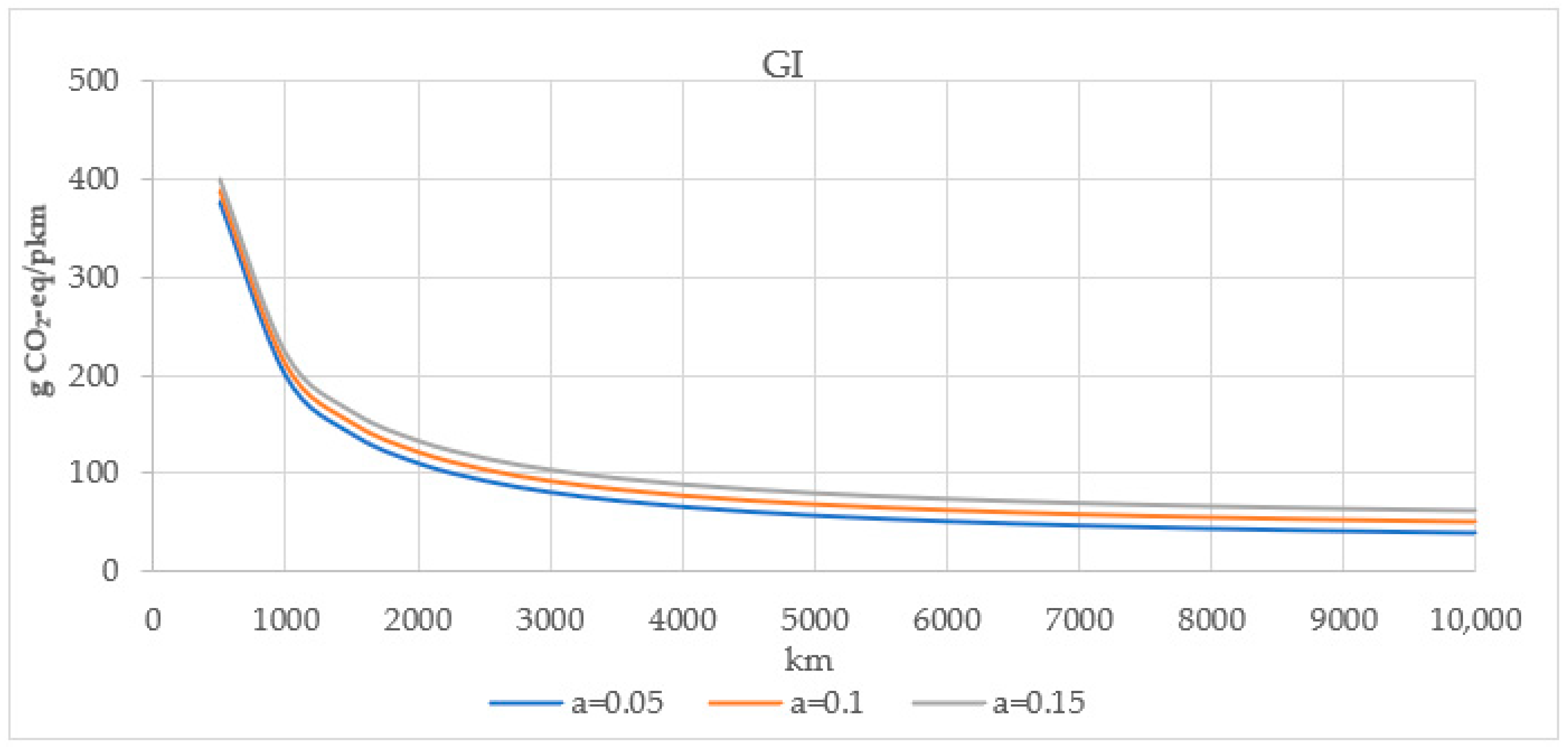
FI) of the FFSE systems themselves, excluding modal substitution, were calculated across a range of life cycle mileage (see
Figure 10 and
Figure 11). The results demonstrate the dramatic effect of vehicle longevity on per-kilometer impacts.
For a vehicle with a very short lifespan of 500 km, the GI was extremely high, at 388.38 g CO2-eq/pkm under the baseline scenario, and the FI was 108.49 g oil-eq/pkm. This is primarily because the substantial embedded emissions from manufacturing are distributed over a very small service output. As the VKT increases, these intensities drop precipitously. At 2000 km, the GI and FI fall to 122.32 g CO2-eq/pkm and 34.80 g oil-eq/pkm, respectively. The rate of decrease slows with increasing VKT, as the relative contribution of the manufacturing phase diminishes. By 10,000 km, the GI and FI under the baseline scenario reach 51.34 g CO2-eq/pkm and 15.14 g oil-eq/pkm, respectively.
The rebalancing intensity consistently elevated these direct intensity values across all VKT. For any given mileage, the GI and FI for the high-intensity scenario (a = 0.15) were approximately 12–15% higher than those for the low-intensity scenario (a = 0.05), underscoring that inefficient logistics directly increase the environmental footprint of the service, regardless of its lifespan.
It should be noted that the VKT range was extended to 10,000 km to fully illustrate the amortization curve. However, this upper range was largely theoretical, as empirical studies reported significantly lower real-world average lifetimes, often limited to a maximum VKT of only 3000–5000 km due to factors like vandalism, accidents, and rapid fleet turnover [
20,
22,
30].
3.3. Net Benefits Across Vehicle Life Cycle Mileages
Based on the modal substitution, net GHG emission reduction benefits (GB) were calculated for a wide range of vehicle life cycle mileages (VKT) across the three rebalancing scenarios (
Table 7,
Table 8 and
Table 9). The results reveal a critical transition from a net positive impact (increased emissions) to a net negative impact (emission savings) as VKT increases. For policymakers, the most actionable insights are derived from the lower end of the VKT spectrum (e.g., <3000~5000 km), as this range aligns with current and foreseeable vehicle lifespans, whereas the higher mileage data primarily serves to illustrate theoretical asymptotic trends [
20,
22,
30].
Under the baseline scenario (a = 0.1,
Table 8), at a short lifespan of 1000 km, all cities exhibited a positive
GB value, indicating that the FFSE systems were responsible for a net increase in GHG emissions per passenger-kilometer. Alexandria had a
GB of 30.45 g CO
2-eq/pkm, while Oslo had a value of 148.98 g CO
2-eq/pkm. As the VKT increased, the manufacturing impacts were amortized over a greater distance, and the net benefits became negative (indicating savings) for most cities. By 2000 km, many cities with efficient operations and favorable modal substitution, such as Alexandria (−58.02 g CO
2-eq/pkm) and Washington DC (−44.90 g CO
2-eq/pkm), had already crossed this threshold. However, cities like Oslo and Bournemouth still showed positive
GB values at 2000 km (60.63 and 55.54 g CO
2-eq/pkm, respectively), only transitioning to GHG emission reduction benefits at approximately 6000 km and 5000 km, respectively.
The influence of rebalancing intensity is starkly visible. Under the low-intensity scenario (a = 0.05,
Table 7), the transition to net benefits occurred at a lower VKT. For example, Paris achieved net GHG savings at 4000 km, whereas under the high-intensity scenario (a = 0.15,
Table 9), it required over 5000 km. For cities like Oslo and Bournemouth, the high-intensity scenario pushed the breakeven point beyond 10,000 km and 8000 km, respectively.
A parallel analysis for fossil energy savings (
FB) was conducted (
Table 10,
Table 11 and
Table 12). The trends were consistent with the GHG benefits but with generally lower magnitude and slightly earlier breakeven points for many cities. Under the low-intensity scenario (a = 0.05,
Table 10), Alexandria achieved net fossil energy savings even at 1000 km, while most other cities transitioned to net savings between 1000 km and 2000 km. Cities with the highest thresholds, like Oslo, only began to show consistent net savings after 4000 km. This indicates that achieving fossil energy savings is somewhat less challenging than achieving GHG emission reductions.
3.4. Distribution of Life Cycle Impacts
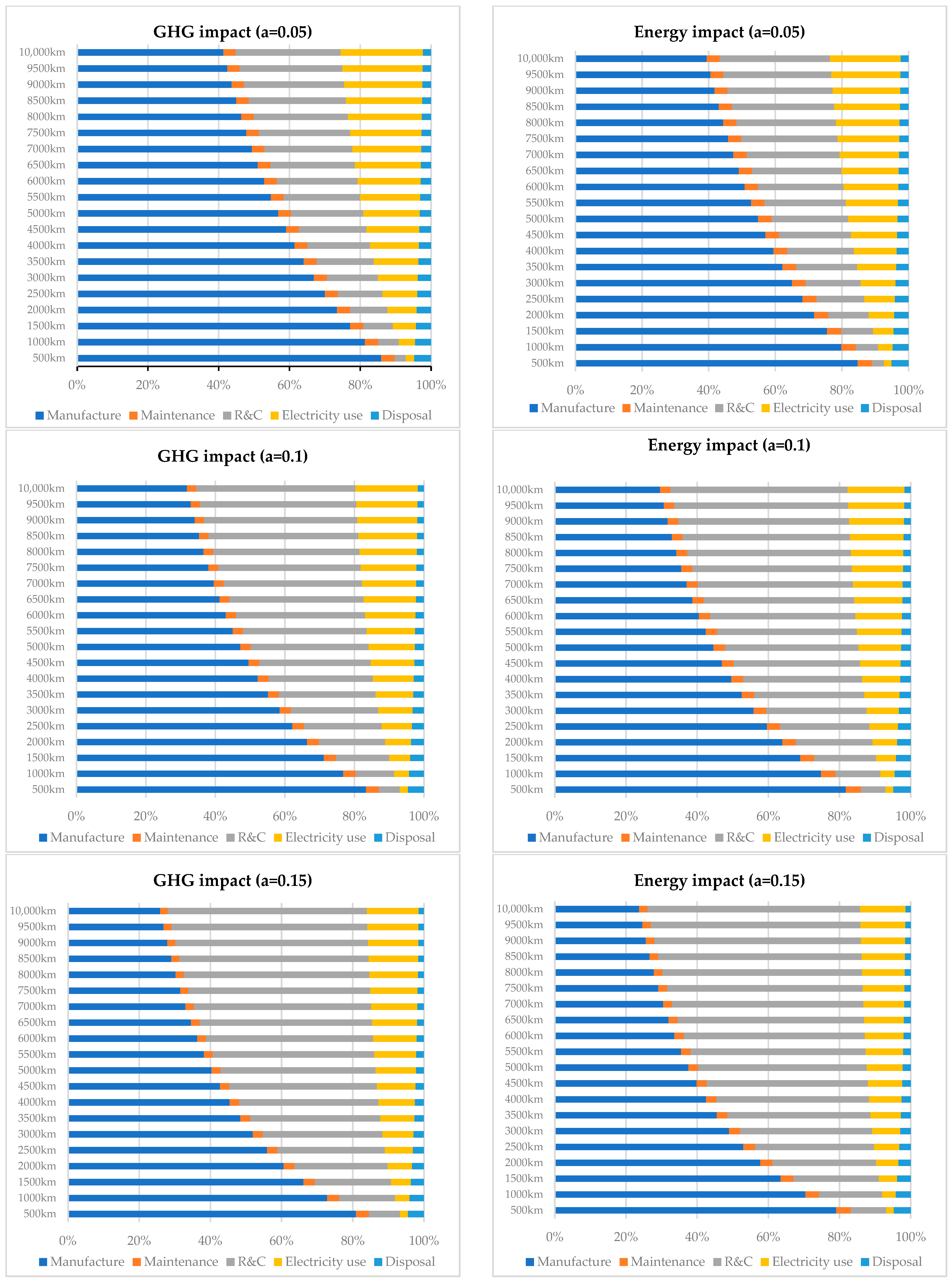
The contribution of different life cycle stages to the total environmental impact shifts fundamentally as the vehicle’s total travel distance increases (See
Figure 12).
For a short-lived scooter (500 km VKT), the manufacturing stage dominates, accounting for 81–86% of the total GI and 79–85% of the total FI. The rebalancing and charging (R&C) process accounts for only 3–9% of GI and 4–10% of FI. However, as the VKT extends, the share of manufacturing impacts declines sharply. For a long-lived scooter (10,000 km VKT), the manufacturing contribution to GI drops to 31.85% (26–41%), while the R&C phase becomes the dominant contributor, accounting for 45.78% (30–56%) of GI. The use-phase energy consumption also becomes relatively more important, increasing from 2.35% at 500 km to 17.93% at 10,000 km on average for GI.
This shift highlights a critical dynamic: for short-lived scooters, the primary environmental strategy must focus on eco-design and extending durability. For long-lived scooters, however, operational efficiency—specifically minimizing rebalancing distance and reducing grid load during charging—becomes the most critical lever for reducing impacts.
The distribution patterns for fossil energy consumption are similar, with manufacturing dominance at low VKT (84.69% at 500 km, a = 0.05) shifting to R&C dominance at high VKT (59.77% at 10,000 km, a = 0.15). This consistent pattern across both impact categories reinforces the universal importance of vehicle lifespan and operational logistics across different dimensions.
It should be noted that in this study, a maximum VKT of 10,000 km was chosen in order to facilitate a clearer observation of the complete theoretical transition. However, the most policy-relevant portion of this shift occurs within the lower, more realistic VKT range (below ~3000–5000 km) where the steepest reduction in manufacturing’s share occurs [
20,
22,
30].
4. Discussion
The findings of this multi-city life cycle assessment present a compelling and nuanced narrative: the energy and environmental performance of free-floating shared e-scooter (FFSE) systems is not predetermined but an emergent property of a complex interplay among technological design, operational practices, and—most critically—the specific urban context. Our results robustly confirm that the question of whether FFSE systems mitigate or exacerbate urban transportation impacts cannot be answered with a simple binary response but requires a contextualized understanding of multiple interacting factors. By considering the urban transportation profiles (see
Table 1), we can better interpret the striking variability in results and derive more targeted implications.
4.1. The Paramount Importance of Vehicle Longevity and Utilization
The most unequivocal finding is the profound influence of service life (life cycle VKT) on energy and environmental outcomes. The drastic reduction in GHG intensity (
GI) and fossil energy intensity (
FI) from short-life to extended-life scenarios underscores a fundamental principle: the substantial embedded burden of manufacturing must be amortized over sufficient functional output [
10,
20,
21]. However, the practical challenge of achieving this amortization varies significantly across urban contexts.
Cities with high daily turnover rates (DTR), such as Hoboken (DTR = 8.0) and Denver (DTR = 4.2), demonstrated that high utilization can compensate for other limitations, resulting in lower thresholds for net environmental benefits. Conversely, the challenge is most acute in medium-sized cities with high car dependency, such as Austin, Indianapolis, and Raleigh. These cities, characterized by moderate population density, high car ownership, and low public transit share, often exhibited surprisingly high thresholds for net benefits despite their significant potential for car trip displacement. Their typically lower DTRs can explain this paradox; for instance, Austin (1.07) and Indianapolis (0.97). In these auto-centric environments, e-scooters may serve a niche or recreational market, leading to poor asset utilization that negates the advantage of replacing high-impact car trips
However, it is imperative to contextualize these analytical breakeven points within the practical realities of current FFSE operations. For instance, the results indicate that a scooter in a transit-rich city like Oslo requires approximately 2000 service days (~5.5 years) to achieve net energy savings under baseline conditions. While this is a valid outcome of the aLCA model, achieving such an extended lifespan is highly improbable given the current state of technology and operational practices, where typical e-scooter service lives range from 1 to 2 years due to factors like vandalism, rapid technological obsolescence, and harsh operating conditions [
20,
22,
30]. This stark contrast between the modeled requirement and operational reality underscores that for cities with unfavorable modal substitution patterns (e.g., high displacement of walking), achieving net environmental benefits is not merely an operational challenge but a significant technological one. It highlights an urgent need for the industry to pivot towards designing and deploying far more durable, repairable, and long-lived vehicles specifically engineered for shared use as a prerequisite for environmental viability in these contexts.
4.2. The Decisive Role of Modal Substitution Patterns
Our results provide robust multi-city confirmation that modal substitution is the ultimate arbiter of net environmental benefit, a finding consistent with earlier consequential LCAs [
12,
15]. The calculated thresholds for net benefits are directly correlated with what transportation modes e-scooters displace.
The most favorable outcomes were observed in cities where e-scooters primarily displaced automobile travel. This pattern is evident in cities with significant but not dominant car use, such as Santa Monica (47.7% car substitution), San Francisco (42%), and Washington, DC (46%), all of which achieved net fossil energy savings at relatively low VKT thresholds. Here, FFSE systems act as genuine substitutes for private vehicles, unlocking significant environmental savings.
In contrast, the most challenging environments for achieving net benefits are high-density cities with robust public transport and low car use, such as Oslo, Zürich, and Paris. In these contexts, our data show that e-scooters predominantly replace walking and public transit, with minimal or zero direct emissions. For example, Oslo shows 60% walking substitution and Zürich 51%. Consequently, even with a clean electricity grid and efficient operations, these systems require exceptionally long vehicle lifespans to amortize their manufacturing impacts, as they provide little to no displacement of high-impact modes. This creates a complex policy challenge: promoting FFSE for their potential in specific niches while preventing the cannibalization of the most sustainable modes.
4.3. The Influence of Operational Logistics and Local Energy Systems
The rebalancing process, a significant operational overhead, affected all cities, but its impact was magnified in cities with greater logistical challenges. The sensitivity analysis showed that a shift from low to high rebalancing intensity could increase VKT thresholds by over 80% in some cases. This burden is likely more acute in sprawling, car-dependent cities where collection distances are long, and in high-density urban cores where strict parking enforcement may require frequent and complex rebalancing operations. Furthermore, high-density cities with robust public transit systems—which often exhibit high rates of walking substitution—face a particularly pronounced “double challenge.” Not only do they require exceptionally long vehicle lifespans to amortize the manufacturing impacts of the minimal emissions of the modes they displace, but they also often experience higher inherent rebalancing intensities. This is frequently a consequence of strict public space management regulations designed to mitigate clutter and ensure pedestrian safety, which necessitate more frequent and complex collection and redistribution operations. This combination of factors creates a uniquely high barrier for achieving net environmental benefits in such contexts. The pursuit of operational efficiency through geofencing, incentivized parking, and electrified logistics fleets is therefore a universal priority, but with context-specific implementations [
60,
61].
The carbon intensity of the local electricity grid became a more significant differentiator for long-life vehicles. As VKT lifecycles exceed 3000–4000 km, cities with clean grids (e.g., Oslo, Zürich, Paris) saw their GI values plateau at lower levels than those with carbon-intensive grids (e.g., Calgary, Alexandria). This underscores a synergistic relationship: decarbonizing the grid amplifies the environmental benefits of long-lived electric mobility solutions, a benefit most fully realized in cities that can also achieve extended vehicle service life.
4.4. The Interplay of Policy, User Perception, and Environmental Outcomes
The variability in environmental performance revealed by our multi-city analysis is not merely an operational issue but is deeply embedded in broader urban policy contexts and user behaviors. Our findings gain further nuance and practical relevance when contextualized with recent insights from European case studies on governance and public acceptance.
The critical importance of vehicle longevity for achieving net benefits, as unequivocally demonstrated by our results, directly addresses the widespread problem of short vehicle lifespans due to vandalism and rapid obsolescence—a challenge prominently documented in cities worldwide by Gössling [
62]. This synergy underscores that the environmental potential of FFSE systems depends on policies that explicitly promote vehicle durability.
Rome’s experience vividly exemplifies the transformative power of proactive regulation. The city’s evolution from a fragmented market with six operators and centralized coverage to a consolidated system of three operators with mandated service expansion into peripheries [
63,
64] demonstrates how policy can directly reshape operational geography. Such interventions inherently alter key parameters, such as rebalancing intensity and fleet utilization—factors our sensitivity analysis identifies as critical levers for life cycle impacts.
Ultimately, the efficacy of any policy is mediated through user behavior. The study from Poland by Turon et al. [
65] reveals a critical user perspective: strong support for penalties against vandalism (which protects vehicle lifespan) coexists with a reported high frequency of technical failures and a preference for free-floating systems. This highlights a potential disconnect between user expectations and operational realities, suggesting that technical standards and user education are as crucial as regulatory frameworks for ensuring system sustainability.
In summary, the integration of these contextual studies confirms that the path to environmental sustainability for FFSE systems is multifaceted. It requires an understanding that operational data, policy interventions, and social acceptance are inextricably linked.
4.5. Integrated Policy Implications
Building upon our findings and the broader context discussed above, we propose an integrated, evidence-based framework for policymakers. The dramatic variability in environmental performance indicates that outcomes can be actively shaped by well-designed interventions, and a one-size-fits-all regulatory approach is inadequate.
For car-dependent cities (e.g., Atlanta, Austin, Calgary), policymaking should aggressively pursue car displacement by strategically integrating e-scooters with transit to provide first- and last-mile solutions. Concurrently, to overcome the challenge of low utilization often seen in such environments, strict durability standards and performance-based fees that reward high daily turnover rates are essential.
For transit-rich, high-density cities (e.g., Oslo, Paris, Zürich, London), the primary policy objective should be to prevent the erosion of existing sustainable transportation modes—specifically walking and public transit. Regulatory frameworks must prioritize protecting these low-impact mobility options through carefully designed interventions. This can be achieved through a two-pronged approach: implementing restrictive measures in sensitive areas and promoting positive integration elsewhere. Firstly, e-scooter use should be strategically limited in dense pedestrian zones and key transit corridors through no-ride geofencing and speed restrictions to deter short trips that would otherwise be walked. Secondly, to explicitly position e-scooters as a first/last-mile solution, policies should encourage their targeted deployment at major transit hubs, complemented by pricing structures that incentivize longer trips, such as higher unlock fees coupled with lower per-minute rates. Additionally, as seen in the study by Rome [
64], mandates for hyper-efficient, potentially electrified rebalancing operations are crucial to minimize the logistical footprint in dense environments.
Universal policy imperatives must address the foundational drivers of environmental performance. A fundamental shift from disposable, consumer-grade scooters toward purpose-built, shared-grade vehicles designed for robustness and repairability is an environmental imperative, as underscored by evidence on global challenges and user concerns about reliability [
62,
65]. Concurrently, cities and operators must prioritize sophisticated fleet management. Given that achieving net benefits depends on sufficient vehicle utilization, municipalities should implement data-driven fleet-size optimization and performance-based caps. Such measures prevent oversupply, which dilutes daily turnover rates, and instead create incentives for operators to ensure that each deployed vehicle achieves the high utilization necessary to amortize its manufacturing footprint and approach its breakeven threshold. Additionally, policies must address spatial equity to ensure benefits are distributed fairly and do not exacerbate existing transportation inequalities.
4.6. Limitations and Future Research Directions
While this study provides a comprehensive multi-city assessment of the energy and environmental impacts of FFSE systems, several limitations should be acknowledged and point toward valuable future research avenues.
The primary limitation is the reliance on operator-reported and literature-derived data for critical parameters such as vehicle lifespan, daily turnover rates, and rebalancing efficiency. Although data were aggregated from multiple sources to enhance representativeness, potential reporting biases may persist, as operators may have incentives to overestimate vehicle utilization and lifespan. Future research would benefit from independent verification through methods such as vehicle tracking technologies, sensor-based energy monitoring, or collaboration with municipal authorities to access audited operational data. Such approaches would provide more robust empirical foundations for life cycle assessments.
Furthermore, while this study reflects the current state of shared e-scooter systems, the sector is undergoing rapid technological and regulatory evolution, which may influence future environmental performance. Improvements in vehicle durability, battery efficiency, and the widespread electrification of rebalancing fleets could substantially reduce life cycle impacts. Similarly, policies that promote renewable energy for charging or enforce low-emission rebalancing logistics could further reduce system-level footprints [
60,
61]. Future LCAs should adopt dynamic modeling approaches to incorporate these trajectories and assess the long-term sustainability of FFSE under evolving conditions.
Finally, and crucially, a holistic evaluation of shared e-scooters must extend beyond the environmental dimensions of energy and emissions to integrate spatial, equity, and safety considerations. This study does not explicitly address distributional access across neighborhoods, safety outcomes for riders and pedestrians, impacts on public space, or modal equity—particularly in low-income and underserved communities [
66,
67]. Future research should explore these critical social aspects. Combining environmental LCA with spatial analysis and Social Life Cycle Assessment methods, alongside investigations into the nuanced travel behaviors and preferences of different user groups [
68,
69], would deliver a more complete understanding of micromobility’s role in sustainable and just urban transport. Targeted case studies using mixed-methods approaches, integrating LCA with field observations, user interviews, and spatial analysis, are needed to uncover the complex behavioral and contextual factors that influence overall system performance.
5. Conclusions
In conclusion, this discussion posits that the shared e-scooter serves as a mirror of the sustainability priorities of the urban ecosystems in which it operates. Their environmental value is not intrinsic but derived from how they are designed, operated, and integrated into urban mobility systems. A well-managed system, featuring durable vehicles, efficient operations, clean energy, and strategic integration to replace car trips, can indeed be a valuable asset in the urban sustainability toolkit. Conversely, a poorly managed system, characterized by short-lived scooters, wasteful logistics, and displacement of walking, represents a step backward.
The challenge and opportunity for cities and operators lie in collaborating to engineer the technical, operational, and regulatory conditions that ensure FFSE fulfill their promising role in the transition toward low-carbon, livable, and equitable cities. This study provides the scientific foundation and decision support for this collaborative process, helping to ensure that shared e-scooters realize their potential as sustainable components of urban transportation systems. As cities continue to grapple with the challenges of urban mobility in an era of climate change, the careful integration of emerging technologies, such as shared e-scooters, into comprehensive, sustainable transportation strategies will be essential for creating the cities of the future.