Article

Overvoltage Challenges in Residential PV Systems in Poland: Annual Loss Assessment and Mitigation Strategies


by
Krystian Janusz Cieslak
1,* and
Sylwester Adamek
2
1
Department of Renewable Energy Engineering, Faculty of Environmental Engineering and Energy, Lublin University of Technology, Nadbystrzycka 40B, 20-618 Lublin, Poland
2
Department of Power Engineering, Faculty of Electrical Engineering and Computer Science, Lublin University of Technology, Nadbystrzycka 38D, 20-618 Lublin, Poland
*
Author to whom correspondence should be addressed.
Energies 2025, 18(23), 6247; https://doi.org/10.3390/en18236247
Submission received: 20 October 2025 / Revised: 14 November 2025 / Accepted: 26 November 2025 / Published: 28 November 2025

Abstract

In recent years, the rapid increase in installed photovoltaic (PV) capacity in Poland has created significant challenges for low-voltage distribution networks. Excess generation during peak solar hours frequently leads to local overvoltage conditions that exceed regulatory limits, causing PV inverters to disconnect from the grid. This phenomenon reduces the efficiency of distributed renewable energy integration and results in direct financial losses for prosumers. The present study quantifies these losses on an annual basis for a single-family household located in southeastern Poland, where overvoltage incidents occurred 614 times over 78 days in 2024. Real operational data from the residential PV installation were analyzed and complemented with detailed PVsyst simulations to determine the amount of energy curtailed due to inverter disconnections. The analysis revealed that daily energy losses can reach up to 22% of potential production, depending on the duration and frequency of overvoltage events. Furthermore, several technical and organizational measures are proposed to mitigate the issue, including grid reinforcement strategies and demand-side management. The findings highlight the necessity of addressing overvoltage in low-voltage distribution networks to ensure system reliability, enhance renewable energy integration, and maintain the economic viability of residential PV investments.

1. Introduction

Renewable energy sources (RES) have become an increasingly important component of the Polish energy mix. According to Forum Energii [1], the share of RES reached 29.7% in 2024, compared to only 13.2% in 2015. This increase was mainly due to the development of the wind farms and photovoltaic systems. During the last decade photovoltaic (PV) systems became very popular among average Polish citizens who encouraged by Polish government support programs [2], invested in PV systems on a large scale. As reported in [3] cumulative PV power increased its capacity from 0.15 GWp in 2015 to 17 GWp in 2023. The main share of installed power through the last decade is due to the so called microinstallations installed by Polish households and companies thereby becoming Prosumers [4,5]. Micro and small PV generators are plugged into the low voltage (LV) electricity grid. The law governing renewable energy sources permits micro-installations to be connected without analysing the state of the local electricity grid [6]. This approach can result in PV micro-installations being connected randomly, and the size of the installation is often disproportionate to the household’s electricity needs. The conception and construction of Polish energy infrastructure took place during the 1970s and 1980s. Consequently, at the time, the extent to which renewable energy sources would contribute to the grid’s power supply was not predicted. Taking these factors into account, overloading the electricity grid during sunny days becomes a frequent problem in Poland where a large number of PV installations are connected within a single transformer station [7,8]. This issue is also recognized in countries where photovoltaic systems are widely utilized and where PV energy production frequently exceeds the local instantaneous demand for electricity [9,10,11,12,13,14,15]. This phenomenon results in excess energy being fed into the grid, thereby causing voltage levels to rise. In the literature it is known as “overvoltage” or “voltage boosting”. Consequently, the voltage may exceed the 253 V limit set by the European standard PN-EN 50160:2023-10 [16], triggering PV inverters to shut down and cease energy production [17]. This results in energy losses, which in effect impacts the profitability of the entire investment. The adoption of a prosumer-oriented regulatory framework in Poland beginning in 2015—most notably through the implementation of a net-metering mechanism [6,18], combined with the introduction of the “Mój Prąd” subsidy scheme in 2019, created a highly favorable investment environment for small-scale photovoltaic systems. These measures significantly enhanced the internal rate of return (IRR) and reduced payback periods for residential and commercial prosumers, leading to a sharp acceleration in the deployment of distributed PV capacity within the low-voltage segment of the power grid. This resulted in an excess of electricity production, which in turn has led to the unfavorable phenomena that have been outlined above. In response to these issue, the Polish government amended the law on Renewable Energy Sources in 2022, changing net-metering to net-billing [19] and altering the regulations of subsidy programmes. Furthermore, the latest ‘Mój Prąd’ 6.0 subsidy programme for 2024–2027 does not offer additional funding for photovoltaic installations without electrical or heat energy storage [20]. It is evident that contemporary regulatory frameworks are encouraging investors to install PV systems that promote the self-consumption ( S C ) of the electrical energy they produce. The primary benefit of self-consumption is its role in reducing the overloading of the electrical grid, whilst also enhancing the financial viability of the PV system [21,22,23,24,25,26,27,28,29,30,31]. In terms of profitability this can be explained by the fact that the price of the electrical energy that is injected into the grid is a wholesale price that is, on average, twice as low as a retail price. As demonstrated in a preceding study, a substantial increase in S C parameter can be attained by implementing appropriately sized energy storage ( S C changes from 28% to 60%) [31] or when the ratio between the energy demand and energy production is very high ( S C can even reach almost 100% value) [29]. The second case is typically implemented when PV systems are designed for public buildings or companies with an annual energy demand that exceeds 50 MWh/y. This is due to the fact that when an investor chooses to remain within the microinstallation regime, the maximum installed power that may be utilized is less than 50 kWp [6]. The average annual energy production of a 1 kWp PV system in Poland is 1000 kWh/kWp/y. In order to reduce the annual electrical energy demand, which exceeds 50 MWh, it is suggested that a PV system with a capacity of no more than 50 kWp be installed. Unfortunately, the recommendation from the time of net-metering remains in place for standard households with photovoltaic systems installed, requiring annual energy production to balance annual demand. In accordance with the current net-billing regulations, this recommendation results in an S C factor of less than 30% on average, leading to the phenomenon of overvoltage. Furthermore, the issue of photovoltaic installations being oversized in relation to annual demand is not an isolated case, and this has the effect of intensifying the problem of overvoltage.

Voltage Rise in the Distribution Grid

The voltage level at power grid nodes is a key indicator of power quality. Ensuring proper voltage levels is essential not only for the stability of the grid but also for the safety of connected consumers. Acceptable voltage ranges are defined in several regulatory documents. In Poland, the most relevant references are regulation [32] and standard [16]. In general, the voltage should not deviate from the nominal value by more than ±10%.
The disconnection of photovoltaic inverters due to voltage constraints is predominantly triggered by the voltage exceeding the upper admissible limit as a consequence of energy injection into the grid. This phenomenon may be illustrated by the simplified network presented in Figure 1, with the corresponding voltage conditions formulated in Equation (1).
U L = U F R ( P L P G ) + X ( Q L Q G ) U n
where
  • U L —receiving node voltage;
  • U F —feeding node voltage;
  • R, X—resistance and reactance of the line between the feeding node and the receiving node, respectively;
  • P L , Q L —active and reactive load, respectively;
  • P G , Q G —active and reactive power generation, respectively.
From Equation (1) it follows that the voltage at the receiving node depends on the supply voltage U F and on the voltage drops, which are determined by the line resistance R, the line reactance X, and the load. The values of resistance and reactance are a function of the cable type and its length, whereas the load is dictated by the instantaneous power demand of consumers together with the power injected by distributed sources. The expression has been intentionally simplified to provide a clearer illustration of the phenomenon. In practice, distribution networks supply multiple consumers, and the resulting voltage conditions arise from the aggregate effect of both loads and generation, as well as from the resistance and reactance of individual line segments. Furthermore, in low-voltage systems many devices are connected to a single phase, which introduces load asymmetry in three-phase networks. Consequently, the actual phase voltages differ from one another.
Overvoltage arises when the power generated by the photovoltaic system, P G , substantially exceeds the consumed active and reactive power ( P L , Q L ). Under such conditions, the surplus energy flows back towards the substation, effectively reversing the direction of the voltage drop. This situation is frequently observed in residential photovoltaic installations during summer months, when maximum generation coincides with reduced household consumption. Moreover, owing to the inherent characteristics of photovoltaic systems and the spatial correlation of solar irradiance, generation within a given area can be considered strongly correlated. As a result, the aggregated reverse power flows towards the substation may induce significant voltage rises, potentially exceeding the permissible operational limits.
As a consequence of overvoltage, the protection mechanisms of individual inverters are activated, leading to their disconnection and an interruption of power generation. In practice, such shutdowns typically affect several, or even a dozen or more, inverters located at greater distances from the substation. Once the voltage falls back within the admissible range, the photovoltaic systems automatically reconnect to the grid and resume operation. During periods of high solar irradiance, this may result in frequent on–off cycling of the installations, or, in the case of persistent overvoltage, in a complete shutdown. Normal operation is usually restored in the evening, when consumer demand rises and both solar irradiance and generation decrease.
In this study, a model case of a standard household located in the southeastern part of Poland was analyzed. The impact of negative effects associated with overvoltage on the electrical grid was identified and analyzed with regard to electrical energy losses. While analyzing the literature on this issue, authors usually focus on methods that prevent or mitigate the negative effects of overvoltage rather than on quantifying the resulting energy losses [7,8,9,10,11,12,13,14,15,17,33]. This study proposes an algorithm capable of identifying, quantifying, and analyzing electrical energy losses due to overvoltage, allowing for the evaluation of whether this effect significantly impacts system performance or represents only a negligible issue not requiring intervention. The data required for this analysis were obtained from a Solar Edge Energy Meter with a Modbus connection, installed in 2019. In addition, for the purpose of this study, an algorithm in Python 3.11 environment for identifying power drops caused by overvoltage was developed, and computer simulations of the PV system’s performance were conducted to comprehensively assess and quantify the resulting losses. PVsyst software was also used to carry out the simulations, as it enables the generation of precise and reliable results, provided that accurate and detailed input data are used. The presented approach provides a novel method for identifying and quantifying PV energy losses due to the voltage boosting. Moreover, the data underlying the analysis refer to a specific single-family household located in southeastern Poland; however, the results and conclusions may be extrapolated to households across Poland as well as to countries with comparable climates and a similar share of photovoltaics in the energy mix.
The development of renewable energy sources (RES) within the European Union is primarily driven by the Renewable Energy Directives (RED). The first directive, RED I (2009/28/EC), established binding national targets aiming for a 20% share of renewable energy by 2020, while RED II (2018/2001/EU) increased the 2030 target to 32% and promoted prosumer energy and local energy communities [34,35]. The most recent RED III (2023/2413/EU), adopted as part of the Fit for 55 package, further raises the renewable energy target to 42.5% by 2030 (with an indicative goal of 45%) and introduces renewables go-to areas to accelerate permitting procedures [36,37].
The above-mentioned directives compel EU Member States to continue investing in renewable energy sources. However, given the current state of the power grid infrastructure in Poland, this expansion is expected to exacerbate network overloading and increase the occurrence of overvoltage events. Therefore, it becomes crucial to develop methods that allow for the identification, quantification, and analysis of energy losses resulting from overvoltage phenomena in photovoltaic systems.
Given the widespread nature of this issue in Poland, a study analyzing the impact of overvoltage on the performance of photovoltaic systems is highly relevant—both for prosumers, primarily from a profitability perspective, and for energy distributors, who are more concerned with grid stability and reliability.

2. Methods

A case study of a standard household in south-eastern Poland was selected for analysis. It is located 20 km from Lublin, the largest city in eastern Poland. The area in which the house is located is under the influence of an ongoing trend of urban residents moving to rural areas in the near surroundings of large cities [38]. The phenomenon is of consequence in terms of electricity demand. The majority of people living in the suburbs work in the city, which results in a decrease in electricity demand during peak production times from photovoltaics. This means that the electricity produced is not used, but instead injected into the electricity grid. With a large number of photovoltaic installations, this increases the grid’s voltage. At the same time, demand for electricity increases in the mornings and evenings when PV systems are unable to provide sufficient energy. The household under consideration has been experiencing frequent inverter shutdowns during peak production for a period of three years. During this period, there has been a considerable increase in the number of photovoltaic installations connected to the same low-voltage grid.
The analyzed household is characterized by a standard annual electricity consumption of approximately 4 MWh. As described earlier, it is located on the outskirts of a provincial city and is equipped with a photovoltaic installation that balances its annual energy demand. All these characteristics provide a solid basis for extending the conclusions of this study to other Polish households, as well as to similar cases in other countries experiencing a rapid increase in installed photovoltaic capacity.
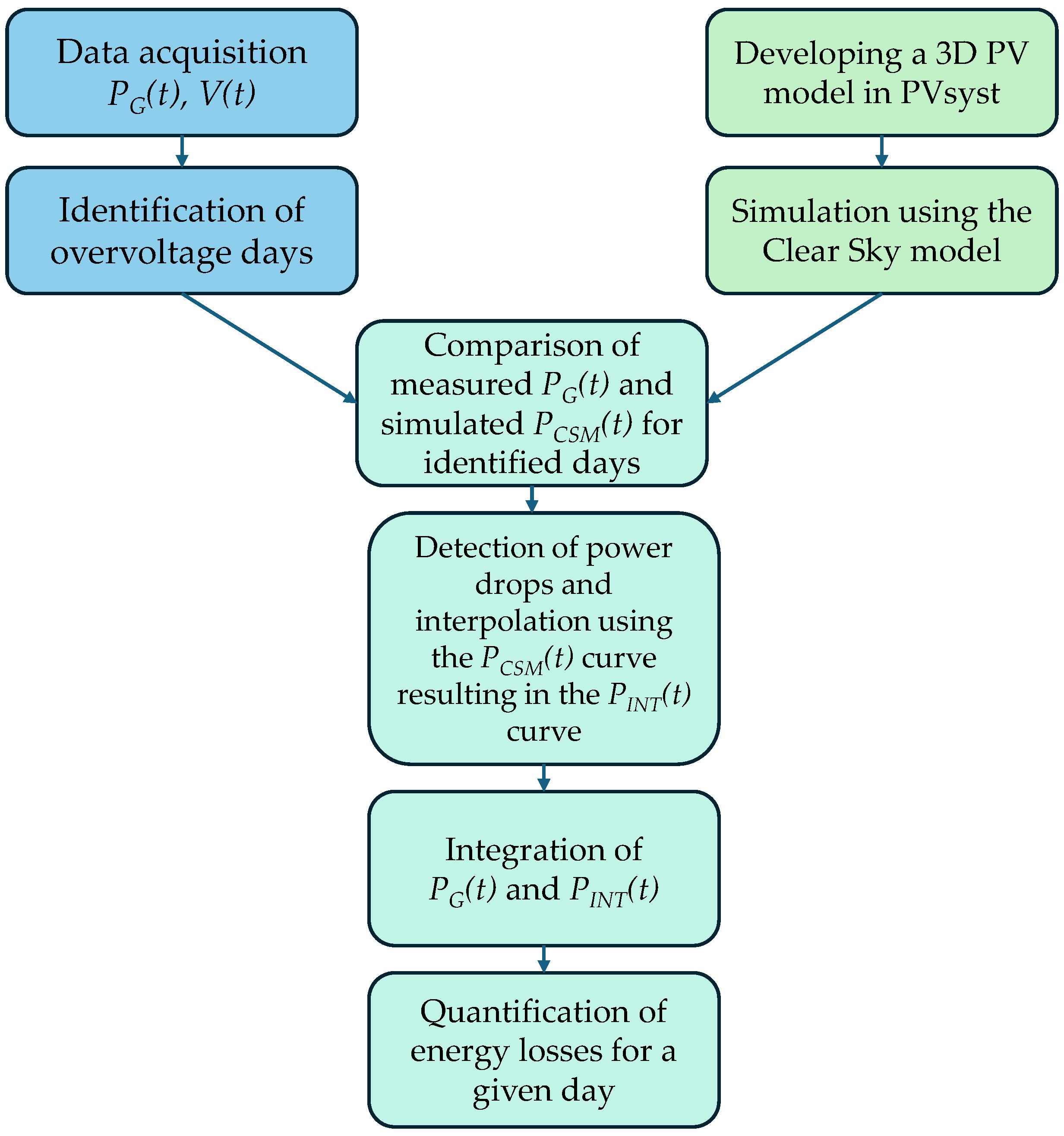
In order to identify the overvoltage problem and its influence on the PV system performance, data from the Solar Edge monitoring system, as well as from the Solar Edge Energy Meter, was obtained for the year 2024. In particular, the time dependence of photovoltaic power and AC voltage was extracted from the measurement system at 5 min time intervals. Figure 2 presents a simplified schematic of the workflow.
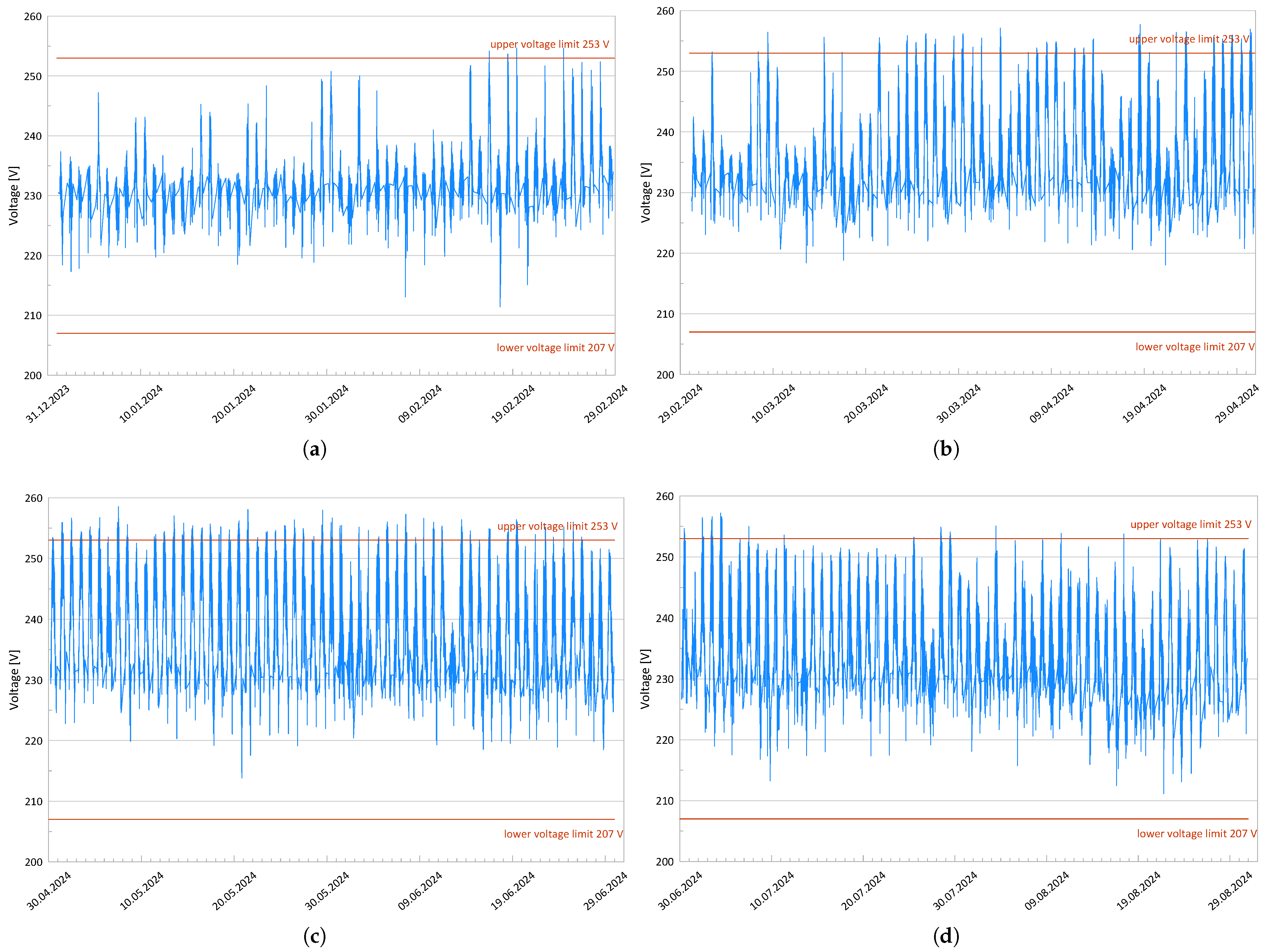
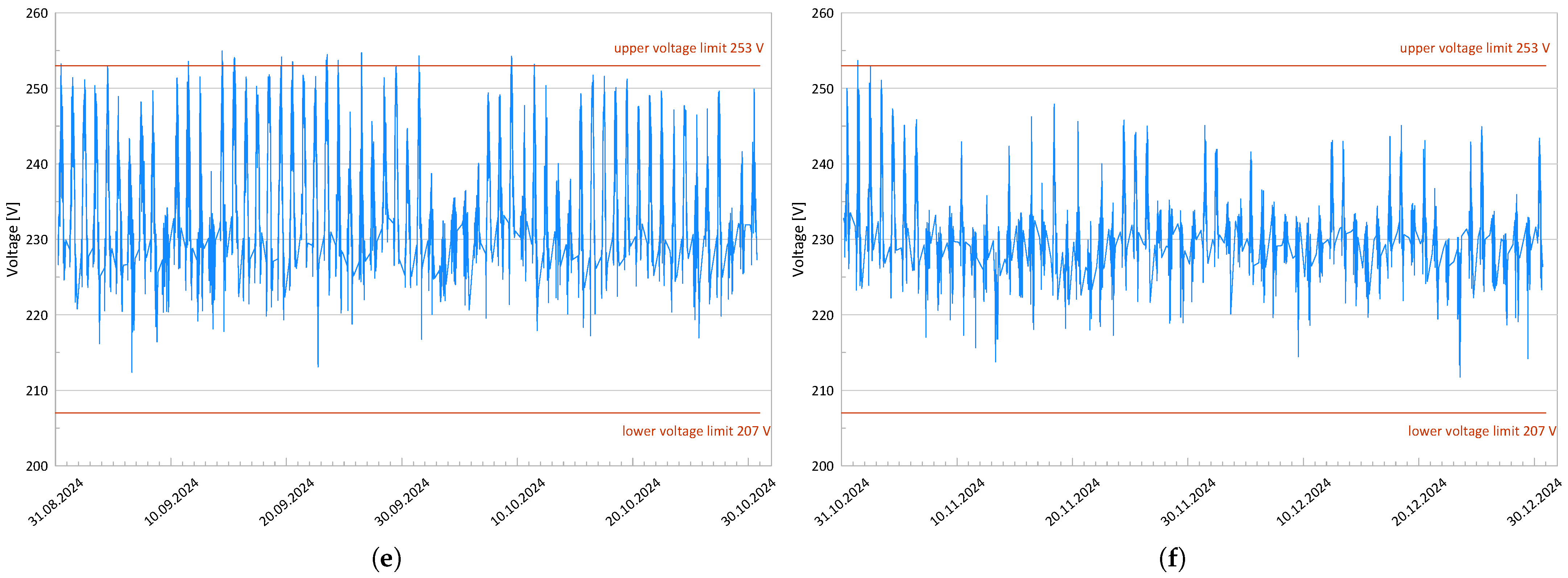
In order to properly analyse the phenomenon of power drops in photovoltaic installations, it is first necessary to distinguish between those related to excess voltage in the electricity grid and those related to a decrease in solar radiation. This distinction requires a specific approach. Consequently, information regarding voltage changes over time in the electrical grid is fundamental for the identification of PV power reduction due to overvoltage issues. As previously stated, the upper voltage limit in accordance with Polish standards is 253 V. In situations where the voltage exceeds this threshold, PV inverters are engineered to reduce output, which results in a sudden decrease in power. The identification of all such cases was based on the analysis of the graphs (Figure A1) representing the voltage dependence on the AC side in relation to time V ( t ) . The subsequent stage of the process was to obtain the data concerning power generation P G ( t ) on days when the AC voltage exceeded 253 V from the monitoring system and to identify any power drops that were connected to the overvoltage phenomenon. In view of the fact that the conditions of insolation are subject to dynamic change in a real environment, the process of identifying relevant power drops was not trivial. In order to do so, structured data processing workflow implemented in Python 3.11 was carried out. The initial dataset, containing timestamps, voltage levels, and power output values, was imported and processed using the pandas library for data manipulation. Periods of interest were identified based on two criteria: grid voltage exceeding a threshold of 253 V and a drop in PV power output of at least 30% relative to a P G ( t ) curve. Following the identification of the drops, the calculation of the energy losses due to the overvoltage had to be conducted. In order to establish the energy losses, it was necessary to generate a clear-sky model [39] for the designated location. Power over time curves P C S M ( t ) for the clear sky model enabled prediction of the shape of the P I N T ( t ) curve during the overvoltage drop, and its subsequent use for interpolation. To achieve this objective, a detailed simulation was conducted using PVsyst 8.0.17 software. In an effort to ensure the most reliable results, it was necessary to take into account a number of factors:
  • Location of the PV system: the south-eastern part of Poland;
  • Azimuth ( 30 ) and tilt angle ( 35 );
  • Components of the photovoltaic installation: 12 modules Risen Energy, model: RSM60-6-310M, Ningbo city, China (total installed PV power 3.72 kWp), monophased Solar Edge Technologies, model: SE3680H-EU-APAC inverter (Izrael) connected to 12 P370 Solar Edge optymizers;
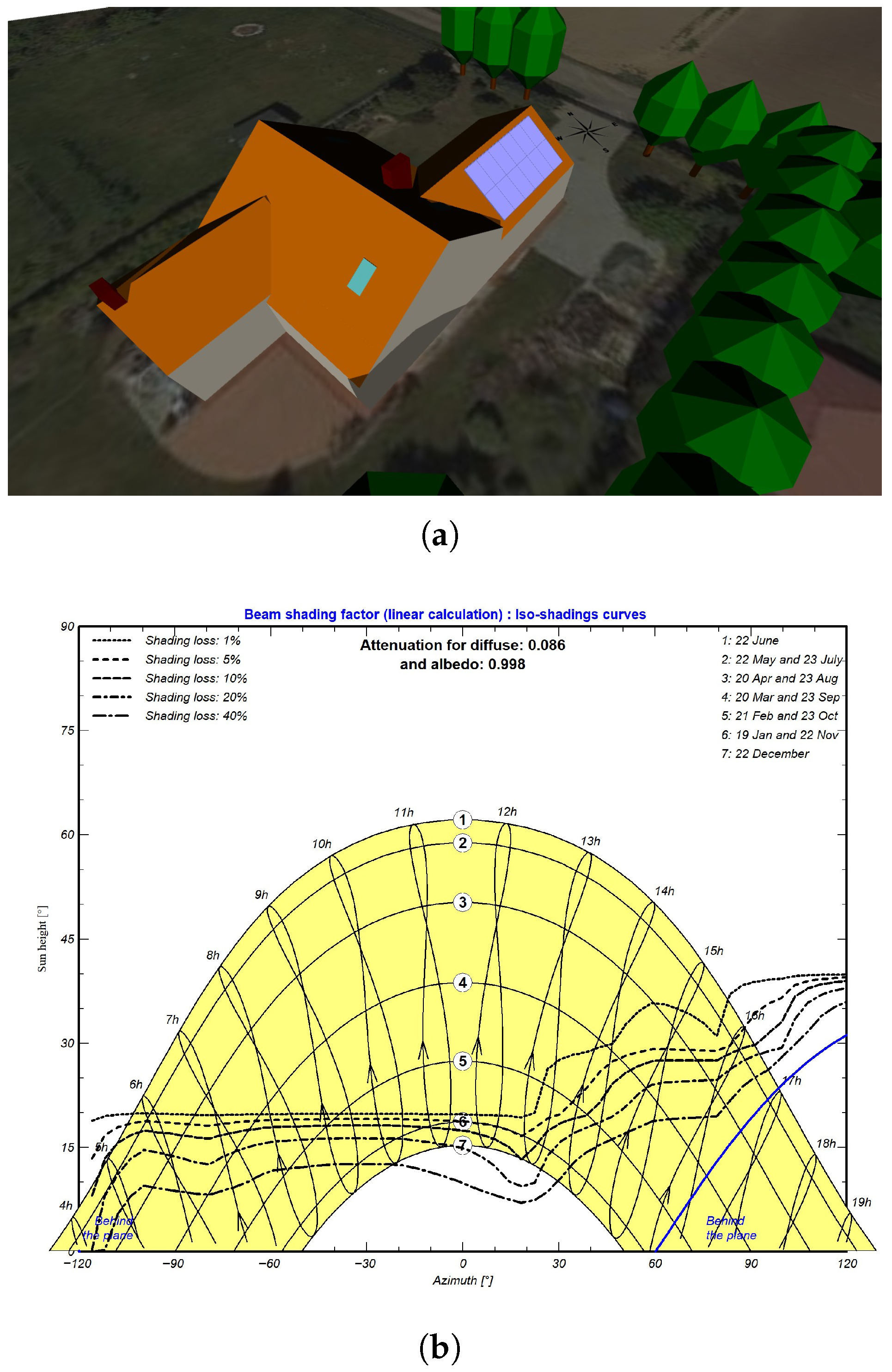
  • A detailed 3D scene with all objects that can cast shadows (Figure 3a);
  • Influence of shadows from nearby objects on irridiance level as well as on the PV electrical circuit (Figure 3b);
  • The PV modules electrical circuit configuration has been introduced to provide specific information regarding the influence of shadows on the performance of PV modules;
  • The length of the DC circuit and the cross sections of the DC wires.
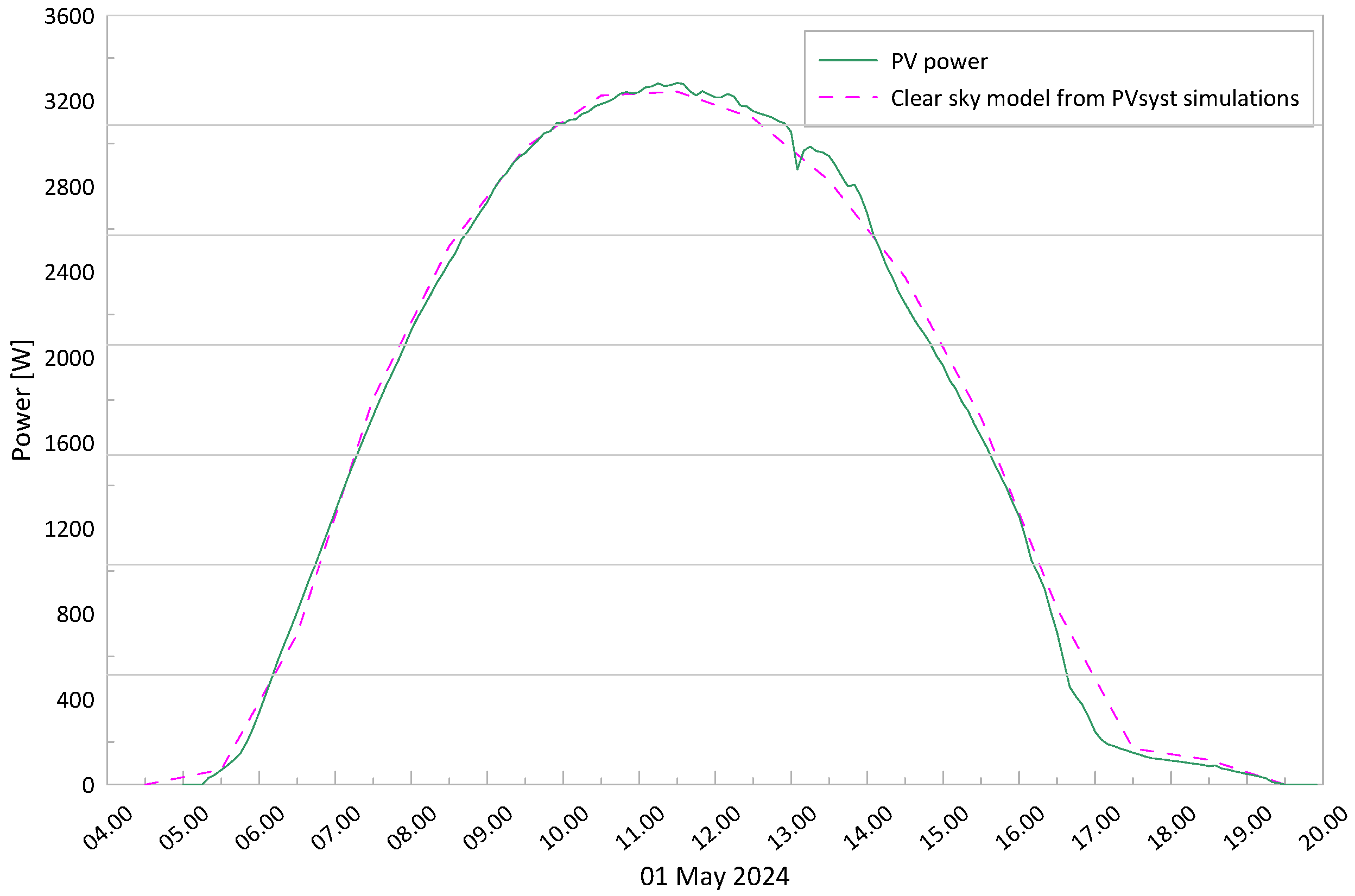
After the PVsyst simulations, the P C S M ( t ) curves were extracted and compared with the real data acquired from the monitoring system. The date on which stable production was achieved without any power outages was 1 May 2024 (Figure 4). This particular day was selected for the purpose of analysing the quality of the performed simulations.
The Normalized Root Mean Square Error (NRMSE) method (Equation (2)) was utilised to analyse the data presented in Figure 4, resulting in a value of 2.25%. This indicates that the quality of the simulation data required for subsequent analysis is of a sufficiently high standard.
NRMSE = 1 n i = 1 n ( P G i P C S M i ) 2 P G max P G min · 100 %
where
  • P G i —actual (observed) value of PV power generation at index i;
  • P C S M i —predicted by clear sky model value of PV power at index i;
  • n—total number of observations;
  • P G max —maximum of the observed P G values;
  • P G min —minimum of the observed P G values.
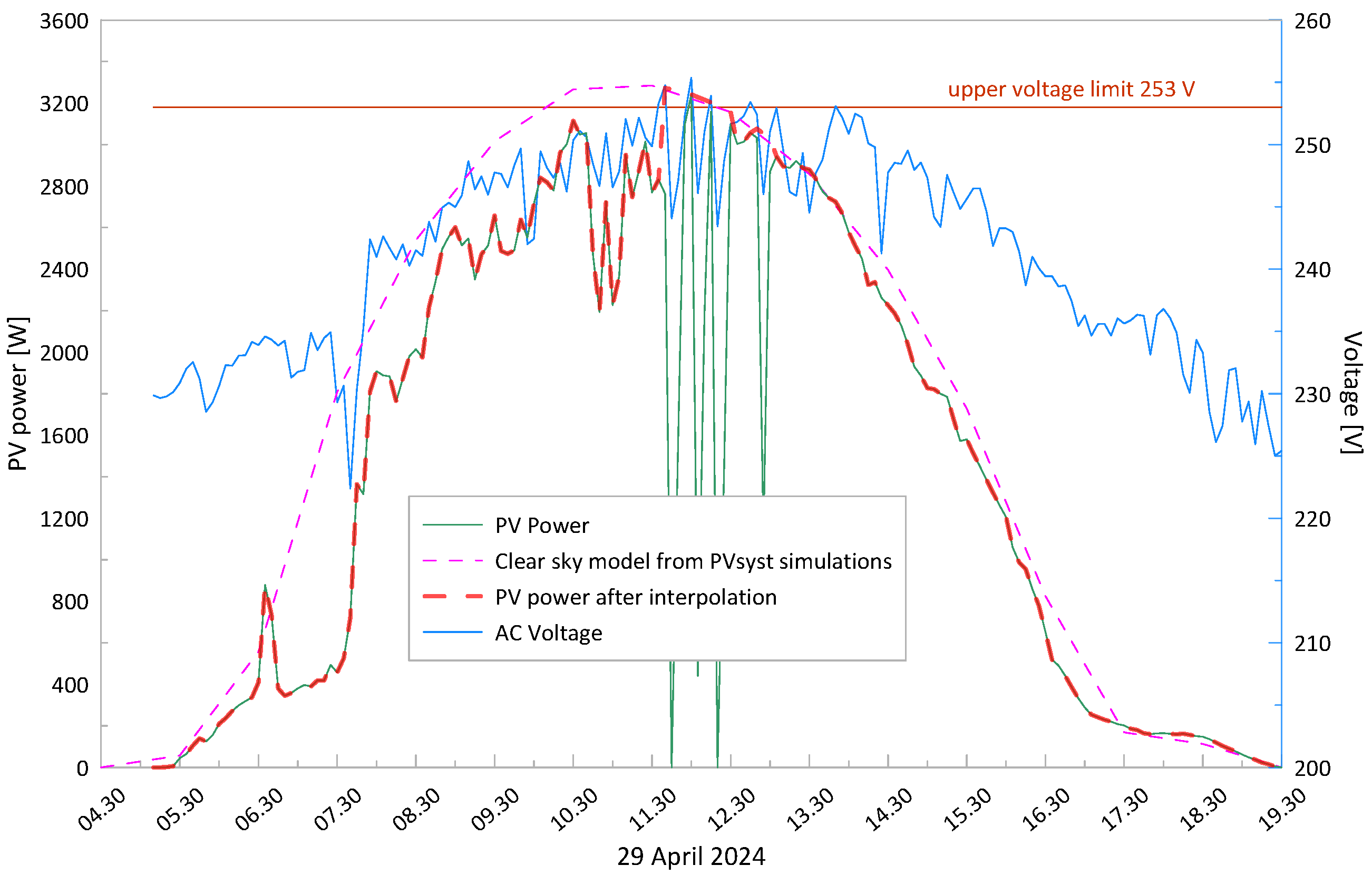
A detailed analysis was conducted on the days during which overvoltage power drops were detected. As an example 29 April 2024 is shown in the Figure 5. The chosen day is notable for its sufficiently high level of PV production, which was interrupted by a disturbance in irradiance levels before the afternoon. This phenomenon is illustrated in Figure 5. At approximately 12 p.m., a series of severe power drops are observed, which are found to be correlated with overvoltage events. During the afternoon period, the energy production remains consistent and stable. The presence of these various conditions within a single day provides a valuable illustration of the process of analysis. The workflow was as follows:
  • Identification of the power drops caused by overvoltage;
  • The PVsyst simulation and extraction of the reference power curve, based on the clear-sky model ( P C S M ( t ) ), was conducted for a specified day;
  • Cubic interpolation [40] was applied using piecewise cubic polynomials ensuring continuity of the first and second derivatives (cubic splines). This approach provides a smooth fit to the data without introducing excessive oscillations. The interpolation was performed based on a reference curve P C S M ( t ) ;
  • The power curve after interpolation ( P I N T ( t ) ) provided information regarding the PV power without overvoltage power drops;
  • The integration of the P G ( t ) and P I N T ( t ) curves post-time enabled the calculation of the energy produced by the PV on a given day, as well as the energy that would have been produced if there had been no power drops associated with overvoltage;
  • The energy losses resulting from overvoltage were determined.

3. Results and Discussion

Utilising the previously outlined methodology, 78 days in 2024 were identified as having experienced a shortage in PV energy production due to an overvoltage problem. As would be anticipated, the effect is seasonal; the losses under consideration are observable during the months in which photovoltaic production is at its relatively highest level. It has been observed that during the winter months, when irradiance levels in Poland are at their lowest, the overvoltage problem does not manifest. The occurrence of this issue is observed to begin in March and extend until October, with May being the month in which power outages are most frequently observed (Table 1). In May, a total of 26 days were identified as days on which power drops due to overvoltage were observed. Furthermore, it was established that energy losses due to the analysed phenomenon were at their peak in this period, with a figure of 6.84% being recorded. A substantial proportion of days were affected by losses in April (13 days) and June (20 days), especially given that the number of days on which the PV system production exceeded 10 kWh/day was 13 in April and 20 in June. Moreover, in both April and June, the losses were noticeably stable, at 3.96% and 6.1%, respectively. During the highest PV production period from March to October there were several days on which losses fell between 17% and 23%. However, more often it was observed that losses were below 10%. The median derived from the days on which overvoltage losses were documented was 5.69%.
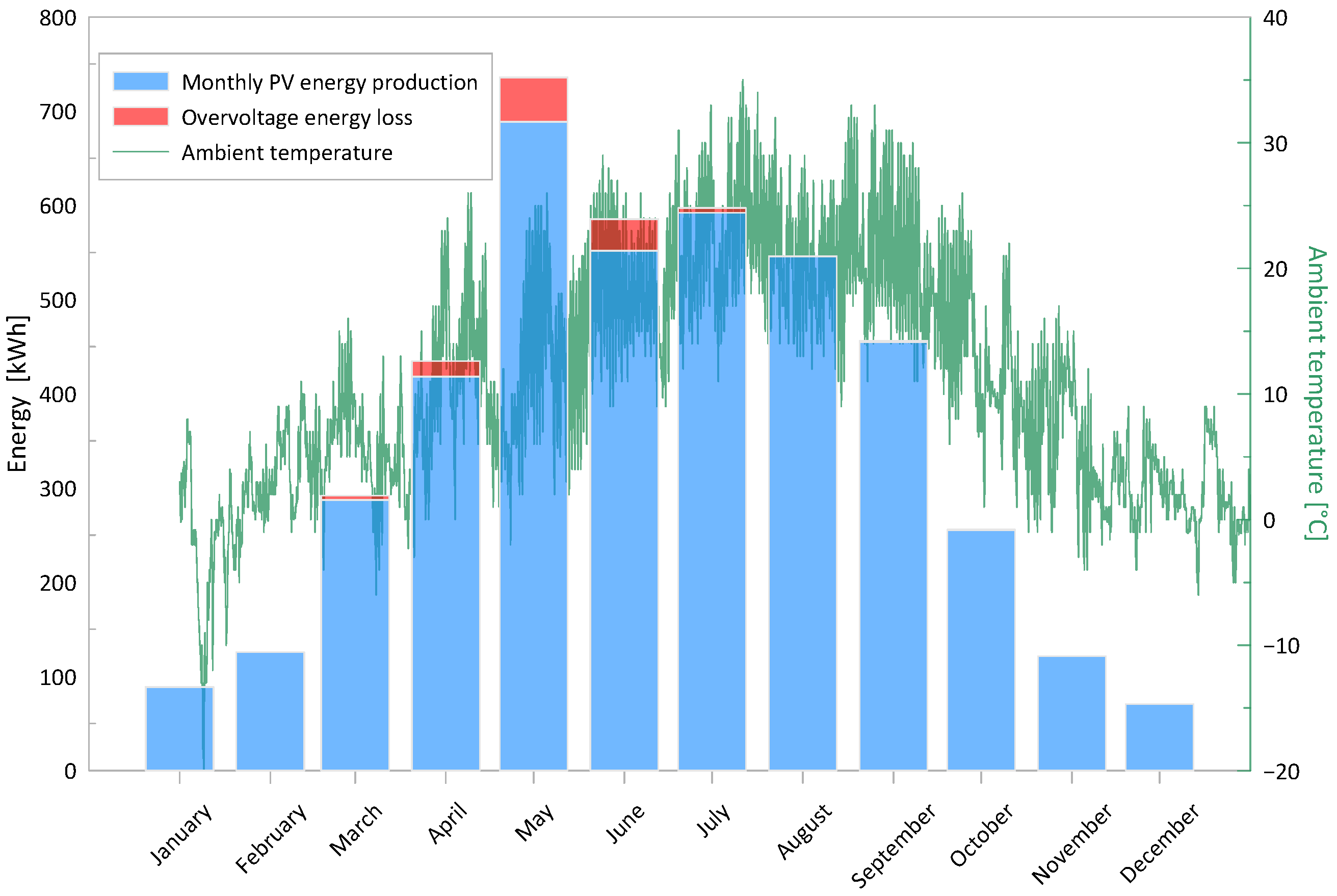
A further analysis of the data presented in Table 1 and Figure 6 indicates that May 2024 exhibited characteristic differences from the typical May month in previous years. The maximum level of photovoltaic energy production was attained in that specific month. Typically in Poland, June is the month in which PV systems generate the greatest amount of energy. This indicates that all PV systems connected to the same transformer station experienced an increase in energy production, resulting in more electrical energy being injected into the grid than is required locally. The higher amount of electrical energy, combined with low demand, caused the overvoltage and inverter power outages, resulting in the highest energy losses in May.
As demonstrated in Figure 6, it appears that overvoltage energy losses are associated with the production level but also with the temperature. The combination of high levels of production and spring temperatures in May resulted in the highest levels of both energy production and energy losses.
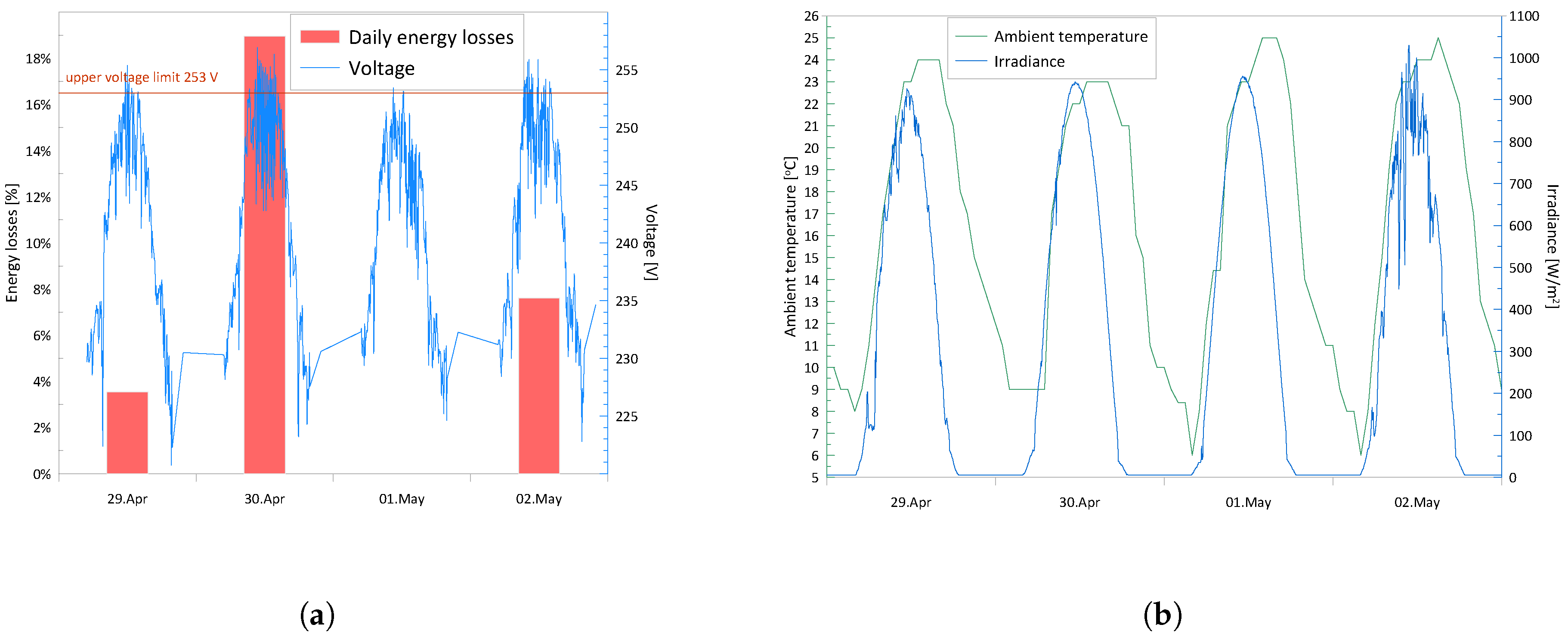
It is also worth noting that the self-consumption parameter plays a significant role in mitigating the overvoltage problem. An intriguing phenomenon can be observed when analyzing end of April and beginning of May 2024 (Figure 7a,b). On 30 April, overvoltage losses reached 19%, whereas on 1 May no losses were recorded (Figure 4 and Figure 7a), despite comparable temperature and irradiance levels (Figure 7b). A plausible explanation for this difference is that 1 May is a public holiday, during which a considerable number of people stayed at home, thereby increasing electricity demand. The higher demand resulted in greater PV energy self-consumption, effectively eliminating the overvoltage issue that can be seen in Figure 7a.
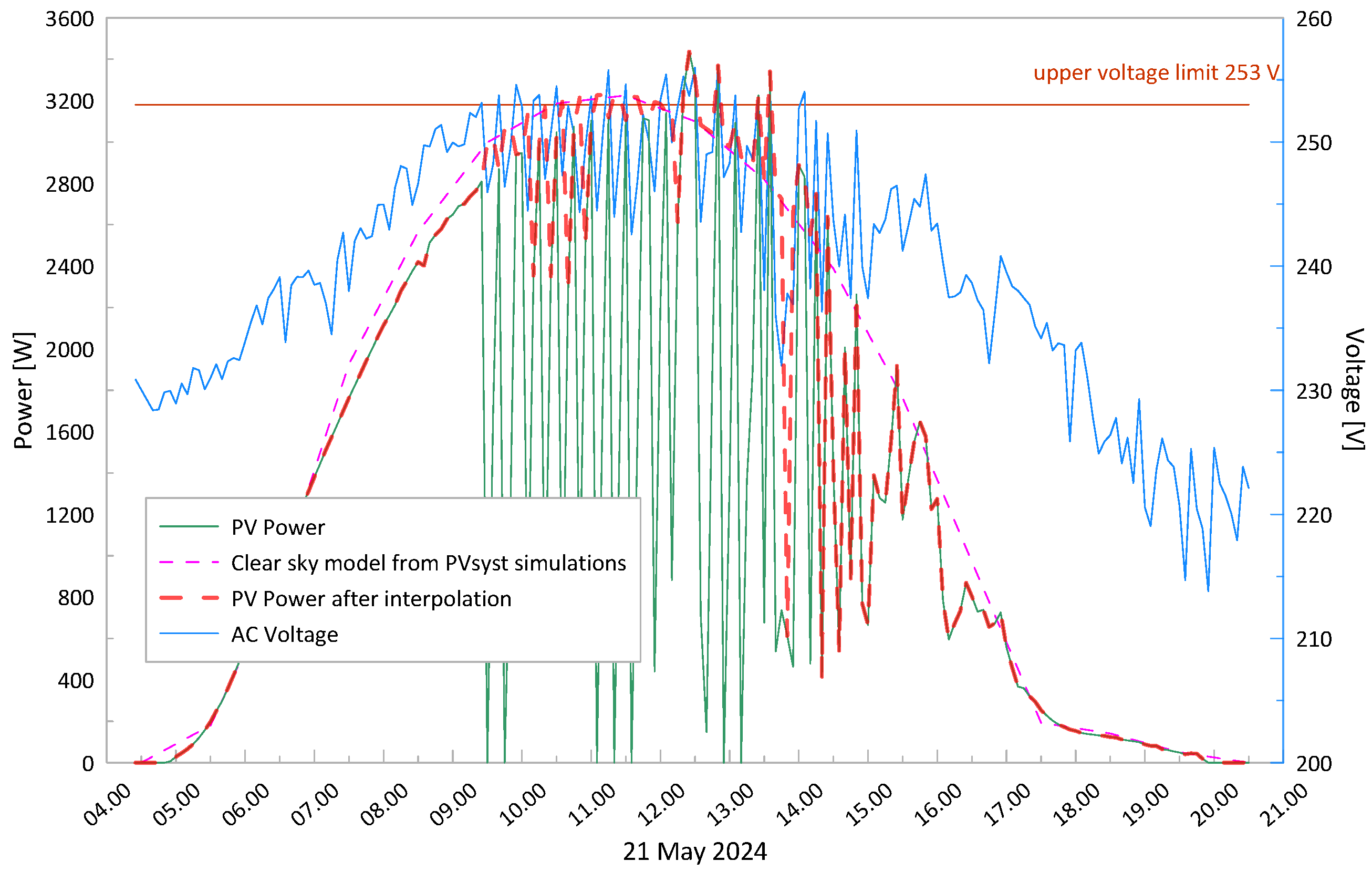
The most substantial losses that were documented throughout the year of 2024 were observed on the 21st of May (Figure 8), with a recorded value of 22.8%. A detailed examination of the data on which the Figure 8 is based reveals that the number of times the voltage on the electrical grid has exceeded 253 V is 19. This means that the inverter stopped producing energy 19 times throughout the day, resulting in an energy loss. By analysing all 78 days on which the overvoltage problem occurred, it was found that the inverter stopped producing energy a total of 614 times. As would be anticipated, a strong correlation exists between the number of suspensions of inverter work and energy losses. On days where losses are at their peak, such as 21 May, a significant number of power outages occur, typically during the hours of maximum insolation. When daily losses exceed 10%, it usually means that the inverter stops energy production more than 10 times a day.
A limitation of this study is that the analysis was conducted for a single residential household. Although this case represents typical operating conditions—annual electricity consumption of approximately 4 MWh, a standard PV installation balancing yearly demand, and a low-voltage grid connection—certain local factors may influence the results. Therefore, the findings should be interpreted as representative for similar households rather than universally applicable. Nevertheless, the adopted approach provides a replicable framework that can be extended to larger datasets and different locations. Applying the proposed method to a broader group of prosumers or to various grid configurations would allow for further validation and refinement of the results, contributing to a more comprehensive understanding of overvoltage-related energy losses in residential PV systems.
As many new installations are being connected to LV grids, numerous countries are still working to ensure that generating equipment operates correctly. In recent years, various methods have been developed and implemented to improve voltage conditions. All of these methods can be explained on the basis of the Equation (1). These approaches are discussed below.

3.1. Modernization of LV Grids

It is possible to limit voltage increases by modernizing the network, primarily through increasing cable cross sections or constructing new transformer stations. In practice, replacing cables involves installing lines with larger cross sections, while expanding the network often requires building additional transformer stations. Increasing cable cross sections reduces resistance R (see Equation (1)), while network expansion shortens cable lengths, which also lowers lines resistance R. In both cases, the voltage rise caused by power generated in PV installations is mitigated.
However, detailed analyses [41] indicate that completely eliminating the overvoltage would require a substantial increase in cable cross sections, resulting in significant oversizing. In many cases, such extensive reconstruction would not be economically justified.

3.2. Installation of MV/LV Transformer with On-Load Tap Changer

The voltage at the feeding station U F has a significant impact on voltage levels within the network. This voltage depends on current operating conditions and the MV/LV transformer tap ratio. Most MV/LV transformers in operation today allow only manual tap adjustments, which can be performed only after the transformer station has been completely shut down. The switchover is carried out by a distribution system operator (DSO) team once the station has been taken offline and secured, making it a rather cumbersome procedure. From a practical standpoint, such adjustments cannot be performed frequently. At present, they are usually made in response to customer complaints about excessive voltage. Under conditions of low generation and high demand, a voltage drop below the permissible limit may occur, requiring another visit from a maintenance team to readjust the tap changer. With thousands of transformers in operation, carrying out several adjustments per unit each year would be extremely difficult to manage.
The growing share of distributed generation has led to the introduction of MV/LV transformers equipped with on-load tap changers. While analogous to those used in HV/MV transformers, their design is different. However, the cost of such transformers is approximately 4–5 times higher than that of conventional MV/LV units, which significantly limits their widespread deployment.

3.3. Reactive Power Regulation

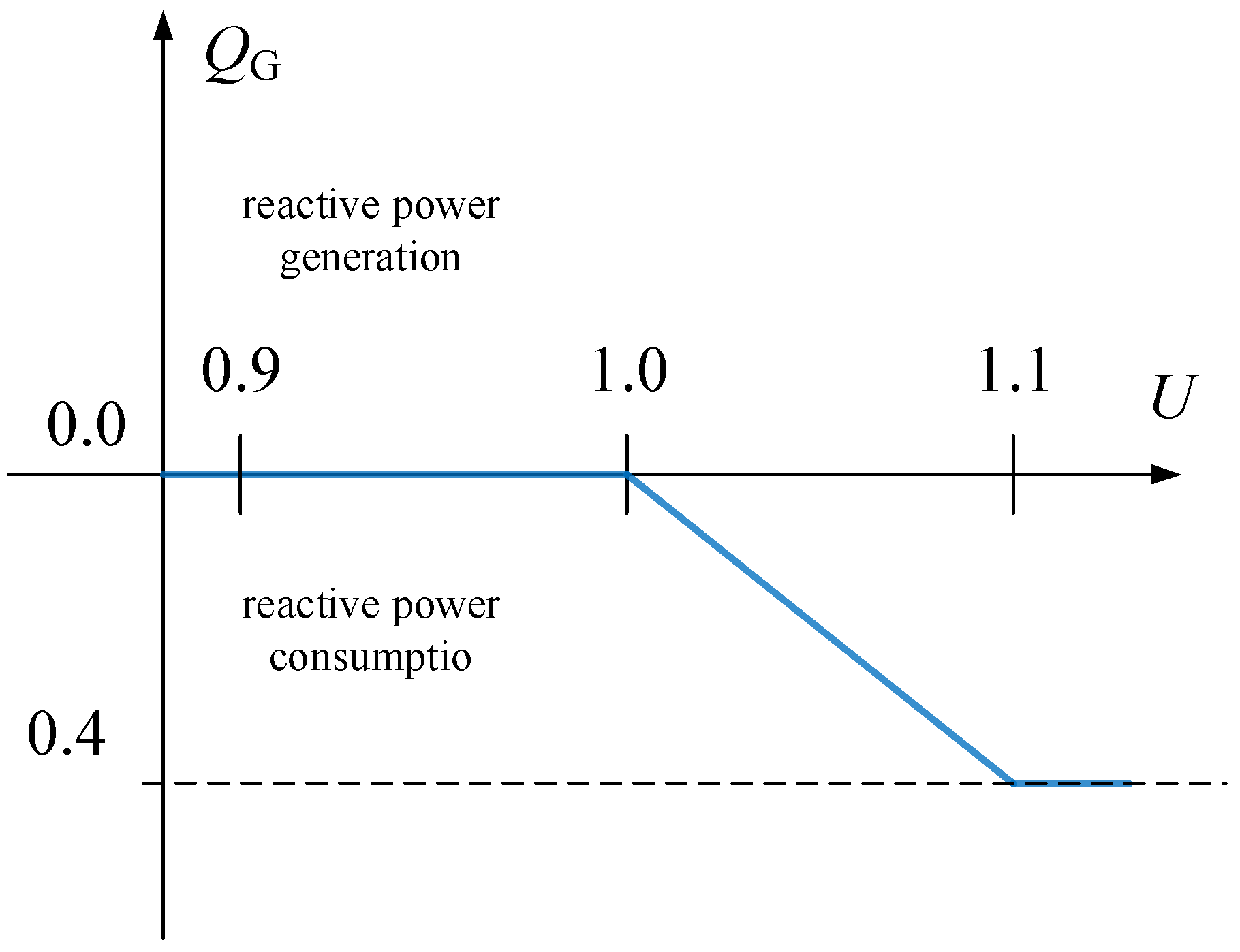
Reactive power flow, like active power flow, causes voltage changes in the system nodes (Equation (1)). In the case of photovoltaic installations, their reactive power Q G is typically zero, but it is possible to both supply and consume it. This can be used to limit the voltage increase caused by active power generation by forcing reactive power consumption. Commercially available inverters allow this power to be regulated in several ways. In the simplest approach, it is possible to set a fixed power factor for the inverter, different from unity, in such a way as to obtain reactive power consumption by the PV installation in proportion to the active power generated. Another way of operating the inverter in the reactive power range is to activate the Q = f ( U ) characteristic—Figure 9. The use of this characteristic is recommended as the basic mode by DSO in Poland, e.g., Ref. [42] and is confirmed research [41].
The use of Q = f ( U ) characteristics theoretically allows for the complete elimination of voltage overloads, but in practice, the rated current of inverters and their permissible power factor (e.g., 0.8) are limiting factors. In addition, the DSO requirements [42], limited minimal power factor to 0.9. The use of forced reactive power consumption may lead to a voltage drop at the connection point of the installation (Equation (1)). With minor exceedance of the permissible voltage, this allows the installation to operate without disruption. In practice, the effectiveness of the method is limited, especially with significant active power generated. It should also be remembered that additional reactive power flow increases the load on the lines and active power losses.

3.4. Active Power Limitation

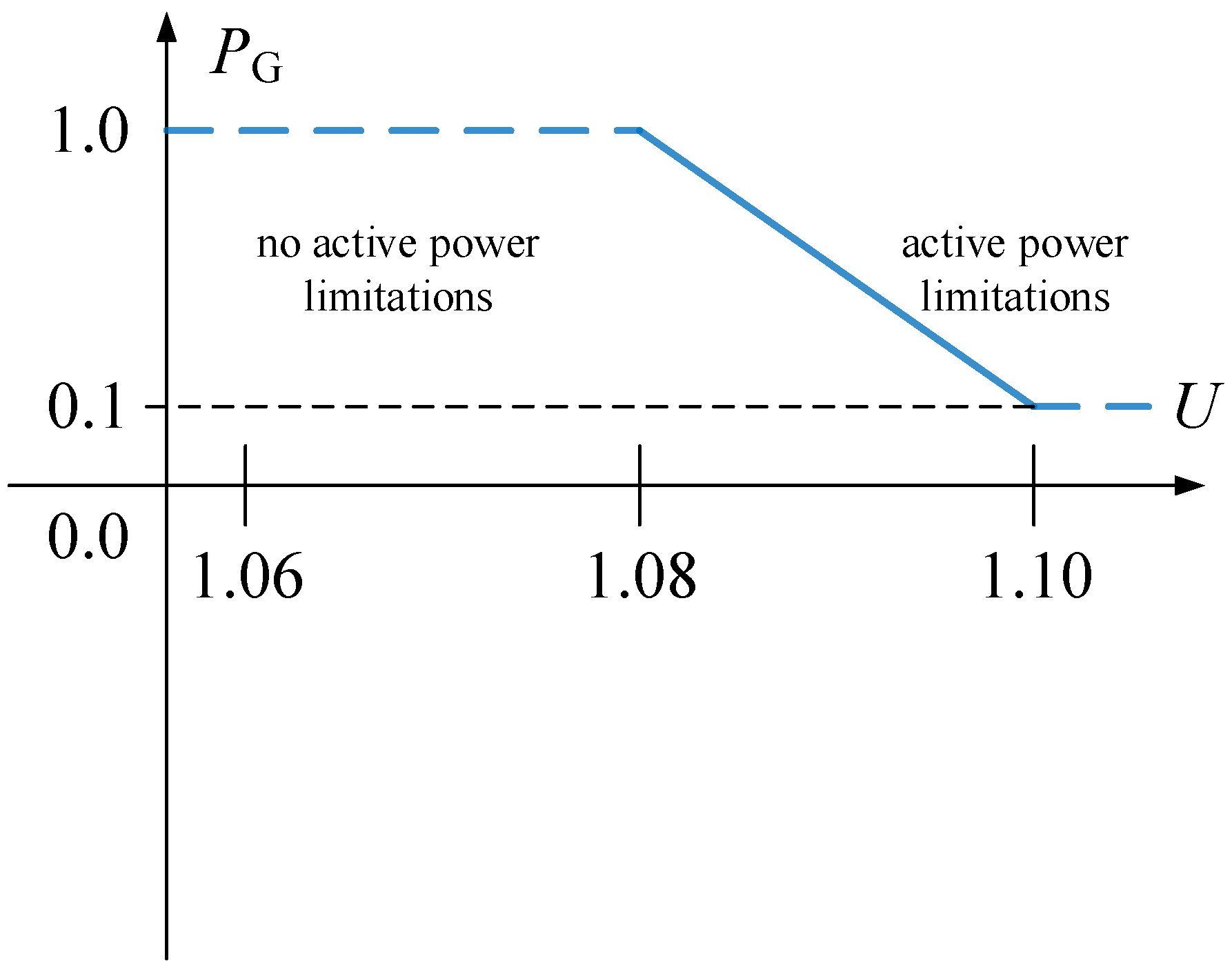
Another method of limiting the shutdown of a photovoltaic installation as a result of an increase in voltage is to reduce the generated active power. The predominant cause of voltage disturbances is the excessive generation of active power in relation to prevailing network conditions. The activation of protection mechanisms results in the disconnection of photovoltaic installations, which completely halts power generation and consequently removes the voltage violation. However, this approach imposes a limitation on energy production and is therefore generally considered unacceptable by photovoltaic system owners. Photovoltaic inverters enable the P = f ( U ) characteristic. It is recommended that the power limitation be activated only after exceeding 1.08 times the rated voltage, which is intended to limit the reduction in energy generation and, if necessary, use the limitation of the increase in voltage by regulating the reactive power according to the characteristic Q = f ( U ) [41]. The proposed characteristic is presented in Figure 10.
Reducing active power in photovoltaic systems can completely eliminate the problem of excessive voltage increases. However, as mentioned above, it reduces the amount of energy generated, so it is not entirely acceptable for PV system owners. However, the use of the characteristic P = f ( U ) is a compromise between limiting the generated power and completely interrupting the installation operation. Thus, the losses associated with the loss of generation will be lower.

3.5. Voltage Increase Reduction Methods—Summary

The mitigation strategies described above enable substantial reduction or even complete elimination of overvoltage events arising from the operation of photovoltaic (PV) installations. Each of these approaches presents specific advantages and limitations, which are summarized in Table 2.
Enhancing voltage conditions through grid modernization and the deployment of transformers equipped with on-load tap changers constitutes a capital-intensive solution for distribution system operators (DSOs). Furthermore, the associated decision-making and implementation processes are typically protracted, owing to the requirements for detailed design, regulatory approvals, and construction activities. While grid reinforcement effectively addresses most voltage-related challenges, designing the system to fully accommodate the maximum generation output from all connected installations inevitably leads to oversizing relative to the actual load demand.
An alternative measure—mitigating voltage rise through reactive power management—can be considered cost-neutral at the implementation stage, as it merely requires activation of the relevant functionality by the PV micro-installation installer. However, it should be noted that additional reactive power flows increase network losses and may induce local overloads. Moreover, given the inherent characteristics of low-voltage grids and regulatory restrictions on reactive power exchange, the effectiveness of this approach may be limited.
Curtailing active power output constitutes another approach which is able to completely eliminate the risk of voltage violations. However, this solution directly reduces the energy yield and, consequently, the revenues of the installation owners. Such outcomes are prone to generating disputes, as the most severe restrictions typically affect consumers connected at the feeder ends, rendering this method inequitable between microgeneration owners.
A notable advantage of voltage regulation based on the P = f ( U ) characteristic lies in its ability to minimize frequent disconnections and reconnections of microinstallations, thereby reducing voltage fluctuations in the grid. Furthermore, active power limitation can be alleviated by increasing the on-site consumption of generated electricity or through energy storage solutions.
The most effective pathway toward mitigating overvoltage risks and reducing the likelihood of disconnections involves coordinated action by DSO’s, PV micro-installation owners, and installers. DSO’s should prioritize investments in grid reinforcement and modernization, installation owners should seek to maximize self-consumption, and installers should ensure that devices are deployed and configured in compliance with DSO’s requirements.

4. Conclusions

The main motivation for the present analysis is the issue of PV inverter shutdowns, which has become a common problem in Poland. This issue has been reported by a significant number of prosumers, with the main cause being the increase in voltage levels beyond the 253 V limit in the LV grid. This phenomenon arises from the fact that photovoltaic energy production exceeds local energy demand. It can be observed that this is not merely a local issue, but a phenomenon commonly occurring throughout Poland. Even the most recent changes in RES legislation and subsidy programs encourage investors to increase PV self-consumption by installing batteries or devices that manage power demand in households. Inverter shutdowns due to overvoltage occur on sunny days, negatively affecting both energy production and the profitability of investments.
The presented analysis is a case study of a single-family house located in southeastern Poland near Lublin, which experiences the problem described above. The year 2024 was taken into consideration, and the data regarding the temporal evolution of photovoltaic power production, as well as the dependence of AC voltage on time, were extracted from the SolarEdge Energy Meter. An original data-processing procedure was developed specifically for this research. The detailed dataset was utilized to identify PV inverter power drops associated with voltage rise in the low-voltage grid. Furthermore, comprehensive simulations of the PV system were conducted using PVSyst software to derive power curves corresponding to a clear-sky model. The measured power–time profiles, together with the simulated clear-sky power curves and voltage–time dependence, were analyzed to quantify the electrical energy losses resulting from the overvoltage phenomenon. This approach enabled the identification of specific instances in 2024 when inverter energy production was interrupted due to overvoltage. Furthermore, the developed procedure allowed for the quantification of energy losses associated with each observed power drop, while power reductions resulting from cloud coverage or other external factors did not affect the analysis. In 2024, a total of 78 days were identified as being affected by this issue, resulting in 614 inverter shutdowns. The phenomenon was observed from spring through autumn, with its maximum intensity occurring in May and June. When analyzing specific days, for instance 21 May, one might gain the impression that the energy losses were severe; however, detailed calculations revealed that the highest daily losses amounted to 22.78%, while losses in the range of 13–23% were observed on only six days. The highest monthly losses were recorded in May, amounting to 6.84%. The total annual losses in 2024 attained 2.6%, which is considerably lower than expected.
The developed model for estimating energy losses due to inverter disconnections was compared with similar approaches described in the literature. The obtained results show consistent trends with previously reported studies, particularly in terms of the relationship between voltage rise and active power reduction [7,8,9], confirming the reliability of the proposed methodology.
The model assumes the use of the Clear Sky irradiance profile, constant inverter performance parameters, and static grid conditions. These assumptions simplify the influence of dynamic network behavior and make the results representative of the upper boundary of potential energy losses under ideal irradiation. The main limitations of the approach include the lack of real-time data on grid impedance and load variability, as well as the use of a single-point voltage measurement. Despite these simplifications, the developed method provides a practical and reproducible framework for quantifying overvoltage-related energy losses in residential photovoltaic systems, offering a valuable tool for both system designers and distribution network operators.
The analysis presented here also indicates that there appears to be a positive correlation between energy self-consumption and the reduction in overvoltage inverter shutdowns. On 1 May, a public holiday, no inverter shutdowns were observed, most likely due to the increased presence of people at their homes throughout the day, which elevated power demand and improved the PV self-consumption parameter. By contrast, on the previous day, which was characterized by comparable temperature and irradiation levels, the inverter shut down 18 times, resulting in nearly 19% energy loss.
After analyzing all the results for the presented household solely in terms of energy losses, the annual loss of approximately 109 kWh appears insignificant when compared with the yearly energy generation of about 4200 kWh. Hovewer, it should be noted that, despite the relatively small share of lost energy production, the recorded overvoltage events and subsequent disconnections pose a risk to installed equipment, as they expose it to the harmful effects of overvoltage. The applied protection mechanism, which is based on monitoring the ten-minute average voltage and disconnecting the installation once it exceeds by 10% of the nominal value, implies that temporary overvoltage of several volts above the safe level may occur before disconnection takes place. While such deviations are acceptable from the perspective of the standard [16], frequent occurrences may contribute to the reduction in the lifetime of sensitive devices. Moreover, the operation of the protection system itself results in numerous disconnections and reconnections of the installation, leading to voltage fluctuations that are also detrimental to connected appliances. The methods of overvoltage mitigation described in Section 3.3 and Section 3.4 can significantly reduce the likelihood of such exceedances and thereby improve voltage quality in the analyzed network. However, the application of overvoltage mitigation strategies may lead to a reduction in energy production. The amount of curtailed generation is difficult to estimate, as it depends on local conditions, such as installation site, capacity, and nearby demand. Nevertheless, it can be argued that improving power quality, reducing both the frequency and magnitude of voltage violations, and enhancing network stability should be pursued not only by distribution system operators but also through the proper configuration of operating characteristics of connected generation sources.

Author Contributions

Conceptualization, K.J.C.; methodology, K.J.C.; software, K.J.C.; validation, K.J.C. and S.A.; formal analysis, K.J.C.; investigation, K.J.C. and S.A.; resources, K.J.C. and S.A.; data curation, K.J.C.; writing—original draft preparation, K.J.C. and S.A.; writing—review and editing, K.J.C. an S.A.; visualization, K.J.C. and S.A.; supervision, K.J.C.; project administration, K.J.C.; funding acquisition, K.J.C. and S.A. All authors have read and agreed to the published version of the manuscript.

Funding

This research was supported by the statutory funds granted to the Faculty of Environmental Engineering, Lublin University of Technology, Poland, by the Polish Ministry of Science and Higher Education internal grant number FD-20/IS-6/006 and by the statutory funds granted to the Faculty of Electrical Engineering and Computer Science, Lublin University of Technology, Poland, by the Polish Ministry of Science and Higher Education internal grant number FD-20/EE-2/202.

Data Availability Statement

The original contributions presented in this study are included in the article. Further inquiries can be directed to the corresponding author.

Acknowledgments

During the preparation of this manuscript, the authors employed ChatGPT (version 5) and DeepL AI for language editing and correction purposes. The authors have reviewed and edited the output and take full responsibility for the content of this publication.

Conflicts of Interest

The authors declare no conflicts of interest.

Abbreviations

The following abbreviations are used in this manuscript:
RESRenawable energy sources
PVPhotovoltaic
SCSelf-consumption of the produced energy by photovoltaic system
ACAlternating current
DCDirect current
DSOdistribution system operator
LVLow voltage
MVMedium voltage
HVHigh voltage
REDRenewable energy directives
Symbols
U L Receiving node voltage
U F Feeding node voltage
R, XResistance and reactance of the line between the feeding node and the receiving node
P L , Q L Active and reactive load, respectively
P G , Q G Active and reactive power generation, respectively
V ( t ) Voltage over time dependence
P C S M ( t ) Power over time dependence for the clear sky model
P I N T ( t ) Power over time dependence after eliminating power drops by interpolation
N R M S E The normalized root mean square error
P G i Actual value of PV power generation at index i
P C S M i Predicted by clear sky model value of PV power at index i
nTotal number of observations
P G m a x Maximum of the observed PG values
P G m i n Minimum of the observed PG values

Appendix A

Figure A1. The time dependence of the voltage in the electrical grid during year 2024 with the voltage limits marked according to the Polish standards. (a) January, February. (b) March, April. (c) May, June. (d) July, August. (e) September, October. (f) November, December.
Energies 18 06247 g0a1aEnergies 18 06247 g0a1b

References

  1. Forum Energii. Available online: https://www.forum-energii.eu/en/monthly-magazine-1 (accessed on 21 May 2025).
  2. Kulpa, J.; Olczak, P.; Surma, T.; Matuszewska, D. Comparison of Support Programs for the Development of Photovoltaics in Poland: My Electricity Program and the RES Auction System. Energies 2022, 15, 121. [Google Scholar] [CrossRef]
  3. Institute for Renewable Energy. Photovoltaic Market in Poland. 2024. Available online: https://ieo.pl/raport-rynek-fotowoltaiki-w-polsce-2024 (accessed on 21 May 2025).
  4. Sjoerd, C.D.; Phuong, N.; Koen, K. Challenges for large-scale Local Electricity Market implementation reviewed from the stakeholder perspective. Renew. Sustain. Energy Rev. 2022, 165, 112569. [Google Scholar] [CrossRef]
  5. Kijo-Kleczkowska, A.; Bruś, P.; Więciorkowski, G. Profitability analysis of a photovoltaic installation—A case study. Energy 2022, 261, 125310. [Google Scholar] [CrossRef]
  6. Act of 20 February 2015 on Renewable Energy Sources (In Polish: Ustawa z Dnia 20 Lutego 2015 r. o Odnawialnych Źródłach Energii (Dz.U. 2015, poz. 478)). Available online: https://isap.sejm.gov.pl/isap.nsf/download.xsp/WDU20150000478/T/D20150478L.pdf (accessed on 3 June 2025).
  7. Hanzel, K. Analysis of Financial Losses and Methods of Shutdowns Prevention of Photovoltaic Installations Caused by the Power Grid Failure in Poland. Energies 2024, 17, 946. [Google Scholar] [CrossRef]
  8. Janiga, K. Overvoltage Protection of PV Microinstallations—Regulatory Requirements and Simulation Model. Inform. Autom. Pomiary Gospod. Ochr. Sr. 2021, 11, 40–43. [Google Scholar] [CrossRef]
  9. Talha, M.; Raihan, S.R.S. Rahim, N.A. PV inverter with decoupled active and reactive power control to mitigate grid faults. Renew. Energy 2020, 162, 877–892. [Google Scholar] [CrossRef]
  10. Ahmed, A.; Pompodakis, E. Optimal conductor repositioning to mitigate adverse impacts of photovoltaics in LV networks. Electr. Power Syst. Res. 2023, 216, 109050. [Google Scholar] [CrossRef]
  11. Hashemi, S.; Østergaard, J. Methods and strategies for overvoltage prevention in low voltage distribution systems with PV. IET Renew. Power Gener. 2017, 11, 205–214. [Google Scholar] [CrossRef]
  12. Mahmud, N.; Zahedi, A. Review of control strategies for voltage regulation of the smart distribution network with high penetration of renewable distributed generation. Renew. Sustain. Energy Rev. 2016, 64, 582–595. [Google Scholar] [CrossRef]
  13. Appen, J.; Braun, M.; Stetz, T.; Diwold, K.; Geibel, D. Time in the Sun: The Challenge of High PV Penetration in the German Electric Grid. IEEE Power Energy Mag. 2013, 11, 55–64. [Google Scholar] [CrossRef]
  14. Pompodakis, E.E.; Drougakis, I.A.; Lelis, I.S.; Alexiadis, M.C. Photovoltaic systems in low-voltage networks and overvoltage correction with reactive power control. IET Renew. Power Gener. 2016, 10, 410–417. [Google Scholar] [CrossRef]
  15. Gimenes, T.K.; Coelho da Silva, M.P.; Ledesma, J.J.G.; Ando, O.H. Impact of distributed energy resources on power quality: Brazilian scenario analysis. Electr. Power Syst. Res. 2022, 211, 108249. [Google Scholar] [CrossRef]
  16. PN-EN 50160:2023-10; Supply Voltage Parameters in Public Distribution Networks. Polski Komitet Normalizacyjny: Warszawie, Poland, 2023. Available online: https://sklep.pkn.pl/pn-en-50160-2023-10e.html (accessed on 3 June 2025).
  17. Licari, J.; Rhaili, S.; Micallef, A.; Staines, C. Addressing voltage regulation challenges in low voltage distribution networks with high renewable energy and electrical vehicles: A critical review. Energy Rep. 2025, 14, 2977. [Google Scholar] [CrossRef]
  18. Sharma, T.; Kanwar, N.; Sharma, M.K. Net metering from smart grid perspective. In Proceedings of the a Two-Day Conference on Flexible Electronics for Electric Vehicles, Jaipur, India, 5–6 March 2020. [Google Scholar]
  19. Malciak, M.; Nowakowska, P. Zmiany w Funkcjonowaniu i Zasadach Rozliczania Fotowoltaika. Nowa Energy 2021, 5–6, 81. [Google Scholar]
  20. Mój Prąd 6.0 Subsidy Programme. Available online: https://mojprad.gov.pl/ (accessed on 11 June 2025).
  21. Luthander, R.; Widén, J.; Nilsson, D.; Palm, J. Photovoltaic self-consumption in buildings: A review. Appl. Energy 2015, 142, 80–94. [Google Scholar] [CrossRef]
  22. Moshövel, J.; Kairies, K.; Magnor, D.; Leuthold, M.; Bost, M.; Gährs, S.; Szczechowicz, E.; Cramer, M.; Sauer, D.U. Analysis of the maximal possible grid relief from PV-peak-power impacts by using storage systems for increased self-consumption. Appl. Energy 2015, 137, 567–575. [Google Scholar] [CrossRef]
  23. Villar, C.H.; Neves, D.; Silva, C.A. Solar PV self-consumption: An analysis of influencing indicators in the Portuguese context. Energy Strategy Rev. 2017, 18, 224–234. [Google Scholar] [CrossRef]
  24. Bertsch, V.; Geldermann, J.; Lühn, T. What drives the profitability of household PV investments, self-consumption and self-sufficiency? Appl. Energy 2017, 204, 1–15. [Google Scholar] [CrossRef]
  25. Barzegkar-Ntovom, G.A.; Chatzigeorgiou, N.G.; Nousdilis, A.I.; Vomva, S.A.; Kryonidis, G.C.; Kontis, E.O.; Georghiou, G.E.; Christoforidis, G.C.; Papagiannis, G.K. Assessing the viability of battery energy storage systems coupled with photovoltaics under a pure self-consumption scheme. Renew. Energy 2020, 152, 1302–1309. [Google Scholar] [CrossRef]
  26. Muñoz-Rodríguez, F.J.; Jiménez-Castillo, G.; de la Casa Hernández, J.; Aguilar Pena, J.D. A new tool to Analysing photovoltaic self-consumption systems with batteries. Renew. Energy 2021, 168, 1327–1343. [Google Scholar] [CrossRef]
  27. González-Morán, C.; Arboleya, P.; Pilli, V. Photovoltaic self consumption analysis in a European low voltage feeder. Electr. Power Syst. Res. 2021, 194, 107087. [Google Scholar] [CrossRef]
  28. Ordóñez, Á.; Sánchez, E.; Rozas, L.; García, R.; Parra-Domínguez, J. Net-metering and net-billing in photovoltaic self-consumption: The cases of Ecuador and Spain. Sustain. Energy Technol. Assess. 2022, 53, 102434. [Google Scholar] [CrossRef]
  29. Cieślak, K.J. Multivariant Analysis of Photovoltaic Performance with Consideration of Self-Consumption. Energies 2022, 15, 6732. [Google Scholar] [CrossRef]
  30. Reibsch, R.; Blechinger, P.; Kowal, J. The importance of battery storage systems in reducing grid issues in sector-coupled and renewable low-voltage grids. J. Energy Storage 2023, 72, 108726. [Google Scholar] [CrossRef]
  31. Cieślak, K.J. Profitability Analysis of a Prosumer Photovoltaic Installation in Light of Changing Electricity Billing Regulations in Poland. Energies 2024, 17, 3618. [Google Scholar] [CrossRef]
  32. Rozporządzenie Ministra Klimatu i Środowiska z dnia 22 marca 2023 r. w sprawie szczegółowych warunków funkcjonowania systemu elektroenergetycznego. Regulation of the Minister of Climate and Environment of 22 March 2023 on Detailed Conditions for the Operation of the Power System. Dz.U. 2023 poz. 819. Available online: https://dziennikustaw.gov.pl/DU/2023/819 (accessed on 19 October 2025).
  33. Sharma, V.; Haque, M.H.; Aziz, S.M.; Kauschke, T. Reducing Overvoltage-Induced PV Curtailment through Reactive Power Support of Battery and Smart PV Inverters. IEEE Access 2024, 12, 123995. [Google Scholar] [CrossRef]
  34. European Parliament and Council of the European Union. Directive 2009/28/EC of the European Parliament and of the Council of 23 April 2009 on the Promotion of the Use of Energy from Renewable Sources and Amending and Subsequently Repealing Directives 2001/77/EC and 2003/30/EC. Off. J. Eur. Union 2009, L140, 16–62. [Google Scholar]
  35. European Parliament and Council of the European Union. Directive (EU) 2018/2001 of the European Parliament and of the Council of 11 December 2018 on the Promotion of the Use of Energy from Renewable Sources (Recast). Off. J. Eur. Union 2018, L328, 82–209. [Google Scholar]
  36. European Parliament and Council of the European Union. Directive (EU) 2023/2413 of the European Parliament and of the Council of 18 October 2023 amending Directive (EU) 2018/2001, Regulation (EU) 2018/1999 and Directive 98/70/EC as regards the promotion of energy from renewable sources, and repealing Council Directive (EU) 2015/652. Off. J. Eur. Union 2023, L 2413, 1–77. [Google Scholar]
  37. European Commission. Fit for 55: Delivering the EU’s 2030 Climate Target on the Way to Climate Neutrality; Communication from the Commission, COM (2021) 550 Final; European Commission: Brussels, Belgium, 2021. [Google Scholar]
  38. Jończy, R.; Śleszyński, P.; Dolińska, A.; Ptak, M.; Rokitowska-Malcher, J.; Rokita-Poskart, D. Environmental and Economic Factors of Migration from Urban to Rural Areas: Evidence from Poland. Energies 2021, 14, 8467. [Google Scholar] [CrossRef]
  39. Antonanzas-Torres, F.; Urraca, R.; Polo, J.; Perpiñán-Lamigueiro, O.; Escobar, R. Clear sky solar irradiance models: A review of seventy models. Renew. Sustain. Energy Rev. 2019, 107, 374–387. [Google Scholar] [CrossRef]
  40. Kong, Q.; Siauw, T.; Bayen, A.M. Chapter 17—Interpolation. In Python Programming and Numerical Methods; Kong, Q., Siauw, T., Bayen, A.M., Eds.; Academic Press: Cambridge, MA, USA, 2021; pp. 295–313. [Google Scholar]
  41. Pijarski, P.; Kacejko, P.; Wancerz, M. Voltage Control in MV Network with Distributed Generation-Possibilities of Real Quality Enhancement. Energies 2022, 14, 2081. [Google Scholar] [CrossRef]
  42. Requirements and Procedures for the Connection of Energy Generation Units to the Power Grid. TAURON Dystrybucja S.A. Available online: https://www.tauron-dystrybucja.pl/przylaczenie-do-sieci/przylaczenie/mikroinstalacja (accessed on 31 August 2025).
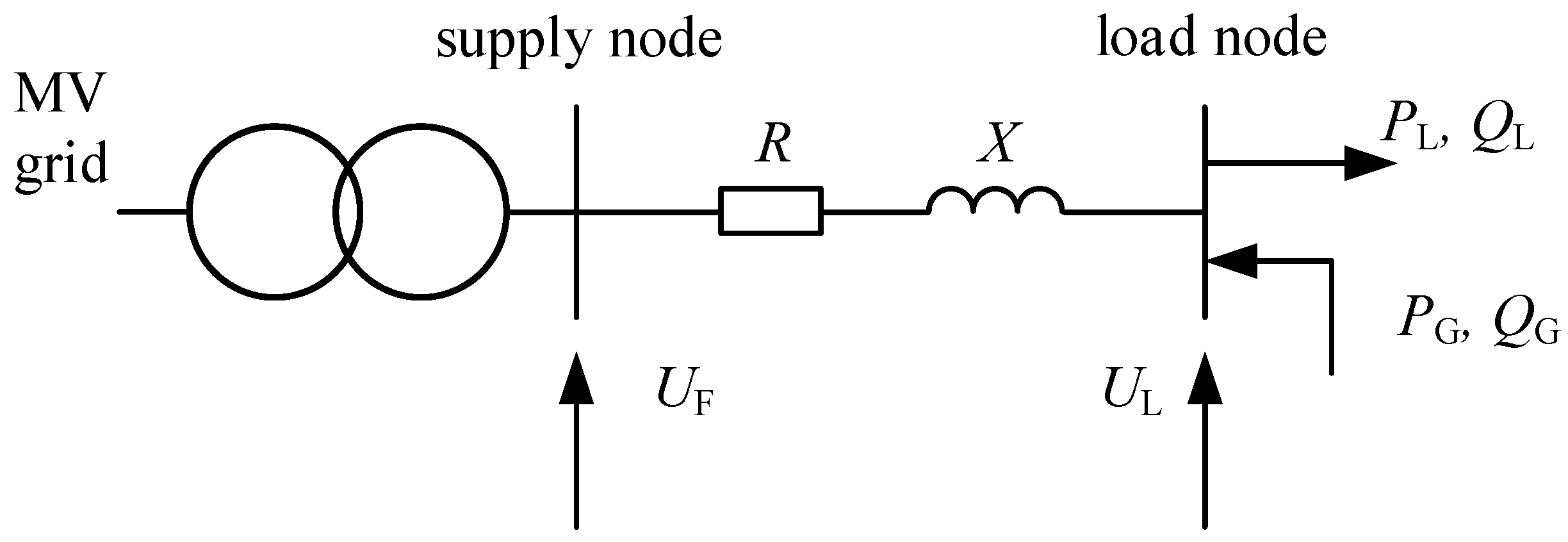
Figure 1. Simplified diagram of the electrical network, where U L —voltage at the receiving node, U F —voltage at the feeding node, R, X—resistance and reactance of the line between the feeding node and the receiving node, P L , Q L —active and reactive power consumed, P G and Q G —active and reactive power generated, respectively.
Energies 18 06247 g001
Figure 2. Simplified diagram illustrating the workflow for estimating daily energy losses caused by overvoltage.
Energies 18 06247 g002
Figure 3. A detailed 3D scene including all objects capable of casting shadows that was built in the PVsyst software (a). The shading factor diagrams (b) were generated during the simulation in PVsyst and are plotted on a sun-path diagram for the analyzed location.
Energies 18 06247 g003
Figure 4. Comparison of the P C S M ( t ) curve for 1st of May 2024 generated by PVsyst using clear sky model with the P G ( t ) curve measured in the analysed location.
Energies 18 06247 g004
Figure 5. The dependence of the real PV power generation over time P G ( t ) on 29 April 2024, along with P C S M ( t ) predicted by clear sky model with the P I N T ( t ) —power over time curve without overvoltage power drops. The voltage over time dependance is also presented.
Energies 18 06247 g005
Figure 6. The monthly energy production of the photovoltaic system is associated with energy losses that are linked to the overvoltage issue. The graph also presents the ambient temperature data with hourly steps during the year 2024.
Energies 18 06247 g006
Figure 7. Daily overvoltage losses at the end of April 2024 with AC voltage over time (a), along with ambient temperature and irradiance levels during the same period (b).
Energies 18 06247 g007
Figure 8. The dependence of the real PV power generation over time P G ( t ) on 21 May 2024 when the highest overvoltage losses were observed, along with P C S M ( t ) predicted by clear sky model with the P I N T ( t ) —power over time curve without overvoltage power drops. The voltage over time dependance is also presented.
Energies 18 06247 g008
Figure 9. Example of a recommended reactive power–voltage characteristic for photovoltaic inverters [42].
Energies 18 06247 g009
Figure 10. Exampleof a active power–voltage characteristic for photovoltaic inverters.
Energies 18 06247 g010
Table 1. Energy losses due to the overvoltage phenomenon over the months during 2024.
MonthNumber of Days with Overvoltage Power DropsPV Energy Generation [kWh]Energy Losses [kWh]Percentage Loss
January08900.00%
February11260.1250.10%
March42874.521.57%
April1341816.553.96%
May2668947.16.84%
June2055233.66.1%
July85925.10.86%
August25460.250.05%
September24551.450.32%
October12550.40.16%
November012100.00%
December07000.00%
Annual total for 20247842001092.6%
Table 2. Voltage Increase Reduction Methods.
Method for Limiting Voltage OverrunsDSO Investment CostDifficulty of ImplementationPower Losses in the GridReduction in Energy ProductionEffectiveness of the Method
LV grids modernizationlargehighreducedminor or nonexistentgood
Transformer with on-load tap changerlargehighunchangedminor or nonexistentgood
Reactive power regulationnonelowincreasedminor or nonexistentmedium, depends on the type of grid and power of PV installations
Active power limitationnonelowreducedmedium or lowgood
Disclaimer/Publisher’s Note: The statements, opinions and data contained in all publications are solely those of the individual author(s) and contributor(s) and not of MDPI and/or the editor(s). MDPI and/or the editor(s) disclaim responsibility for any injury to people or property resulting from any ideas, methods, instructions or products referred to in the content.