
Article

Operational Smart Charging and Its Environmental Impacts: Evidence from Three EU Use Cases with an Innovative LCA Tool, VERIFY-EV


by
Paraskevi Giourka
1,
Stefanos Petridis
1,2,
Andreas Seitaridis
1,
Komninos Angelakoglou
1,
Georgios Martinopoulos
1,3,
Elias Kosmatopoulos
2 and
Nikolaos Nikolopoulos
1,*
1
Centre for Research and Technology Hellas (CERTH), Chemical Process and Energy Resources Institute (CPERI), Thermi, GR 57001 Thessaloniki, Greece
2
Department of Electrical and Computer Engineering, Democritus University of Thrace, GR 67100 Xanthi, Greece
3
Merchant Marine Academy of Macedonia, GR 57004 Néa Michanióna, Greece
*
Author to whom correspondence should be addressed.
Energies 2025, 18(23), 6215; https://doi.org/10.3390/en18236215
Submission received: 22 October 2025 / Revised: 17 November 2025 / Accepted: 25 November 2025 / Published: 27 November 2025
(This article belongs to the Section E: Electric Vehicles)

Abstract

The rapid uptake of electric vehicles (EVs) across Europe offers opportunities for reducing transport-related emissions but also presents new challenges for electricity grids, particularly in relation to congestion and peak demand. Although most lifecycle assessment (LCA) studies show that EVs emit fewer greenhouse gases (GHG) over their lifetimes than internal combustion engine (ICE) vehicles with comparable power output, particularly under the European electricity mix, the environmental impacts of mitigating grid congestion through smart charging (by time and location) are rarely quantified using real-world data. Using a high-granularity LCA tool that utilizes hourly data, this study assesses EV deployment strategies across Europe and provides case-specific insights. The presented LCA tool provides a transferable methodology to support data-driven decision-making for urban planners, distribution system operators, and policymakers committed to accelerating sustainable mobility transitions utilizing GHG payback time thresholds as a practical metric for evaluating infrastructure sustainability. Results demonstrate that EVs reduce GHG emissions by 55–99% per kilometer compared to ICE vehicles, especially when benefiting from renewable-powered charging and smart bidirectional infrastructure. Furthermore, the analysis highlights that counter-congestion strategies deliver additional savings, though outcomes depend strongly on grid carbon intensity and charger utilization patterns.

1. Introduction

The electrification of transportation is central to Europe’s ambition of achieving climate neutrality by 2050 under the European Green Deal [1]. Electric vehicles (EVs) are increasingly promoted as a cornerstone of sustainable mobility, offering substantial potential to reduce greenhouse gas (GHG) emissions, improve air quality, and decrease reliance on fossil fuels [1,2]. However, the widespread adoption of EVs also raises concerns about their overall environmental impacts and the resilience of current electricity grids in enabling and supporting their integration. Distribution system operators (DSOs) across Europe are already experiencing congestion challenges that threaten an affordable and reliable supply of electricity [3]. Assessing whether EVs can reduce emissions without straining the power grid requires rigorous analysis validated in real-world conditions to yield reliable insights for policymakers and energy planners managing this critical transition.
Lifecycle assessment (LCA) has long been recognized as the gold-standard methodology for evaluating environmental performance [4]. Yet, many LCA studies of EVs remain limited in scope, often emphasizing the production phase, particularly battery manufacturing, or applying average national electricity mixes rather than temporally resolved grid data [5,6]. Recent research demonstrates that charging strategies significantly affect the environmental outcome, with smart charging and vehicle-to-grid (V2G) operations offering the potential to reduce emissions by aligning electricity demand for charging with periods of low carbon intensity of the electrical grid [7,8]. Nevertheless, relatively few studies have integrated these operational strategies into full LCA using real-world data. In addition, numerous studies have demonstrated that battery EVs generally outperform ICE vehicles over their lifetime, although results are highly sensitive based on the assumptions regarding electricity generation mix, battery production, and vehicle lifetimes [2,5].
This paper addresses this gap by presenting the development and application of VERIFY-EV, a novel tool created within the EU Horizon project SCALE [9]. VERIFY-EV extends the existing VERIFY platform [10] into the mobility sector, and implements an ISO 14040-compliant environmental assessment tailored to EVs, charging infrastructure, and grid interactions [4]. Using high-resolution data from three European use cases, in Utrecht, Oslo, and Budapest, the study calculates GHG emissions, primary energy demand, and carbon payback times (CPBT), indicating the offset of the environmental investment for the new electromobility infrastructure. The analysis provides new insights into the real-world sustainability of EVs compared to conventional internal combustion engine vehicles ICEVs and an exploration of renewable integration and V2G strategies. The primary goal of this study is to demonstrate that a lifecycle approach that considers temporally resolved data can provide effective information to policy development and infrastructure planning actors. The findings indicate that EV deployment, when assessed through this tool, has the potential to contribute to sustainable urban mobility by reducing GHG emissions and increasing energy efficiency. In doing so, the study provides evidence-based insights that are relevant for policymakers and practitioners engaged in Europe’s transition toward climate neutrality.

2. Background

A growing body of research underscores the importance of charging strategies in shaping EV environmental performance. Zhong et al. argue that smart charging based on marginal emission factors yields greater reductions in GHG emissions than conventional charging, particularly in regions with high variability in electricity generation sources [8]. Li et al. reported that incorporating both marginal emission factors and time-of-use tariffs in charging strategies in Tianjin, China, reduced emissions by up to 27% compared with uncontrolled charging [11]. Similarly, Tang et al. showed that aligning charging with low-emission grid periods provides significant environmental gains, especially when combined with renewable energy penetration [12]. These studies collectively demonstrate that temporal flexibility in charging not only reduces emissions but can also provide operational benefits for users, though actual benefits are context dependent.
Beyond unidirectional smart charging, bidirectional strategies such as V2G and vehicle-to-X (V2X) have attracted considerable research attention. These strategies allow EVs to discharge electricity back to the grid, mitigating congestion, supporting renewable integration, and providing ancillary services. However, the literature reflects a nuanced debate about their environmental viability. Wohlschläger et al. employed a prospective LCA framework in Germany and found that while V2G can reduce operational emissions, the benefits decline as electricity grids decarbonize, making the production phase more dominant [13]. Geng et al. reached similar conclusions in a study of 337 Chinese cities, highlighting that V2G’s effectiveness varies widely depending on local conditions [14]. Other work presents that V2G can inadvertently increase grid stress or emissions if poorly aligned with system needs, particularly when battery degradation or charging simultaneity are not adequately managed [15,16].
Equally important to operational strategies, battery production and degradation remain central to the environmental performance of EVs. Several studies emphasize GHG payback time as a useful metric for decision-making, capturing how quickly operational savings offset production-related emissions [2]. Neugebauer et al. examined cumulative emissions from EVs and ICEVs under different grid scenarios, reporting payback times of approximately four to six years for average European electricity mixes [3]. Ren et al. expanded this analysis across millions of EVs in China, finding that CPBT can range from less than three years in regions with low-carbon electricity to more than a decade in fossil fuel-dominated systems [17]. Importantly, their work highlighted that a portion of EVs may not achieve GHG payback within the typical warranty period of eight years, raising policy concerns about vehicle size, usage intensity, and the pace of grid decarbonization.
Recent systematic reviews confirm that the production phase, particularly that of battery manufacturing, is a dominant contributor to lifecycle emissions, whereas the impacts of the use phase scale with the carbon intensity of the electricity grid and can thus decline as power systems decarbonize [6,18]. For instance, Koroma et al. showcased that battery refurbishment and prospective grid decarbonization, i.e., higher shares of renewable electricity, substantially reduce lifecycle GHG emissions [5]. These findings emphasize that time-invariant assumptions can obscure temporal heterogeneity, reinforcing the need for analyses that are both temporally resolved and geographically specific.
Battery degradation has emerged as a pivotal factor in V2G feasibility. Mansouri et al. examined PV-integrated charging infrastructures, finding that renewable-powered charging reduces CPBT significantly, although degradation effects can limit the environmental benefits [19]. Preis et al. reviewed degradation models in optimization studies and recommended incorporating more realistic degradation assumptions to avoid overestimating V2G benefits [15], thus highlighting the importance of evaluating EV performance holistically by integrating environmental perspectives.
Considering these developments, the reviewed literature points to several key insights: (i) EVs generally provide net environmental benefits over ICEVs, but outcomes depend on electricity mix and usage patterns; (ii) smart charging can amplify these benefits, especially when aligned with low-carbon periods in the grid and dynamic tariffs; (iii) V2G strategies hold promise but carry risks related to battery degradation and grid impacts; and (iv) CPBT is critical yet an underutilized tool for infrastructure and policy decisions.
Despite progress, important gaps remain. Many studies still rely on simulations or average grid data rather than real-world pilot deployments [20]. Few explicitly calculate CPBT under dynamic operational strategies such as counter-congestion charging or V2G. In addition, cross-country comparisons that integrate empirical charging data with ISO aligned LCA methods are still scarce.
Addressing these gaps requires methodologies that combine high-resolution operational data with standardized environmental assessment, enabling more accurate evaluation of EV deployment in diverse contexts such as the one presented in the VERIFY-EV.

3. The VERIFY-EV Platform: Methodology and Implementation

3.1. Overview of the VERIFY Platform

The environmental assessment of electric mobility presented in this study leverages VERIFY-EV, developed by the Centre for Research and Technology Hellas (CERTH) as part of the EU Horizon SCALE [9] project as a specialized extension of the VERIFY platform. The VERIFY platform was originally conceived as a web-based tool for the environmental evaluation of energy systems [21], has evolved to also address the complex interplay between multiple energy vectors (i.e., electricity, heating, gas, etc.). The platform architecture originally consisted of two primary components: VERIFY-B, which focuses on building-level energy systems, and VERIFY-D, designed for broader geographical scales, including districts, islands, and entire cities [10,22].
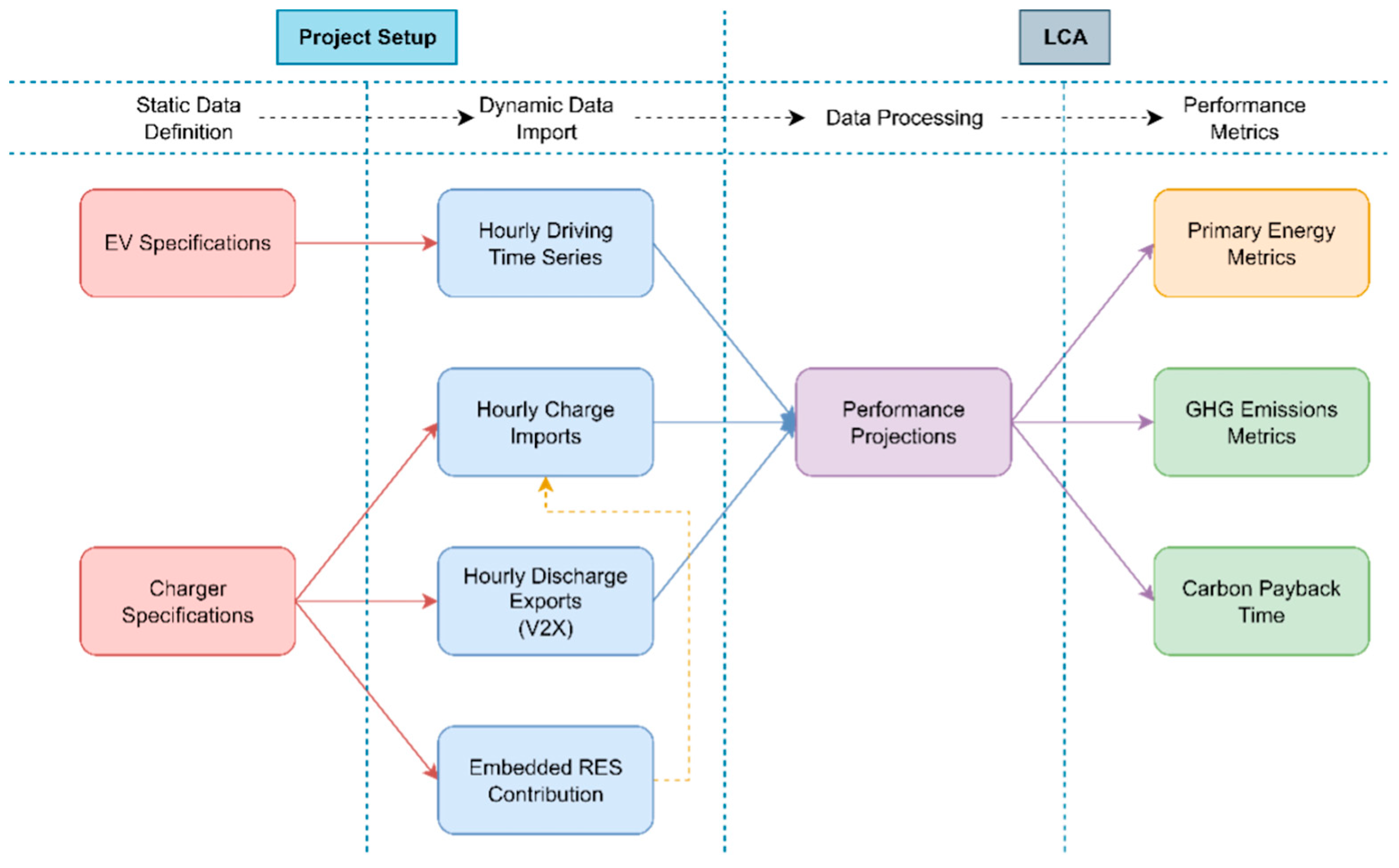
The development of VERIFY-EV marks a significant advancement in the platform’s capabilities, enabling comprehensive LCA specifically tailored to electric vehicle ecosystems, with particular emphasis on quantifying GHG emissions, primary energy consumption, and GHG payback across the entire value chain. A key strength of the platform lies in its versatility, as it can be used for the evaluation of alternative system configurations or can be integrated into operational environments where it processes either synthetic data from simulations or real-time data from IoT sensor networks. VERIFY-EV is part of a proprietary software suite with a private code repository and restricted API access. However, all equations and the modeling workflow used in this study are fully described to enable independent reproduction of the analysis, and the underlying anonymized datasets can be made available from the authors upon reasonable request, subject to GDPR-compliant data handling procedures. Figure 1 depicts VERIFY-EV’s end-to-end workflow. The process begins with the project setup, where the use case, e.g., V2G, charging-time optimization, or RES-coupled charging, is defined. VERIFY-EV then consolidates time-series of operational data from all available sources (charging/discharging events, on-site RES generation, storage capacity/state, and relevant grid signals), applies quality control, and harmonizes formats. The dataset feeds a time-resolved LCA. Results are delivered as decision-ready reports that support comparison of e-mobility strategies and facilitate replication, explicitly accounting for country-specific factors such as grid-carbon intensity.
The methodological foundation of VERIFY-EV is based on ISO 14044 [23], with a particular emphasis on quantifying global warming impacts throughout the entire value chain. To reflect the dynamic behavior of electric mobility systems, the VERIFY-EV framework is extended to ingest time-stamped data streams from distributed IoT sensors (e.g., charger power, session timing and location, state-of-charge telemetry) together with grid signals (e.g., marginal/average carbon intensity, renewable availability). This enables the temporally explicit attribution of operational impacts, capturing variations that static LCA typically overlooks, and supports counter-congestion smart charging scenarios assessment based on time and location shifting.
The indicator set is aligned with EU Level(s) [24] and ISO 16745-1 [25]. The ISO 16745-1 operational carbon formulation is adapted to electromobility as operational carbon intensity per delivered kWh and per vehicle-kilometer, computed with time-resolved grid emission factors at the point of charge. This alignment retains methodological consistency with established practice while remaining fit-for-purpose for EV charging systems.
VERIFY-EV functions as a standalone, yet interoperable, component alongside VERIFY-B and VERIFY-D, introducing constructs specific to electromobility: session-level charge/discharge trajectories, bidirectional power flows (G2V/V2G/V2H), and temporal coincidence metrics that quantify the alignment between variable renewable generation and charging demand.
Development progressed along four axes. First, an intuitive graphical interface guides users through inserting data and applies consistency rules to reduce input error and support reproducibility. Second, curated reference libraries compile vehicles, cell/chemistry options, and charging hardware (AC/DC ratings, efficiencies, standby losses, and embodied inventories), harmonized across manufacturers and fully versioned, ensuring broad applicability across diverse deployment scenarios. Third, an event-driven computational engine ingests high-resolution time-series and executes discrete-time calculations with uncertainty propagation, while maintaining tractable runtimes via vectorized operations and caching. Finally, live data feeds are established to provide average and marginal grid-emission factors, allowing assessments under observed rather than assumed operating conditions of EV strategies.

3.2. Key Performance Indicators

VERIFY-EV adopts a concise set of performance indicators tailored to electromobility. Impacts are reported as GHG emissions (kgCO2-eq) with system boundaries covering vehicle, charging infrastructure, operation (time-resolved electricity use to show the energy mix), maintenance, and end-of-life, and are compared with ICE vehicle performance indicators. Table 1 presents the indicators, each serving a distinct analytical purpose in quantifying the climate impact of electric mobility deployments.
The GHG emissions per kilometer indicator normalizes emissions by distance traveled, to enable direct comparisons between vehicles with different usage patterns and energy consumption profiles. This metric captures the full lifecycle emissions, from electricity generation through to vehicle operation, providing a comprehensive view of environmental impact on a per-kilometer basis.
The CBPT metric provides crucial insight into the temporal dynamics of emission reduction, helping stakeholders understand when infrastructure investments begin yielding net environmental benefits. This indicator accounts for the embodied emissions in vehicle and charger manufacturing, quantifying how long the system must operate before operational savings offset initial carbon investments.
Primary energy savings quantify the reduction in total energy consumption achieved through electrification, accounting for the higher efficiency of electric vehicles compared to internal combustion engines. This metric captures both direct energy use and upstream losses in fuel production and electricity generation.
Total GHG emissions savings represent the aggregate environmental benefit across the entire system, combining reductions from vehicle electrification, renewable energy integration, and optimized charging strategies. This comprehensive metric enables the assessment of overall system performance against climate targets. For systems with bidirectional charging capability, the annual GHG savings from V2G operations quantify the additional environmental benefits achieved when vehicles provide grid services. This indicator captures the emissions avoided when stored battery energy displaces marginal grid generation during peak demand periods, highlighting the potential for EVs to serve as distributed energy resources beyond their primary transportation function.

3.3. Component Libraries and Databases

The reliability of lifecycle assessment platforms depends critically on the quality and comprehensiveness of underlying data repositories. VERIFY-EV addresses this requirement through systematically curated component libraries that balance comprehensive coverage with analytical depth.
The vehicle database spans representative EV segments, from small city cars to lightweight commercial vehicles, with data gathered from available technical datasheets from various manufacturers. For each model, specific technical specifications are stored, including battery capacity, power output, and efficiency parameters, alongside operational factors such as battery degradation rates and consumption based on traveled distance.
The charging infrastructure repository spans the full range of available technologies, encompassing residential AC systems through high-power DC fast chargers. Database entries include nominal power ratings and conversion efficiencies. The database structure explicitly differentiates between unidirectional and bidirectional charging systems, enabling accurate representation of vehicle-to-grid operational scenarios where infrastructure capabilities frequently constitute the limiting factor for grid service provision.
VERIFY-EV ingests time-resolved grid emission factors for all EU member states at hourly granularity. This approach captures the substantial variations in carbon intensity that occur across diurnal cycles, seasonal patterns, and in response to renewable energy availability fluctuations. The temporal granularity of emission factor data is critical for evaluating smart-charging strategies and quantifying the environmental benefits achieved through demand-side flexibility. This temporal resolution is essential for assessing smart charging and V2G strategies, where emissions depend on the timing and location of energy exchanges.

3.4. Analysis Algorithms

VERIFY-EV can assess the utilization of EV charging infrastructure and EV driving behavior within a specific community or district over a user-defined timeframe. Using static (i.e., charger and vehicle specifications) and historical data (i.e., charging and discharging time-series, hourly traveled distances, embedded RES production) provided by the user, and utilizing hourly emission environmental factors. VERIFY-EV calculates KPIs to determine the potential benefits for the community or district in question. Key parameters defined include the battery’s energy mix quality from a primary energy and GHG perspective. These are then used to derive the main KPIs of the analysis. The parameters and KPIs determined in the analysis and the relevant formulas are discussed in the following paragraphs.

3.4.1. Battery Primary Energy and Emission Factor Estimations

To calculate the KPIs, it is important to derive an estimation of the electricity energy mix stored in the batteries of the EVs at each point in time and estimate primary energy and emission factors (EF) of this mix. This is crucial when there is a need to compare EV driving to conventional driving or evaluate the benefits of V2X scenarios.
The energy mix used to produce the electricity to charge the batteries, when behind the meter RES are included, and consequently their emission factor, does not directly correspond to the country’s energy mix and emission factor. It is instead calculated based on the country’s overall energy mix, adjusted to include the additional contribution from behind-the-meter renewable generation.
EV batteries are charged through EV chargers that are connected to the main electrical grid and may also be supplemented by a dedicated (local) renewable energy source. For the electricity provided by the charger E ( n ) at a certain time-step n , the following equation applies:
E F B n = G H G R c u m n + G H G G c u m n E R c u m n + E G c u m n
where
  • E R E S c u m n and E G r i d c u m n are the cumulative charges at time-step n that the EV chargers provided over the previous 96 h, stemming from their RES and the grid, respectively.
  • G H G R E S c u m n are the cumulative GHG emissions from the charge provided from RES, over the last 92 h, and are derived by the following equation:
G H G R c u m n = t = 0 95 E R n t E F R
where
  • E F R is the emission factor of the RES under examination.
  • G H G G c u m n are the cumulative GHG emissions from the charge provided by the grid over the last 96 h and are derived by the following equation:
G H G G c u m n = t = 0 95 E G n t E F G n t
where E F G ( n ) is the emission factor of the main grid at a certain time-step, n .
The primary energy factor for the EV batteries, P E F B n , at time-step, n , is derived by the following equation:
P E F B n = P E R c u m n + P E G c u m n E R c u m n + E G c u m n
where
  • P E R c u m n is the cumulative primary energy stemming from the charge provided by RES over the last 96 h and is derived by the following equation:
P E R c u m n = t = 0 95 E R n t P E F R
where
  • P E F R is the primary energy factor of the RES under examination.
  • P E G c u m n is the cumulative primary energy stemming from the charge provided by the grid over the last 96 h and is derived by the following equation:
P E G c u m n = t = 0 95 E G n t P E F G
where P E F G   is the emission factor of the main grid.

3.4.2. VERIFY-EV KPI Formulas

After establishing the primary energy and emission factors for electric vehicle batteries, the KPIs that can be derived from VERIFY-EV include the primary energy and emission savings achieved from (a) the use of EVs instead of ICEVs, (b) the savings resulting from the integration of RES in the EV charger, and (c) the use of V2X technology:
  • The GHG savings from EV driving are determined by comparing the performance of the EV with its conventional equivalent, yielding two KPIs:
    • The GHG emission savings,   S G H G E I n , at each time-step, n , derived by the following equation:
      S G H G E I n = E F F n E F F F E B n E F B n
    • The primary energy savings,   S P E E I n , at each time-step, n, derived by the following equation:
      S P E E I n = E F F n P E F F F E B n P E F B n
    where
    • E F F ( n ) is the energy consumed for driving the same distance in a conventional fuel equivalent vehicle, and
    • E F F F and P E F F F are the emission and primary energy factors of the fuel consumed by the conventional fuel vehicle.
  • The savings generated from EV charging using dedicated RES.
Here, a comparison between the charging from the grid and charging from RES only is performed to produce two KPIs:
    • The GHG emission savings,   S G H G R G n , at each time-step, n , derived by the following equation:
      S G H G R G n = E R n E F R E F G n
    • The primary energy savings,   S P E R G n , at each time-step, n, derived by the following equation:
      S P E R G n = E R n P E F R P E F G n
  • The savings due to V2X technology
Here, a comparison is made between discharging the EV batteries to utilize their energy and importing an equivalent amount of energy from the grid, resulting in KPIs:
  • The GHG emission savings,   S G H G D n , at each time-step, n , derived by the following equation:
    S G H G D n = D n E F G n E F B n
  • The primary energy savings,   S P E D n , at each time-step, n, derived by the following equation:
S P E D n = D n P E F G n P E F B n
where D n is the EV battery discharge at a certain time-step, n .
To calculate the GHG emissions per kilometer from EV driving, the mean electrical consumption per kilometer is required. This value is then multiplied by the electricity emission factor corresponding to the energy mix that provided the consumed electrical charge. The formula for calculating the GHG emissions per kilometer coming from EV driving is summarized in the following equation:
G H G E V k m = Ε k m E F e l
where
  • G H G E V _ k m : GHG emissions per kilometer due to EV driving
  • E F e l : Electricity GHG emission factor stemming from the country’s energy mix
To calculate the CPBT, the following formula is used.
C P B T = I e E s , a
where
  • Ie: lifecycle GHG emissions that are not included in the operation phase of the system (e.g., for manufacturing, transportation, installation, etc.).
  • Es,a: kgCO2eq saved annually due to EV use.
GHG payback time for electric vehicles with integrated charging, generation, and storage systems can assess how quickly the system offsets its own carbon footprint. This metric serves the environmental sustainability of such solutions by quantifying the time needed to achieve net-positive climate benefits. A shorter CPBT indicates a more sustainable and impactful mobility system, supporting informed design choices and strengthening the case for policy support and funding.

3.4.3. Time-Series Data

Operational evaluation uses hourly (≥8760 timestamps/year) time-series covering a full year to capture weekday and seasonal effects. Required fields include per-vehicle trip distances, timestamped charge/discharge energy (kWh) and power (kW), and the RES share at RES-coupled chargers (on-site PV/wind, BESS interactions). All streams are clock-synchronized (UTC), de-duplicated, and screened for outliers and unit/phase mismatches. Missing data is managed through a tiered process: initially, validity flags identify questionable entries; gaps are then bridged using constrained interpolation that maintains energy and power consistency. This method preserves the statistical properties and energy balance of the dataset, although having complete data still yields the most accurate results.

3.4.4. Evaluation of Counter-Congestion Strategies

VERIFY-EV is designed to evaluate operational strategies that trade off the environmental performance of EVs compared to ICEV. Its architecture supports the analysis of counter-congestion measures, i.e., temporal and locational shifting of charging, using time-resolved demand, and average or marginal emission factors.
Under time-of-use scheduling, VERIFY-EV estimates changes in lifecycle emissions when charging is shifted toward periods of lower grid-carbon intensity, reflecting both electricity-mix effects and indirect impacts of congestion relief. Peak-shaving scenarios can be simulated to examine how demand smoothing may influence emissions and defer capacity additions, while explicitly accounting for the embodied impacts of infrastructure that is avoided or added. For V2G-enabled fleets, VERIFY-EV assesses how bidirectional power flows can provide grid services while minimizing battery degradation impacts.
Coupling with local renewables is considered via co-located generation and storage. Scenarios with PV or wind supply quantify the fraction of charging met by on-site generation, and associated GHG changes. Stationary battery storage can be included to explore interactions between fixed and mobile storage and their implications in creating resilient, low-carbon charging ecosystems.
Results are scenario-dependent and conditional on data quality, boundary choices, and the selected grid-emissions methodology. Within these limits, VERIFY-EV provides quantitative evidence to inform the design and operation of electromobility programs that aim to reduce emissions while respecting network constraints.

4. Use Case Description

4.1. Overview of Three Use Cases in the Netherlands, Norway, and Hungary

This study evaluates the environmental performance of electric vehicle deployment across three diverse use cases in three European cities: Utrecht (the Netherlands), Oslo (Norway), and Budapest (Hungary). These locations were selected to represent a variety of electromobility contexts, encompassing varying charging behaviors, RES penetration, and energy mix quality.
The use cases encompass three distinct application domains (a) bidirectional ecosystem via V2G, (b) optimized charging applications with V1G, and (c) charging combined with RES and battery installations. Table 2 summarizes the primary characteristics of each use case.

4.2. Utrecht: Large-Scale Bidirectional Charging Ecosystem

Utrecht operates the world’s most extensive vehicle-to-grid living laboratory, featuring approximately 700 alternating current bidirectional charging stations serving nearly 400 smart-charging shared electric vehicles [26]. This ecosystem is specifically designed to demonstrate how electric vehicles can enhance power system stability, while providing essential grid flexibility services. The system addresses growing concerns about grid reinforcement costs and peak demand management through a sophisticated car-sharing model where a single professional entity owns and manages the entire vehicle fleet.
The Utrecht use case uniquely combines public accessibility with grid-oriented control. The V2G charging stations remain available for standard on-street parking and can also serve non-V2X capable vehicles, increasing charger utilization. This dual-purpose setup reproduces real urban conditions with variable dwell times, heterogeneous vehicle capabilities, and intermittent grid needs, providing a robust basis to assess how V2G scales in urban environments. To substantiate the grid benefits, the V2X analysis uses simulated operational data calibrated to observed curbside usage.

Data Processing and Country-Specific Energy Mix Evaluation for Utrecht Use Case

Charging profiles were extracted from real operational data recorded across 10 public charging stations in Utrecht, capturing both grid-service requirements and actual user mobility patterns. However, due to the current scarcity of V2X datasets, primarily linked to the limited availability of bidirectional electric vehicles, discharging (V2G) profiles could not be directly observed and were therefore generated through simulation. V2G operation was modeled using a hybrid framework in which a mixed-integer linear programming (MILP) formulation optimized charge–discharge schedules under grid, charger, and mobility constraints, while a Monte Carlo simulation represented the stochastic nature of vehicle availability and travel-related energy demand. This approach builds upon the methodological foundation of [27], which demonstrates the feasibility of MILP-based V2G optimization in contexts where empirical discharge data are unavailable. Nonetheless, the simulated V2G behavior introduces an inherent source of uncertainty, as real-world user preferences and hardware limitations may affect the timing, frequency, and depth of discharge events discussed in the limitations of this research.
The dataset contained 35,233 individual records of charging sessions at 15 min intervals spanning from 1 January 2022 to 3 January 2023. Following preprocessing to achieve hourly granularity and focusing on the complete 2022 calendar year, the final analytical dataset comprised 8760 unique hourly observations. This granularity is necessary to capture the dynamic interaction between renewable energy availability, grid carbon intensity, and charging optimization strategies.
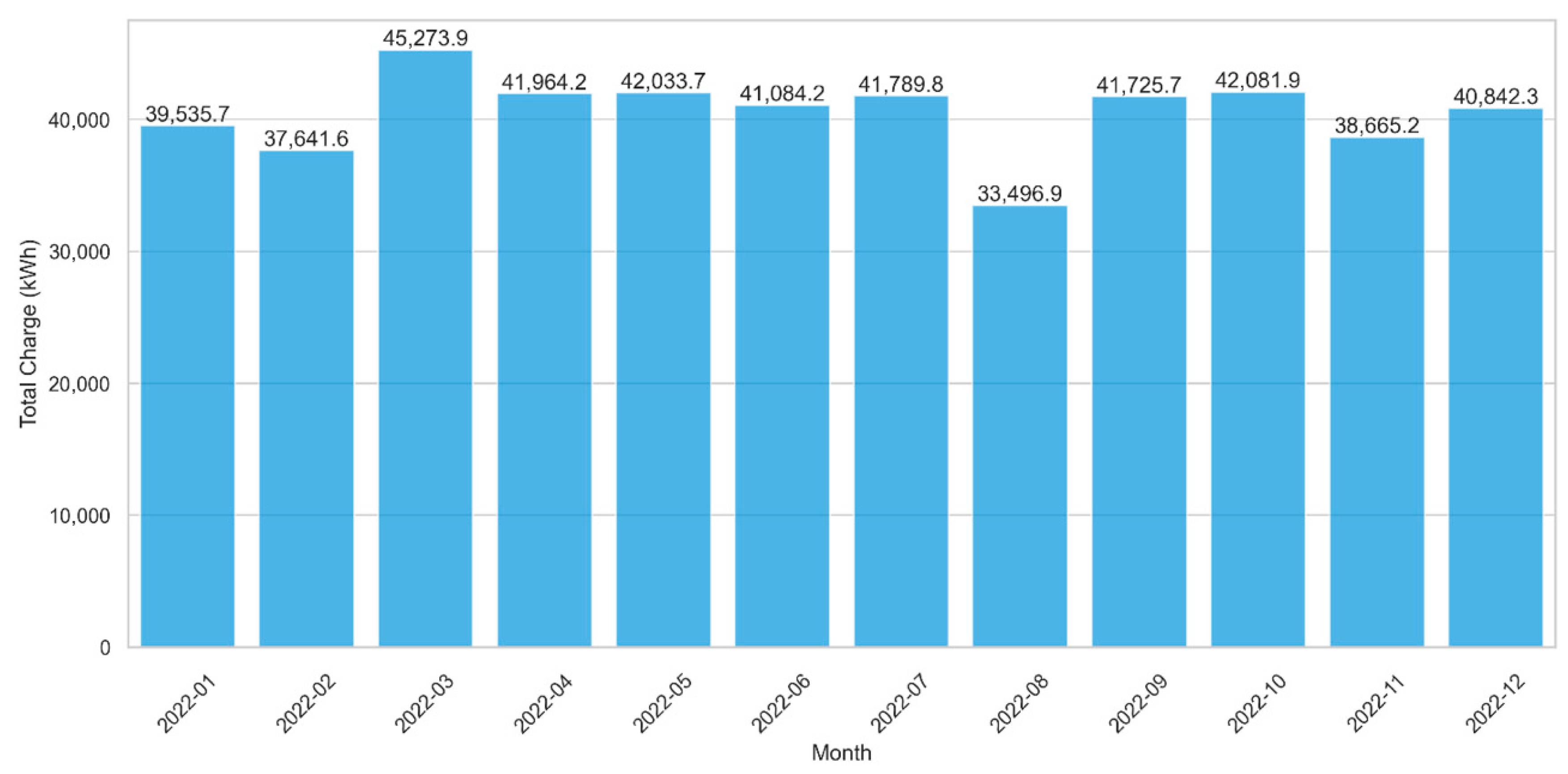
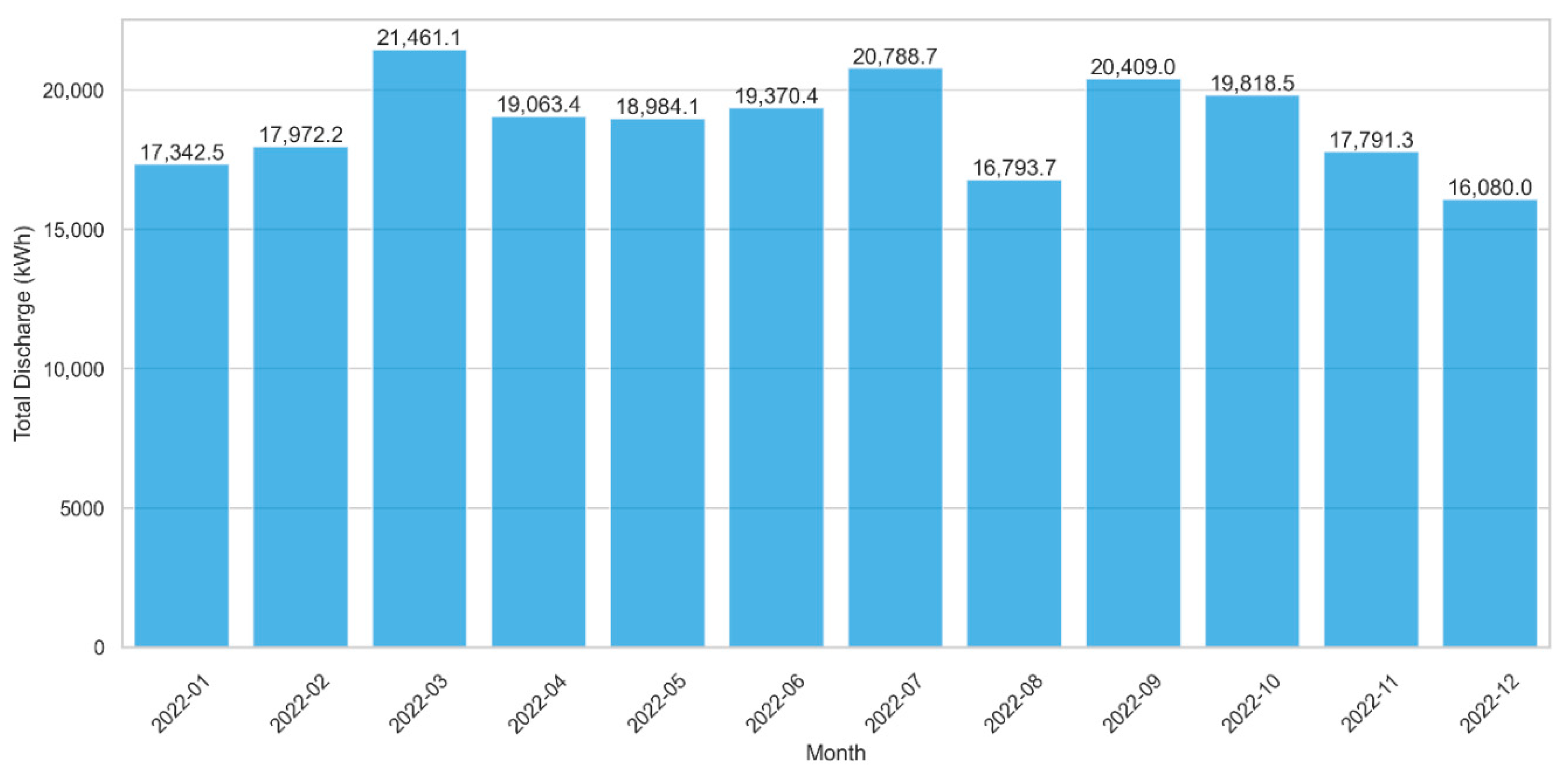
Figure 2 shows the monthly energy delivered from Utrecht’s grid to EVs. Totals are broadly consistent across months, indicating steady utilization with only mild seasonality and a slight reduction in the summer months. Peak charging occurs overnight, with an average peak-hour throughput of 84.5 kWh. Figure 3 reports the simulated monthly V2G export to the grid. While monthly totals are of similar magnitude, a mild rise is visible up to June, followed by a gradual decline from September to year-end. Peak discharge typically occurs in the afternoon, with an average peak-hour export of 47.4 kWh.
Travel distances were estimated from charging session data based on the literature assuming 1 kWh consumption per 6 km traveled for electric vehicles [28]:
c h a r g e i d i s c h a r g e i = d i s t a n c e i 6
where
  • c h a r g e i is the hourly total charge provided by the chargers at time-step i,
  • d i s c h a r g e i is the hourly discharge exported to the grid and
  • d i s t a n c e i is the total hourly distance traveled by the EVs at time-step, i.
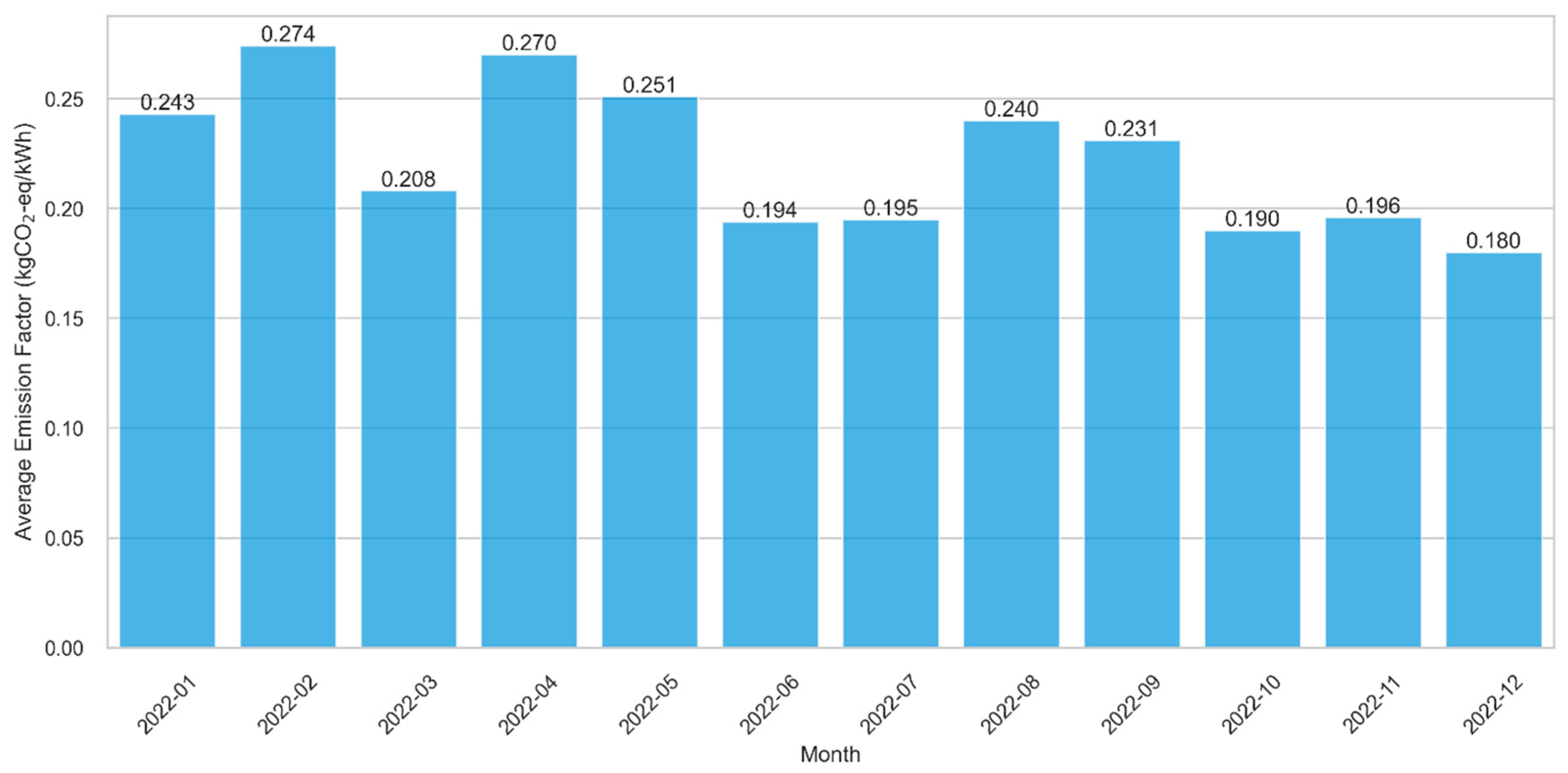
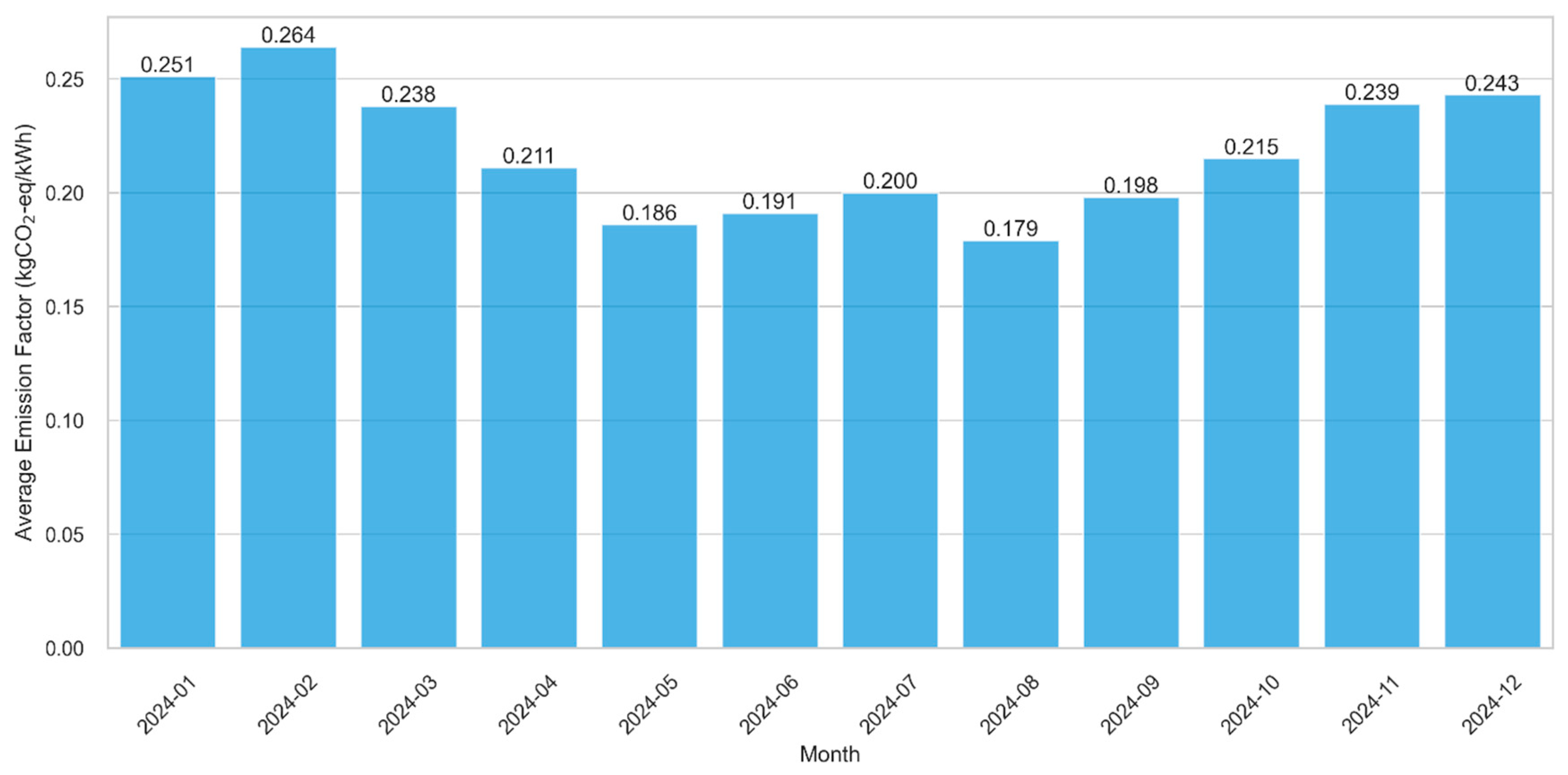
The analysis incorporated hourly emission factors specific to the Netherlands for 2022. Figure 4 presents the average monthly emission factors for the Netherlands for the year of 2022.

4.3. Oslo: Renewable-Integrated Charging Plaza

The Oslo use case is set on a property owned by a real estate company that manages a 350,000 m2 area of mixed-use development, including retail, office, and recreational facilities, allowing for the exploration of how on-site renewable power can directly support electric mobility services. To accommodate the charging requirements of tenants and visitors, the site currently operates 150 AC charging stations. The system incorporates smart charging capabilities that enable demand shifting to off-peak hours, effectively minimizing peak electricity load.

Data Processing and Country-Specific Energy Mix Evaluation for Oslo Use Case

The environmental assessment is conducted using charging session data processed under standardized protocols developed for multi-site comparative evaluation. Following rigorous data cleaning and de-duplication procedures, the final dataset comprised 18,787 unique charging sessions recorded across 179 charging stations.
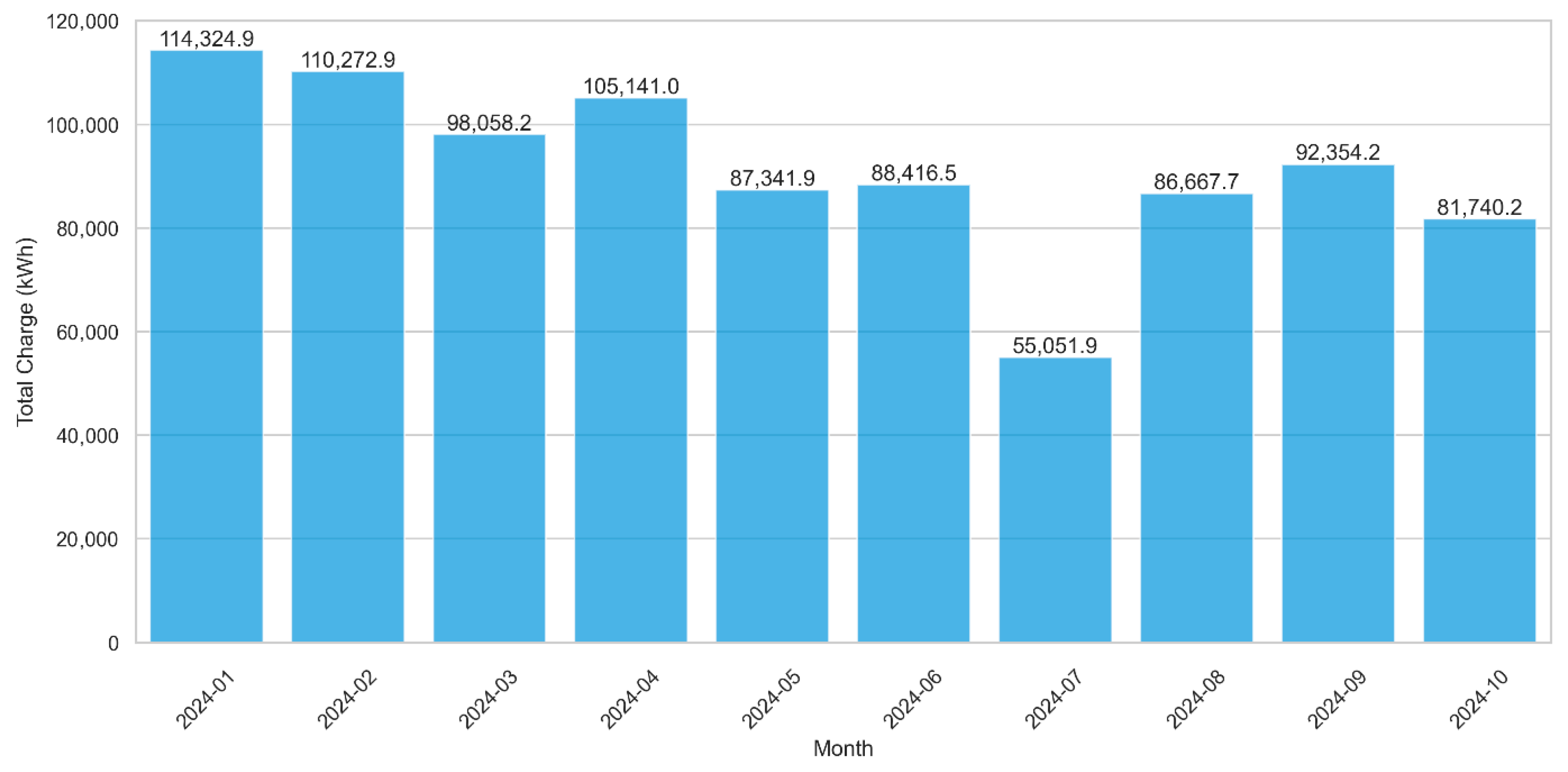
Operational data show clear seasonal variation in energy consumption and charger utilization. In Oslo, chargers located within a mixed-use development (retail, offices, and leisure) exhibit a pronounced July dip, plausibly reflecting reduced activity during the summer holiday period. Charging demand peaked during winter and spring. Daily charging profiles exhibited consistent morning peaks, averaging 270.02 kWh. Figure 5 depicts the total monthly charge consumption for Oslo’s demo site.
Since for the examined Oslo configuration no V2X is present, it is assumed that the entire charge is utilized for driving purposes. In particular, an estimated consumption rate of 1 kWh per 6 km driven [28] is used to derive hourly travel distances from energy usage data.
c h a r g e i = d i s t a n c e i 6
Norway’s electricity generation mix critically shaped the environmental outcomes of the assessment. With approximately 99% of national electricity production derived from renewable sources, predominantly hydropower, the Norwegian grid ranks among the world’s cleanest [29]. This exceptional renewable share markedly influenced lifecycle impact results, as evidenced by the extremely low, monthly varying emission factors applied throughout the analysis, shown in Figure 6.

4.4. Budapest: Renewable Integration and Energy Communities

The Budapest use case is hosted at the historic Market Hall in Erzsébetváros and represents Hungary’s first local-government–led energy community initiative. A coordinated energy management system integrates a 100 kWp rooftop PV system, a 100 kWh battery energy storage system, and two bidirectional AC V1G chargers. Although the asset stack and dataset are comparatively simple, this use case provides a clean testbed to assess the benefits of co-located RES, self-consumption maximization, peak-load shaving, and emissions-aware smart charging, under real operating conditions.

Data Processing and Country-Specific Energy Mix Evaluation for Budapest Use Case

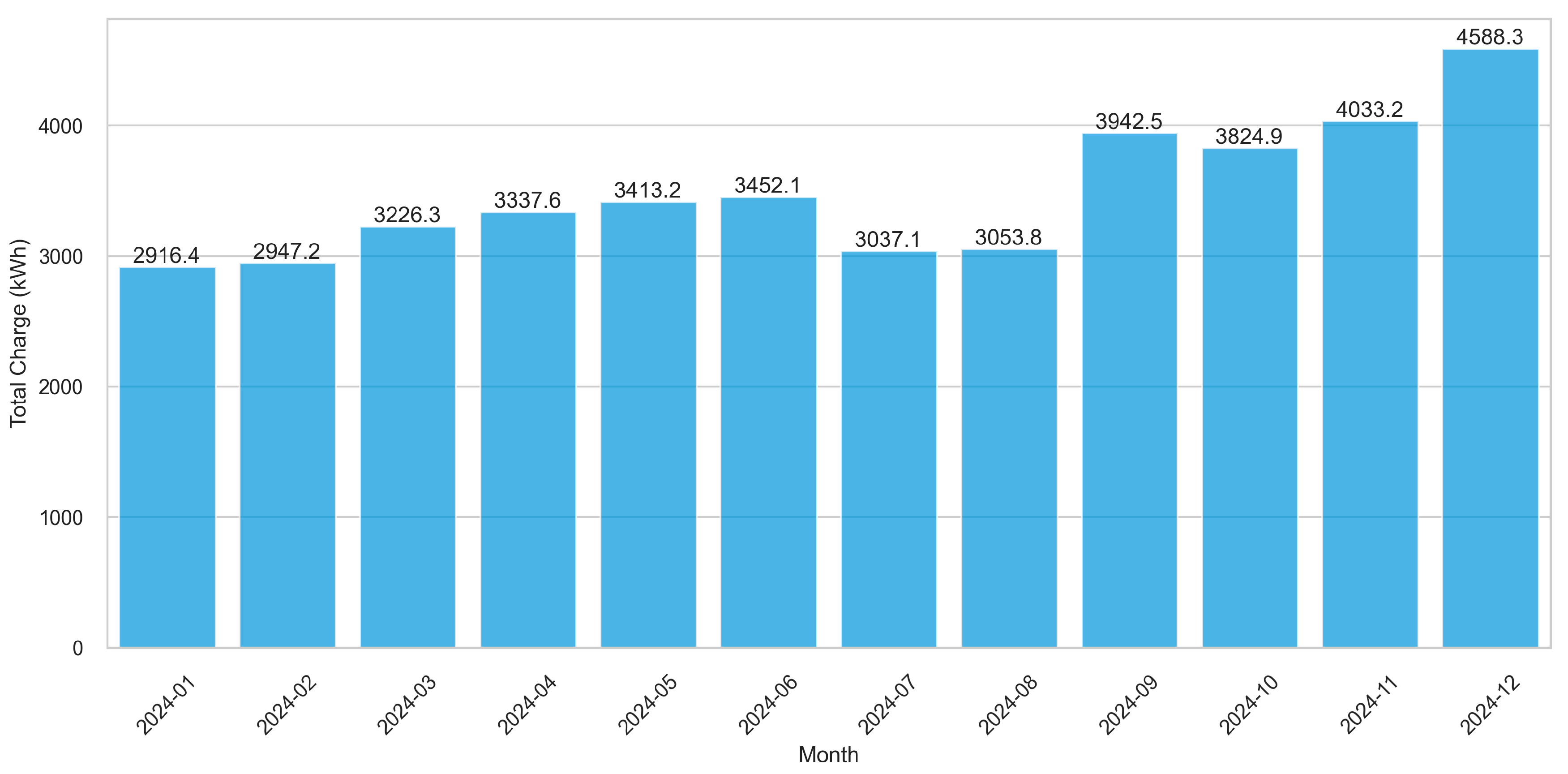
For the environmental assessment, 43 charging sessions recorded between 11 November 2024 and 26 February 2025 were processed. Peak usage occurred in the morning, with a mean session energy of 10.85 kWh. To enable annual analysis, the dataset was expanded to 8760 hourly entries for 2024 using a two-stage reconstruction procedure. First, the observed charging sessions were resampled using a non-parametric bootstrap methodology, generating synthetic daily profiles that preserve the empirical distribution of session energies, arrival times, and temporal variability. Bootstrap-based resampling is widely used in EV-related studies for small-sample inference and uncertainty quantification, as it retains key empirical distributional properties without imposing parametric behavioral assumptions [30,31]. Second, monthly correction factors derived from empirical foot traffic seasonality in shopping centers and market halls [32] were applied, aligning the annual distribution of charging events with documented seasonal demand trends for comparable user environments. This procedure calibrates the extended dataset to realistic temporal variability and associated user behavior patterns, rather than assuming purely periodic extrapolation from the winter dataset. The resulting monthly charging energy is shown in Figure 7.
Because the final dataset is synthetic, two additional scenarios were constructed for sensitivity analysis. While keeping the total monthly charging energy constant, the first scenario shifts a larger share of charging demand to hours with higher photovoltaic generation, a plausible smart-charging variant frequently examined in the literature [33,34], and the second increases weekend charging activity to reflect typical Market Hall operation. These scenarios evaluate the influence of alternative yet realistic intraday and intraweekly charging profiles on the results.
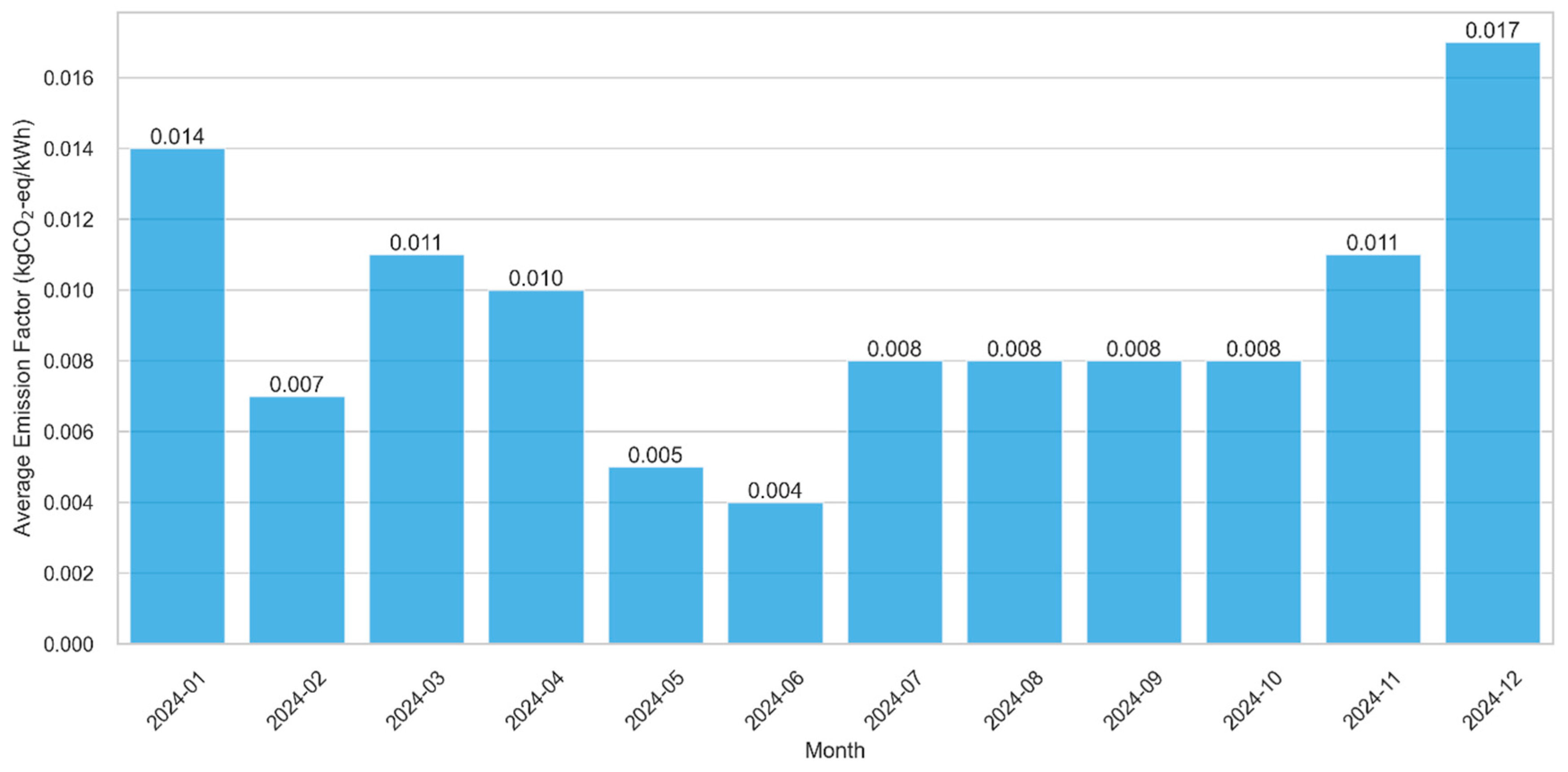
Hungary’s electricity mix has moderate renewable penetration, in contrast to near-fully renewable systems (e.g., Norway) [29]. This makes it a useful counterpoint for assessing how grid carbon intensity shapes the environmental performance of EV charging across national contexts. Figure 8 presents Hungary’s monthly average emission factor for the generation mix for 2024.
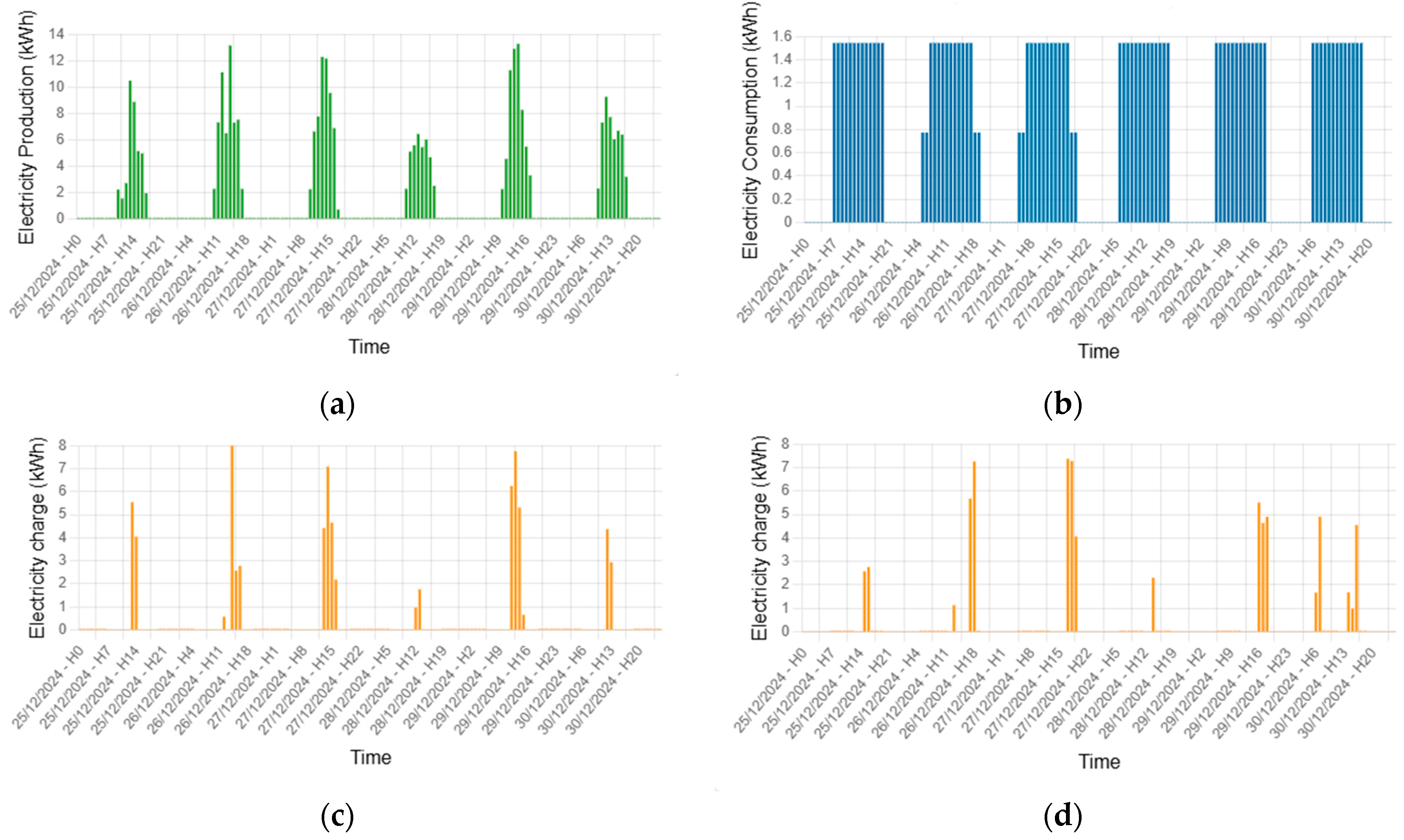
At the Market Hall, the EV charger is installed behind the customer meter and coupled to a rooftop PV system (100 kWp; tilt 45°, azimuth 180°, south-facing) and a 100 kWh battery energy storage system (BESS). To represent this configuration, the authors developed a site-specific simulation scenario to model the building’s energy balance. A dynamic building performance engine [35] is used to generate hourly time-series for PV generation, battery charge/discharge, and building demand. These profiles then served as inputs for the subsequent analyses.
Figure 9 shows the resulting production, building demand, and storage profiles. From these profiles the surplus PV generation and BESS discharge remaining after meeting the building’s own load were computed to represent the theoretical energy available to the EV charger.

5. Results and Discussion

5.1. Overview of Environmental Assessment Results

The application of the VERIFY-EV platform across three diverse European locations and for different charging/discharging configurations provides a comprehensive view of the environmental performance of electric mobility under real-world operational conditions. Results indicate that lifecycle benefits are mainly governed by (i) local grid carbon intensity, (ii) infrastructure utilization at the charger and fleet level, and (iii) the deployment of smart charging and on-site renewables. Each site presents a different mix of these drivers, and their interactions determine the attainable range of emissions reductions and energy savings under real-world operating conditions.

5.2. Utrecht Use Case Results

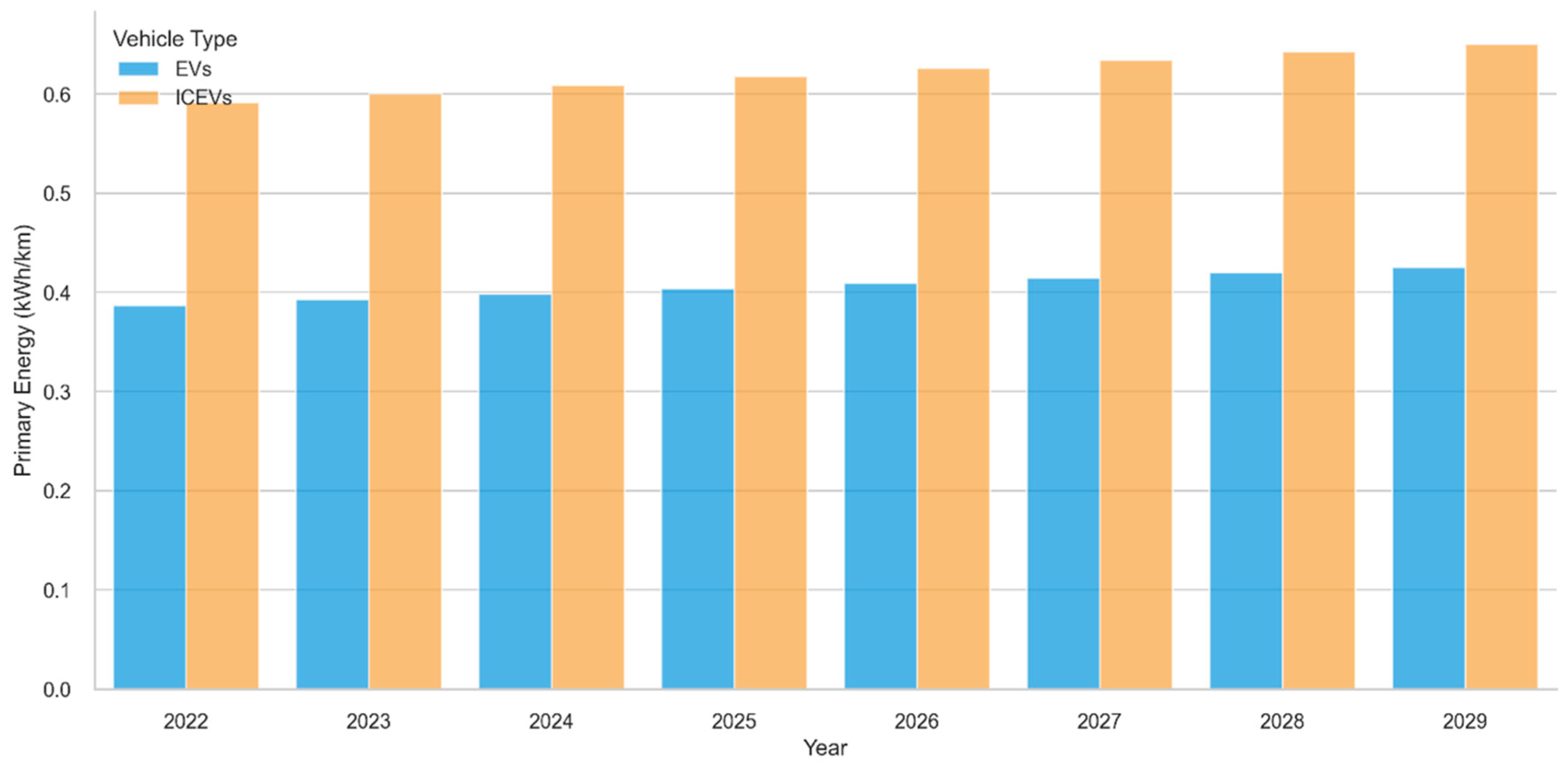
In Utrecht, the bidirectional ecosystem demonstrated substantial lifecycle benefits over the eight-year analysis, starting from 2022. GHG emissions per kilometer were reduced by more than 80% compared to ICE vehicles, while primary energy demand was reduced by approximately 35%. Annual savings of GHG emissions attributable to bidirectional charging reached nearly 2 t CO2-eq, highlighting the importance of aligning discharge operations with periods of lower grid intensity (Table 3). Results indicate that discharging between 16:00 and 20:00 UTC can deliver additional CO2 reductions when vehicles are charged at hours with lower marginal grid carbon intensity than the discharge hours. In the Dutch system this condition commonly holds for evening peaks, and benefits persist after typical round-trip losses, though they can vary with season and system conditions.
Using data from ten curbside chargers, combining measured charging sessions with scenario-based V2G discharge profiles, the analysis indicates that electric battery operation is more energy-efficient and produces substantially lower GHG emissions than internal combustion vehicles in the Utrecht context. These advantages persist without a dedicated renewable supply for charging, suggesting that electrification alone delivers significant environmental gains. Additional reductions appear achievable by expanding charging infrastructure integrated with on-site renewables and by enabling V2G, which can shift demand during lower-carbon hours and export during peak periods. Although the V2G findings rely on simulated discharging, the overall conclusions are consistent with observed charging patterns and prevailing grid conditions.
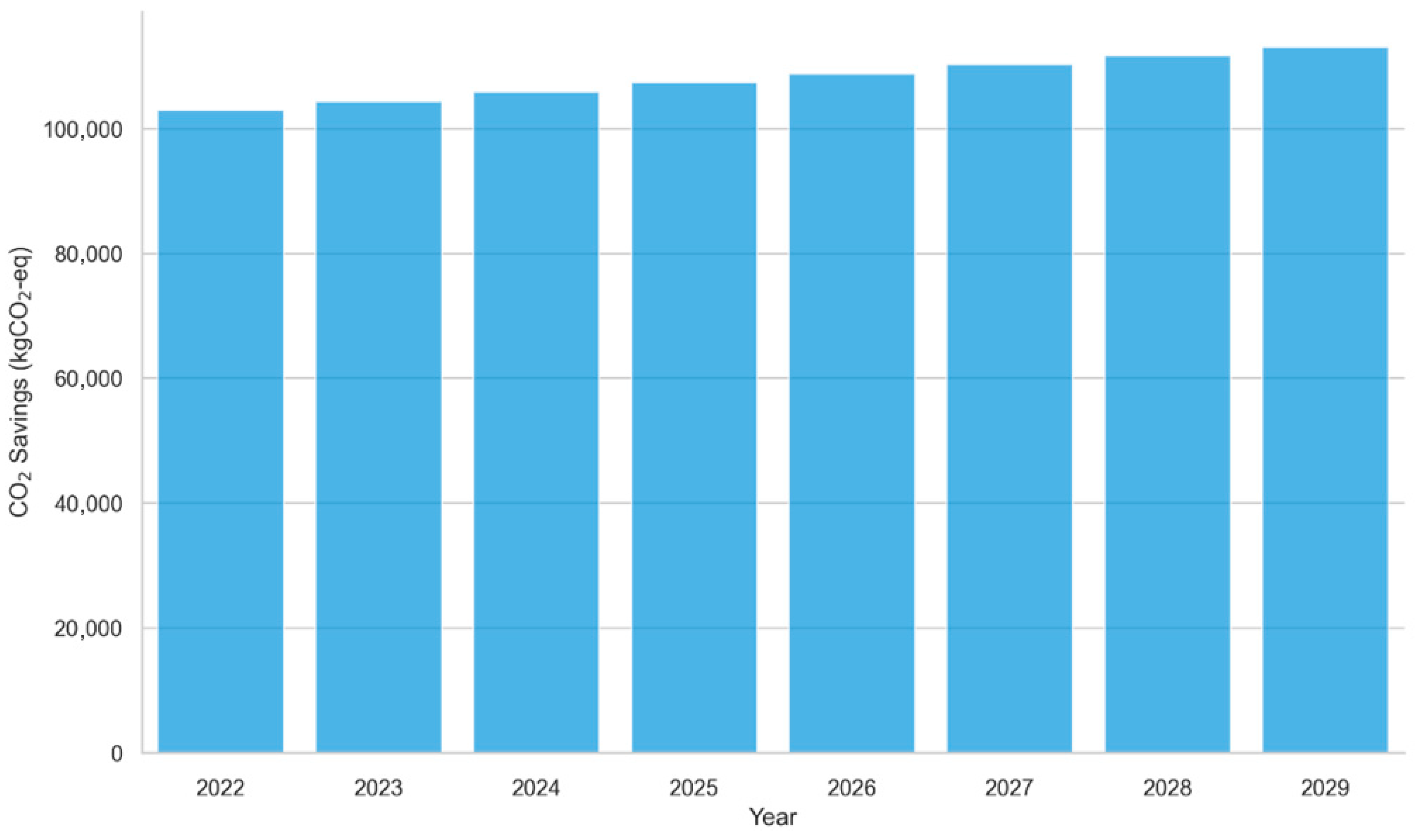
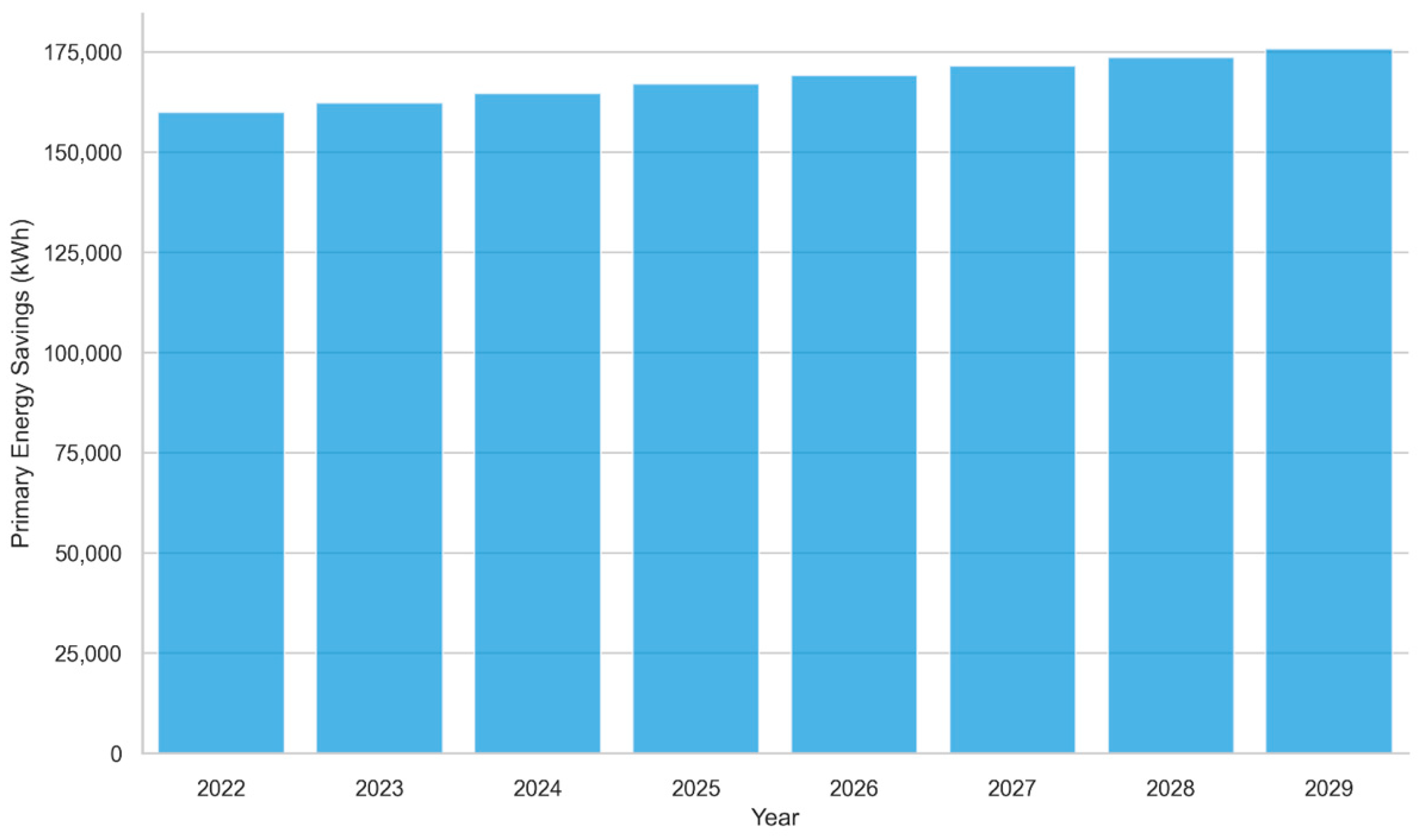
Figure 10 and Figure 11 illustrate the annual GHG savings and primary energy consumption of EVs compared to ICEV, over the first eight years of operation. These savings increase each year because the VERIFY-EV model incorporates a gradual loss of EV efficiency represented by a simplified 0.5% annual EV-level (vehicle-level) efficiency degradation factor rather than an explicit cell-level battery ageing model. The savings increase due to the degradation of both electric vehicles’ batteries and ICEVs is explained by Equation ( 17 ) :
S G H G E I n + 1 = E F F n + 1 E F F F E B n + 1 E F B
Since, for an equal distance, 0.5% more energy is required, due to 0.5% degradation, the following two equations apply:
E F F n + 1 = 1.005 E F F n
E B n + 1 = 1.005 E B n
From Equations (17)–(19), we obtain:
S G H G E I n + 1 = 1.005 E F F n E F F F E B n E F B = 1.005 S G H G E I n
The observed increase in savings leading up to the battery replacement (replacement of battery is calculated at year N = 8, [36]) is attributed to the differing efficiencies and initial energy consumptions of EV batteries and ICEV engines, even though both experience a comparable percentage of degradation over time. Although EV batteries gradually degrade and their performance declines over time, they still maintain a higher overall energy efficiency compared to ICEVs. This is because ICEVs typically have an efficiency of 11 to 27%, diesel ICEVs range from 25% to 37% [37], and electric motors are significantly more efficient, with an average efficiency of around 80% [38]. This results in a gradual increase in savings, highlighting the long-term environmental benefits of EV driving.
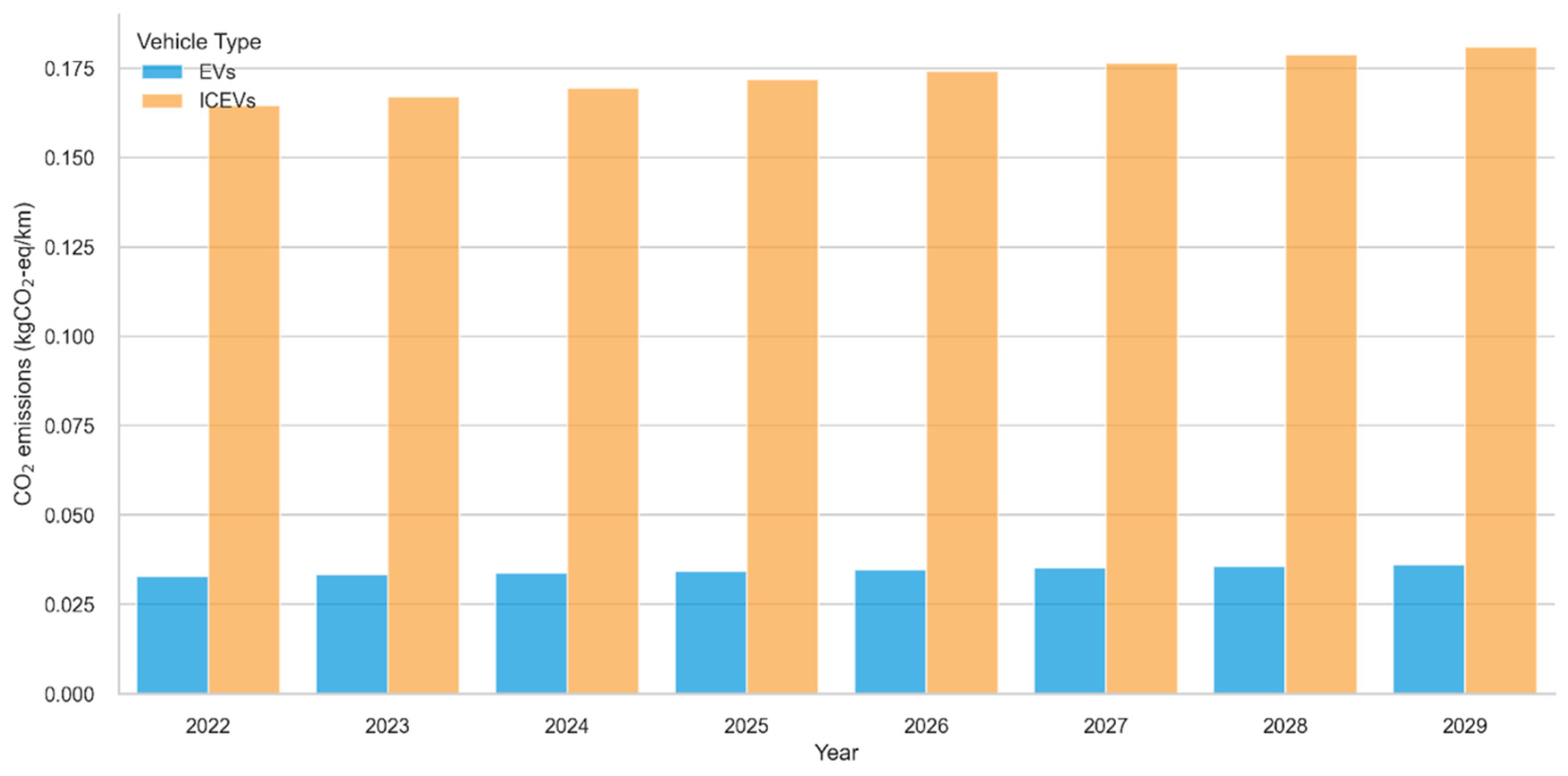
Figure 12 and Figure 13 depict the comparison of the environmental impacts between EVs and ICEVs and highlight the efficiency and environmental performance of electric mobility in urban settings, particularly when complemented by a supportive energy infrastructure.

5.3. Oslo Use Case Results

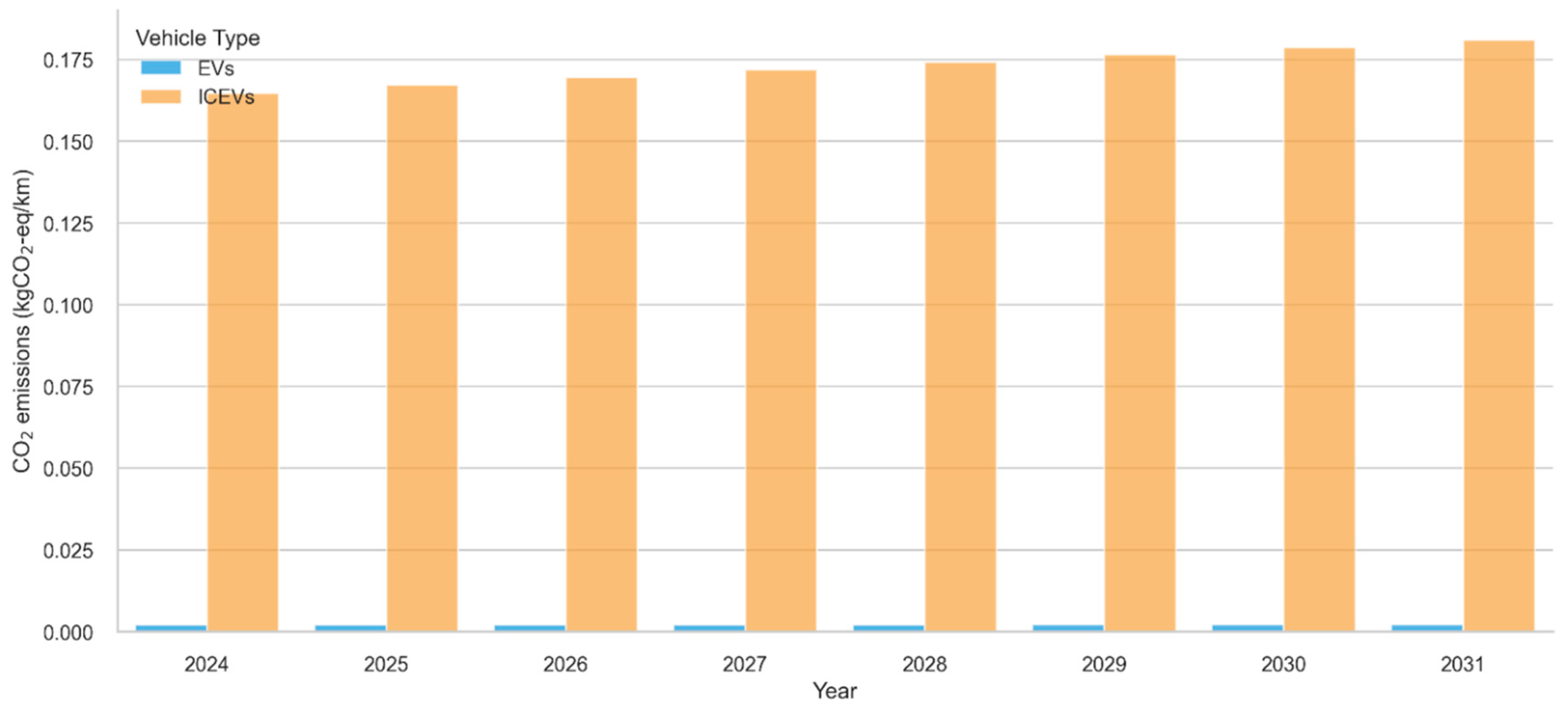
The Oslo use case provided one of the clearest examples of how grid composition dominates outcomes. Owing to Norway’s nearly 100% renewable electricity system, EVs at this site achieved 99% lower lifecycle emissions than ICEVs, with specific emissions falling to just 0.002 kgCO2-eq/km. This represents the theoretical upper bound of EV environmental performance under decarbonized grid conditions for the analysis starting in 2024 (Table 4).
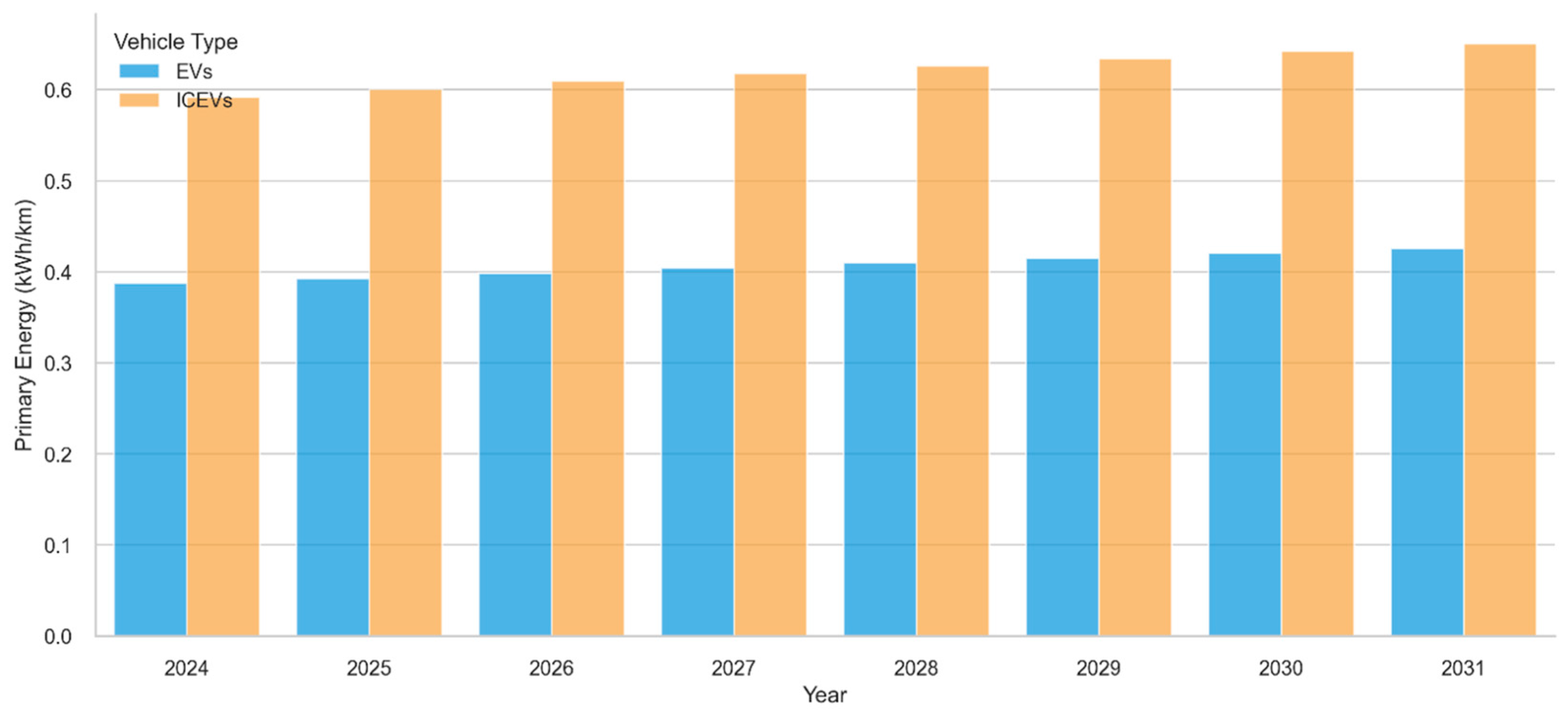
Figure 14 and Figure 15 illustrate the annual environmental impacts per kilometer for electric vehicles (EVs) in comparison to internal combustion engine vehicles (ICEV). These figures, along with the preceding Table 4, clearly demonstrate that driving EVs in Oslo is significantly more efficient and environmentally friendly than driving ICEVs. Specifically, the data reveals a 35% reduction in GHG emissions per kilometer (lower by 0.171 kgCO2-eq/km) and an even greater 99% reduction in primary energy use (lower by 0.215 kWh/km) when transitioning to EVs; this can be attributed to Norway’s exceptionally clean electricity grid, which is primarily powered by renewable energy, especially hydropower.

5.4. Budapest Use Case Results

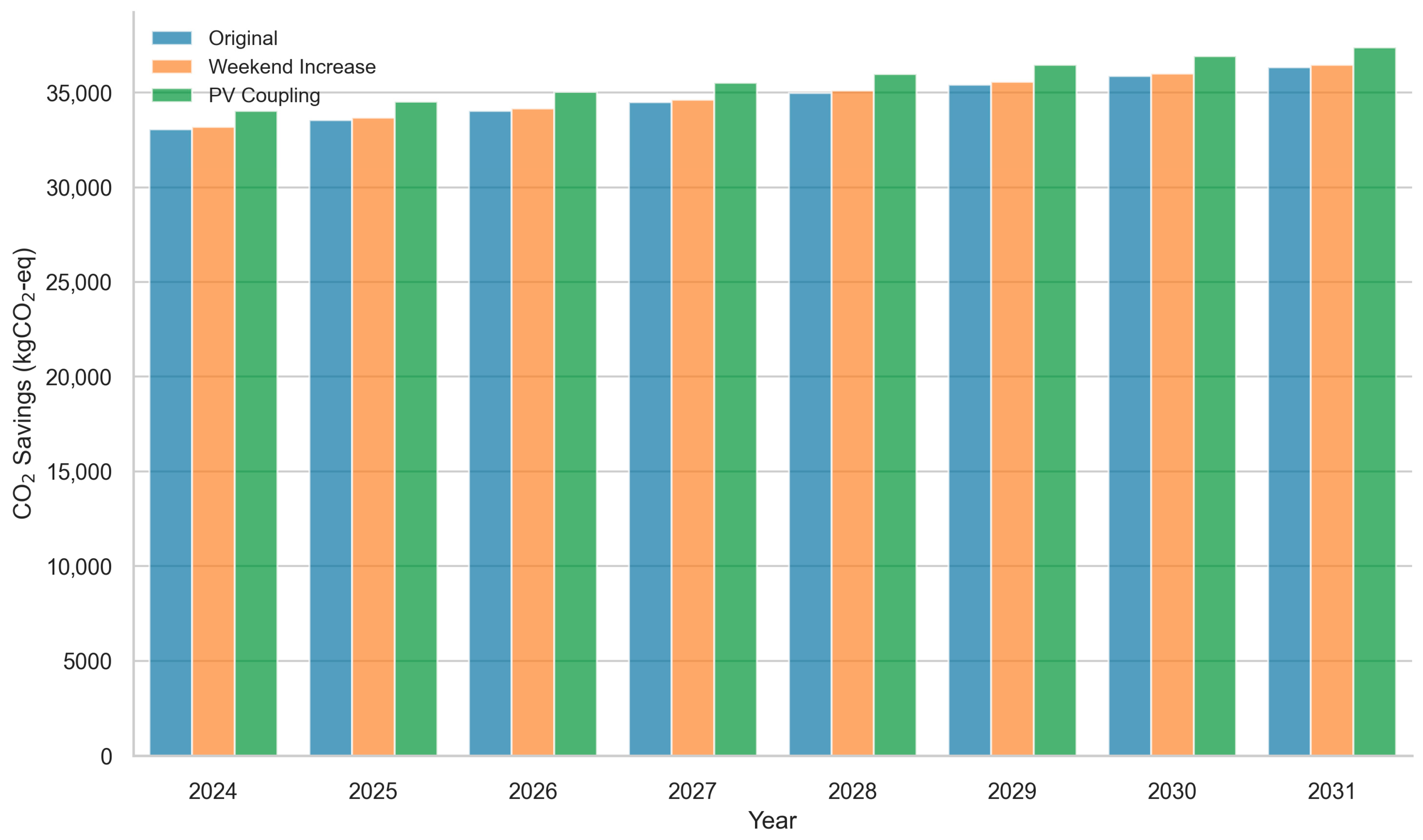
In Budapest, the Market Hall energy community demonstrates that coupling rooftop PV with a 100 kWh BESS can further lower the carbon intensity of EV charging. Under the observed operating profile, specific use-phase emissions for EV travel decreased to 0.034 kgCO2-eq/km, yielding 27.8 t CO2-eq avoided over the study period (Table 5) for the original use case. The weekend increase scenario achieved 0.033 kg CO2-eq/km, yielding 27.87 t CO2-eq avoided over the study period. Finally, the “PV Coupling” scenario achieved 0.03 kg CO2-eq/km, yielding 28.6 t CO2-eq avoided over the study period. Although the pilot is modest in scale, it offers a transferable template for dense urban settings, with its analysis starting in 2024.
Because the chargers are supplied by on-site renewables but are not yet V2G-enabled, the reported benefits reflect electrification plus behind-the-meter RES, with no grid service benefits counted. Relative to ICEV baselines, EV operation remains more energy-efficient and substantially lower in CO2 emissions in the Budapest context. Integrating V2X functionality is expected to deliver additional system benefits (load shifting, peak shaving, and ancillary services) and further emissions reductions.
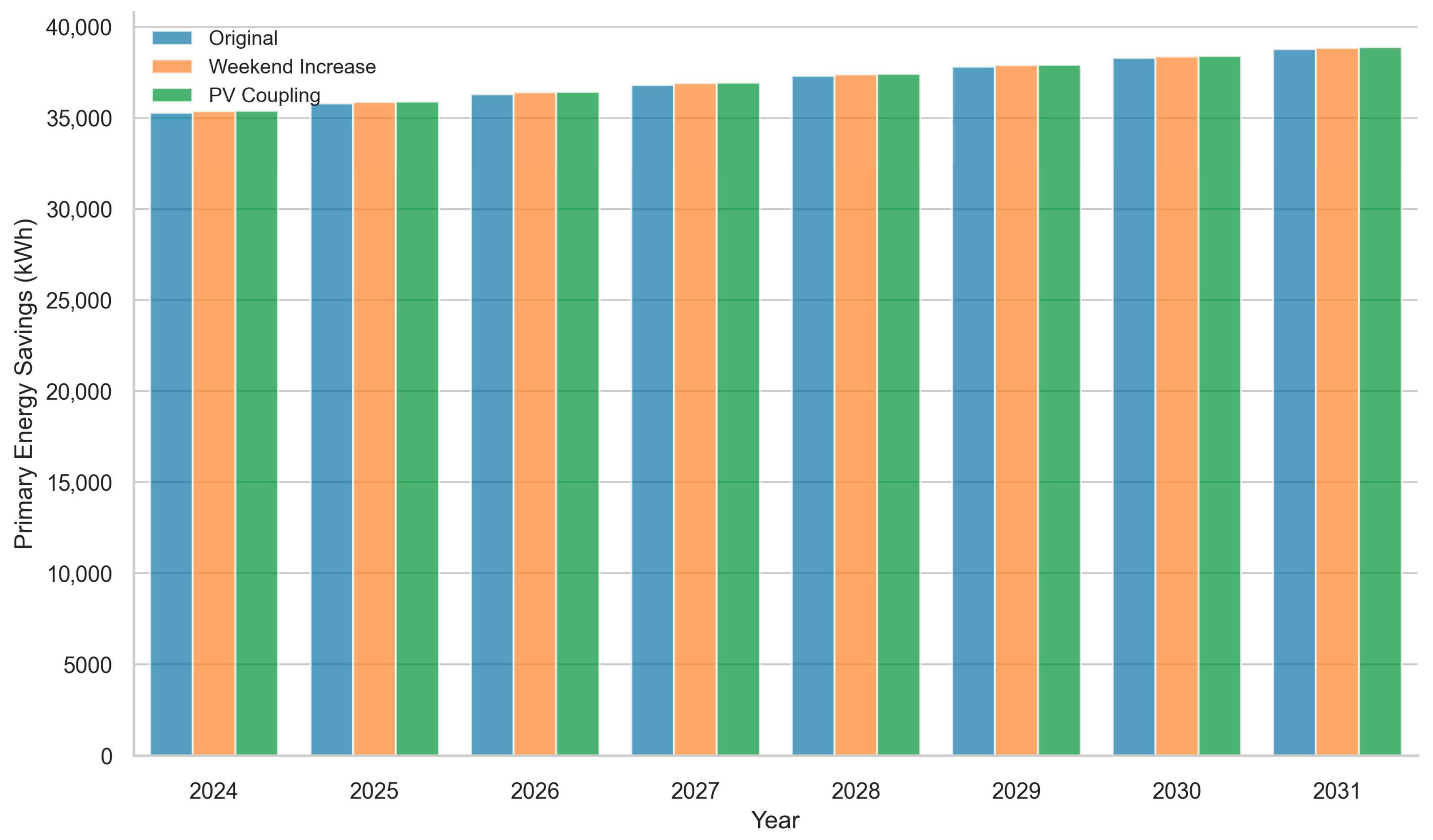
Figure 16 and Figure 17 illustrate the annual savings in GHG emissions and primary energy consumption achieved through EV driving compared to internal combustion engine vehicles (ICEVs), over the span of eight years.
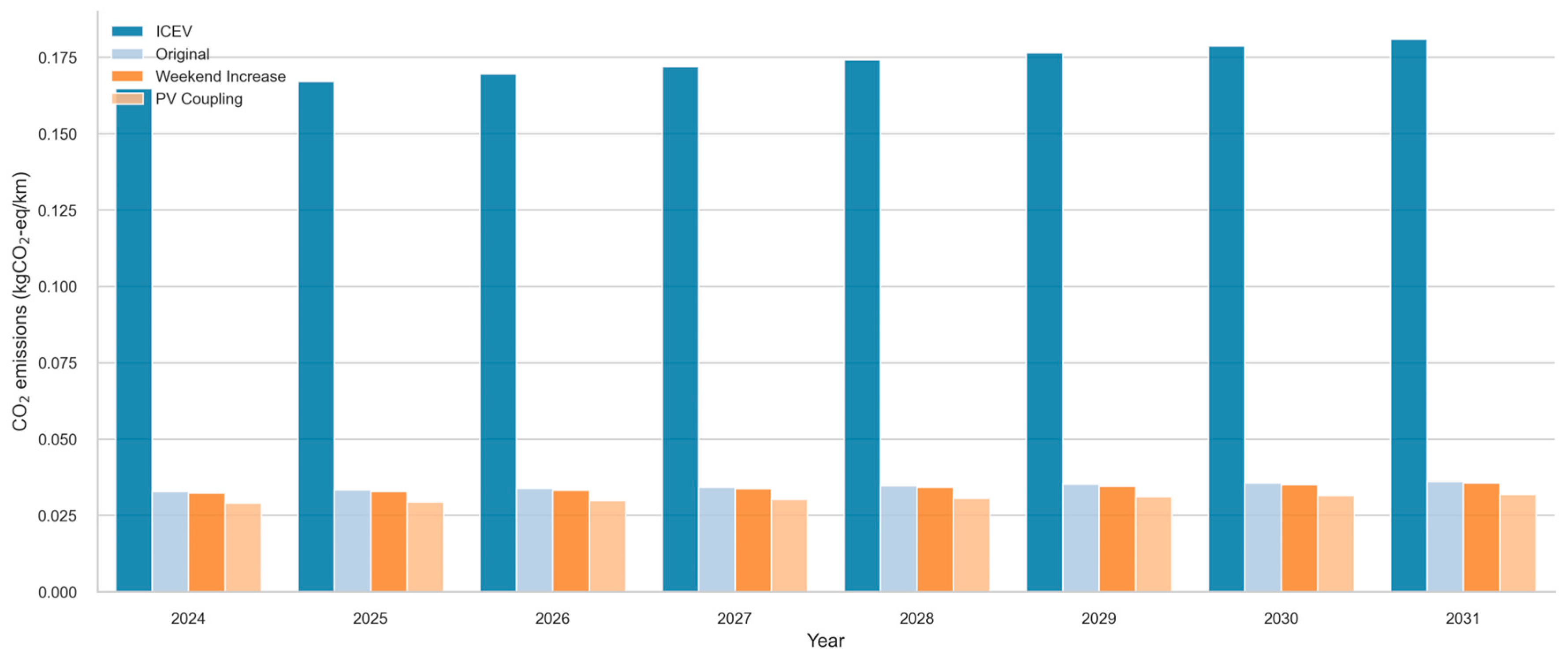
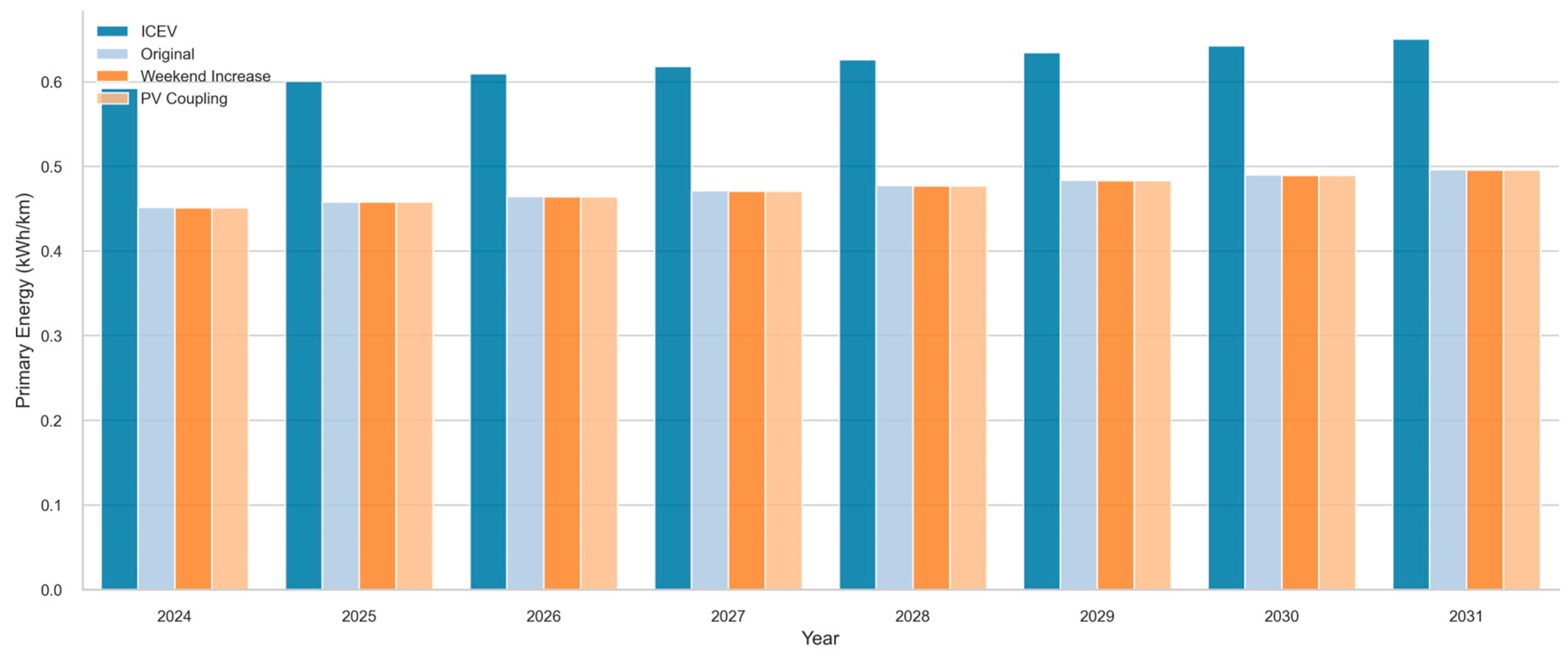
Figure 18 and Figure 19 present a comparative assessment of the annual, per-kilometer environmental impacts of BEVs and ICEVs in Budapest. The analysis reveals that BEVs exhibit substantially lower impacts across the evaluated indicators: carbon intensity decreases by 0.138 kg CO2-eq/km (−80.34%), while primary energy demand is reduced by 0.147 kWh/km (−23.79%) for the original scenario. These outcomes indicate that, under Budapest’s specific grid composition and operational context, vehicle electrification delivers a proportionally greater mitigation of greenhouse gas emissions than of primary energy use. This divergence arises primarily from the presence of behind-the-meter renewable generation, which enhances the cleanliness of the effective energy mix relative to Hungary’s national average. Moreover, the disparity between the two key environmental performance indicators highlights the system’s comparatively high energy intensity, underscoring the importance of further efficiency improvements across the vehicle–energy interface.
The sensitivity analysis demonstrates that CO2 emissions decrease by 11.7% under the PV-coupled scenario and by 1.52% under the weekend-intensified scenario, relative to the initial bootstrapped dataset. These differences are modest and do not materially alter the main environmental conclusions of the study. Overall, the results confirm that the analysis is robust to plausible variations in intraday and intraweekly charging behavior.

5.5. Carbon Payback Time (CPBT) Results

The GHG emissions associated with the manufacturing phase of key electric mobility components are (a) for the EV charger, 1513 kg CO2-eq [39]; and (b) for the EVs, 8974 kg CO2-eq [40]. These figures represent the embodied carbon emissions incurred during the production of a typical EV charger and an electric vehicle, respectively. To assess the environmental return on investment, commonly referred to as carbon payback, a scenario analysis is performed to determine the utilization threshold of an EV charger over its expected service life to offset the manufacturing emissions. Under a worst-case scenario, the combined emissions associated with the manufacturing phase of the charger and EV are offset within an eight-year operating life (which is the EV battery’s life to first replacement), during which a single charger could serve up to 94 EVs in Utrecht, 464 in Oslo, and 3 in Budapest.
This threshold represents the break-even point at which the initial GHG emissions associated with the production of EVs, particularly from manufacturing components such as the battery, can be offset by the emissions avoided through EV usage compared to ICE vehicles. In practical terms, if fewer than the maximum number of EVs utilize a given charger, the carbon payback is achieved within less than eight years due to lower manufacturing emissions. However, if the charger services more than the previously mentioned number of EVs, the environmental breakeven is delayed, and the emissions “investment” is offset over a longer timeframe exceeding eight years. This is due to the cumulative manufacturing footprint of each additional EV, which increases the total upfront emissions before they are balanced out by operational savings.
The threshold is highly sensitive to operational and contextual drivers, such as grid carbon intensity and charge timing; smart charging that shifts demand to renewable-rich, off-peak hours; annual mileage and vehicle efficiency (higher values accelerate savings); the battery’s embodied GHG (chemistry and size); and asset lifetimes—where longer battery life and second-life use, or allocating a multi-port charger’s embodied GHG across ports/users, can all improve payback.

5.6. Cross-Site Comparative Insights

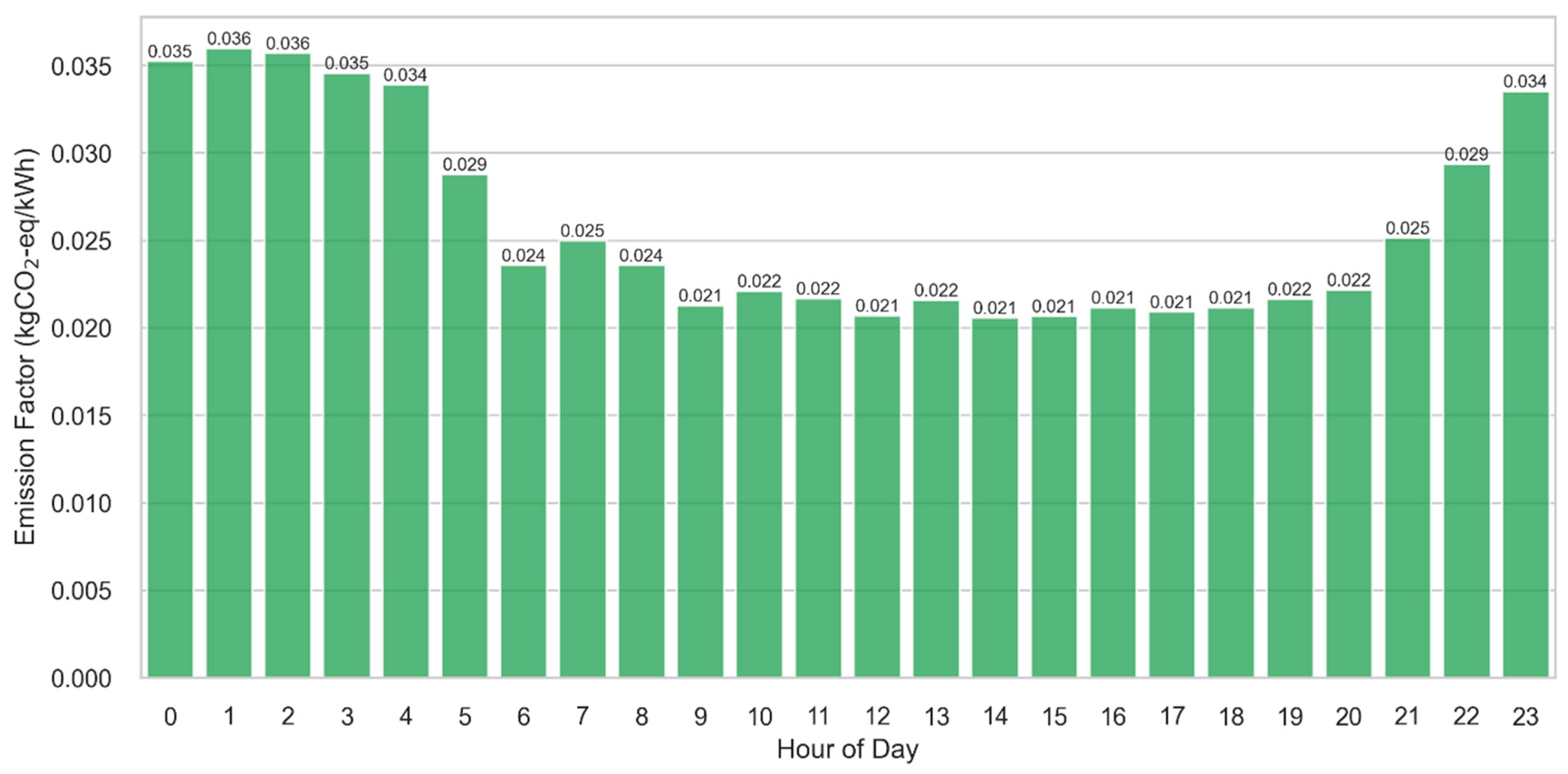
A cross-site comparison reveals several clear trends. Grid carbon intensity is a dominant factor; i.e., in the Norwegian use case with a yearly emission factor of 0.025 kg CO2-eq/kWh, EVs emitted only 0.002 kg CO2-eq/km, while in the Netherlands where the energy mix has a larger emission factor of 0.441 kg CO2-eq/kWh, EVs emitted 0.138 kg CO2-eq/km, and in Hungary with an emission factor 0.228 kg CO2-eq/kWh, EVs emitted 0.035 kg CO2-eq/km. Even though the Hungarian emission factor is nearly half that of the Netherlands, the GHG emission difference is greater. This is attributed to Budapest’s on-site renewable generation, highlighting its effect on local energy mix quality. The outcomes of V2G are more context-dependent. Even though in Utrecht, well-timed discharges generated substantial additional savings, a V2G implementation without optimized discharging hours can yield negative results. V1G is implemented in Oslo where the energy mix has a high contribution of RES. Figure 20 depicts the Norwegian emission factor fluctuation during a randomly selected day. This shows that a V1G strategy implementation that prioritizes charging during better-energy-mix-quality hours can have a positive effect even in situations where the energy mix is of high quality. For example, a V1G strategy that prioritizes charging during noon hours would yield better results from a strategy that prioritizes charging during night hours.
Table 6 summarizes the strategies implemented at each use case. Several energy mix optimization measures are applicable across sites and have the potential to materially improve environmental benefits from a lifecycle perspective.

5.7. Limitations and Future Research Needs

The VERIFY-EV framework adheres to ISO 14040/44, enforcing a transparent lifecycle assessment and interpretation sequence and enabling comparability across pilots. A harmonized data pipeline (hourly UTC timestamping, unit normalization, country-specific marginal factors) allows for assessments with enhanced clarity reflecting operating conditions. Its modular architecture supports rapid extension to new vehicle classes, charger types, and control strategies (smart charging, V2X), while the explicit, auditable calculation chain helps users validate results and build trust in evidence-based decisions.
Notwithstanding these assets, several limitations remain, largely data-driven rather than methodological. VERIFY-EV presently operates with hourly granularity, whereas several studies emphasize that sub-hourly telemetry and marginal-emissions signals can materially change the results of systems with fast dynamics and high renewable shares [7,8]. For instance, Baumann et al. demonstrated that hourly lifecycle assessment can already reveal strong variations compared to static annual averages, yet even finer granularity may be required to avoid overestimating the benefits of smart charging. Incorporating high-frequency grid data and vehicle telemetry in future research would therefore improve accuracy and allow for better integration with advanced demand response mechanisms.
Secondly, the current linear degradation approximation, common in optimization studies [15], cannot fully capture nonlinear dependencies on temperature, depth-of-discharge, C-rate, and dwell patterns, especially under V2G cycling [16]. Neglecting these complexities may bias the estimation of both lifecycle emissions and the economic viability of V2G services. Future work should therefore integrate electrochemically validated models into LCA frameworks, enabling a more nuanced appraisal of trade-offs between operational flexibility and battery longevity.
Third, prospective LCA indicates that forward-looking grid scenarios can shift payback times and total savings [13,17]. As Ren et al. highlight in their analysis of millions of EVs in China, failure to account for evolving grid conditions can lead to the underestimation of long-term benefits and misalignment with climate policy trajectories. Embedding prospective grid pathways into the VERIFY-EV framework would therefore enhance its utility for long-term planning. Fourth, technical optima assume consistent user participation in smart charging/V2G, yet actual practices are shaped by convenience, risk perception, and socio-economic conditions [18]. If users do not consistently adopt smart charging or V2G participation, actual performance may fall short of the technical potential. Integrating behavioral models and participatory approaches into future assessments would provide a more realistic picture of achievable outcomes.
Fifth, charging data were obtained from real-world measurements at Utrecht public charging stations, and V2G discharge profiles were generated through simulation, owing to the current lack of operational V2X datasets. The resulting discharge behavior, derived from MILP optimization and Monte Carlo modeling, represents an idealized operation that may not fully capture real-world user preferences, charging–discharging willingness, charger availability, or technical constraints such as power limits, communication delays, and inverter performance. Consequently, the associated lifecycle impacts and system-level environmental benefits should be interpreted as indicative rather than absolute, reflecting the potential rather than the empirically verified performance of bidirectional charging systems.
Sixth, lithium–ion battery degradation is a nonlinear process affected by temperature, state-of-charge window, depth-of-discharge, charging rates, and V2X cycling. In this study, we do not model cell-level ageing explicitly; instead, VERIFY-EV applies a simplified 0.5% annual EV-level efficiency drift for both EVs and ICEVs as a conservative proxy for gradual loss of efficiency, rather than as a mechanistic capacity-fade model. This likely underestimates true capacity loss (typically reported around 1–2% per year under normal use) [16,41], but prior work [42] indicates that even substantial capacity fade translates into a relatively modest increase in per-kilometer energy use. Moreover, most EV LCA studies [5] either neglect in-vehicle degradation or treat it only parametrically. Our conclusions are therefore expected to be more sensitive to differences in electricity mix and charging/V2X strategies than to the exact value of the degradation factor, which should nonetheless be refined in future work with more detailed ageing models.
In addition, while the results show that V2G provides additional operational GHG savings by enabling greater utilization of low-carbon electricity, it is important to acknowledge that V2G also introduces extra cycling that can accelerate battery degradation. Recent studies, however, consistently indicate that this effect is modest relative to baseline degradation. Calendar ageing remains the dominant driver of capacity loss, with typical real-world degradation rates of ~1.8–2% per year, whereas V2G adds only ~0.3–0.4 percentage points of additional cyclic ageing annually [16,41]. Moreover, even substantial capacity reduction (e.g., 30%) results in only a 11.5–16.2% increase in per-kilometer energy consumption [42], suggesting that the embodied-emissions implications of V2G-induced degradation are likely to be small in comparison with the operational GHG benefits quantified here. For these reasons, the net effect of V2G would be expected to remain beneficial from a lifecycle perspective, although future work should integrate a coupled degradation–LCA module into VERIFY-EV to quantify this trade-off more explicitly.
Finally, expanding the number of real-world pilots and standardizing data collection protocols, as recommended by recent reviews on LCA practices in electromobility [18], is a critical step forward. These observations can translate into concrete developments; i.e., (a) upgrade the data layer to be event-based or have a ≤15 min resolution and ingest marginal emission signals to better align dispatch with real grid conditions; (b) integrate electrochemically validated, health-aware ageing models and propagate uncertainty to both environmental and economic outputs, particularly for V2G; (c) embed prospective grid pathways (e.g., ENTSO-E scenarios) to report CPBT and impacts under future mixes, not only today’s status; (d) couple VERIFY-EV with behavioral modules so that adoption rates, and incentive designs are reflected in realized—not just technical—benefits; and (e) standardize data collection via open schemas (e.g., OCPP/OCPI exports, meter and SoC telemetry), expand the vehicle/charger database to long-tail models, and require full-year datasets for funded deployments.
In summary, VERIFY-EV already provides an ISO-aligned, transparent, and extensible basis for comparing EV, infrastructure, and grid-interaction strategies across European contexts. Addressing the (primarily) data availability constraints above can sharpen accuracy, improve transferability, and strengthen the platform’s role as a decision-support instrument for infrastructure planning and policy design in the transition to climate-neutral mobility.

6. Conclusions

This study applied VERIFY-EV, an ISO 14040-aligned, temporally resolved LCA, to three use cases, using measured operational data to evaluate electric mobility performance under real-world conditions. Across all use cases, EVs outperformed internal combustion vehicles, delivering 55–99% lower lifecycle GHG emissions. The dominant driver is the carbon intensity of electricity at the time and place of charging: Norwegian deployments (nearly 100% renewable) approached 0.002 kg CO2-eq km−1, representing a practical upper bound under present technology, while more carbon-intensive contexts still achieved substantial reductions relative to ICEVs.
Operational strategies materially shape outcomes. Smart charging that shifts demand to low-carbon, low-congestion hours yielded 10–27% additional reductions beyond unmanaged charging. On-site renewables or certified green electricity provided a further 15–20% improvement, albeit secondary to the influence of the grid mix. V2G presents nearly 2 t CO2eq annual savings in Utrecht under coordinated operation, but also higher complexity and sensitivity to control, battery degradation, and local grid conditions, indicating that V2G should generally follow the establishment of robust smart-charging practice.
CPBT, as the period required for operational savings to offset embodied emissions, proved highly dependent on charger utilization, grid intensity, and RES availability. High-throughput sites reached payback within the assumed eight-year battery service life, whereas low-utilization contexts sometimes did not. Practically, this argues for prioritizing locations and applications (fleets, depots, public fast charging, shared mobility) where sustained usage can be assured. Translating these findings into policy and program design can yield four priorities.
  • Target high-utilization nodes. Public support should concentrate on connectors with credible, high-energy throughput so that CPBT falls within battery life. Funding prospects can operationalize this via ex-ante utilization plans (routes, duty cycles) and ex-post hourly reporting of delivered energy, with minimum throughput (or CPBT) thresholds tied to continued support.
  • Advance grid decarbonization and EV roll-out in tandem. As marginal grid carbon intensity declines, operational emissions fall, and CPBT shortens. Programs should enable location- and time-aware siting and dispatch, promote on-site renewables or a guarantee of origin, and coordinate with DSOs to relieve local constraints that otherwise shift charging to dirtier hours
  • Make smart charging the default and stage V2G. Require emissions-aware, dynamic-tariff control as baseline operation to capture most benefits at low complexity and to build the data/control layer needed for flexibility markets. Where V2G is pursued, adopt staged deployment with minimum state-of-charge guarantees, degradation-aware scheduling, performance warranties, and interoperability requirements so flexibility does not compromise battery longevity or user needs.
  • Require evidence-based monitoring. Mandate LCA-consistent monitoring at supported sites—hourly energy flows, grid intensity factors, utilization metrics, and CPBT—to align public spending with measured climate performance and enable continuous optimization.
Methodologically, VERIFY-EV bridges the gap between theoretical potential and operational reality by combining ISO-compliant LCA with high-resolution data, making it suitable for both planning and operational management. Future enhancements should include richer battery-degradation models, integration of prospective grid scenarios, and behavioral modules to better capture charging patterns.
In conclusion, electromobility can deliver large and dependable climate benefits, but realizing its full potential hinges on where and when EVs charge, how intensively infrastructure is used, and how quickly the power system decarbonizes. Policies that concentrate support on high-utilization, smart charging, renewable-aligned deployments—and that verify outcomes with transparent monitoring—will shorten CPBT, reduce urban transport emissions, and strengthen a renewables-integrated grid on Europe’s path to climate neutrality.

Author Contributions

Conceptualization, P.G.; methodology, P.G. and S.P.; validation, P.G. and N.N.; formal analysis, P.G., A.S., K.A., G.M. and E.K.; investigation, P.G., S.P. and A.S.; resources, K.A., P.G. and G.M.; data curation, P.G., S.P. and A.S.; writing—original draft preparation, P.G. and S.P.; writing—review and editing, P.G., S.P., K.A., G.M., A.S., E.K. and N.N.; supervision, P.G. and N.N.; funding acquisition, N.N. All authors have read and agreed to the published version of the manuscript.

Funding

This research was co-funded by Horizon 2020, research and innovation programme, CINEA, grant number 101056874 (SCALE–Smart Charging ALignment for Europe). This is a feature paper invitation.

Data Availability Statement

The original contributions presented in the study are included in the article; further inquiries can be directed to the corresponding author.

Acknowledgments

This paper builds upon the experience and results generated through the collaborative efforts of the SCALE consortium, within the framework of the SCALE project.

Conflicts of Interest

The authors declare no conflicts of interest.

Abbreviations

The following abbreviations are used in this manuscript:
BESSBattery Energy Storage System
CPBTCarbon Payback Time
DSODistribution System Operator
EVElectric Vehicle
GHGGreenhouse Gases
ICEInternal Combustion Engine
LCALifecycle Assessment
PVPhotovoltaic
RESRenewable Energy Sources
V2GVehicle-to-Grid
TLAThree-letter acronym
Nomenclature
SymbolMeaning
nTime-step
E G c u m n Cumulative energy from the grid, at time-step, n ,
E R c u m ( n ) Cumulative renewable energy, at time-step, n ,
G H G R c u m n Cumulative GHG emissions from the charge with energy provided from RES
G H G G c u m n Cumulative GHG emissions from the charge with energy provided from the Grid
ER(n) Energy supplied by the charger from on-site RES, at step, n
EG(n) Energy supplied by the charger from the grid, at step, n
EFREmission factor of electricity provided by RES
EFG(n) Emission factor of grid electricity, at step n
EFB(n) Emission factor of battery-stored energy mix, at step n
PEFRPrimary energy factor of electricity from RES
PEFG(n) Primary energy factor of electricity from the grid, at step n
P E R c u m n Cumulative primary energy from renewables, at step n
P E G c u m n Cumulative primary energy from the grid, at step n
PEFB(n) Primary energy factor of battery mix, at step n
S G H G E I n GHG emission savings, at step, n
S P E E I n Primary Energy savings, at step n
EFF(n) Energy consumed by ICEV for same distance traveled by the EV, at step n
EFFFEmission factor of the fuel consumed by the conventional fuel vehicle
PEFFFPrimary energy factor of the fuel consumed by the conventional fuel vehicle
S G H G R G n GHG emission savings, at step n, calculated as the difference between emissions from charging solely from the grid and from charging solely from RES
S P E R G n Primary energy savings, at step n, calculated as the difference between n energy from charging solely from the grid and from charging solely from RES
S G H G D n GHG emission savings, at step n, calculated by comparing the emissions from using energy discharged from EV batteries with those from importing an equivalent amount of energy from the grid.
S P E D n Primary Energy savings, at step n, calculated by comparing the primary energy discharged from EV batteries with the primary energy from importing an equivalent amount of primary energy from the grid.
D(n) EV battery discharge exported at step n
G H G E V _ k m GHG emissions per kilometer due to EV driving
E F e l :Electricity GHG emission factor based on the country’s electricity generation mix
C P B T Carbon Payback Time
Ie:Lifecycle GHG emissions that are not included in the operation phase of the system
Es,akgCO2eq saved annually due to EV use.

References

  1. The European Green Deal—European Commission. Available online: https://commission.europa.eu/strategy-and-policy/priorities-2019-2024/european-green-deal_en (accessed on 16 October 2025).
  2. Das, P.K.; Bhat, M.Y.; Sajith, S. Life Cycle Assessment of Electric Vehicles: A Systematic Review of Literature. Environ. Sci. Pollut. Res. 2023, 31, 73–89. [Google Scholar] [CrossRef]
  3. Neugebauer, M.; Neugebauer, J. Cumulative Emissions of CO2 for Electric and Combustion Cars. A Case Study on Specific Models. Energies 2022, 15, 2703. [Google Scholar] [CrossRef]
  4. ISO 14040; Environmental Management—Life Cycle Assessment—Principles and Framework. International Organization for Standardization: Geneva, Switzerland, 2006. Available online: https://www.iso.org/standard/37456.html (accessed on 1 October 2025).
  5. Koroma, M.S.; Broadbent, A.; Wood, D. Life Cycle Assessment of Battery Electric Vehicles: Implications of future electricity mix and different battery end-of-life management. Sci. Total Environ. 2022, 831, 154859. [Google Scholar] [CrossRef] [PubMed]
  6. Paul, D.; Pechancová, V.; Saha, N.; Pavelková, D.; Saha, N.; Motiei, M.; Jamatia, T.; Chaudhuri, M.; Ivanichenko, A.; Venher, M.; et al. Life Cycle Assessment of Lithium-Based Batteries: Review of Sustainability Dimensions. Renew. Sustain. Energy Rev. 2024, 206, 114860. [Google Scholar] [CrossRef]
  7. Baumann, M.; Salzinger, M.; Remppis, S.; Schober, B.; Held, M.; Graf, R. Reducing the Environmental Impacts of Electric Vehicles and Electricity Supply: How Hourly Defined Life Cycle Assessment and Smart Charging Can Contribute. World Electr. Veh. J. 2019, 10, 13. [Google Scholar] [CrossRef]
  8. Zhong, Z.; Hu, W.; Zhao, X. Rethinking Electric Vehicle Smart Charging and Greenhouse Gas Emissions: Renewable Energy Growth, Fuel Switching, and Efficiency Improvement. Appl. Energy 2024, 361, 122904. [Google Scholar] [CrossRef]
  9. SCALE. Available online: https://scale-horizon.eu/ (accessed on 16 October 2025).
  10. Angelakoglou, K.; Lampropoulos, I.; Chatzigeorgiou, E.; Giourka, P.; Martinopoulos, G.; Skembris, A.-S.; Seitaridis, A.; Kousovista, G.; Nikolopoulos, N. Advancing Energy-Efficient Renovation Through Dynamic Life Cycle Assessment and Costing: Insights and Experiences from VERIFY Tool Deployment. Energies 2025, 18, 3736. [Google Scholar] [CrossRef]
  11. Li, J.; Wang, G.; Wang, X.; Du, Y. Smart Charging Strategy for Electric Vehicles Based on Marginal Emission Factors and Time-of-Use Pricing. Sustain. Cities Soc. 2023, 96, 104708. [Google Scholar] [CrossRef]
  12. Tang, Y.; Cockerill, T.T.; Pimm, A.J.; Yuan, X. Reducing the life cycle environmental impact of electric vehicles through emissions-responsive charging. iScience 2021, 24, 103499. [Google Scholar] [CrossRef] [PubMed]
  13. Wohlschlager, D.; Kigle, S.; Schindler, V.; Neitz-Regett, A.; Fröhling, M. Environmental Effects of Vehicle-to-Grid Charging in Future Energy Systems—A Prospective Life Cycle Assessment. Appl. Energy 2024, 370, 123618. [Google Scholar] [CrossRef]
  14. Geng, J.; Dou, H.; Hao, X.; Liu, Z.; Zhao, F.; Hao, H. Additional Emissions of Vehicle-to-Grid Technology Considering China’s Geographical Heterogeneity. Carbon Footpr. 2025, 4, 8. [Google Scholar] [CrossRef]
  15. Preis, V.; Mauser, I.; Koller, J.; Kühn, R. Assessing the Incorporation of Battery Degradation in Vehicle-to-Grid Optimization Models: A Review. Energy Inform. 2023, 6, 88. [Google Scholar] [CrossRef]
  16. Sagaria, S.; Van Der Kam, M.; Boström, T. Vehicle-to-Grid Impact on Battery Degradation and Estimation of V2G Economic Compensation. Appl. Energy 2025, 377, 124546. [Google Scholar] [CrossRef]
  17. Ren, Y.; Sun, X.; Wolfram, P.; Zhao, S.; Tang, X.; Kang, Y.; Zhao, D.; Zheng, X. Hidden delays of climate mitigation benefits in the race for electric vehicle deployment. Nat. Commun. 2023, 14, 3164. [Google Scholar] [CrossRef] [PubMed]
  18. Eltohamy, H.; Van Oers, L.; Lindholm, J.; Raugei, M.; Lokesh, K.; Baars, J.; Husmann, J.; Hill, N.; Istrate, R.; Jose, D.; et al. Review of Current Practices of Life Cycle Assessment in Electric Mobility: A First Step towards Method Harmonization. Sustain. Prod. Consum. 2024, 52, 299–313. [Google Scholar] [CrossRef]
  19. Mansouri, N.; Nasri, S.; Mnassri, A.; Lashab, A.; Vasquez, J.C.; Cherif, A.; Rezk, H. Electric Vehicle Charging Infrastructure: Impacts and Future Challenges of Photovoltaic Integration with Examples from a Tunisian Case. World Electr. Veh. J. 2025, 16, 349. [Google Scholar] [CrossRef]
  20. Noussan, M.; Neirotti, F. Cross-Country Comparison of Hourly Electricity Mixes for EV Charging Profiles. Energies 2020, 13, 2527. [Google Scholar] [CrossRef]
  21. Kousovista, G.; Iakovides, G.; Petridis, S.; Chairopoulos, N.-C.; Skembris, A.; Fotopoulou, M.; Antipa, D.; Nikolopoulos, N.; Rakopoulos, D. Comparative Lifecycle Assessment of Renewable Energy Investments in Public Buildings: A Case Study of an Austrian Kindergarten Under Atypical Operational Conditions. Appl. Sci. 2025, 15, 2330. [Google Scholar] [CrossRef]
  22. Papadopoulos, C.; Bachoumis, A.; Skopetou, N.; Mylonas, C.; Tagkoulis, N.; Iliadis, P.; Mamounakis, I.; Nikolopoulos, N. Integrated Methodology for Community-Oriented Energy Investments: Architecture, Implementation, and Assessment for the Case of Nisyros Island. Energies 2023, 16, 6775. [Google Scholar] [CrossRef]
  23. ISO 14044; Environmental Management—Life Cycle Assessment—Requirements and Guidelines. ISO, International Organization for Standardization (ISO): Geneva, Switzerland, 2006. Available online: https://www.iso.org/standard/38498.html (accessed on 17 October 2025).
  24. Level(s)-Green Forum-European Commission. Available online: https://green-forum.ec.europa.eu/green-business/levels_en (accessed on 16 October 2025).
  25. ISO 16745-1:2017. Available online: https://www.iso.org/standard/69969.html (accessed on 16 October 2025).
  26. SCALE-D3.2-Use Case Evaluation Report. Available online: https://Scale-Horizon.Eu/?Jet_download=6418 (accessed on 1 October 2025).
  27. Sanchez, D.A.; Torres, S.P.; Chillogalli, J.E.; Chamorro, H.R.; Gonzalez, L.G.; Sood, V.K.; Romero, R.R. Optimal Planning of Electric Vehicles Energy Exchange in Parking Lots Considering Uncertainties. In Proceedings of the 2022 IEEE PES Innovative Smart Grid Technologies Conference Europe (ISGT-Europe 2022), Novi Sad, Serbia, 10–12 October 2022; pp. 1–6. [Google Scholar]
  28. EV Database. Available online: https://ev-database.org/cheatsheet/energy-consumption-electric-car (accessed on 9 October 2024).
  29. CO2 Emissions Per kWh in Norway-Nowtricity. Available online: https://www.nowtricity.com/country/norway/ (accessed on 17 October 2025).
  30. Demirci, S.M.; Tercan, U.; Cali, U.; Nakir, I. A Comprehensive Data Analysis of Electric Vehicle User Behaviors Toward Unlocking Vehicle-to-Grid Potential. IEEE Access 2023, 11, 9149–9165. [Google Scholar] [CrossRef]
  31. Jabr, O.; Ayaz, F.; Nekovee, M.; Saeed, N. Forecasting Infrastructure Needs, Environmental Impacts, and Dynamic Pricing for Electric Vehicle Charging. World Electr. Veh. J. 2025, 16, 410. [Google Scholar] [CrossRef]
  32. Mall Foot Traffic Statistics Statistics: ZipDo Education Reports 2025. Available online: https://zipdo.co/mall-foot-traffic-statistics/ (accessed on 14 November 2025).
  33. Alaee, P.; Bems, J.; Anvari-Moghaddam, A. A Review of the Latest Trends in Technical and Economic Aspects of EV Charging Management. Energies 2023, 16, 3669. [Google Scholar] [CrossRef]
  34. Meiers, J.; Frey, G. A Case Study of the Use of Smart EV Charging for Peak Shaving in Local Area Grids. Energies 2024, 17, 47. [Google Scholar] [CrossRef]
  35. Bellos, E.; Iliadis, P.; Papalexis, C.; Rotas, R.; Mamounakis, I.; Sougkakis, V.; Nikolopoulos, N.; Kosmatopoulos, E. Holistic Renovation of a Multi-Family Building in Greece Based on Dynamic Simulation Analysis. J. Clean. Prod. 2022, 381, 135202. [Google Scholar] [CrossRef]
  36. How Long Does an Electric Car Battery Last? Eissenergy. EV Connect. Available online: https://www.evconnect.com/blog/how-long-does-an-electric-car-battery-last/ (accessed on 15 November 2024).
  37. Albatayneh, A.; Assaf, M.N.; Alterman, D.; Jaradat, M. Comparison of the Overall Energy Efficiency for Internal Combustion Engine Vehicles and Electric Vehicles. Environ. Clim. Technol. 2020, 24, 669–680. [Google Scholar] [CrossRef]
  38. Serrano-Guevara, Ó.S.; Huertas, J.I.; Giraldo, M. Real Energy Efficiency of Road Vehicles. Energies 2025, 18, 1933. [Google Scholar] [CrossRef]
  39. Raghavan, S. Unit Process Inventory Data for Residential Electric Vehicle Charger Life Cycle Assessment. Available online: https://research.chalmers.se/publication/541061/file/541061_Fulltext.pdf (accessed on 1 October 2025).
  40. Kukreja, B. Life Cycle Analysis of Electric Vehicles. Available online: https://sustain.ubc.ca/sites/default/files/2018-63%20Lifecycle%20Analysis%20of%20Electric%20Vehicles_Kukreja.pdf (accessed on 1 October 2025).
  41. Argue, C. How Long Do Electric Car Batteries Last? What Analyzing 10,000 EVs Tells Us…. Geotab Blog 2025. Available online: https://www.geotab.com/au/blog/ev-battery-health/ (accessed on 1 October 2025).
  42. Yang, F.; Xie, Y.; Deng, Y.; Yuan, C. Predictive modeling of battery degradation and greenhouse gas emissions from U.S. state-level electric vehicle operation. Nature Commun. 2018, 9, 2429. [Google Scholar] [CrossRef]
Figure 1. VERIFY-EV’s Workflow.
Energies 18 06215 g001
Figure 2. Total monthly charge consumption for Utrecht’s use case.
Energies 18 06215 g002
Figure 3. Total monthly simulated discharge exported to the grid for Utrecht’s Use Case.
Energies 18 06215 g003
Figure 4. Average monthly emission factors for the Netherlands.
Energies 18 06215 g004
Figure 5. Total monthly charge consumption for Oslo’s use case.
Energies 18 06215 g005
Figure 6. Average monthly emission factor for Norway.
Energies 18 06215 g006
Figure 7. Monthly charge profile after processing for Budapest use case.
Energies 18 06215 g007
Figure 8. Average monthly emission factor for Hungary.
Energies 18 06215 g008
Figure 9. Simulated (a) production, (b) consumption, and (c,d) storage profiles.
Energies 18 06215 g009
Figure 10. Annual GHG savings calculated based on the difference between EV battery consumption and ICEV’s consumption, for Utrecht’s use case.
Energies 18 06215 g010
Figure 11. Annual primary energy savings given the difference in EV battery consumption and ICEV consumption, for Utrecht’s use case.
Energies 18 06215 g011
Figure 12. Comparison of annual EV and ICEV GHG emissions per km, for Utrecht’s use case.
Energies 18 06215 g012
Figure 13. Comparison of annual EV and ICEV primary energy demand per km, for Utrecht’s use case.
Energies 18 06215 g013
Figure 14. Comparison of annual EV and ICEV GHG emissions per km, for Oslo’s use case.
Energies 18 06215 g014
Figure 15. Comparison of annual EV and ICEV Primary Energy demand per km, for Oslo’s use case.
Energies 18 06215 g015
Figure 16. Annual GHG savings calculated based on the difference between EV battery consumption and ICEV consumption, for Budapest’s use case.
Energies 18 06215 g016
Figure 17. Annual primary energy savings given the difference in EV battery consumption and ICEV’s consumption, for Budapest’s use case.
Energies 18 06215 g017
Figure 18. Comparison of annual EV and ICEV GHG emissions per km, for Budapest’s use case.
Energies 18 06215 g018
Figure 19. Comparison of annual EV and ICEV primary energy demand per km, for Budapest’s use case.
Energies 18 06215 g019
Figure 20. Norway’s emission factor fluctuation during a randomly selected day.
Energies 18 06215 g020
Table 1. Primary environmental KPIs calculated by VERIFY-EV.
IndicatorSymbolFunctional Unit
GHG savings due to EV driving S G H G E I kgCO2-eq
Primary energy savings due to EV driving S P E E I kWh
GHG savings due to RES charging S G H G R G kgCO2-eq
Primary energy savings due to RES charging S P E R G kWh
GHG savings due to V2G S G H G D kgCO2-eq
Primary energy savings due to V2G S P E D kWh
GHG emissions per kilometer G H G E V k m kgCO2-eq/km
Carbon payback time C P B T years
Table 2. Use cases and their characteristics.
LocationPrimary ApplicationKey Characteristics
Utrecht, The NetherlandsBidirectional ecosystem via V2GLarge-scale V2G living laboratory
Oslo, NorwayV1G charging applicationClean energy mix
Budapest, HungaryCharging combined with PV and stationary storage at a large-scale shopping centerEnergy community integration
Table 3. Environmental performance metrics for Utrecht UC00 over 8-year period.
Performance IndicatorValueUnit
Total Primary Energy Savings1,344,246kWh
Total GHG Emissions Savings880,250kgCO2-eq
Primary Energy Savings per km0.215kWh/km
GHG Emissions Savings per km0.138kgCO2-eq/km
Annual GHG Savings from V2G1950kgCO2-eq/year
GHG Reduction vs. ICEV80.35%
Primary Energy Reduction vs. ICEV34.50%
Table 4. Environmental performance for Oslo use case.
Performance IndicatorValueUnit
Total Primary Energy Savings12,206,631kWh
Total GHG Emissions Savings9,701,621kgCO2-eq
EV GHG Emissions per km0.002kgCO2-eq/km
GHG Reduction vs. ICEV99.0%
Primary Energy Reduction vs. ICEV35.0%
Table 5. Environmental performance for Budapest use case.
Performance Indicator Scenario Value
Total Primary Energy Savings (kWh) Original 296,324
Weekend Increase 297,007
PV Coupling 297,204
Total GHG Emissions Savings (kgCO2-eq) Original 277,714
Weekend Increase 278,766
PV Coupling 285,806
EV GHG Emissions per km ( kgCO2-eq /km) Original 0.034
Weekend Increase 0.033
PV Coupling 0.03
GHG Reduction vs. ICEV (%) Original 80.34
Weekend Increase 80.92
PV Coupling 82.66
Primary Energy Reduction vs. ICEV (%) Original 23.79
Weekend Increase 23.79
PV Coupling 23.79
Table 6. Strategies implemented at the use cases Examined.
Use CaseV2G
Implementation
Charging Hours
Optimization
RES Integration on
Chargers
UtrechtX--
Oslo-XX
Budapest--X
Disclaimer/Publisher’s Note: The statements, opinions and data contained in all publications are solely those of the individual author(s) and contributor(s) and not of MDPI and/or the editor(s). MDPI and/or the editor(s) disclaim responsibility for any injury to people or property resulting from any ideas, methods, instructions or products referred to in the content.