Article

Preliminary Design Method and Performance Analysis of Small-Scale Single-Stage Axial Turbine for Supercritical CO2 Applications

by
Yumeng Han
1,
Yongqing Xiao
1,
Bingkun Ma
2,
Yueming Yang
3,
Ziang Kong
1,
Xinying Liu
1 and
Jianhui Qi
1,4,*
1
School of Nuclear Science, Energy and Power Engineering, Shandong University, Jinan 250061, China
2
Huawei Digital Power Technologies Co., Ltd., Shenzhen 518000, China
3
Institute of Thermodynamics, Technical University of Munich, 85748 Garching, Germany
4
Beijing Key Laboratory of Multiphase Flow and Heat Transfer for Low Grade Energy Utilization, North China Electric Power University, Beijing 102206, China
*
Author to whom correspondence should be addressed.
Energies 2025, 18(22), 5896; https://doi.org/10.3390/en18225896
Submission received: 23 August 2025 / Revised: 4 November 2025 / Accepted: 5 November 2025 / Published: 9 November 2025
(This article belongs to the Special Issue Supercritical CO2 Power Cycles)

Abstract

The supercritical carbon dioxide (sCO2) Brayton cycle has advantages such as a compact system and high energy density. Axial turbines, the key component of the cycle, have lower rotational speeds, pressure ratios and engineering difficulties compared to radial turbines. This study focuses on the initial design parameters and the complete design process of a small-scale axial turbine based on nuclear power and utilizing supercritical carbon dioxide. The design objective of this study is a 150 kW single-stage axial turbine. AXIAL software is used for batch calculations in the preliminary turbine design to determine the most reasonable initial design parameters, including back pressure, rotational speed, average radius, and mass flow rate. These initial parameters serve as the starting point for the overall turbine design process. The one-dimensional design results of the turbine show an isentropic efficiency of 77.15%, and numerical simulations validate the accuracy of this efficiency.

1. Introduction

Under the “Dual Carbon” goals, nuclear power generation has demonstrated significant benefits and development potential due to its advantages of low carbon emissions and high energy density. According to the 2021 report from the International Energy Agency, the existing nuclear power plants contribute only 10.4% of the world’s electricity generation, indicating that nuclear power as a terminal energy generation technology has vast development potential [1]. Wu et al. proposed the concept of “Nuclear 5G”, which aims to make nuclear power generation more approachable, flexible, and intelligent [2]. Small Modular Reactors have gained increasing attention as a competitive low-carbon power generation and heat treatment technology due to its flexible deployment, high energy density and zero carbon emission characteristics [3]. But the application of Small Modular Reactors requires small-scale advanced power cycles to meet operational requirements, which means that the power conversion device needs to be miniaturized. The supercritical CO2 (sCO2) Brayton cycle can fulfill the demands of small-power cycles based on nuclear power generation and has been proven to be a favorable candidate for the power conversion system of nuclear fission reactors [4].
The supercritical carbon dioxide Brayton cycle has the advantages of compact equipment, low cycle loss and high power output, which means that the components of the supercritical carbon dioxide power cycle are conducive to miniaturization and the overall system size of sCO2 power cycle only accounts 25% of conventional steam Rankine cycle [5,6]. Angelino et al. proposed various layouts for the sCO2 cycle, and pointed out the structural simplicity and compact heat transfer advantages of supercritical CO2 in cycles, be it in the medium-low temperature range (450–550 °C) or high-temperature range (650–800 °C) [7]. Dostal et al. compared the power conversion characteristics of traditional steam Rankine cycles, helium Brayton cycles, and sCO2 Brayton cycles and concluded that the sCO2 cycle has higher efficiency and strong economic advantages, especially in the temperature range of 500 °C to 700 °C for future sodium-cooled fast reactors [8]. In 2010, Sandia National Laboratories designed and built a recompression Brayton cycle experimental setup featuring two-stage compression and two-stage reheating. Key issues such as turbine bearings, and high-pressure sealing were studied during the experiment [9]. Additionally, in order to enhance the efficiency of the sCO2 Brayton cycle, Bashan et al. analyzed the optimal design parameters of recuperative supercritical CO2 power cycle and found that the effect of the increase in turbine efficiency is important on cycle, where increasing the turbine efficiency from 0.70 to 0.90 can increase the cycle efficiency by approximately 0.07 points [10]. Brun et al. research indicated that for the sCO2 power cycle, for every 2% increase in turbine efficiency, the overall cycle efficiency can be improved by 1% [11].
Turbine is a key component of sCO2 power cycles which performance directly determines the cycle efficiency of the entire system, which are mainly divided into two categories: axial flow turbines and radial flow turbines. Qi et al. obtained performance maps of radial turbines by solving a large number of design schemes, using flow coefficient and loading coefficient as coordinates to reveal the effects of various parameters on turbine performance [12]. Grönman et al. analyzed the radial-outflow turbine design for supercritical CO2 and concluded that radial-outflow turbine can achieve high turbine efficiency at lower rotational speeds and can also achieve high efficiency over a wider range of specific speeds [13].Yang et al. studied the influence of mixed gases consisting of rare gases and carbon dioxide on the performance of radial turbines [14]. Zhou et al. proposed an optimization system for a supercritical carbon dioxide radial turbine, studying its performance under design and off-design conditions through simulation, and analyzing the flow loss in the blade tip clearance [15]. Luo et al. designed a high-performance 10 MW-level radial turbine and used numerical simulation methods to find that within a certain range, relative mass flow rate increases with pressure ratio, output power increases with pressure ratio, and minimum mass flow rate increases with rotational speed while maximum mass flow rate remains constant [16]. Zhou et al. obtained initial design parameters for a radial turbine, including inlet temperature, inlet pressure, back pressure, mass flow rate, and output power, based on cycle parameters, and conducted a complete turbine design which resulted in expected performance [17].
In addition to the radial turbine design, axial turbines have also been extensively studied. Kumaran et al. designed a 10 MW-level axial turbine using mean-line methods, with geometric parameters matching those obtained from three-dimensional turbine design using AxSTREAM, achieving an overall efficiency of 80% [18]. Sathish et al. proposed a new design method for 2D blade profile design, combining Kulfan-type shape variation in blade parameters and optimization constraints to design a 10 MW-level axial turbine [19]. Kumaran et al. studied profile losses in airfoil profiles using a combination of experimental and numerical simulation methods, focusing on an average-section airfoil of a 5 MW-level Brayton cycle high-temperature turbine and found that the loss with carbon dioxide as the working fluid is 1.5% lower than that with air [20]. Shi et al. designed a multi-stage axial turbine based on solar power generation and analyzed its performance under off-design conditions [21]. Agromayor et al. designed an axial turbine considering the performance of the diffuser and concluded that reducing the hub-tip ratio improves efficiency, highlighting the need for a balance between fluid dynamics and mechanical design in selecting the minimum hub-tip ratio [22]. Du et al. studied the influence of seal gap on the internal flow field of axial turbines, comparing and analyzing performance by changing the shape and size of surface grooves in the seal cavity, determining the optimal groove shape and size ratio [23]. Kang et al. researched the design and performance analysis of axial turbines under partial admission conditions, conducting full-channel steady-state numerical simulations and comparing them with results under full circumferential admission [24]. It is worth noting that the traditional turbine design is intended for megawatt-scale nuclear power generation systems. However, in the application of Small Modular Reactors power systems, the turbines need to be miniaturized to meet the application requirements.
Currently, high-power turbines rated for megawatts and higher have been extensively studied, while researching on small-scale axial turbines suitable for distributed energy systems such as microgrid nuclear power generation is limited. In order to meet the requirements of the microgrid nuclear power generation system, this paper presents a design and analysis method of a small-scale axial turbine, specifically targeting the use of supercritical carbon dioxide as the working fluid. Furthermore, previous studies mainly used initial pressure, initial temperature, back pressure, rotational speed, and mass flow rate as design starting points, without revealing the influence of these initial design parameters on turbine design results and corresponding selection methods. Thus, this paper proposes a method for selecting initial design parameters during the design process.

2. Methodology

2.1. Geometric Module Design

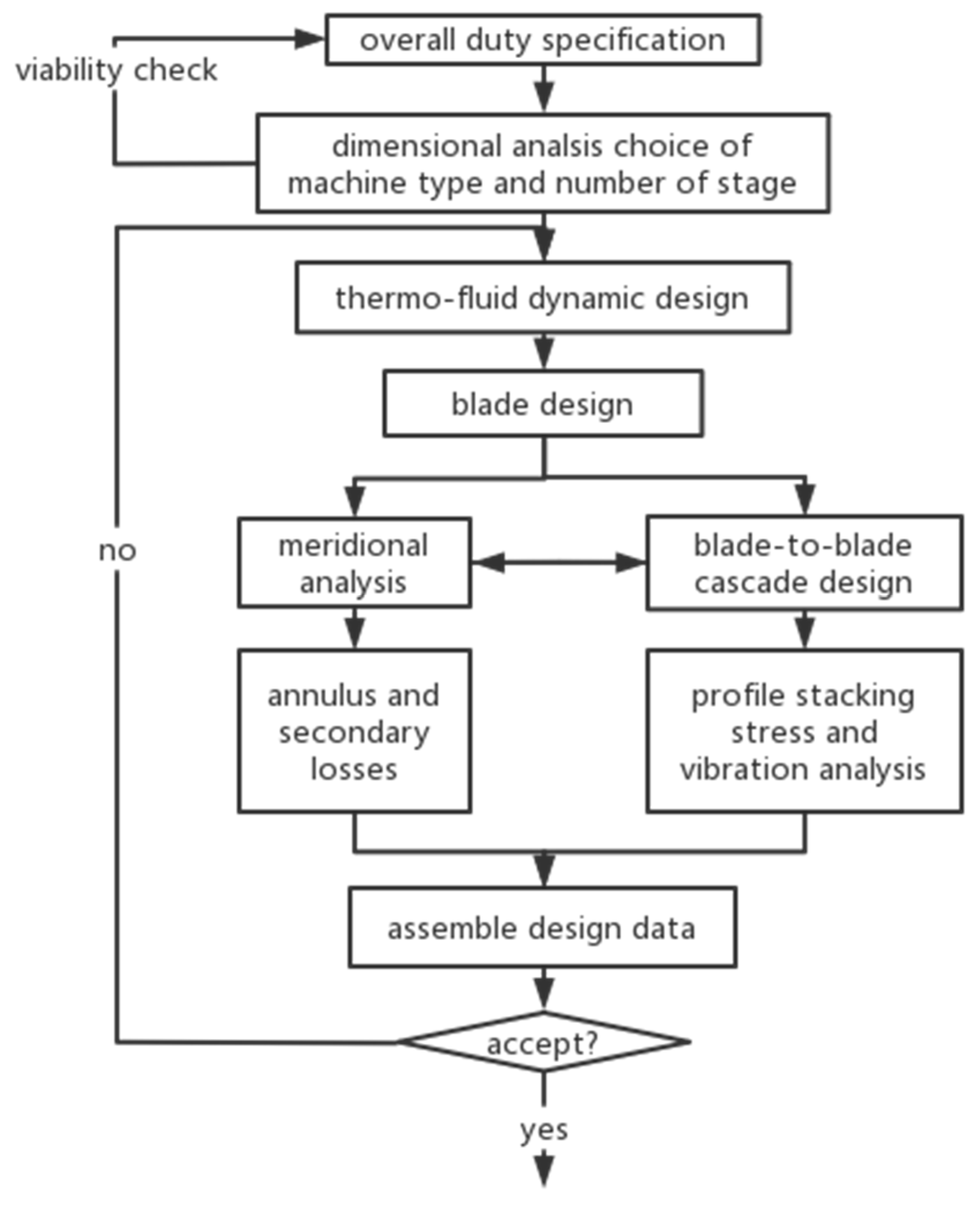
In this study, the axial turbine design software AXIAL 8.8.15.0 is used for one-dimensional design. The design process in AXIAL 8.8.15.0 consists of two steps: preliminary design and detailed design. The preliminary design determines the initial design based on parameters such as initial temperature, initial pressure, back pressure, mass flow rate, and rotational speed. The detailed design involves adjusting parameters such as blade thickness, blade chord length, trailing edge thickness, and blade angles to achieve turbine performance closer to the design values. The design process is illustrated in Figure 1. First, the type of machinery and number of stages needs to be determined. Then follows the methodology proposed by Lewis to determine the thermodynamic parameters and velocity triangles along the turbine centerline, which involves calculations of two dimensionless parameters [25]. Finally proceeds with blade design and analysis to complete the blade design process. During this process, operations such as meridional design and blade-to-blade design need to be performed.
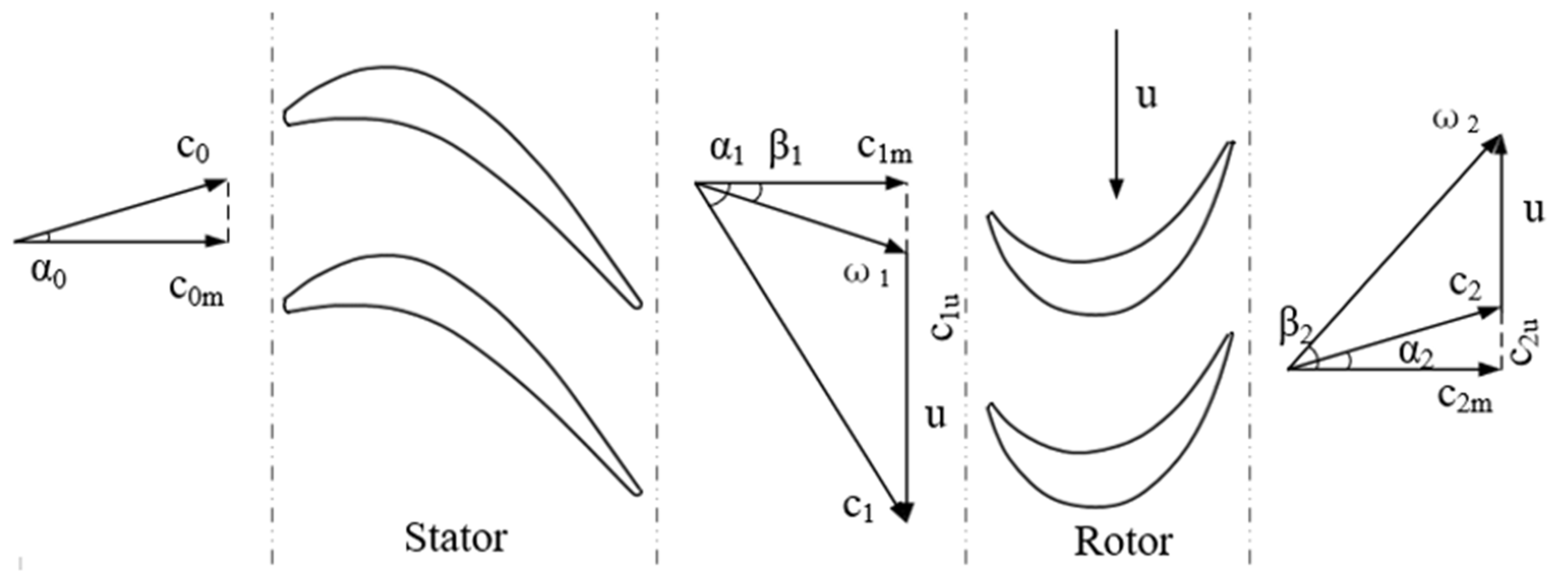
During the preliminary design process in the AXIAL 8.8.15.0 software, the Geo (P0T0Ang-P) mode is selected as the design method. This method calculates the initial geometric parameters based on given inlet pressure, inlet temperature, inlet flow angle, outlet static pressure, mean radius, flow coefficient, and load coefficient. The software sets the inlet flow type to subsonic mode, with an inlet flow angle of 0 degrees. Based on the correlation between the flow coefficient and the load coefficient in the Smith diagram and the recommended values from AXIAL 8.8.15.0, the flow coefficient was selected as 0.6 [26]. The load coefficient is automatically selected based on the equation ψ = 0.66 ( 4 φ 2 + 1 ) [25]. Based on the flow coefficient and load coefficient, the speed parameters are calculated, as show in Equations (1)–(7), thus the speed triangle of the axial-flow turbine is determined and presented in Figure 2.
α 1 = arctan ψ 2 R + 1 φ
β 2 = arctan ψ 2 + R φ
2 π R m · N = 60 · u
c 1 = u · φ · 1 + tan 2 α 1
ω 2 = u · φ · 1 + tan 2 β 2
ψ = Δ h t , a d u 2 = u ( c 1 u c 2 u ) u 2
φ = c m u
where α1 represents stator outlet absolute flow angle; β2 represents rotor outlet relative flow angle; φ represents flow coefficient; ψ represents load coefficient. R represents reaction; N represents rotational speed; u represents tangential velocity; c1 represents stator outlet absolute velocity; ω2 represents relative velocity; cm represents axial component of absolute velocity; cu represents tangential component of absolute velocity.
Furthermore, Axial 8.8.15.0 retrieves the property parameter table of carbon dioxide from the NIST Refprop thermophysical property database to conduct thermodynamic calculations for the turbine. Assuming the flow process is adiabatic, according to the Euler equation, the power of the turbine can be derived, as shown in Equations (8) and (9).
P o w e r = q m · Δ h t , a d
Δ h t , a d = h 0 t h 2 t = u ( c 0 c 2 )
Isentropic efficiency is important parameters for monitoring turbine performance, as shown in Equation (10).
η t s = h 0 t h 2 t h 0 t h 2 , i s
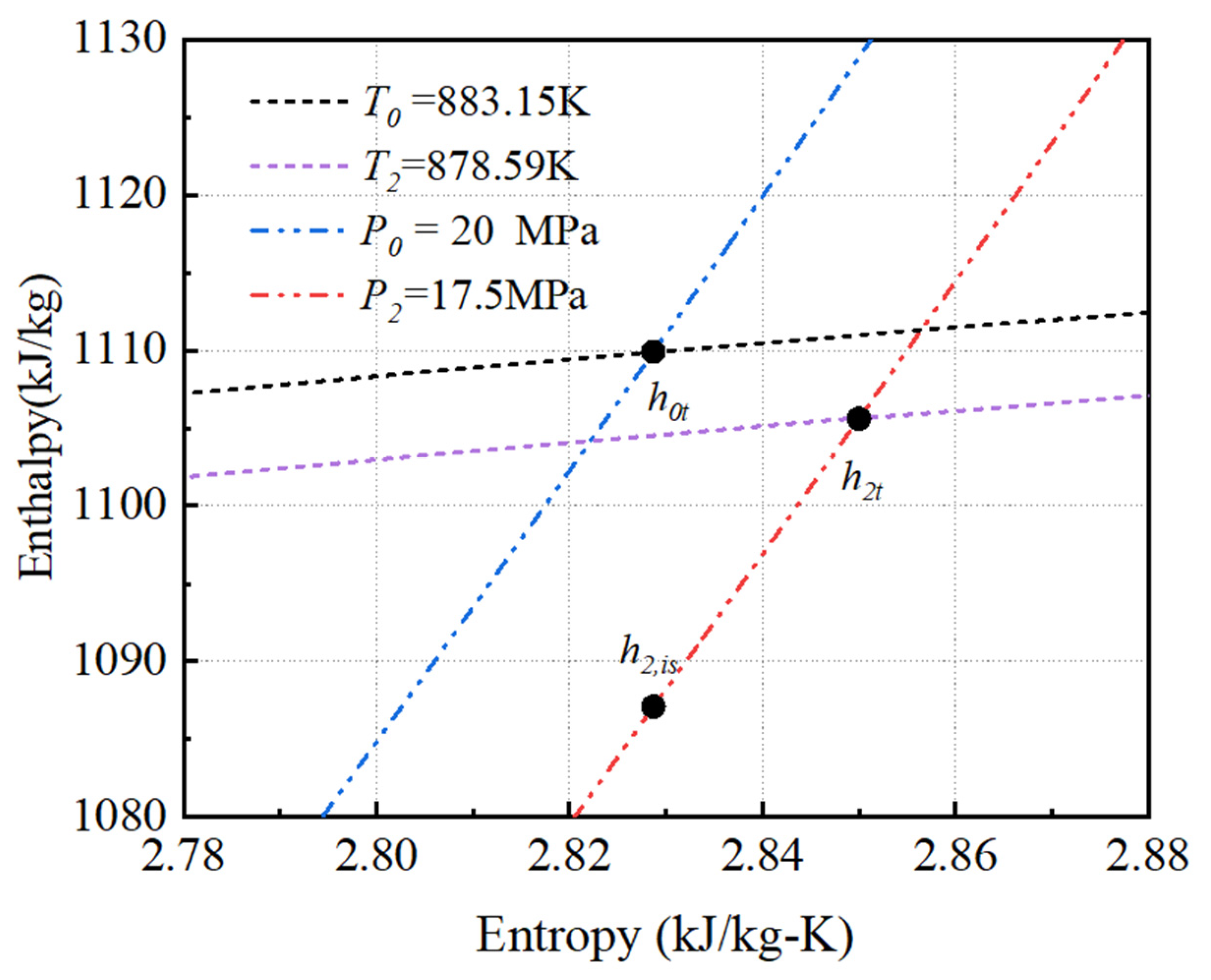
To exhibition enthalpy values at main points used to calculate efficiency and power, The Entropy and Enthalpy figure are shown in Figure 3, where T0 represents the inlet temperature; T2 represents the outlet temperature; P0 represents the inlet pressure; P2 represents the outlet pressure; h0t represents the total specific enthalpy at the inlet of the stationary blades, h2t represents the total specific enthalpy at the outlet of the moving blades, and h2,is represents the specific isentropic enthalpy at the outlet of the moving blades.
The enthalpy drop of the sCO2 flowing through the turbine is partly used for doing work, and the other part is dissipated in the form of flow loss. The total loss consists of four parts as shown in Equation (11).
Y t = Y p + Y s + Y T E + Y T C
where Yt represents total loss; Yp represents profile Loss; Ys represents secondary loss; YTE represents trailing-edge-thickness loss; YTC represents tip clearance losses.

2.2. Design Method Validation

Based on the aforementioned process, AXIAL 8.8.15.0 software establishes a design model where designers can operate based on initial design parameters. To ensure the accuracy and reliability of the design methodology in the field covered by this study, a validation of the reliability using AXIAL 8.8.15.0 software is conducted. Due to the lack of reliable and accurate experimental data in the sCO2 axial turbine field, an experimental case of a compressed air turbine from reference was selected for validation [27]. According to Equation (12), the compressibility factor Z of CO2 under high temperature and high-pressure conditions is close to 1 (with an error of 0.013%), indicating that its gas properties are similar to ideal gas. Therefore, an air compressor turbine with similar properties can be used as a validation object.
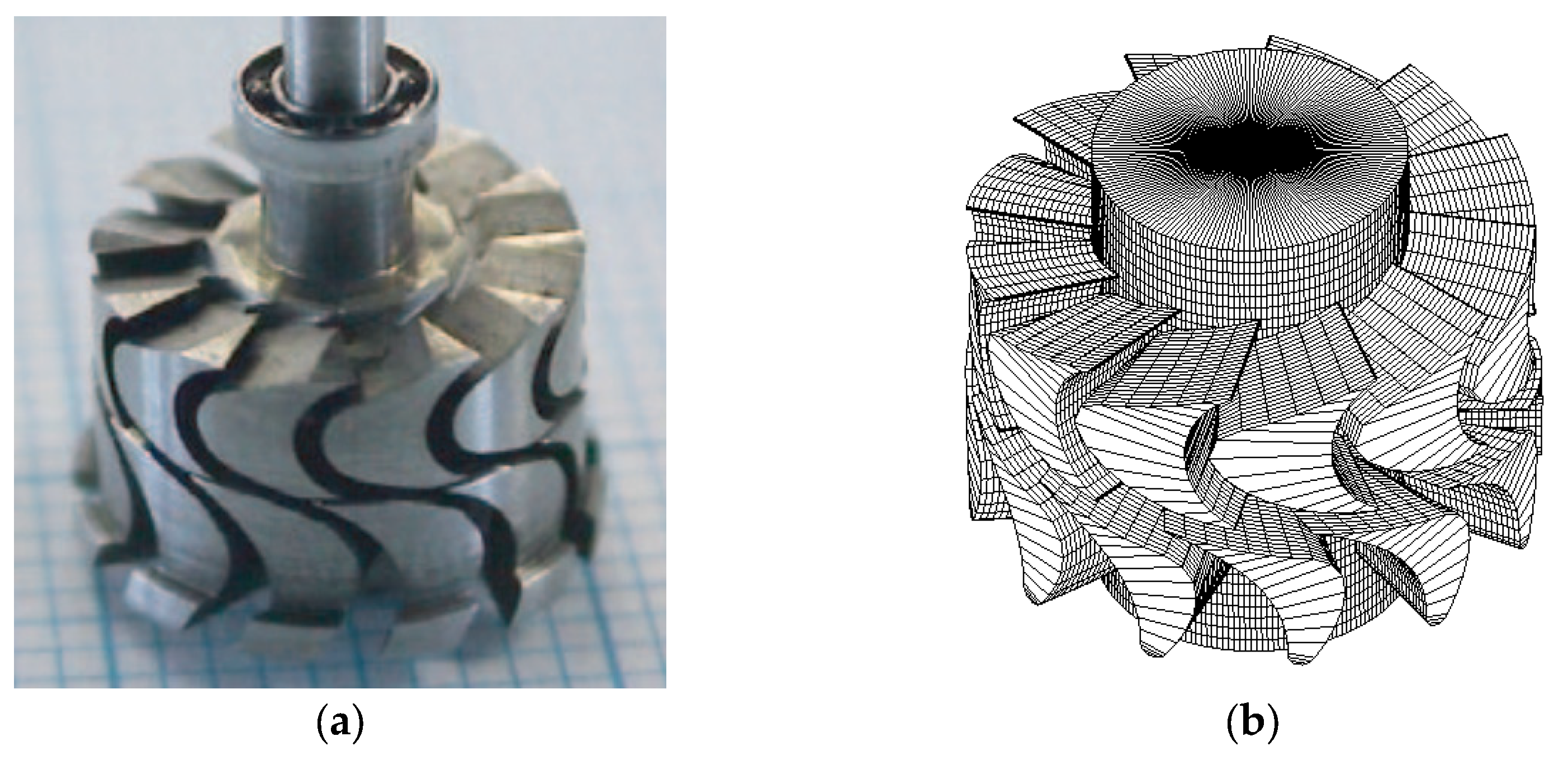
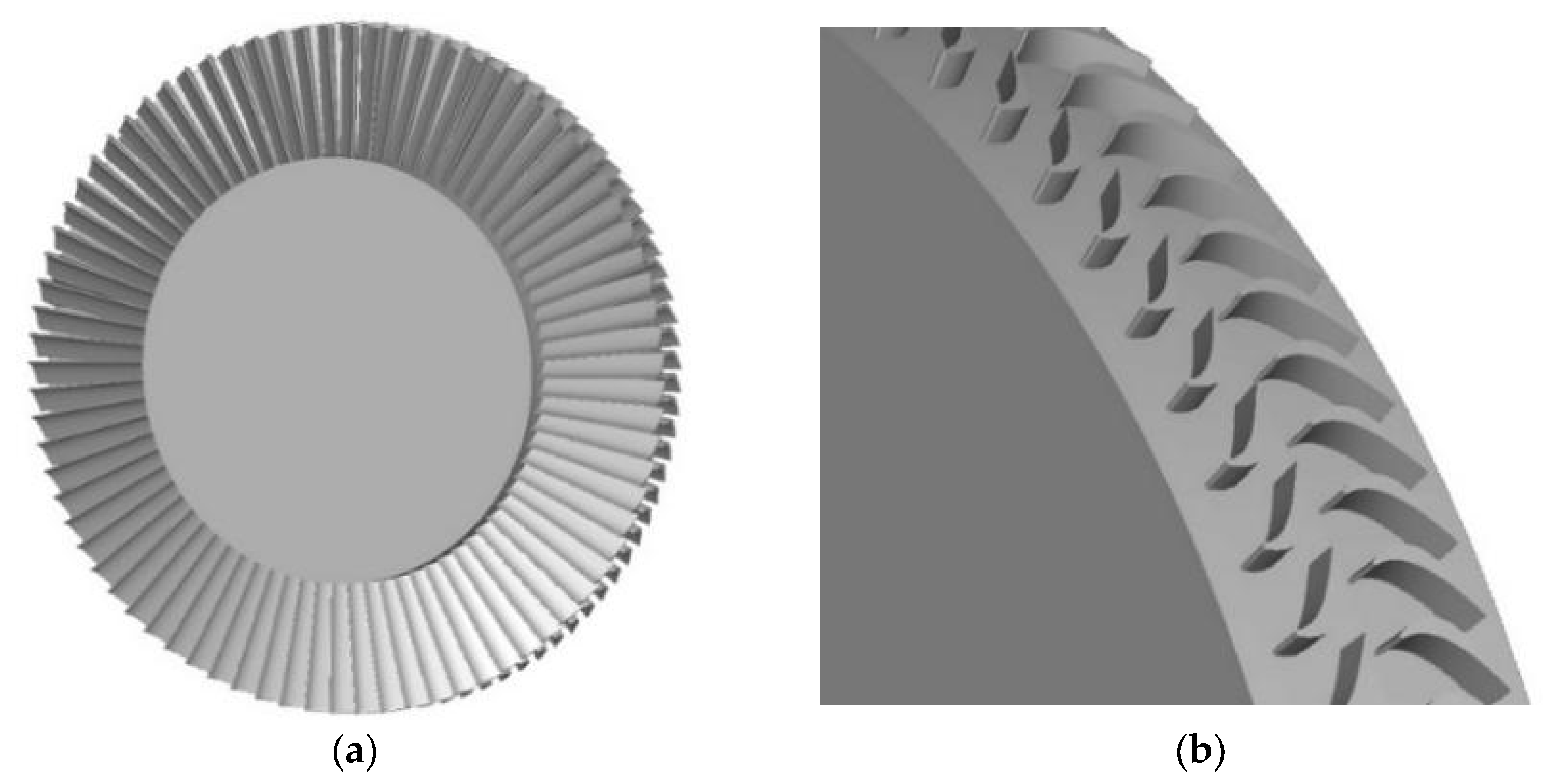
The original turbine in the reference was a small-sized single-stage axial turbine using compressed air as the working fluid, as shown in Figure 4a. In this study, a turbine with the same parameters as the reference was designed using AXIAL 8.8.15.0 software, as shown in Figure 4b. Numerical simulation was performed, and the simulated results matched the parameters from the reference.
Z = P V m R T
From the inlet parameters of the turbine in this study (P0 = 20 MPa, T0 = 883.15 K), a compressibility factor Z0 of 1.00013 is calculated.
Figure 4. Comparison of the turbine entity diagram in the literature and AXIAL 8.8.15.0 design turbine model diagram. (a) Example of turbine in reference Peirs 2003 [27]; (b) Turbine model designed by AXIAL.
Energies 18 05896 g004
Experimental data showed that the turbine achieved the highest power and efficiency at an inlet pressure of 1 bar and a rotational speed of 95 krpm. Therefore, this operating condition is used as the validation point for comparison in this study. The comparison between the results from reference and the design results from AXIAL 8.8.15.0 is shown in Table 1 [27]. The relative errors between the design results obtained using AXIAL 8.8.15.0 and the experimental results from the reference are all within 2%, which is within an acceptable range. This indicates that geometric module design has the capability to design axial turbines and can be used for axial turbine design work.

2.3. Mass Design Approach and Variable Selection

The purpose of turbine design in this study is to be equipped on Small Modular Reactors, requiring small size and appropriate power. Therefore, supercritical carbon dioxide is chosen as the operating fluid and the designed target power is 150 kW. Turbines for nuclear power generation need to adapt to high-temperature and high-pressure initial boundary conditions. And the research conducted by Chen et al. revealed that turbine achieved the highest efficiency at an inlet temperature of 610 °C and an inlet pressure of 20 MPa [28]. Therefore, the inlet boundary conditions with an initial temperature (T0) of 883.15 K and an initial pressure (P0) of 20 MPa are selected. In addition, suitable back pressure (P2), rotational speed (N), mean radius (Rm), and mass flow rate (Qm) need to be selected to meet the design power of 150 kW and high isentropic efficiency. To achieve this target, a large number of design points were screened during the preliminary design process, as described below:
Selecting suitable design points among the four variables: back pressure, rotational speed, mean radius, and mass flow rate requires extensive computational effort. To determine reasonable design points in the shortest possible time, it is necessary to differentiate between primary variables and secondary variables among the four variables.
Considering the wide range and large periodicity of the selection for rotational speed and back pressure, and referring to the research by Chen et al. and Al et al. on axial-flow turbines under variable operating conditions, the final choice for the rotational speed interval is 10,000 rpm, while the back pressure interval is 1000 kPa [28,29]. During the preliminary design process, it was found that the values of rotational speed and back pressure are not constrained by mean radius and mass flow rate. However, back pressure and rotational speed limit the minimum mean radius within the subsonic range of the turbine. As shown in Table 2, when the back pressure is fixed, the allowable minimum mean radius within the subsonic range decreases as the rotational speed increases. The selection of mean radius further constrains the value of mass flow rate. Excessive mass flow rate at the same mean radius can lead to channel blockage, while insufficient mass flow rate can result in low power and efficiency. Therefore, based on these considerations, rotational speed and back pressure are determined as the primary variables.
The span of values for mean radius and mass flow rate is small. As the design goal is a small-sized and low-power turbine, the values of mean radius and mass flow rate are both restricted. The ranges and intervals for selection are small. The mass flow rate appeared as a variable during the design stage, so the exact appropriate value was unknown. Referring to the 15 WM turbine designed by Zhang et al., with a mass flow rate of 150 kg/s, and the turbine designed by Ying et al., with an average radius of 4.6 cm and a mass flow rate of 10 kg/s [30,31]. After reducing the parameters proportionally and expanding the selection range, the values of mean radius are limited within the range of 2~10 cm, and the values of mass flow rate are limited within the range of 2~15 kg/s. Moreover, once the rotational speed and back pressure are determined, selecting a too small mass flow rate will result in insufficient blade height, while selecting a too large mass flow rate will lead to excessive blade height and turbine deformity. Similar restrictions apply to the selection of mean radius. Therefore, it can be concluded that the selection ranges for mean radius and mass flow rate are constrained by rotational speed and back pressure, making them secondary variables.
Based on the data provided in Table 2, the design rotational speed can be directly determined. The larger the rotation speed, the smaller the size that can be achieved in the subsonic range. To achieve the design goal of a small-sized turbine, the maximum value should be chosen for the rotational speed. Currently, the speeds of axial turbines are normally less than 50,000 rpm [32]. Therefore, in this study the rotational speed is set at 40,000 rpm. Next, by comparing the influence patterns of mean radius and mass flow rate under different back pressures on the design results, reasonable values for back pressure, mean radius, and mass flow rate can be further determined.
The primary variables and secondary variables are arrayed as follows: The research range for rotational speed in this study is from 20,000 rpm to 50,000 rpm with an interval of 10,000 rpm. The research range for back pressure is from 16 MPa to 18 MPa with an interval of 1 MPa. Due to space limitations, only one example was provided with a back pressure of 16 MPa and a rotational speed of 40,000 rpm, as shown in Table 3. Under the conditions of a back pressure of 16 MPa and a rotational speed of 40,000 rpm, the minimum mean radius is 0.035 m, and the suitable range for mass flow rate is 2.5 kg/s to 15 kg/s. Therefore, 30 equally spaced design values are selected within the range of mean radius from 0.035 m to 0.055 m, and another set of 30 equally spaced design values are selected within the range of mass flow rate from 2.5 kg/s to 15 kg/s. A total of 900 design points are established and imported into the AXIAL 8.8.15.0 software for batch calculations.

2.4. Analysis of Design Results

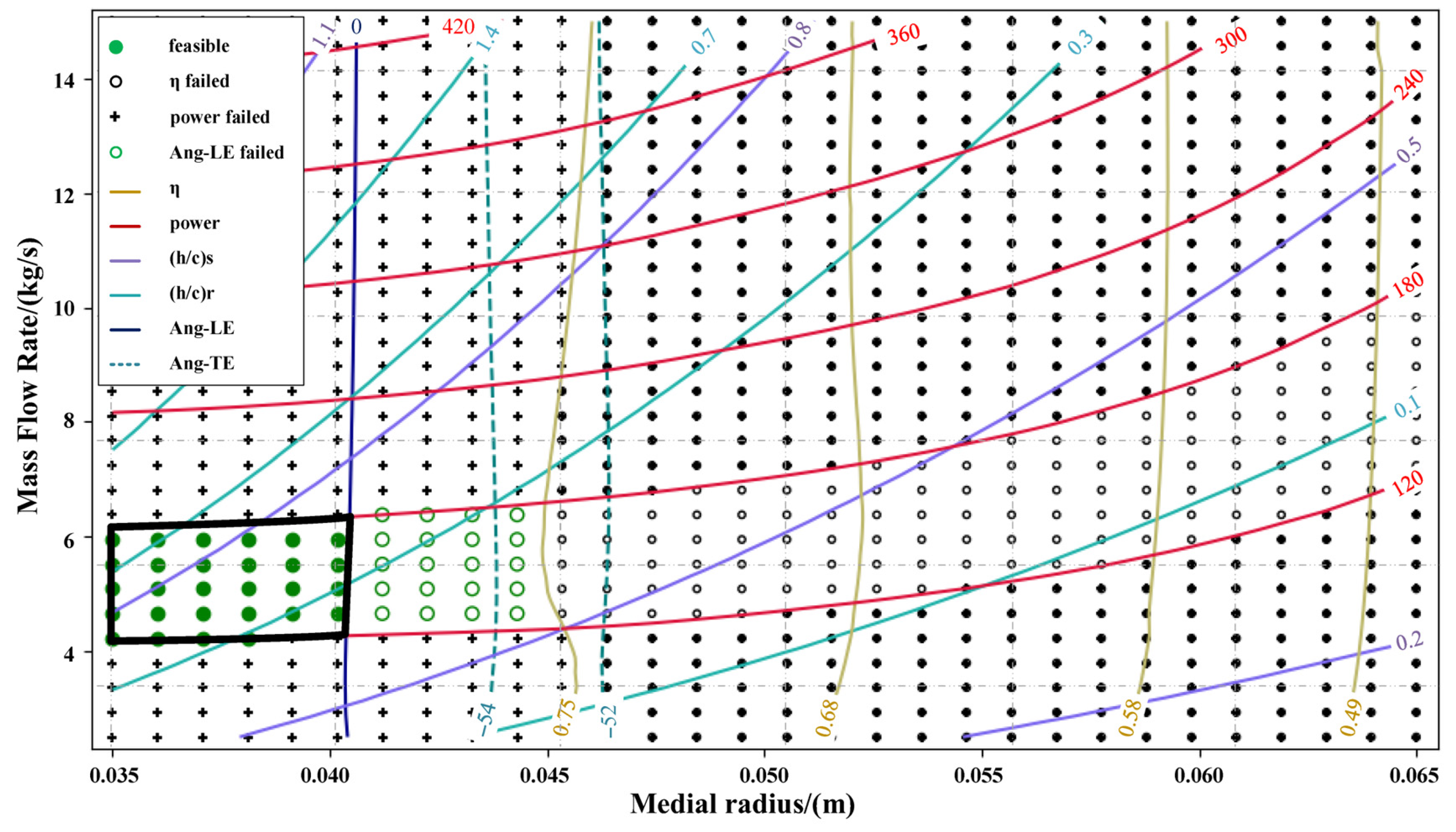
Batch initial calculations are performed for all design point schemes, thereby obtaining all the design point parameter information. Figure 5 shows the design parameter results for different mass flow rates and mean radius corresponding to a back pressure of 16 MPa and a rotational speed of 40,000 rpm. It consists of 900 design points formed by a cross-array of 30 different mass flow rates and 30 different mean radius.
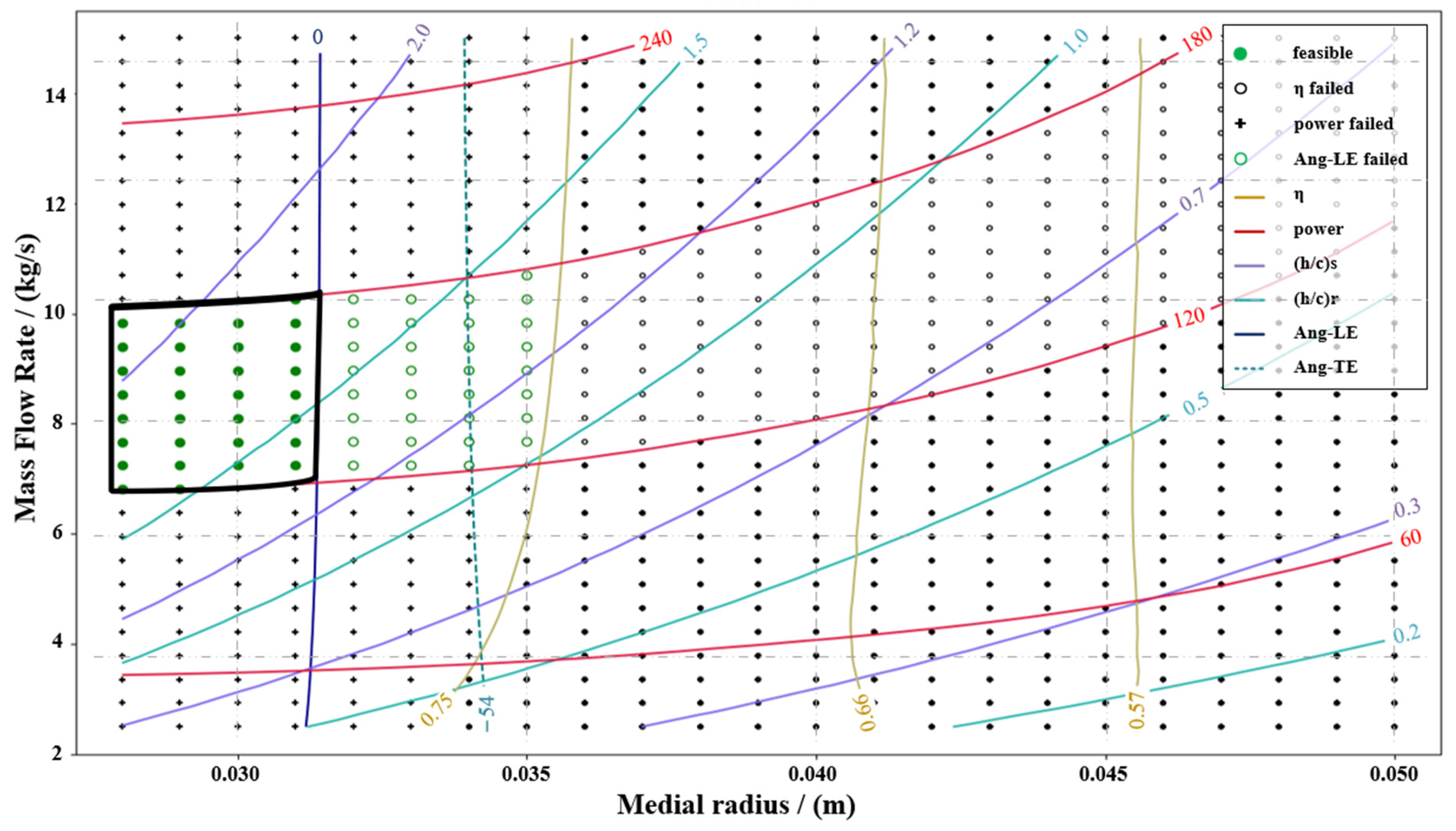
AXIAL 8.8.15.0 recorded detailed parameters for each design point. This study selected parameters that have guiding significance in the design process, including isentropic efficiency, power, relative blade height (h/c), and inlet deflection angle of the rotor and stator. The contour lines of these parameters are presented in the figure, indicating certain limit values, while different shapes of dots represent design solutions within different limit regions. The target design power of this article is 150 kW, so a power with an error of 20% is selected as the power contour line for successful design, where the contour lines are 120 kW and 180 kW. The lowest design efficiency is selected as 75%, where on the left side of the contour lines are all greater than 75% considered a successful design, while the efficiency on the right side is less than 75% considered a failure. As for the moving blades inlet airflow angle, the angle must be designed to be greater than 0 (positive value) to achieve a “shock-free inlet” and ensure the efficient and stable operation of the turbine, which means that the moving blades inlet airflow angle contour lines less than 0 are design failures. So, the reasonable design point region is trimmed from the contour lines of 120 kW and 180 kW close to the target power, the contour line of 75% isentroentropy efficiency, and the contour line of 0 moving blade inlet airflow Angle. The most reasonable target design value lies in the middle of this region, which is displayed in the black box, and any design points outside the region do not meet the design requirements.
From Figure 5, it can be observed that the isentropic efficiency reaches 75% at a mean radius of 0.045 m. Power and efficiency increase with the increase in mass flow rate. When the average radius is 0.05 m, the power value at the mass flow rate of 5.08 kg/s is 120 kW, and the efficiency is 69.58%. While at the mass flow rate of 7.23 kg/s, the power value is 173.37 kW, and the efficiency is 69.67%. In comparison, the mass flow increased by 42%, the power rose by 44.5%, and the efficiency has a slight increase. For the same mass flow rate, larger mean radius results in lower power. For the case where the average radius is 0.046 m, the power value at the mass flow rate of 5.08 kg/s is 126.35 kW, and the efficiency is 73.85%. Compared with the case where the radius is 0.05 m, the power has increased by 5.3% and the efficiency has increased by 6.1%. As the average radius increases, in order to maintain the same mass flow rate, the blade height must be reduced accordingly, which leads to a significant increase in secondary flow loss. To mitigate the impact of this secondary flow loss, the outlet relative airflow angle will deviate from the ideal β2, resulting in a decrease in the absolute value of the tangential component of the outlet relative velocity and an increase in c2u, leading to a decrease in power. This inevitably leads to a decrease in power and efficiency. Power and isentropic efficiency are the most important parameters in the preliminary design of a turbine. The minimum mean radius and maximum mass flow rate achieve the highest isentropic efficiency and maximum power.
Design results with larger mass flow rate and smaller mean radius exhibit higher relative blade heights, resulting in slender and long blade shapes that often have lower strength and are not suitable for high-parameter turbine designs. For example, when Qm = 15 kg/s and Rm = 0.035 m, the blade height is 7.69 mm, and the ratio of blade height to chord length reaches 1.8774, which increases the likelihood of blade fracture. Design results with excessively small mass flow rate lead to very low blade heights (less than 1 mm) and smaller flow areas, rendering them impractical. When the mean radius is less than 0.04 m, an outlet deflection angle greater than 0 degrees for the rotor meets the design requirements. Otherwise, a negative inlet deflection angle for the moving blades can cause abnormal flow, increased turbulence, and higher losses. The target design power in this study is 150 kW, and the reasonable design points fall within the region of approximately 5 kg/s mass flow rate and a mean radius of 0.035~0.040 m. In this region, the relative blade heights of the stators range between 0.6 and 1.0, while those of the rotors range from 0.3 to 0.7. These relatively flat and low-profile blades exhibit strong resistance to high-parameter airflow, aligning with the design expectations.
Using a design point parameter plot like Figure 5 can help consider various factors such as power, isentropic efficiency, and blade shape comprehensively. It allows for multidimensional comparisons of design points in different regions to ultimately find a reasonable design region and the best design point. Under the conditions of 16 MPa and 40,000 rpm, the optimal design mass flow rate is 5.09 kg/s, and the optimal design mean radius is 0.038 m, positioning this design point at the center of the design region. The result of the optimal design point indicates a power of 145.62 kW, an isentropic efficiency of 78.61%, an inlet deflection angle of the rotor of 13.08 degrees, an outlet deflection angle of the rotor of −56.42 degrees, a relative blade height of 0.5864 for the stator, and a relative blade height of 0.5878 for the rotor. Additionally, information in the figure includes blade solidity, with a solidity value of 1.43 for the stator and 1.52 for the rotor.
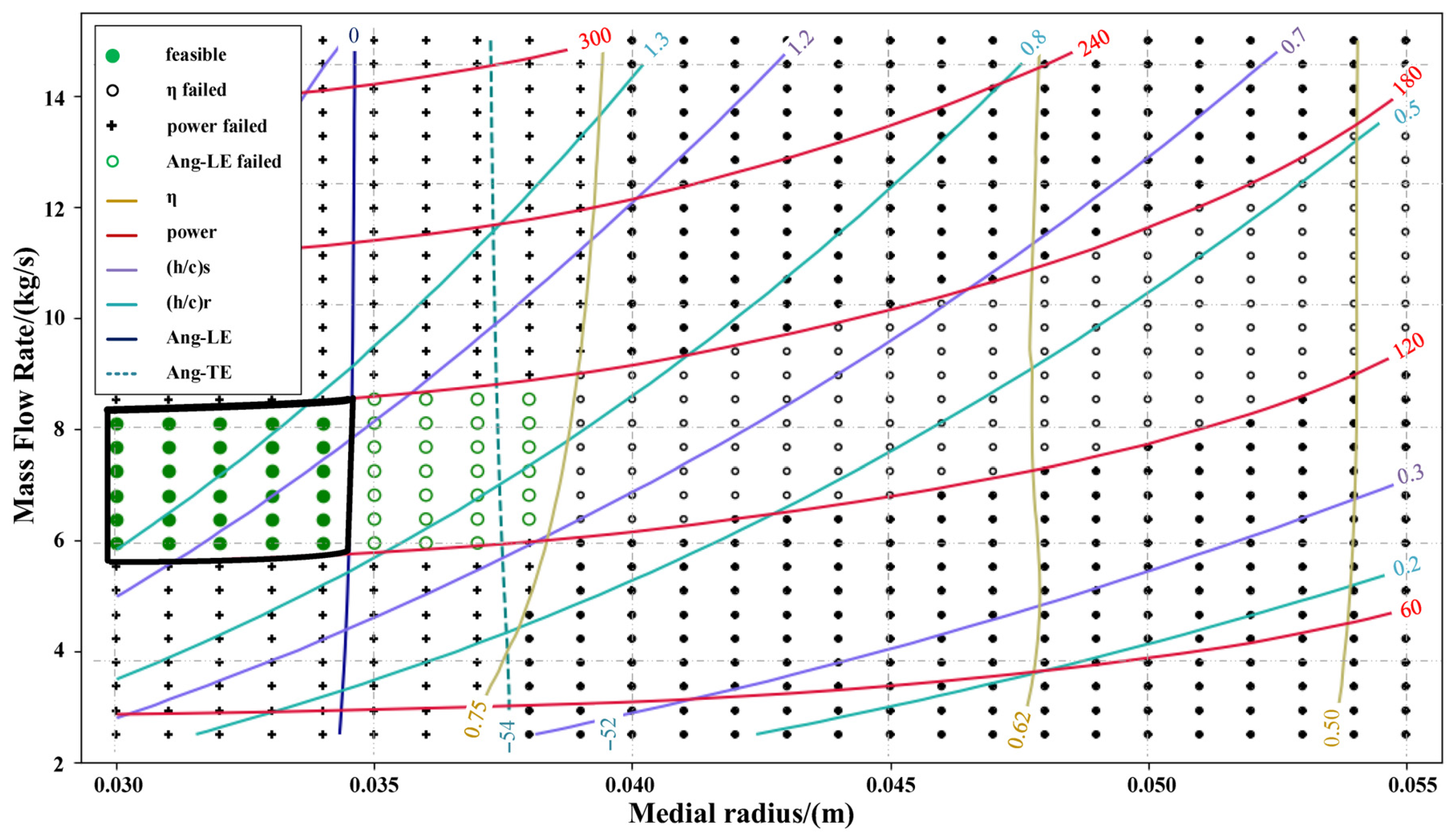
Figure 6 displays the result parameter map for various design points at a rotational speed of 40,000 rpm and a back pressure of 17 MPa. The patterns of parameters such as power, isentropic efficiency, and blade shape are similar to those in Figure 5. The reasonable design region is also constrained by the same factors, being trimmed by contours of reasonable power values and the limit contours of the inlet deflection angle of the rotor. Reasonable design points fall within the range of mean radius 0.030~0.034 m and mass flow rate 6~8 kg/s, which have moved upward compared to the 16 MPa back pressure, with the optimal design point occurring at a smaller mean radius and larger mass flow rate.
In Figure 6, all the power contour lines have shifted upward compared to Figure 5 and can be observed that as the back pressure increases, the power and isentropic efficiency of design points with the same mean radius and mass flow rate decrease. When the back pressure increases to 7 MPa, for the case where the average radius is 0.05 m, the power value at the mass flow rate of 5.08 kg/s is 105.58 kW, and the efficiency is 57.68%. Compared to the 16 MPa situation, the power and efficiency have decreased by 12% and 17.1%, respectively. This is related to the reduction in the expansion level of the carbon dioxide stream, resulting in weakened performance of the turbine. The variation in the relative blade height of the stator with back pressure is not significant, while the range of variation in the relative blade height of the rotor converges as the back pressure increases. In the reasonable design region, the relative blade height of the stator ranges from 1.0 to 1.4, and the relative blade height of the rotor ranges from 0.8 to 1.7. Both show a more noticeable improvement compared to the reasonable design region under the 16 MPa back pressure. This suggests that as the back pressure increases, the blade shape tends to become slender and longer.
The most reasonable design point in Figure 6 is still located at the center of the reasonable design region. The optimal design point has a mean radius of 0.032 m and a mass flow rate of 7.24 kg/s. The design results indicate that this design point has a power of 154.80 kW, an isentropic efficiency of 80.11%, an inlet deflection angle of the rotor of 17.54 degrees, an outlet deflection angle of the rotor of −56.38 degrees, a relative blade height of 1.313 for the stator, and a relative blade height of 1.396 for the rotor. Additionally, the blade solidity for this solution is 1.41 for the stator and 1.55 for the rotor.
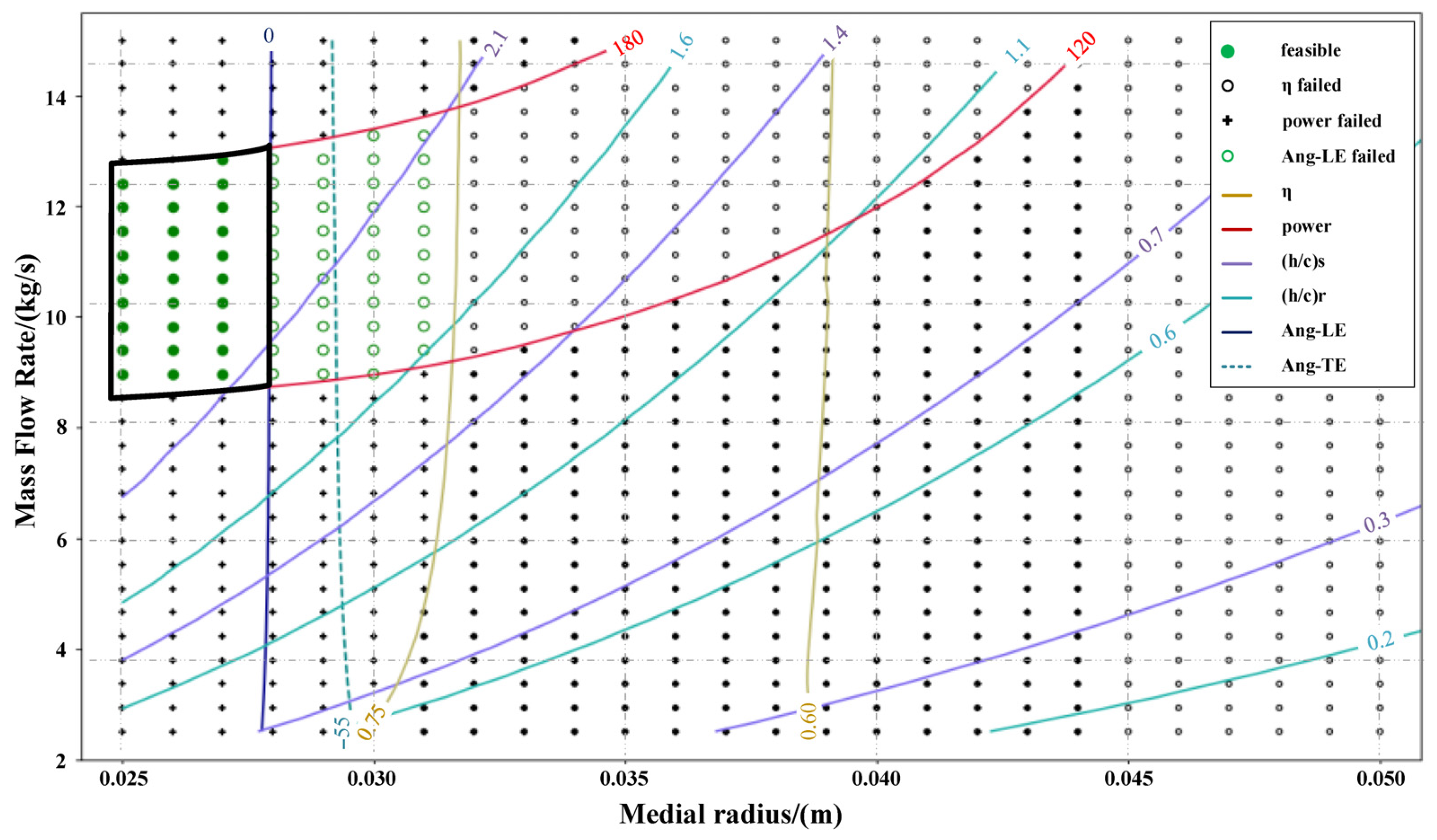
Figure 7 presents the result parameter map for design points at a rotational speed of 40,000 rpm and a back pressure of 18 MPa. The constraints on the reasonable design region are the same as in Figure 5 and Figure 6. Reasonable design points fall within the range of mean radius 0.025~0.028 m and mass flow rate 8.5~12.5 kg/s. Compared with the above two results, these points have further shifted upward, with a smaller mean radius and larger mass flow rate. The optimal design point has a mean radius of 0.026 m and a mass flow rate of 11.12 kg/s. And the design results indicate that this design point has a power of 155.77 kW, an isentropic efficiency of 80.51%, an inlet deflection angle of the rotor of 16.47 degrees, an outlet deflection angle of the rotor of −56.35 degrees, a relative blade height of 2.86 for the stator, and a relative blade height of 3.05 for the rotor. Additionally, the blade solidity for this solution is 1.43 for the stator and 1.54 for the rotor.
Comparing the optimal design points in Figure 5, Figure 6 and Figure 7, it can be observed that as the back pressure increases, the optimal design points have lower mean radius, higher mass flow rates, improved isentropic efficiency, increased inlet deflection angles for the rotor, and higher relative blade heights for both the stator and rotor.
Table 4 provides a comparison of the parameters for the optimal design points in Figure 5, Figure 6 and Figure 7. The most significant parameters that vary among the design points are the mean radius, mass flow rate, and relative blade height of the rotor and stator. Other parameters remain at relatively reasonable levels. This study aims to design a small-sized axial flow turbine, making the mean radius a crucial parameter of interest. Table 4 indicates that as the back pressure increases, the mean radius of the turbine decreases, resulting in a smaller final turbine size. However, as the mean radius decreases, the mass flow rate gradually increases to maintain the desired power and isentropic efficiency. Simultaneously, the relative blade heights of the rotor and stator also increase significantly.
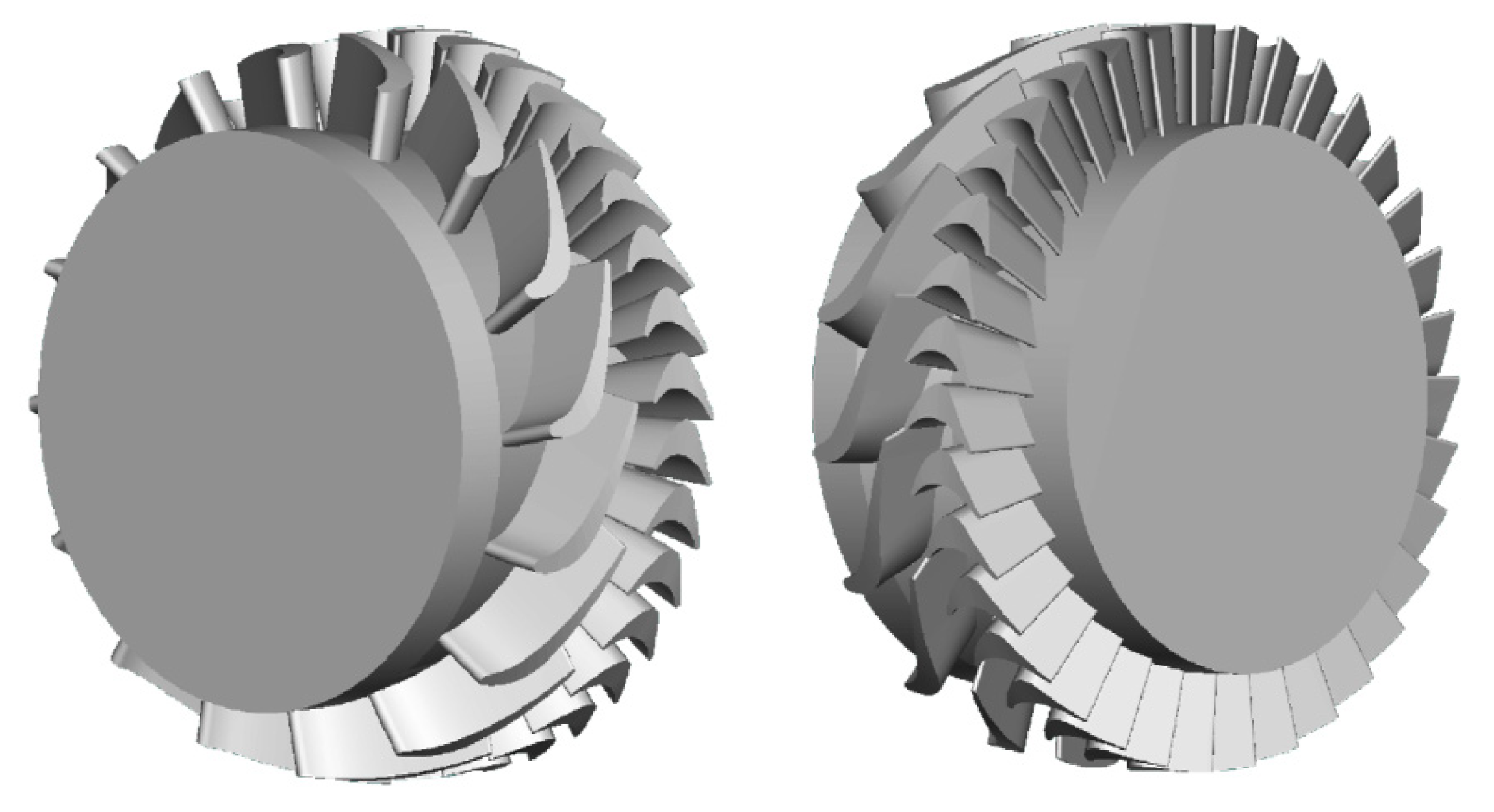
High blade heights are not suitable for high-parameter turbines. Figure 8a shows the shapes of the stator and rotor with relative blade heights of 3.97 and 4.11, respectively. The blades are noticeably slender, with a height that accounts for nearly half of the mean radius. This blade shape is more fragile. On the other hand, if the relative blade height is too low, it not only reduces turbine efficiency but also poses greater manufacturing challenges. Moreover, it is difficult to achieve satisfactory results in practical engineering applications. Figure 8b illustrates the shapes of the stator and rotor with relative heights of only 0.3 and 0.31, respectively. It can be observed that the blades grow tightly against the surface of the impeller, resembling raised threads on the surface. The carbon dioxide stream passage becomes narrow, resulting in a small flow area, making it impractical for engineering applications.
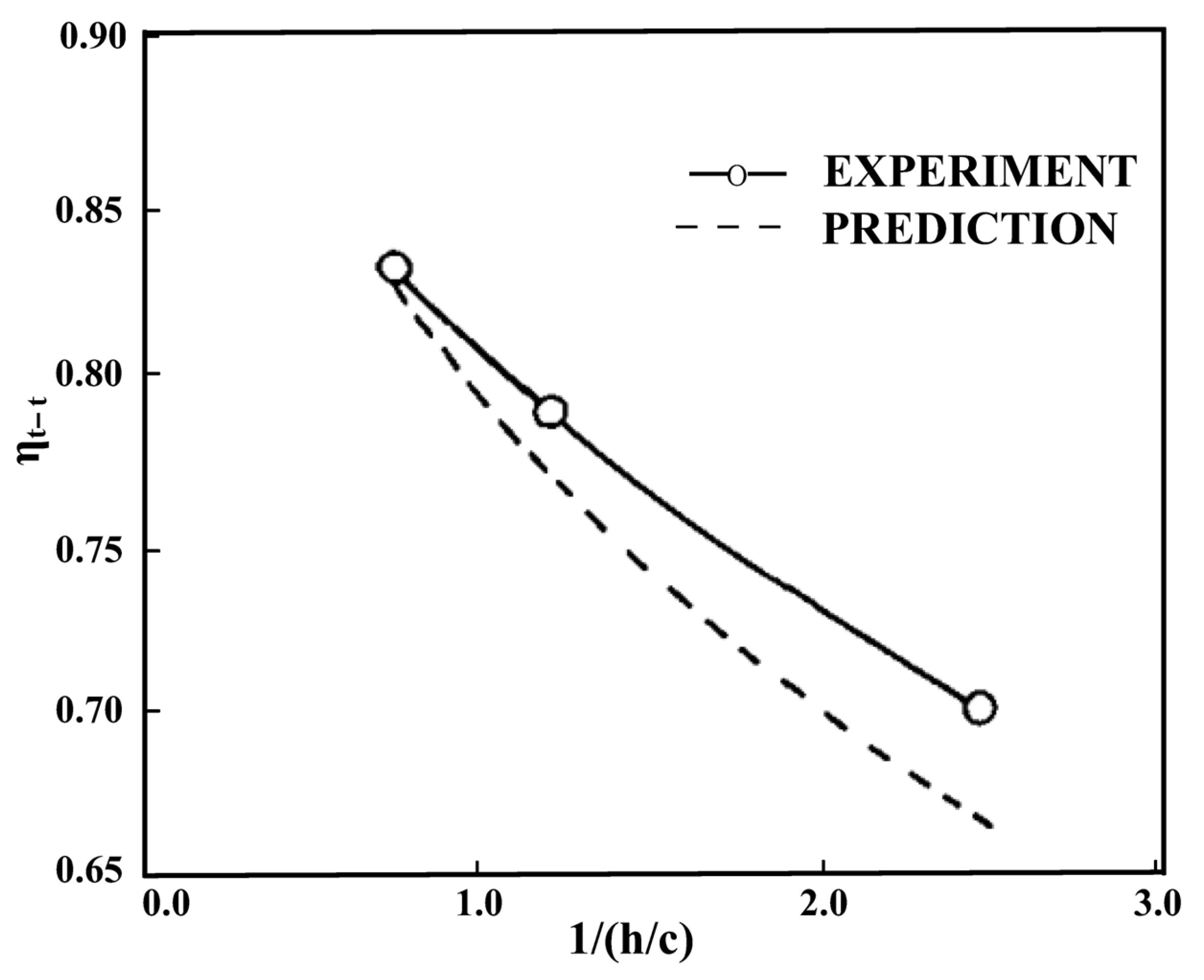
Figure 9 presents the relationship between relative blade height and turbine efficiency summarized by Kacker [26]. Both simulation predictions and experimental values indicate that excessively low relative blade heights lead to reduced turbine efficiency. When the relative blade height is 0.5, the actual efficiency of the turbine is already below 70%. Therefore, considering the guarantee of turbine efficiency in practical applications, it is advisable to avoid using excessively low blade heights. Thus, this study selects blades with relative heights ranging from 1 to 2 as the design solution.
The optimal design points in Figure 5, Figure 6 and Figure 7 only Figure 5 satisfy the design requirements of relative blade height. However, the optimal design point in Figure 5 can be further optimized by increasing the back pressure. Therefore, this study adds a batch computation with an initial design at a rotational speed of 40,000 rpm and a back pressure of 17.5 MPa. The results are shown in Figure 10.
The design points in Figure 10 fall between those in Figure 6 and Figure 7, and the trends of their parameters are similar to Figure 5, Figure 6 and Figure 7. The reasonable design region is within a mass flow rate range of 7~10 kg/s and a mean radius range of 0.028~0.031 m. Within this region, the relative blade height for the stator ranges from 1.2 to 2.2, while for the rotor, it ranges from 1.3 to 1.8. The optimal design point in Figure 10 has a mean radius of 0.030 m and a mass flow rate of 8.5 kg/s. The design results indicate that this design point has a power of 149.96 kW, an isentropic efficiency of 79.91%, an inlet deflection angle of the rotor of 10.21 degrees, an outlet deflection angle of the rotor of −56.31 degrees, a relative blade height of 1.625 for the stator, and a relative blade height of 1.699 for the rotor. Additionally, the blade solidity for this solution is 1.43 for the stator and 1.50 for the rotor. This solution has a power value closest to the design power, reasonable efficiency, reasonable inlet and outlet deflection angles for the rotor, and relative blade heights within the predetermined range. It is the most ideal design solution.
Through a large number of calculations and comparisons of preliminary variables, the optimal preliminary design parameters for the turbine have been determined. These parameters include the known initial temperature and pressure, as well as the selected rotational speed, back pressure, mean radius, and mass flow rate. By using these parameters as initial data, the entire design process of the turbine can be completed, resulting in an ideal design solution. Finally, the initial design parameters that closely approach the design target values are obtained, as shown in Table 5.
The next step is to enter the detailed design process. In the detailed design process, the first step is to modify the number of blades, blade chord length, and axial chord length to determine a reasonable blade solidity and installation angle. Next, the trailing edge thickness and leading edge thickness are adjusted to values that are deemed reasonable based on experience. The trailing edge thickness is typically set to 0.5 mm. Then, the blade tip clearance is modified to satisfy manufacturing conditions, typically set to 0.2 mm based on experience.
Finally, the geometric angles at the outlet of the stator, outlet of the rotor, and inlet of the rotor are adjusted to change their constraint capability on the mass flow rate, ensuring it matches the design value. With this, the complete design process concludes. The geometric parameters of the turbine design results are shown in Table 6, and the 3D model of the design results is exported using AXCENT 8.8.20.0 software, as shown in Figure 11.

2.5. Grid Independence Verification

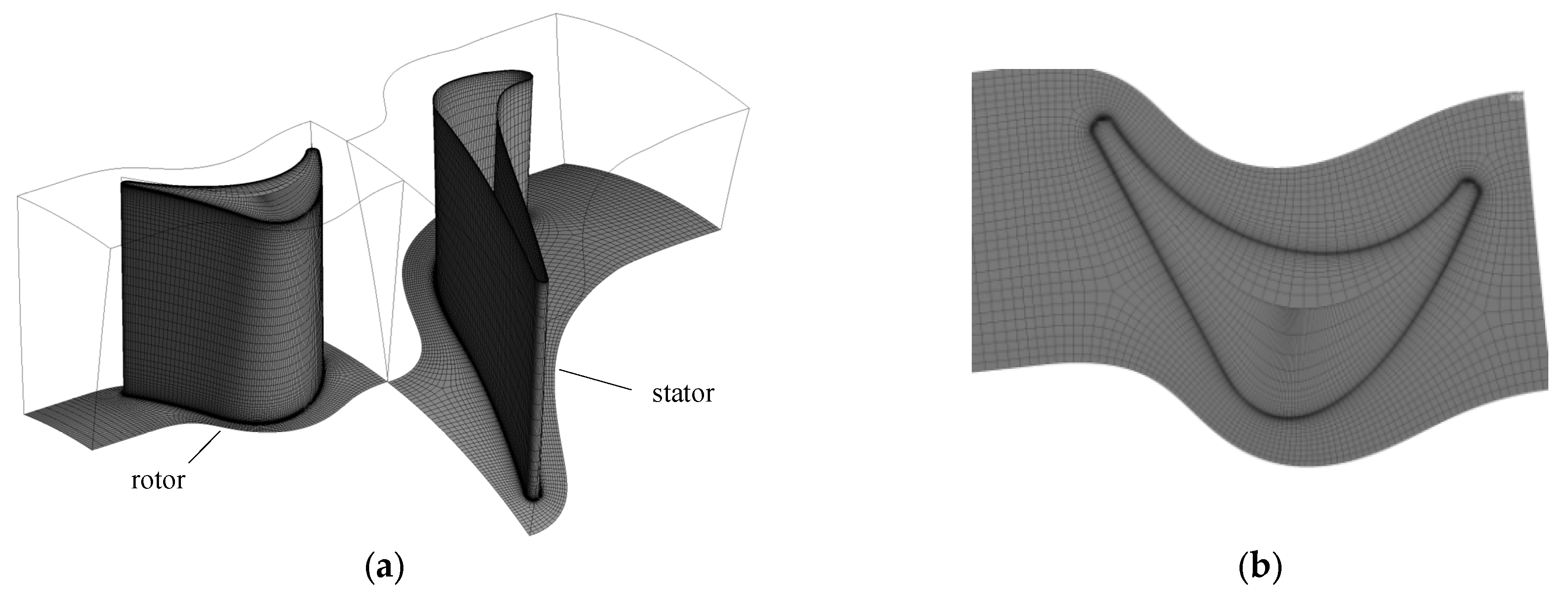
In this study, the designed turbine is modeled in 3D using AXCENT 8.8.20.0 software, including both the rotor and stator as well as the hub. The created model is imported into ANSYS Turbo-Grid 2020R1 software to generate grids for the passages of the rotor and stator. Structured grids are used, with grid refinement near the boundary layers. Due to the presence of the blade tip clearance, which leads to complex flow conditions, grid refinement is applied in the blade tip clearance region.
To ensure the accuracy of the computational results, grid independence verification is conducted. Four different grid sizes, namely 300,000, 470,000, 670,000, and 990,000, are considered, and the isentropic efficiency, Power, Mass flow are compared. It is found that the relative error is already below 0.2% for the grids with 670,000 and 990,000 cells. Following the principle of meeting the error requirement while saving computational resources, the model with 670,000 cells is chosen. Furthermore, Maximum Element Volume Ratio is 3.58, Maximum Edge Length Ratio is 921.923, and the y+ is fixed at 1. The details of the grid independence verification can be found in Table 7. Figure 12 shows the grids for the passages of the rotor and stator, including the blade tip clearance.
In this study, ANSYS CFX 2020R1 software is used for numerical simulation and analysis. This software is widely employed in the field of rotating machinery and possesses strong expertise. As the working fluid, supercritical carbon dioxide remains in a subcritical state far from the critical point inside the turbine. Therefore, the “CO2 RK” substance from the CFX database is selected to meet the requirements for numerical simulation.
The internal flow within the turbine is complex, involving vortices, flow separation, and even backflow. Hence, the k-ω SST turbulence model is chosen, as it provides more accurate predictions for adverse pressure gradient flows. Regarding boundary conditions, the stage mixing-plane method is used for information exchange at the interface between the rotor and stator components. The inlet boundary condition includes total pressure and total temperature, while the outlet boundary condition is static pressure. The solid surfaces are set as adiabatic walls with no-slip conditions. The convergence criteria for each parameter are set to a residual value of 10−6. In addition, a single channel is used in the simulation process, and periodic boundary conditions are set for it.


3. Results and Analysis

3.1. Static Pressure Distribution

Figure 13 shows the pressure distribution curves on the surfaces of the stator and rotor at 50% blade height. It can be observed that there is a sudden pressure drop near the leading edge of the suction surface of the stator. This phenomenon is caused by excessive expansion of the carbon dioxide stream in this region. The diameter of the leading edge of the stator is 1.4 mm, which exceeds half of the maximum blade thickness. As the stream passes through the leading edge and enters the passage, the flow area abruptly decreases, resulting in a transient increase in velocity. This leads to the occurrence of an overexpansion region. To alleviate the excessive expansion at the stator leading edge, the leading edge radius should be reduced, so that the incident angle at the design point is closer to zero, thereby enabling the airflow to accelerate more smoothly. On the other hand, the overexpansion region on the rotor appears on the pressure side. This may be related to the angle of attack of the stream and requires reducing the attack Angle to promote pressure recovery and prevent flow separation, so that the reverse pressure gradient at the stator trailing edge is alleviated.
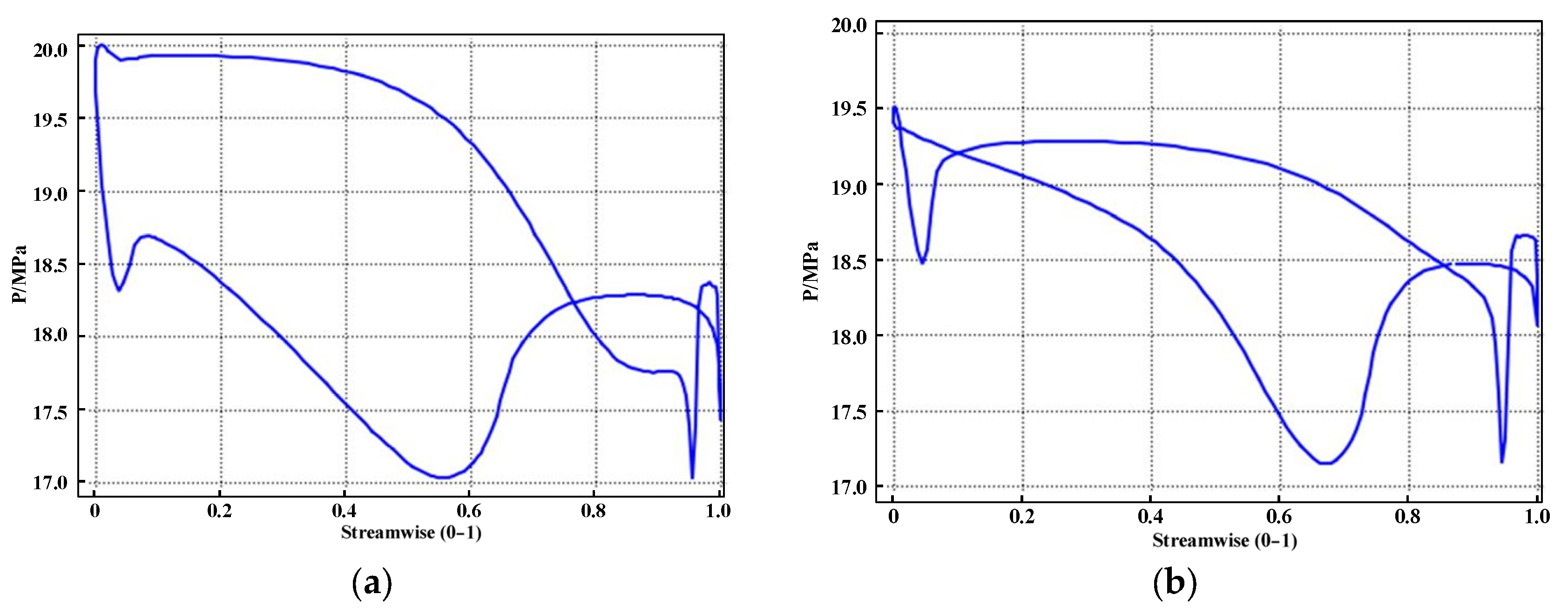
The stator belongs to the fore-load blade, and the region with the largest pressure difference appears at the front of the blade. The pressure on the pressure side of the stator decreases along most of the blade surface in the direction of the pressure gradient, and the rate of pressure decrease accelerates gradually. Near 80% of the axial streamwise, there is a reverse pressure gradient, where the pressure on the suction side exceeds that on the pressure side. At 95% of the axial streamwise, there is significant fluctuation in pressure difference, which is related to the narrowing of the passage flow area. At the trailing edge of the blade, the fluid from the suction side converges with the fluid from the pressure side, generating a large pressure gradient between the high-speed fluid from the suction side and the low-speed fluid from the pressure side, causing unstable pressure distribution.
The pressure distribution on the surface of the rotor generally shows higher pressure on the pressure side than on the suction side. The pressure difference on both sides provides the driving force for the rotation of the rotor. The maximum pressure difference occurs near 70% of the axial streamwise, indicating that it is a rear-load blade. However, there are also reverse pressure gradients on both the inlet and outlet sides of the blade, where the pressure on the suction side exceeds that on the pressure side. Local reverse pressure gradients increase aerodynamic losses and reduce the efficiency of the turbine. The next step is to optimize the blades in a one-dimensional design, ensuring that the twisting pattern from the root to the tip of the blade can make the entry angle at each deployment position approach the optimal value, in order to minimize the aerodynamic losses caused by local reverse pressure gradients.
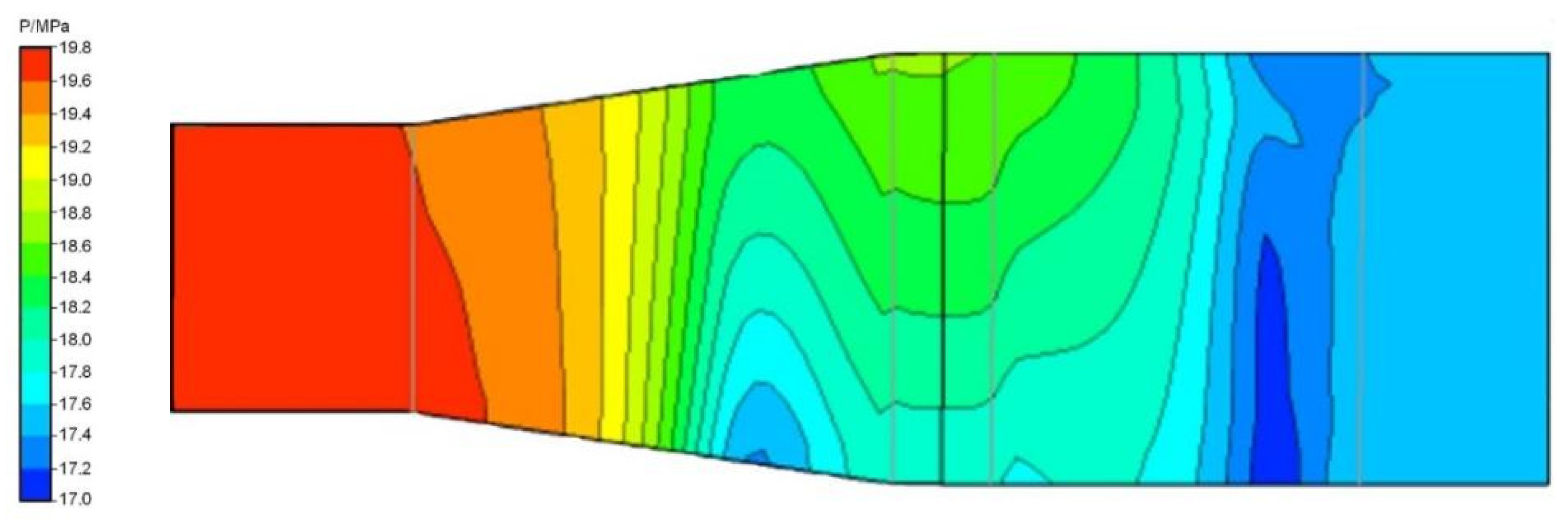
Figure 14 shows the static pressure distribution on the meridional plane of the blades. The pressure gradually decreases along the flow direction, and low-pressure regions appear at the rear of both the stator and rotor. This is due to the decrease in flow area in the throat region of the blades. The static pressure at the leading edge positions of the stationary and rotor is generally higher than at the root positions. Flow separation occurs at the top of the rotor, but the separation region is small and does not cause significant separation losses. Overall, the static pressure distribution on the blade surfaces is reasonable.

3.2. Mach Number Distribution

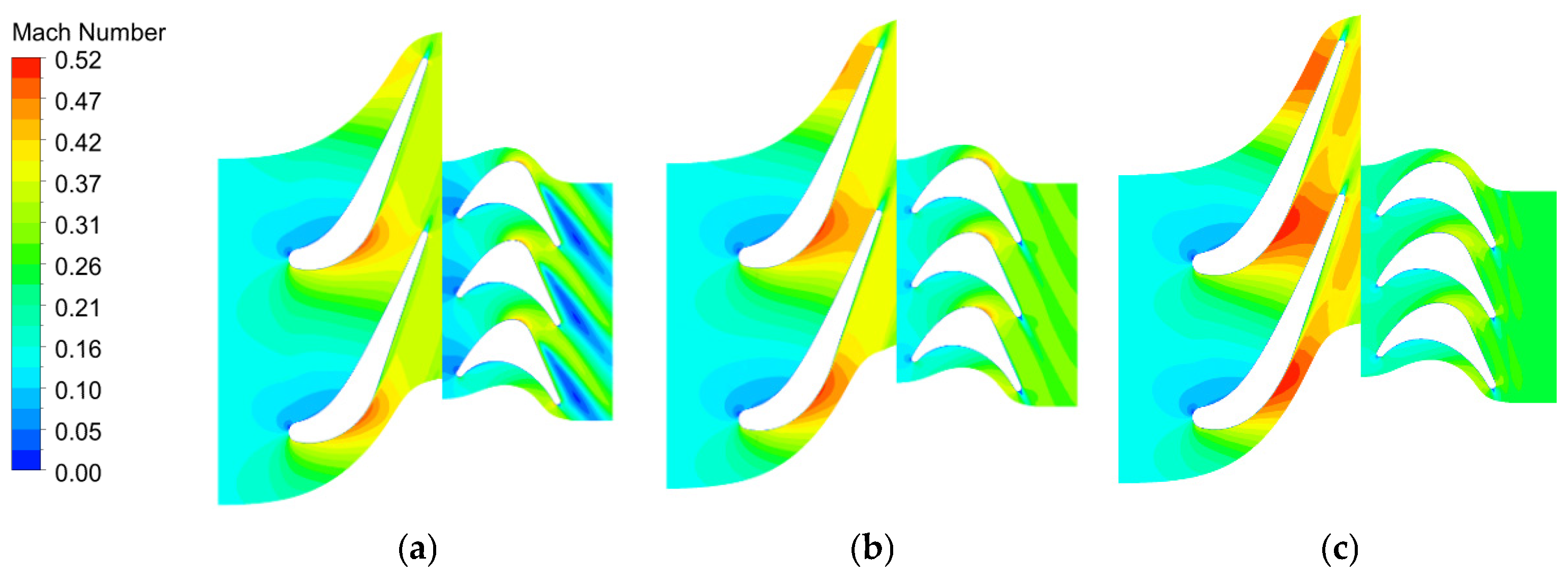
Figure 15 shows the Mach number distribution at spans of 0.1, 0.5, and 0.9 of the blade height. The Mach number distributions at different spans have the following common characteristics: (1) They are continuous and uniform in both the passages of the stator and rotor. In the front half of the passage, the Mach number uniformly increases, reaching its maximum value in the rear region of the suction surface. After passing through the throat region, the Mach number uniformly decreases. (2) The highest velocity inside the channel is Mach 0.55, indicating that the flow field is subsonic overall, without the occurrence of shock waves. The flow state is relatively stable. (3) Low-speed regions appear near the leading edges of the stator and rotor, and there are even regions with extremely low pressure. This is related to the angle of attack of the carbon dioxide stream, which increases aerodynamic losses and affects turbine efficiency. To reduce the low-speed regions one of method is decreasing the attack angle so that blockage effect is mitigated. (4) A low-speed region exists near the trailing edge of the rotor, which is influenced by the thickness of the trailing edge. Smaller trailing edge thickness leads to a smaller area of low-speed region. However, the thickness of the trailing edge cannot be further reduced due to strength limitations. The outlet Mach number of the rotor is directly related to the residual velocity loss. In this turbine, the flow velocity at the trailing edge is below Mach 0.3, which is within a reasonable range.
There are also differences in the Mach number distribution on different spans: (1) Positions with higher spanwise locations have higher Mach numbers, which are particularly evident in the throat region and near the trailing edge. (2) As the spanwise position increases, the Mach number near the inlet of the rotor gradually increases and appears on the suction surface. This is directly related to the angle of attack of the carbon dioxide stream. (3) The Mach number downstream of the outlet of the rotor increases with increasing spanwise position. At the 0.9 spanwise position, the flow velocity at the trailing edge exit is faster and more uniform, effectively controlling the profile loss. However, at the 0.1 spanwise position, the flow becomes significantly more complex, and the velocity decreases noticeably. To mitigate the influence of complex flows, can increase the reaction at the blade root, providing sufficient expansion acceleration capability for the fluid in the blade root area, thereby increasing the flow velocity, reducing flow separation and secondary flow losses. Meanwhile, a similar phenomenon does not occur in the downstream region of the outlet of the stationary blade. It can be inferred that this difference may be related to the disturbance caused by the leakage flow through the blade tip clearance, which continues into the downstream region.

3.3. Streamlines Distribution

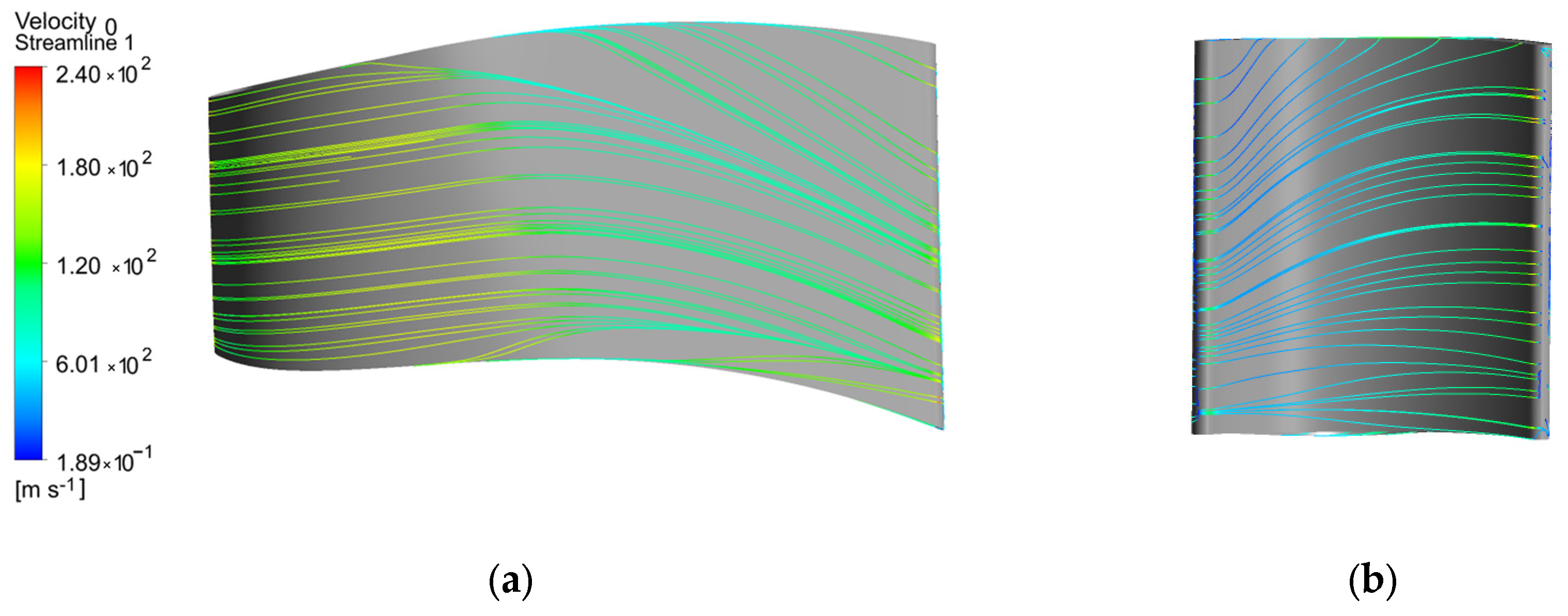
Figure 16 shows the limit flow spectra of the suction surface of the stator and the pressure surface of the rotor. It can be observed that in the middle section of both the stator and rotor surfaces, the streamlines start from the leading edge and end at the trailing edge, forming continuous and uniform streamlines without significant flow separation. As the streamlines pass through the throat region, the velocity increases and then gradually decreases. In the rear half of the stator, the streamlines generally tilt towards the hub direction, while in the rear half of the rotor, the streamlines generally tilt in the opposite direction. This is due to the centrifugal force generated by the high-speed rotation of the moving blade, which suppresses the inclination of the stream towards the hub. Several streamlines do not reach the trailing edge of the rotor at the blade tip position, as this portion of the fluid enters the suction surface through the blade tip clearance under the pressure difference between the two sides of the blade, resulting in significant flow losses.
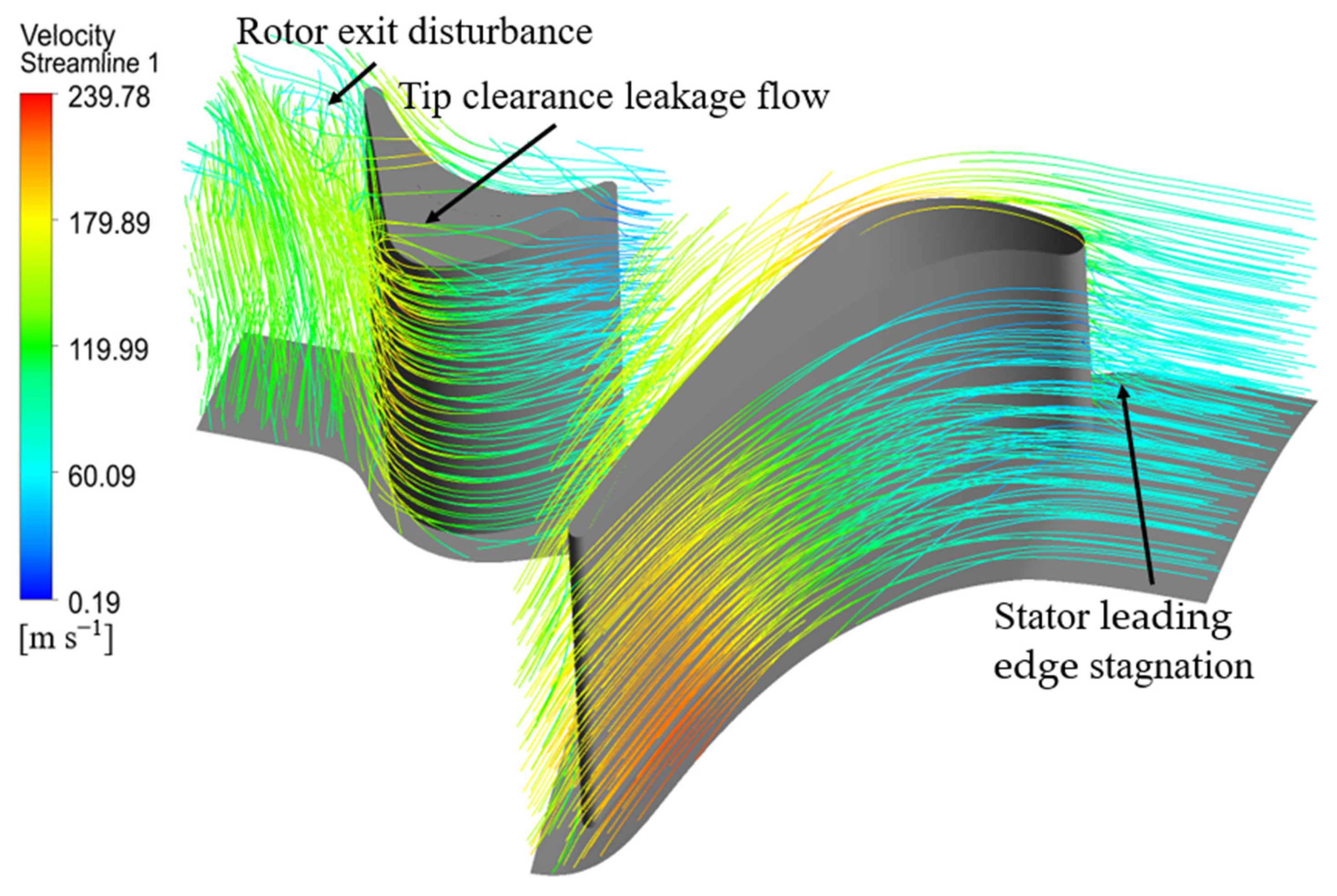
Figure 17 shows the internal streamlines of the flow field, distinguishing the pressure surface of the stator and the suction surface of the rotor from the limit flow spectra. Most of the fluid flows into the passage from the inlet surface of the stator and exits from the outlet surface of the rotor, with a noticeable acceleration at the throat region. The flow in the downstream region of the outlet of the rotor is highly complex. This region is where the pressure surface fluid and the suction surface fluid converge, and it is also affected by the continuation and overflow of the blade tip clearance leakage flow. The complex disturbances lead to a decrease in velocity, the formation of vortices, and if multi-stage turbine analysis is considered, the flow state in this region will transfer to the next stage turbine blades, creating a continuous impact.
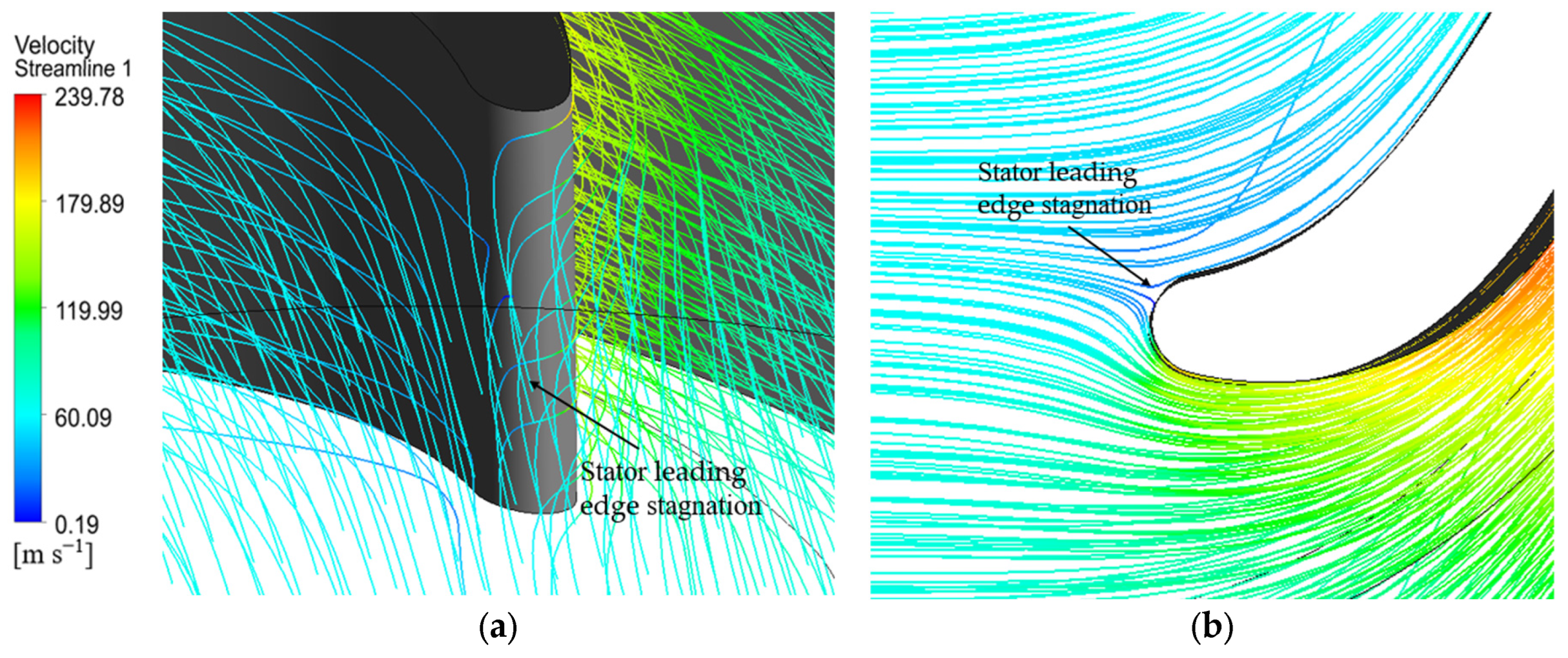
Figure 18 shows the streamlines near the leading edge of the stator from both a three-dimensional and two-dimensional perspective. It can be observed that there are some distorted streamlines near the leading edge, which first reach the leading edge of the blade and then closely follow the blade surface along the suction surface. This corresponds to the presence of stagnation regions at the leading edge in the Mach number contour plot, where the fluid experiences a deceleration effect, resulting in a decrease in velocity and increased losses. This is also related to the geometric angle at the inlet of the stator, providing insights for optimizing the blade shape in the next step.

3.4. Blade Tip Clearance

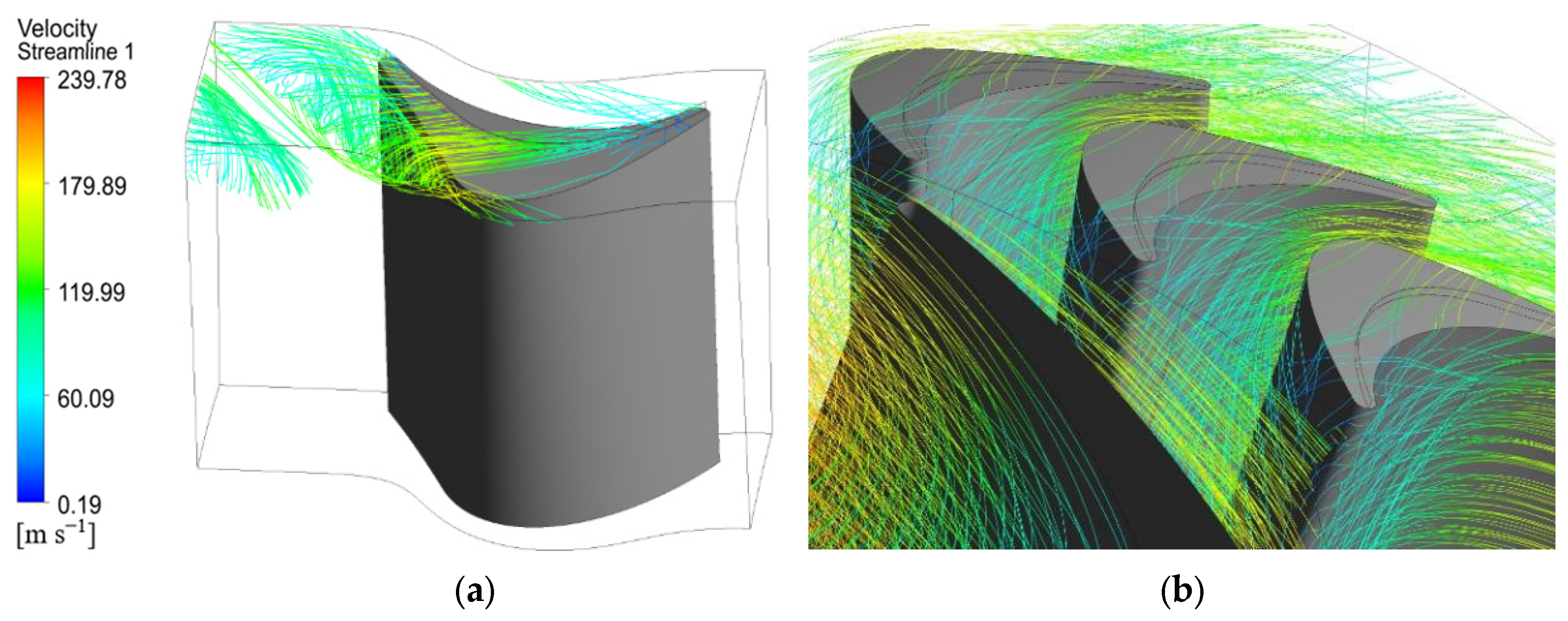
Figure 19 shows the streamline diagrams of the blade tip clearance in single-channel multi-channel rotor, reflecting the formation and development of blade tip clearance leakage flow. The blade tip clearance is modified to satisfy manufacturing conditions and is set to 0.2 mm based on experience. In Figure 19a, it can be observed that the blade tip clearance leakage flow is mainly formed by the leakage from the pressure side of the blade through the blade’s rear half into the suction surface, generating rotating vortices on the suction surface side. These vortices gradually expand along the mainstream direction, affecting an increasing area while the velocity gradually decreases. The leakage flow entering from the mid-section of the blade has the highest velocity, while the leakage flow near the trailing edge has relatively slower velocity.
A small portion of the leakage flow enters the pressure surface from the suction surface near the inlet of the blade, which is related to the abnormal distribution of static pressure on both sides of the blade. There is an inverted pressure phenomenon between the suction surface and the pressure surface at the inlet of the rotor, causing the fluid to flow in the opposite direction under the influence of adverse pressure gradient, increasing the complexity of the flow and resulting in unnecessary losses. Figure 19b illustrates the starting and ending points of the internal streamlines of the blade tip clearance in the rotor, clearly showing the source and direction of the blade tip clearance leakage flow. Reducing blade tip clearance leakage flow further is one of the goals of blade optimization.
The pressure difference between the suction side and the pressure side of the moving blade will cause some airflow to enter the blade passage through the gap at the blade top and enter the blade passage channel. A larger lateral motion gradient will cause it to mix with the airflow inside the channel, resulting in flow loss. The blade top gap loss accounts for a large proportion of the flow loss in turbomachinery, reaching up to 30%. In this study, the decomposed data of the turbine blade top gap loss shows that the isentropic efficiency of the impeller without a blade top gap is 84.0755%, and the isentropic efficiency of the impeller with a blade top gap is 77.4349%. The difference is the blade top gap loss. The total loss in this study is 22.5651%, of which the blade top gap loss is 6.6406%, accounting for 29.43%.

3.5. Mass Flow Rate, Efficiency, and Power

The numerical simulation results are compared with the one-dimensional design results in Table 8, mainly focusing on three performance parameters: mass flow rate, power, and isentropic efficiency. The errors are all within 2%, which is within an acceptable range. The error in isentropic efficiency is relatively large, reaching 1.76%. This may be due to the assumption of adiabatic and inviscid flow in the one-dimensional design, neglecting three-dimensional effects and the influence of wall conduction. In the numerical simulation, a three-dimensional simulation process with a non-slip wall boundary condition was used, which significantly affects the near-wall flow. This resulted in smaller losses in the nozzle design of the one-dimensional approach, affecting the isentropic efficiency. The numerical simulation results show that the mass flow rate is within the expected range, and the power and isentropic efficiency are consistent with the design values. This suggests that the design is reasonable.

4. Conclusions

This study proposed a preliminary design method for applying supercritical CO2 to small single-stage axial-flow turbines and verified the feasibility of the design. In addition, the performance of the axial-flow turbine is analyzed and the specific conclusions are as follows:
  • A method for selecting initial design parameters for the turbine is proposed. By using the AXIAL 8.8.15.0 software to perform batch calculations, a large number of preliminary design results are quickly obtained. Based on this result, an analysis is conducted to determine the optimal initial design parameters, including speed, back pressure, design mass flow rate, and average radius, etc. These parameters can serve as the starting point for further detailed design.
  • The results of the one-dimensional design indicate that power and efficiency increase with the increase in the mass flow rate when the back pressure and the average radius are fixed. When P2 is 16 MPa, Rm is 0.05 m, and the Qm is 5.08 kg/s, the power value is 120 kW, and the efficiency is 69.58%. Compared with the power value of 173.37 kW and the efficiency of 69.67% when the mass flow rate was 7.23 kg/s, the power increased by 44.5% and the efficiency slightly improved. In addition, for the same mass flow rate, larger mean radius results in lower power and for the same mass flow rate, a larger mean radius results in lower power.
  • After determining the preliminary design parameters, the AXIAL 8.8.15.0 software is used for detailed design. The one-dimensional design is performed, and the geometric parameters of the turbine are obtained. Finally, a single-stage axial flow turbine with a power output of 150 kW and an isentropic efficiency of 78.53% is obtained.
  • The performance analysis results show that the overall design of the turbine is reasonable. The mass flow rate, power, and isentropic efficiency are in agreement with the design values. The static pressure distribution, Mach number distribution, and streamline distribution are reasonable. And the total loss in this study is 22.5651%, of which the blade top gap loss is 6.6406%, accounting for 29.43%. However, there are also some localized areas that are not optimal, providing directions for further optimization.

Author Contributions

Conceptualization, Y.H. and Y.X.; Data curation, Y.H. and Y.X.; Formal analysis, Y.H., Y.X., B.M. and Y.Y.; Funding acquisition, J.Q.; Investigation, Y.H., Y.X. and B.M.; Methodology, Y.H., Y.X., B.M. and Y.Y.; Project administration, J.Q.; Resources, J.Q.; Software, Y.H., Y.X., Y.Y. and Z.K.; Supervision, X.L.; Validation, Y.H., Y.X., B.M. and X.L.; Visualization, B.M., Y.Y. and Z.K.; Writing—original draft, Y.H. and Y.X.; Writing—review and editing, Y.H. and Y.X. All authors have read and agreed to the published version of the manuscript.

Funding

This study was supported by the National Key R&D Program of China (Grant no. 2023YFB4102400), the “Young Scholar Innovation Team Project” of Higher Education Institutions in Shandong Province (No. 2023KJ002) and “Taishan Scholar (Young Expert)” Program of Shandong Province (No. tsqn202507026).

Data Availability Statement

The original contributions presented in this study are included in the article. Further inquiries can be directed to the corresponding author.

Conflicts of Interest

Author Bingkun Ma was employed by the company Huawei Digital Power Technologies Co., Ltd. The remaining authors declare that the research was conducted in the absence of any commercial or financial relationships that could be construed as a potential conflict of interest.

Abbreviations

sCO2supercritical carbon dioxide
LELeading edge
TETrailing Edge
RUniversal gas constant, [J/(mol·K)]
ηEfficiency, [%]
ρDensity, [kg/m3]
φFlow Coefficient, [-]
ψLoad Coefficient, [-]
cAbsolute velocity, [m/s]
uTangential velocity, [m/s]
ωRelative velocity, [m/s]
TTemperature, [°C]
PPressure, [MPa]
NRotational speed, [rpm]
RRadial, [m]
h/cRelative blade height, [-]
hEnthalpy, [J/kg]
sEntropy, [J/(kg·K)]
ZCompressibility factor, [-]
QmMass flow rate, [kg/s]
VmMolar volume, [m3/mol]
αAbsolute Flow Angle, [°]
βRelative Flow Angle, [°]
Subscript 0,1,2…state point
Subscript ttotal
Subscript isisentropic process
Subscript mmean
Subscript rrotor
Subscript sstator

References

  1. IEA. Key World Energy Statistics 2021; International Energy Agency: Paris, France, 2021; Available online: https://www.iea.org/reports/key-world-energy-statistics-2021 (accessed on 10 September 2021).
  2. Wu, Y.; Li, Y.; Jin, M. The Concept and Characteristics of the Fifth Generation Nuclear Energy System. Nucl. Sci. Eng. 2021, 41, 201–210. [Google Scholar]
  3. IAEA. Advances in Small Modular Reactor Technology Developments; IAEA: Vienna, Austria, 2020. [Google Scholar]
  4. Li, M.J.; Zhu, H.H.; Guo, J.Q.; Wang, K.; Tao, W.Q. The Development Technology and Applications of Supercritical CO2 Power Cycle in Nuclear Energy, Solar Energy and Other Energy Industries. Appl. Therm. Eng. 2017, 126, 255–275. [Google Scholar] [CrossRef]
  5. Ahn, Y.; Bae, S.J.; Kim, M.; Cho, S.K.; Baik, S.; Lee, J.I.; Cha, J.E. Review of Supercritical CO2 Power Cycle Technology and Current Status of Research and Development. Nucl. Eng. Technol. 2015, 47, 647–661. [Google Scholar] [CrossRef]
  6. Wu, P.; Ma, Y.; Gao, C.; Liu, W.; Shan, J.; Huang, Y.; Wang, J.; Zhang, D.; Ran, X. A Review of Research and Development of Supercritical Carbon Dioxide Brayton Cycle Technology in Nuclear Engineering Applications. Nucl. Eng. Des. 2020, 368, 110767. [Google Scholar] [CrossRef]
  7. Angelino, G. Carbon Dioxide Condensation Cycles For Power Production. J. Eng. Power 1968, 90, 287–295. [Google Scholar] [CrossRef]
  8. Dostal, V.; Hejzlar, P.; Driscoll, M.J. The Supercritical Carbon Dioxide Power Cycle: Comparison to Other Advanced Power Cycles. Nucl. Technol. 2006, 154, 283–301. [Google Scholar] [CrossRef]
  9. Conboy, T.; Pasch, J.; Fleming, D. Control of a Supercritical CO2 Recompression Brayton Cycle Demonstration Loop. J. Eng. Gas Turbines Power 2013, 135, 111701. [Google Scholar] [CrossRef]
  10. Bashan, V.; Gumus, E. Comprehensive Energy and Exergy Analysis on Optimal Design Parameters of Recuperative Supercritical CO2 Power Cycle. Int. J. Exergy 2018, 27, 165. [Google Scholar] [CrossRef]
  11. Brun, K.; Friedman, P.; Dennis, R. Fundamentals and Applications of Supercritical Carbon Dioxide (sCO2) Based Power Cycles, 1st ed.; Woodhead Publishing: Duxford, UK, 2017. [Google Scholar]
  12. Qi, J.; Reddell, T.; Qin, K.; Hooman, K.; Jahn, I.H.J. Supercritical CO2 Radial Turbine Design Performance as a Function of Turbine Size Parameters. J. Turbomach. 2017, 139, 081008. [Google Scholar] [CrossRef]
  13. Grönman, A.; Uusitalo, A. Analysis of Radial-Outflow Turbine Design for Supercritical CO2 and Comparison to Radial-Inflow Turbines. Energy Convers. Manag. 2022, 252, 115089. [Google Scholar] [CrossRef]
  14. Yang, Y.; Wang, X.; Hooman, K.; Han, K.; Xu, J.; He, S.; Qi, J. Effect of CO2-Based Binary Mixtures on the Performance of Radial-Inflow Turbines for the Supercritical CO2 Cycles. Energy 2023, 266, 126429. [Google Scholar] [CrossRef]
  15. Zhou, K.; Wang, J.; Xia, J.; Guo, Y.; Zhao, P.; Dai, Y. Design and Performance Analysis of a Supercritical CO2 Radial Inflow Turbine. Appl. Therm. Eng. 2020, 167, 114757. [Google Scholar] [CrossRef]
  16. Luo, D.; Liu, Y.; Sun, X.; Huang, D. The Design and Analysis of Supercritical Carbon Dioxide Centrifugal Turbine. Appl. Therm. Eng. 2017, 127, 527–535. [Google Scholar] [CrossRef]
  17. Zhou, A.; Song, J.; Li, X.; Ren, X.; Gu, C. Aerodynamic Design and Numerical Analysis of a Radial Inflow Turbine for the Supercritical Carbon Dioxide Brayton Cycle. Appl. Therm. Eng. 2018, 132, 245–255. [Google Scholar] [CrossRef]
  18. Kumaran, R.S.; Alone, D.B.; Nassar, A.; Kumar, P. Preliminary Aerodynamic Design of a S-CO2 Axial Turbine. In Proceedings of the ASME 2021 Gas Turbine India Conference, Virtual, 2 December 2021; p. V001T12A009. [Google Scholar]
  19. Sathish, S.; Kumar, P.; Namburi, A.N.; Swami, L.; Fuetterer, C.; Gopi, P.C. Novel Approaches for sCO2 Axial Turbine Design. In Proceedings of the ASME Turbo Expo 2019: Turbomachinery Technical Conference and Exposition, Phoenix, AZ, USA, 17–21 June 2019; p. V009T38A011. [Google Scholar]
  20. Kumaran, R.S.; Alone, D.B.; Kumar, P. Profile Loss Investigations with a S-CO2 Axial Turbine Aerofoil. In Proceedings of the ASME Turbo Expo 2020: Turbomachinery Technical Conference and Exposition, Virtual, 21–25 September 2020; p. V011T31A015. [Google Scholar]
  21. Shi, D.; Zhang, L.; Xie, Y.; Zhang, D. Aerodynamic Design and Off-Design Performance Analysis of a Multi-Stage S-CO2 Axial Turbine Based on Solar Power Generation System. Appl. Sci. 2019, 9, 714. [Google Scholar] [CrossRef]
  22. Agromayor, R.; Nord, L.O. Preliminary Design and Optimization of Axial Turbines Accounting for Diffuser Performance. J. Turbomach. Propuls. Power 2019, 4, 32. [Google Scholar] [CrossRef]
  23. Du, Q.; Zhang, D. Numerical Investigation on Flow Characteristics and Aerodynamic Performance of a 1.5-Stage SCO2 Axial-Inflow Turbine with Labyrinth Seals. Appl. Sci. 2020, 10, 373. [Google Scholar] [CrossRef]
  24. Kang, Y.S.; Huh, J.S.; Cho, J.; Shin, H.; Baik, Y.J. Design and Performance Assessments of a Partial Admission Axial Turbine Using Supercritical Carbon Dioxide. In Proceedings of the ASME 2016 Fluids Engineering Division Summer Meeting Collocated with the ASME 2016 Heat Transfer Summer Conference and the ASME 2016 14th International Conference on Nanochannels, Microchannels, and Minichannels, Washington, DC, USA, 10–14 July 2016; p. V01AT09A010. [Google Scholar]
  25. Lewis, R.I. Turbomachinery Performance Analysis; Arnold: London, UK, 1996; p. 328. [Google Scholar]
  26. Kacker, S.C.; Okapuu, U. A Mean Line Prediction Method for Axial Flow Turbine Efficiency. J. Eng. Power 1982, 104, 111–119. [Google Scholar] [CrossRef]
  27. Peirs, J.; Reynaerts, D.; Verplaetsen, F. Development of an Axial Microturbine for a Portable Gas Turbine Generator. J. Micromech. Microeng. 2003, 13, S190–S195. [Google Scholar] [CrossRef]
  28. Chen, Y.N.; Zhang, C.; Jiang, S.X.; Li, H.; Yao, M. Comparative study of supercritical carbon dioxide thermal power system. Proc. CSEE 2019, 39, 2071–2079. [Google Scholar]
  29. Al Jubori, A.M.; Al-Dadah, R.; Mahmoud, S. An Innovative Small-Scale Two-Stage Axial Turbine for Low-Temperature Organic Rankine Cycle. Energy Convers. Manag. 2017, 144, 18–33. [Google Scholar] [CrossRef]
  30. Zhang, H.; Zhao, H.; Deng, Q.; Feng, Z. Aerothermodynamic Design and Numerical Investigation of Supercritical Carbon Dioxide Turbine. In Proceedings of the ASME Turbo Expo 2015: Turbine Technical Conference and Exposition, Montreal, QC, Canada, 15–19 June 2015; p. V009T36A007. [Google Scholar]
  31. Ying, Q.; Zhuge, W.; Zhang, Y.; Qian, Y.; Zhou, D.; Tao, M. Aerodynamic design and numerical analysis of a multi-stage axial supercritical carbon dioxide turbine. Therm. Power Gener. 2020, 49, 164–172. [Google Scholar]
  32. Wang, E.; Peng, N. A Review on the Preliminary Design of Axial and Radial Turbines for Small-Scale Organic Rankine Cycle. Energies 2023, 16, 3423. [Google Scholar] [CrossRef]
Figure 1. Flow chart of turbine design.
Energies 18 05896 g001
Figure 2. Velocity triangle of the axial-flow turbine.
Energies 18 05896 g002
Figure 3. ηts calculation Entropy and Enthalpy figure.
Energies 18 05896 g003
Figure 5. Design result of P2 = 16 MPa and N = 40,000 rpm.
Energies 18 05896 g005
Figure 6. Design result of P2 = 17 MPa and N = 40,000 rpm.
Energies 18 05896 g006
Figure 7. Design result of P2 = 18 MPa and N = 40,000 rpm.
Energies 18 05896 g007
Figure 8. (a) (h/c)s = 3.97 (h/c)r = 4.11; (b) (h/c)s = 0.30 (h/c)r = 0.31.
Energies 18 05896 g008
Figure 9. Predicted and experimental relationships between relative blade height and turbine efficiency [26].
Energies 18 05896 g009
Figure 10. Design result of P2 = 17.5 MPa and N = 40,000 rpm.
Energies 18 05896 g010
Figure 11. Blade modeling.
Energies 18 05896 g011
Figure 12. (a) Grid schematic of blades; (b) rotor tip clearance.
Energies 18 05896 g012
Figure 13. Static pressure distribution at the 50% height section of stator (a) and rotor (b).
Energies 18 05896 g013
Figure 14. Static pressure distribution at the meridian plane.
Energies 18 05896 g014
Figure 15. Mach number distribution at (a) 0.1, (b) 0.5 and (c) 0.9 span of blade height.
Energies 18 05896 g015
Figure 16. Streamlines distribution on the surface of stator (a) and rotor (b).
Energies 18 05896 g016
Figure 17. Streamlines distribution at the whole flow field.
Energies 18 05896 g017
Figure 18. Streamlines distribution at the leading edge of stator blade in three dimensions (a) and two dimensions (b).
Energies 18 05896 g018
Figure 19. Streamlines distribution at the tip clearance of single blade (a) and blades row (b).
Energies 18 05896 g019
Table 1. The comparison between the reference results and the design results.
Power/WEfficiency/%
data of Peirs2818.4
CFD result of AXIAL 8.8.15.028.418.7
Deviation1.4%1.6%
Table 2. Table of minimum mean radius as a function of rotational speed at P2 of 16 MPa.
Rotation Speed/(rpm)The Minimum Allowable Rm in the Subsonic Range/(m)
20,0000.07
30,0000.045
40,0000.035
50,0000.028
Table 3. Parameters of preliminary design at 16 MPa and 40,000 rpm.
Rm = 0.0350Rm = 0.0360Rm = 0.0650
Qm = 2.502.502.502.50
0.03500.03600.0650
Qm = 2.932.932.932.93
0.03500.03600.0650
Qm = 15.0015.0015.0015.00
0.03500.03600.0650
Table 4. Comparison of optimal design point under different P2.
16 MPa17 MPa18 MPa
Radius/(m)0.0380.0320.026
Mass flow rate/(kg/s)5.097.2411.12
Efficiency78.6180.1180.51
Power/(kW)145.62154.80155.77
(Ang)LE/(°)13.0817.5416.47
(Ang)TE/(°)−56.42−56.38−56.35
(h/c)s0.58641.312.86
(h/c)r0.58781.403.05
(Solidity)s1.431.411.43
(Solidity)r1.521.551.54
Table 5. The Boundary Conditions.
ItemValue
Inlet Total Pressure/MPa20
Inlet Total Temperature/K883.15
Outlet Static Pressure/MPa17.5
Rotation Speed/rpm40,000
Mass Flow Rate/(kg/s)8.5
Average Radius/m0.030
Table 6. Geometric parameters of turbine.
ParameterStatorRotor
Blade number1635
Average diameter/m0.0600.060
Height/m0.0080.009
Chord/m0.0180.008
Width/m0.0100.0077
Inlet geometry angle/°054
Outlet geometry angle/°69−64
Table 7. Grid independence study.
Grid NumberEfficiency/%Deviation/%Power/WDeviation/%
3.05 × 10577.02---
4.75 × 10577.110.117146,4192.387
6.75 × 10577.150.052148,4741.017
9.89 × 10577.170.026149,9310.046
Table 8. Overall performance parameters of the turbine.
Mass Flow Rate/(kg/s)Power/kWEfficiency/%
1D Design8.59149.87778.53
3D Numerical8.52148.47477.15
Deviation0.8150.9361.76
Disclaimer/Publisher’s Note: The statements, opinions and data contained in all publications are solely those of the individual author(s) and contributor(s) and not of MDPI and/or the editor(s). MDPI and/or the editor(s) disclaim responsibility for any injury to people or property resulting from any ideas, methods, instructions or products referred to in the content.