1. Introduction
In the current digital era, electronic devices are rapidly evolving towards greater intelligence and functional diversification. This transformation has not only enhanced daily convenience and efficiency but has also rendered electronic devices indispensable across all sectors of society. Consequently, continuous technological advancement necessitates the development of electronic devices with higher speed, increased frequency, and greater miniaturization [
1,
2]. This trend signifies ever-increasing chip integration and transistor densities, which is accompanied by a substantial rise in heat flux density [
3,
4]. Excessive operating temperatures can induce operational errors in integrated circuits, thereby compromising their reliability and safety [
5]. Studies indicate that over 50% of all integrated circuit failures are attributable to thermal-related issues [
6]. It is well-established that a 10 °C reduction in junction temperature can halve the failure rate of electronic components [
7]. Consequently, the development of efficient thermal management solutions is essential to maintain junction temperatures within an optimal range, thereby ensuring device performance and long-term reliability.
Active cooling technologies have been demonstrated to more effectively address the thermal management challenges of high-density integrated circuits [
8]. These technologies are primarily categorized into air cooling and liquid cooling. However, air cooling exhibits limited heat transfer capacity due to the inherently low thermal conductivity of air. In contrast, liquid coolants offer higher thermal conductivity and specific heat capacity, resulting in significantly superior heat dissipation performance [
9]. Among various liquid cooling techniques, microchannel heat sinks have garnered significant research interest due to their compact form factor and exceptionally high heat dissipation efficiency [
10,
11]. Microchannel cooling technology was first pioneered by Tuckerman and Pease in 1981 [
12]. This approach utilizes micrometer-scale channels to circulate coolant and dissipate heat efficiently. Subsequently, extensive research has explored the impact of various parameters, including channel cross-sectional geometry, overall structural configuration, and the use of multi-layer designs [
10,
13,
14]. Traditional microchannels suffer from excessive flow path length, resulting in significant temperature differences during heat exchange that compromise thermal uniformity and cooling efficiency [
15]. In contrast, manifold microchannels employ a multi-stage bifurcating manifold structure. This architecture drastically shortens the flow path through the microchannels, reducing the flow resistance and pressure drop by orders of magnitude. Furthermore, the shortened flow path effectively disrupts the development of the thermal boundary layer, thereby enhancing convective heat transfer coefficients and improving surface temperature uniformity [
16]. Existing research on manifold microchannels has extensively explored various characteristics, primarily focusing on structural design and constituent materials [
17,
18,
19,
20,
21]. Suchismita et al. [
22] developed a three-dimensional numerical model to investigate the influence of key geometric parameters—such as microchannel depth and width, manifold depth, and the inlet/outlet length ratio of the manifold—on thermal performance. Results indicate that an increased microchannel aspect ratio elevates both Reynolds and Nusselt numbers. Optimal heat transfer performance was achieved at a manifold inlet-to-outlet length ratio of 3. Pan et al. [
23] investigated the impact of channel aspect ratio on thermal performance. The optimal aspect ratio is predominantly determined by the thermophysical properties of both the coolant and the solid substrate material. Based on these findings, a guideline formula was developed to predict the optimal aspect ratio. Yang et al. [
24] designed a novel dual-microchannel cooling system by embedding secondary microchannel structures within the primary manifold microchannels. Compared to a conventional MMC design, the proposed system reduced the maximum temperature by 13.6% and 17.5% at heat fluxes of 3 × 10
6 W/m
2 and 7 × 10
6 W/m
2, respectively. Separately, Li et al. [
25] investigated the flow boiling heat transfer mechanisms in MMC heat sinks. This study of the two-phase cooling approach provides valuable insights for enhancing MMC thermal performance.
The integration of ribs and cavities into microchannels has also emerged as a key strategy for heat transfer enhancement and is now widely adopted. Zhang et al. [
26] proposed microchannel configurations with various novel trefoil-shaped rib designs and evaluated their flow and thermal performance through numerical simulation, ultimately identifying the optimal geometry. Akhtar et al. [
27] achieved a Nusselt number enhancement of up to 2.04 times that of a smooth microchannel at Re = 1000 by incorporating symmetrical ogive-shaped ribs. Ali et al. [
28] found that bio-inspired trefoil cavities in microchannels enhance heat transfer by disrupting the thermal boundary layer and promoting fluid mixing, with the model featuring bottom-wall cavities exhibiting the best performance and a thermal performance factor improvement of up to 31%.
Despite the significant achievements in enhancing the overall thermal performance of manifold microchannel heat sinks through geometric parameter optimization and novel structural designs, the persistent issue of localized hot spots caused by non-uniform fluid distribution remains prominent. This has become a major bottleneck limiting the reliable application of MMCs in high-heat-flux electronic devices. While existing solutions, such as optimizing manifold layout or incorporating throttle valves to balance flow, have partially improved fluid distribution, they often entail increased structural complexity and manufacturing costs. Consequently, exploring a new design approach that actively guides fluid to cover hotspot regions through modifications to the channel structure itself holds considerable research significance.
To address the issue of localized hot spots resulting from imbalanced flow distribution in manifold microchannels, this study proposes a synergistic structural optimization strategy. The proposed design integrates three key measures: widening the inlet flow channels to ensure adequate coolant delivery to side regions, implementing non-uniform inlet gaps to actively direct coolant toward central hotspot zones, and incorporating micro-fin structures at critical locations to enhance localized heat transfer. A three-dimensional multiphysics model was developed and numerically simulated, demonstrating the effectiveness of this approach in significantly improving temperature uniformity, reducing peak temperature, and mitigating thermal stress.
2. Numerical Simulation Methods
To address the critical thermal management challenges of high-power chips, this study developed a three-dimensional conjugate heat transfer model incorporating a manifold microchannel heat sink. Through numerical simulation experiments, it explores efficient and reliable chip cooling solutions.
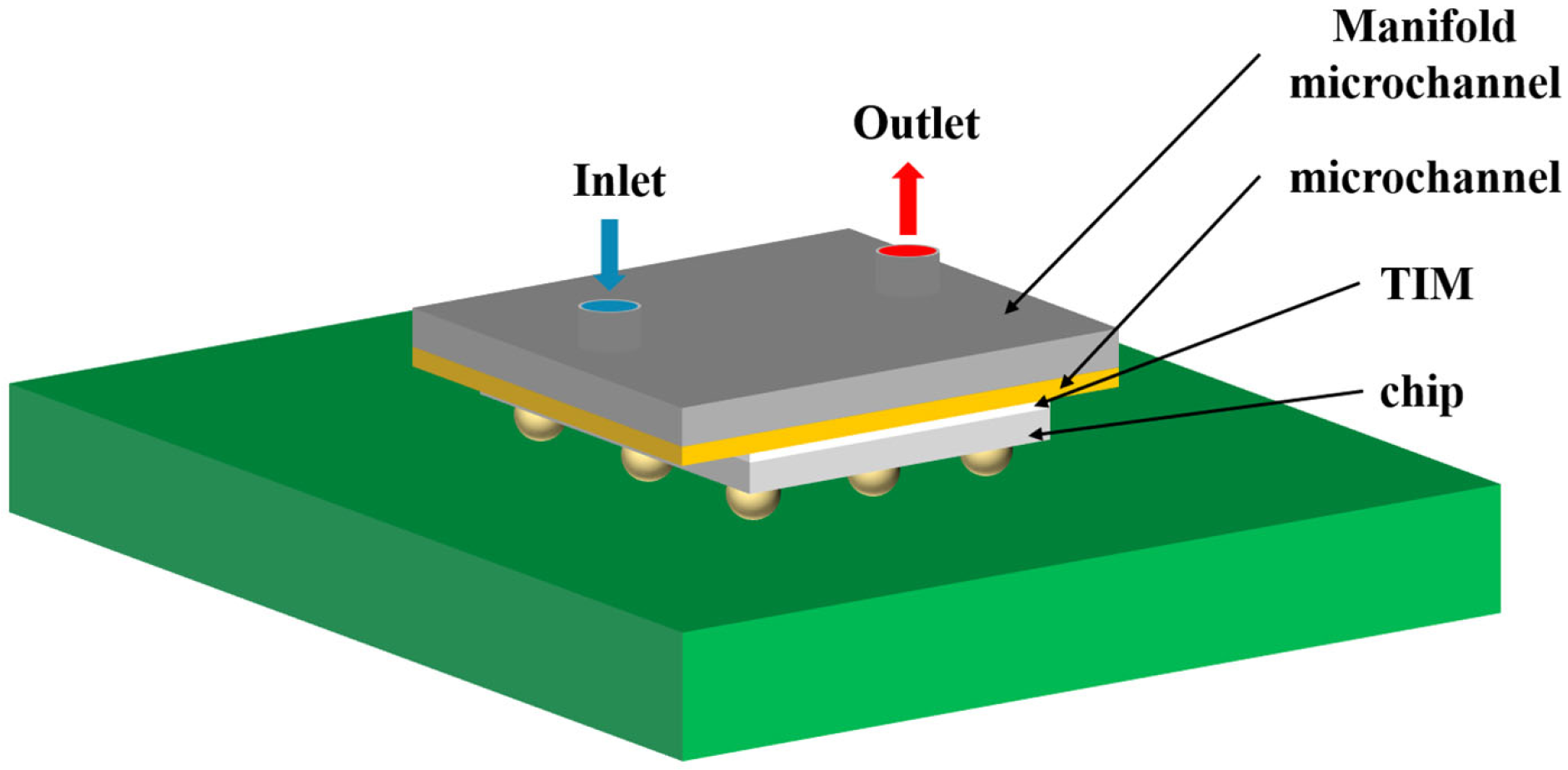
Figure 1 illustrates the overall package architecture. The MMC heat sink is bonded to the top surface of the chip using a thermal interface material to minimize thermal resistance and maximize cooling efficiency. Meanwhile, the chip underside is mechanically connected to the substrate through a solder ball array, thereby completing the package assembly. In contrast to traditional cooling approaches that mount a heat sink onto the package lid, the proposed model significantly shortens the heat transfer path from the chip to the coolant, thereby reducing the overall thermal resistance and interfacial contact resistance. During operation, the top-mounted manifold microchannel heat sink is dedicated to cooling, whereas the main chip body is responsible for communication and signal processing. This thermo-electrical functional separation design physically isolates the fluidic cooling channels from the electrical interconnects. This isolation prevents potential short circuits and signal integrity issues caused by coolant leakage, while also simplifying the manufacturing process and reducing the cost of the thermal management system.
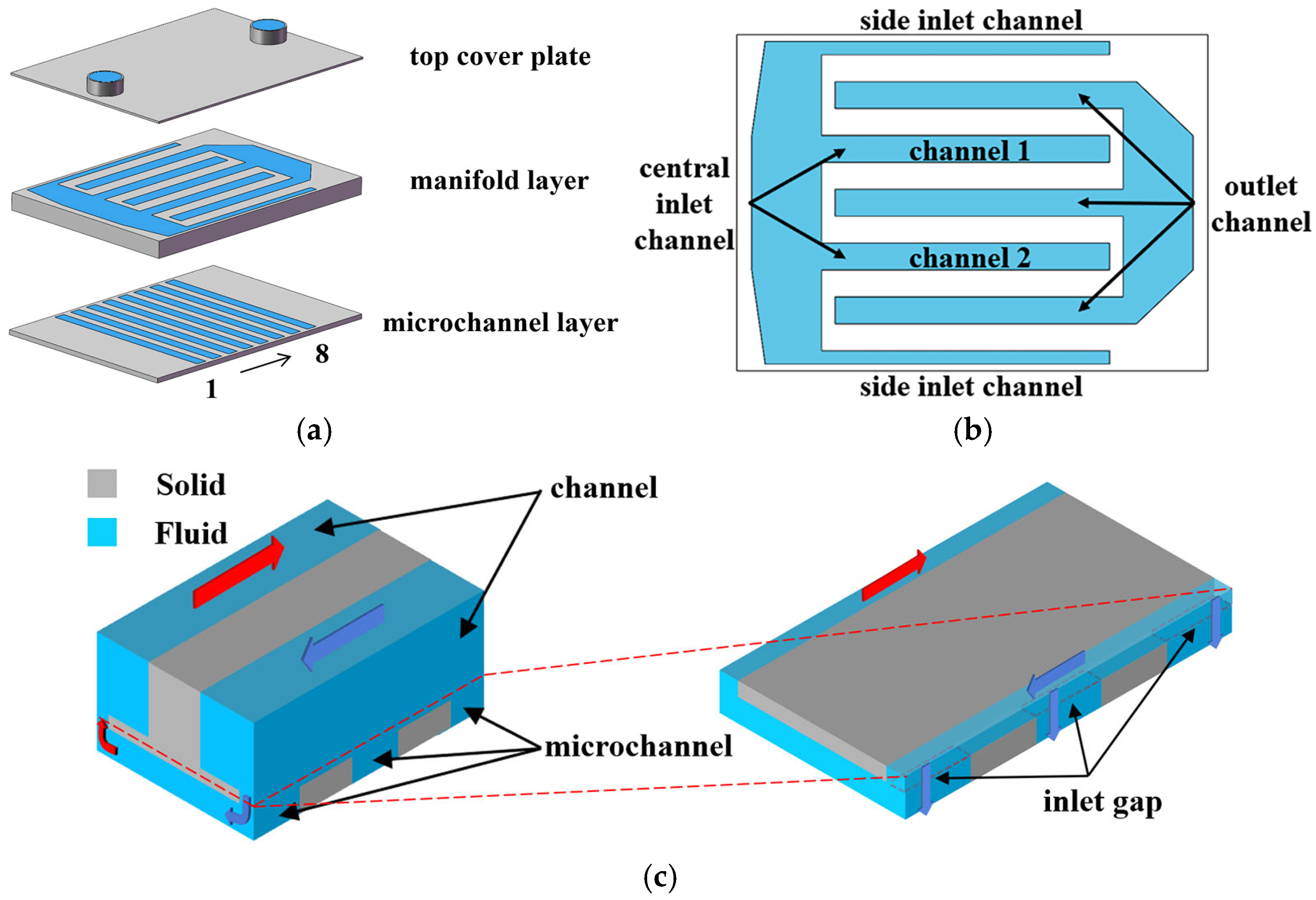
Figure 2 illustrates the internal structure and coolant flow path of the proposed manifold microchannel heat sink. The assembly consists of three primary layers: a top cover plate, a manifold layer, and a microchannel layer. Coolant enters vertically through the inlet port on the top cover and flows into the distribution manifold. Driven by the applied pressure, the coolant is distributed through the manifold structure into individual inlet channels. The coolant then flows through the inlet channels and enters the microchannel layer via the inlet gaps located between the manifold and microchannel layers. Within the microchannels, the coolant absorbs heat from the high-temperature chip surface via forced convection, thereby dissipating the generated thermal load. Following heat absorption, the heated coolant converges into the outlet channels through corresponding outlet gaps at the opposite end and is finally exhausted through the outlet port, completing the cooling cycle.
The overall dimensions of the device are as follows. The top cover plate contains circular inlet and outlet ports with a radius of 4 mm. The manifold layer measures 40 × 25 × 2.5 mm3, with its central inlet channel and outlet channel being 2 mm wide and the side inlet channels being 1 mm wide. The microchannel layer measures 40 × 25 × 1 mm3 and incorporates eight parallel microchannels, each 1 mm in width. The chip’s core functional area measures 20 × 25 × 0.7 mm3.
Three-dimensional numerical simulations were performed using the Conjugate Heat Transfer module in COMSOL Multiphysics 6.2. Throughout the simulations, the maximum Reynolds number of 1905, which occurred at the inlet region, confirmed a laminar flow regime. Owing to the limited contact area and consequent high thermal resistance between the chip and the bottom ball grid array, the heat dissipated through the substrate is negligible compared to the heat removed by the top heat sink via the thermal interface material. To reduce model complexity and computational cost, the packaging structure was simplified by omitting the BGA and substrate. This simplification neglects heat transfer to the bottom, thereby focusing the computational domain on the top heat sink and fluid regions to improve solution efficiency. Silicon was selected as the material for the manifold microchannel heat sink, and deionized water was chosen as the coolant. The inlet coolant temperature was set to 298 K, and the mass flow rate was 1.2 × 10⁻² kg/s. The outlet was set as a pressure outlet boundary condition with a gauge pressure of 0. A uniform heat flux of 1.5 × 10⁶ W/m2 was applied to the bottom surface of the chip. All other external surfaces were defined as adiabatic boundaries, as heat transfer to the ambient environment was neglected.
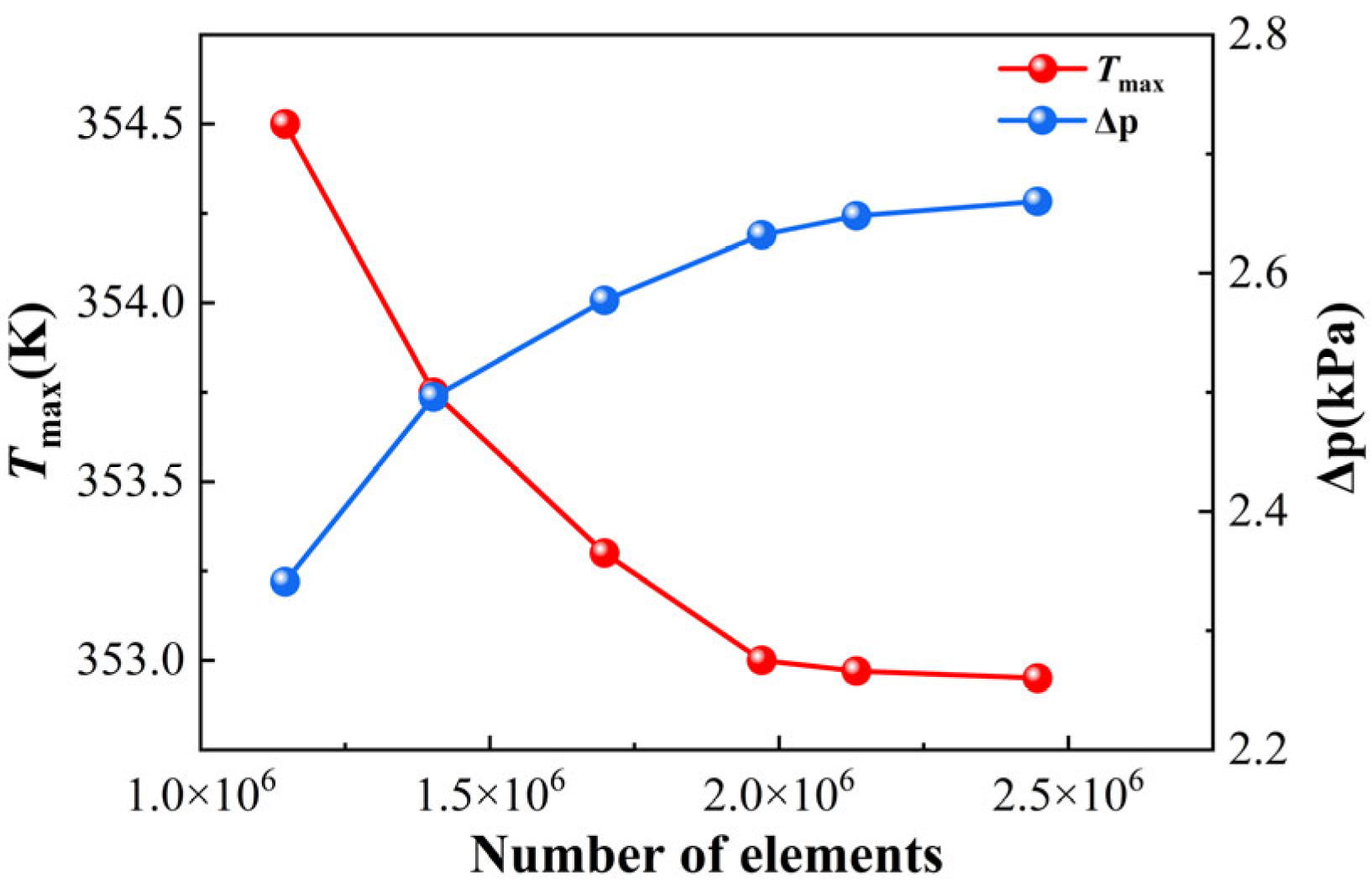
To accurately capture flow and heat transfer characteristics, this study employed finite volume meshing to discretize the three-dimensional model. Local mesh refinement was applied to critical regions, including the microchannels, inlet/outlet gaps, and near-wall regions, to ensure solution accuracy. A mesh independence study was conducted to determine the optimal number of mesh elements; the results are presented in
Figure 3. The total number of mesh elements was incrementally increased from 1.15 million to 2.45 million. When the number of elements reached 1.97 million, the simulated peak temperature stabilized at 353 K, and the pressure differential between the inlet and outlet stabilized at 2.63 kPa. A further increase in mesh density resulted in a change of less than 1% in both peak temperature and pressure differential, indicating that a mesh size of 1.97 million elements provides sufficient computational accuracy and that the solution is mesh-independent. Considering computational efficiency, the mesh with approximately 1.97 million cells was selected for all subsequent simulations.
3. Results and Discussion
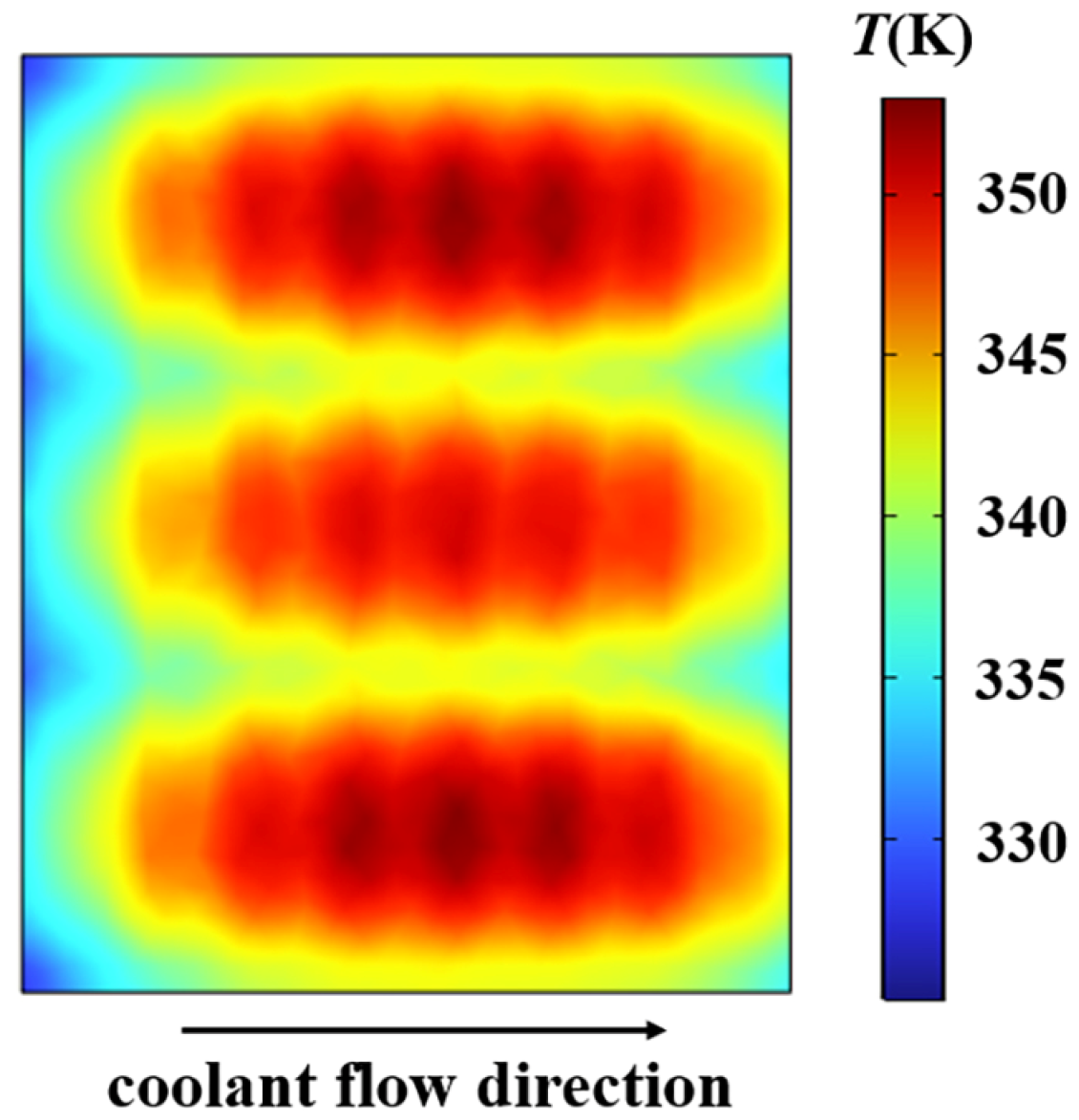
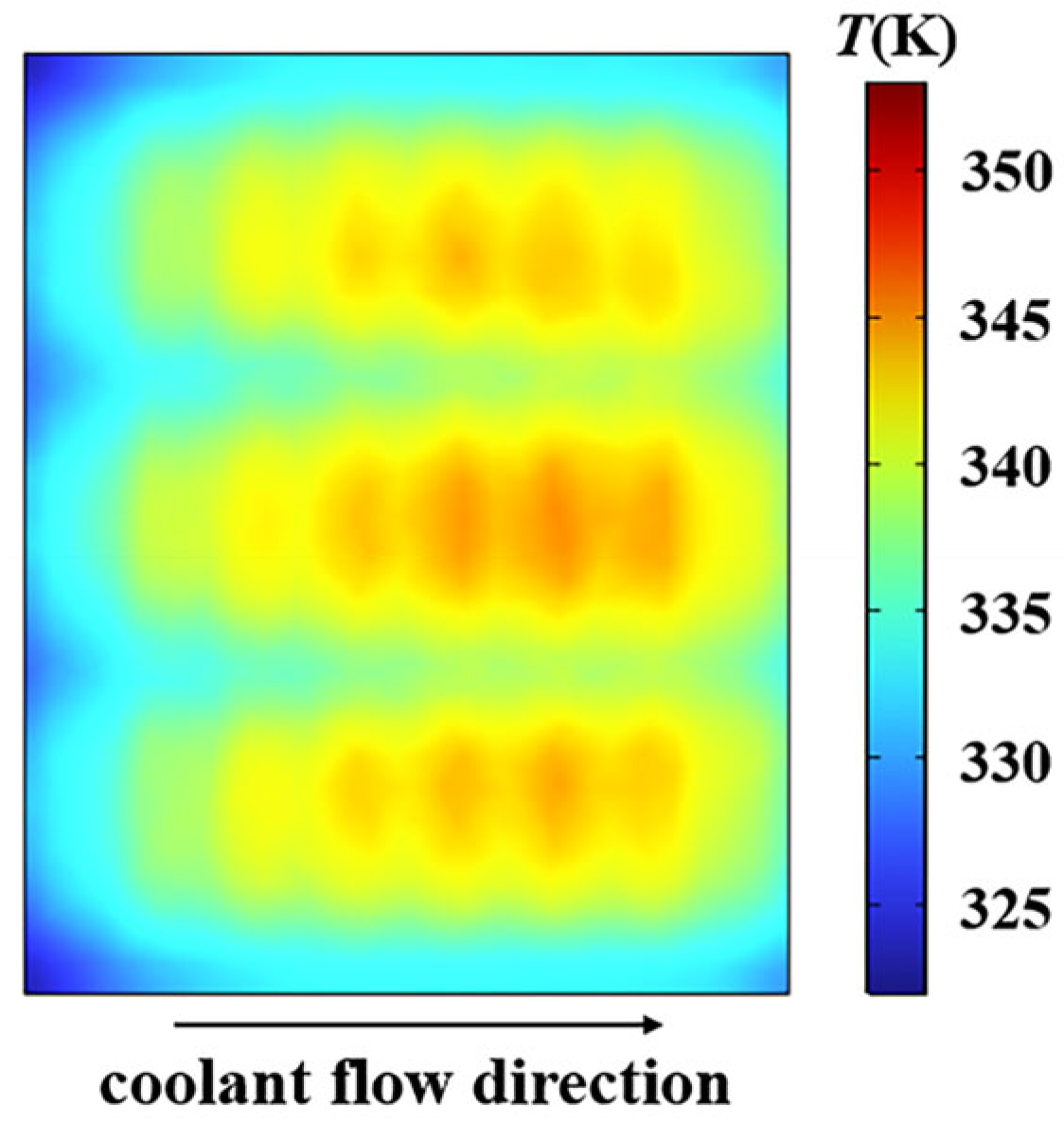
Figure 4 illustrates the temperature distribution across the chip bottom surface without optimization. The results indicate that the conventional design exhibits inadequate heat dissipation performance, leading to a highly non-uniform temperature distribution. This non-uniformity manifests in three aspects: First, three distinct high-temperature zones exist on the chip bottom, with these zones closely aligned with the positions of the three outlet channels. Second, compared to the central region, the overall temperatures in the two lateral high-temperature zones are higher, with the maximum temperatures distributed along the chip’s sides. Finally, each high-temperature zone contains a central core hotspot, exhibiting a temperature gradient distribution that peaks at the center and decreases toward the sides. The non-uniformity of the chip’s temperature field is primarily attributed to the flow distribution imbalance within the manifold microchannel cooling system. The manifold structure design fails to effectively coordinate the differences in internal flow resistance distribution within the heat sink, leading to uneven flow distribution and ultimately forming these high-temperature zones.
To mitigate the heat dissipation limitations and temperature non-uniformity inherent in conventional manifold microchannels, this section presents structural optimization strategies.
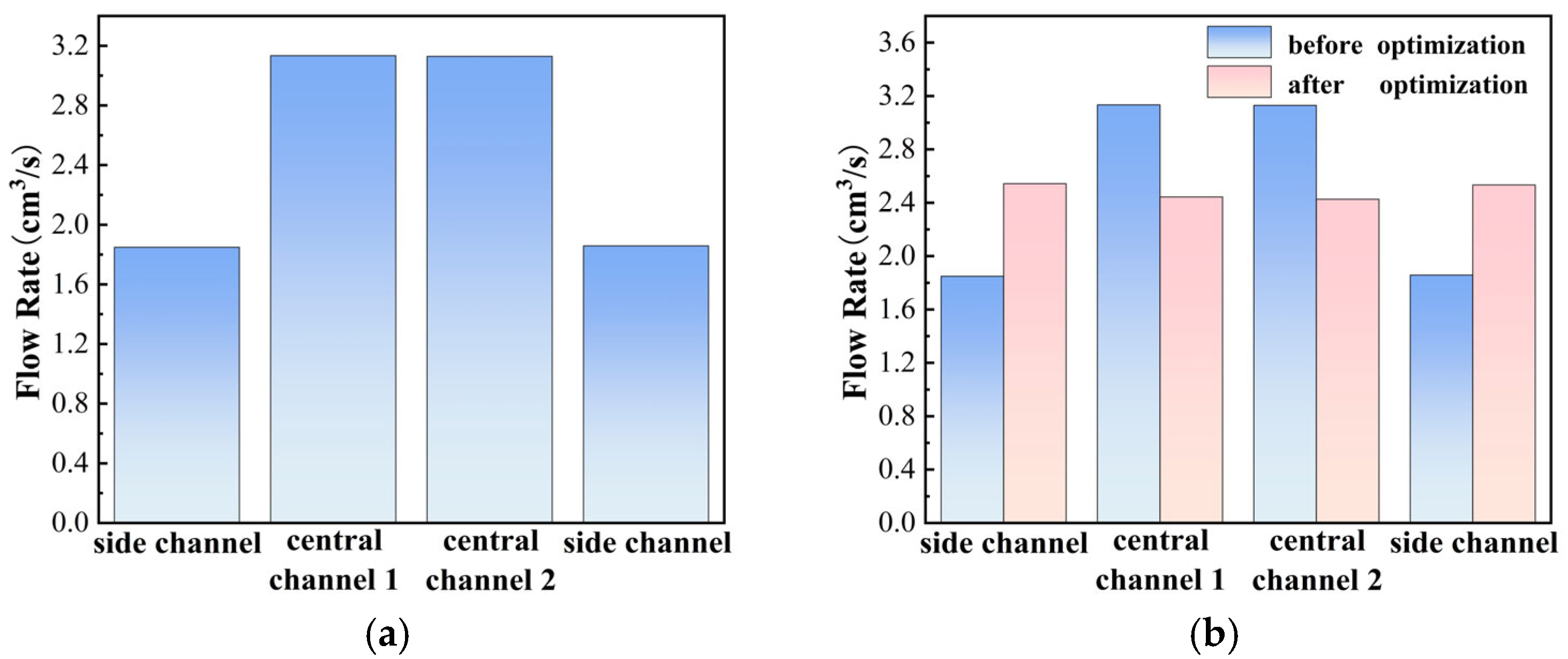
Figure 5a illustrates the flow rates entering each inlet channel. As shown, the central channel carries a significantly higher flow rate than the side channels. This flow maldistribution leads to insufficient cooling in the lateral regions, resulting in elevated temperatures compared to the central area. The underlying mechanism for this maldistribution is a pressure imbalance between the inlet channels. Compared to the side channels, the central channel experiences lower pressure. This pressure gradient drives the coolant to preferentially flow through the central channel. The optimization strategy involved widening the side inlet channels and increasing the inlet gap width. This reduces the local flow resistance in these regions, thereby promoting a more uniform fluid distribution across all branch channels.
Figure 5b compares the flow rate distribution in the inlet channels before and after optimization, demonstrating a significant improvement. To quantitatively evaluate the optimization effectiveness, two metrics were introduced: flow unevenness
φ and flow variance
σ2, as specifically defined in Equations (1) and (2), where
Qi represents the flow rate in the inlet channel
i, and
Qavg denotes the average flow rate across all inlet channels. These metrics collectively characterize the uniformity of the flow distribution. After optimization, the flow unevenness was reduced from 25.81% to 2.41%, and the flow variance decreased dramatically from 0.40824 to 0.002679. These results demonstrate that the optimized structure effectively eliminates flow maldistribution, reducing flow deviation to a negligible level and achieving highly consistent flow rates across all channels.
Non-uniform flow distribution among microchannels within the same flow path is a primary cause of the central core hotspots observed in each high-temperature zone. As shown in
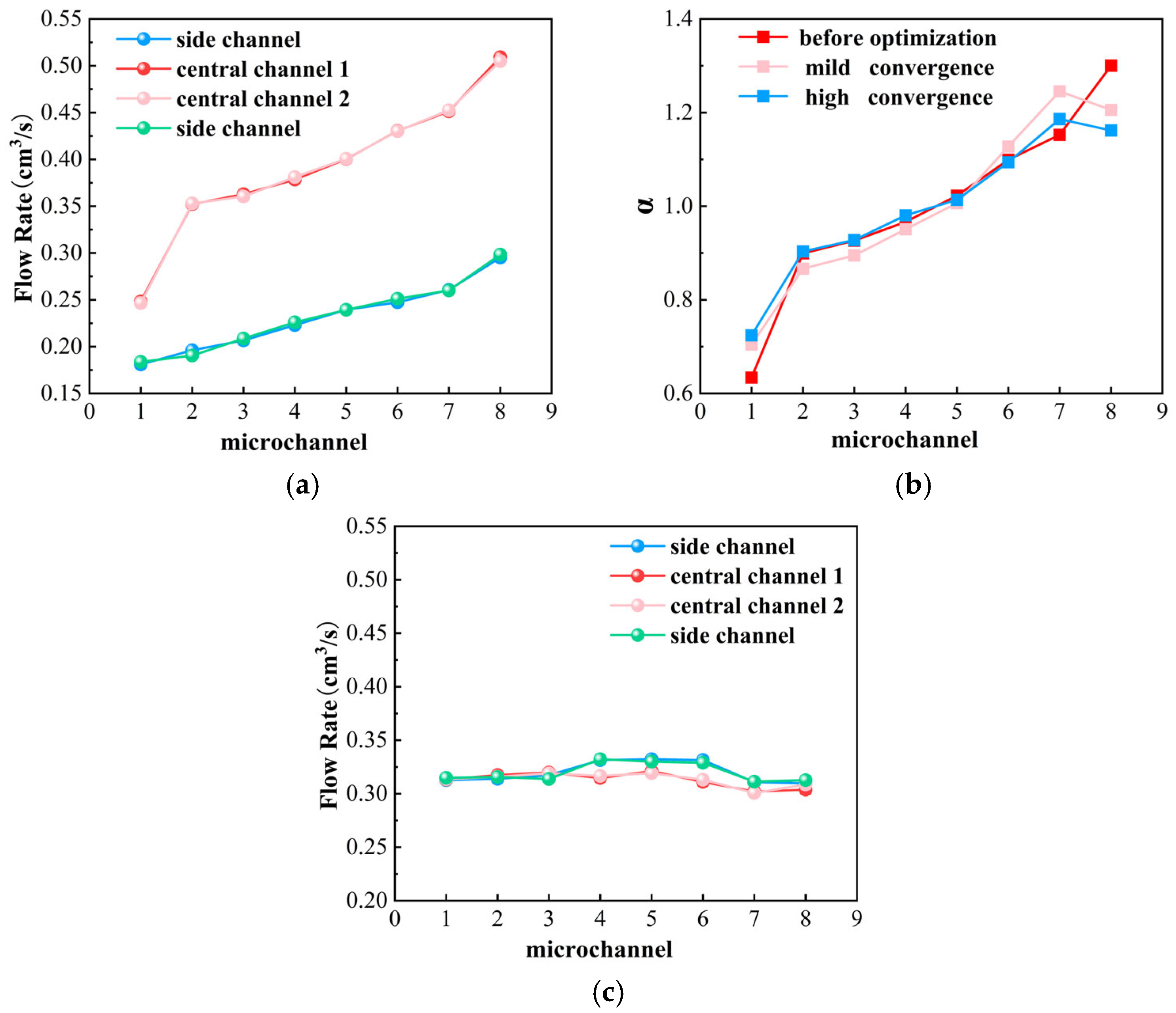
Figure 6a, significant flow disparities exist between the front and rear microchannels, regardless of whether they are located in the central or lateral flow paths. The closer to the channel end, the greater the microchannel flow rate. Although the flow rate is lower at the channel inlet, the cooling capacity of the fluid is higher due to its lower initial temperature. Consequently, within each high-temperature zone, a radial temperature gradient forms, decreasing from the central hotspot outward. The flow distribution within the microchannels is governed by the static pressure difference between the inlet and outlet of each microchannel. A higher pressure difference across a microchannel results in a greater flow rate through it, leading to the observed flow maldistribution. Studies show that the inlet pressures are relatively uniform across microchannels, while the outlet pressures vary significantly. Microchannels nearer to the main outlet experience lower outlet pressures because of their proximity, resulting in higher local flow rates. Furthermore, flow obstruction near the end wall forces fluid into adjacent microchannels, further exacerbating the flow maldistribution.
To mitigate this flow maldistribution, a converging channel design was implemented as the primary optimization strategy. In this design, the cross-sectional area of the inlet flow channel gradually converges along the flow direction, reaching a minimum near the channel end. This design redistributes the flow, shifting a portion of the coolant from the downstream region toward the midstream and upstream regions. To quantitatively analyze the effect of the converging channel on flow distribution, a dimensionless parameter, α, was defined to quantify the flow deviation in each microchannel. This is defined as the ratio of the flow rate in a single microchannel to the overall average flow rate across all microchannels. Because the flow maldistribution was most severe in the central inlet channel, a focused analysis was conducted on this channel (channel 1). The results are shown in
Figure 6b.
The results indicate that, without optimization, significant flow deviation occurs in the microchannels at both ends of the flow path. The α value exhibits a continuously increasing trend from the upstream to the downstream end, with a maximum value (αmax) of 1.301 and a minimum value (αmin) of 0.634. After implementing a mildly converging design, the flow distribution improved: αmin increased to 0.704, and αmax decreased to 1.245. As the degree of channel convergence was increased, the improvement in flow uniformity became more pronounced. Compared to the mild case, extreme flow deviations at the channel ends were more effectively suppressed. Simultaneously, the α values for most microchannels approached 1, indicating enhanced overall flow uniformity. However, this approach only partially alleviated the flow maldistribution within the microchannels. Following structural optimization, the microchannel location corresponding to αmax shifted forward from the terminal end, failing to resolve the issue fundamentally. Additionally, the converging channel design increases the overall system pressure drop, thereby increasing the pumping power requirement and associated operational costs.
Therefore, an alternative solution was proposed: utilizing a non-uniform inlet gap design to regulate the flow rate into each microchannel. This approach specifically optimizes the design of the inlet gaps located between the manifold and microchannel layers. This was achieved by increasing the inlet gap width at the upstream end while maintaining a constant width at the downstream end, resulting in a converging gap geometry that is wider upstream and narrower downstream. The underlying mechanism of this design fundamentally differs from that of the converging channel approach. The converging channel method enforces flow distribution by increasing overall resistance, whereas the non-uniform inlet gap design achieves precise local flow resistance control by varying the inlet area of each microchannel. The larger gap area upstream reduces the local flow resistance, promoting increased coolant flow into the upstream microchannels. Crucially, maintaining the downstream gap area unchanged helps to keep the overall system pressure drop close to its original level, thereby avoiding the additional pumping costs associated with the converging channel design. The simulation results, presented in
Figure 6c, confirm that this optimization strategy achieves highly uniform flow distribution across all microchannels.
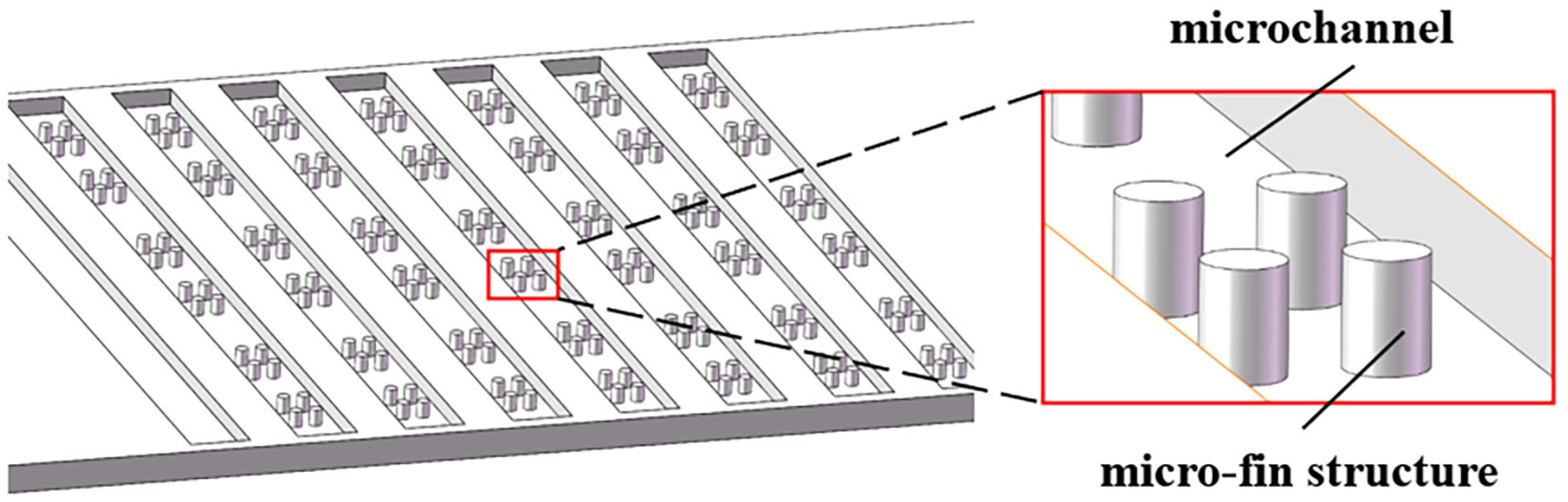
The heat absorption capacity of the coolant diminishes along the flow path due to its temperature rise, impairing its ability to remove heat effectively in the downstream section of the microchannels. This leads to heat accumulation near the outlet flow channel, ultimately forming localized high-temperature zones. Therefore, enhancing the heat dissipation capability of the fluid in the latter half is crucial for optimizing the temperature distribution field. Installing micro-fin structures in the microchannel outlet region is an effective strategy to augment local heat transfer performance. Micro-finned structures enhance fluid turbulence, disrupt the formation and development of thermal boundary layers, and promote heat exchange through mixing between the cooler fluid in the core region and the hotter fluid near the wall. Simultaneously, they increase the effective heat transfer surface area in this region. The specific design configuration of the micro-fin structure is illustrated in
Figure 7.
Figure 8 presents the temperature distribution on the chip bottom surface achieved with the final optimized design. The results confirm a 7.7 K reduction in peak temperature. The temperature variance
s2 of the chip decreased from 24.6 to 16.7, indicating a notable improvement in temperature uniformity. The temperature variance is defined by Equation (3), where
Ti represents the temperature at each point on the chip and
Tavg denotes the average chip temperature. This study employs the Nusselt number (
Nu) to quantitatively assess and compare the convective heat transfer performance before and after structural optimization, as defined by Equation (4), where
h represents the convective heat transfer coefficient,
D denotes the characteristic size, and
k corresponds to the thermal conductivity of the fluid. The determination of
h is established through Equation (5), where
qsur denotes the average heat flux density within the channel, and
Tsur represents the average surface temperature, while
Tref indicates the bulk mean temperature of the fluid. Following optimization, the
Nu increased from 18.1 to 25.2, indicating enhanced convective heat transfer and improved overall thermal dissipation performance of the structure.
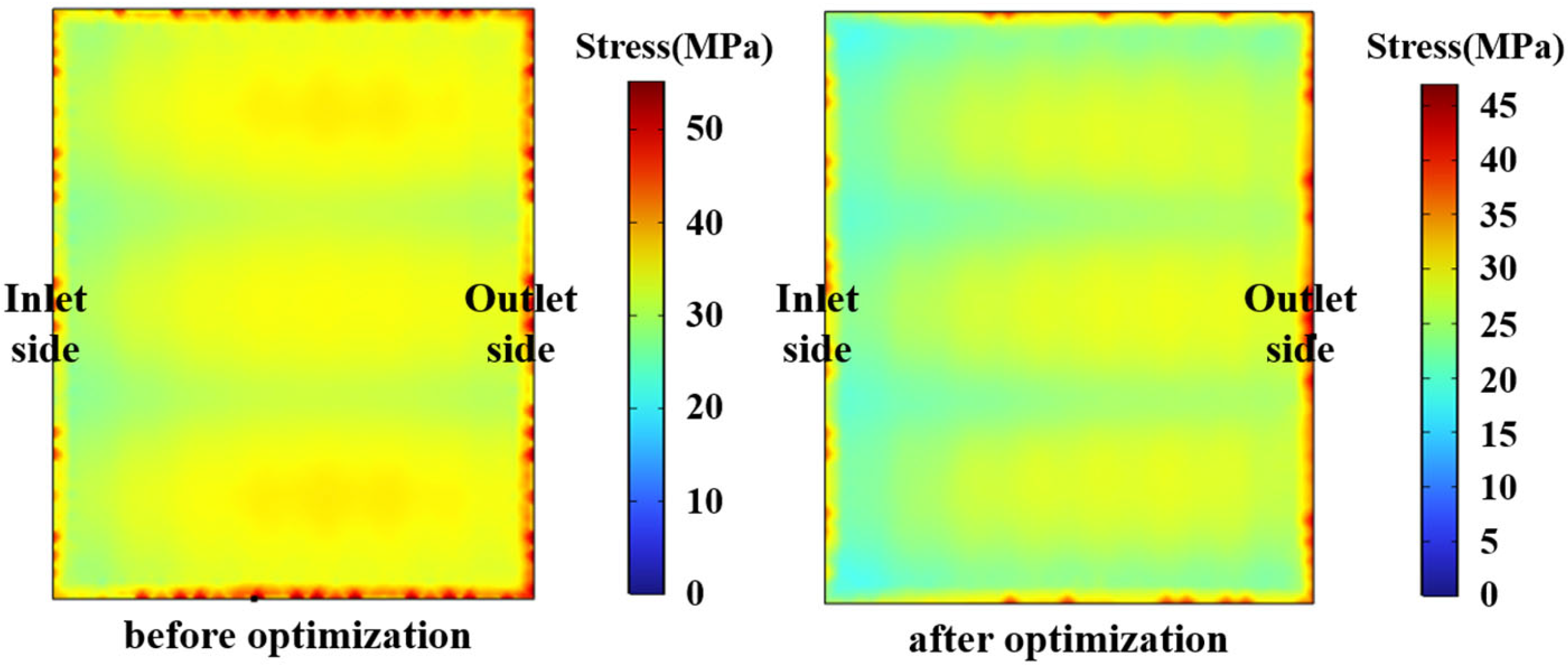
Thermal stress arises in an object when its inherent thermal expansion or contraction is constrained by internal or external boundaries during temperature changes. Excessive thermal stress can induce warpage, delamination, cracking, or interconnect failure, severely compromising the mechanical reliability and service life of the chip. In this study, a thermal stress analysis was conducted on both the baseline and optimized models using the thermal–fluid–mechanical coupled module, with a fixed constraint applied to the bottom surface of the chip as the boundary condition.
Figure 9 compares the thermal stress distribution on the chip surface before and after optimization. In the unoptimized structure, uneven flow distribution causes most coolant to enter the central inlet channel, resulting in inadequate cooling of the chip’s side regions and significant temperature gradients. Consequently, the maximum thermal stress is localized at the chip’s edges, creating high-risk zones prone to mechanical failure. After optimization, the improved flow uniformity yields a more uniform temperature distribution across the entire chip and reduced thermal gradients. The thermal stress values in both the peripheral and central regions are significantly reduced. The maximum thermal stress is reduced from 55.29 MPa to 47 MPa. Furthermore, the location of the peak stress shifts away from the critical edge regions.
Table 1 summarizes the key performance parameters corresponding to each optimization iteration, including the
Tmax, pressure drop,
Nu, and thermal stress.