Article

Social Control vs. Energy Management and Civilization Normotype from the Perspective of Sociocybernetics


by
Joanna Marta Wyleżałek
Institute of Sociological Sciences and Pedagogy, Warsaw University of Life Sciences, 02-787 Warsaw, Poland
Energies 2025, 18(21), 5786; https://doi.org/10.3390/en18215786
Submission received: 12 July 2025 / Revised: 13 August 2025 / Accepted: 28 October 2025 / Published: 2 November 2025

Abstract

The purpose of the article is to present the processes of social control in relation to energy management, including the energy transition, and the processes of forming the normotype of civilization as an important activity that is part of social control. The basis of consideration is sociocybernetics as knowledge that allows a unified methodological approach to the study of many areas of the functioning of society. The present article assumes that the processes of controlling energy access and distribution are linked to the formation of cognitive norms, which is an essential aspect of social control, facilitating changes in the structure and functions of the globalizing society. To clarify assumptions about the systemic nature of society and control processes, the article presents the foundation of the cybernetic theory, in which democratic society is treated as an independent organized system, and various types of deformation of the democratic system which close the system, as externally controlled systems, dependent on the organizer. The actions of an organizer who is economically strong and systemically independent enough to shape the social structure according to the adopted model of action are crucial for considering the shape of the global society. The economic interests and power of influence of the beneficiaries of the global system are part of the variants of the global structure identified by Roland Robertson that refer to the affirmation of common goals or the instrumental treatment of the social structure for the realization of individual goals. The public mood resulting from the processes described is illustrated by the results of five surveys conducted by the Institut Public de Sondage d’Opinion Secteur (IPSOS) in dozens of countries around the world. The conclusions drawn from the considerations treated of can contribute to a broad discussion about the direction of social processes in a globalizing society.

1. Introduction

Considerations of energy management cannot, in the opinion of the author of the present text, be treated exhaustively without being placed in a broad systemic analysis. Energy sources and their control are the basis of society’s existence in the material–energy dimension and thus, along with information, are the basis of social existence and development, which is of great importance in the processes of social control. The systemic treatment of society as a controllable system developed in the 20th century. The foundation for cybernetics as a science of control was laid by Norbert Wiener’s classic 1949 work Cybernetics: Or Control and Communication in the Animal and the Machine [1]. Both in his first book and in his later ones, the author, referring to the work of Ludwig Boltzmann and Josiah Willard Gibbs [2], points to a breakthrough in the field of physics as a result of which physics ceased to claim the right to determine what will happen for sure and started to deal with what will happen with the highest probability. Thus, there was a recognition of incomplete determinism, which provided the basis for the development of cybernetics as a control science. The late 1950s saw the appearance of works on the application of cybernetics to management by Stafford Beer [3], and the 1970s saw the analysis of communication and learning systems from the perspective of Gregory Bateson’s second-order cybernetics [4]. The achievements of cybernetics were also reflected in sociology, where Niklas Luhmann’s theory based on the cybernetic model of communication emerged [5], as well as the works of Humberto Maturana and Francisco Varela [6], which had a major influence on Luhmann, who took an autopoietic approach to biological systems and their self-regulation.
In Poland, cybernetic analyses were developed by Marian Mazur [7] in relation to man as a self-controlled system and by Jozef Kossecki [8], who dealt with sociocybernetics based on the deductive model developed by Marian Mazur. The precursors of Polish cybernetics assumed that man and the social system function according to similar principles. It can be assumed that this approach is close to the classical sociological theory of Herbert Spencer [9], who developed the organicist theory in a systematic way, comparing the development of society to that of an organism.
In the world in the 20th century, parallel system theories developed, which did not explicitly use the term “cybernetics” but referred to the controllability of a social system. An excellent example of such considerations is Ludwig von Bertalanffy’s [10] publication treating of the general theory of systems, as is the attempt to account for human action in systems with an indication of the limitations of team action developed by Michel Crozier and Erhard Friedberg [11]. Contemporary applications of sociocybernetics involve many fields, including management, artificial intelligence, politics and social analysis.
In the scope of the undertaken analysis, the focus is on the control of society by analyzing and modeling the mechanisms of control, adaptation and social reactions to political decisions affecting the energy and information tracks in social systems. Specifically, the present article pays attention to whether social processes, initiated by political decisions, take place in accordance with the interests of the general society, which is a set of many separate independent systems, or against these interests, such that they constitute actions aimed at systemic dependence on an organizer acting in its own interest [12].
The present article consists of this introduction, a discussion of the materials and methods used, and sections of a theoretical and empirical nature, which are based on cybernetic considerations, available data, expert work and surveys of public opinion on significant social changes related to global politics and the polycrisis occurring today. Social control issues related to sociocybernetics are presented on the basis of the achievements of the Polish school of sociocybernetics. Types of controllable systems are related to variants of global society, pointing out the dangers of the trends analyzed, about which Michel Crozier, among others, wrote: “Every domination is based on a similar strategy that seeks to leave as much freedom and room for maneuver as possible to the dominant, while severely limiting the decision-making freedom of the one who is subject to domination” [13]. These words also apply to the process of globalization, which is “the inevitable fate of the world and an irreversible process,” as Zygmunt Baumann wrote [14], and that is why considerations of global politics become considerations of the future of society, whose models presented later in this article are outlined by Roland Robertson [15]. Cybernetic analysis of these models sheds new light on global policies.

2. Materials and Methods

The present article is based on the studies of the founders of the Polish school of cybernetics, Marian Mazur and Józef Kossecki, because understanding the processes of social control, in which the processes of energy management are crucial, requires an explanation of the basic issues of sociocybernetics.
On the basis of the available literature and research, the basic issues related to the processes of energy management, including energy transition, in both technological and political aspects, are pointed out. Critical voices on the dynamics of change are also presented, which, when referred to cybernetic logic, make it possible to assume political unification tendencies. Cybernetic social models refer to the considerations of the classic theory of globalization by Roland Robertson in order to indicate the currently dominant control processes with systemic threats. Social control processes creating social crises (polycrises) generate certain social attitudes, which are presented on the basis of the following IPSOS studies: “A NEW WORLD DISORDER?”, conducted in 2022 among 24,000 citizens from 36 countries; “WHAT WORRIES THE WORLD”, conducted in 2025 in 29 countries among 25,746 respondents; “WORLD AFFAIRS”, conducted in 2024 among 22,989 respondents in 30 countries; “IPSOS GLOBAL TRUSTWORTHINESS INDEX 2024”, conducted among 23,530 respondents from 32 countries; and “PREDICTIONS 2025 REPORT”, conducted in 33 countries among 23,721 respondents. A detailed description of the methodology of the conducted surveys and their results can be found on the IPSOS website (https://www.ipsos.com/en/global-opinion-polls) (10 July 2025).

3. Theoretical Basis of the Undertaken Analysis

Energy and Information Processes as Well as System Independence from a Cybernetic Perspective

The aim of the present article is to demonstrate that energy processes are key to maintaining systemic independence and that the political activities taking place around the energy transition are an important part of the game shaping the future global society. With the help of cybernetic instruments, many processes can be explained, including the energy transition process, the participants of which are huge masses of people often unaware of the activities taking place within “big politics”.
The advantages of sociocybernetics lie in its capacity for the mathematical analysis of networks of interrelationships between diverse elements of social systems, as expressed by the originators of the theory through algorithms and mathematical formulas. Each element of a system can be defined and social processes can be simulated to predict the most probable outcomes. The methods of data collection in cybernetic analyses vary depending on the issue under consideration; these may include demographic processes measured by birth rates; informational processes analyzed from the perspective of reliable information and disinformation; and energy processes, the analysis of which requires determining the dynamics of access to energy sources and the capacity for their storage. The composition of a sample and the analysis of data are conditioned by the size of the system under study, and the scale of the social system under analysis may be local, national or global.
It cannot be ruled out that cybernetic knowledge finds practical application in policymaking at various levels of the social structure. As early as the 1960s, Soviet scholars advocated the development of specific methods for studying systems, which was regarded as a dominant trend in the advancement of scientific knowledge [16]. However, when cybernetics—expressing control processes through mathematical formulas—emerged, it was sharply criticized for its anti-humanistic nature by representatives of the social sciences and humanities: “the new world of cybernetics is not interested in people, but in systems, and a person can be replaced or eliminated” [17]. The criticism of the cybernetic approach to social systems limited the presence of such considerations within the social sciences, which nevertheless does not preclude the use of mathematical algorithms for social control in the political sphere. Given that the basis of all social action, including the use of the possibilities offered by cybernetics, is always the intention of the actors involved—who may act on the basis of “pathological control” or strive for the development of the system through the optimization of system parameters—an unqualified rejection of cybernetics is unjustified.
This article outlines general assumptions about the nature of social systems and the principles of global policy considered in relation to cybernetic logic and juxtaposed with sociological analyses and theories. These, too, are not free from criticism of systemic distortions, which point to a high probability that, within the globalizing social system, processes of “pathological control” prevail over processes aimed at optimizing system parameters.
As Zygmunt Baumann points out, “world finance, commerce and the information industry, because of their freedom of movement and unfettered freedom to pursue their own goals, depend on political fragmentation (…) Weak states are exactly what the New World Order, which suspiciously often looks like its disorder, needs to ensure its continuance and reproduction” [14]. The deformations of democracy associated with the powerful position of transnational economic entities have been expressed in the reflections of many researchers and theorists, including Nadia Urbinati [18] and Manuel Castells [19]. Similarly, the 2001 Nobel Prize winner in economics, Joseph Stiglitz, draws attention to the devastating impact of globalization processes that are taking place on developing countries, especially the poorest ones among them, and the need to change policies towards these countries. At the same time, he expresses his conviction that globalization can be a force for good and that it can potentially improve the situation of all people in the world [20]. From the perspective of cybernetics as a science of control, it should be assumed that the weakening of nation states is not an inherent process but a consequence of exerting an influence on specific phenomena. Achieving the desired influence on a specific phenomenon is possible, provided that the purpose and motivation are defined in advance, that is, that it is indicated on whose behalf and in whose interest each process of control is initiated. To understand the importance of cybernetics in the process of analyzing energy management and social mechanisms accompanying the process of globalization, it is necessary to familiarize oneself with the basic assumptions about the functioning of organized systems that can persist and develop due to having access to sources of energy and information, as well as energy and information tracks.
Structured systems
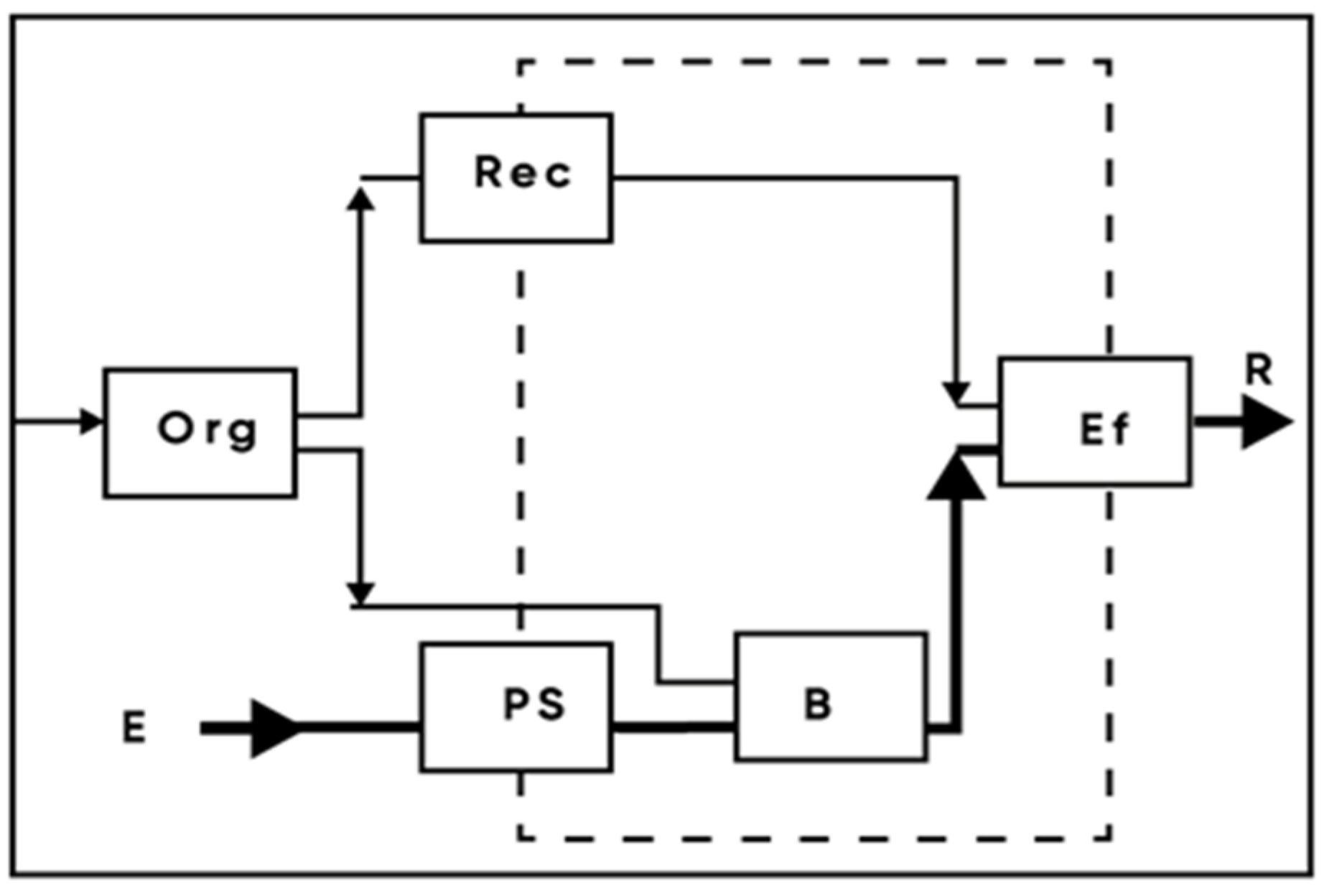
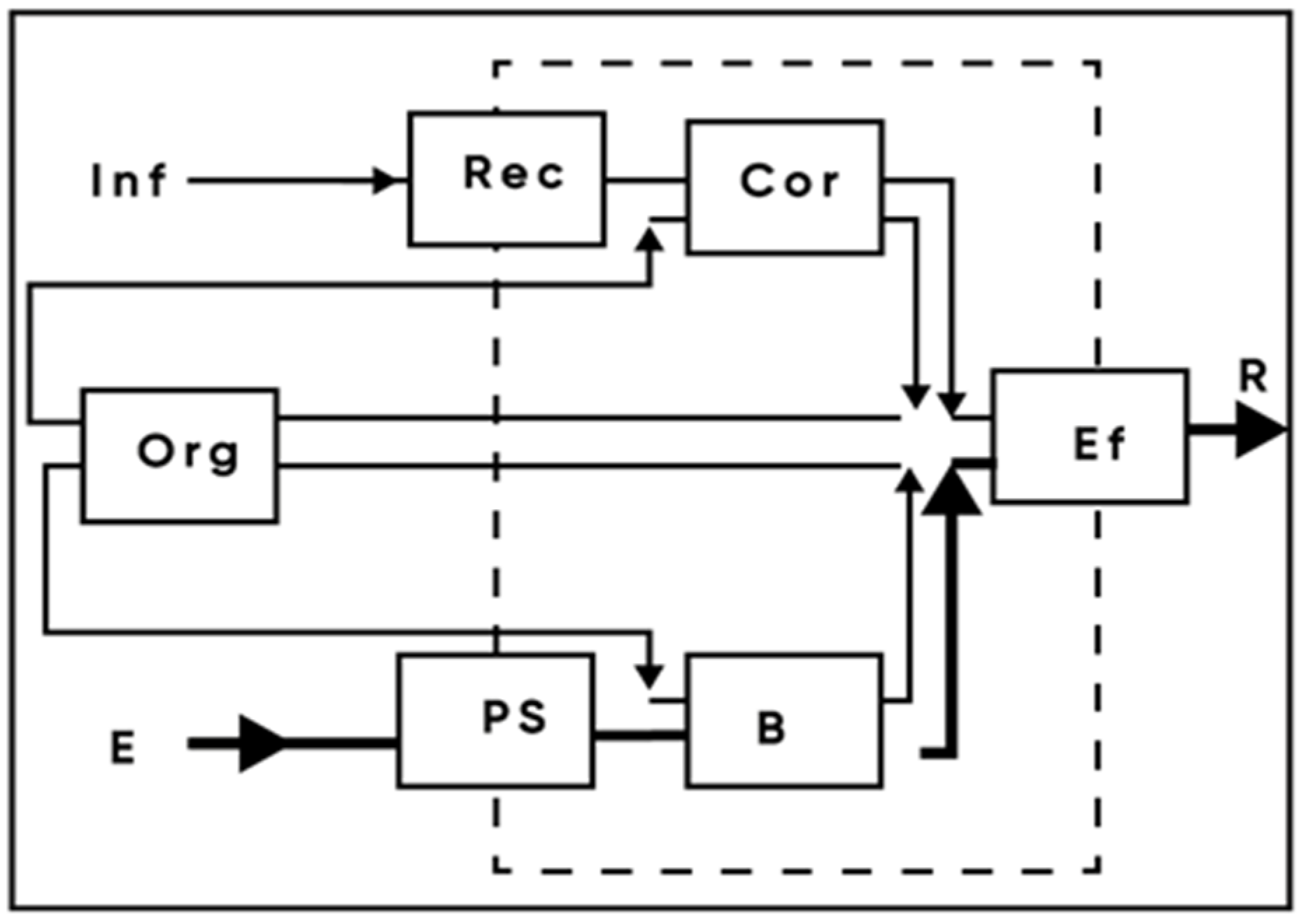
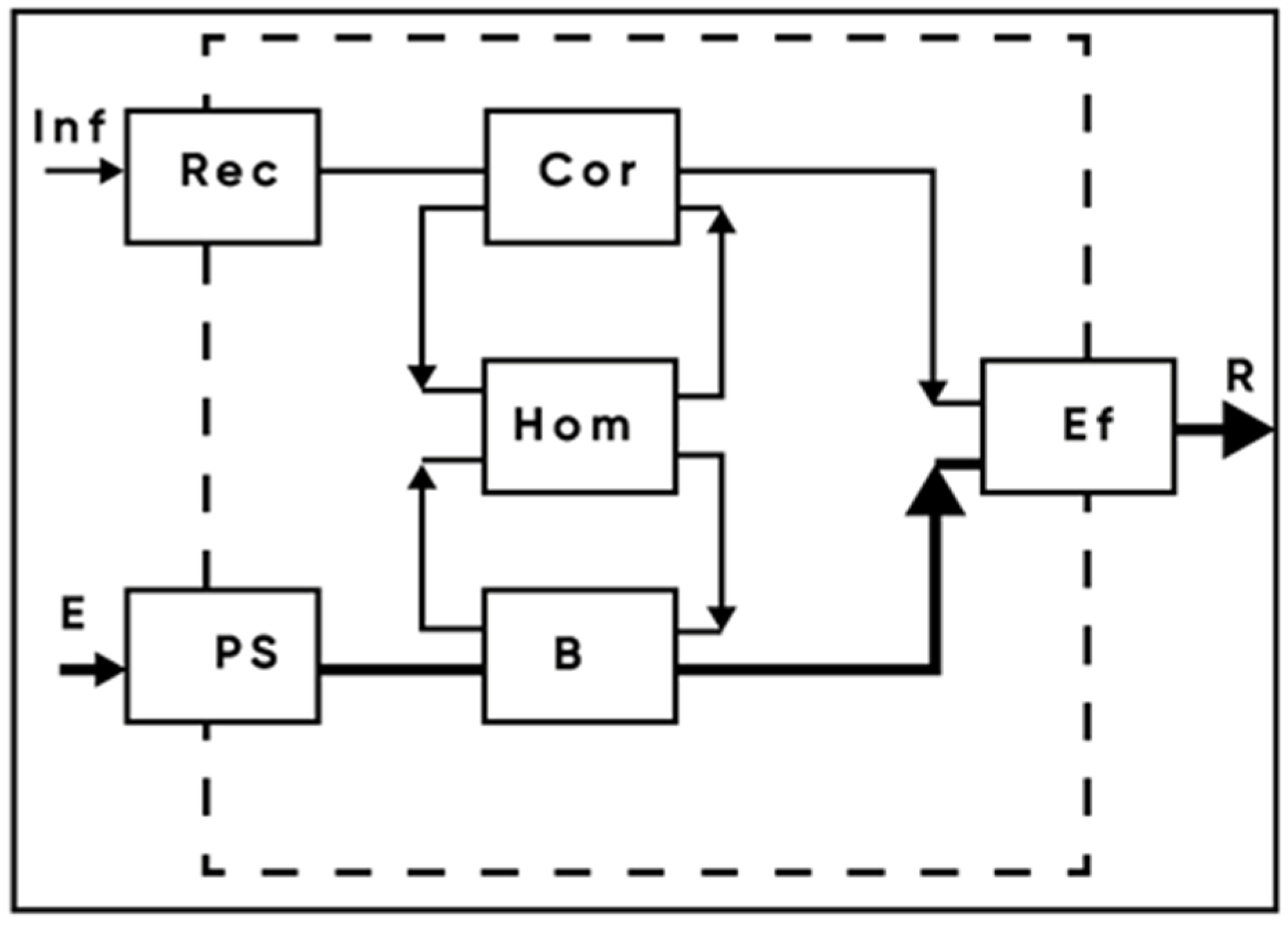
Jozef Kossecki distinguished four types of structured systems with varying degrees of autonomy: structured systems (Figure 1), control systems (Figure 2), self-controlled systems (Figure 3), and self-contained or otherwise autonomous systems (Figure 4).
Society can take the form of each of these types depending on the political and economic situation in which it finds itself. The response of the cybernetic system in each case is formed by two sets of processes:
(1)
Energetic processes, which involve bringing into the system the material–energy (material and energy) needed to cause a given reaction;
(2)
Informational processes, consisting in causing a certain reaction among many possible ones, which is the basis of social control.
Social control can take place through the formation of a civilization normotype that justifies the actions of the organizer. The basis of energy tracks is economic activity, which cannot exist without access to energy sources. The greater the free access to energy sources, the less externally determined a system is.
Types of structured systems differ primarily in terms of the role of the organizer and the presence of a battery, correlator and homeostat [8].
In the simplest structured system (Figure 1), the organizer, or control system, directly interacts with the controlled system, being the source of both energy and information. In order to bring about the state of the environment it desires, the organizer interacts with the system’s receptor with a stimulus and causes a specific effector response, resulting in changes in the environment, and then—depending on how these changes contribute to the goal set by the organizer—it interacts with the system again. An example of a structured system is a totalitarian system, where the organizer completely controls both the energy and information tracks. This is an extreme deformation of the social system, which, being by nature an open system [10], subjected to complete control, through control and enslavement of the elements of the system, must sooner or later degrade or reform itself.
A structured system equipped with a power supply (Ps) and a battery (B) is a control system (Figure 2). The energizer is the organ for the intake of the material energy, and the task of the battery is to process and store it in order to use it at the appropriate time depending on the needs. The organizer does not have to supply this system with material energy but nonetheless has to send control signals of an informational nature to both the receptor and the battery, thus influencing processes in the energy path of the system as well. It should be emphasized that a control system, like a structured system, acts in the interest of the organizer and receives control signals from it, and is not capable of processing and storing information of control value in its interest. An example of a control system is a state functioning as a colonial state or under partition. While it has its own economy, the products which are produced are completely controlled by the colonialist or the annexationist.
In contrast, a control system equipped with a correlator is a self-controlled system (Figure 3), since the correlator is an organ for processing and storing information for use at any time as appropriate. The correlator, together with the receptor, is part of the information path of this system. In the case of a self-controlled system, it can in principle operate without the involvement of the organizer, but its operation is in the interest of the organizer, who gives the system a structure that corresponds to their intentions. The system will operate in the interest of the organizer if the organizer retains influence over the operation of the battery and correlator, that is, influence over how much material energy and what information will be transferred to the effector. The organizer’s intentions can, of course, change. However, in order for the structure of the system to correspond to the organizer’s intentions, even if they change, the organizer must be able to modify the structure of the system, especially the structure of the correlator and battery [21]. An example of a self-controlled system is a neo-colonial state. Such a state has economic and executive organs, as well as managerial, scientific and other institutions that fulfill the role of a correlator, but it actually functions in the interests of the country that governs it. “Colonizers usually seek to link their colony’s economy to that of the metropolis (link to the energy management track) before officially leaving the colony and formally gaining independence, and to leave their agents in the power structure of the newly formed state, through which they can exert the influence they desire on the policies of their former colony (exerting influence on the information track).” [8]. As a result of this deformation, the controlling functions are held by the organizer, i.e., the external body of the self-controlled system. Nowadays, the role of neo-colonial states is being taken over by economic social elites who control markets and set “new social trends” that correspond to capital multiplication strategies.
A self-contained or autonomous system (Figure 4), on the other hand, is a self-controlled system equipped with an organ to modify the structure of the system, i.e., a homeostat that performs the function of an organizer. The homeostat exerts an influence on the correlator and battery, thanks to which it is possible for the system to become completely independent of the organizer.
An example of a self-contained system (Figure 4) is a sovereign state controlling itself according to its own interests.
In a self-contained system, the functions of
(1)
Receptors (Recs) are fulfilled by television stations, news agencies, the Internet, Institute for Public Opinion research, intelligence and counterintelligence agencies, and other entities;
(2)
Power supplies (PSs) and batteries (Bs) are fulfilled by the economy: power supplies are mainly the energy industry and agriculture, while energy terminals and the processing industry, as well as other entities, act as batteries (Bs);
(3)
The correlator (Cors) supports all institutions engaged in collecting and processing information: national security offices, business information offices, archives, libraries, scientific and administrative institutions, and other entities;
(4)
Effectors (Efs) are performed by all executive bodies through which the state interacts with its environment: public administration, police, military and other bodies;
(5)
The homeostat (Hom) can be fulfilled by the governing bodies of the state (including parliament), classes and social strata (which vary at different stages of history), certain social organizations and institutions with appropriate moral authority (including religious institutions), and other entities [8].
The homeostat performs the most essential function for the preservation of sovereignty. The lack of sovereignty of the organs performing homeostat functions in the state means the loss of the characteristics of a self-contained system and the deformation of this state into a self-controlled system (Figure 3).
According to system assumptions, the optimal type of social system is an independent system, while an organized system fully controlled by the organizer represents an extreme system deformation.
Information control processes
Information plays a significant role in social control. It is the processes of controlling the sources of information and creating new narratives, consisting in causing a certain reaction among many possible ones, that form the basis of social control. Control processes include the creation of a civilization normotype that corresponds to the interests of the organizer. Control processes are universal in nature and are capable of being applied to any social system. In order to bring about a desired effect, the organizer acts with a stimulus on a receptor of the system (mainly the mass media and state information agencies), causing a certain reaction in the effector (executive bodies in the state or another social structure), as a result of which there are changes in the environment that contribute to the achievement of the goal set by the organizer. This action is related to the formation of the civilization normotype, that is, the process of forming a system of social norms that determine the behavior of people in a given society in all areas of collective life. This process is of concern nowadays because in many respects it is seen as a process of disinformation aimed at guaranteeing the realization of the interests of the organizer, who does not act in the social interest.
The formation of reactions in a social system is always preceded by two fundamental processes in its information track: cognitive and decision-making processes. The social norms that regulate people’s behavior in cognitive processes are called cognitive norms, and the norms that regulate people’s behavior in decision-making processes are called decision norms. People’s actions associated with certain decision norms can produce effects that are relevant to individuals, the social structure or available energy. Among the norms associated with human actions are the following: (a) vital norms, concerning the quantity and quality of the material from which the system is built, i.e., people—medicine and the military are concerned with them; (b) economic norms, concerning the energy processed by the social system, i.e., the economy of the society; (c) constitutive norms, concerning the structure of society, i.e., law, ethics and ideology. Within these norms, we can distinguish norms that regulate the goals of social action and norms that regulate the methods of achieving these goals (Table 1).
Social control can take place through efforts to influence cognitive norms by trying to influence independent universities, the higher education system or research companies, as well as creating “expected” themes and trends in the artistic world or influencing the activities of intelligence services, or to influence decision-making norms of any type through the creation of a certain worldview; the shaping of legal systems in such a way as to enable the fulfillment of certain tasks; economic policies that enable economic development in certain systems and block development opportunities in other social systems; or defense and health policies, the correct implementation of which constitutes social security in objective and subjective terms or, conversely, destabilizes the sense of social security.
Energy management, which is the basis of multifaceted economic development, is of unique importance when considering social control. Understanding the relationship between energy management and information control is key to the understanding of political trends related to the world economy from the perspective of creating a global social structure.

4. Energy Transformation and Civilization Normotype in Control Processes

In Vaclav Smil’s book Energy and Civilization. This is How History is Made, the author describes the discussion of the relationship between the economy and energy as a tautology, claiming “that any economic activity is nothing but the transformation of one kind of energy into another, and money is only an intermediary in the process of valuing energy flows” [22]. This claim perfectly illustrates the cybernetic approach to the nature of the social system, where the existence and development of structured systems is conditioned by having access to sources of energy and information. Depending on whether this access is dependent on an external organizer or is controlled by a homeostat, i.e., through intra-system decisions, a social system will be more or less independent. The dynamics of social development are strongly linked to access to energy sources, which is the basis of economic development. Traditional economies of the pre-industrial era did not change at all or developed at a rate of a few percent per 10 years. By comparison, fossil fuel economies grew at an unprecedented rate modified slightly by the cyclical nature of economic expansion [23] and slowed by major national and international conflicts. In the industrializing societies of the 19th century, economies grew at a rate of 20–60% per decade. After normalizing historical data on economic production, one can observe the existence of long-term correlations at the global and national levels between economic development and energy use. In other words, getting rich requires a large increase in energy consumption [22]. Meanwhile, energy prices, fuel and electricity trade, as well as the security of energy supply, have become important political factors in both energy-importing and energy-exporting countries. The creation of energy policies has become, at this stage of social development, an important factor of power because control over energy sources means control over the entire system. The process of control also takes place through the creation of a civilization normotype that enables certain activities. It can be noted that the achievement of carbon neutrality and the transition from conventional sources of energy, i.e., fossil fuels, to clean and low-carbon renewable sources of energy have also been dealt with, with great intensification, in recent years by supranational organizations, such as GEO (Global Environment Outlook), the UN Security Council, the European Parliament and others. It has been pointed out that the transformation should encompass entire social systems and structures, cultural values and norms, as well as sectors of economic activity, including industry; agriculture; construction; transportation and energy; and renewable energy sources and energy-efficient, green buildings. What is more, low-carbon transportation should become the norm. However, the radicalization and dynamization of the transformation strategy, which are increasingly coming under criticism, especially in the light of rising electricity prices, make it possible to assume that economic rationales and the opportunity to gain or consolidate dominance are located primarily at the root of the transformation processes. It should also be noted that the most privileged beneficiaries of the energy transition, while imposing its rules, seem to be the players with the most economic capital. In this context, the regulations of the European Union countries have become problematic. Unattainable for developing societies, systemic requirements for the energy transition, unfair enforcement of rules against certain countries [24], and the demand for the building of a “European state” based on an unfair distribution of financial resources and power are increasingly reshaping the European Union into a unified structure. The lack of success in energy policies (in the sense of optimizing the functioning of the entire system) was already being discussed in the early 2020s, in analyses examining the relationships between economic growth, energy efficiency and CO2 emissions in the euro area [25]. A similar process is taking place in global society, which is being transformed into a social system that boils down to a few global players controlling the access to energy sources and information, depriving states within their sphere of influence of opportunities for self-determination. Accordingly, the entire social system is changing in nature and ceasing to be democratic. This very dangerous tendency must eventually result in negative consequences on a society-wide level because in order to maintain an elementary systemic balance, participants in activities must have a relative level of freedom in making choices [26]. In particular, proposals for systemic solutions perceived by many people as limiting the freedom of the majority of society to make choices in favor of the implementation of demands of a political nature aimed at strengthening domination rather than the realization of the idea of environmental protection are of concern. In this regard, there are increasingly critical voices addressing the concept of the “Green Deal” [27], pointing to the process of creating a civilization normotype based on premises which are based on a “false social consciousness”, on which Michael Parenti writes: “the development of self-interest and political consciousness in general can be inhibited or distorted by disinformation, a narrow but highly visible mainstream political agenda that excludes viable alternatives” [28]. Parenti argues that ideological confusion is propagated in politics and mass media, causing people to misjudge what their real interests are.
However, informational motivations are effective only up to a certain point, when the system does not experience backward adaptation. According to the assumptions of sociocybernetics, in societies with a high degree of development but which are subject to processes of backward adaptation, that is, adaptation to evolution contrary to the interests of the system, informational motivations weaken, while the role of motivations of an energetic nature increases. Any weakening of ethical and ideological motivations, which occurs when false consciousness and mistrust are promoted, leads, sooner or later, to a situation in which repression and benefits of a personal nature become the primary triggers for action.
The basis is always the goal of the organizer, which, if state organs lose sovereignty, is an external organizer acting in its own interest. However, the identification of the organizer in today’s complex social life is not as clear-cut as in the case of the loss of sovereignty by states during colonialism or partition. The games of interest are very complex in a globalizing society, and in analyzing the sources of systemic uncertainty it is necessary to assume that the process of the emergence of several strong unified global players with strong economic capital includes the United States, China, Russia, India, Japan and the aspiring European Union. In the case of the last structure, we are dealing with a supra-state alliance, the functioning of which is increasingly controversial, mainly due to increasingly less democratic decision-making processes and attempts to interfere in the politics of member states outside the accepted association agreement.
The unequal treatment of systemic actors primarily affects developing countries, which, slowly but consistently, are being deprived of the possibility of self-determination, reducing the possibility of economic development by forcing the implementation of norms that are incompatible with their interests, including vital norms, through the imposition of inadequate goals regarding defense, security and health care; economic norms, through the imposition of norms that block economic development, for example, by imposing inefficient production technologies, especially energy generation technologies; constitutive norms, through the creation of ideological norms that define the goals of activities; and ethical norms and laws for their implementation. Referring to cybernetic models, these strategies can be expressed by treating an autonomous system as an energy converter and applying the concept of system power. Sociocybernetic models indicate a relationship expressed by the formula: Pd = P − P0, where Pd denotes the system’s available (disposable) power, P represents the total power and P0 refers to idle power.
From its total power, P, an autonomous system must expend idle power, P0, to cover energy losses to the environment in order to ensure its persistence; only the remaining power can be used for other purposes, which constitutes the available power, Pd. The greater the amount of power consumed to offset energy losses (maintaining the system’s energy balance), the lesser the available power for the system’s development in various dimensions, including the economic dimension, which forms the basis for strengthening systemic autonomy [8]. Thus, the dependency of a system will consist in actions aimed at reducing its available power at the cost of increasing idle power consumption—something linked, among other factors, to the imposition of inefficient energy solutions as well as other “solutions” designed to diminish the resources of available power.
An example of the latter is the EU’s existing CO2 emissions allowance trading scheme, which allows rich member countries to buy EU certificates on the exchange that allow them to keep emissions constant and sustain economic growth.
At the same time, there are calls to replace fossil fuel energy with energy from renewable energy sources, mainly biofuels, water, wind and solar power, which, according to experts, cannot meet the needs of society given today’s technological development. In 2015, biofuels provided 8% of the world’s primary energy and water turbines about 16% of electricity, while about 3.5% of electricity was generated from wind and about 1% was generated from direct solar radiation [22]. Although renewable energy technologies may be promising [29], the inadequacy of inflexible power grids to generate electricity from RESs is also a significant problem. This was evidenced by the situation that occurred on 28 April 2025, when Spain and Portugal experienced one of the largest power outages in recent years. For several hours, millions of people were without access to electricity, public transportation was paralyzed and access to telecommunication services was disrupted. The source of the problems was the large share of non-synchronous RES (wind and solar) generation, which made Spain’s power grid more vulnerable to disruption [30].
Issues related to the access to and the utilization of energy sources—particularly since the onset of industrialization—constitute a foundational dimension of social development. Energy sources simultaneously serve as a fundamental basis of power, insofar as control over them entails control over the material–energy infrastructure of the control system, which is society.

5. Variants of Global Society and Cybernetic Models in the Context of Global Energy Management

Cybernetic considerations, in relation to the control of energy and information, are important for a full understanding of the variants of the global order, which represent diverse visions of the world. These variants were formulated by Roland Robertson [15] on the basis of the theories of Ferdinand Tönnies [31], who gave an important role to human will in his considerations. Tönnies pointed out that between the will of one man and the will of another man there can be various relations leading to the preservation of the will or its destruction, i.e., enslavement. He took relations of mutual affirmation as the object of his research, recognizing that collectivities affirming common goals are communities (Gemeinschaft), while a social structure used instrumentally to achieve its own goals is an association (Gesellschaft). The fundamental difference between the two structures boils down to ties: members of a community remain bound despite separation, while members of an association remain separated despite ties. Membership in a community is therefore immanent, membership in an association is instrumental.
Roland Robertson, in formulating four variants of the global order, referred to the nomenclature developed by Tönnies. The first two variants focus on collectivities affirming common goals, that is, communities (Gemeinschaft). The next two refer to a situation in which social structure is treated instrumentally (Gesellschaft). The first variant is a model of mutually demarcated communities affirming and pursuing common goals (Global Gemeinschaft I). The idea of a society-wide consensus around certain shared values and ideals is the second model (Global Gemeinschaft II). In both variants, a sense of community is key. Subsequent variants refer to structures that are treated instrumentally but can provide functional solutions for social development. The third variant refers to the coexistence of sovereign, independent nation states linked by strong mutual cooperative ties in the economic, political and cultural fields. This model is internally differentiated: the egalitarian version sees participating states as equal partners engaged in mutually beneficial cooperation. In the hierarchical version, the existence of a leading superpower or superpowers is recognized, which, without interfering in the internal affairs of other countries, take on the responsibility of maintaining the world order. However, this model can become deformed when leading powers begin to pursue policies that promote particular interests, using their superiority to impose their own solutions on other countries (Global Gesellschaft I). The extreme concept, on the other hand, envisions the disappearance of nation states and unification, first regionally and later globally, under the authority of a common political organization or supranational world government (Global Gesellschaft II).
Since the sense of community is a factor in integrating a collective or society, not creating formal structures, cybernetic analysis can refer to the formal organized structures reflected in the variants discussed as Global Gesellschaft I and II. These variants can be referred to controlled systems with different levels of autonomy, which are defined by the theory of sociocybernetics.
The fundamental dissimilarity between the options presented results in significant policy differences. It is irrational, from the perspective of the policies of developing countries, to subscribe to the logic of the hierarchical model of independent states or the model of “unifying globalization” because these variants, by definition, result in less participation in global decision-making processes of economically weaker partners. On the other hand, for economically strong global players with supra-state capital, the realization of their own economic interests through the creation of systemic solutions aimed at the introduction of the unification model may seem optimal due to the hypothetical possibility of guaranteeing themselves power and an economically privileged position. In a systemic perspective, however, the unification model is not rational because it disrupts the systemic balance, which ultimately must lead to a crisis in both social and economic terms.
Designing short-term strategies based on economic gain can have dangerous consequences for the entire social system, which, limited in its ability to self-regulate, can undergo progressive degradation. According to the principle of sociocybernetics, a structure exists as long as an adequate concentration of energy is maintained in the material, and, thanks to it, a certain distribution of potentials. In the unification model, the distribution of potentials diminishes and the system breaks down, with the result that it also ceases to be beneficial to the profit-driven organizer.
The control of energy processes, including energy transition, due to the nature of political processes, becomes a tool of social control, as exemplified by the strategies implemented in European Union countries. These strategies do not reflect the hierarchical version of Global Gesellschaft I, since interference in the internal affairs of developing countries here serves to strengthen the dominance of some countries at the expense of others and the formation of international policy is based on disinformation [24]. Similar strategies are being implemented around the world, which is related to the management of information in a way that deforms the social system. The control of the energy track is also connected with the control of the information track, which is achieved through the formation of the normotype of a global society, in which socially relevant goals such as protection of the natural environment, social security and health care can be treated instrumentally in relation to economic processes. Research on this topic has been carried out by, among others, Jacek Janowski, Professor, who, leading an interdisciplinary team of scientists, has been carrying out a project entitled “Architecture and Infrastructure of the Great Reset. A Study of the Transformation Towards an Information Civilization” since 2022. The research has made it possible to decode many real meanings of the information processes taking place [32] (Table 2).

6. Public Mood in IPSOS Surveys

The primary criterion for selecting data from IPSOS surveys was the presence of current social unrest. The link between social concerns and the policies being implemented—particularly those on a global scale that affect the quality of life of all people—is evident when referring to the concept of social consciousness described by Émile Durkheim as “the set of beliefs, convictions, and sentiments common to the average members of a given society.” Social consciousness crystallizes in various forms, one of which is public opinion, understood as the characteristic complex of views within a given community regarding public matters—political, economic, social and international.
It should be assumed that widespread anxieties and opinions concerning public policies are the result of both the availability of relevant information and the ability to filter it. Today, citizens have access to abundant material for shaping their own perspectives, while at the same time beginning to recognize why and to what extent disinformation and manipulation are employed. This knowledge, on the one hand, is essential for uncovering the truth about the social mechanisms underlying the formation of global structures, and, on the other hand, it generates unrest by revealing, in many areas, the use of “pathological control.” This, in turn, fuels social anxiety and places politicians at the lowest positions in public trust rankings.
Given the prevailing uncertainty, risks and ever-increasing economic problems, we can speak of a social crisis that affects significant groups of people. Adam Tooze, a professor at Columbia University in New York City, points out that society is in a polycrisis, a situation where the whole is even more complex than the sum of the parts. The existence of disagreement on a number of fronts, from climate, energy, human rights, emigration processes, fiscal policy, data privacy fluidity and artificial intelligence to ethics and the use of synthetic biology, is causing many analysts to express concern about the possibility of building a coalition to solve problems in such a complex situation [33].
A survey conducted by the Institut Public de Sondage d’Opinion Secteur (IPSOS) indicates that social unrest is occurring due to polycrisis.
According to the IPSOS survey “A NEW WORLD DISORDER?”, conducted in 2022 among 24,000 citizens from 36 countries, the world is most concerned about inflation (63%) and energy costs (49%). Corporations, governments and individuals have a key role to play in solving crises and helping people, according to respondents. However, lack of trust is a barrier: 72% of respondents were concerned that governments and public services will not take care of citizens in the future, and 54% did not trust business leaders to be guided by the truth. At the same time, 60% wanted their country to be governed by a strong leader who would guarantee their security. People also feel that their lives are too dynamic and complex: 68% to 76% responded thus, depending on their age category, a condition which evokes nostalgia for the past, as declared by 60% of respondents [34].
Another survey, “WHAT WORRIES THE WORLD,” conducted in 2025 in 29 countries among 25,746 respondents, looked at public opinion on major social and political issues. In this survey, respondents identified the primary social issues as inflation (32%), crime and violence (32%), poverty and social inequality (28%), financial and political corruption (27%), and unemployment (27%). In this list, climate issues ranked eighth with a rate of 15% [35]. As the survey shows, what constitutes the main concern is related to meeting basic needs, including the need for security. Climate issues are also a concern; however, the survey suggests that society’s impoverished model for addressing climate issues relegates the issue to a lower position. The perception of financial and political corruption as a significant problem, ranked in the top five social problems facing the world, is disturbing. This signifies a crisis of power and points to the possibility of significant political change resulting from increasing levels of public awareness.
Another “WORLD AFFAIRS” survey conducted by IPSOS in 2024 among 22,989 respondents in 30 countries addressed security issues. Last year, the issue of disinformation was added to the ranking of all global threats. Concerns about disinformation are very significant because an average of 76% of respondents said that an organization, country or person was deliberately spreading disinformation to influence public opinion. Hacking for fraud or espionage is another concern, reaching 76% of indications. Disinformation and hacking are the threats that ranked first in 2024. When asked about trust in the government and security agencies to respond effectively to disinformation, respondents answered in the affirmative only 50% of the time. At the same time, an average of 81% of respondents said that democracy, human rights and the rule of law are universal values that all nations deserve and have the right to strive for. It should be recalled that a democratic system is, according to cybernetic considerations, an independent system with the possibility of self-determination, and the optimal model of a global society is one that allows the reconstruction of a community, that is, a model that treats global society as a set of nation states participating in relations as equal partners engaged in mutually beneficial cooperation in the fields of economics, politics and culture. In this context, the results of the survey on the willingness to engage in global affairs are relevant: cooperation with other countries to achieve global goals, even when one’s own country does not always get exactly what it wants: 75%, and one’s own country should provide a moral example to follow: 70%; respondents also indicated that when there are economic problems in one’s own country, one should focus more on the country’s problems than on global problems: 78% of respondents gave this answer, which is systemically logical because the strength of the individual components of the system builds the strength of the whole. Despite their understanding of systemic needs, 80% of respondents indicated that the world had become more dangerous over the past year. Thus, the data indicate that there is a discrepancy between the perceived social situation in the world and expectations and readiness for change. The IPSOS survey also identified a global gap between the degree of threat and the level of readiness to respond effectively to threats. In addition to nuclear, biological or chemical attack (−28 pp), a high level of unreadiness was indicated for the threat of hacking into a public, private or personal information system for purposes of fraud or espionage (−28 pp), and disinformation to influence public opinion also represented a concern (−26 pp). The data indicate that the process of spreading false public awareness designed to confuse the public enough to guarantee the ability of global players to pursue their interests at the expense of public welfare is becoming increasingly transparent. Similarly, the process of backward adaptation that can, according to the principles of social control, result in a situation in which repression and benefits of a personal nature become the primary triggers for action is becoming more apparent, which does not mean that this option should be completely ruled out.
In this context, the functioning of global institutions is a concern. Respondents in the same survey said they would have more respect for global institutions and agreements if democratic nations had more influence over them than authoritarian ones (68%) [36].
The above results are substantiated by data from another survey, “IPSOS GLOBAL TRUSTWORTHINESS INDEX 2024”, conducted by IPSOS among 23,530 respondents from 32 countries. This research shows that only an average of 15% of respondents consider politicians trustworthy, which puts them in the last place in the index. Low ratings in the trust ranking are also given to business leaders: 26%, bankers: 27%, journalists: 27%, and advertising executives: 19%. Thus, the lowest trust indexes are reserved for professions related to politics and economics [37]. It cannot be ruled out that falling trust in politicians and representatives of the big business world is related to the instrumental treatment of important social ideas, including environmental protection, or the need for a rational approach to the energy transition, for the sake of short-term political and economic interests. With easy access to information (the relatively free flow of information has been preserved thanks to protests against the introduction of ACTA), the situation in the world, despite aggressive propaganda, is becoming clearer. Unfortunately, its effects in the form of the destabilization of social life and disruption of the sense of security of individuals are also visible and acute. According to another IPSOS survey, “PREDICTIONS 2025 REPORT”, conducted in 31 countries, an average of 65% of respondents had a negative view of the world situation in 2024. A significant number of respondents, as many as 79%, believed that prices would rise faster than incomes in 2025; 74% of respondents indicated the possibility of higher taxes in the following year; and 70% believed that inflation in their country in 2025 would be higher than in 2024. Despite these figures, however, 71% of respondents believed that the next year would be better than the last year [38].
The essence of an optimistic view of the future is probably related to a greater awareness of the processes taking place, which, despite the negative nature of the social mechanisms being uncovered, can provide a significant impetus for change. Bearing in mind that social knowledge also prevents unfettered control of the information track by external organizers, such that the system begins to act inherently in its own interest, it is necessary to assume that there are upcoming significant qualitative changes in the structure and functions of society.

7. Conclusions

The world is in the process of globalization, which is the natural next stage of social development. The processes accompanying globalization, especially the clash of interests of many global players, have led to the existence of polycrises in the world, the primary source of which is the struggle for economic dominance and the ability to manage change with the possibility of realizing certain economic interests. Understanding the processes of social control makes it possible to assess the level of risk associated with the loss of self-determination by certain social structures, with developing countries at the forefront. An analysis of the basic systems of social control in the dynamic system we are currently dealing with indicates that we can distinguish between systems, the goal of which is the expansion of the controlled social system and the regression of the controlled system. According to Polish sociocyberneticist Józef Kossecki the latter case occurs only in pathological situations, when society is subjected to processes of backward adaptation, or in cases of struggle, when the destruction of society is the goal of control processes.
Analyzing the social processes involved in large communities in the second decade of the twenty-first century, such as attempts to take away the possibility of self-determination from developing countries and armed conflicts around the world, it should be pointed out that the processes of pathological control have “inscribed” themselves in social processes in the era of globalization. The struggle for economic dominance based mainly on efforts to control energy sources and agriculture (this is a topic for a separate article) causes social chaos and destabilizes social life, deteriorating the quality of life in social and individual terms. Destabilization and polycrises resulting from the failure to pursue systemic policies that take into account the need to create a viable development space for all social groups in their natural socio-cultural environment, excluding controlled migration processes, result in deepening ideological and moral crises. In addition to fratricidal wars, culture wars are being waged to shatter stable axionormative and identity systems, with control unification processes as the main goal. These processes are turning democratic systems into centralist organizations aimed at controlling the whole of society.
Meanwhile, the conduct of rational energy and information management, consisting in the equitable distribution of energy and knowledge, is a necessary condition for the development of civilization, while centralist processes cause regression, as the present article proves by reference to system considerations. Energy sources are the primary source of power because control over them is control over the energy–material source in the control system, which is society. The equitable distribution of energy and the provision of accurate information, without manipulating the facts for one’s own ends, should therefore be an absolute priority of economic and climate policy conducted responsibly and taking into account the interests of the entire social system. The new energy system must be designed to be durable: this means prioritizing security, resilience and flexibility, as well as ensuring that the benefits of the new energy economy are shared. Emerging divides in separate approaches to energy and climate can only be bridged if poorer countries, communities and households are provided with greater assistance in coping with the higher upfront costs of clean technologies, including substantially increased international support [39].
Interesting solutions in this area have been proposed in a model based on multi-energy trading aimed at fostering cooperation and increasing energy utilization through the individual participation of autonomous entities [40].
Understanding the requirement for system-wide cooperation is therefore a fundamental condition for building a strong and just global society, in which environmental protection will be realistically driven by concern for the fate of society and future generations, without it being a topic used to enhance economic power through manipulation and backward social control. The proposed solutions may be implemented once the “logic of political systems” reaches a higher level through an approach to the social system as an integrated whole.

Funding

This research received no external funding.

Data Availability Statement

The article is based on already existing data as well as sources of data contained in references.

Conflicts of Interest

The author declares no conflicts of interest.

References

  1. Wiener, N. Cybernetics: Or Control and Communication in the Animal and the Machine; The Technology Press: New York, NY, USA, 1949. [Google Scholar]
  2. Wiener, N. Cybernetyka a Społeczeństwo (Cybernetics and Society), 2nd ed.; Książka i Wiedza: Warsaw, Poland, 1961; pp. 7–29. [Google Scholar]
  3. Beer, S. Cybernetics and Management; English Universities Press: London, UK, 1959. [Google Scholar]
  4. Bateson, G. Steps to an Ecology of Mind: Collected Essays in Anthropology, Psychiatry, Evolution and Epistemology; Chandler Publishing Company: San Francisco, CA, USA, 1972. [Google Scholar]
  5. Luhmann, N. Social Systems; Stanford University Press: Standford, CA, USA, 1996. [Google Scholar]
  6. Maturan, H.R.; Varel, F.J. Autopoiesis and Cognition: The Realization of the Living; D. Reidel Publishing Company: Boston, MA, USA, 1980. [Google Scholar]
  7. Mazur, M. Cybernetyka i Character (Cybernetics and Character); Państwowy Instytut Wydawniczy: Warsaw, Poland, 1976. [Google Scholar]
  8. Kossecki, J. Cybernetyka Społeczna (Sociocybernetics); Państwowe Wydawnictwo Naukowe: Warsaw, Poland, 1981. [Google Scholar]
  9. Spencer, H. Zasady Socjologii (Principles of Sociology); Głos: Warsaw, Poland, 1889; Parts 1–3. [Google Scholar]
  10. Bertalanffy, L. Ogólna Teoria Systemów (General Theory of Systems); Państwowe Wydawnictwo Naukowe: Warsaw, Poland, 1984. [Google Scholar]
  11. Crozier, M.; Friedberg, E. Człowiek i System. Ograniczenia Działania Zespołowego (Man and the System. Limitations of Teamwork); Państwowe Wydawnictwo Ekonomiczne: Warsaw, Poland, 1982. [Google Scholar]
  12. Kossecki, J. Granice Manipulacji (The Limits of Manipulation); Młodzieżowa Agencja Wydawnicza: Warsaw, Poland, 1984; pp. 5–11. [Google Scholar]
  13. Crozier, M. The Bureaucratic Phenomenon; Routledge: Oxfordshire, UK, 2009; pp. 12–14. [Google Scholar]
  14. Bauman, Z. Globalizacja. I co z Tego Dla Ludzi Wynika (Globalization. The Human Consequences), 1st ed.; PIW: Warsaw, Poland, 2000; p. 5. [Google Scholar]
  15. Robertson, R. Globalization: Social Theory and Global Culture; Sage Publications: Thousand Oaks, CA, USA, 2001. [Google Scholar]
  16. Lewada, J. Kibierneticheskie metody v sotsiologii. Kommunist. In General System Theory: Essays on Its Foundation and Development; Bertalanffy, L., Ed.; George Braziller: New York, NY, USA, 1965; pp. 14–15. [Google Scholar]
  17. Ruesch, J. Epilogue. In Toward a Unified Theory of Human Behavior, 2nd ed.; Grinker, R.R., Ed.; Basic Books: New York, NY, USA, 1967. [Google Scholar]
  18. Urbinati, N. Representative Democracy and Its Critics, Chapter 1. In The Future of Representative Democracy; Alonso, S., Keane, J., Merkel, W., Eds.; Cambridge University Press: Cambridge, UK, 2012; pp. 23–49. [Google Scholar]
  19. Castells, M. The Rise of the Network Society; Blackwell Publishers Ltd.: Oxford, UK, 1996. [Google Scholar]
  20. Stiglitz, J. Globalizacja (Globalization), 1st ed.; PWN: Warsaw, Poland, 2004; p. 7. [Google Scholar]
  21. Mazur, M. Cybernetyczna Teoria Układów Samodzielnych (Cybernetic Theory of Autonomous Systems); Państwowe Wydawnictwo Naukowe: Warsaw, Poland, 1966; pp. 54–55. [Google Scholar]
  22. Smill, V. Energia i Cywilizacja. Tak Tworzy się Historia (Energy and Civilization. This Is How History Is Made); Helion SA: Gliwice, Poland, 2022; p. 265. [Google Scholar]
  23. van Dujn, I.J. The Long Wave in Economic Life; George Alllen and Unwin: London, UK, 1983. [Google Scholar]
  24. Wyleżałek, J. Dilemmas around the Energy Transition in the Perspective of Peter Blau’s Social Exchange Theory. Energies 2021, 14, 8211. [Google Scholar] [CrossRef]
  25. Kėdaitienė, A.; Klyvienė, V. The Relationships Between Economic Growth, Energy Efficiency and CO2 Emissions: Results for the Euro area; Vilnius University Press: Vilnius, Lithuania, 2020; Volume 99, pp. 6–25. [Google Scholar]
  26. von Bertalanffy, L. General System Theory: Essays on its Foundation and Development; George Brazille: New York, NY, USA, 1968. [Google Scholar]
  27. Morano, M. Zielone Oszustwo (Green Fraud); Biblioteka XXI Wieku: Wrocław, Poland, 2023. [Google Scholar]
  28. Parenti, M. Dirty Truths: Reflections on Politics, Media, Ideology, Conspiracy, Ethnic Life and Class Power; City Lights Books: San Francisco, CA, USA, 1996; pp. 209–214. [Google Scholar]
  29. Saługa, P.W.; Zamasz, K.; Dacko-Pikiewicz, Z.; Szczepańska-Woszczyna, K.; Malec, M. Risk-Adjusted Discount Rate and Its Components for Onshore Wind Farms at the Feasibility Stage. Energies 2021, 14, 6840. [Google Scholar] [CrossRef]
  30. Zieniewicz, R. Wiemy, co Spowodowało Blackout w Hiszpanii i Portugalii. To Sygnał Ostrzegawczy Dla Całej Europy, (We Know What Caused the Blackout in Spain and Portugal. It’s a Warning Signal for All of Europe). Available online: https://www.farmer.pl/energia/oze/wiemy-co-spowodowalo-blackout-w-hiszpanii-i-portugalii-to-sygnal-ostrzegawczy-dla-calej-europy,160673.html (accessed on 10 June 2025).
  31. Tönnies, F. Gemeinschaft und Gesellschaft (1887). Reprint; Kessinger Publishing LLC.: Whitefish, MT, USA, 2010. [Google Scholar]
  32. Janowski, J. Research Project Manager, The Title of the Project: Architecture and Infrastructure of the Great Reset: A Study of the Transformation Towards the Information Civilization. Available online: https://gr.ans.pw.edu.pl/ (accessed on 10 June 2025).
  33. Tooze, A. Welcome to the World of the Polycrisis. Financial Times. 2022. Available online: https://www.ft.com/content/498398e7-11b1-494b-9cd3-6d669dc3de33 (accessed on 10 June 2025).
  34. Nowy światowy nieład? Przewodnik po polikryzysie IPSOS, Globalne Trendy 2023. (A New Global Disorder? A Guide to the Polycrisis. IPSOS, Global Trends 2023). Available online: https://www.ipsos.com/en/ipsos-releases-global-trends-2023-new-world-disorder (accessed on 1 July 2025).
  35. Co Martwi Świat? (What Worries the World?); IPSOS: North Sydney, Australian, 2025.
  36. Bricker, D. Sprawy Światowe, (World Affairs); IPSOS: North Sydney, Australian, 2024. [Google Scholar]
  37. Globalny Indeks Zaufania, (Global Trust Index); IPSOS: North Sydney, Australian, 2024.
  38. Predictions 2025. Report; IPSOS: North Sydney, Australian, 2024; pp. 44–48. Available online: https://www.ipsos.com/en/global-opinion-polls (accessed on 10 June 2025).
  39. International Energy Agency. World Energy Outlook 2024; IEA: Paris, France, 2024; Available online: https://www.iea.org/reports/world-energy-outlook-2024/executive-summary (accessed on 10 August 2025).
  40. Zhang, N.; Yan, J.; Hu, C.; Sun, Q.; Yang, L.; Gao, D.W. Price-Matching-Based Regional Energy Market with Hierarchical Reinforcement Learning Algorithm. IEEE Trans. Ind. Inform. 2024, 20, 11103–11114. [Google Scholar] [CrossRef]
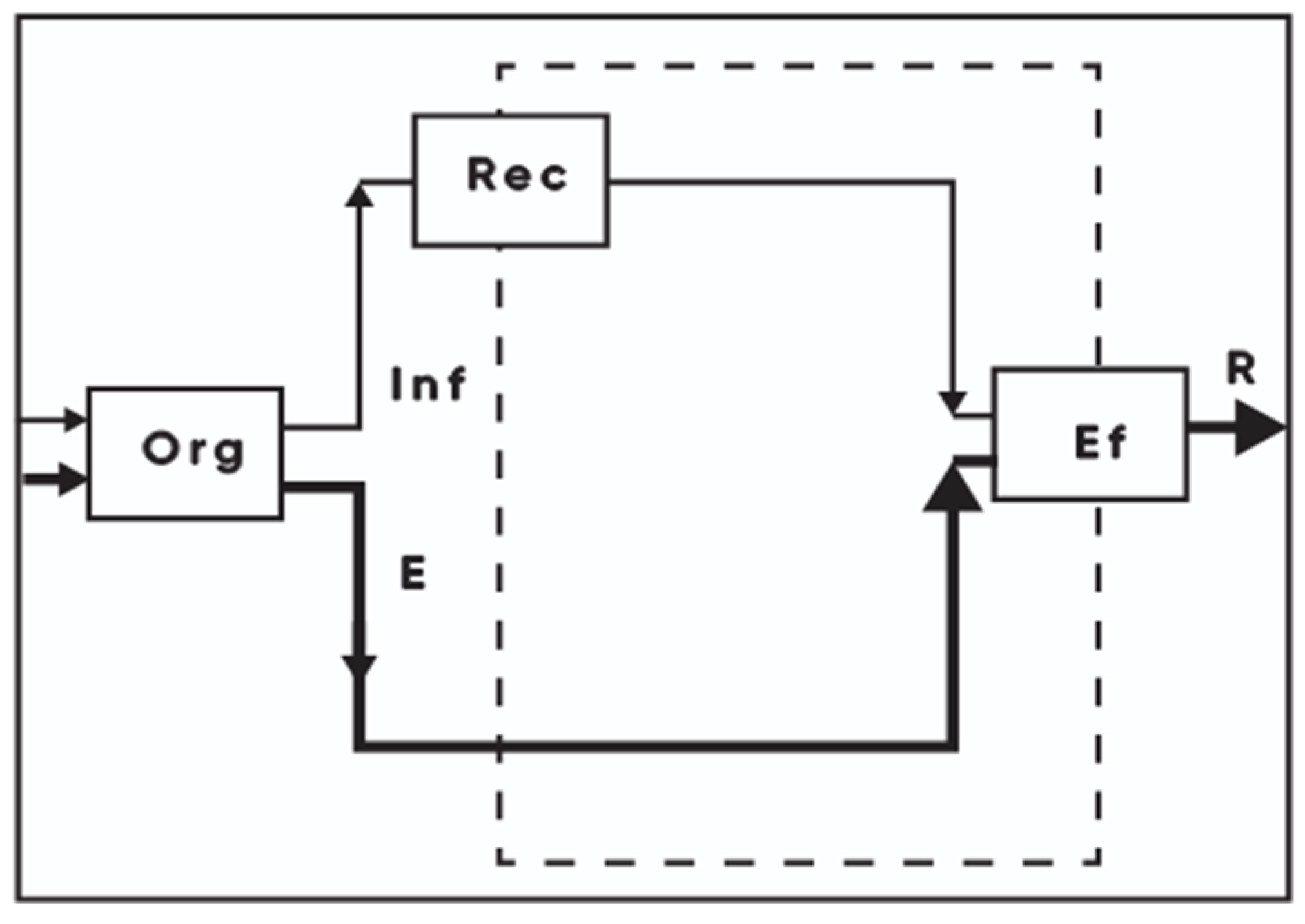
Figure 1. Structured system with energy (E) and information tracks (Inf). Source: [8] p. 25.
Energies 18 05786 g001
Figure 2. Control system equipped with a power supply (PS) and a battery (B). Source: [8] p. 25.
Energies 18 05786 g002
Figure 3. A self-controlled system with a power supply (PS) and a battery (B) and a correlator (Cor). Source: [8], p. 27.
Energies 18 05786 g003
Figure 4. Self-contained system equipped with a power supply (PS), battery (B), correlator (Cor) and homeostat (Hom). Source: [8], p. 27.
Energies 18 05786 g004
Table 1. Norms underlying the civilization normotype. Source: own elaboration based on [8] pp. 79–110.
Determining StandardsObjectives of Social ActionMethods of Social Action
Types of Norms
Cognitive norms—science, art, and intelligenceScientific research plans, promoted art trends, and gaining information through intelligence operationsMethodology of scientific research and dissemination activities and intelligence methods
Constitutive decision norms—law, ethics, and ideologyIdeological normsLegal and ethical norms
Economic decision-making norms—economyBusiness plansProduction technology
Vital decision-making norms—medicine and the armyDefense, security, and health care plansSafety guarantees
and methods of treatment and healthcare
Table 2. Global society model and cybernetic model of system control.
Global Society ModelCharacteristics of a Global SocietyReference to the Cybernetic Model Of a Control System
Global
Gesellschaft I
Egalitarian version
Nation-states participate in the relationship as equal partners engaged in mutually beneficial cooperation in the economic, political, and cultural fields.Global society is a self-contained system based on the mutual cooperation of independent subsystems; this variant assumes the possibility of the reconstruction of the community on a global scale.*
Global
Gesellschaft I
Hierarchical version
The existence of a leading superpower or superpowers is recognized, which, without interfering in the internal affairs of other countries, takes on the responsibility of maintaining the world order.A global society is a self-controlled system that has an external organizer acting in the interests of the subsystems (however, the system is no longer fully self-contained).
Global
Gesellschaft I
Deformation of the hierarchical version
Leading powers begin pursuing policies that primarily prioritize their own economic interests, using their advantage to impose regulations on other countries.Global society is a control system acting in the interest of the organizer from whom it receives control signals; it ceases to be capable of processing and storing information that has control value in its interest.
Global
Gesellschaft II
The disappearance of nation-states, with unification occurring regionally first and then globally under the authority of a common political organization or supranational world government.A global society is a total system with an external organizer controlling both access to energy sources and information. The organizer acting with stimuli on the system’s receptor causes a specific effector response, resulting in changes in the environment until the goal set by the organizer is achieved.
* Author’s footnote.
Disclaimer/Publisher’s Note: The statements, opinions and data contained in all publications are solely those of the individual author(s) and contributor(s) and not of MDPI and/or the editor(s). MDPI and/or the editor(s) disclaim responsibility for any injury to people or property resulting from any ideas, methods, instructions or products referred to in the content.