Article

Prediction of Coal Calorific Value Based on Coal Quality-Derived Indicators and Support Vector Regression Method


1
School of Mining and Coal, Inner Mongolia University of Science and Technology, Baotou 014010, China
2
Inner Mongolia Key Laboratory of Mining Engineering, Baotou 014010, China
3
Inner Mongolia Research Center for Coal Safety Mining and Utilization Engineering and Technology, Baotou 014010, China
4
Inner Mongolia Cooperative Innovation Center for Coal Green Mining and Green Utilization, Baotou 014010, China
*
Author to whom correspondence should be addressed.
Energies 2025, 18(21), 5600; https://doi.org/10.3390/en18215600
Submission received: 29 September 2025 / Revised: 20 October 2025 / Accepted: 22 October 2025 / Published: 24 October 2025

Abstract

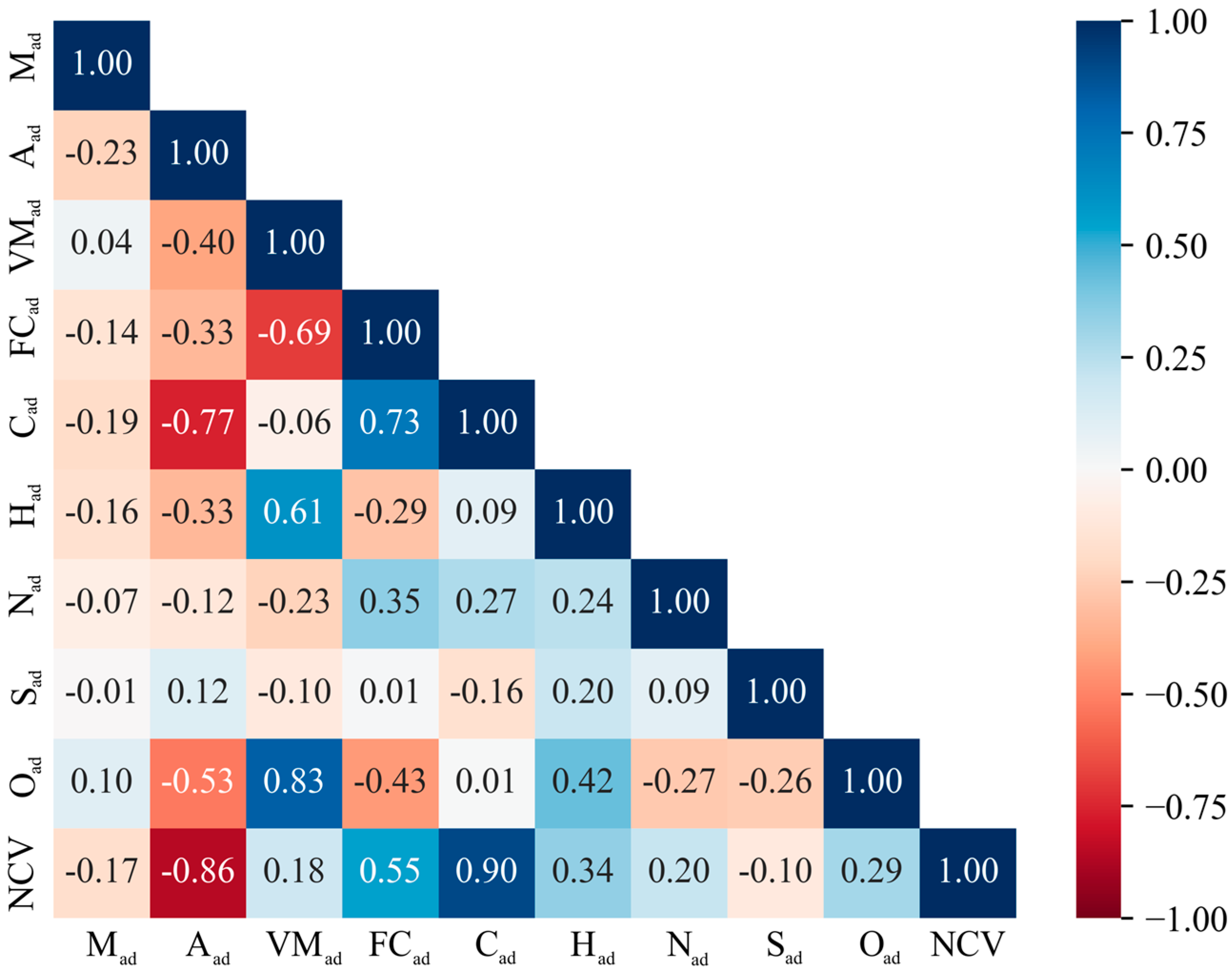
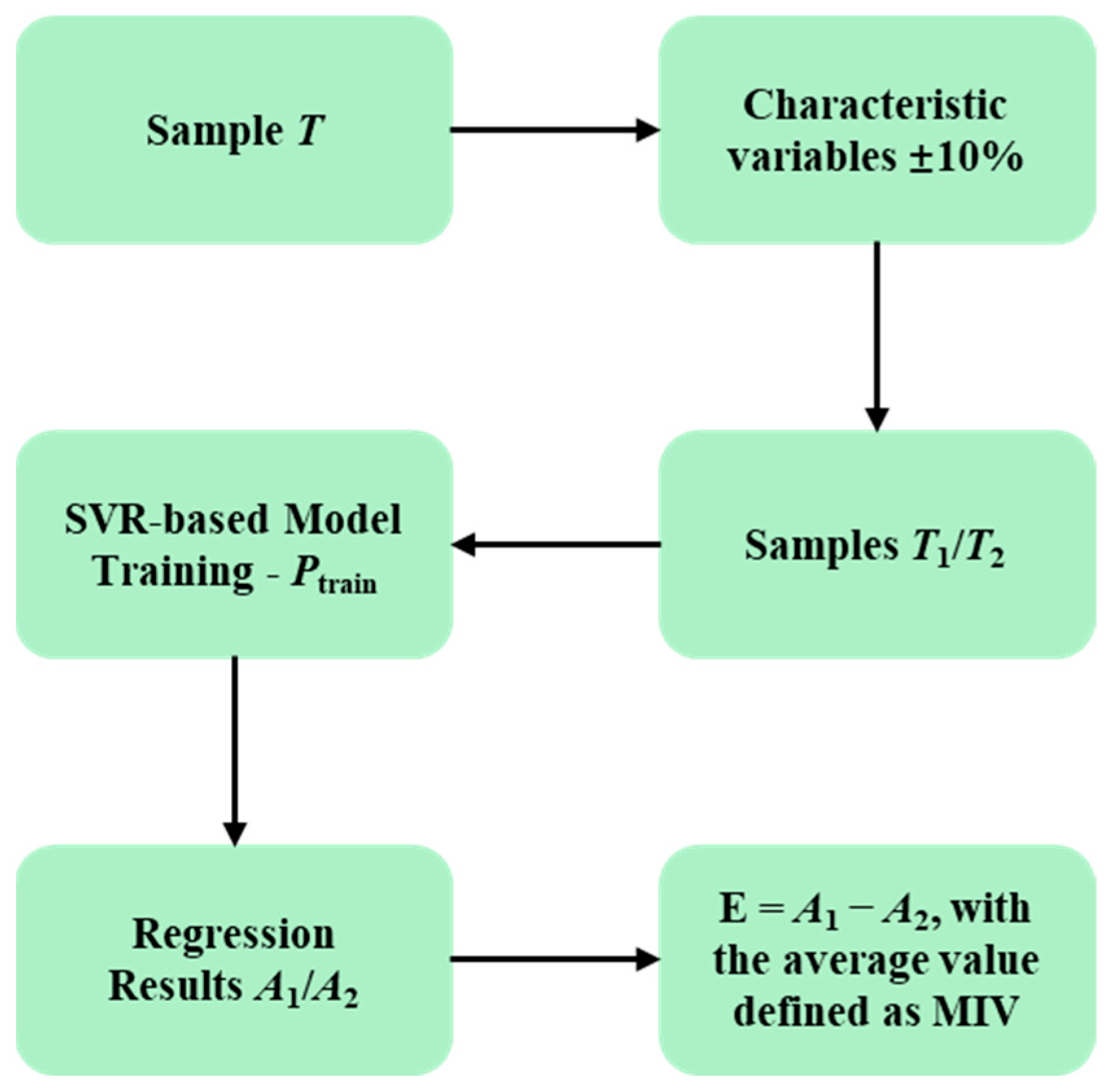
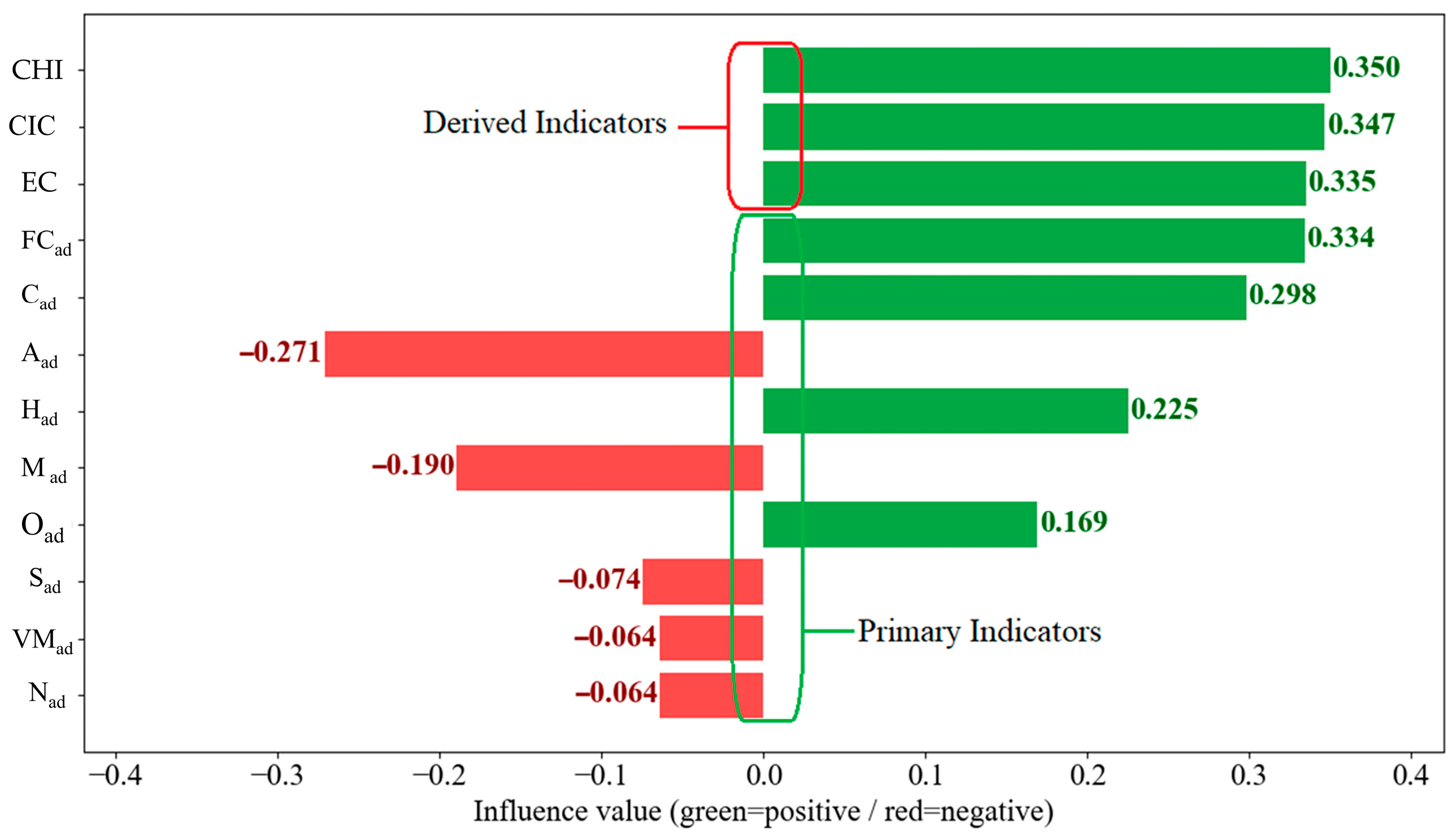
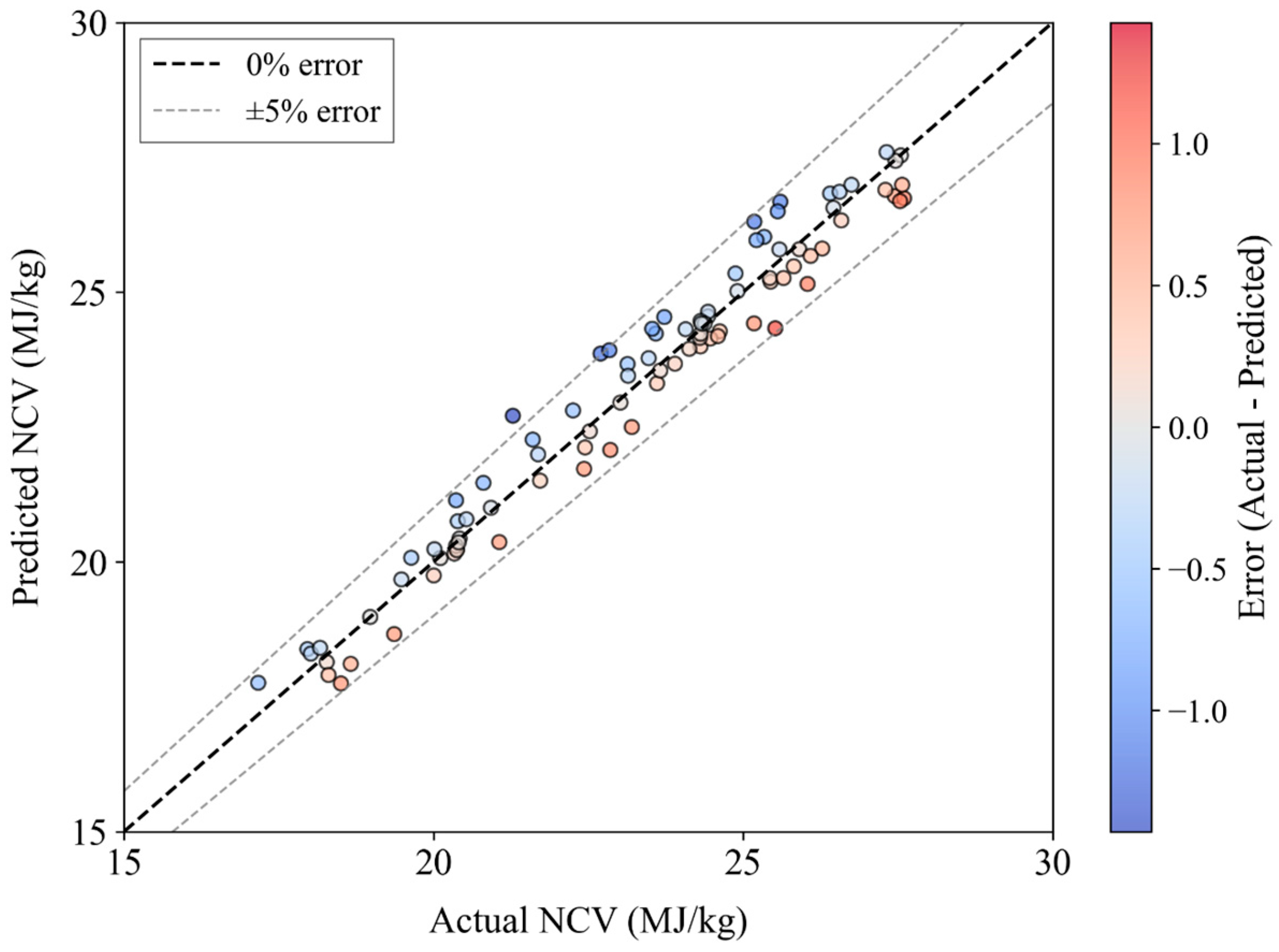
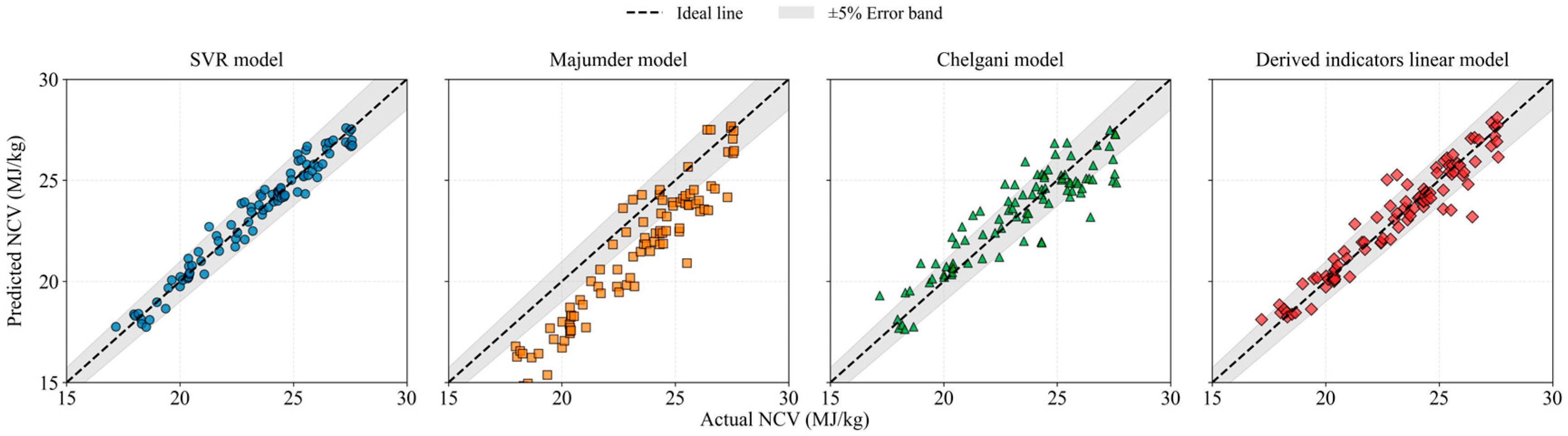
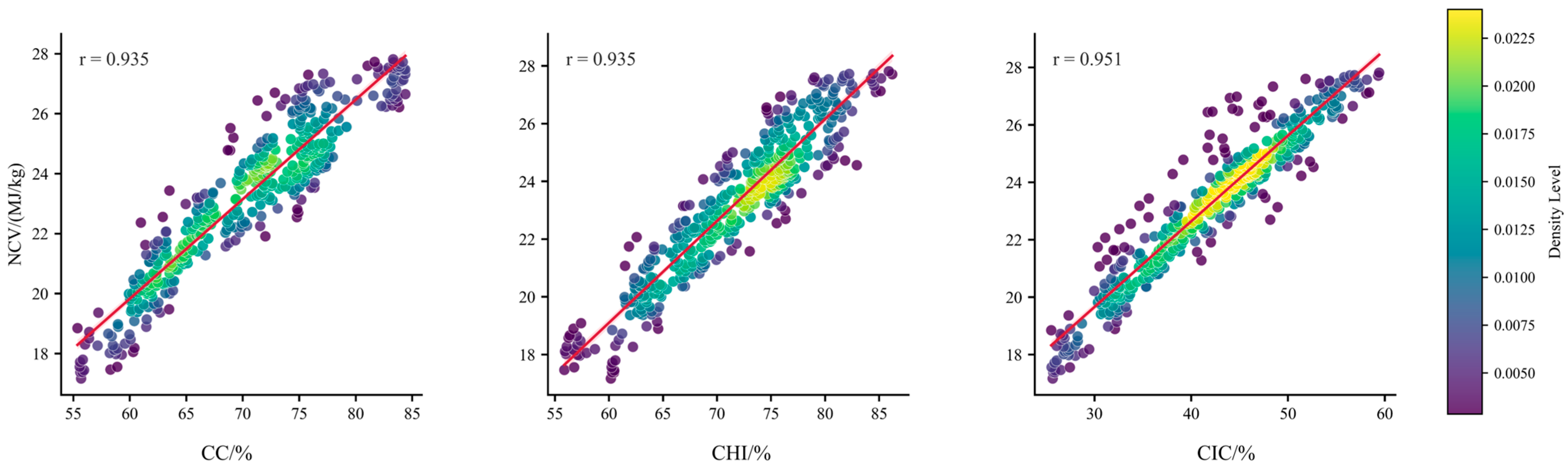
This study addresses the limitations of traditional coal calorific value prediction models, which primarily rely on linear regression and single-source proximate analysis data. Based on 465 Chinese coal samples and integrating proximate analysis, ultimate analysis, and constructed derived indicators (combustible content—CC, carbon–hydrogen index—CHI, carbon in combustibles—CIC), a nonlinear modeling method combining mean impact value (MIV) feature selection and support vector regression (SVR) is proposed. The results show that the Pearson correlation coefficients between the derived indicators and net calorific value (NCV) all exceed 0.93, outperforming the original items. Using CC–CHI–CIC–FCad as characteristic variables, the established SVR model achieved a mean absolute percentage error (MAPE), root mean square error (RMSE), and coefficient of determination (R2) of 1.838%, 0.544 MJ/kg, and 0.962, respectively, with exceptionally high statistical significance (F = 1485.96, p < 0.001). The predictive accuracy of this model is significantly superior to traditional linear models, while the proposed linear model based on the derived indicators (R2 > 0.900) can serve as an alternative for rapid estimation. This method effectively enhances the accuracy and robustness of coal calorific value prediction.
Keywords: calorific value; prediction; derived indicators; support vector regression; characteristic variables calorific value; prediction; derived indicators; support vector regression; characteristic variables