1. Introduction
Coal remains a critical energy source in the power sector, especially in developing countries where the existing power plant infrastructure heavily relies on its usage [
1,
2,
3]. The growing challenges associated with fossil fuel-based power production, particularly the emission of greenhouse gases, have become a critical global concern due to their significant contributions to environmental degradation.
As the world transitions toward a more sustainable and environmentally friendly energy future, renewable energy sources (RESs) have emerged as pivotal alternatives. The reliance on fossil fuel resources has steadily declined due to advancements in renewable energy technologies and materials. The projections indicate that by 2040, renewable energy sources will account for 66% of global energy production [
4]. Concentrated Solar Power (CSP) systems and thermal energy storage (TES) offer a promising solution for reliable power generation under varying solar radiation conditions [
5]. This advantage positions CSP above other renewable technologies, such as photovoltaics and wind power, which are often regarded as leading alternatives to fossil fuels.
Despite these benefits, CSP systems face significant challenges, including high initial investment costs, lower efficiency compared to fossil fuel-based systems, and the technical complexities associated with large-scale TES implementation. These barriers limit the widespread adoption of CSP technology [
6,
7]. Integrating solar energy into coal-fired power plants, forming a solar-assisted coal-fired power system (SACP), presents a viable approach to address these issues. This hybrid system has substantial potential to reduce coal consumption while mitigating the limitations associated with standalone CSP plants [
8]. One of the key advantages of CSP is its ability to provide baseload power when integrated with suitable TES systems. This integration ensures a steady and reliable power supply and enhances renewable energy systems’ overall efficiency and dispatchability [
9]. The solar TES system is considered to be one of the attractive solutions for utilizing solar energy. It has been studied due to its high efficiency and capacity to supply energy (mainly heat and power) for domestic and industrial demands [
10].
The study of energy storage materials and their applications for electricity and heat storage to mitigate peak demand–supply imbalances is a popular research area today. Heat accounts for the majority (70 to 80%) of daily energy demand in domestic settings, particularly for hot water and space heating needs [
11]. Since the discovery of fire, fossil fuels have been predominantly used for heat production. However, burning fossil fuels is responsible for 40% of human-related CO
2 emissions, exacerbating global warming. Additionally, fossil fuels are finite resources, with projections indicating that oil reserves could be exhausted within the next 30 years, around 2050 [
12].
Heat is central to the global energy chain, connecting primary and secondary energy sources. Its conversion, transfer, and storage processes account for 90% of the world’s total energy budget [
13]. Therefore, TES methods can help balance heat production and consumption by addressing the heat demand–supply gap. The TES concept consists of storing cold or heat, which is determined according to the temperature range in a thermal battery (TES material) operational working for energy storage. The main benefit of using TES with a charging process is its ability to meet heat demand even after the primary energy source is unavailable. For example, solar energy collected during the day can be stored in a thermal medium and then utilized to provide heat at night. TES systems can serve short-term and long-term purposes, i.e., short-term attributes to storing heat for hours or days, and long-term or seasonal attributes of storing heat for several months to be utilized whenever demanded within the last two decades. TES systems have been incorporated into renewable energy technologies to balance heat supply and demand for both residential and power plant applications [
11,
14].
Studies have investigated the technical and economic implications of integrating solar-heated feedwater into steam power plants. Wu et al. (2018) [
15] demonstrated that integrating solar TES into a 600 MW coal-fired power plant to preheat feedwater and reheated steam significantly improves efficiency. Using two solar fields, the system increased overall cycle efficiency by 1.91% and solar-to-electricity efficiency by 6.01%, with the solar contribution to energy input rising from 9.53% to 17.26%. The electricity output per unit of solar aperture area improved by 26.91%, highlighting the effectiveness of this dual solar integration in enhancing performance and renewable energy utilization [
15]. Another study introduced a novel dual feedwater circuit for a parabolic trough solar power plant, employing two trains of heat exchangers. This design allowed for extended operating hours and reduced reliance on fossil fuels during nighttime by adjusting the feedwater flow through different circuits based on solar availability [
16]. Thermodynamic modeling and balance calculations, performed using Ebsilon Professional software, demonstrate the feasibility and efficiency of this hybrid system [
17,
18].
Recently, Hu et al. developed a dual-time scale dispatch model for the dynamic operation of a CSP–photovoltaic (PV) hybrid plant to increase renewable energy utilization [
19]. This model accounts for actual startup conditions and incorporates dynamic switching behaviors of key subsystems, including the receiver, thermal storage, and power cycle. By considering the unique dynamic operational features of the CSP-PV hybrid system, the model employs different time scales for forecasting during day-ahead and intraday periods, enhancing the plant’s operational efficiency and its ability to respond effectively to changing weather conditions. A solar dish-based CSP system with a triple-extraction Rankine cycle was proposed by Sarker et al. [
20]. The hybrid configuration integrates thermal energy storage (TES) using molten salt, an organic Rankine cycle (ORC), and a natural gas–fired oxy-fuel combustion chamber to ensure stable power output during periods without solar input. Findings indicate that this design reduces fuel consumption by 74% compared to a conventional fossil fuel-based power plant.
Existing studies on integrating solar thermal energy with coal-fired power plants have primarily focused on large-scale feedwater preheating or the use of multiple solar fields. However, there is a lack of detailed investigations into retrofitting existing coal-fired steam units with hybrid solar–coal systems that utilize various solar feedwater injection locations and two-tank TES configurations. The influence of varying diverted feedwater flow rates on fuel-only efficiency, hybrid efficiency, and total system performance under constant boiler inlet temperatures has not been explored very much either. Moreover, comprehensive thermodynamic modeling of incremental solar contributions from CSP towers integrated with two-tank TES in hybrid coal plants remains limited, hindering the understanding of their effects on coal consumption and plant optimization. Unlike the case for CSP-PV hybrids, there is a notable lack of dynamic operational models for coal units that are retrofitted with CSP and TES, which constrains the development of effective strategies for hybrid operations and fossil fuel displacement.
The present work addresses these gaps by proposing a novel retrofit of existing coal-fired steam power plants with CSP and two-tank TES systems. Leveraging the established steam Rankine cycle, the Hybrid Solar–Coal Power Plant (HSCPP) design systematically evaluates three injection points before high-pressure feedwater preheaters in a 207.8 MW unit. It further investigates the effects of varying diverted feedwater flow rates (10–100 kg/s) on net power, fuel-only efficiency, hybrid efficiency, and overall performance at a fixed boiler inlet temperature of 221 °C. Finally, the study quantifies incremental solar contributions from the CSP tower with TES, analyzing their impact on coal use and plant efficiency using thermodynamic modeling framework in Ebsilon.
4. Result and Discussion
Three different analyses based on the variants were classified according to the extraction of feed water. A part of the feedwater is extracted before the HP heater and flows through the heat exchanger to utilize solar energy. The flow rate of extracted feedwater is controlled from 10 kg/s to 100 kg/s. The simulated result data are presented and discussed below.
To evaluate the integration of solar thermal energy into the feedwater preheating process, three simulation variants were developed. In each variant, a portion of the feedwater was extracted before a specific high-pressure (HP) feedwater preheater and diverted through a solar heat exchanger, where it was preheated using thermal energy from the solar field. The point of extraction varied between variants, resulting in different outlet temperatures from the heat exchanger: 184 °C (Variant 1), 158 °C (Variant 2), and 134 °C (Variant 3). The solar-preheated feedwater was then mixed back into the main feedwater line before entering the boiler. This configuration maintained a constant boiler feedwater inlet temperature of 221 °C across all simulations, ensuring stable boiler operation while enabling analysis of solar energy’s contribution to system performance.
4.1. Energy Contribution from Solar and Coal System
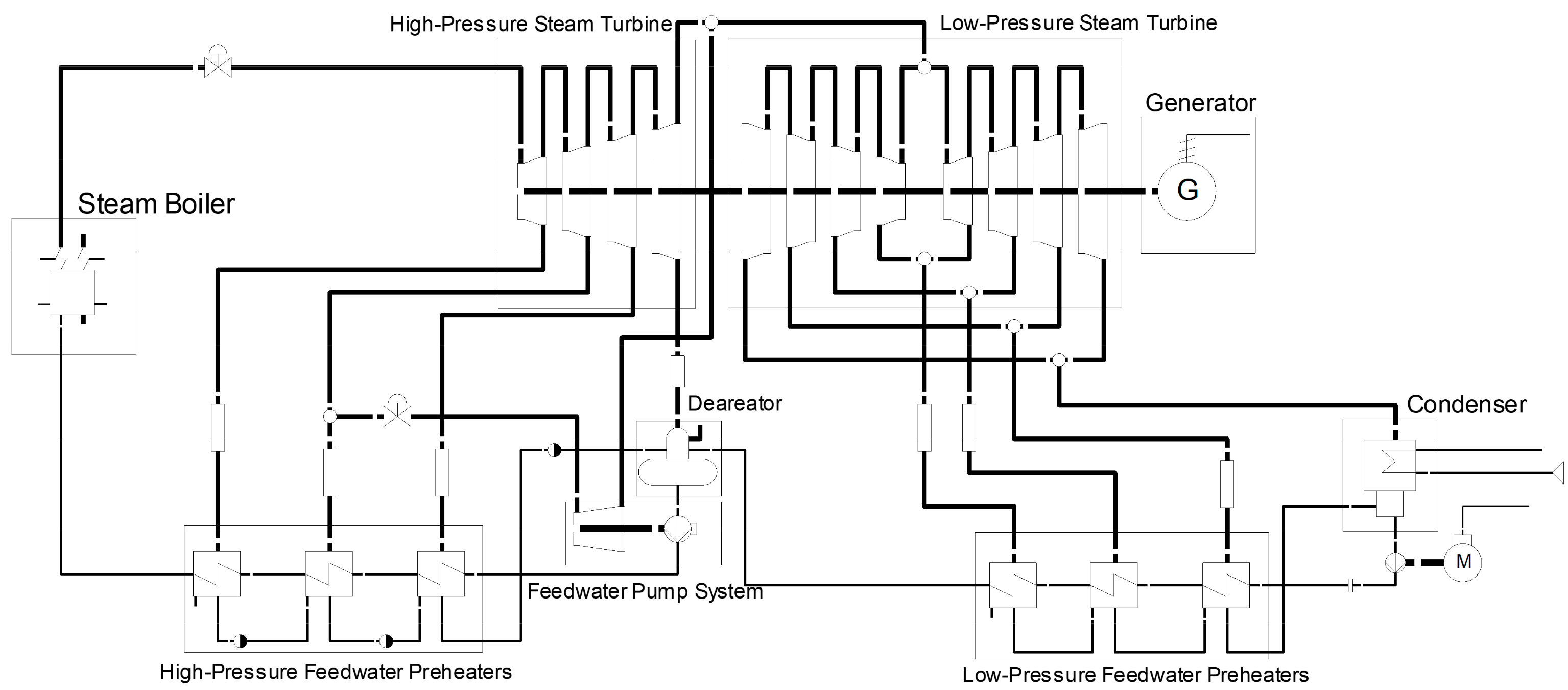
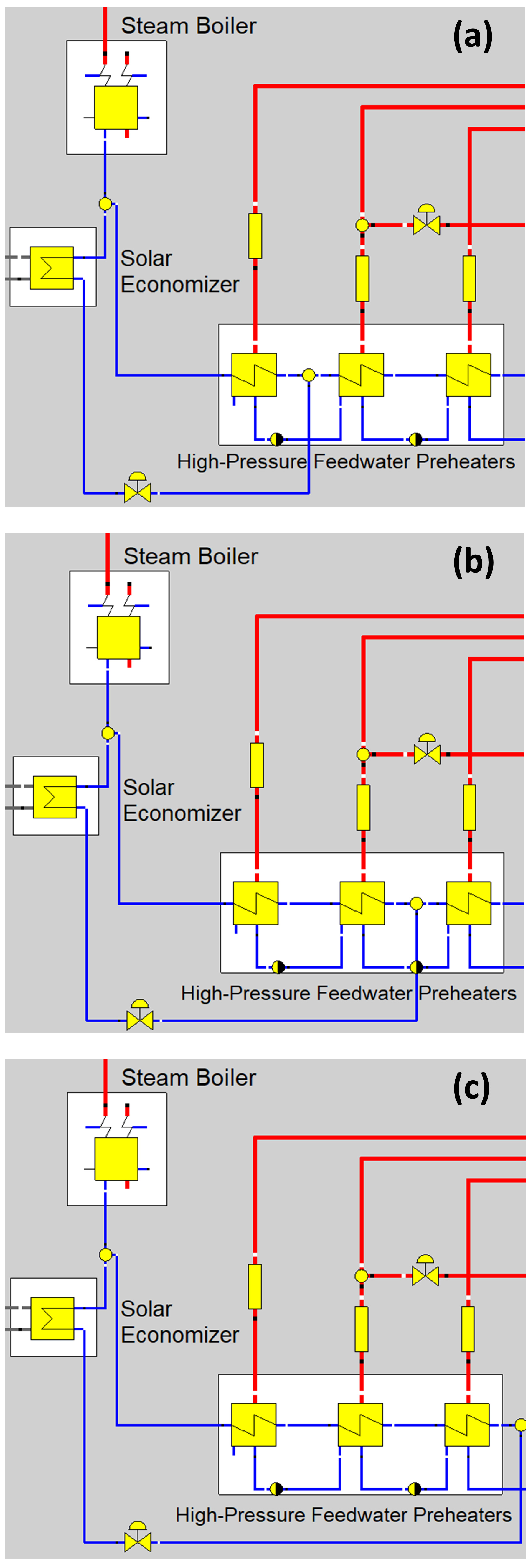
In all three simulation scenarios, the temperature of the feedwater at the boiler inlet was held constant at 221 °C. This design choice ensured that the operational conditions of the steam boiler remained stable and unaffected by the integration of solar energy. Consequently, the thermal energy supplied by the boiler which is sourced from coal combustion remained consistent across all variants, even as the contribution of solar heat to the feedwater preheating process increased and led to higher levels of electrical power generation. This stability in boiler operation was crucial for isolating and accurately assessing the influence of solar thermal integration on the overall system efficiency and power output. Extraction points of the variant 1 (a), variant 2 (b) and variant 3 (c) before HP preheater are shown in
Figure 5.
4.2. Efficiency Analysis
To investigate improvement of steam cycle performance by the use of additional heat source in the cycle, the power output and efficiency of the process were defined. The efficiency of the power plant can be calculated using the following equations:
—steam cycle fuel-driven efficiency, %
—steam cycle fuel and solar-driven efficiency, %
—heliostat field efficiency, %
—power output, MW
—heat rate to the cycle through boiler (energy from fuel), MW
—heat rate to the cycle through solar heat exchanger (solar energy), MW.
It is worth to note that the heliostat field efficiency () measures how effectively sunlight collected by heliostats is delivered to the central receiver in a solar tower system; compared to the solar energy incident on the mirrors, considering orientation, reflectivity, atmospheric losses, and geometric shading/blocking effects. Not all incident radiation reaches the receiver, as several losses occur along the way.
4.2.1. Variant 1
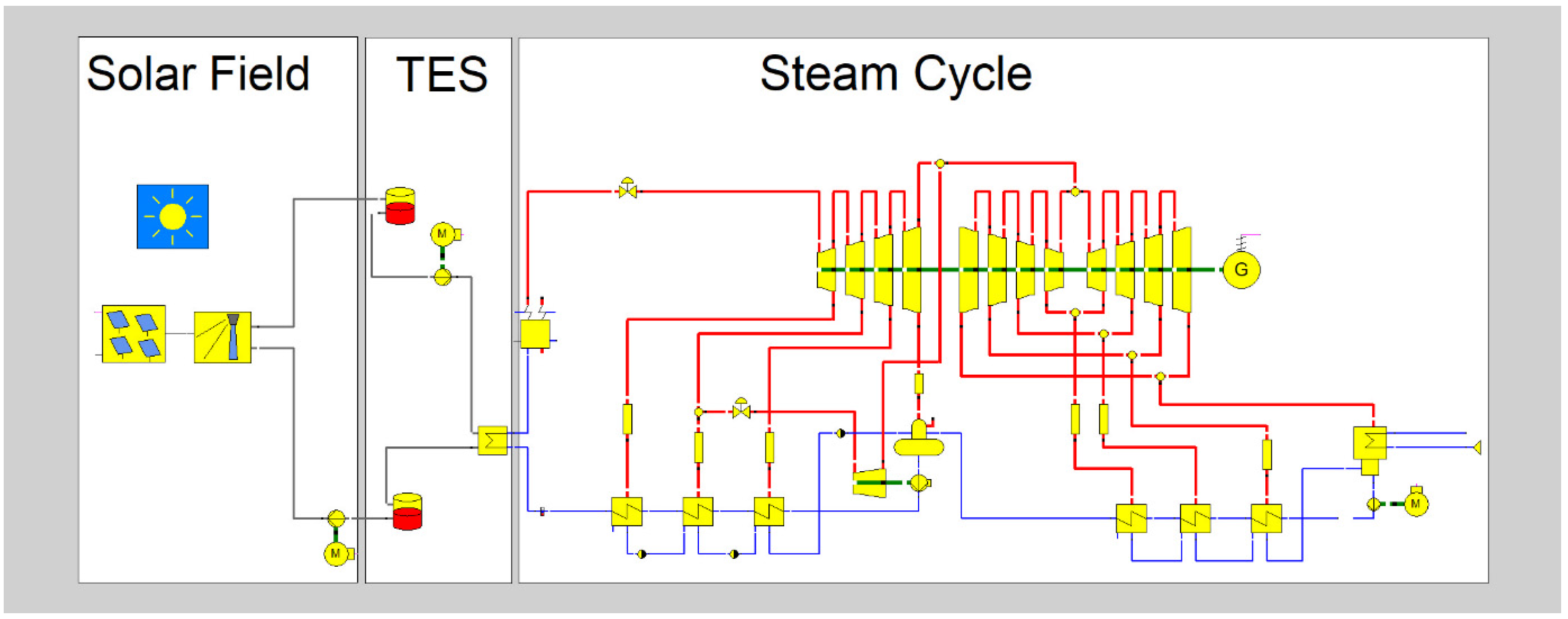
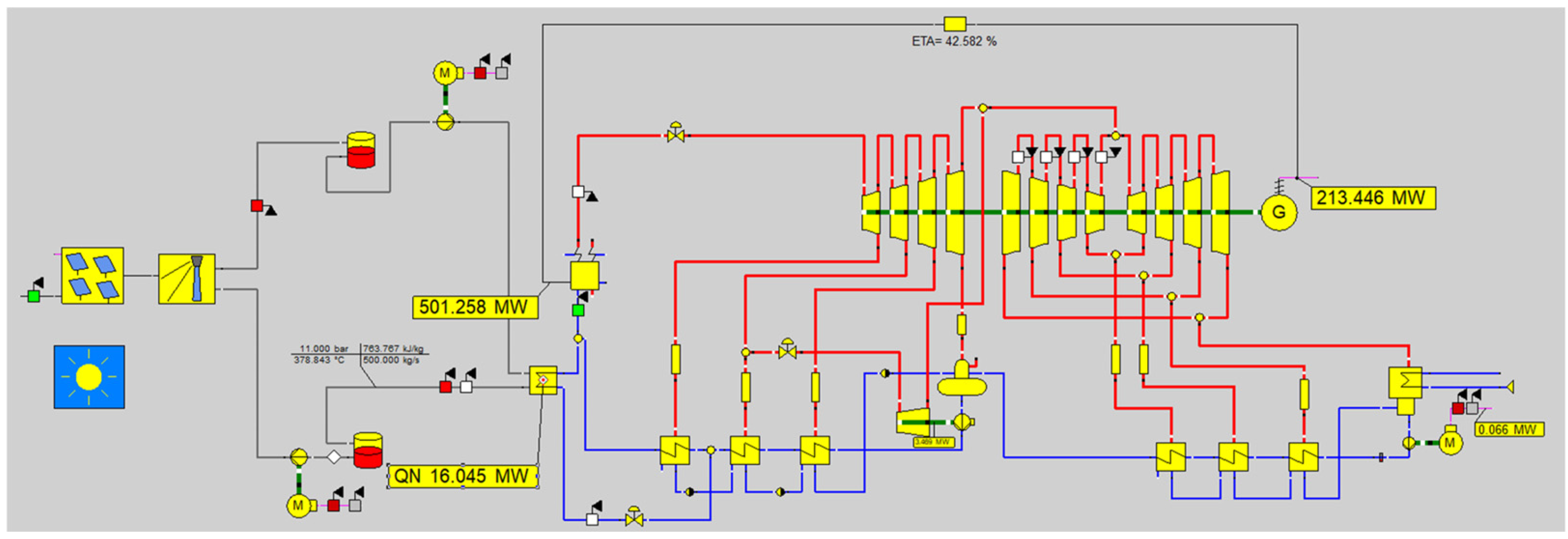
The hybrid solar-assisted steam power plant simulation demonstrates the successful integration of solar energy with a conventional coal-fired power system. Solar energy power contributes 16.045 MW, through preheating, reducing the dependency on coal. This reduces overall fuel consumption and improves the sustainability of the power plant. The simulated result for Variant 1 is presented in
Figure 6. The coal system remains the main energy source, generating 501.258 MW of thermal energy, while the plant produces a net electricity production of 213.45 MW after accounting for losses. The system’s overall efficiency is 42.58%, which is relatively high for a coal power plant, highlighting the benefits of energy combination. The total efficiency of the Hybrid Solar–Coal Power Plant reached the value of 27.93 in the analyzed case scenario. The detailed total efficiencies for each mass flow at different solar heat input and power output are presented in
Table 4. If the external heat source of the Rankine cycle is assumed as the sum of coal and sun energy input, the efficiency is lower. In the case where the feedwater mass flow rate is 100 kg/s, the efficiency is the lowest, but the power output of the power plant is highest compared to the scenarios with lower feedwater mass flow rates.
4.2.2. Variant 2
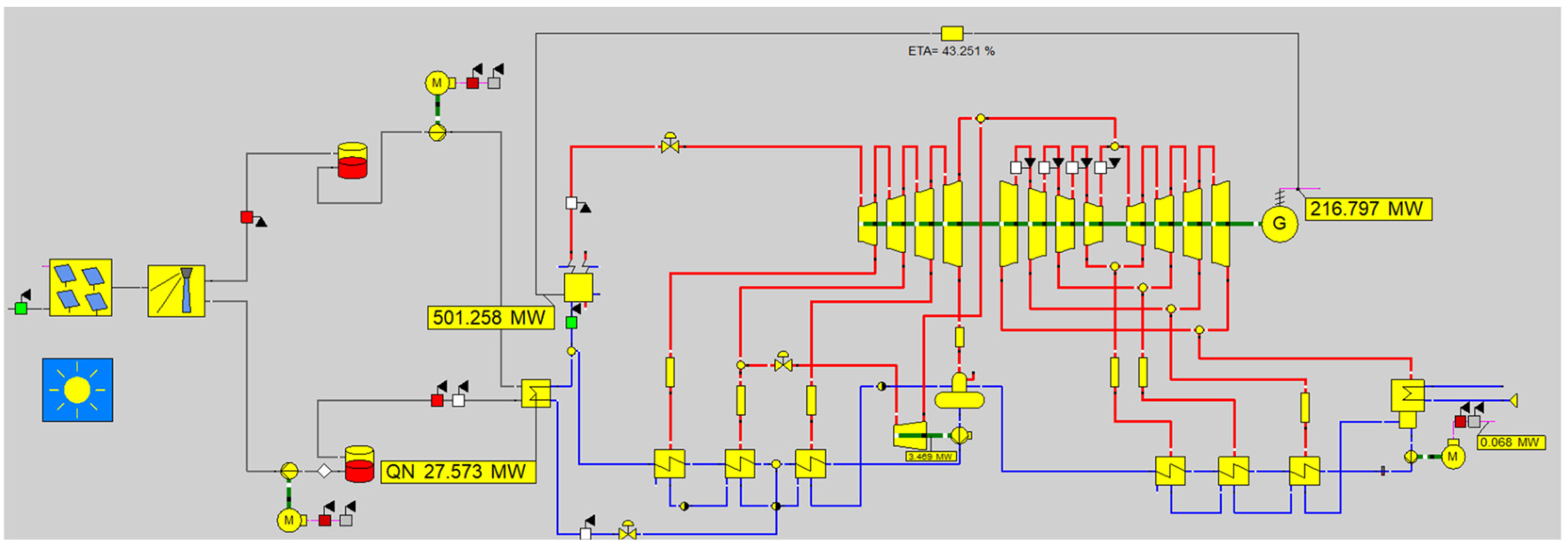
The simulation results for Variant 2 presented in
Figure 7 were built upon a previous configuration of the solar-assisted steam power plant, where the solar contribution was lower, at 16.045 MW, and the fuel-based thermal efficiency of the system was 42.58%, when the maximum total efficiency is equal to 27.93%. In the earlier configuration, the plant achieved a maximum net electricity output of 213.45 MW, with the coal-fired system providing the same consistent thermal input of 501.258 MW. While the solar input in the previous case positively impacted performance, its smaller contribution limited the extent of efficiency gains. The detailed total efficiencies of variant 2 are presented in
Table 5.
In comparison, the current configuration demonstrates a notable improvement with a higher solar energy input of 27.57 MW, which directly enhances the plant’s thermal efficiency to 43.25% and increases the net electricity output to 216.8 MW. This progression underscores the impact of increasing solar integration on improving system performance and sustainability. The consistent coal input across both cases highlights the complementary role of solar energy in reducing fuel consumption without compromising base-load reliability. These findings collectively highlight the scalability and efficiency benefits of incorporating higher solar energy contributions into traditional coal-based power plants.
4.2.3. Variant 3
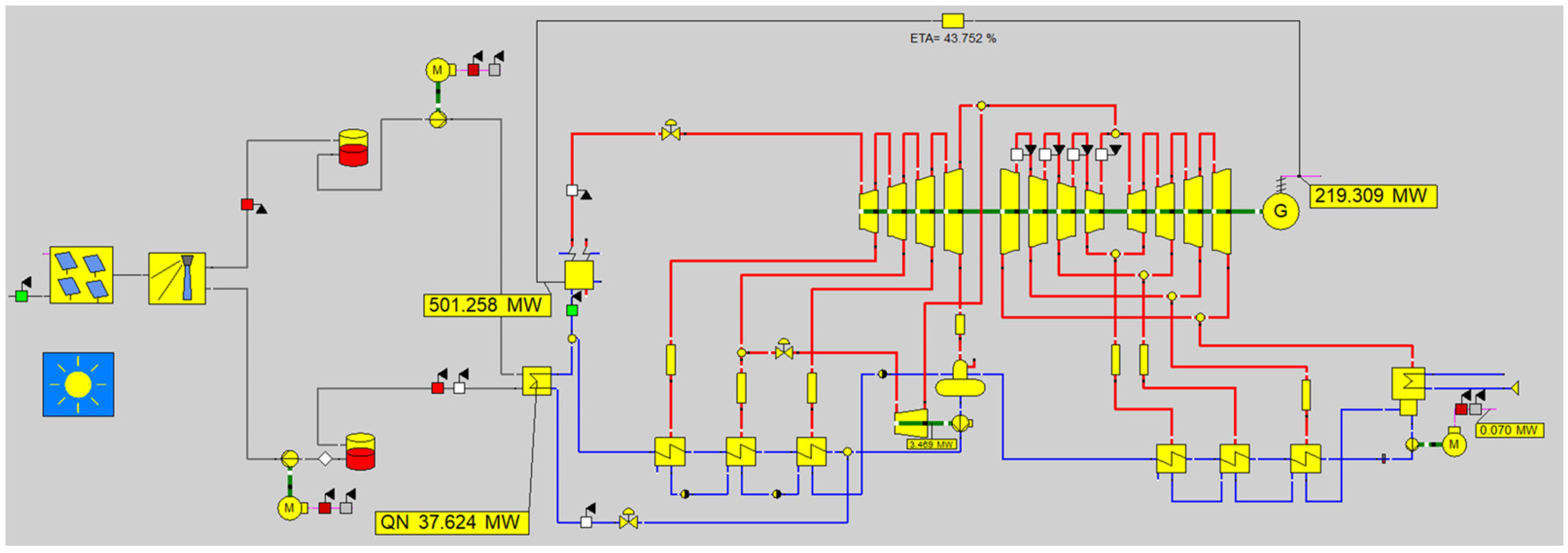
The simulated results for Variant 3 are shown in
Figure 8. The solar system contributes up to 37.62 MW, which represents a substantial increase from prior configurations. This energy is utilized to preheat the working fluid or supplement steam production, reduce the load on the coal system, and improve the overall thermal fuel-driven efficiency of the plant. The coal-fired section still delivers a consistent thermal energy input of 501.258 MW, ensuring reliable base-load boiler operation. The integration of solar energy complements rather than replaces the coal energy input, thereby improving fuel efficiency and reducing specific coal consumption. The generator produces a maximum net electricity output of 219.31 MW, which is the highest among the analyzed simulations. The plant’s thermal efficiency improves further to 43.75%, reflecting a steady upward trend as solar energy input increases. The maximum total efficiency of the hybrid system reaches 29.63%. The detailed total efficiencies for each mass flow at different solar heat input and power output are presented in
Table 6.
4.2.4. Results Comparison
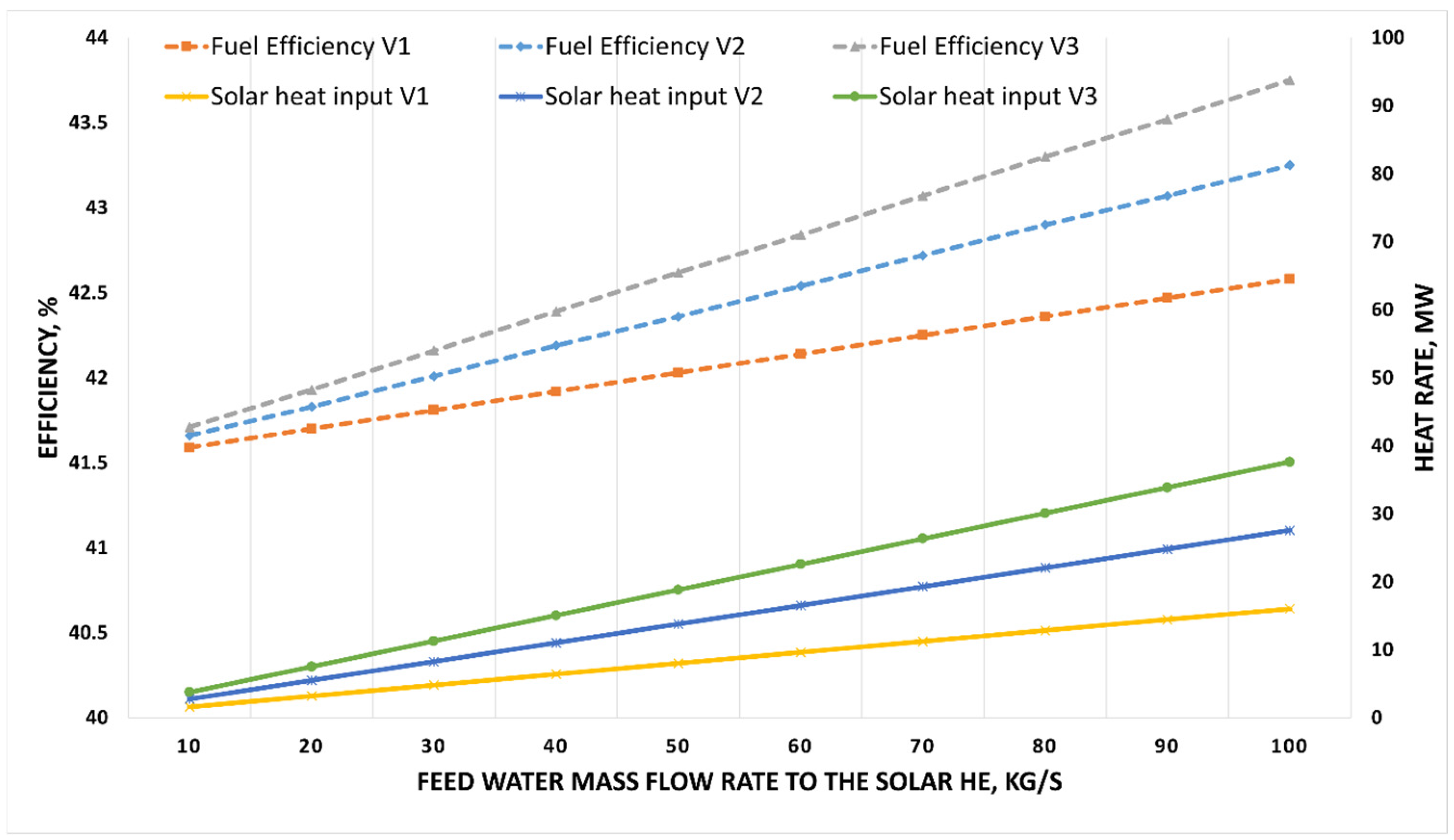
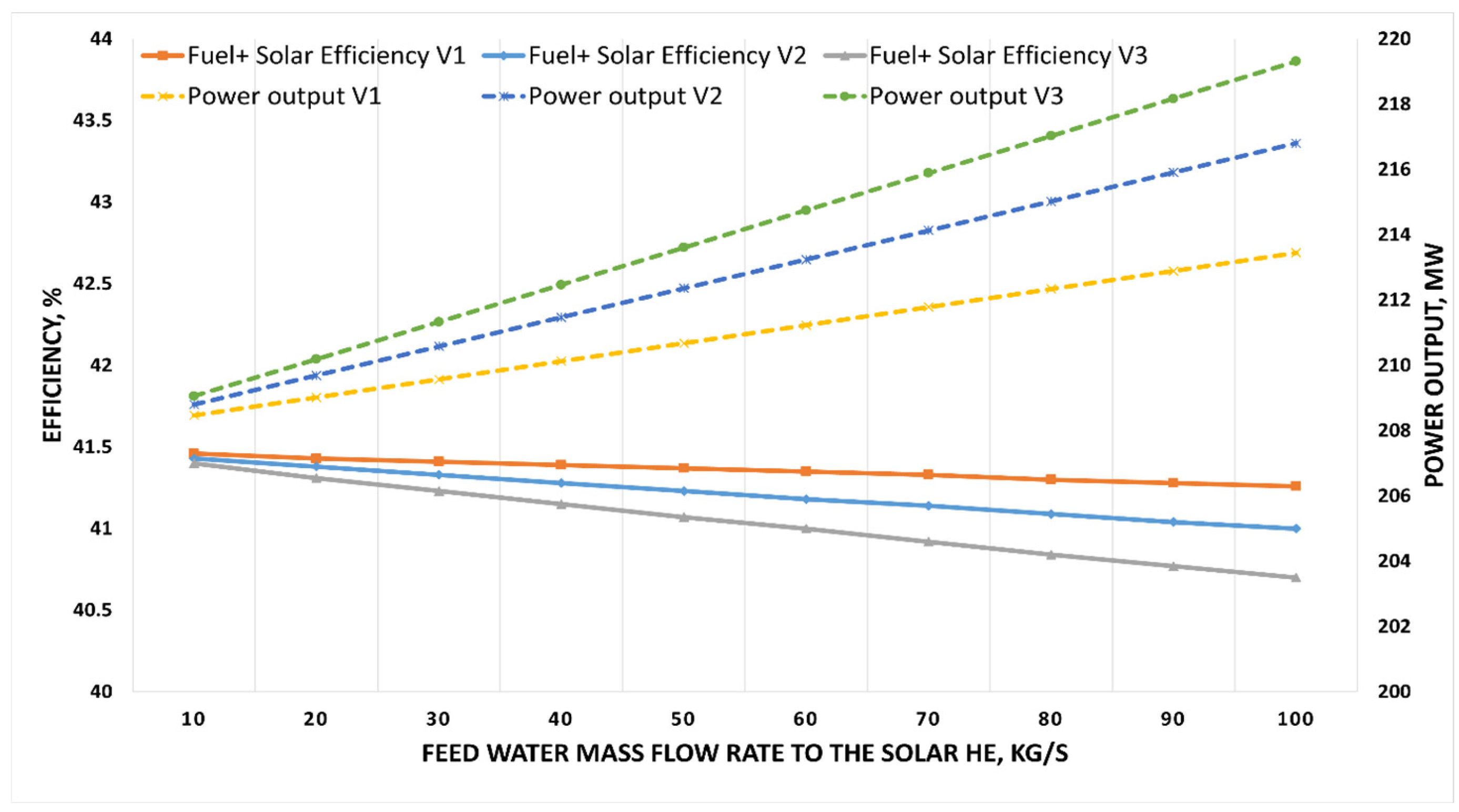
The increase in solar energy input leads to a consistent improvement in thermal efficiency across the analyzed configurations. Compared to results from variants 1 and 2, with efficiencies of 42.58% and 43.25%, this simulated result from variant 3 achieves the highest efficiency of 43.75%. With a solar contribution of 37.62 MW, the coal consumption needed for generating electricity can be reduced. Although the coal input remains constant, the improved thermal efficiency indicates reduced fuel-specific energy requirements. The increased integration of solar energy reduces the environmental footprint of the power plant by lowering coal consumption and greenhouse gas emissions. This highlights the potential for hybrid systems to contribute to cleaner and more sustainable power generation. The relationship between mass flow rate and the efficiencies of solar-assisted steam power plant, solar contribution and electricity generation (power output) for three variants are illustrated in
Figure 9 and
Figure 10. Overall, the efficiency
increases steadily as the mass flow rate rises. At lower mass flow rates (10–30 kg/s), all three variants show relatively low and similar efficiency levels, with Variant 1 performing the least efficiently. However, as the mass flow rate increases (50–100 kg/s), the differences between the variants become more pronounced. Variant 1 achieves an efficiency starting at 40.5% at 10 kg/s and peaks just below 43.0% at 100 kg/s. Variant 2 performs moderately better, reaching around 43.25% efficiency at the highest mass flow rate. Variant 3 outperforms both, starting at approximately 41.0% at 10 kg/s and reaching nearly 44.0% at 100 kg/s. In contrast to
Figure 9, which shows increasing efficiency with higher mass flow rates,
Figure 10 demonstrates a slight decline in efficiency across all three variants as the mass flow rate increases. At lower mass flow rates (10–30 kg/s), the efficiency is higher, with Variant 1 achieving the best performance at approximately 41.50%, followed by Variant 2 at 41.30% and Variant 3 at 41.10%. However, as the mass flow rate increases to 100 kg/s, efficiency decreases slightly, with Variant 1 maintaining the highest efficiency at 41.20%, followed by Variant 2 at 41.00%, and Variant 3 at 40.50%.
These results highlight the impact of increased solar energy integration on system performance. Variant 3, with the highest solar contribution, consistently achieves better efficiency by reducing reliance on coal and improving thermal energy utilization. Additionally, higher mass flow rates enhance the overall performance of all variants by improving heat transfer, steam generation and electricity generation. The efficiency gains are most notable at higher mass flows, where Variant 3 demonstrates the most significant improvements.
5. Conclusions
The heat absorbed by the fluid from the solar tower receiver varies significantly, ranging from 0 to 86.41 MW, depending on the intensity of solar radiation during operating hours. This variability highlights the intermittent nature of solar energy and the critical role of solar thermal systems in effectively capturing and utilizing solar heat. Despite this variability, the feedwater temperature at the boiler inlet remains constant at 221 °C, ensuring stable operation of the steam cycle and preventing thermal stresses within the boiler system. This stability is achieved by integrating the solar thermal component into the conventional Rankine cycle without disrupting the boiler’s operational parameters.
Interestingly, the energy consumed by the steam boiler remains constant across all three variants of the hybrid system, regardless of the increase in the power generation of the electric generator. This indicates that the additional power output is directly attributable to the solar contribution, which offsets the energy demand for preheating the feedwater. By reducing steam extraction for feedwater heating, the system channels more energy to the turbines, thereby increasing overall power generation efficiency. This integration strategy demonstrates the effective utilization of solar energy to supplement and enhance the performance of traditional coal-fired power plants without altering the boiler’s energy input, ensuring operational consistency. Such designs improve thermal efficiency and allow for increased electricity generation during peak solar hours, making the hybrid power plant a promising solution for reducing fossil fuel dependence and CO2 emissions while maintaining reliable power output. Furthermore, the ability to sustain a constant feedwater temperature and boiler energy input under varying solar conditions underscores the robustness of the hybrid system, which is critical for achieving a cleaner energy transition.
Incorporating solar energy significantly enhances the efficiency of the plant while reducing emissions. Even with a modest solar contribution, the system achieves improved performance and lower environmental impact. The findings highlight the potential for further optimization by increasing the solar input, which could lead to greater reductions in coal dependency. In conclusion, the proposed Hybrid Solar–Coal Power Plant solution shows a promising path toward balancing sustainability and reliability. It leverages the renewable benefits of solar energy to enhance the performance of traditional coal systems, opening up the potential for cleaner and more efficient energy solutions.