1. Introduction
The increasing global energy demand, coupled with the urgent need to mitigate climate change, has prompted the exploration of innovative and sustainable energy solutions. Bioenergy with Carbon Capture and Storage (BECCS) has emerged as a promising strategy that integrates renewable energy production with carbon dioxide (CO
2) capture and long-term storage [
1,
2,
3].
Over the past decades, there has been growing recognition of the pressing need to transition from fossil fuel-based energy sources to low-carbon alternatives. Bioenergy, derived from biomass such as agricultural residues, dedicated energy crops, and forest residues, presents a renewable and potentially carbon-neutral energy option. When combined with Carbon Capture and Storage (CCS) technologies, the carbon content of biomass, commonly under the form of carbon dioxide, can be effectively captured, transported, and stored deep underground, preventing the greenhouse gas (GHG) release into the atmosphere. This integrated approach must be intended not only as a way of reducing GHG emissions but also as an opportunity to remove CO
2 from the atmosphere, i.e., making a negative emissions process. Therefore, it is essential to assess the feasibility, scalability, and environmental implications of this technology [
4].
This article provides a systematic literature review of BECCS technologies to comparatively assess their performances from the perspective of efficiently contributing to the achievement of the “net zero target” set by the European Union (EU) [
5]. The assessment provides a comprehensive overview of the current state of knowledge, advancements, challenges, and potential implications of BECCS as a viable approach for decarbonizing energy systems and achieving climate targets. This literature review critically analyzes and synthesizes the existing body of research, covering studies, reports, and scientific literature, to evaluate the technical and environmental aspects of BECCS deployment. The findings are meant to serve as valuable resources for policymakers, researchers, and stakeholders involved in the energy and environmental sectors, guiding decision-making processes and facilitating the transition towards a more sustainable and low-carbon future.
1.1. BECCS Potential
1.1.1. Bioenergy
Biomass, derived from biological matter such as plants, agricultural residues, forest products, and even Municipal Solid Waste (MSW), holds great promise in the quest for a sustainable energy future. Biomass is considered a renewable source when the rate of utilization is equal to or less than the production capacity.
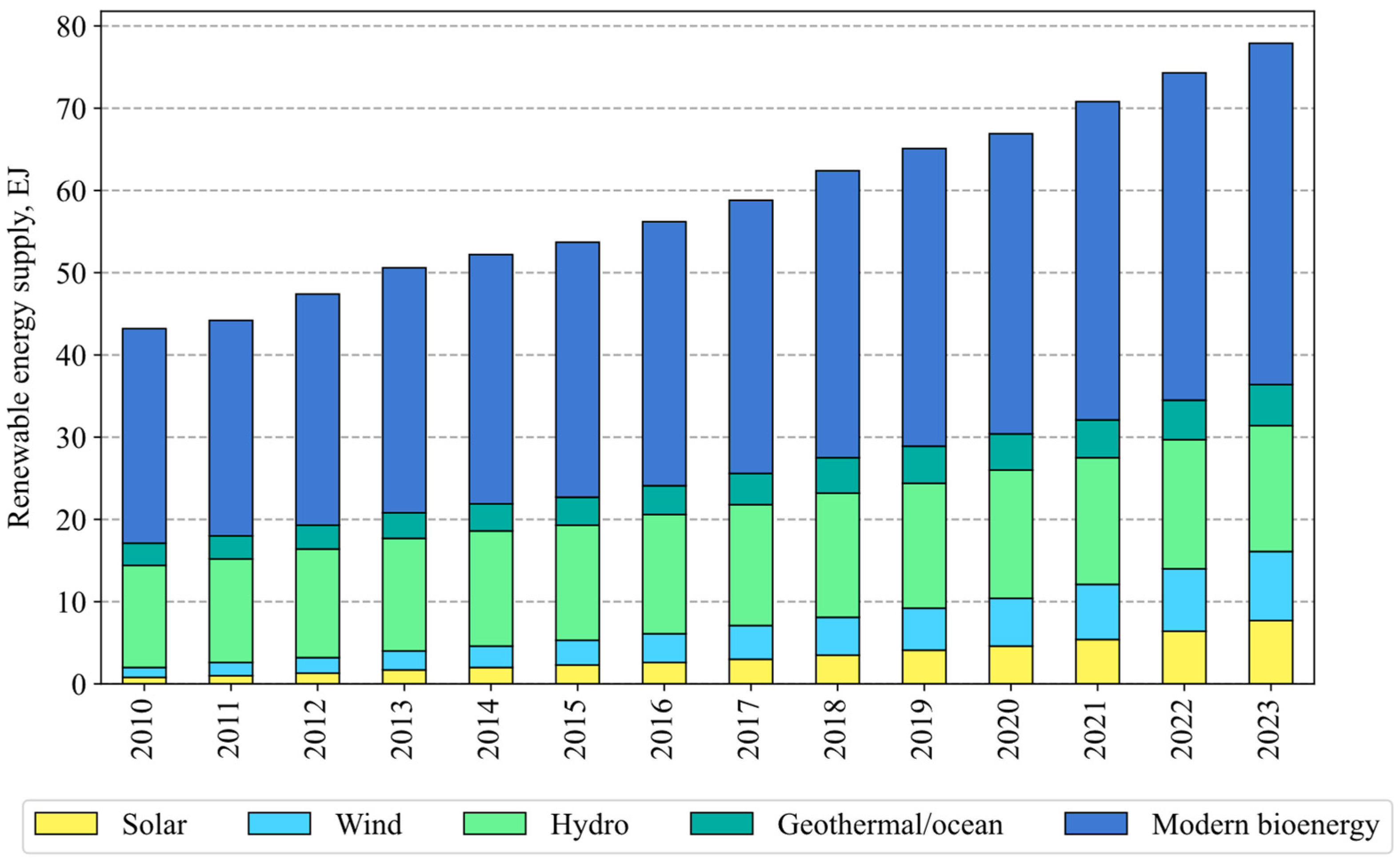
Bioenergy, derived from biomass resources, is the largest source of renewable energy and contributes significantly to global energy supply and sustainability. Currently, bioenergy accounts for as much as 55% of global renewable energy and exceeds 6% of total energy supply. In particular, the use of bioenergy has seen substantial growth in recent years. Between 2010 and 2021, bioenergy consumption experienced an estimated annual increase of 7% [
6], as represented by the graph in
Figure 1.
Another interesting aspect of biomass is its inherent carbon-neutral capacity. Biomass sources absorb, through photosynthesis during the growth phase, the same amount of CO2 that is released when the biomass is burned. This unique feature positions biomass as a potentially carbon-neutral energy source, where carbon emissions from burning biomass are offset by carbon absorption during its growth.
The use of biomass as a renewable energy source offers a wide range of conversion pathways, each with its own advantages and applications. Specifically, conversion pathways can be divided into thermal, thermochemical, and biochemical processes.
Thermal conversion includes combustion, which directly burns biomass to produce heat possibly converted into power, and gasification, which converts biomass into a synthesis gas (syngas) consisting mainly of carbon monoxide and hydrogen. Thermochemical conversion routes include pyrolysis, which decomposes biomass at medium-high temperatures and in the absence of oxygen, producing bio-oil, syngas, and biochar. Biochemical conversion involves the use of enzymes or microorganisms to break down biomass into biofuels, such as ethanol and biogas, through fermentation or other biological processes.
However, in accordance with Babin et al. [
3], some possible limitations in bioenergy development need to be considered. First, biomass production requires the use of land and resources, which can potentially compete with other essential land uses, such as food production and conservation efforts. Careful implementation of comprehensive planning and sustainable land management practices is critical to mitigate conflicts and ensure that biomass production is both responsible and renewable. Indeed, the cultivation and processing of biomass can have significant environmental implications, including land degradation, deforestation, and depletion of water resources. A potential way to address this issue lies in utilizing degraded lands that are unsuitable for other purposes, thus minimizing conflicts with food production and biodiversity conservation. The global estimate of degraded land ranges from 1 billion hectares to over 6 billion hectares, offering a vast potential for cultivating biomass crops dedicated to bioenergy production. Additionally, the utilization of agricultural residues and woody biomass presents another viable option, enabling the intelligent valorization and disposal of these resources. Notably, forestry waste alone is estimated to reach 14 Gton per annum, comprising tops, branches, foliage, sawdust, and post-processing residues from the wood industry.
In addition, although biomass is generally considered carbon-neutral, specific combustion processes can result in the emission of pollutants and particulate matter, which can impact air quality. To mitigate these emissions, the implementation of effective emission control measures is necessary. Finally, the collection, transportation, and storage of biomass feedstocks pose logistical challenges due to the bulky nature, low energy density, and variable composition of biomass. Efficient supply chain management and infrastructure development play a crucial role in ensuring reliable production with the least environmental impact.
Regarding the use of biomass for energy production, it is necessary to mention the recent revision of the European Union’s Renewable Energy Directive (RED 2) [
8], as it envisions major changes in this area. First is the importance of having a sustainable biomass supply chain for both energy and non-energy uses, maintaining carbon sinks and national forest ecosystems. Furthermore, this normative introduces a clause on the use of woody biomass on the basic principle of cascading. Woody biomass should be used according to its highest value in the following order of priority: (1) wood-based products, (2) life extension, (3) reuse, (4) recycling, (5) bioenergy, and (6) disposal. In cases where no other use of woody biomass is economically viable or environmentally appropriate, energy recovery contributes to reducing energy production from non-renewable sources.
The cited EU normative recognizes Member States’ specificities by setting only general principles, allowing for the inclusion of bioenergy into national energy and climate plans. A crucial aspect of these principles is the possibility of introducing support schemes to solid biomass-fed power plants only if either (i) they significantly Combine Heat and Power (CHP) production, (ii) they can promote the phase-out of fossil fuels, or (iii) they adopt CCS. Moreover, the applicability of the new normative is widened by lowering the threshold on the minimum size of solid biomass-fed plants from the current 20 MW down to 7.5 MW of thermal input on a Lower Heating Value (LHV) basis.
Parallel to EU normative evolution, Member States are also ruling on bioenergy. For example, Italy put into force its National Energy and Climate Plan (NECP) in January 2020 [
9]. On the one hand, it promotes the updating of existing wood-fired heating systems, as well as the certification of solid biofuels according to technical standards; on the other hand, it sets some restrictions on the use of biomass for heating purposes in areas with air quality problems. In the light of the current geopolitical situation and the new EU energy policies, the Italian Ministry of Environment and Energy Security already referred a proposal for an update to the NECP to the European Commission. Furthermore, Italy also defined a National Forestry Strategy (NFS) [
10], in which bioenergy from solid biomass plays a key role. Specifically, at present, solid biomass, such as woody biomass and wood pellets, is Italy’s leading renewable for thermal energy production [
11]. Within the NFS, objectives such as improving the competitiveness and sustainability of forestry industries, bioenergy, and the green economy, in general, are therefore key. All this is intended to ensure, on the one hand, the development of bioeconomy and forest economies and, on the other hand, the expansion and enhancement of forests in urban and suburban contexts. To achieve these goals, some periodic actions are planned, such as the measurement of wood energy use; domestic, civil, and industrial consumption of woody biomass for energy purposes; and volumes of wood intended to feed power plants for electricity production.
Overall, the situation of bioenergy and, specifically, the energy exploitation of solid biomass is still fluid, even if the direction taken by the EU seems to open to future promotion and expansion, especially under the form of BECCS.
1.1.2. Carbon Capture and Storage (CCS)
Carbon Capture and Storage represents a pivotal and possibly cost-effective solution for mitigating carbon dioxide emissions originating from industrial and energy applications. Projections indicate that CCS has the potential to annually reduce CO
2 emissions by up to 4.0 gigatons by 2050 in industrial sectors. To achieve this target, it is estimated that 20% to 40% of all facilities will need to be equipped with CCS technology by 2050 [
12]. CCS involves three main steps: (i) capturing CO
2 at the source, (ii) compressing and transporting it, and (iii) injecting it into suitable underground geological formations for definitive storage (it also includes the use for Enhanced Oil Recovery—EOR). Additionally, Carbon Capture, Utilization, and Storage (CCUS) is a variant of CCS that is gaining momentum, as CO
2 can be employed in industrial and chemical processes, including food and beverage production, refrigerants, fire extinguishing gases, and ammonia and urea manufacturing.
There are three main approaches for CO2 capture: (i) post-combustion, (ii) pre-combustion, and (iii) oxyfuel combustion.
In Post-Combustion Capture, carbon dioxide is separated from flue gas using chemical solvents, solid sorbents, high-pressure membranes, or cryogenic separation. Despite its higher costs due to equipment expenses and energy requirements, Post-Combustion Capture remains widely considered because of its compatibility with existing plant infrastructure (i.e., possible retrofit of existing plants).
Pre-combustion capture involves converting fuel into a syngas through pre-treatment and processes such as gasification and reforming. The carbon content of the syngas is captured mainly via chemical absorption after the shift to CO2.
Lastly, oxy-combustion involves the use of pure oxygen, often obtained from a cryogenic Air Separation Unit (ASU), or highly enriched air, as oxidant for the combustion to generate flue gas mainly made of carbon dioxide and water vapor, from which CO2 can easily be captured. The oxy-fuel combustion method is recognized as a more challenging yet promising technique due to the substantial energy requirements of the ASU and the possible contamination of the resulting flue gas with ambient air.
At the European level, the regulatory framework for CCS and CO
2 removal is not yet mature. The annual report on the functioning of the EU Emissions Trading System (ETS) includes sections dedicated to possible future developments, such as the integration of voluntary CO
2 removal mechanisms into the ETS. While not yet a legislative proposal, the report is a policy guidance document that creates the way for a complementary institutional framework to structurally include certified CO
2 removals in the ETS [
13].
1.2. BECCS Challenges
By integrating bioenergy production with the capture and storage of carbon dioxide emissions, BECCS offers a promising pathway to actively remove CO
2 from the atmosphere [
3]. Among the suite of negative emission technologies, BECCS stands out as the most advanced and commercially viable option with the highest Technology Readiness Level (TRL) [
14]. By harnessing the power of photosynthesis through biomass feedstock utilization and combining it with the capture and permanent storage of CO
2, BECCS presents a tangible opportunity to not only reduce emissions but also actively sequester atmospheric carbon, thus enabling a net removal of GHGs from the atmosphere.
However, regulations regarding this technology are a crucial aspect affecting its development. Babin et al. [
3] provide a comprehensive overview of the main issues and obstacles to the development of BECCS.
The first aspect that deserves consideration is the size of the facility. Donnison et al. [
15] examined the sustainability of BECCS fueled by local biomass resources and found that expansion of the size beyond 500 MW thermal input could compromise the overall sustainability due to increased land use and biomass consumption.
Reid et al. [
16] express concerns about the long-term implications of large-scale bioenergy production, highlighting potential ecosystem disturbances and the risk of hindering the development of other renewable energy systems. To mitigate these risks, comprehensive biomass life cycle assessments and regulatory measures to prevent unsustainable practices have been recommended.
Searchinger et al. [
17] propose limiting the use of dedicated land for bioenergy production by phasing out biofuel mandates and subsidies, limiting the use of whole trees for bioenergy, and reforming the accounting of bioenergy emissions. The focus has shifted toward generating bioenergy from waste and residues to minimize the use of dedicated land. However, the limitations of bioenergy generation from waste and residues equally require the use of dedicated land, although to a small extent. As a result, the allocation of land for bioenergy production remains a debated topic, which affects the scale of application of BECCS.
Milder et al. [
18] propose a low-risk scenario in which biomass production is integrated into smallholder agriculture for local use. This approach minimizes threats to food security and biodiversity while supporting local economies. However, the expansion of biomass production for large-scale commercial use poses risks to biodiversity and food security. Policy approaches such as incentive programs, internalization of environmental costs, community autonomy, and support for small-scale production have been suggested to promote sustainable biomass production. For example, Bellamy et al. [
19] propose three policy approaches to incentivize the transition to BECCS. The first is coercive measures, such as imposing a carbon tax on fossil fuel power plants to push them to adopt zero-emission bioenergy and CCS or imposing fines for non-compliance. This goes hand in hand with financing in the form of fixed payments based on CO
2 removal or price guarantees for power producers from BECCS plants. The last is persuasion or effective communication regarding the benefits of BECCS through the organization of stakeholder forums, industry roundtables, and the creation of certifications for companies involved in BECCS energy production and distribution. These policy approaches offer several avenues for governments to drive BECCS deployment and facilitate the transition to a more sustainable energy system.
Groom et al. [
20] recommend comprehensive sustainability assessments, promotion of sustainable biomass growth options (e.g., efficient feedstock, perennial crops, degraded land), soil conservation techniques, and monitoring of ecosystem impacts.
Overall, these studies emphasize the importance of regulatory frameworks, sustainability assessments, and careful land use planning to guide the development of BECCS and bioenergy production in a way that balances environmental, social, and economic considerations.
Another interesting aspect to consider is the public perception of BECCS. Bellamy et al. [
19] conducted a study on a socio-demographically representative and politically diverse sample to understand public opinion on the issue. First, it is indicative that the process is unknown to most of the sample (78.8%). Despite this, nearly 95% are in favor of BECCS and support it, for both development and research. Furthermore, the main concerns about BECCS reflect the current issues that BECCS itself encounters, namely, the use of agricultural land for biomass cultivation, emissions for biomass transportation, and deforestation. Interesting solutions such as using food waste as a source of biomass and selecting fast-growing plants as a source of biomass were finally proposed.
2. Materials and Methods
The achievable performance of current BECCS configurations is comparatively assessed by addressing the following two overarching research questions:
Which combinations of bioenergy and Carbon Capture and Storage technologies have been most extensively investigated?
Can a unified performance indicator be applied across all configurations to identify the most effective solution?
The subsequent sections outline the methodological approaches used to explore these questions.
2.1. Literature Review
A systematic literature review was conducted to identify, through a replicable and transparent process, all the currently proposed BECCS technologies. As previously illustrated, there is a wide range of possibilities for bioenergy exploitation, as well as for CO2 capture. Therefore, the identification of the main options currently under consideration and regarded as promising in this area has required a wide literature analysis.
At the initial stage, a comprehensive search for existing reviews related to BECCS technologies was carried out, with the aim of establishing a baseline for the subsequent research work. However, given the breadth and specificity of this study, no previous work with a similar purpose was uncovered. Instead, the investigation led to the identification of pertinent reviews that investigate the potential and challenges associated with BECCS technologies [
3,
14], as well as a bibliometric analysis within this domain [
21].
The bibliometric analysis conducted by Li and Xu [
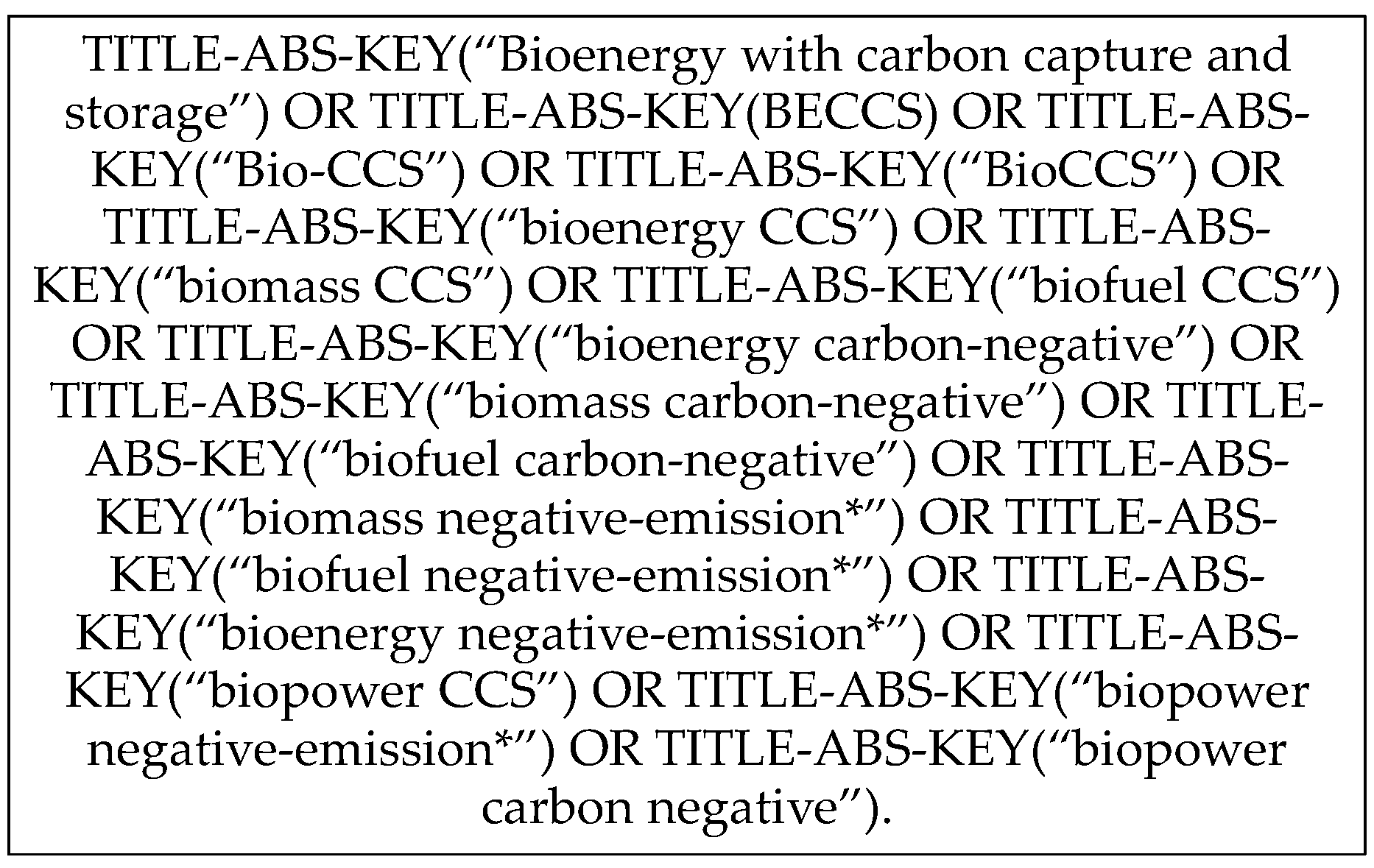
21] served as a key reference for conducting the broader literature review, by guiding in the establishment of an initial query string. Given the different synonyms associated with the term BECCS, a comprehensive approach was adopted to incorporate as many relevant articles as possible within the search. Consequently, the query string included all conceivable combinations of the synonyms to ensure a thorough exploration of the published works. Specifically, the main keywords that were used are as follows:
The search was limited to the Scopus database, as some preliminary tests showed that no additional articles were obtained by querying the Clarivate Web of Science™ and Cochrane databases. The keyword search was conducted within the “title–abstract–keyword” fields, specifically targeting English language articles. To ensure the exclusivity of the search results with respect to the context of this research, some areas were intentionally excluded. In particular, the areas of Pharmacology, Toxicology and Pharmaceutics, Veterinary Medicine, Immunology and Microbiology, and Psychology, as well as Arts and Humanities, were omitted because the abbreviation BECCS might have alternative applications and connotations in these areas that are beyond the scope of this study. The used query string is shown in
Figure 2. It was obtained by combining all the most valuable synonyms of BECCS combined by Boolean operators.
Conceptual Review Implementation
The review of the articles resulting from the Scopus search involved a meticulous multi-step process. Initially, a comprehensive selection of titles was made, supplemented by a selection of abstracts, to identify articles specifically devoted to outlining BECCS technology plants. In this way, papers on the life cycle assessment of power plants or studies on the global potential of BECCS technologies were excluded. Research papers on existing plants, including those operating on a laboratory scale or pilot plants, were included, as well as simulations conducted using specialized software. The goal was to identify and include research papers that explored in depth the characteristics and attributes of BECCS plants.
After the first screening, a comprehensive full-text analysis of the articles was carried out, leading to a classification and subsequent examination of their content. The three categories described were used for the following classification:
Real plant study: this category included articles focused on experimental investigations conducted on laboratory- or pilot-scale plants. These studies focused on the practical implementation and evaluation of BECCS technology in real-world settings, providing empirical insights into the performance and characteristics of such plants.
Plant simulation study: the works under this category were devoted to the study of BECCS plants using simulation software. These works involved the development and use of computational models to simulate the behavior and performance of BECCS plants, offering valuable insights into their potential and operational dynamics.
Plant review: the papers classified in this category involved a qualitative and comprehensive analysis of BECCS plants. They included literature reviews that provided an overview and synthesis of existing knowledge and research findings related to BECCS plants. However, they excluded the use of simulation software or experimental investigations, focusing rather on a broader examination of the topic. For this reason, this type of paper was not examined in detail, but only to obtain a general overview of BECCS technologies and their potential.
Concomitant with the categorization, a further classification was performed based on the specific technology or technologies examined within each article. Consequently, articles were classified according to either bioenergy technology or Carbon Capture and Storage (CCS) technology under investigation. This dual perspective allowed for a comprehensive analysis of the various technological aspects associated with BECCS.
To limit the variety of Bioenergy–CCS combinations that emerged from the literature review, the focus was restricted to combustion-based configurations, which currently represent most of the existing bioenergy plants suitable for CCS retrofitting.
2.2. Combustion-Based BECCS
Further selection was carried out on the articles dealing with biomass combustion, with the aim of excluding too diverse technological options, which can pose significant challenges for a coherent performance comparison. In this perspective, works on biomass co-firing with coal were discarded.
The comprehensive full-text screening aimed to identify operational parameters of the biomass power plants, essential for evaluating their performances. In this regard, the values searched within the articles are as follows:
Biomass type and corresponding Lower Heating Value (LHV);
Plant net electrical output and/or electrical efficiency;
Thermal production and/or thermal efficiency, with indication on the temperatures of heat supply;
CO2 emissions for both the reference (w/o CCS) and the CCS versions of the plant.
When an article did not report all the listed data, and it was not even possible to fill in the missing information, it was discarded.
The number of finally resulting complete (or somehow completed) case studies is larger than the final number of selected articles, since each work can analyze multiple configurations, often adopting different technologies. Commonly, each of the selected article reports one or more “reference case(s)”, i.e., plant(s) w/o carbon capture (CC), then one or more variant(s) of the “reference plant” adopting one or more CC technologies. Rather often, one CC option is designed as a “benchmark plant”, since it is based on a conventional CC technology, typically amine absorption, and it is used as a comparison term to evaluate the performances of other CC options. In our analysis, all the eligible plant configurations are considered as representative of BECCS options, regardless of their possible designation as “benchmark”.
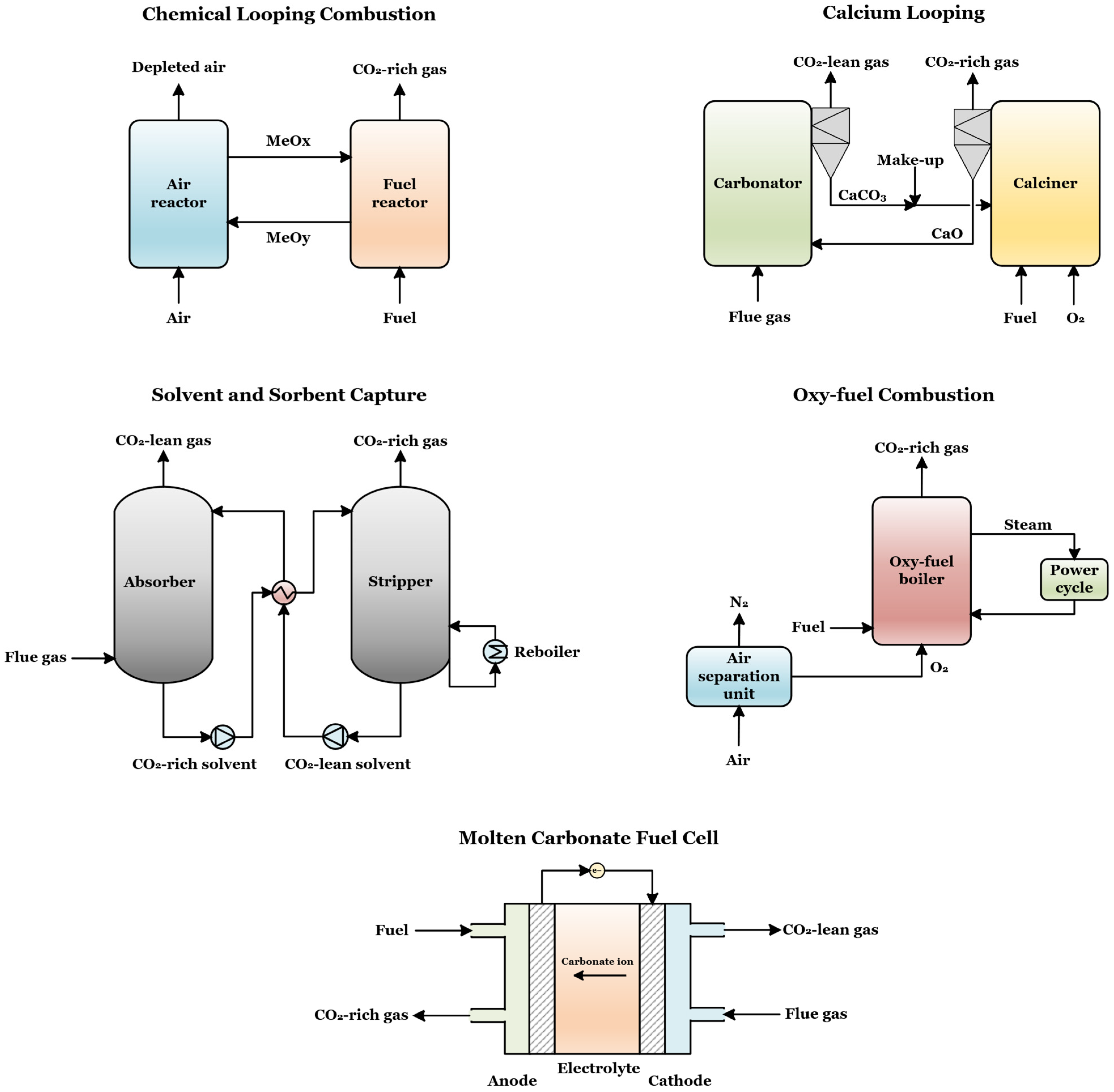
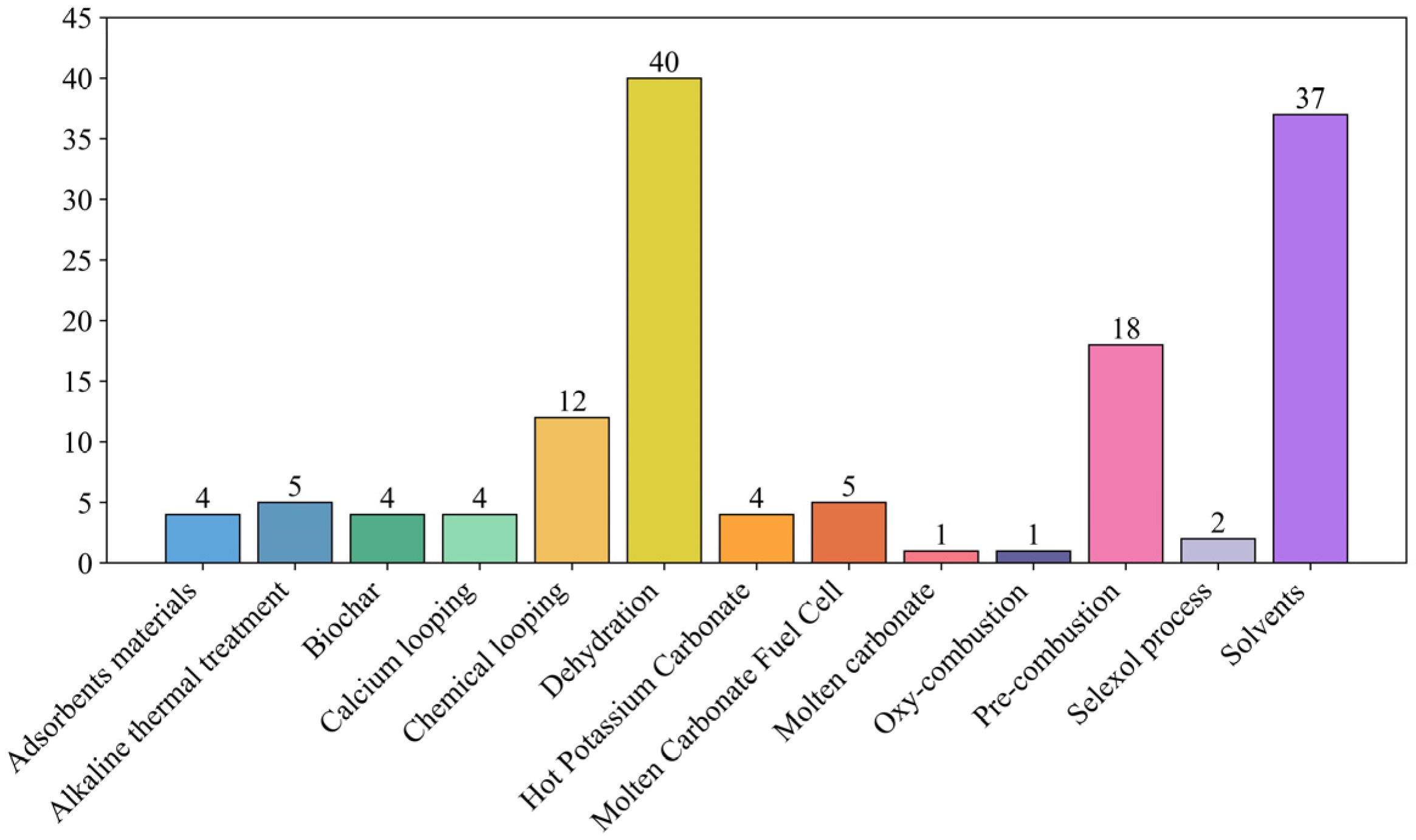
Figure 3 represents the different CC technologies that are proposed to make BECCS options from biomass-burning plants. The paragraphs that follow report a brief explanation of such technologies.
2.2.1. Chemical Looping Combustion (CLC)
According to our literature review, Chemical Looping Combustion (CLC) results to be one of the most investigated CC technologies for BECCS options. CO2 separation occurs during combustion with a relatively low energy penalty, thus making the technology very competitive. The plant scheme involves the use of two interconnected fluidized bed reactors: an air-blown reactor and a fuel-fed reactor; between them, a solid oxygen carrier circulates, typically a metal oxide, that can easily release and capture oxygen during oxidation and reduction reactions. In the fuel reactor, the fuel is oxidized, taking oxygen from the solid carrier rather than molecular oxygen from the air, as is the case in conventional combustion. Next, the solid carrier of oxygen is recirculated to the air reactor, where it is again oxidized with atmospheric air. The exhaust gas from the fuel reactor consists mainly of carbon dioxide and water, which are easy to separate by condensation. CLC can be adapted to various fuel types, including coal, natural gas, and biomass. However, with solid fuels, the reaction between the solid fuel and the solid oxygen carrier is more difficult. Therefore, the possibility of adding an intermediate gasification step to form syngas that then reacts directly with the oxygen carrier is investigated. This solution is often called as “iG-CLC”. Another possibility is Chemical Looping with Oxygen Uncoupling (CLOU), designed to avoid gasification. It is based on the use of special oxygen carriers, such as copper-based, which can release oxygen in the gas phase at temperature levels useful for combustion. In this way, combustion takes place in an oxygen-rich atmosphere that facilitates it. Energy production from a CLOU process is shown to be about 27% higher than that from an iG-CLC process.
2.2.2. Calcium Looping (CaL)
The Calcium Looping (CaL) process represents a second-generation post-combustion CC technology. It operates based on the reversible reaction of lime carbonation, employing two interconnected circulating fluidized bed (CFB) reactors. In the first reactor, known as the carbonator, carbon dioxide from the flue gas stream undergoes absorption through the carbonation of calcium oxide (CaO), resulting in the formation of calcium carbonate (CaCO3). The second reactor, termed the calciner, facilitates the decomposition of CaCO3, releasing CO2 into the gas phase and regenerating the CaO for reutilization. Because of the relatively high operating temperatures of both reactors, a highly efficient recovery of excess heat by a steam cycle is possible. This stands as a significant improvement over other more mature CC technologies. Operating temperatures play a crucial role in this process. The carbonator ideally functions within a temperature range of 600 to 700 °C, a compromise between reaction kinetics and the constraints of chemical equilibrium. On the other hand, the calciner operates at higher temperatures, typically between 850 and 950 °C. To achieve the necessary elevated operating temperatures, oxyfuel combustion is employed. Additional fuel, such as biomass or natural gas, is burned in an oxygen-rich environment, with oxygen typically supplied by an Air Separation Unit (ASU) to avoid dilution of the CO2 stream with nitrogen.
2.2.3. Solvent and Sorbent Capture
The carbon capture technology with the highest current Technology Readiness Level (TRL) is solvent-based capture. Among the most widely used solvents, Monoethanolamine (MEA) stands out. In selected research papers, other solvents like MDEA, Piperazine (PZ), or proprietary solvents (like the Shell Cansolv) are also considered for a more detailed comparison. The general capture system comprises two main reactors, namely, the absorber and the stripper, equipped with a reboiler to produce the flow for the CO2-rich solution regeneration. The flue gas enters the bottom of the absorber and comes into contact with the aqueous solvent solution. Upon exiting the absorber, the flue gas undergoes further scrubbing to prevent solvent losses into the environment. The concentration of CO2 in the outgoing flow is typically about 10% of the initial concentration. The CO2-rich liquid phase at the bottom of the absorber requires regeneration for reuse; thus, it is introduced into the top of the stripper. The flow at the top of the stripper consists of nearly pure CO2, usually sent for compression and purification. The CO2-lean liquid phase at the bottom of the stripper is pumped and cooled in heat exchangers before being reintroduced into the absorber. However, the desorption process demands substantial energy input, which may impact the overall efficiency of the power plant or industrial facility. This energy penalty represents a significant challenge in MEA carbon capture. Additionally, MEA’s corrosive nature poses potential degradation risks to equipment and infrastructure over time. Hence, employing proper material selection and corrosion mitigation strategies becomes essential to ensure the system’s integrity and longevity.
Hot Potassium Carbonate capture is another solvent-based carbon capture technique. Like MEA capture, it involves two main reactors, the absorber and the stripper, for solvent regeneration. However, in this case, unlike MEA capture, the operating temperatures are relatively high to enhance the absorption process (around 100–150 °C). As with MEA capture, the regeneration process demands significant thermal input, which once again impacts the overall efficiency of the system.
2.2.4. Oxyfuel Combustion
The oxyfuel combustion technique involves the utilization of nearly pure oxygen, typically reaching a level close to 95%, as the oxidizer instead of air. This deliberate choice of oxidant results in an exhaust gas stream with a substantially high concentration of CO2, rendering its separation considerably more immediate. In fact, the process often necessitates only cooling the gas stream to effectuate water condensation and subsequent CO2 purification. Consequently, the system can achieve elevated combustion efficiency and notably mitigate pollutant emissions. Another advantageous aspect of this technology lies in its inherent flexibility to be applied to various fuel types employed in thermal power generation processes. However, despite its considerable benefits, the primary limitation of the oxyfuel combustion technique arises from the requirement for an Air Separation Unit (ASU). The ASU is a critical component in the process, responsible for supplying pure oxygen. This unit represents a highly energy-intensive aspect of the system, and its operation can significantly reduce the overall efficiency of the process. This energy penalty associated with oxygen separation constitutes a significant challenge to be addressed in the advancement and practical implementation of oxyfuel combustion technology.
2.2.5. Molten Carbonate Fuel Cells (MCFCs)
Molten Carbonate Fuel Cells (MCFCs) are a type of high-temperature fuel cell operating between 600 and 700 °C, utilizing molten carbonate salts as electrolyte. The elevated operating temperature enables MCFCs to achieve higher conversion efficiencies compared with low-temperature fuel cells and utilize non-precious metal catalysts, thereby reducing material costs. An additional advantage is fuel flexibility, allowing MCFCs to accommodate various fuels, including natural gas and biogas. This flexibility is attributed to the capability of conducting fuel reforming directly within the cell, obviating the need for a separate hydrogen infrastructure. The MCFC’s operation is based on the movement of carbonate ion within the electrolyte. Fuel is supplied to the anode, while the oxidant is supplied to the cathode. The reactions occurring at the anode and cathode are as follows:
This unique functionality empowers the MCFC to operate in a carbon capture mode, when exhaust gas is fed to the cathode as an oxidant, facilitating the concentration of CO2 from the exhaust gas into the spent fuel stream (at anode outlet). MCFCs have demonstrated significant potential in achieving high carbon capture efficiencies, making them appealing for carbon capture applications. Moreover, the additional benefit is the surplus generation of electricity, as the additional energy input required for this operation is clean gaseous fuel (natural gas, biogas, etc.). However, the primary limitations of MCFCs pertain to operational stability, durability, and overall system cost. Further research is necessary to optimize the technology and enhance its commercial feasibility.
2.2.6. Molten Sorbents
Molten sorbents are molten salts or sorbents with high CO2 absorption capacity. The capture process operates at high temperatures, typically above 500 °C, to ensure efficient capture and facilitate CO2 release from the sorbent during the regeneration phase. Like solvent-based capture, after capturing carbon dioxide, the sorbent becomes CO2-rich and requires regeneration to release the captured CO2. This phase involves heating the CO2-rich sorbent to release the CO2 for further utilization or storage. Currently, the challenges of capture with molten sorbents include identifying suitable sorbent materials with high CO2 absorption capacity, good thermal stability, and resistance to contamination.
2.3. Performance Comparison
The primary aim of this literature review is to carry out a quantitative comparison of the different technological options from a performance standpoint by means of proper Key Performance Indexes (KPIs).
In conducting a quantitative comparison, it becomes imperative to consider the inherent distinctions among the plants under scrutiny. These distinctions encompass variations in biomass sources, carbon capture technologies, and plant sizes. Consequently, a concerted effort was undertaken to identify indexes that could accommodate these discrepancies while facilitating a meaningful quantitative comparison. The following paragraphs presents the different metrics considered/proposed in this work.
2.3.1. Electric and Thermal Efficiencies
First, the electricity and heat production, along with their respective efficiencies, were investigated. Efficiency values were computed using Equations (1) and (2), adapted for cases where direct values were not provided in the selected articles.
where
The introduction of CC in bioenergy plants typically brings along a reduction in performance, which can impact both electrical and thermal efficiencies.
2.3.2. Exergy Efficiency
A widely adopted thermodynamic approach for comparing energy conversion processes is second-law analysis, which evaluates exergy flows [
22]. This method enables the assessment of any process in terms of exergy efficiency, defined as the ratio between the useful potential for power generation from the process’s outputs and the potential embedded in the consumed resources.
To carry out a second-law analysis, it is essential to define the reference environment, which establishes the baseline for evaluating exergy flows. In the case studies considered here, this includes setting ambient conditions—standard dry air at 440 ppm of CO2 and 60% relative humidity—along with ambient temperature and pressure (T0 = 15 °C, p0 = 1 atm).
Put simply, exergy efficiency quantifies the loss of power generation potential due to the process’s inherent irreversibilities, which result in entropy production and, consequently, exergy destruction.
For the BECCS options analyzed in this study, exergy efficiency can be expressed mathematically as
where
is the exergy associated with the stream of captured CO
2 exiting the power plant (
). It is computed as a function of enthalpy (“
h”) and entropy (“
s”) of CO
2 in the actual and reference state (“0”), as evaluated by NIST REFPROP software [
23], as follows:
is the exergy associated with the flow of biomass (
), computed with the correlation proposed by Xie et al. [
24], in which the terms H, C, and O are respectively the hydrogen, carbon, and oxygen molar contents in the biomass, as follows:
The impact of applying a CC technique to a bioenergy plant can be quantified by examining the reduction in exergy efficiency between the reference (
) configuration and the corresponding BECCS setup (
). A smaller decrease in exergy efficiency indicates a lower energetic cost of CC implementation. Consequently, configurations that exhibit minimal exergy efficiency drops are considered the most favorable from an energy efficiency perspective, as follows:
2.3.3. Specific Primary Energy Consumption per CO2 Avoided (SPECCA)
Carbon capture technologies applied to conventional fossil fuel-based power plants are commonly assessed using SPECCA [
26], a KPI that quantifies the primary energy cost of avoiding one unit of CO
2 emissions. From an energy efficiency standpoint, configurations with lower SPECCA values are therefore preferable.
For a power plant that generates only electricity, calculating SPECCA is relatively straightforward, relying on four parameters: electric efficiency and specific CO2 emissions (expressed as kgCO2 per MWh of net electricity) for both reference (without CC) and CC configurations.
In general, the following two multiplicative factors influence the SPECCA of a CC system:
The energy consumption per unit of CO2 captured;
The increase in fuel consumption (i.e., larger plant capacity) that is needed to offset the efficiency losses caused by CC implementation.
Therefore, to avoid one unit of CO2, not only must the CO2 be captured, but additional fuel must be consumed—and the resulting surplus emissions captured as well. In systems with a single useful output (e.g., electricity), production can be held constant despite the drop in efficiency by simply increasing fuel input and, consequently, plant size.
However, in systems with multiple outputs, such as electricity and heat, this method becomes inadequate. The efficiency drop affects each output differently, making a proportional increase in plant size ineffective at restoring balance. Moreover, while fossil fuels are generally treated as abundantly available commodities, this assumption does not hold for biomass—particularly when relying on residual biomass with limited supply.
As a result, evaluating SPECCA in BECCS systems (especially those with CHP configurations) demands a new methodology. Instead of compensating for output changes by scaling up the plant and feedstock consumption, ancillary processes powered by conventional commodities are introduced. This revised approach keeps the biomass input constant across both reference and BECCS plants. The latter is then supplemented by external systems to make up for the altered energy outputs.
Since electricity and thermal energy are the outputs most affected—and currently their marginal production predominantly relies on fossil fuels—a conventional fossil fuel-fired CHP plant is selected as a benchmark.
Benchmark plants can range from modest to high-performance configurations. With a less efficient benchmark, BECCS systems suffer greater penalties due to the substantial fossil fuel consumption needed to compensate for lost output—resulting in higher SPECCA values. Conversely, a high-performance benchmark plant minimizes the impact of efficiency losses. Intriguingly, BECCS configurations that actually enhance overall efficiency benefit more from a modest benchmark than from an advanced one.
The authors favor using a highly efficient benchmark CHP plant, specifically an NG-fired combined cycle previously examined in an earlier study [
27]. This plant exists in two configurations: (a) a reference without CC and (b) a CC-equipped version that captures 90% of flue gas CO
2. Although both configurations generate only electricity, the CHP version—when used for District Heating (typically at 100–130 °C)—can deliver 7.7 units of thermal energy by sacrificing one unit of electricity. Based on this “cost ratio” for cogenerated heat, it is possible to define an equivalent thermal efficiency and the corresponding specific CO
2 emissions for heat production. All the relevant performance metrics for these two configurations are detailed in
Table 1.
All properties listed in
Table 1 pertain to the two versions of benchmark plant and are therefore identified with the subscript “STD”, indicating “standard”. The SPECCA index is computed using the performance metrics of either the benchmark configuration without CC, yielding SPECCA (a), or with CC, yielding SPECCA (b).
In mathematical terms, SPECCA is defined as
where
means the change of any properties between the reference and CC plant configurations, i.e., the figure pertaining to the latter (w/CC) minus that of the former (without CC, i.e., “ref”).
is the LHV power entering the plant with additional fuels, like NG (i.e., the commodities). In some cases, the flowrate can be negative, indicating a by-product output, like char from pyrolysis.
The minus sign at the beginning of the formula is needed to obtain positive values in most cases, since numerator and denominator, in accordance with the given definitions, normally feature different signs.
3. Results and Discussion
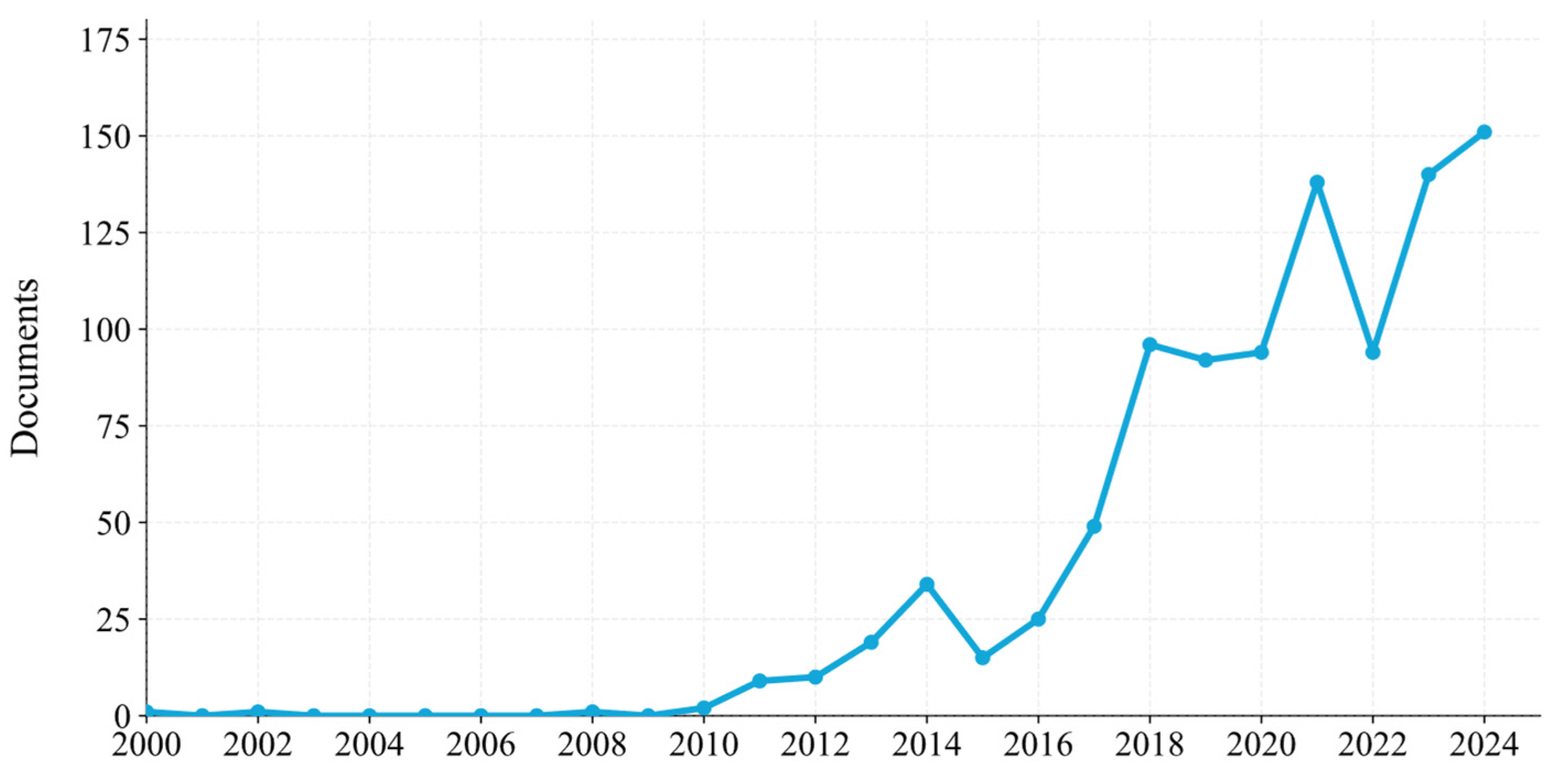
The initial finding of our literature review confirms the growing interest in BECCS, as illustrated by the raw Scopus query output in
Figure 4.
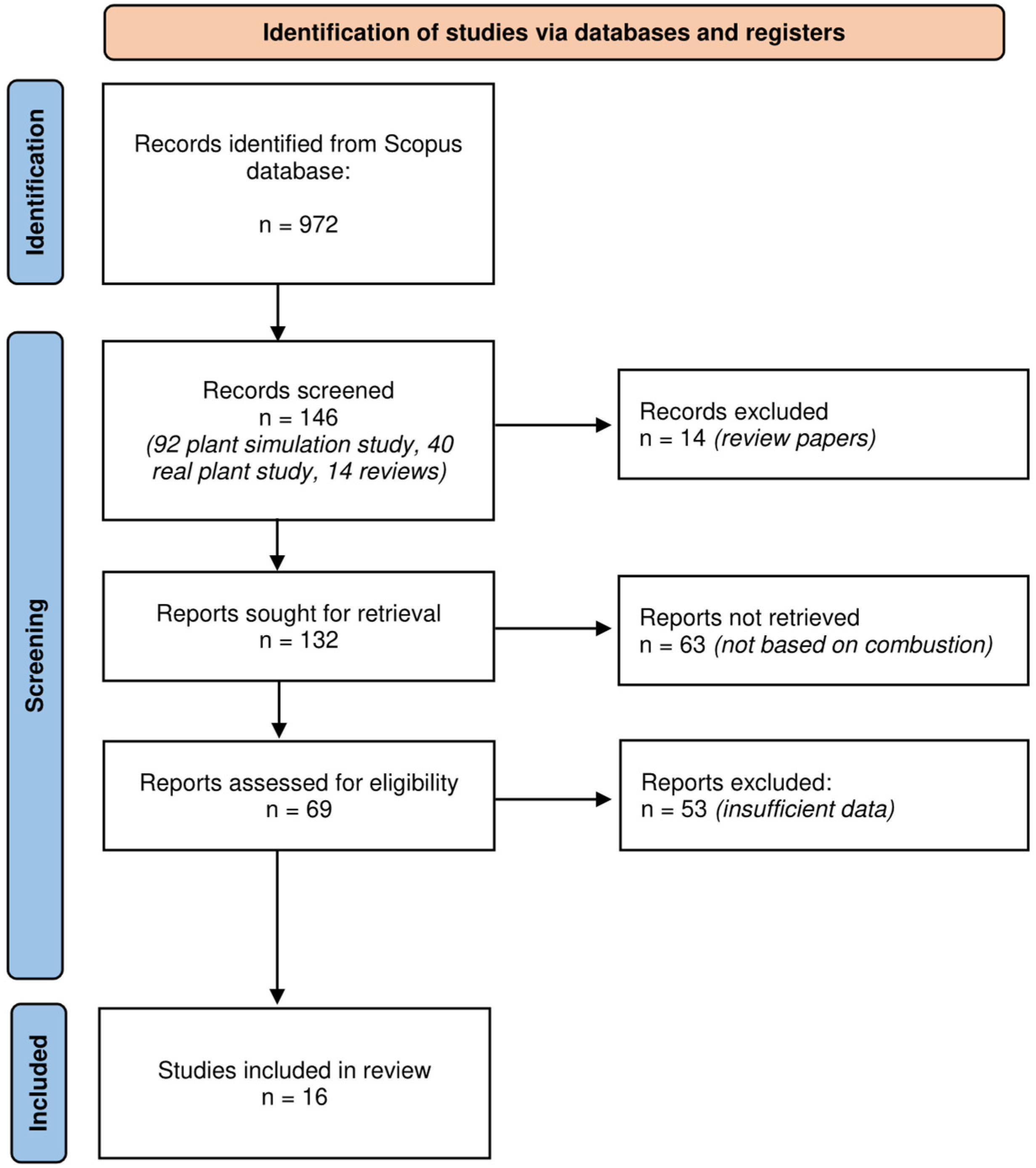
The dataset, updated to 31 January 2025, comprises 972 publications from 2000 through 2025. The preliminary selection process reduced the number of valid papers to 146, comprising 92 “plant simulation study”, 40 “real plant study”, and 14 review articles.
By isolating “real plant study” and “plant simulation study” articles, the dominant BECCS technological options become evident. These findings are illustrated in
Figure 5, where there are more than 132 occurrences of various CC technologies since some papers consider more than one CC technology.
Not all identified carbon capture approaches pertain to biomass combustion, the central topic of this study.
Table 2 outlines the various bioenergy and carbon capture technology pairings found in the scrutinized literature.
3.1. Combustion-Based BECCS
Biomass combustion emerges as the primary focus, with 69 of the selected papers (nearly half) addressing this topic. Excluding studies that involve coal co-firing leaves 63 articles for detailed case analysis. Of these, 30 investigate various carbon capture technologies, while 33 are devoted to Chemical Looping Combustion (CLC). From the former group of works, 16 need to be discarded, since the reported data and information are not sufficient to carry out the performance evaluation based on the KPIs that have been defined.
Table 3 summarizes the topics of the discarded papers and explains the decisions.
Among the 33 articles dealing with CLC, only two are eligible for the performance comparison. The remaining 31 works are mostly focused on experiments in lab-scale reactors or in pilot plants to investigate the operational parameters of biomass CLC (20 papers), as well as on the numerical modeling of specific CLC components (11 papers). All the 31 discarded papers on CLC are listed in
Table 4.
The final number of papers eligible for the performance comparison is 16; however, paper #15 and #16 refer to the same plant configurations. Therefore, only reference to 15 papers is made in the following.
The selection process is illustrated in the PRISMA-style chart shown in
Figure 6.
The eligible papers are listed and briefly described in the paragraphs below. Each paper can analyze multiple plant configurations (both “reference”, w/o CC, and BECCS options); therefore, each case study is identified by means of a unique code composed by a number, which refers to the article, and a letter that denotates the plant configuration.
Plant configurations based on coal firing or co-firing have been discarded, whereas all the options dealing with the combustion of totally or partially biogenic waste, like municipal solid waste, are included in the analysis.
Most of the eligible papers perform a techno-economic analysis. However, this work focuses only on technical aspects. Economic considerations can be evaluated in future work.
3.1.1. Paper #1
In the paper authored by Lim et al. [
75], a comprehensive investigation of CO
2 capture from an energy-from-waste plant is presented. The focus is specifically on exploring the potential use of incineration bottom ash (IBA) as a sorbent for the Calcium Looping (CaL) technique, which is feasible due to the high CaO content present in IBA. The research encompasses both an experimental phase, wherein the ash is characterized to assess its capture capabilities, and a total plant modeling phase, employing Aspen Plus software. The considered reference plant (case “A”) is a generic large-scale EfW plant with a thermal input of 200 MW
LHV. Coupled to this EfW plant is a CaL system, comparable to similar systems found in the literature, capable of combusting various fuel types, including Biomass Charcoal (BC, case “B”), Solid Recovered Fuel (SRF, case “C”), coal, and Natural Gas (NG, case “D”). However, for consistency with this research, coal utilization is not taken into account in this analysis. The heat produced by the calciner and charcoal burner is efficiently recovered through a heat recovery steam generator, thereby facilitating additional power generation. From an energy perspective, all three systems demonstrate the capability of generating more than 30 MW of additional electricity. However, it is important to consider the consumption for the compression and purification unit, which in this case is slightly higher than conventional values found in the literature (approximately 500 kJ/kg
CO2). This discrepancy is likely due to the low temperature of the cooling medium (−30 °C). When evaluating the overall cycle efficiency, considering the additional energy input, the system burning natural gas (D) emerges as the best-performing one, followed by BC (B) and SRF (C). This performance hierarchy can be attributed to the absence of fuel ash and very limited sulfur content in natural gas, resulting in reduced energy requirements for ash removal and mitigated sorbent deactivation.
3.1.2. Paper #2
Gustafsson et al. [
76] present an evaluation of the energy penalty associated with coupling a biomass-fired Combined Heat and Power (CHP) plant with the “Hot Potassium Carbonate” (HPC) capture system, commonly referred to as the Benfield process. The research focuses on modeling the entire system using Aspen Plus software and validating the model against data obtained from a real test facility. The CHP plant, designated as “CHP 8 Stockholm”, situated in Stockholm, serves as the existing biomass plant for this investigation. The integrated system encompasses a biomass boiler (362.1 MW
LHV) utilizing wood chips from forestry residues to produce flue gas that drives the steam cycle, along with a flue gas cleaning system incorporating Flue Gas Condensation (FGC). The system also incorporates the District Heating (DH) network and the HPC capture system, which includes CO
2 compression and liquefaction. Within the HPC capture system, two variants of the reference plant (case “A”) are simulated, namely, the basic (case “B”) and advanced (case “C”) configurations, to assess the impact of steam compression on the required heat load. The findings demonstrate a noteworthy electrical loss, with the basic system (B) experiencing significantly higher losses (approximately 14 MW less) compared with the advanced system (C). However, it is worth noting that the heat recovery from the carbon capture system is substantial, leading to a reduction in the hot condenser demand.
3.1.3. Paper #3
The work by Carminati et al. [
77] introduces an innovative biorefinery concept that involves the capture of released CO
2 from both fermentation (100%) and combustion (90%) processes during bioethanol production from dry bagasse waste. The capture system employs chemical adsorption using two solvents, namely, 45%
w/
w Methyl Diethanolamine (MDEA) and 5%
w/
w Piperazine (PZ), known for their exceptional degradation resistance, leading to an extended solvent lifetime. The study leverages Aspen HYSYS software for system simulation and analysis. The biorefinery system comprises two main lines: the bioethanol production line, which encompasses pretreatment, fermentation, and distillation processes, and the bagasse combustion line, including a boiler, steam cycle for electric production, and Post-Combustion Capture (PCC) unit. Notably, all captured CO
2 is effectively employed in Enhanced Oil Recovery operations. From an energy perspective, the plant experiences some level of penalization due to the considerable steam demand for PCC. Consequently, there is a significant reduction in electricity export, dropping from 94% (284 MW
el out of 302 MW
el produced) to 41% (88.5 MW
el out of 216 MW
el produced) of the overall production. However, the integration of CO
2 capture and EOR technologies in the biorefinery system showcases a promising approach for mitigating CO
2 emissions while simultaneously producing valuable bioethanol. Our analysis focuses just on the power production section of the plant, fueled with bagasse (the combustible residue of sugarcane exploitation). However, the overall flow of captured CO
2 from both bioethanol and power productions is considered, as well as the change in bioethanol yield due to the introduction of CC (from 59 m
3/h to 60 m
3/h).
3.1.4. Paper #4
Proll et al. [
78] compare six different biomass-based plants with CO
2 capture. The proposed systems can be divided into two categories: plants with combustion and plants with pyrolysis, based on woody biomass from forest wastes. Both are studied in reference CHP configuration (case “A” for combustion, case “D” for pyrolysis) and in two different carbon capture configurations, one with Monoethanolamine (MEA, cases “B” and “E” as variants of A and D, respectively) and one with CLC (cases “C” and “F” as variants of A and D, respectively). In addition, the configuration with pyrolysis also includes storage using solid biochar. The simulation software is not specified. On the energy side, the plant suffers some level of penalty due to the large steam demand for the PCC. In the case of pyrolysis (D, E, and F), the plant is significantly underperforming because only a portion of the fuel energy is released. Thus, in pyrolysis cases with capture (E and F), the performance is low. However, from the point of view of emissions, the pyrolysis cases with biochar production achieve higher capture efficiencies than combustion cases (B and C). In our analysis, char production is regarded as a fuel output.
3.1.5. Paper #5
Neto et al. [
79] present an evaluation regarding the coupling of a sugarcane bagasse combustion plant with two different capture systems: Calcium Looping and Post-Combustion Capture with Cansolv solvent. The modeling of the whole system is based on IECM software developed by Carnegie Mellon University. The reference plant (case “A”) is a generic large plant with about 100 MW gross electric power output. Within the amine capture system (case “C”), Cansolv solvent was chosen because it possesses fast kinetics and high absorption capacity compared with other conventional amines. For the CaL case (“B”), the system includes calciner and carbonator with no variations from those usually found in the literature. The fuel burned in the calciner is also biomass. The results show a significant electrical loss in the case with amines (C), while the CaL system (B) manages to maintain almost the same electrical output, obviously with more biomass burned to allow the calciner to operate.
3.1.6. Paper #6
The work of Hetland et al. [
80] concerns the combustion of some agricultural residues (rice straw and palm kernel shell), including in the configuration of co-firing with coal. However, because the focus of this research is biomass, co-firing cases will not be considered. The reference plant (cases “A” and “B”) is a generic combustion plant (131.6 MW
LHV) located in Indonesia, a place where there is an abundance of agricultural waste. The capture system employs chemical adsorption using MEA as a solvent (cases “C” and “D”). Energy-wise, the plant loses about 13 MW
el (i.e., about one-third of the original power output) due to steam extraction from the turbine operating the CC system.
3.1.7. Paper #7
The study conducted by Haaf et al. [
81] continues the investigation of CO
2 capture from energy-from-waste plants, with a specific focus on exploring the applicability of Calcium Looping technology. Various fuel sources, including solid recovered fuel (SRF, case “C”), coal, and Natural Gas (NG, case “D”), are considered for the CaL-based capture system. Like previous studies, the use of coal is excluded from consideration. The CaL-based system is then compared with the current benchmark technology for capture from EfW, which is MEA capture (case “B”). Comprehensive plant modeling and analysis are performed using Aspen Plus software. The reference plant (case “A”) is a generic medium-scale EfW plant with a thermal input of 60 MW
LHV. The CaL-based systems (C and D) demonstrate the ability to increase electricity production of 6–7 MW, whereas the MEA system (B) experiences significant penalties in terms of energy performance. In evaluating the overall cycle efficiency, including the additional energy input, the system burning natural gas (C) emerges as the best-performing one. This performance ranking is attributed to the absence of fuel ash and low sulfur content in the natural gas, resulting in reduced energy requirements for ash removal and mitigated sorbent deactivation.
3.1.8. Paper #8
The study conducted by Al-Qayim et al. [
82] offers a comparative analysis of biomass and coal combustion plants; again, the focus is on biomass plants. Additionally, the research examines two distinct capture systems: the first employs chemical adsorption utilizing the amine “Econamine FG Plus” (case “B”), whereas the second employs oxy-combustion technology (case “C”) through an Air Separation Unit (ASU) for oxygen production. The system simulation and analysis are carried out using IECM software. The reference plant (case “A”) for combustion involves a super-critical boiler that utilizes white wood pellets as fuel, generating steam for the turbine, resulting in a total gross power output of 650 MW
el. From an energy perspective, the amine case (B) experiences a reduction of approximately 10 percentage points in net electric efficiency due to the substantial steam demand for Post-Combustion Capture. Conversely, the oxyfuel-based system (C) shows a lower energy loss, approximately 7 percentage points, attributed to the reduced ASU consumption.
3.1.9. Paper #9
Akrami et al. [
83] introduce a novel carbon capture technology that distinguishes itself from the other research papers in this analysis. Specifically, the researchers employ Molten Carbonate Fuel Cells (MCFCs) as carbon capture device within their system. MCFCs are a specialized type of high-temperature fuel cells that possess the unique capability of concurrently capturing carbon dioxide from flue gas while generating additional electricity for the power plant. The simulation of the power plant is carried out using the “Engineering Equation Solver” software. The reference plant (case “A”) operates by gasifying municipal solid waste (44.7 MW
LHV) to produce syngas, which is subsequently utilized as fuel in an internally fired gas turbine. Turning to the capture systems, the study investigates two distinct configurations, both based on MCFCs but employing different bottoming cycles: an Organic Rankine Cycle (ORC, case “C”) and a conventional steam cycle (SC, case “B”). In the proposed system, the exhaust flue gas from the gas turbine is directed to the MCFC, where CO
2 separation occurs, and the separated stream is further processed through a final compression and purification unit. The power plant experiences no penalization; instead, it gains an additional electricity output of 20 MW in the case of ORC utilization (C) and 26 MW when employing the steam cycle (B). This work demonstrates a promising approach in utilizing MCFCs for carbon capture, thereby enhancing electricity generation while mitigating carbon dioxide emissions.
3.1.10. Paper #10
The work of Halliday and Hatton [
84] investigates the potential of employing molten salt-based sorbents for capturing carbon dioxide from combustion flue gas. Although these sorbents currently possess a lower Technology Readiness Level compared with other methods, their rapid kinetics and high stability make them a compelling subject of study. The research aims to explore and understand further their capabilities. The reference plant is a 50 MW
el pilot scale plant with a stoker boiler, which burns different types of agricultural biomass fuel (cases “A”, “B”, and “C” depending on the feedstock). The carbon capture system is situated within the boiler, allowing for high operating temperatures; the CO
2-lean molten sorbent enters in contact with flue gas at a high temperature to capture carbon dioxide. Subsequently, the CO
2-rich molten sorbent is sent to the desorber that regenerates the sorbent using steam. The mixture of steam and carbon dioxide is sent to the turbine to generate electricity. A separator is used to split the condensate from the wet CO
2. The whole system is simulated through Aspen HYSYS. From an energy point of view, the system performs quite well with an average electricity loss of 7 MW out of 45 MW due to the auxiliaries (cases “D”, “E”, and “F” as variants of A, B, and C, respectively). These findings emphasize the promising energy efficiency of the carbon capture process using molten salt-based sorbents within the described configuration.
3.1.11. Paper #11
Ortiz et al. [
85] examine a particular integration with a medium-sized energy-from-waste plant (case “A” is the reference, w/o CC): membranes, partial oxyfuel combustion, and Calcium Looping (case “C”). Specifically, membranes are used to produce oxygen-enriched air with an O
2 concentration of 39%
v/
v, while Calcium Looping captures CO
2 from waste-to-energy flue gas. Partial oxy-combustion of waste has the advantage of involving fewer changes to the power cycle configuration, as combustion takes place in a less aggressive and corrosive atmosphere, while increasing the CO
2 concentration in the gaseous effluent to 30%
v/
v. The results show that the system achieves energy consumption associated with CO
2 capture lower than 4 MJ/kg
CO2, i.e., 31% less than the conventional CaL process (case “B”), showing promising developments for the proposed integration.
3.1.12. Paper #12
Ali et al. [
86] focus on investigating the impact of co-firing biomass and coal on a combustion plant equipped with MEA capture technology. The work also includes partial-load analyses; however, for the specific objectives of this research, only the case of full-load operation using biomass from forest waste was considered (case “A” is the reference, w/o CC, case “B” the MEA-based variant). This choice enabled a direct comparison with the other power plants operating at full load. The simulation of the system was performed using Aspen Plus, and the overall setup is like other configurations reported in the literature, particularly concerning the Post-Combustion Capture section. From a performance perspective, the study highlights again a notable penalty caused by the substantial steam demand required for amine regeneration within the MEA capture system. The research provides valuable insights into the challenges and potential limitations of MEA-based capture systems in the context of biomass utilization for energy production.
3.1.13. Paper #13
The study conducted by Kumar et al. [
87] presents an extensive evaluation of a wood chips-fired Combined Heat and Power (CHP) plant (case “A” is the reference, w/o CC), integrating two distinct chemical adsorption-based capture systems: Hot Potassium Carbonate (HPC, case “B”) and amine-based solvents (cases “C” and “D”). The research encompasses the coupling of the plant with the District Heating (DH) network and explores the possibility of incorporating either large-scale or home-scale heat pumps into the plant’s operation. The comprehensive system simulation is carried out using Aspen Plus software. Both the considered capture technologies involve essential components such as an absorber and stripper for solvent regeneration and CO
2 stream separation. The results reveal that the HPC process (B) exhibits a greater amount of recoverable excess heat compared with the MEA process (C and D) at temperature levels conducive to District Heating. The analysis of total fuel utilization indicates that the plants employing HPC and MEA achieve estimated values of 90% and 76% on LHV basis, respectively.
3.1.14. Paper #14
Luo et al. [
88] present an in-depth evaluation of a biomass-fueled subcritical steam power plant (case “A” is the reference, w/o CC), integrated with two different capture systems: solvent adsorption (MEA and advanced solvent, respectively, cases “B” and “D”) and MCFC (case “C”). The study presents simulation results, techno-economic analysis, and life cycle greenhouse gas emission assessment of these technologies, thanks to whole-system simulations performed using Aspen Plus software. For a biomass input rate of 500 MW
HHV, the MCFC-based plant (C) generates three times the power and is almost twice as efficient as an MEA-based plant (B). The plants (B, C, and D) generate comparable levels of negative emissions per ton of biomass input, i.e., in the range 1.3 to 1.5 t
CO2.
3.1.15. Papers #15 and #16
The two papers of Saari et al. [
72] and Peltola et al. [
73] report on plant simulation work carried out within the same working group at LUT University (Lappeenranta, Finland). Both research papers involve the simulation of identical plant configurations, with the exception that one of the papers conducts an examination of the plants’ performance under partial-load conditions. However, for the purpose of this initial analysis, the partial-load operation aspect is not considered. They simulate a woody biomass cogeneration plant coupled with a CLOU system. The process simulation software used is IPSEpro from SimTech. In both cases, a copper-based oxygen carrier is used, as it is the one currently most studied. The reference plant (cases “A”) is a general large-scale cogeneration facility, which generates electricity, heat for hot water production, and steam to support industrial processes. The reactor model for CLOU is constructed using the Matlab and Simulink software platforms. This model comprises an oxidizer, known as the air reactor, and a reducer, recognized as the fuel reactor. Both reactors are structured in the form of atmospheric CFBs, allowing for comprehensive gas–solid interaction throughout their vertical extent to maximize fuel conversion efficiency. The models are structured based on fundamental principles of mass and energy conservation, further supplemented by semi-empirical correlations to evaluate pertinent aspects of gas–solid fluid dynamics, heat transfer, and chemical reactions within the system. The implemented CLOU system successfully attains a carbon capture rate of 97%, accompanied by a negligible energy penalty of less than 1% when juxtaposed with the performance of the reference plant. This favorable outcome is attributed to the potential for efficient heat recovery within the CCS configuration, in addition to the minimal auxiliary energy consumption inherent to the CCS scheme (case “B”).
3.2. Final Selection Results
The 16 articles resulting from the eventual selection consider the following seven different technological options:
Calcium Looping—CaL—for post-combustion CO2 capture (3 articles/8 plants);
Chemical Looping Combustion—CLC (2 articles/3 plants);
Hot Potassium Carbonate—HPC (2 articles/3 plants);
Low-temperature solvent absorption (10 articles/13 plants);
Molten Carbonate Fuel Cells—MCFCs (2 articles/3 plants);
Molten sorbents CO2 capture (1 article/3 plants);
Oxyfuel combustion (1 article/1 plant).
The largest number of scrutinized BECCS plants employ low-temperature solvent-based systems, especially amine solvents, since this is the current benchmark technology, being the most mature, and it is often considered for comparison purposes against newer approaches. However, among the solvents, Piperazine and Hot Potassium Carbonate are also considered.
Most plants (38) produce only electricity; the others (15) feature Combined Heat and Power (CHP) production. Some of them are “reference configurations” (in overall 19, 14 electricity-only, and 5 CHP), featuring no CC, whereas the others (in overall 34, 24 electricity-only, and 10 CHP) are actually BECCS plants.
3.3. Availability of Data
While data availability was a primary selection criterion, some studies with incomplete information were nonetheless included. The following sections briefly outline the assumptions adopted to address these data gaps.
Paper #1 omits the composition and LHV of the solid waste stream but specifies the auxiliary fuels in its Calcium Looping setup—biomass charcoal and solid recovered fuel (SRF). Papers #2, #3, and #12 each rely on a single fuel, yet its detailed properties are not provided. This lack of data complicates a comprehensive comparison of fuel characteristics across systems. To resolve this, reasonable assumptions based on typical literature values for similar biomass and waste-derived fuels were adopted. These surrogate parameters maintain consistency in the analysis while acknowledging inherent uncertainty. As stated in the
Supplementary Materials, all assumptions and substitute values are reported explicitly.
All papers report CO2 emissions except #1, #2, and #11, whose values were back-calculated from the available data. For papers #1 and #2, we used flue gas flowrate and CO2 concentration to quantify the reference emissions, and then applied the reported capture efficiencies to derive the CC configuration emissions. In paper #12, reference emissions were determined from fuel flowrate and composition, with capture efficiency used for the CC case. Paper #5 only provided the emission difference between the reference and CC scenarios; combining this with its capture efficiency was sufficient to calculate absolute emissions.
For papers #1, #2, #3, and #13, direct computation of biomass exergy was not possible due to missing composition and LHV data. In these cases, typical literature values for comparable biomass and waste-derived fuels were adopted as proxies.
Six papers (#1, #2, #3, #10, #11, and #13) report the full thermodynamic conditions of the captured CO2 stream, allowing direct exergy calculation. For the remaining studies, exergy is estimated by assuming missing parameters. In most cases, only the capture temperature is unspecified and is taken as ambient (this has a minor effect on the result). Paper #4 is the only one that omits the CO2 delivery pressure; here, we adopt the lowest physical exergy value observed across the other CC cases (570–630 kJ/kg).
In paper #13, the values of electrical and thermal production are not directly provided. However, they are presented in the form of a bar chart. Therefore, the numerical values have been derived through data extraction software from the graphical representation.
3.4. Electric and Thermal Efficiencies
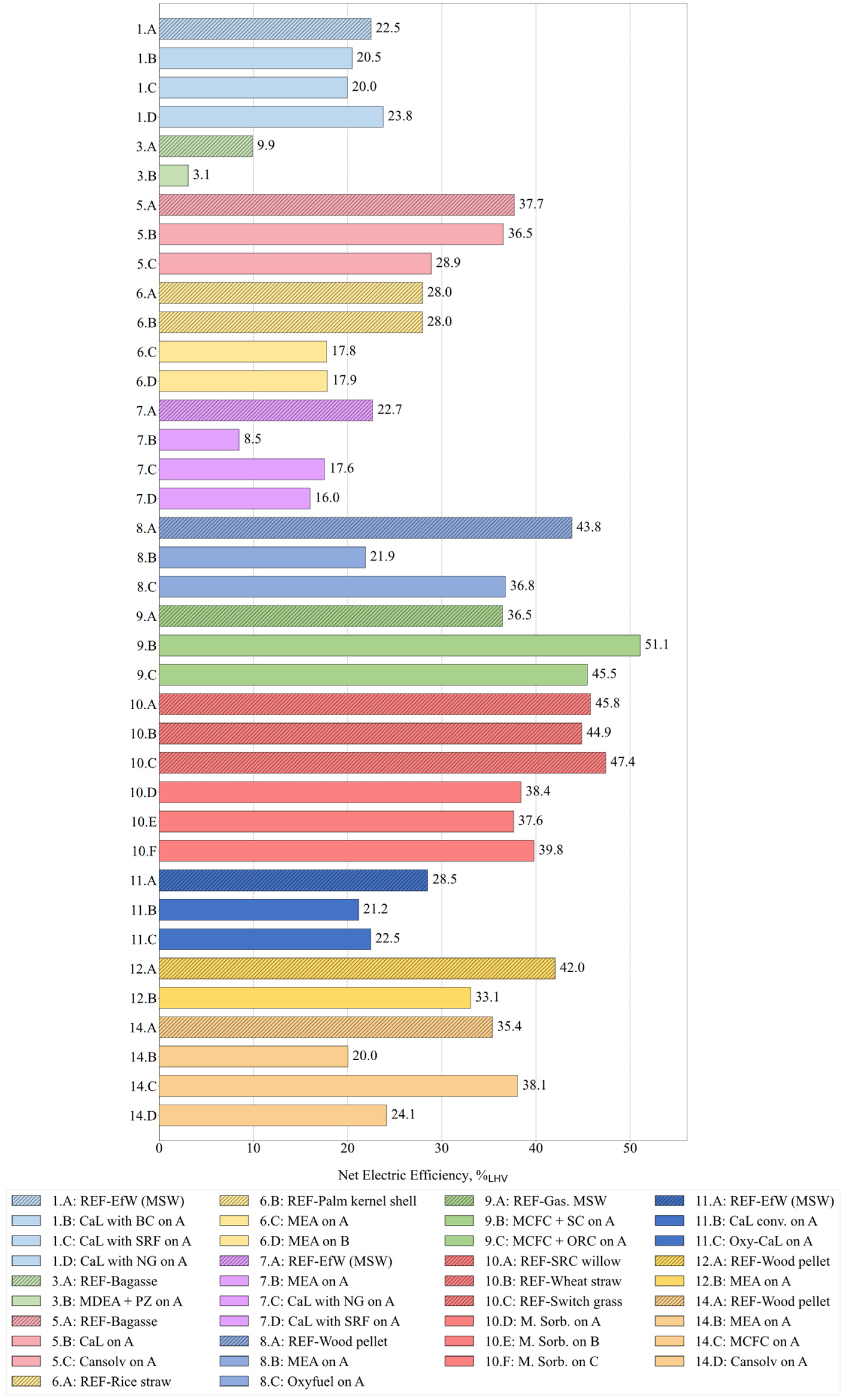
The simplest KPIs considered here are electric and thermal efficiencies. The former is the immediate way of measuring the performance of electricity-only plants. The graph in
Figure 7 shows the data for the 38 plants falling in this category, of which 14 are reference configurations, whereas 24 feature different types of CC as listed in the legend of the graph.
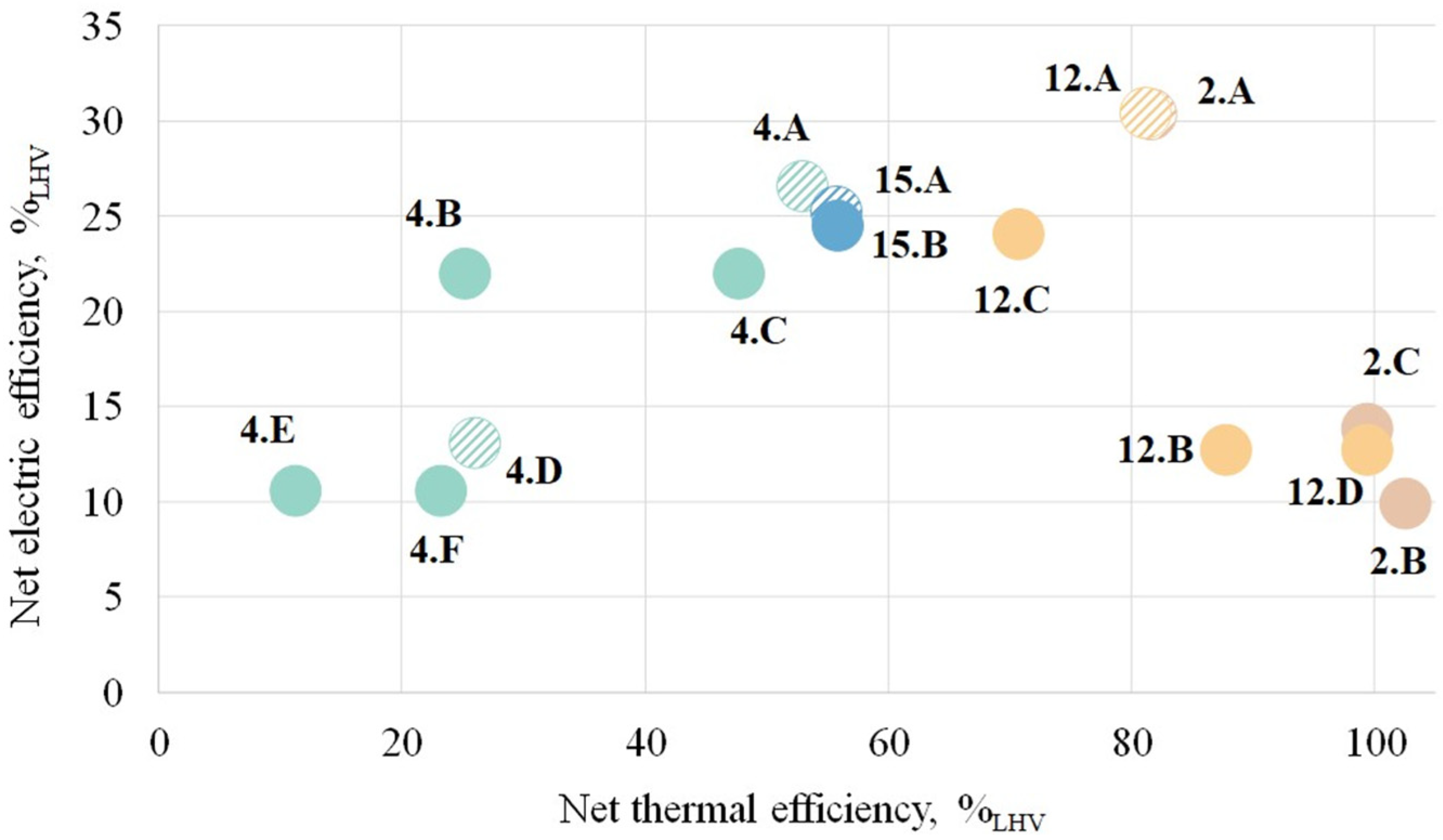
The performances of CHP plants (15 configurations, of which 5 are reference plants and 10 feature CC) are expressed in terms of both electric efficiency and thermal efficiency; therefore, they are represented by circles on the graph in
Figure 8, which reports the two KPIs on its axes.
The performances of CHP configurations are more difficult to compare, since thermal efficiency had to respect only the first law of thermodynamics, whereas electric efficiency pays also second-law penalties. This explains why some CHP plant configurations exceed 100% overall fuel utilization: they recover, for thermal production purposes, also the latent heat of condensation of the water vapor in flue gas, which is not considered by the LHV basis adopted for this comparison.
In all but a few cases, either in electricity-only or CHP configurations, the introduction of CC leads to a performance penalty for bioenergy plants, which can be quantified in 5–10 percentage points of electric efficiency. The only exceptions are plant 1.D, which features CaL, and cases 9.B, 9.C, and 14.C, which feature MCFC. In these cases, the increase in efficiency, rather than a drop, is due to the increase in power input with respect to the corresponding reference plants with the introduction of better-performing energy conversion systems, like MCFCs, which notoriously outperform thermodynamic cycles.
Plants employing solvent-based systems experience the most pronounced reductions in efficiency. Conversely, the other plant categories also exhibit energy penalties but are lower compared with those employing solvents. The data points of paper #3, characterized by the lowest efficiencies, correspond to the sole BECCS plant operating simultaneously on bagasse combustion and bioethanol production. Notably, the steam cycle within this type of plant has no optimal operating conditions.
In the context of plants featuring thermal power generation, a noteworthy observation is the substantial thermal recovery observed when employing the Hot Potassium Carbonate (HPC) system, notably the configurations of paper #2. Heat recovery is also evident for plants of paper #12, which investigates the coupling of Hot Potassium Carbonate and Monoethanolamine systems; the MEA-based system is evaluated both with and without the integration of heat pumps. Within these configurations, heat recovery takes place from both the capture system and flue gas condensation, capitalizing on the temperature levels of the DH network. The highest heat recovery is naturally observed in the scenario where heat pumps are incorporated into the system.
3.5. Exergy Efficiency
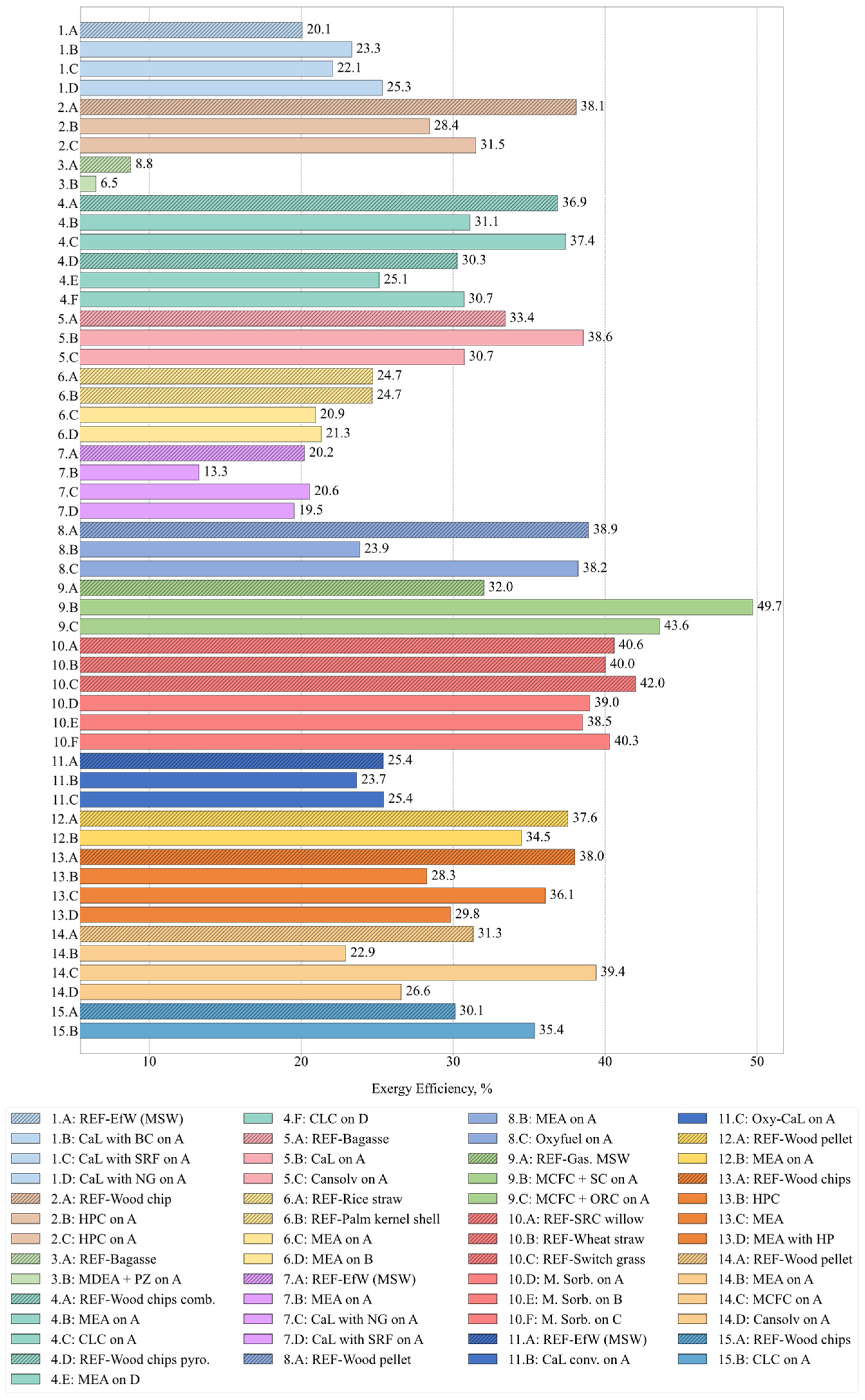
The graph in
Figure 9 presents the results of the exergy efficiency calculation for all the plant configurations so far identified. It appears evident that the reference bioenergy plants (i.e., without CC) fall within a rather narrow range of exergy efficiency, notably from 20.1% to 36.9% (by excluding plant 3.A, which is very peculiar). The application of the various CC techniques significantly broadens the range, which spans from 13.3% to 49.7% (again, by excluding plant 3.B). Therefore, while most techniques cause a drop in exergy efficiency, few of them can even determine an increase.
One important factor affecting the calculated exergy efficiency is the contribution from thermal energy production. In some of the evaluated plants, this thermal term is substantial because it depends on both the magnitude of the cogenerated heat and its mean temperature. When the mean temperature is relatively low, the exergy content of that heat becomes highly sensitive to ambient conditions. In fact, a variation of just a few tens of degrees Celsius in ambient temperature can change the exergy contribution of thermal power by up to 50%.
The comparative analysis of carbon capture (CC) techniques is better based on the associated reduction in exergy efficiency, as quantified by means of Equation (11). These findings, along with those pertaining to SPECCA values, are presented and discussed in the following section.
3.6. The Impact of Carbon Capture on Performances: Exergy Efficiency Drop and SPECCAs
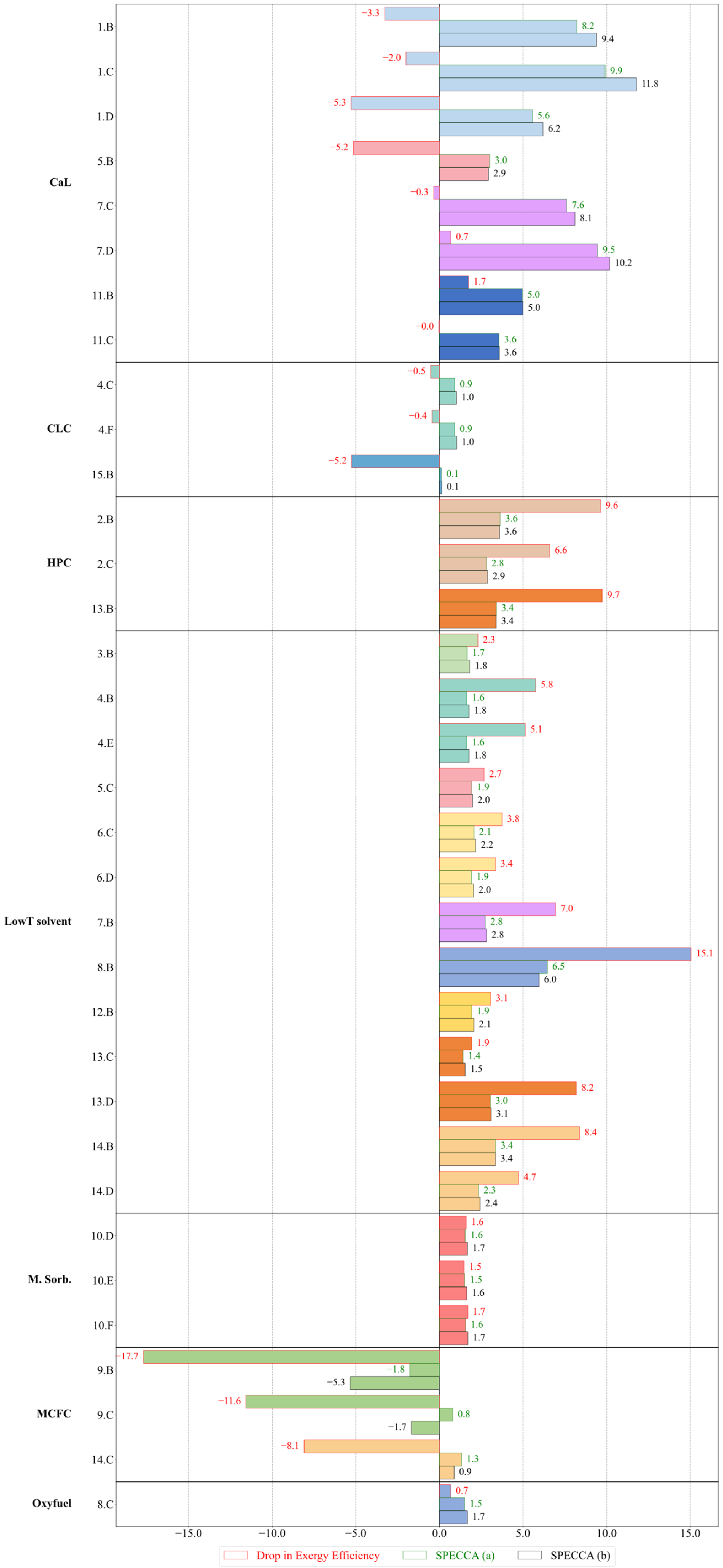
The graph in
Figure 10 reports the quantification of carbon capture impact on the performances of bioenergy plants based on three metrics: drop in exergy efficiency and SPECCA (a) and (b).
Regarding the reduction in exergy efficiency, the most remarkable result is the negative value recorded for Plant 9.B, followed by Plants 9.C and 14.B. All three BECCS configurations are based on Molten Carbonate Fuel Cells (MCFCs). The exceptional performance of MCFC-based carbon capture systems is attributed to the intrinsic nature of the technology: it couples the reference plant with a thermodynamically efficient unit capable of converting natural gas into electricity. Since the exergy efficiency of the integrated system falls between that of the original configuration and the added unit, the overall outcome is a net improvement.
Other CC techniques that also result in negative values for the drop in exergy efficiency include CaL and CLC. Alongside the high-temperature electrochemical systems (i.e., MCFCs) previously discussed, these approaches adopt active capture mechanisms that do not consume electricity or heat produced by the retrofitted plants. Instead, they contribute to the generation of additional electricity and/or heat either through supplementary fuel input or through more efficient thermodynamic exploitation of the existing fuel. As the energy conversion process associated with these methods is more efficient than that of the retrofitted base system, the overall exergy efficiency is ultimately enhanced.
All solvent/sorbent-based techniques penalize the exergy efficiency of the energy conversion process. The drops span from 1.5 to 15.1 percentage points (p.p.) with an average of about 5.4 (p.p.). Among the three categories of these methods, molten sorbets obtain the best exergy efficiency results, followed by amines and HPC. Oxyfuel, meanwhile, achieves a good outcome (nearly no drop in exergy efficiency) based on the sole case study considered.
In most cases, SPECCA values reflect the trends observed in the drop of exergy efficiency; however, notable discrepancies do emerge. The most evident mismatch concerns CaL plants, where significant improvements in exergy efficiency are accompanied by high energy penalties for CO2 capture—reflected in elevated SPECCA values. This counterintuitive outcome is attributable to the CaL unit’s efficient use of both fuel and oxygen, which notably exceeds that of the retrofitted base plant. Nevertheless, its efficiency remains lower than that of the benchmark systems upon which SPECCA criteria are defined. In essence, while the added process enhances the overall plant performance, the improvement is insufficient to outperform the benchmark configurations.
The same situation occurs, to a lower extent, in the cases of CLC options and of plant 14.C (MCFC-based). Instead, plants 9.B and 9.C, which are both MCFC-based, are the only cases able to achieve negative SPECCA values, indicating their ability to outperform the benchmark plants. A negative SPECCA can be regarded as representative of a technology that associates CO2 capture with efficient production, rather than consumption of energy.
Values of SPECCA (a) and (b) are generally similar, with two notable exceptions observed in MCFC-based configurations, which even yield negative SPECCA values. This outcome results from the minimal difference in emissions between the CC reduction and the corresponding benchmark plant intervention, leading to an extremely small denominator in the SPECCA calculation. Such conditions can significantly amplify even a modest numerator within these KPIs. Indeed, the numerator reflects the difference in energy consumption between the retrofitting intervention and the balancing intervention of the benchmark plant, which may be very close in value—thus resulting in either positive or negative outcomes. In most cases where the denominator (i.e., the emissions difference) is sufficiently large, SPECCA (a) and (b) exhibit similar results, with the relative magnitude determined by how the emission reduction and the efficiency drop compare against the respective changes between the two benchmark plants.
Positive SPECCAs (all BECCS options but the MCFC ones) indicate that CCS has an energy cost that must be paid. The values are rather conservative, because the implicit assumption is to balance such energy costs by means of a highly efficient benchmark plant.
SPECCA values for CaL range from 2.9 to 11.8 MJLHV/kgCO2, with a mean value of 6.85 MJLHV/kgCO2. Plants employing molten sorbents and Chemical Looping Combustion technologies exhibit markedly low SPECCA values (1.5–1.7 and 0.1–1.0 MJLHV/kgCO2, respectively). This is a consequence of their relatively modest impact on the steam cycle. Specifically, CLC, given its distinctive configuration, imposes only minimal energy penalties in terms of auxiliary power requirements. Based on the sole case study considered, oxyfuel also achieves good SPECCA values, in line with those of CLC.
Low-temperature absorption and HPC achieve SPECCA values that span from 1.4 to 15.1 MJLHV/kgCO2. Many advanced-amine systems fall in the lower part of the interval. Since these options feature constant energy input, the results are due to the reduction in the overall energy output because of the substantial thermal load imposed by the regenerator, thereby penalizing the steam cycle.
4. Conclusions
The review of the literature within the Bio-Energy with Carbon Capture and Storage (BECCS) field indicates a growing interest in the topic, with a prevalence of biomass combustion processes being considered. Notwithstanding the numerous articles dealing with various aspects of Chemical Looping Combustion (CLC), among the proposed Carbon Capture (CC) options, low-temperature solvents confirm their reputation of benchmark technology, being widely considered as the most mature decarbonization approach.
Seven categories of CC techniques are identified and comparatively assessed using five Key Performance Indexes (KPIs). The results of this evaluation are briefly summarized below.
Calcium Looping (CaL) systems lead to modest efficiency penalties or even improvement, thanks to the better exploitation of fuel, as well as the possible use of higher-quality fuels (like natural gas). However, in terms of energy cost, the reduction in CO2 emissions appears to be rather expensive. This aspect can be mitigated or even turned into a possible advantage when the employed fuel is waste (biomass or SRF), since CaL technology appears to be able to exploit these low-quality types of feedstocks.
CLC exhibits excellent performance in terms of both efficiency and energy cost for CO2 capture, which explains the considerable interest highlighted by the literature review. Hot Potassium Carbonate (HPC) emerges as a moderately performing technology from the standpoint of efficiency, although its energy cost for CO2 capture is comparable to that of several other solvent-based systems. Low-temperature solvents, primarily amine-based ones, display widely dispersed performance results, reflecting the diversity of available options and applications. Nevertheless, the best-performing systems are competitive with CaL, molten sorbents, and oxyfuel techniques. These latter approaches show very good performance, although the assessment is based on data retrieved from a single article per technology.
Molten Carbonate Fuel Cells (MCFCs) are the best-performing CC techniques for application to combustion-based bioenergy plants. This result relies on the inherent efficiency of these electrochemical systems in converting fuel into electricity. However, operating MCFCs requires high-quality fuel, particularly Natural Gas (NG), which remains a fossil resource. Therefore, NG-based configurations—such as the one analyzed here—do not enable independence from fossil resources. Other alternatives that could achieve such independence, such as MCFCs fueled with biomass-derived syngas, are not addressed in the reviewed literature.
Regarding the metrics employed in the comparative assessment of BECCS performance, a revised definition of Specific Primary Energy Consumption per CO2 Avoided (SPECCA) is introduced. The classical formulation of this KPI appears in only two of the selected papers and is primarily suited to conventional, electricity-only systems that rely on unconstrained fuel resources—a scenario unlikely in bioenergy applications. Consequently, the newly proposed definition accounts for systems with multiple outputs (e.g., CHP plants) and enables consideration of different fuel types, offering a more appropriate framework for evaluating the energy and carbon efficiency of advanced bioenergy configurations.
Moreover, this analysis can be considered a first step in assessing the economic feasibility of different BECCS solutions, as performance indicators have a direct impact on operating costs. However, investment costs are not addressed here, and a comprehensive assessment would require further technical and economic studies, which are currently limited by the scarcity of data in the papers themselves on plant sizing and economic assumptions.