Article

Experimental Characterization of a Direct Contact Latent Cold Storage with Ice

by
Patrick Estermann
1,*,
Pascal Gürber
1,
Stefan Krimmel
1,
William Delgado-Díaz
1,
Rebecca Ravotti
1,
Manuel Häusler
2 and
Anastasia Stamatiou
1
1
Competence Centre Thermal Energy Storage (CCTES), Lucerne University of Applied Sciences and Arts, 6048 Horw, Switzerland
2
EuroTube Foundation, 8600 Dübendorf, Switzerland
*
Author to whom correspondence should be addressed.
Energies 2025, 18(16), 4290; https://doi.org/10.3390/en18164290
Submission received: 23 June 2025 / Revised: 29 July 2025 / Accepted: 5 August 2025 / Published: 12 August 2025
(This article belongs to the Special Issue Design, Optimization and Applications of Energy Storage System)

Abstract

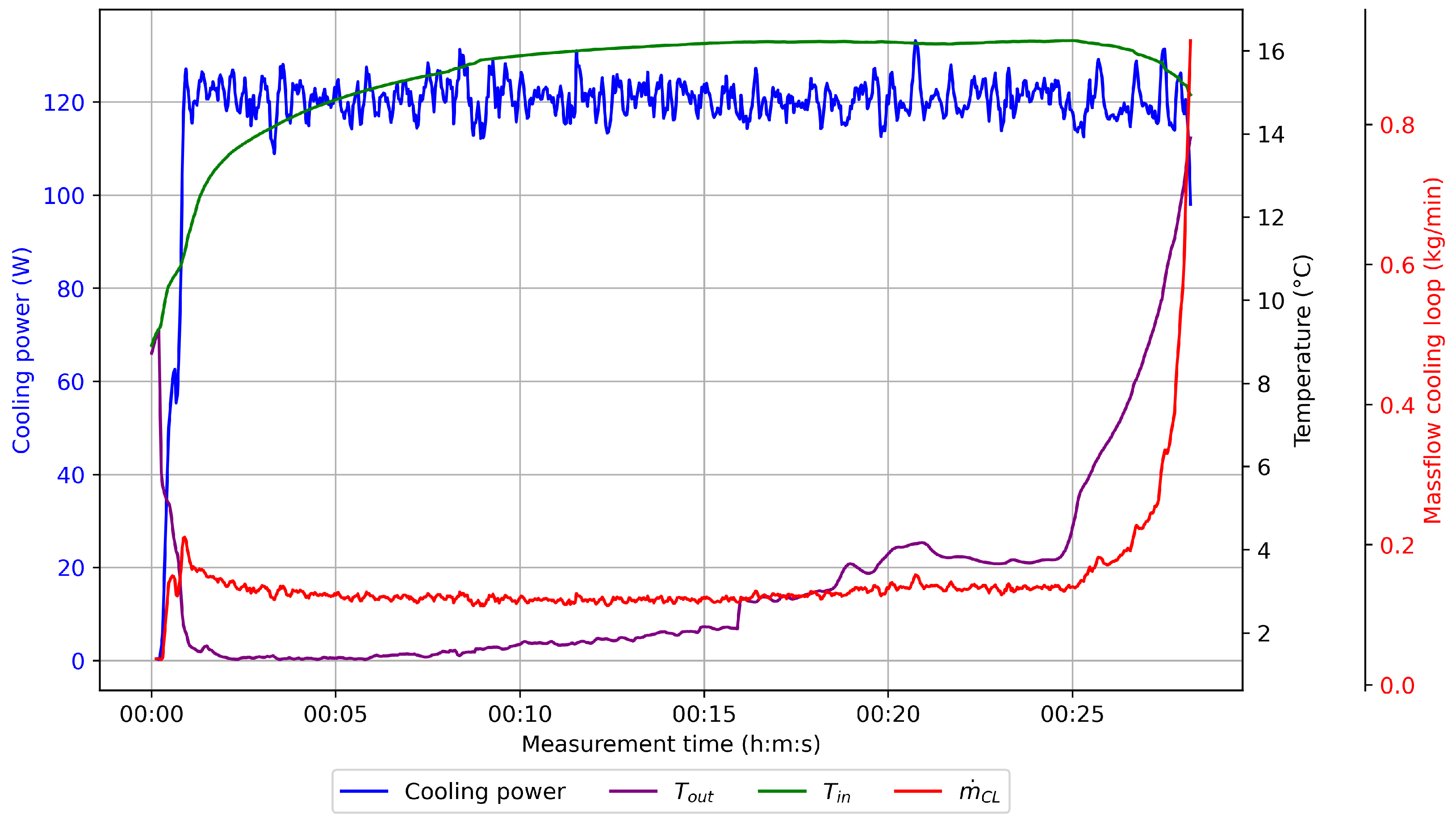
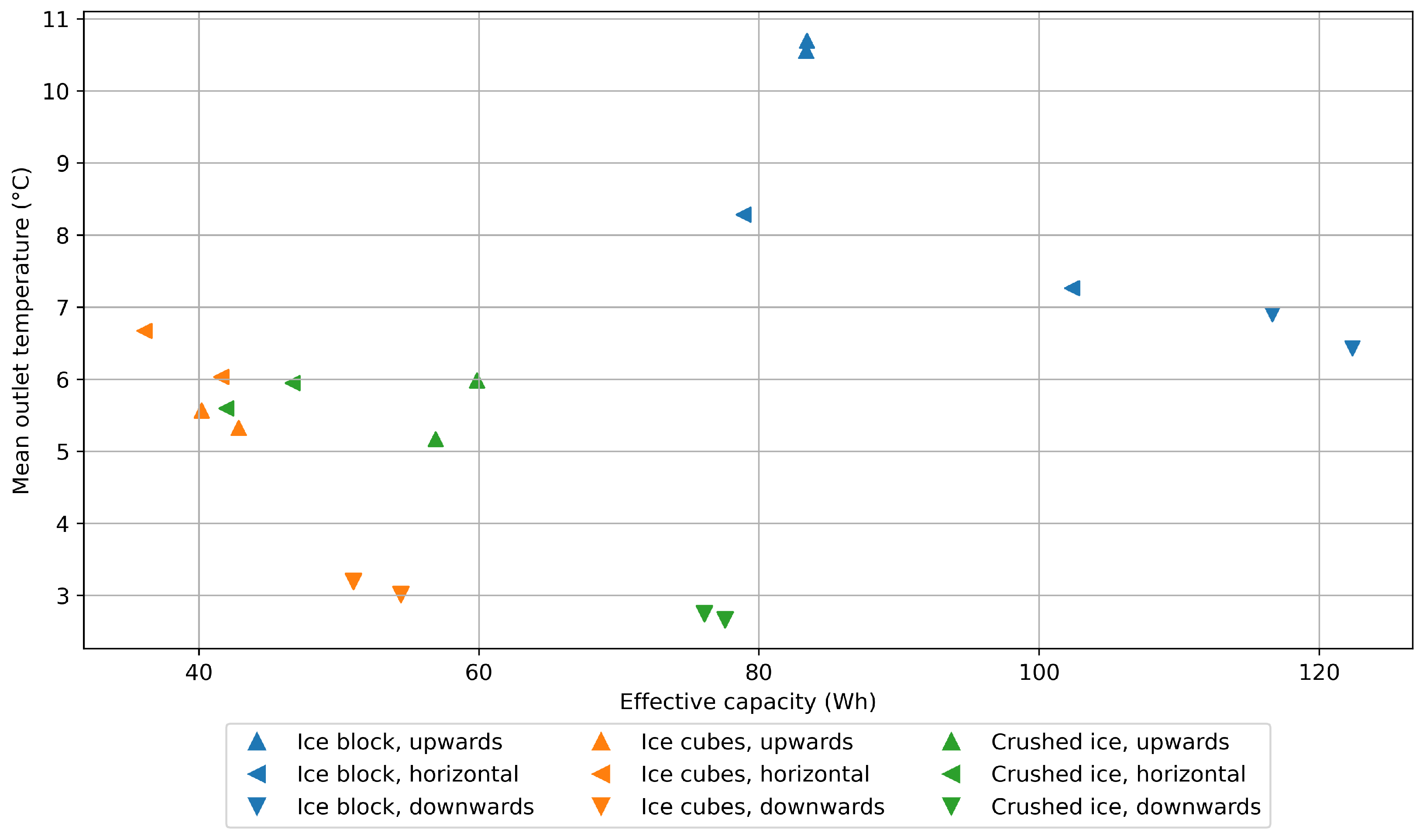
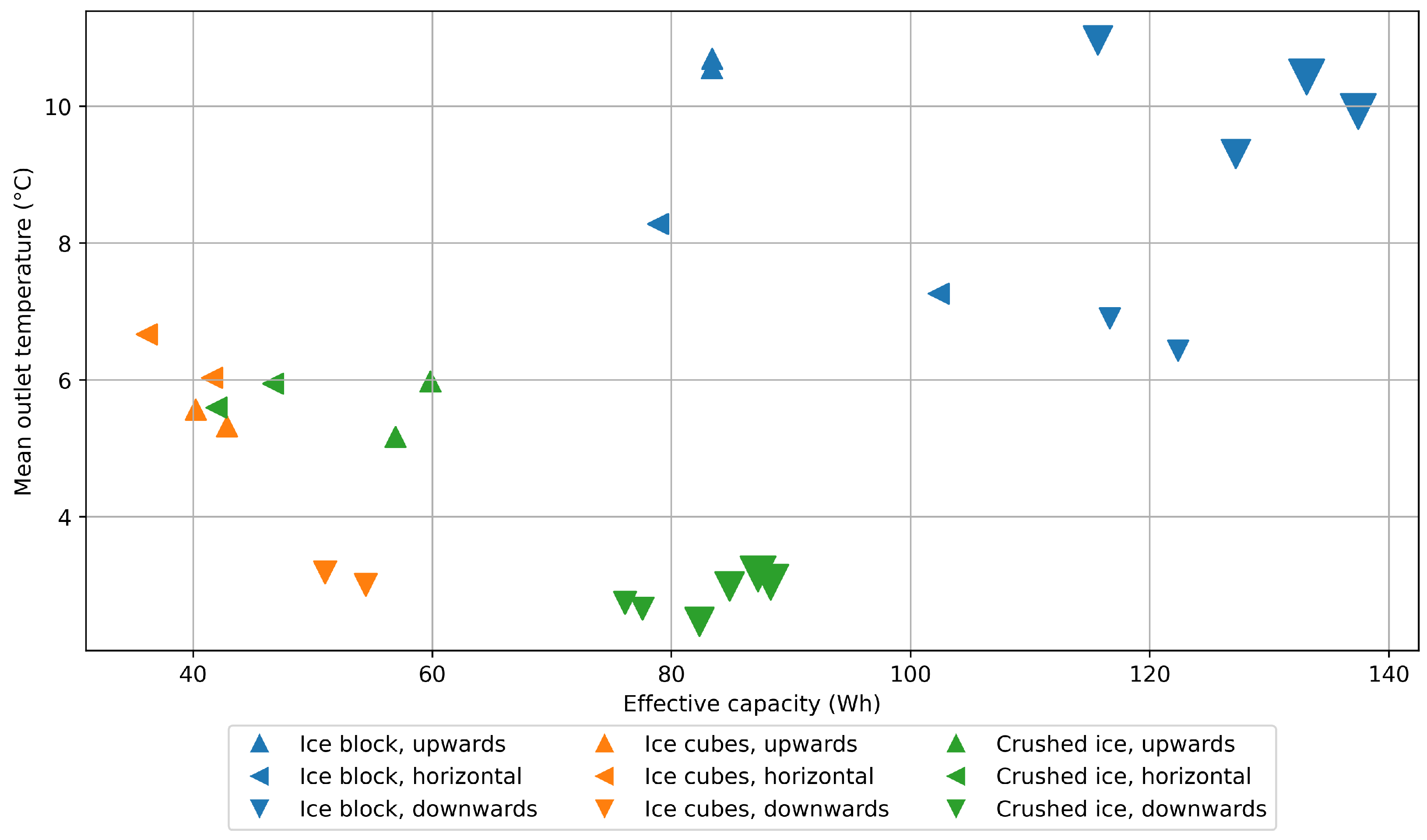
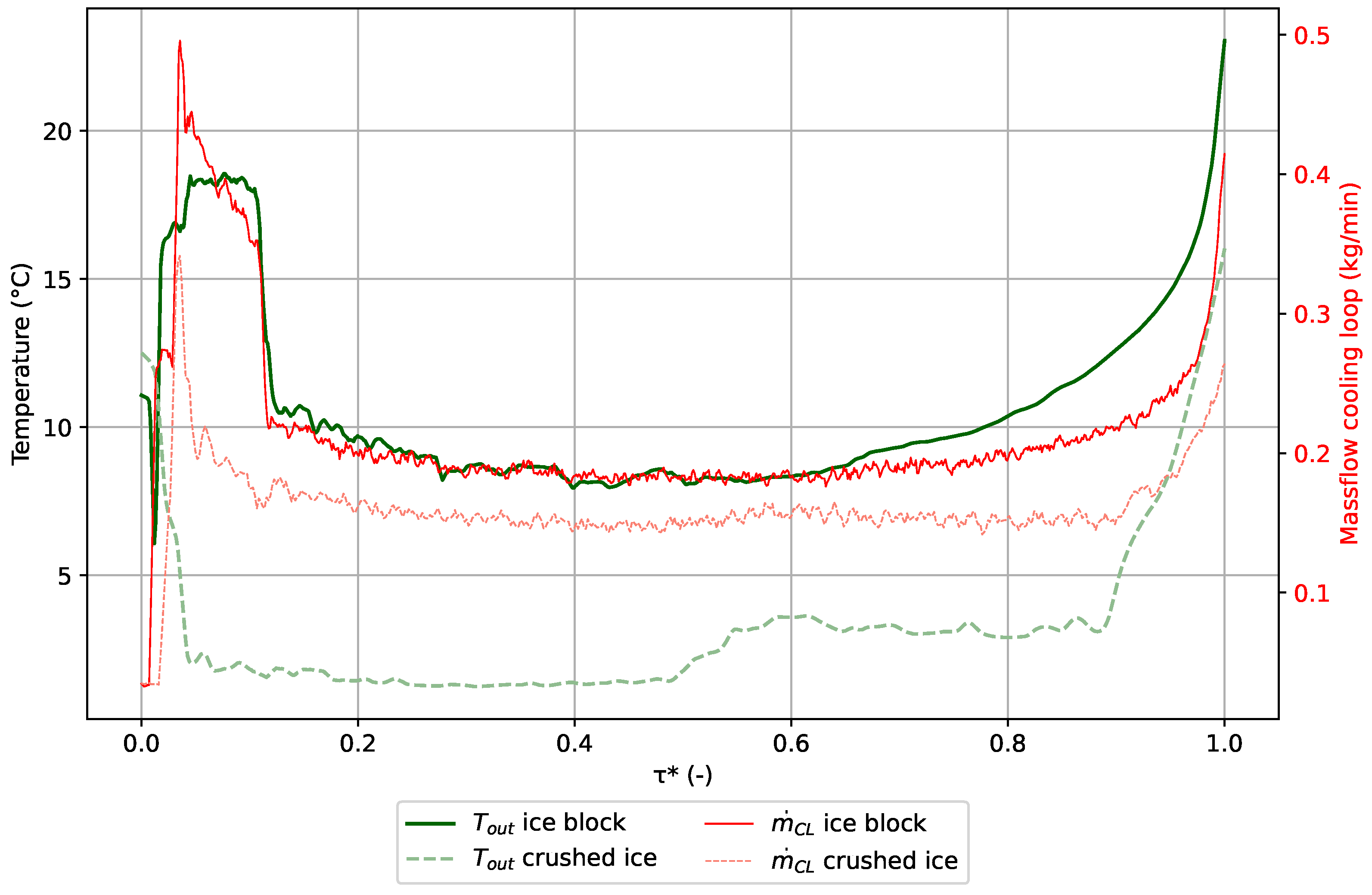
Effective thermal management is crucial for Hyperloop vehicles to ensure the reliable operation of onboard systems and to prevent overheating under high-speed and vacuum-like conditions. Due to the near-vacuum environment in which a Hyperloop operates, passive cooling is largely ineffective, making an active thermal management system necessary. This study investigates the application of a direct contact latent heat storage system, which leverages the high energy density of phase change materials. Ice is used as the phase change material and water as the heat transfer fluid, forming a system that avoids emulsion formation and simplifies design by eliminating complex heat exchangers. An experimental setup was used to evaluate the impact of three ice shapes and three flow directions on cooling performance. The results indicate that neither crushed ice nor ice block alone provide the optimal thermal performance for Hyperloop cooling requirements in terms of both effective capacity and dynamic response. Crushed ice offers fives times faster thermal response but has a 42% less packing density, while ice block provides greater thermal mass but responds more slowly to dynamic cooling demands. Therefore, a balance between the two configurations must be identified to combine adequate heat transfer performance with sufficient cooling capacity.
Keywords: thermal energy storage; direct contact; latent heat storage; ice; phase change material; Hyperloop; thermal management system thermal energy storage; direct contact; latent heat storage; ice; phase change material; Hyperloop; thermal management system