Article

Fast and Interpretable Probabilistic Solar Power Forecasting via a Multi-Observation Non-Homogeneous Hidden Markov Model

1
School of Electrical and Information Engineering, Tianjin University, Tianjin 300072, China
2
Power China Northwest Engineering Corporation Limited, Xi’an 710065, China
*
Author to whom correspondence should be addressed.
Energies 2025, 18(10), 2602; https://doi.org/10.3390/en18102602
Submission received: 16 April 2025 / Revised: 7 May 2025 / Accepted: 15 May 2025 / Published: 17 May 2025
(This article belongs to the Section A2: Solar Energy and Photovoltaic Systems)

Abstract

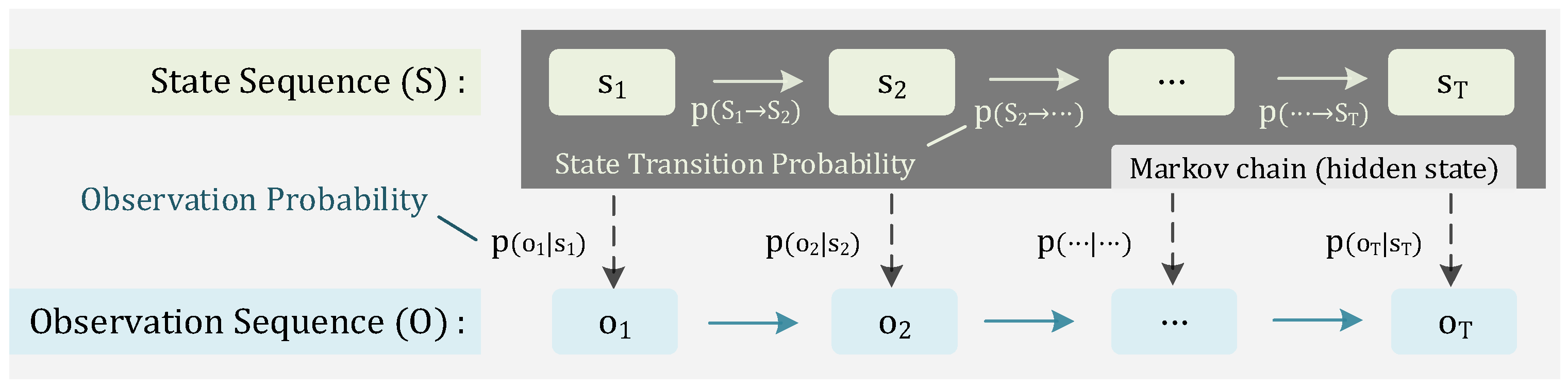
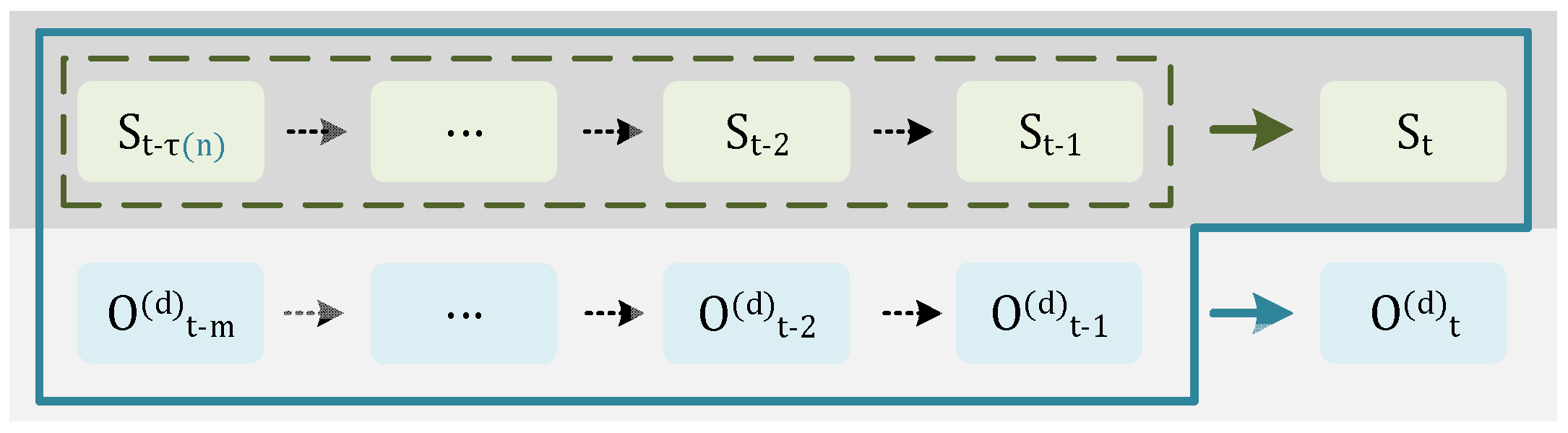
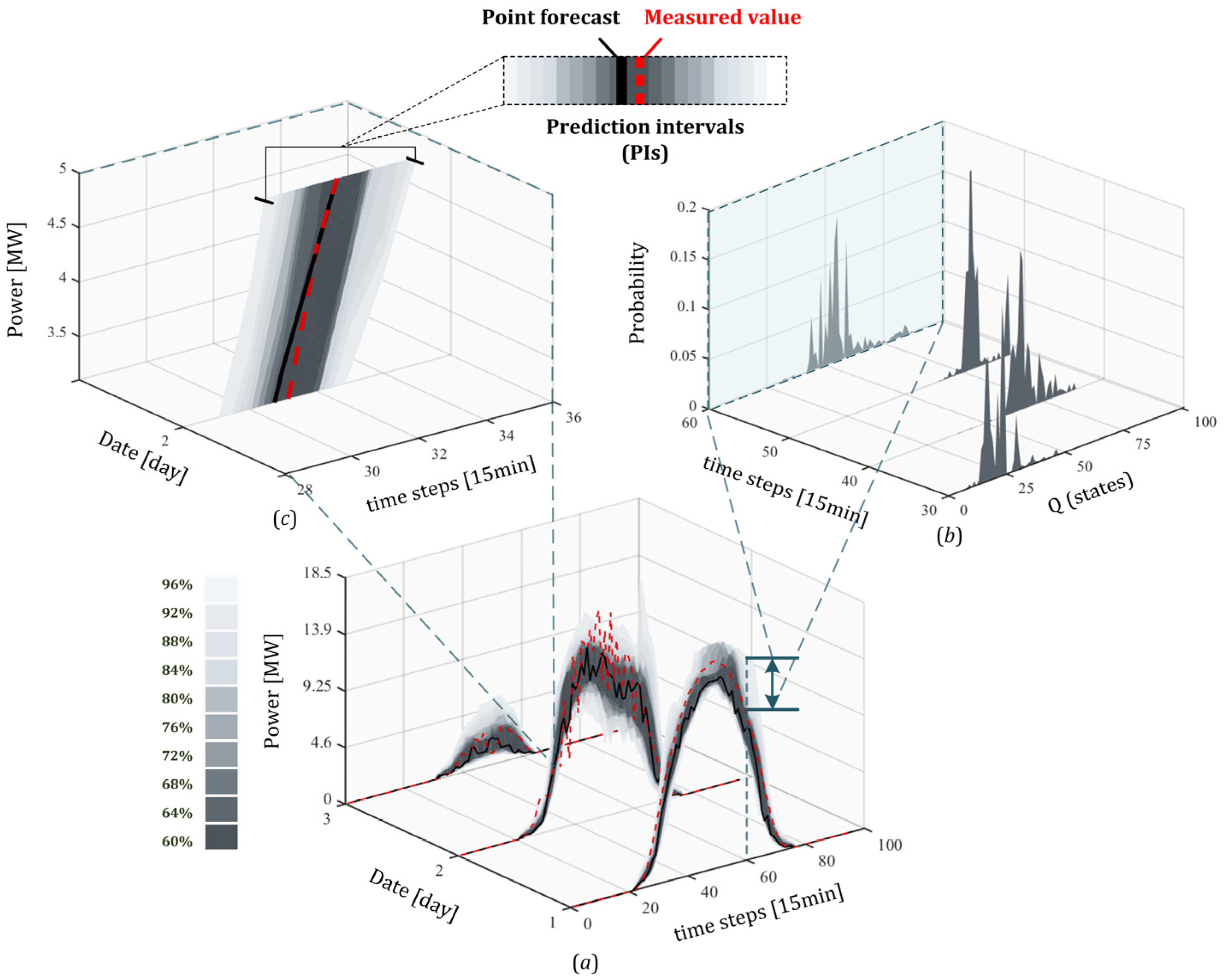
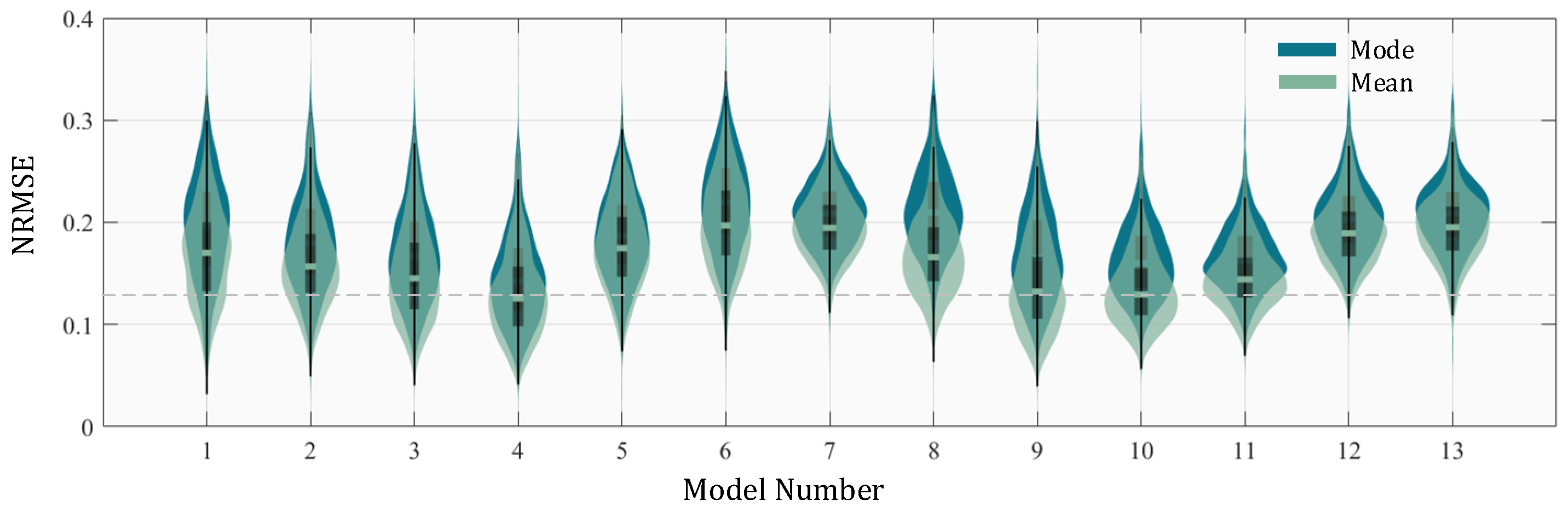
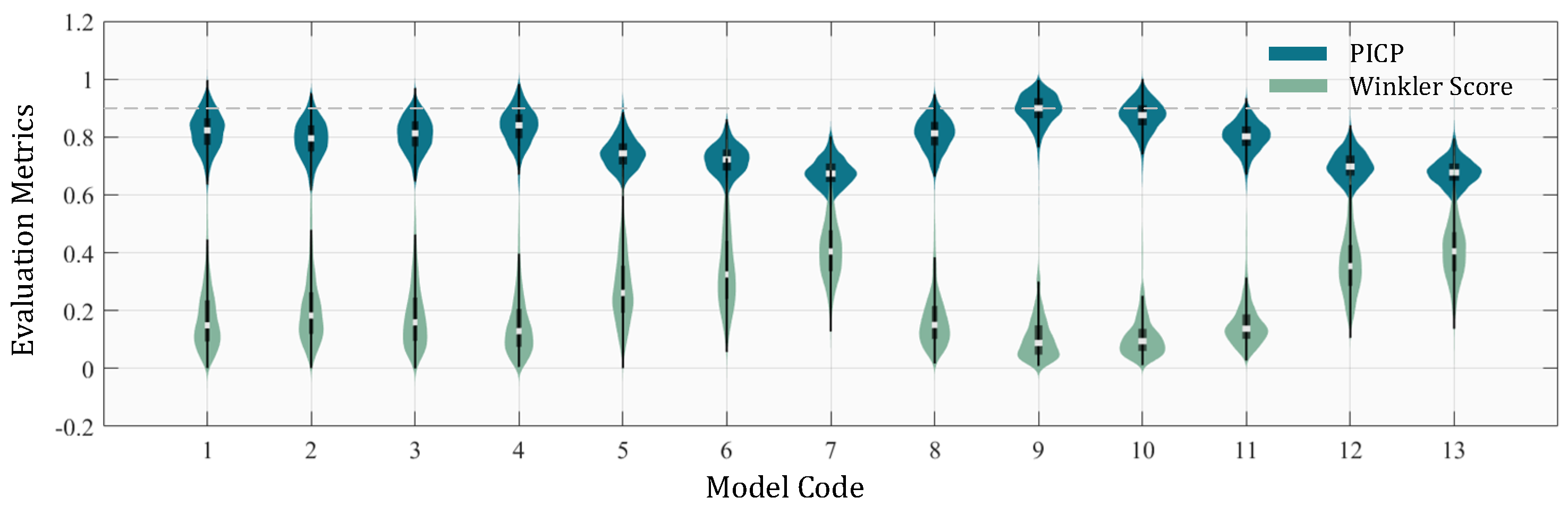
The increasing complexity and uncertainty associated with high renewable energy penetration require forecasting methods that provide more comprehensive information for risk analysis and energy management. This paper proposes a novel probabilistic forecasting model for solar power generation based on a non-homogeneous multi-observation Hidden Markov Model (HMM). The model is purely data-driven, free from restrictive assumptions, and features a lightweight structure that enables fast updates and transparent reasoning—offering a practical alternative to computationally intensive neural network approaches. The proposed framework is first formalized through an extension of the classical HMM and the derivation of its core inference procedures. A method for estimating the probability density distribution of solar power output is introduced, from which point forecasts are extracted. Thirteen model variants with different observation-dependency structures are constructed and evaluated using real PV operational data. Experimental results validate the model’s effectiveness in generating both prediction intervals and point forecasts, while also highlighting the influence of observation correlation on forecasting performance. The proposed approach demonstrates strong potential for real-time solar power forecasting in modern power systems, particularly where speed, adaptability, and interpretability are critical.
Keywords: solar power; probabilistic forecasting; hidden Markov model; statistical method solar power; probabilistic forecasting; hidden Markov model; statistical method