Article

Shortening the Payback Period of Greenhouse Gas Reduction Benefits from Photovoltaic Rooftop Systems


by
Nattachote Rugthaicharoencheep
,
Natchapol Ruangsap
and
Supawud Nedphokaew
*
Department of Electrical Engineering, Faculty of Engineering, Rajamangala University of Technology Phra Nakhon, Bangkok 10800, Thailand
*
Author to whom correspondence should be addressed.
Energies 2024, 17(23), 6159; https://doi.org/10.3390/en17236159
Submission received: 23 October 2024 / Revised: 28 November 2024 / Accepted: 2 December 2024 / Published: 6 December 2024

Abstract

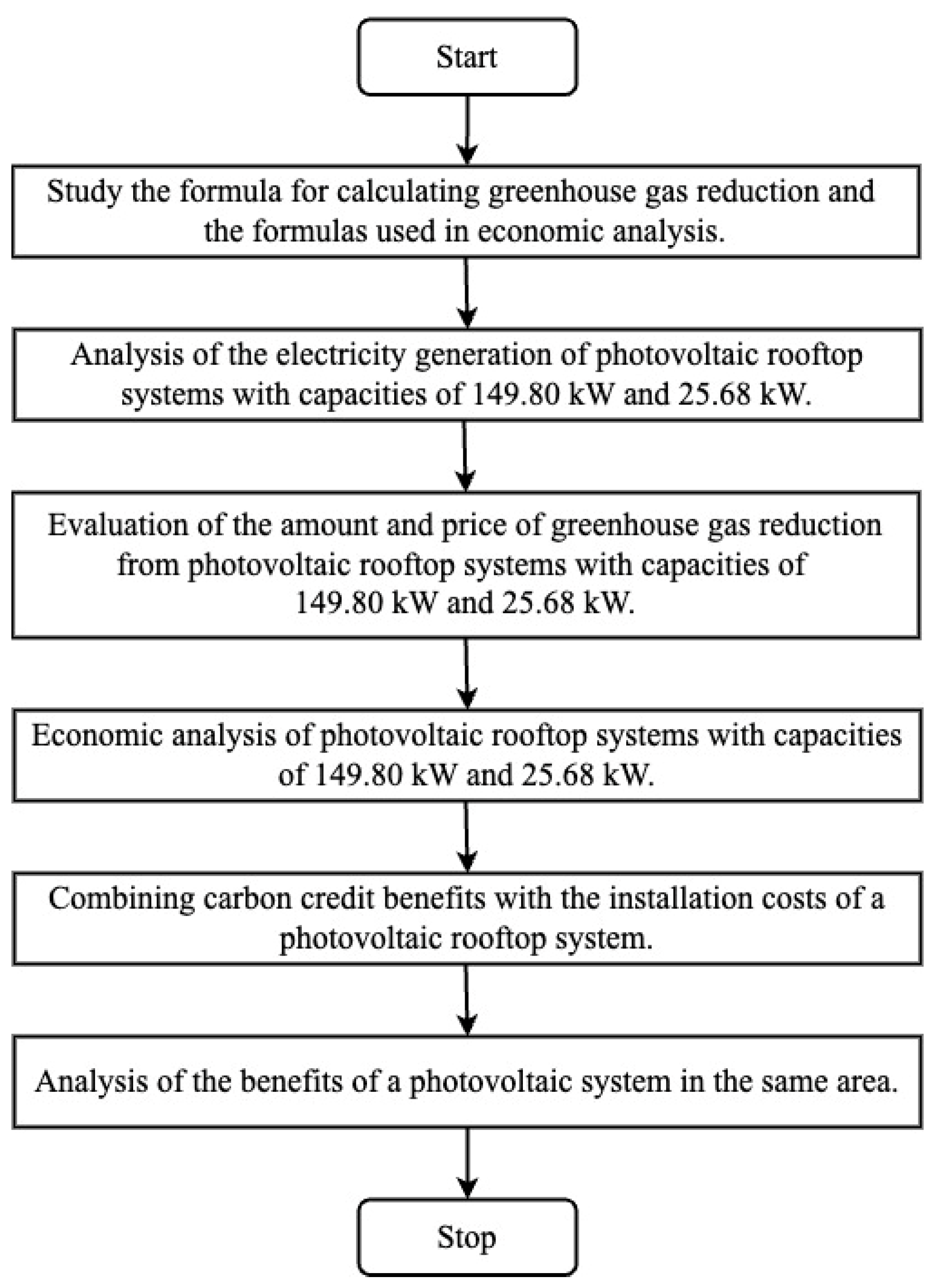
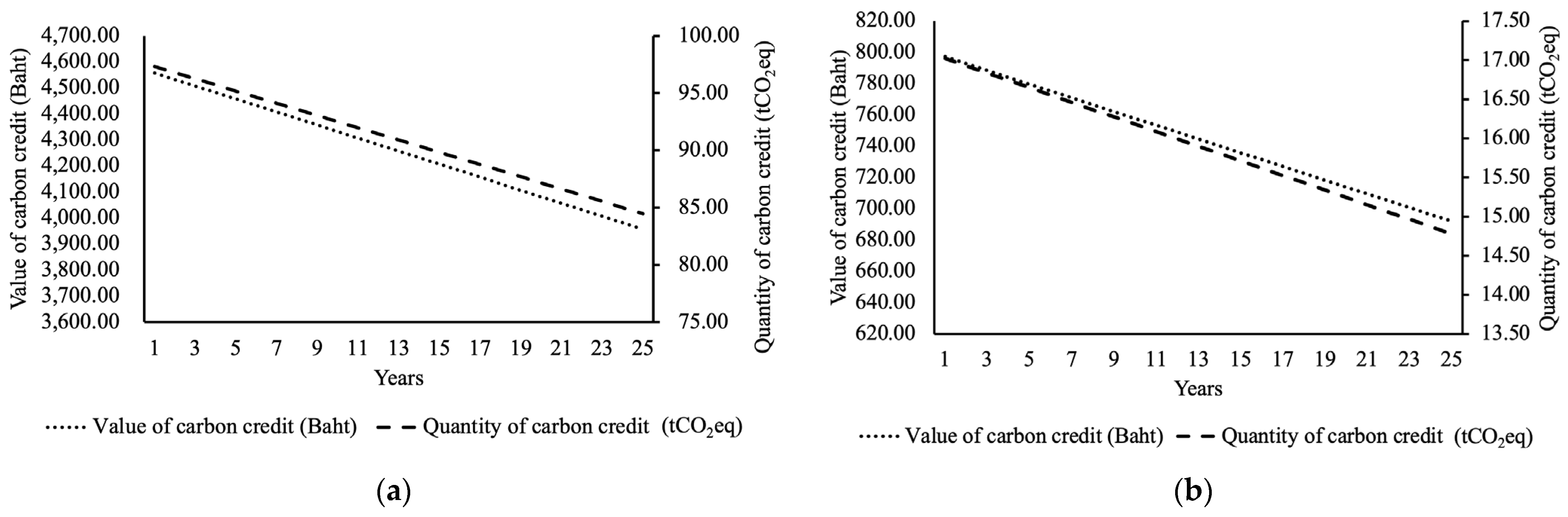
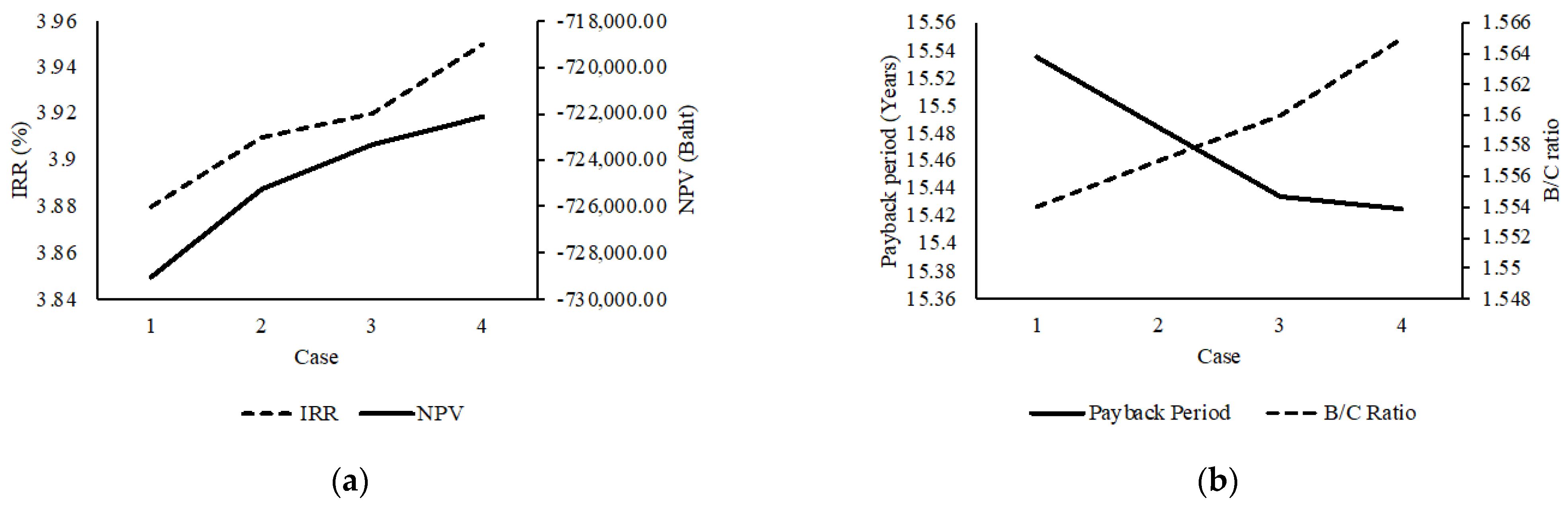
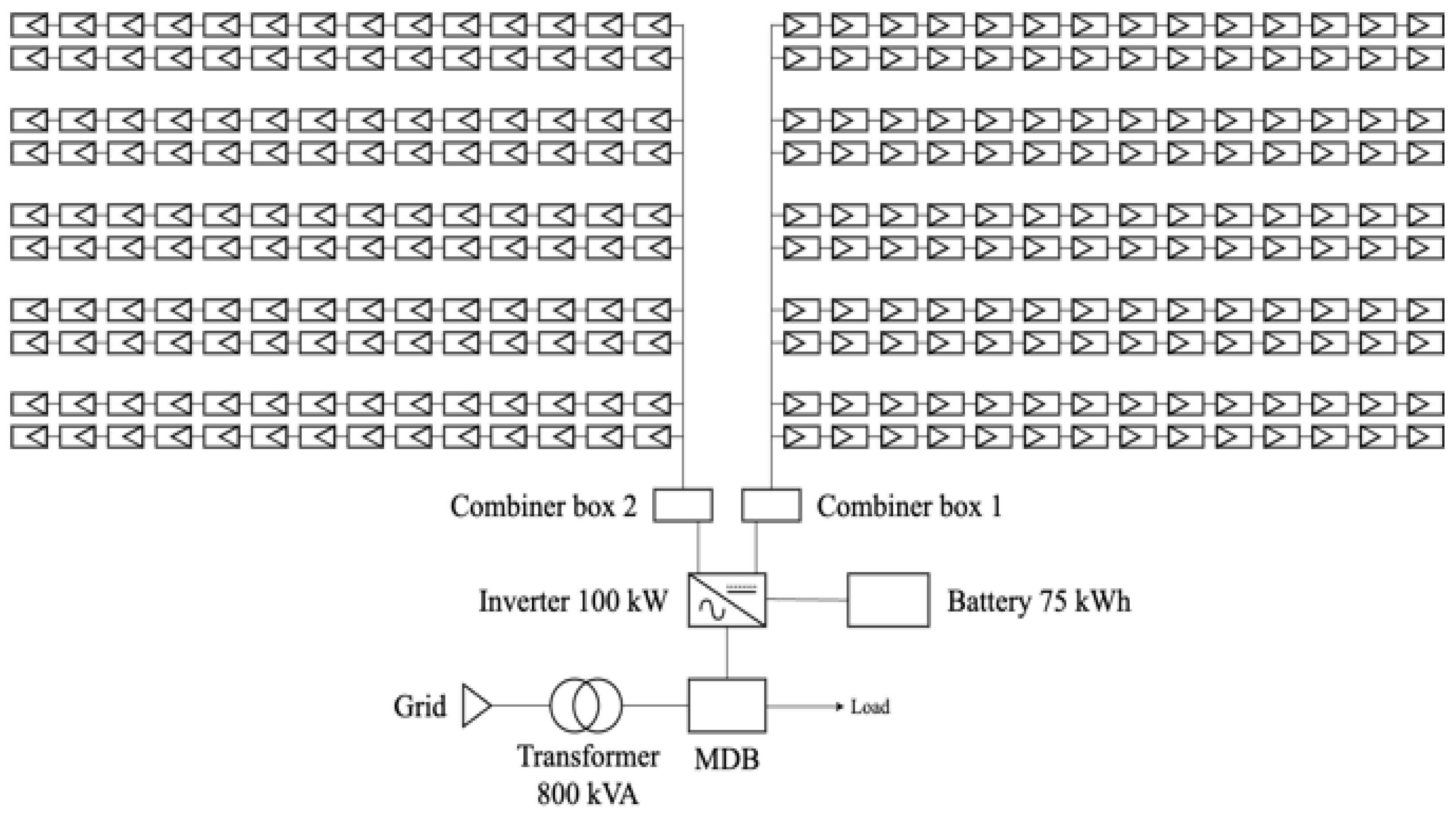
This paper presents an analysis of shortening the payback period of greenhouse gas reduction benefits from photovoltaic rooftop systems. The objective was to evaluate the amount of carbon credits generated and their returns. The study includes an economic analysis and a comparison of the economic outcomes with and without the consideration of carbon credits from 149.80 kWp and 25.68 kWp photovoltaic rooftop systems. The study evaluated the amount of electrical energy produced by the photovoltaic rooftop systems, estimated using the PVsyst program version 7.3.1, at a factory in Pathum Thani Province, Thailand. The economic indices analyzed in this study include the payback period, net present value (NPV), benefit–cost ratio (B/C ratio), and internal rate of return (IRR). The analysis is divided into four case studies: Case 1 is the base case, and Cases 2, 3, and 4 consider carbon credits for 7, 14, and 25 years, respectively. The economic indices analyzed in Case 1 include the financial internal rate of return (FIRR), payback period, financial net present value (FNPV), and B/C ratio. In Cases 2, 3, and 4, the economic indices analyzed are the economic internal rate of return (EIRR), the economic net present value (ENPV), the B/C ratio, and the payback period. This paper outlines a new economic calculation approach that incorporates carbon credits produced by photovoltaic rooftop systems, which helps achieve break-even points more quickly. It also discusses the application of carbon credits in conjunction with renewable energy.
Keywords: payback period; greenhouse gas; benefit; carbon credit; photovoltaic rooftop system payback period; greenhouse gas; benefit; carbon credit; photovoltaic rooftop system