Next Article in Journal
Three-Dimensional Spatial Microscopic Characteristics and Developmental Influencing Factors of Tight Gas Layers in Hangjinqi Prospect Area, Ordos Basin, China
Previous Article in Journal
Towards a Bioeconomy: Supplying Forest Residues for the Australian Market
Previous Article in Special Issue
A Novel Method for Diagnosing Power Electronics Devices Using Elastic Wave Emission
 
 
Correction published on 5 September 2024, see Energies 2024, 17(17), 4454.
Article

Emergency Prevention Control as a Means of Power Quality Improvement in a Shipboard Hybrid Electric Power System


by
Sergii Tierielnyk
* and
Valery Lukovtsev
Educational and Scientific Institute of Automation and Electrical Mechanics, National University “Odessa Maritime Academy”, 65029 Odesa, Ukraine
*
Author to whom correspondence should be addressed.
Deceased author.
Energies 2024, 17(2), 398; https://doi.org/10.3390/en17020398
Submission received: 29 November 2023 / Revised: 2 January 2024 / Accepted: 6 January 2024 / Published: 13 January 2024 / Corrected: 5 September 2024

Abstract

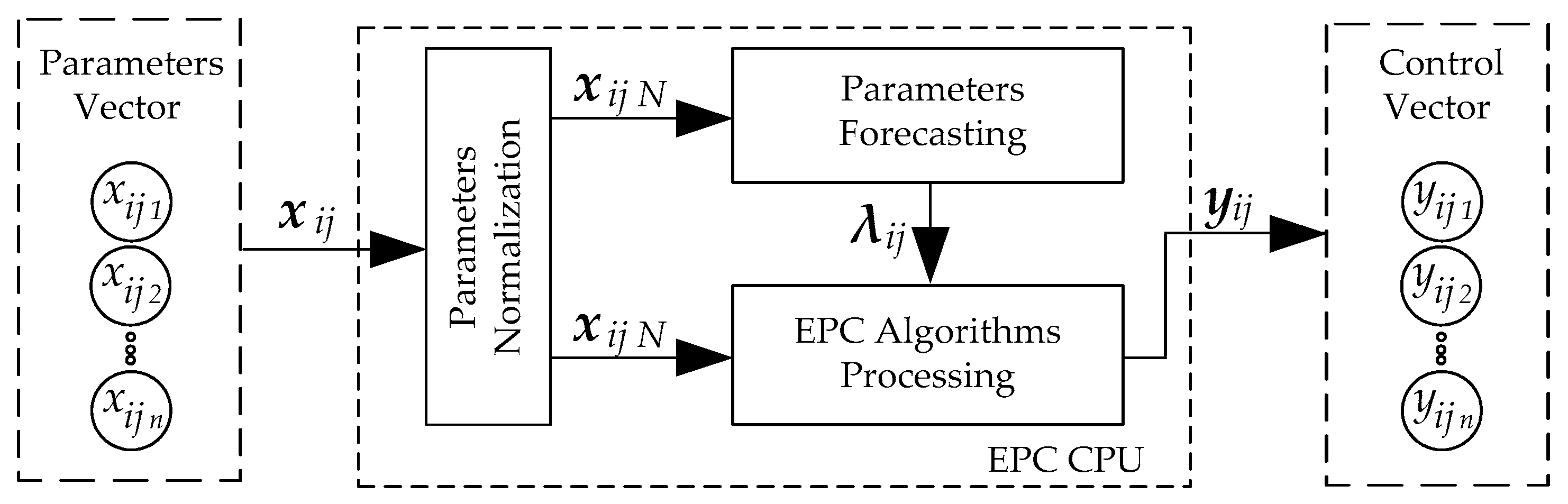
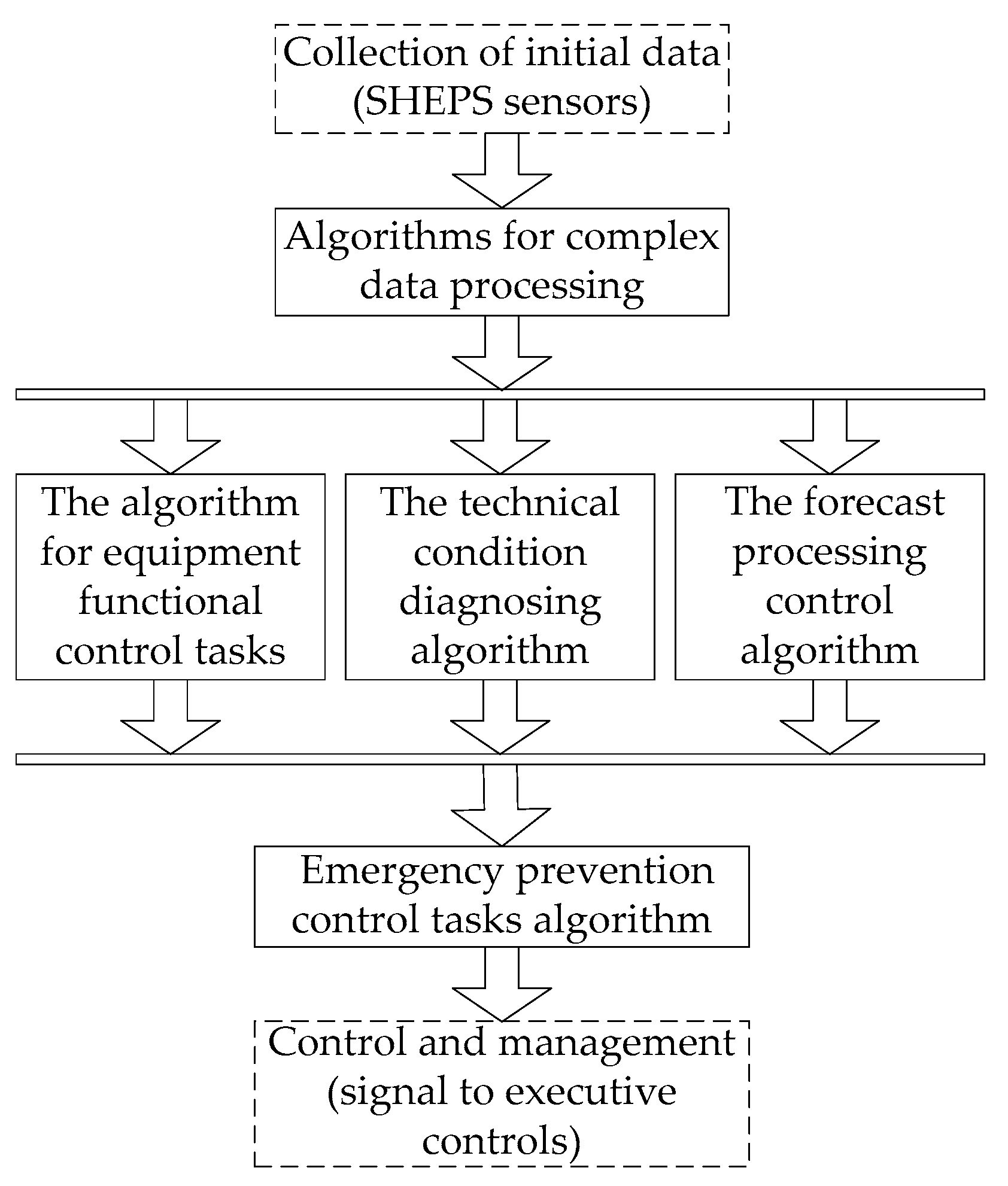
The problems associated with the greenhouse effect have increased the desire to limit carbon dioxide (CO2) emissions into the atmosphere, including emissions produced by shipboard electrical power systems. This has led to a further search for solutions in this area, such as shipboard hybrid electric power systems (SHEPSs). These systems do not yet have a wide application compared with traditional shipboard electrical power systems for several reasons, including the lack of studies establishing the fault tolerance of such systems. Therefore, in this work, problems related to generated power quality deterioration under large disturbances are studied. To achieve the fault-free operation of SHEPS, an emergency prevention control (EPC) system based on controlled parameter forecasting, along with a system structure and operation algorithm, is developed. The goals of improving electrical power quality are achieved by increasing the control efficiency of the power system’s generating sources. To validate the feasibility of the proposed control system, a computer simulation was carried out after developing a mathematical model of the SHEPS under study. The results of the study show that the use of the proposed EPC system will improve power quality when the controlled parameters are within acceptable limits. At the same time, further research is needed, as the problem of false control action as a consequence of EPC system hardware or software faults remains unstudied.
Keywords: shipboard hybrid electric power system; emergency prevention control; power quality; computer simulation shipboard hybrid electric power system; emergency prevention control; power quality; computer simulation