Article

The Potential Diversity of Agricultural Biomass in the Context of the Organization of Agricultural Production and Circular Agriculture in Poland


Department of Economics, Koszalin University of Technology, 75-343 Koszalin, Poland
*
Author to whom correspondence should be addressed.
Energies 2024, 17(14), 3368; https://doi.org/10.3390/en17143368
Submission received: 17 May 2024 / Revised: 24 June 2024 / Accepted: 3 July 2024 / Published: 9 July 2024
(This article belongs to the Special Issue Biomass Resources to Bioenergy)

Abstract

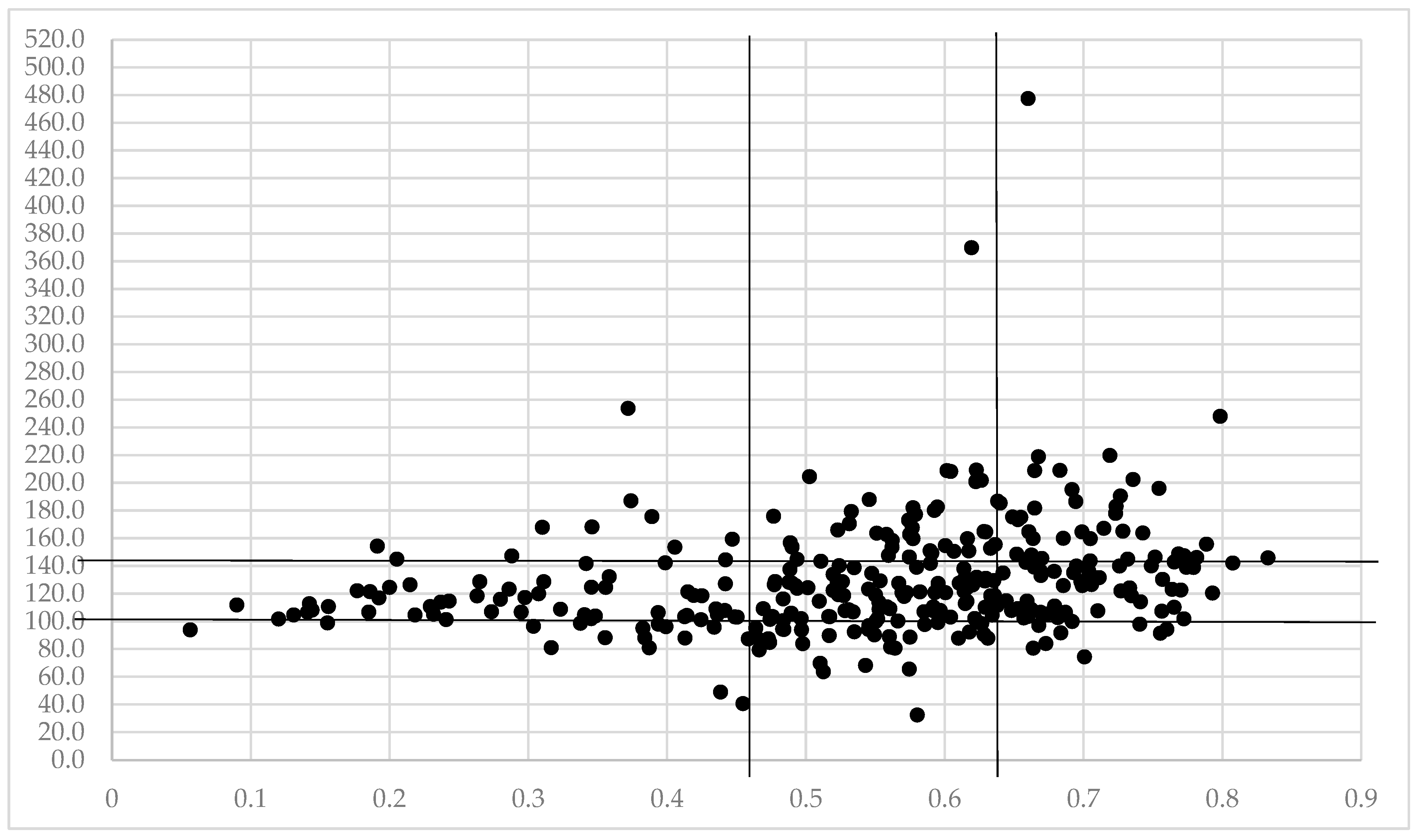
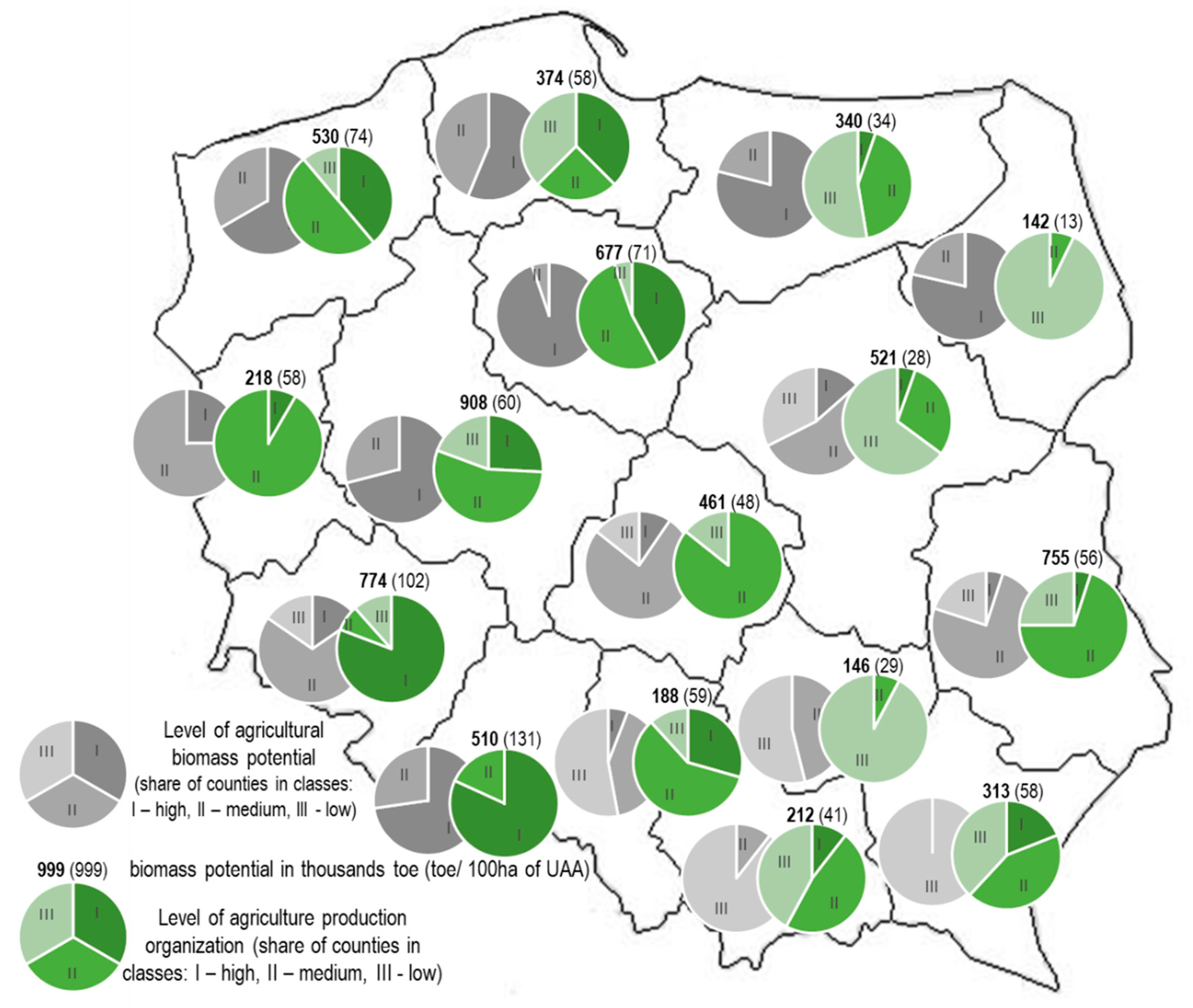
Agriculture is one of the key sectors of the economy, but it also generates many residues and waste that are only partially used (as, for example, feed, litter, and fertilizer). The resulting residues and waste can be valuable components for other sectors of the economy (e.g., energy), contributing to the implementation of a circular economy. The main aim of the research is to assess the diversity of the biomass potential from agricultural residues in the context of the level of organization of agricultural production and circular agriculture in Poland at the local level (314 counties). The level of organization of agricultural production was determined using the synthetic measure based on four variables (average farm size, number of tractors per farm, share of farms producing for the market, and the number of AWU per 100 ha of UAA). The potential of agricultural biomass was estimated on the basis of existing surpluses of straw, hay, energy crops grown on marginal lands, and residues from orchard maintenance. The data came from the General Agricultural Census conducted by the Polish Statistical Office in 2020. The conducted research showed that over 75% of counties are characterized by a high and medium level of organization of agricultural production. However, unused biomass resources from agricultural production residues are common (2/3 of counties are characterized by high and medium potential). There is a positive relationship between the level of biomass potential from agricultural residues and the level of organization of agricultural production at the local level in Poland, but the strength of this relationship is weak.
Keywords: agricultural biomass; organization of agricultural production; circular agriculture; counties in Poland agricultural biomass; organization of agricultural production; circular agriculture; counties in Poland