Article

Thermodynamic Optimization of Trigeneration Power System

by
Ladislao Eduardo Méndez-Cruz
1,
Miguel-Ángel Gutiérrez-Limón
2,
Raúl Lugo-Leyte
3 and
Mauricio Sales-Cruz
1,*
1
Departamento de Procesos y Tecnología, Universidad Autónoma Metropolitana—Cuajimalpa, Av. Vasco de Quiroga No. 4871, Colonia Santa Fé, Cuajimalpa, Mexico City 05348, Mexico
2
Departamento de Energía, Universidad Autónoma Metropolitana—Azcapotzalco, Av. San Pablo No. 180, Colonia Reynosa Tamaulipas, Azcapotzalco, Mexico City 02200, Mexico
3
Departamento de Ingeniería de Procesos e Hidráulica, Universidad Autónoma Metropolitana—Iztapalapa, Av. Ferrocarril San Rafael Atlixco No. 186, Colonia Leyes de Reforma 1ª Sección, Iztapalapa, Mexico City 09340, Mexico
*
Author to whom correspondence should be addressed.
Energies 2024, 17(12), 3048; https://doi.org/10.3390/en17123048
Submission received: 17 May 2024 / Revised: 13 June 2024 / Accepted: 18 June 2024 / Published: 20 June 2024
(This article belongs to the Section F: Electrical Engineering)

Abstract

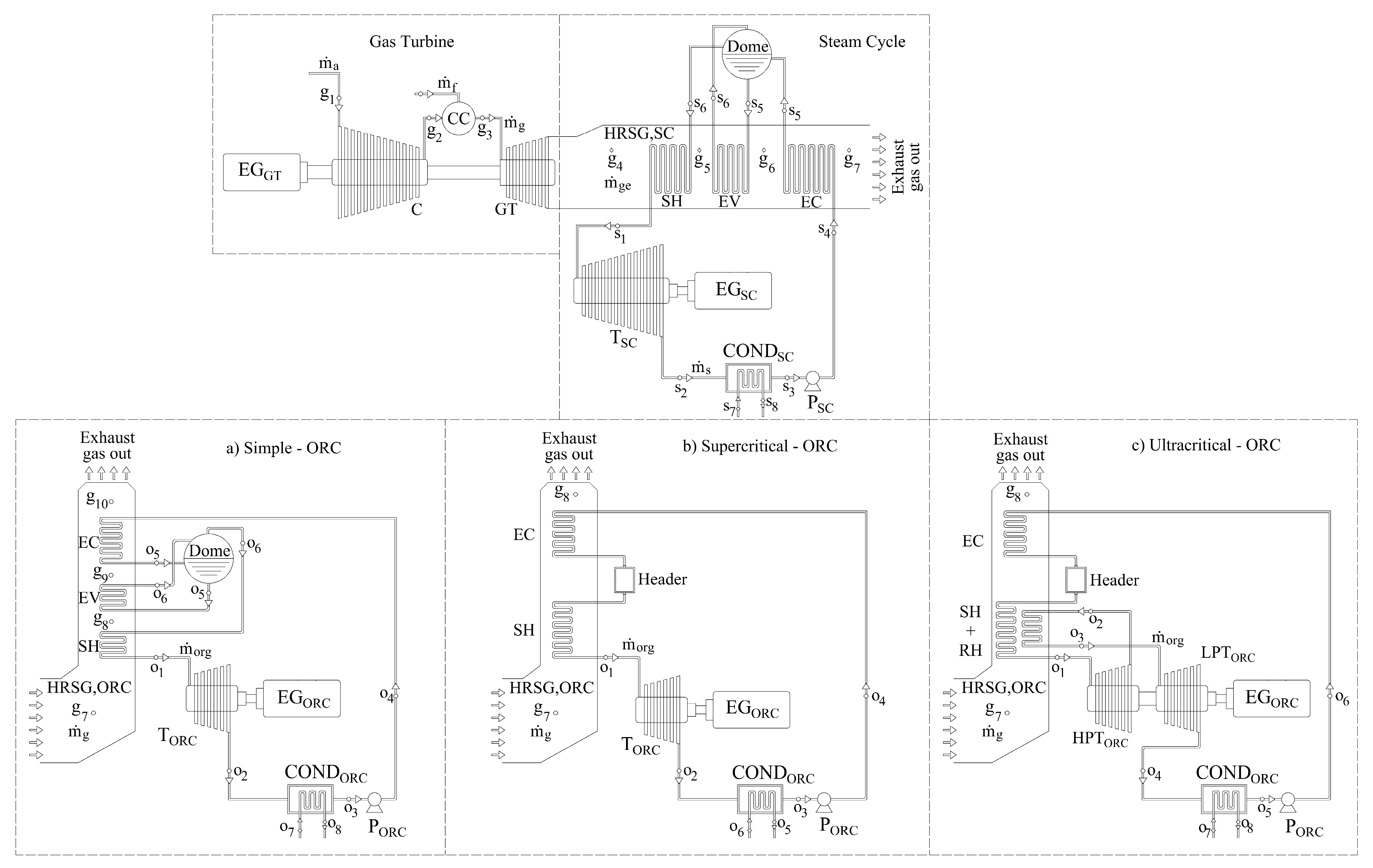
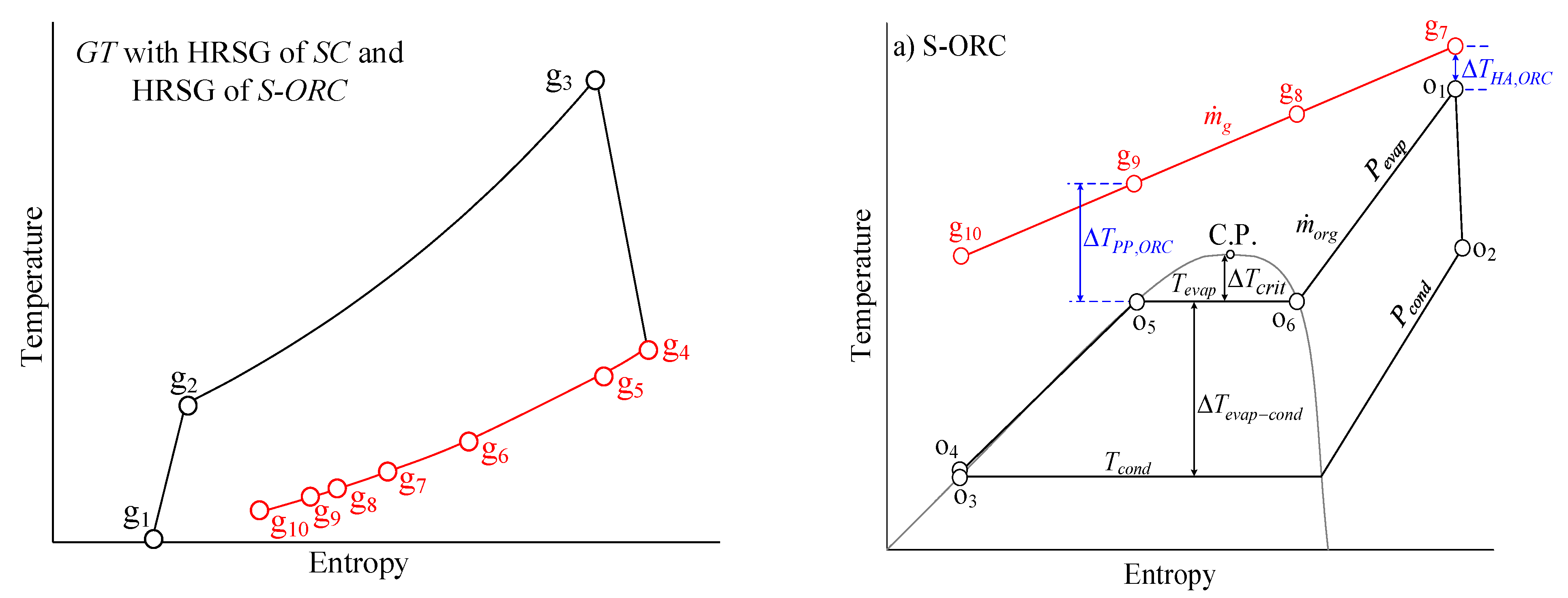
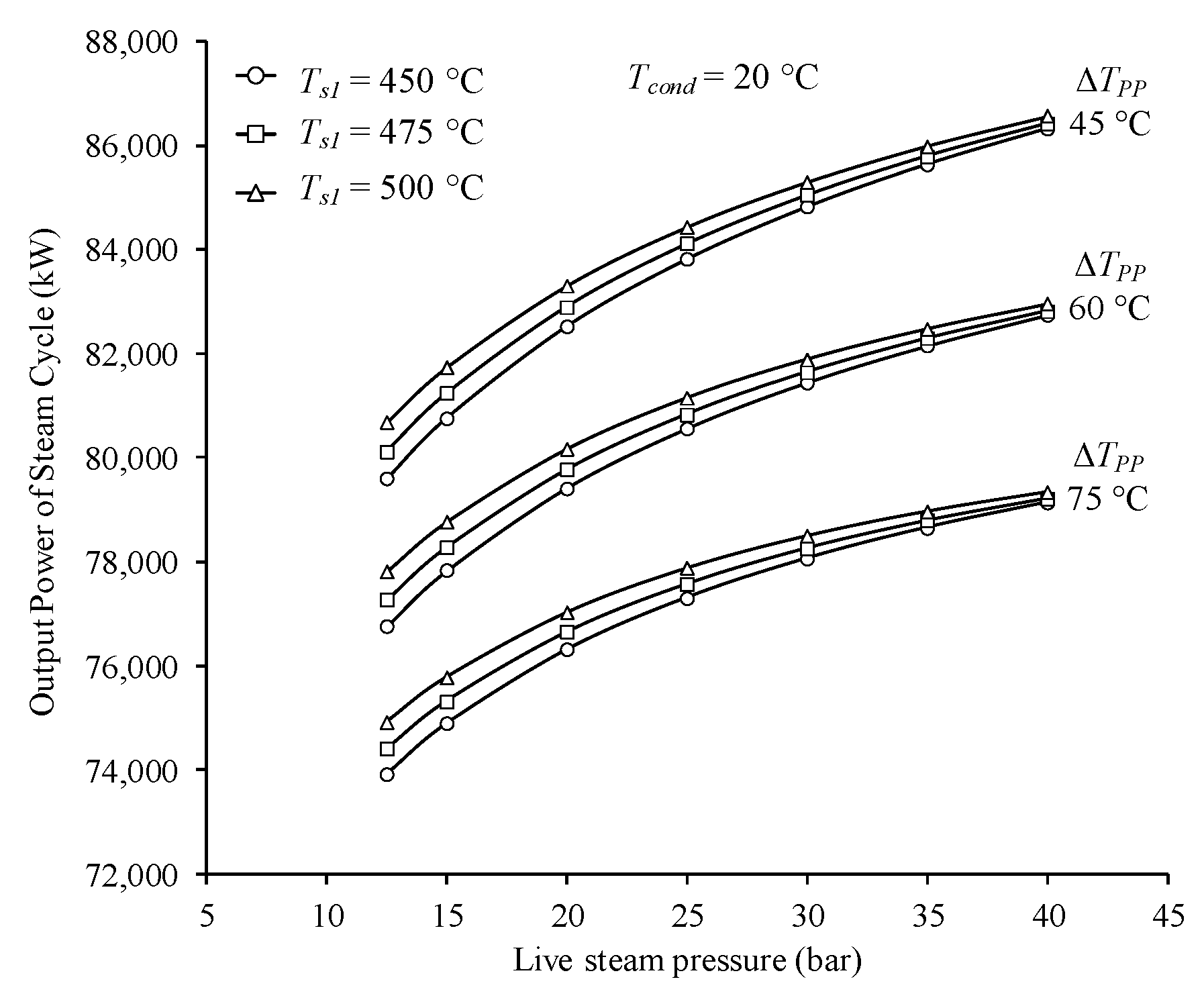
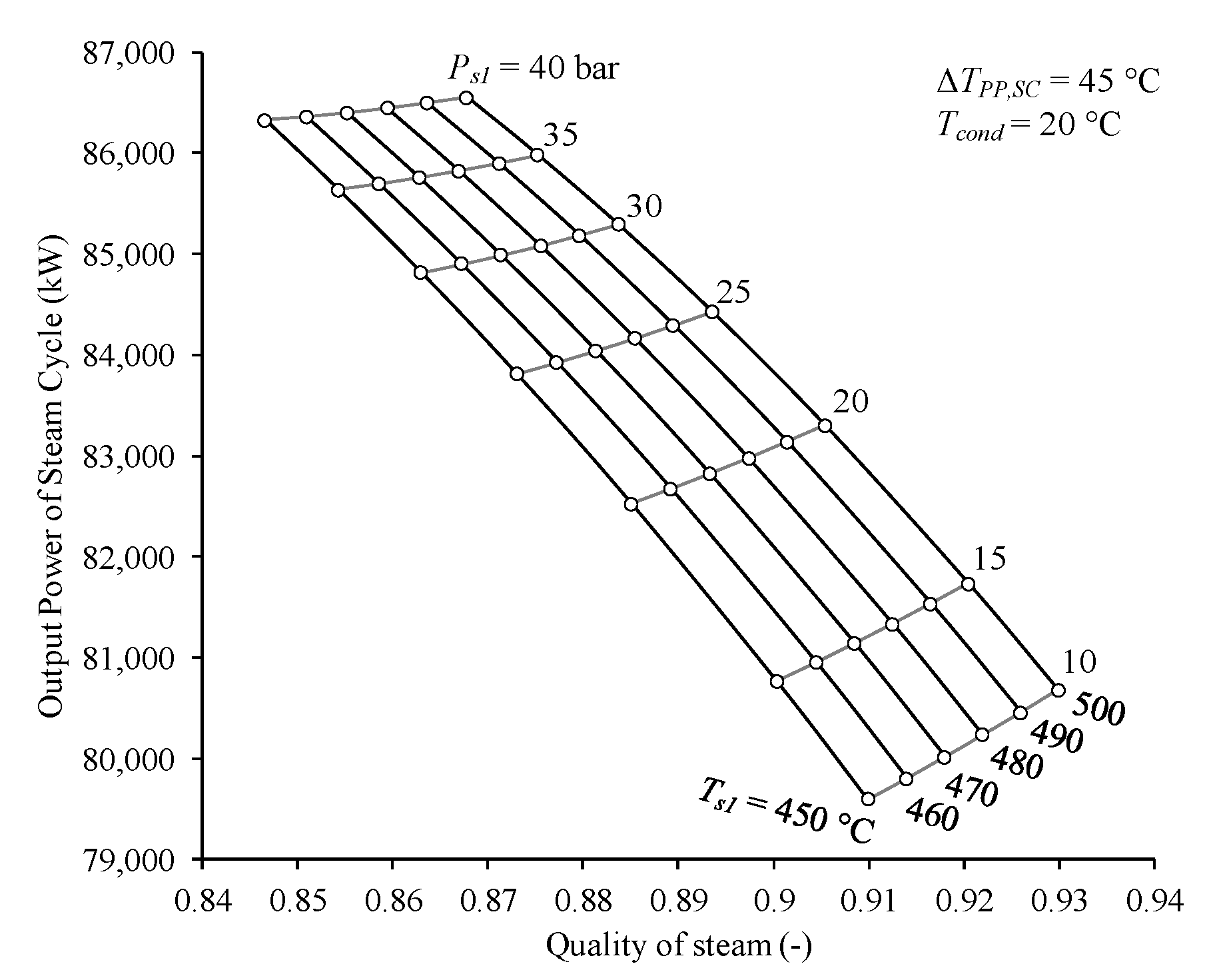
Worldwide, the growing demand for energy has been largely met through power cycles utilizing fossil fuels. Combined cycles, which integrate a gas turbine with a steam cycle, prove to be the best alternative due to their power generation capacity and high efficiencies. This efficiency is primarily attributed to the ability to harness exhaust gases to generate steam in the heat recovery boiler, allowing additional power generation through the steam turbine. Currently, there is a quest for the integration of low-temperature power cycles to maximize the utilization of residual thermal energy flows for power generation. Therefore, this work conducts an exergetic optimization of a power trigeneration system aimed at maximizing exergetic efficiency. This system includes a gas turbine and a steam cycle coupled with three different configurations of the Organic Rankine Cycle (ORC): a simple ORC, a supercritical ORC, and an ultracritical ORC. The ORC configurations are analyzed using eight organic working fluids, namely R1234yf, R290, R134a, R1234ze, R152a, R600a, R245fa, and R123. The results show that the maximum exergetic efficiency is achieved by using R152a in the ultracritical ORC configuration coupled with the combined cycle, achieving an exergetic efficiency of 55.79%. Furthermore, the maximum power generated is attained by the steam cycle with 85,600.63 kW and 3101.21 kW for the ultracritical ORC.
Keywords: thermodynamic analysis; power output; exergetic efficiency; thermodynamic optimization; organic Rankine cycle thermodynamic analysis; power output; exergetic efficiency; thermodynamic optimization; organic Rankine cycle