Article

Temperature-Based State-of-Charge Estimation Using Neural Networks, Gradient Boosting Machine and a Jetson Nano Device for Batteries


School of Electronic and Electrical Engineering, Kyungpook National University, Daegu 41566, Republic of Korea
*
Author to whom correspondence should be addressed.
Energies 2023, 16(6), 2639; https://doi.org/10.3390/en16062639
Submission received: 8 February 2023 / Revised: 8 March 2023 / Accepted: 9 March 2023 / Published: 10 March 2023
(This article belongs to the Special Issue Advances in Batteries and Electrochemical Energy Storage)

Abstract

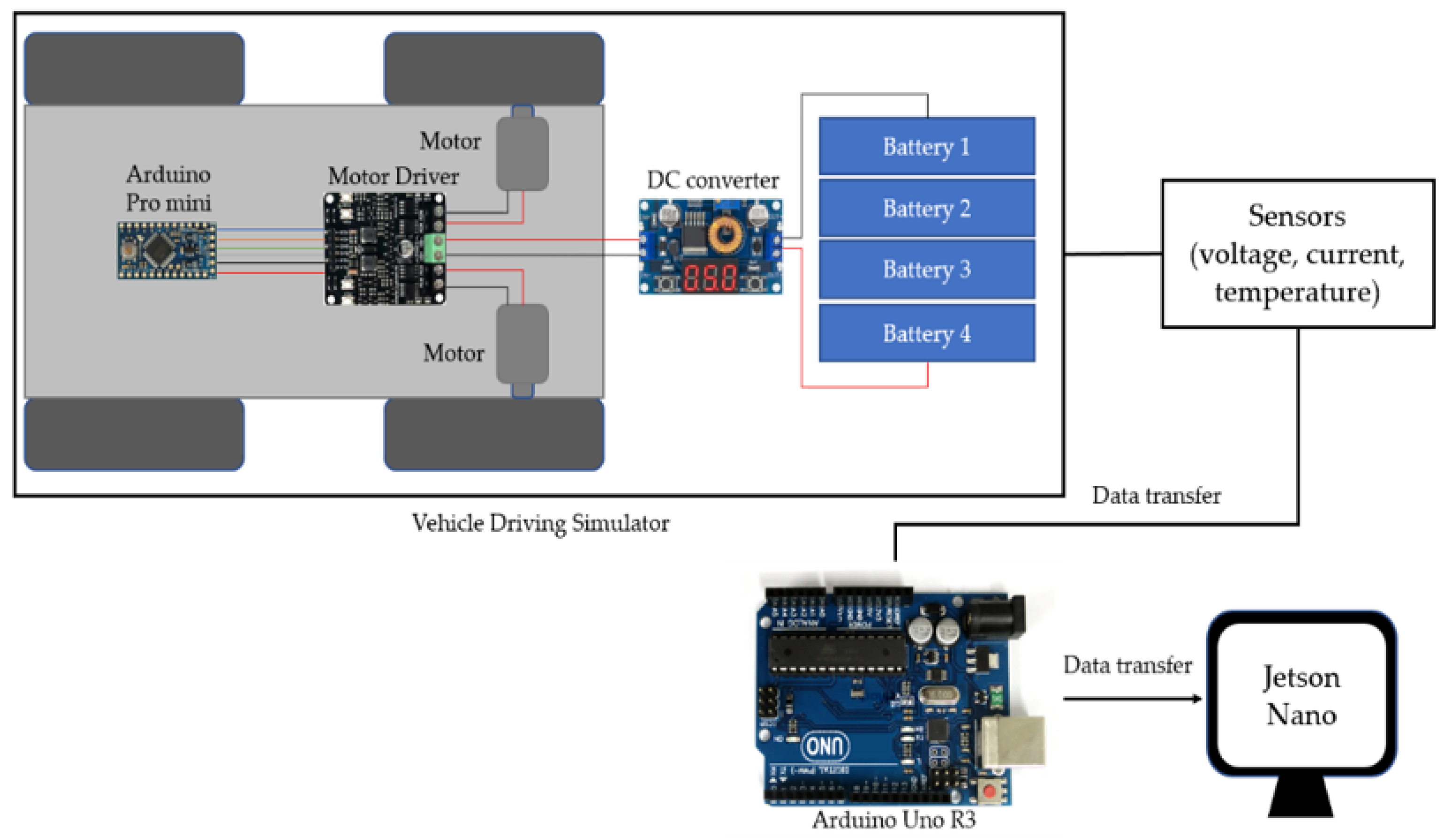
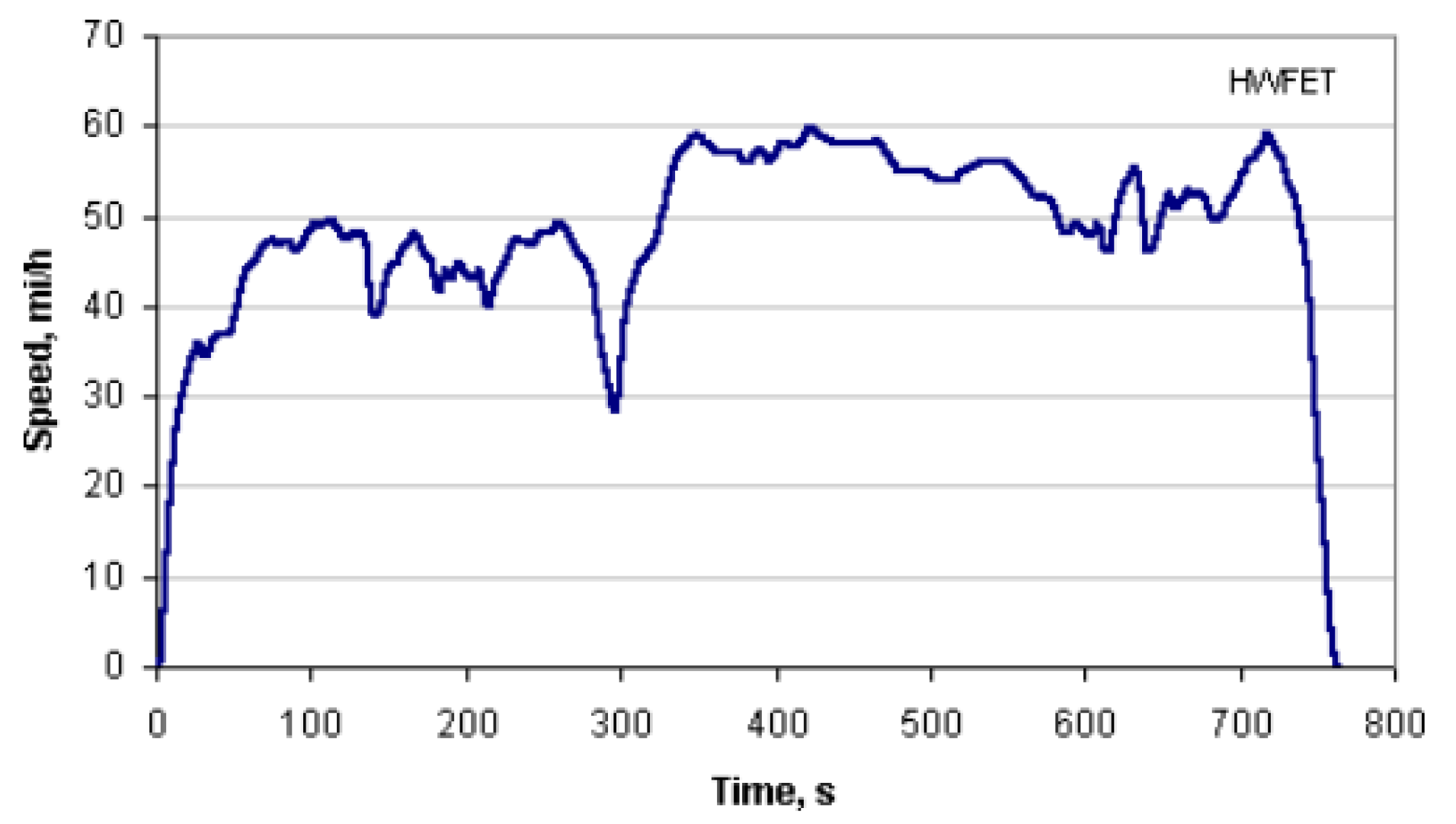
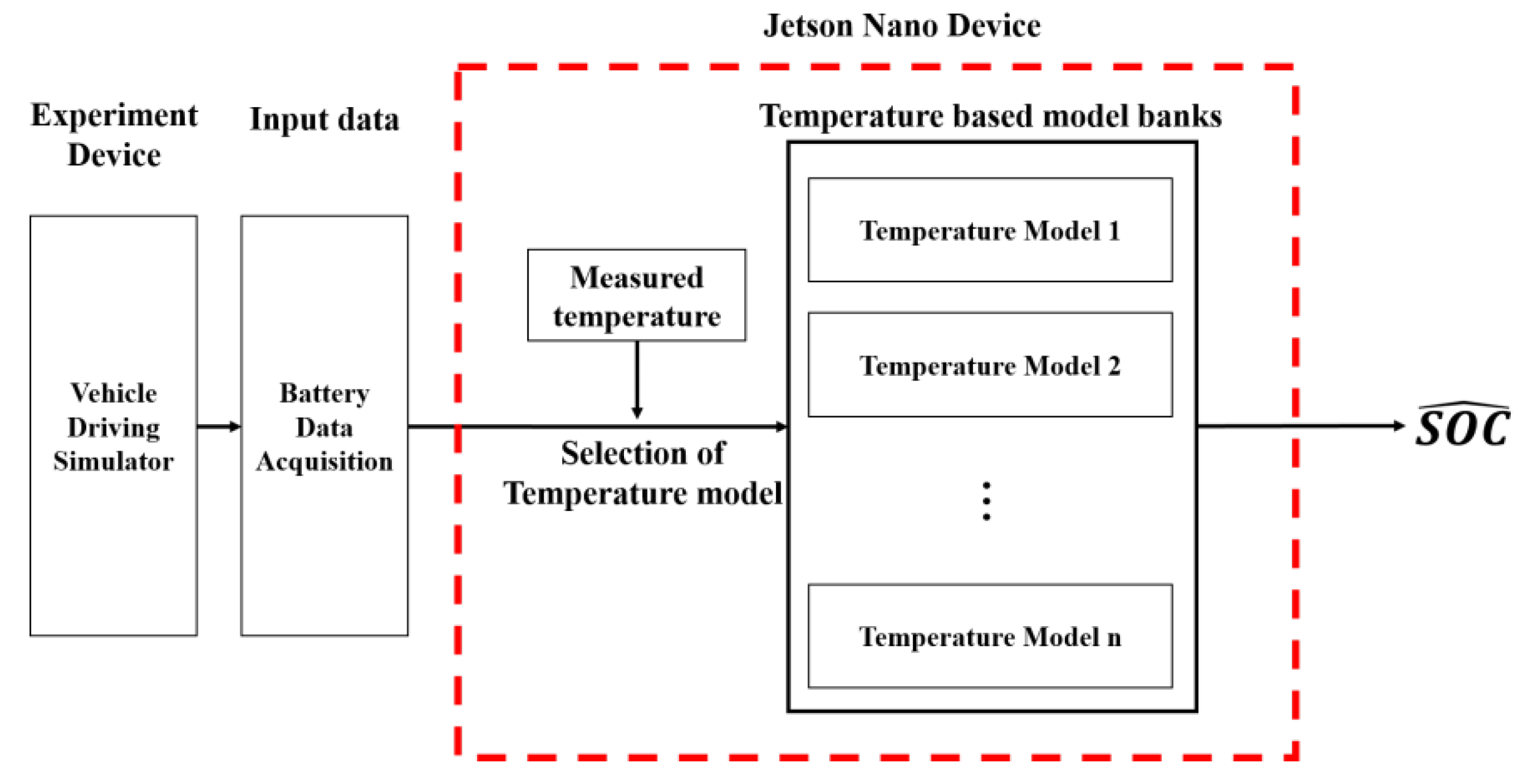
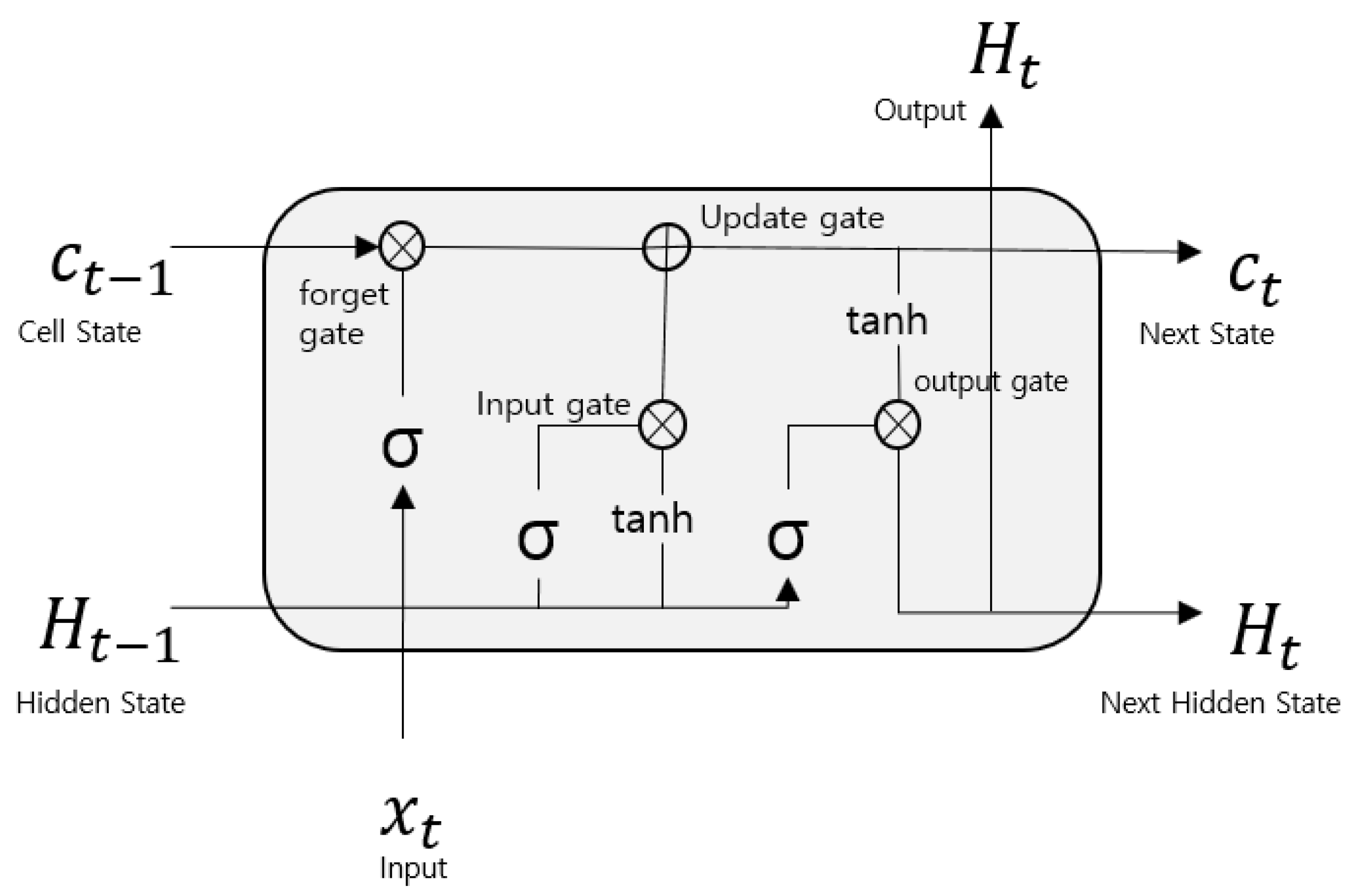
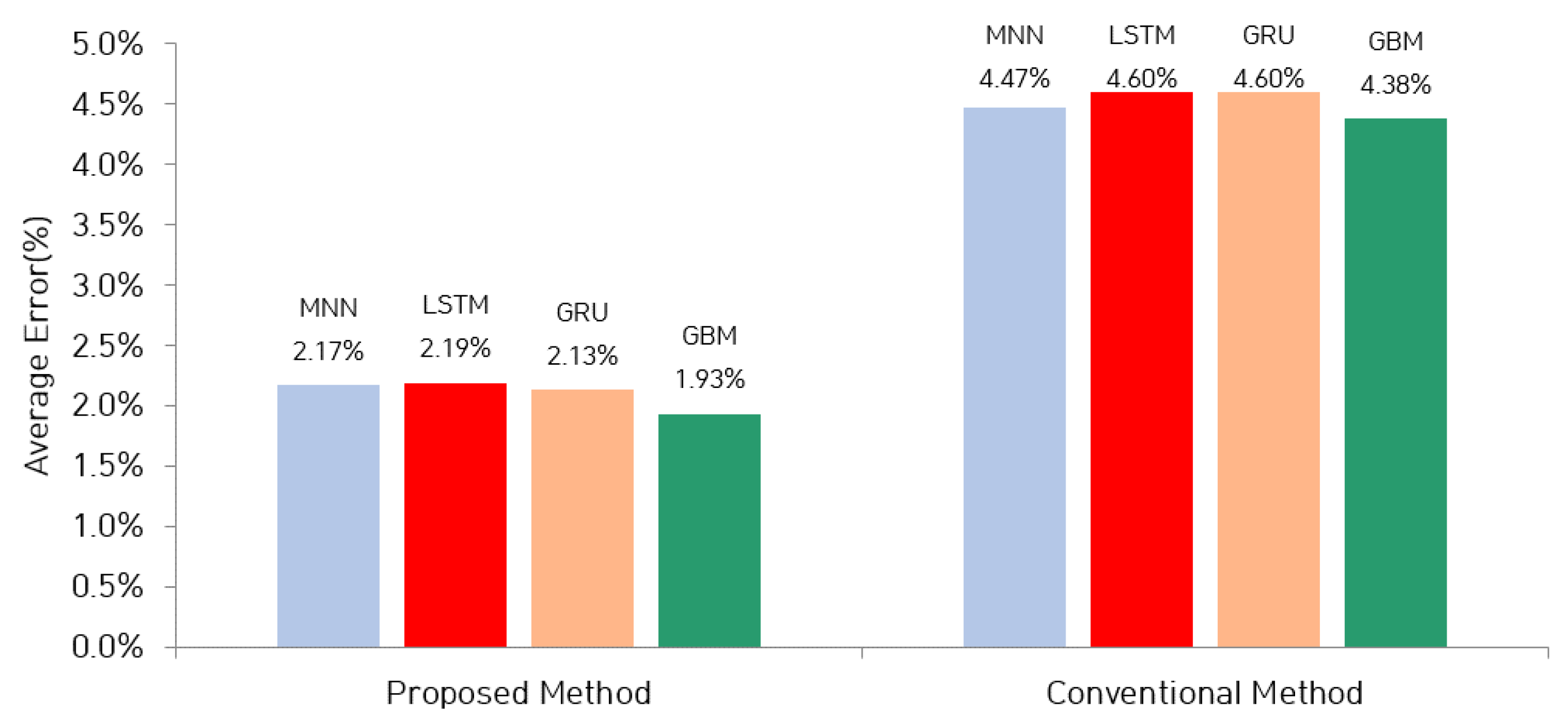
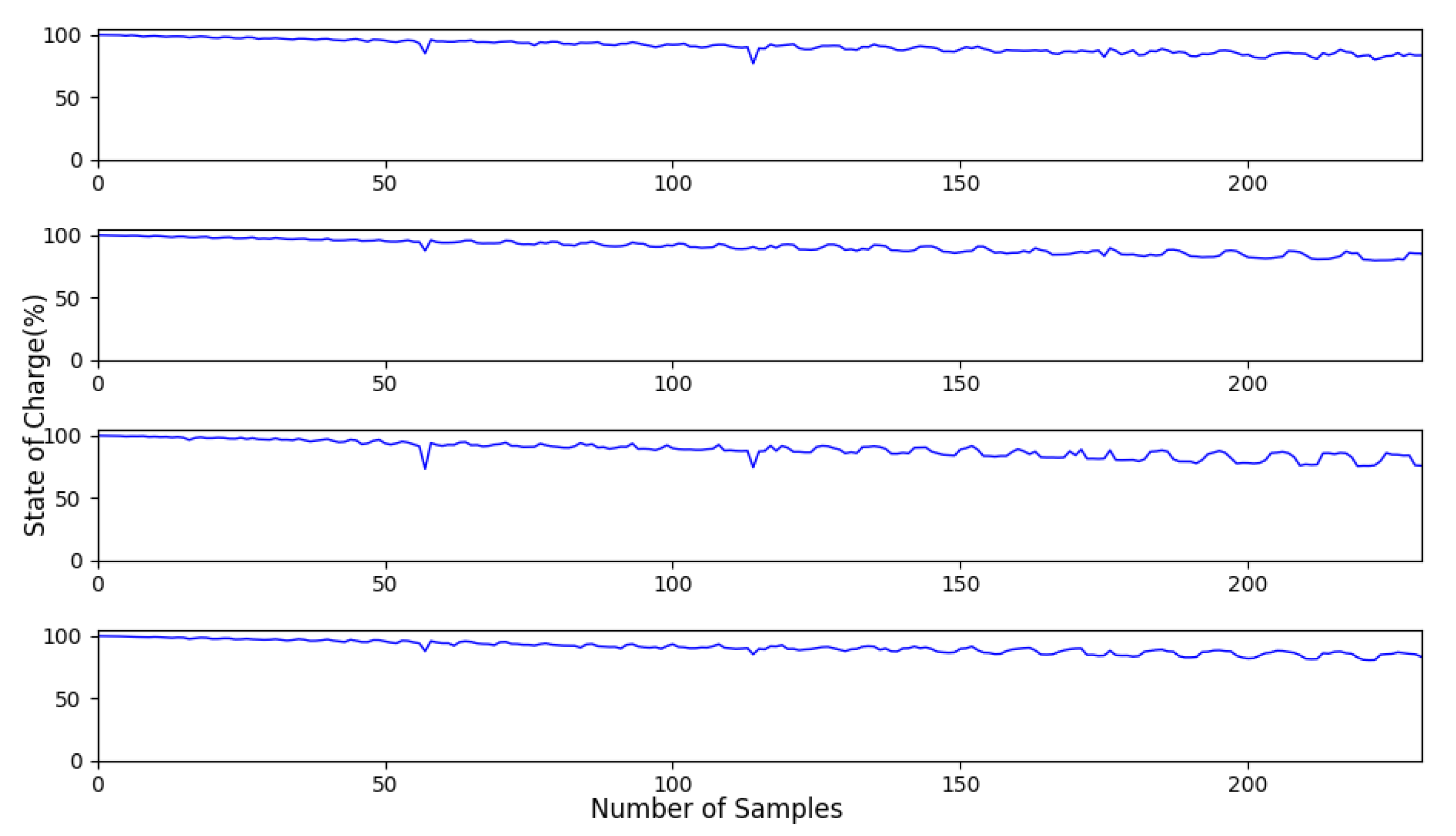
Lithium-ion batteries are commonly used in electric vehicles, mobile phones, and laptops because of their environmentally friendly nature, high energy density, and long lifespan. Despite these advantages, lithium-ion batteries may experience overcharging or discharging if they are not continuously monitored, leading to fire and explosion risks, in cases of overcharging, and decreased capacity and lifespan, in cases of overdischarging. Another factor that can decrease the capacity of these batteries is their internal resistance, which varies with temperature. This study proposes an estimation method for the state of charge (SOC) using a neural network (NN) model that is highly applicable to the external temperatures of batteries. Data from a vehicle-driving simulator were used to collect battery data at temperatures of 25 °C, 30 °C, 35 °C, and 40 °C, including voltage, current, temperature, and time data. These data were used as inputs to generate the NN models. The NNs used to generate the model included the multilayer neural network (MNN), long short-term memory (LSTM), gated recurrent unit (GRU), and gradient boosting machine (GBM). The SOC of the battery was estimated using the model generated with a suitable temperature parameter and another model generated using all the data, regardless of the temperature parameter. The performance of the proposed method was confirmed, and the SOC-estimation results demonstrated that the average absolute errors of the proposed method were superior to those of the conventional technique. In the estimation of the battery’s state of charge in real time using a Jetson Nano device, an average error of 2.26% was obtained when using the GRU-based model. This method can optimize battery performance, extend battery life, and maintain a high level of safety. It is expected to have a considerable impact on multiple environments and industries, such as electric vehicles, mobile phones, and laptops, by taking advantage of the lightweight and miniaturized form of the Jetson Nano device.
Keywords: lithium-ion battery; state of charge; multilayer neural network; long short-term memory; gated recurrent unit; gradient boosting machine; vehicle-driving simulator; Jetson Nano device; real time lithium-ion battery; state of charge; multilayer neural network; long short-term memory; gated recurrent unit; gradient boosting machine; vehicle-driving simulator; Jetson Nano device; real time