Article

Comparative Analysis of Eight Numerical Methods Using Weibull Distribution to Estimate Wind Power Density for Coastal Areas in Pakistan


1
Dipartimento di Ingegneria Elettrica e dell’Informazione “M. Scarano”, Università di Cassino e del LM, Via G. Di Biasio 43, 03043 Cassino, FR, Italy
2
Department of Electrical Engineering, University of Management and Technology Lahore, Sialkot Campus, Sialkot 51310, Pakistan
3
Dipartimento di Elettronica, Informazione e Bioingegneria, Politecnico di Milano, Piazza Leonardo da Vinci, 32, 20133 Milano, MI, Italy
4
Department of Electrical Energy and Mobility System, Carinthia University of Applied Sciences, 9524 Villach, Austria
*
Author to whom correspondence should be addressed.
Energies 2023, 16(3), 1515; https://doi.org/10.3390/en16031515
Submission received: 14 December 2022 / Revised: 24 January 2023 / Accepted: 1 February 2023 / Published: 3 February 2023
(This article belongs to the Special Issue Renewable Energy Planning and Energy Management Systems)

Abstract

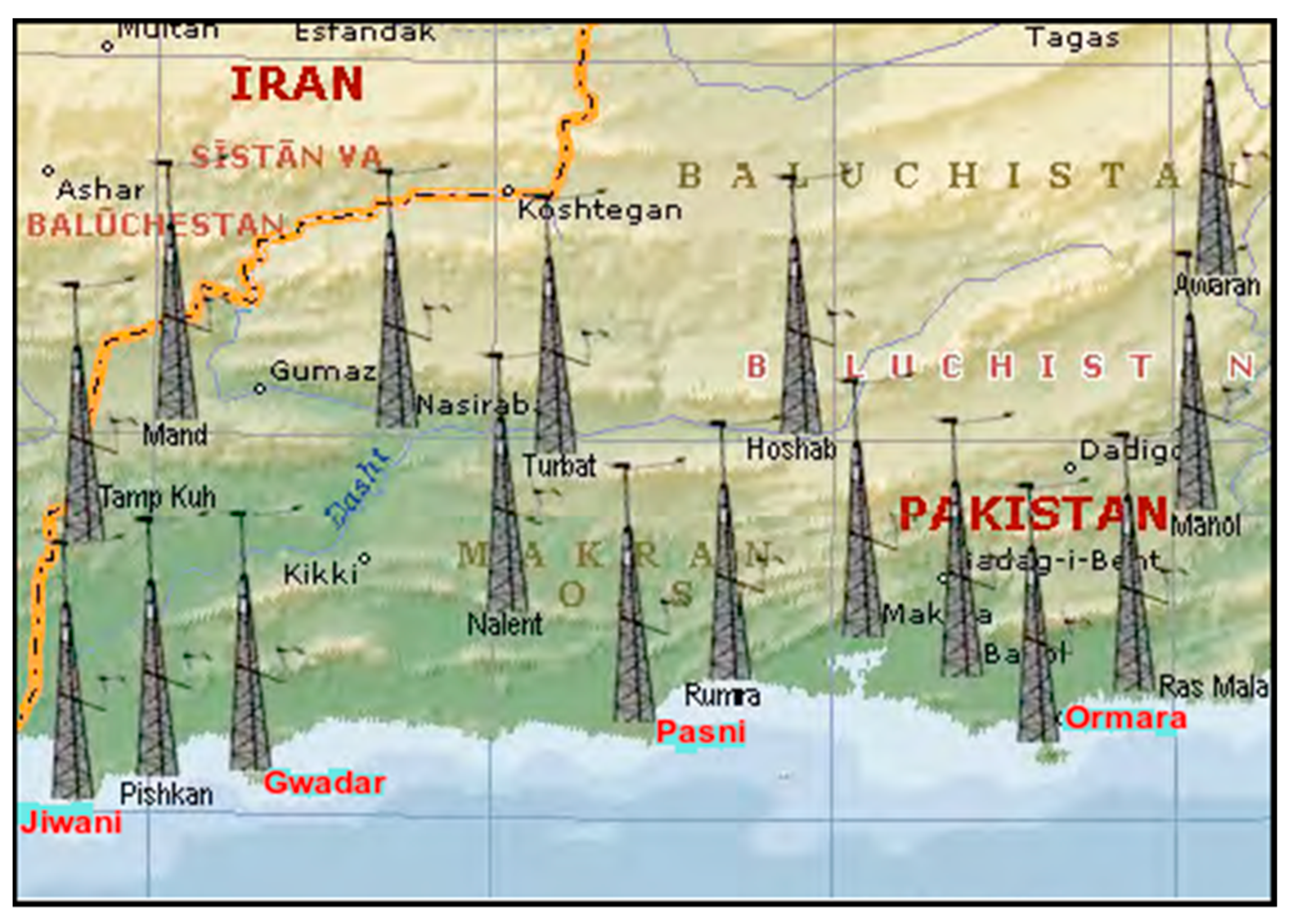
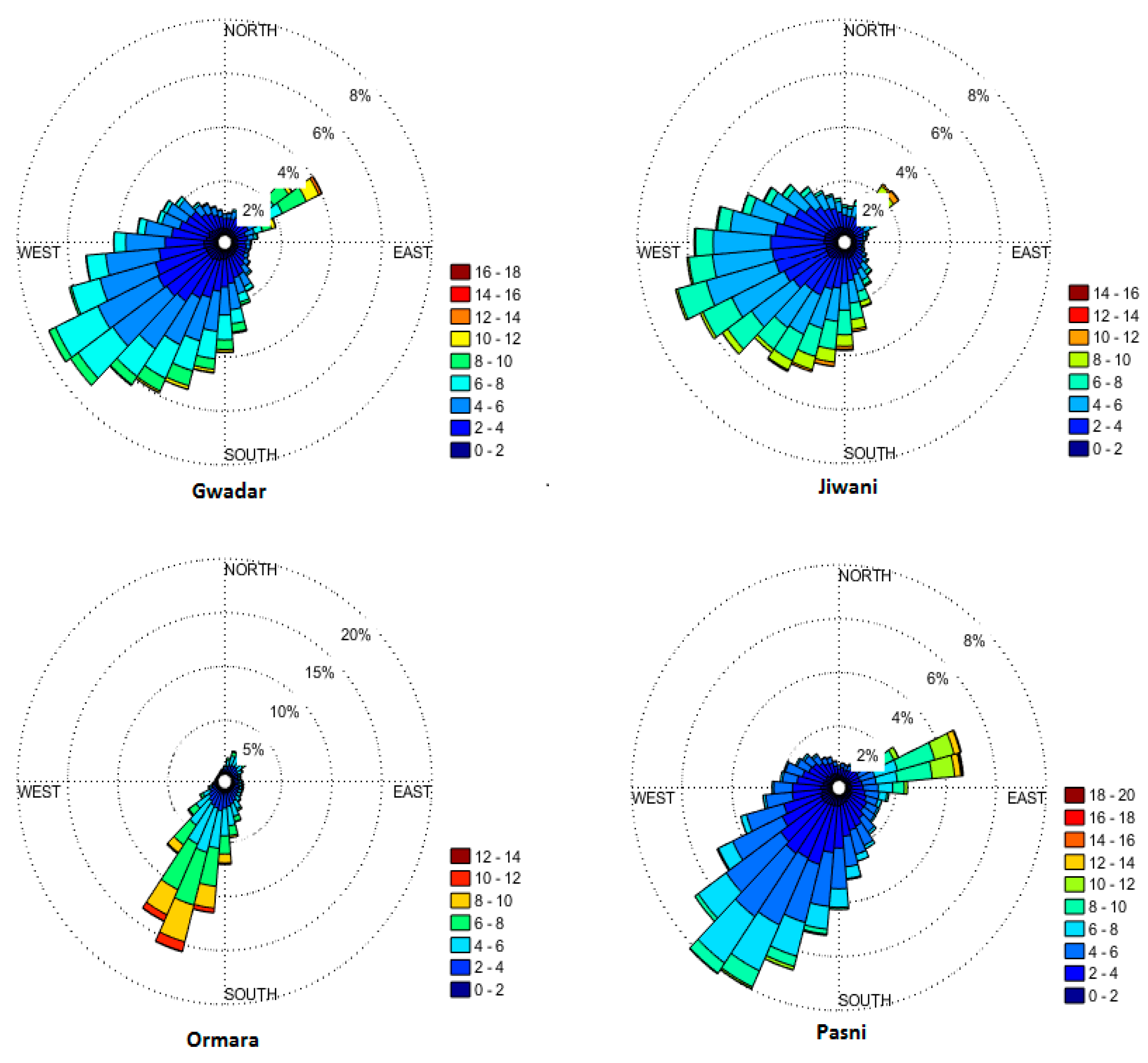
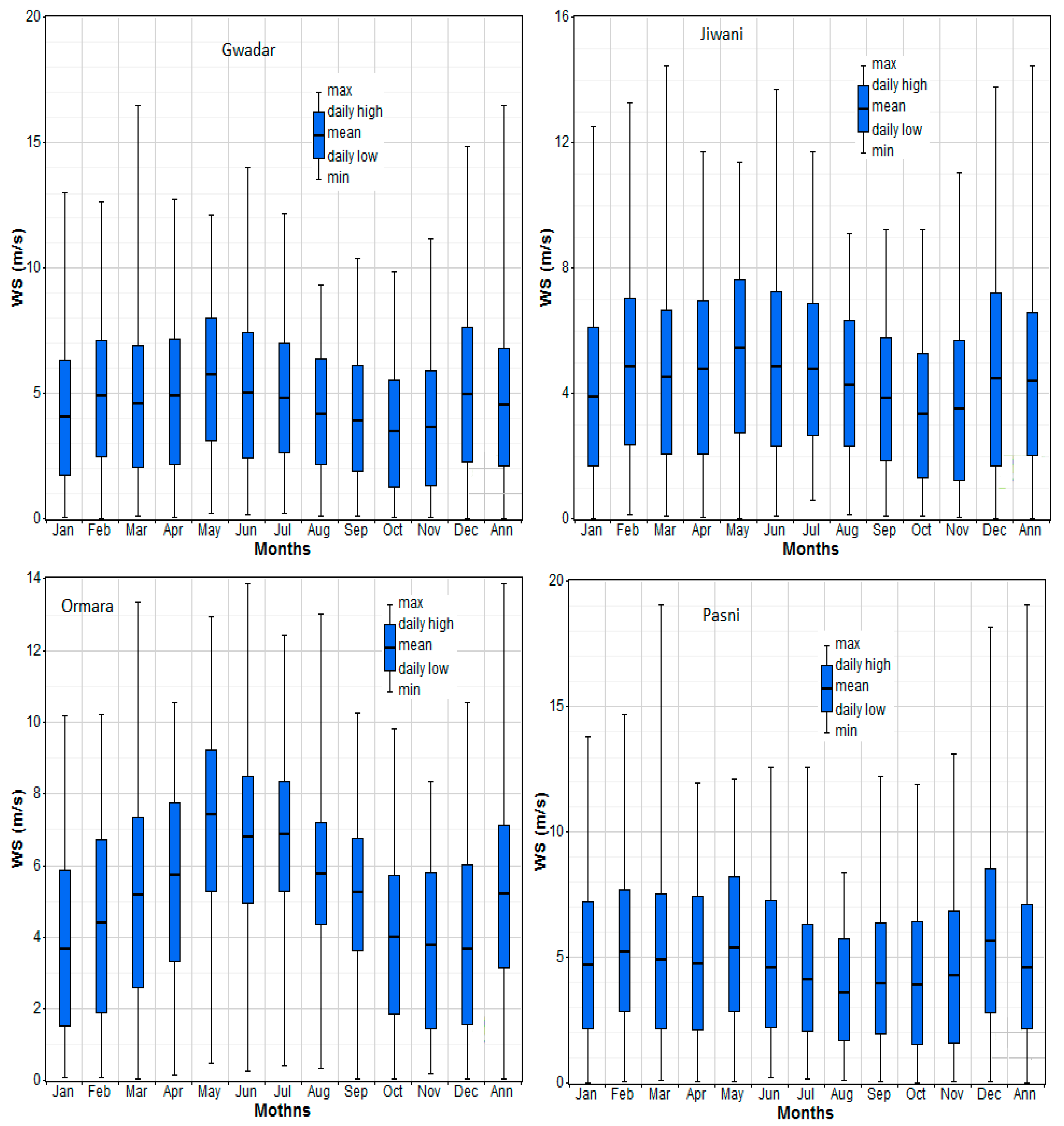
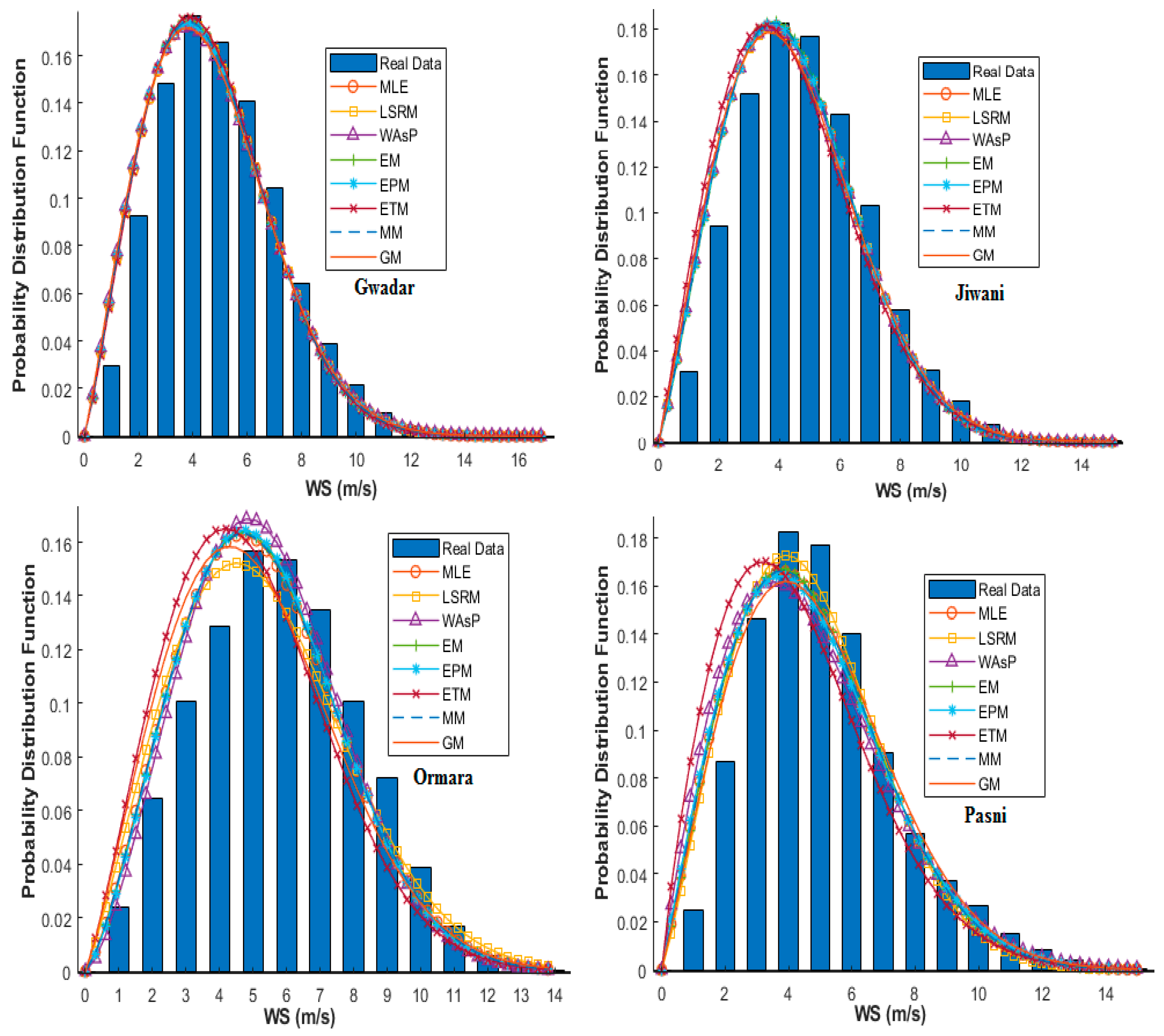
Currently, Pakistan is facing severe energy crises and global warming effects. Hence, there is an urgent need to utilize renewable energy generation. In this context, Pakistan possesses massive wind energy potential across the coastal areas. This paper investigates and numerically analyzes coastal areas’ wind power density potential. Eight different state-of-the-art numerical methods, namely an (a) empirical method, (b) graphical method, (c) wasp algorithm, (d) energy pattern method, (e) moment method, (f) maximum likelihood method, (g) energy trend method, and (h) least-squares regression method, were analyzed to calculate Weibull parameters. We computed Weibull shape parameters (WSP) and Weibull scale parameters (WCP) for four regions: Jiwani, Gwadar, Pasni, and Ormara in Pakistan. These Weibull parameters from the above-mentioned numerical methods were analyzed and compared to find an optimal numerical method for the coastal areas of Pakistan. Further, the following statistical indicators were used to compare the efficiency of the above numerical methods: (i) analysis of variance (R2), (ii) chi-square (X2), and (iii) root mean square error (RMSE). The performance validation showed that the energy trend and graphical method provided weak performance for the observed period for four coastal regions of Pakistan. Further, we observed that Ormara is the best and Jiwani is the worst area for wind power generation using comparative analyses for actual and estimated data of wind power density from four regions of Pakistan.
Keywords: Weibull distribution; wind power density; renewable energy resources; wind energy; wind speed; Pakistan coastal areas Weibull distribution; wind power density; renewable energy resources; wind energy; wind speed; Pakistan coastal areas