Review

Food Security and Biofuels in Latin America and the Caribbean Region: A Data Panel Analysis on Eight Countries

by
Maria Lourdes Ordoñez Olivo
1,* and
Zoltán Lakner
2
1
Doctoral School of Economy and Regional Planning, Hungarian University of Agriculture and Life Sciences, 2100 Gödöllő, Hungary
2
Department of Agricultural Business and Economics, Institute of Agricultural and Food Economics, Hungarian University of Agriculture and Life Sciences, 1118 Budapest, Hungary
*
Author to whom correspondence should be addressed.
Energies 2023, 16(23), 7799; https://doi.org/10.3390/en16237799
Submission received: 7 October 2023 / Revised: 14 November 2023 / Accepted: 23 November 2023 / Published: 27 November 2023
(This article belongs to the Section A4: Bio-Energy)

Abstract

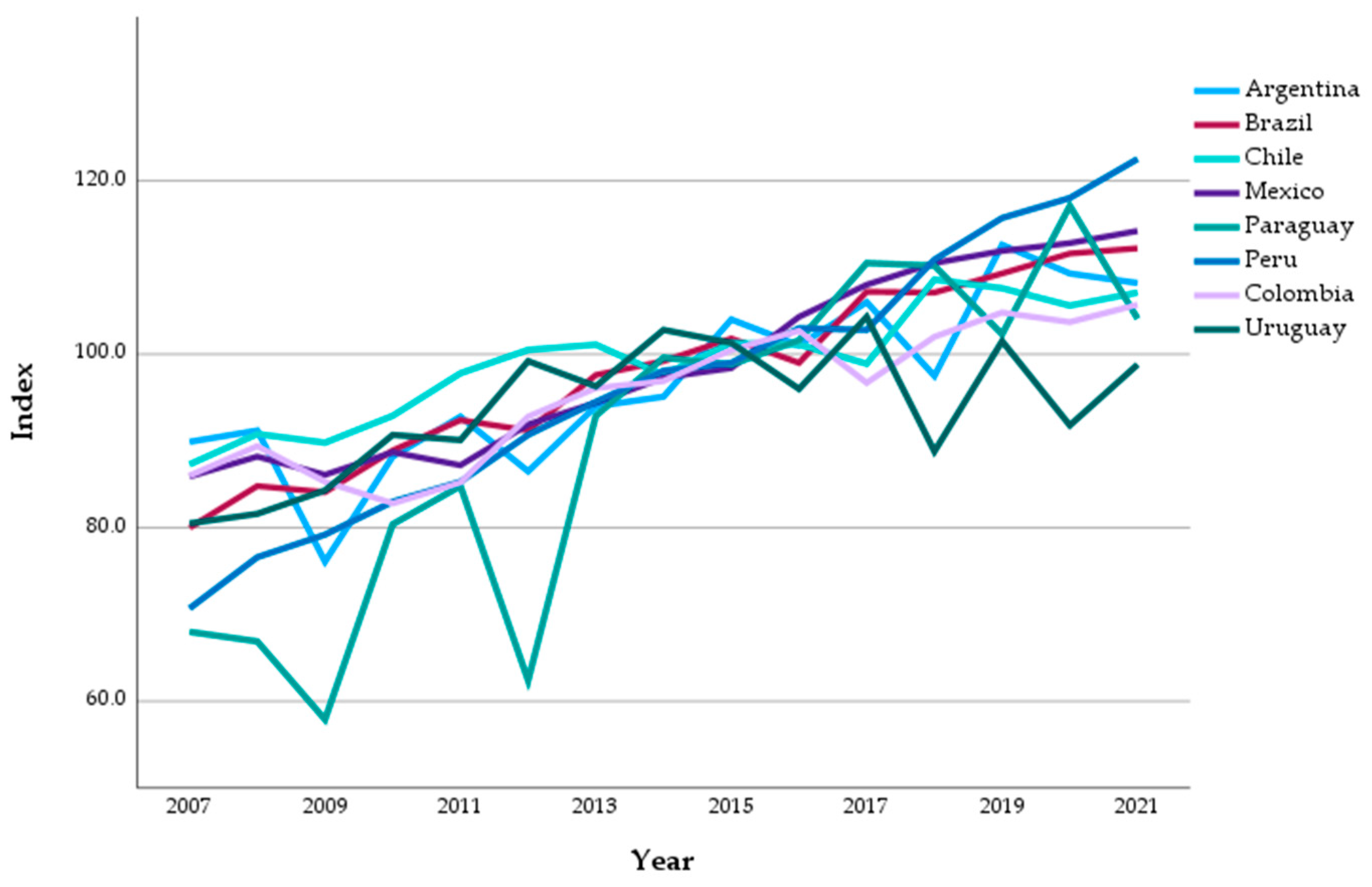
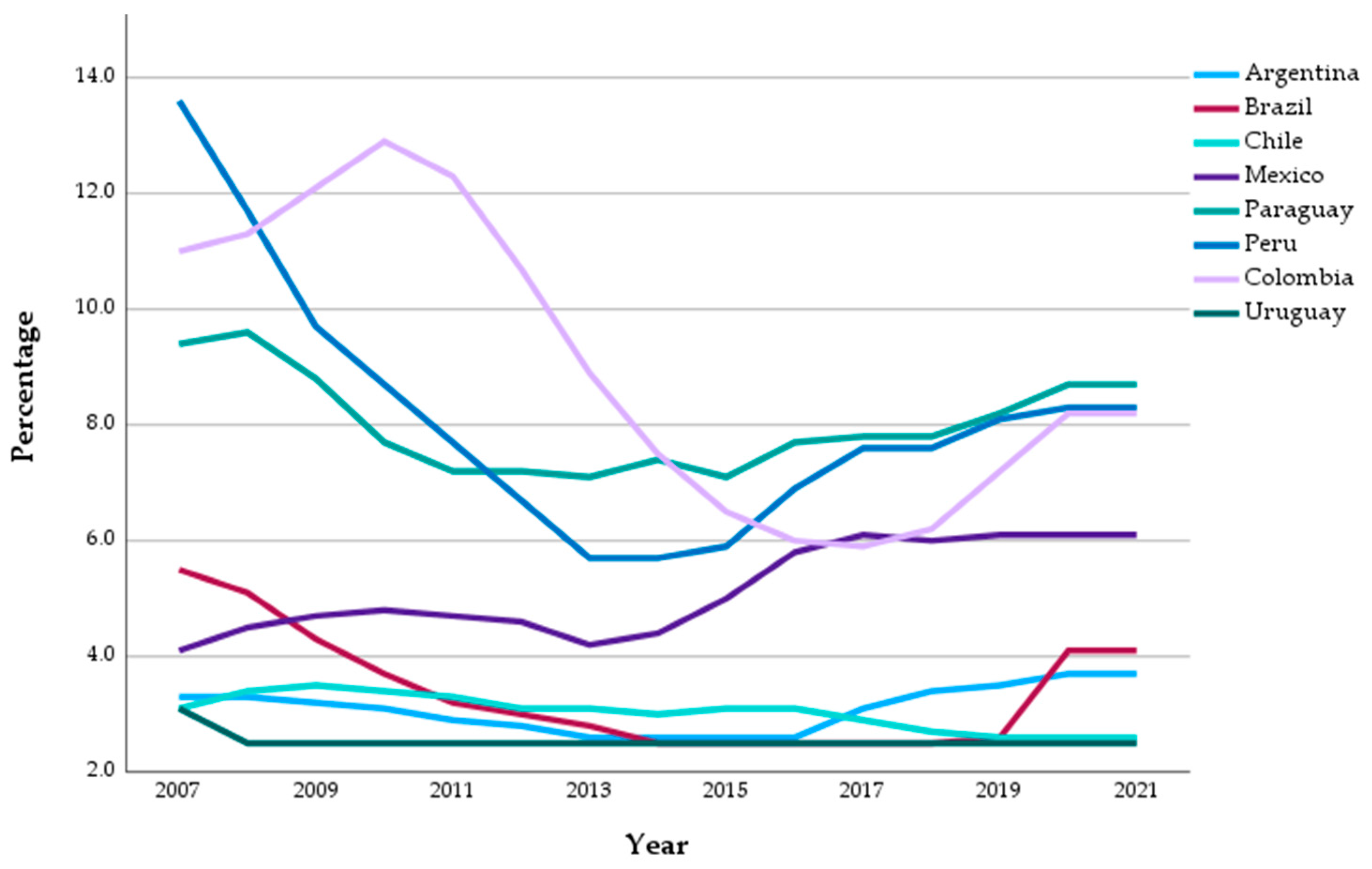
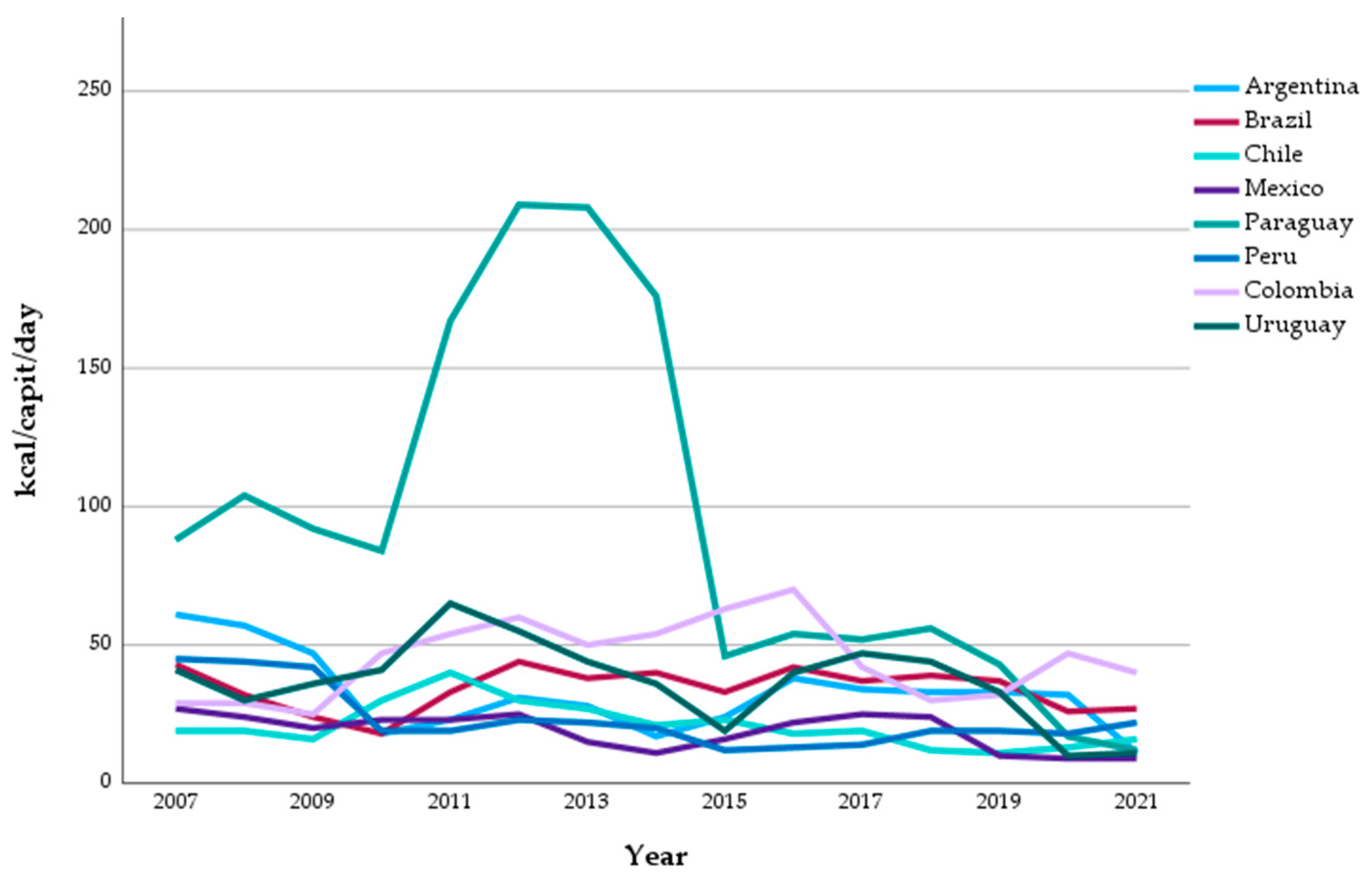
In the short, medium, and long term, a sustainable bioeconomy can help address one of the main concerns of most countries concerning the food crisis, particularly in the Latin American and Caribbean contexts, where food security and the bioeconomy are crucial for the region’s development and sustainability. However, to avoid negative impacts on the environment and food production, all sectors of the bioeconomy, especially those related to biofuel production, must be sustainable and environmentally conscious. This study analyses historical correlations between three dependent variables related to basic concepts of food security and independent variables framed by biofuel production through a panel data study in eight Latin American and Caribbean countries between 2007 and 2021. Of the three econometric models analyzed, two are statistically significant. The first shows a positive correlation between biofuel production and the food production index. The third shows a negative correlation between the percentage of undernourished people and biofuel production. In conclusion, according to the historical data evaluated in the countries studied, the impact of biofuel production on the food security variables analyzed is positive. This positive relationship can be interpreted as an opportunity for the region’s countries to generate additional bio-economic income, taking advantage of the region’s potential and providing new opportunities for producers, especially in rural areas.
Keywords: biofuels; food security; LAC region; panel data analyses; bioeconomy biofuels; food security; LAC region; panel data analyses; bioeconomy