Article

Free Surface Motion of a Liquid Pool with Isothermal Sidewalls as a Benchmark for Marangoni Convection Problems


by
Bruce E. Ciccotosto
and
Caleb S. Brooks
*
Department of Nuclear, Plasma and Radiological Engineering, University of Illinois at Urbana-Champaign, Champaign, IL 61801, USA
*
Author to whom correspondence should be addressed.
Energies 2023, 16(19), 6824; https://doi.org/10.3390/en16196824
Submission received: 11 August 2023 / Revised: 6 September 2023 / Accepted: 14 September 2023 / Published: 26 September 2023
(This article belongs to the Special Issue Research on Fluid Mechanics and Heat Transfer)

Abstract

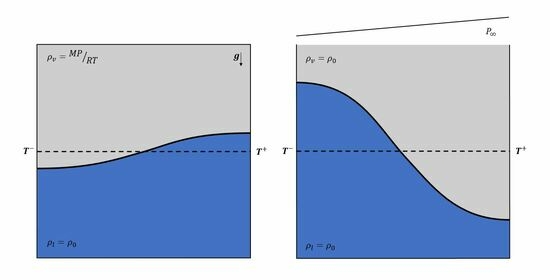
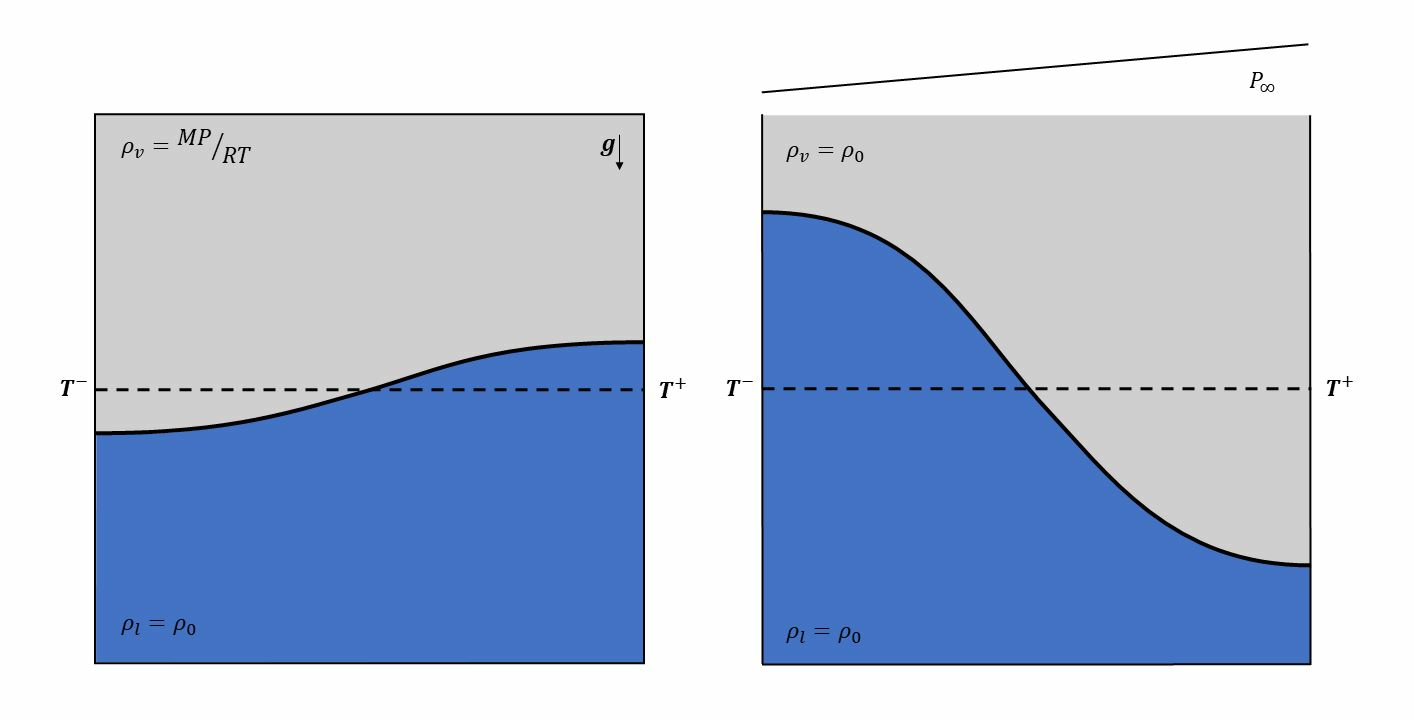
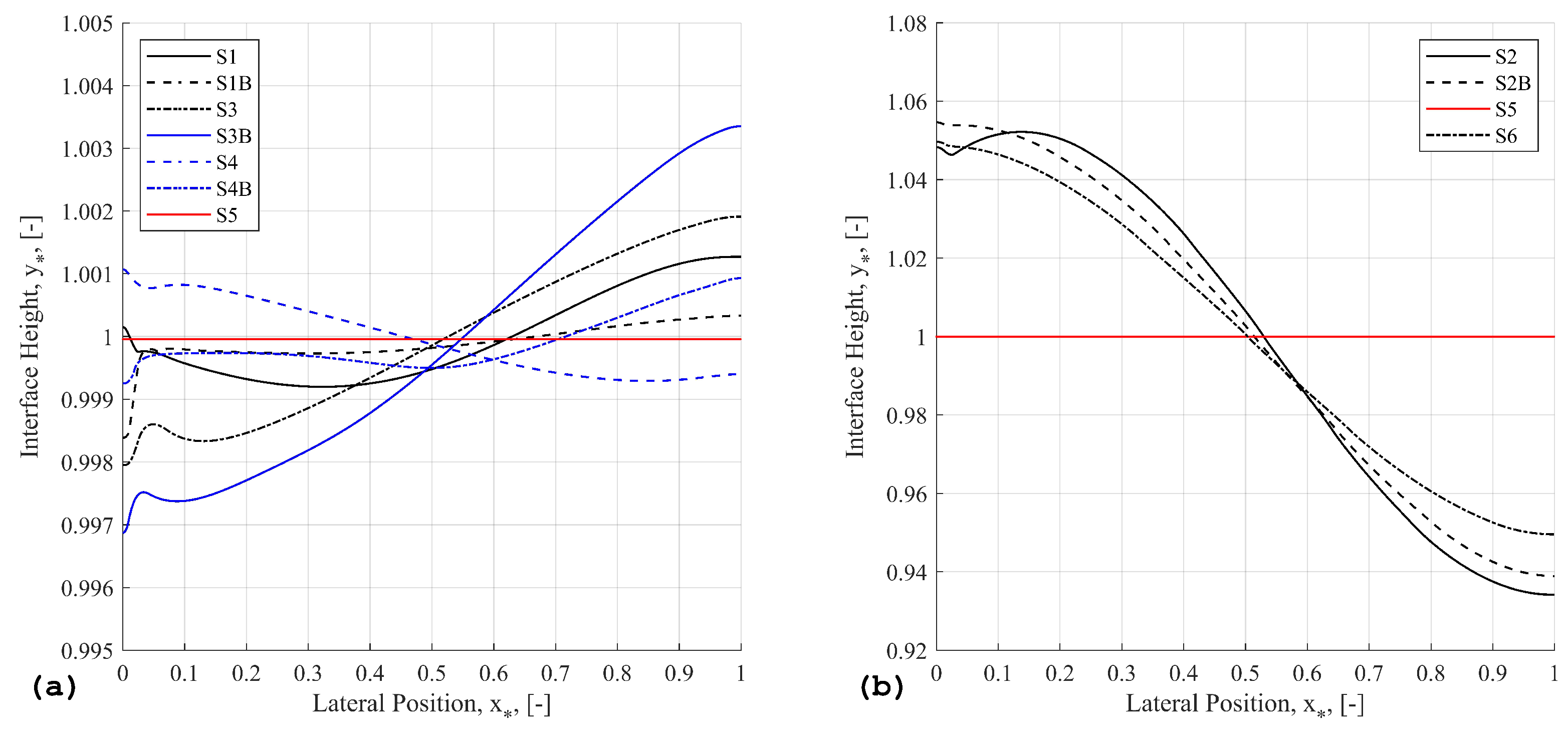
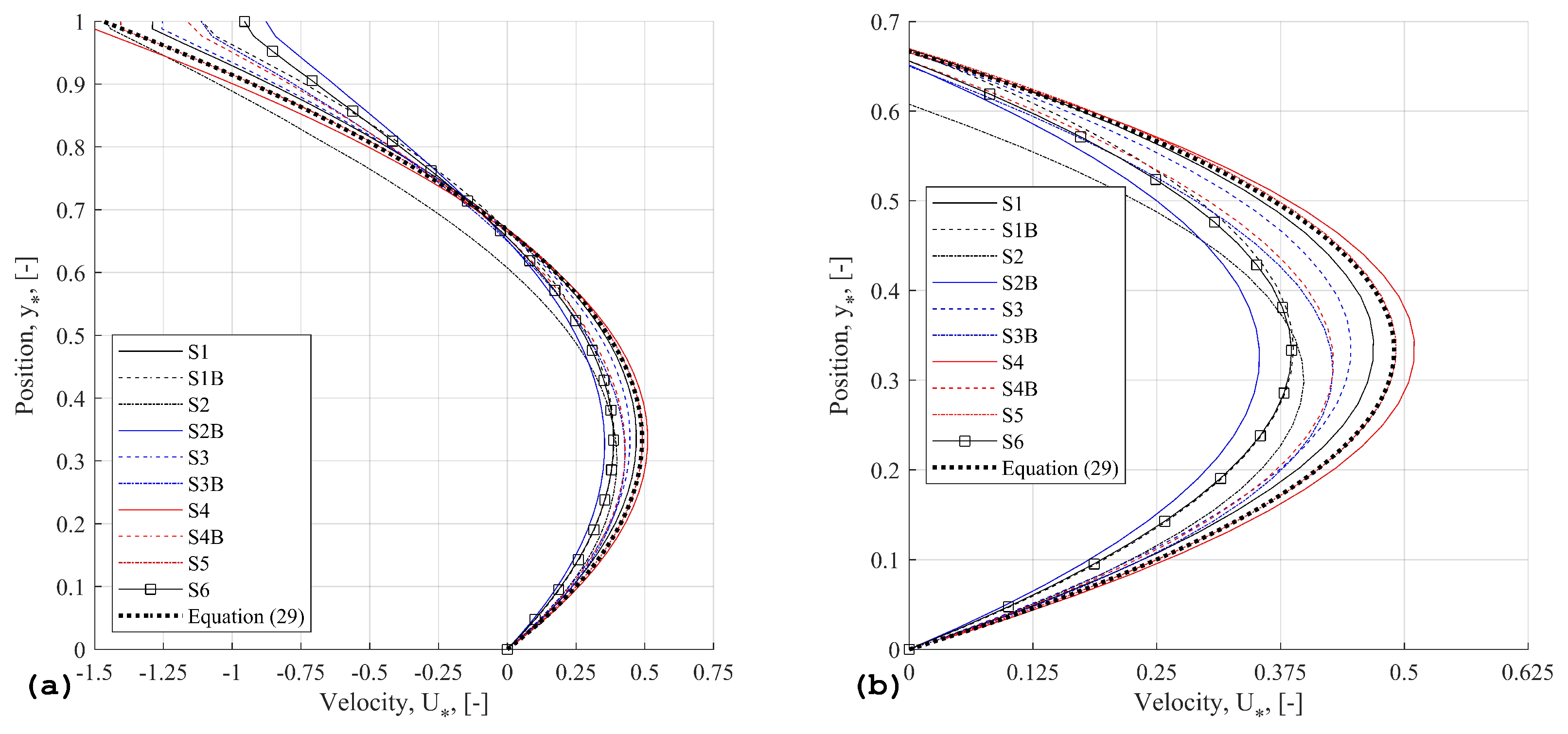
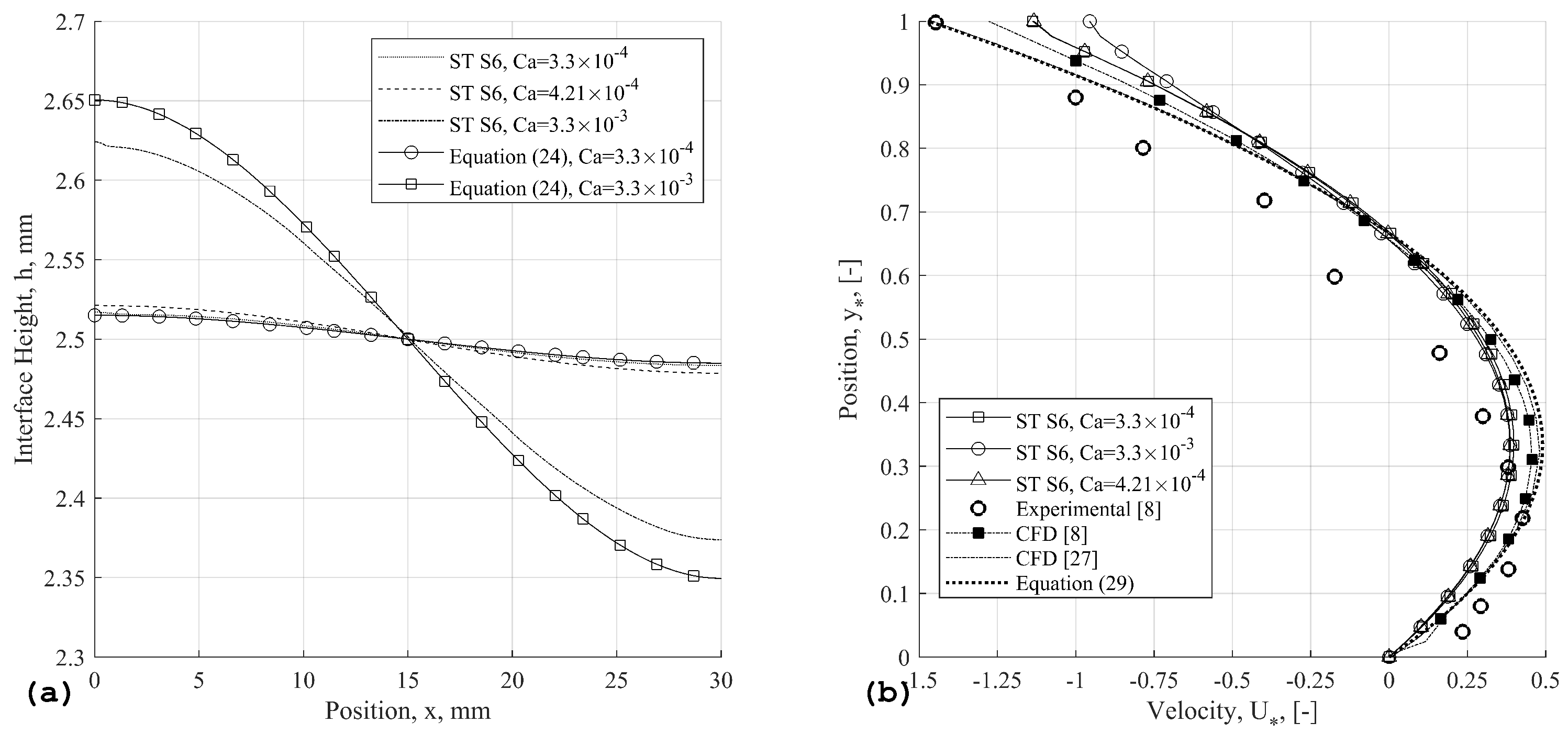
In single phase flows, benchmarks like the lid driven cavity have become recognized as fundamental tests for newly developed computational fluid dynamics, CFD, codes. For multiphase free surface flows with variable surface tension, the presently studied pool with isothermal sidewalls is suggested as it is the simplest domain where Marangoni effects can dominate. It was also chosen due to its strange sensitivity to the initial setup which is discussed at length from a chosen number of ‘scenarios’. It was found that the fluid interface can reverse deformation by a change in the top boundary condition, the liquid equation of state, and the gravity level. For the top boundary condition, this reversal is due to vapor expansion within the closed volume, creating an additional convection mechanism. Not only does the interface reverse, but the peak height changes by more than an order of magnitude at the same Marangoni number. When including gravity, the peak velocity can increase significantly, but it can also cause a decrease when done in combination with a change in the top wall boundary condition. Finally, thermal expansion of the liquid phase causes the peak velocity to be reduced, with additional reductions from the gravity and top wall condition. The differences in each scenario could lead to significant errors in analyzing a practical application of Marangoni flows. Therefore, it is important to demonstrate that a new CFD code can not only resolve Marangoni convection, but also has the capability to resolve the scenario most relevant to the application at hand.
Keywords: marangoni; CFD; multiphase marangoni; CFD; multiphase
Graphical Abstract