Review

A State-of-the-Art Review on Technology for Carbon Utilization and Storage

Endowed Research Laboratory of Un-Mined Mineral Resources and Energy Engineering, Muroran Institute of Technology, Muroran 050-8585, Japan
*
Author to whom correspondence should be addressed.
Energies 2023, 16(10), 3992; https://doi.org/10.3390/en16103992
Submission received: 11 April 2023 / Revised: 30 April 2023 / Accepted: 4 May 2023 / Published: 9 May 2023
(This article belongs to the Special Issue Volume II: Carbon Capture, Utilisation and Storage)

Abstract

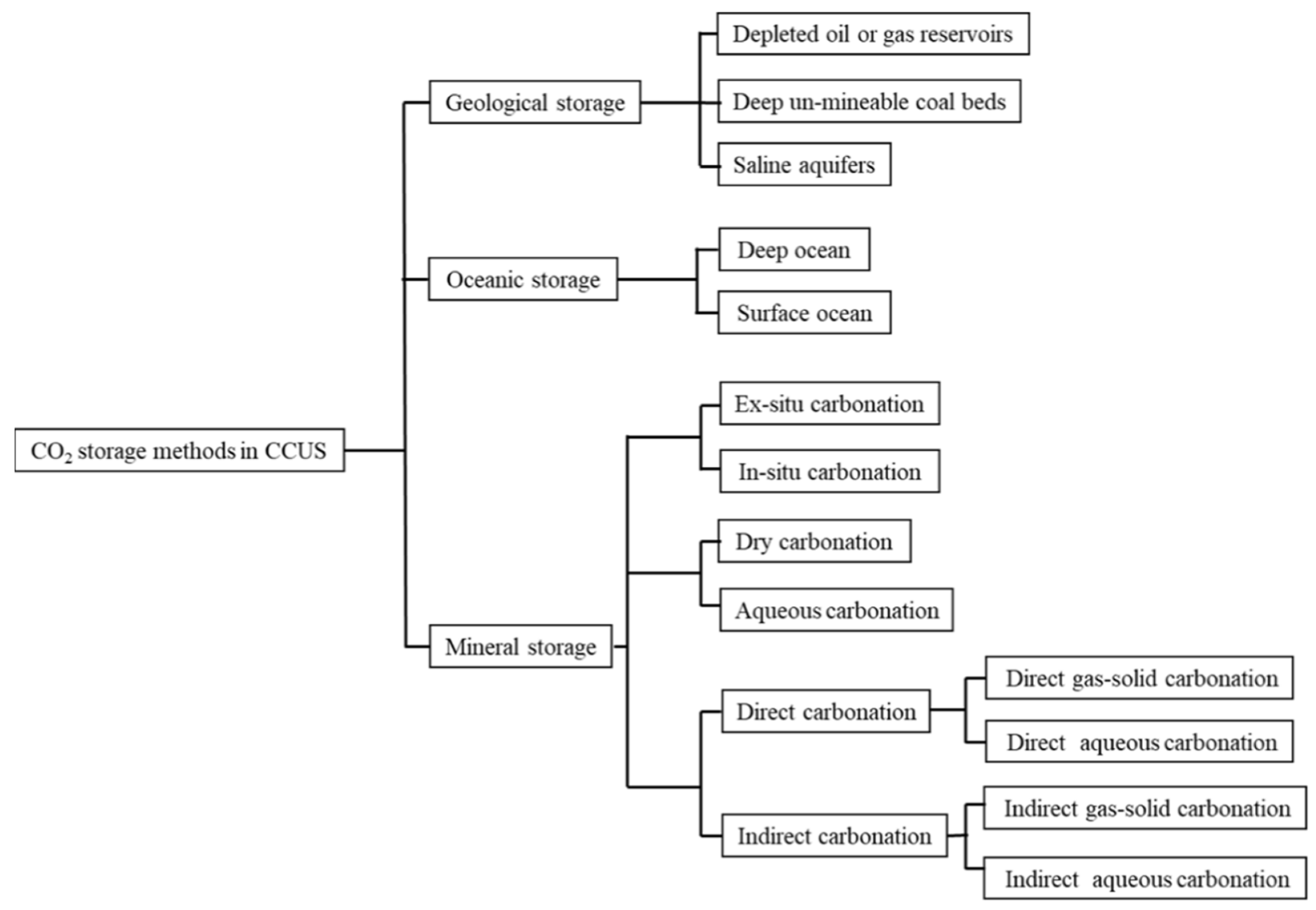
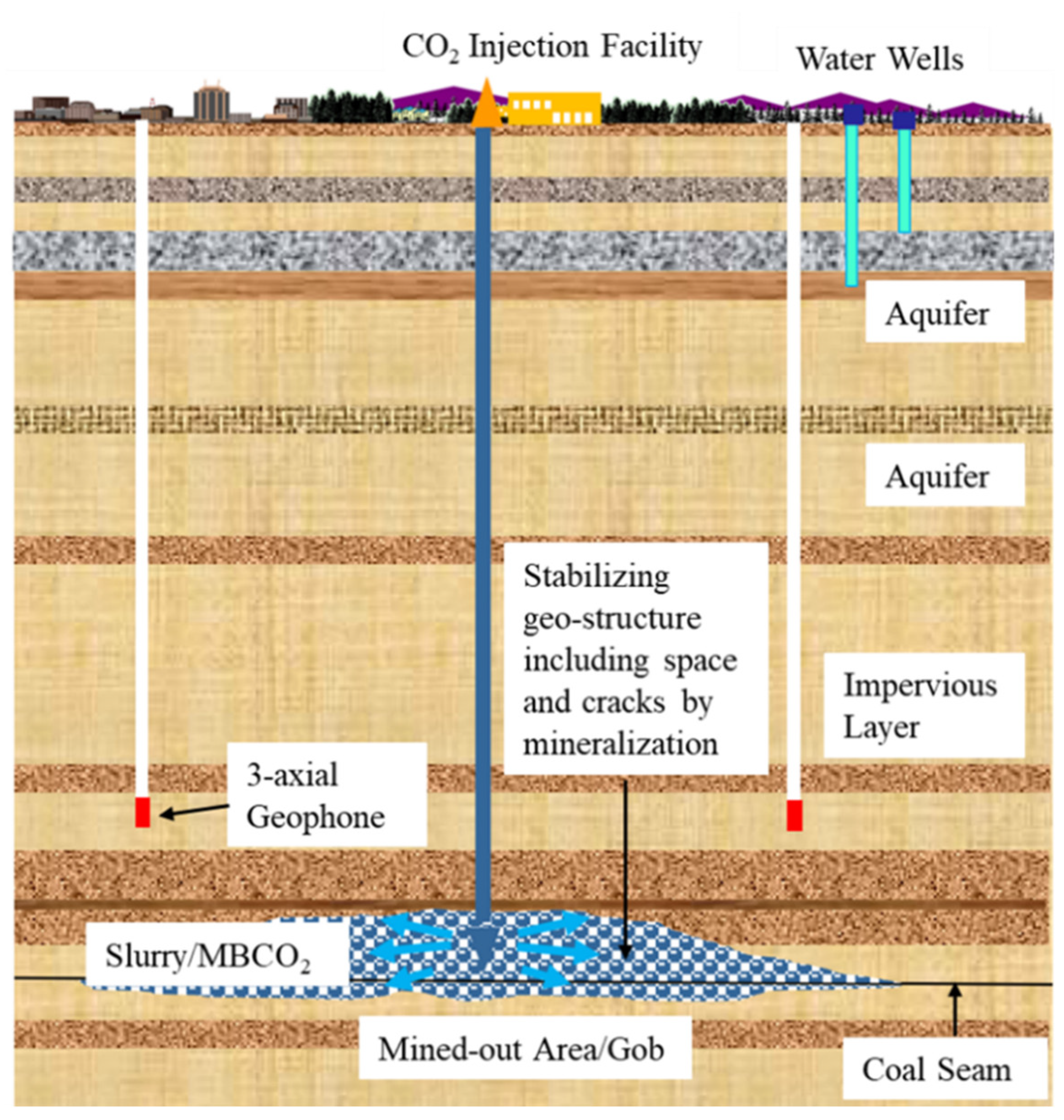
Carbon capture utilization and storage (CCUS) technologies are regarded as an economically feasible way to minimize greenhouse gas emissions. In this paper, various aspects of CCUS are reviewed and discussed, including the use of geological sequestration, ocean sequestration and various mineral carbon mineralization with its accelerated carbonization methods. By chemically reacting CO2 with calcium or magnesium-containing minerals, mineral carbonation technology creates stable carbonate compounds that do not require ongoing liability or monitoring. In addition, using industrial waste residues as a source of carbonate minerals appears as an option because they are less expensive and easily accessible close to CO2 emitters and have higher reactivity than natural minerals. Among those geological formations for CO2 storage, carbon microbubbles sequestration provides the economic leak-free option of carbon capture and storage. This paper first presents the advantages and disadvantages of various ways of storing carbon dioxide; then, it proposes a new method of injecting carbon dioxide and industrial waste into underground cavities.
Keywords: carbon capture utilization and storage; mineral carbon mineralization; carbon microbubbles sequestration; geological sequestration; industrial waste carbon capture utilization and storage; mineral carbon mineralization; carbon microbubbles sequestration; geological sequestration; industrial waste