Article

Numerical Investigation into a New Method of Non-Axisymmetric End Wall Contouring for Axial Compressors

1
Naval Architecture and Ocean Engineering College, Dalian Maritime University, Dalian 116026, China
2
School of Power and Energy, Northwestern Polytechnical University, Xi’an 710072, China
*
Author to whom correspondence should be addressed.
Energies 2022, 15(9), 3305; https://doi.org/10.3390/en15093305
Submission received: 28 March 2022 / Revised: 25 April 2022 / Accepted: 27 April 2022 / Published: 30 April 2022
(This article belongs to the Special Issue Advanced Technologies in Gas Turbines)

Abstract

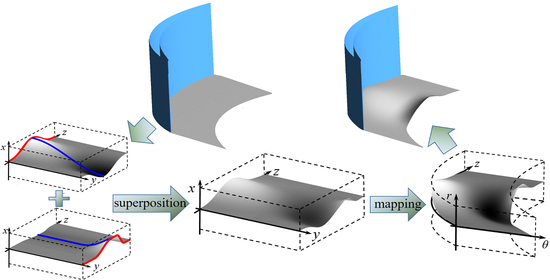
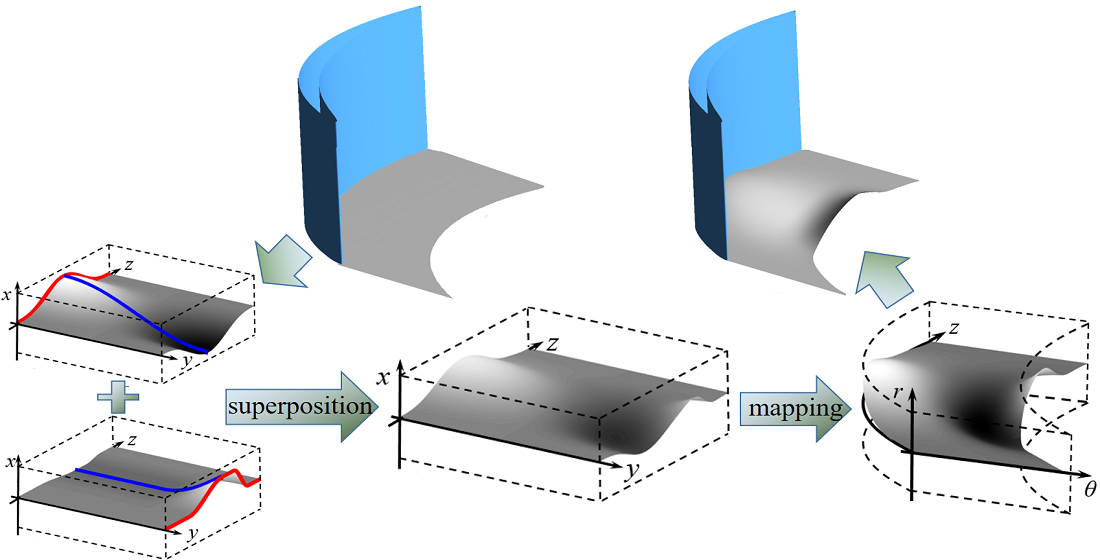
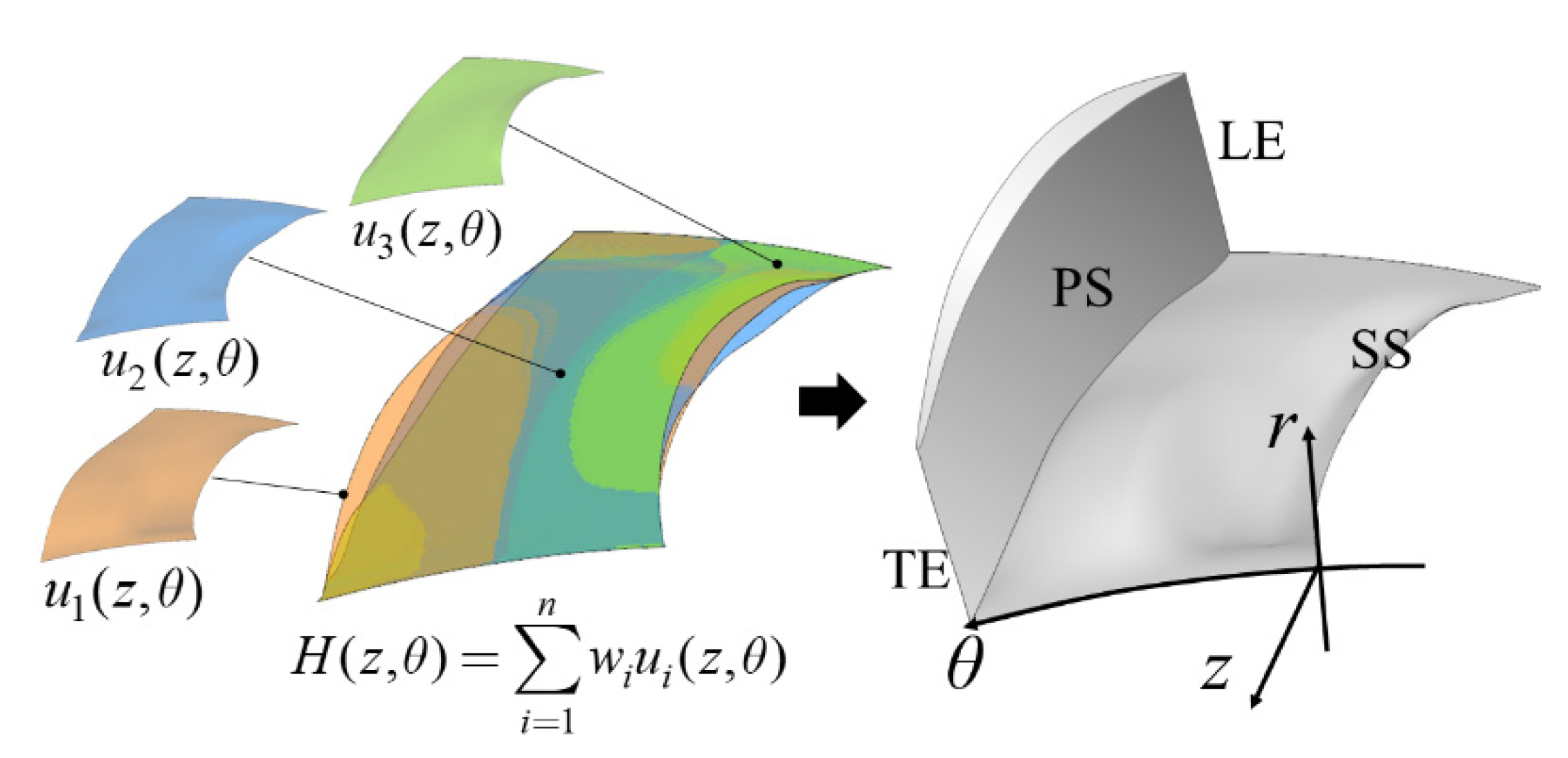
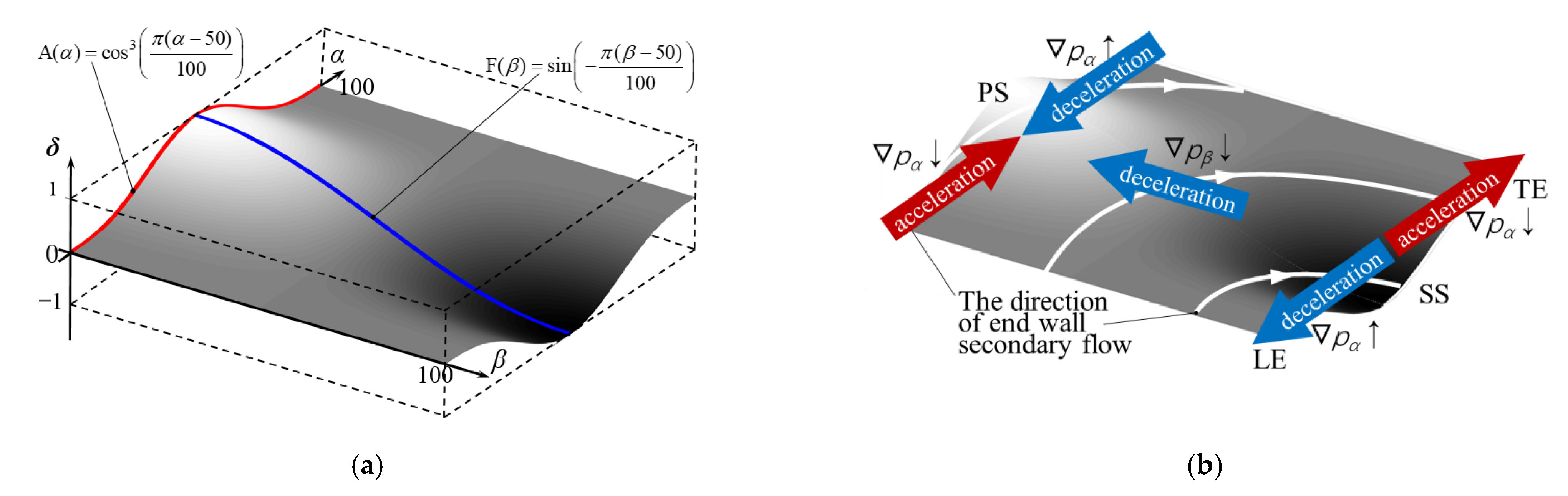
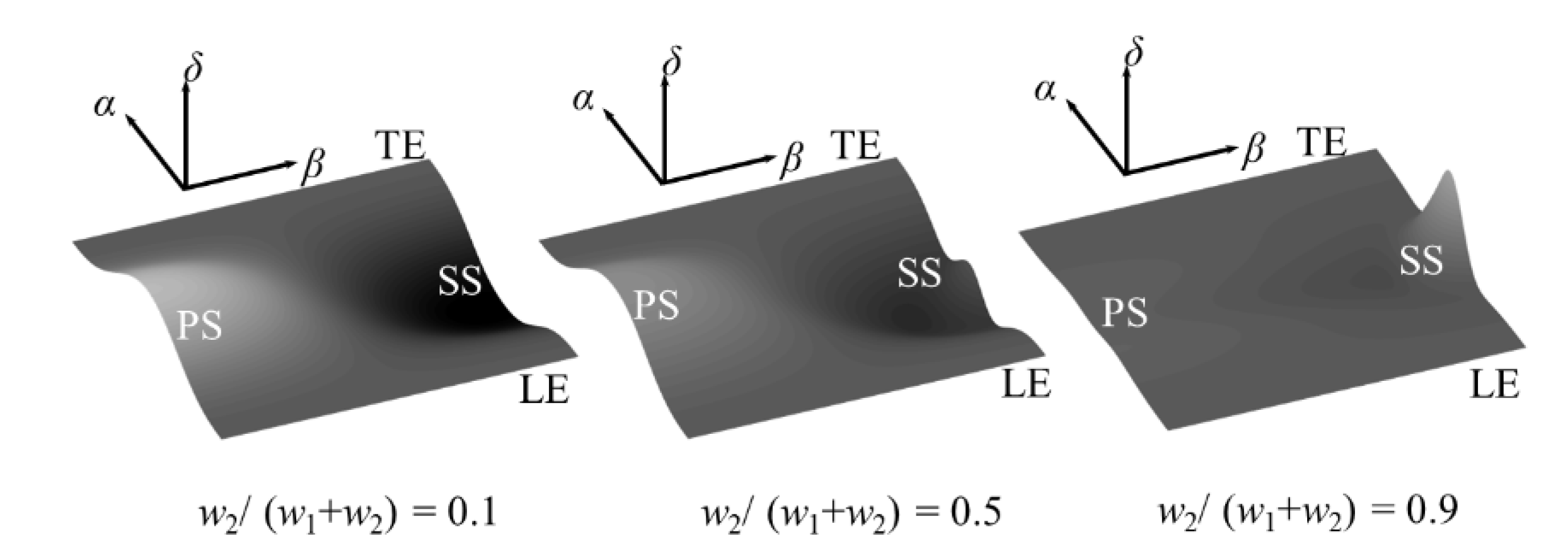
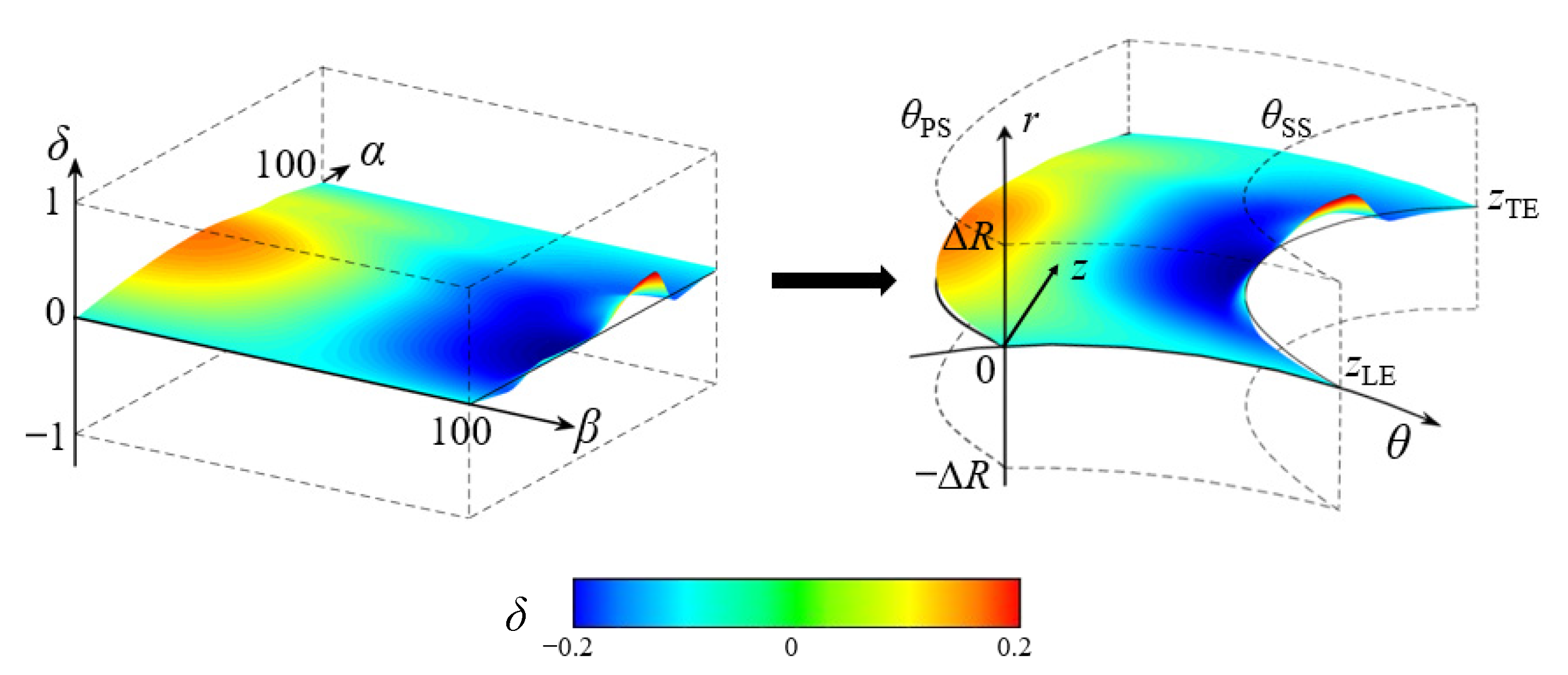
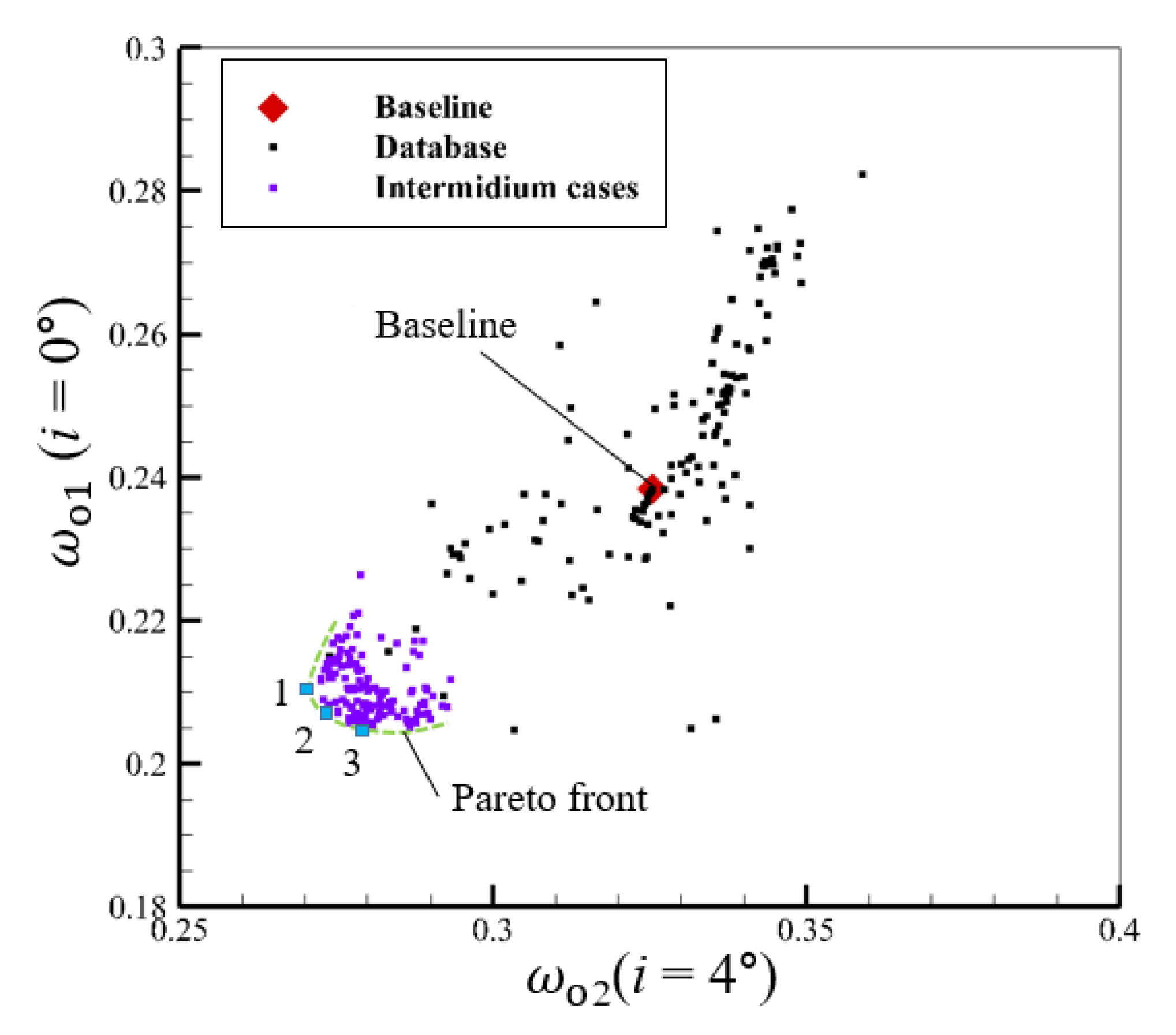
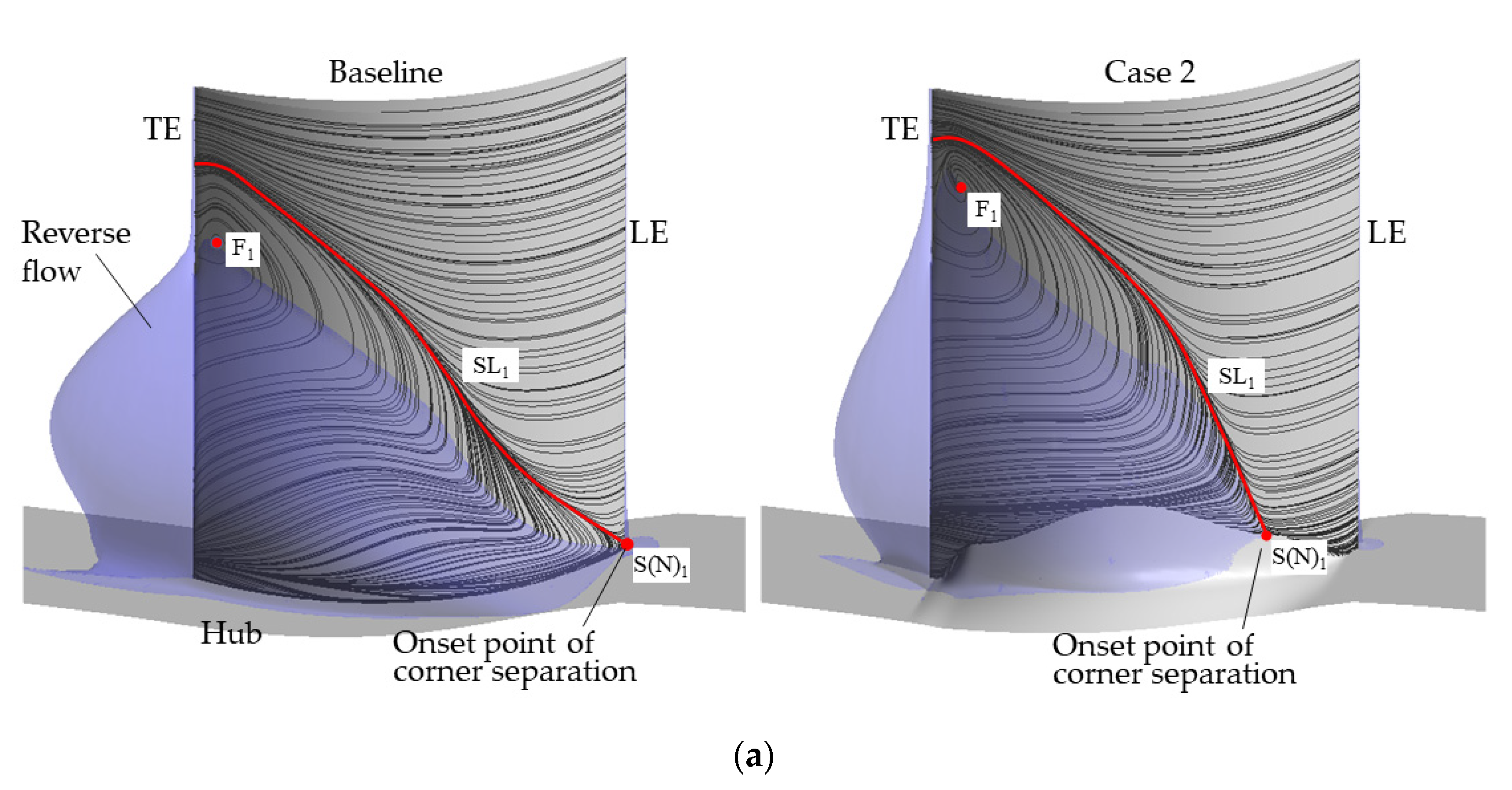
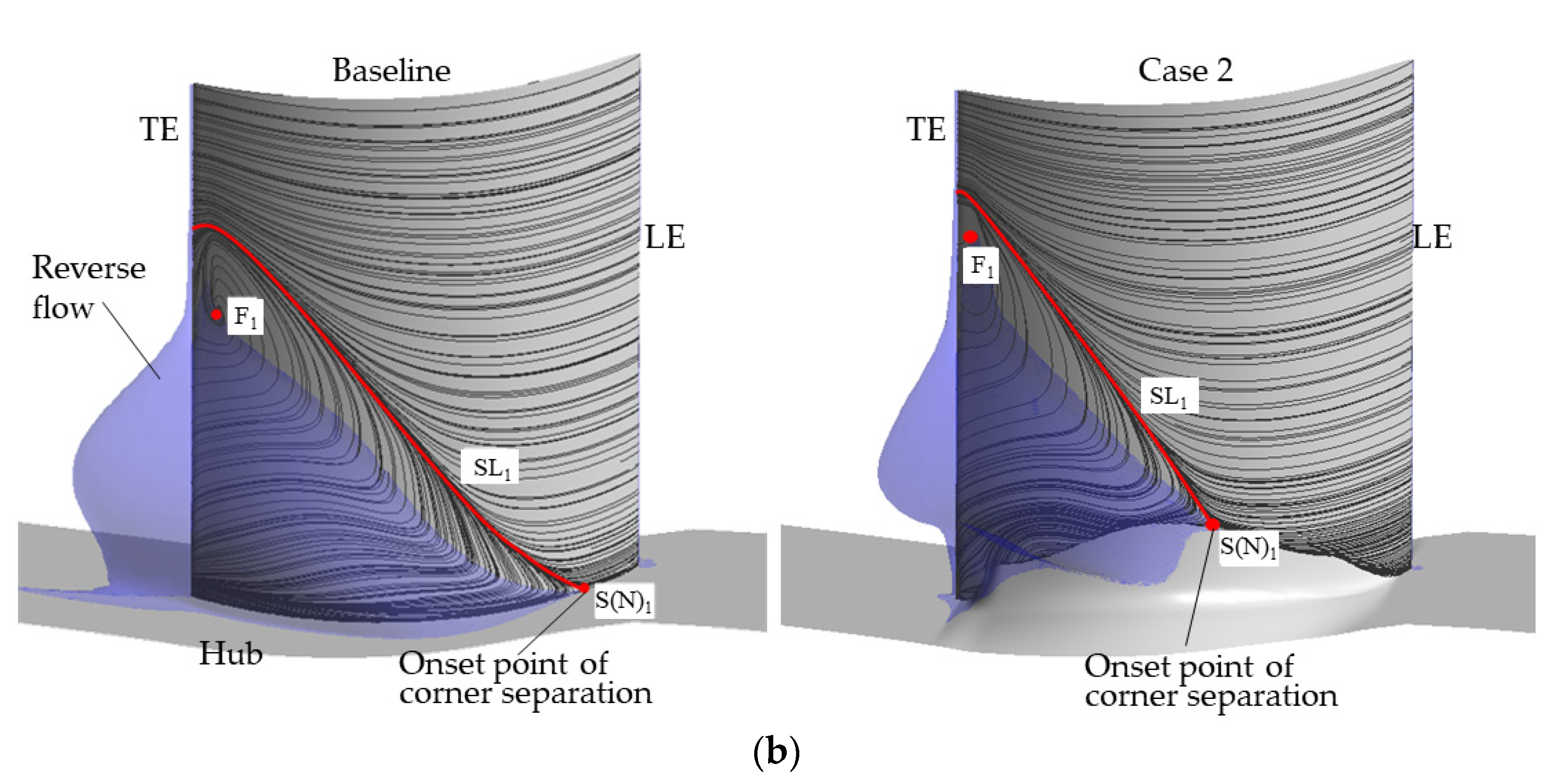
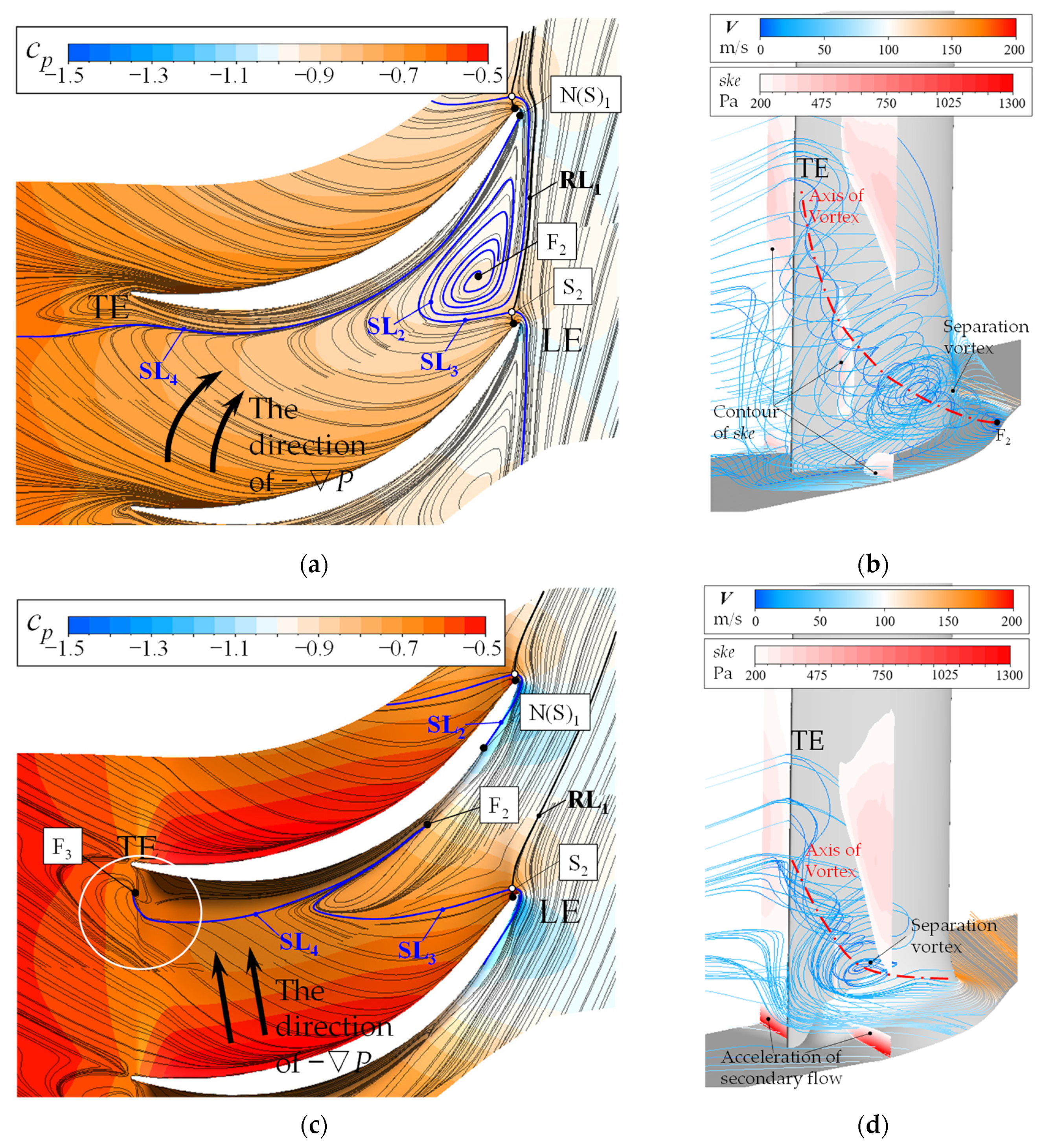
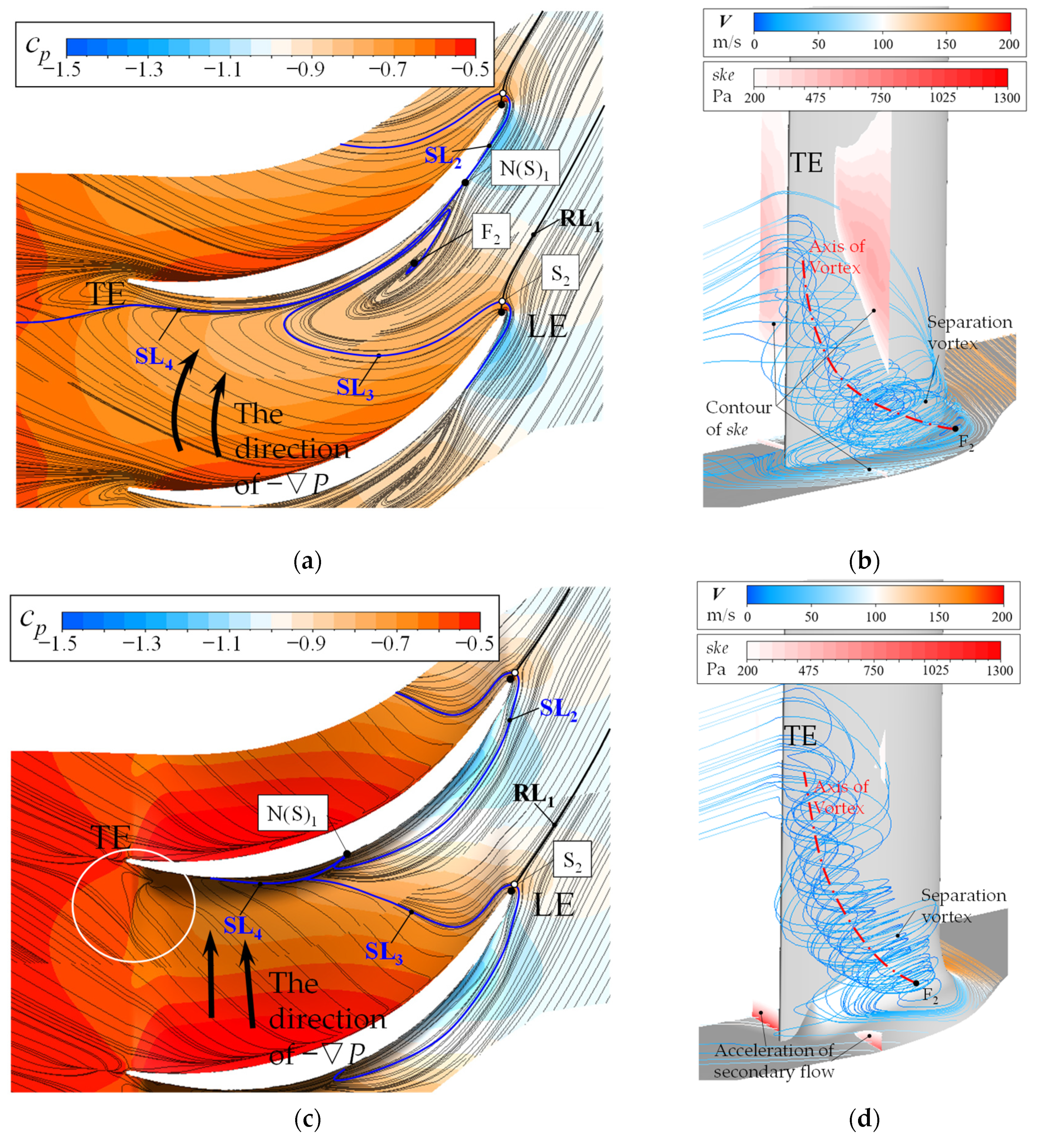
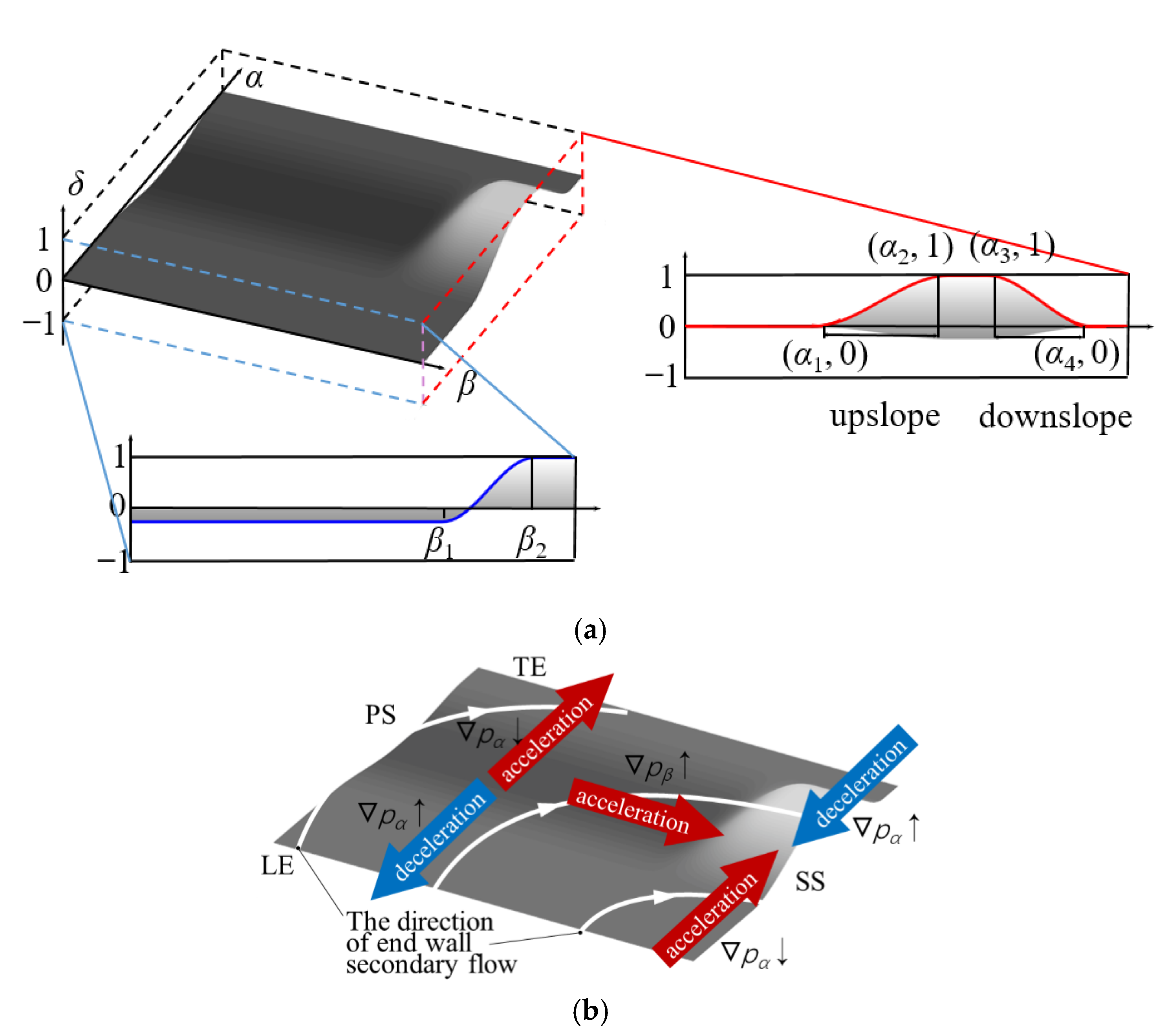
To deal with corner separation in high-load axial compressors, this paper proposes a new end wall contouring method aimed at controlling the end wall secondary flow in more than one local area, generating a geometry with fewer control variables that is applicable for multiple working conditions. The new method defines more than one surface unit function, with different effects on end wall secondary flow. Then, the geometry of these surface unit functions will be superposed to generate the end wall contouring, to combine their flow control effects. After applying the new method to a bi-objective optimization design process, with 15 design variables aimed at minimizing the loss of cascade at 0° and 4° incidence, the optimal design reduces the total pressure loss of the high-load cascade by 5% under the former incidence and by 3% under the latter. The most effective design rule is constructing an end wall surface with the rising suction side and sinking pressure side in the blade channel, while locally raising the SS corner with a gentle upstream slope. According to the analysis, the design variables of the new method show an intuitive influence on the variation of end wall geometry and the movement of secondary flow. The corner separation has been effectively suppressed, with fewer control variables than before. It, thus, indicates the advantage of the newly developed end wall contouring method compared with previous studies.
Keywords: corner separation; end wall contouring; flow control; optimization design; compressor corner separation; end wall contouring; flow control; optimization design; compressor
Graphical Abstract