Article

Damping of Subsynchronous Resonance in Utility DFIG-Based Wind Farms Using Wide-Area Fuzzy Control Approach
by
Yaser Bostani
1,2,
Saeid Jalilzadeh
1,*,
Saleh Mobayen
1,3,*,
Thaned Rojsiraphisal
4,5,* and
Andrzej Bartoszewicz
6
1
Department of Electrical Engineering, University of Zanjan, Zanjan 45371-38791, Iran
2
Design and Development Part, Guilan Regional Electric Company, Rasht 41377-18775, Iran
3
Future Technology Research Center, National Yunlin University of Science and Technology, Douliou 64002, Taiwan
4
Advanced Research Center for Computational Simulation, Department of Mathematics, Faculty of Science, Chiang Mai University, Chiang Mai 50200, Thailand
5
Data Science Research Center, Department of Mathematics, Faculty of Science, Chiang Mai University, Chiang Mai 50200, Thailand
6
Institute of Automatic Control, Lodz University of Technology, 18 Stefanowskiego St., 90-537 Lodz, Poland
*
Authors to whom correspondence should be addressed.
Energies 2022, 15(5), 1787; https://doi.org/10.3390/en15051787
Submission received: 15 January 2022 / Revised: 17 February 2022 / Accepted: 21 February 2022 / Published: 28 February 2022

Abstract

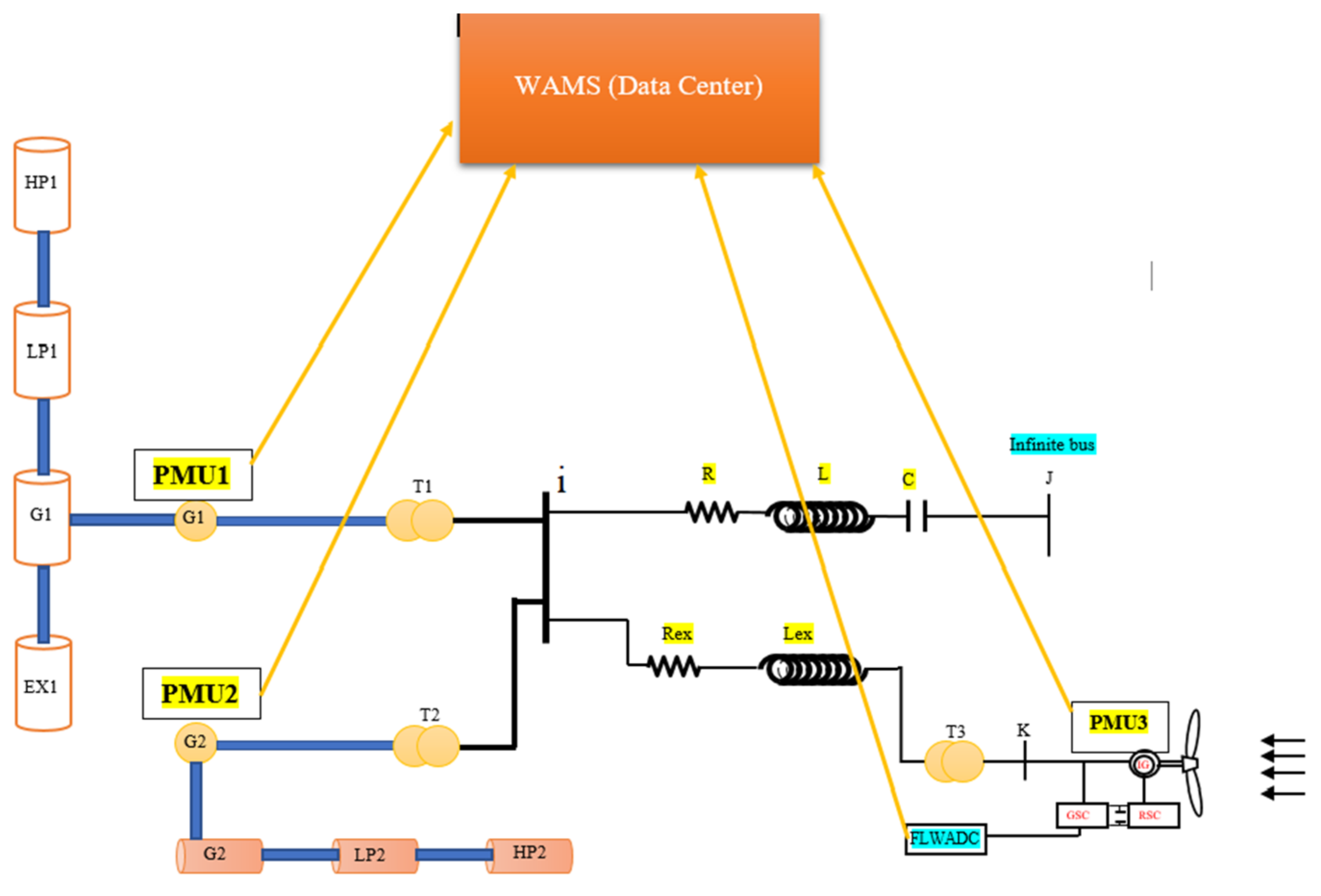
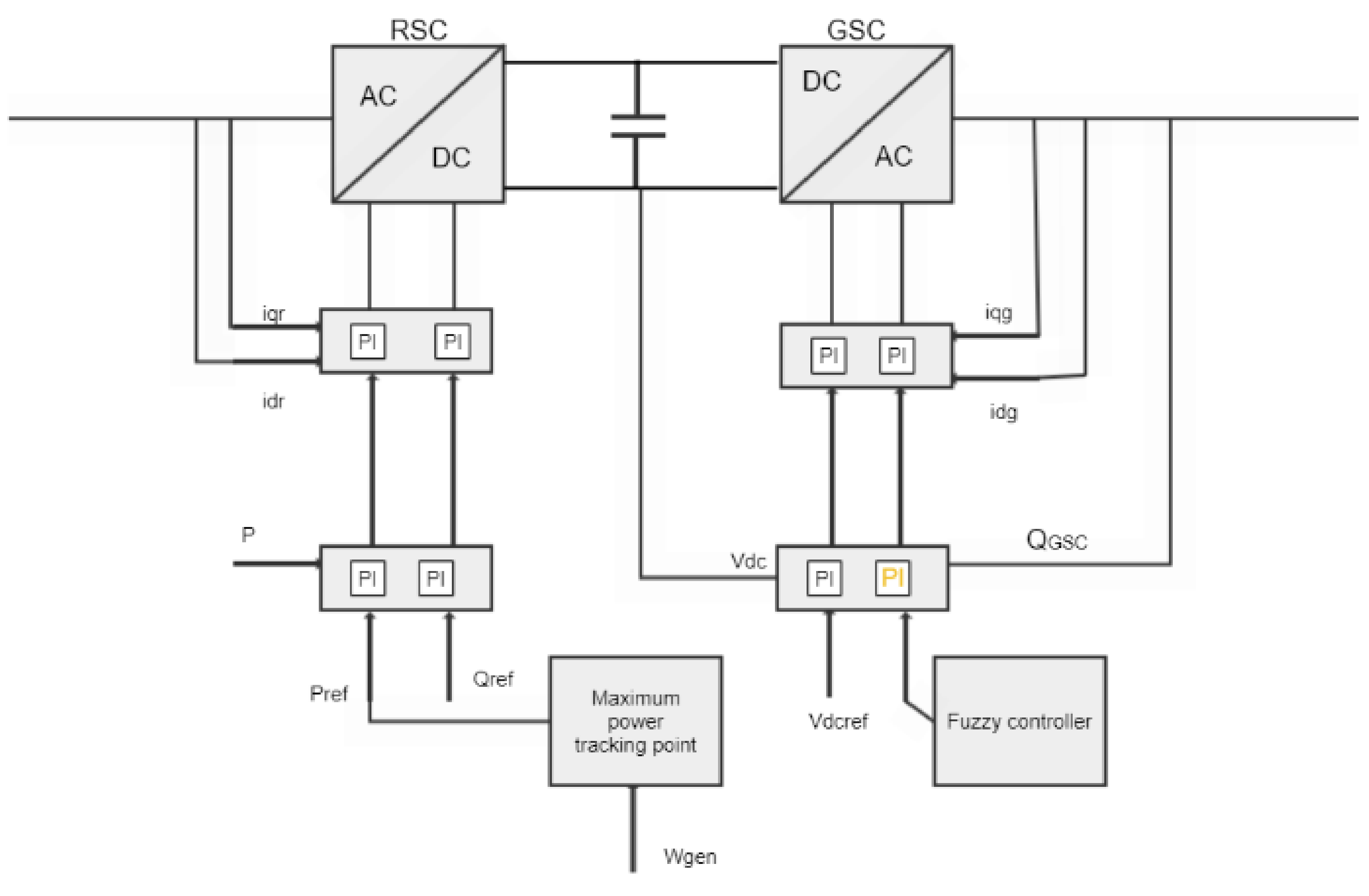
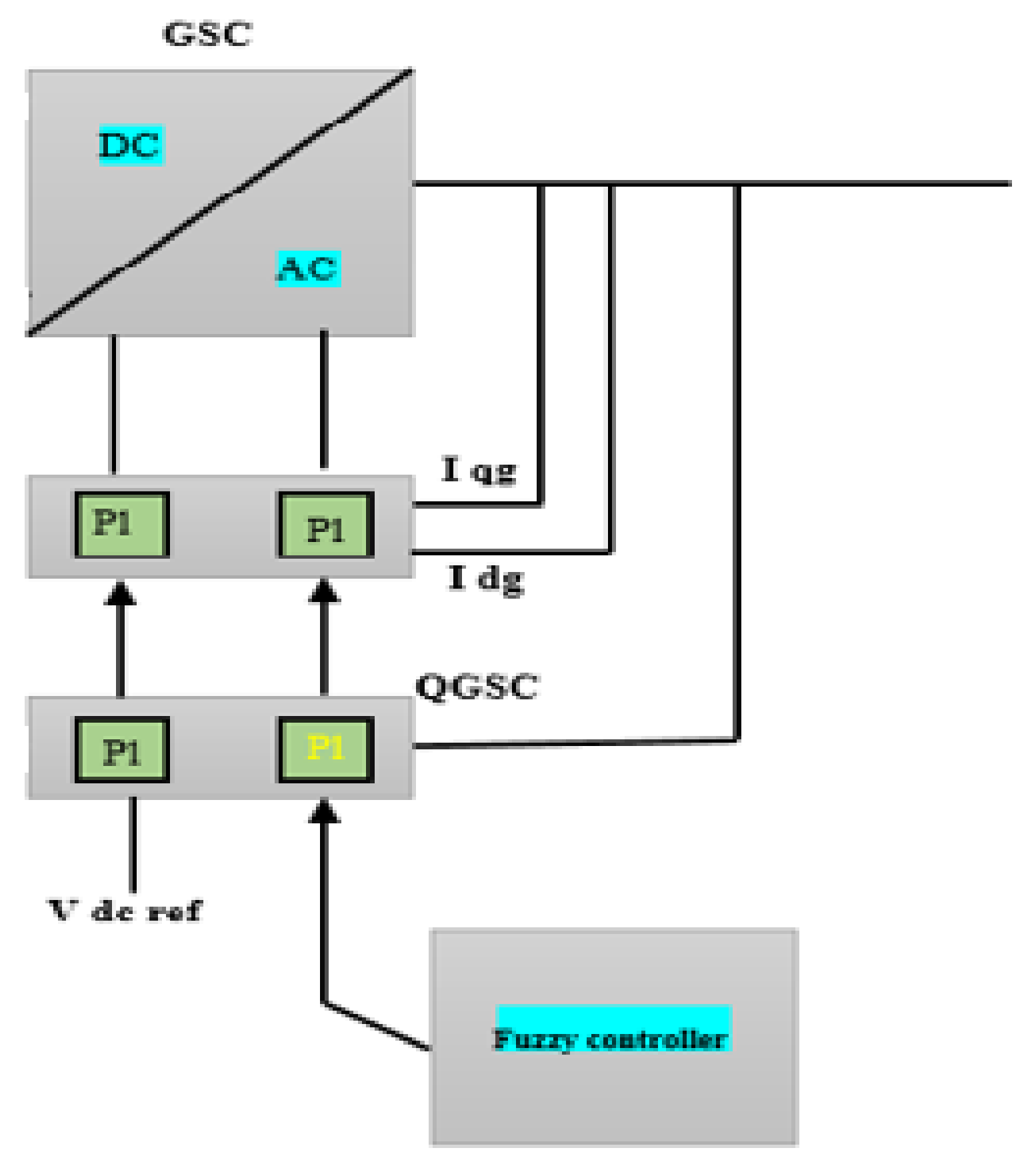
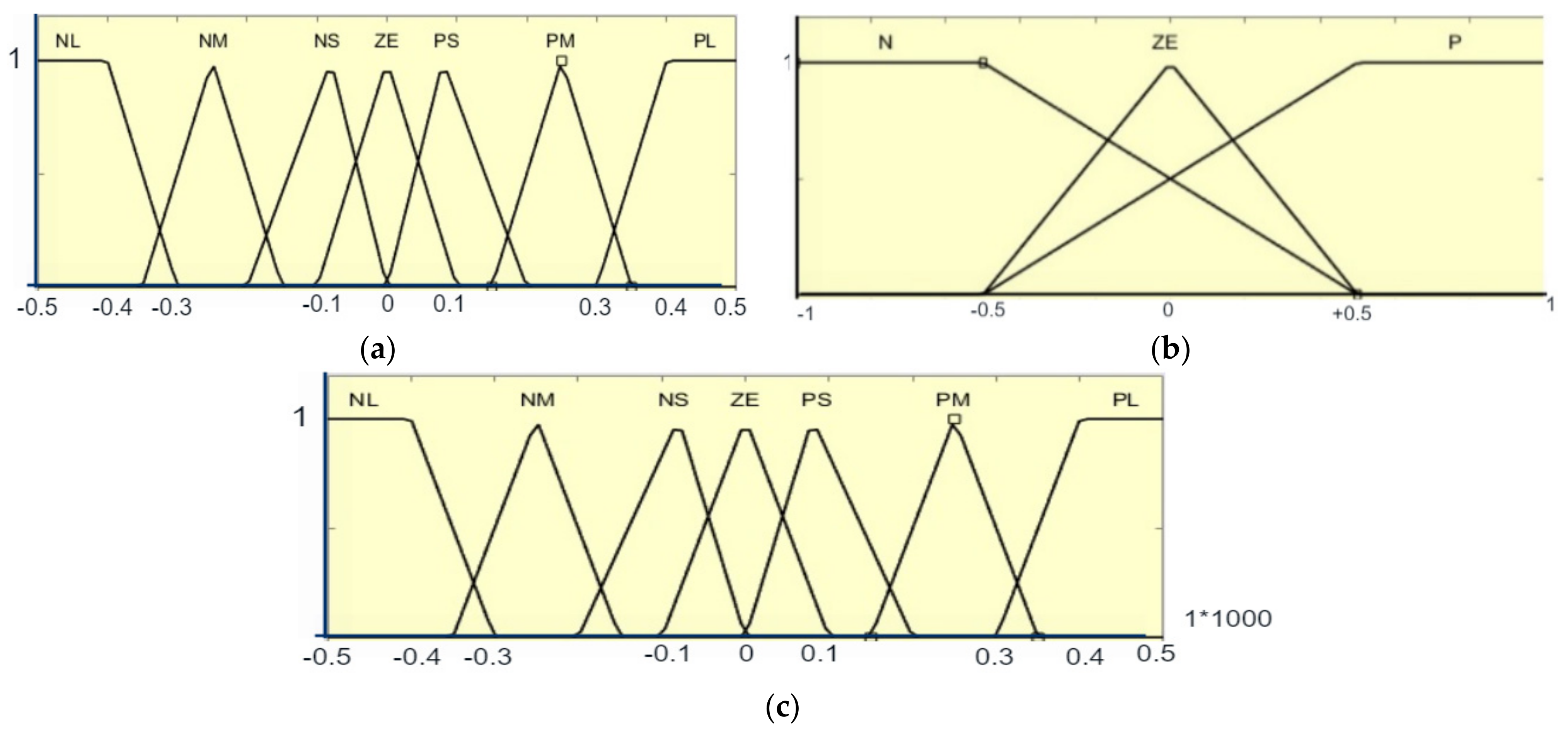
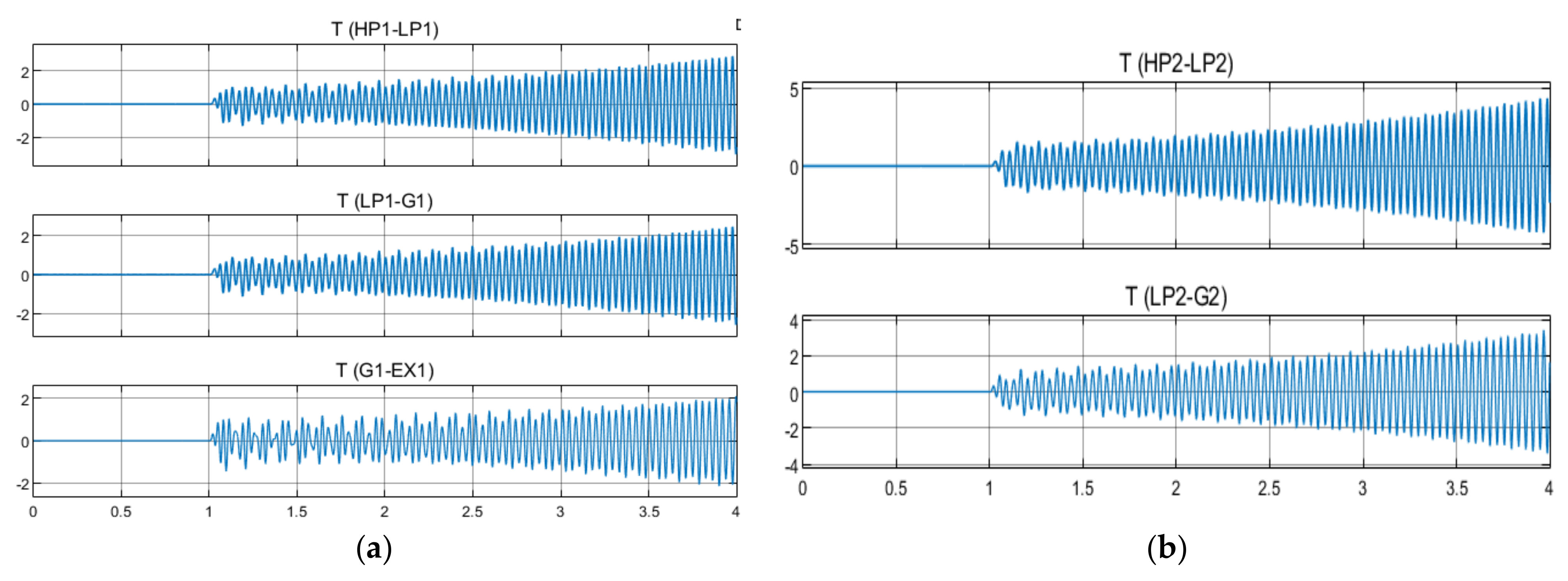
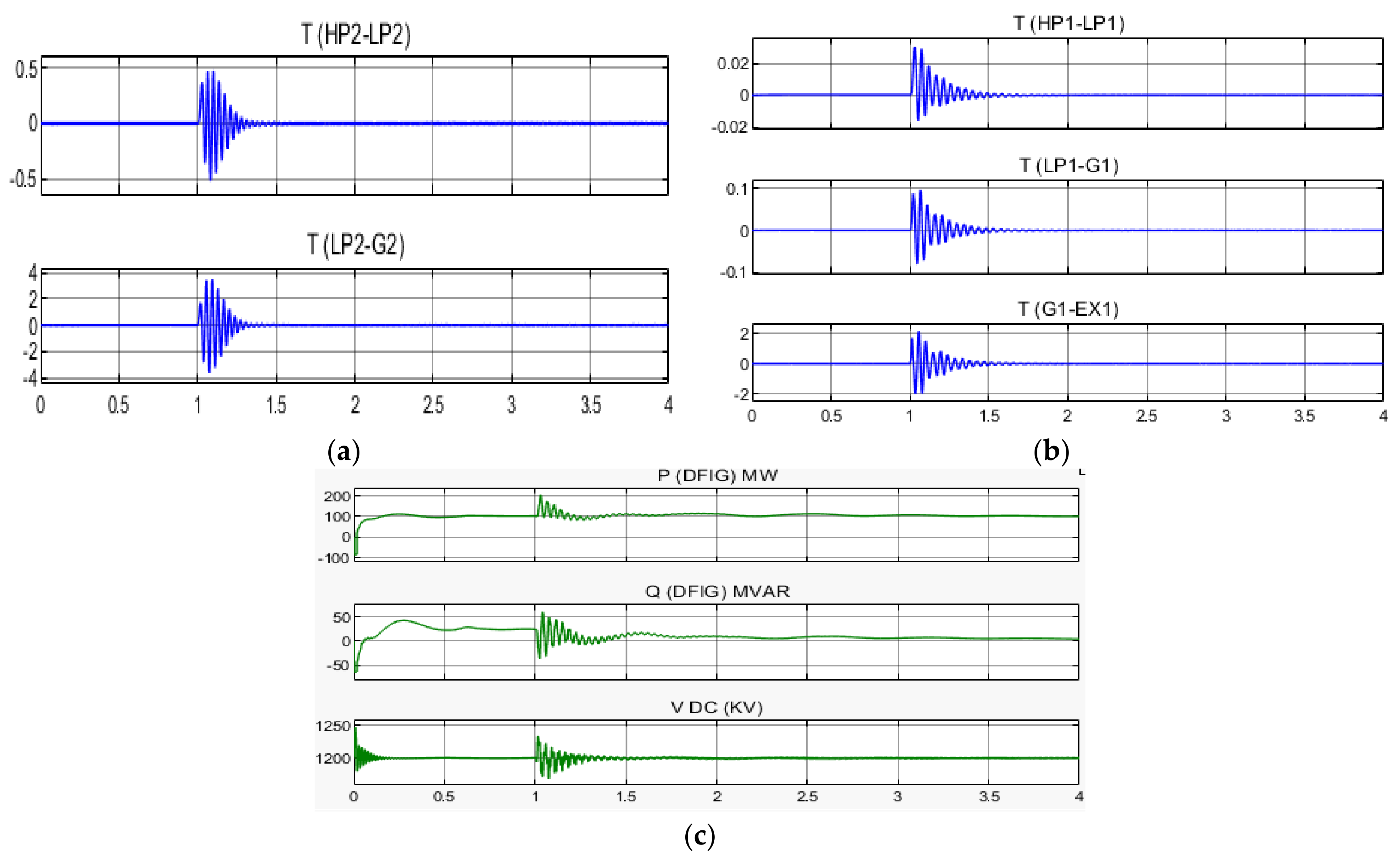
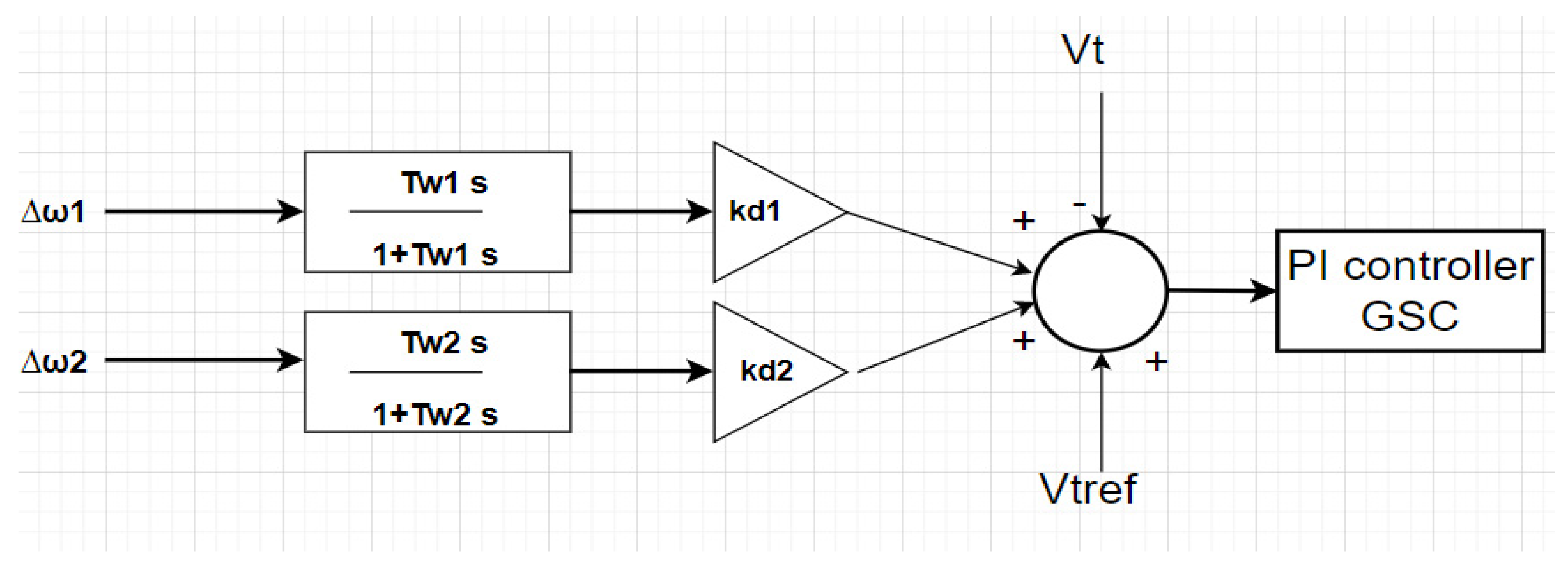
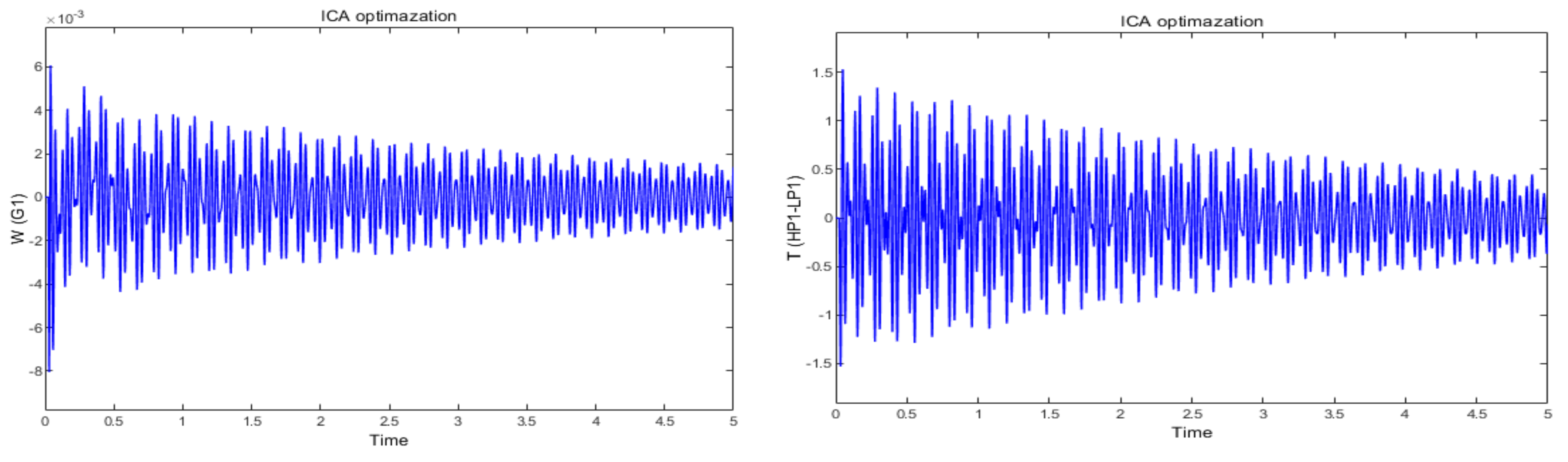
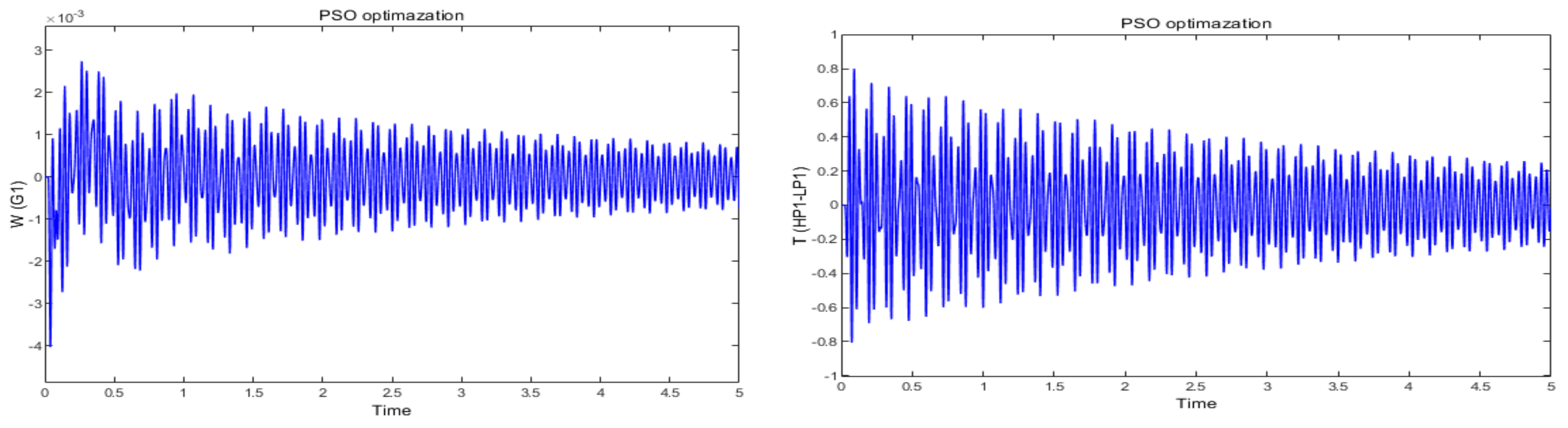
This paper presents a novel fuzzy control scheme for damping the subsynchronous resonance (SSR) according to the wide-area measurement system (WAMS) in power systems including doubly fed induction generator (DFIG)-based wind farms connected to series capacitive compensated transmission networks. The SSR damping is attained by adding the fuzzy controller as a supplementary signal at the stator voltage loop of the grid-side converter (GSC) of DFIG wind farms. Additionally, time delays due to communication signals are important when using WAMSs. If the time delays are ignored, it causes system instability. In this paper, the time delays are modeled with a separate fuzzy input to the controller. The new fuzzy control approach is executed by using the angular velocity of synchronous generators (w) and its variation in the angular velocity (dw/dt). The effectiveness and success of the WAMS-based fuzzy controller is demonstrated by comparison with the particle swarm optimization (PSO) and imperialist competitive algorithm (ICA) optimization methods. The efficacy and validity of the planned auxiliary damping control are verified on a modified version of the IEEE second benchmark model including DFIG-based wind farms via time simulations using the MATLAB/Simulink toolbox.
Keywords: transmission line; wind farm; fuzzy control; subsynchronous resonance; DFIG transmission line; wind farm; fuzzy control; subsynchronous resonance; DFIG