Article

Amplitude Control of Stall-Induced Nonlinear Aeroelastic System Based on Iterative Learning Control and Unified Pitch Motion

1
College of Mechanical & Electronic Engineering, Shandong University of Science & Technology, Qingdao 266590, China
2
Business School, Qingdao University of Technology, Qingdao 266525, China
*
Author to whom correspondence should be addressed.
Energies 2022, 15(3), 787; https://doi.org/10.3390/en15030787
Submission received: 10 December 2021 / Revised: 9 January 2022 / Accepted: 20 January 2022 / Published: 21 January 2022
(This article belongs to the Special Issue Advancement in Wind Turbine Technology)

Abstract

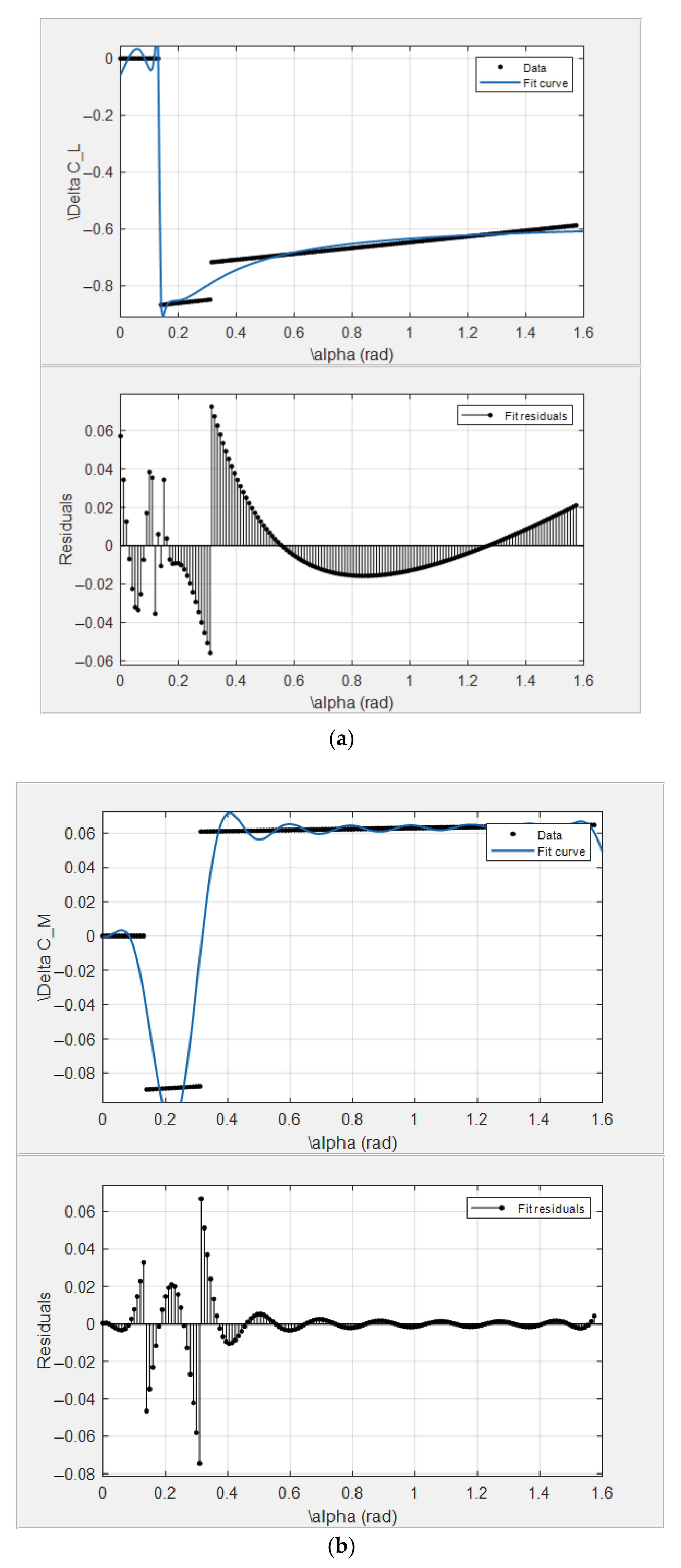
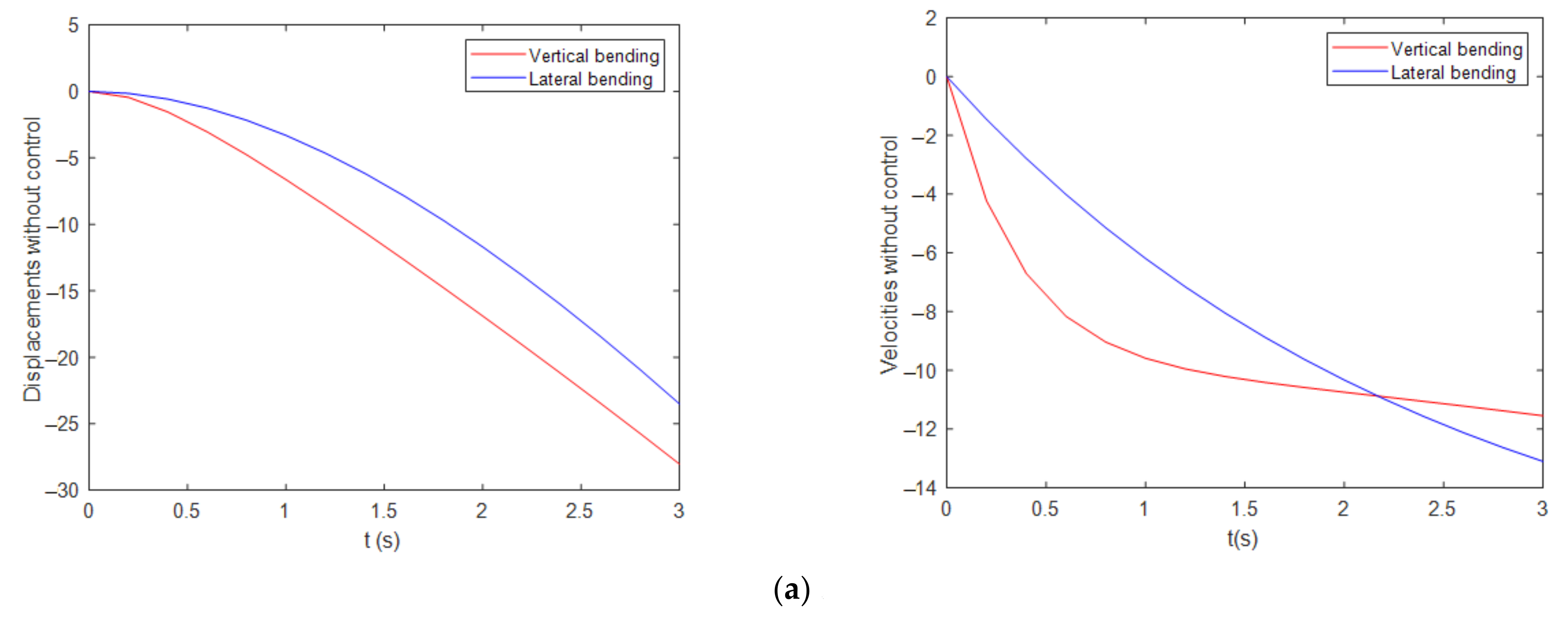
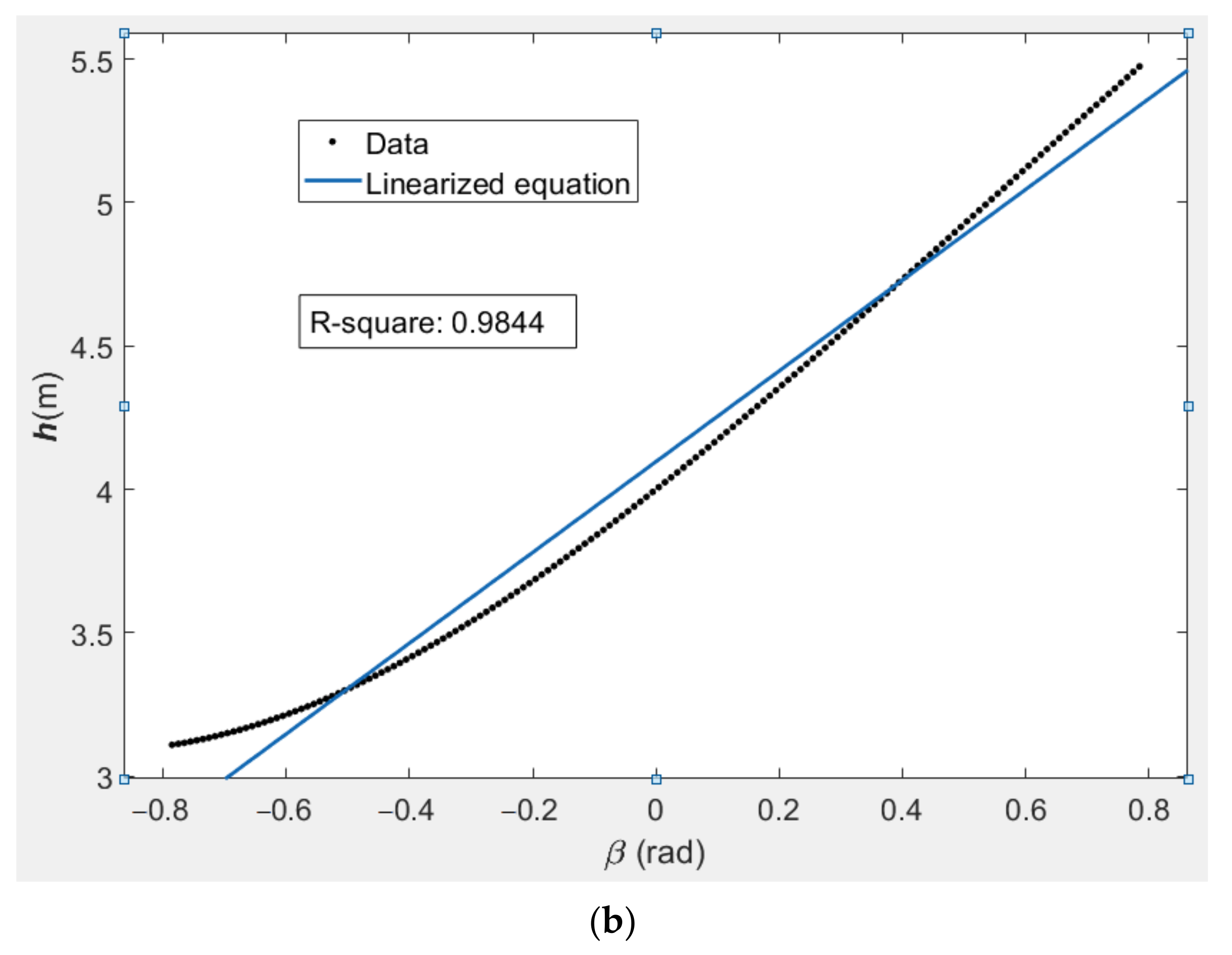
In this study, vibration control, a behavior which subordinates to stall-induced nonlinear vibration and amplitude control of a wind turbine’s blade section, based on unified pitch motion driven by slider-linkage mechanism, is investigated by using an iterative learning control (ILC) method. The nonlinear dynamical system is a nonlinear aeroelastic system. The aeroelastic system equations consist of three parts: the nonlinear structural equations derived by using Lagrange’s equations, the improved stall-induced nonlinear ONERA (ISNO) aerodynamic equations, and the pitch control equation. The ISNO model is not only suitable for the actual external pitch motion, but also suitable for the solution by using an ILC algorithm due to its fitted nonlinear aerodynamic coefficients. The ILC algorithm used here is an improved iterative learning algorithm (IILC) which considers the large-range, linearized, residual terms, and realizes gain adaptive tuning based on PID controller. On the one hand, it can control the amplitude of an unsteady flutter through trajectory tracking. On the other hand, when the preset value of the amplitude of the ideal trajectory is very small, it can make the system directly tend to convergence and stability of a nonlinear aeroelastic system. To simplify the extremely difficult iterative process, the pitch movement can track the elastic twist displacement in time, thus simplifying the aeroelastic equations and accelerating the IILC iteration process. Therefore, amplitude control for flap-wise/lead-lag displacements is realized by the unified pitch motion and the trajectory tracking controlled by using the IILC algorithm.
Keywords: vibration control; stall-induced nonlinear vibration; pitch motion; iterative learning; PID controller; trajectory tracking vibration control; stall-induced nonlinear vibration; pitch motion; iterative learning; PID controller; trajectory tracking