Article

Proposal of Multidimensional Data Driven Decomposition Method for Fault Identification of Large Turbomachinery

by
Mateusz Zabaryłło
1,* and
Tomasz Barszcz
2
1
GE Digital, Inflancka 4c, 00-189 Warszawa, Poland
2
Department of Robotics and Mechatronics, Faculty of Mechanical Engineering and Robotics, AGH University of Science and Technology, Al. Mickiewicza 30, 30-059 Kraków, Poland
*
Author to whom correspondence should be addressed.
Energies 2022, 15(10), 3651; https://doi.org/10.3390/en15103651
Submission received: 13 April 2022 / Revised: 11 May 2022 / Accepted: 14 May 2022 / Published: 16 May 2022

Abstract

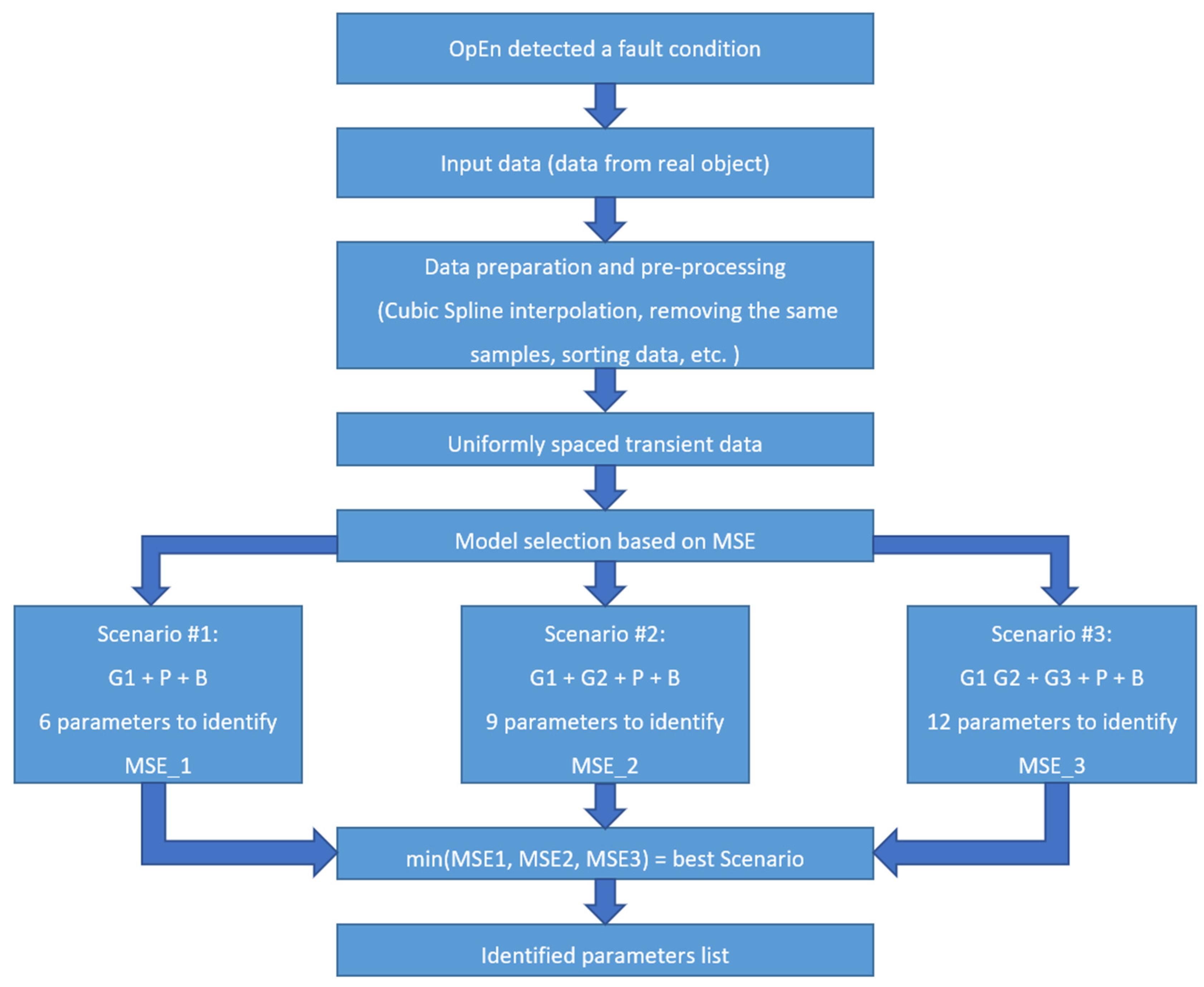
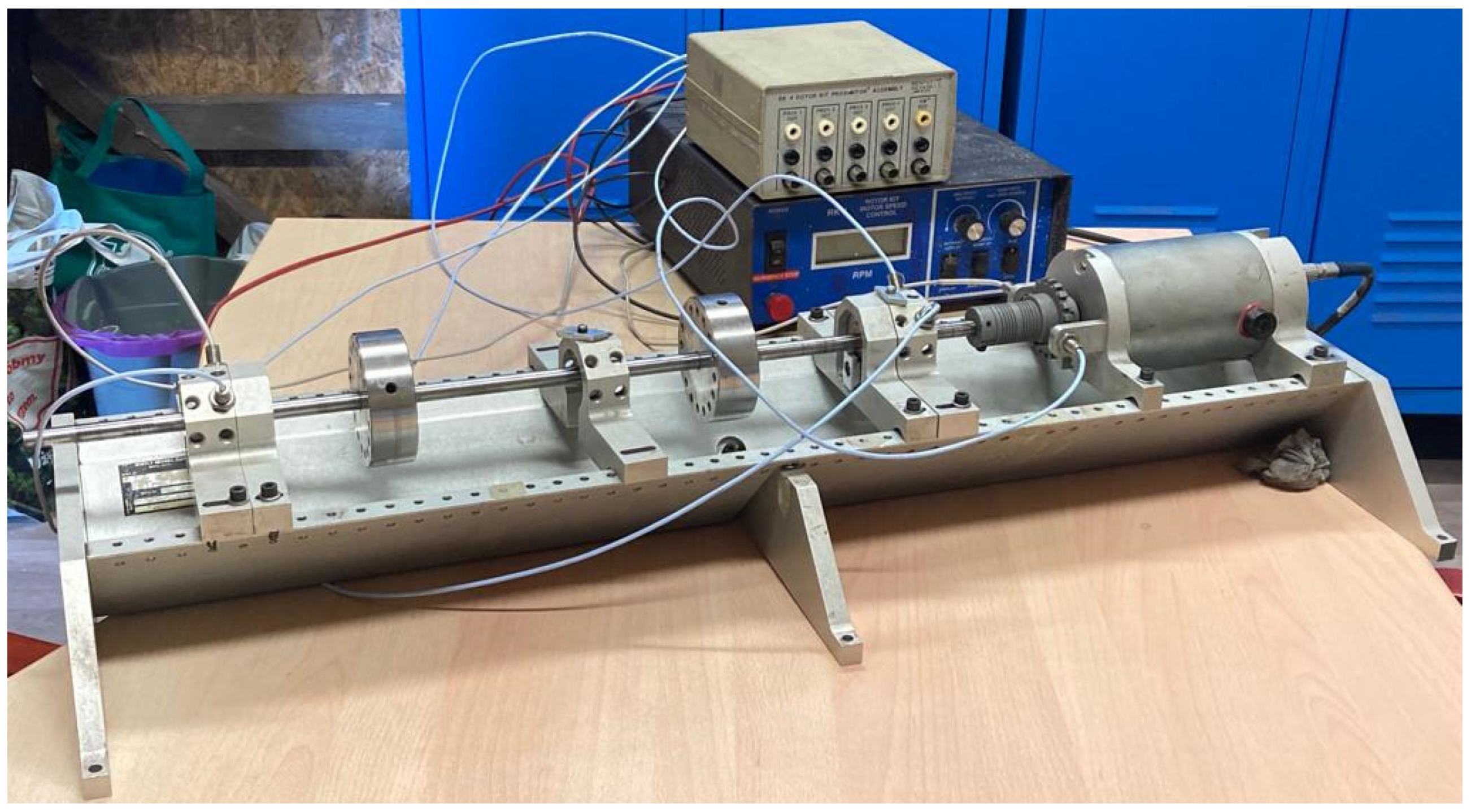
High-power turbomachines are equipped with flexible rotors and journal bearings and operate above their first and sometimes even second critical speed. The transient response of such a system is complex but can provide valuable information about the dynamic state and potential malfunctions. However, due to the high complexity of the signal and the nonlinearity of the system response, the analysis of transients is a highly complex process that requires expert knowledge in diagnostics, machine dynamics, and extensive experience. The article proposes the Multidimensional Data Driven Decomposition (MD3) method, which allows decomposing a complex transient into several simpler, easier to analyze functions. These functions have physical meaning. Thus, the method belongs to the Explainable Artificial Intelligence area. The MD3 method proposes three scenarios and chooses the best based on the MSE quality index. The approach was first verified on a test rig and then validated on data from a real object. The results confirm the correctness of the method assumptions and performance. Furthermore, the MD3 method successfully identified the failure of rotor unbalance, both on the test rig and the real object data (large generator rotor in the power plant). Finally, further directions for research and development of the method are proposed.
Keywords: large turbomachinery; vibration analysis; signal decomposition; Differential Evolution; Genetic Algorithms large turbomachinery; vibration analysis; signal decomposition; Differential Evolution; Genetic Algorithms