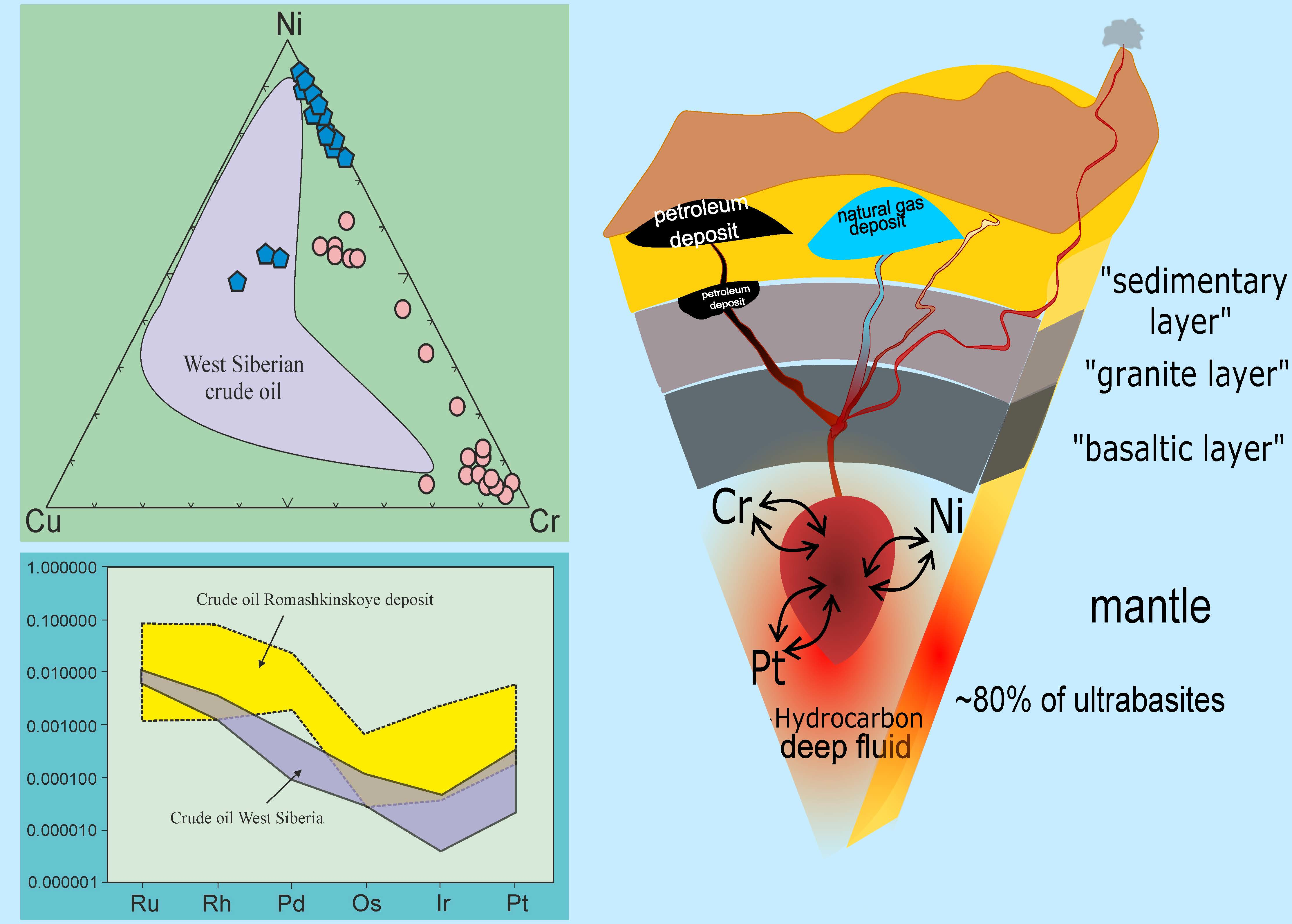
Inorganic Geochemistry of Crude Oils of Northern Eurasia after ICP-MS Data as Clear Evidence for Their Deep Origin
Abstract
Share and Cite
Ivanov, K.S.; Erokhin, Y.V.; Kudryavtsev, D.A. Inorganic Geochemistry of Crude Oils of Northern Eurasia after ICP-MS Data as Clear Evidence for Their Deep Origin. Energies 2022, 15, 48. https://doi.org/10.3390/en15010048
Ivanov KS, Erokhin YV, Kudryavtsev DA. Inorganic Geochemistry of Crude Oils of Northern Eurasia after ICP-MS Data as Clear Evidence for Their Deep Origin. Energies. 2022; 15(1):48. https://doi.org/10.3390/en15010048
Chicago/Turabian StyleIvanov, Kirill Svyatoslavich, Yuriy Viktorovich Erokhin, and Daniil Aleksandrovich Kudryavtsev. 2022. "Inorganic Geochemistry of Crude Oils of Northern Eurasia after ICP-MS Data as Clear Evidence for Their Deep Origin" Energies 15, no. 1: 48. https://doi.org/10.3390/en15010048
APA StyleIvanov, K. S., Erokhin, Y. V., & Kudryavtsev, D. A. (2022). Inorganic Geochemistry of Crude Oils of Northern Eurasia after ICP-MS Data as Clear Evidence for Their Deep Origin. Energies, 15(1), 48. https://doi.org/10.3390/en15010048