Article

Hourly Variation of Wind Speeds in the Philippines and Its Potential Impact on the Stability of the Power System

by
Kevin Ray Español Lucas
1,†,
Tomonori Sato
2,* and
Masamichi Ohba
3
1
Graduate School of Environmental Science, Hokkaido University, Sapporo 060-0808, Japan
2
Faculty of Environmental Earth Science, Hokkaido University, Sapporo 060-0808, Japan
3
Central Research Institute of Electric Power Industry (CRIEPI), Abiko 270-1194, Japan
*
Author to whom correspondence should be addressed.
Current address: Shizen Energy Inc., Tokyo 810-0062, Japan.
Energies 2021, 14(8), 2310; https://doi.org/10.3390/en14082310
Submission received: 17 March 2021 / Revised: 11 April 2021 / Accepted: 15 April 2021 / Published: 20 April 2021
(This article belongs to the Special Issue Recent Advances in Wind Power Meteorology)

Abstract

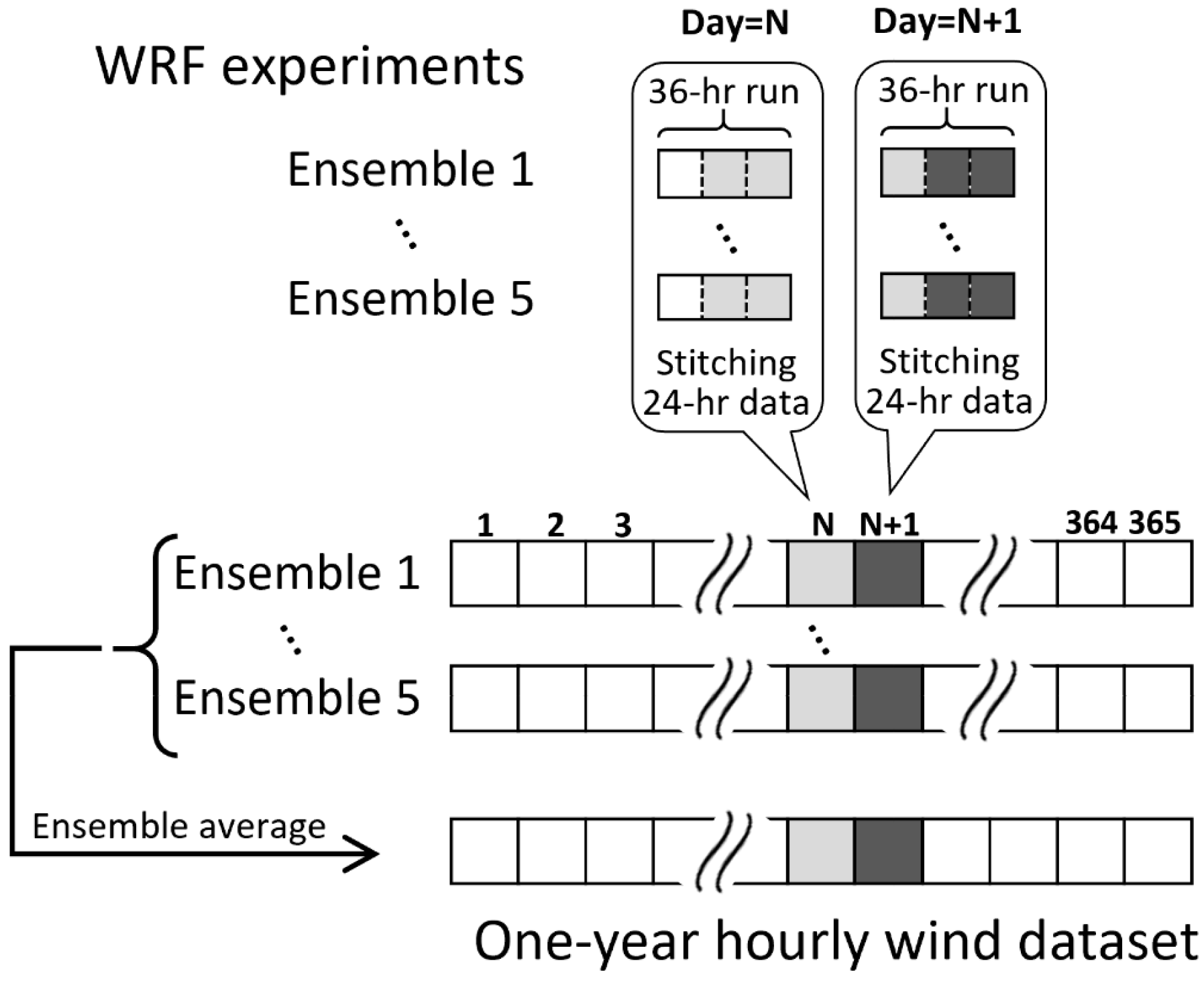
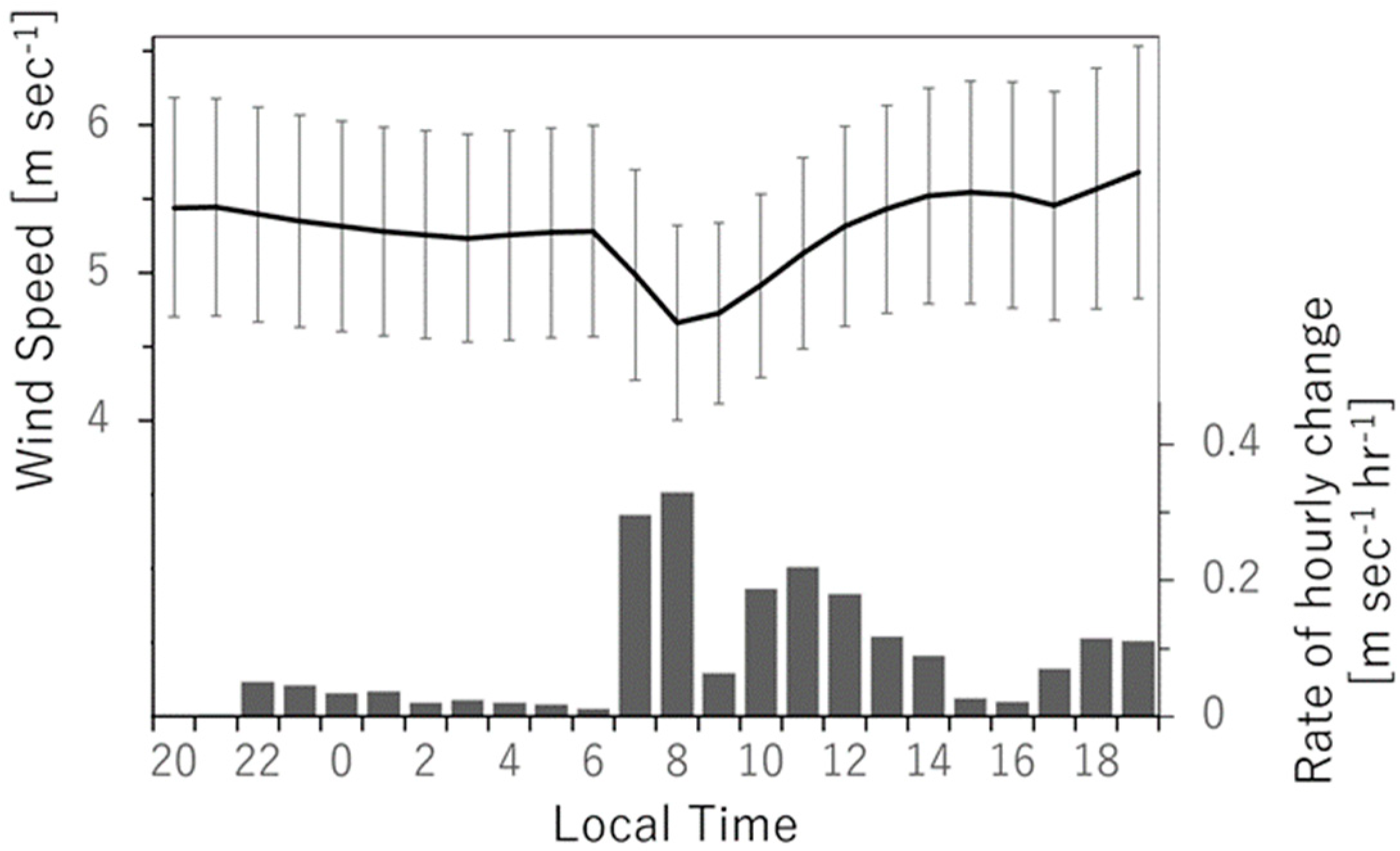
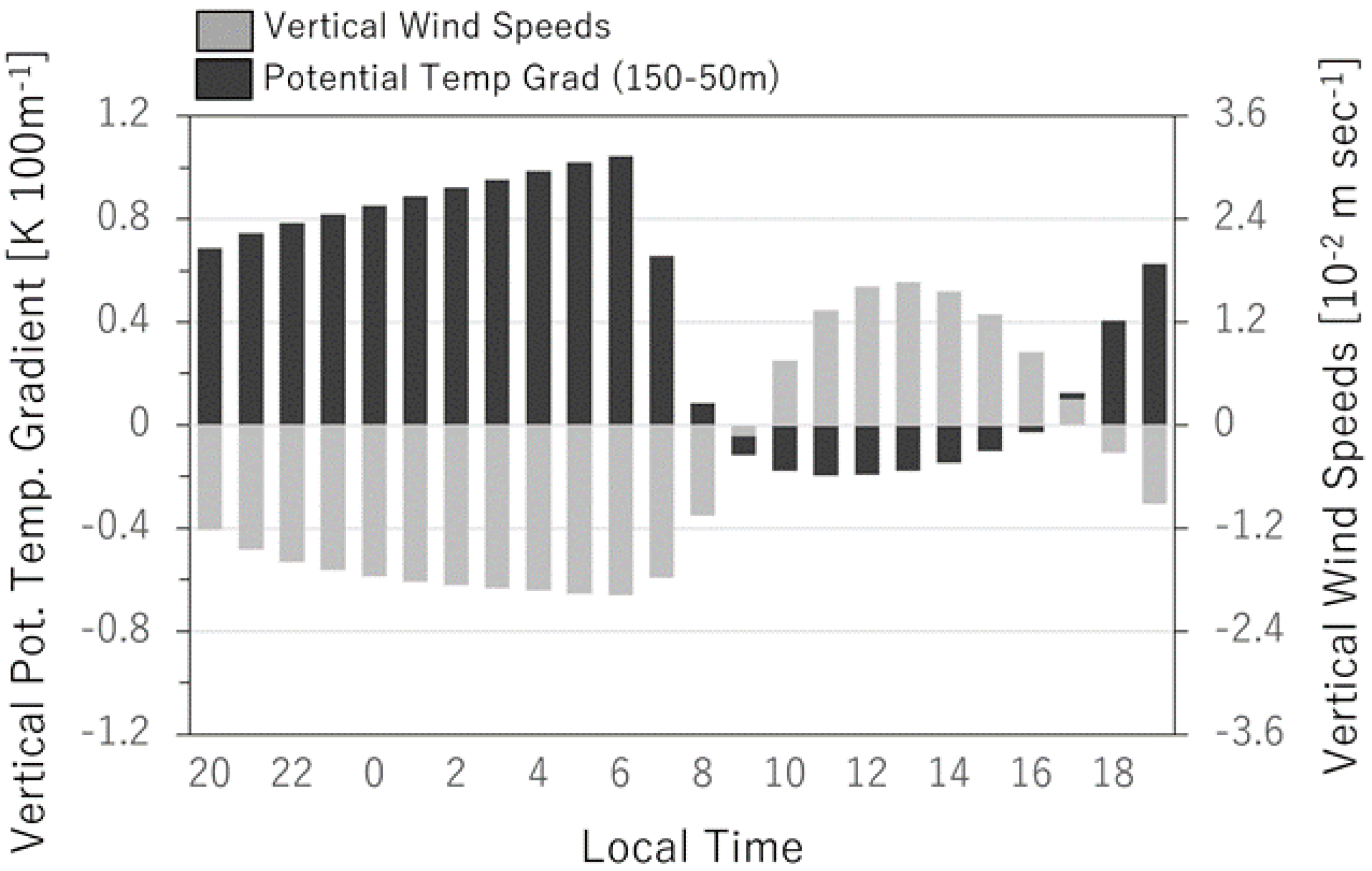
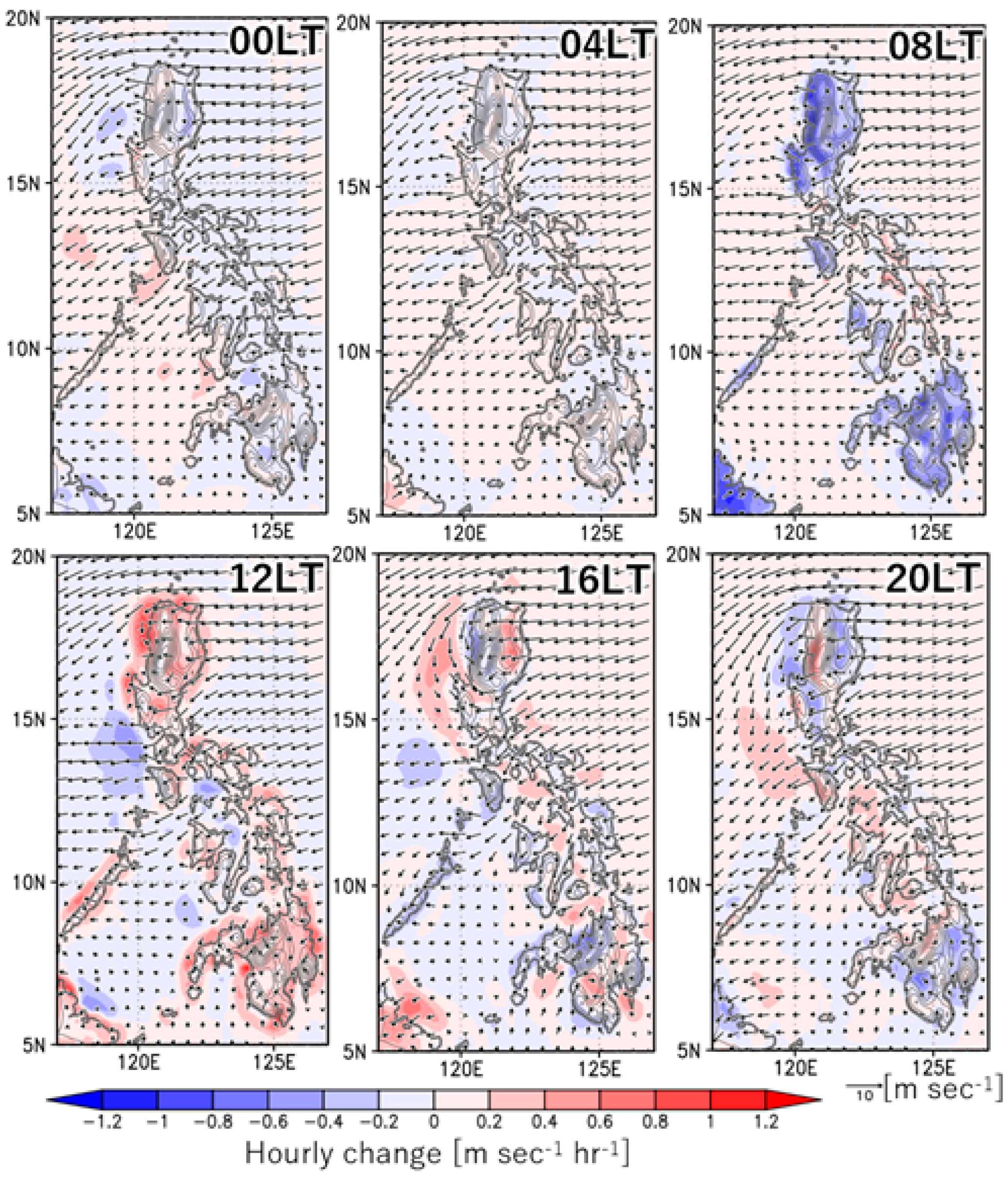
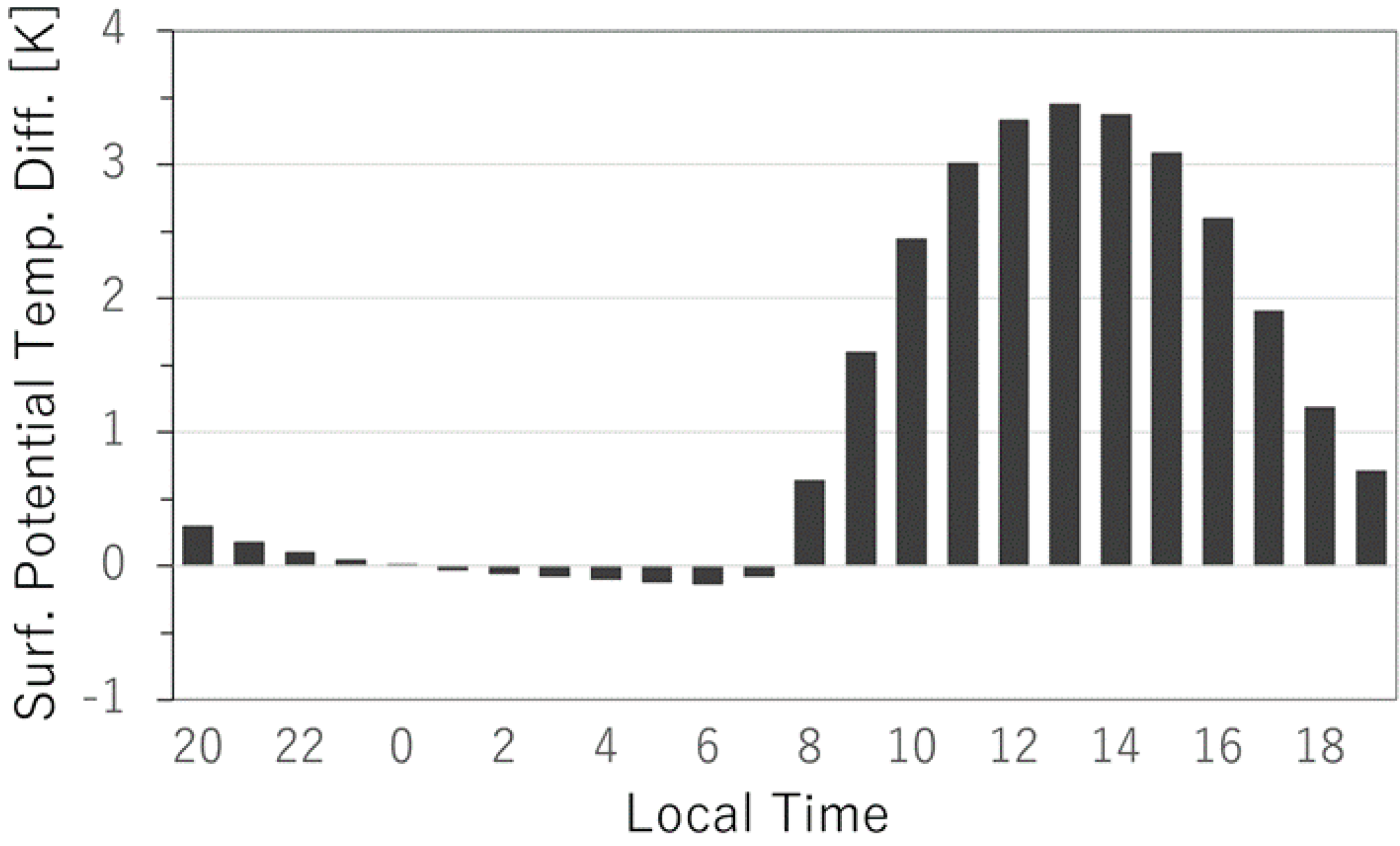
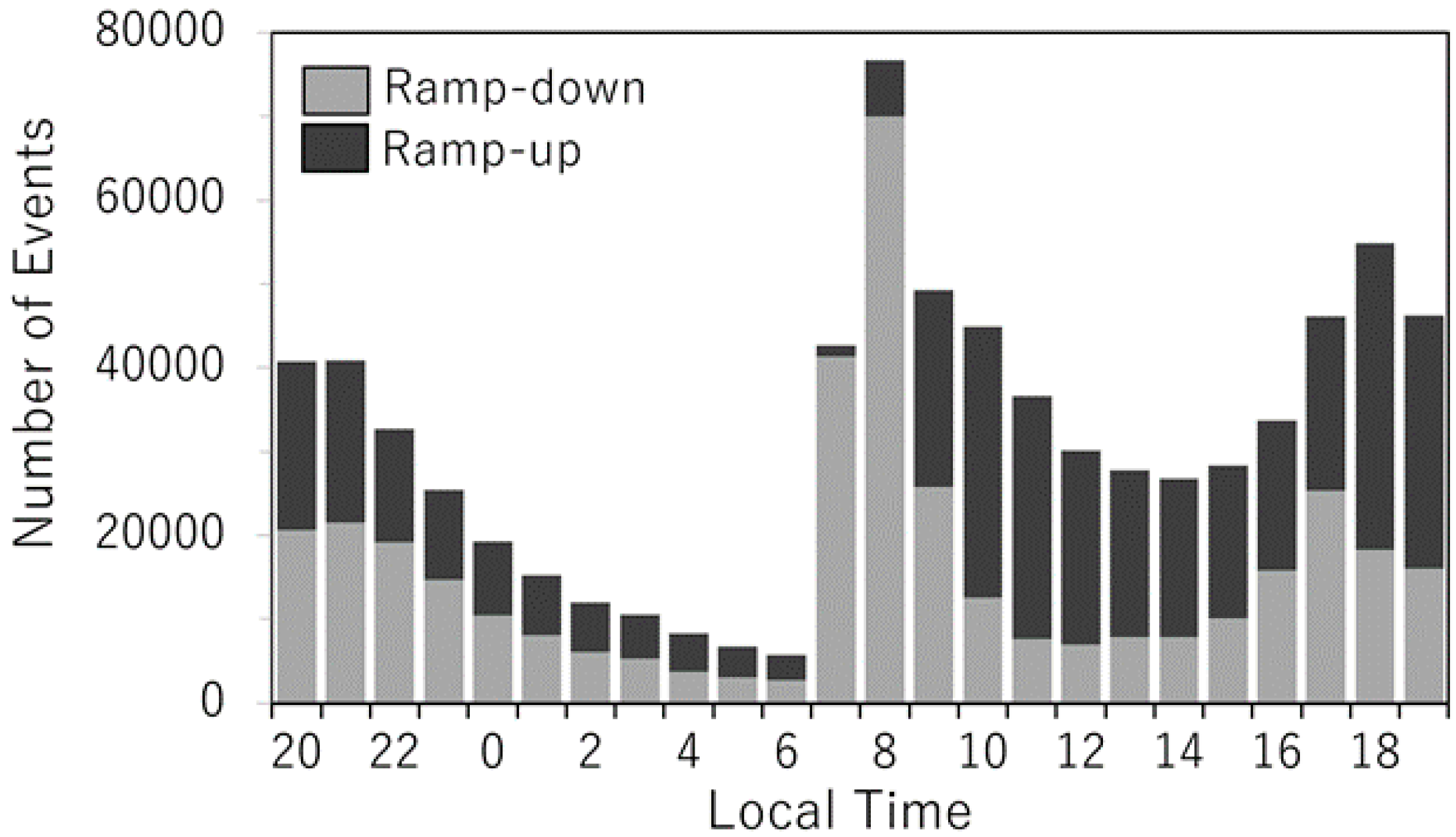
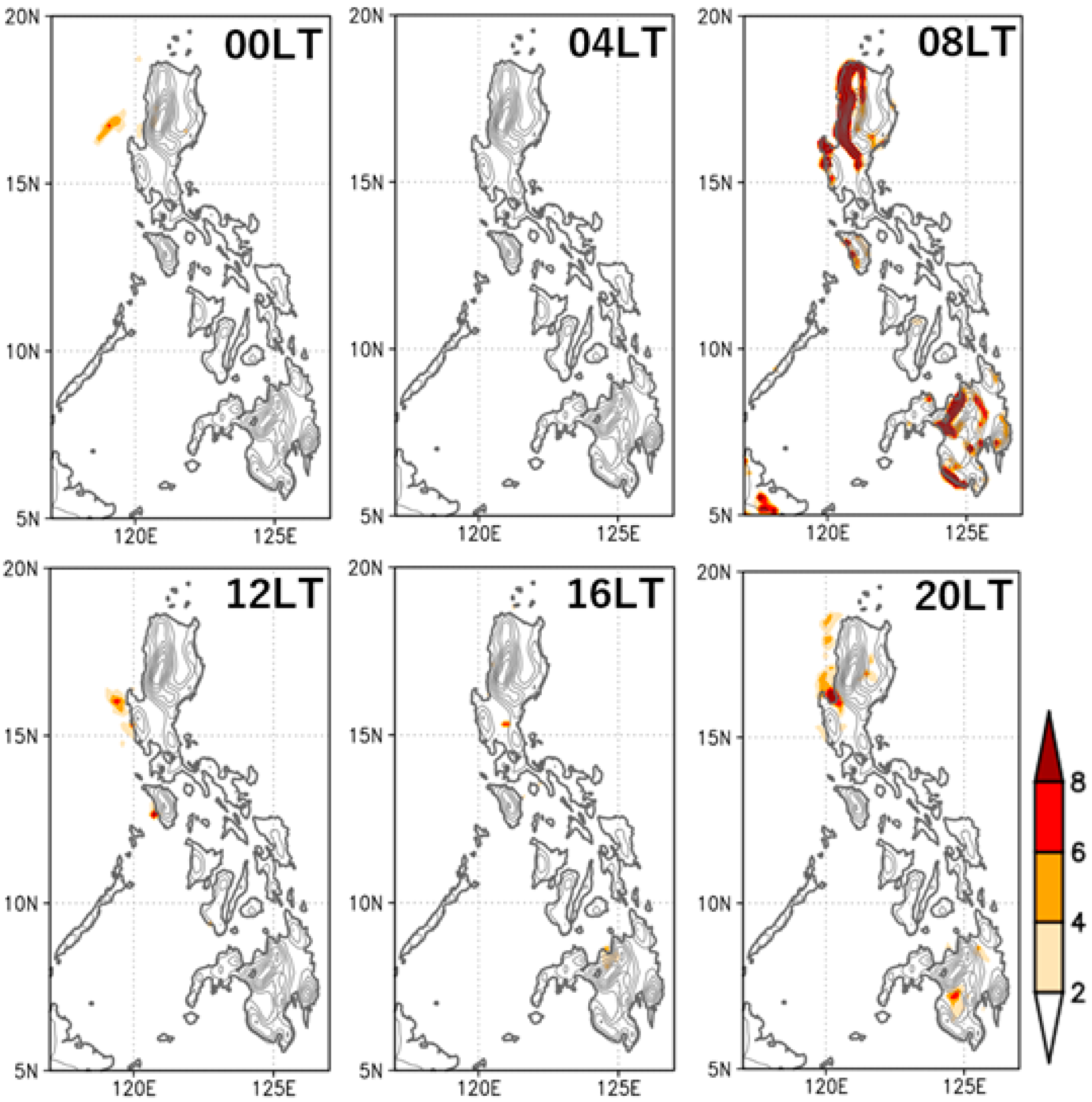
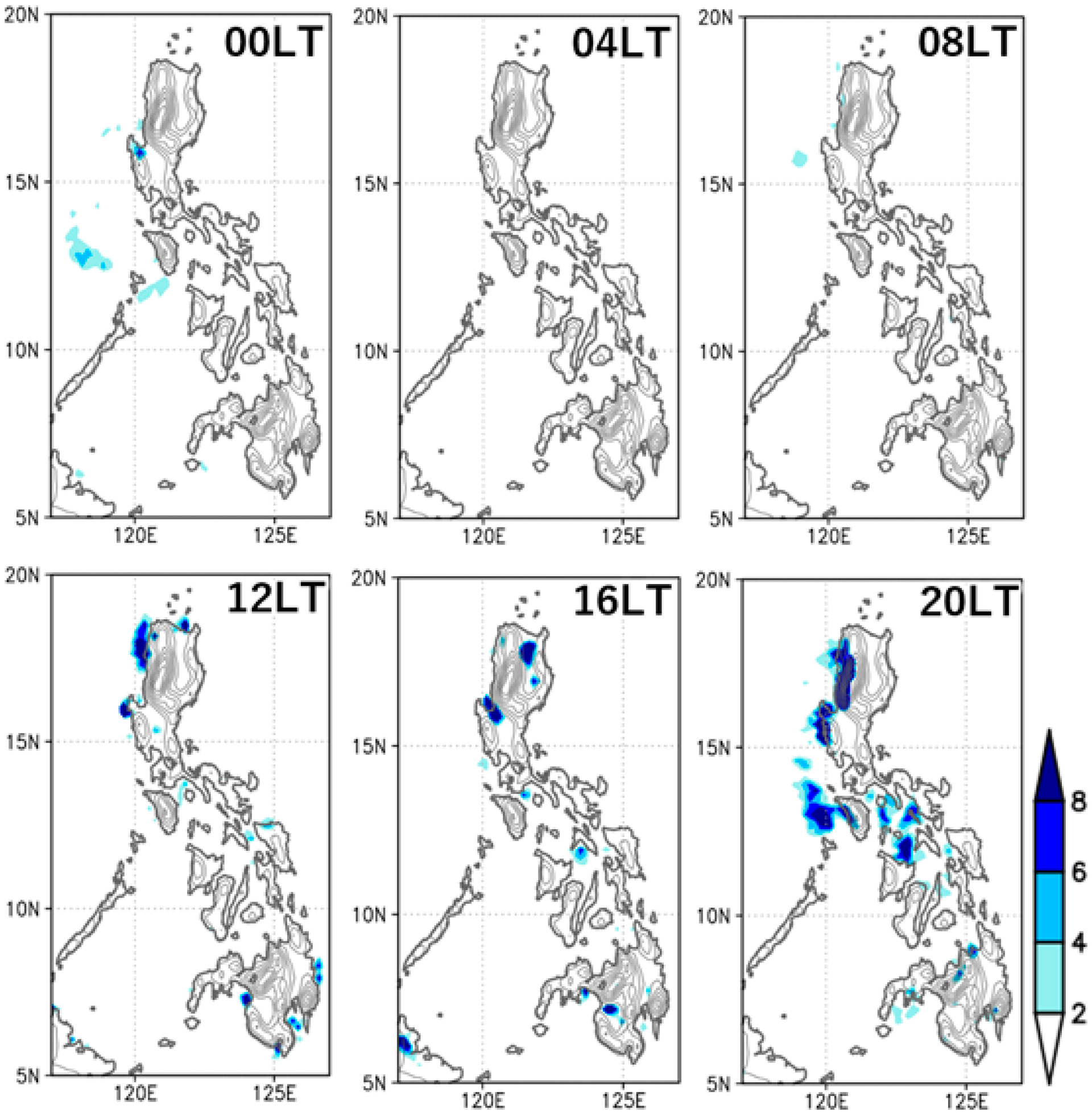
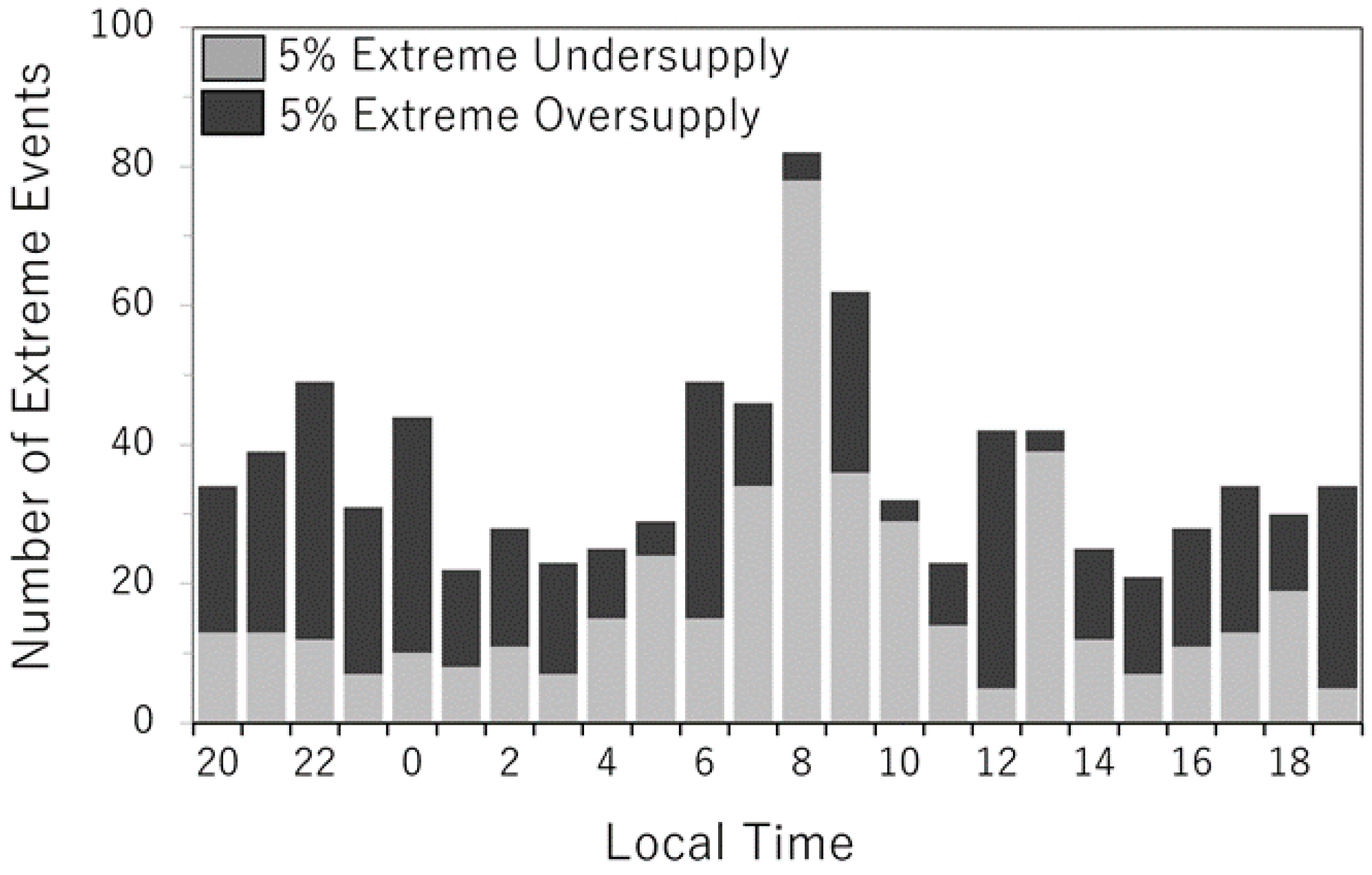
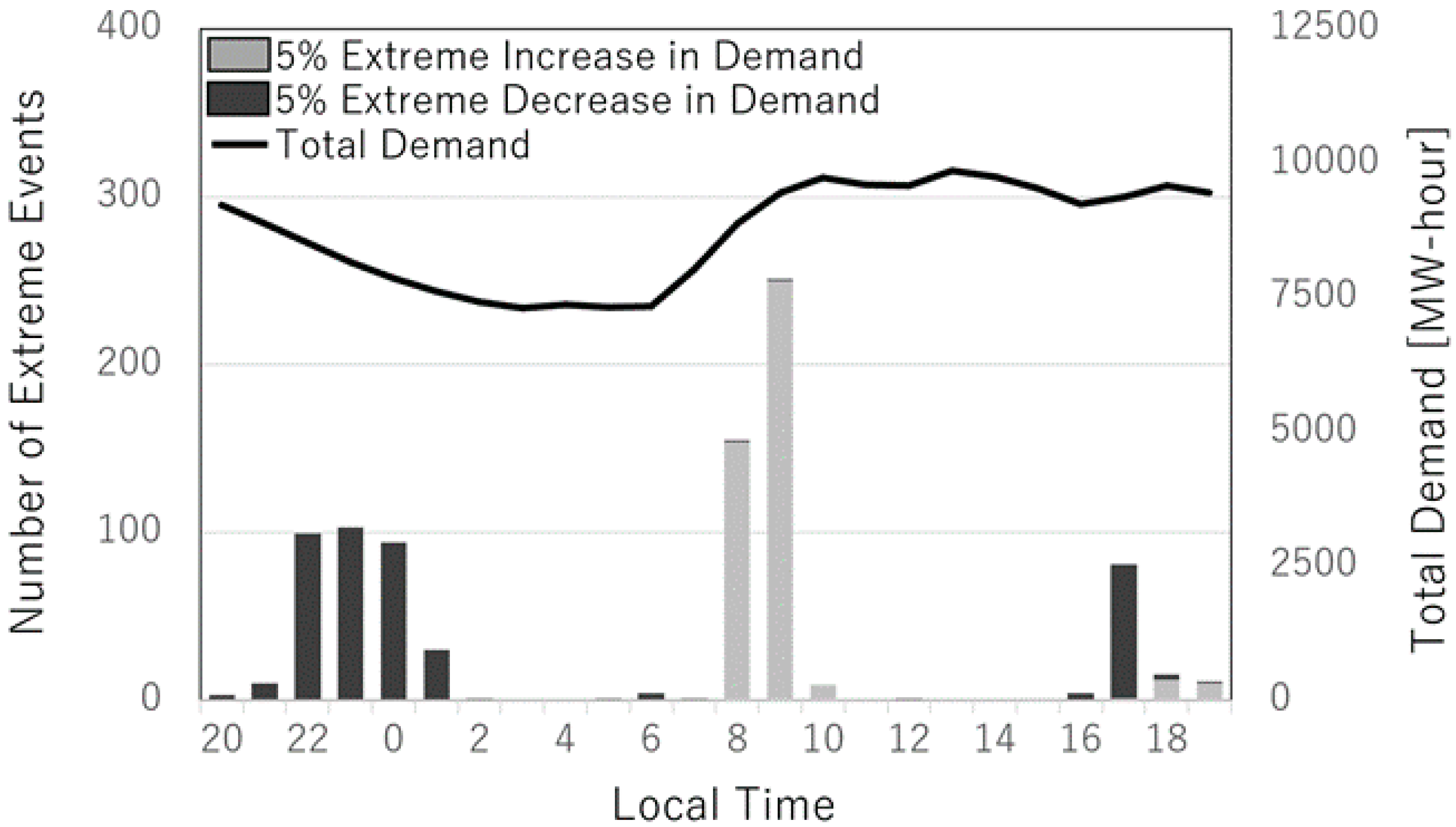
Wind energy development has been limited by concerns associated to the varying features in wind speed which tends to destabilize the power system. This study aims to clarify the variability of winds within a day in the Philippines, specifically the hourly changes of onshore horizontal winds at 100-m hub-heights. A whole one-year experiment using the Weather Research and Forecasting model shows that onshore wind speeds decrease during the transitional hours between land breeze and sea breeze. The decreases in wind speed are most significant over coastal regions with high sloping topography. The extreme decreases in wind speed during morning hours, due to the natural processes, are found to often occur at the same time as the extreme electricity undersupply caused by the morning increase in energy demand. This result warns that the power system stability in the Philippines may become more sensitive to the variability of wind as the share of wind energy generation increases in the future. The findings of this study can contribute to promote sustainability in the operation of existing wind-reliant power systems and planning of future wind energy developments.
Keywords: wind energy; wind variability; system stability; land-sea breeze; topography; wind ramp wind energy; wind variability; system stability; land-sea breeze; topography; wind ramp