Article

Optimal Shape of Non-Linear Partially Wet Annular Fins for Maximum Efficiency

Department of Systems and Naval Mechatronic Engineering, National Cheng Kung University, Tainan 701, Taiwan
*
Author to whom correspondence should be addressed.
Energies 2021, 14(4), 844; https://doi.org/10.3390/en14040844
Submission received: 28 December 2020 / Revised: 29 January 2021 / Accepted: 2 February 2021 / Published: 5 February 2021

Abstract

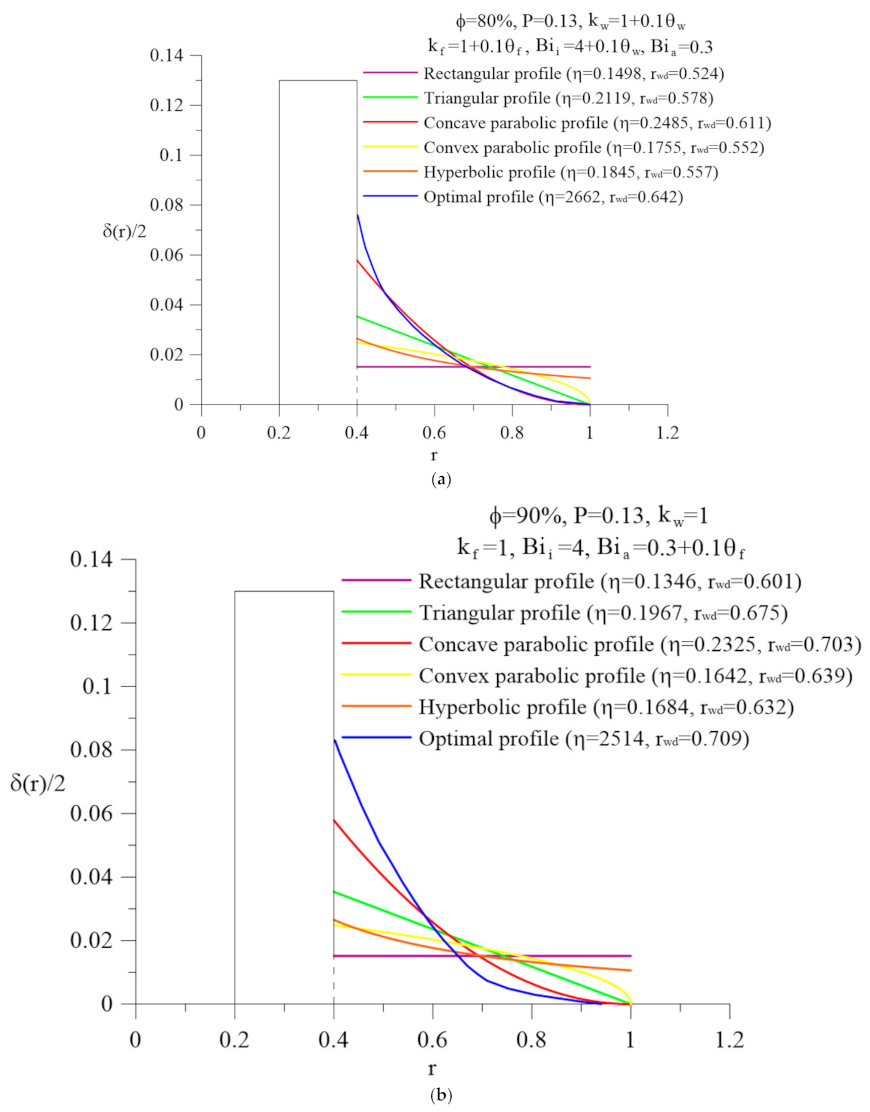
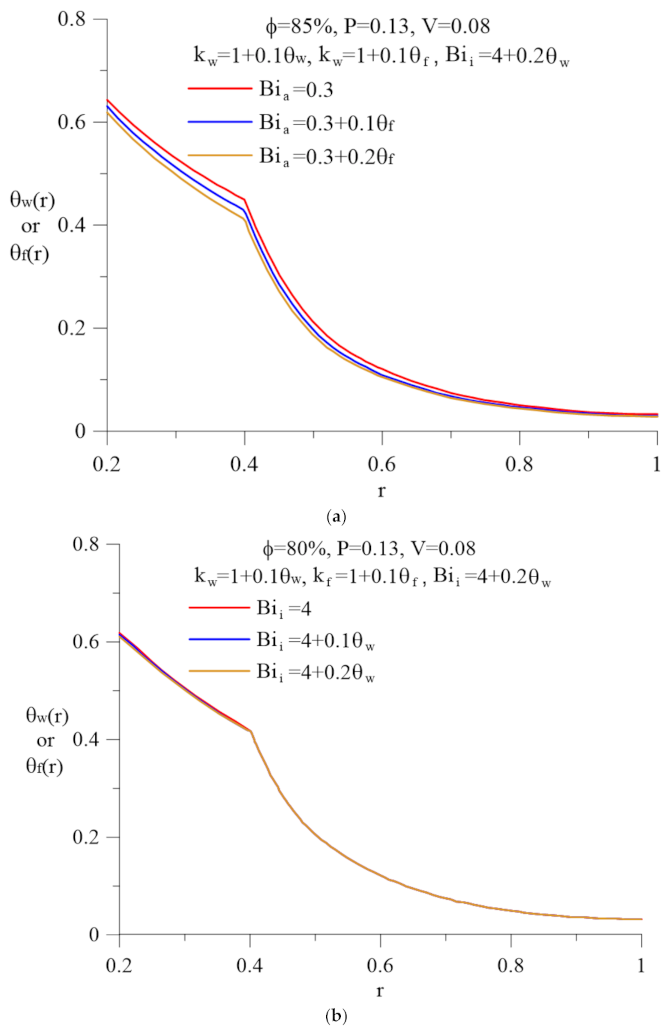
Heat exchangers with annular finned-tube type and partially wetted condition are utilized widely in engineering systems, such as air-conditioning systems and refrigeration systems. In addition, the physical properties of fin materials should be considered as functions of temperature in reality and thus become a non-linear problem. Based on the above two conditions, an optimal partially wet annular fin design problem, with temperature-dependent thermal properties of the fin, to yield optimal fin efficiency was investigated in the present work, which has not been examined previously and it is the novelty of this study. An iterative regularization algorithm using the conjugate gradient method (CGM) is considered as the optimization tool based on the desired fin efficiency under a fixed fin volume constraint. The partially wet annular fin condition can result if the relative humidity of surrounding air is between 80 and 90%. Finally, the optimal fin shape, with the highest computed efficiency among examined fins under identical operational conditions, can be obtained. It is found that when the Biot numbers for ambient air (Bia) and relative humidity (φ) increased, the optimum computed fin efficiency and interfacial radius between wet and dry fin domains (rwd) will be increased, and the estimated optimum fin shape also changed. However, the shape of optimal fin remained approximately unchanged when the Biot numbers for the inner tube (Bii), the thermal conductivities of the tube (kw) and fin (kf) varied. It reveals that Bii, kw and kf have an insignificant influence on the optimal shape of the annular fin in a partially wet condition.
Keywords: partially wet annular fins; non-linear design problem; conjugate gradient method partially wet annular fins; non-linear design problem; conjugate gradient method