Article

Interpretable Forecasting of Energy Demand in the Residential Sector

1
Department of Mechanical Engineering, Hellenic Mediterranean University, 71410 Heraklion, Greece
2
Apintech Ltd., POLIS-21 Group, Spatharikou 5 Str., 4004 Limassol, Cyprus
3
Institute of Computer Science, University of Tartu, Narva mnt 18, 51009 Tartu, Estonia
*
Author to whom correspondence should be addressed.
Energies 2021, 14(20), 6568; https://doi.org/10.3390/en14206568
Submission received: 17 September 2021 / Revised: 26 September 2021 / Accepted: 5 October 2021 / Published: 12 October 2021
(This article belongs to the Special Issue Decision Making in Energy Systems)

Abstract

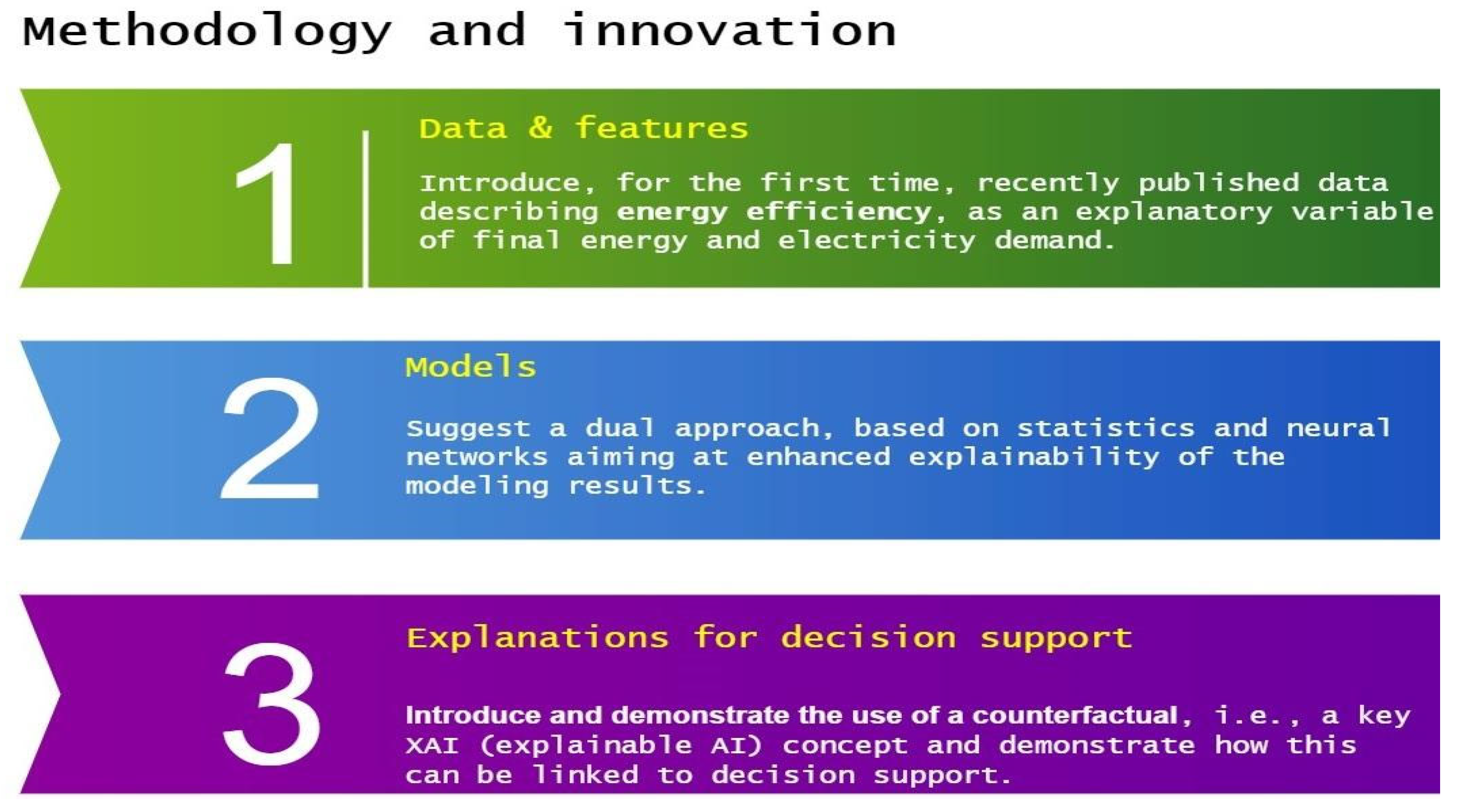
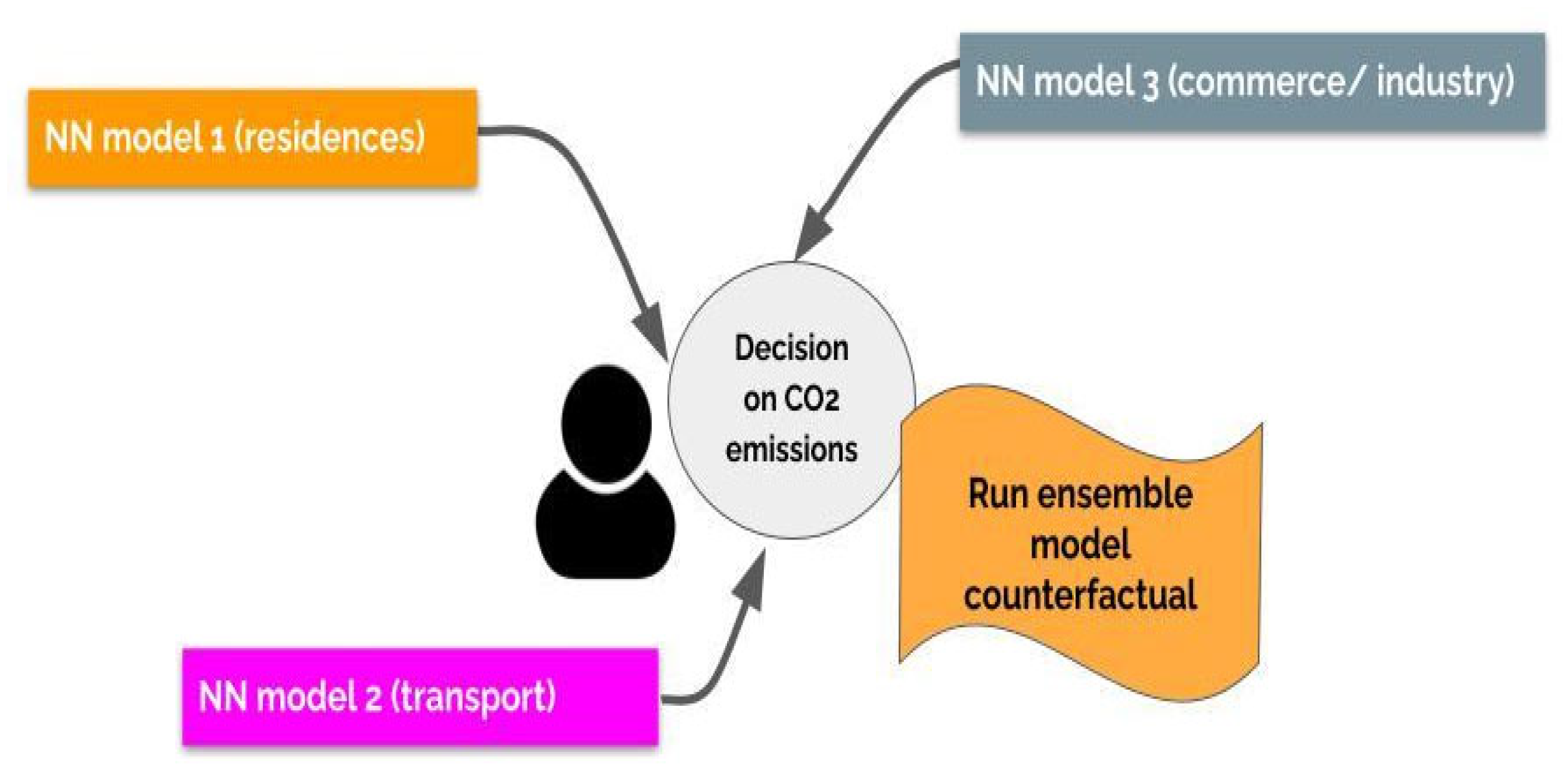
Energy demand forecasting is practiced in several time frames; different explanatory variables are used in each case to serve different decision support mandates. For example, in the short, daily, term building level, forecasting may serve as a performance baseline. On the other end, we have long-term, policy-oriented forecasting exercises. TIMES (an acronym for The Integrated Markal Efom System) allows us to model supply and anticipated technology shifts over a long-term horizon, often extending as far away in time as 2100. Between these two time frames, we also have a mid-term forecasting time frame, that of a few years ahead. Investigations here are aimed at policy support, although in a more mid-term horizon, we address issues such as investment planning and pricing. In this paper, we develop and evaluate statistical and neural network approaches for this mid-term forecasting of final energy and electricity for the residential sector in six EU countries (Germany, the Netherlands, Sweden, Spain, Portugal and Greece). Various possible approaches to model the explanatory variables used are presented, discussed, and assessed as to their suitability. Our end goal extends beyond model accuracy; we also include interpretability and counterfactual concepts and analysis, aiming at the development of a modelling approach that can provide decision support for strategies aimed at influencing energy demand.
Keywords: residential energy demand forecasting; interpretability; counterfactuals; decision support residential energy demand forecasting; interpretability; counterfactuals; decision support