Article

Modification of Energy Parameters in Wood Pellets with the Use of Waste Cooking Oil
Department of Bioenergetics, Food Analysis and Microbiology, Institute of Food Technology and Nutrition, College of Natural Science, Rzeszow University, Ćwiklińskiej 2D, 35-601 Rzeszow, Poland
*
Author to whom correspondence should be addressed.
Energies 2021, 14(20), 6486; https://doi.org/10.3390/en14206486
Submission received: 24 August 2021 / Revised: 14 September 2021 / Accepted: 6 October 2021 / Published: 10 October 2021
(This article belongs to the Special Issue Emerging Renewable Energy Technologies)

Abstract

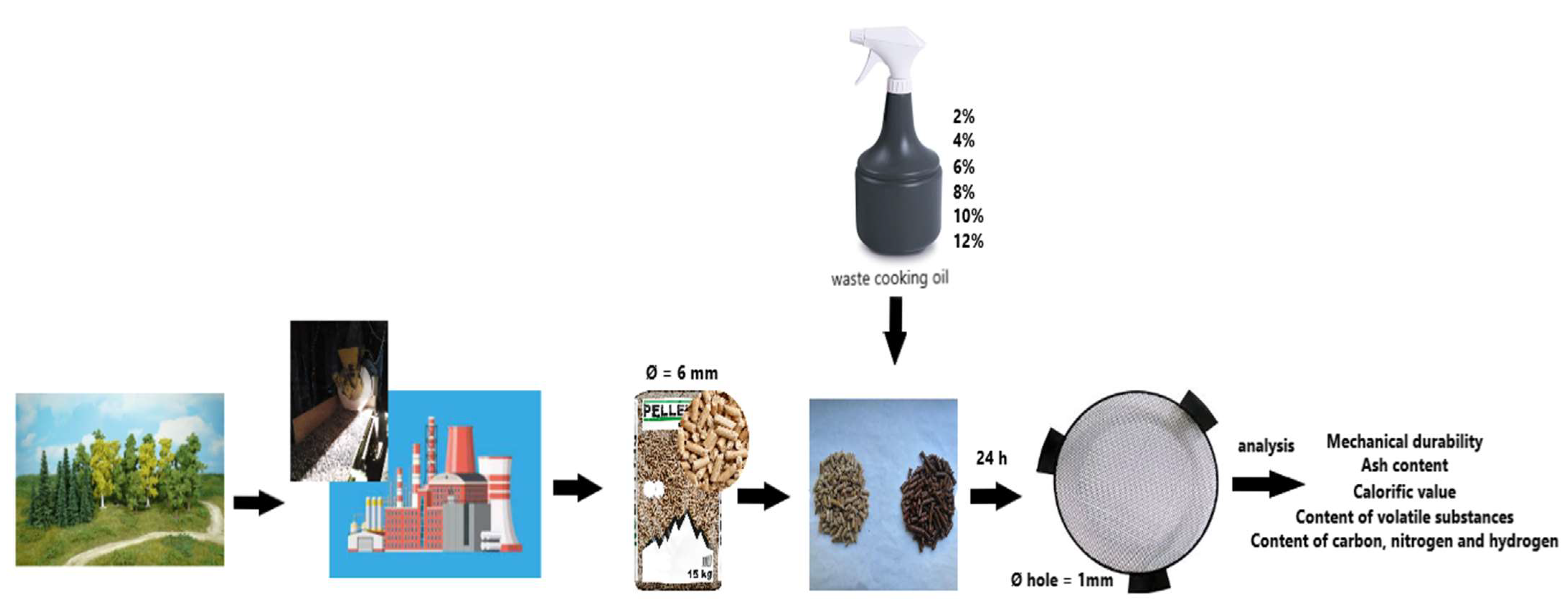
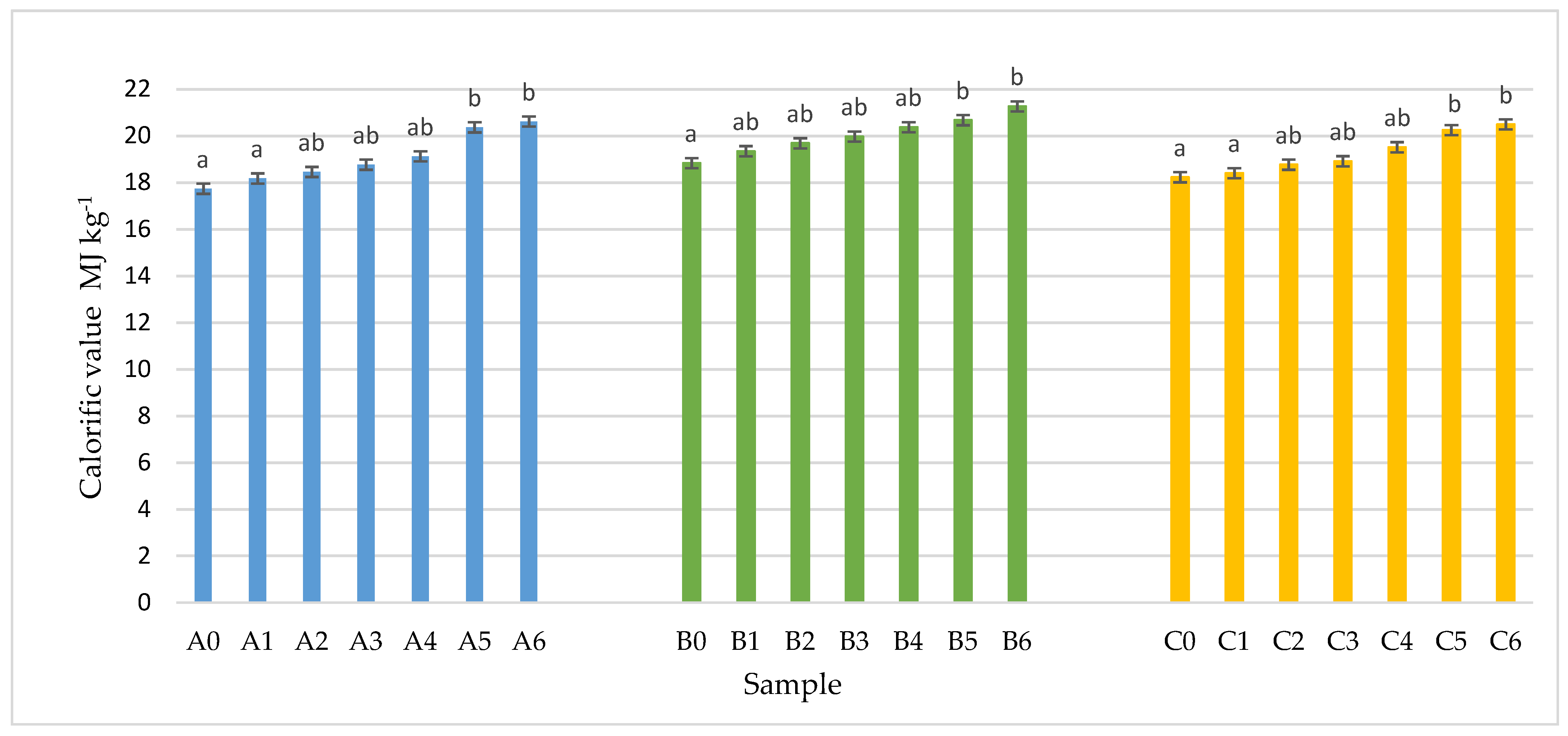
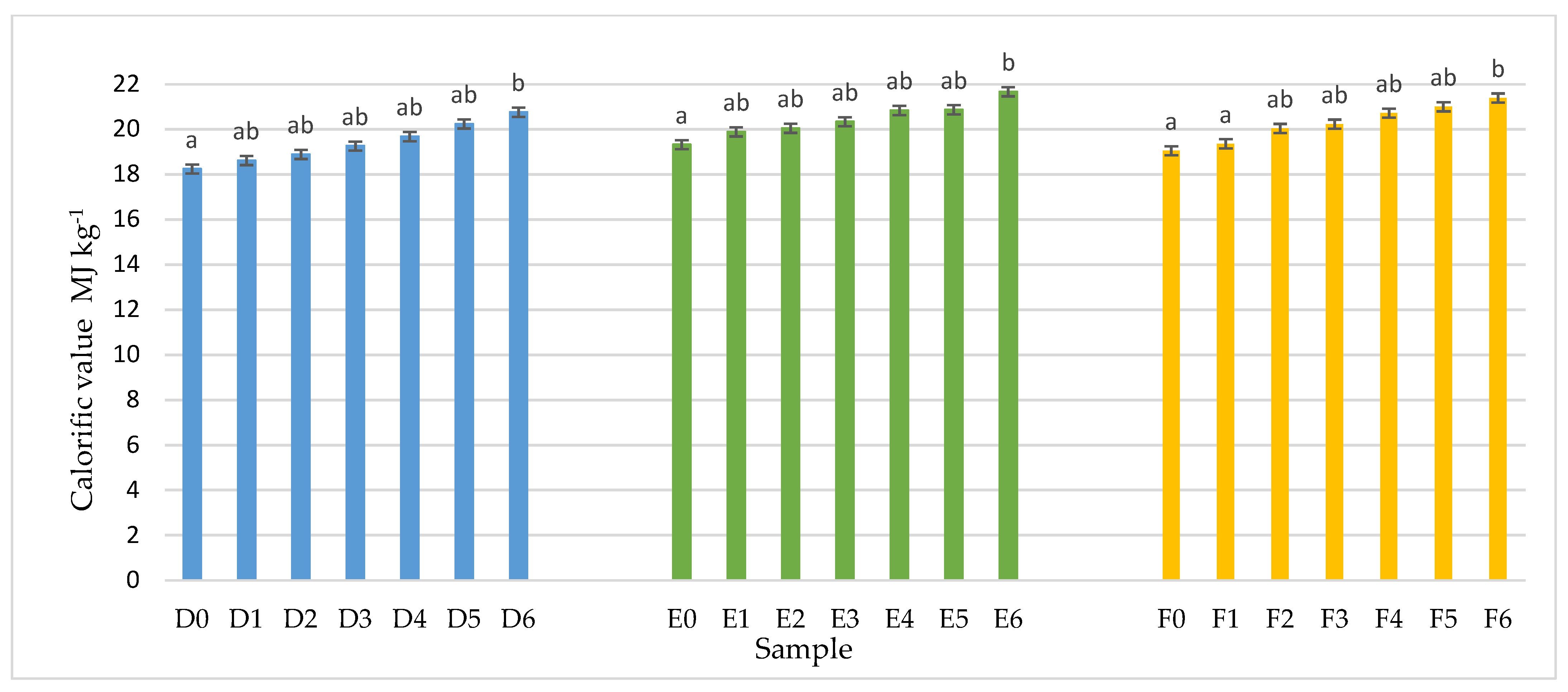
Biomass is one of the most important sources of renewable energy. It is expected that in the coming decades, biomass will play a major role in replacing fossil fuels. The most commonly used biofuels include wood pellet, which is a cost-effective, uniform and easy-to-use material. In view of the growing interest in this type of resource, novel methods are being investigated to improve the quality of pellet. This article presents the results of a laboratory study focusing on wood pellets refined with waste sunflower cooking oil applied by spraying. In this work, authors attempted to modify the energy parameters of wood pellets with the use of waste cooking oil. Addition of waste cooking oil, applied at the rates of 2%, 4%, 6%, 8%, 10% and 12% relative to the weight of pellets, increased the calorific value of the pellets without decreasing their durability. The highest dose of the modifier (12%) on average led to a 12–16% increase in calorific value. In each case, the addition of sunflower oil resulted in decreased contents of ash in the pellets; on average a decrease of 16–38% was observed in the samples treated with the highest dose of the modifier. The treatment led to a higher content of elements affecting the heating value, i.e., carbon and hydrogen, which on average increased by 7.5–12%, and 7.0–10.0%, respectively. The presented method seems to be a promising way of increasing the calorific value of pellets. Further research on refining the method and the possibility of using it in industry is necessary.
Keywords: wood pellets; calorific value; carbon; ash; volatile substances; waste cooking oil wood pellets; calorific value; carbon; ash; volatile substances; waste cooking oil