Article

An Adaptive Early Fault Detection Model of Induced Draft Fans Based on Multivariate State Estimation Technique
1
Inner Mongolia Power Research Institute, Hohhot 010020, China
2
School of Control and Computer Engineering, North China Electric Power University, Beijing 102206, China
3
Key Laboratory of Power Station Energy Transfer Conversion and System, North China Electric Power University, Beijing 102206, China
*
Author to whom correspondence should be addressed.
Energies 2021, 14(16), 4787; https://doi.org/10.3390/en14164787
Submission received: 4 July 2021 / Revised: 27 July 2021 / Accepted: 3 August 2021 / Published: 6 August 2021
(This article belongs to the Section K: State-of-the-Art Energy Related Technologies)

Abstract

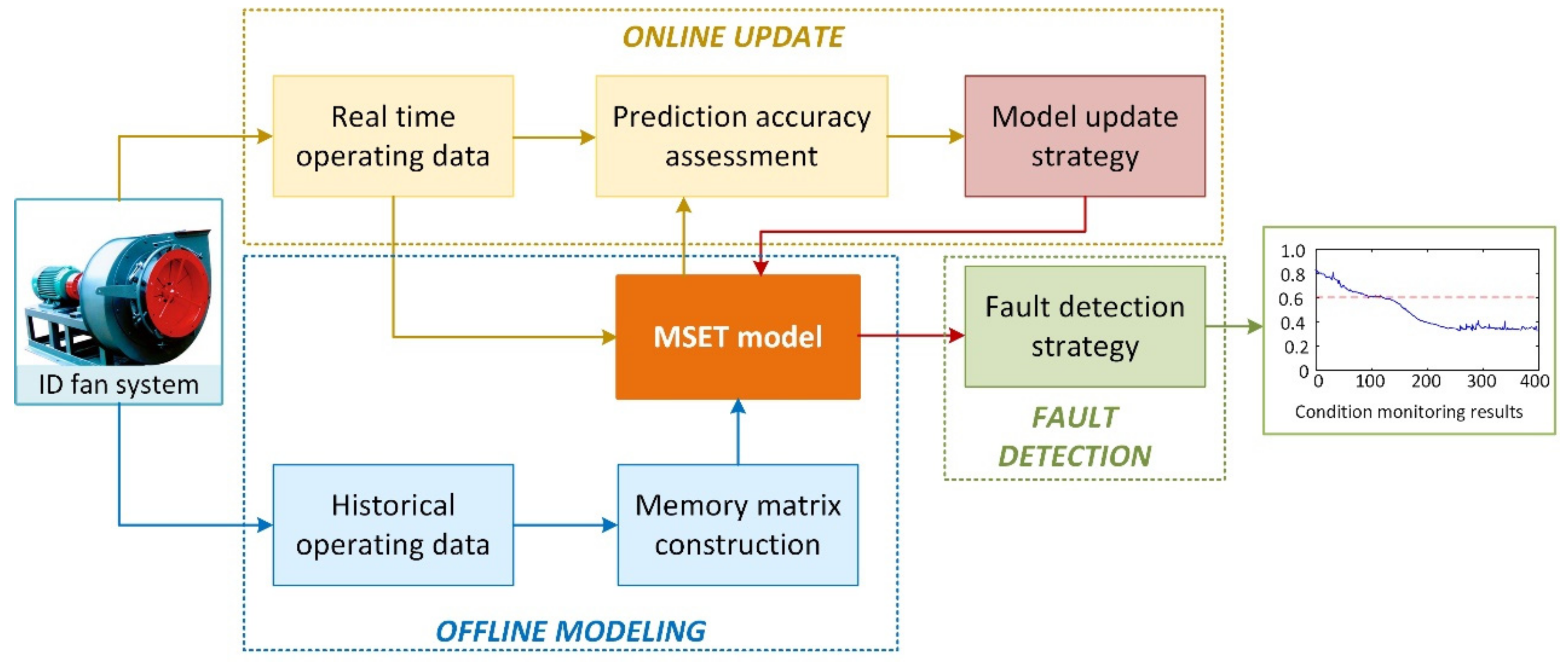
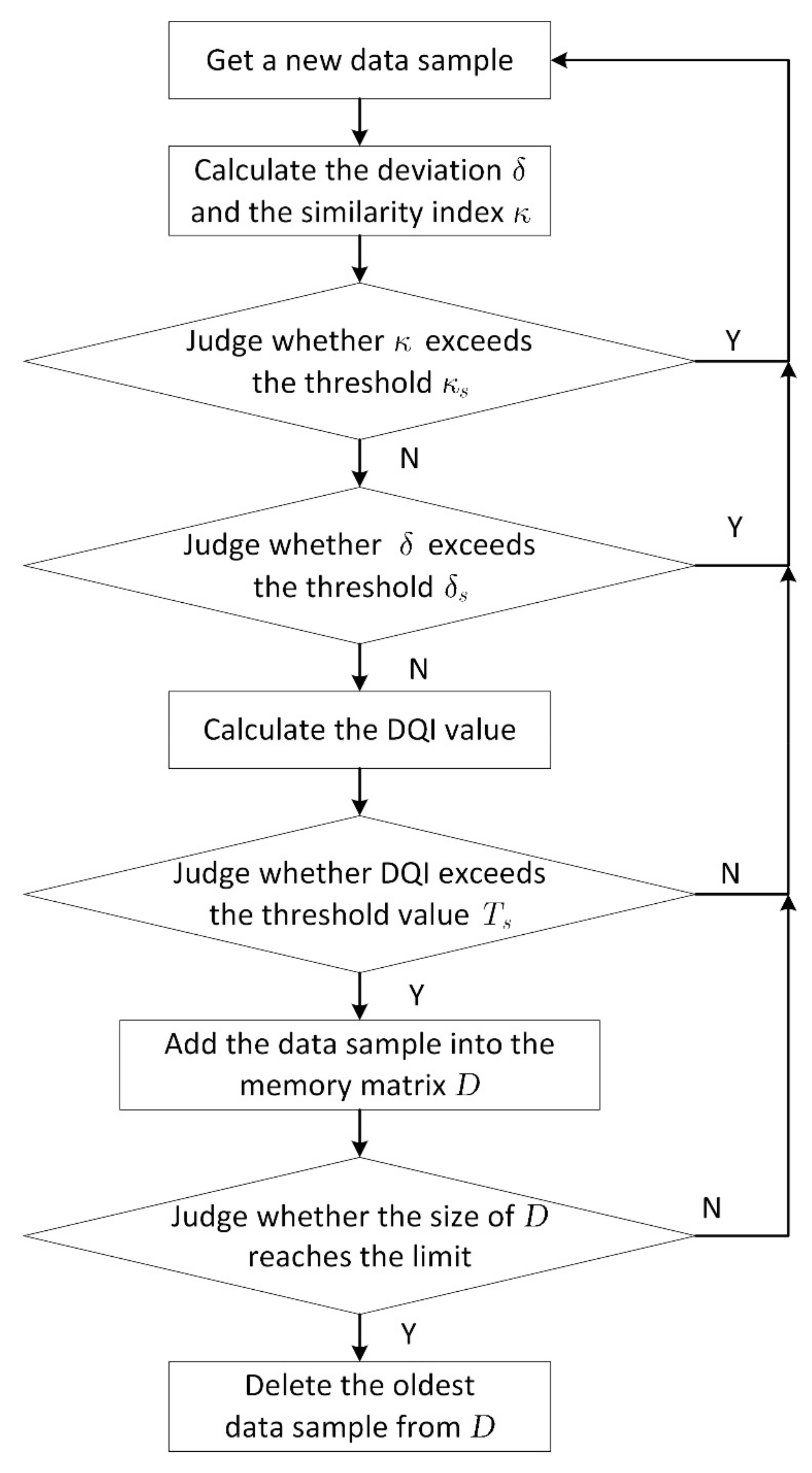
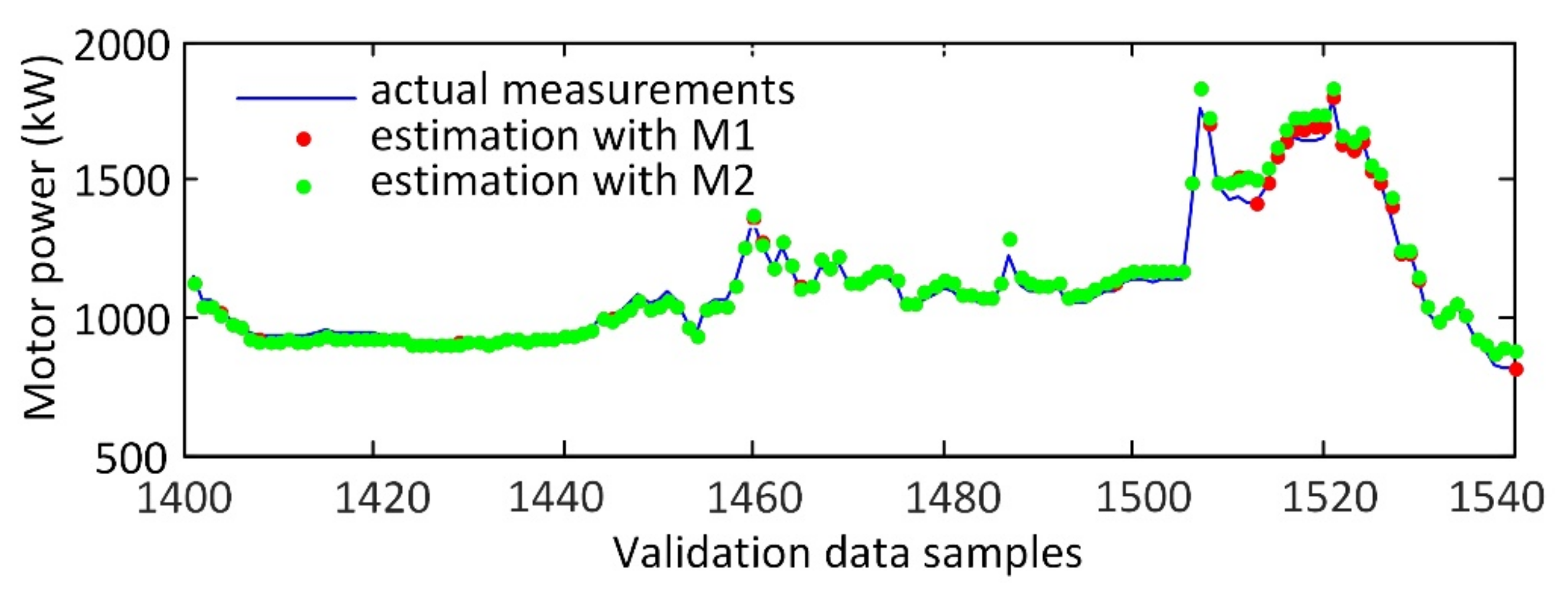
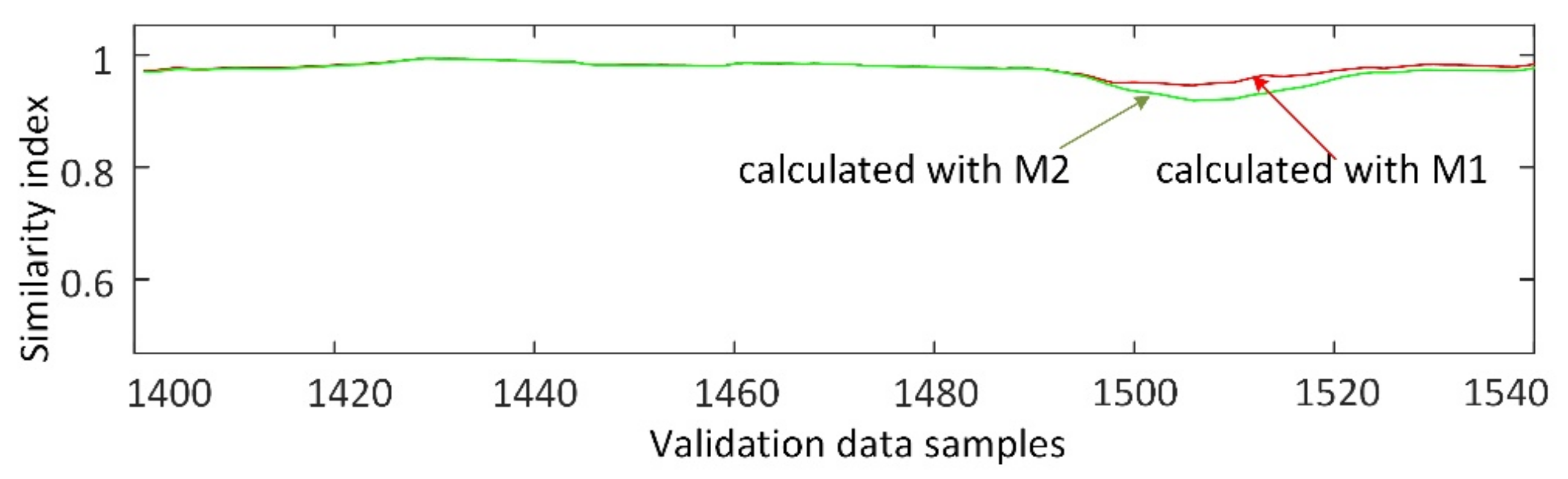
The induced draft (ID) fan is an important piece of auxiliary equipment in coal-fired power plants. Early fault detection of the ID fan can provide predictive maintenance and reduce unscheduled shutdowns, thus improving the reliability of the power generation. In this study, an adaptive model was developed to achieve the early fault detection of ID fans. First, a non-parametric monitoring model was constructed to describe the normal operating characteristics with the multivariate state estimation technique (MSET). A similarity index representing operation status was defined according to the prediction deviations to produce warnings of early faults. To deal with the model accuracy degradation because of variant condition operation of the ID fan, an adaptive strategy was proposed by using the samples with a high data quality index (DQI) to manage the memory matrix and update the MSET model, thereby improving the fault detection results. The proposed method was applied to a 300 MW coal-fired power plant to achieve the early fault detection of an ID fan. In addition, fault detection by using the model without an update was also compared. Results show that the update strategy can greatly improve the MSET model accuracy when predicting normal operations of the ID fan; accordingly, the fault can be detected more than 4 h earlier by using the strategy with the adaptive update when compared to the model without an update.
Keywords: fault detection; induced draft fan; multivariate state estimation technique; model update; coal-fired power plant fault detection; induced draft fan; multivariate state estimation technique; model update; coal-fired power plant