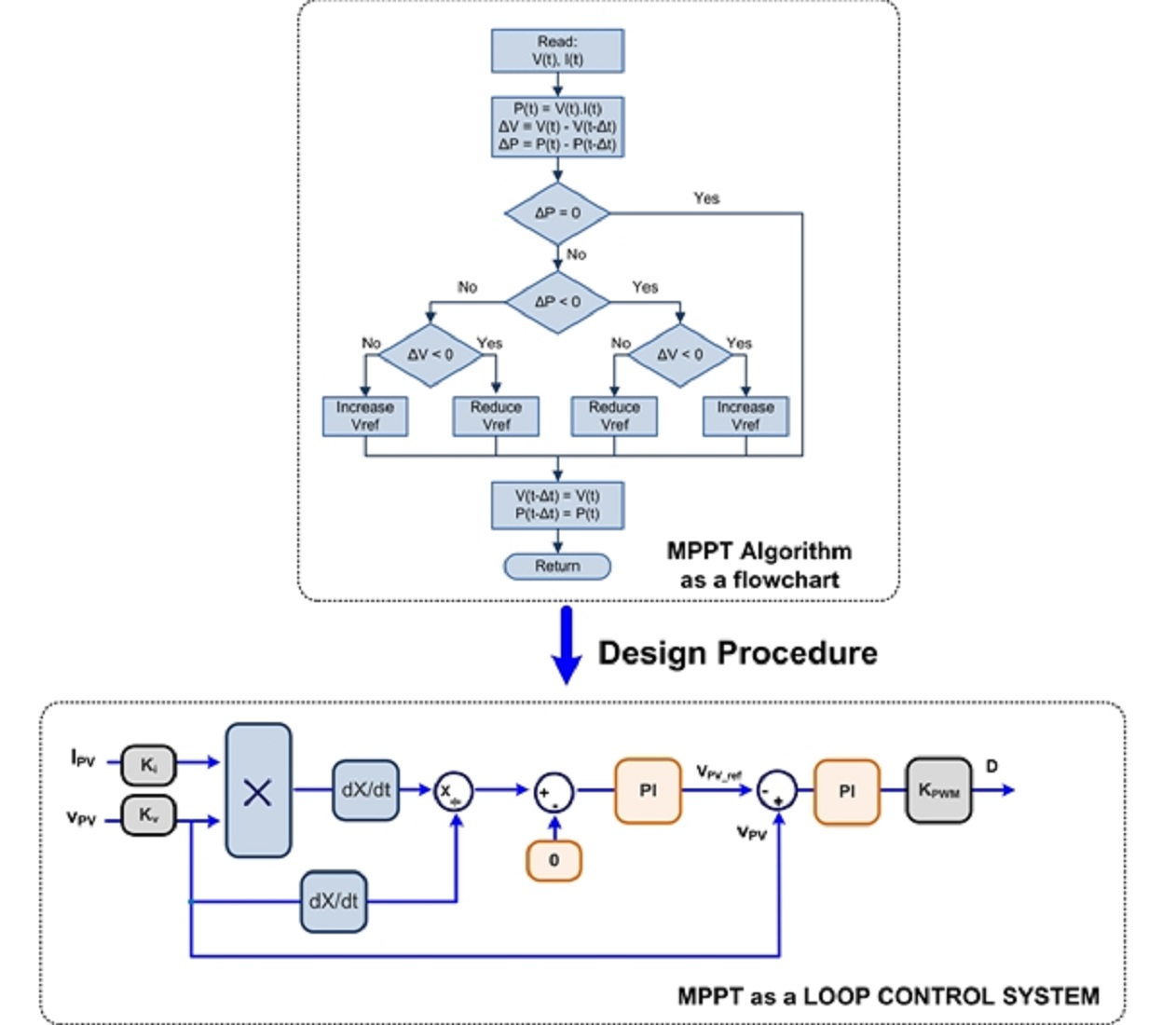
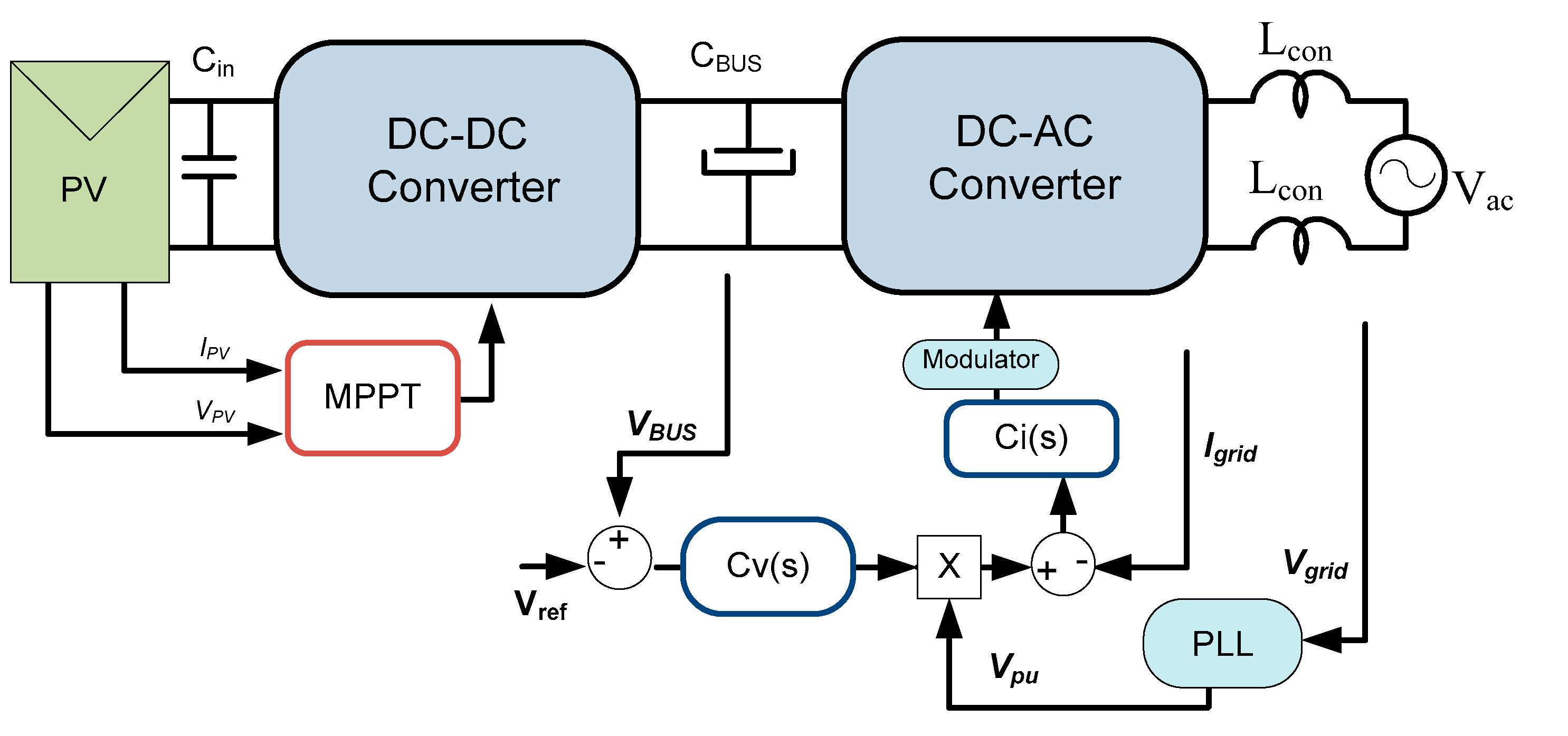
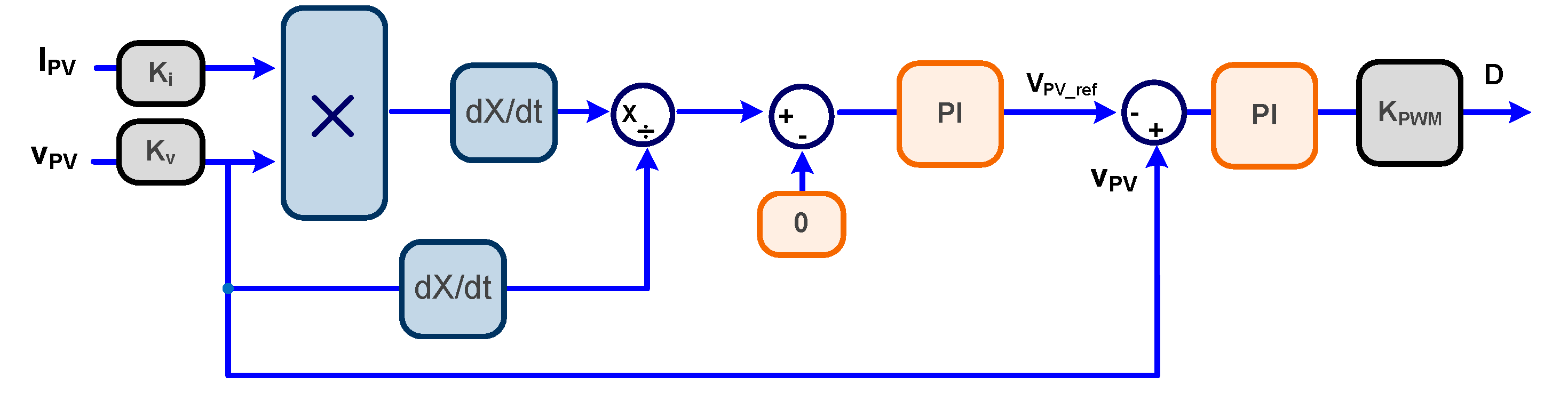
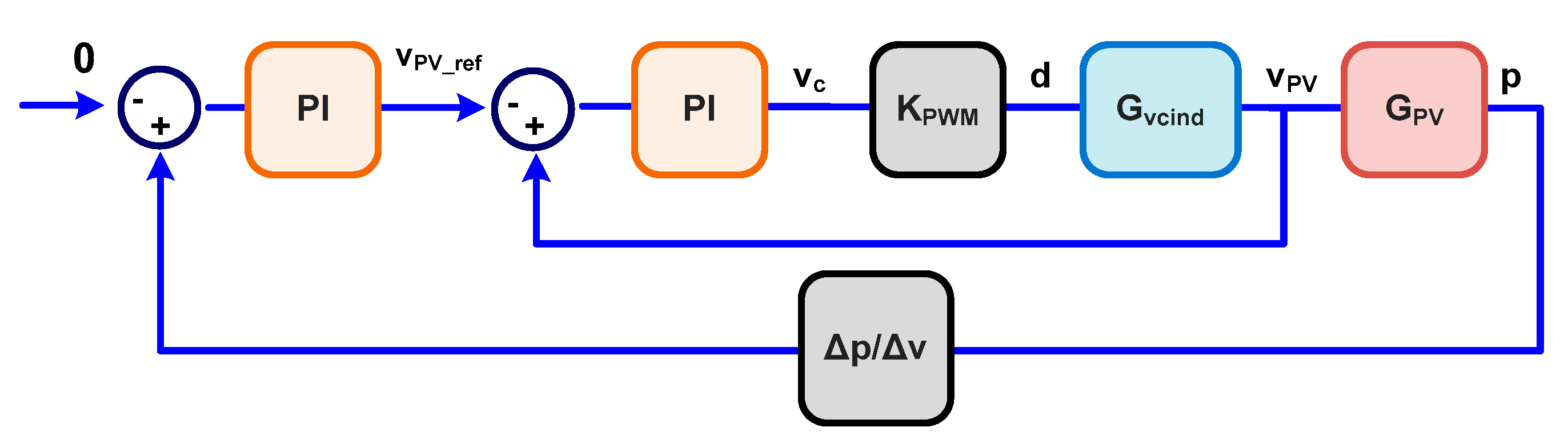
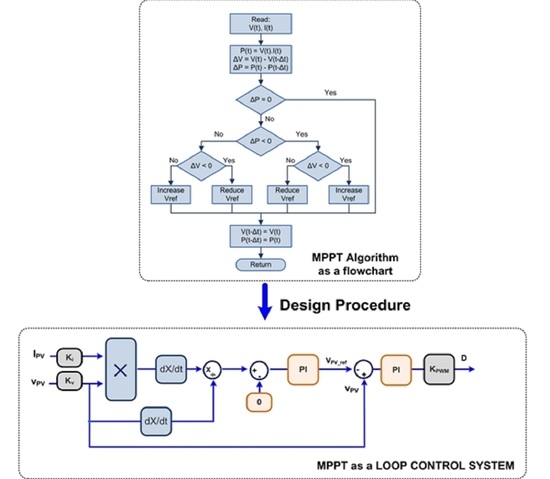
Design Procedure to Convert a Maximum Power Point Tracking Algorithm into a Loop Control System
 , ,
, , Abstract
Share and Cite
Brito, M.A.G.d.; Prado, V.A.; Batista, E.A.; Alves, M.G.; Canesin, C.A. Design Procedure to Convert a Maximum Power Point Tracking Algorithm into a Loop Control System. Energies 2021, 14, 4550. https://doi.org/10.3390/en14154550
Brito MAGd, Prado VA, Batista EA, Alves MG, Canesin CA. Design Procedure to Convert a Maximum Power Point Tracking Algorithm into a Loop Control System. Energies. 2021; 14(15):4550. https://doi.org/10.3390/en14154550
Chicago/Turabian StyleBrito, Moacyr A. G. de, Victor A. Prado, Edson A. Batista, Marcos G. Alves, and Carlos A. Canesin. 2021. "Design Procedure to Convert a Maximum Power Point Tracking Algorithm into a Loop Control System" Energies 14, no. 15: 4550. https://doi.org/10.3390/en14154550
APA StyleBrito, M. A. G. d., Prado, V. A., Batista, E. A., Alves, M. G., & Canesin, C. A. (2021). Design Procedure to Convert a Maximum Power Point Tracking Algorithm into a Loop Control System. Energies, 14(15), 4550. https://doi.org/10.3390/en14154550