Article

Energy Community Flexibility Solutions to Improve Users’ Wellbeing
1
Department of Electrical and Computer Engineering, NOVA School of Science and Technology (FCT NOVA), 2829-516 Caparica, Portugal
2
Center of Technology and Systems (CTS)—UNINOVA, 2829-516 Caparica, Portugal
*
Author to whom correspondence should be addressed.
Energies 2021, 14(12), 3403; https://doi.org/10.3390/en14123403
Submission received: 20 April 2021 / Revised: 31 May 2021 / Accepted: 4 June 2021 / Published: 9 June 2021

Abstract

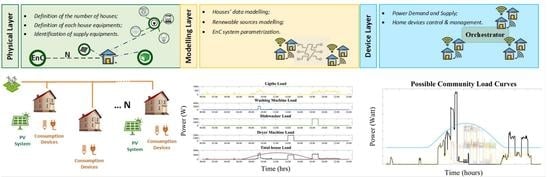
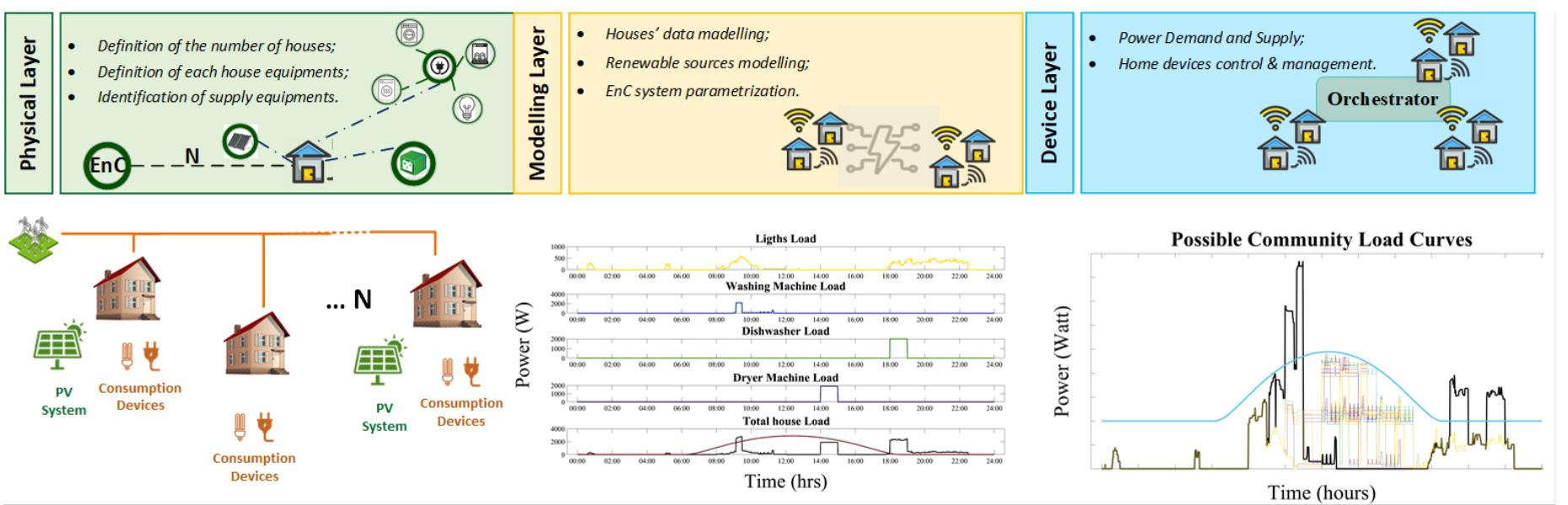
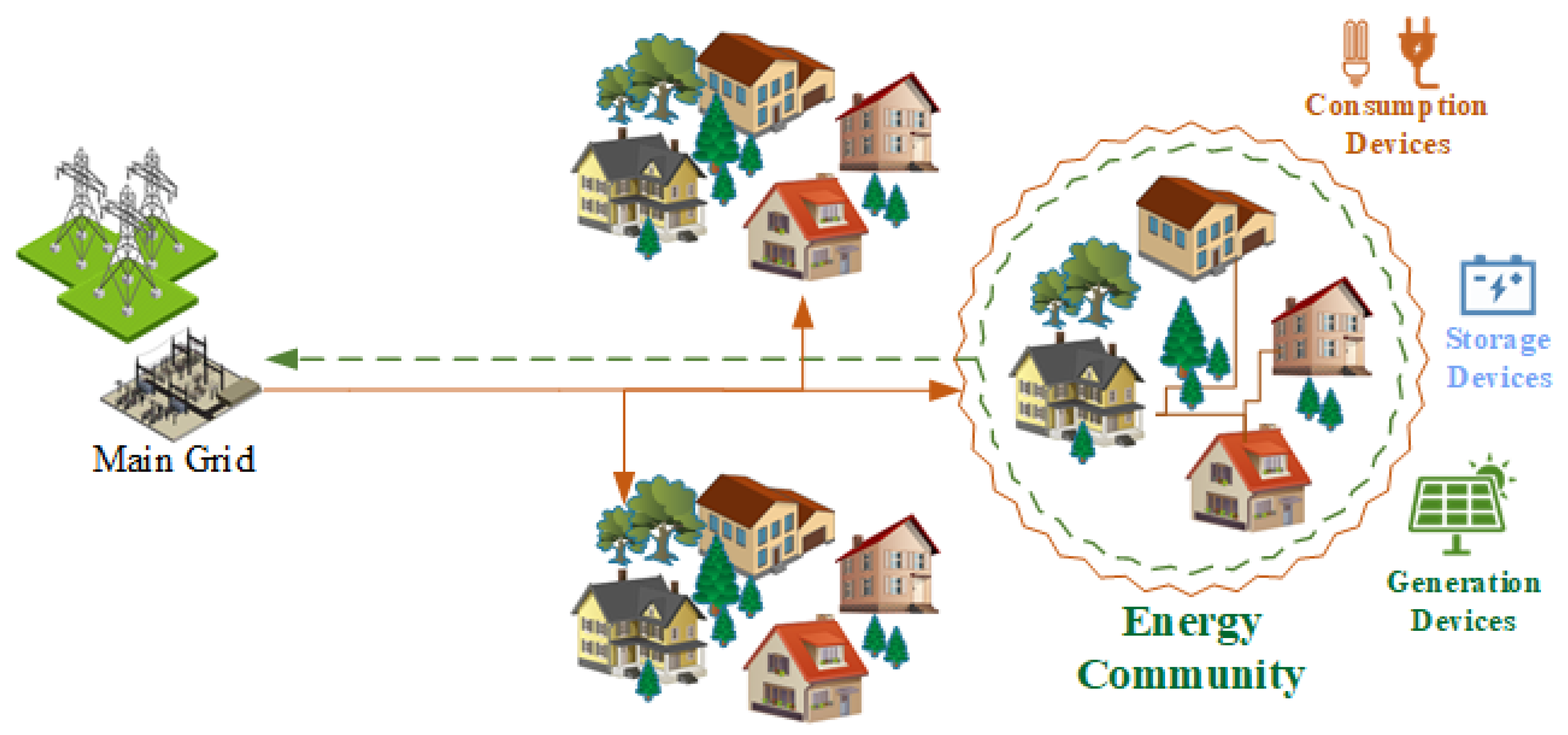
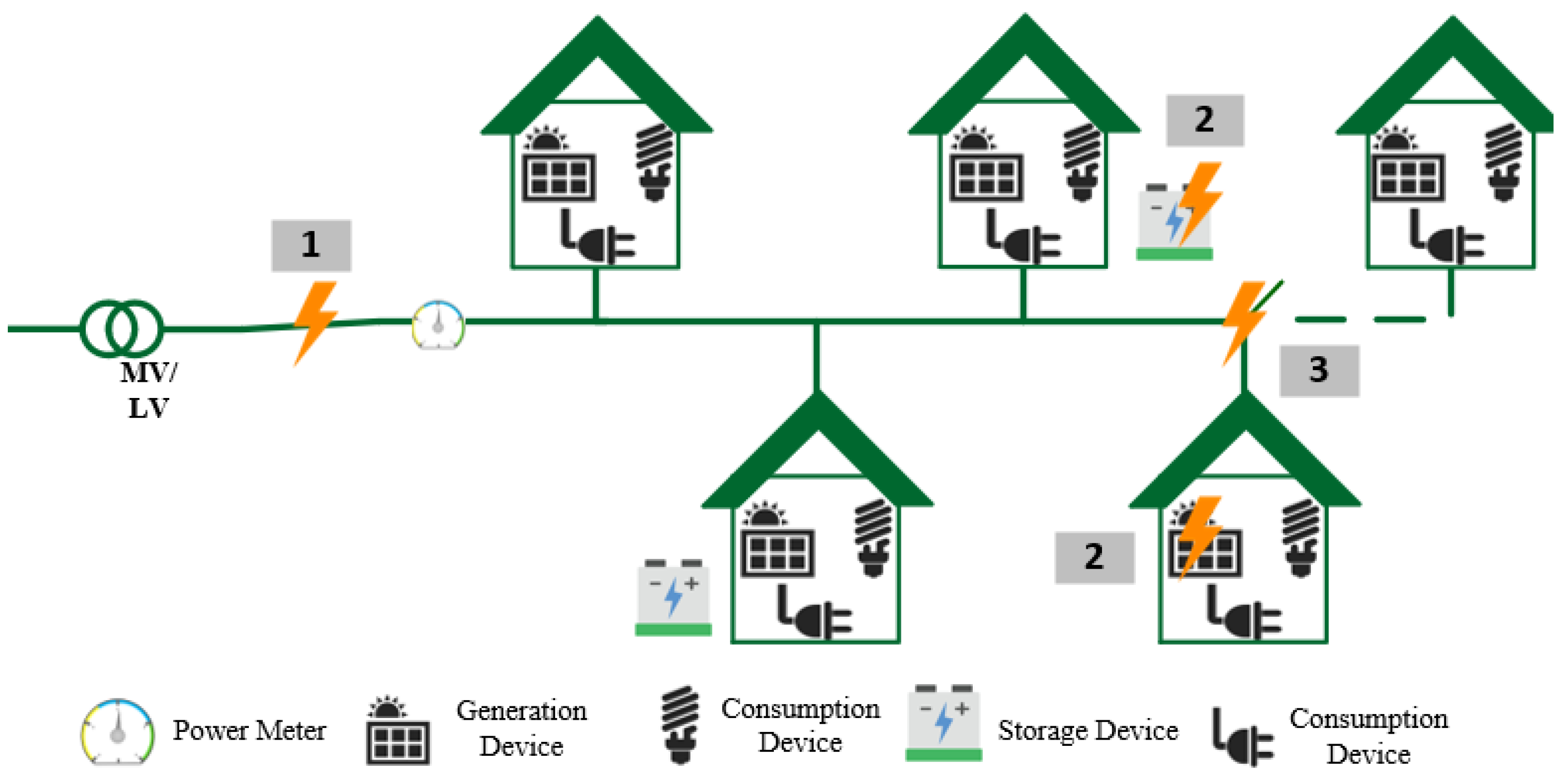
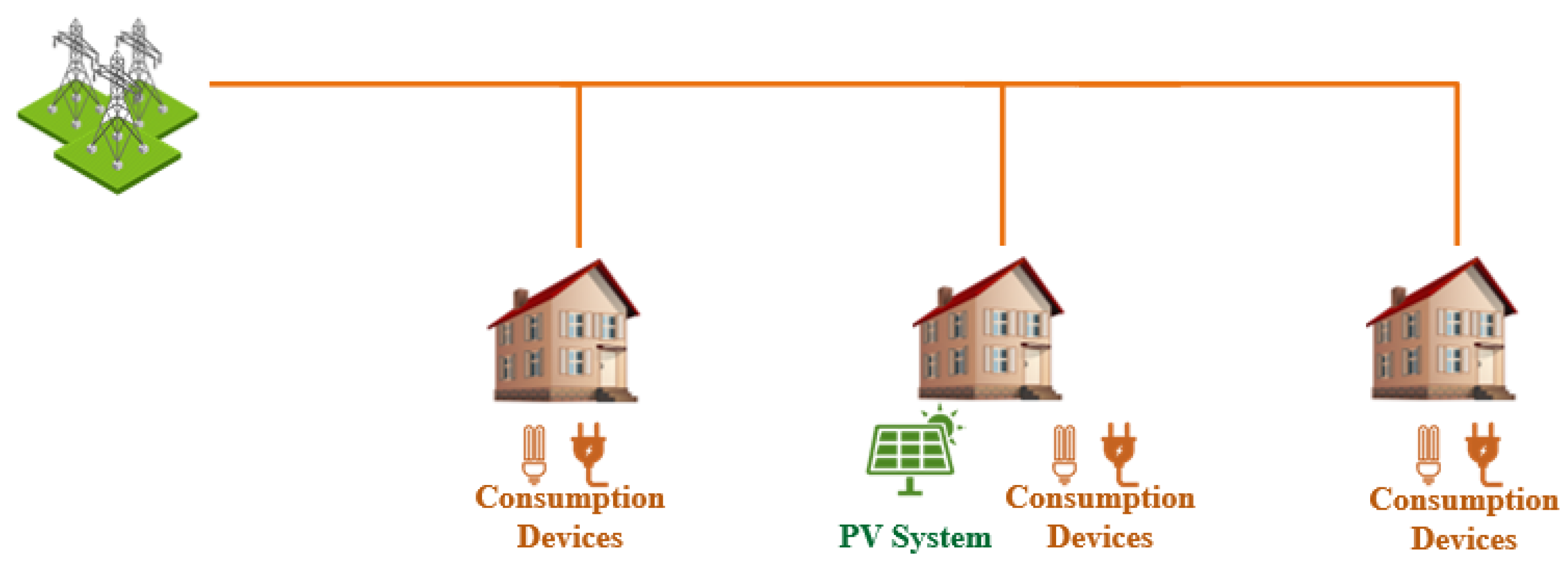
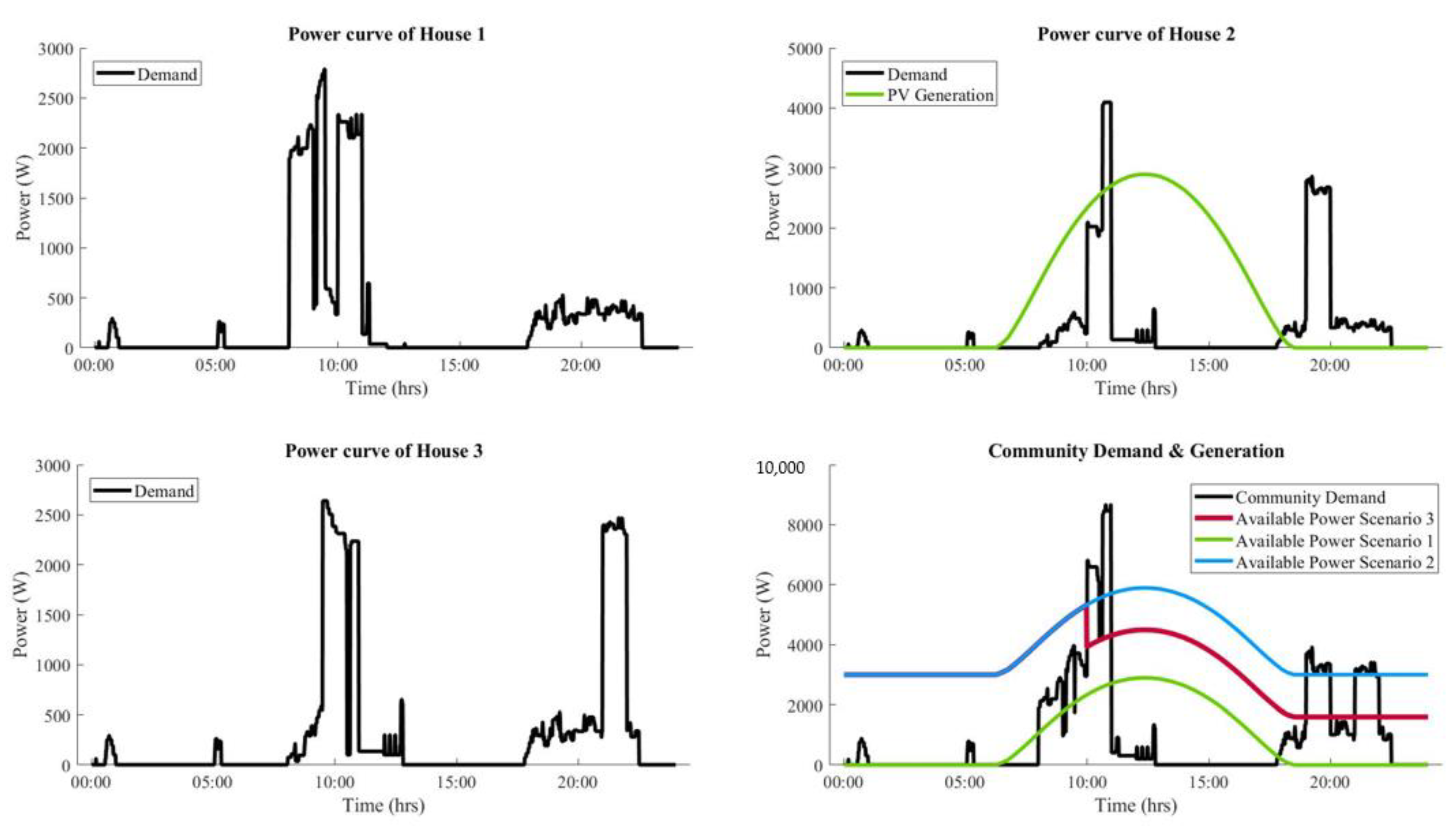
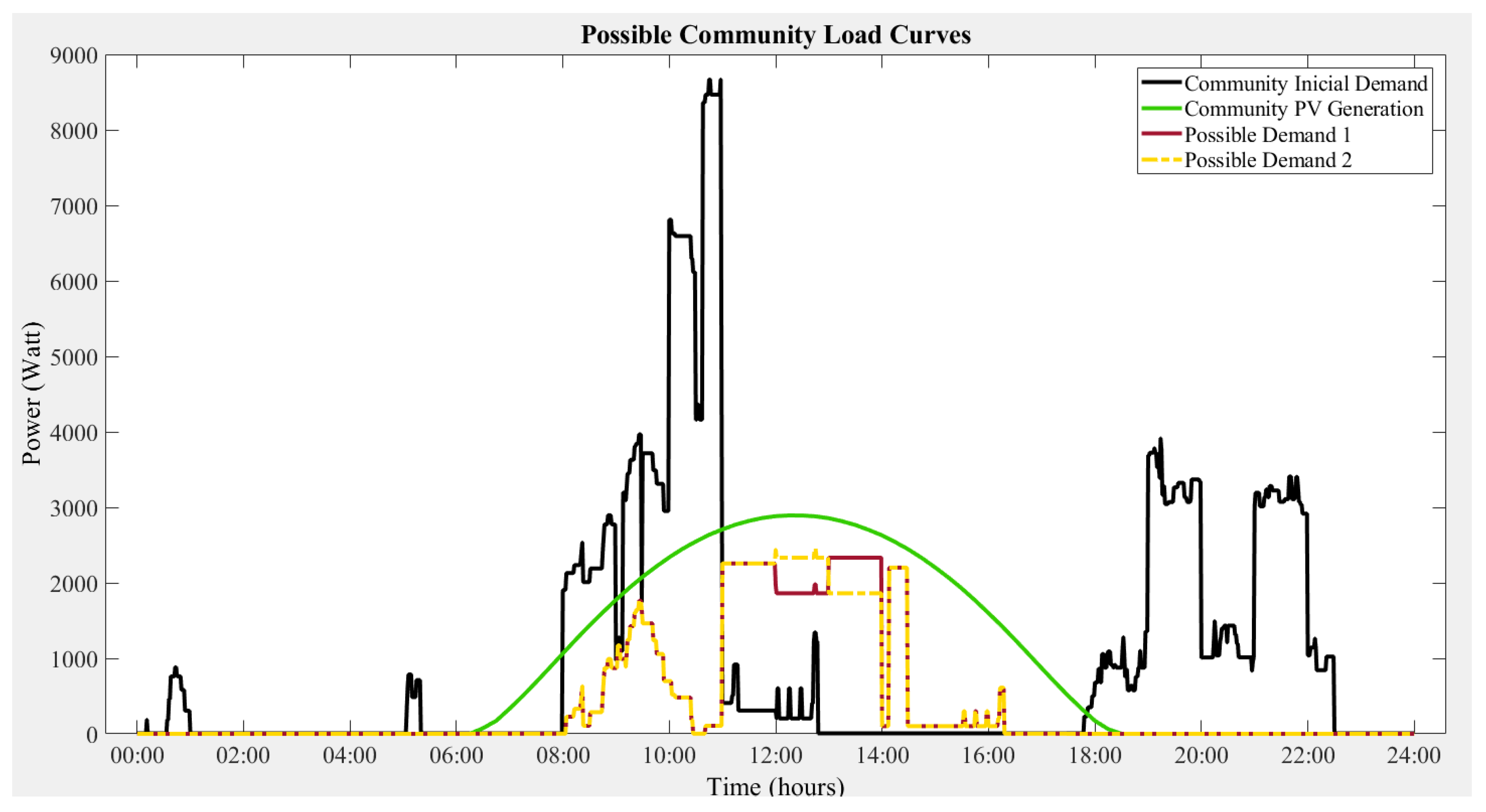
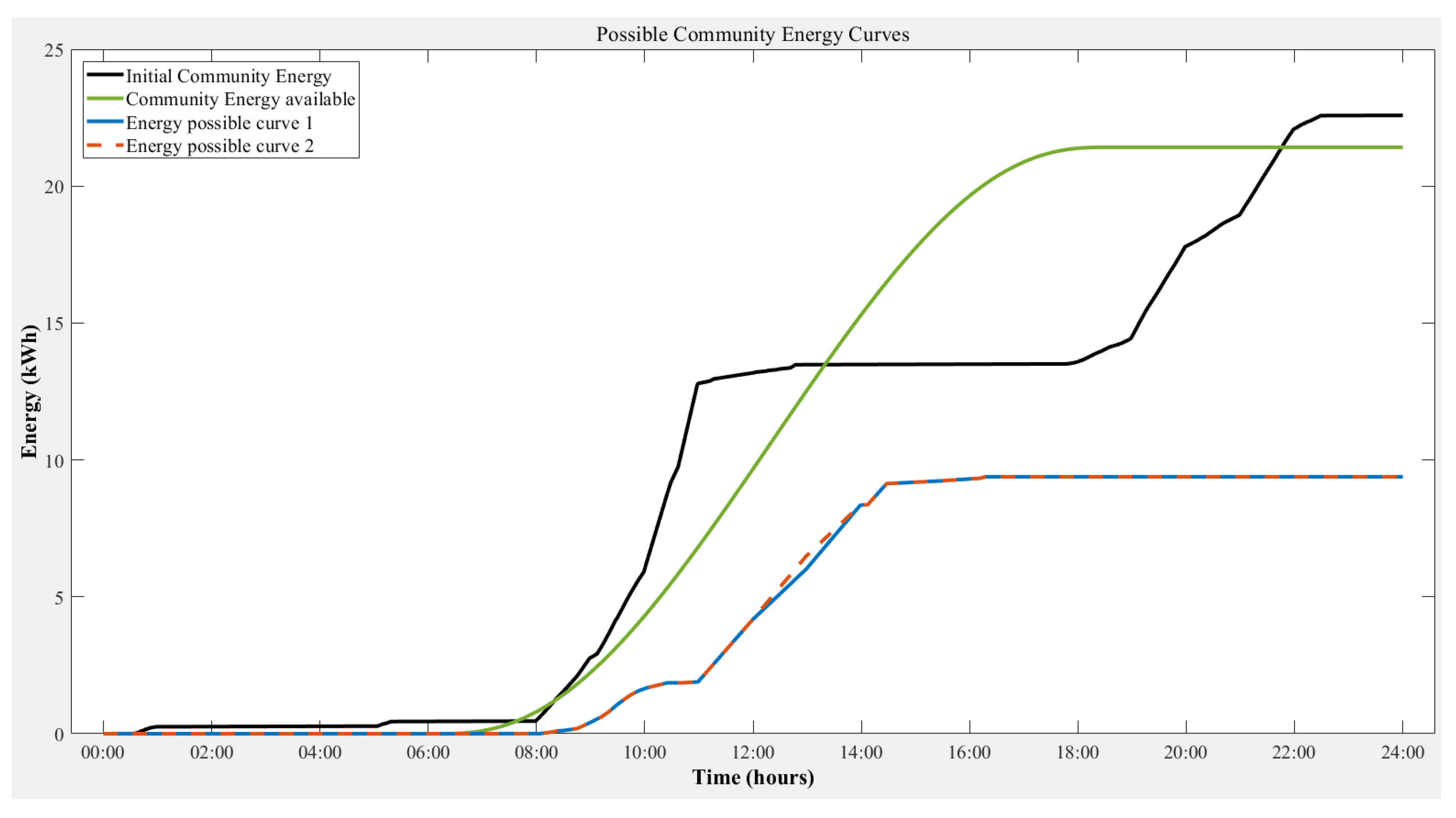
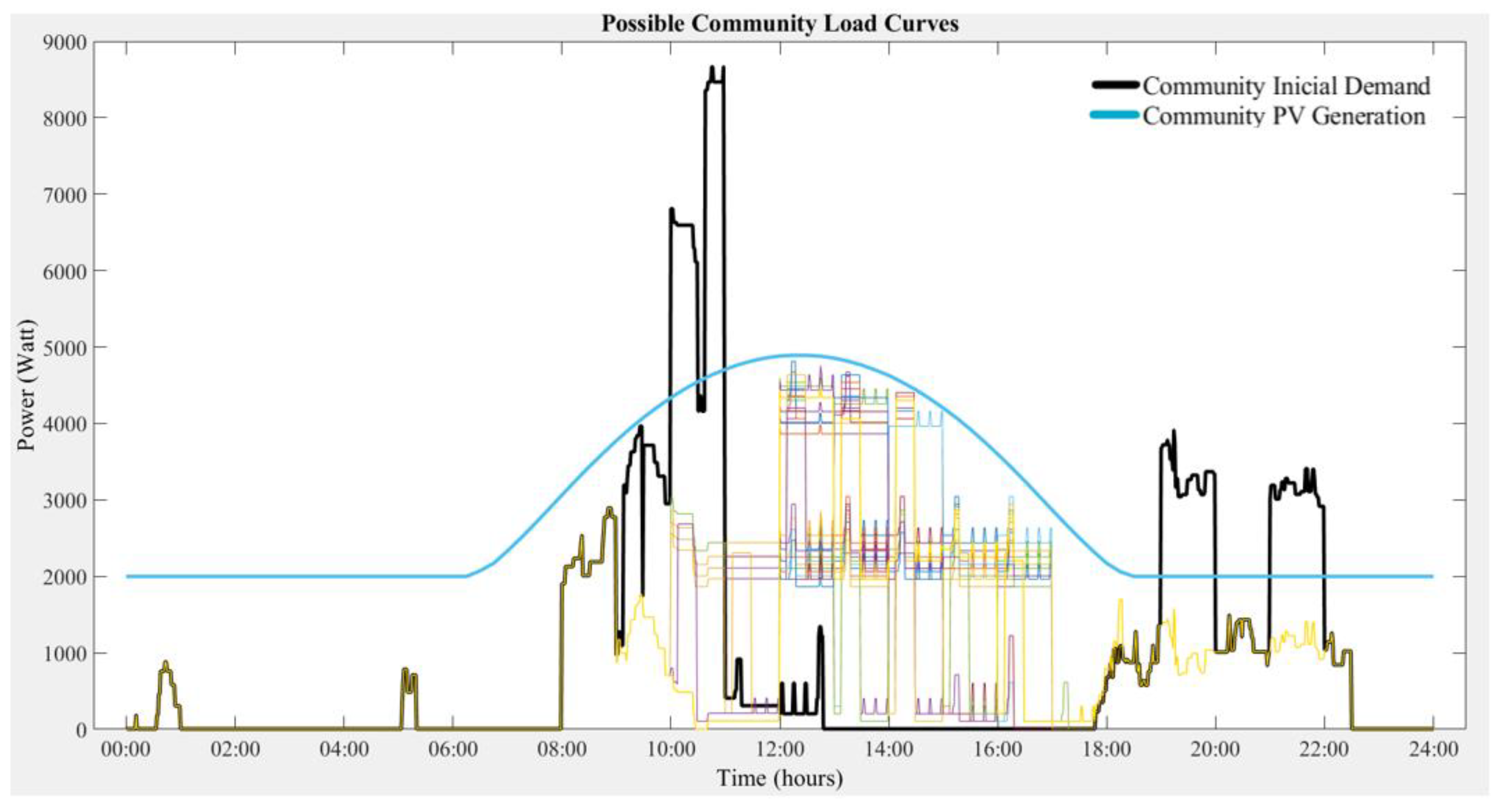
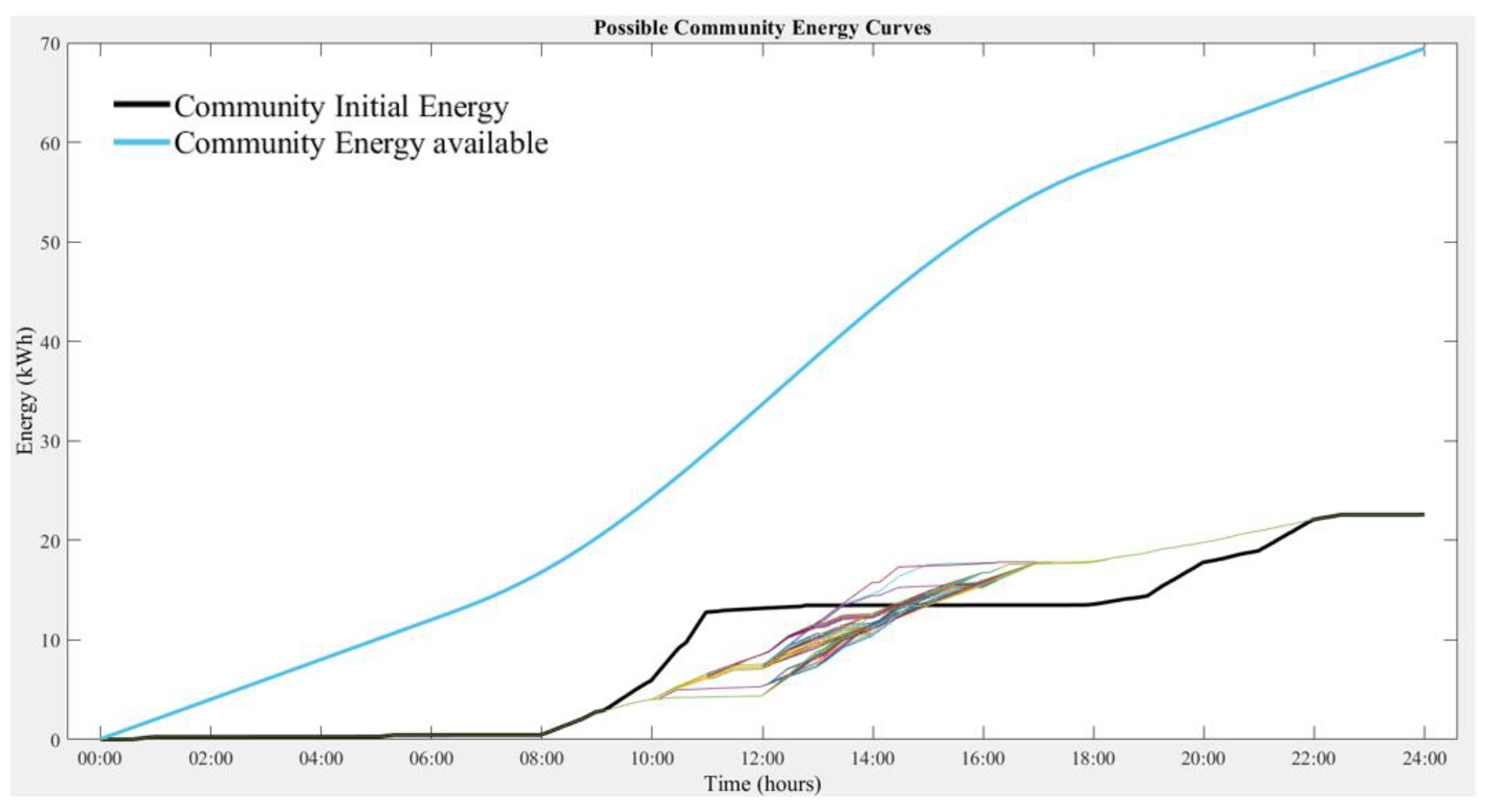
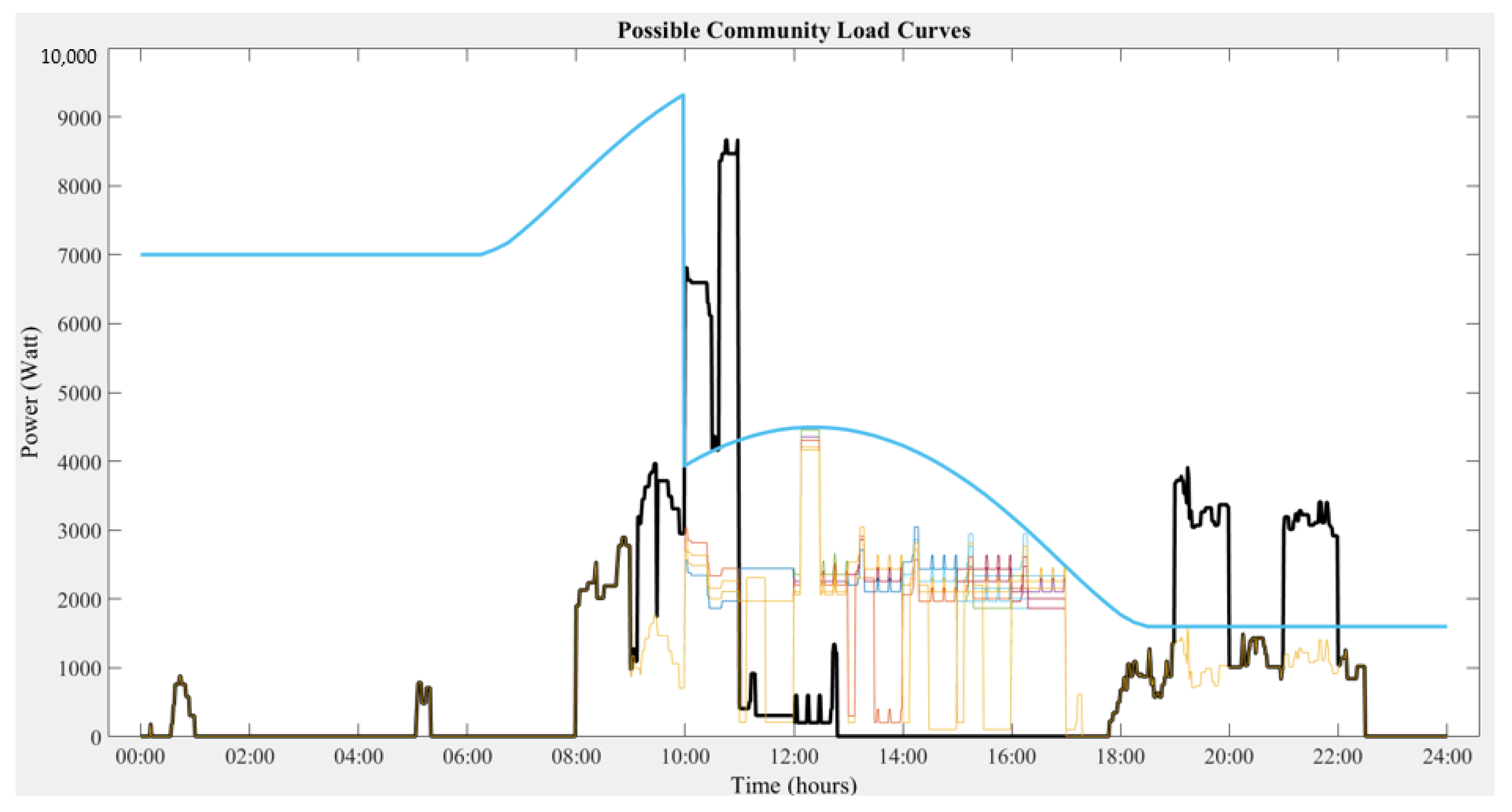
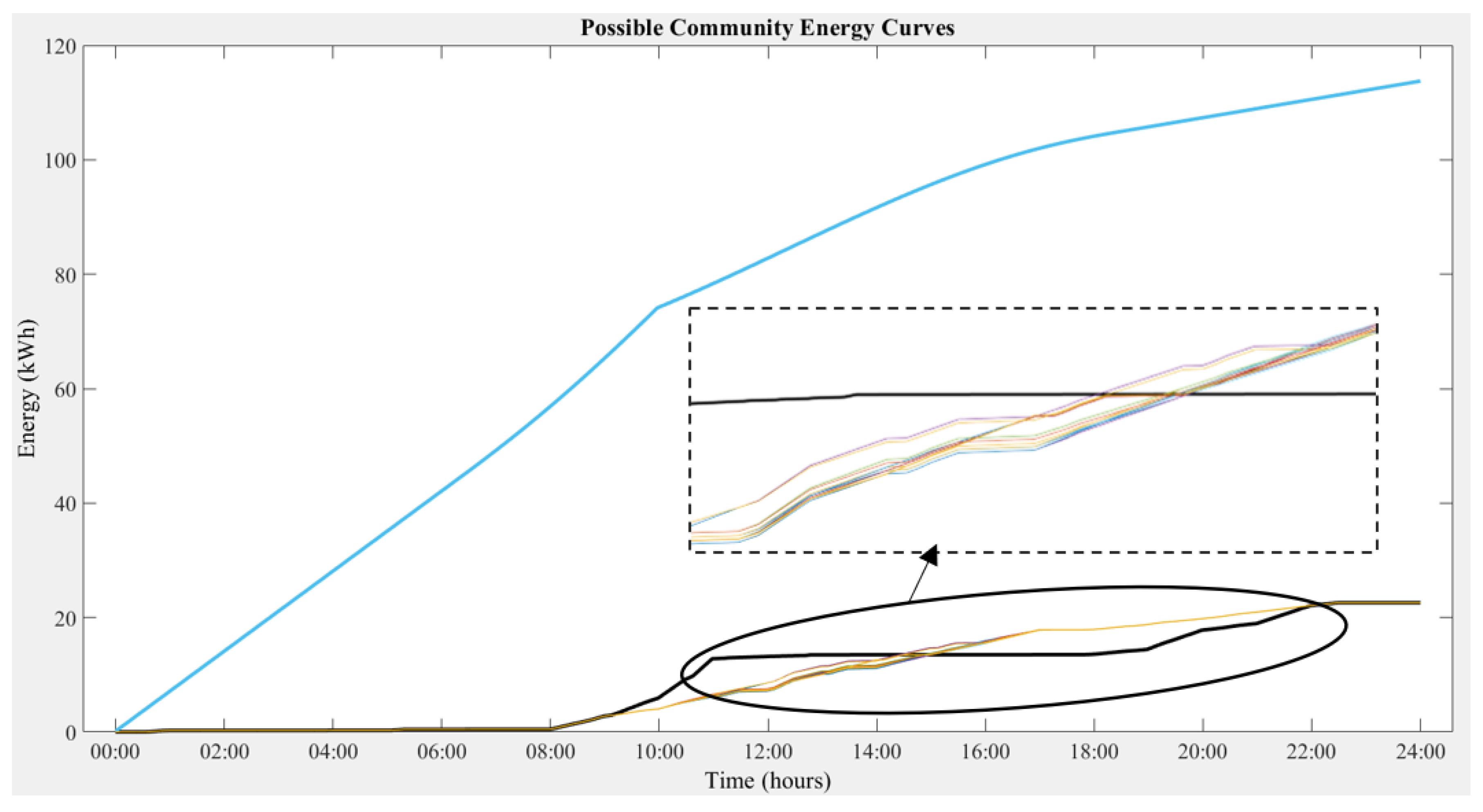
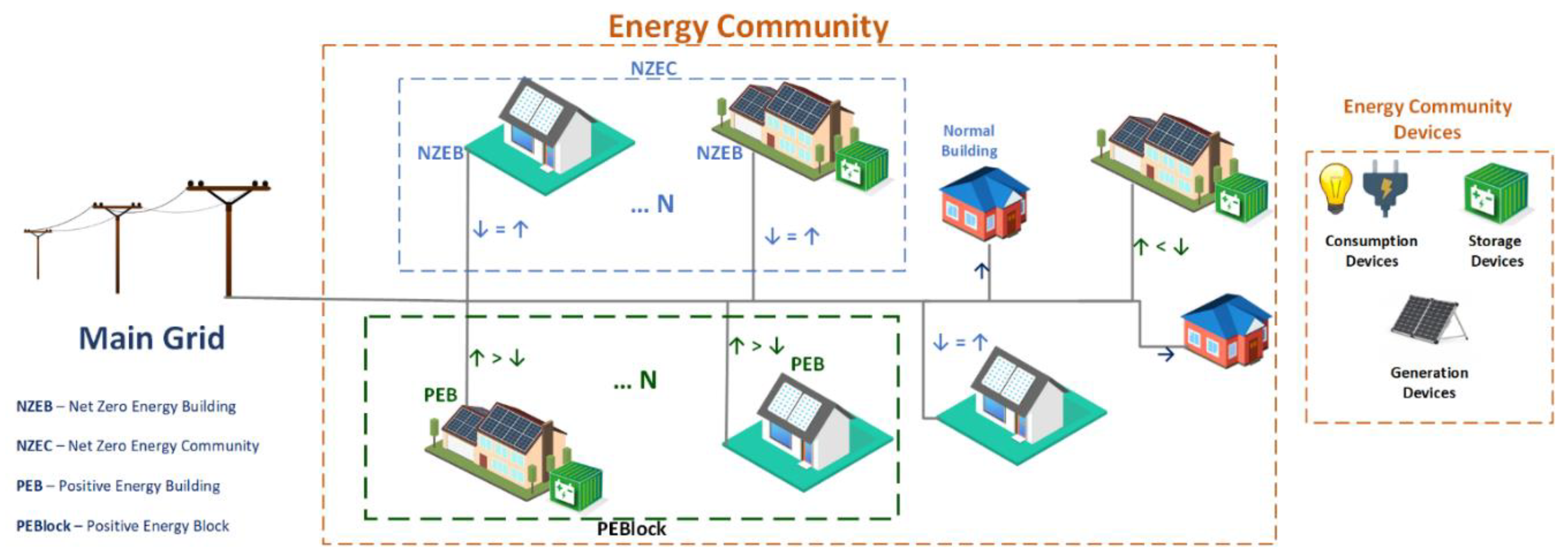
Energy communities, mostly microgrid based, are a key stakeholder of modern electrical power grids. Operating a microgrid based energy community is a challenging topic due to the involved uncertainties, complexities and often conflicting objectives. The aim of this paper is to present a novel methodology demonstrating that energy community flexibility can contribute to each community member’s wellbeing when a grid fault occurs. A three-house energy community will be modelled considering as consumption sources non-controllable and controllable devices in each house. As power supply sources, PV systems installed in a community’s houses are considered, as well as the power obtained from main grid. Each house’s flexibility inside the community will be studied to improve the management of loads during a fault occurrence. Moreover, three different scenarios will be considered with different available power in the community. With these simulations, it was possible to understand that houses’ energy flexibility can be used under a fault situation, either to maintain the users’ wellbeing or to change the energy flow. Furthermore, energy flexibility can be used to create better energy price markets, to improve the resilience of the grid, or even to consider electrical vehicles’ connection to a community’s grid.
Keywords: energy communities; energy flexibility; scheduling appliances; grid resilience energy communities; energy flexibility; scheduling appliances; grid resilience
Graphical Abstract