Article

Optimal Parameters of Volt–Var Function in Smart Inverters for Improving System Performance


1
Department of Electrical Engineering, Soongsil University, 369, Sangdo-ro, Dongjak-gu, Seoul 06978, Korea
2
Korea Electric Power Research Institute (KEPRI), Korea Electric Power Company (KEPCO), 105, Munji-ro, Yuseong-gu, Daejeon 34056, Korea
*
Author to whom correspondence should be addressed.
Energies 2020, 13(9), 2294; https://doi.org/10.3390/en13092294
Submission received: 17 February 2020 / Revised: 22 April 2020 / Accepted: 29 April 2020 / Published: 6 May 2020
(This article belongs to the Special Issue Optimal Home Energy and Active Management Strategy in Smart Grids)

Abstract

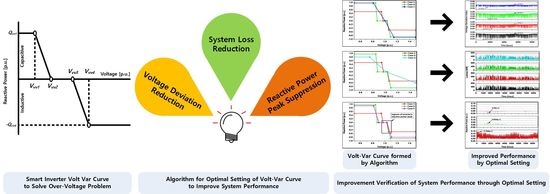
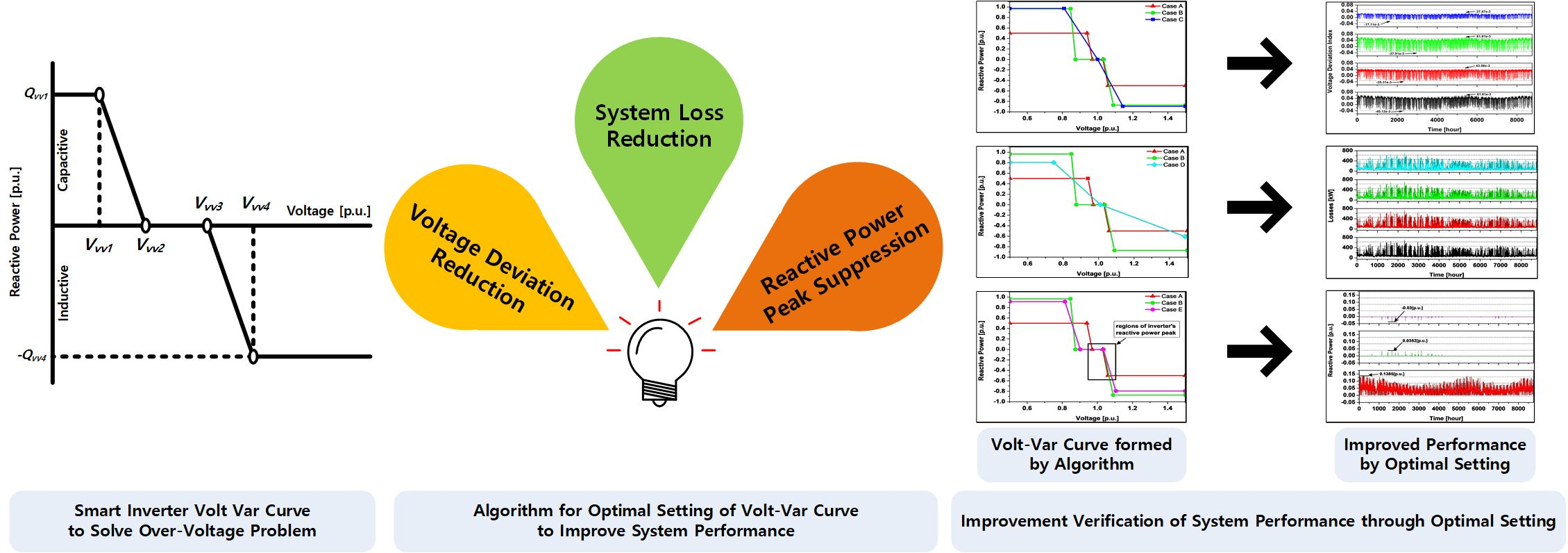
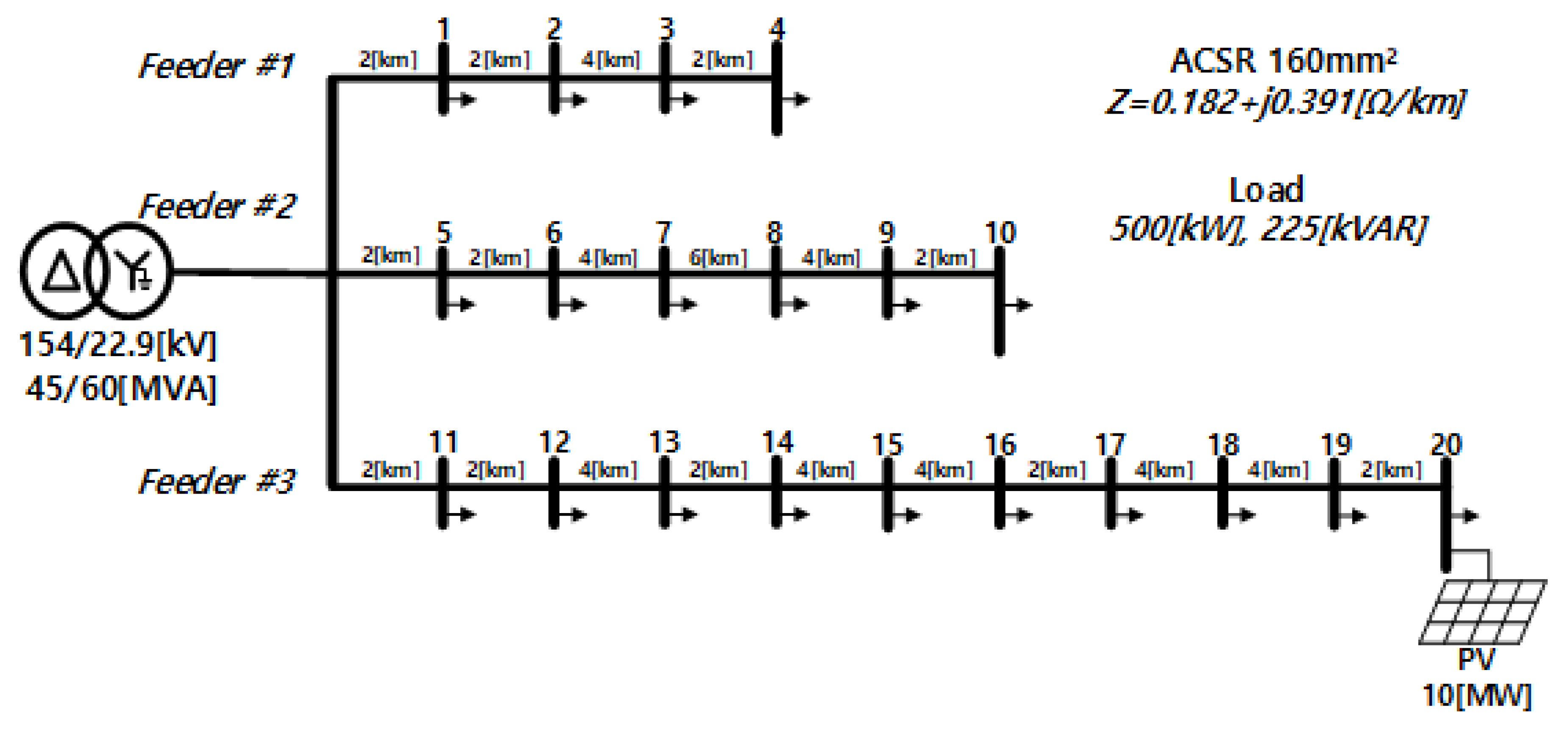
This paper proposes a method to improve the performance of a distribution system by optimizing volt–var function of a smart inverter to alleviate the voltage deviation problem due to distributed generation connection. In order to minimize voltage deviation and line losses which represent the performance of a distribution system, this paper proposes an algorithm that optimally sets the parameters of the volt–var function. In the process of optimizing the parameters of the volt–var function, the algorithm proposed in this paper considers minimizing the contribution of the reactive power in order not to affect the output of the distributed generation. In order to apply to the field, the distribution system in South Korea considering the configuration and operation regulation was selected as a test model for algorithm verification. As a result, the system performance was successfully improved by optimally setting the volt–var function of the smart inverter which is an effective way to solve the over-voltage problem caused by distributed generation connection. This paper verified the proposed method through OpenDSS, a quasi-static time-series simulation, for the test model considering the characteristics of the distribution system in South Korea.
Keywords: distribution system; smart inverter; photovoltaic (PV); volt–var function; optimization distribution system; smart inverter; photovoltaic (PV); volt–var function; optimization
Graphical Abstract