Article

Modelling the Non-Linear Energy Intensity Effect Based on a Quantile-on-Quantile Approach: The Case of Textiles Manufacturing in Asian Countries


by
Muhammad Haseeb
1,
Sebastian Kot
2,3,*,
Hafezali Iqbal Hussain
1,4,
Leonardus WW Mihardjo
5 and
Piotr Saługa
6
1
Taylor’s Business School, Taylor’s University Lakeside Campus, 1 Jalan Taylors, Subang Jaya 47500, Malaysia
2
Faculty of Economic and Management Sciences, North-West University, Vaal Triangle Campus, P.O. Box 1174, Vanderbijlpark 1900, South Africa
3
The Management Faculty, Czestochowa University of Technology, 42-201 Czestochowa, Poland
4
University of Economics and Human Sciences in Warsaw, Okopowa 59, 01-043 Warsaw, Poland
5
School of Business Management, Bina Nusantara University, Jalan Hang Lekir I, no. 6, Senayan, Jakarta 10270, Indonesia
6
Department of Management, Faculty of Applied Sciences, WSB University, 41-300 Dąbrowa Górnicza, Poland
*
Author to whom correspondence should be addressed.
Energies 2020, 13(9), 2229; https://doi.org/10.3390/en13092229
Submission received: 10 March 2020 / Revised: 24 April 2020 / Accepted: 26 April 2020 / Published: 3 May 2020
(This article belongs to the Special Issue Management and Technology for Energy Efficiency Development)

Abstract

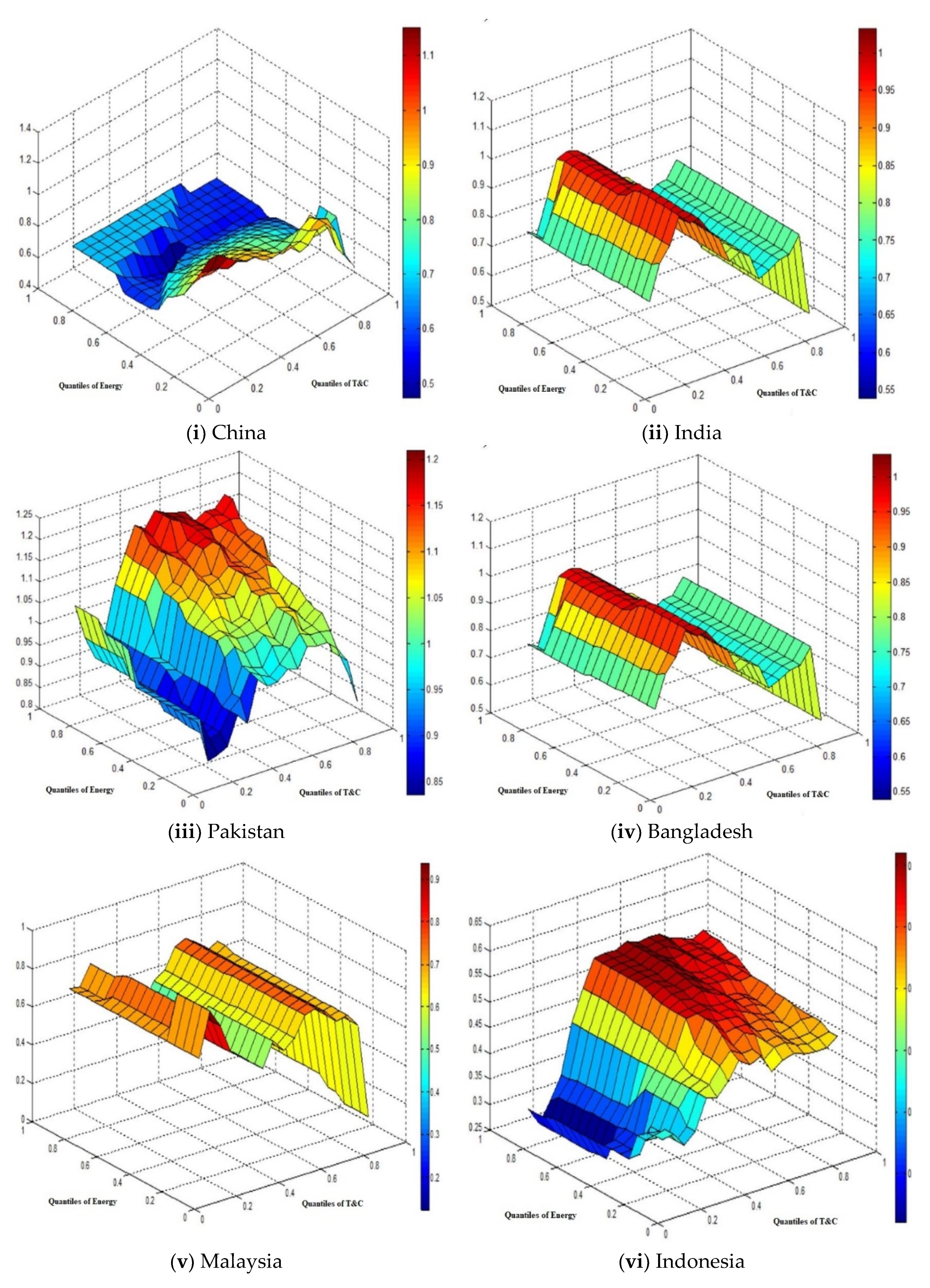
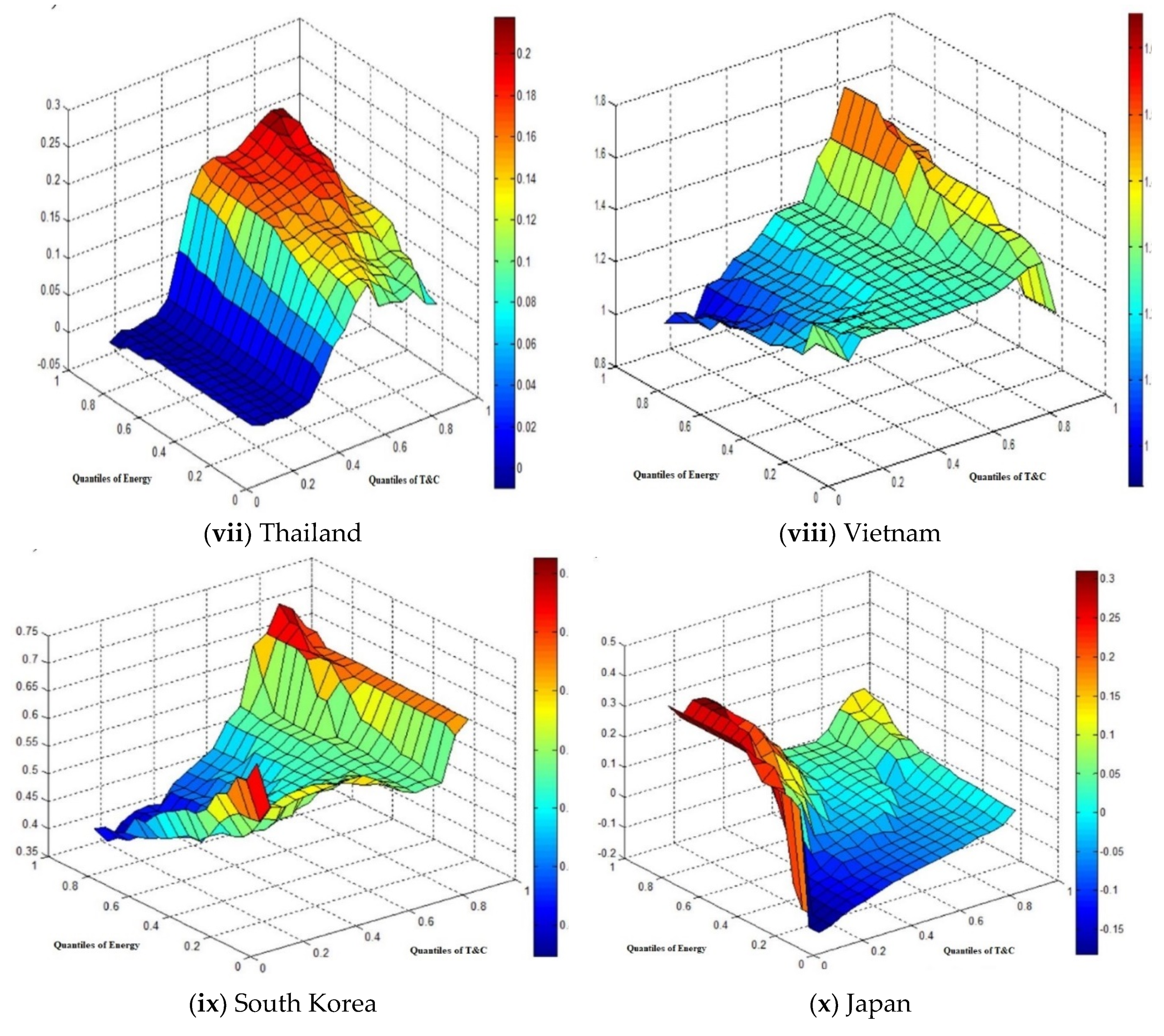
The objective of the current examination is to identify the dynamic relationship between the textile industry and energy intensity. The study evaluates the asymmetric impact of textile manufacturing on energy intensity in leading Asian economies based on textile dominance. China, Indonesia, India, Pakistan, Bangladesh, Malaysia, South Korea, Thailand, Japan and Vietnam are dominant in textile manufacturing. In the present study we used yearly textiles and clothing data from top ten selected Asian textile manufacturing countries from 1990 to 2018. The results of quantile-on-quantile regression (QQ) confirmed that textiles and clothing (T&C) production have a positive and significant impact on energy intensity in all countries. The results further suggested that a low level of T&C production increases the level of energy intensity in all selected countries. On the other hand, the results of Granger causality in quantiles confirm a bidirectional causal relationship between T&C production and energy intensity in all selected countries except Thailand and Japan, where a uni-directional causal connection between textile and clothing manufacturing and energy intensity can also be found. This study recommends that governments and investors need to invest more in green and advanced technologies to reduce the energy intensity in Asian economies.
Keywords: non-linear model; energy intensity; Asian countries; quantile-on-quantile non-linear model; energy intensity; Asian countries; quantile-on-quantile