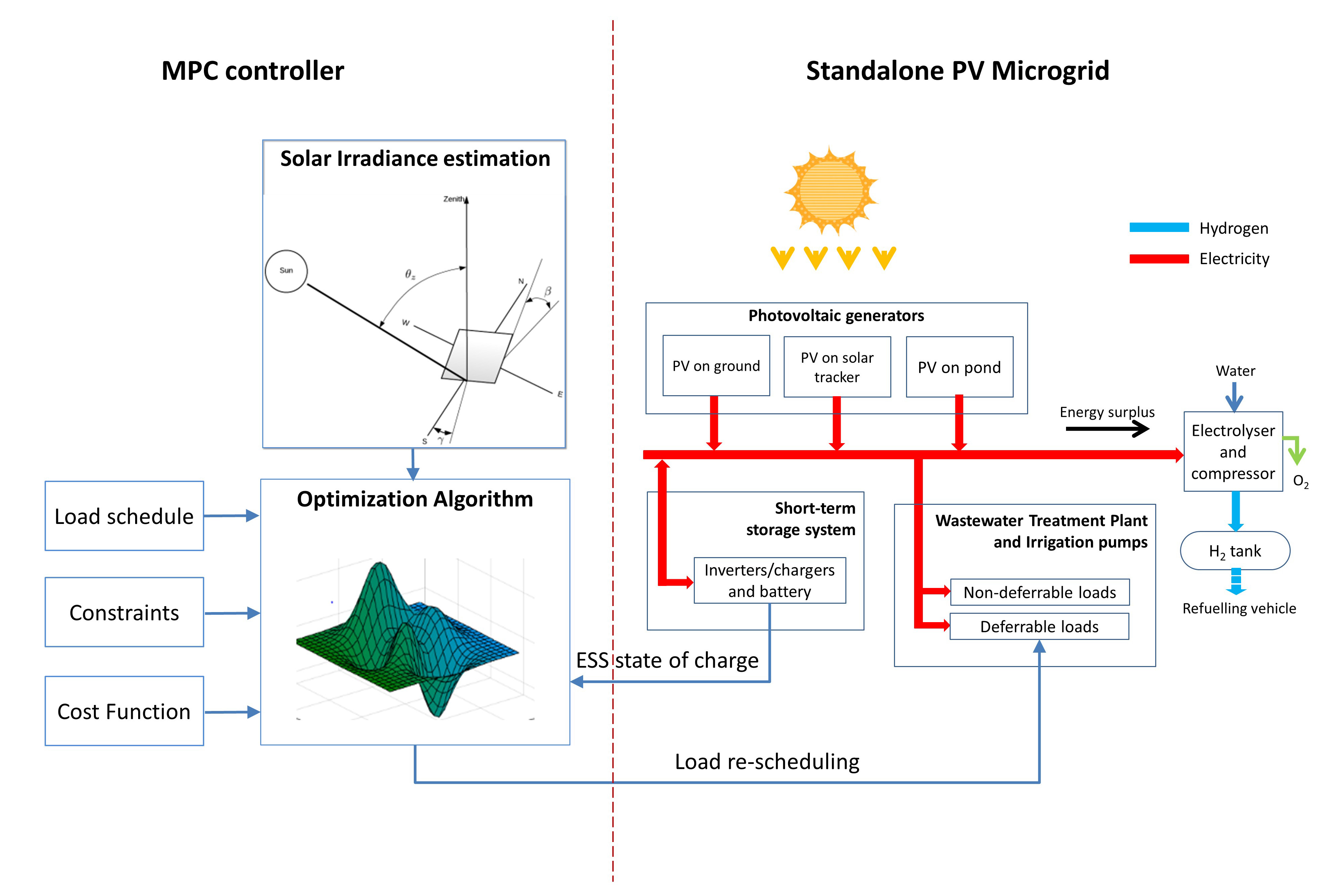
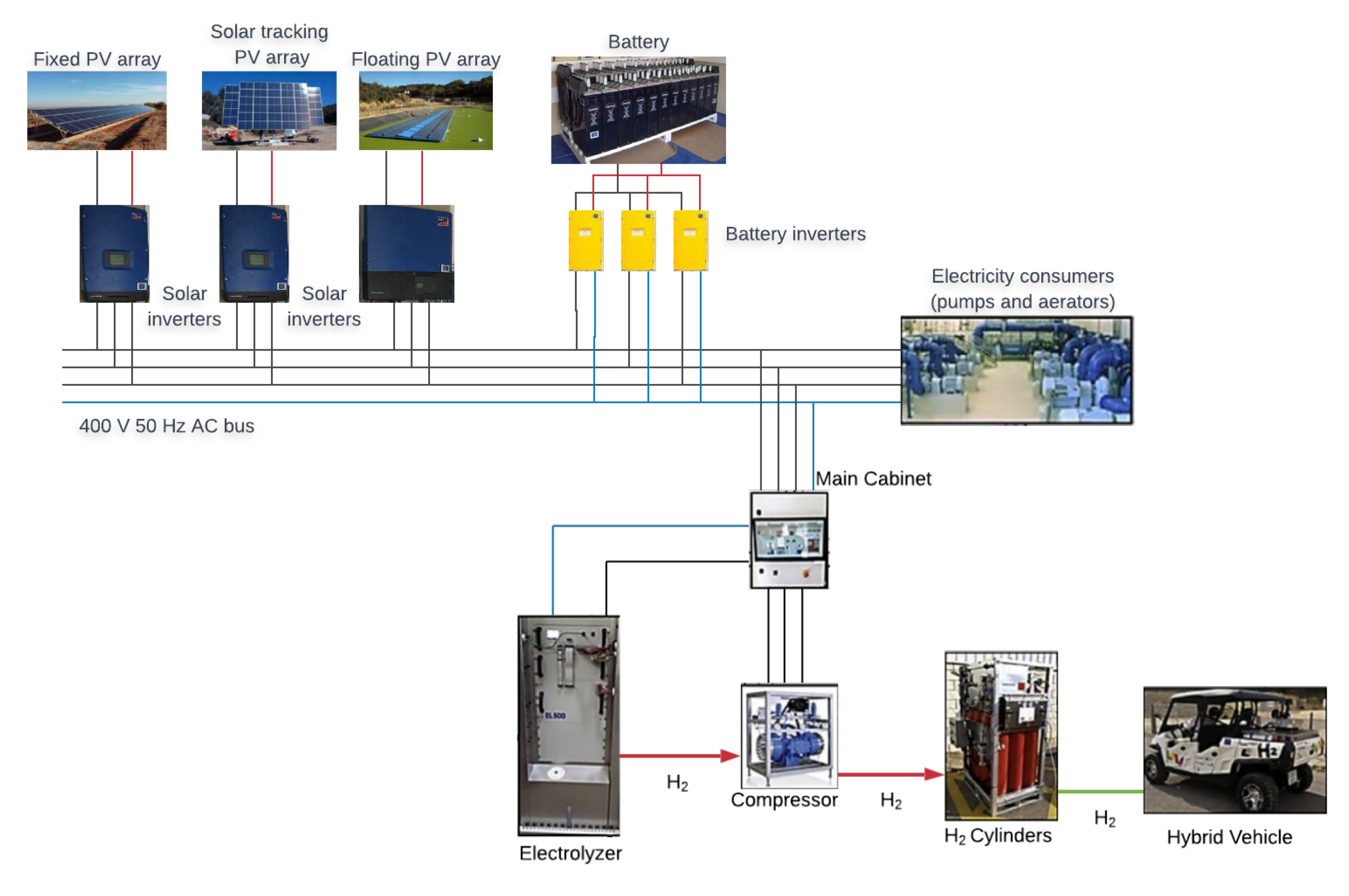
Optimal Energy Management in a Standalone Microgrid, with Photovoltaic Generation, Short-Term Storage, and Hydrogen Production

 ,
,  and
and Abstract
Share and Cite
Cecilia, A.; Carroquino, J.; Roda, V.; Costa-Castelló, R.; Barreras, F. Optimal Energy Management in a Standalone Microgrid, with Photovoltaic Generation, Short-Term Storage, and Hydrogen Production. Energies 2020, 13, 1454. https://doi.org/10.3390/en13061454
Cecilia A, Carroquino J, Roda V, Costa-Castelló R, Barreras F. Optimal Energy Management in a Standalone Microgrid, with Photovoltaic Generation, Short-Term Storage, and Hydrogen Production. Energies. 2020; 13(6):1454. https://doi.org/10.3390/en13061454
Chicago/Turabian StyleCecilia, Andreu, Javier Carroquino, Vicente Roda, Ramon Costa-Castelló, and Félix Barreras. 2020. "Optimal Energy Management in a Standalone Microgrid, with Photovoltaic Generation, Short-Term Storage, and Hydrogen Production" Energies 13, no. 6: 1454. https://doi.org/10.3390/en13061454
APA StyleCecilia, A., Carroquino, J., Roda, V., Costa-Castelló, R., & Barreras, F. (2020). Optimal Energy Management in a Standalone Microgrid, with Photovoltaic Generation, Short-Term Storage, and Hydrogen Production. Energies, 13(6), 1454. https://doi.org/10.3390/en13061454