Article

A Combined Multi-Level Perspective and Agent-Based Modeling in Low-Carbon Transition Analysis

1
SCS Lab, Department of Human and Engineered Environment, Graduate School of Frontier Sciences, The University of Tokyo, Chiba 277-8563, Japan
2
Faculty of Economics and Management, East China Normal University, Shanghai 200062, China
3
Department of Physics, Fudan University, Shanghai 200433, China
4
Department of Energy Technology, KTH Royal Institute of Technology, SE-100 44 Stockholm, Sweden
*
Author to whom correspondence should be addressed.
Energies 2020, 13(19), 5050; https://doi.org/10.3390/en13195050
Submission received: 15 July 2020 / Revised: 21 September 2020 / Accepted: 23 September 2020 / Published: 25 September 2020

Abstract

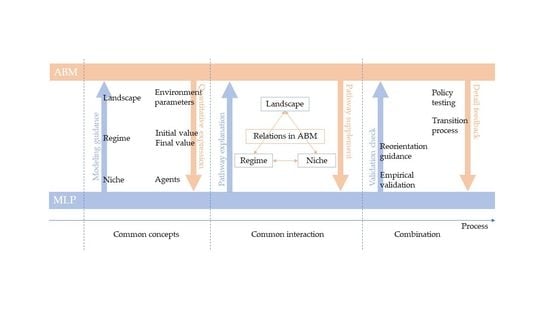
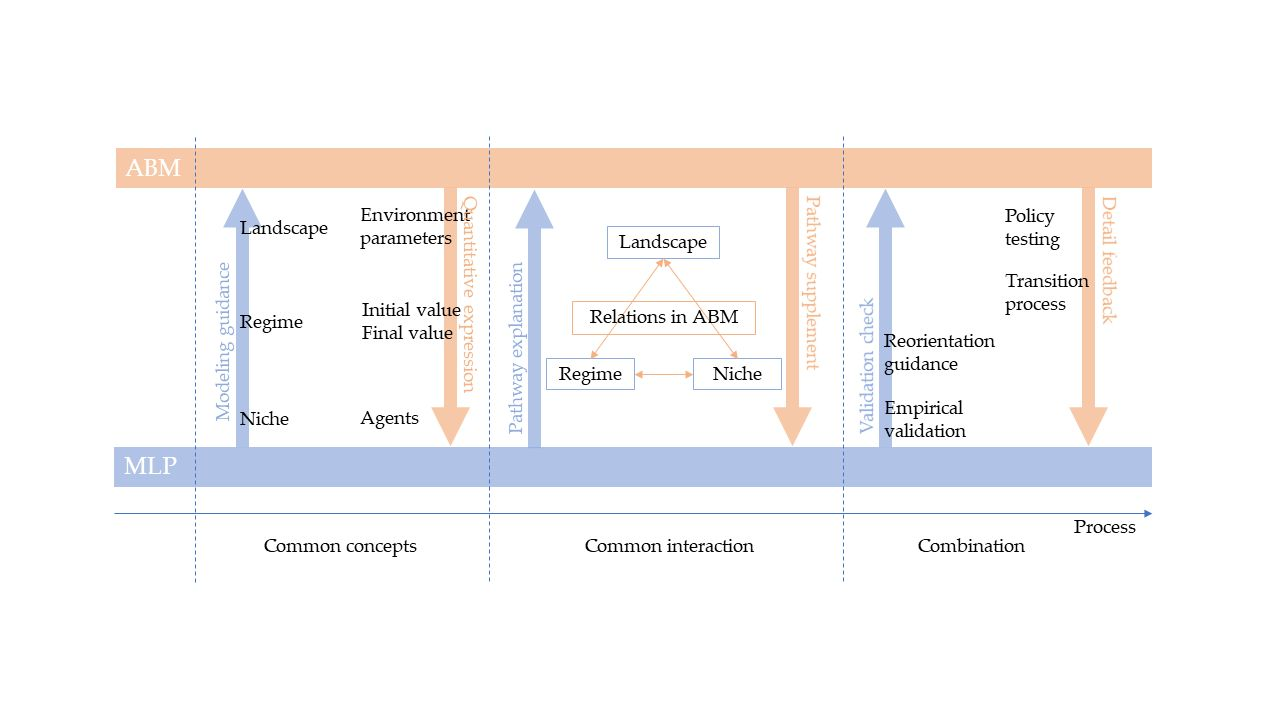
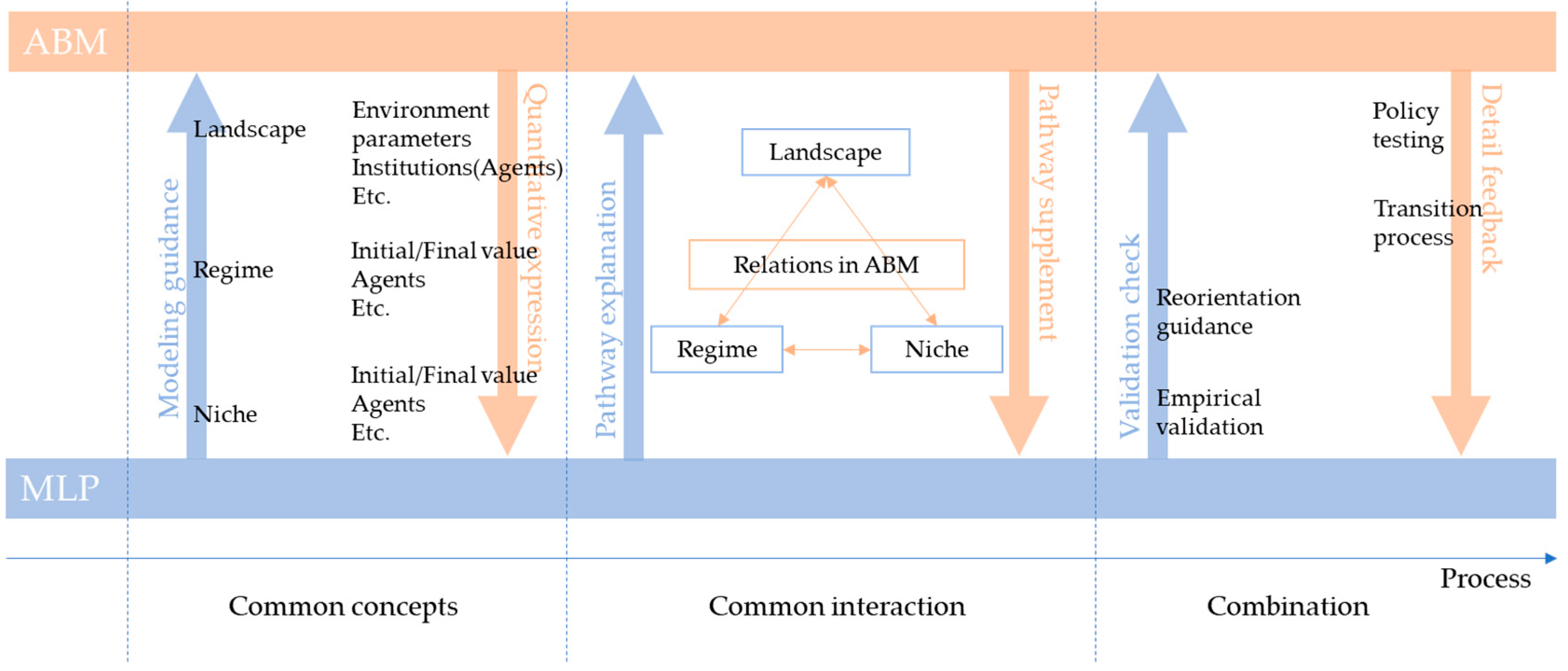
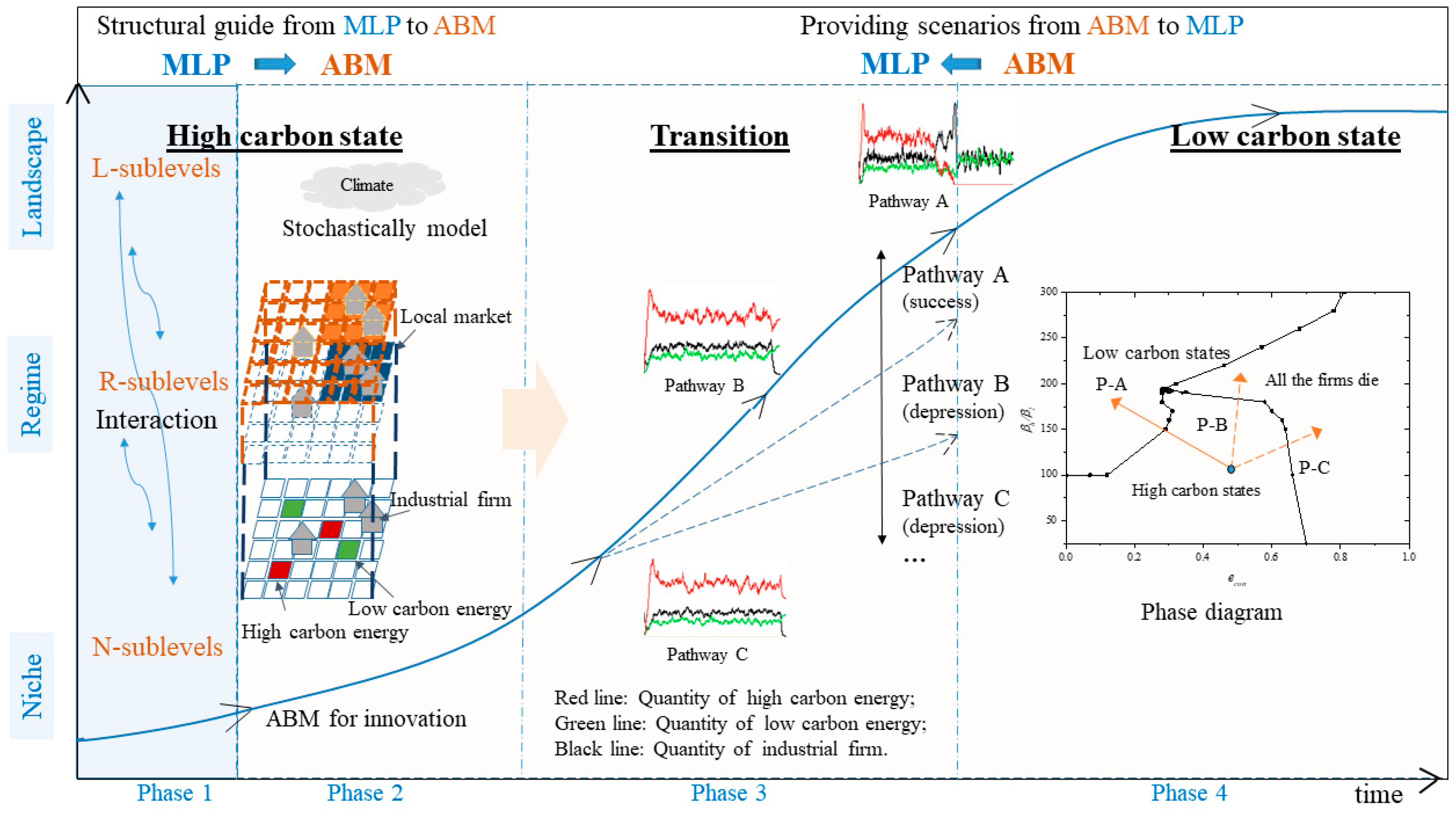
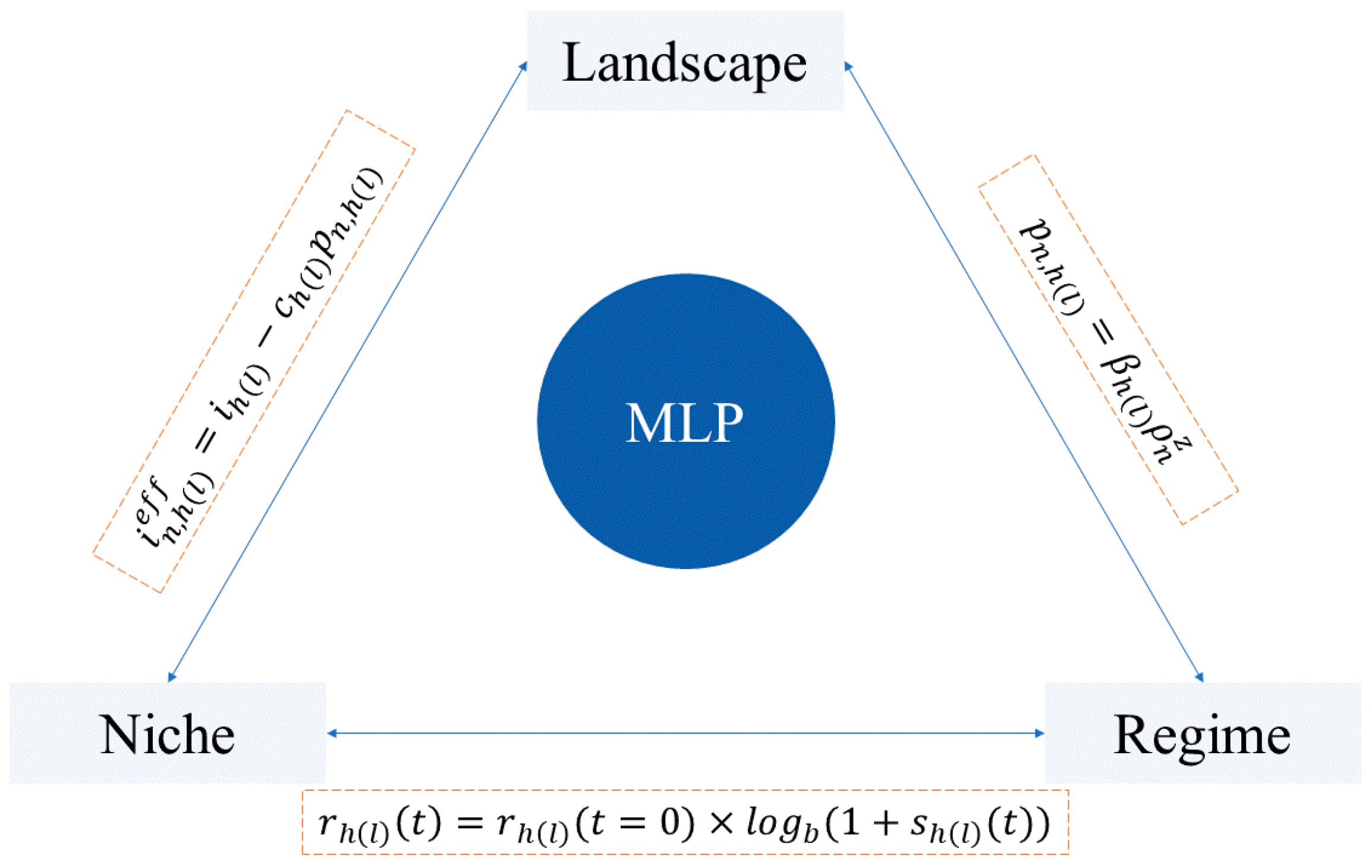
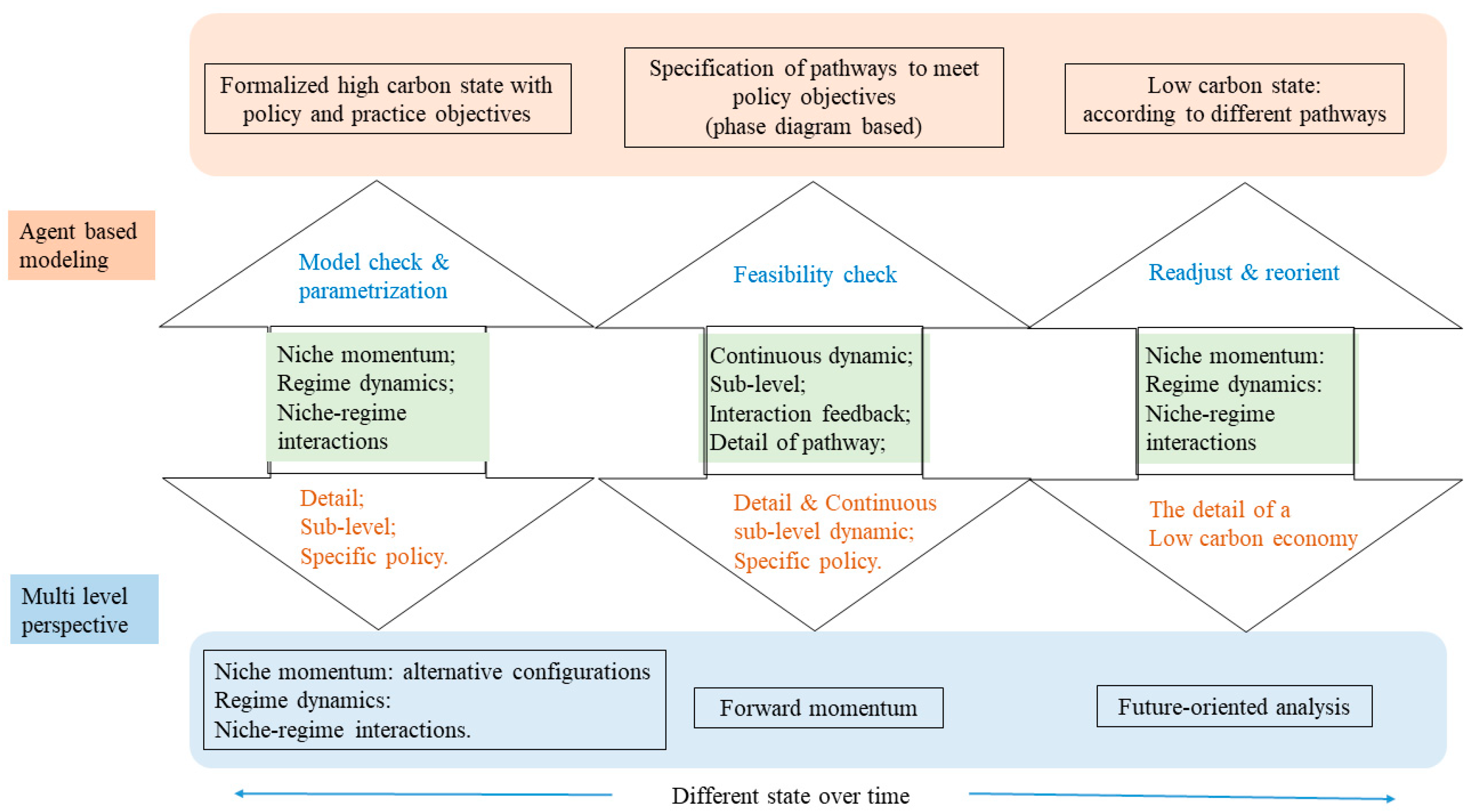
Low-carbon transitions are long-term complex processes that are driven by multiple factors. To provide a theoretical and practical framework of this process, we argue that the combination of the multi-level perspective (MLP) and agent-based modeling (ABM) enables us to reach a deeper and detailed analysis of low-carbon transitions. As an extensively applied theoretical form, MLP conceptualizes low-carbon transitions as a nonlinear process and allows a system to be analyzed and organized into multiple dimensions (landscape, regime, and niche). However, MLP cannot explain the many details of complex transitions, whereas ABM can estimate the influence of interacting behaviors in a complex system. Therefore, the main advantages of the combined approach for the analysis of low-carbon transition are verified: the MLP can contribute to the overall design of ABM, and ABM can provide a dynamic, continuous, and quantitative description of the MLP. To construct this combination framework, this paper offers a guiding principle that combines the two perspectives under a low-carbon transitional background to create an integrated strategy using three procedures: defining the common concepts, their interaction, and their combination. Through the proposed framework, the goal of this work was to reach a better understanding of social system evolution from the present high-carbon state to a low-carbon state under the pressure of ambitious climate goals, providing specific policy recommendations.
Keywords: low-carbon transition; agent-based modeling; multi-level perspective; complex system; sociotechnical approach; energy policy low-carbon transition; agent-based modeling; multi-level perspective; complex system; sociotechnical approach; energy policy
Graphical Abstract