Article

Super-Twisting Algorithm Applied to Velocity Control of DC Motor without Mechanical Sensors Dependence


by
Fredy A. Valenzuela
1,
Reymundo Ramírez
1,*,
Fermín Martínez
1,
Onofre A. Morfín
2 and
Carlos E. Castañeda
3
1
División Académica de Ingeniería y Arquitectura, Universidad Juárez Autónoma de Tabasco, Cunduacán 86040, Mexico
2
Departamento de Ingeniería Eléctrica y Computación, Instituto de Ingeniería y Tecnología, Universidad Autónoma de Ciudad Juárez, Chihuahua 32310, Mexico
3
Centro Universitario de los Lagos, Universidad de Guadalajara, Lagos de Moreno 47460, Mexico
*
Author to whom correspondence should be addressed.
Energies 2020, 13(22), 6041; https://doi.org/10.3390/en13226041
Submission received: 19 September 2020 / Revised: 6 November 2020 / Accepted: 13 November 2020 / Published: 19 November 2020
(This article belongs to the Special Issue Design and Control of Electrical Machines and Drives)

Abstract

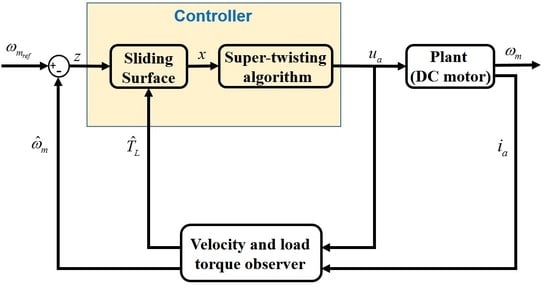
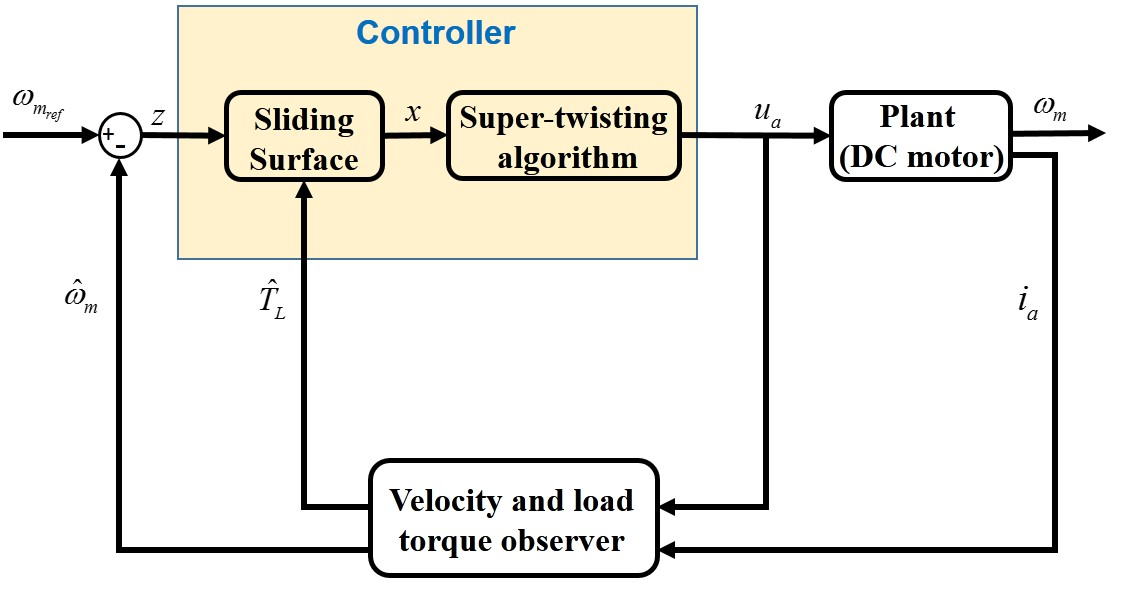
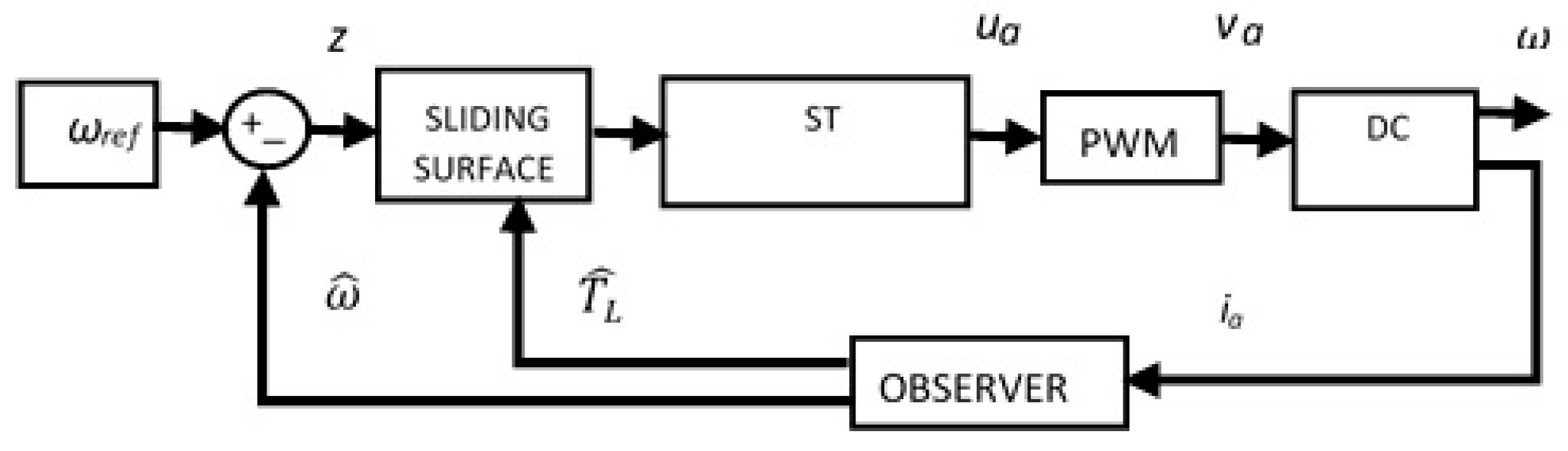
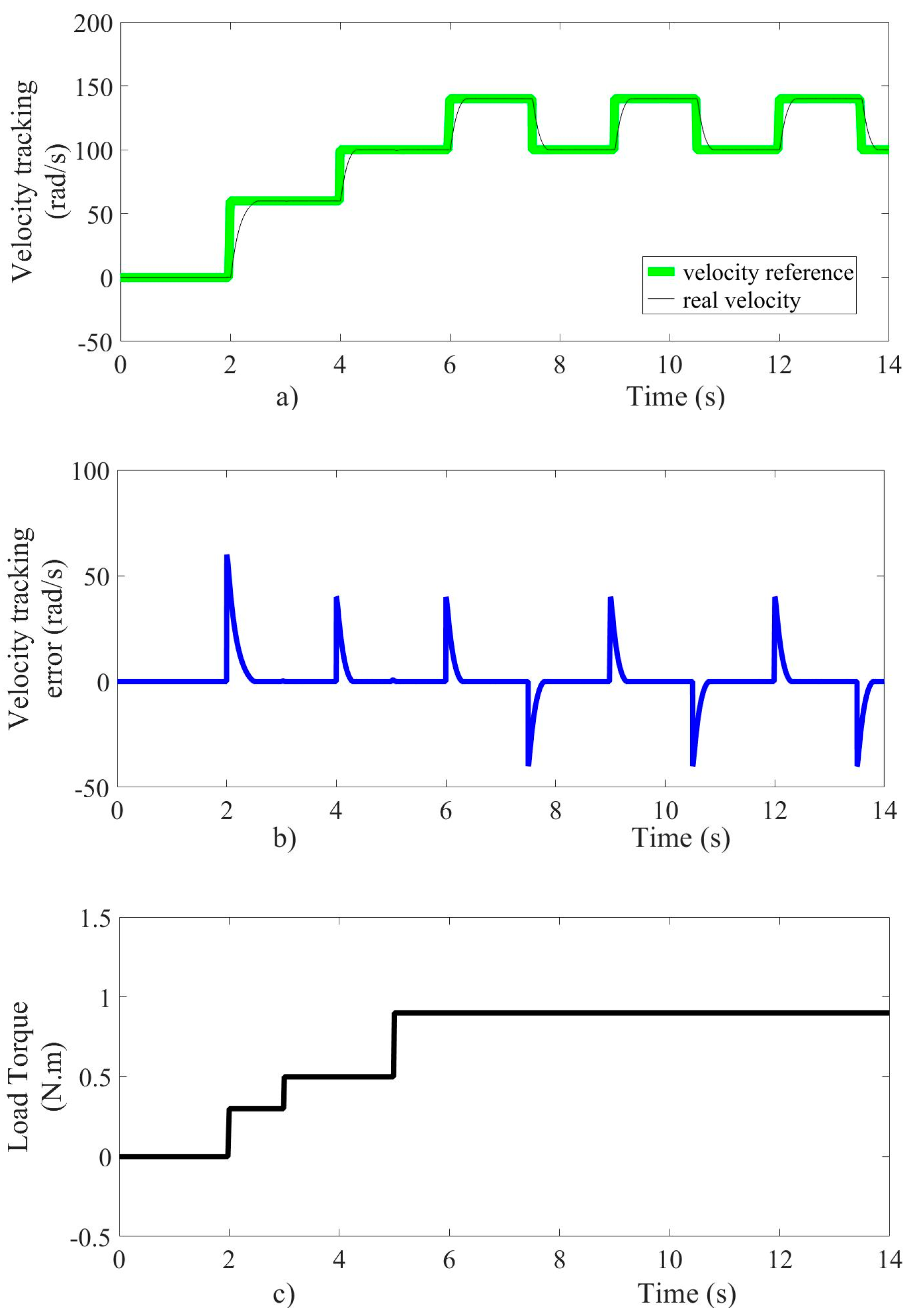
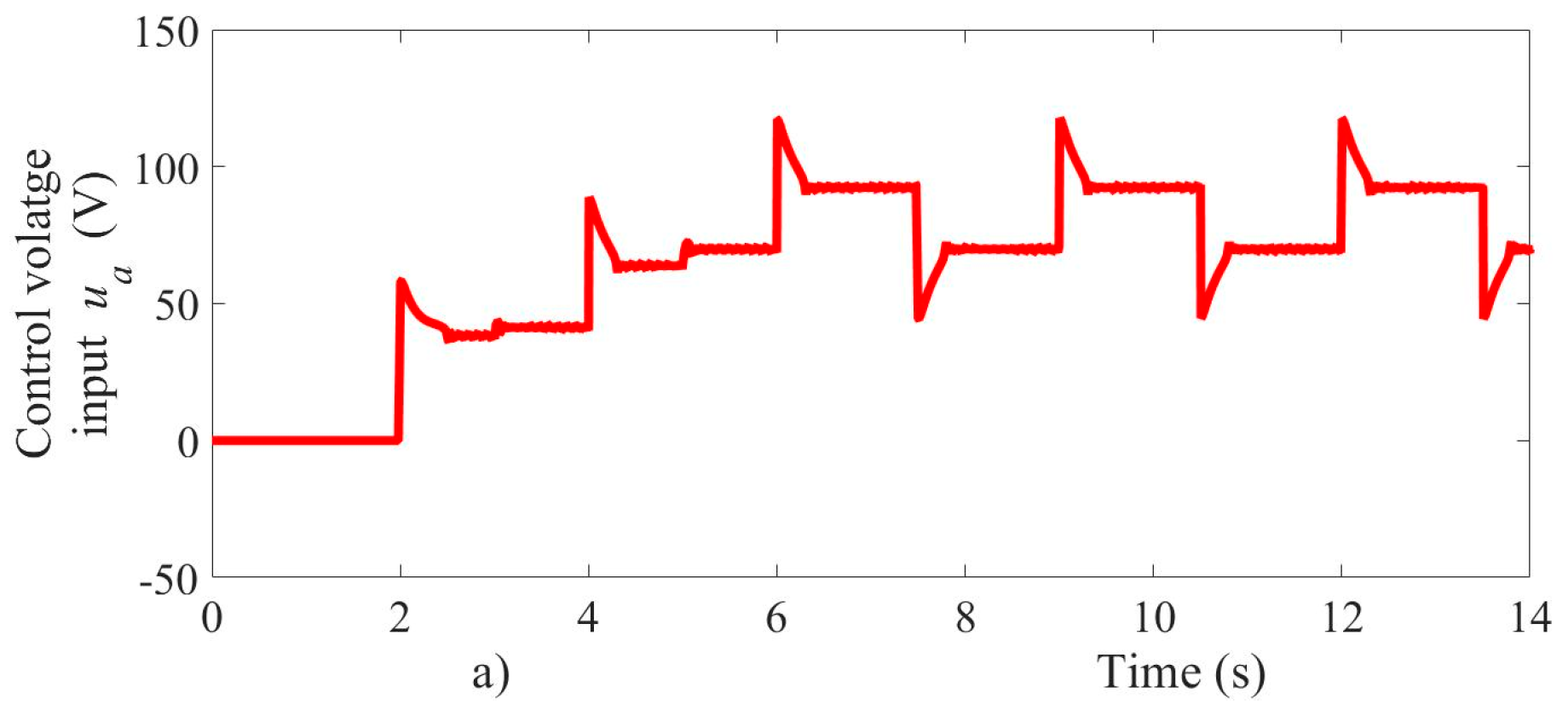
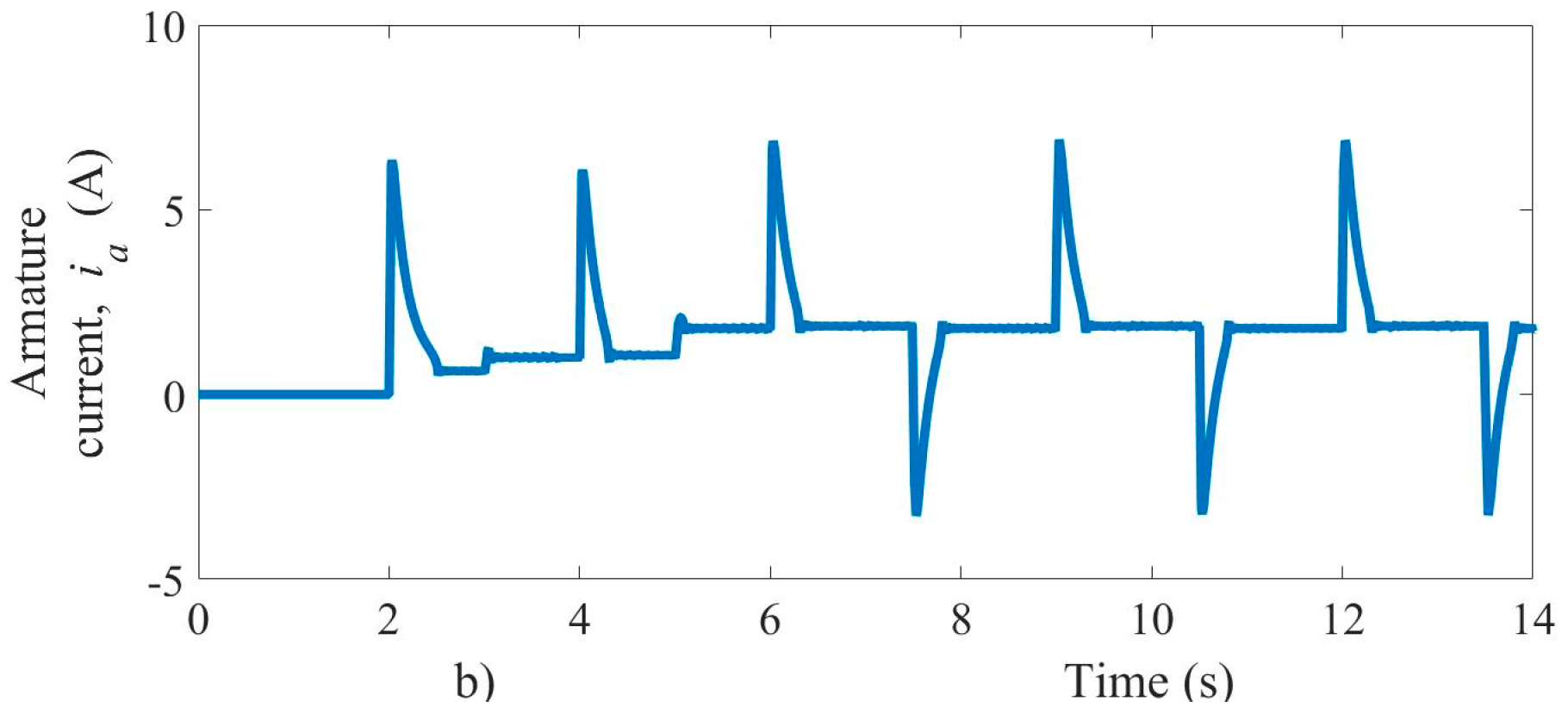
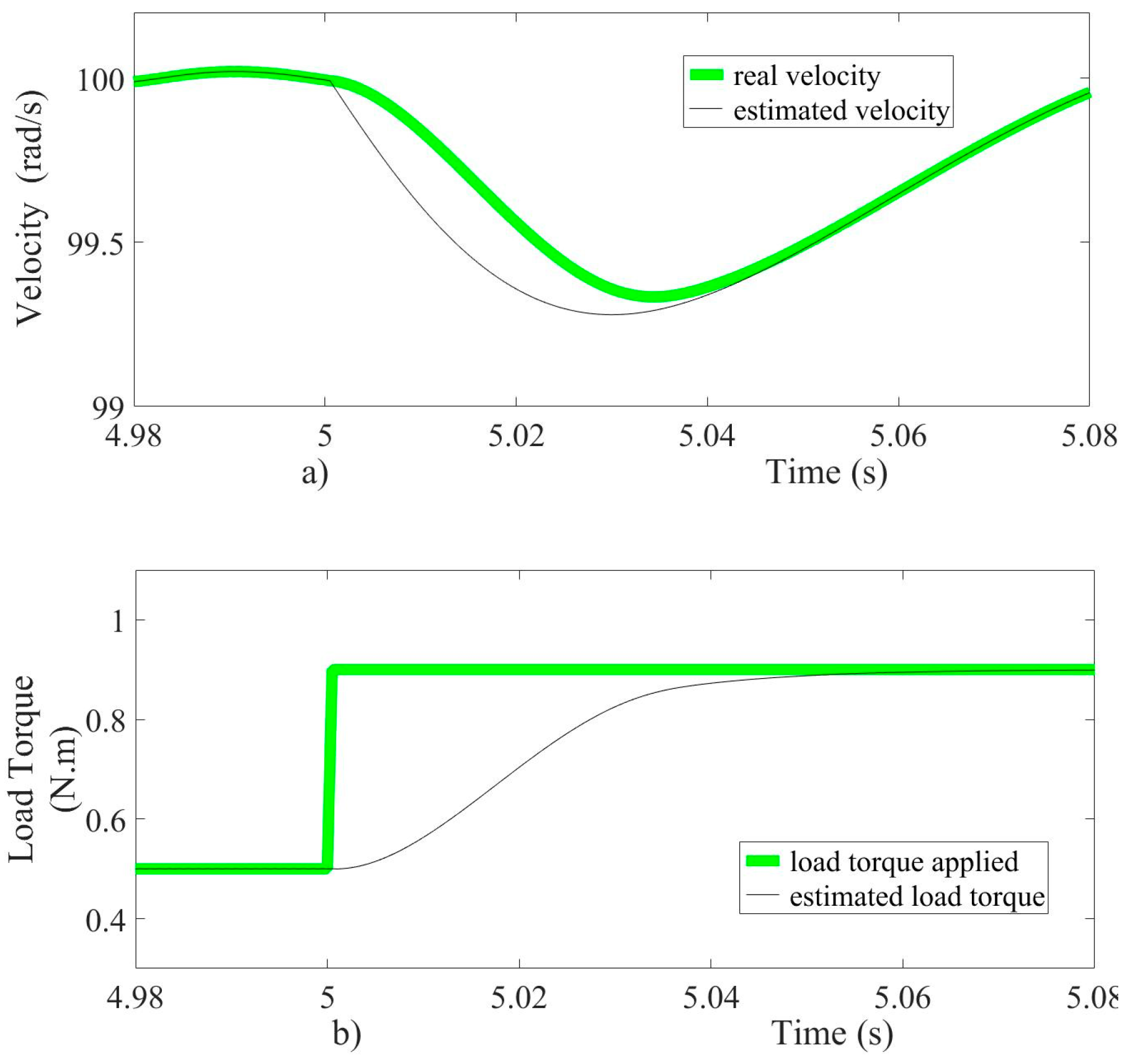
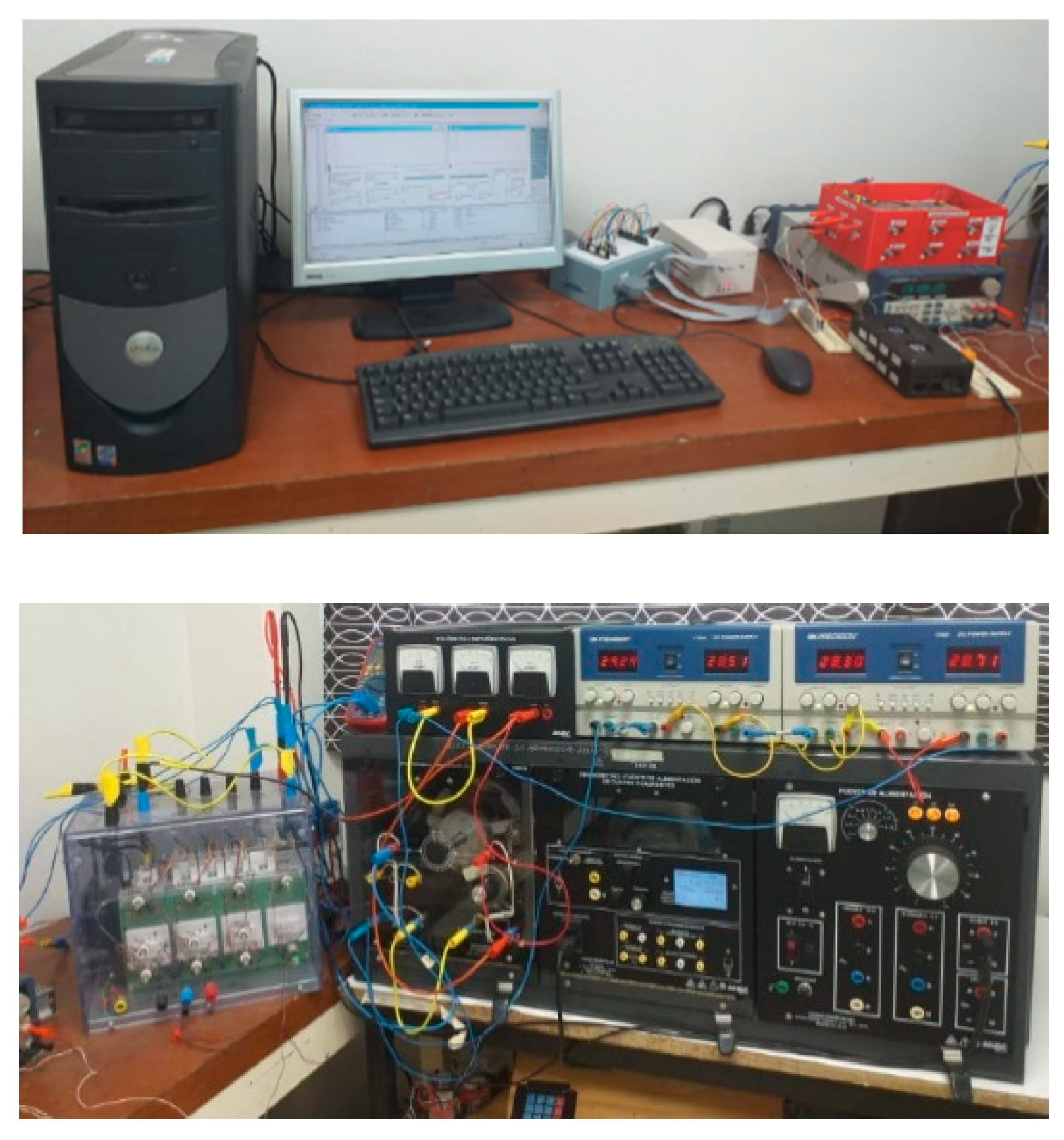
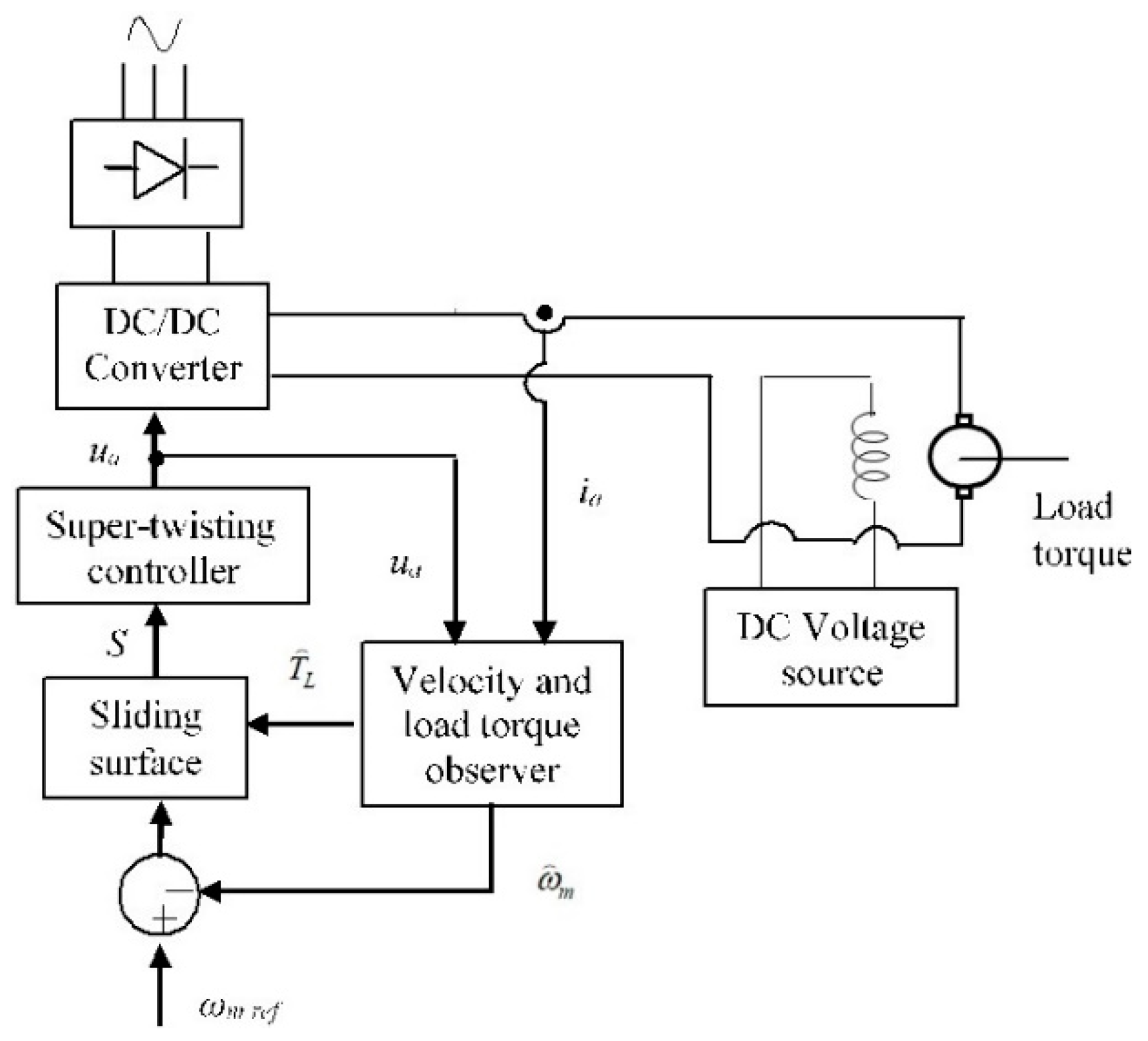
A DC motor velocity control in feedback systems usually requires a velocity sensor, which increases the controller cost. Additionally, the velocity sensor used in industrial applications presents several disadvantages such as maintenance requirements and signal conditioning. In this work, we propose a robust velocity control scheme applied to a DC motor based on estimation strategies using a sliding-mode observer. This means that measurements with mechanical sensors are not required in the controller design. The proposed observer estimates the rotational velocity and load torque of the motor. The controller design applies the exact-linearization technique combined with the super-twisting algorithm to achieve robust performance in the closed-loop system. The controller validation was carried out by experimental tests using a workbench, which is composed of a control and data acquisition Digital Signal Proccessor board, a DC-DC electronic converter, an interface board for signals conditioning, and a DC electric generator connected to an adjustable resistive load. The simulation and experimental results show a significant performance of the proposed control scheme. During tests, the accuracy, robustness, and speed response on the controller were evaluated and the experimental results were compared with a classic proportional-integral controller, which uses a conventional encoder.
Keywords: super-twisting; velocity control; DC motor; sensorless super-twisting; velocity control; DC motor; sensorless
Graphical Abstract